
Food-grade pectinase helps sugarcane and botanical processors reduce pectin-related viscosity, haze, suspended solids, and filtration resistance by breaking plant pectin into smaller fragments. In practical terms, it weakens the gel-like “glue” in plant cell walls and middle lamellae, so juice, soluble solids, and plant-derived compounds separate more easily from crushed or extracted material.
Enzymes.bio supplies food-grade pectinase directly online by the 1 kg unit. Buyers place and pay for the order online; the order is then processed and shipped, with a Certificate of Analysis and Safety Data Sheet included.
Sugarcane processing is normally thought of in terms of crushing, juice release, clarification, evaporation, and downstream sugar or extract handling. Yet the early separation step is strongly influenced by the plant cell wall. Sugarcane stalks contain fibrous tissues and non-sugar polysaccharides that enter the juice or slurry when cane is shredded, milled, pressed, or extracted; these materials can trap liquid, hold fine particles in suspension, and increase resistance during clarification and filtration. Research on sugarcane bagasse repeatedly shows that the accessibility of plant structural polymers governs how efficiently enzymes and liquids can penetrate the material, which is why pretreatment and enzyme combinations are central themes in bagasse hydrolysis studies [1].
Pectinase is relevant because pectin is one of the cell-wall polysaccharides that controls cohesion, water binding, viscosity, and colloidal stability in plant extracts. Pectin is abundant in many fruits and botanical tissues and is also present in smaller but process-relevant amounts in other plant materials; once released into juice or extract, even modest pectin levels can create haze, slow settling, and make filter cakes more compressible or slimy. Reviews of pectinase production and use describe pectinases as enzymes that hydrolyze or otherwise cleave pectic substances, converting high-molecular-weight pectin into smaller soluble fragments with different rheological behavior [2].
For sugarcane juice, cane-derived extracts, and plant mashes, the value of food-grade pectinase is not that it changes the fundamental product identity. Its function is mechanical and biochemical: it changes the plant matrix so liquid and dissolved compounds are less physically trapped. This same principle supports enzyme-assisted extraction in other plant systems, where pectinase-containing processes are used to improve access to flavonoids, phenolics, proteins, capsaicinoids, and other extractable materials by loosening the surrounding cell-wall network [3].
Pectin is not a single simple molecule. It is a family of acidic polysaccharides, including homogalacturonan-rich regions and branched rhamnogalacturonan structures, that can form hydrated networks inside and between plant cell walls. These networks bind water, interact with minerals and other polymers, and help adjacent cells adhere to one another; after crushing or extraction, they can persist as colloidal fragments that keep fine solids dispersed in the liquid phase. Structural studies comparing enzymatic and acid hydrolysis of pectin fractions from apple and carrot pomace show that treatment choice can alter rhamnogalacturonan-I-rich pectin segments differently, reinforcing that pectin is a structured substrate rather than a generic “gum” [4].
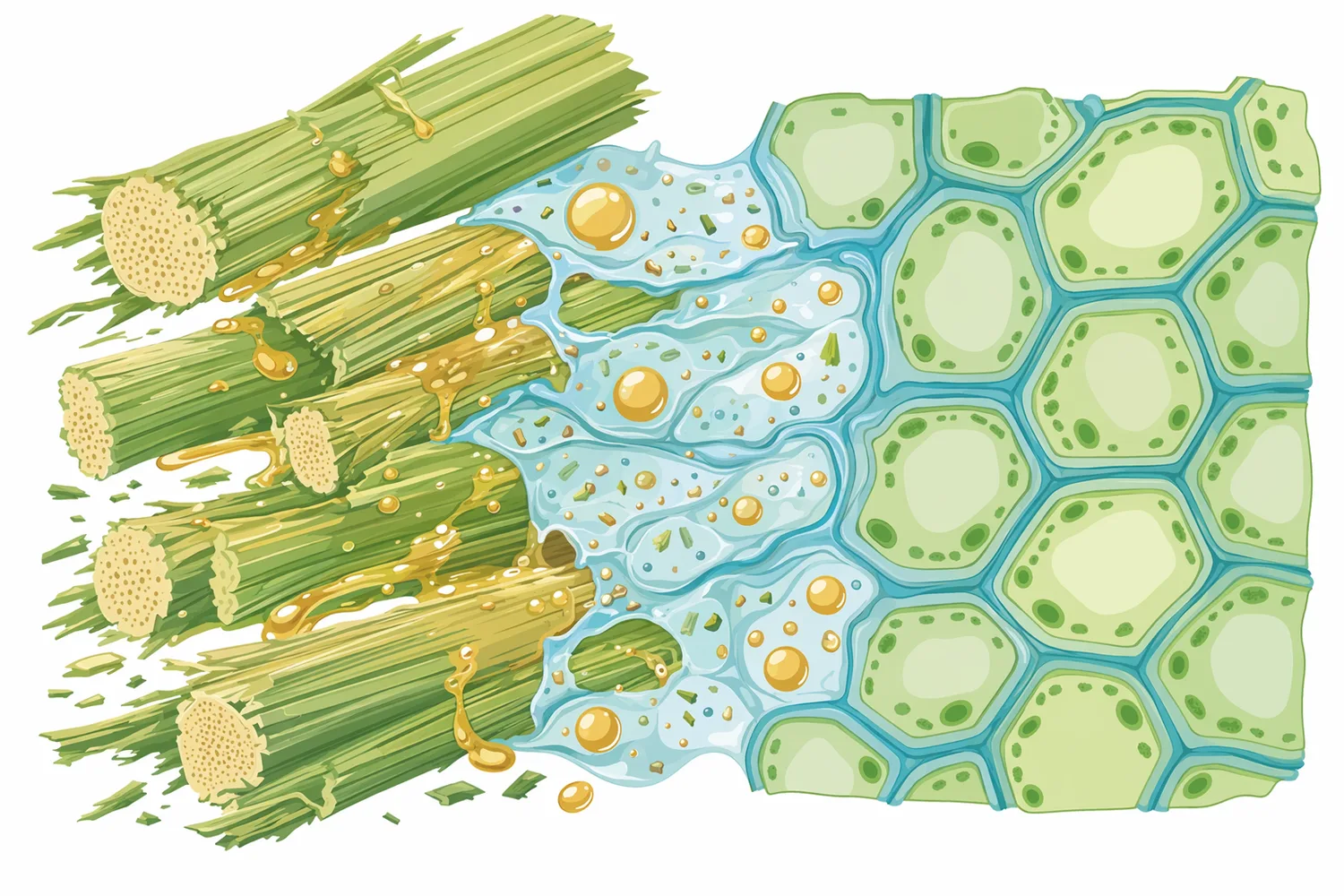
In a sugarcane process stream, pectin-related problems appear as operational symptoms: juice that drains slowly from fibre, cloudy extract that resists settling, syrup or intermediate liquor that carries fine suspended plant particles, or filtration that slows as a slimy layer builds on the medium. The mechanism is physical as well as chemical. Long pectin chains increase the apparent thickness of the liquid; branched regions and associated cell-wall fragments stabilize suspended particles; and hydrated pectin can occupy pore space in a filter cake, reducing permeability. Pectinase reduces these effects by cutting the polymer network into shorter pieces that no longer bind water and particles as effectively [2].
This is why pectinase is often described as both an extraction enzyme and a clarification enzyme. During extraction, it helps open cell-wall barriers so liquid and dissolved compounds move out of the tissue more freely. During clarification, it helps destabilize haze-forming pectin complexes so solids can settle, centrifuge, or filter with less resistance. In ultrasound-assisted enzymatic extraction research, operating conditions such as enzyme treatment, mass transfer, and plant-matrix disruption are treated together because the release of polyphenols depends on both biochemical wall degradation and transport of solutes out of the solid phase [5].
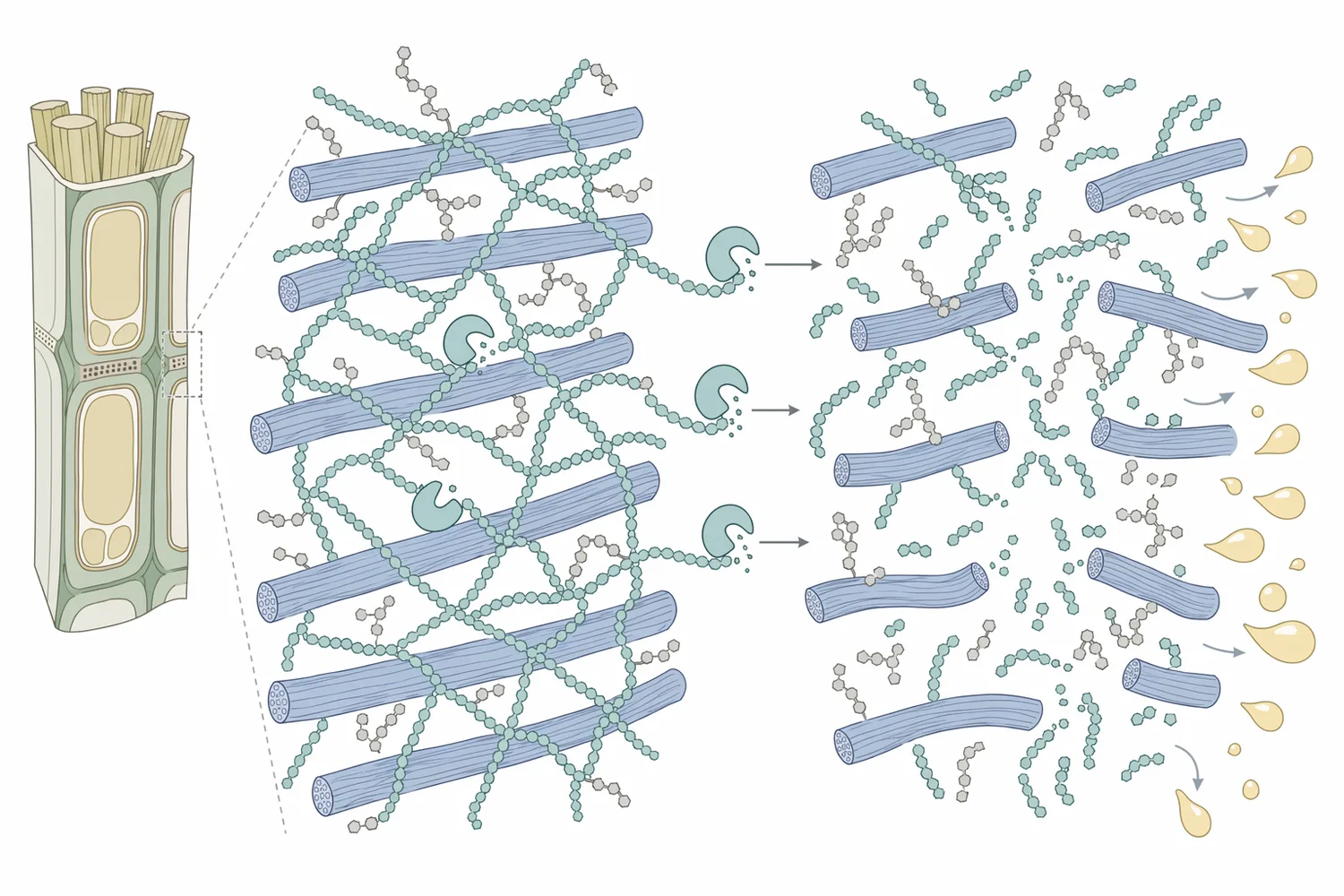
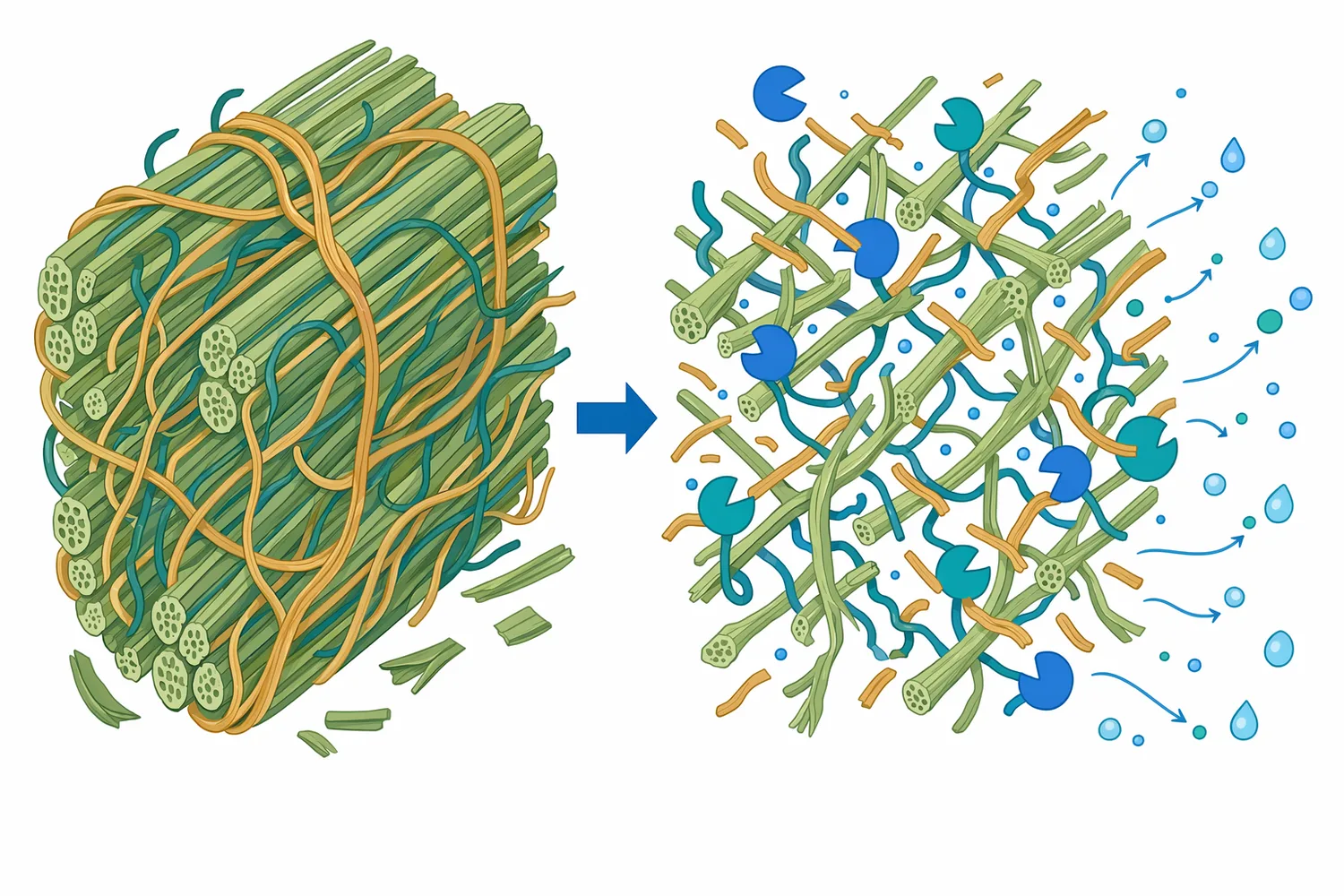
A practical way to visualize pectinase action is to imagine crushed cane or botanical tissue as a wet composite: cellulose fibres form a rigid scaffold, hemicelluloses connect structural elements, lignin adds recalcitrance in fibrous tissues, and pectin behaves like a hydrated adhesive and gel former around cells and fine particles. Pectinase attacks the pectin fraction, reducing its chain length and changing its charge and solubility depending on the enzyme activities present. Pectinase reviews commonly classify these activities into groups such as polygalacturonases, lyases, and esterases, each acting on different bonds or substituents in pectic substances [2].
When pectinase depolymerizes pectin, three practical changes follow. First, viscosity falls because shorter chains cannot entangle and hold water as efficiently as intact pectin. Second, cell adhesion weakens because the middle-lamella pectin holding plant cells together is partially degraded. Third, colloidal stabilization decreases because smaller pectin fragments are less able to coat and suspend fine plant particles. In plant extraction, those changes can translate into faster drainage from solids, improved press liquor release, clearer supernatant after settling, and lower resistance across filtration media [6].
The action is selective compared with acid hydrolysis or harsh chemical extraction. Acid can break multiple glycosidic bonds and alter sensitive compounds, while enzymes operate through substrate recognition and usually act under milder aqueous conditions. Research comparing acid and enzymatic hydrolysis of pectin fractions demonstrates that enzymatic treatment can modify pectin structure in a more targeted way than acid treatment, an important distinction when processors want to improve separation without unnecessarily degrading desirable plant constituents [4].
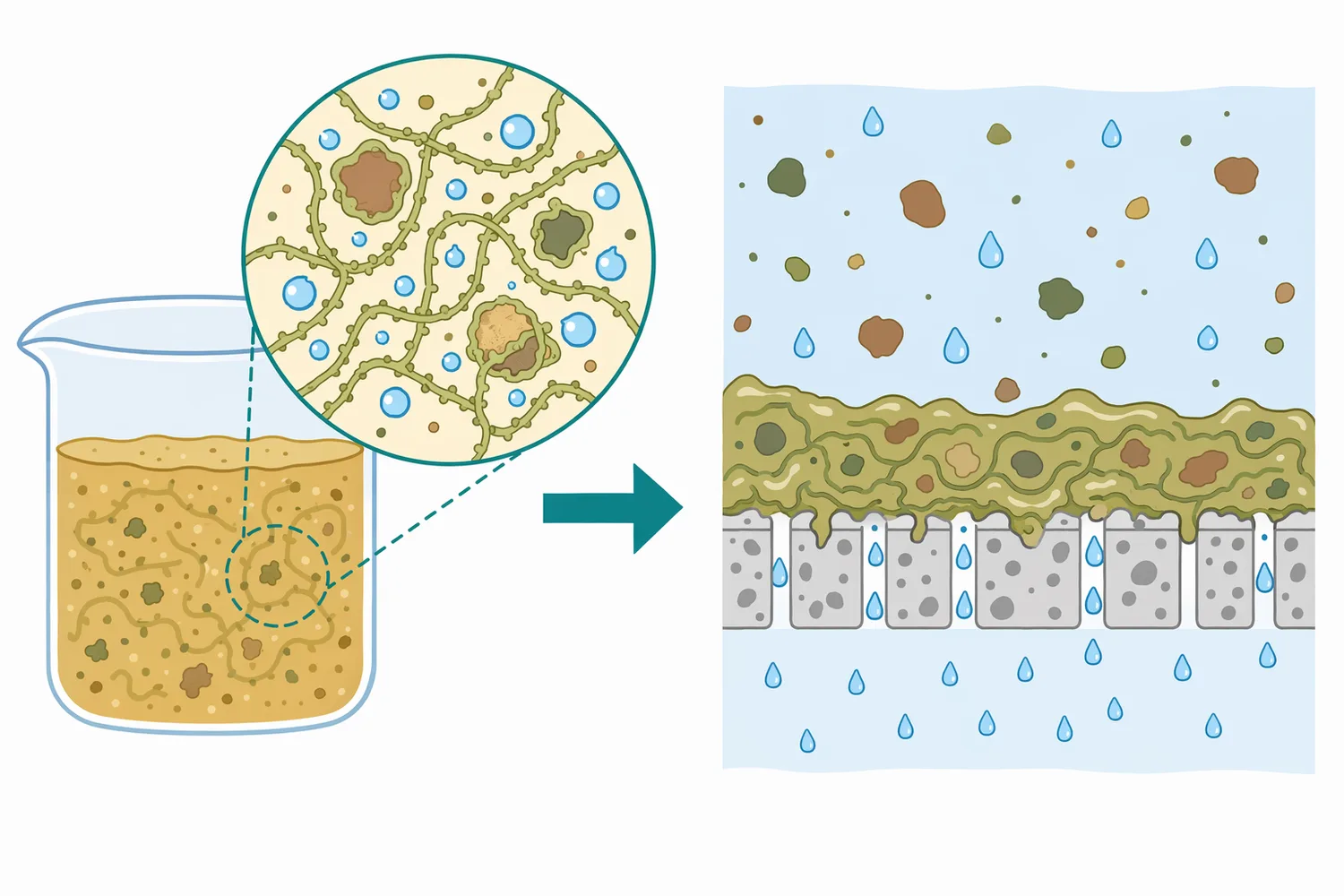
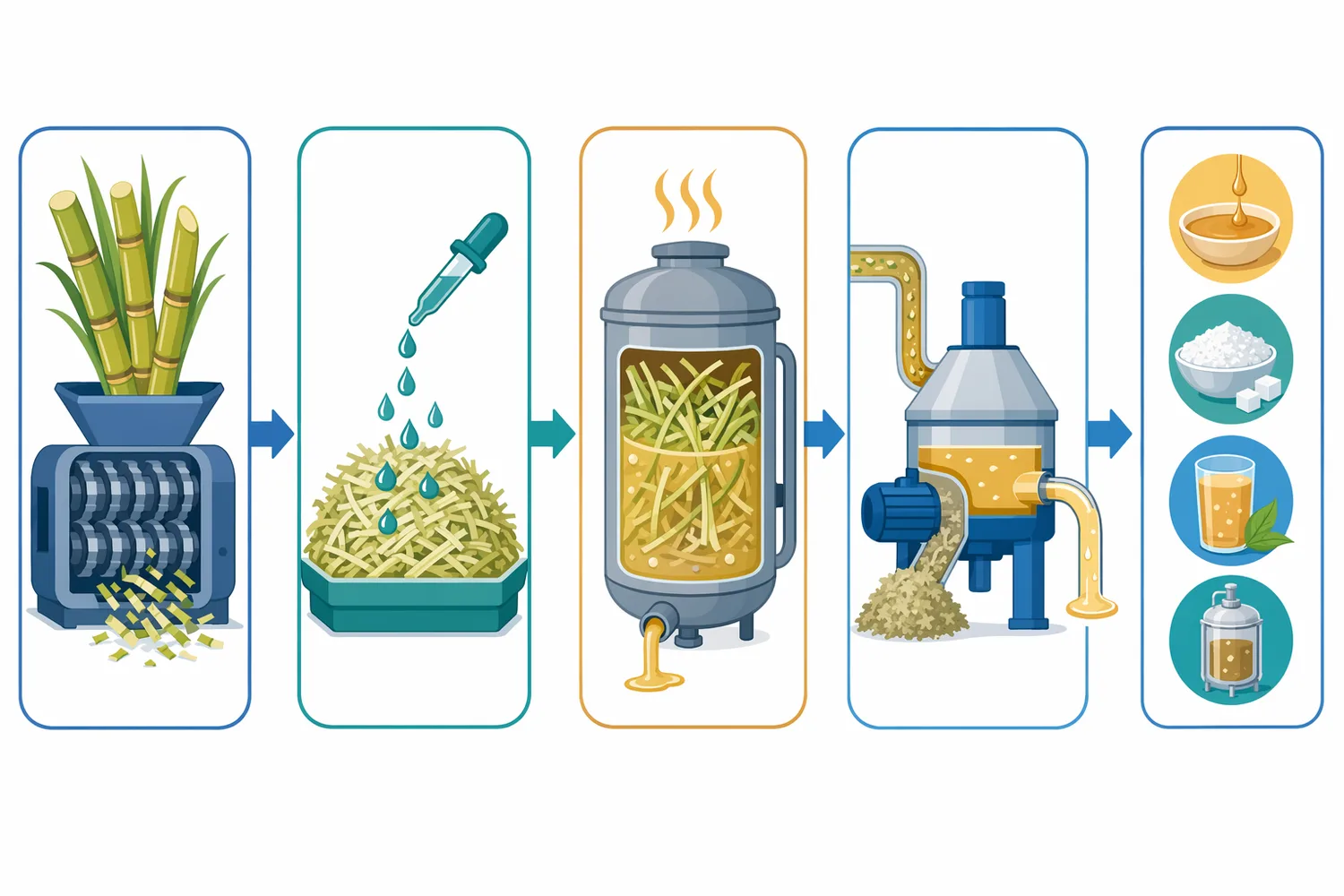
In sugarcane juice handling, pectinase is most logically used where plant tissue, juice, and suspended solids are still in contact: after shredding, crushing, milling, maceration, diffusion, or aqueous extraction, and before a separation step that is limited by viscosity or suspended colloids. The enzyme needs contact with pectin-containing material; once the extract has already been clarified or heated severely, much of the opportunity for pectinase to improve separation may have passed. Studies on sugarcane bagasse hydrolysis show the same general principle in another context: enzyme performance depends on whether the target polymer is physically accessible in the treated biomass [7].
Sugarcane is not identical to high-pectin fruits, so expectations should be realistic. Pectinase is not a replacement for milling efficiency, screening, liming, heating, centrifugation, filtration, or evaporation. It is a processing aid that targets one category of plant-wall interference. In cane streams where pectin and fine plant colloids are a meaningful part of the separation problem, pectinase can make the liquid phase easier to manage; in streams dominated by other causes of turbidity, such as mineral scale, microbial dextran, starch, waxes, or extremely fine bagasse particles, other process controls may remain more important. Research on sugarcane bagasse emphasizes that multiple structural factors—cellulose organization, hemicellulose, lignin, and pretreatment history—control enzymatic accessibility and downstream hydrolysis behavior [8].
Food-grade pectinase is also relevant to cane-derived botanical extraction rather than only conventional sugar production. Sugarcane juice, bagasse extracts, cane wax-associated fractions, molasses-derived extracts, and blended botanical liquids can all contain plant colloids that complicate separation. The same enzyme mechanism—degrading pectin barriers—can support clearer aqueous extracts, easier solid-liquid separation, and improved recovery of soluble material before concentration or formulation. Enzyme-assisted extraction is widely discussed as a lower-severity approach for plant materials because cell-wall enzymes can improve release without relying exclusively on harsher solvent, heat, or chemical treatments [9].
Pectinase is often used conceptually alongside cellulase, hemicellulase, xylanase, amylase, protease, and β-glucosidase, but these enzymes do not do the same job. Choosing the right enzyme class starts with understanding the plant component causing the process problem. Pectinase targets pectin-related viscosity and cell adhesion; cellulase and xylanase target the stronger fibrous scaffold; amylase targets starch; protease targets proteins that can create haze or emulsions. Enzyme combinations are common in plant extraction because plant cell walls are composite structures, and research on sugarcane bagasse hydrolysis frequently evaluates enzyme combinations or accessory enzymes to improve conversion of pretreated biomass [10].
| Enzyme class | Main plant substrate affected | What changes in the process stream | Typical relevance to sugarcane and botanical extraction |
|---|---|---|---|
| Pectinase | Pectin and pectic substances in cell walls and middle lamellae | Reduces pectin chain length, lowers gel-like viscosity, weakens cell adhesion, helps destabilize haze | Useful where juice or extract is thick, cloudy, slow-settling, or difficult to filter because of pectin-rich colloids |
| Cellulase | Cellulose microfibrils | Opens fibrous cell-wall structure and can release soluble material from plant solids | More relevant to fibrous residues, bagasse, straw, and extraction from tough plant tissues |
| Xylanase / hemicellulase | Xylans and other hemicelluloses | Loosens matrix around cellulose and improves access to entrapped compounds | Often considered for lignocellulosic sugarcane residues and botanical fibres |
| Amylase | Starch | Converts starch polymers into smaller dextrins or sugars, reducing starch-related haze or viscosity | Relevant when starch, not pectin, is a limiting impurity in plant streams |
| Protease | Proteins | Breaks proteins that may stabilize haze, emulsions, or suspended complexes | Useful in some plant-protein or mixed botanical systems, but not a direct substitute for pectinase |
This table is deliberately conceptual rather than a specification guide. In practice, plant materials rarely contain only one troublesome polymer, which is why enzyme-assisted extraction studies frequently use cocktails. For example, work on capsaicin extraction from chili peppers used a cocktail enzyme-assisted natural deep eutectic solvent approach and explored mechanism through experiments and molecular dynamics, illustrating how wall degradation and solvent access can work together in plant matrices [11].
Much of the peer-reviewed sugarcane enzyme literature focuses on bagasse or straw rather than fresh cane juice clarification. That distinction matters, but the research is still useful because it shows how strongly sugarcane cell-wall architecture controls release of sugars and other solubles. Citric-acid pretreatment of sugarcane bagasse followed by enzymatic hydrolysis, for example, was studied as a way to improve the accessibility of bagasse carbohydrates to enzymes; the underlying lesson is that sugarcane fibre does not release its components efficiently unless the wall matrix is opened or modified [7].
Alkaline pretreatment studies make the same point from another angle. Work evaluating alkaline pretreatment conditions for sugarcane bagasse considered both enzymatic hydrolysis performance and pretreatment cost, reflecting the practical balance between opening the biomass enough for enzymes to work and avoiding unnecessary process severity [1]. While pectinase is not the main enzyme in cellulosic ethanol hydrolysis, the processing logic is directly relevant: enzymatic performance depends on the interaction between substrate structure, prior mechanical or chemical treatment, and downstream separation goals.
Research using combinations of enzymes or co-substrates to boost lytic polysaccharide monooxygenase action in sugarcane bagasse also reinforces that single-enzyme thinking is often too simple for plant materials. Sugarcane biomass contains multiple polymers arranged in a resistant architecture, and improving hydrolysis can require accessory activities that change accessibility, electron supply, or polymer exposure [12]. For juice and plant-extract clarification, pectinase plays a more targeted role than cellulase-focused biomass conversion, but both applications depend on modifying a plant wall barrier so mass transfer improves.
More recent comparative structural analysis of holocellulose from sugarcane bagasse, poplar, and spruce highlights that biomass source and structural characteristics influence enzymatic hydrolysis outcomes. Sugarcane bagasse is therefore not just a generic fibre; its response to enzymes reflects its specific wall architecture and processing history [8]. This supports a measured expectation for food-grade pectinase in sugarcane processing: the enzyme can address pectin-related limitations, but the observed process effect depends on the actual cane material and process stream.
The clearest pectinase evidence comes from pectin-rich botanical systems. Pectinase-assisted strategies are discussed for greener recovery of flavonoids from Codonopsis species, where cell-wall degradation is relevant because target compounds are physically embedded within plant tissues [3]. The scientific rationale is the same as in cane extraction: degrade the pectin network that limits solvent penetration and solute diffusion, then allow compounds already present in the plant to move into the liquid phase more efficiently.
Phenolic extraction studies also show how pectinase and cellulase treatments can change both extract composition and biological activity. In Plectranthus amboinicus leaf extracts, pectinase and cellulase treatments were associated with changes in phenolic contents and biological activities, indicating that enzyme treatment can alter what is released from the plant matrix rather than merely changing appearance or viscosity [13]. For sugarcane-derived botanical extracts, that distinction is important: pectinase may influence recovery of soluble plant constituents by changing wall permeability, not by chemically creating those constituents.
Plant protein extraction research provides another useful comparison. Enzyme-assisted extraction of leaf proteins is studied for efficiency, functionality, and structural effects because plant cell walls can limit protein release and because harsh extraction can damage functionality [14]. Although protein extraction is not the same as sugarcane juice clarification, both applications depend on controlled disruption of the cell-wall environment so the desired liquid fraction separates more cleanly.
Pectinase also has documented use in fibre extraction. Banana fibre extraction using mycogenic pectinase was presented as an eco-friendly approach, reflecting pectin’s role as a binding material that holds plant fibres and tissues together [15]. That fibre-separation example is mechanistically relevant to sugarcane: when pectin is degraded, plant tissue cohesion decreases, and water or juice can move through the solid matrix more readily.
The first expected benefit is improved liquid release from crushed or extracted plant tissue. Pectin-rich middle-lamella material helps hold cells together; when pectinase cuts that network, the plant structure becomes less cohesive and entrapped liquid has a clearer path out of the solid matrix. In sugarcane milling or extraction, this can support easier drainage and less retention of juice in fine suspended solids, especially in streams where pectin contributes to the wet, gelatinous character of the press cake or sediment. Enzyme-assisted extraction literature consistently treats cell-wall disruption as a route to improved recovery of plant components [6].
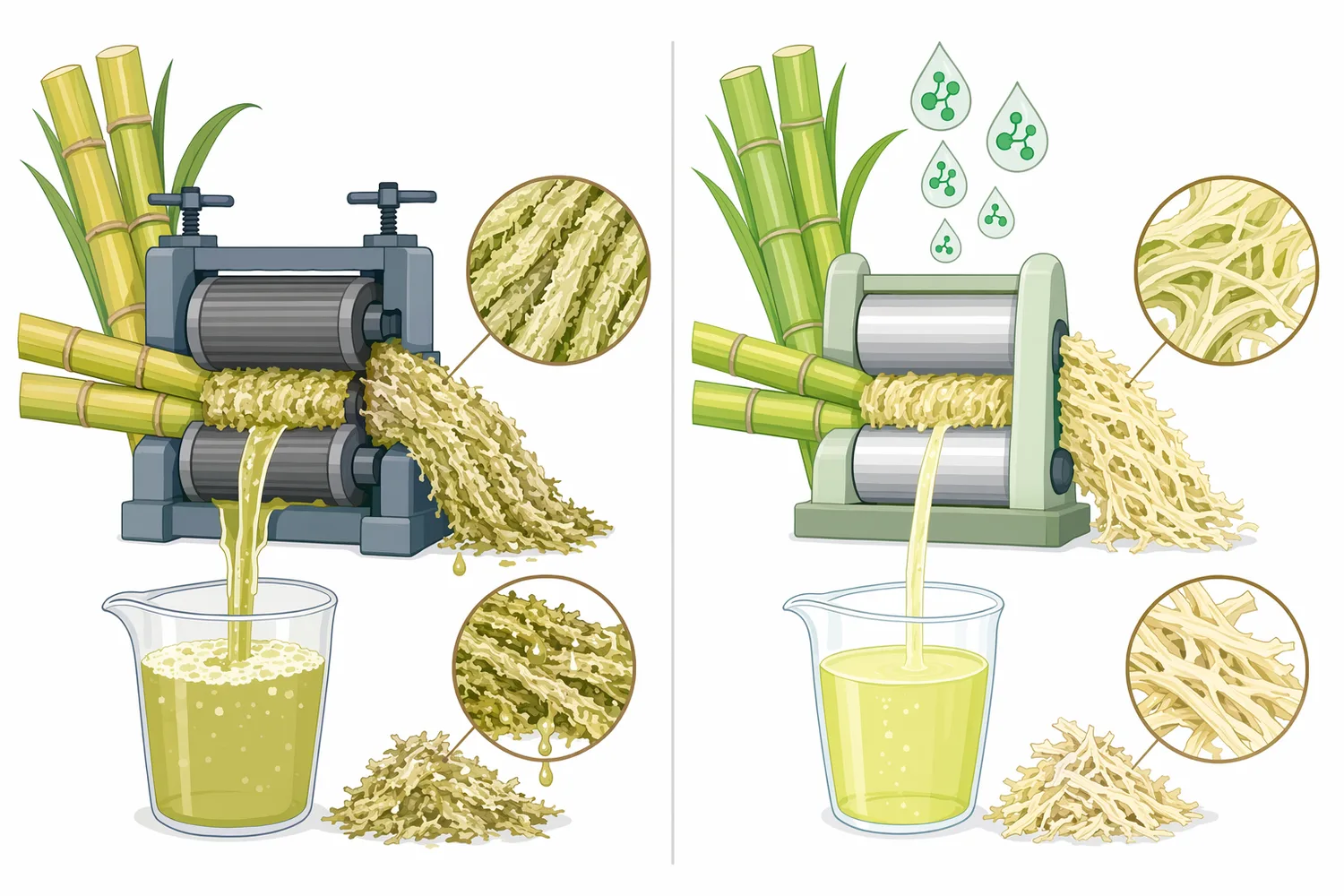
The second benefit is viscosity reduction. Long-chain pectin binds water and forms entangled, hydrated structures; shorter fragments produced by pectinase have less ability to thicken the liquid. Lower viscosity can improve mixing, heat transfer, settling, pumping, and filtration because particles move more freely and the liquid passes through equipment with less resistance. Pectinase reviews identify viscosity reduction and clarification as core applications of pectin-degrading enzymes in food and plant-material processing [2].
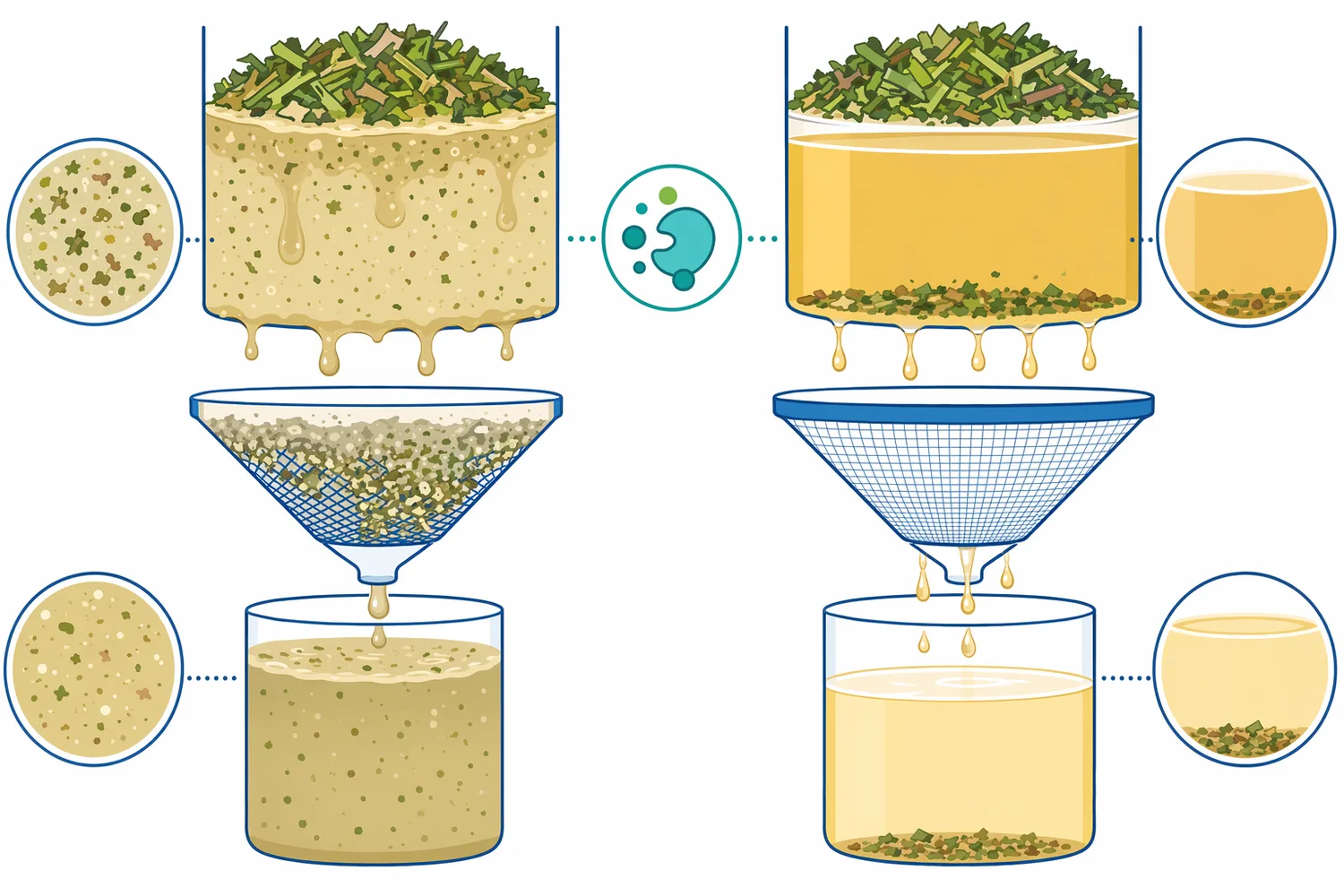
The third benefit is better clarification behavior. Pectin can stabilize haze by surrounding fine particles and preventing them from aggregating or settling. Once the stabilizing pectin network is partially degraded, solids may flocculate more readily, sediment faster, or separate more cleanly by centrifugation or filtration. This is why pectinase has long been associated with juice clarification and why the same logic extends to cane juice and botanical extracts that contain pectin-rich colloids [2].
The fourth benefit is reduced filtration burden. Pectin-rich liquids can blind filters because hydrated pectin fills pores and forms compressible layers. Pectinase can reduce the polymeric material responsible for that effect, helping the filter cake behave more like a permeable solid layer rather than a gelatinous barrier. The benefit is not that pectinase replaces filtration; it can make filtration less resistant when pectin is a key contributor to the problem. In broader plant-processing research, enzyme-assisted extraction is frequently evaluated together with mass transfer and downstream separation because these effects are connected [5].
Pectinase works in aqueous plant systems where enzyme, substrate, and time are brought together under conditions that preserve enzymatic function. The core practical requirement is contact: the enzyme must reach pectin in crushed cane tissue, plant mash, juice, or extract before the process stream is fully clarified, concentrated, or exposed to conditions that inactivate the enzyme. This is why pectinase is generally considered before or during clarification rather than after the separation problem has already been locked into the downstream process. Studies of enzyme-assisted extraction emphasize that mass transfer, mixing, and contact between enzyme and plant substrate strongly influence extraction outcomes [6].
Temperature, acidity, contact time, and mixing all matter because enzymes are folded proteins with condition-dependent activity. A process that is too cold may act slowly; a process that is too hot may reduce enzyme function; and a process with poor mixing may leave pectin-rich zones untreated. These are not unusual constraints—enzyme-assisted extraction studies across botanical materials routinely optimize pH, treatment time, and physical assistance such as ultrasound because the plant matrix and the enzyme environment both affect recovery [5].
For sugarcane processing, it is also important to distinguish pectinase treatment from harsh pretreatment of lignocellulosic residues. Bagasse hydrolysis research often uses acids, alkalis, deep eutectic solvents, or other pretreatments to open cellulose-rich biomass for conversion to fermentable sugars or oligosaccharides [16]. Food-grade pectinase for plant extraction is typically aimed at a milder operational problem: reducing pectin-related interference in juice, mash, or extract so existing separation steps perform more effectively.
In fresh sugarcane juice or cane extract, pectinase is most relevant when the liquid carries plant-wall colloids from aggressive milling, diffusion, maceration, or extended contact with shredded tissue. These colloids can be invisible at first but later appear as haze, sediment, filter fouling, or sluggish clarification. Pectinase helps by cutting the pectin fraction that contributes to these colloidal structures, allowing the liquid and solid phases to separate with less pectin-mediated resistance [2].
In cane-derived beverage or ingredient processing, the same enzyme action can support a cleaner-looking liquid before concentration, blending, stabilization, or filtration. This does not mean every beverage process should be enzyme-treated; rather, it means pectinase is a targeted option where plant-wall pectin is causing viscosity or haze. Research on enzyme-assisted extraction of plant materials supports the broader idea that controlled enzymatic wall modification can improve recovery and functionality while avoiding unnecessary harshness [9].
Bagasse and straw applications are different but adjacent. In lignocellulosic valorization, the main targets are often cellulose and hemicellulose, and studies focus on enzymatic hydrolysis, cello-oligosaccharide production, xylo-oligosaccharides, or bioethanol. For example, sugarcane straw has been enzymatically hydrolyzed to produce xylo-oligosaccharide microparticles with synbiotic potential, showing how sugarcane residues can be converted into higher-value ingredients under enzyme-based processing routes [17]. Pectinase may not be the central enzyme in those systems, but pectin degradation can still be relevant when pectin-rich side fractions affect extraction or separation.
Food-grade pectinase fits naturally into greener extraction strategies because it uses biochemical specificity rather than relying only on heat, strong chemicals, or intensive mechanical force. Reviews of next-generation plant protein extraction describe enzymatic methods as part of a broader movement toward improved yield, functionality, and sustainability in plant ingredient processing [9]. For cane and botanical processors, this translates into a practical goal: make plant materials release what they already contain under milder aqueous conditions whenever possible.
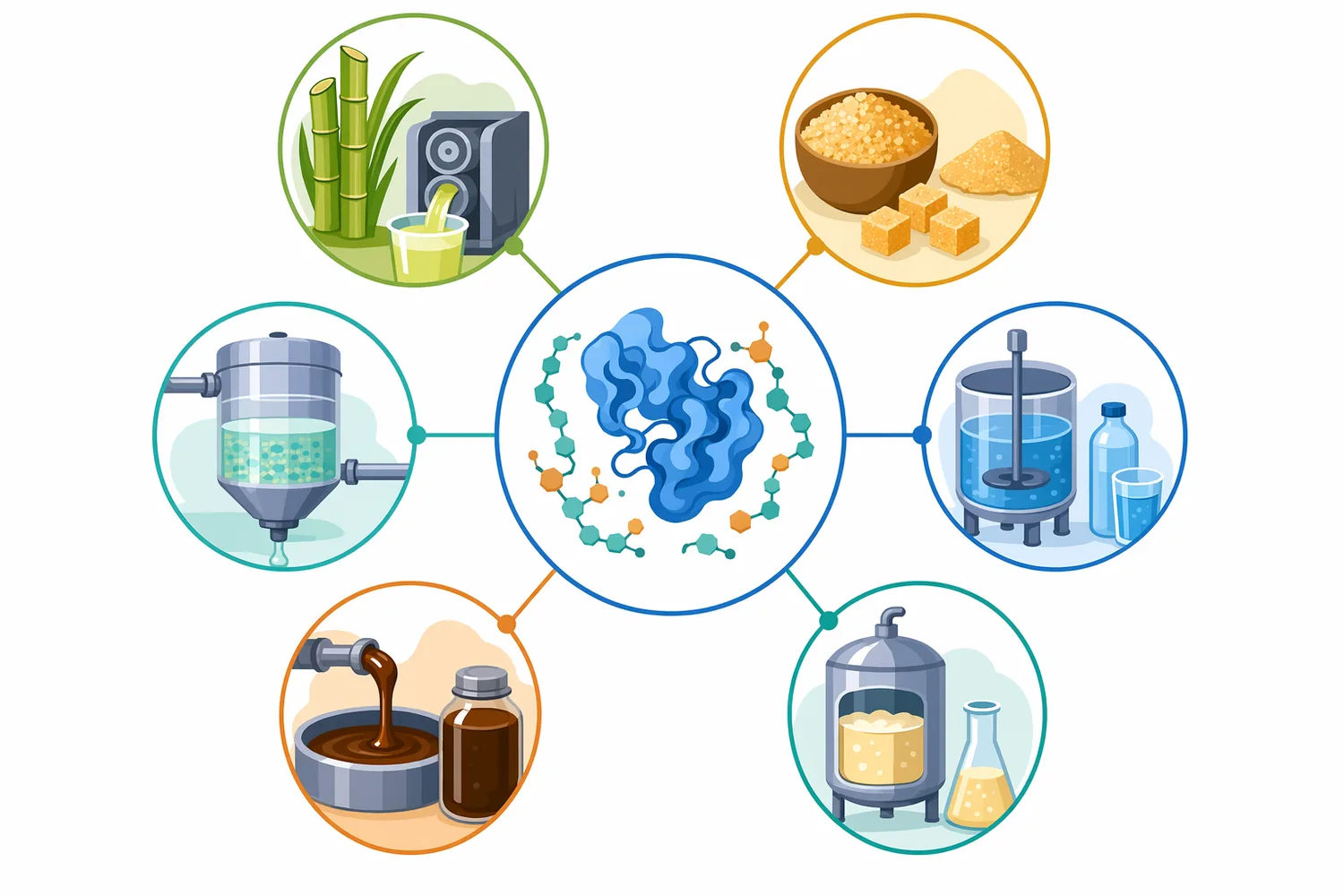
Pectinase can also complement physical assistance technologies. Ultrasound-assisted enzymatic extraction research shows that ultrasound can improve mass transfer and tissue disruption, while enzymes degrade wall polymers that block solute release [6]. The two effects are different but compatible: physical treatment improves access and mixing, while enzymatic treatment changes the wall chemistry that governs viscosity and entrapment.
Solvent-assisted botanical systems can use similar logic. Cocktail enzyme-assisted natural deep eutectic solvent extraction of capsaicin from chili peppers explored how enzyme action and solvent interactions improve extraction from a plant matrix [11]. Sugarcane processing is typically more water-based than capsaicin extraction, but the mechanism—opening the plant wall so target compounds and liquid move more freely—is shared.
Food-grade pectinase is intended for food and plant-processing contexts where the enzyme preparation must be suitable for use around edible or ingredient streams. In practical customer terms, it is a processing aid used during extraction or clarification; it acts on plant pectin during processing and is not used as a flavor, sweetener, preservative, or nutrient. Pectinase production reviews note broad food-industry relevance for pectin-degrading enzymes, especially in fruit processing, juice clarification, and plant-material treatment [2].
The food-grade designation does not remove the need for normal process control. Enzyme action is still governed by substrate access, process conditions, and the composition of the plant stream. It also does not mean pectinase will solve non-pectin problems such as mineral turbidity, microbial spoilage, excessive soil contamination, or equipment fouling unrelated to plant polymers. A well-run sugarcane or botanical process still depends on clean raw material handling, appropriate crushing or extraction, effective clarification, and suitable downstream separation [1].
Enzymes.bio supplies this pectinase in 1 kg units sold directly online. After online payment, the order is processed and shipped; a Certificate of Analysis and Safety Data Sheet are included with the order. This keeps the buying path simple for customers who need food-grade pectinase for sugarcane processing, cane-derived extracts, or other plant-extraction work.
The most responsible expectation is targeted improvement, not universal transformation. Where pectin is a meaningful cause of viscosity, haze, slow sedimentation, or filter resistance, pectinase can reduce the pectin network and improve liquid-solid separation. Where the main limitation is instead lignin-rich fibre recalcitrance, starch, microbial polysaccharides, mineral scale, waxes, or poor mechanical preparation, pectinase alone may have limited impact. Sugarcane biomass studies repeatedly show that enzyme results depend on the structure and pretreatment of the substrate, which is why performance varies across feedstocks and process histories [8].
The strongest scientific support for pectinase lies in its well-established ability to degrade pectic substances and modify plant extracts. Additional support comes from broader enzyme-assisted extraction studies showing improved recovery or altered composition of plant-derived compounds when cell-wall enzymes are used under controlled conditions [13]. For sugarcane processing, the mechanism is credible and practically relevant, especially in pectin-related clarification and extraction challenges, but the observed effect will always reflect the real process stream.
Food-grade pectinase is a targeted enzyme for sugarcane processing and plant extraction when pectin-rich cell-wall material interferes with juice release, clarification, sedimentation, or filtration. It works by breaking down pectin—the hydrated structural polymer that helps plant cells adhere and keeps fine particles suspended—so the liquid phase can separate more cleanly from crushed or extracted plant material [2].
For sugarcane juice, cane extracts, and botanical liquids, pectinase is best viewed as a mild, food-grade processing aid that supports existing extraction and separation steps. It is especially relevant where the process stream is viscous, cloudy, slow to settle, or prone to filter blinding because of plant-wall colloids. Enzymes.bio supplies the product directly online in 1 kg units, with the order processed and shipped after online payment and documentation included with the order.
Sold by the 1 kg unit, in stock and ready to ship. Order directly on our store — pay online and we process your order. A Certificate of Analysis and Safety Data Sheet are included with every order.
Buy Food-Grade Pectinase For Plant Extraction For Sugarcane Processing →Numbered in order of first citation. Open-access sources, each verified reachable at publication; citation numbers in the text link here.