
Food-grade pectinase for plant extraction is used to break down pectin-rich plant cell wall material that can make botanical liquids thick, cloudy, slow to filter, or less efficient to extract. In practical plant processing, pectinase helps loosen the plant matrix, reduce gel-like viscosity, improve separation, and support the release of soluble bioactive compounds from fruits, peels, leaves, flowers, pomace, and other botanical raw materials [1].
Enzymes.bio supplies Food-Grade Pectinase for Plant Extraction as a 1 kg online-purchase product for food and plant-processing applications. Buyers can purchase directly online; the order is processed and shipped, and a Certificate of Analysis and Safety Data Sheet are provided with the order .
Plant extraction is often limited less by the solvent itself than by the physical structure of the raw material. Many fruits, peels, leaves, flowers, and pomace streams contain pectin in the middle lamella and primary cell wall, where it helps hold cells together and contributes to the hydrated, gel-forming behavior of plant tissue [2].
When pectin hydrates during extraction, it can increase viscosity, stabilize fine particles, slow liquid-solid separation, and keep target compounds trapped within swollen plant material. That is why pectinase is widely used as an enzyme-assisted extraction aid: it hydrolyzes pectic polymers into smaller, more soluble fragments, changing the extract from a thick, difficult slurry into a liquid that is usually easier to press, decant, centrifuge, or filter [1].
For a buyer using plant materials such as citrus peel, grape pomace, berry residues, herbal leaves, rosehip, pomegranate peel, olive leaves, or other botanical substrates, the most relevant benefit is process behavior. Pectinase does not “create” phenolics, anthocyanins, polysaccharides, or other bioactives; it improves access to the plant matrix and helps release compounds that were physically retained by cell wall structure, hydrated pectin, or insoluble tissue fragments [3].
Pectin is not a single uniform molecule. It is a family of acidic plant polysaccharides rich in galacturonic acid residues, with regions that may be methyl-esterified, branched, or associated with other wall polymers. In plant tissues, pectin contributes to wall porosity, hydration, cell adhesion, and the mechanical behavior of the middle lamella—the “cementing” region between adjacent cells [4].
In extraction, those same properties become processing challenges. Hydrated pectin can bind water, thicken the extract, suspend fine solids, and create haze. It can also form a soft, swollen network that holds liquid inside the plant residue, reducing free-draining extract volume and making filtration media blind faster than expected [1].
Pectinase acts directly on this barrier. Polygalacturonase-type activity hydrolyzes α-1,4 linkages in homogalacturonan regions of pectin, shortening the polymer chain. Pectin lyase and pectate lyase-type activities cleave pectic chains by elimination reactions under suitable substrate conditions, while pectin methylesterase-type activity can alter esterification and make some pectin regions more accessible to depolymerization [5].
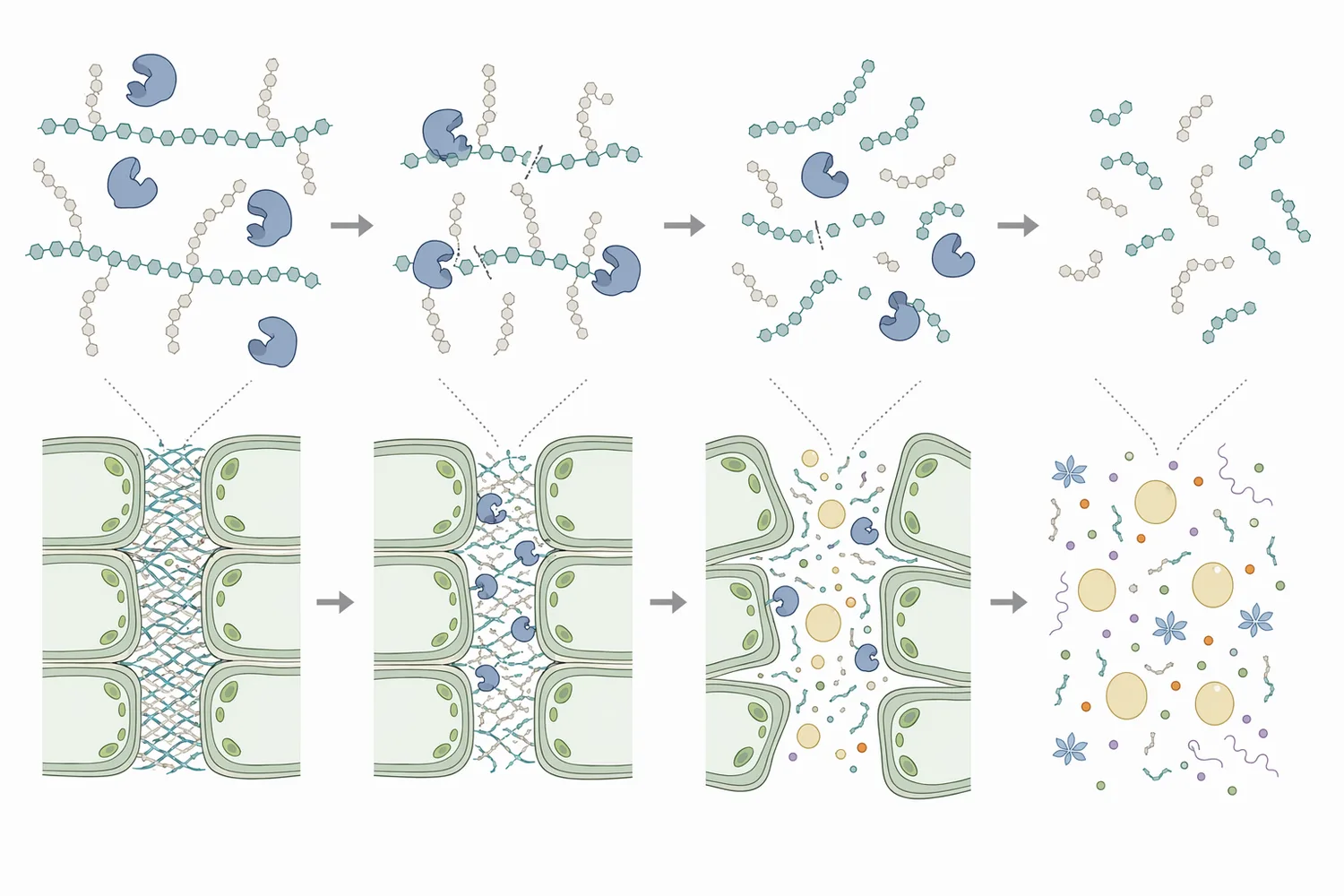
The practical result is not simply “cell wall breakdown” in the abstract. The long pectin chains that helped create viscosity and particle stability become shorter fragments; the middle lamella weakens; plant particles release entrained liquid more readily; and soluble compounds have a shorter diffusion path out of the tissue. This is the concrete mechanism behind improved clarification, faster separation, and more complete extraction from pectin-rich raw materials [1].
Although pectin is the target, real plant tissues are composite materials. Cellulose microfibrils provide tensile strength, hemicelluloses connect and coat those fibrils, pectin fills hydrated spaces and supports adhesion, and lignin or phenolic cross-links may add rigidity depending on the tissue and maturity [6].
This is why enzyme-assisted extraction often performs best when pectinase is understood as part of a broader cell-wall-disruption strategy. Enzymes.bio’s Food-Grade Pectinase for Plant Extraction is positioned for plant extraction and clarification where pectin breakdown supports release of plant-derived compounds and cleaner liquid processing .
In the research literature, combined or sequential enzyme approaches are common because different wall polymers restrict extraction in different ways. Cellulase can weaken cellulose-rich structural regions, hemicellulase can open matrix polysaccharides surrounding cellulose, and pectinase can reduce the hydrated pectic network that most directly affects viscosity, haze, and juice or extract release [7].
| Enzyme activity | Main plant-wall target | What changes in the extract | Typical processing relevance |
|---|---|---|---|
| Pectinase | Pectin and pectic substances in middle lamella and primary wall | Lower viscosity, reduced haze, weaker cell adhesion, easier release of entrained liquid | Clarification, filtration, fruit and botanical extract processing |
| Cellulase | Cellulose-rich structural regions | Loosens fibrous tissue and increases wall permeability | Useful where tough plant particles restrict release |
| Hemicellulase | Hemicellulose matrix around cellulose microfibrils | Opens the wall matrix and supports access to embedded compounds | Often complementary in pomace, peels, leaves, and fibrous residues |
| Multi-enzyme treatment | Pectin, cellulose, hemicellulose, and associated wall networks | Broader wall disruption and improved mass transfer | Relevant for complex botanical substrates rather than simple clarified liquids |
The most visible effect of pectinase is often clarification. Pectin can keep fine particles suspended by increasing viscosity and stabilizing colloidal haze. When pectinase depolymerizes pectin, particles can aggregate, settle, centrifuge, or filter more predictably because the surrounding liquid no longer has the same gel-like support [1].
This is especially relevant in fruit-derived and peel-derived extracts. Citrus peel, pomegranate peel, grape pomace, rosehip pseudo-fruit, berry residues, and similar materials are rich in structural polysaccharides and phenolic compounds, making them attractive extraction substrates but often difficult liquids to process cleanly [8].
In pomegranate peel extraction, enzyme-assisted and high-pressure extraction have been studied as alternatives to conventional solvent extraction for obtaining antimicrobial extracts. The value of enzymatic assistance in that type of matrix is that pectin and other wall polymers are disrupted before or during extraction, helping the solvent contact phenolic-rich tissue more effectively [9].
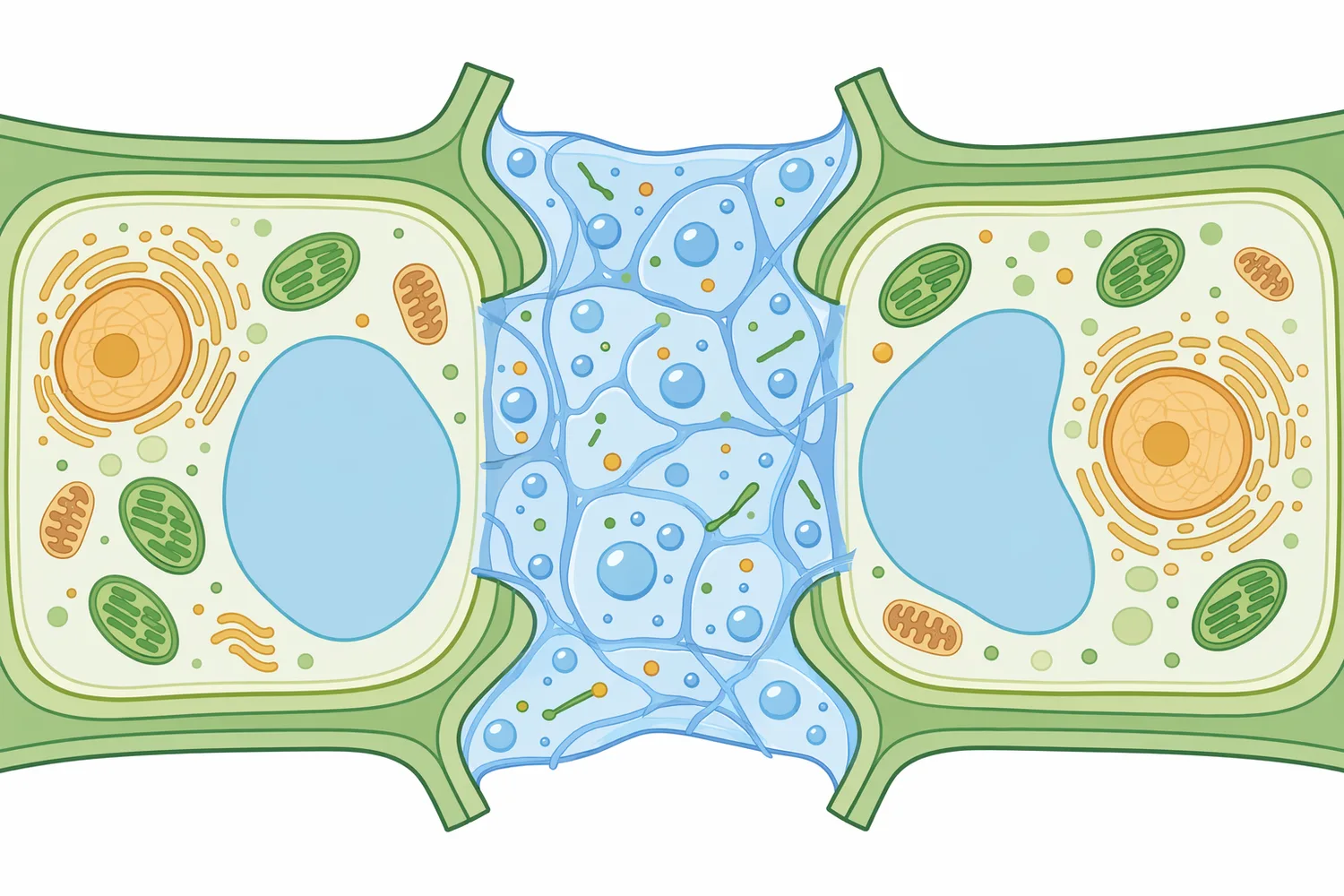
For grape pomace, which contains skins, seeds, pulp residue, and cell wall material, pectinase-based treatment can help reduce the structural limitations that prevent phenolic compounds from moving into the liquid phase. Several grape pomace studies have evaluated pectinase, cellulase, and hemicellulase treatments because pomace is not a simple pectin substrate; it is a dense lignocellulosic residue with phenolics distributed across multiple tissue fractions [10].
Phenolic compounds are one of the clearest examples of why cell wall modification matters. Many phenolics are soluble, but their recovery depends on whether the solvent can access the compartments and wall-associated regions where they are located. Enzymatic maceration can improve mass transfer by opening the plant matrix rather than relying only on stronger solvents or harsher thermal treatment [3].
In Syrah grape pomace, enzymatic extraction was optimized specifically to recover phenolic antioxidants from winery residue. The study’s focus on process optimization is important: enzyme-assisted extraction is not a one-condition technique, but a controlled treatment in which extraction time, temperature, enzyme exposure, and raw-material behavior interact to determine total phenolic recovery and antioxidant activity [10].
More recent grape pomace work compared cellulase, pectinase, and hemicellulase effectiveness for extracting phenolic compounds. That comparison is directly relevant to plant processors because it shows that the best enzyme choice depends on the physical wall barrier in the substrate: pectinase targets haze- and viscosity-forming pectin, while cellulase and hemicellulase address other structural constraints in the pomace matrix [7].
A 2025 grape pomace study also examined a synergistic approach combining ultrasound- and enzyme-assisted extraction. Ultrasound can improve wetting, particle disruption, and mass transfer, while enzymes chemically cleave wall polysaccharides; together, they can make phenolic recovery more efficient than relying on diffusion from intact plant particles alone [11].
Leaves and herbs can behave differently from fruit pomace because their cell walls, cuticles, fibers, and phenolic profiles vary widely. In Verbascum nigrum L., optimized enzymatic extraction was studied as a sustainable approach for enhancing phenolic compound extraction, showing the continuing move toward enzyme-based processing for botanicals rather than only aggressive solvent extraction [12].
Olive leaves are another example. Olea europaea leaves contain valuable phenolic compounds, but the tissue structure must be opened for efficient recovery. Optimized enzymatic-assisted extraction from olive leaves has been studied to improve the recovery of bioactive compounds, again emphasizing that plant extraction performance depends on controlled disruption of cell-wall barriers [13].
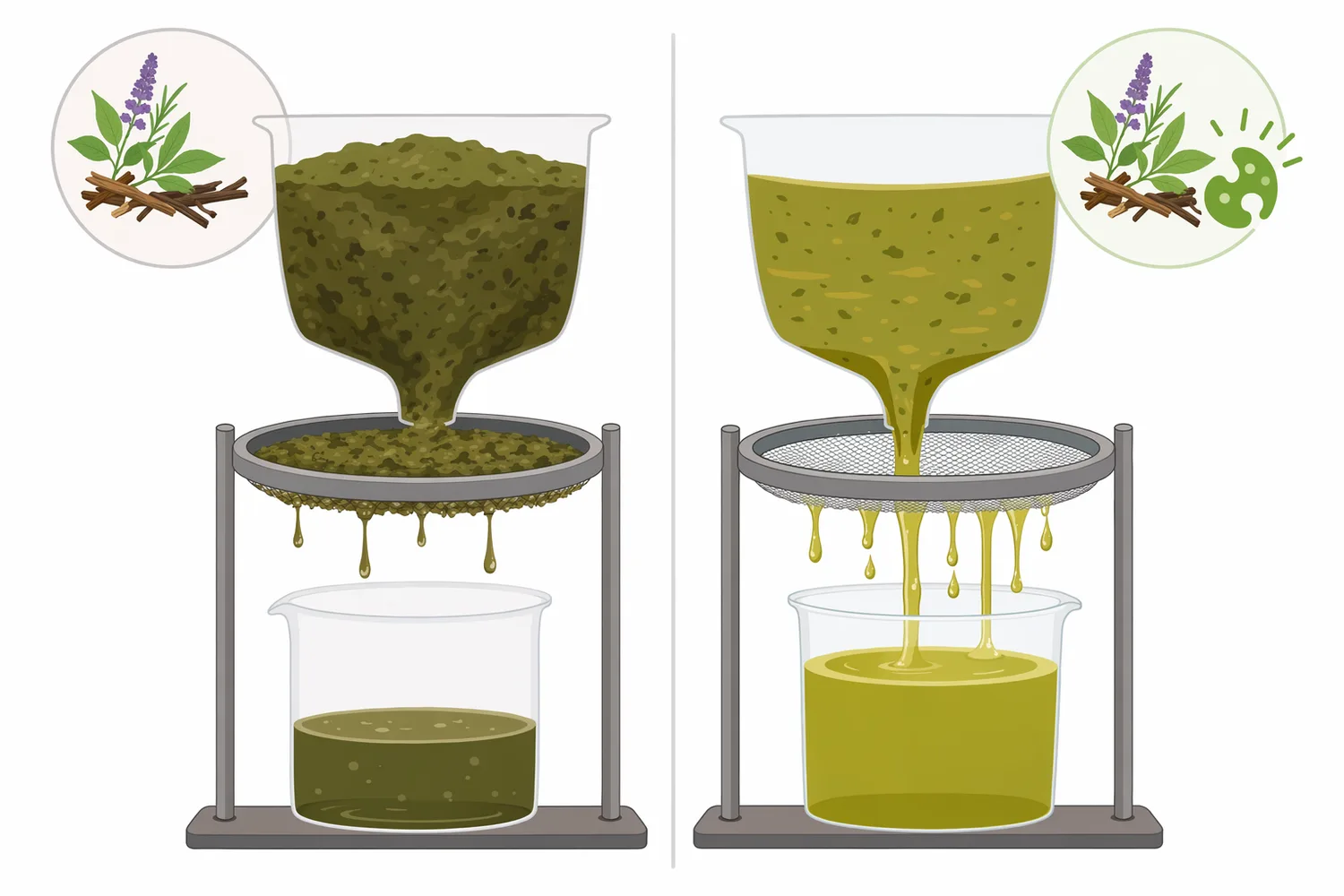
Rosehip pseudo-fruits have been investigated using ultrasound-assisted enzymatic extraction for phenolic compounds and biological activity. In that type of substrate, pectinase can help reduce the gel-forming behavior of fruit tissue, while ultrasound assists physical mass transfer; the combined approach is useful where both polymer structure and diffusion resistance limit extraction [14].
Akebia trifoliata flowers have also been studied using radio frequency-assisted enzymatic extraction of anthocyanins. Anthocyanins are sensitive pigments, so enzyme-assisted approaches are attractive because they can improve release from plant tissues without relying solely on severe heat or prolonged extraction that may degrade sensitive compounds [15].
Plectranthus amboinicus leaf extracts provide another useful example because pectinase and cellulase treatments changed phenolic contents and biological activities. The key point for practical users is that enzyme treatment can affect not only how much material is extracted, but also the profile of compounds released, because different enzymes open different parts of the plant wall and associated compartments [16].
Pectinase is not limited to phenolic extraction. In polysaccharide-rich materials, enzyme treatment can help separate, modify, or release plant polysaccharide fractions by weakening the surrounding wall network. This matters for extracts intended for functional foods, cosmetic ingredients, and other plant-based applications where the physical properties of polysaccharides are part of the product value [17].
Brassica oleracea var. capitata polysaccharides have been studied using hot-water extraction and an ultrasonic-synergistic enzymatic method. The relevance to pectinase users is that hot water alone can hydrate and solubilize some polysaccharides, but enzyme assistance can improve wall opening and reduce the structural resistance that limits extraction from vegetable tissues [18].
Lychee peel polysaccharide extraction has also been compared using ultrasonic and enzymatic methods. Peel materials are often high-value but difficult to process because pigments, phenolics, pectin, cellulose, and hemicellulose occur together in a compact outer tissue; enzyme treatment helps turn that compact structure into a more extractable matrix [19].
Agricultural byproducts are a major opportunity for enzyme-assisted extraction because many residues are already food-linked but underutilized. Reviews on lignocellulosic plant byproduct valorization describe enzymatic and enzyme-assisted extraction as a route to recover high-value compounds while reducing waste from peels, pomace, leaves, seeds, and processing residues [3].
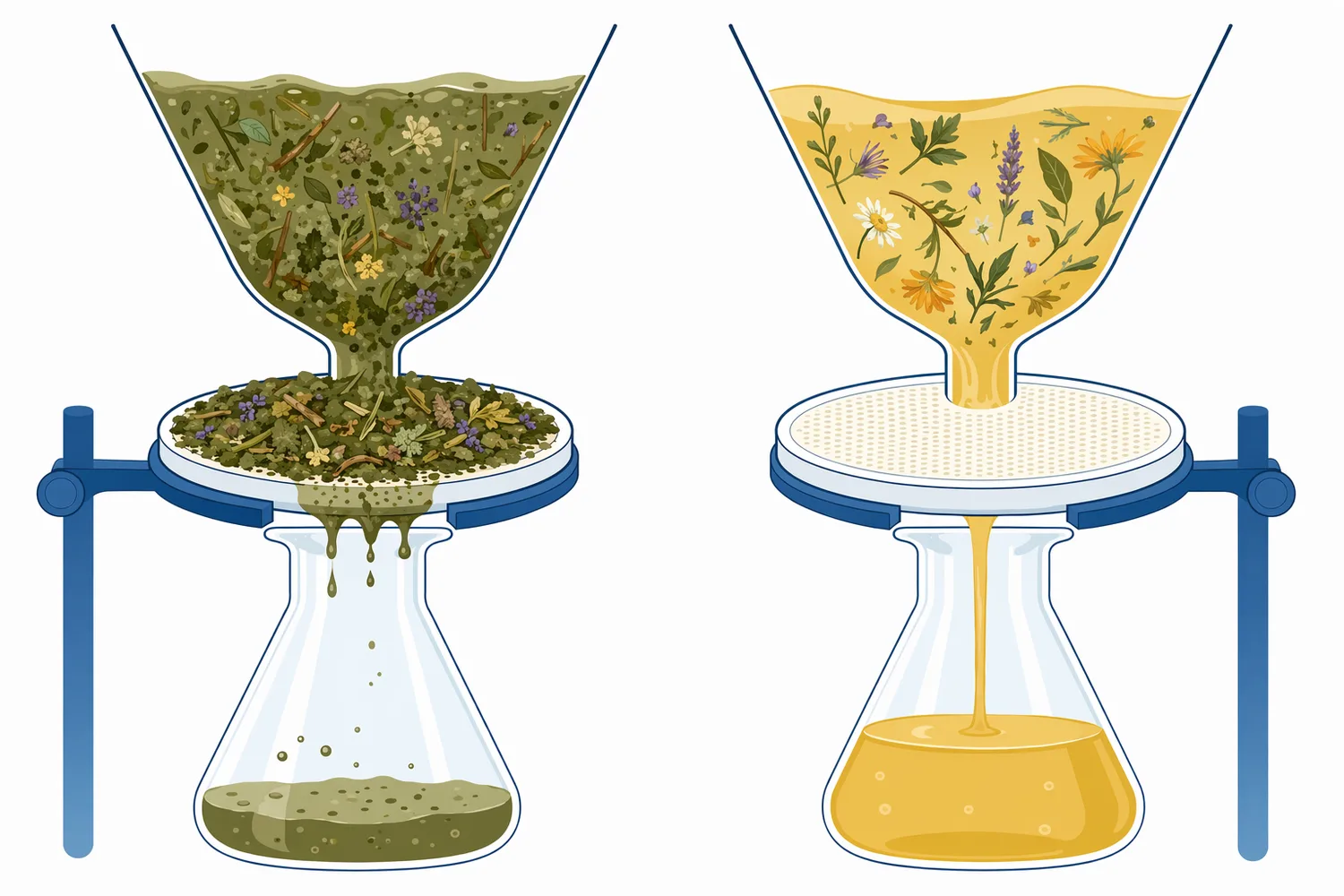
At the beginning of treatment, plant particles may be swollen, slimy, or slow to drain because long pectin chains bind water and maintain a continuous hydrated network. The extract may appear turbid because fine particles remain suspended, and the liquid may show high resistance during filtration or centrifugation [1].
As pectinase acts, pectic chains are cleaved into shorter fragments. This reduces the ability of pectin to form continuous gels or stabilize suspended solids. The plant tissue loses some of the adhesion between cells, so soluble compounds and entrapped liquid can move out more easily during pressing, mixing, or separation [4].
The effect is especially noticeable when pectin is the dominant cause of processing difficulty. A cloudy fruit or botanical extract caused by pectin responds differently from one caused mainly by proteins, starch, oils, waxes, mineral fines, or microbial instability. Pectinase is therefore best understood as a targeted process aid for pectin-related viscosity, haze, and extract-release problems—not a universal clarifier for every type of turbidity [1].
The enzyme also changes downstream filtration behavior. With less intact pectin in the liquid phase, filter cakes can form more cleanly, pores are less likely to blind with gelled material, and the separation step can become more predictable. This is why pectinase is commonly used before clarification, polishing, concentration, or drying stages where liquid cleanliness and flow are important [5].
Food-grade pectinase is typically most useful after the plant material has been wetted and before final clarification. The enzyme needs contact with hydrated pectin; very dry particles, insufficient mixing, or immediate high-heat treatment can limit the amount of pectin breakdown achieved before downstream separation [1].
In a fruit or peel workflow, pectinase may be used during maceration or extraction to loosen tissue and reduce viscosity before pressing or filtration. In pomace or herbal extraction, it may be applied during the extraction hold so the solvent can penetrate the plant particles while the enzyme is weakening the wall matrix [10].
In ultrasound- or radio-frequency-assisted extraction systems, pectinase provides the biochemical cleavage while the physical technology improves penetration, dispersion, or heating uniformity. The literature on rosehip, grape pomace, and Akebia flowers shows why these hybrid methods are studied: physical assistance and enzyme action address different bottlenecks in the same plant matrix [14].
The important practical boundary is that enzyme treatment should be compatible with the intended food or ingredient process. Pectinase works through protein-based catalytic activity, so excessive thermal stress, incompatible acidity or alkalinity, or conditions that prevent enzyme-substrate contact can reduce its usefulness; however, the exact treatment design depends on the plant material and the finished extract objective [1].
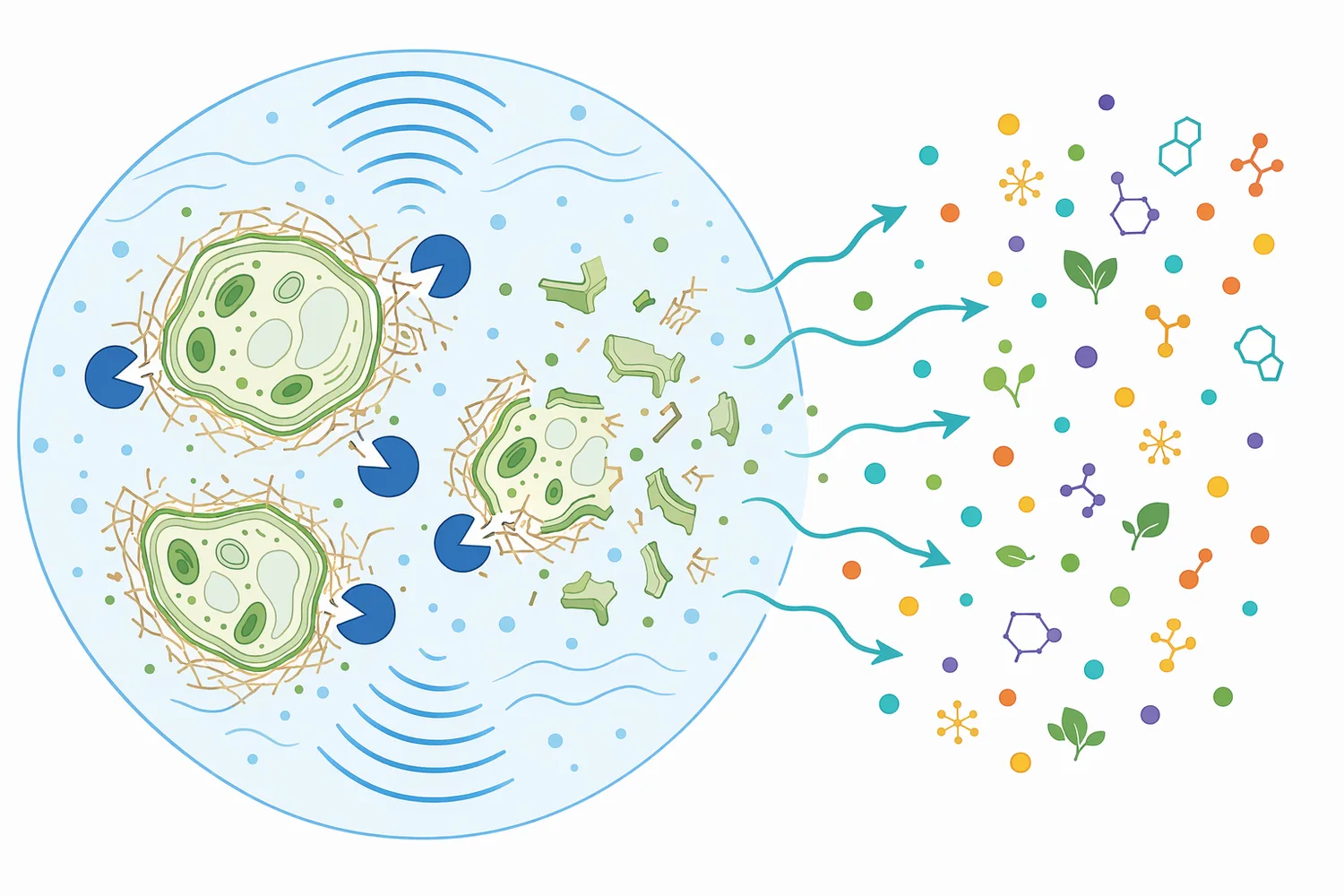
Citrus peel and fruit-derived streams often contain significant pectin, making them natural candidates for pectinase treatment. In these materials, pectinase can help reduce the thick, gel-like behavior that interferes with extraction, clarification, and filtration [8].
For citrus peel workflows, the enzyme’s role is to open pectin-rich tissue and improve release of soluble fractions while lowering the viscosity created by hydrated peel polysaccharides. This can support cleaner separation of liquid extract from insoluble peel residue and reduce the burden on downstream clarification steps .
Fruit-derived extracts, including berry, apple, pear, pomegranate, and rosehip-type materials, can show similar behavior because pectin contributes to both texture and haze. Pectinase helps convert a pectin-stabilized suspension into a more manageable extract stream by shortening the pectin chains that hold water and suspend fine particles [14].
Grape pomace is a well-studied substrate for enzyme-assisted extraction because it contains phenolics, pigments, seeds, skins, and structural polysaccharides. Pectinase is relevant in the skin and pulp fractions where pectin contributes to cell adhesion and liquid retention [10].
In grape pomace studies, pectinase is often compared with cellulase and hemicellulase because no single wall polymer explains the whole extraction barrier. Pectinase is most directly linked to viscosity reduction and cell separation, while cellulase and hemicellulase can improve access through fibrous wall regions [7].
When ultrasound is combined with enzyme treatment, the process can further improve wetting and mass transfer. This is useful for grape residues because phenolics are not evenly distributed in one easily extractable pool; they are associated with skins, seeds, and cell wall structures that respond differently to mechanical and enzymatic treatment [11].
Herbal and botanical materials are diverse, so pectinase performance depends on the raw material. Leaves may contain cuticular barriers and fibrous tissues; flowers may contain pigments and delicate phenolics; roots and stems may contain more structural fiber. In each case, pectinase is most relevant when pectin-rich wall material contributes to poor liquid release, haze, or thick extract behavior [12].
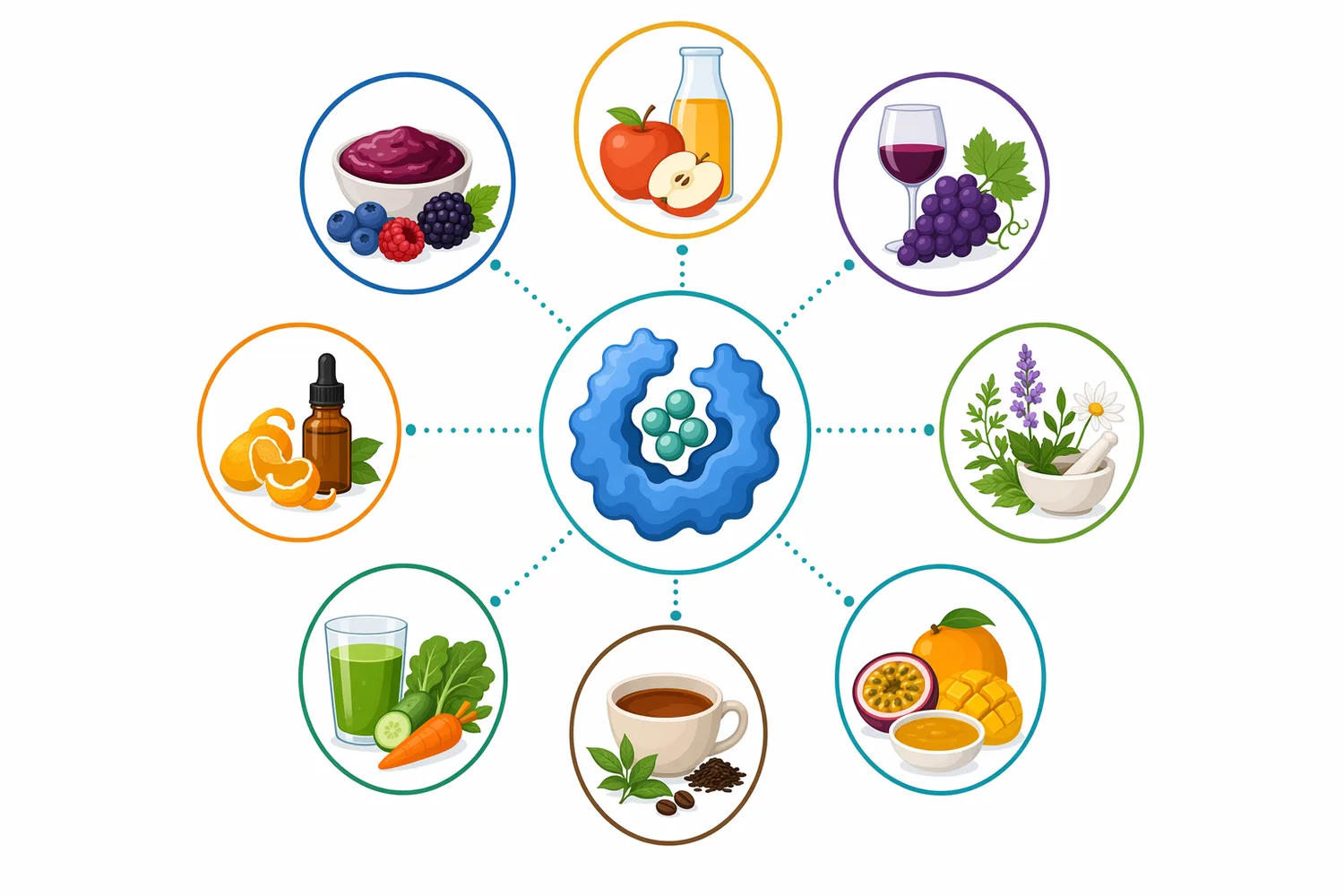
Verbascum nigrum, olive leaves, Plectranthus amboinicus, and Akebia flowers illustrate the breadth of botanical matrices studied for enzymatic extraction. These examples show that enzyme-assisted extraction is not limited to juice production; it is increasingly used to improve recovery of phenolics, anthocyanins, and other plant bioactives from specialized botanical materials [13].
For herbal extracts intended for food, beverage, cosmetic, or nutraceutical ingredient use, the value of pectinase is usually operational: improved extractability, clearer liquid, and reduced downstream separation difficulty. The final extract profile still depends on plant species, solvent system, thermal history, particle size, and target compound stability [17].
| Plant material studied | Extraction focus | Why pectinase or enzyme assistance is relevant | Source |
|---|---|---|---|
| Pomegranate peel | Antimicrobial plant extracts | Peel cell walls and pectic material can restrict phenolic release; enzyme assistance helps open the matrix | [9] |
| Syrah grape pomace | Phenolic antioxidants | Pomace is structurally complex; enzyme optimization supports recovery from skins, pulp, and residue | [10] |
| Grape pomace | Phenolic compounds | Pectinase, cellulase, and hemicellulase differ in how they weaken wall barriers | [7] |
| Rosehip pseudo-fruits | Phenolics and biological activity | Ultrasound plus enzymatic extraction addresses both mass transfer and wall-polymer resistance | [14] |
| Akebia flowers | Anthocyanins | Radio frequency assistance plus enzymes supports pigment release from delicate floral tissue | [15] |
| Olive leaves | Bioactive compounds | Enzymatic treatment improves access to phenolic-rich leaf material | [13] |
| Lychee peel | Polysaccharides | Peel structure benefits from ultrasonic and enzymatic disruption before polysaccharide recovery | [19] |
| Plectranthus leaves | Phenolics and bioactivity | Pectinase and cellulase treatments can change extracted phenolic content and activity | [16] |
The most realistic benefit is improved processability. When pectin is a major contributor to viscosity, pectinase can make botanical liquids easier to pump, mix, press, decant, centrifuge, or filter because the hydrated pectin network has been chemically shortened [1].
A second benefit is improved clarity. Pectinase reduces the ability of pectin to stabilize suspended particles and colloidal haze, which can support clearer extracts before final polishing or concentration. This is especially valuable where visual consistency, sediment control, or filterability is important in the finished plant extract [5].
A third benefit is improved release of entrapped compounds. By weakening pectin-rich wall regions and reducing cell adhesion, pectinase can increase solvent access to intracellular and wall-associated compounds. This helps explain why enzyme-assisted extraction is repeatedly studied for phenolics, anthocyanins, antioxidants, and plant polysaccharides [3].
A fourth benefit is better use of plant residues. Peels, pomace, leaves, and other byproducts often contain valuable compounds but are difficult to process because their wall structure was not designed for easy extraction. Enzyme-assisted extraction supports valorization by turning rigid or gel-forming residues into more accessible raw materials [17].
Pectinase is highly useful when the problem is pectin. It is less likely to solve issues caused primarily by protein haze, starch gelatinization, oil emulsions, waxes, mineral solids, microbial spoilage, oxidation, or poor raw-material handling. Those problems may require different process controls or other treatment steps [1].
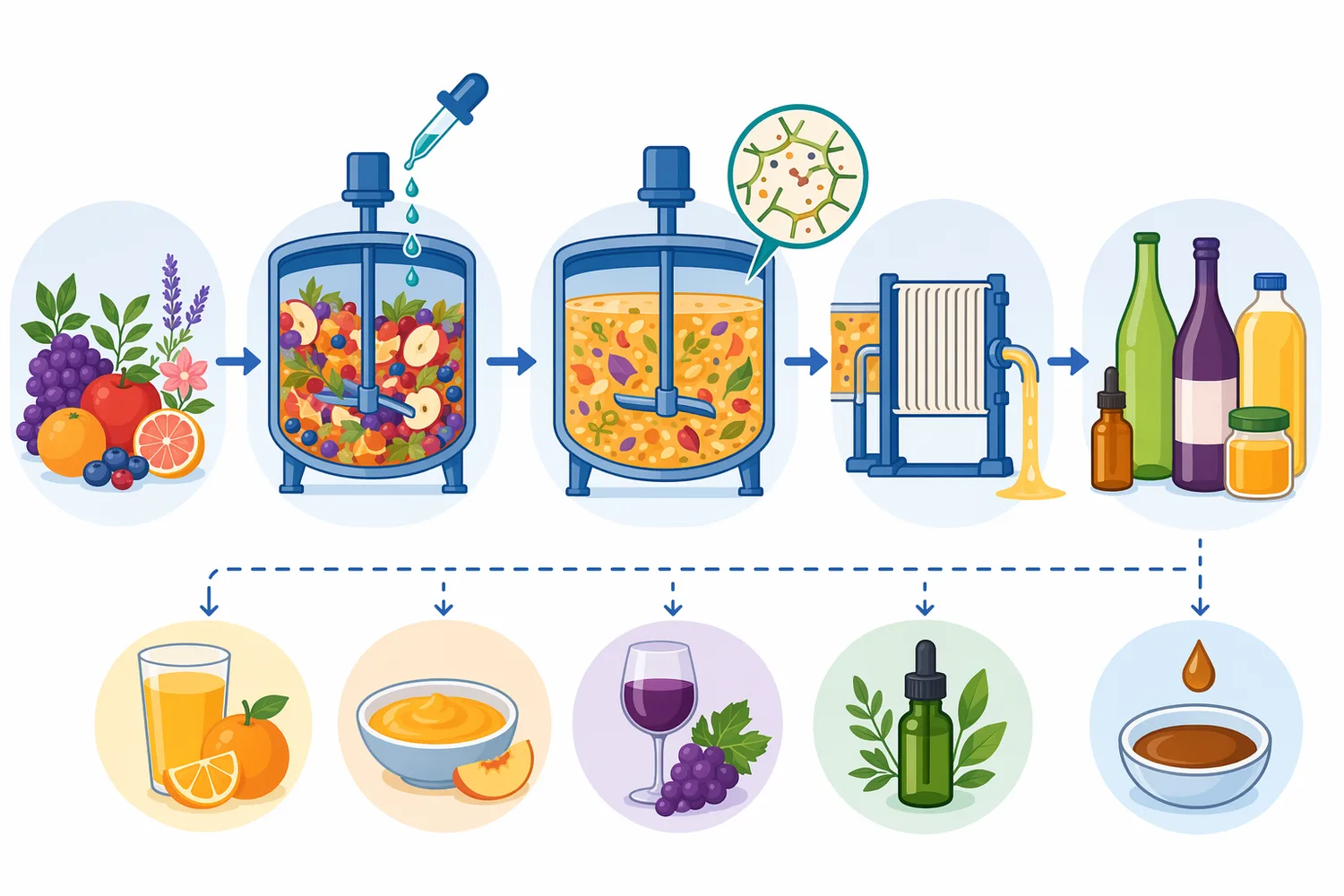
Different plant materials also respond differently. A ripe fruit pulp, dried herb leaf, grape seed fraction, citrus peel, and olive leaf powder do not contain the same wall structure or pectin accessibility. This is why published enzyme-assisted extraction studies use optimized conditions for each substrate rather than assuming one universal result [13].
Enzyme treatment can also change extract composition. By opening the wall matrix, pectinase may release desirable compounds along with other soluble materials, depending on the substrate. For many processes this is beneficial, but it reinforces the need to evaluate the treated extract in the context of the intended food, beverage, botanical, cosmetic, or ingredient application [16].
Food-Grade Pectinase for Plant Extraction is supplied by Enzymes.bio for plant extraction and clarification applications. The product is offered online in a 1 kg format, allowing buyers to place an order directly through the website, pay online, and have the order processed and shipped .
A Certificate of Analysis and Safety Data Sheet are provided with the order. The product is intended for appropriate food and plant-processing use rather than direct consumer consumption .
Food-grade pectinase improves plant extraction by cutting pectin, the hydrated structural polysaccharide that often makes botanical liquids thick, cloudy, slow to separate, and resistant to complete extraction. By shortening pectin chains and weakening pectin-rich cell wall regions, the enzyme reduces viscosity, improves clarification, supports filtration, and helps release compounds trapped within plant tissues [1].
The research base is broad: enzyme-assisted extraction has been studied in grape pomace, pomegranate peel, rosehip, olive leaves, Akebia flowers, lychee peel, Brassica tissues, and herbal leaves, with a consistent theme that plant wall disruption improves access to valuable compounds when the substrate structure is a limiting factor [3]. For buyers working with pectin-containing botanical liquids, Enzymes.bio’s Food-Grade Pectinase for Plant Extraction offers a practical enzyme tool for clearer, more manageable, and more extractable plant processing streams .
Sold by the 1 kg unit, in stock and ready to ship. Order directly on our store — pay online and we process your order. A Certificate of Analysis and Safety Data Sheet are included with every order.
Buy Food-Grade Pectinase For Plant Extraction →Numbered in order of first citation. Open-access sources, each verified reachable at publication; citation numbers in the text link here.