
Food-grade pectinase for white wine production is a processing enzyme used to break down grape pectin during crushing, short maceration, pressing, and juice clarification. By cutting large pectin molecules into smaller fragments, it can reduce must viscosity, improve juice release, accelerate settling, and make early white-wine processing more consistent. Enzymes.bio supplies food-grade pectinase directly online in 1 kg units; buyers place and pay for the order online, and the order is then processed and shipped with the accompanying Certificate of Analysis and Safety Data Sheet.
White wine production depends on separating clean juice from skins, pulp, seeds, and suspended solids while protecting aroma, limiting oxidation, and maintaining a controlled fermentation environment. Pectin is one of the plant cell-wall polysaccharides that can make that separation harder. In grapes, pectin contributes to the structure of skins, pulp, and the middle lamella — the “cementing” layer that helps plant cells hold together. Once grapes are crushed, pectin can move into the liquid phase, where it binds water, increases viscosity, and stabilizes fine particles in suspension.
That matters because white wine processing is usually front-loaded: decisions made between receiving fruit and starting fermentation influence juice yield, turbidity, solids load, fermentation behavior, and filtration demand later on. Reviews of fruit-wine and fruit-beverage processing consistently identify pectinase as one of the enzyme categories used to improve juice extraction, clarification, and overall processing quality in fruit-based fermentations [1].
In practical terms, a pectin-rich grape mash or juice may press slowly, drain poorly, settle reluctantly, or remain cloudy even when other cellar conditions are well managed. Pectinase addresses this specific physical cause: it changes the structure of pectin itself, rather than merely forcing solids out by mechanical pressure or masking the issue with downstream clarification.
Food-grade pectinase is not “one reaction” in the way a single pure enzyme might be described in a biochemistry textbook. Commercial pectinase preparations used in food and beverage processing generally contain complementary pectolytic activities that act on different parts of the pectin structure. These activities can include enzymes that cleave the galacturonic acid backbone of pectin and enzymes that act on methylated regions of the molecule; fruit-wine studies commonly discuss pectinase systems in terms of pectin methylesterase, pectin lyase, and polygalacturonase behavior [2].
For the winemaker, the useful effect is physical and observable. Large pectin molecules behave like hydrocolloids: they hold water, increase thickness, and help keep microscopic grape particles suspended. When pectinase cuts those molecules into smaller fragments, the must usually becomes less resistant to flow, the press cake can drain more readily, and suspended solids are less protected by a stabilizing pectin network.
This is why pectinase is most relevant early in the process. It is commonly associated with grape crushing, short skin contact, pre-press treatment, press operation, juice settling, and pre-fermentation clarification. Its value is not that it ferments sugar or creates wine aroma directly; its primary role is to make the grape matrix release liquid and clarify more predictably.
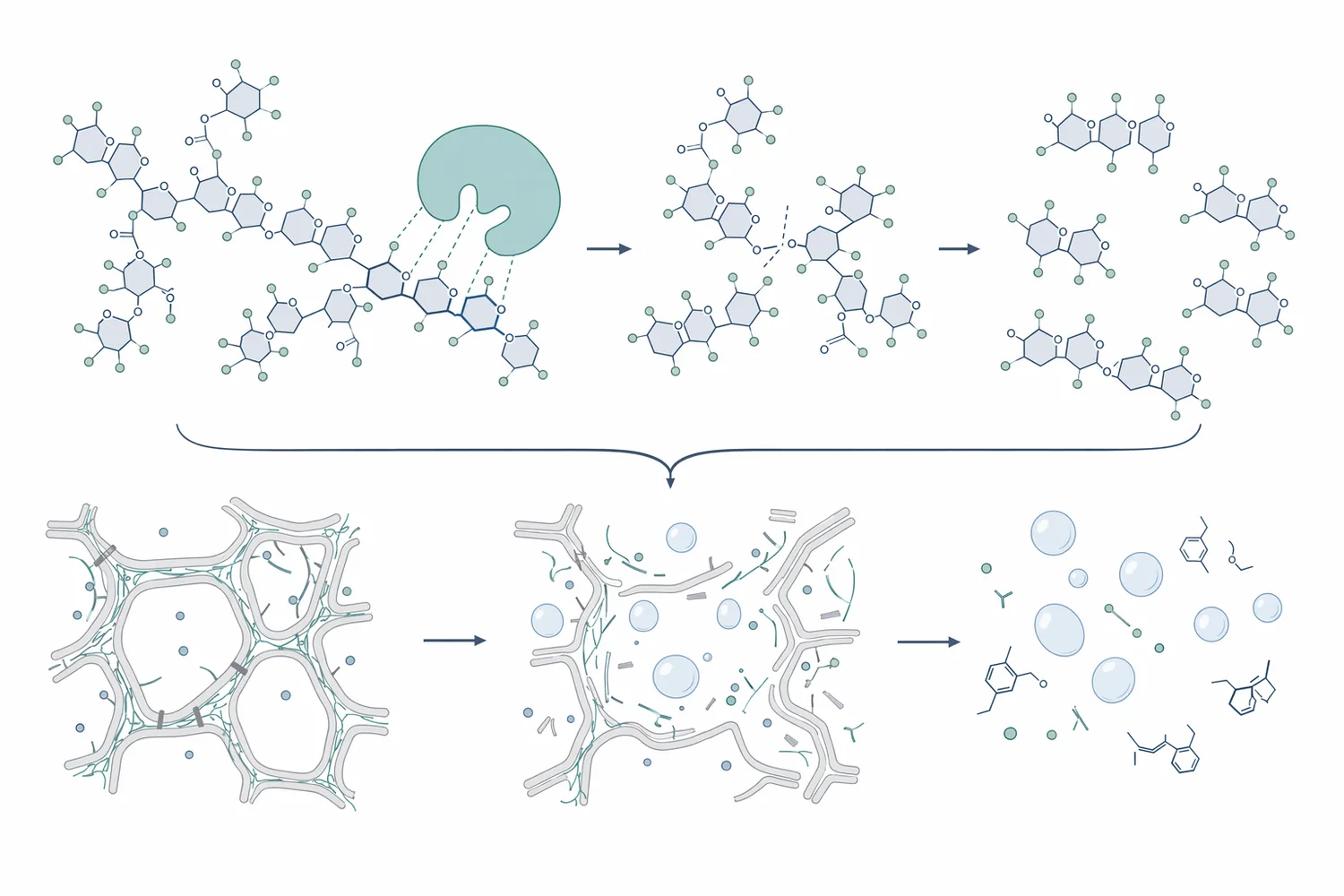
Pectin is concentrated in plant cell walls and the middle lamella, where it helps bind cells into tissue. During crushing and maceration, grape tissue is disrupted, but disruption is incomplete: much of the juice remains trapped inside pulp structure, and soluble pectin can thicken the liquid phase. Pectinase works by hydrolyzing or cleaving pectin chains so that the cell-wall network loses part of its water-binding and particle-suspending capacity.
The mechanical consequence is similar to loosening a gel. A grape mash with intact pectin behaves more like a wet, cohesive pulp; after pectin breakdown, the same mash can release liquid more readily because the plant-cell “glue” has been weakened. This is the reason pectinase is widely studied across fruit-wine matrices where juice recovery, clarification, and fermentation quality are affected by fruit structure [3].
At the particle level, pectin fragments no longer hold fine solids in suspension as effectively. That allows suspended material to collide, aggregate, and settle under gravity or respond more efficiently to normal clarification steps. It also reduces the load placed on downstream filtration, because the liquid contains fewer intact pectin structures capable of plugging filter media or slowing flow.
At the process level, the enzyme does not add extract in a generic way; it changes the extractability of compounds that are already present in the grape. This is why outcomes depend on the fruit and the winemaking style. A short, cool treatment before pressing may mainly improve juice release and settling, while a longer contact period with skins can also affect extraction of skin-derived compounds, which may or may not be desirable for a particular white wine style.
The word “pectinase” covers a family of related enzyme functions. The details are biochemical, but the practical meaning is straightforward: different pectolytic activities attack different structural features of pectin, and together they reduce the ability of pectin to thicken, bind, and stabilize the must.
| Pectolytic activity | Main action on pectin | Practical effect in white wine processing | Important interpretation |
|---|---|---|---|
| Polygalacturonase-type activity | Cleaves the galacturonic acid backbone of pectin | Reduces polymer size, viscosity, and pectin-related suspension of solids | Closely associated with softening the grape matrix and improving clarification behavior |
| Pectin lyase-type activity | Splits pectin chains by a non-hydrolytic cleavage mechanism | Helps depolymerize pectin and reduce gel-like behavior | Can support must clarification where intact pectin is a key obstacle |
| Pectin methylesterase-type activity | Removes methyl groups from methylated pectin | Alters pectin chemistry and can influence downstream cleavage | Relevant to methanol formation discussions in fruit wines, because demethylation can release methanol |
| Combined pectinase preparation | Uses multiple complementary actions | Improves juice release, lowers viscosity, and supports settling | The winemaking result comes from the combined change in the grape pectin network, not from a single isolated effect |
Fruit-wine research on mandarin wine has specifically examined pectinase with low pectin-methylesterase activity as a route to enhance quality and safety while reducing methanol formation, illustrating that the balance of pectolytic activities can matter in high-pectin fruit systems [2]. For white grape wine, the core processing target remains pectin breakdown for extraction and clarification, but the broader fruit-wine literature is useful because it shows why pectin chemistry should be treated as real process chemistry, not as a vague “clarifying aid.”
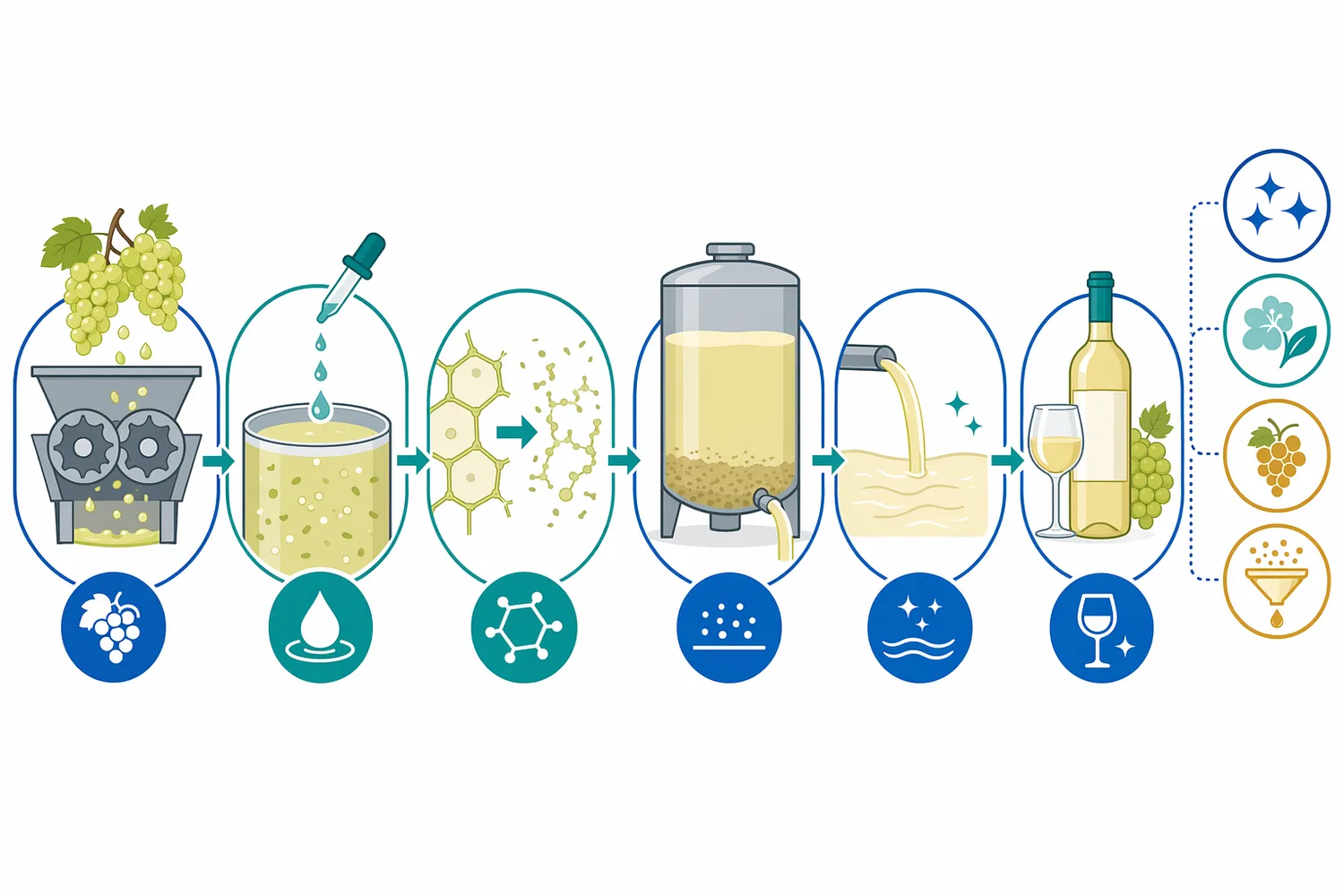
One of the most direct reasons to use pectinase in white wine production is juice release. White grapes may look crushed, yet a meaningful portion of juice can remain trapped inside pulp tissue or retained in a compact press cake. If more pressure is required to obtain juice, the process may also extract more phenolics, solids, and potentially bitter or astringent components from skins and seeds.
Pectinase weakens the pectin-rich structure that holds tissue together. Once that structure is partially degraded, juice can move out of the mash more freely and through the press cake with less resistance. Studies in other fruit wines show the same principle: pectinase-treated fruit juice systems are repeatedly investigated for extraction yield and wine-quality effects, including strawberry wine, guava wine, jamun wine, and soursop wine [4].
For white wine, this can support a more controlled press fraction strategy. Better drainage at lower mechanical intensity can help preserve the distinction between free-run, early press, and harder press fractions. That distinction matters because the later fractions often contain more solids and phenolic material, which can influence bitterness, oxidation sensitivity, and clarification load.
The benefit is not simply “more liquid.” It is better liquid separation from the same biological material. When the grape matrix releases juice more readily, the cellar has more control over how much pressure to apply, how long the press cycle runs, and how much solids-rich fraction is included in the ferment.
Pectin-rich must behaves differently from low-pectin must. It can pump more slowly, drain more slowly, and form a more compact solids layer during settling. Even when the liquid does not appear dramatically thick, intact pectin can affect the microstructure of the must enough to reduce separation efficiency.
Pectinase reduces this by shortening pectin chains and decreasing their ability to bind water. A smaller pectin fragment contributes less to viscosity than a long intact polymer because it cannot form the same extended, hydrated network. This is the same general reason pectinase is used in fruit juice clarification applications, including work on apple juice clarification where pectinase production and application were evaluated for improving juice processing [5].
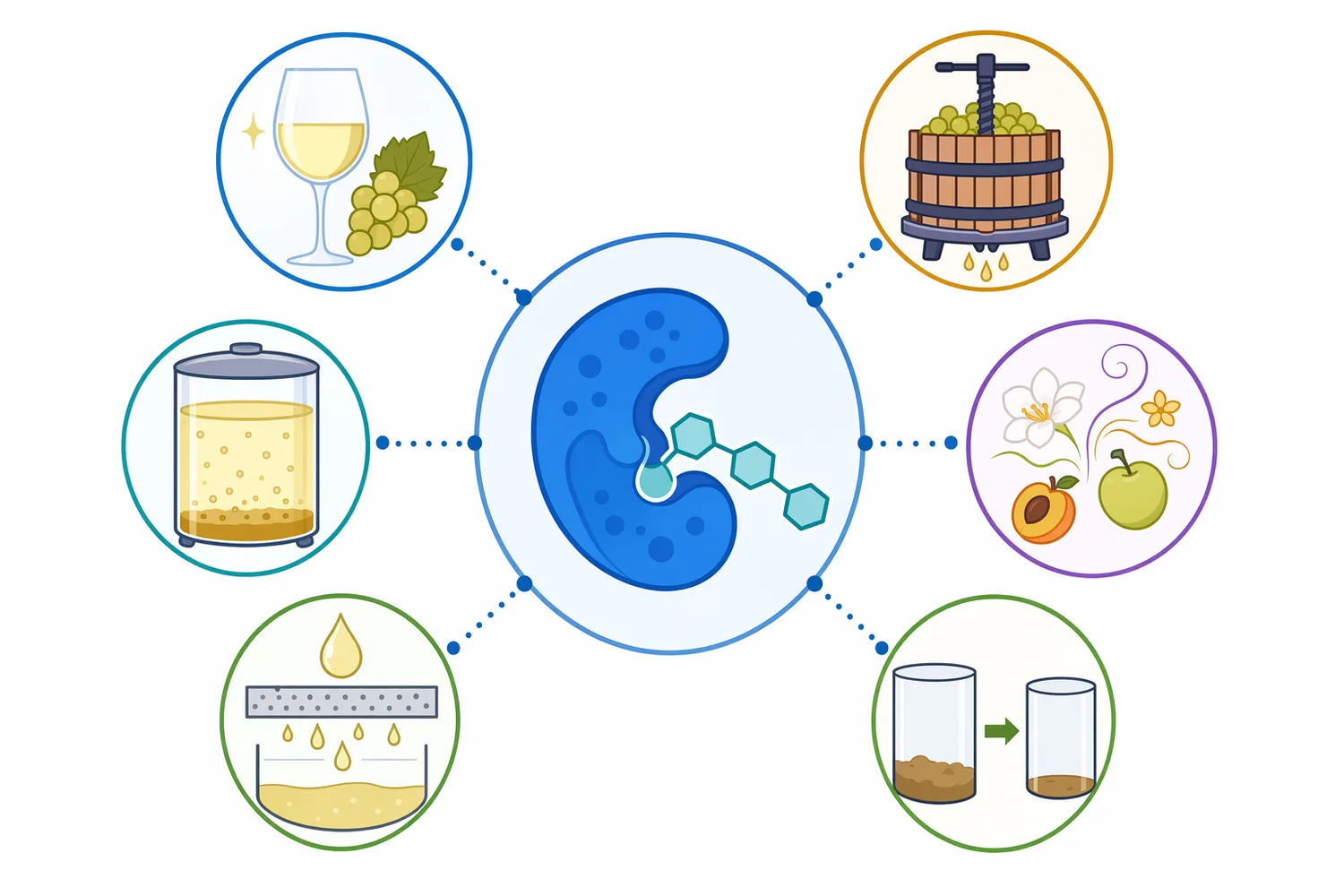
In white wine production, lower viscosity supports several practical operations. Press juice can drain more evenly, settled juice can rack more cleanly, and filtration steps later in the process may face less pectin-related resistance. The effect is especially useful when fruit condition, variety, or harvest timing produces must that is naturally slow to settle.
Many white wine styles benefit from a controlled level of pre-fermentation turbidity. Too much suspended solid material can contribute to reductive risk, harshness, sluggish clarification later, or excessive lees burden. Too little turbidity can also be undesirable for some fermentations, so the goal is not always maximum clarity; the goal is predictable clarification to the winemaker’s target.
Pectin interferes with that predictability by stabilizing fine particles. It forms a colloidal environment where grape solids remain suspended rather than settling compactly. Pectinase changes that environment: as the pectin network is cut, particles are less protected, and gravity-based settling, flotation, racking, or other normal cellar practices can work more efficiently.
Research specifically focused on wine must clarification has investigated ways to tune pectinase activity, including the effect of electric fields on enhanced clarification of wine must [6]. The significance for everyday white winemaking is that pectinase activity is directly relevant to clarification performance, and that must clarification is not only a mechanical operation — it is also affected by the biochemical state of pectin in the juice.
Pectinase should be understood as an upstream pectin-degrading enzyme, not as a universal clarifier. It does not work by binding proteins the way some fining agents do, and it does not physically sieve particles the way filtration does. Instead, it changes the grape-derived polymer matrix that makes juice difficult to separate.
This distinction helps set realistic expectations. If a haze problem is caused primarily by protein instability, tartrate crystallization, microbial spoilage, metal casse, or phenolic instability, pectinase is not the direct solution. If the problem is pectin-related viscosity, poor juice release, slow settling, or filtration resistance caused by intact pectin, pectinase is much more relevant.
Wine enzyme literature describes pectinases as one category among several enzymes used in winemaking, alongside enzymes such as glucanases, glycosidases, acid urease, glucose oxidase, acid proteases, and laccases [1]. Each enzyme category has a different substrate and a different purpose. Pectinase acts on pectin; it should not be expected to perform the jobs of enzymes that act on glucans, proteins, aroma glycosides, urea, oxygen-related substrates, or phenolic oxidation products.
Pectinase is often used alongside normal cellar operations, but its mechanism is different from purely physical or fining-based approaches. The table below shows where it fits conceptually.
| Intervention | Main target | How it works | Where it is strongest | What it does not replace |
|---|---|---|---|---|
| Pectinase treatment | Grape pectin in mash or juice | Enzymatically cuts pectin into smaller fragments | Juice release, viscosity reduction, settling support, pectin-related filterability | Sanitation, fermentation control, protein stabilization, cold stabilization |
| Settling by time and temperature | Suspended solids | Allows particles to fall under gravity, often supported by cooling | Reducing gross solids before fermentation | Breakdown of pectin that keeps particles suspended |
| Fining | Specific colloids or reactive compounds | Uses added materials to bind, neutralize, or remove target compounds | Adjusting clarity, phenolics, proteins, or other stability issues depending on agent | Enzymatic weakening of the grape cell-wall matrix |
| Filtration | Particles and microorganisms above the filter’s retention threshold | Physically separates material from liquid | Final polishing, microbial reduction, bottling preparation | Upstream extraction improvement or pectin depolymerization |
| Press program adjustment | Grape solids and juice fractions | Uses pressure, cycle timing, and mechanical separation | Fraction management and yield control | Biochemical reduction of pectin viscosity |
This comparison is important because it prevents overuse or misplacement of pectinase. The enzyme works best when it has access to the pectin-rich grape matrix or juice early enough to change how that material behaves. Used too late, it may still help with pectin-related issues, but it cannot undo every downstream consequence of earlier difficult pressing or unclear settling.
In white wine production, pectinase is most logically used before fermentation, when pectin is still affecting mash structure, juice viscosity, or settling. The main use points are crushing or destemming, short skin contact, pre-press holding, juice settling, and early clarification. These are process contexts rather than rigid instructions; actual handling depends on the winery’s established protocol and the target wine style.
At crushing or destemming, the enzyme can come into contact with damaged skins and pulp when pectin is newly exposed. This timing supports tissue breakdown before the press cycle, which can improve drainage and juice separation. In short skin-contact processing for aromatic whites, pectinase may also assist release of juice and grape-derived components, but extraction must still be managed carefully to avoid unwanted phenolic pickup.
Before pressing, pectinase can help loosen the grape matrix so juice moves through the cake more easily. During juice settling, it can reduce pectin-related cloud stability so solids settle more predictably. In both cases, the key requirement is contact between enzyme and substrate: pectinase can only act where pectin is present and accessible.
Fruit-wine studies using pectinase-treated and untreated juices, including work on strawberry wine and guava wine, reinforce the practical value of comparing enzyme-treated matrices with untreated controls when evaluating extraction, fermentation behavior, and quality outcomes [3]. The broad lesson for white wine is that pectinase effects are real but matrix-dependent: grape variety, maturity, temperature, solids level, and processing time all influence the visible outcome.
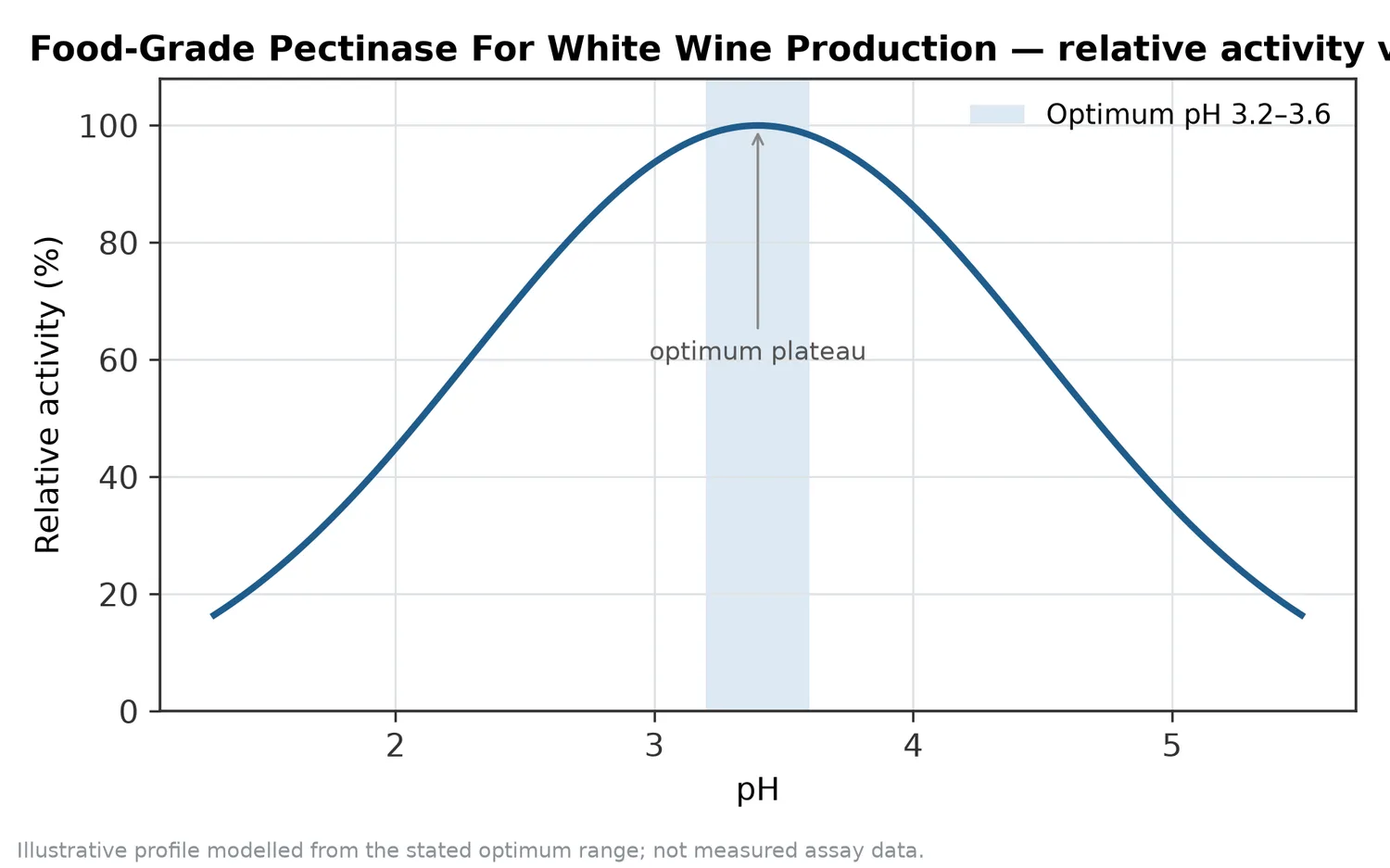
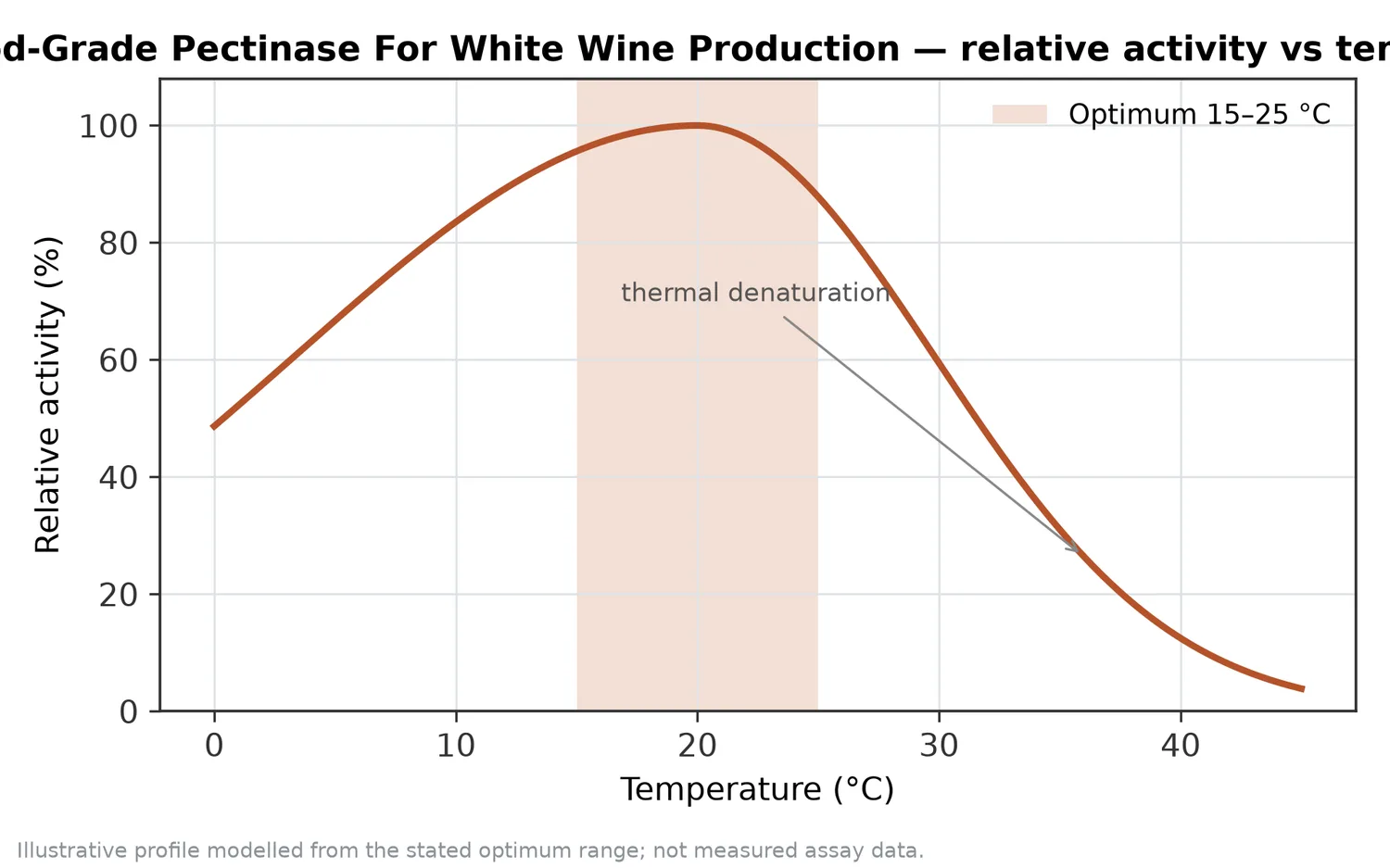
White wine must is often processed cool to preserve aroma and reduce oxidation. Cool conditions are helpful for wine style, but they generally slow enzyme-catalyzed reactions. That does not make pectinase ineffective; it simply means the reaction may require enough contact time within the actual cellar workflow for pectin breakdown to become visible.
Acidity also matters because grape juice is naturally acidic. Pectinase used for wine and beverage applications is intended for acidic fruit systems, but enzyme speed and completeness still depend on the must environment. Fruit-wine research repeatedly shows that pectinase behavior is part of a larger fermentation and processing system, not an isolated variable [1].
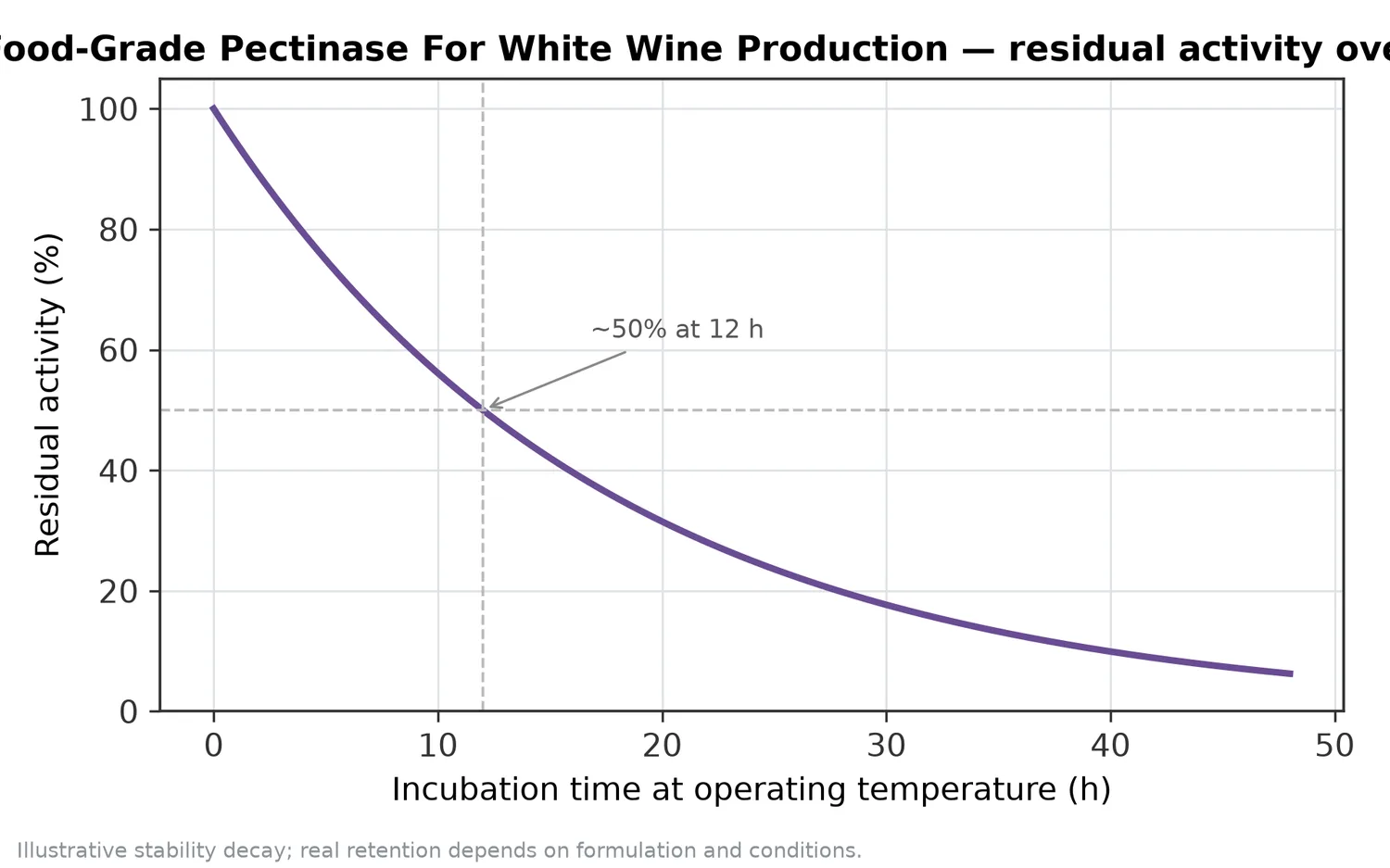
Contact time is the practical bridge between enzyme chemistry and cellar scheduling. If the enzyme is added and the juice is immediately separated, chilled, clarified, or moved through the process before pectin has been substantially modified, the effect may be limited. If the enzyme has adequate exposure to the grape substrate, the physical effects — easier drainage, lower viscosity, improved settling — are more likely to be seen.
The most defensible reason to use food-grade pectinase in white wine production is processing performance: juice release, viscosity reduction, clarification support, and smoother downstream handling. Sensory effects can occur, but they are less universal. A clearer, better-settled must may ferment differently from a highly turbid must; a gentler press fraction may taste different from a hard-pressed fraction; and short maceration with enzyme can influence extraction. Still, those outcomes depend heavily on grape variety, fruit condition, oxidation management, yeast, nutrient status, fermentation temperature, and lees handling.
This is why pectinase should not be presented as an aroma additive. It does not create varietal aroma compounds from nothing. It may help release juice and grape constituents from tissue, and it may help the cellar control solids and fractions, which can indirectly influence the sensory profile of the finished wine.
Studies in non-grape fruit wines show that pectinase treatment can affect quality characteristics during fermentation and storage, such as in soursop wine and jamun wine research [7]. Those findings support the idea that enzymatic maceration can influence beverage quality, but they should be translated carefully into white grape wine. The reliable claim is that pectinase changes the processing matrix; the final sensory result depends on how the winemaker uses that changed matrix.
A technical discussion of pectinase should also acknowledge methanol. Methanol can form when methyl groups are removed from methylated pectin, especially through pectin methylesterase-type activity. This is why fruit-wine research increasingly distinguishes between pectinase systems and pays attention to the balance of pectolytic activities.
Recent kiwifruit wine research examined pectinase from Bacillus velezensis W17-6 in relation to methanol content and overall wine quality, showing that pectinase selection and behavior can be relevant to both processing and safety in high-pectin fruit wines [8]. Mandarin wine research has similarly focused on low pectin-methylesterase activity pectinase as a mechanism for methanol reduction while maintaining quality benefits [2].
For white grape wine, commercial pectinase use is well established within normal winemaking control frameworks. The key point is not to create alarm, but to explain the chemistry honestly: pectin degradation is beneficial for juice handling, and the specific pectolytic profile matters because different activities alter pectin in different ways. Responsible use means applying the enzyme as a food-grade processing aid within the intended beverage process.
Although this article focuses on white wine, much of the strongest open research on pectinase comes from fruit-wine and fruit-juice systems. That evidence is still useful because the substrate problem is similar: fruits contain pectin-rich cell walls, and pectin affects juice release, viscosity, clarification, fermentation behavior, and final quality.
Strawberry wine research has studied pectinase treatment in relation to juice extraction yield and quality characteristics during ethanolic fermentation [3]. Guava wine work has compared pectinase-treated and untreated juice in fermentative production [4]. Jamun wine research has examined enzymatic maceration and other processing variables affecting quality [9]. These fruit matrices differ from white grapes, but they demonstrate the same underlying principle: when pectin is part of the processing bottleneck, pectinase can materially change how the must or juice behaves.
For white wine producers, that broader evidence supports confidence in the mechanism while preserving realistic expectations. Grapes are not strawberries, guavas, jamun, or soursop, and no single fruit-wine study can be used to promise a specific white-wine result. But the consistency of pectinase use across fruit systems strengthens the case that pectin breakdown is a practical, well-founded processing strategy.
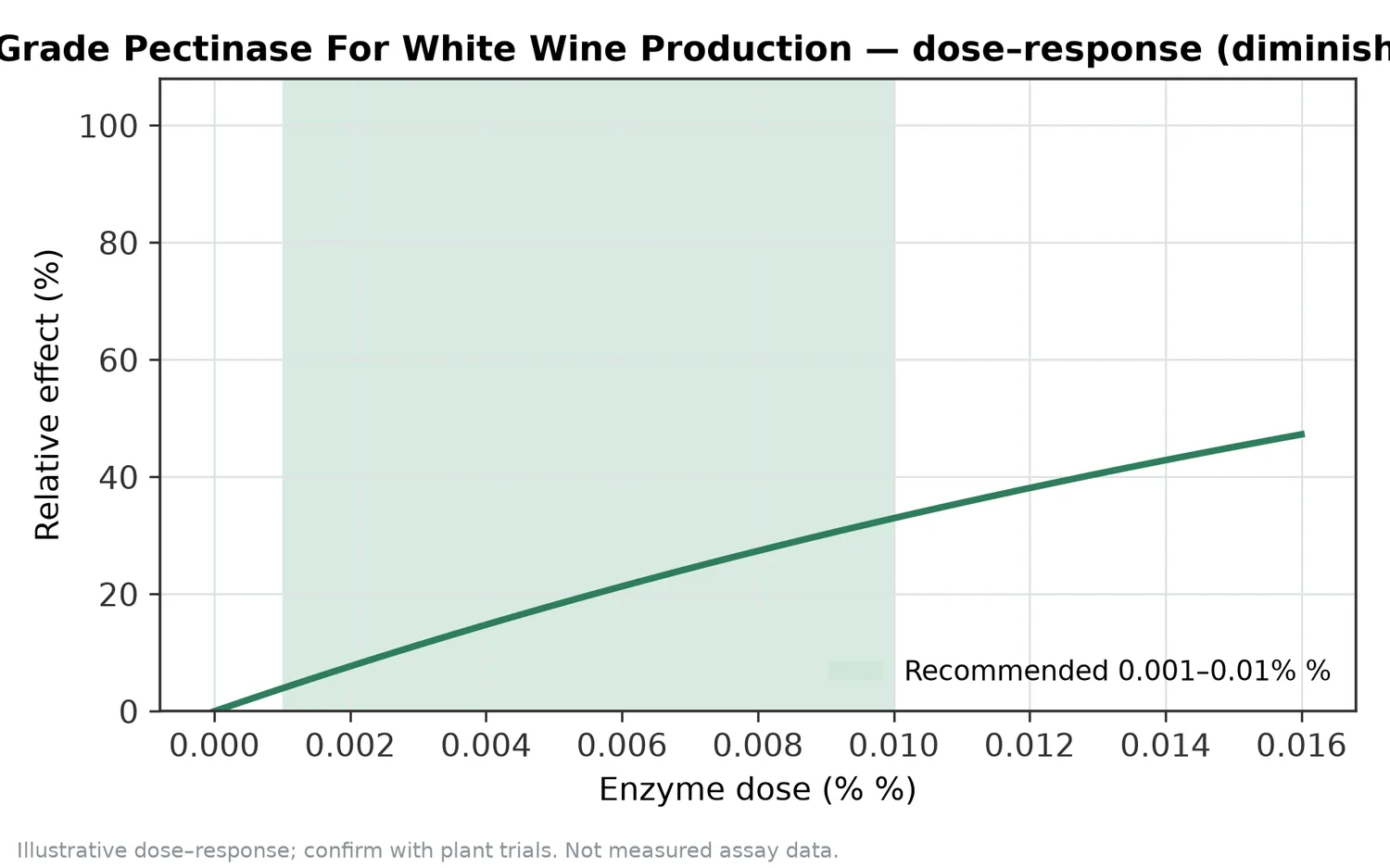
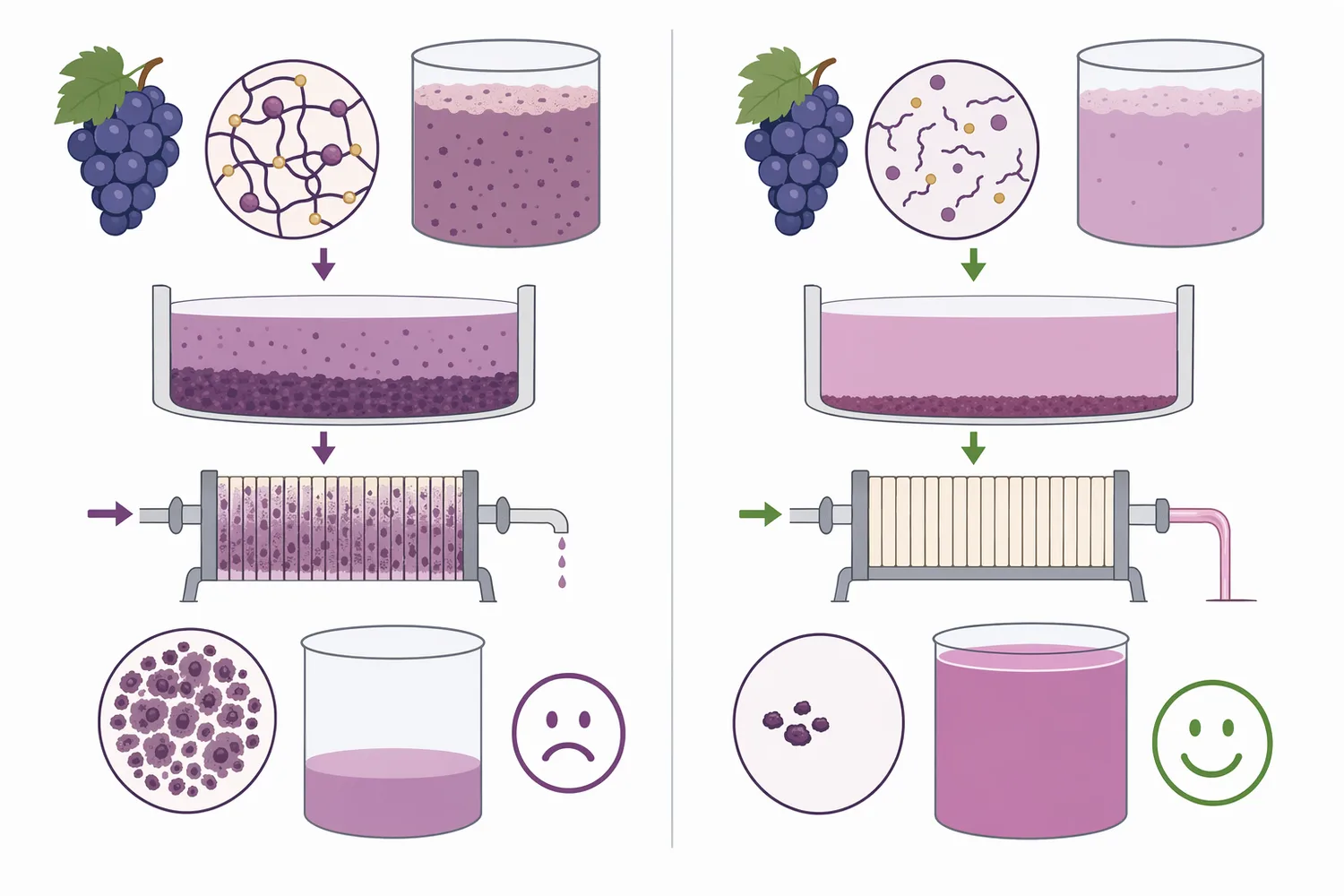
Food-grade pectinase is most valuable when pectin is creating a physical processing constraint. That may appear as slow press drainage, low free-run recovery, sticky or compacted press cake, hazy juice that resists settling, high solids carryover, or filtration behavior that suggests colloidal interference. In these situations, pectinase addresses the upstream cause rather than simply adding another downstream separation step.
The effect is especially relevant during harvest, when time, tank space, press capacity, and clarification capacity are all under pressure. A must that drains and settles predictably is easier to schedule. Even modest improvements in handling can matter when multiple lots must be processed quickly without compromising white wine aroma protection or fraction control.
The business value is therefore operational as much as enological. Pectinase can support more efficient use of press cycles, better clarification timing, reduced need for corrective handling, and a cleaner transition from juice preparation into fermentation. These are practical benefits for wineries and beverage producers that need consistency, not just theoretical enzyme activity.
Pectinase does not replace sound fruit handling, sanitation, oxidation control, yeast management, nutrient management, temperature control, or stabilization. It does not correct diseased fruit, remove all haze risks, or guarantee a particular aroma or mouthfeel. It also does not perform the same role as bentonite, protein fining agents, flotation aids, sterile filtration, cold stabilization, or microbial control measures.
Its role is narrower and more useful when defined precisely: pectinase reduces pectin-related barriers to juice release, settling, and flow. If the problem is not pectin-related, another intervention may be required. If the problem is pectin-related, an upstream enzymatic approach can be more elegant than relying entirely on pressure, time, or filtration later.
That precision is what makes pectinase a trusted tool in white wine production. It is not a cure-all; it is a targeted processing enzyme for a known grape-derived substrate.
Enzymes.bio supplies food-grade pectinase for white wine production directly online in 1 kg units. The purchasing process is straightforward: the buyer places the order online, pays online, and the order is then processed and shipped. The Certificate of Analysis and Safety Data Sheet are supplied with the order.
This model suits businesses that want a practical route to purchase a recognized wine-processing enzyme without a custom ordering process. Enzymes.bio is a supplier, and this document is intended to explain the application science and processing rationale behind pectinase use in white wine production.
Food-grade pectinase is a well-established enzyme tool for white wine production because it acts on a specific grape component that strongly affects processing: pectin. By breaking down pectin in crushed grapes, pulp, and juice, it can reduce viscosity, loosen the grape matrix, improve juice release, support faster settling, and reduce pectin-related handling problems before fermentation.
The best-supported benefits are operational: easier pressing, clearer must preparation, more predictable clarification, and smoother downstream processing. Research across fruit-wine and juice systems supports the mechanism and shows why pectinase is widely used when pectin-rich fruit matrices limit extraction and clarification [1]. Sensory effects may follow from better juice handling and more controlled processing, but they remain dependent on grape variety, winemaking protocol, fermentation management, and intended wine style.
For white wine producers buying through Enzymes.bio, food-grade pectinase offers a practical processing aid supplied online in 1 kg units, with the accompanying Certificate of Analysis and Safety Data Sheet included with the order.
Sold by the 1 kg unit, in stock and ready to ship. Order directly on our store — pay online and we process your order. A Certificate of Analysis and Safety Data Sheet are included with every order.
Buy Food-Grade Pectinase For White Wine Production →Numbered in order of first citation. Open-access sources, each verified reachable at publication; citation numbers in the text link here.