
Direct answer: Food Grade Protease for Enzymatic Dehairing is a proteolytic enzyme used in leather beamhouse operations to loosen hair by hydrolyzing selected protein materials around the hair root and within the hide or skin matrix. In contrast to lime–sulfide dehairing, which chemically attacks keratin and can pulp hair, enzymatic dehairing is designed to weaken the biological “anchoring” system of hair while helping preserve the collagen structure that becomes leather when the process is properly controlled [1].
Enzymes.bio supplies this protease product directly online by the 1 kg unit. After online payment, the order is processed and shipped, and a Certificate of Analysis and Safety Data Sheet are included with the order.
Food Grade Protease for Enzymatic Dehairing is a protease preparation supplied for industrial leather-processing use. A protease is an enzyme that catalyzes the hydrolysis of peptide bonds in proteins; in dehairing, the useful action is not indiscriminate protein destruction, but controlled proteolysis of selected non-collagenous materials associated with hair anchoring, follicle structure, epidermal attachments, and interfibrillar “cementing” substances [1].
The term food grade should be read carefully in this context. It describes the enzyme category and documentation basis of the supplied product, not the end use: enzymatic dehairing is an industrial beamhouse operation, not a food application. Food-grade proteases are widely discussed in industrial biotechnology because proteases are versatile biocatalysts used across food, feed, detergent, leather, and waste-treatment applications, with performance depending on enzyme type, substrate accessibility, and process conditions [2].
In leather processing, the most relevant proteases are commonly alkaline proteases, because dehairing and related beamhouse operations often take place in alkaline environments. Reviews of Bacillus alkaline proteases describe their broad industrial use, including leather processing, because many alkaline proteases remain active under conditions that overlap with beamhouse chemistry [3].
The hide or skin entering the beamhouse is a composite biological material. The hair shaft is made primarily of keratin, but hair removal is not only a keratin problem: hair is anchored in follicles surrounded by root sheaths, epidermal proteins, basement-membrane components, proteoglycans, and dermal matrix structures that connect the hair unit to the skin [1].
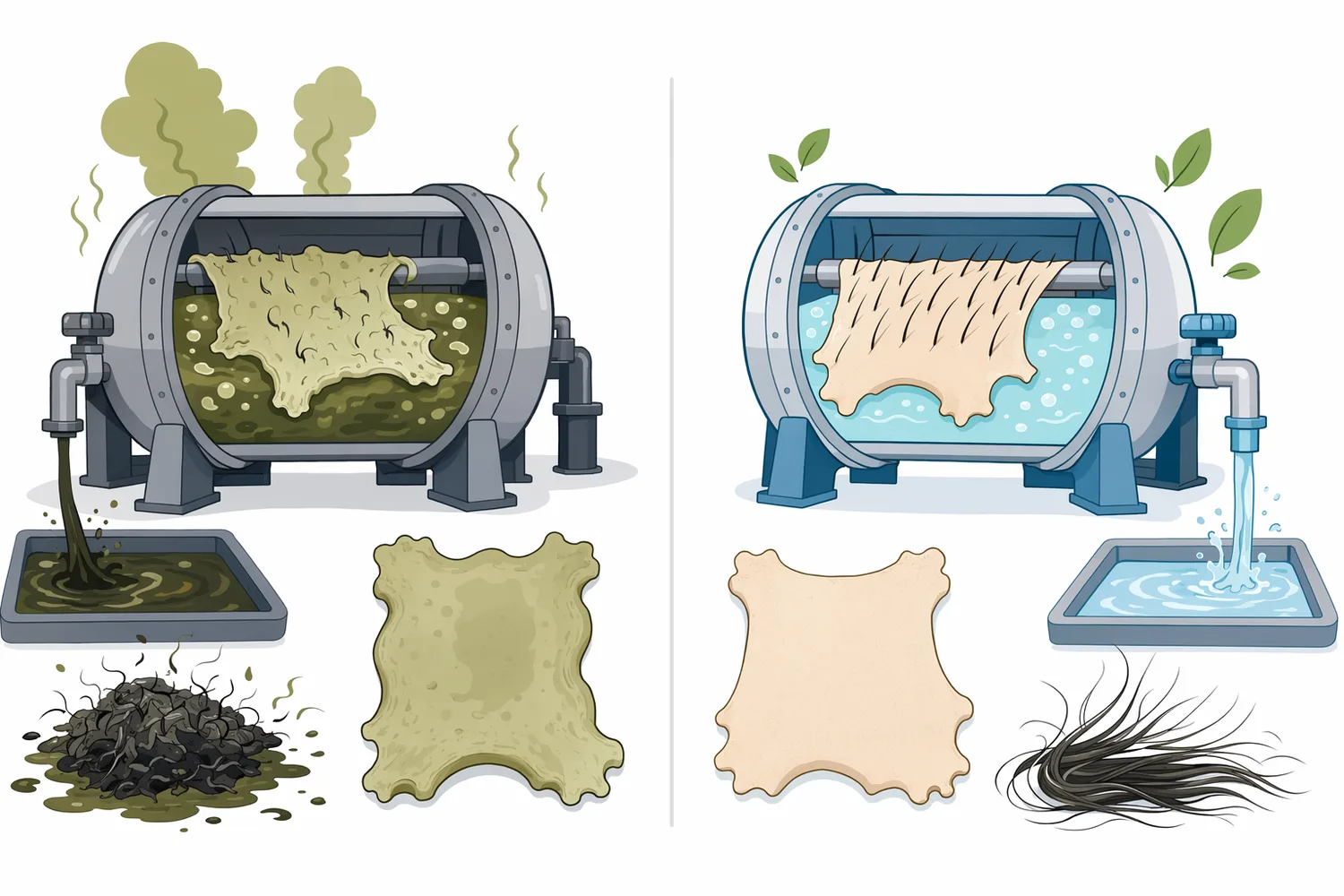
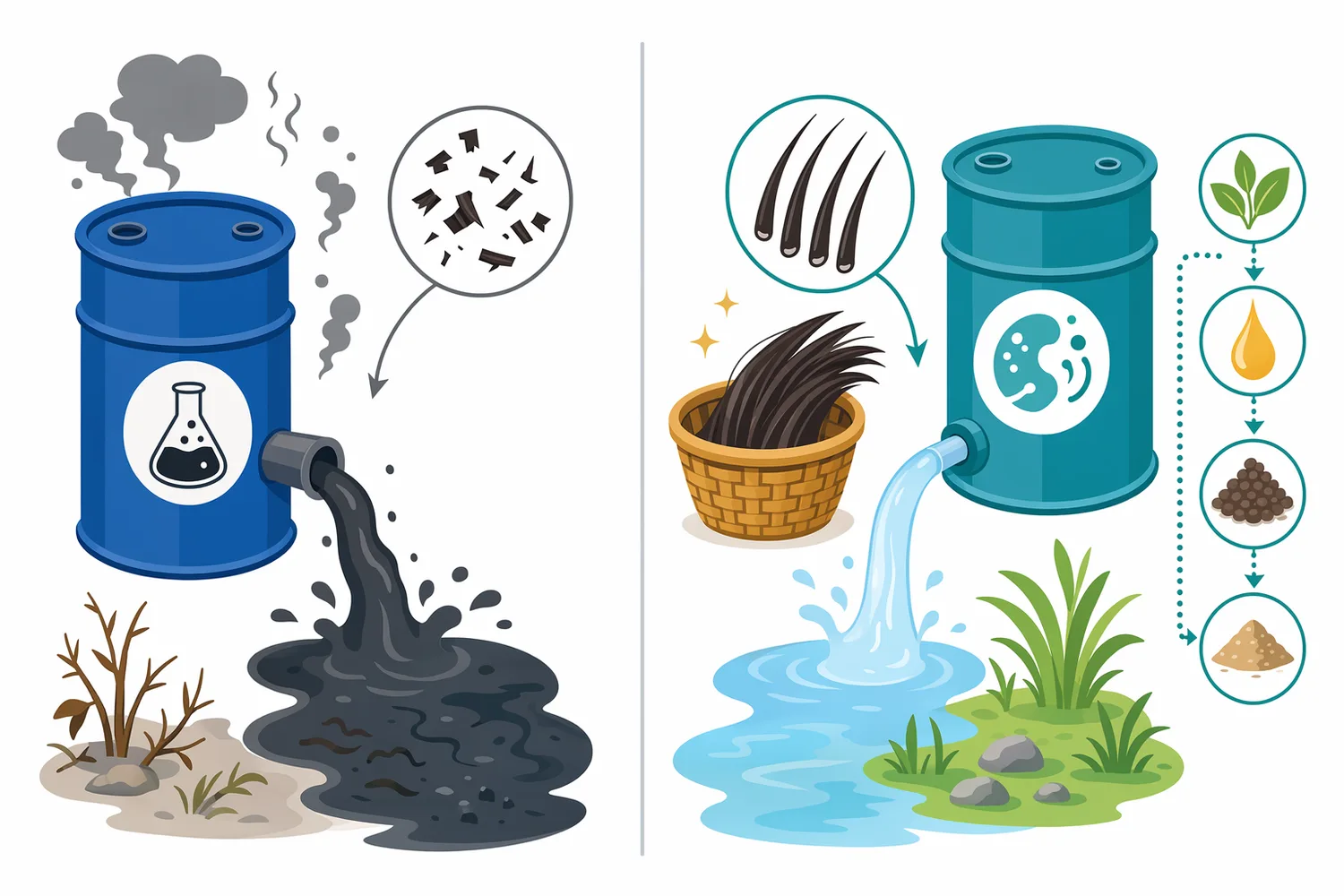
Conventional lime–sulfide dehairing works by harsh chemical action. Sulfide reduces disulfide bonds in keratin, weakening or destroying the hair, while lime maintains strong alkalinity and swells the hide so unwanted epidermal and interfibrillar materials can be removed. This chemistry is effective, but it is also associated with sulfide-bearing wastewater, high beamhouse pollution load, odor, worker-safety concerns, and hair pulping that increases the organic burden in effluent [4].
Enzymatic dehairing addresses the problem differently. Rather than relying primarily on chemical breakdown of the hair shaft, a suitable protease attacks susceptible proteins around the hair root and in the surrounding matrix. When those anchoring materials are hydrolyzed, the hair can loosen from the follicle and be mechanically removed more intact, supporting hair-saving dehairing rather than hair destruction [1].

The leather-forming structure that must be protected is collagen. Collagen fibers and fiber bundles give leather its strength, handle, and dimensional integrity, so a dehairing enzyme must be used in a way that supports hair release and fiber opening without excessive attack on the collagen network. Mechanistic reviews therefore emphasize enzyme specificity: the best dehairing effect comes from proteolysis of non-collagenous and follicle-associated materials, not uncontrolled degradation of structural collagen [1].
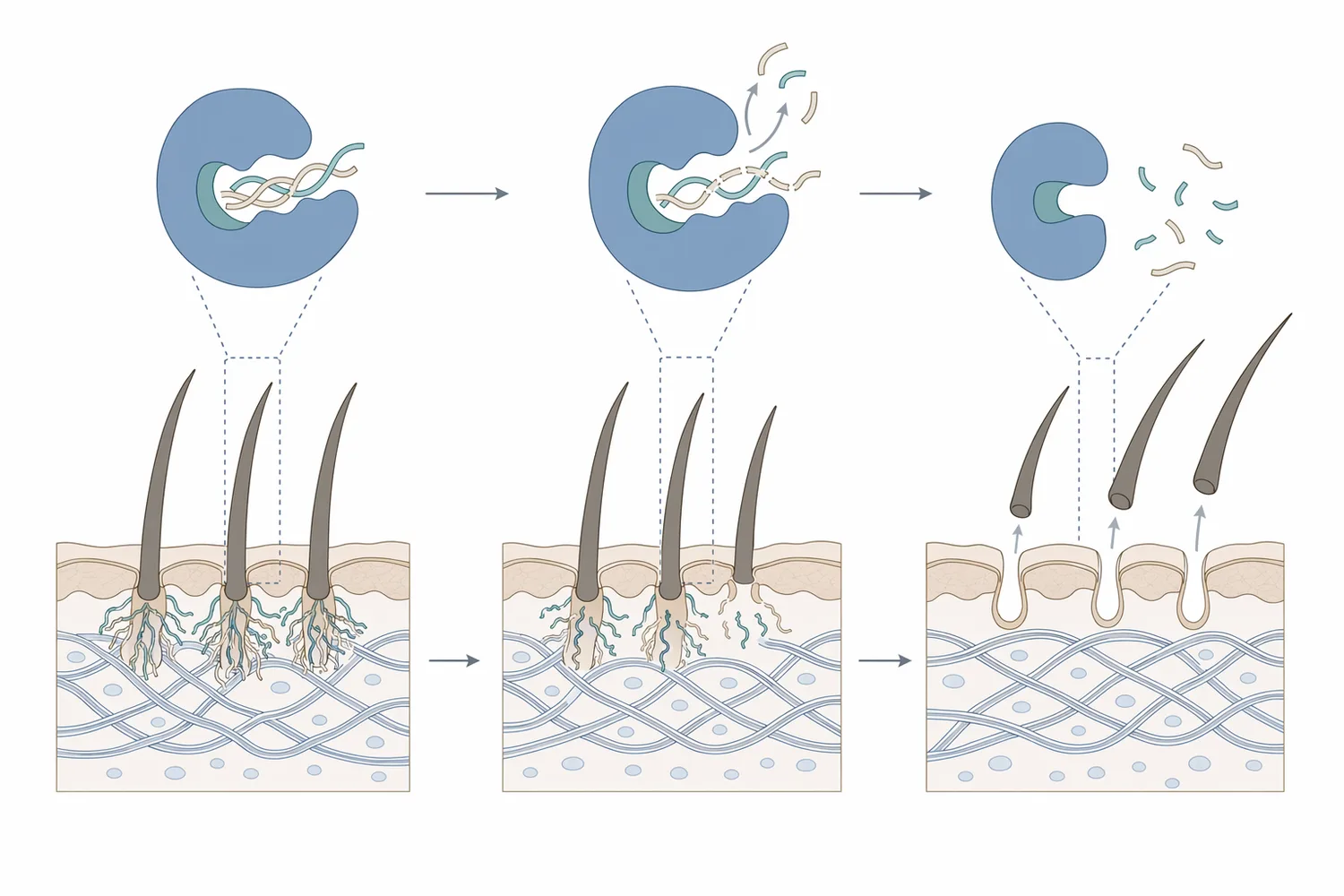
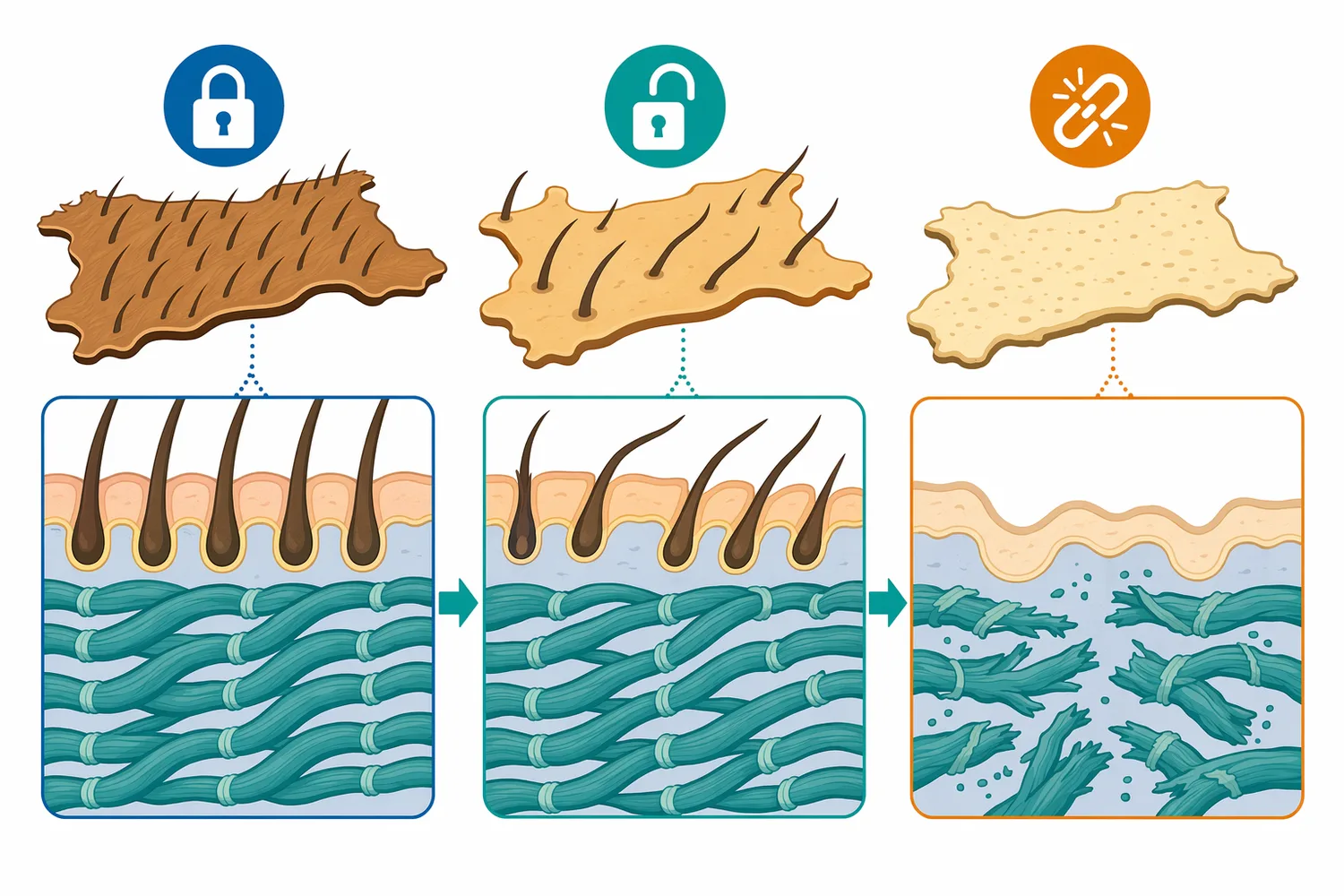
A useful way to visualize enzymatic dehairing is to think of the hair root as being held in place by a protein-rich sleeve and adhesive matrix. Protease molecules diffuse into accessible regions of the skin and follicle, bind to susceptible protein sites, and cleave peptide bonds. Each cleavage event reduces the size, strength, or continuity of a protein structure that contributes to adhesion around the follicle [5].
This produces several practical effects inside the hide or skin. The outer and inner root-sheath environment becomes weaker; epidermal attachments lose cohesion; and proteoglycan-rich interfibrillar materials are partially removed or modified. As these structures are hydrolyzed, the hair root is no longer held as tightly, and the fiber network begins to open in a controlled way [1].
Proteoglycans are especially important because they are not simply “minor impurities.” They help organize water, charge interactions, and spacing between collagen fibrils and fiber bundles. In enzymatic dehairing, reduction of these non-collagenous matrix components can help loosen the compact structure around the follicle and improve opening of the dermal matrix without requiring the same level of sulfide-driven keratin destruction [5].
Charge behavior also matters. Proteases are proteins themselves, so their movement into a hide is influenced by the charge state of both the enzyme and the substrate. Recent work on the mechanism of enzymatic dehairing highlights protease permeation and charge regulation as key factors in whether enzyme action remains superficial or penetrates effectively into the hair-root region and surrounding matrix [5].
The central difference between enzymatic and conventional dehairing is the primary target. Lime–sulfide systems are highly effective because they chemically break down keratin and swell the hide, but this can convert hair into a pollutant-rich slurry. Enzymatic systems aim to loosen the anchoring environment of the hair so the hair can be removed with less destructive chemistry [4].
| Dehairing approach | Main mode of action | What changes in the hide or skin | Practical implication |
|---|---|---|---|
| Lime–sulfide dehairing | Chemical reduction of keratin disulfide bonds, high-alkaline swelling, and breakdown of epidermal materials | Hair is weakened or pulped; hide swells strongly; unwanted proteins are removed aggressively | Effective and familiar, but associated with sulfide load, odor, safety concerns, and high-pollution wastewater [4] |
| Enzyme-assisted dehairing | Protease hydrolyzes susceptible proteins around follicles and in non-collagenous matrix materials | Hair anchoring weakens; follicle-associated materials loosen; fiber opening can occur with less hair destruction | Supports reduced sulfide dependence and cleaner beamhouse operation when the process is controlled [1] |
| Hair-saving enzymatic dehairing | Proteolysis is directed toward root-sheath, epidermal, and interfibrillar “cementing” materials rather than complete hair dissolution | Hair can be released more intact; wastewater receives less pulped hair material | Can improve recoverability of hair and reduce organic load associated with hair destruction [6] |
This does not mean enzymatic dehairing is automatically gentler in every situation. Proteases are powerful catalysts, and over-processing can damage grain, loosen fiber structure too far, or reduce leather quality. The technical value lies in controlled proteolysis: enough reaction to release hair and open the matrix, but not so much that the collagen framework is compromised [1].
Proteases are often described by the pH region in which they are most useful. In leather beamhouse processing, alkaline proteases receive the most attention because dehairing, liming, and bating-adjacent operations commonly involve alkaline conditions. Bacillus species are frequently studied sources of alkaline proteases because they secrete extracellular enzymes that are comparatively robust in industrial environments [3].
| Protease type | Conceptual pH environment | Typical industrial fit | Relevance to dehairing |
|---|---|---|---|
| Acid protease | Acidic systems | Protein hydrolysis in acidic food or fermentation contexts | Less central to conventional dehairing because beamhouse dehairing is generally not acid-driven [2] |
| Neutral protease | Near-neutral systems | Mild protein modification where extreme pH is undesirable | Can be useful in some protein-processing contexts, but leather dehairing literature more often emphasizes alkaline enzymes [7] |
| Alkaline protease | Alkaline systems | Detergents, leather processing, protein waste treatment, and other high-pH industrial processes | Most commonly discussed for enzymatic dehairing and bating-related leather applications [3] |
Alkaline proteases can help bridge enzyme chemistry and existing beamhouse practice. They do not require the leather processor to abandon the idea of alkaline fiber opening; instead, they add a catalytic route for breaking down specific proteinaceous materials that contribute to hair retention and matrix compactness [3].
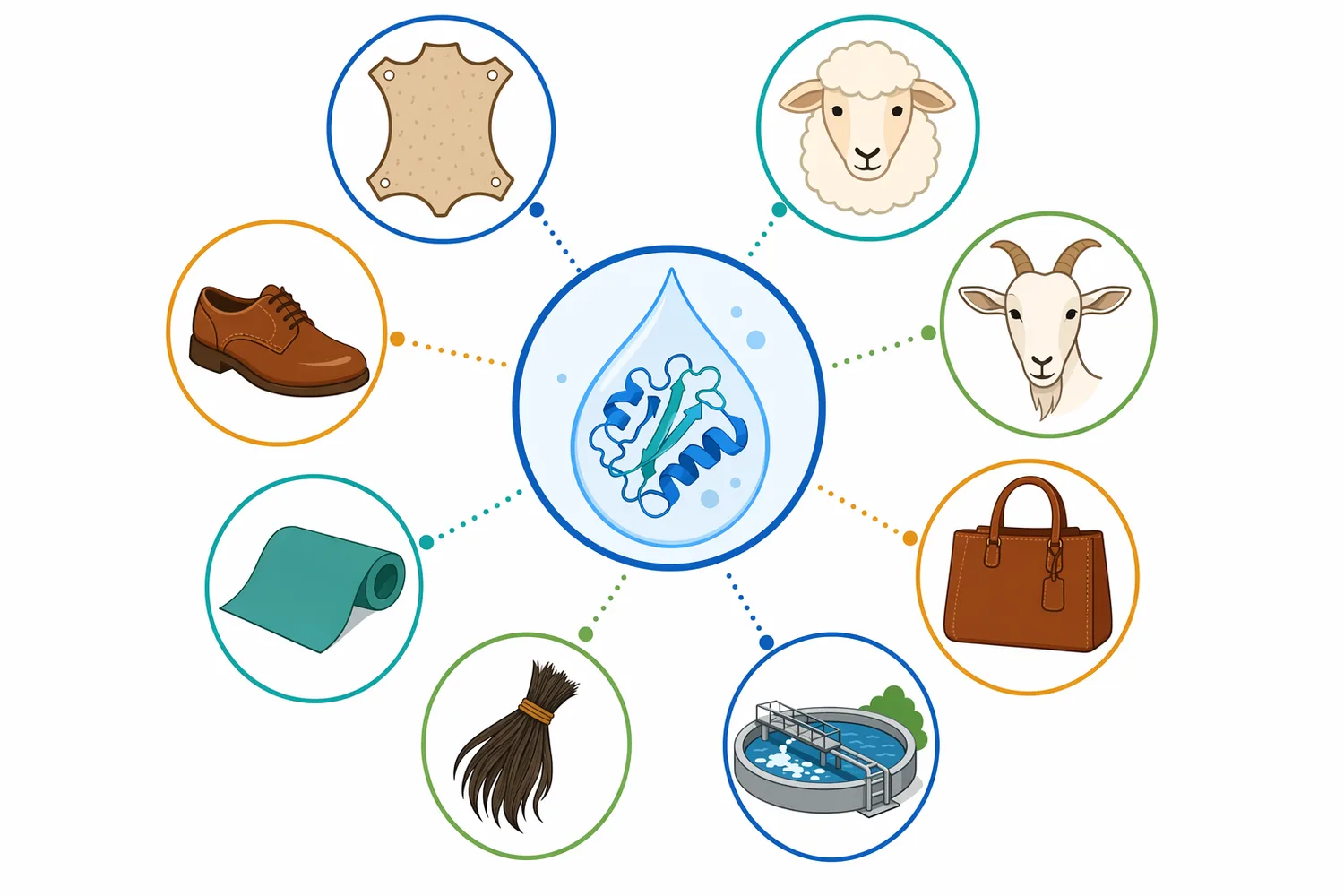
Research on alkaline proteases from several microbial sources supports their relevance to skins and hides. For example, studies have described alkaline protease systems for goat skins, sheep skin, cowhide, and general hide dehairing, showing that the application has been investigated across different animal substrates rather than only in one narrow model system [8].
A comprehensive review of enzymatic dehairing identifies enzyme specificity as the central technical issue. The review explains that the desired enzyme action is aimed at proteins involved in anchoring the hair and opening the matrix, while excessive collagenolytic activity is undesirable because collagen is the main leather-forming protein [1].
Work on goat skins has shown the practical relevance of alkaline proteases. In one study, alkaline protease from Bacillus sp. SB12 was applied to goat skins for enzymatic dehairing, supporting the use of bacterial alkaline protease as a dehairing agent under leather-processing conditions [8].
Other goat-skin research has examined keratinase and metalloprotease systems expressed by Bacillus subtilis SCK6. These studies are important because goat skins are relatively sensitive substrates: successful dehairing must remove hair without producing loose grain or excessive fiber damage, so they provide a useful test of whether enzyme action can be directed toward hair release rather than general hide digestion [9].
Sheep skin has also been studied. Alkaline protease from Bacillus cereus TD5B was evaluated as a sheep-skin dehairing agent, and separate work on enzymatic dehairing of sheep skin emphasized recovery and characterization of wool hydrolysate and fats, connecting enzymatic processing not only to hair removal but also to by-product recovery [10].
Cowhide applications are particularly relevant because bovine hides are thicker and more diffusion-limited than many small skins. A recent study on eco-friendly enzymatic dehairing of cowhide using a thermostable alkaline serine protease demonstrates continuing research interest in protease systems that can act effectively on heavier substrates [11].
Studies on enzymatic dehairing by C. brefeldianus protease and other microbial proteases reinforce the same theme: dehairing performance is tied to the enzyme’s ability to reach and hydrolyze the correct substrate structures. The practical outcome depends not just on whether a protease is present, but on how well it acts in the follicle and matrix environment of the specific hide or skin [12].
At the start of treatment, the hide or skin contains intact hair roots, epidermal tissues, root sheaths, basement-membrane materials, proteoglycans, and collagen fiber bundles packed in a hydrated matrix. The protease first acts where proteins are accessible: surface epidermal materials, follicle openings, and hydrated matrix regions that allow enzyme diffusion [5].
As hydrolysis proceeds, long protein chains are cut into shorter fragments. This reduces the mechanical continuity of the tissue that holds the hair in place. The hair does not need to be fully dissolved for dehairing to occur; once the anchoring structures lose enough strength, mechanical action in the drum or process vessel can detach the hair from the follicle [1].
In the dermal matrix, protease action on non-collagenous proteins and proteoglycan-associated structures can increase fiber-bundle separation. This is part of why enzymatic dehairing is linked with fiber opening as well as hair removal. The process can reduce the “cementing” effect of interfibrillar materials, allowing water and mechanical action to separate the structure more cleanly [5].
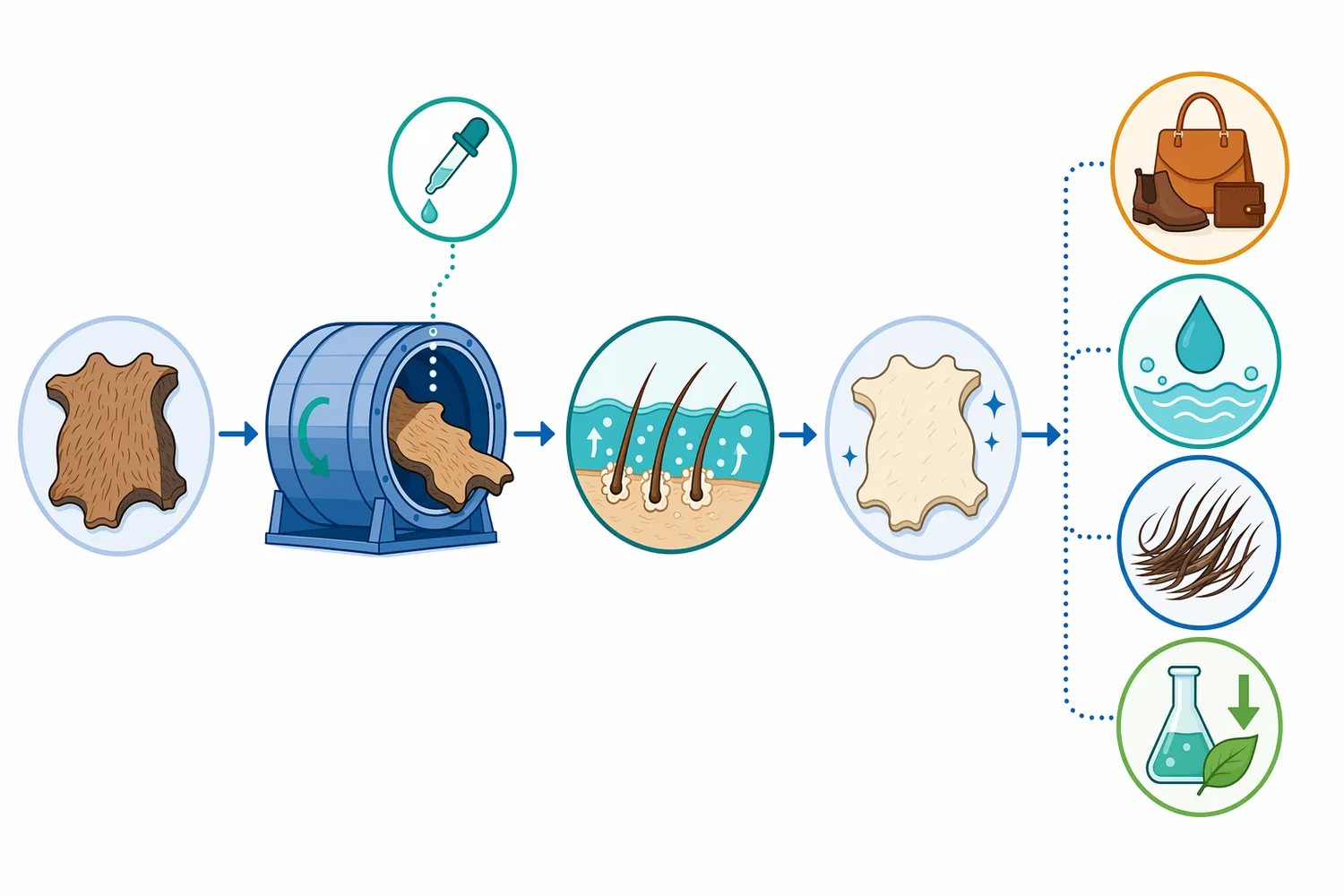
The intended endpoint is visible in practical terms: hair loosens, pores open, scud and epidermal residues become easier to remove, and the hide or skin moves toward the clean pelt condition needed for later tanning steps. The risk is also clear: if proteolysis goes too far, the grain layer and collagen structure can be weakened, so enzymatic dehairing is best understood as a controlled beamhouse reaction rather than a simple soaking additive [1].
The environmental case for enzymatic dehairing starts with sulfide reduction. Chemical dehairing with sulfide is effective, but sulfide-bearing effluent and sulfide-related gas risks are persistent concerns in leather processing. Life-cycle assessment work comparing chemical treatment and enzymatic recovery approaches highlights why dehairing chemistry is a major target for cleaner leather production [4].
Enzymatic systems can also support hair-saving operation. When hair is loosened rather than pulped, a portion of the organic material that would otherwise enter wastewater as degraded hair can be separated more physically. Research on sheep-skin enzymatic dehairing specifically connects the process with recovery and characterization of commercially important wool hydrolysate and fats, showing how enzyme-based beamhouse processing can intersect with by-product valorization [6].
The benefit is not only “less chemical.” It is also a shift in where the reaction occurs. Sulfide chemistry attacks the hair shaft strongly, while protease-based dehairing can focus on proteins surrounding the root and matrix. That difference is why enzymatic dehairing is frequently discussed as an eco-friendly alternative or complement to conventional dehairing rather than merely a weaker version of the same chemical process [7].
There is also an occupational and operational dimension. Processes that reduce reliance on sulfide can reduce sulfide-related odor and handling concerns, although the overall safety profile still depends on the full beamhouse system. The literature consistently frames protease dehairing as part of the broader move toward cleaner, more sustainable leather processing [13].
Proteases are already familiar to leather processing because of bating, where controlled enzymatic action helps remove non-collagenous proteins and improve softness, smoothness, and grain cleanliness. Enzymatic dehairing overlaps with this logic but applies protease action earlier and more directly to hair release and follicle-associated materials [3].
In bating-related effects, protease action can reduce residual epidermal proteins, loosen scud, and help clean the grain. These changes are not cosmetic only: a cleaner grain and more uniform fiber opening can influence how later chemicals penetrate and how the final leather feels and performs [1].
The same catalytic power that makes protease useful in bating also explains why specificity matters. A protease that preferentially hydrolyzes non-collagenous materials can support fiber opening; a process that drives excessive hydrolysis can weaken the structure. Enzymatic dehairing therefore depends on balancing hair release, matrix cleanup, and collagen preservation [1].
Small skins and large hides do not behave identically. Goat and sheep skins are thinner than cowhides and may allow easier enzyme access to follicles and matrix regions. This is one reason many experimental studies use goat or sheep skins when evaluating dehairing proteases: the substrate allows visible assessment of hair removal, grain condition, and pelt cleanliness [8].
Cowhides create a tougher diffusion problem. The thicker dermal structure, compact regions, and variable fiber density can limit how uniformly enzyme reaches the hair-root zone. Mechanistic work on protease permeation into animal hide emphasizes that movement through the substrate is a central factor in dehairing performance, not a secondary detail [5].
The implication is practical but not complicated: enzymatic dehairing is a contact-and-penetration process. The enzyme must reach the protein structures that anchor the hair before it can hydrolyze them. Where penetration is uneven, hair removal may also be uneven, especially in dense or compact areas of the hide [5].
The most important quality requirement in enzymatic dehairing is collagen preservation. Collagen is a highly organized structural protein, and leather quality depends on maintaining its fiber architecture while removing unwanted epidermal, follicular, and interfibrillar components. Reviews therefore distinguish useful dehairing proteolysis from undesirable collagen degradation [1].
A suitable enzymatic effect is selective in practice: hair-associated and non-collagenous proteins become more vulnerable, while collagen remains substantially intact under controlled conditions. This does not mean collagen is magically immune to proteases; it means the process must avoid conditions that allow excessive or prolonged attack on the structural matrix [1].
This point is important for setting expectations. Enzymatic dehairing is not valuable because enzymes are “mild” in a vague sense. It is valuable because enzymes can be specific catalysts: they accelerate particular hydrolysis reactions at susceptible protein sites. The technical goal is to use that specificity to weaken the hair anchoring system faster than the leather-forming collagen structure is damaged [7].
Not every enzymatic process is enzyme-only. Some modern approaches combine enzymes with auxiliary chemistry designed to reduce the burden of conventional sulfide systems while maintaining reliable dehairing. A 2023 study describes an oxidative–enzymatic auxiliary system developed toward more sustainable dehairing, illustrating the continuing move toward hybrid systems that reduce environmental impact without depending on one mechanism alone [13].
Hybrid approaches can make sense because hair removal involves both keratin chemistry and follicle anchoring. Oxidative or other auxiliary chemistry can alter hair or matrix accessibility, while protease hydrolyzes susceptible proteins around the root and in the surrounding tissue. The combined effect can support dehairing with lower reliance on traditional lime–sulfide intensity [13].
The broader message is that protease is a practical tool within cleaner beamhouse design. It may be used to assist conventional dehairing, reduce sulfide dependence, support hair-saving operation, improve scud removal, or contribute to fiber opening. The exact role depends on the process, but the underlying mechanism remains protein hydrolysis at the hair–skin interface and in non-collagenous matrix materials [1].
Food Grade Protease for Enzymatic Dehairing should be understood as a biocatalyst for controlled leather-processing applications, not as a universal chemical replacement that behaves identically on every hide. The research base supports protease dehairing across multiple substrates, but the outcome remains influenced by hide type, soaking quality, mechanical action, contact uniformity, treatment time, and the broader beamhouse sequence [5].
The most realistic expectation is improved ability to loosen hair and reduce dependence on harsh dehairing chemistry when the enzyme is integrated into an appropriate process. The enzyme’s role is to cleave proteins that help hold hair and matrix structures together; it does not physically pull hair out by itself, and it does not remove the need for process control [1].
Visible success is typically associated with easier hair release, cleaner pores, reduced hair pulping, and better removal of epidermal or scud-like residues. Quality success means those effects occur without excessive grain damage, looseness, or collagen weakening. That balance is the reason enzyme specificity is repeatedly emphasized in dehairing literature [1].
Enzymes.bio supplies Food Grade Protease for Enzymatic Dehairing directly online by the 1 kg unit. The buying process is straightforward: the buyer purchases online, pays online, and the order is then processed and shipped. A Certificate of Analysis and Safety Data Sheet are included with the order.
Enzymes.bio is the supplier of the product, not a tannery, manufacturer, or testing laboratory. This article is therefore intended to give clear technical background on how protease dehairing works and why the product category is used, while keeping the focus on practical, evidence-based understanding rather than laboratory-method detail.
For leather-processing use, the value of the product lies in its function: controlled enzymatic hydrolysis of proteinaceous materials involved in hair anchoring, scud retention, and matrix compactness. That function is supported by a substantial body of research on alkaline proteases, keratinases, serine proteases, metalloproteases, and other proteolytic systems investigated for hides and skins [3].
Food Grade Protease for Enzymatic Dehairing is used to support cleaner, enzyme-assisted hair removal in leather beamhouse processing. It works by cutting selected proteins in the follicle environment and non-collagenous skin matrix, weakening the biological structures that hold hair in place while aiming to preserve the collagen framework that becomes leather [1].
The strongest technical rationale is mechanistic: protease action can loosen the hair root, reduce epidermal and scud-like residues, and contribute to fiber opening through controlled hydrolysis of proteinaceous and proteoglycan-associated materials. The strongest environmental rationale is reduced dependence on lime–sulfide chemistry and the possibility of hair-saving operation with lower pollution burden [4].
Used with realistic expectations, protease is not a “magic” substitute for all beamhouse chemistry; it is a targeted biocatalyst that can help modernize dehairing. For buyers who want the product in a straightforward online format, Enzymes.bio supplies it by the 1 kg unit with order documentation included.
Sold by the 1 kg unit, in stock and ready to ship. Order directly on our store — pay online and we process your order. A Certificate of Analysis and Safety Data Sheet are included with every order.
Buy Food Grade Protease For Enzymatic Dehairing →Numbered in order of first citation. Open-access sources, each verified reachable at publication; citation numbers in the text link here.