
Food-grade protease for liquid egg hydrolysis is used to cut egg proteins into smaller peptides, changing how egg white, yolk, or whole egg behaves in liquid food systems. In practical terms, controlled hydrolysis can improve dispersion, adjust viscosity, change foaming or emulsifying behavior, and create peptide-rich egg ingredients for sauces, bakery systems, nutrition liquids, and savory formulations. The result is not automatic: the finished functionality depends on the egg fraction, hydrolysis extent, heat history, pH, temperature, reaction time, and the point at which the enzyme is inactivated.
Enzymes.bio supplies Food-Grade Protease for Liquid Egg Hydrolysis directly online by the 1 kg unit. Buyers can purchase online, pay at checkout, and the order is processed and shipped with a Certificate of Analysis and Safety Data Sheet included.
Liquid egg is valuable because its proteins build structure, stabilize foams, emulsify fat, bind water, and contribute nutrition. Those same proteins can also be difficult to manage: intact egg white proteins can aggregate during heating, yolk proteins and lipoproteins can interact strongly with fat phases, and whole egg systems may thicken or lose uniformity when exposed to heat, salts, shear, or pH changes. Protease hydrolysis gives food formulators a way to deliberately change the size and surface behavior of those proteins before they are used in the final product.
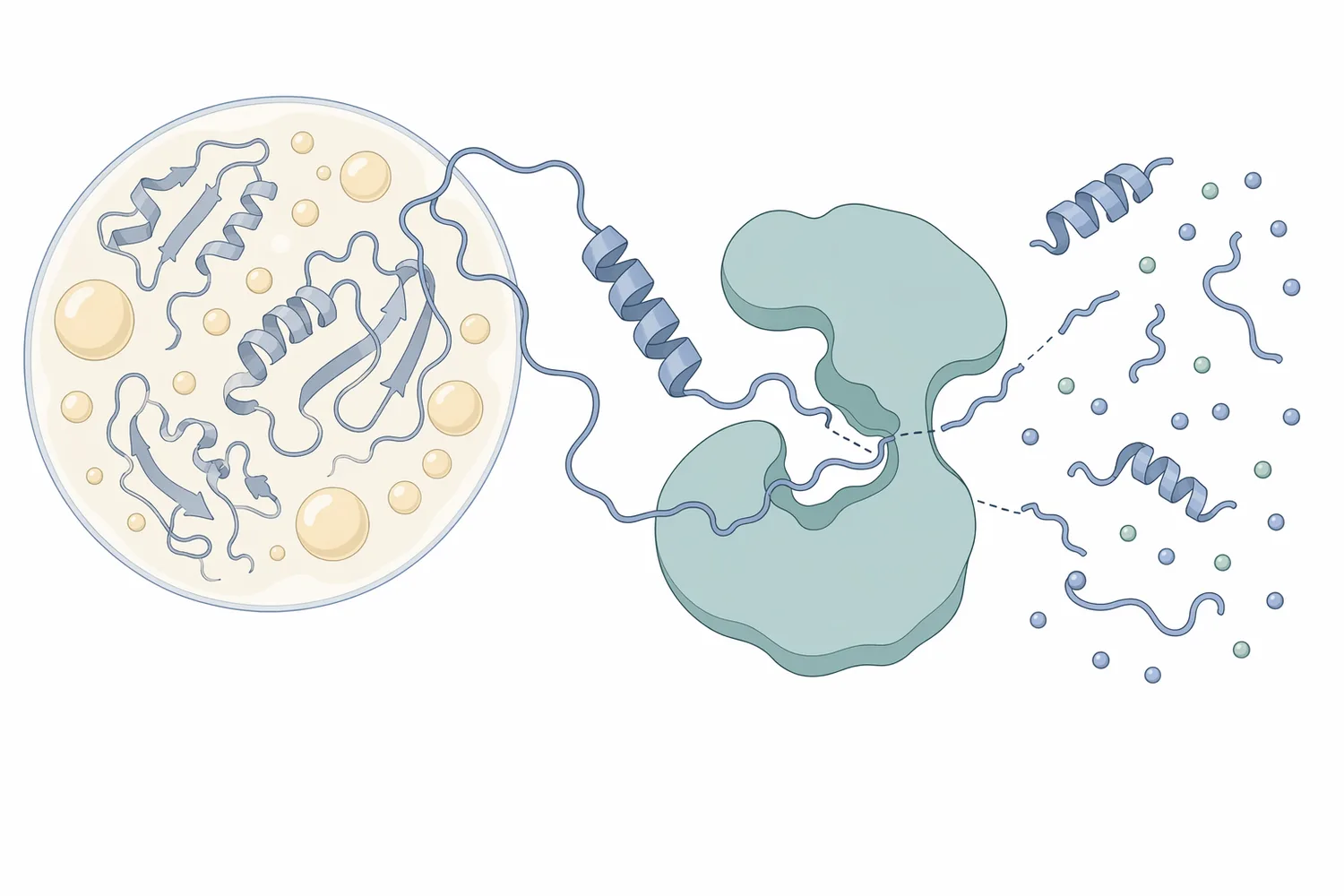
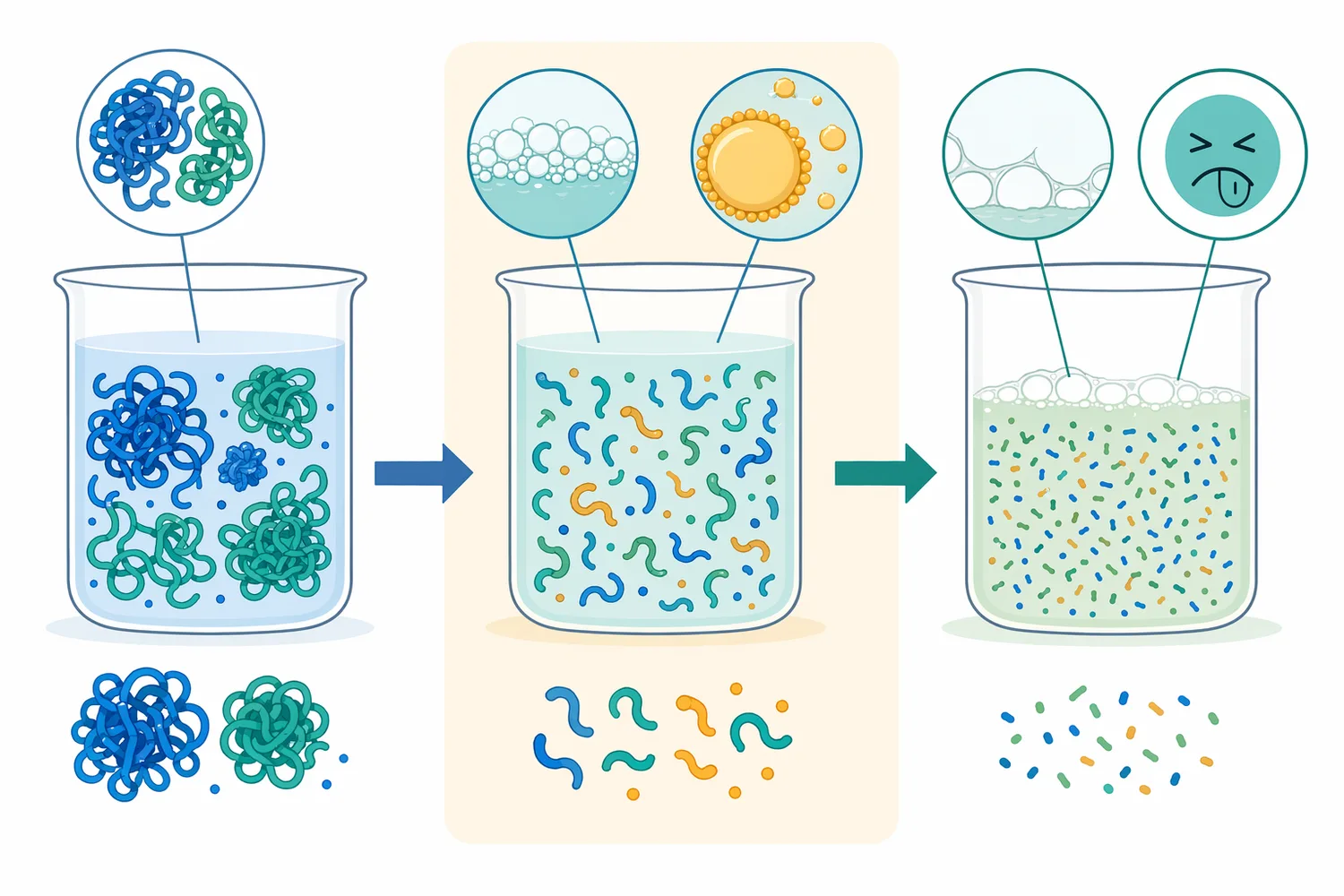
Protease works by hydrolyzing peptide bonds, the chemical links that connect amino acids into proteins. Instead of treating egg protein as one large folded molecule, the enzyme progressively cuts it into smaller fragments. As the average protein size decreases, the liquid egg system can become easier to disperse, less prone to forming large aggregates, and more likely to expose charged or surface-active peptide segments. Reviews of food enzyme technology describe this core mechanism—enzymes catalyze specific molecular changes under comparatively mild food-processing conditions, allowing targeted modification rather than harsh chemical breakdown [1].
Egg proteins are especially responsive because their functionality is strongly tied to folded structure. Egg white proteins behave as dense globular proteins until processing conditions unfold them; enzymatic and thermal treatment can move egg white proteins from dense globular structures toward more open, random-coil arrangements, which changes aggregation and particle formation behavior [2]. Protease does not simply “thin” egg; it changes the molecular architecture of the protein phase, which can alter hydration, interfacial adsorption, heat response, and sensory properties.
The first physical change is molecular size. Large proteins have greater hydrodynamic volume and can form networks or aggregates when denatured. Once protease cuts these proteins into shorter peptides, the fragments occupy less effective volume in solution and may move more freely. This is one reason partial hydrolysis can reduce excessive thickness or improve dispersion in some liquid systems, although the outcome depends on how far hydrolysis proceeds.
The second change is surface exposure. Native proteins fold so that some amino-acid groups are buried inside the structure. Protease cleavage exposes new amino and carboxyl ends, charged regions, and hydrophobic patches. In an emulsion, moderately sized peptides can migrate to the oil-water interface and help cover droplets; in a foam, peptides and partially hydrolyzed proteins can adsorb at the air-water interface. Egg white hydrolysis studies show that enzymatic treatment can improve foaming properties, with the improvement connected to changes in protein structure and physicochemical behavior rather than to protein concentration alone [3].
The third change is peptide profile. Two hydrolysates can have the same broad “degree of breakdown” yet perform differently because their peptide sequences differ. Some peptides are surface-active and useful for emulsions or foams; some are bitter; some may show antioxidant activity in laboratory systems. Egg white protein hydrolysis has been reported to generate peptides with antioxidant activity, showing that egg proteins can be converted into bioactive peptide fractions under enzymatic treatment [4].
The fourth change is heat behavior. Intact egg proteins can unfold and form strong gels or aggregates during heating. Hydrolyzed proteins may have fewer long chains available to build continuous networks, so the system may show reduced gel strength or different particle formation. This can be useful where uncontrolled coagulation is a problem, but it can be undesirable where the finished food depends on egg’s natural gelling power. Enzyme and thermal studies on egg white proteins show that the transition from compact globular structures to more open conformations can trigger uniform microparticle formation, illustrating how protein structure controls final texture [2].
Egg white is dominated by water-soluble proteins that contribute foaming, heat setting, and structure. Protease hydrolysis of egg white therefore tends to be discussed in terms of foamability, solubility, digestibility, peptide production, and heat aggregation. Research on egg white proteins has shown that enzymatic hydrolysis can improve foaming properties by changing structure and physicochemical characteristics, but the same structural changes can also reduce the ability to form firm heat-set gels if hydrolysis is too extensive [3].
Egg yolk is a more complex matrix because proteins are associated with lipids and lipoprotein particles. Hydrolysis can affect emulsification, mouthfeel, flavor release, and antioxidant peptide formation, but yolk’s fat phase means the behavior is not the same as egg white. Enzymatic and sub-critical water hydrolysis of egg yolk proteins has been studied for antioxidant activity, supporting the idea that yolk can be a substrate for peptide generation as well as an emulsifying ingredient [5].
Whole liquid egg combines both systems. The white fraction contributes soluble globular proteins and heat-setting behavior; the yolk fraction contributes lipoproteins, phospholipids, fat, color, and emulsification. Protease hydrolysis in whole egg therefore modifies a mixed protein-lipid system, not a simple protein solution. Published work on egg-yolk protein hydrolysis shows that hydrolysis kinetics, functionality, and bioactivity are linked, meaning process history influences both how quickly peptides form and how the hydrolysate behaves afterward [6].
Duck egg white studies are also relevant because they show how salted or desalted egg white proteins can be valorized through hydrolysis. Enzymatic hydrolysis has been reported to re-endow desalted duck egg white nanogel with outstanding foaming properties, demonstrating that even egg white proteins damaged or reorganized by prior processing can regain useful interfacial performance after controlled enzymatic treatment [7]. While chicken and duck egg systems are not identical, the mechanism—protease-driven restructuring of egg proteins into more functional peptide/protein fragments—is directly relevant.
Different proteases cut proteins most effectively under different pH environments. This matters because egg white, yolk, and whole egg are sensitive to pH-dependent unfolding, aggregation, color change, and flavor development. The table below is conceptual rather than a product specification: it explains how protease class can influence the type of hydrolysis environment and the likely functional direction in liquid egg systems.
| Protease type | Typical processing concept | What it tends to do to egg proteins | Practical implication in liquid egg hydrolysis |
|---|---|---|---|
| Acid protease | Hydrolysis under acidic food conditions or digestion-like environments | Favors cleavage where proteins are acid-unfolded or more accessible | Useful conceptually for peptide generation in acidic systems, but low pH can also change egg protein solubility and flavor |
| Neutral protease | Hydrolysis near mild, food-compatible pH conditions | Can partially reduce protein size while avoiding the strongest pH-driven denaturation | Often associated with moderate functional modification where excessive unfolding is not desired |
| Alkaline protease | Hydrolysis under mildly alkaline conditions | Can strongly open or cleave accessible proteins, often producing rapid functional change | Can be effective for solubility and peptide formation, but excessive treatment may weaken gelling/foaming balance or increase bitterness risk |
Food-industry enzyme reviews describe proteases as tools for modifying protein structure and functionality, but they also emphasize that enzyme performance depends on the processing environment and substrate rather than on enzyme class alone [1]. In liquid egg, the useful question is not simply whether hydrolysis occurs; it is how the hydrolysis level changes the exact food function required.
Partial protease hydrolysis can make egg proteins easier to disperse because smaller fragments hydrate faster and are less likely to remain as large insoluble aggregates. In an aqueous mix, intact proteins must unfold or hydrate before they distribute evenly; peptides produced by hydrolysis have more exposed charged ends and often interact more readily with water. This can be useful in liquid premixes, protein beverages, sauces, and fillings where visible particles, sediment, or uneven hydration are quality problems.
Food protein hydrolysate research broadly supports the connection between enzymatic hydrolysis and functional improvement. Reviews of enzymatic hydrolysates in food proteins describe how hydrolysis changes solubility, emulsifying behavior, foaming, antioxidant potential, and sensory properties through molecular-size reduction and exposure of new functional groups [8]. Liquid egg should still be treated as its own matrix, but the mechanism is consistent with the broader food-protein evidence base.
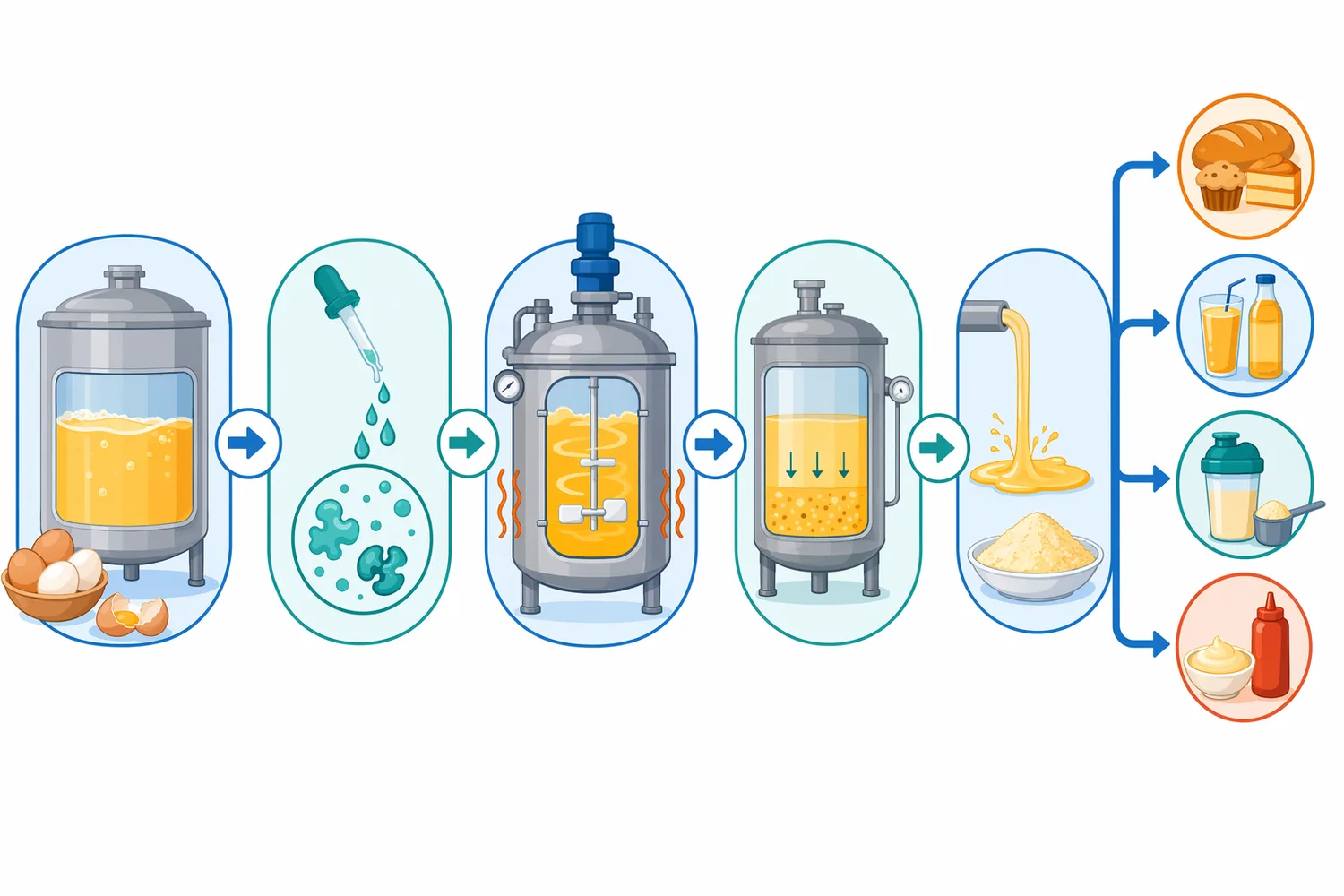
Liquid egg systems can become difficult to pump, mix, or dose if proteins begin aggregating or forming networks. Controlled hydrolysis can reduce the chain length available for network formation, which may lower apparent viscosity or reduce thickening during subsequent processing. The key is partial hydrolysis: enough cleavage to improve flow, but not so much that desired body, foam, gel, or emulsion structure is lost.
Egg-yolk hydrolysis studies are useful here because they connect hydrolysis kinetics with functional properties. Research on egg-yolk protein hydrolysis has examined how hydrolysis progresses over time and how the resulting hydrolysates behave, reinforcing that functionality changes continuously as the reaction proceeds rather than switching from “native” to “hydrolyzed” in one step [6]. For liquid egg users, this means the endpoint of the enzyme step is central to the finished texture.
Egg white is one of the food industry’s classic foaming ingredients because its proteins adsorb at air-water interfaces and form films around air bubbles. Protease hydrolysis can improve foaming when it creates flexible, surface-active fragments that migrate quickly to the interface while still retaining enough molecular size to stabilize the film. If hydrolysis goes too far, the peptides may become too small to build a cohesive interfacial layer, reducing foam stability.
This balance is reflected in egg white hydrolysis research. Studies on enzymatically hydrolyzed egg white proteins report improved foaming properties and link those improvements to structural and physicochemical changes in the proteins [3]. The practical mechanism is concrete: protease opens and cuts protein molecules, increasing molecular flexibility and changing surface hydrophobicity, which can make protein fragments adsorb more effectively at bubble surfaces.
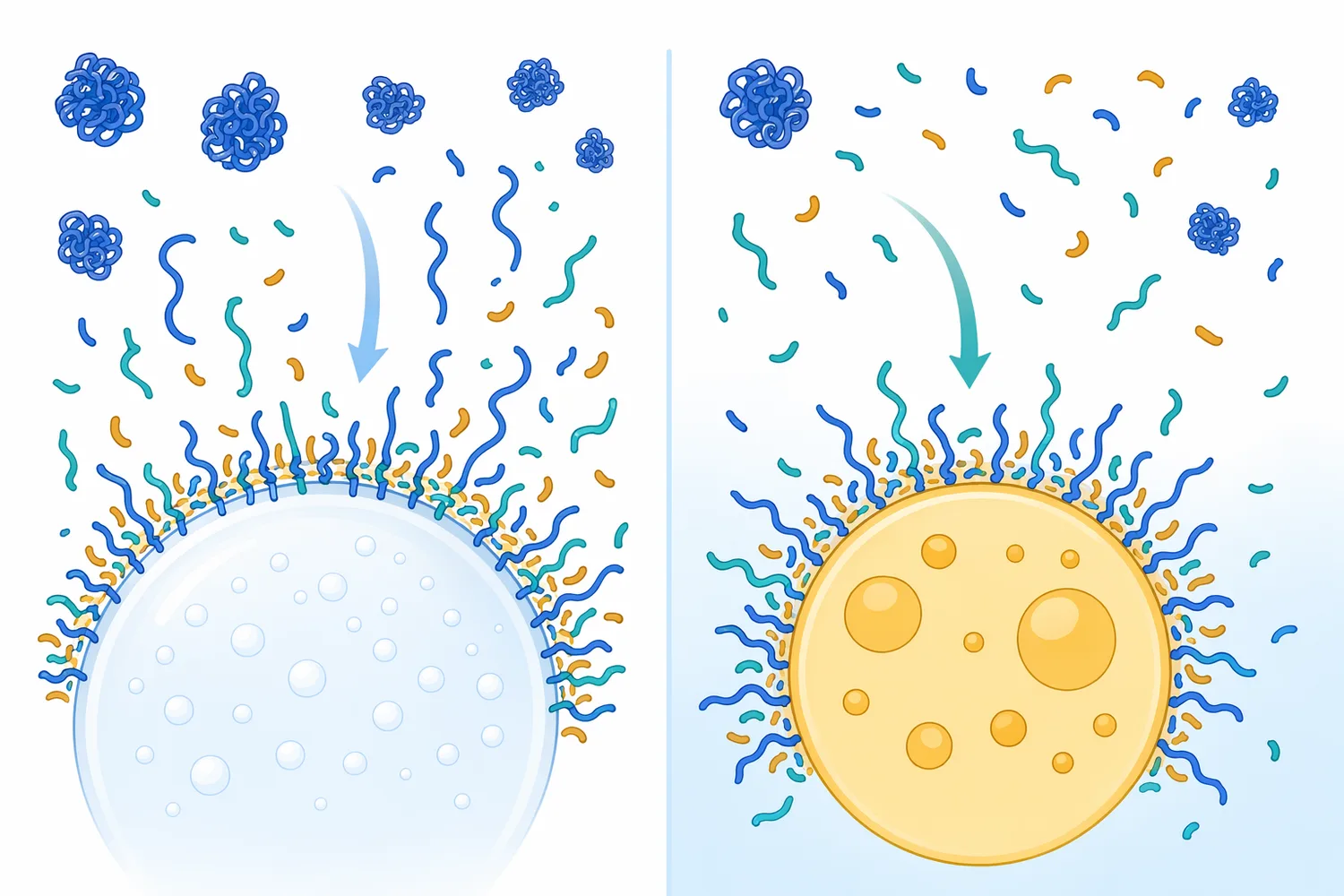
Egg yolk and whole egg are widely used in emulsified foods because yolk components help stabilize oil droplets in water-based systems. Protease hydrolysis can modify the protein component of that interface. Moderately hydrolyzed peptides may reach oil-water interfaces faster and cover droplets more efficiently; however, excessive hydrolysis can produce fragments too small to form a strong protective layer around droplets.
Sequential enzymatic hydrolysis of egg yolk proteins has been studied for kinetics, functionality, and bioactivity, showing that yolk hydrolysates are not just broken-down nutrition ingredients but functional systems whose performance depends on reaction sequence and hydrolysis progression [9]. In sauces or dressings, this translates into a practical trade-off: hydrolysis may improve dispersion or interfacial activity, but the native emulsifying architecture of yolk should not be over-disrupted when structure is required.
Protease hydrolysis partially pre-digests egg proteins by converting them into peptides before consumption. This does not automatically make a finished product clinically superior, but it can support the development of peptide-rich egg ingredients for nutritional beverages, soft foods, or specialized formulations where rapid dispersion and smaller protein fragments are desirable. Egg white peptide research has already shown that enzymatic hydrolysis can generate defined peptide fractions with measurable antioxidant activity in laboratory models [4].
High hydrostatic pressure and other physical pretreatments are sometimes studied because they can unfold proteins and make cleavage sites more accessible to enzymes. A review on high hydrostatic pressure in food-protein hydrolysis describes pressure-assisted approaches for enhancing enzymatic hydrolysis and bioactive peptide production, with food studies commonly exploring pressure levels in the hundreds of MPa rather than relying only on enzyme addition [10]. For commercial liquid egg, the broader point is that protein accessibility—not just enzyme presence—controls hydrolysis outcome.
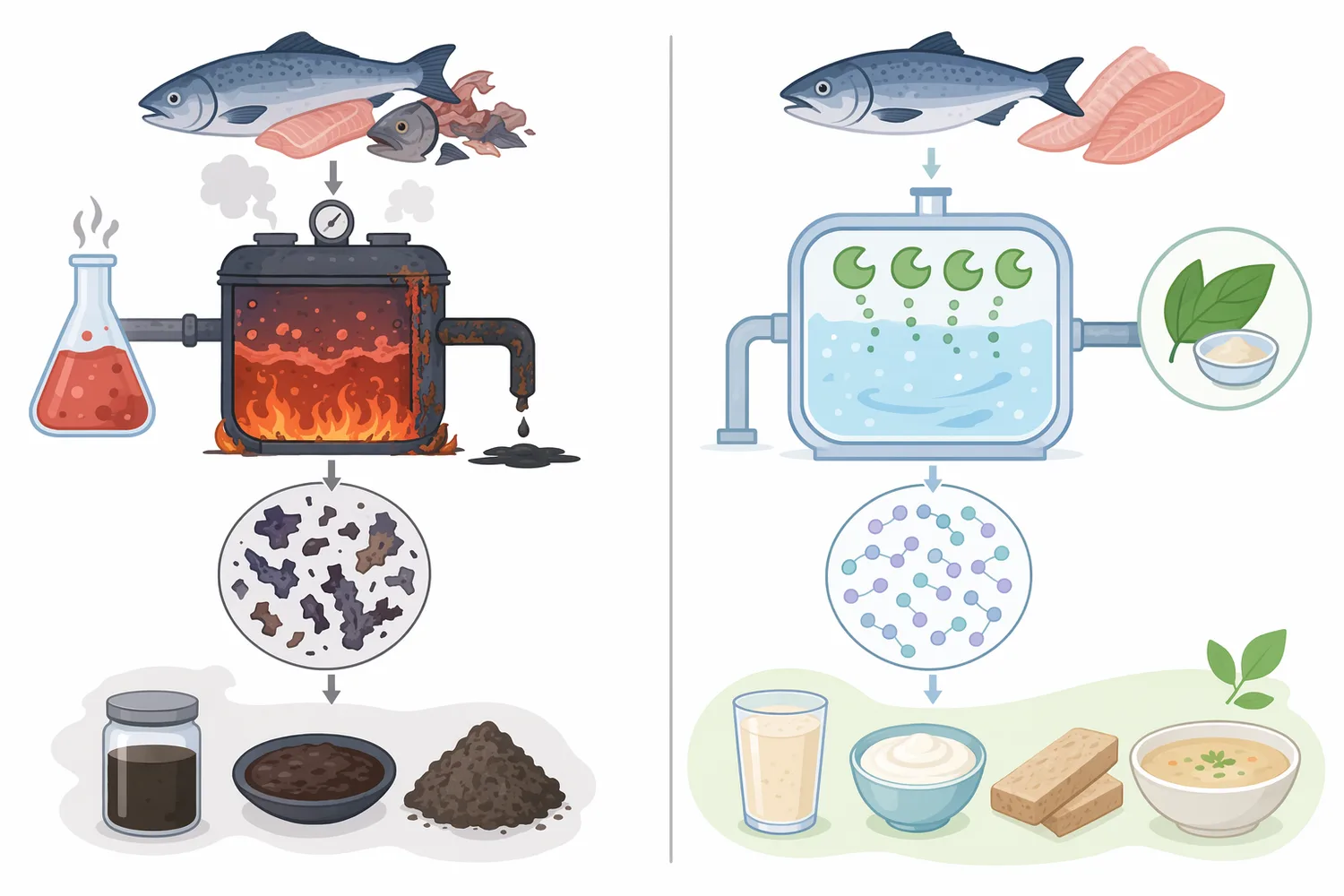
Direct egg-protein research supports the scientific basis for liquid egg hydrolysis. A study on peptides derived from egg white proteins by enzymatic hydrolysis reported antioxidant activity in the resulting peptides, showing that egg white proteins can be converted into smaller fragments with new functional properties [4]. This is important because it demonstrates more than simple protein breakdown: the hydrolysate can contain peptides with properties not expressed by the intact protein.
Enzymatic hydrolysis has also been investigated using enzyme preparations from Bacillus subtilis for whey and egg white proteins. Work on a preparation obtained from a mutant Bacillus subtilis-96 strain specifically evaluated hydrolysis of whey and egg white proteins, supporting the industrial relevance of bacterial proteases for animal food-protein substrates [11]. For liquid egg applications, this reinforces that protease action on egg white proteins is experimentally established, not merely theoretical.
Physical processing can change hydrolysis efficiency. Research on sonication and high-pressure carbon dioxide processing examined their effects on enzymatic hydrolysis of egg white proteins, reflecting a broader finding that unfolding, particle disruption, and mass transfer can influence how readily protease reaches cleavage sites [12]. Mechanistically, if pretreatment loosens protein structure or reduces aggregate size, more peptide bonds become accessible, and the enzyme can hydrolyze the substrate more efficiently.
Egg yolk hydrolysis has its own evidence base. Enzymatic and sub-critical water hydrolysis of egg yolk proteins has been used to obtain hydrolysates with antioxidant activity, demonstrating that yolk proteins and lipoprotein-associated proteins can also be converted into functional peptide fractions [5]. This matters for whole egg because yolk is not a passive component; it actively shapes emulsion behavior, flavor, color, and peptide profile.
Recent egg-yolk hydrolysis research has examined kinetics, functionality, and bioactivity together. Sequential enzymatic hydrolysis of egg yolk proteins has been studied as a way to track how hydrolysates evolve over time, connecting reaction progress with functional and bioactive outcomes [9]. This supports a controlled-processing view: liquid egg hydrolysis is best understood as a managed conversion curve rather than a single fixed treatment.
Protease activity depends strongly on pH and temperature because enzyme shape and substrate structure both change with processing conditions. At unsuitable pH, the enzyme’s active site may not bind protein efficiently, while the egg protein itself may become less soluble or more prone to aggregation. At low temperature, hydrolysis may proceed slowly; at excessive temperature, the enzyme can lose activity and egg proteins may denature in ways that change accessibility.
Time controls how far the reaction proceeds. In the early stage, protease cuts the most accessible bonds on the outside of proteins or in flexible regions. As hydrolysis continues, the enzyme may generate smaller peptides, expose new cleavage sites, and alter the balance between surface-active fragments and very small peptides. Egg-yolk hydrolysis kinetics studies highlight that the properties of hydrolysates depend on reaction progress, making time a functional variable rather than just a production scheduling factor [6].
Egg proteins are not equally accessible to protease. Folded globular proteins hide many peptide bonds inside the molecule, while unfolded or partially denatured proteins expose more potential cleavage sites. Heat, pressure, ultrasound, salt history, drying, and prior pasteurization can all affect accessibility. This is why the same protease can produce different hydrolysates from fresh liquid egg white, desalted duck egg white, yolk powder dispersion, or whole liquid egg.
Pretreatment studies illustrate this clearly. Sonication and high-pressure carbon dioxide processing have been evaluated for their effects on enzymatic hydrolysis of egg white proteins, showing that physical processing can change hydrolysis behavior before the enzyme step even begins [12]. Ultrasound-assisted and enzymatic approaches have also been studied for extracting functional hydrolysates from chicken eggshell membrane, further demonstrating that mechanical disruption and enzyme access often work together in egg-derived protein materials [13].
Once the desired hydrolysis level is reached, the enzyme step is normally stopped by a food-compatible inactivation process suitable for the matrix. This is important because protease that continues working can shift the product beyond its intended functionality. Over-hydrolysis may reduce foam stability, weaken gel formation, thin the system excessively, or generate bitter peptides.
The endpoint is functional, not just chemical. For a foaming application, the best point may be where proteins are flexible enough to adsorb quickly but still large enough to stabilize bubbles. For a beverage, the preferred point may emphasize dispersion and reduced sediment. For a savory base, the endpoint may balance peptide body with bitterness control. Reviews of food protein hydrolysates emphasize that hydrolysis modifies multiple attributes at once—solubility, emulsification, foaming, bioactivity, and sensory profile—so the best endpoint depends on the intended food system [8].
In bakery systems, egg contributes binding, structure, browning, emulsification, and moisture management. Hydrolyzed liquid egg can be useful where more uniform mixing or faster dispersion is desired. Smaller peptides can distribute through flour-water-fat systems more readily than intact proteins, potentially reducing localized clumping and improving consistency in batters or fillings.
The trade-off is structure. Intact egg proteins help set bakery products during heating; extensive hydrolysis may reduce that network-forming ability. Egg white structural research shows that enzymatic and thermal transitions can move proteins toward random-coil behavior and microparticle formation, which is valuable in some systems but different from native egg gelation [2]. For bakery use, hydrolysis should therefore be understood as function modification, not a universal upgrade.
Liquid egg and yolk-containing systems are important in emulsified foods because they help stabilize oil droplets and contribute body. Partial protease hydrolysis can improve the way egg-derived proteins disperse into the aqueous phase and interact at interfaces. In a dressing or sauce, that may support smoother incorporation and a different mouthfeel.
However, yolk’s natural emulsifying structure is complex, and hydrolysis can either help or harm depending on extent. Sequential egg-yolk hydrolysis studies connect enzyme treatment with changes in functionality and bioactivity, reinforcing that yolk hydrolysates must be treated as designed ingredients rather than simple substitutes for native yolk [9]. In practical terms, moderate hydrolysis may support interfacial behavior, while excessive hydrolysis can reduce the protein’s ability to maintain structure around droplets.
Hydrolyzed egg ingredients may be considered for protein-containing liquids where dispersion, mouthfeel, and peptide-rich nutrition are priorities. Smaller peptides can hydrate more readily than intact proteins and may reduce the chalky or particulate character associated with some protein systems. Egg white hydrolysates also have a research history as sources of antioxidant peptides, making them interesting for functional nutrition development [4].
The main sensory challenge is bitterness. Protease can release hydrophobic peptide sequences that taste bitter, especially when hydrolysis proceeds deeply. This is not a defect unique to egg; it is a general risk in protein hydrolysates. Food-protein hydrolysate reviews discuss sensory properties as a central limitation alongside functional benefits, because peptide composition determines both performance and taste [8].
Protease hydrolysis can create savory, brothy, or peptide-rich flavor bases from animal proteins. In egg systems, controlled hydrolysis may contribute body, kokumi-like fullness, browning precursors, or mild savory notes. The mechanism is the release of short peptides and amino-acid-rich fractions that interact with taste receptors or participate in thermal flavor reactions during later processing.
Egg yolk hydrolysate research is relevant because yolk contains both proteins and lipid-associated structures that influence flavor. Enzymatic and sub-critical water hydrolysis of egg yolk proteins has produced hydrolysates evaluated for antioxidant activity, showing that yolk can be converted into a chemically active peptide fraction rather than simply dispersed as native yolk [5]. For savory use, the same peptide formation that supports flavor complexity must be balanced against bitterness and sulfurous or cooked-egg notes from heat history.
The main limitation of liquid egg hydrolysis is that improved performance in one attribute may reduce performance in another. Better solubility can come with weaker gelation. Faster foam formation can come with lower foam stability if peptides become too small. Reduced viscosity can improve pumping but remove body from a sauce. This is why hydrolysis is best treated as controlled protein modification, not as maximum protein breakdown.
Sensory risk is equally important. Peptides differ in taste depending on amino-acid sequence, hydrophobicity, and length. Some egg-derived peptides may be neutral or beneficial, while others may be bitter. Functional-profile reviews of enzymatic hydrolysates emphasize that food applications must account for both technological properties and sensory effects, because the peptide profile controls the final eating experience [8].
Substrate variability also matters. Egg white, yolk, whole egg, dried egg powders, salted egg materials, and previously heated liquids can all hydrolyze differently because their proteins are in different structural states. Desalted duck egg white nanogel research shows that prior processing can reorganize egg proteins into nanogel structures, and enzymatic hydrolysis can then restore or enhance foaming behavior [7]. This illustrates a broader point: the starting structure of the egg material strongly affects the hydrolysate produced.
Bioactivity claims should be handled carefully. Egg white and yolk hydrolysates may show antioxidant responses or other bioactivities in laboratory studies, but those findings do not automatically translate into finished-product health claims. Egg white peptide research demonstrates antioxidant activity, and egg yolk hydrolysate studies report antioxidant potential, but finished foods require their own substantiation and regulatory compliance before health-positioned claims are made [4].
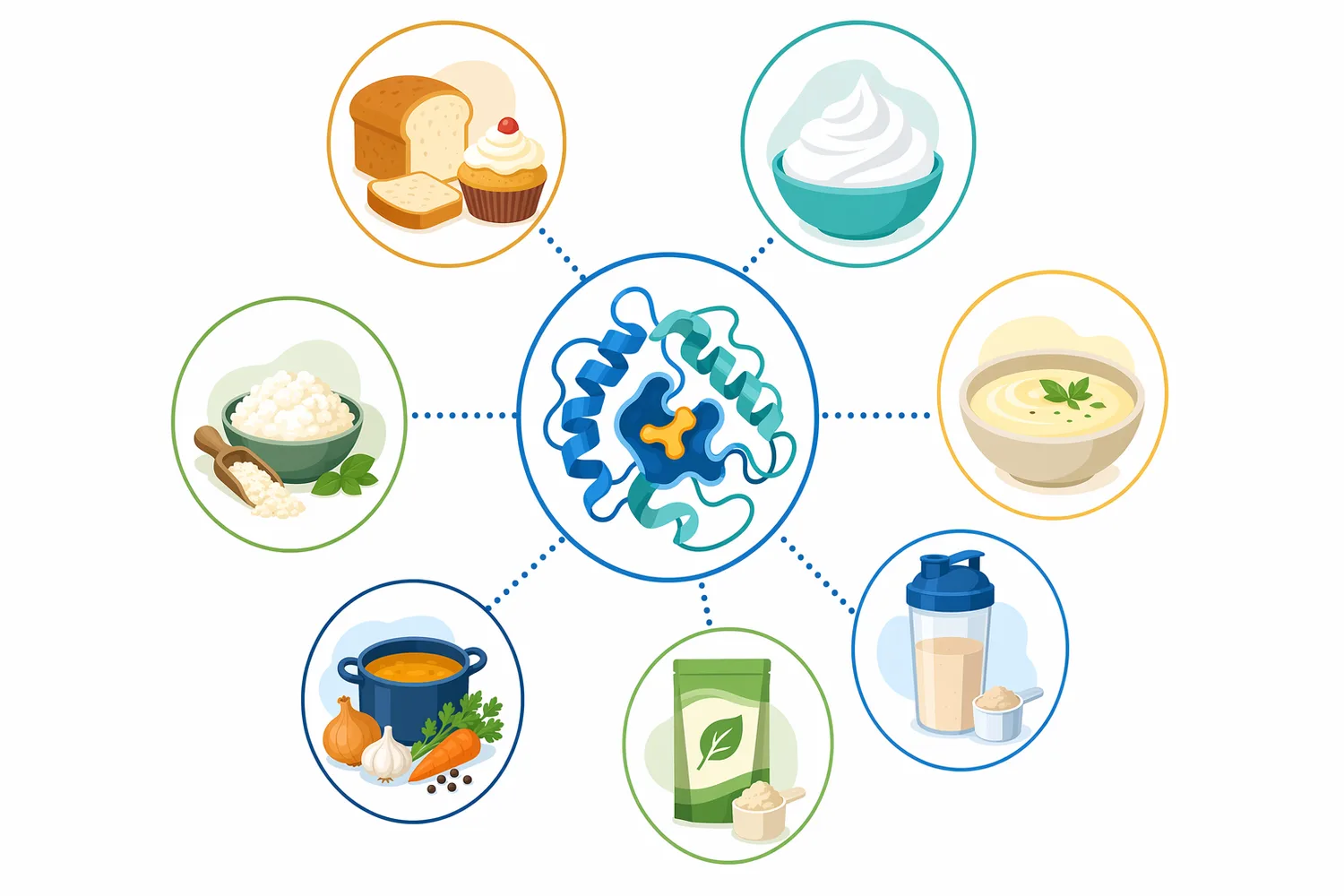
Food-grade protease is attractive because it works in water-rich food systems and can modify proteins without the severity of many chemical treatments. Liquid egg is already an aqueous substrate, so the enzyme can contact dispersed proteins under controlled mixing and heating conditions. This makes hydrolysis a practical processing step for changing liquid egg functionality before incorporation into a final food.
The technology also fits modern ingredient development because it can upgrade existing protein streams into higher-function materials. Reviews of food protein hydrolysates describe enzymatic hydrolysis as a way to tailor functionality, improve technological behavior, and generate peptide fractions across many protein sources [8]. Egg systems are a strong fit for this approach because egg proteins already deliver high-value functionality, and protease can shift that functionality toward dispersion, interfacial activity, peptide nutrition, or flavor development.
At the same time, the enzyme should not be viewed as a guarantee of one fixed result. Protease changes the substrate it is given. If the starting liquid egg is primarily egg white, the main effects will center on globular protein unfolding, foaming, heat response, and peptide formation. If the substrate is yolk-rich, emulsification, lipid-protein interactions, flavor, and antioxidant peptide formation become more prominent. Whole egg hydrolysis combines both pathways.
Enzymes.bio supplies Food-Grade Protease for Liquid Egg Hydrolysis as a 1 kg online product. The purchase is completed directly through the website: the buyer places the order, pays online, and the order is processed and shipped. A Certificate of Analysis and Safety Data Sheet are included with the order.
For food users, the key value is straightforward: protease enables controlled conversion of liquid egg proteins into smaller peptides, which can change dispersion, viscosity, foaming, emulsification, digestibility-oriented positioning, and flavor potential. The strongest egg-specific evidence supports hydrolysis of egg white and egg yolk proteins for functional and bioactive peptide generation, while broader food-enzyme research explains the molecular mechanism behind those changes [4].
Food-grade protease for liquid egg hydrolysis is a practical enzyme tool for modifying egg white, egg yolk, or whole egg in liquid food systems. It works by cutting peptide bonds, reducing protein size, exposing new surface groups, and producing peptide-rich fractions that behave differently from intact egg proteins. These molecular changes can improve dispersion, alter viscosity, influence foaming and emulsification, support digestibility-oriented ingredient design, and create flavor-active or antioxidant peptide fractions.
The science is strongest when hydrolysis is treated as a controlled conversion rather than a generic improvement step. Egg white studies show improved foaming and antioxidant peptide formation; egg yolk studies show hydrolysis kinetics, functionality, and antioxidant potential; and pretreatment research shows that protein accessibility strongly affects enzyme performance [3]. Used thoughtfully, Food-Grade Protease for Liquid Egg Hydrolysis gives food formulators a flexible way to reshape the natural functionality of egg proteins while preserving the ability to design around texture, flavor, and finished-product performance.
Sold by the 1 kg unit, in stock and ready to ship. Order directly on our store — pay online and we process your order. A Certificate of Analysis and Safety Data Sheet are included with every order.
Buy Food-Grade Protease For Liquid Egg Hydrolysis →Numbered in order of first citation. Open-access sources, each verified reachable at publication; citation numbers in the text link here.