
Direct answer: Food-grade proline protease is a specialty brewing protease used to reduce chill haze by hydrolyzing proline-rich protein regions that otherwise bind beer polyphenols and form visible protein–polyphenol aggregates. Enzymes.bio supplies this liquid brewing additive for online purchase in 1 kg units; the order is processed and shipped after online payment, with a Certificate of Analysis and Safety Data Sheet included.
Proline protease is most relevant in clear beer and beverage systems where haze-active proteins, gluten-related cereal protein fragments, or resistant proline-rich peptides affect visual stability. Unlike a broad protease that cuts many peptide bonds, a proline-specific endoprotease targets peptide regions associated with proline, which is important because proline-rich cereal proteins are structurally resistant to many ordinary proteases and are strongly implicated in beer haze behavior [1].
Food-Grade Proline Protease Liquid Brewing Additive from Enzymes.bio is a liquid enzyme preparation for brewing and beverage applications where targeted protein modification is useful. The product information identifies the enzyme as a proline-specific protease/endoprotease associated with Aspergillus niger fermentation and positions it for beer chill-haze prevention and related beverage-stability uses .
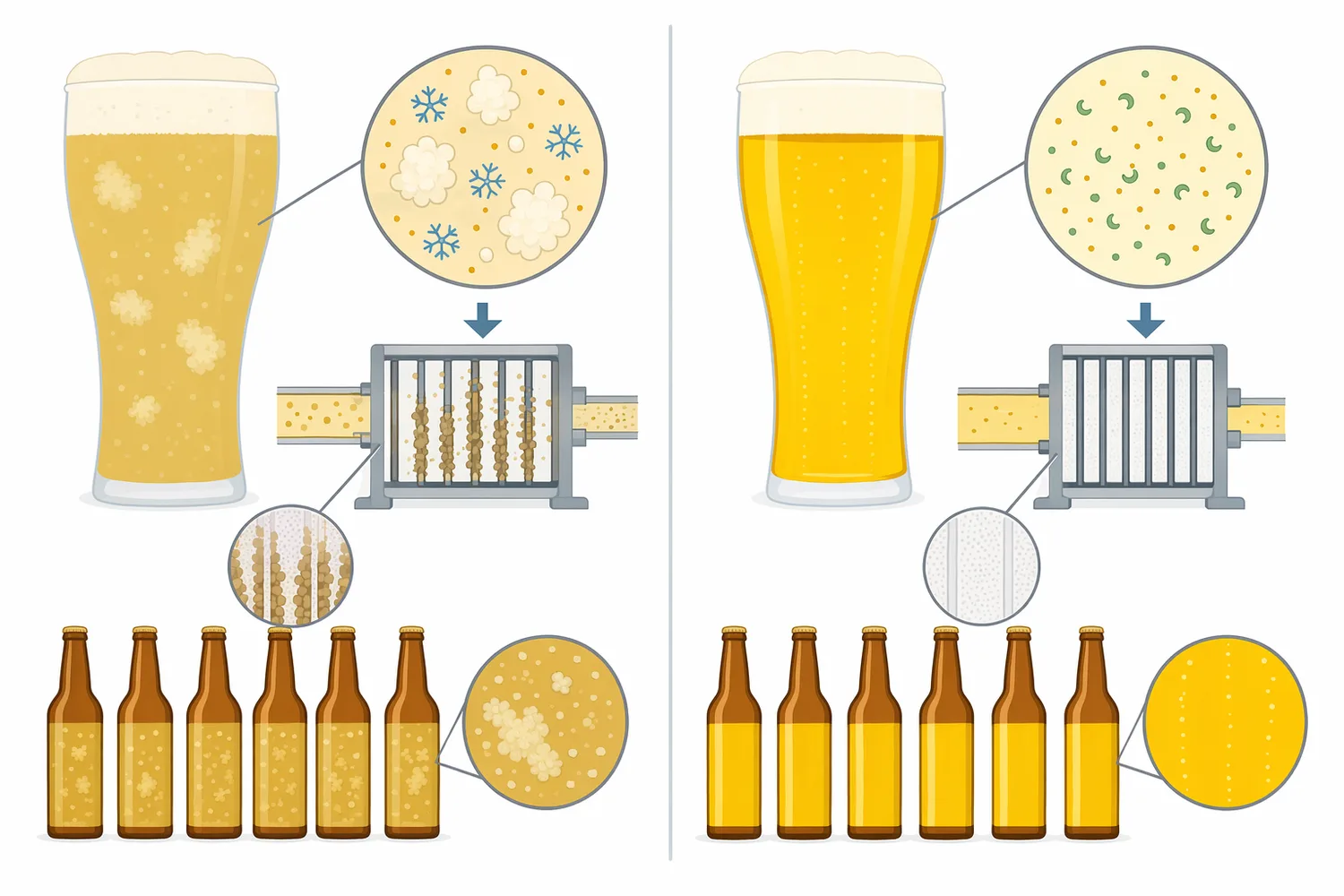
In brewing language, this product is best understood as a process aid for managing haze-active protein fractions rather than as a general clarifier. It does not “filter” haze out of beer; it changes susceptible protein structures before they form visible instability. That distinction matters because haze formation is a molecular interaction problem: certain beer proteins and peptides remain soluble at one temperature, then associate with polyphenols during chilling or storage and become large enough to scatter light.
Food enzymes are widely used in modern processing because they can act on specific molecular targets—proteins, starches, fibers, lipids, or other food components—under food-compatible conditions. Reviews of food enzyme technology describe proteases as one of the major enzyme classes used to hydrolyze peptide bonds, modify protein functionality, and support improvements in texture, clarity, flavor, or process performance [2].
For this product, the most important target is not “all protein.” Beer needs some proteins and polypeptides for foam, mouthfeel, and flavor balance. The practical value of proline protease is its selectivity: it preferentially acts on proline-containing peptide regions that are difficult for many non-specialized proteases to access, while avoiding the uncontrolled over-hydrolysis associated with indiscriminate protein breakdown.
Beer is a complex colloidal system containing water, ethanol, carbohydrates, proteins, peptides, polyphenols, minerals, hop compounds, and yeast-derived metabolites. Some of these components remain stable in solution, while others can assemble into suspended particles. Chill haze is the visible cloudiness that appears when beer is cooled and haze-active components aggregate.
The classic brewing mechanism involves proline-rich proteins or peptides interacting with polyphenols. Polyphenols can act as bridging compounds: they bind multiple protein regions, allowing soluble molecules to become larger complexes. When those complexes grow, they scatter light and appear as haze. Patent literature on beer stabilization describes haze-active proteins as proline-rich proteins that interact with polyphenols to form protein–polyphenol aggregates responsible for chill haze [3].
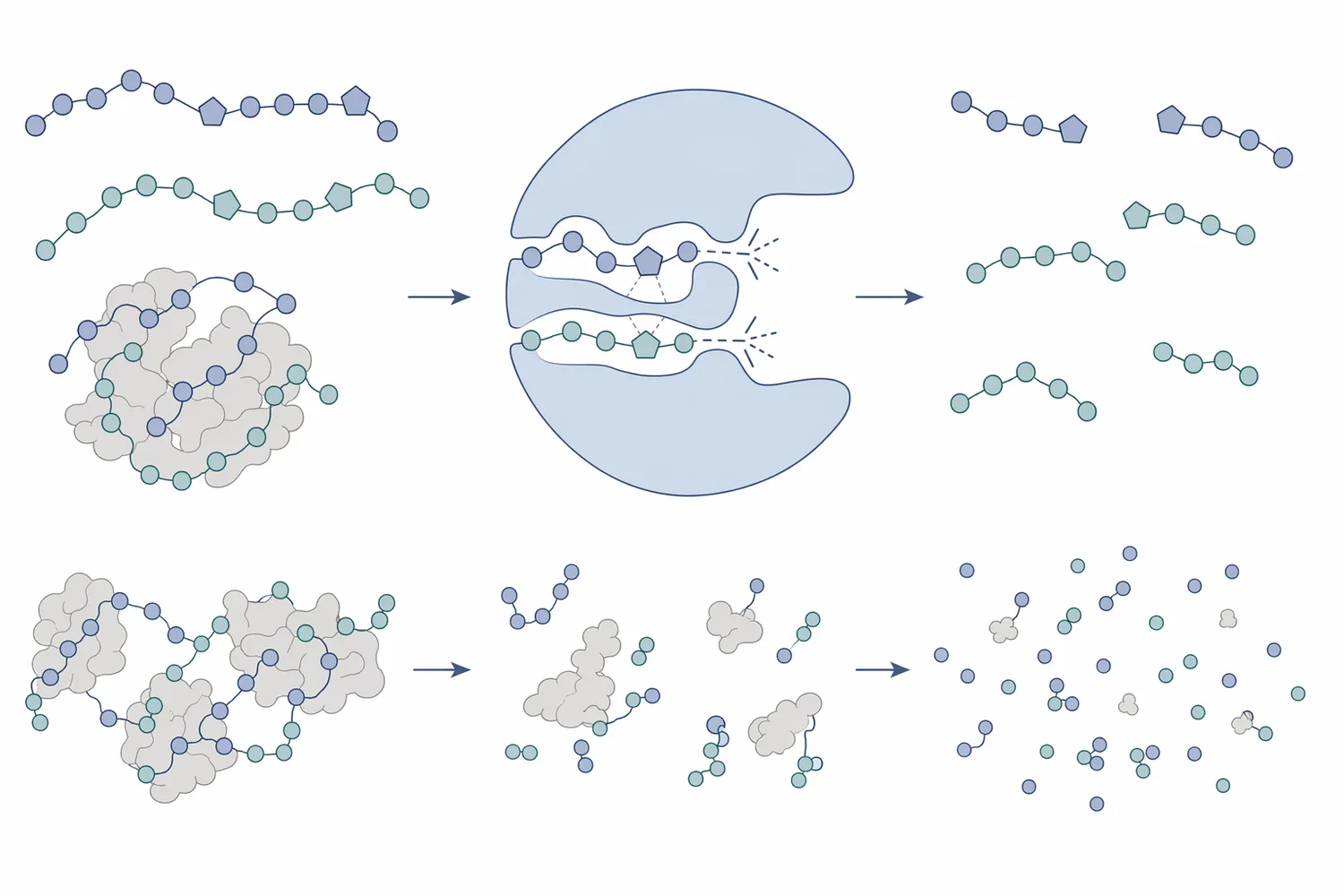
This mechanism explains why chill haze can be temperature-dependent. At warmer temperatures, weakly associated protein–polyphenol complexes may remain dispersed or below the threshold of visibility. When beer is chilled, solubility and intermolecular interactions shift, and reversible haze can appear. Over time, those aggregates can become larger, less reversible, and more persistent, contributing to permanent haze.
Chill haze is normally a quality and appearance issue rather than a safety issue, but it can strongly affect customer perception. A beer that tastes acceptable may be judged as old, unstable, or poorly filtered if it turns cloudy after refrigeration. For clear beer styles, that visual change directly conflicts with the product promise.
Proteins are chains of amino acids connected by peptide bonds. A protease hydrolyzes those bonds by adding water across the peptide linkage, splitting a larger chain into smaller fragments. A proline-specific protease is more selective: it recognizes peptide regions associated with the amino acid proline and cleaves at susceptible sites in or near those regions.
Proline is unusual because its side chain loops back to the amino nitrogen, creating a rigid cyclic structure. That rigidity introduces bends into peptide chains and restricts the shapes proteins can adopt. Many ordinary proteases are less efficient around proline because the peptide bond geometry is harder to accommodate in their active sites. Proline-rich cereal proteins therefore tend to leave resistant fragments after general proteolysis.
The 2023 structural study of acidic proline-specific endoprotease from Aspergillus niger explains why this enzyme class is suited to internal cleavage of proline-containing peptides: the enzyme has structural features that support proline-specific endoprotease activity rather than only terminal trimming of peptide ends [1]. In practical brewing terms, that means the enzyme can attack internal regions of haze-active proteins and peptides, not merely remove amino acids one by one from the end of a chain.
Once those proline-rich regions are cleaved, the substrate changes in several ways. A larger haze-active protein may become smaller peptide fragments. Binding sites that previously allowed polyphenols to bridge proteins may be disrupted. The resulting fragments may remain more soluble, form smaller complexes, or be less able to build the aggregate network that produces visible haze.
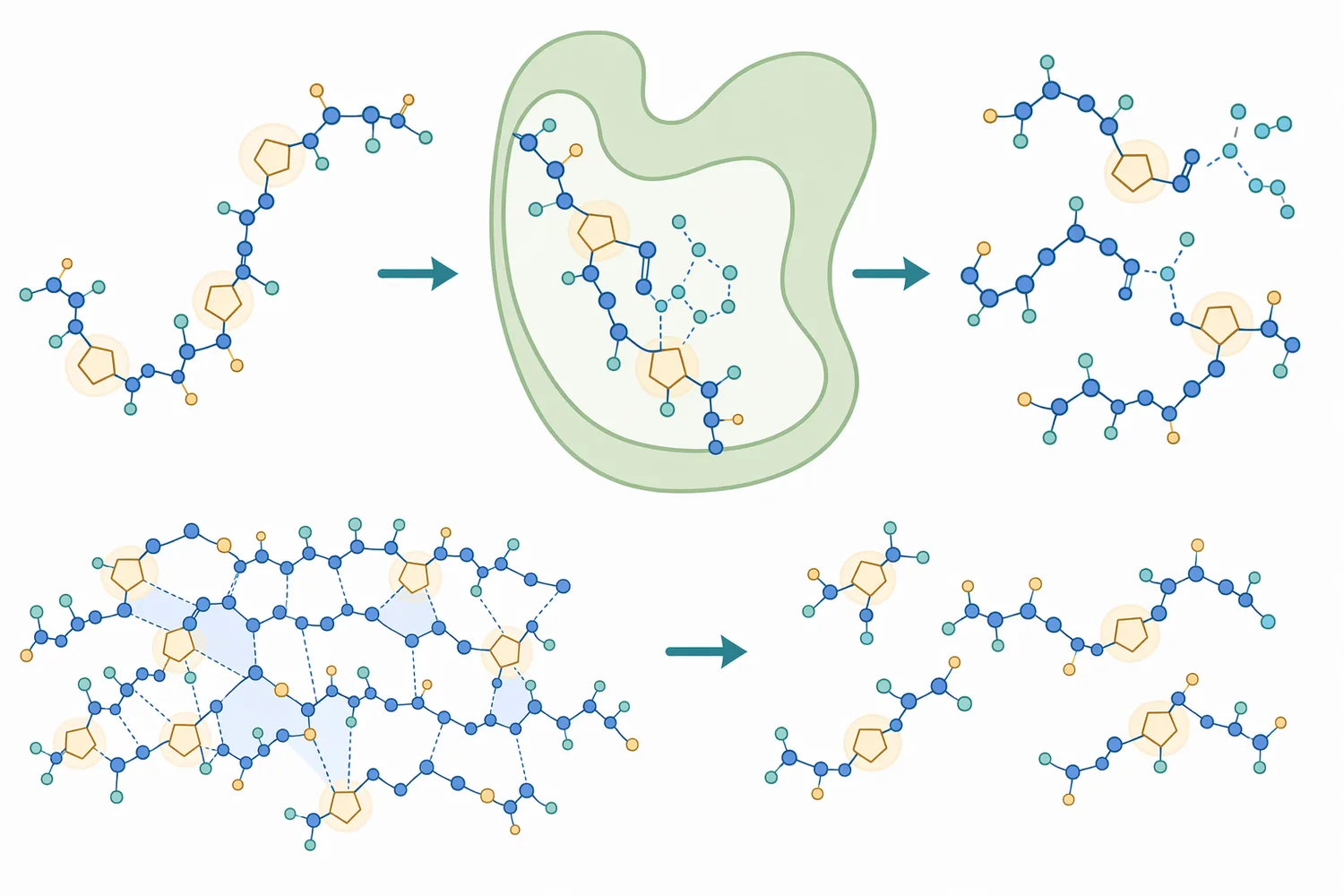
This is why proline protease is preventive rather than cosmetic. It does not wait for particles to appear and then remove them. It reduces the ability of haze-active proteins to participate in the protein–polyphenol interactions that lead to chill haze.
Proteases differ substantially in their preferred substrates, pH behavior, and practical effect on beer proteins. A proline-specific protease should not be treated as interchangeable with any generic acid, neutral, or alkaline protease. The distinction is especially important when the goal is colloidal stability without unnecessary loss of foam-positive or body-positive protein fractions.
| Protease type | Conceptual substrate preference | Typical processing logic | Relevance to brewing clarity |
|---|---|---|---|
| Acid protease | Protein hydrolysis under acidic conditions; may be broad or specialized depending on enzyme | Often compatible with acidic food and beverage matrices | Useful where process pH fits the enzyme and targeted protein modification is desired |
| Neutral protease | Broader protein hydrolysis near neutral conditions | Common in general food protein modification | Can reduce proteins but may be less targeted for proline-rich haze-active regions |
| Alkaline protease | Protein hydrolysis under alkaline conditions | Often used outside beer-like acidic environments, including some industrial protein treatments | Less naturally aligned with finished beer acidity; not the first conceptual fit for beer chill haze |
| Proline-specific protease | Cleavage of peptide regions associated with proline | Targets resistant proline-rich peptides and proteins | Especially relevant to beer haze and gluten-related cereal protein fragments |
The key difference is specificity. Broad proteases can reduce total protein, but beer quality is not improved simply by removing or degrading as much protein as possible. Foam stability, palate fullness, and fermentation nutrition all involve protein or peptide fractions. Proline protease is valuable because it focuses on a molecular feature—proline-rich sequences—that is strongly connected to haze-active behavior.
The most directly relevant peer-reviewed evidence for this enzyme class comes from work on Aspergillus niger acidic proline-specific endoprotease. The 2023 Protein Science study reported that this enzyme type has been used in gluten degradation, hydrolysis of bitter peptides, beer haze reduction, and peptide generation for proteomics [1].
That same work is important because it connects application performance to enzyme structure. Proline-specific cleavage is not just a marketing label; it is explained by how the enzyme’s active site accommodates proline-containing peptide substrates. The study distinguishes the enzyme’s endoprotease behavior from related exopeptidase activity, which is relevant because haze-active proteins require internal cleavage to meaningfully change their aggregation behavior.
For brewing, this supports a rational mechanism. If the problem substrate is a proline-rich beer protein or peptide, and if the enzyme can cleave internally at proline-associated sites, the resulting molecular change directly addresses the cause of protein–polyphenol haze. The enzyme is therefore matched to the chemistry of the instability rather than applied as a non-specific processing aid.
The same paper also notes broader practical uses, including bitter peptide hydrolysis. That matters because proline-rich hydrophobic peptides can be resistant to ordinary enzymatic breakdown and may contribute to persistent sensory or functional issues in protein-containing foods and beverages [1].
Brewing patent literature describes the use of proline-specific endoprotease during beer production to reduce haze-active proteins and support colloidal stability. The disclosed mechanism is consistent with brewing science: proline-rich proteins bind polyphenols, and the resulting aggregates create chill haze in finished beer [3].
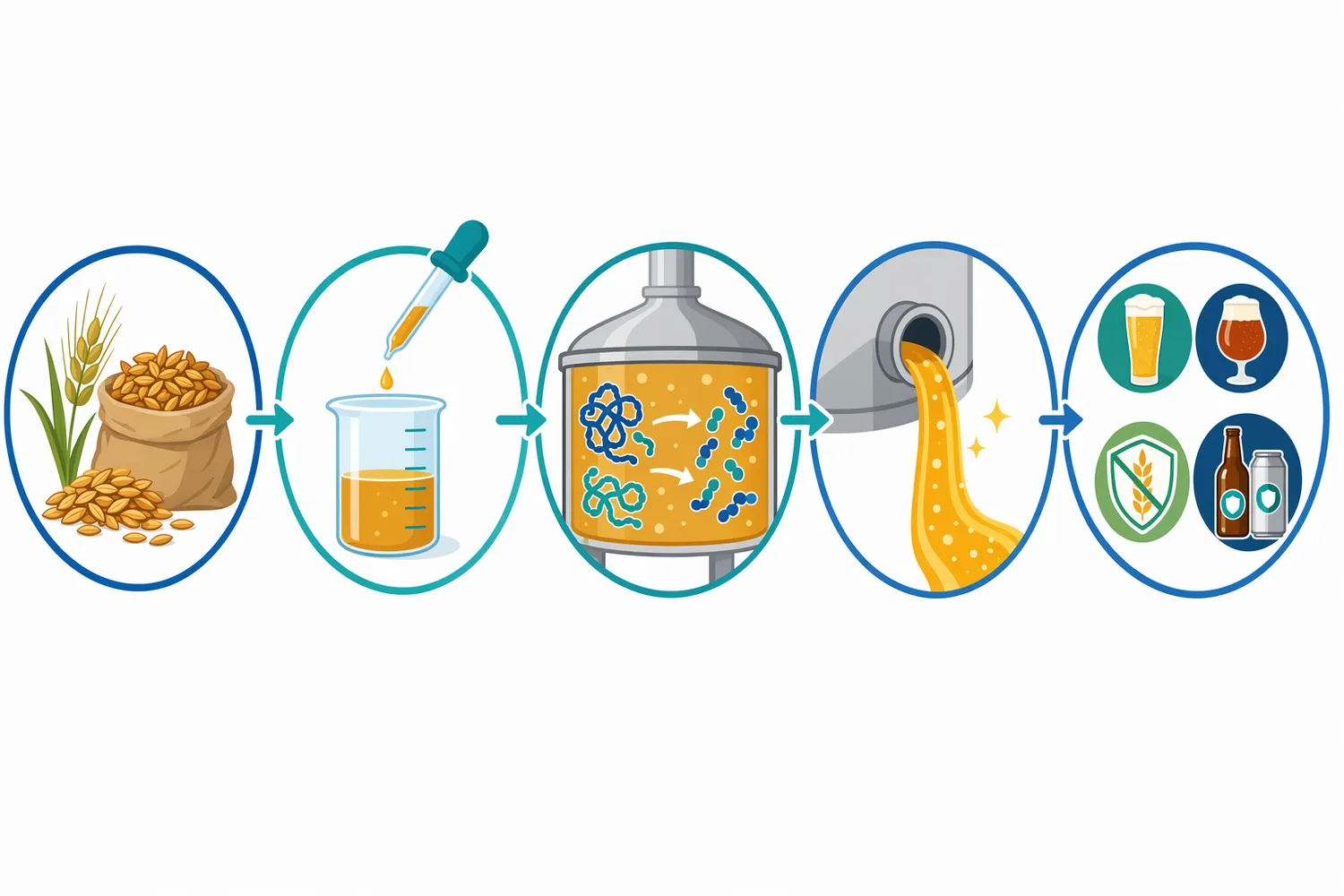
The same technical disclosures describe adding proline-specific endoprotease during mashing, where the enzyme can act on cereal protein fractions before later heating steps. This process logic is useful because brewing already includes controlled aqueous extraction, enzymatic rests, lautering, and boiling; an enzyme that performs during an earlier stage can act before wort boiling reduces or eliminates continuing enzymatic activity [3].
A mashing-stage use pattern also makes biochemical sense. Malt proteins and gluten-related cereal proteins are present in the mash and early wort, and many haze-active fractions originate from barley, wheat, or other grains. Acting before final clarification and packaging allows the enzyme to modify susceptible protein regions before they become shelf-life problems.
However, the practical message should remain precise. Patent literature supports the technical feasibility and mechanism, but beer style, raw materials, filtration, stabilization, packaging, and storage all affect final haze behavior. Proline protease is a targeted tool for one major haze pathway, not a universal solution for every form of turbidity.
Proline protease also has relevance in gluten-reduced beer workflows because gluten proteins contain proline-rich regions that resist ordinary proteolysis. In barley- and wheat-derived beverages, these resistant fragments can remain after standard brewing steps. Proline-specific enzymes are therefore of interest because they attack a structural feature that makes gluten-related peptides persistent.
The Aspergillus niger proline-specific endoprotease literature links this enzyme class to in-situ gluten degradation, and its endoprotease activity helps explain how internal cleavage of resistant peptide sequences can occur [1]. This is mechanistically important because gluten-related epitopes are not simply removed by trimming peptide ends; they often require cleavage within proline-rich sequences.
A Food Control study evaluated Aspergillus niger prolyl endopeptidase immobilized on a food-grade carrier for continuous production of gluten-reduced beer from commercial barley-malt beer, demonstrating that this enzyme class can be applied in real beer matrices rather than only in simplified laboratory substrates [1].
This application must be handled carefully. Enzymatic treatment may reduce gluten-related protein fragments, but it does not automatically make a beer gluten-free or suitable for every gluten-sensitive consumer. Any gluten-related label claim depends on validated finished-product testing and applicable regulations in the market where the beer is sold.
Proline protease works when the beverage matrix allows the enzyme to remain active long enough to hydrolyze susceptible peptide bonds. The product information positions the enzyme for brewing and beverage use under acidic-to-near-neutral conditions and moderate processing temperatures, which aligns with the acidic character of many beverage systems and with published descriptions of acidic A. niger proline-specific endoprotease .
In beer production, the enzyme may be considered where there is enough contact time with haze-active proteins before final stabilization. Mashing is a logical point described in technical disclosures because the mash contains cereal proteins in an aqueous environment and later boiling provides a natural thermal step in the brewing sequence [3].
Later-stage use can be conceptually relevant in beverage processing when the enzyme is intended to act on remaining soluble protein fractions, but the finished beverage context is different from mash. Ethanol concentration, lower temperature, lower substrate accessibility, and shorter contact opportunities can influence the extent of protein hydrolysis. The practical outcome is therefore tied to the actual process design.
The most important operational principle is controlled protein modification. Brewers generally do not want uncontrolled breakdown of all protein fractions. Foam-positive proteins and polypeptides contribute to beer quality. The purpose of proline protease is to reduce the haze-forming tendency of susceptible proline-rich regions while preserving the overall sensory and physical profile of the beer.
The primary intended change is improved chill stability. By cleaving proline-rich haze-active regions, the enzyme reduces the ability of those proteins or peptides to form larger complexes with polyphenols. The visible result, when the process is suitable, is reduced cold haze formation during chilling, storage, or distribution.
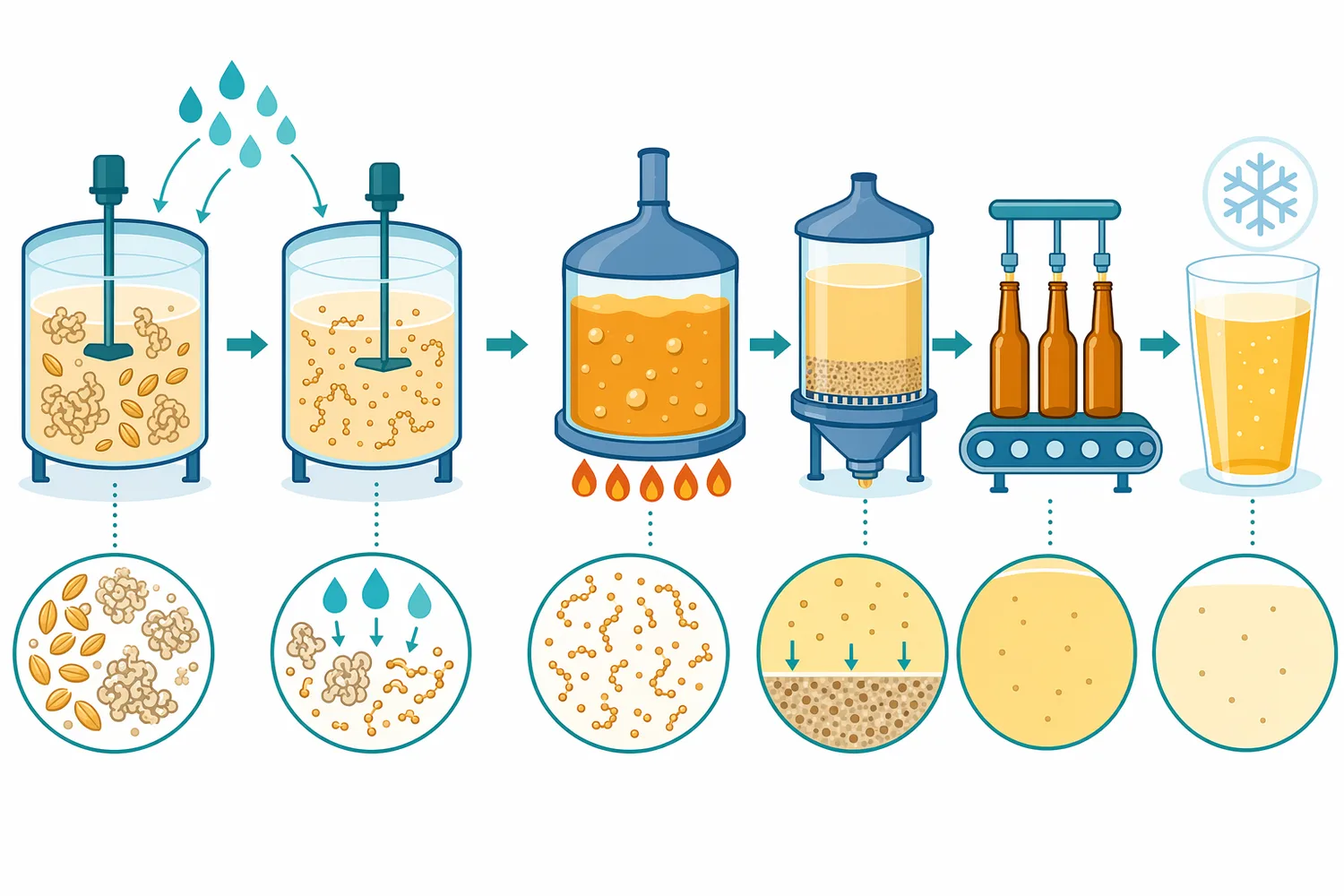
A second expected effect is more consistent appearance over shelf life. Haze instability often emerges after packaging, especially under temperature cycling or refrigeration. Reducing the precursor interactions can help the beer remain visually closer to its intended state.
A third possible benefit is reduced reliance on some physical stabilization aids. The Enzymes.bio product information positions proline protease as an enzymatic option for cold-haze prevention and as a potential alternative to PVPP-type stabilization approaches in suitable beer systems .
That said, haze can have multiple causes. Protein–polyphenol haze is only one pathway. Yeast carryover, microbial contamination, starch haze, beta-glucan issues, mineral precipitation, hop-polyphenol load, dry-hop particles, and filtration performance can all affect clarity. Proline protease is most relevant where the instability is protein-related and proline-rich protein fractions are part of the problem.
Although beer chill haze is the main application, the same biochemical principle can apply to other beverages where protein haze or storage precipitation is linked to proline-containing proteins. The Enzymes.bio product information describes use in brewing and beverage stability contexts rather than only in one beer style .
In non-beer beverages, the enzyme’s fit depends on the haze chemistry. If the cloudiness is caused by protein–polyphenol interactions, selective proteolysis can be relevant. If the haze is mainly caused by pectin, starch, suspended fruit solids, minerals, or microbial growth, a proline protease would not address the primary cause.
Protein hydrolysis applications are also possible where resistant proline-rich peptides are technologically important. The structural literature notes use of A. niger proline-specific endoprotease for bitter peptide hydrolysis as well as gluten degradation and beer haze reduction [1]. This suggests value in specialized protein processing where ordinary proteases leave resistant peptide sequences that affect taste, solubility, or digestibility.
For beverage developers, the practical message is to match the enzyme to the substrate. Proline protease is not the broadest protease; it is a more specialized tool for proline-rich protein regions. That specialization is exactly why it is attractive in beer stabilization.
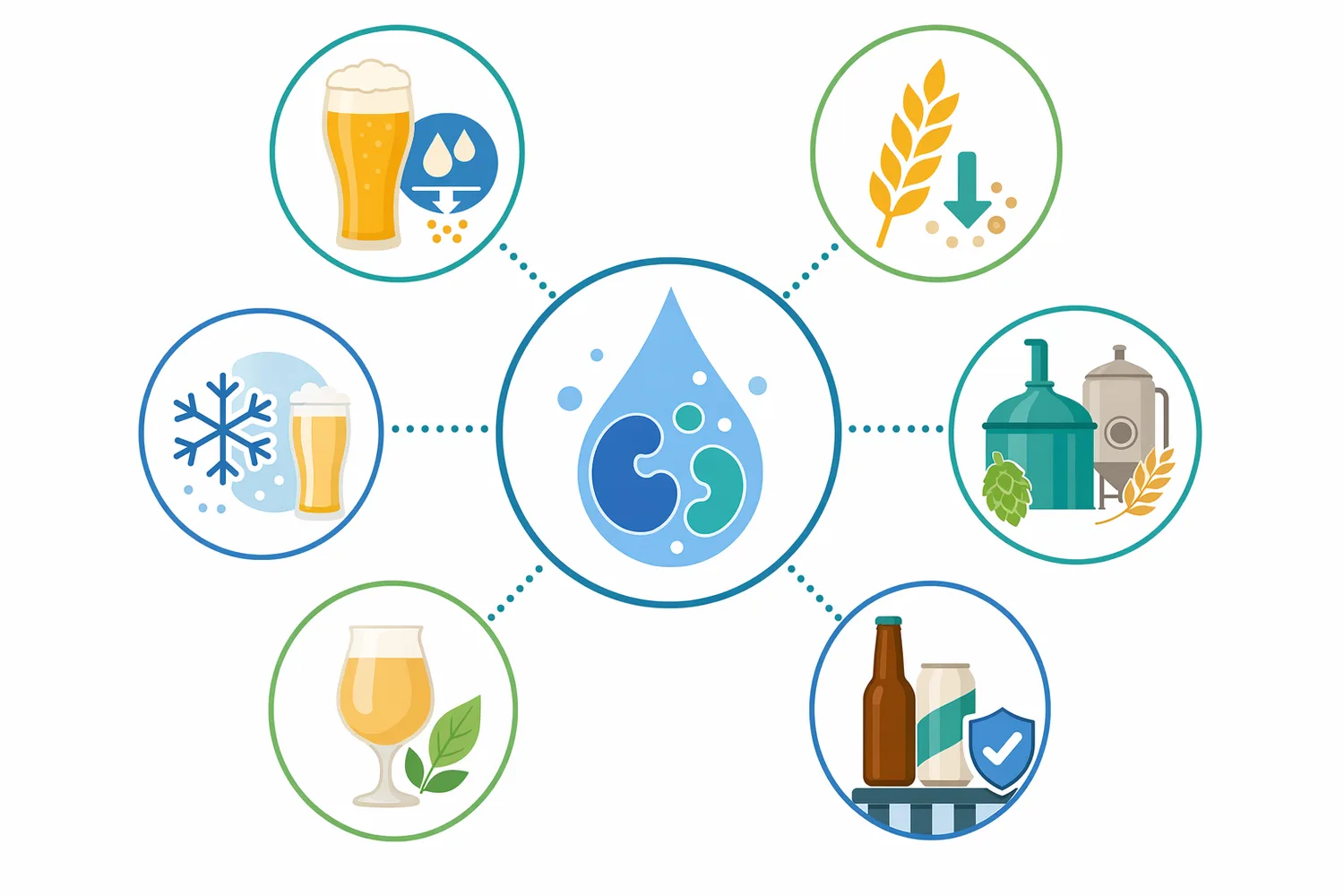
Enzymes.bio supplies this food-grade proline protease liquid brewing additive directly online by the 1 kg unit. Buyers can place the order online, pay through the website, and the order is then processed and shipped.
A Certificate of Analysis and Safety Data Sheet are included with the order. These documents support routine receiving, internal documentation, and safe handling in food and beverage production environments without requiring the buyer to manage a separate quotation or sample-request process.
Enzymes.bio is the product supplier. The role of the listing is to make the enzyme available for straightforward online purchase, with accompanying documentation supplied as part of the order.
Enzymes are proteins, and protease preparations should be handled with care because repeated or concentrated exposure may irritate skin, eyes, or respiratory tissues in susceptible individuals. The product information advises avoiding direct contact and using responsible handling practices appropriate for enzyme preparations .
In practical production settings, that means keeping containers closed when not in use, avoiding splashes or aerosols, and ensuring personnel follow the Safety Data Sheet supplied with the order. Proteases are designed to break down proteins, so direct exposure to skin or mucous membranes should be minimized even when the enzyme is food-grade.
Food-grade status relates to intended use in food-processing applications; it does not mean the concentrated enzyme preparation should be handled casually. As with other processing aids, safe storage, clean dispensing, and controlled use help maintain both worker safety and product consistency.
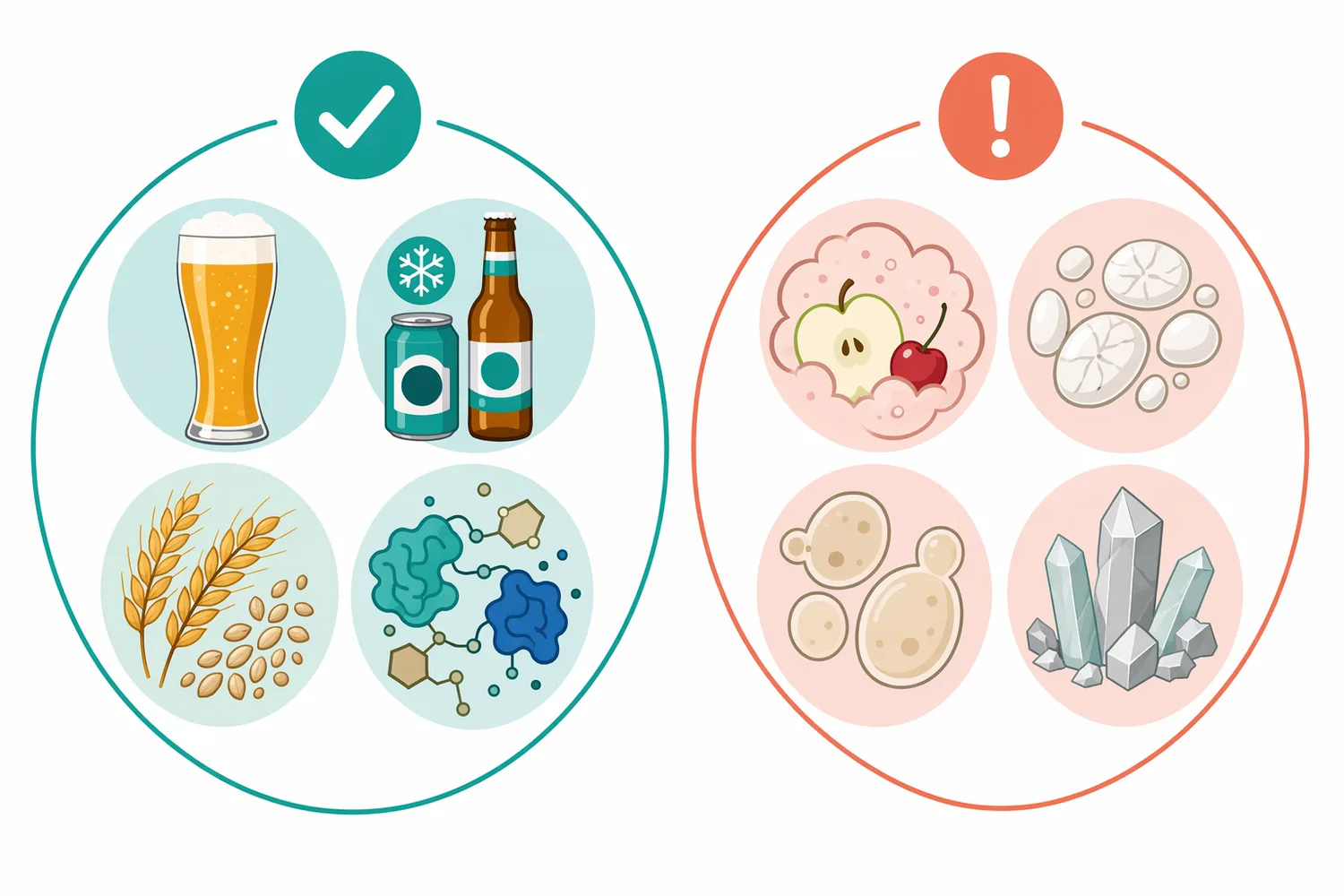
The strongest fit is clear beer where chill haze is a known or likely stability risk. This includes beers intended to remain bright through refrigerated distribution, packaged beers exposed to temperature cycling, and beer styles where visual clarity is central to consumer acceptance.
The enzyme is also relevant where a brewer is working with barley, wheat, or other cereal-derived proteins and wants targeted modification of resistant proline-rich fractions. Because gluten-related cereal proteins are rich in proline and resistant to ordinary proteolysis, proline-specific cleavage provides a clear biochemical rationale for gluten-reduced beer workflows [1].
A further fit is beverage development where the haze mechanism is known to be protein-related. The enzyme should not be expected to solve haze caused by pectin, starch, yeast, minerals, or unstable flavor emulsions. Its strength is targeted proteolysis of proline-containing protein regions.
Food-Grade Proline Protease Liquid Brewing Additive from Enzymes.bio is a targeted enzyme option for breweries and beverage producers seeking to reduce chill haze caused by proline-rich protein interactions with polyphenols. Its value lies in molecular selectivity: it hydrolyzes susceptible proline-containing peptide regions, reducing the ability of haze-active proteins to form visible protein–polyphenol aggregates.
The evidence base is strongest for the enzyme class and mechanism. Peer-reviewed structural work on Aspergillus niger acidic proline-specific endoprotease supports its proline-specific endoprotease activity and links the enzyme class to gluten degradation, bitter peptide hydrolysis, beer haze reduction, and proteomics applications [1]. Brewing patent literature supports the practical haze mechanism and describes proline-specific endoprotease use during beer production to reduce haze-active proteins [3].
For buyers, the practical takeaway is straightforward: this is a specialty liquid brewing protease for targeted protein management, especially chill-haze prevention and proline-rich cereal protein modification. Enzymes.bio supplies it directly online in 1 kg units, with the Certificate of Analysis and Safety Data Sheet included with the shipped order.
Sold by the 1 kg unit, in stock and ready to ship. Order directly on our store — pay online and we process your order. A Certificate of Analysis and Safety Data Sheet are included with every order.
Buy Food-Grade Protease Proline Protease Liquid Brewing Additive 100G →Numbered in order of first citation. Open-access sources, each verified reachable at publication; citation numbers in the text link here.