
Food grade transglutaminase enzyme powder is used in protein-containing foods to improve binding, gel strength, elasticity, water retention, and finished-product consistency. It works by forming covalent cross-links between protein chains—most notably ε-(γ-glutamyl) lysine bonds between glutamine and lysine residues—so loose or weak protein structures become more cohesive and stable during handling, slicing, cooking, or storage [1].
Enzymes.bio supplies food grade transglutaminase enzyme powder for food processing applications in meat, seafood, dairy, wheat, soy, and plant-protein systems. The product is available for direct online purchase in 1 kg units; after online payment, the order is processed and shipped, and a Certificate of Analysis and Safety Data Sheet are provided with the order .
Transglutaminase is often described in food science as a “protein glue,” but its function is more precise than that phrase suggests. The enzyme does not act like an adhesive coating on the outside of food pieces; it modifies the proteins already present in the food matrix by catalyzing links between reactive amino acid side chains. In a hydrated protein system, transglutaminase can connect one protein molecule to another, or one region of a protein network to another, creating a stronger three-dimensional structure [1].
The most important food-processing form is microbial transglutaminase. Reviews describe microbial transglutaminase as widely used across fish products, meat products, dairy foods, soybean products, wheat products, and other protein-rich systems because it can modify texture without contributing strong color or flavor of its own [2]. That is why the enzyme is used in applications where the desired change is structural: firmer gels, cleaner slicing, improved bite, reduced crumbling, or more stable water binding.
In practical terms, transglutaminase is relevant when a food formulation contains proteins that can be made to interact more strongly. Muscle proteins in meat and fish, caseins and whey proteins in dairy systems, gluten proteins in wheat dough, and proteins from soy, mung bean, lupin, pumpkin seed cake, and other plant materials may all respond, although the effect depends on how accessible their reactive amino acid groups are in the actual formulation [3].
Proteins are chains of amino acids folded into structures that may be compact, fibrous, aggregated, hydrated, denatured, or partly unfolded depending on the ingredient and process. Transglutaminase acts on glutamine residues in proteins and transfers the acyl group to a primary amine acceptor, commonly the ε-amino group of lysine. The result is an ε-(γ-glutamyl) lysine isopeptide bond, a covalent connection that is much stronger than the weak physical interactions that normally hold many food structures together [1].
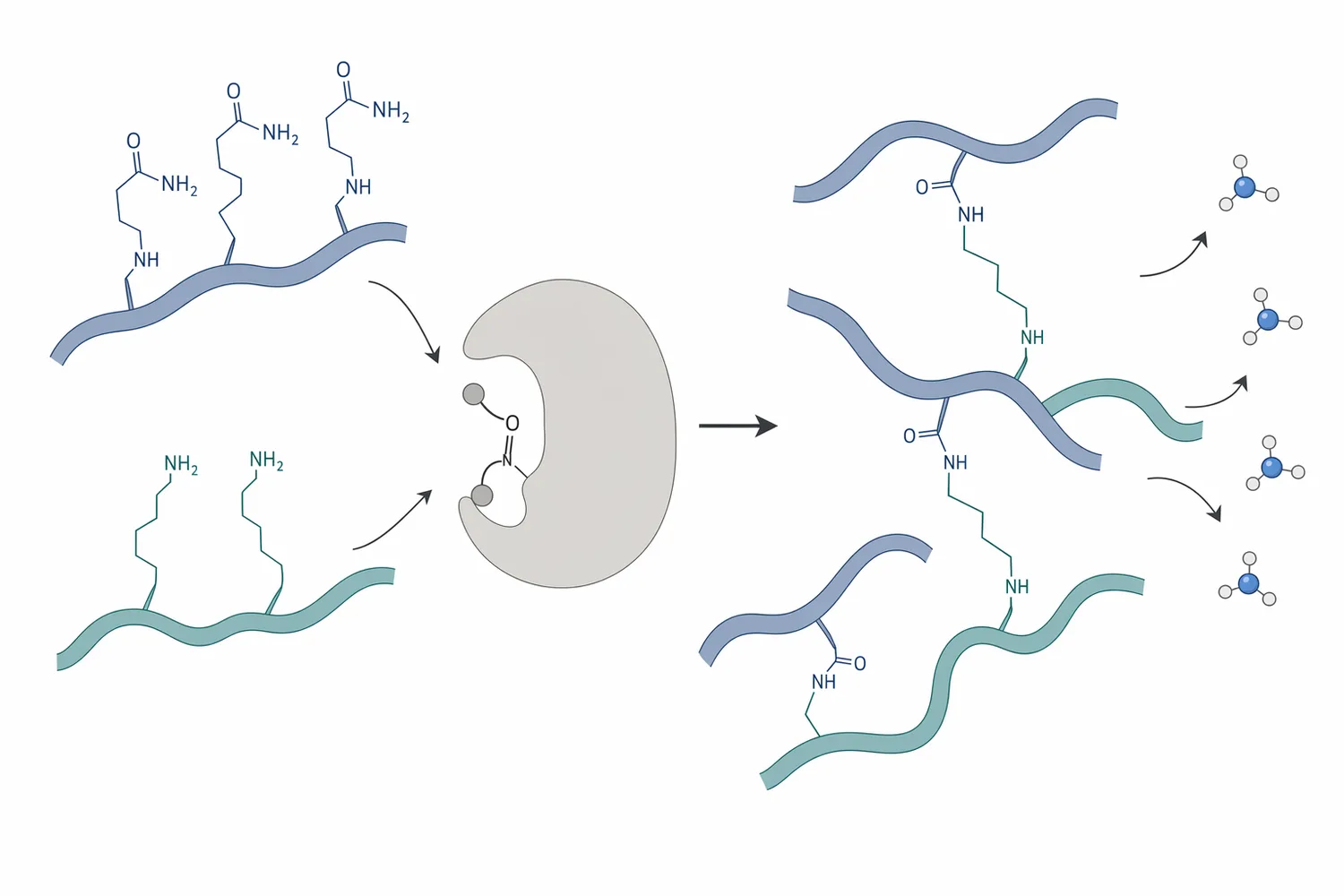
That difference matters during processing. Hydrogen bonding, electrostatic attraction, hydrophobic interaction, and entanglement can all help a protein gel or dough hold together, but those interactions can be disrupted by heat, shear, dilution, freezing, thawing, or changes in salt and pH. A transglutaminase-catalyzed covalent bond becomes part of the protein network itself, so the finished structure can become more resistant to breaking, syneresis, crumbling, or separation when the food is handled or cooked [2].
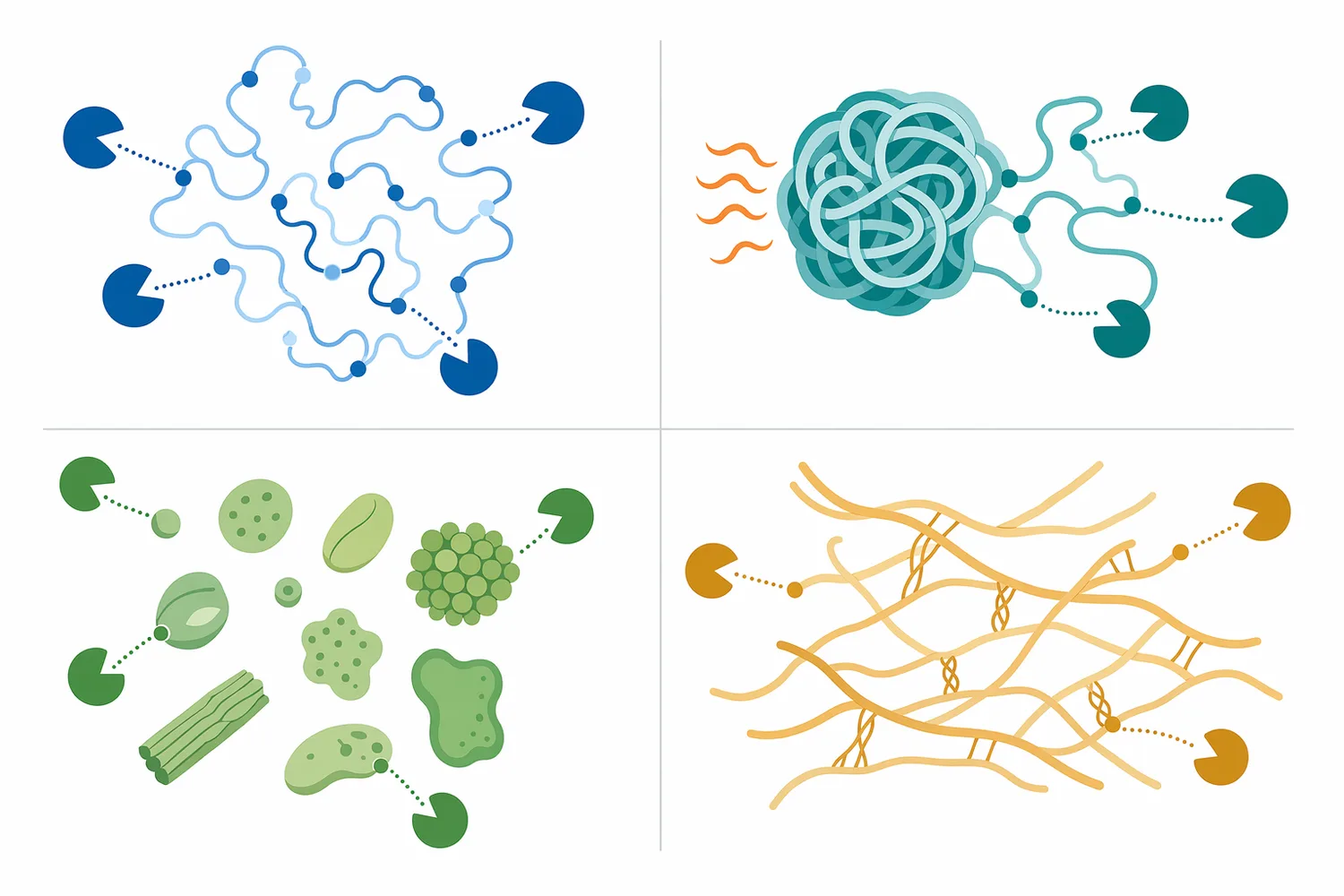
Transglutaminase must physically contact suitable protein sites to work. In a dry powder blend, the enzyme and protein particles may be close together, but meaningful reaction occurs after hydration allows molecular movement. Once water is present, proteins can swell, unfold, dissolve, or disperse, making glutamine and lysine residues more accessible. Proteins that remain tightly folded or trapped inside insoluble particles may react less than proteins that are solubilized or partially unfolded [4].
This explains why the same enzyme can produce different results in different foods. In minced meat or surimi, salt and mixing can help extract myofibrillar proteins, giving the enzyme access to reactive muscle proteins. In dairy, caseins are relatively accessible, while native whey proteins may require heat-related structural change before they become more reactive. In plant proteins, extraction history, heat treatment, pH adjustment, and particle structure can strongly influence whether the enzyme creates a smooth cohesive gel or only limited cross-linking [5].
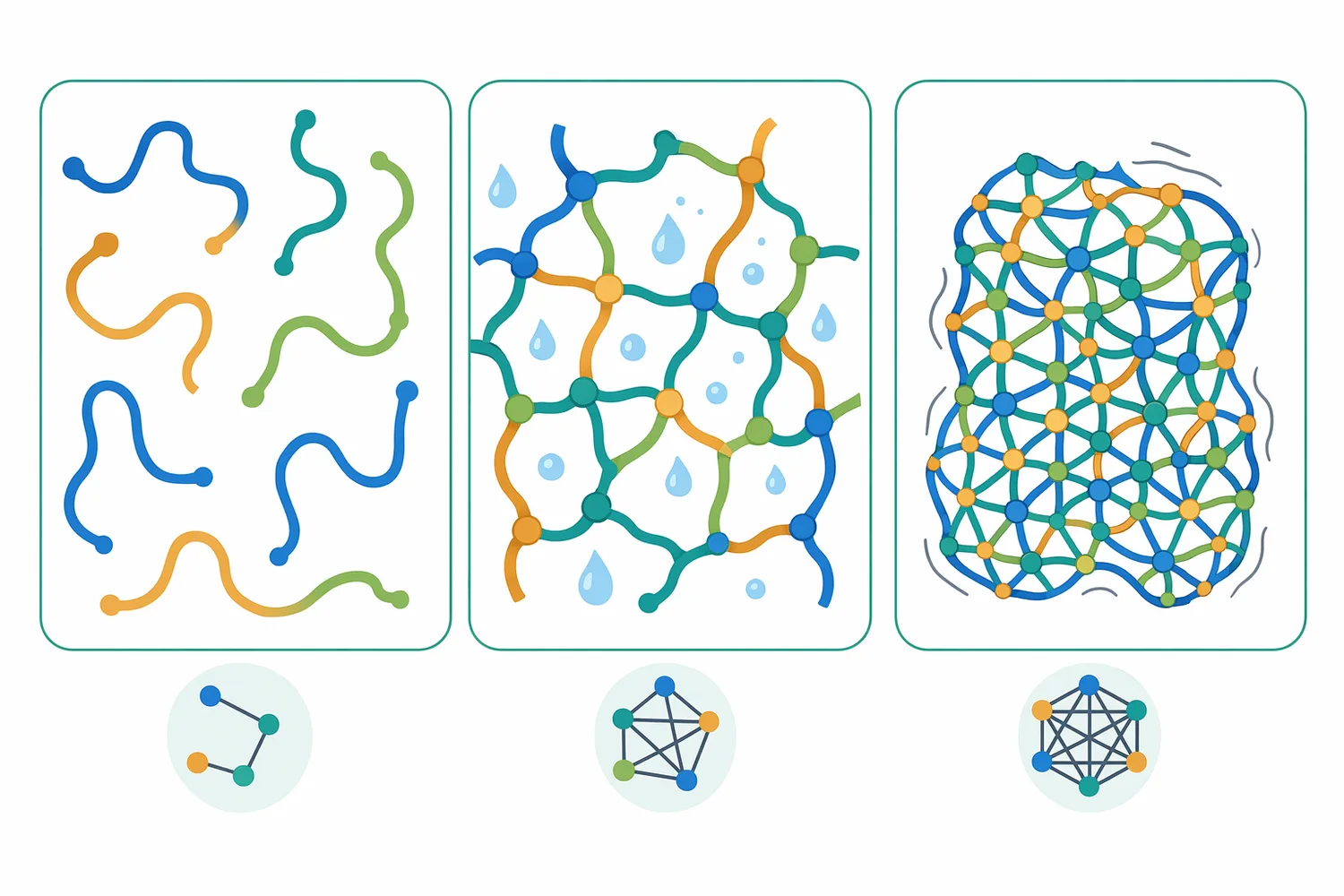
As more protein chains become connected, the food matrix changes mechanically. A weak dispersion may become more viscous; a soft gel may become firmer; a crumbly matrix may become more cohesive; and a restructured meat or seafood product may hold its shape more cleanly during slicing. These effects arise because the protein network has fewer independent moving chains and more connection points, which makes deformation more difficult [1].
However, cross-linking is not automatically beneficial at every level. Too little reaction may give no visible improvement, while excessive network formation can make a product rubbery, overly firm, less extensible, or difficult to pump, fill, print, shape, or spread. The useful zone is the point where the enzyme reinforces the structure without removing the texture characteristics the product is supposed to have [3].
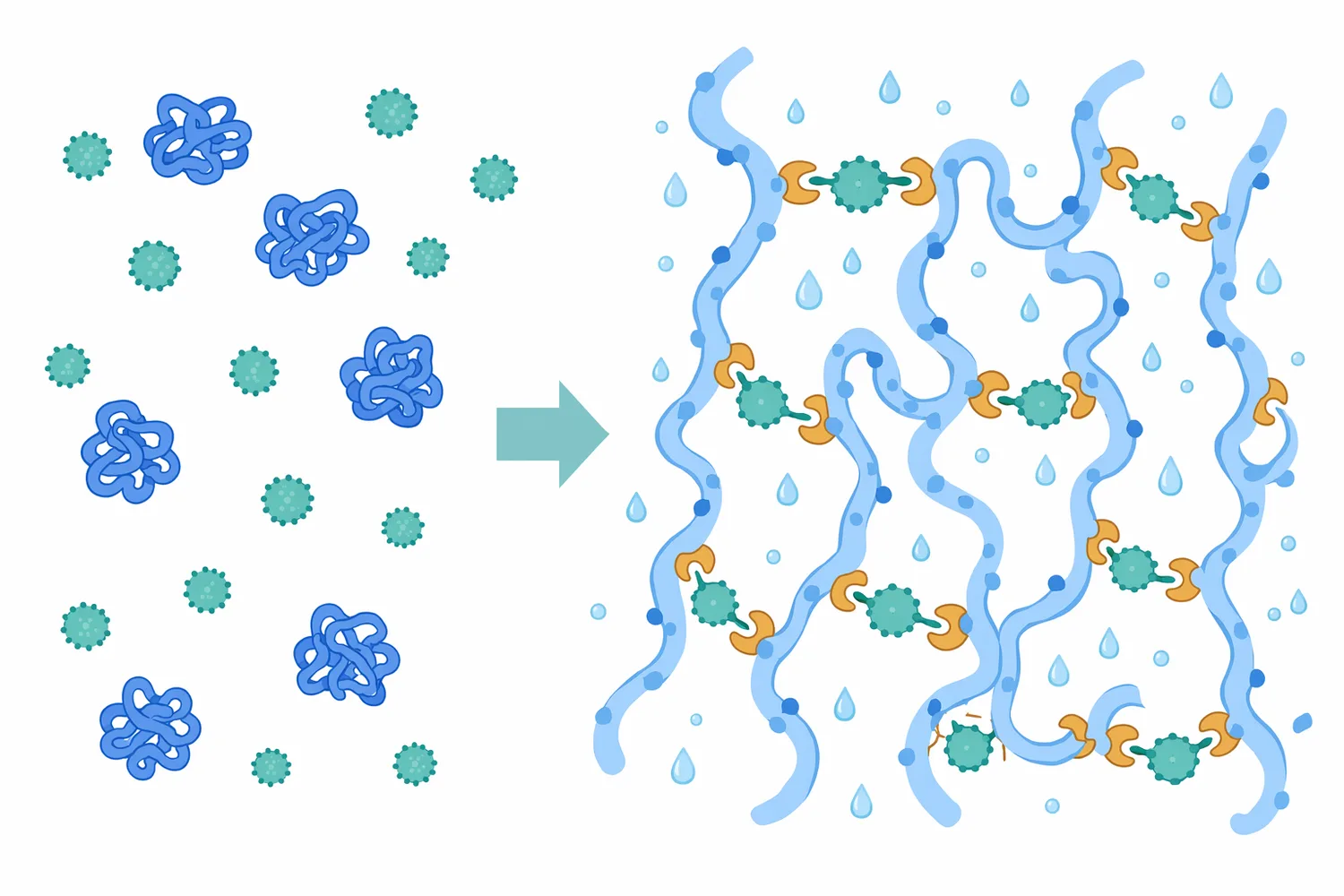
Food processors often build texture using heat, salt, hydrocolloids, starches, gums, emulsifiers, or mechanical working. Transglutaminase is different because it changes the protein network chemically rather than simply thickening the water phase or physically trapping moisture.
| Texture approach | What changes in the food | Typical effect | How it differs from transglutaminase |
|---|---|---|---|
| Transglutaminase | Covalent cross-links form between protein chains | Stronger binding, gel firmness, elasticity, sliceability, cohesion, and water retention in suitable protein systems | Builds structure from the food’s own proteins through enzymatic cross-linking [1] |
| Heat gelation | Proteins unfold and aggregate during heating | Gel setting, firmness, opacity, and cooked texture | Heat can create aggregation, but the bonds are not necessarily the same stable ε-(γ-glutamyl) lysine links [4] |
| Hydrocolloids and gums | Water phase thickens or forms a polysaccharide network | Viscosity, suspension, moisture control, and mouthfeel | Often acts outside the protein network rather than covalently connecting proteins |
| Starches | Granules hydrate, swell, and gelatinize | Thickening, body, and water binding | Adds carbohydrate-based structure rather than modifying protein chains |
| Proteases | Protein chains are cut into smaller peptides | Tenderization, viscosity reduction, flavor development, or hydrolysis | Opposite direction: proteases break proteins down, while transglutaminase links proteins together [6] |
This distinction is useful when interpreting finished-product texture. If the goal is simply to increase viscosity in a sauce, a gum or starch may be sufficient. If the goal is to make protein pieces bind together, improve a gel network, or reduce crumbling in a high-protein matrix, transglutaminase offers a different mechanism because the protein phase itself becomes more connected [2].
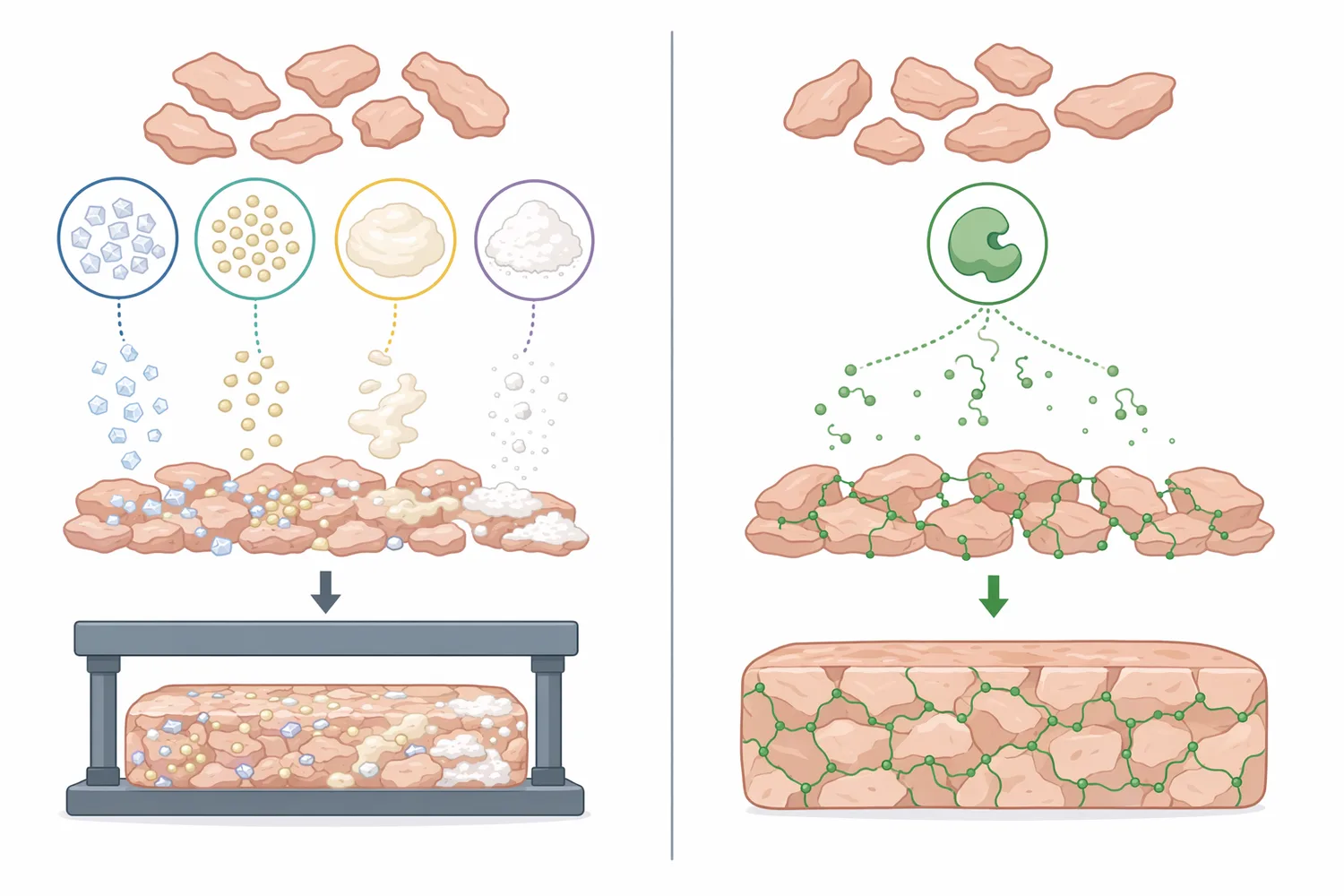
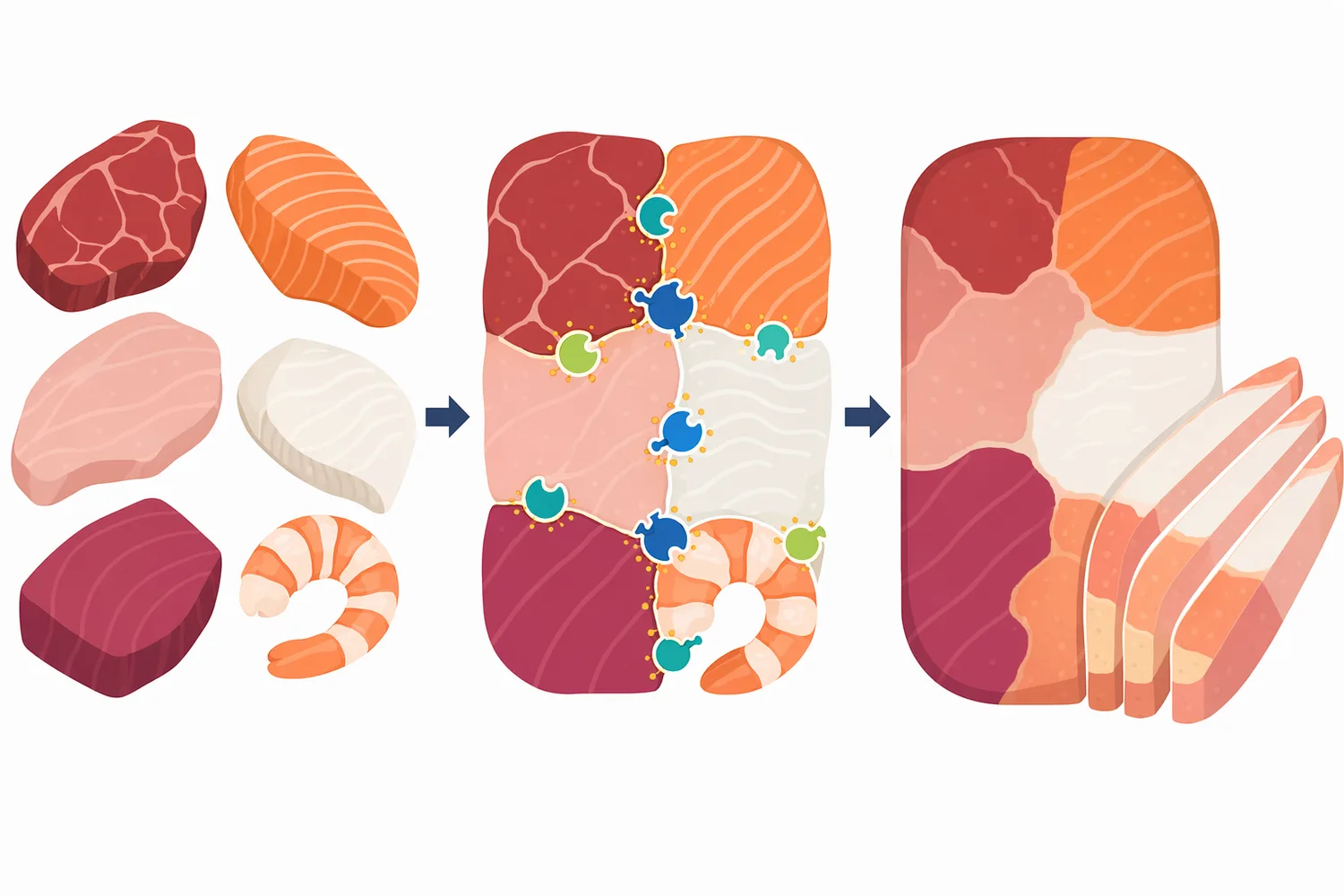
In meat systems, transglutaminase works mainly through muscle proteins. Myofibrillar proteins such as myosin and actin contribute to binding, gelation, and cooked texture. When meat is minced, tumbled, chopped, or otherwise comminuted, these proteins can be exposed at particle surfaces. Transglutaminase can then form covalent bridges between protein chains on adjacent particles, helping separate pieces behave more like a continuous matrix [1].
That mechanism explains its value in restructured meat products. Instead of relying only on mechanical compression, salt extraction, or thermal setting, the enzyme helps build protein-to-protein links before or during the setting stage. The resulting product may show improved cohesion, cleaner slicing, better portion integrity, and reduced separation at seams, provided the base formulation and process are designed for that outcome [7].
The same principle applies in poultry rolls, formed meats, sausages, and other processed meat formats where surface binding and internal gel strength affect yield and handling. Transglutaminase does not replace sanitation, temperature control, or correct raw-material handling; it modifies the protein matrix after those fundamentals are already in place. Its contribution is structural: more connection points within the meat protein network [2].
Seafood is one of the classic application areas for microbial transglutaminase. Fish paste and surimi products depend heavily on protein gelation, elasticity, bite, and water retention. Reviews describe transglutaminase use in fishery products such as kamaboko, where a resilient gel structure is central to product quality [1].
In surimi-type systems, salt and mixing help solubilize fish myofibrillar proteins. Once those proteins are mobile and reactive, transglutaminase can create cross-links that reinforce the gel network. The practical result can be improved springiness, firmness, and cohesiveness, because the fish protein network becomes more resistant to deformation and fracture [2].
The mechanism also explains why process balance matters. A seafood paste must often remain workable long enough for mixing, filling, shaping, or extrusion. If the matrix becomes too structured too early, it can lose flow or form defects during processing. If the reaction is too limited, the final gel may be weak. Transglutaminase is most useful when the timing of network formation matches the product’s forming and heating sequence [7].
Dairy proteins respond to transglutaminase in different ways. Caseins are open, flexible proteins and are generally accessible to enzymatic cross-linking, which is why transglutaminase is relevant to yogurt-style gels, cheese-related systems, and high-protein dairy matrices. Cross-linking can help increase gel firmness, reduce whey separation, and improve body by connecting casein-rich structures more strongly [1].
Whey proteins can also be modified, but their native globular structure may limit access to reactive sites. Research on whey proteins treated with microbial transglutaminase shows that enzymatic cross-linking can change rheological behavior, meaning the flow and deformation properties of the protein system are altered as proteins become connected into larger structures [4]. Heat history, protein concentration, and ingredient environment can therefore influence how visibly a whey-containing system responds.
Transglutaminase has also been studied in relation to whey protein recovery by ultrafiltration. The concept is that cross-linking increases apparent protein size, which can support retention during membrane processing and reduce protein loss in the permeate stream [8]. This is a more specialized process application than ordinary texture modification, but it illustrates the same underlying mechanism: protein molecules are converted into larger connected structures.
Plant proteins are increasingly important in meat analogs, high-protein foods, dairy alternatives, and hybrid formulations. Transglutaminase is attractive in these systems because many plant protein ingredients lack the same fibrous binding behavior as muscle proteins or the same elastic functionality as gluten. Enzymatic cross-linking can help build cohesion in matrices that would otherwise be brittle, pasty, weak, or prone to water release [3].
Soy systems are among the best-known plant protein applications. In tofu, microbial transglutaminase cross-linking has been studied for its effects on quality characteristics and potential allergenicity. The quality relevance comes from the way soy proteins form a gel network; additional covalent cross-links can change firmness, water-holding, and microstructure [9].
Mung bean protein isolate has also been studied for gelation and functional protein changes under transglutaminase treatment. The reported focus on gelation is important because mung bean proteins are used in plant-based foods where structure and bite must be built from non-animal proteins. Cross-linking can increase network integrity when the proteins are hydrated, unfolded enough to react, and present at sufficient concentration to form a continuous matrix [5].
Recent work on lupin flour and soy protein isolate also shows why plant systems cannot be treated as interchangeable. Different plant proteins have different amino acid profiles, solubilities, particle sizes, denaturation histories, and reactive-site accessibility. Transglutaminase may improve one protein matrix while giving a smaller or texturally different effect in another, because the enzyme can only link reactive sites that are physically available in the hydrated system [3].
In wheat dough, structure is dominated by gluten proteins, especially gliadins and glutenins, which create viscoelastic behavior during mixing, proofing, and baking. Transglutaminase can influence this network by forming additional covalent links between wheat protein chains. Kinetic research on transglutaminase-induced cross-linking of wheat proteins in dough supports the view that enzyme reaction occurs within the dough matrix and changes protein network development over time [10].
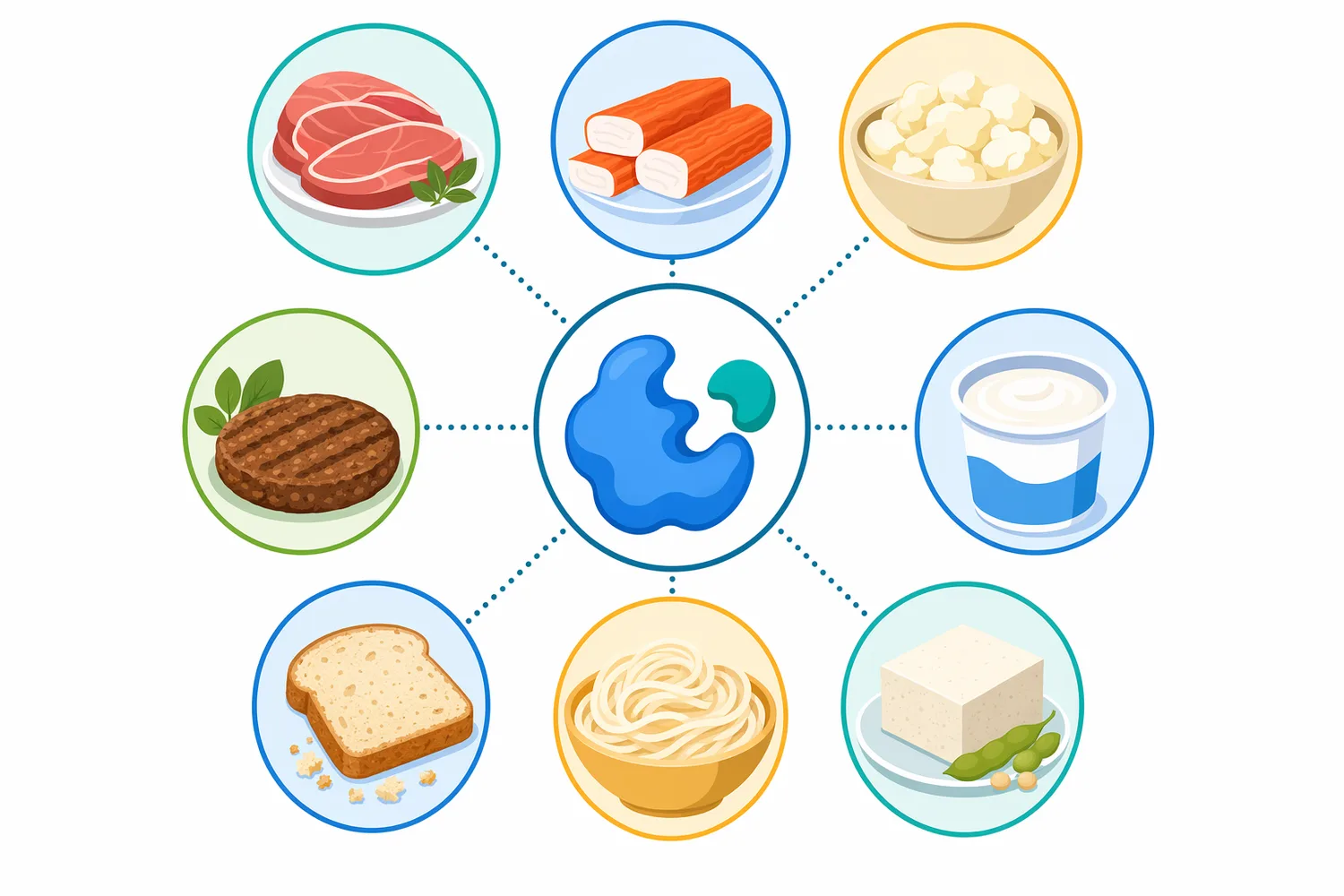
For bread, noodles, and related wheat products, the desired result is not simply “stronger” dough. Dough must be elastic enough to hold gas and shape, but extensible enough to expand without tearing. Cross-linking that reinforces weak protein networks can be useful, while excessive strengthening may reduce extensibility or change bite. This is why transglutaminase is best understood as a structure-adjusting enzyme rather than a universal improver [10].
In gluten-free or reduced-gluten development, transglutaminase is sometimes discussed because it can cross-link non-gluten proteins and help create a more cohesive protein network. It does not recreate gluten exactly, because gluten’s functionality comes from a specific mixture of wheat proteins and their unique viscoelastic behavior. Instead, the enzyme can contribute additional protein-to-protein bonding in formulations that contain suitable alternative proteins [6].
Beyond meat, seafood, dairy, and bakery products, transglutaminase is useful wherever a protein network determines texture. In gels, the enzyme can make the network denser and more connected, often increasing firmness or elasticity. In emulsified systems, cross-linked proteins can strengthen the interfacial and continuous-phase structure around fat droplets, which may influence stability, bite, and water retention [2].
Texture-modified foods are a good example of why the mechanism matters. A product may need to be soft enough to spoon or swallow but cohesive enough not to separate into watery and solid phases. Protein cross-linking can help tune that balance by changing the internal network rather than simply adding viscosity to the liquid phase [11].
Food films provide another specialized example. A composite edible film based on quince seed gel and whey protein concentrate was studied with transglutaminase cross-linking, reflecting the enzyme’s ability to strengthen protein-containing biopolymer networks beyond conventional food gels [11]. In this type of application, cross-linking can affect film integrity, moisture behavior, and mechanical properties because the protein component becomes more connected.
Because transglutaminase changes protein structure, it can also influence how proteins behave during digestion or allergen assessment. A study on pumpkin oil cake protein examined biologically active digests after transglutaminase cross-linking, showing that enzymatic modification can affect the protein substrate before hydrolysis and therefore may influence the peptides generated during digestion [12].
In tofu, research has specifically examined both quality characteristics and potential allergenicity after microbial transglutaminase cross-linking. This does not mean every cross-linked food becomes more or less allergenic in the same way; it means protein modification can change epitopes, digestibility, aggregation state, or analytical detectability depending on the food matrix [9].
For commercial food use, the responsible approach is to treat transglutaminase as a functional processing enzyme with strong technological value and to follow the labeling, food safety, allergen, and enzyme-use rules that apply in the target market. Reviews on food additives emphasize that benefits and risks should be considered in context, especially when products are intended for sensitive consumer groups [13].
Transglutaminase performs best when the protein substrate is hydrated and accessible. Dry blending may be convenient for distribution in a premix, but the reaction becomes meaningful only after water, mixing, and time allow the enzyme to contact reactive protein sites. In meat and seafood, extraction of muscle proteins supports binding; in dairy, protein state and heat history can matter; in plant systems, solubility and prior denaturation can determine whether cross-linking is extensive or limited [4].
Temperature affects how quickly the enzyme reaction develops and how the food matrix behaves at the same time. Warmer conditions generally increase molecular movement and can accelerate structure formation within the enzyme’s usable range, while chilled conditions slow reaction and may be used where handling time is needed. Subsequent heating can set the final food texture and reduce further enzymatic action as the product is cooked or otherwise stabilized [7].
pH, salt, moisture, fat, fibers, starches, phosphates, sugars, and hydrocolloids can all influence the visible result because they change protein solubility, swelling, unfolding, and mobility. These ingredients may not directly stop the enzyme, but they can change whether the enzyme can reach reactive glutamine and lysine residues or whether the cross-linked network becomes continuous enough to affect texture [3].
Mixing and forming also matter. The enzyme must be distributed through the region where binding is desired, but excessive shear after a network has already developed can damage structure or create nonuniform texture. This is why transglutaminase is often most effective when hydration, mixing, holding, forming, and heating are considered as one connected process rather than isolated steps [2].
The scientific support for transglutaminase is strongest at the mechanism level and in protein-rich food matrices where cross-linking directly relates to texture. Reviews consistently describe microbial transglutaminase as a food enzyme used to alter protein functionality through covalent cross-linking, with applications spanning fish, meat, dairy, soy, and wheat products [1].
| Food protein system | Evidence focus | What changes mechanistically | Practical relevance |
|---|---|---|---|
| Meat and fish proteins | Reviews of food applications | Cross-links form between muscle proteins, reinforcing gels and particle binding | Restructured products, surimi, sausages, formed portions [1] |
| Whey proteins | Rheological research and membrane-processing studies | Protein molecules become larger connected structures | Texture control and potential whey protein retention during filtration [8] |
| Wheat dough | Kinetic study of cross-linking in dough | Gluten proteins become more interconnected over time | Dough strength, resistance, and structure adjustment [10] |
| Soy and tofu | Quality and allergenicity study | Soy protein gel network is modified by cross-linking | Firmness, water behavior, texture, and protein-structure assessment [9] |
| Mung bean protein | Gelation and functional protein research | Plant protein network becomes more connected | Plant-based gels and meat-alternative texture development [5] |
| Lupin and soy protein isolate | Physicochemical and functional property study | Cross-linking changes solubility, structure, and functional behavior | Plant protein formulation and texture optimization [3] |
| Whey-protein edible films | Composite film study | Protein-containing film network is cross-linked | Edible films and specialty biopolymer structures [11] |
This evidence base supports a clear conclusion: transglutaminase is not a flavoring, preservative, colorant, or simple thickener. It is a protein-structure enzyme. Its value is highest when the finished product depends on a continuous, cohesive, protein-based network [2].
Enzymes.bio supplies food grade transglutaminase enzyme powder for food processing use, including protein binding and texture modification applications. The product is sold directly online in 1 kg units, so buyers can place an order through the website, pay online, and have the order processed and shipped without a separate quotation workflow .
The product is supplied with a Certificate of Analysis and Safety Data Sheet as part of the order documentation. Enzymes.bio is a supplier of enzyme products and does not need to be treated as a contract development laboratory or custom formulation service; the role of the product page is to make the enzyme available in a clear, ready-to-order format for food-processing use .
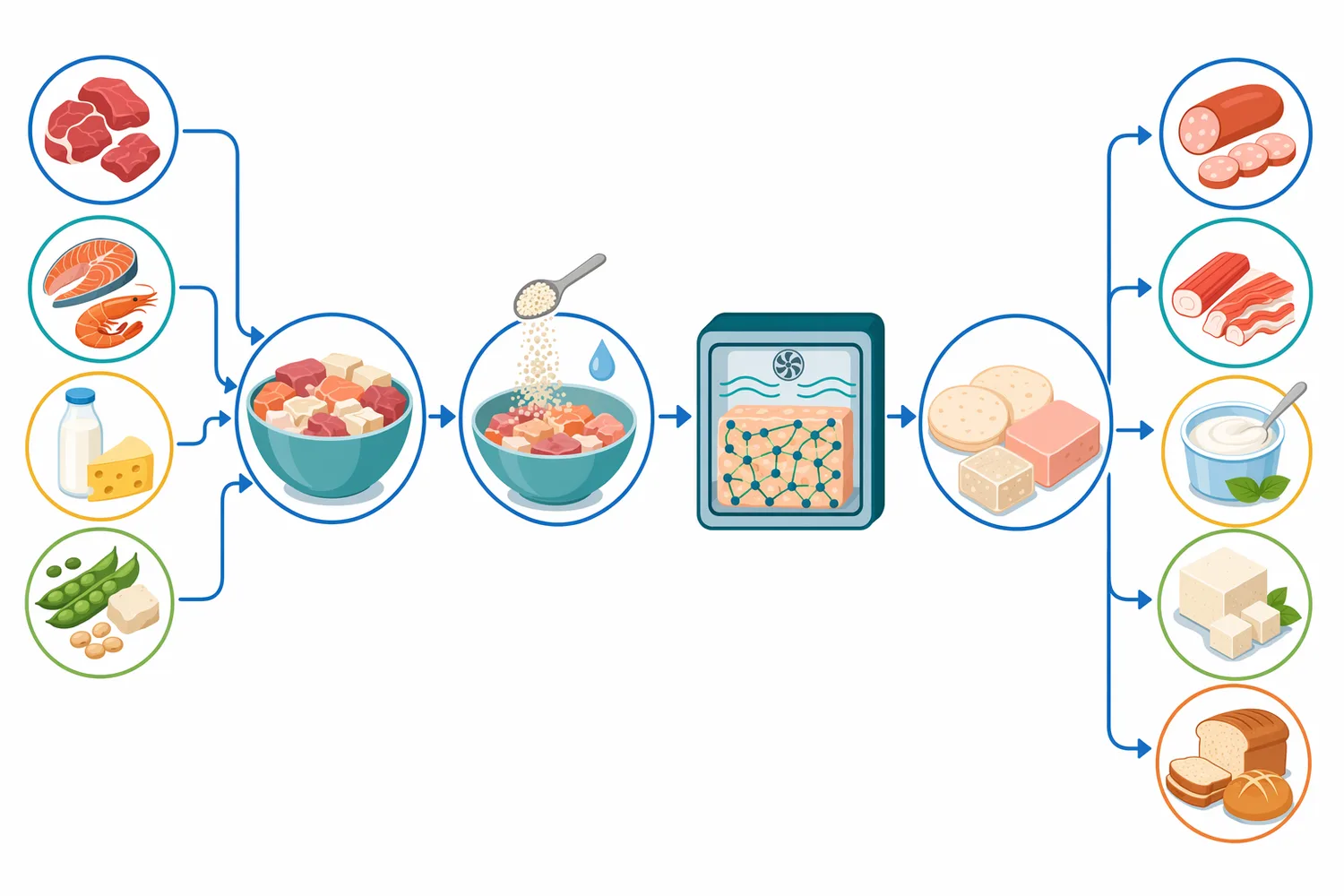
For users familiar with enzyme handling, the important point is that transglutaminase should be incorporated into a suitable hydrated protein system and used within the food process in a way that supports the desired texture change. The science is well established, but the finished result always belongs to the actual food matrix: protein type, processing sequence, and formulation determine how strongly the cross-linking is expressed [1].
Food grade transglutaminase enzyme powder is used when a protein-containing food needs stronger binding, improved gel structure, better cohesion, cleaner slicing, or more stable water retention. The enzyme works by catalyzing covalent links between protein chains, especially ε-(γ-glutamyl) lysine bonds, turning separate or weakly associated proteins into a more connected matrix [1].
The most established applications are in meat, seafood, dairy, soy, wheat, and plant-protein systems. Research on whey proteins, wheat dough, tofu, mung bean protein, lupin and soy protein isolate, pumpkin oil cake protein, and edible films all supports the same central principle: transglutaminase changes food functionality by changing protein architecture [3].
Enzymes.bio offers food grade transglutaminase enzyme powder for direct online purchase in 1 kg units. Orders are paid online, processed for shipment, and supplied with a Certificate of Analysis and Safety Data Sheet, making the product straightforward to buy for food-processing applications where enzymatic protein cross-linking is desired .
Sold by the 1 kg unit, in stock and ready to ship. Order directly on our store — pay online and we process your order. A Certificate of Analysis and Safety Data Sheet are included with every order.
Buy Food Grade Transglutaminase Enzyme Powder 130U/G - Tg For Food Products Cas 80146-85-6 →Numbered in order of first citation. Open-access sources, each verified reachable at publication; citation numbers in the text link here.