
Food Industry Grade Rhamnosidase Enzyme is used in citrus processing to reduce bitterness linked to rhamnose-containing flavonoid glycosides, especially naringin. It works by cleaving the terminal L-rhamnose sugar from naringin, converting it into prunin and making the citrus matrix less dominated by naringin-related bitterness; full conversion onward to naringenin requires β-glucosidase activity as a second enzymatic step [1].
For buyers working with grapefruit, pomelo, kinnow, orange, lemon, peel extracts, or citrus-derived beverage bases, rhamnosidase is best understood as a targeted debittering and flavonoid-transformation enzyme. It is not a universal bitter-blocker: it is most relevant when bitterness is driven by naringin or related rhamnosylated flavonoids, while other bitter compounds such as limonin may require additional processing approaches [2].
Rhamnosidase, more precisely α-L-rhamnosidase, is a glycoside hydrolase that removes terminal α-L-rhamnose residues from natural glycosides. In citrus, that matters because many important flavonoids occur as sugar-bound compounds: the sugar group affects bitterness, solubility, bioavailability, and how the molecule behaves during processing [3].
The most commercially important example is naringin, the bitter flavanone glycoside strongly associated with grapefruit and pomelo-type citrus. Naringin is naringenin attached to a disaccharide sugar group called neohesperidose, which contains L-rhamnose and D-glucose; α-L-rhamnosidase attacks the rhamnose-containing linkage and removes the rhamnose unit, producing prunin, also known as naringenin-7-O-glucoside [4].
That chemical change is small on paper but significant in juice. The enzyme is not masking bitterness with sweetener, not adsorbing broad classes of compounds, and not harshly hydrolyzing the entire juice matrix. It is changing one defined structural feature of a bitter flavonoid: the terminal rhamnose residue that forms part of naringin’s sugar moiety [5].
In practical terms, this makes Food Industry Grade Rhamnosidase Enzyme relevant for citrus juice debittering, citrus extract modification, peel-stream valorization, and controlled production of flavonoid intermediates such as prunin. Research on α-L-rhamnosidase and related naringinase systems repeatedly identifies citrus juice debittering and flavonoid biotransformation as key food and beverage applications [5].
The core reaction is derhamnosylation. α-L-rhamnosidase recognizes the terminal L-rhamnose residue on naringin and hydrolyzes the glycosidic bond that connects that rhamnose to the glucose portion of the sugar chain, releasing free L-rhamnose and leaving prunin behind [1].
Naringin --α-L-rhamnosidase--> Prunin + L-rhamnose
Prunin is still a glycoside because the glucose remains attached to the flavonoid aglycone. If β-D-glucosidase is also present, a second hydrolysis step can remove that glucose and produce naringenin, the aglycone form [1].
Prunin --β-D-glucosidase--> Naringenin + D-glucose
This distinction matters because “rhamnosidase” and “naringinase” are often discussed together but are not identical concepts. Naringinase is commonly treated as a dual-activity system containing α-L-rhamnosidase and β-D-glucosidase functions, so it can carry out the two-step conversion from naringin to prunin and then to naringenin; α-L-rhamnosidase alone is responsible for the first, highly relevant debittering step [1].
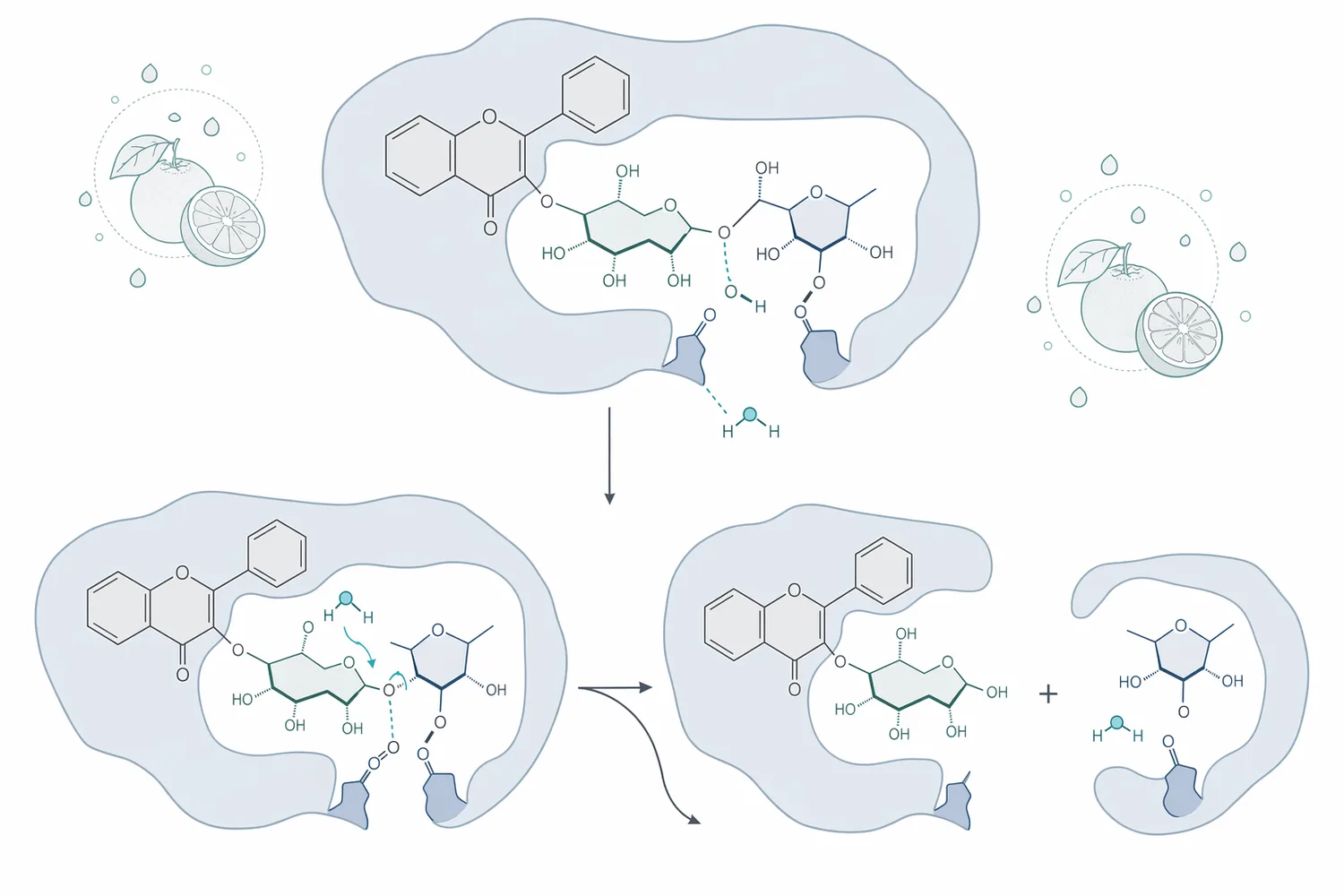
For citrus debittering, the first step can be commercially useful on its own because reducing the concentration of intact naringin changes the bitter profile of the juice or extract. For ingredient transformation where the goal is naringenin production, the second β-glucosidase step becomes important because prunin is an intermediate rather than the final aglycone [6].
Citrus bitterness can be addressed in different ways, and each approach changes the juice matrix differently. Rhamnosidase is specific to rhamnose-containing glycosides; naringinase-style enzyme systems can continue the hydrolysis cascade; non-enzymatic approaches such as β-cyclodextrin treatment or physical processing can reduce perceived bitterness through different mechanisms rather than by the same bond-specific hydrolysis [7].
| Approach | What changes in the citrus matrix | Main relevance | Important boundary |
|---|---|---|---|
| α-L-rhamnosidase-focused treatment | Removes terminal L-rhamnose from rhamnosylated flavonoids such as naringin | Targeted reduction of naringin-related bitterness; production of prunin | Does not by itself complete conversion to naringenin |
| Naringinase-style cascade | Combines α-L-rhamnosidase and β-D-glucosidase functions to convert naringin → prunin → naringenin | Deeper flavonoid conversion and debittering | Requires both enzymatic functions for the full cascade |
| β-D-glucosidase alone | Removes glucose from suitable glucosides such as prunin | Useful after derhamnosylation when aglycone production is desired | Generally does not remove the terminal rhamnose from intact naringin |
| β-Cyclodextrin, ultrasonication, adsorption, or blending | Reduces bitterness perception, enhances extraction, complexes compounds, removes fractions, or dilutes bitterness | Useful as non-enzymatic or combined processing tools | Less bond-specific; may affect broader flavor or composition |
The main advantage of rhamnosidase is specificity. Instead of stripping a wide range of phenolics or flavor compounds, the enzyme acts on the rhamnose-linked part of the glycoside, which is why the literature treats α-L-rhamnosidase as a useful biocatalyst for selective flavonoid modification in food and beverage matrices [8].
Naringin is desirable from one perspective because citrus flavonoids are associated with functional and nutritional interest, but it is problematic from a sensory perspective because it contributes strong bitterness in grapefruit and related citrus products. Reviews of citrus debittering identify naringin among the principal bitterness contributors, alongside compounds such as limonin that arise through different chemistry [2].
This is why a targeted enzyme can be attractive in citrus processing. If a beverage, concentrate, peel extract, or whole-fruit ingredient has useful aroma, acidity, color, or nutritional positioning but is held back by naringin bitterness, derhamnosylation can reduce a specific bitter glycoside without depending only on sugar addition, dilution, or flavor masking [2].
The challenge is that citrus bitterness is not one molecule in every case. Limonin, nomilin, flavonoid glycosides, and process-generated off-notes can all contribute depending on cultivar, maturity, extraction method, heat history, and storage, so rhamnosidase should be viewed as a precise tool for rhamnosylated flavonoids rather than a blanket correction for every bitter note [2].
The research base around α-L-rhamnosidase, naringinase, and citrus debittering is well established. Reviews of debittering methods describe enzymatic approaches as a novel and useful direction for the food industry because enzymes can convert bitter compounds more selectively than many conventional physical or chemical treatments [2].
Puri and co-workers studied naringin extracted from kinnow peel waste and its enzymatic hydrolysis, which is directly relevant to citrus by-product valorization. Kinnow peel is a meaningful substrate because peel fractions can contain high levels of flavonoid glycosides, and enzymatic hydrolysis offers a route to convert bitter naringin into less bitter or more valuable derivatives [4].
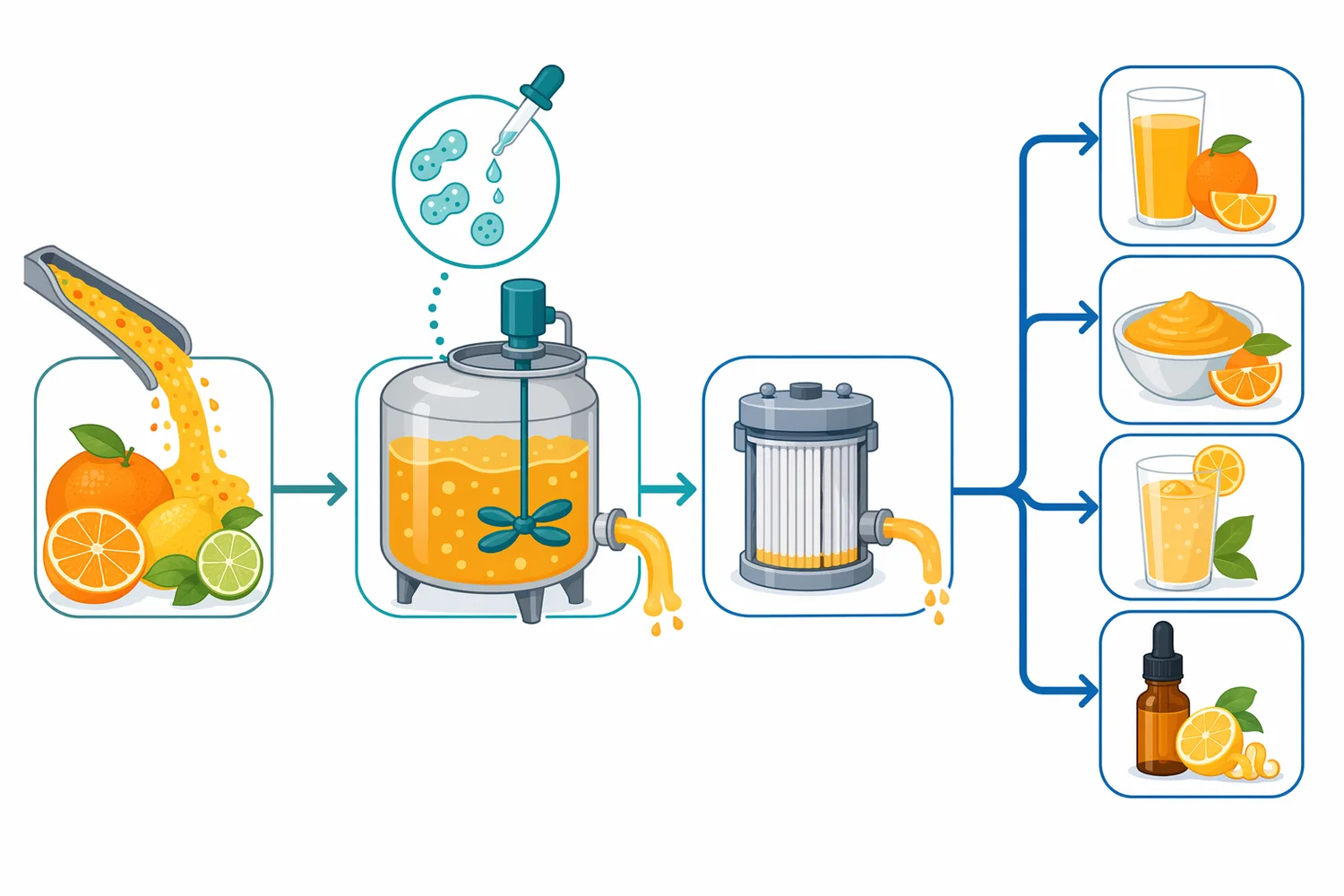
Ribeiro and co-workers modeled naringin hydrolysis using an α-rhamnopyranosidase immobilized in κ-carrageenan, showing the continuing process interest in immobilized rhamnosidase systems for controlled naringin conversion. Immobilization is not necessary for every use case, but it demonstrates that researchers have examined rhamnosidase activity in formats designed for repeatable contact with liquid substrates [9].
Alvarenga and co-workers reported a novel α-L-rhamnosidase with potential applications in the citrus juice industry and winemaking. That dual application is important because both citrus juice and wine contain glycosylated flavor or flavonoid compounds, and α-L-rhamnosidase can release or transform molecules by removing terminal rhamnose residues [5].
Lu and co-workers specifically examined screening of β-glucosidase and α-rhamnosidase for a one-pot enzymatic cascade converting naringin to naringenin. The study reinforces the practical point that the complete pathway requires coordinated activity: α-rhamnosidase first converts naringin to prunin, and β-glucosidase then converts prunin to naringenin [1].
Qun-fan and co-workers studied α-L-rhamnosidase from an Aspergillus niger solid-state fermentation product and its application in enzymatic production of prunin. That work is especially relevant to rhamnosidase-focused use because prunin is the direct product of the derhamnosylation step, rather than the final product of the full naringinase cascade [6].
Citrus juices are naturally acidic, so food-processing relevance depends on whether an enzyme can function in an acid matrix rather than only under neutral laboratory conditions. α-L-rhamnosidases described for citrus juice applications are commonly discussed in relation to acidic environments, which supports their fit for grapefruit, orange, kinnow, and other citrus systems [5].
The reason acid compatibility matters is straightforward: if the enzyme requires conditions far outside the natural pH of the juice, the process becomes more disruptive. A rhamnosidase suited to citrus-style acidity can act while the juice remains closer to its normal sensory and compositional state, reducing the need for aggressive pH adjustment that could alter flavor or stability [2].
Temperature also matters, but not as a generic “hotter is better” issue. Enzymes are folded proteins, and their active sites depend on a stable three-dimensional structure; too little thermal energy slows catalytic turnover, while too much heat can distort the active site and reduce hydrolysis. Research into different α-L-rhamnosidases, including newer alkaline and structurally characterized enzymes, reflects ongoing interest in matching enzyme structure to processing environments [10].
Alkaline α-L-rhamnosidases are scientifically interesting, but they are conceptually different from acid-compatible citrus debittering enzymes. An alkaline enzyme may be valuable for derhamnosylation in non-acidic matrices or specialized transformations, while citrus juice work usually benefits from enzymes that remain effective in the acidic range typical of fruit beverages [10].
| Enzyme environment | Conceptual fit | What it means for citrus work |
|---|---|---|
| Acid-compatible rhamnosidase | Works in juice-like acidic conditions | Best conceptual match for citrus debittering and naringin hydrolysis in fruit matrices |
| Neutral rhamnosidase | Works closer to pH-neutral systems | More relevant to certain ingredient transformations than direct acidic juice treatment |
| Alkaline rhamnosidase | Works in alkaline environments | Scientifically useful for specialized derhamnosylation, but less naturally aligned with citrus juice acidity |
The key buying takeaway is not that every enzyme must be forced into the same conditions. Rather, rhamnosidase is valuable because the enzyme’s chemistry can be applied under mild aqueous processing conditions, and citrus-focused research has repeatedly examined enzymes that operate in environments relevant to fruit juice and citrus extract processing [5].
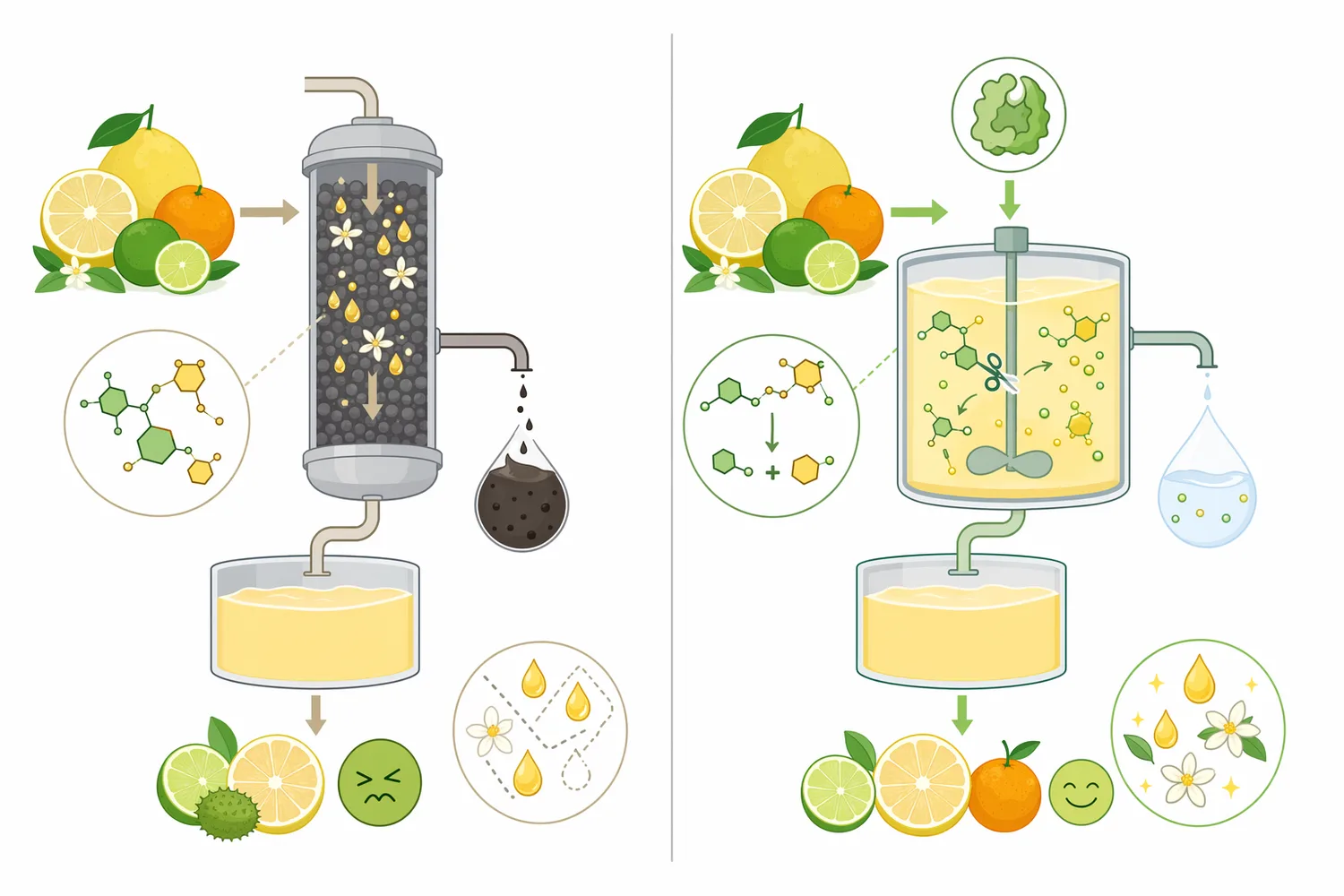
Grapefruit is the classic rhamnosidase application because naringin is one of the defining bitter compounds in grapefruit juice. By converting naringin to prunin, α-L-rhamnosidase reduces the concentration of the intact bitter glycoside and can make the juice profile less harsh while preserving the citrus identity [2].
Pomelo and related citrus products can present similar challenges because they may also contain bitter flavanone glycosides. In these matrices, rhamnosidase is best used where the process goal is to reduce naringin-type bitterness rather than to remove every bitter or astringent note from the fruit [2].
Kinnow peel has been studied as a source of naringin, and enzymatic hydrolysis of peel-derived naringin is relevant because peel streams often carry both useful flavonoids and strong bitterness. Rhamnosidase can help shift these streams from difficult-to-use by-products toward more controlled citrus-derived ingredients [4].
This is particularly valuable when processors want to use more of the fruit. Peel, pulp, and whole-fruit fractions can contribute aroma, color, fiber, and flavonoids, but bitterness can limit inclusion levels; targeted hydrolysis of naringin helps address one of the sensory barriers to broader use [4].
Citrus extracts and beverage bases often concentrate the same compounds that drive both value and bitterness. Rhamnosidase treatment can modify the flavonoid profile by converting rhamnosylated glycosides into simpler glycosides, supporting cleaner taste and more flexible formulation in beverage systems [8].
The enzyme’s value here is not only bitterness reduction. It also offers a controlled route to flavonoid intermediates such as prunin, which can be useful when the desired ingredient profile is different from the native citrus extract but does not require full conversion to aglycones [6].
Where the goal is naringenin production rather than only debittering, rhamnosidase becomes the first part of a two-step biocatalytic pathway. The second step, catalyzed by β-glucosidase, removes glucose from prunin to produce naringenin [1].
Lu and co-workers’ one-pot cascade work is relevant because it frames naringin conversion as a coordinated enzymatic sequence rather than a single generic hydrolysis. That is the correct way to understand the chemistry: rhamnosidase opens the pathway by removing rhamnose, while β-glucosidase completes the aglycone formation step [1].
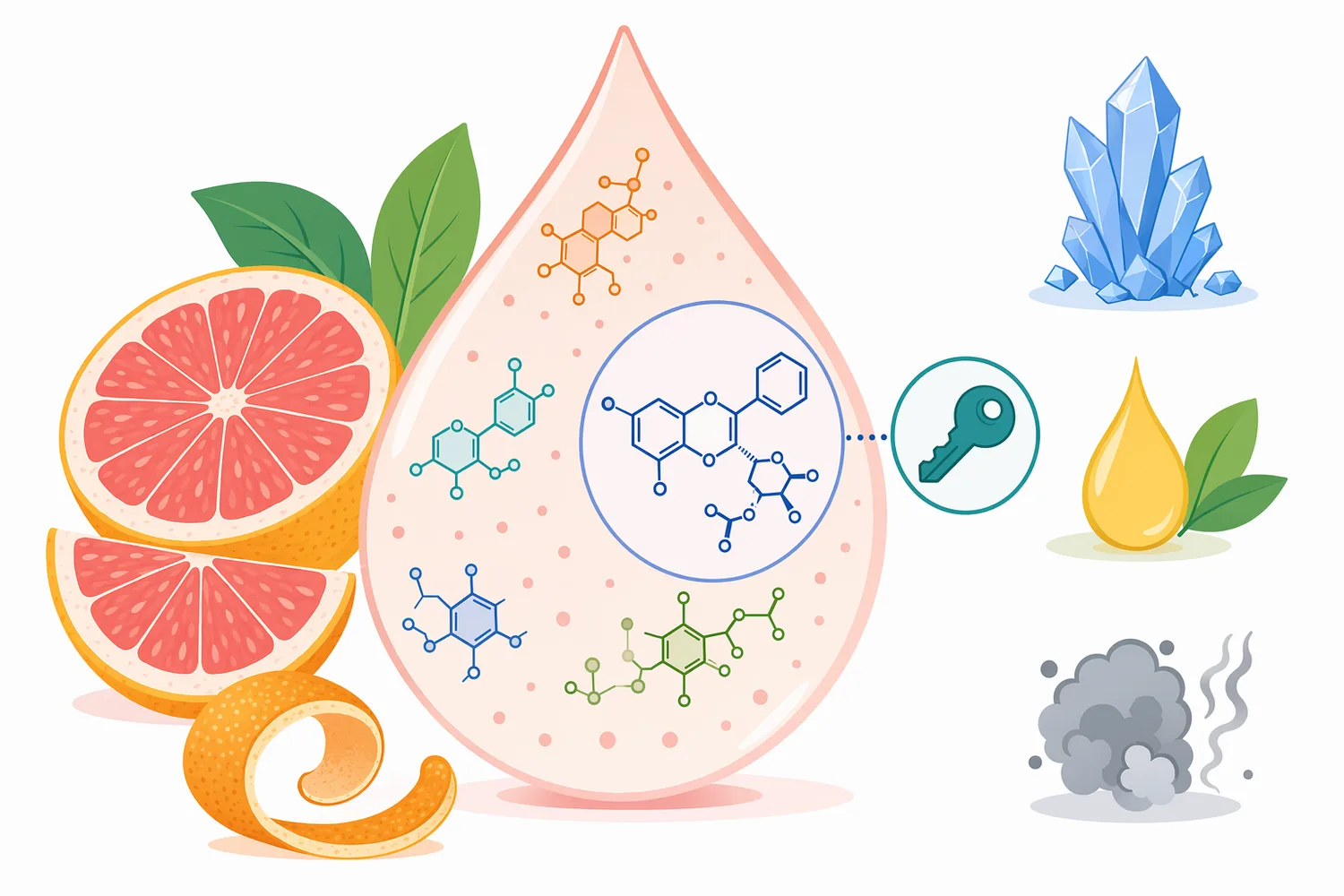
Rhamnosidase also applies beyond naringin. Many plant flavonoids occur as glycosides, and removing terminal rhamnose can change solubility, flavor, biological accessibility, or suitability for downstream conversion [3].
Izzo and co-workers reported α-rhamnosidase activity in the marine isolate Novosphingobium sp. PP1Y and explored its use in flavonoid bioconversion. This supports the broader view of rhamnosidase as a flavonoid-processing enzyme, not only a grapefruit juice debittering tool [8].
The sensory effect of rhamnosidase comes from molecular conversion. Naringin has a bitter character that can dominate citrus juice even when the aroma is fresh and the acidity is balanced; when rhamnosidase reduces intact naringin, the bitterness contribution from that molecule is lowered [2].
This is different from masking. A masker attempts to reduce perception while leaving the bitter molecule in place, and an adsorbent may remove a broader fraction of compounds. Rhamnosidase changes the bitter glycoside itself by hydrolyzing a defined bond, so the resulting matrix contains more prunin and less naringin [6].
That difference can matter for flavor balance. A citrus product may still retain acidity, peel notes, aroma volatiles, and other characteristic features, while the specific naringin-driven bitterness is moderated. The outcome depends on the starting fruit and process, but the biochemical mechanism is precise [5].
Non-enzymatic approaches remain useful in some processes. For example, work on probe ultrasonication and β-cyclodextrin in Citrus limon juice showed that physical processing and complexation strategies can reduce bitterness and influence biochemical properties, but these approaches operate differently from rhamnosidase-driven glycosidic bond cleavage [7].
A responsible technical description must separate naringin bitterness from limonin bitterness. Naringin is a flavonoid glycoside and is directly relevant to rhamnosidase; limonin is a limonoid and does not become prunin or naringenin through α-L-rhamnosidase action [2].
This means a rhamnosidase-focused enzyme is most appropriate when naringin or related rhamnosylated flavonoids are meaningful contributors to the taste problem. If bitterness is dominated by limonin, delayed bitterness, oxidative off-notes, or other non-rhamnose compounds, rhamnosidase may only address part of the sensory profile [2].
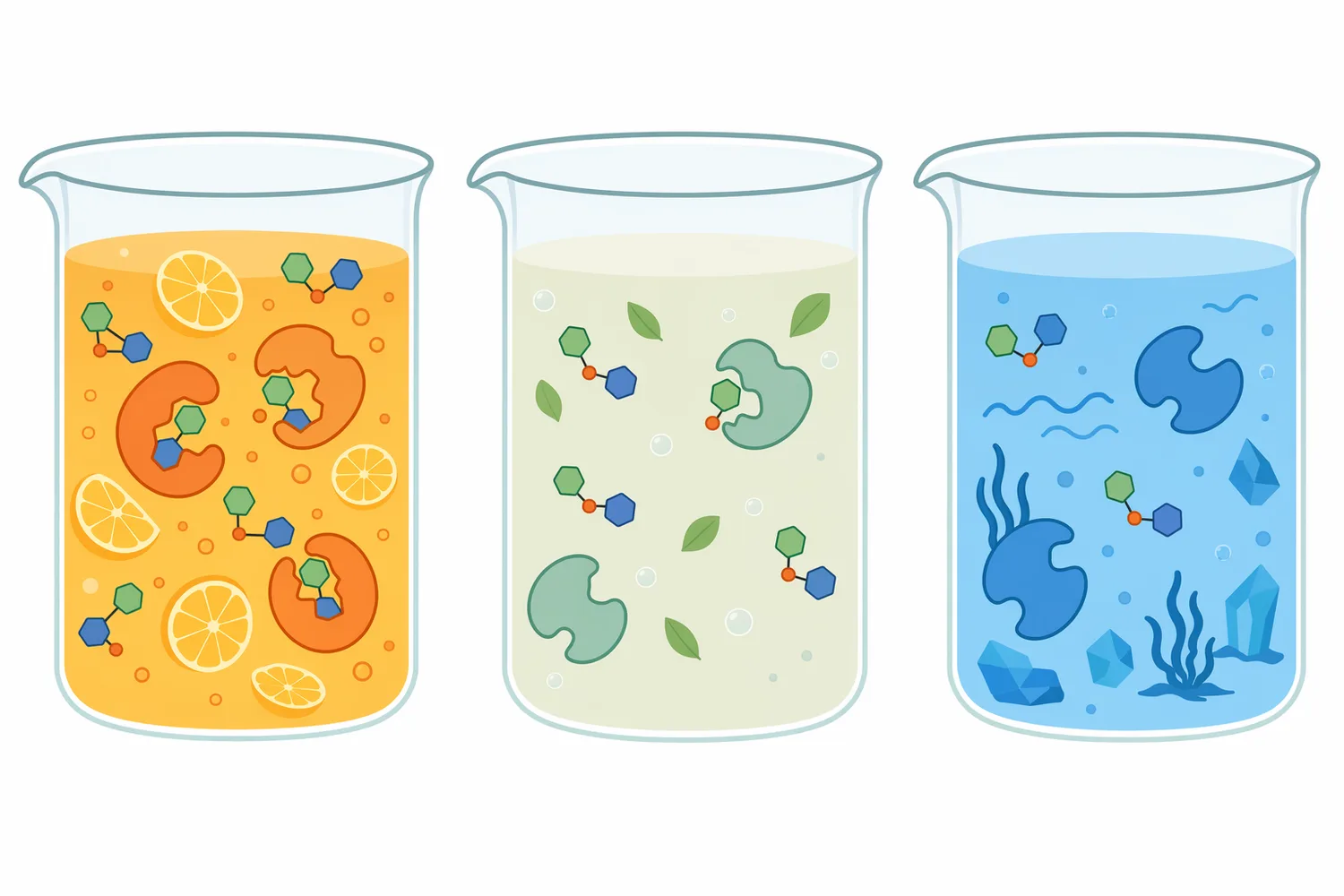
The practical benefit of this boundary is clarity. Rhamnosidase is not being presented as an all-purpose flavor repair additive; it is a targeted biocatalyst for a defined chemical family. That makes it easier to understand what the enzyme can reasonably improve and why it performs best in citrus systems where naringin-type glycosides are important [3].
Enzymes are widely used in the food industry because they can catalyze specific transformations under relatively mild conditions. Reviews of microbial enzymes in food processing describe their value in improving quality, processing efficiency, and product characteristics through targeted biochemical reactions [11].
For citrus, the attractive point is selectivity. Instead of relying only on dilution, high sweetener addition, or broad removal of phenolic compounds, rhamnosidase targets a glycosidic bond in a known bitter flavonoid and converts it into a less problematic intermediate [5].
This selectivity can support cleaner labels and more controlled processing concepts, especially where the goal is to keep the citrus character while reducing bitterness. The enzyme acts on the substrate rather than forcing a large formulation change around it [2].
Enzymatic debittering also fits with the broader movement toward valorizing fruit by-products. Citrus peel and pomace streams contain useful compounds but often require modification before they are pleasant or practical in beverages and foods; rhamnosidase helps convert one important class of bitter glycosides in those streams [4].
Enzymes.bio supplies food industry grade enzyme products for industrial and food-processing use through direct online purchase. Food Industry Grade Rhamnosidase Enzyme is available in 1 kg units; the buyer pays online, the order is processed, and the product is shipped to the delivery address provided at checkout .
A Certificate of Analysis and Safety Data Sheet come with the order. The product is supplied for processing use and is not intended for direct human consumption or retail sale as a consumer product .
For buyers looking for a practical rhamnosidase enzyme for citrus debittering and naringin hydrolysis, the core value is straightforward: it provides a targeted enzymatic route for reducing naringin-related bitterness and producing prunin in citrus matrices. Where a process also requires full naringenin formation, the underlying literature makes clear that β-glucosidase activity is the additional enzymatic step in the cascade [1].
In citrus applications, rhamnosidase is typically considered for aqueous fruit matrices such as juices, concentrates, peel extracts, or citrus-derived ingredient streams. The enzyme-substrate interaction occurs in the liquid phase: naringin must be accessible to the enzyme, and the enzyme must remain structurally active long enough to cleave the rhamnose linkage [5].
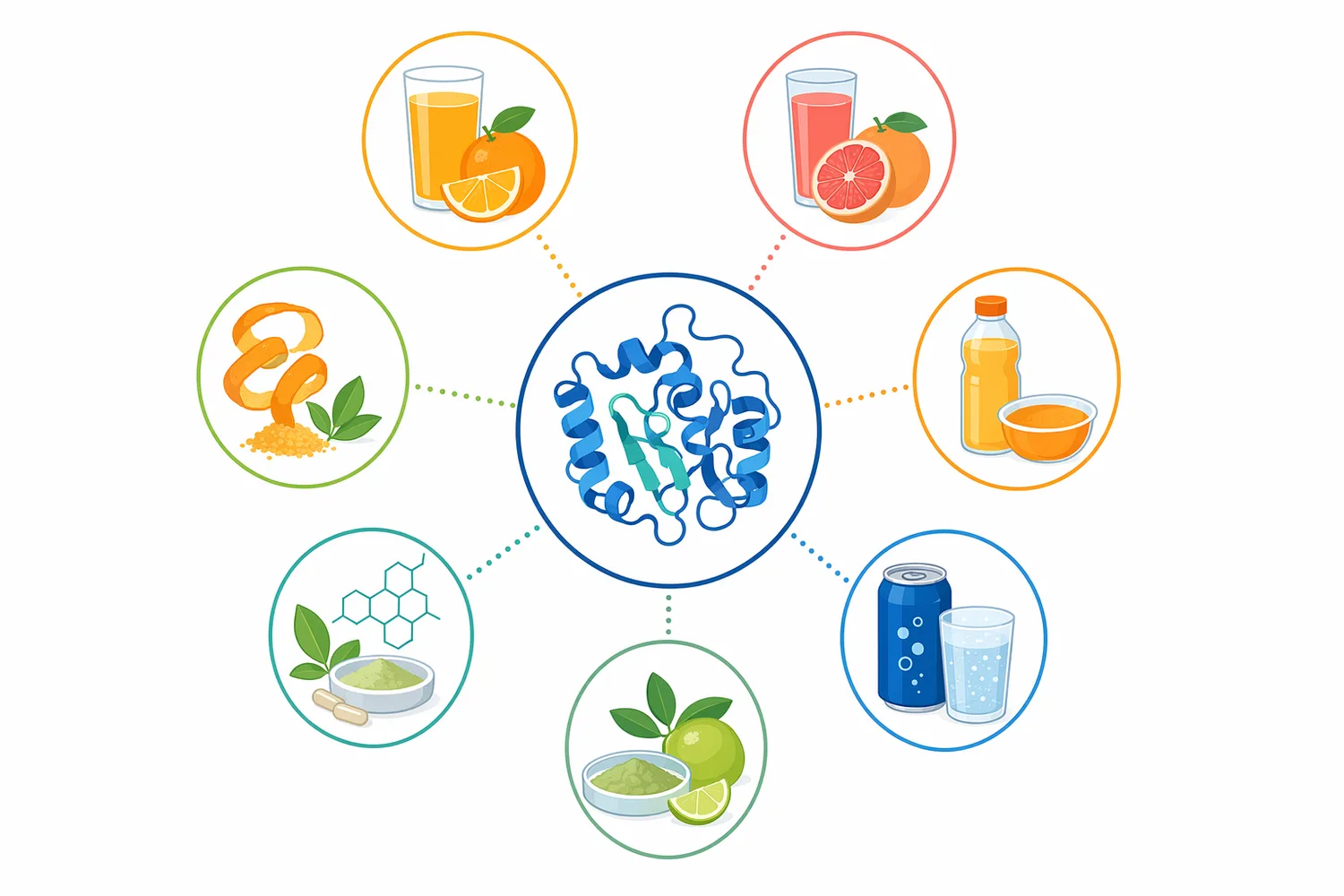
The process effect is gradual rather than instantaneous. As the enzyme contacts naringin, intact naringin decreases and prunin increases; if β-glucosidase activity is present, prunin can decrease as naringenin increases. This sequence is why cascade studies measure naringin conversion through identifiable intermediates rather than treating “debittering” as a black box [1].
The citrus matrix itself can influence the outcome. Acidity, soluble solids, pulp, phenolics, peel oil, and thermal history may all affect how much substrate is accessible and how the final flavor is perceived, even when the same enzyme reaction is occurring. This is another reason rhamnosidase should be described as a targeted tool within a process, not as a universal taste guarantee [2].
Immobilized enzyme studies show one way researchers have tried to improve control and reuse in naringin hydrolysis. For example, κ-carrageenan immobilization has been used in kinetic modeling of naringin hydrolysis, illustrating how rhamnosidase activity can be studied in structured formats for repeated or controlled contact with the substrate [9].
The first benefit is targeted naringin reduction. Because α-L-rhamnosidase removes terminal rhamnose from naringin, it directly addresses one of the best-known bitter flavonoid glycosides in citrus processing [2].
The second benefit is flavonoid profile modification. Rhamnosidase does not merely suppress perception; it changes the glycosylation state of citrus flavonoids, which can support production of prunin-rich intermediates or feed into a subsequent naringenin-producing cascade [6].
The third benefit is compatibility with mild food-processing concepts. Enzyme-catalyzed hydrolysis avoids the broad, less selective chemistry of strong acid hydrolysis and is consistent with the wider role of microbial enzymes as precise processing aids in food applications [11].
The fourth benefit is better use of citrus-derived materials. Peel and by-product streams can be difficult to formulate because bitterness rises quickly as inclusion increases, and rhamnosidase provides a route to reduce the contribution of rhamnosylated bitter glycosides in those streams [4].
Finally, rhamnosidase supports product development where the aim is to preserve citrus identity while reducing harshness. Instead of replacing the citrus base or masking it heavily, the enzyme modifies a defined bitter substrate inside the citrus matrix [5].

Rhamnosidase is best matched to naringin, hesperidin-type chemistry, rutin-like flavonoid glycosides, and other molecules where terminal rhamnose is part of the structure. Its catalytic role is derhamnosylation, so the most credible claims are tied to rhamnose-containing substrates [3].
It should not be confused with a complete naringenin-production system unless β-glucosidase is also part of the enzymatic pathway. The literature on one-pot conversion of naringin to naringenin makes the two-enzyme sequence explicit: α-rhamnosidase first, β-glucosidase second [1].
It should also not be treated as a limonin-removal enzyme. Limonin belongs to a different class of citrus bitter compounds, so reducing limonin bitterness requires different strategies from the rhamnose-cleaving mechanism described here [2].
Within those boundaries, Food Industry Grade Rhamnosidase Enzyme is a strong fit for citrus debittering work where naringin-related bitterness is the problem to solve. The enzyme’s value lies in the precision of the reaction: remove L-rhamnose from the bitter glycoside, shift naringin toward prunin, and enable a cleaner-tasting or more useful citrus ingredient stream [5].
Food Industry Grade Rhamnosidase Enzyme is a targeted biocatalyst for citrus debittering and naringin hydrolysis. Its primary reaction is the removal of terminal L-rhamnose from naringin, producing prunin and reducing the contribution of intact naringin to citrus bitterness [6].
The scientific literature supports α-L-rhamnosidase and naringinase-related systems for citrus juice applications, kinnow peel valorization, prunin production, and broader flavonoid biotransformation. The evidence is strongest when the processing target is naringin or another rhamnosylated flavonoid, while complete conversion to naringenin requires the additional β-glucosidase step [1].
Enzymes.bio supplies Food Industry Grade Rhamnosidase Enzyme in 1 kg units for direct online purchase, with order processing and shipment after checkout. For buyers working with bitter citrus juices, citrus extracts, or peel-derived ingredient streams, it offers a clear enzyme-based route to reduce naringin-related bitterness and support controlled citrus flavonoid transformation.
Sold by the 1 kg unit, in stock and ready to ship. Order directly on our store — pay online and we process your order. A Certificate of Analysis and Safety Data Sheet are included with every order.
Buy Food Industry Grade Rhamnosidase Enzyme - Citrus Debittering & Naringin Hydrolysis →Numbered in order of first citation. Open-access sources, each verified reachable at publication; citation numbers in the text link here.