
Fruit Pectinase Enzyme for Red Wine Brewing is a processing enzyme used to break down pectin in crushed grapes, berry musts, and other red fruit wine substrates. By cutting pectin polymers in the fruit cell-wall matrix, it reduces gel-like viscosity, helps release trapped juice, improves access to skin-derived color and flavor compounds, and can make clarification and filtration easier when pectin is part of the problem [1].
Enzymes.bio supplies Fruit Pectinase Enzyme for Red Wine Brewing directly online by the 1 kg unit. Buyers purchase and pay online, after which the order is processed and shipped; a Certificate of Analysis and Safety Data Sheet are supplied with the order.
Red wine brewing depends on controlled extraction from fruit skins and pulp. In grape red wine, that extraction delivers anthocyanins, tannins, aroma precursors, polysaccharides, and other compounds that shape color, structure, mouthfeel, and style. In red fruit wines—such as berry, plum, cherry, dragon fruit, or mixed-fruit wines—the same principle applies, but pectin levels can be higher and the pulp can be more gel-like, making juice release and downstream separation more difficult. Pectinase is useful because it targets one of the main structural barriers in that fruit matrix: pectin, a complex plant polysaccharide that contributes to cell adhesion, pulp viscosity, and colloidal stability [1].
Pectin is not simply “haze.” It is part of the plant cell-wall architecture and middle lamella—the adhesive zone that helps hold cells together in fruit tissue. After crushing, that same structure can behave like a hydrated network: it holds liquid in pomace, increases must thickness, keeps fine particles suspended, and slows compaction of solids. Pectinase reduces this network by cleaving pectic polymers into smaller fragments, so the pulp loses part of its gel strength and liquid can move more freely through the crushed-fruit mass [2].
For red wine, the practical value is most visible during maceration and pressing. When pectin-rich skins and pulp soften enzymatically, juice drains more readily, press fractions may separate more predictably, and skin compounds become more accessible to the fermenting must. In later stages, lower pectin burden can reduce pectin-related turbidity and improve filterability, although pectinase should be understood as a targeted processing aid rather than a universal fining or filtration remedy [3].
Fruit pectin is a family of acidic polysaccharides, not a single uniform molecule. The most widely discussed regions include homogalacturonan, which is rich in galacturonic acid units, and rhamnogalacturonan-I, which carries side chains that can interact with other cell-wall components. Research comparing enzymatic and acid hydrolysis of pectin-rich fractions from apple and carrot pomace shows that different treatments change pectin structure in different ways, particularly in RG-I-rich segments, confirming that enzymatic modification is a structural intervention rather than simple dilution or washing [2].
In red wine brewing, those structural changes matter because pectin helps fruit pulp behave as a network. Long pectin chains increase viscosity because they hydrate, entangle, and interact with other suspended solids. Pectinase shortens those chains or loosens the pectin-rich matrix, depending on the enzyme activities present in the preparation. Once the polymer network is weakened, the must is less able to trap liquid and fines in a stable gel-like suspension [1].
Commercial pectinase preparations used for fruit processing may include complementary pectinolytic activities, commonly discussed in the literature as polygalacturonase, pectin lyase, and pectin methylesterase. These activities act on different features of pectin: some cut the galacturonic acid backbone, some act more efficiently on methyl-esterified pectin, and some alter methyl ester groups to make the polymer more susceptible to further breakdown. The practical result is a coordinated weakening of the pectic “glue” that holds fruit tissue together [4].
This mechanism also explains why pectinase is most relevant when fruit solids are still present. In a red must, skins, pulp particles, and juice remain in contact during maceration, so the enzyme can reach pectin-rich cell walls and middle lamellae directly. After pressing and separation, the enzyme may still help with dissolved or colloidal pectin, but it no longer has the same access to intact skin and pulp architecture [5].
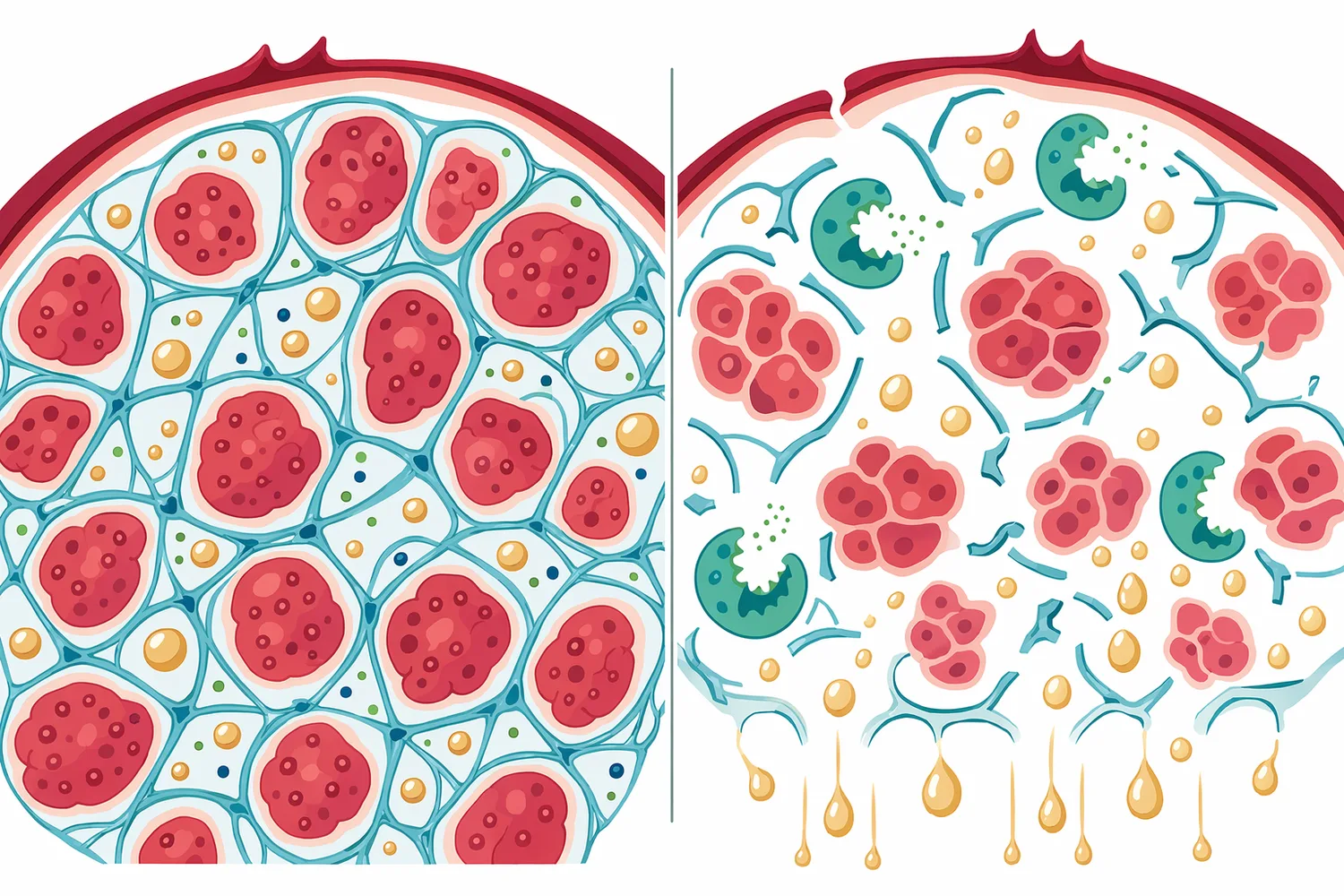
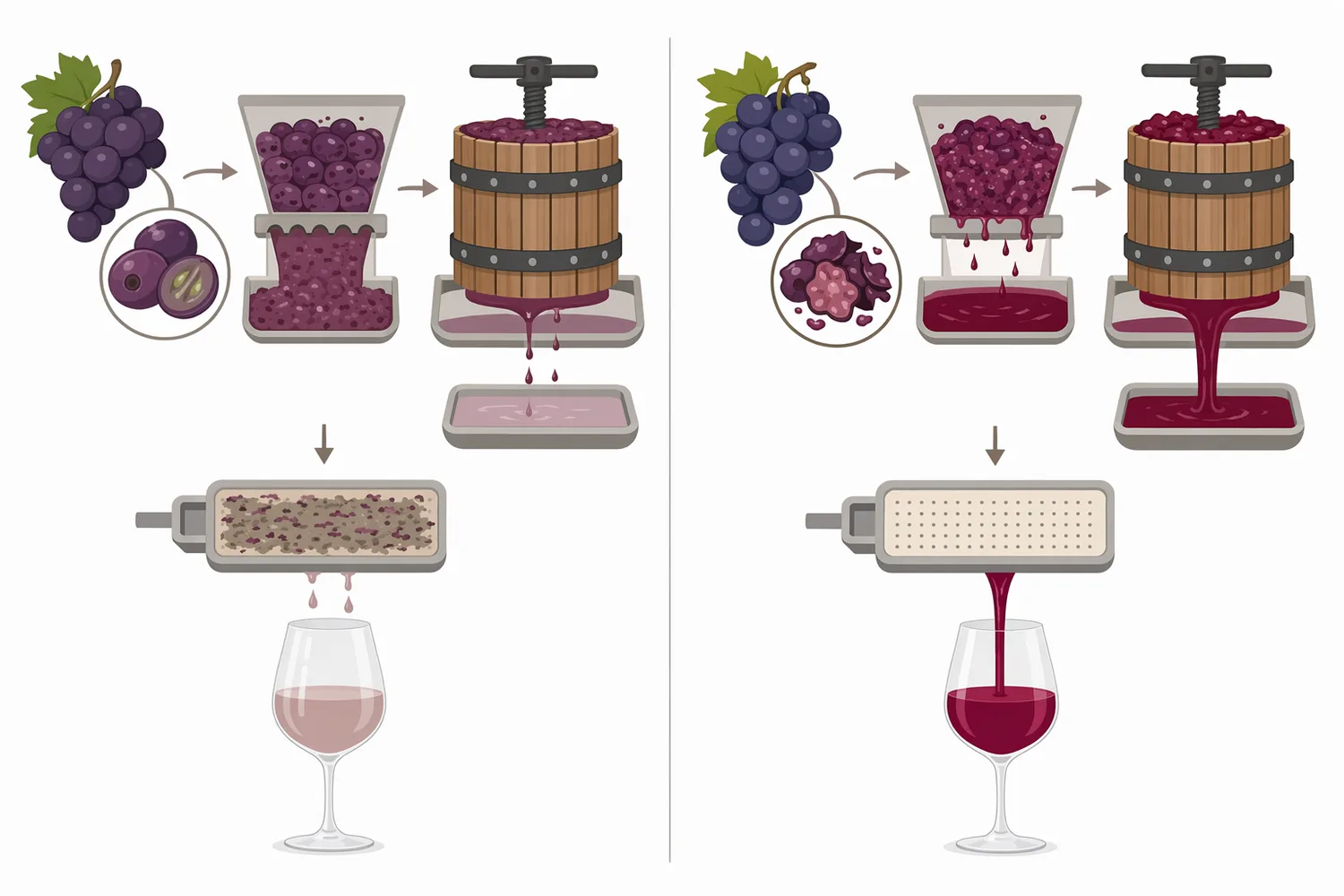
Pectin-rich fruit solids can hold significant liquid inside the pomace bed. The liquid is physically present, but it is immobilized by the pulp structure and by the hydrated pectin network surrounding plant cells. Pectinase helps release that liquid by weakening the cell-wall and middle-lamella framework, allowing juice to drain through the solids more easily during free-run separation and pressing [1].
In practical winery language, this can mean easier handling of crushed fruit, better movement of liquid away from skins and pulp, and less resistance during pressing. Enzymes.bio’s winemaking enzyme guidance describes pectinase use in grape processing for improved juice release and notes typical free-run yield improvements of about 10–20% under suitable conditions; actual outcomes depend on the fruit matrix, crush, temperature, contact time, press program, and overall cellar practice .
The important point is that pectinase does not “create” juice. It changes the structure that traps juice. When the pectin network is cut into smaller fragments, capillary hold-up in the pomace decreases and liquid pathways open through the mass. This is why the enzyme is often most effective when applied early enough to act before pressing, especially in high-pectin fruits or varieties with thick skins and cohesive pulp [6].
High viscosity is one of the clearest signs that pectin is influencing processing. A viscous must drains slowly, settles poorly, and can resist clarification because fine particles remain suspended in a hydrated polysaccharide network. Pectinase reduces viscosity by degrading the pectin molecules that give the must its gel-like body, so suspended solids are less physically supported and can compact or settle more readily [7].
This is not the same mechanism as bentonite, gelatin, or protein-based fining. Fining agents generally bind, neutralize, or aggregate haze-forming compounds so they precipitate. Pectinase instead modifies the polysaccharide framework that keeps the system thick and stable. A wine or must may look easier to clarify after pectinase treatment because the enzyme has removed a physical barrier to settling and filtration, not because it has directly “pulled” every particle out of suspension [3].
A useful image is a mesh bag filled with liquid and fine solids. Before enzyme treatment, pectin behaves like a swollen mesh that traps both liquid and particles. Pectinase cuts the mesh into shorter pieces. The solids still exist, and the juice still contains dissolved material, but the network no longer holds everything together as tightly. This is why pectinase can improve settling and filtration while remaining a processing aid rather than a clarifying agent in the conventional fining sense [1].
Red wine color comes largely from anthocyanins extracted from skins, while mouthfeel and structure are influenced by tannins and other phenolic compounds. Pectinase supports extraction by loosening pectin-rich skin and pulp structures, improving contact between the liquid phase and the intracellular or cell-wall-associated compounds that winemakers want to extract. This can support more efficient maceration, especially when fruit has resilient skins or pulp that otherwise resists breakdown [5].
The mechanism is physical and biochemical at the same time. As pectin is degraded, the middle lamella weakens, cells separate more easily, and diffusion paths become shorter. Pigments, aroma precursors, soluble polysaccharides, and other extractable compounds can move into the must with less resistance. The enzyme does not decide which sensory compounds are desirable; it increases access to the fruit matrix, so maceration time, temperature, cap management, fermentation kinetics, and fruit condition still shape the final extraction profile [8].
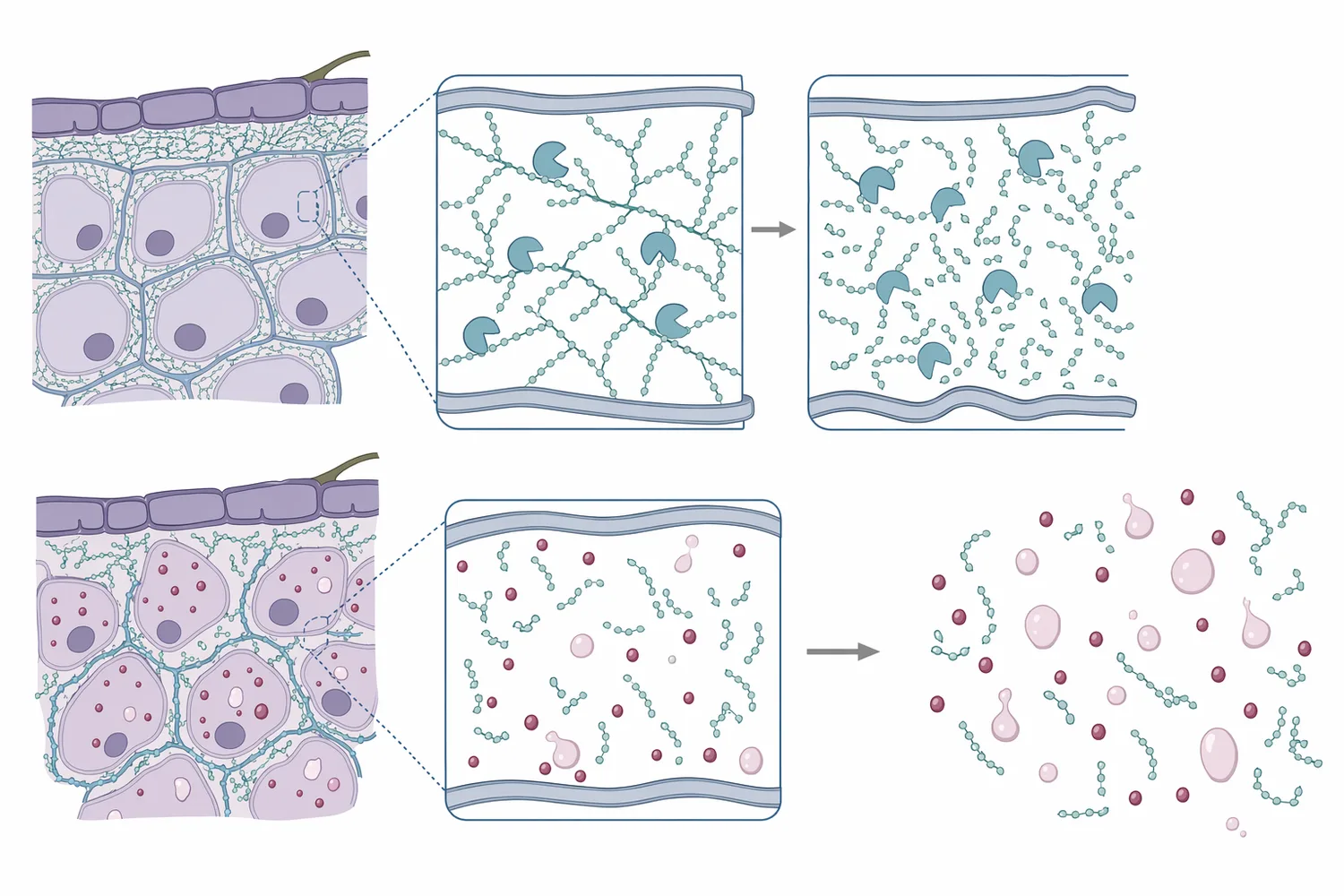
This distinction matters because more extraction is not always better. In red wine brewing, excessive extraction can increase bitterness, astringency, or coarse phenolic character depending on the fruit and process. Pectinase is best viewed as a tool for controlled access to fruit material: it can make extraction more efficient, but the winemaking process still determines how far that extraction is taken [6].
Pectin can contribute to persistent turbidity and slow filtration because it stabilizes colloids and increases liquid resistance through filtration media. Studies of pectin-dominated colloidal instability in cloudy pomelo juice show that enzymatic digestion changes morphology and rheological behavior, illustrating how pectin breakdown can shift a fruit beverage from a stable, viscous suspension toward a more processable system [7].
Wine-specific work also supports the relevance of enological pectinase in clarification. Research on immobilized enological pectinase for wine clarification describes pectinase as an efficient biocatalyst for clarification applications, reinforcing that pectin degradation is directly relevant to wine processing rather than only to general juice manufacture [3].
Still, pectinase should not be expected to solve every filtration issue. Filter plugging can also be caused by yeast residues, proteins, tartrate crystals, microbial polysaccharides, oxidation products, or excessive suspended solids. Pectinase is most useful when pectin contributes to viscosity, haze stability, or poor flow; if the problem is not pectin-driven, another cellar intervention may be needed [9].
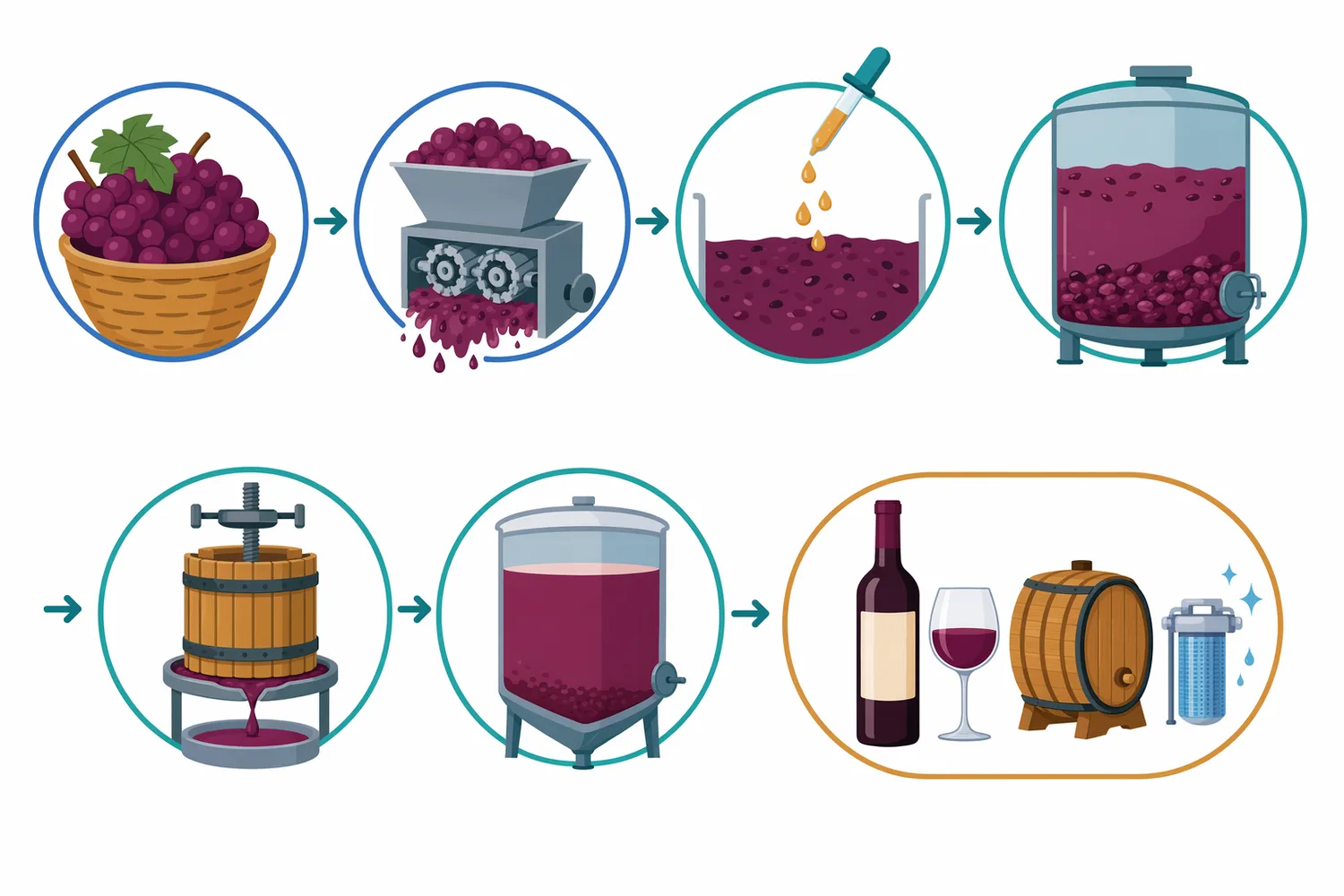
Fruit Pectinase Enzyme for Red Wine Brewing is typically most useful from crushing through maceration, before or during the period when fruit solids and liquid are intentionally kept in contact. That timing gives the enzyme access to pectin-rich skins and pulp while extraction and juice release are still actively developing [5].
| Process stage | Pectin-related obstacle | What pectinase changes | Practical processing effect |
|---|---|---|---|
| Crushing and must preparation | Pulp remains cohesive and juice is trapped in fruit solids | Weakens pectin-rich cell-wall and middle-lamella material | Easier release of liquid from crushed fruit |
| Cold soak or early maceration | Skins and pulp resist extraction | Opens the fruit matrix by shortening pectin chains | Better access to color, aroma-related, and soluble skin components |
| Fermentation on skins | Must can remain thick or slow to circulate | Reduces gel-like viscosity from pectic polymers | More manageable cap wetting, mixing, and liquid movement |
| Pressing | Pomace retains liquid and drains slowly | Reduces pectin network that holds juice in solids | Better drainage and more predictable pressing behavior |
| Post-press clarification | Fine solids remain suspended in a stable colloidal system | Breaks pectin that supports haze and viscosity | Easier settling, racking, and filtration when pectin is involved |
The table reflects a process principle rather than a guarantee of identical results in every cellar. Pectinase performance depends on contact with the substrate, adequate time, compatible temperature, and the composition of the must. High-pectin fruit wines may show a more obvious effect than grape wines with naturally lower pectin burden, while difficult lots with thick skins or slow-settling pulp may benefit more than already free-draining fruit [6].
In red wine applications, pectinase is commonly used during crushed-fruit handling or maceration, where temperatures are often in a moderate cellar range rather than at pasteurization conditions. Enzymes.bio’s winemaking enzyme guidance describes typical red-wine maceration conditions around 20–30°C and notes that excessive heat can reduce enzyme performance, with temperatures above about 35°C generally avoided for this application .
Temperature affects the rate of pectin breakdown. Cooler musts, including cold-soak conditions, slow enzyme action because molecular motion is reduced and substrate–enzyme contact events occur less frequently. Warmer musts within an appropriate range generally allow faster pectin degradation, but heat above the enzyme’s working tolerance can damage enzyme structure and reduce effectiveness [6].
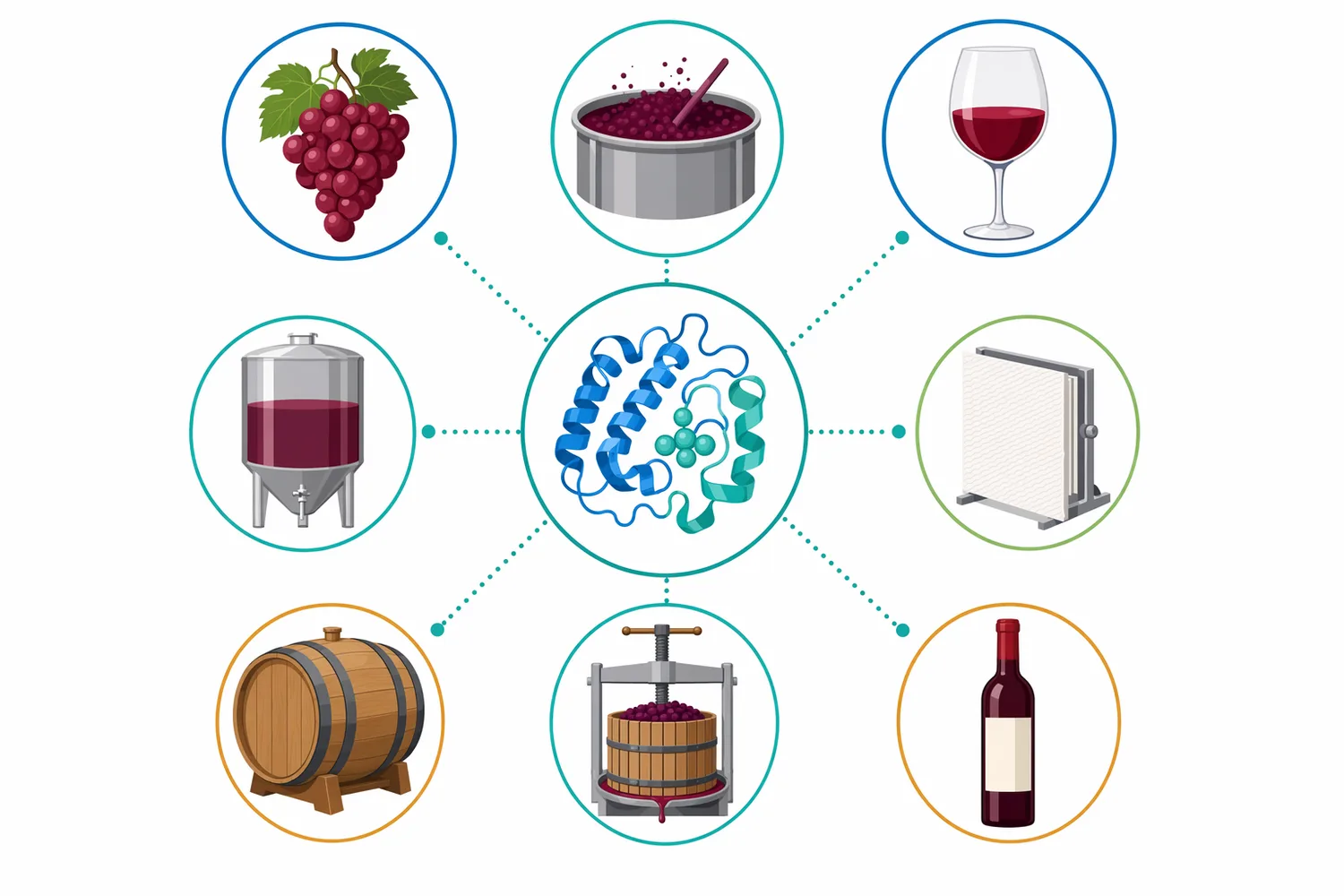
Contact time also matters. Pectinase needs time to diffuse through the liquid phase, reach accessible pectin, bind to the polymer, and catalyze chain cleavage. Short treatments may help with surface-accessible pectin and early juice release, while longer maceration contact can produce more extensive softening of fruit solids. That is why red wine use is often connected to crushing, cold soak, early fermentation, or other stages when the must is already being held with skins [5].
Sulfur dioxide, bentonite, tannins, alcohol, pH, temperature, and solids loading can all influence enzyme behavior in real cellar systems. Professional winemaking guidance notes that pectic enzymes work more slowly in cold juice or wine and can be inhibited or removed by certain winemaking additions if timing is not managed carefully; bentonite, for example, can adsorb enzymes because it binds proteins [6].
This does not mean pectinase use has to be complicated. It means the enzyme should be used as part of the normal process flow rather than added randomly after every other treatment has already changed the must or wine. The simplest operating principle is to give the enzyme contact with pectin-rich fruit material under conditions where proteins can remain active long enough to modify the substrate [1].
Pectinase is sometimes discussed alongside other maceration enzymes, but each tool acts on a different target. Understanding the target helps avoid unrealistic expectations.
| Tool | Primary target | Main mechanism | Best-fit role in red wine brewing |
|---|---|---|---|
| Pectinase | Pectin in fruit cell walls, pulp, and colloidal must | Cuts or modifies pectic polymers, reducing gel structure and viscosity | Juice release, maceration support, clarification, and pectin-related filterability |
| Cellulase | Cellulose-rich plant cell-wall regions | Hydrolyzes cellulose chains in structural cell walls | Additional cell-wall opening where broader tissue breakdown is desired |
| Hemicellulase | Hemicellulose components of cell walls | Breaks hemicellulose that cross-links wall polymers | Complementary maceration support in enzyme blends |
| Fining agents | Haze-forming proteins, phenolics, or charged colloids | Bind or aggregate target compounds for removal | Clarification or stabilization after extraction, not direct pectin breakdown |
| Mechanical pressing | Whole pomace structure | Applies pressure to force liquid out | Physical separation; performance can improve when pectin structure is weakened |
Pectinase occupies a specific position in this set. It does not replace pressing because pressure is still needed to separate liquid from solids. It does not replace fining because fining and enzymatic hydrolysis work by different mechanisms. Its value is upstream: it changes the fruit matrix so mechanical separation and later clarification can work with less resistance from pectin [3].
The broad industrial evidence for pectinase is strong. Reviews of microbial pectinases describe them as enzymes that catalyze degradation of pectic substances and are widely applied in food processing, including fruit juice extraction, clarification, maceration, and wine-related applications [1].
Wine-specific research continues to examine how pectinase can support must clarification. A 2023 study on tuning pectinase activity under electric fields focused on enhanced clarification of wine must, showing that the enzyme remains an active research topic in enology where must clarity and process efficiency are practical concerns [5].
Another wine-focused study evaluated polyamide microparticles with immobilized enological pectinase as biocatalysts for wine clarification. While immobilized systems are different from a standard powdered processing enzyme used in a cellar, the study is relevant because it identifies pectinase activity as directly useful for wine clarification and explores how support materials affect that biocatalytic role [3].
Fruit-beverage research also supports the mechanism. In cloudy pomelo juice, pectin-dominated colloidal instability was studied through morphology and rheology after enzymatic digestion. The relevance to red fruit wine is not that pomelo juice behaves identically to grape must, but that pectin digestion measurably changes the physical behavior of a pectin-rich beverage matrix [7].
Pectin modification studies in other plant materials reinforce the same point at a molecular level. Work on RG-I-rich pectin fractions shows that enzymatic treatment changes pectin structure and rheological properties, which helps explain why pectinase can alter viscosity, suspension behavior, and gel strength in fruit substrates [10].
Grape-related by-product research also shows that enzymatic treatment can modify soluble dietary fiber properties in grape waste extract systems. Although a jelly model is not the same as red wine brewing, it is relevant because grape-derived pectic materials respond to enzymatic treatment in ways that change functional behavior in aqueous food matrices [11].
Red wine color is not only a matter of extracting more pigment. Anthocyanins can degrade, transform, bind, and participate in reactions that affect final hue and stability. Research on a red-fleshed grape variety describes anthocyanin degradation and underlying molecular mechanisms, highlighting that pigment behavior is dynamic and influenced by the biological and chemical environment [8].
Pectinase can help release anthocyanins by opening skin and pulp structures, but it does not guarantee color stability. Color retention depends on grape variety, pH, oxygen exposure, sulfur dioxide management, tannin interactions, fermentation temperature, and aging chemistry. The enzyme improves physical access to pigment-containing tissue; the subsequent chemistry determines how much of that extracted color remains stable in the finished wine [8].
This is why pectinase is best used with a clear extraction intention. For fruit that is hard to extract, it may help achieve desired color more efficiently. For delicate fruit or styles where low phenolic pickup is desired, the same increased access to skin material means contact time and handling still require care. The enzyme accelerates access; it does not replace sensory judgment or process control [6].
Non-grape red fruit wines can be especially good candidates for pectinase because many fruits contain substantial pectin in their pulp and skins. Berry, stone-fruit, tropical red fruit, and mixed-fruit musts can be thick, slow to drain, and difficult to clarify. In these substrates, pectinase can make the difference between a pulp-heavy mass that resists separation and a more fluid must that can be pressed, racked, and filtered more predictably [1].
The same mechanism applies whether the fruit is grape, blackberry, plum, cherry, currant, or dragon fruit: pectinase weakens pectic substances that bind cells together and thicken the aqueous phase. What changes from fruit to fruit is the amount and type of pectin, the skin structure, seed and pulp composition, pigment chemistry, and the desired extraction style [4].
For high-pectin fruit wines, pectinase is often more than a yield aid. It can reduce processing friction throughout the batch: less thick pulp during maceration, easier press operation, faster clarification, and lower pectin-related filtration resistance. Those effects are especially valuable when the fruit naturally forms a puree-like must rather than a free-draining crushed grape mass [7].
Pectinase is not a fermentation organism and does not ferment sugar to alcohol. Yeast performs alcoholic fermentation. Pectinase modifies the fruit substrate before or during fermentation by hydrolyzing pectin, thereby changing the physical environment in which yeast fermentation and extraction occur [1].
It is also not a cure for microbial spoilage, oxidation, volatile acidity, stuck fermentation, excessive bitterness, or poor fruit quality. If a wine has problems caused by damaged fruit, contamination, nutrient imbalance, oxygen mismanagement, or unsuitable fermentation temperature, pectinase cannot correct those underlying issues. Its role is limited to pectin-related structure, viscosity, extraction, clarification, and filterability [9].
Pectinase also should not be treated as a way to maximize every extraction variable without consequence. Because it opens the fruit matrix, it can increase access not only to desirable pigments and aroma-related compounds but also to phenolics that may taste harsh if over-extracted. Responsible use means understanding that the enzyme changes extraction kinetics, while the process still determines the final sensory balance [6].
Enzymes.bio supplies Fruit Pectinase Enzyme for Red Wine Brewing as an online 1 kg product for buyers who want a practical pectinolytic enzyme for red wine and red fruit wine processing. The product is purchased directly through the website, paid for online, and then processed and shipped; a Certificate of Analysis and Safety Data Sheet are supplied with the order .
Enzymes.bio is a supplier, not a testing laboratory or the enzyme manufacturer. The product page and accompanying order documents provide the relevant product information supplied with the purchase, while this article is intended to explain the science and application context in clear technical language.
Fruit Pectinase Enzyme for Red Wine Brewing is best understood as a targeted pectin-degradation tool. It cuts and modifies pectic substances in fruit skins, pulp, and must, reducing the gel-like structure that traps juice, increases viscosity, slows solids separation, and contributes to pectin-related clarification or filtration problems [1].
In red wine and red fruit wine production, that mechanism supports four practical outcomes: easier juice release, more manageable maceration, improved access to color and flavor compounds, and smoother downstream clarification or filtration when pectin is a significant contributor. Used as part of a sound winemaking process, pectinase helps make the fruit matrix more processable without pretending to replace fermentation control, pressing, fining, or good cellar practice [3].
Sold by the 1 kg unit, in stock and ready to ship. Order directly on our store — pay online and we process your order. A Certificate of Analysis and Safety Data Sheet are included with every order.
Buy Fruit Pectinase Enzyme For Red Wine Brewing →Numbered in order of first citation. Open-access sources, each verified reachable at publication; citation numbers in the text link here.