
Fungal alpha amylase enzyme for bakers is used to convert a small, controlled portion of flour starch into dextrins and fermentable sugars during dough processing and early baking. In bread, rolls, buns, flatbreads, steamed breads and other bakery products, this supports yeast activity, oven expansion, crust color and crumb softness without aiming for complete starch breakdown.
For bakery use, the practical value of fungal alpha-amylase is that it acts on accessible starch in dough—especially damaged starch from milling and starch that becomes available as heating begins—then loses practical activity as baking temperatures rise. Enzymes.bio supplies Fungal Alpha Amylase Enzyme for Bakers directly online by the 1 kg unit; the buyer pays online, and the order is processed and shipped with a Certificate of Analysis and Safety Data Sheet included .
Fungal alpha-amylase is a starch-degrading enzyme used in bakery formulas to make flour starch more functional during fermentation and baking. Flour contains a large starch fraction, but yeast cannot directly ferment intact starch granules; the enzyme helps by cutting accessible starch chains into shorter carbohydrate fragments, including dextrins and maltose-type sugars that influence fermentation, browning and crumb structure [1].
Alpha-amylase is an endo-acting amylase. Instead of removing sugar units only from the ends of starch molecules, it attacks internal alpha-1,4 glycosidic bonds in amylose and amylopectin, producing shorter chains that behave differently in dough and during heating. The practical result is not “turning flour into sugar,” but a measured reduction in starch-chain length where water, heat and substrate accessibility allow the enzyme to work [2].
In a bakery dough, that mechanism matters because starch changes state through the process. During mixing and proofing, some damaged starch is hydrated and accessible; during baking or steaming, starch granules swell and gelatinize, exposing more alpha-1,4 linkages to enzyme action before heat progressively limits enzyme activity. This timing is one reason alpha-amylase can influence both fermentation before the oven and expansion during the early heating phase [3].
Fungal sources are especially familiar in baking because they generally provide controlled activity under dough conditions and are less associated with prolonged high-temperature starch liquefaction than highly heat-stable bacterial amylases. Research on breadmaking continues to examine fungal alpha-amylase specifically, including work on fungal enzymes engineered for maltotriose-forming ability and bread performance, which reflects the continuing importance of this enzyme class in baked goods [4].
The substrate for fungal alpha-amylase in dough is starch, but not all starch is equally available. Native starch granules are partly crystalline and relatively resistant; milling damages a fraction of granules, and hydration opens access to some starch chains. When dough enters the oven or steamer, gelatinization further disrupts starch granule order, creating a short window where alpha-amylase can act more readily on newly exposed chains [5].
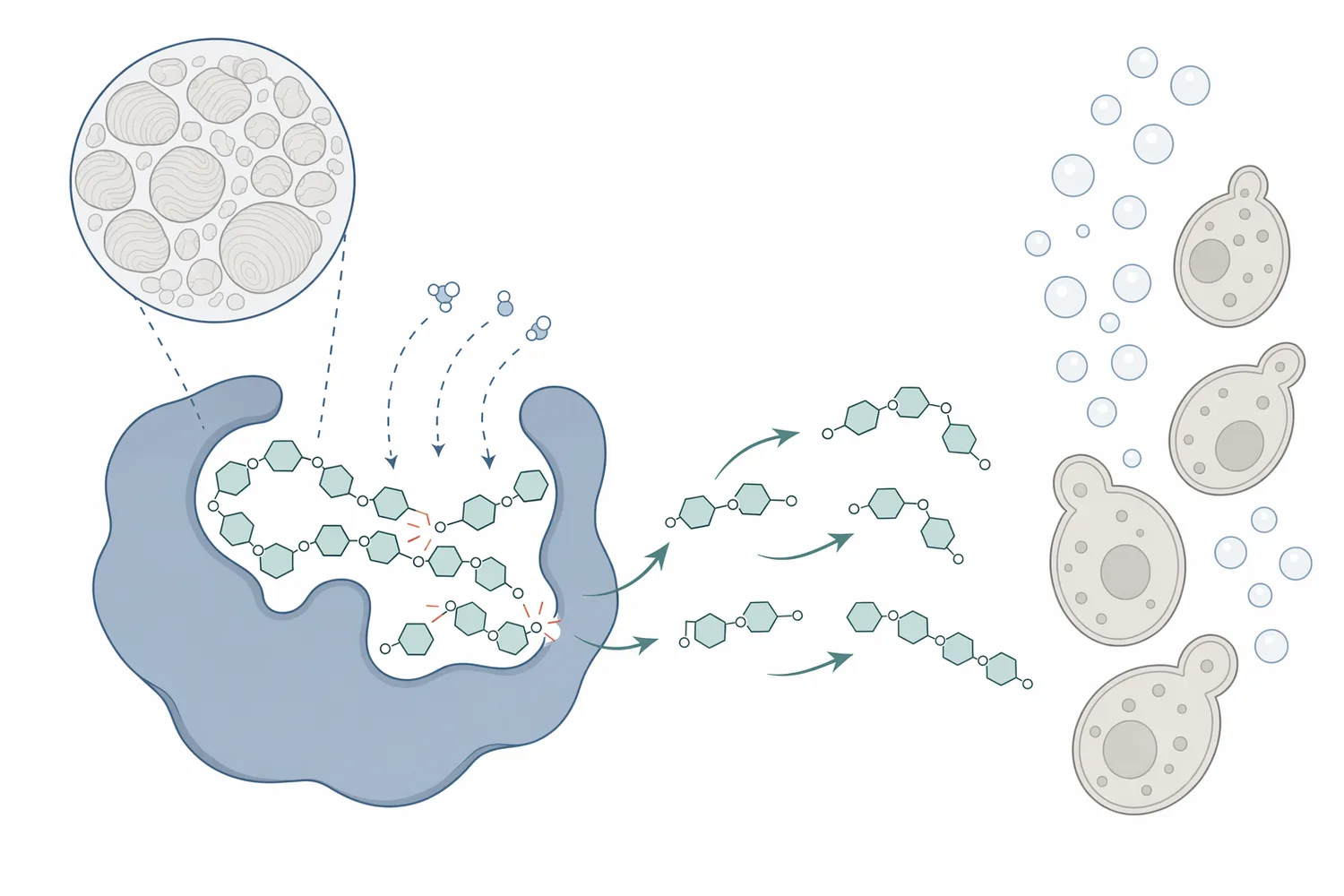
When alpha-amylase cuts a long starch chain, the physical properties of that chain change immediately. Long amylose and amylopectin segments contribute to swelling, thickening and gel formation; shorter dextrins bind water differently and do not build viscosity in the same way. In bakery terms, controlled hydrolysis can reduce excessive thickening at the right stage, allowing the dough matrix to expand before the crumb structure sets [1].
The sugar side of the mechanism is equally important. Smaller carbohydrate products from starch hydrolysis increase the pool of fermentable and reducing sugars. Yeast can use fermentable sugars to produce carbon dioxide and ethanol, while reducing sugars participate in Maillard browning at the crust surface, contributing to baked color and flavor development [6].
This is why fungal alpha-amylase has multiple visible effects from one biochemical action. It does not simply “feed yeast”; it also changes starch viscosity, heat-set behavior, dextrin content and browning potential. The balance between those effects determines whether the result is a fuller loaf, more even crust color, softer bite and better tolerance to flour variation [3].
Bread volume depends on gas production, gas retention and the timing of structure setting. If dough produces gas but becomes too rigid too early in the oven, expansion is limited; if the starch phase stays mobile long enough while the gluten-starch matrix sets, oven spring can improve. Alpha-amylase contributes by modifying starch as it becomes available, lowering resistance to expansion during early baking [3].
Studies on bakery enzyme systems show that alpha-amylase can be part of bread-quality improvement strategies, including formulations that combine amylase with other improvers such as lipase or oxidizing systems. These studies are useful because they show alpha-amylase being evaluated in real breadmaking contexts rather than only as an isolated starch-hydrolysis catalyst [6].
Fungal alpha-amylase is particularly relevant where the desired effect is controlled activity in the dough and early oven phase. The enzyme creates enough dextrins and sugars to support expansion and color, while the increasing heat of baking progressively reduces its ability to continue degrading starch. That distinction is important because excessive starch hydrolysis can weaken crumb structure and create sticky or gummy textures [4].
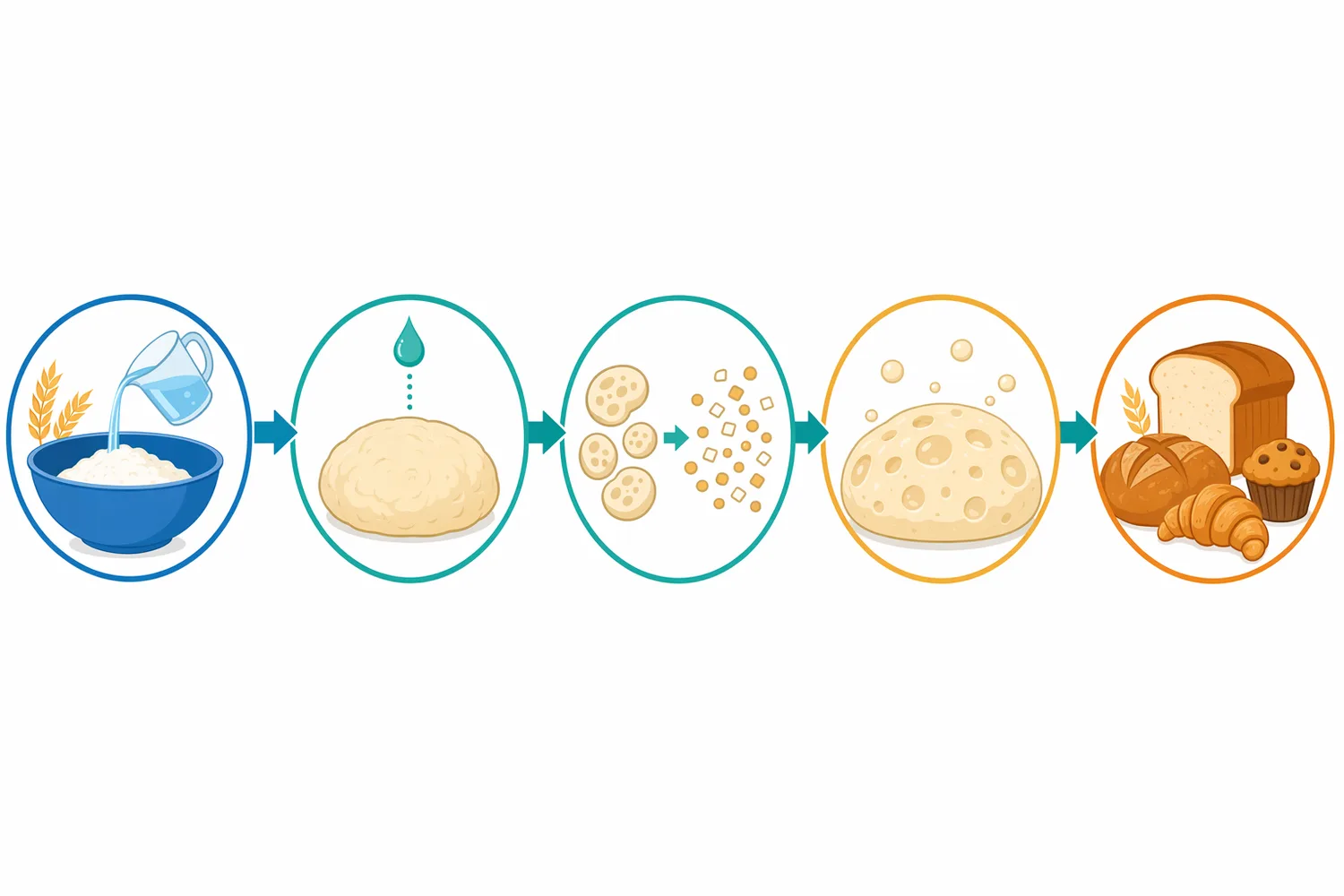
The best way to understand the volume effect is to connect the biochemical and physical events. The enzyme cuts starch chains; shorter chains reduce local thickening and contribute soluble dextrins; yeast activity and heat expansion increase gas pressure; and the dough remains capable of expanding until protein and starch networks set. Good results come from that timing, not from maximum enzyme activity [3].
In lean bread dough, available sugars can become limiting during fermentation, especially when flour has low native amylase activity or when processing demands predictable proofing. By releasing smaller carbohydrates from damaged starch, fungal alpha-amylase helps maintain a sugar supply that supports yeast metabolism and carbon dioxide generation. This can improve proofing consistency and help reduce variability caused by flour differences [1].
Crust color is strongly linked to sugar availability at the dough surface. Reducing sugars generated from starch hydrolysis participate in Maillard reactions with amino compounds during baking, while caramelization also contributes under high-heat surface conditions. When flour alone does not provide enough available sugars, alpha-amylase can help produce a more even and appealing baked color [6].
Crumb softness is influenced by starch gelation, water distribution and starch retrogradation after baking. Alpha-amylase-generated dextrins interfere with the behavior of longer starch chains and can reduce the perception of firmness, although different amylase types vary in how strongly they affect shelf-life and anti-staling performance. Modern starch-modification reviews describe enzymatic approaches as tools for changing gelatinization, viscosity and retrogradation behavior in starch-rich foods [2].
The anti-firming effect should be understood realistically. Fungal alpha-amylase can contribute to a softer crumb, but maltogenic and specialty amylases are often studied specifically for retrogradation control and extended softness. For example, research on maltogenic alpha-amylase in maize starch systems has examined how structural changes influence retrogradation, showing why amylase type matters when the target is shelf-life texture rather than only fermentation support [7].
Bakers may see several amylase names in the market, but they are not interchangeable. The key differences are where the enzyme attacks starch, what carbohydrate products it tends to generate, and how long it remains active as dough heats. The table below gives a practical conceptual comparison without treating these enzymes as substitutes in every formula [2].
| Enzyme type | Main starch action | Typical bakery or food-system role | Practical difference in dough or crumb |
|---|---|---|---|
| Fungal alpha-amylase | Endo-hydrolysis of internal alpha-1,4 bonds in accessible starch | Supports fermentation, oven expansion, crust color and controlled crumb softening | Acts during dough processing and early heating; valued for controlled starch modification in bread systems |
| Bacterial alpha-amylase | Alpha-1,4 starch hydrolysis, often with higher heat tolerance depending on enzyme | Used in some bakery and broader starch-processing applications where stronger heat persistence may be useful | Can continue starch breakdown further into heating; excessive persistence may risk sticky crumb in bread if not balanced |
| Maltogenic alpha-amylase | Produces maltose-rich products and modifies starch behavior linked to firming | Commonly studied for anti-staling and crumb softness | Often associated more with shelf-life softness than primary fermentation support |
| Glucoamylase | Releases glucose units from starch-chain ends | Used where more complete saccharification is desired | Not the same objective as normal breadmaking, where limited starch conversion is usually preferred |
| Specialty product-forming amylases | Generate defined oligosaccharides such as maltotetraose or maltotriose | Studied for targeted bread-quality effects | Product profile can influence softness, retrogradation and bread texture differently from standard alpha-amylase |
Recent bread research illustrates this distinction. A maltotetraose-forming amylase was studied for enzymatic modification of wheat starch to retard retrogradation and improve bread quality, while separate work on fungal alpha-amylase focused on improving thermostability and maltotriose-forming ability for breadmaking applications [8].
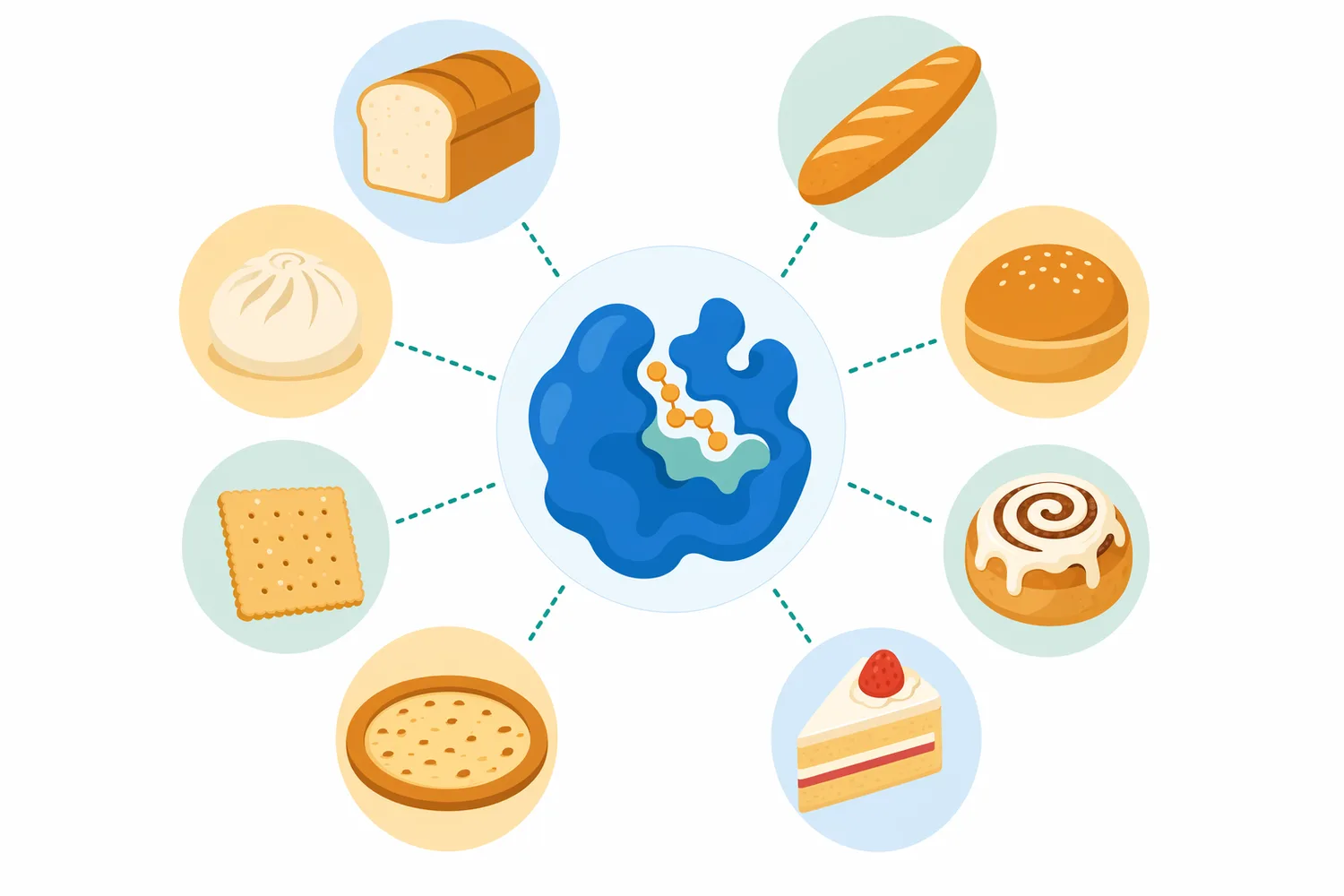
In wheat pan bread and sandwich bread, fungal alpha-amylase supports the core requirements of the process: dependable fermentation, controlled oven spring, attractive crust color and soft crumb. The enzyme’s effect is particularly useful in formulas where flour quality, damaged starch level or native enzyme activity may vary between flour lots, because it helps normalize the conversion of starch into usable carbohydrates [3].
Rolls and buns benefit from the same mechanism, but the sensory targets may be different. Soft bite, uniform browning and reliable proof height are often more important than maximum loaf volume. By increasing fermentable and reducing sugar availability, fungal alpha-amylase can help produce a consistent baked surface and crumb eating quality in these smaller-format products [6].
Sweet goods and enriched doughs add complexity because sugar, fat, eggs, dairy solids and other ingredients influence water availability, yeast performance and dough structure. Alpha-amylase still acts on accessible starch, but the formula environment can change the speed and expression of the effect. This is why the enzyme should be viewed as part of the process design rather than as a universal correction for every dough issue [1].
Research on combined enzyme and improver systems supports that practical view. Studies have examined alpha-amylase alongside fungal lipase, glucose oxidase and ascorbic acid in breadmaking, showing that amylase often works within a broader dough-strengthening or texture-management system rather than alone [9].
Fungal alpha-amylase is also relevant in breads made with blended flours, where starch characteristics differ from standard wheat flour. Grain amaranth–wheat blended bread, for example, has been studied with fungal alpha-amylase and ascorbic acid as part of formula optimization, reflecting the need to manage both starch conversion and dough structure when non-wheat material is included [10].
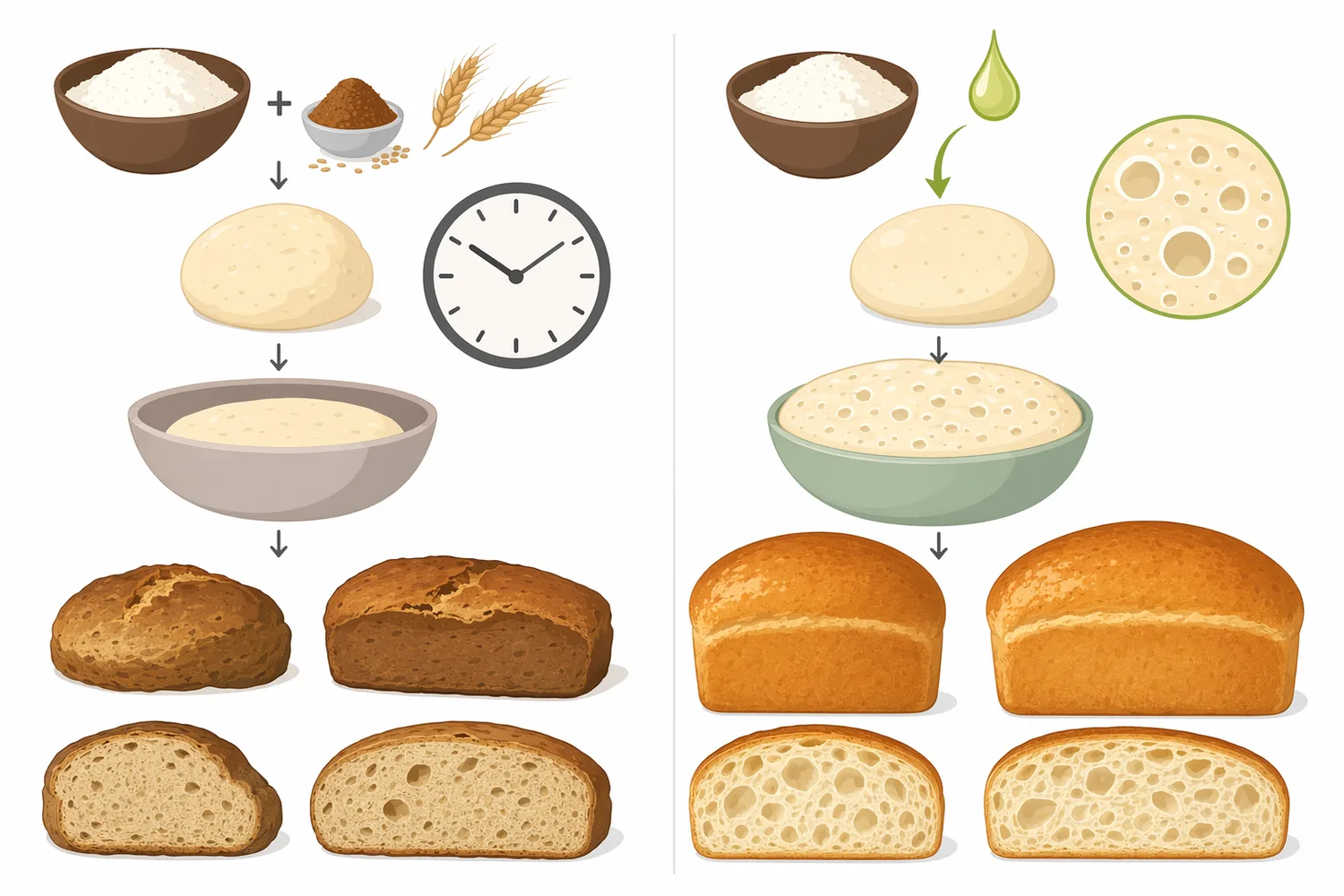
Alternative grains can change water absorption, dough viscosity and gas retention. Alpha-amylase can help by modifying the starch fraction, but it does not replace gluten functionality in wheat-reduced systems. Instead, it improves the carbohydrate side of the formula—sugar release, dextrin formation and starch-phase behavior—while other ingredients and process controls determine the strength of the gas-retaining network [10].
Thermal-enzymatic modification of wheat flours has also been studied as a clean-label bread-improver strategy. This type of work is relevant to bakers because it shows how enzyme-modified starch and flour components can influence bread quality without relying only on conventional chemical improvers [3].
The important point for buyers is that alpha-amylase is not limited to standard white pan bread. It is a versatile starch-modifying tool for wheat, blended-grain and specialty bakery systems, provided the expected effect is aligned with the product’s structure and processing conditions [2].
Gluten-free bread systems often contain rice flour, corn starch, tapioca starch, potato starch or other starch-rich ingredients. Because these formulas lack the viscoelastic gluten network of wheat dough, starch gelatinization and hydrocolloid structure play an even larger role in loaf expansion and crumb texture. Alpha-amylase can influence these systems by changing starch viscosity and sugar release during fermentation and heating [11].
A study on gluten-free bread made with high-protein rice flour examined the effects of alpha-amylase enzyme on bread properties, showing that amylase remains an active area of research for improving gluten-free bread quality. The relevance is clear: when starch is the dominant structural carbohydrate, controlled enzymatic modification can have a measurable impact on loaf characteristics [11].
However, gluten-free use should not be interpreted as identical to wheat bread use. In wheat dough, gluten provides a protein network that holds gas while starch gelatinizes; in gluten-free doughs, structure may depend more on starch pasting, hydrocolloids, proteins and emulsifiers. Alpha-amylase can help manage starch behavior, but excessive hydrolysis may reduce viscosity too much and weaken the developing structure [2].
This is why fungal alpha-amylase is best understood as a controlled starch-conversion aid rather than a standalone gluten replacement. It can support fermentation, browning and crumb quality, but the final product depends on the complete formula matrix [11].
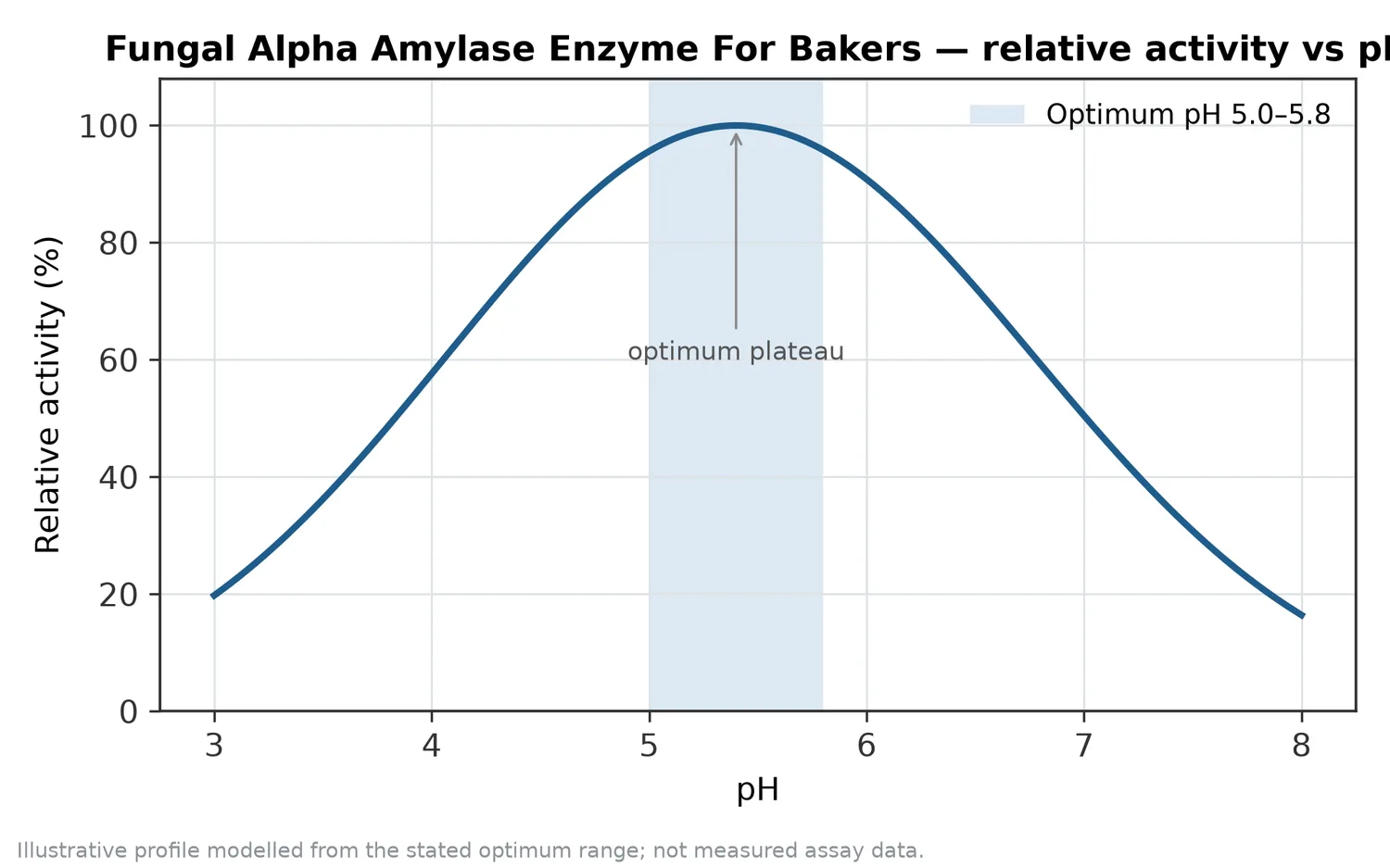
Steamed breads rely heavily on starch gelatinization because they do not develop the same dry, browned crust as oven-baked bread. In these systems, alpha-amylase can still support fermentation and modify starch viscosity during heating, but the visible benefit may appear more in volume, crumb softness and internal texture than in crust color [2].
Flatbreads also depend on rapid heat transfer, moisture migration and starch setting. The short bake time can make the timing of enzyme action important: useful hydrolysis must occur during mixing, resting, proofing if used, and early heating. Controlled dextrin formation can influence flexibility and bite, while excess starch breakdown may make the product sticky or weak [1].
Crackers and fermented bakery snacks use amylase differently depending on whether the process includes fermentation, lamination, sheeting or high-temperature baking. In fermented crackers, starch hydrolysis can contribute to dough maturation, flavor development and browning; in low-moisture products, water availability limits enzyme action compared with bread dough [6].
Across these formats, the same rule applies: fungal alpha-amylase changes starch where starch is hydrated and accessible. The product format determines whether that change appears mainly as gas production, color, crispness, softness or viscosity control [2].
Modern starch-modification literature consistently identifies enzymes as precise tools for changing starch properties without relying only on harsh chemical modification. Reviews on enzymatic starch modification describe how amylases and related enzymes alter molecular size, branching, pasting, gelatinization and retrogradation behavior, which are all properties that matter in baked foods [1].
Bread-specific studies reinforce the practical relevance. Conventional and hybrid thermal-enzymatic modified wheat flours have been evaluated as clean-label bread improvers, connecting enzyme-modified flour functionality directly with bread quality outcomes [3].
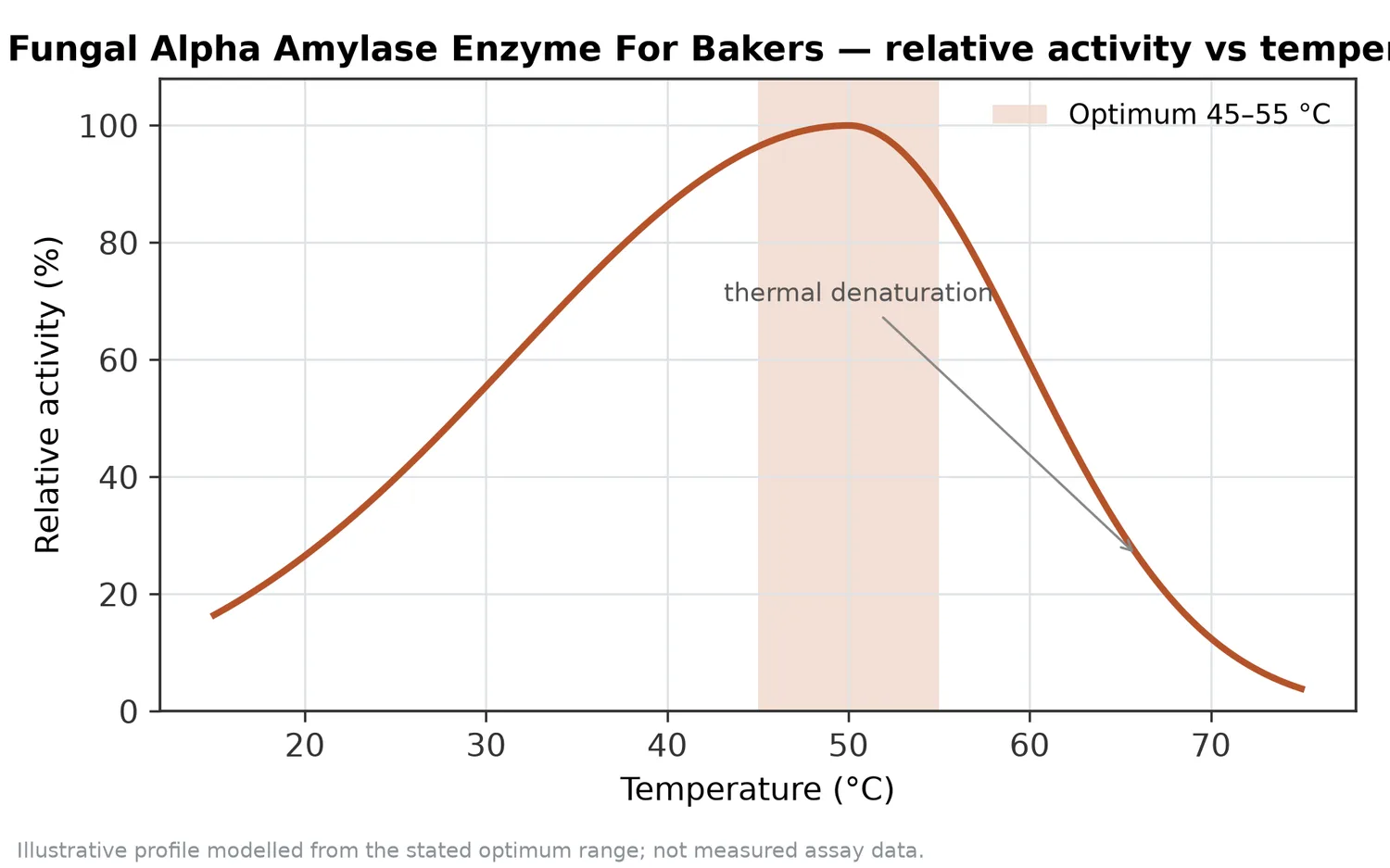
Fungal alpha-amylase research remains active, including work on thermostable fungal alpha-amylase isolated from hot springs and evaluated for wheat bread quality. Although thermostability must be handled carefully in bread systems, this research shows continuing interest in fungal alpha-amylase as a bakery-performance enzyme rather than only a commodity starch-processing catalyst [12].
Other studies have explored alpha-amylase in combination with complementary bakery enzymes or improvers. Work with a newly isolated Bacillus amylase and fungal lipase in breadmaking, and separate work on glucose oxidase with ascorbic acid and alpha-amylase, show how starch hydrolysis can be paired with dough-strengthening mechanisms to improve bread quality and shelf life [6].
The evidence base also extends to targeted oligosaccharide production. Research on maltotetraose-forming and maltotriose-forming amylases for breadmaking shows that the specific products of starch hydrolysis can matter, because different dextrins and sugars influence fermentation, crumb texture and retrogradation in different ways [8].
Fungal alpha-amylase performs most usefully before the crumb fully sets. During mixing and proofing, it works slowly on accessible damaged starch; during early baking, gelatinization exposes more starch and enzyme action can briefly increase. As heat continues to rise, enzyme structure is disrupted and practical activity falls, helping limit ongoing hydrolysis after the bread structure is established [4].
That balance is central to bakery value. Too little starch hydrolysis may leave the dough short of fermentable sugars, pale in crust color or limited in oven spring. Too much hydrolysis may create sticky dough, weak sidewalls, gummy crumb or collapse because the starch phase no longer contributes enough structure [2].
The enzyme’s effect is also tied to flour condition. Flour with more damaged starch provides more accessible substrate during dough processing, while flour with very different native enzyme activity can respond differently to added amylase. Enzymatic starch-modification reviews emphasize that substrate structure and accessibility strongly influence hydrolysis behavior, which explains why bakery results are formula- and process-dependent [1].
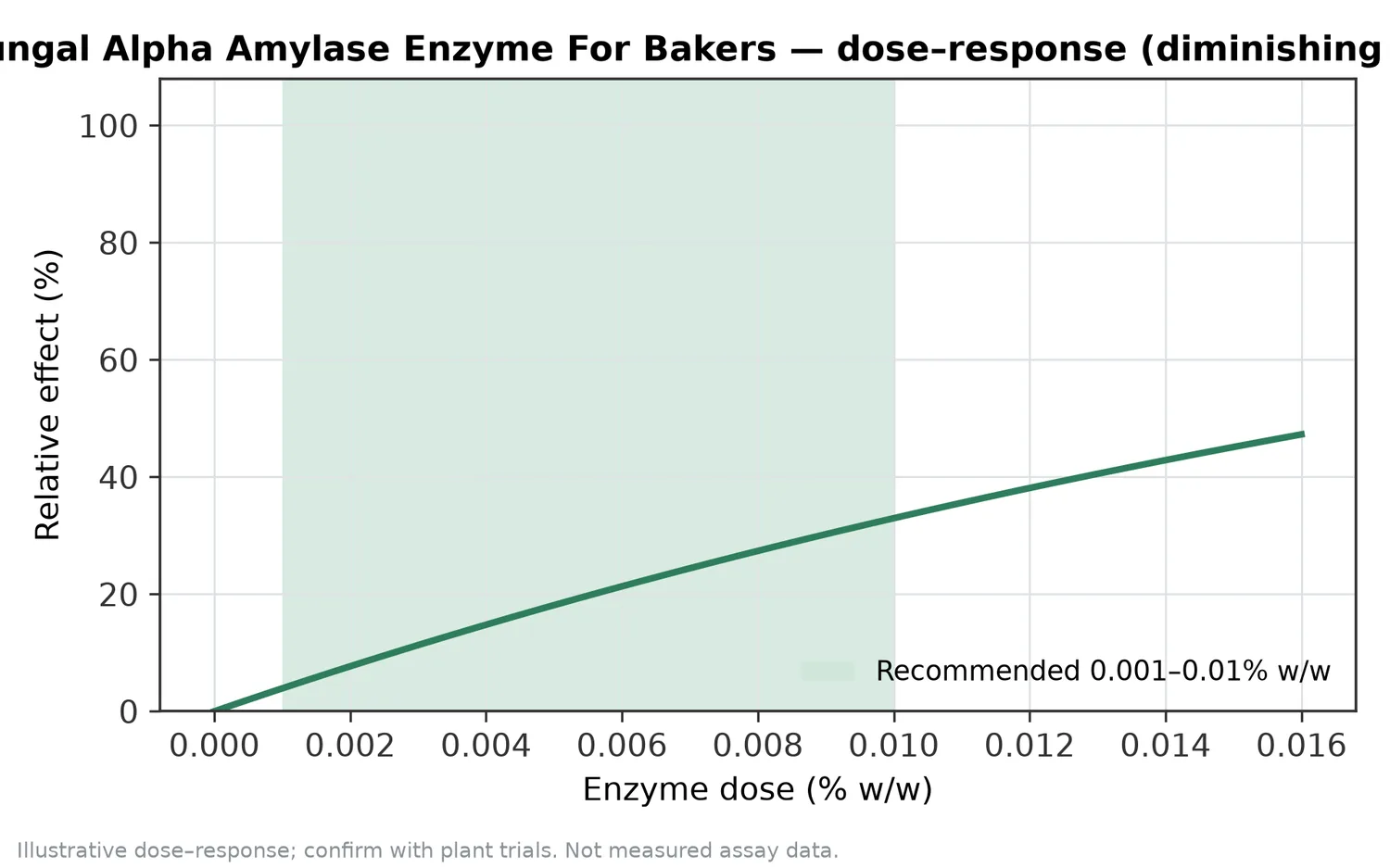
For process engineers, the useful way to frame fungal alpha-amylase is as a controlled shift in starch functionality. It changes the timing and extent of sugar release, dextrin formation and viscosity development; it does not override dough mixing quality, fermentation control, flour protein behavior or baking profile [3].
Enzyme powders should be handled carefully because occupational exposure is the main well-documented risk area for fungal alpha-amylase. Studies on bakeries have identified fungal alpha-amylase exposure as a workplace hygiene concern, especially through airborne dust that can be inhaled during handling of powdered enzyme preparations or enzyme-containing mixes [13].
Fungal alpha-amylase has been studied as a bakery bioallergen, and rapid detection methods have been developed for workplace environments. The existence of lateral-flow immunoassay research for fungal alpha-amylase reflects the importance of controlling airborne exposure in bakeries that handle enzyme powders [14].
Practical handling should therefore focus on dust reduction and inhalation control. Keep powder handling calm and contained, avoid unnecessary dust generation, use appropriate ventilation for the work area, and follow the Safety Data Sheet supplied with the order. These measures protect workers while allowing the enzyme to be used for its intended bakery function [13].
This occupational concern should not be confused with the enzyme’s intended technical role in dough. In baking, fungal alpha-amylase acts as a processing aid during dough development and early heating; the primary safety emphasis for bakeries is safe handling of the dry enzyme before it is dispersed into the formula [14].
Enzymes.bio supplies Fungal Alpha Amylase Enzyme for Bakers directly online in 1 kg units. The purchasing process is simple: add the 1 kg product to the cart, pay online, and the order is processed and shipped. A Certificate of Analysis and Safety Data Sheet come with the order for routine product and handling documentation .
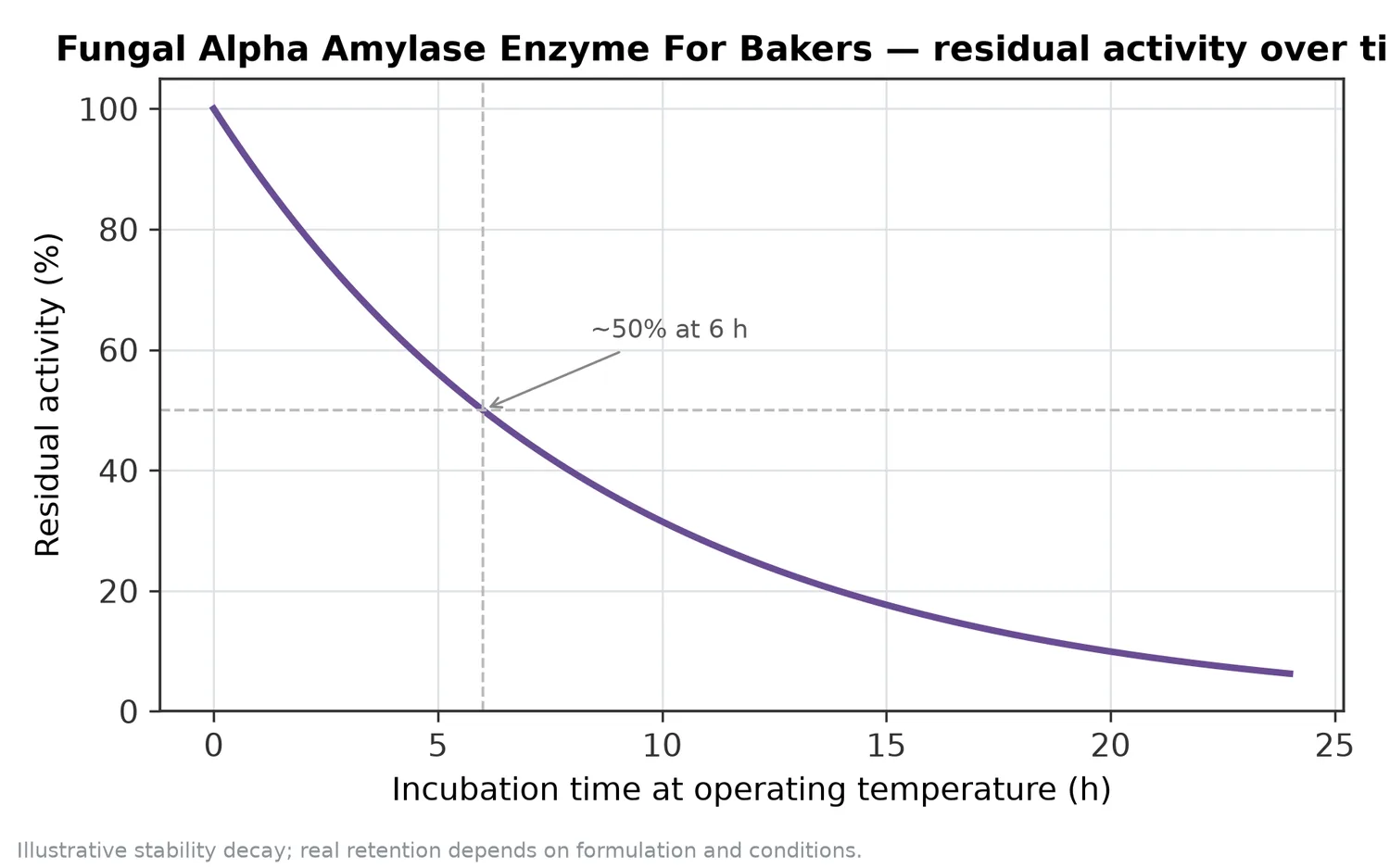
The product is intended for bakery applications where controlled starch conversion is desired. Typical uses include bread, rolls, buns, flatbreads, steamed breads, crackers, fermented bakery snacks and starch-rich specialty bakery systems. The common technical goal across these products is the same: convert a limited portion of accessible starch into dextrins and sugars at the right stage of processing .
For a bakery buyer, the value is practical rather than abstract. Fungal alpha-amylase can help improve fermentation consistency, support oven spring, encourage crust color, soften crumb texture and reduce sensitivity to variation in flour starch behavior. These benefits arise from a well-understood mechanism: enzymatic cleavage of internal alpha-1,4 starch bonds into shorter carbohydrate fragments [1].
Fungal Alpha Amylase Enzyme for Bakers is a focused bakery enzyme for controlled starch modification. By acting on damaged and gelatinizing starch, it releases dextrins and fermentable or reducing sugars that support yeast activity, dough expansion, crust browning and crumb softness [2].
Its usefulness comes from timing and balance. The enzyme works during dough processing and early heating, when starch is hydrated and increasingly accessible, then loses practical activity as baking conditions intensify. That makes it well suited to bread and related bakery systems where limited starch conversion is beneficial but complete hydrolysis would be undesirable [4].
The research base supports its role in bread-quality improvement, alternative flour systems, gluten-free bread development and broader enzymatic starch modification. Used with appropriate dust-control handling, fungal alpha-amylase is a practical tool for bakers who want better starch performance, more consistent fermentation and improved finished-product quality [11].
Sold by the 1 kg unit, in stock and ready to ship. Order directly on our store — pay online and we process your order. A Certificate of Analysis and Safety Data Sheet are included with every order.
Buy Fungal Alpha Amylase Enzyme For Bakers →Numbered in order of first citation. Open-access sources, each verified reachable at publication; citation numbers in the text link here.