
Glucose isomerase is the industrial enzyme used to rearrange glucose into fructose, making it central to high-fructose syrup production and other carbohydrate-conversion processes. It does not add or remove atoms from the sugar; it changes the position of key chemical groups inside the molecule, so an aldose sugar such as D-glucose becomes the ketose sugar D-fructose under controlled aqueous processing conditions [1].
Enzymes.bio supplies Glucose Isomerase as a direct online product by the 1 kg unit. Buyers purchase and pay online; the order is then processed and shipped, with a Certificate of Analysis and Safety Data Sheet included with the order.
Glucose isomerase, often called xylose isomerase or GI/XI in the technical literature, is best known for catalyzing the reversible conversion of D-glucose to D-fructose. In practical terms, this means a glucose-rich stream from starch hydrolysis can be enzymatically converted into a sweeter fructose-containing syrup without using harsh chemical isomerization conditions. The same enzyme family is also associated with D-xylose to D-xylulose conversion, which is why the names “glucose isomerase” and “xylose isomerase” often appear together in industrial and biochemical discussions [1].
The core commercial value is straightforward: glucose is abundant, while fructose provides higher sweetness intensity in many food and beverage systems. Glucose isomerase helps shift part of a glucose syrup toward fructose, and industrial high-fructose syrup processes historically use this enzymatic step to produce syrup streams such as approximately 42% fructose before further enrichment or blending steps in broader syrup manufacturing practice [1].
The reaction is reversible and equilibrium-limited, so glucose isomerase should not be understood as a “complete conversion” enzyme. Instead, it drives a controlled balance between glucose and fructose, with the final composition influenced by the reaction environment, substrate concentration, temperature, pH, immobilization format, and downstream processing design. Kinetic work on immobilized glucose isomerase has specifically examined how reactor configuration affects glucose-to-fructose conversion behavior, including comparison of stirred-tank and packed-bed systems [2].
Glucose and fructose have the same molecular formula, C₆H₁₂O₆, but they are not arranged the same way. Glucose is an aldose: in its open-chain form, its carbonyl group is at the end of the carbon chain. Fructose is a ketose: in its open-chain form, the carbonyl group is positioned internally. The glucose isomerase enzyme provides an active site that holds the sugar in the correct orientation so this internal rearrangement can occur efficiently in water [3].
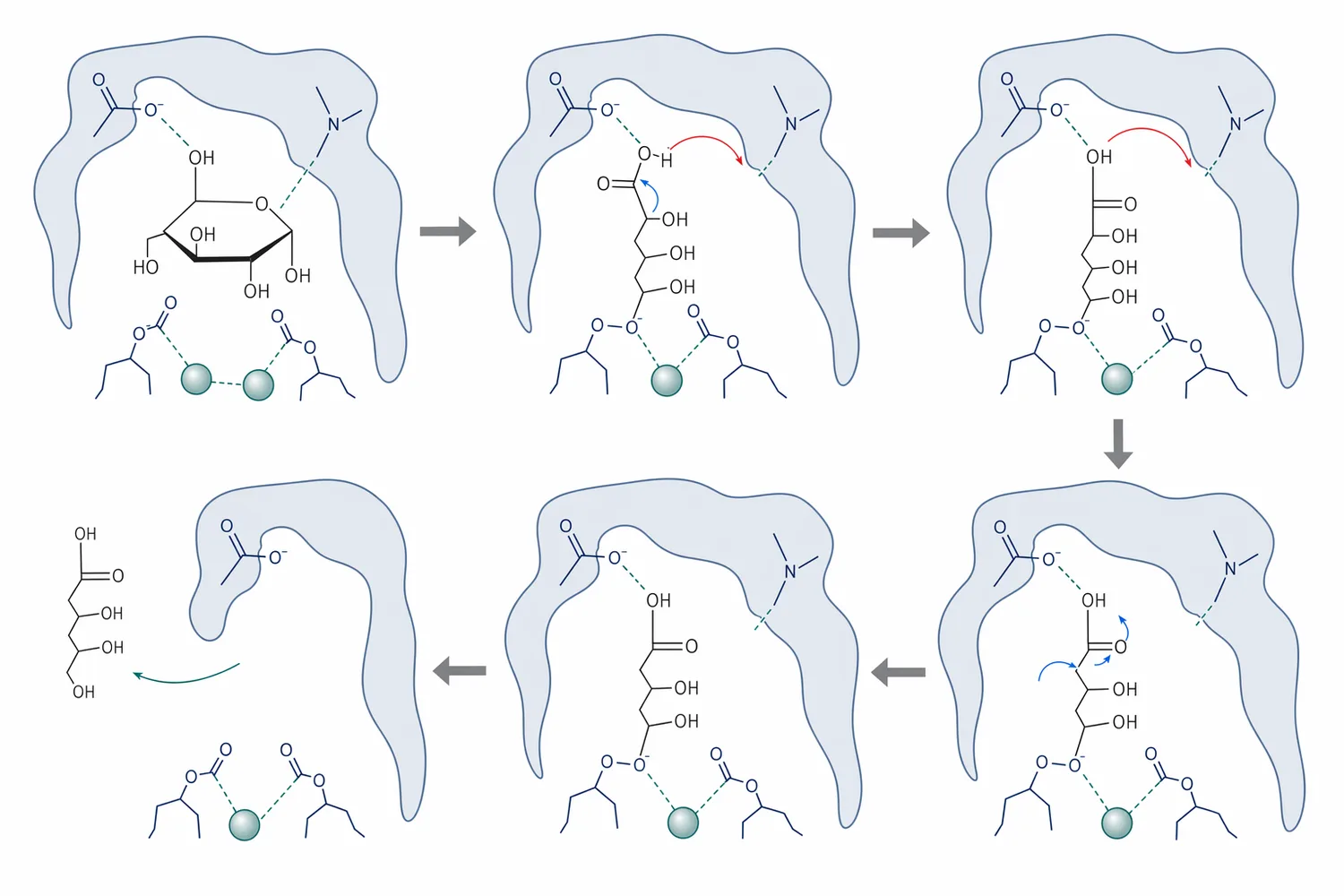
Most glucose in solution exists as a ring, not as a fully open chain. For isomerization to happen, the sugar must be positioned so the ring can open, the relevant hydrogen and electron arrangement can shift, and the product can then close again into fructose ring forms. Structural studies of D-xylose isomerase-substrate complexes show that the enzyme positions the sugar substrate with precision and that metal movement in the active site is part of the catalytic process [3].
A useful way to picture the mechanism is: the enzyme holds the sugar, opens access to the reactive open-chain form, stabilizes the charged and partially rearranged transition state, and helps a hydride shift occur between neighboring carbon atoms. That hydride shift is the chemical event that changes the aldose arrangement into the ketose arrangement. The enzyme is therefore not “sweetening” syrup by adding fructose; it is rearranging glucose molecules so that a portion of them become fructose molecules [3].
Glucose isomerase structure is especially important because the active site contains metal-binding positions commonly described as M1 and M2 sites. These metals help coordinate oxygen atoms on the sugar and stabilize the geometry needed for the hydride-transfer step. More recent structural work on xylitol binding found that binding at the M1 site can induce conformational change in the substrate-binding channel, reinforcing the view that sugar binding and metal positioning are coupled rather than independent events [4].
Searches for “glucose isomerase” often bring up related terms such as glucose phosphate isomerase, glucose-6-phosphate isomerase, glucose 6 isomerase, glucose 6 phosphate isomerase, and glucose-6-phosphate isomerase function. These terms can be confusing because they all involve sugar isomerization, but they do not refer to the same industrial enzyme used for glucose-to-fructose syrup conversion.
Industrial glucose isomerase acts on non-phosphorylated sugars such as glucose and xylose. Glucose-6-phosphate isomerase, also called phosphoglucose isomerase, acts in central metabolism on phosphorylated sugars, converting glucose-6-phosphate to fructose-6-phosphate. Its catalytic environment is built around a phosphate-containing substrate, and phosphodianion interactions are central to how many metabolic enzymes use binding energy to accelerate reactions [5].
This distinction also matters for health-related searches. Phrases such as glucose phosphate isomerase deficiency or glucose-6-phosphate isomerase deficiency refer to human metabolic or medical contexts, not to the industrial glucose isomerase enzyme used in carbohydrate processing. Similarly, a “glucose isomerase enzyme supplement” or “glucose isomerase supplement” is a different consumer-search context; Enzymes.bio supplies an enzyme product for professional carbohydrate-processing use, not a dietary supplement.
| Term commonly searched | What it refers to | Main substrate | Typical context |
|---|---|---|---|
| Glucose isomerase / glucose fructose isomerase | Industrial GI/XI enzyme | D-glucose, D-xylose and selected related sugars | High-fructose syrup, carbohydrate conversion, bioprocessing |
| Xylose isomerase | Closely overlapping name for GI/XI | D-xylose, also D-glucose depending on enzyme | Xylose metabolism, bioethanol, syrup processing |
| Glucose phosphate isomerase / glucose-6-phosphate isomerase | Phosphoglucose isomerase | Glucose-6-phosphate | Glycolysis and central metabolism |
| Glucose phosphate isomerase deficiency | Medical/metabolic condition terminology | Human enzyme system | Not an industrial enzyme-use topic |
Crystal-structure work on phosphoglucose isomerase illustrates this difference well: the enzyme has been studied with phosphorylated analogues such as 5-phospho-D-arabinonate to identify catalytic residues, including the role of Glu357 in catalysis. That is a separate enzyme system from the metal-dependent glucose/xylose isomerase used for industrial glucose-fructose conversion [6].
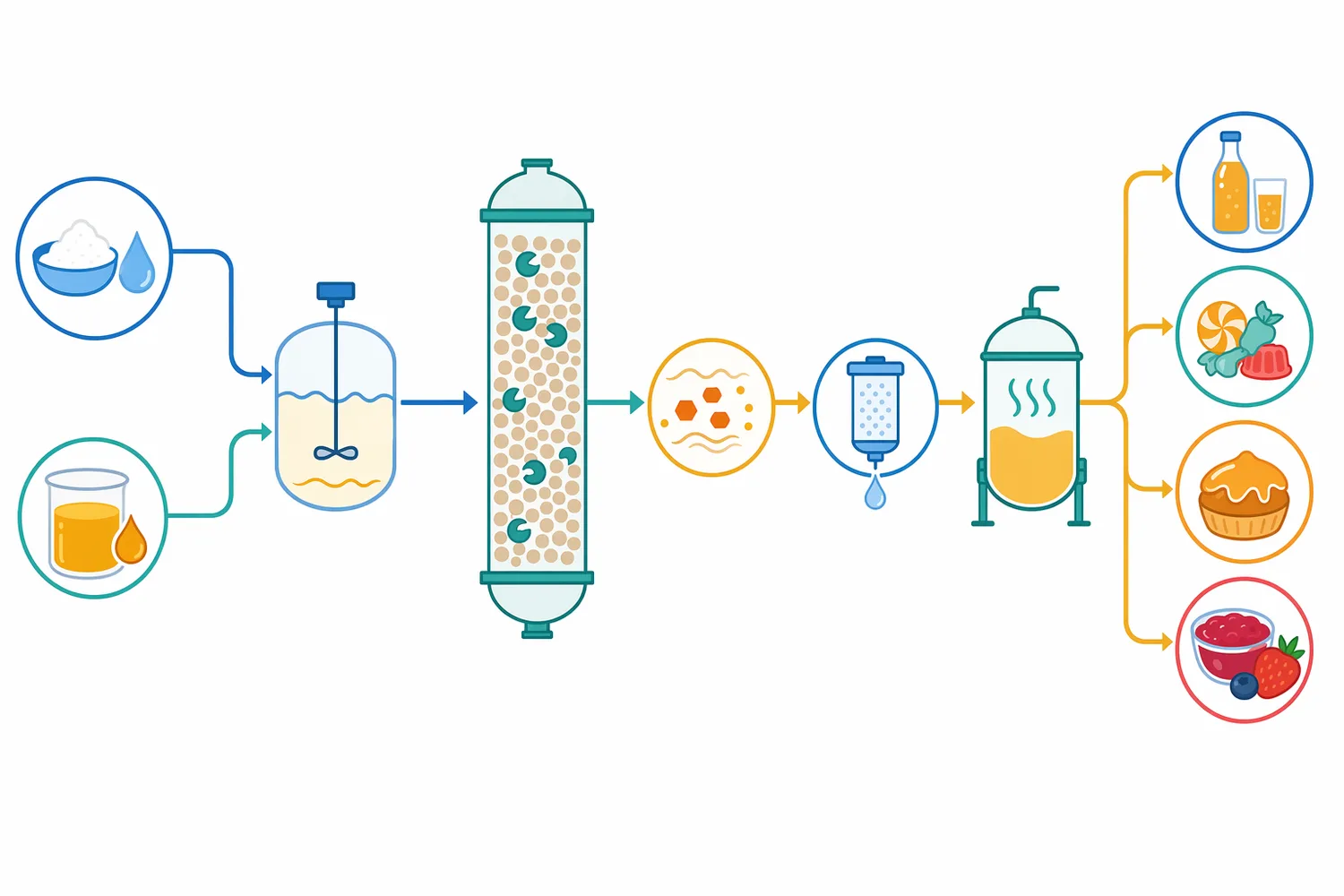
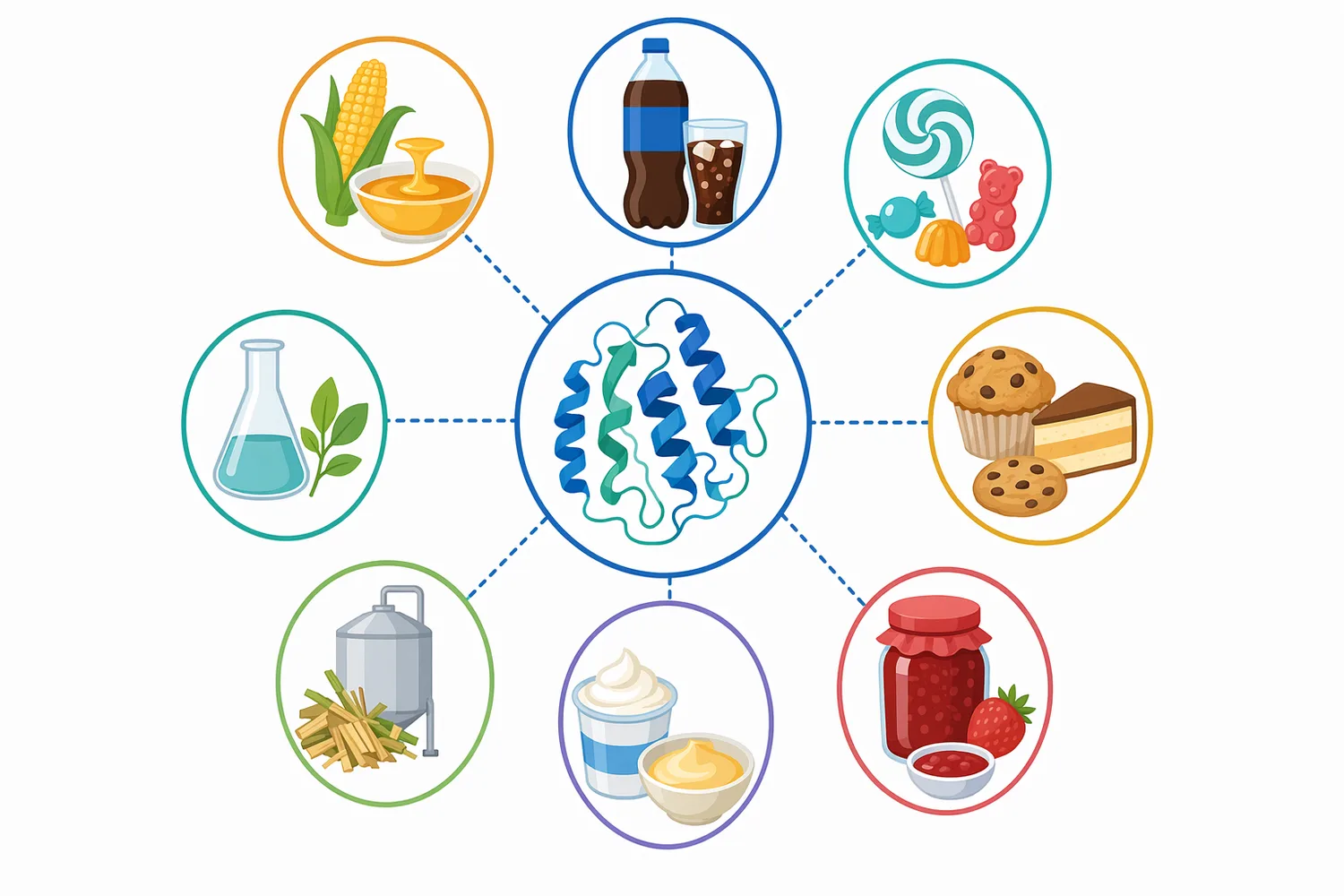
The most established use of glucose isomerase in food industry applications is high-fructose syrup production. A starch-derived glucose syrup is first prepared through upstream starch liquefaction and saccharification, then glucose isomerase converts part of the glucose fraction into fructose. The resulting syrup has a higher sweetness profile than glucose syrup because fructose tastes sweeter than glucose at comparable solids levels [1].
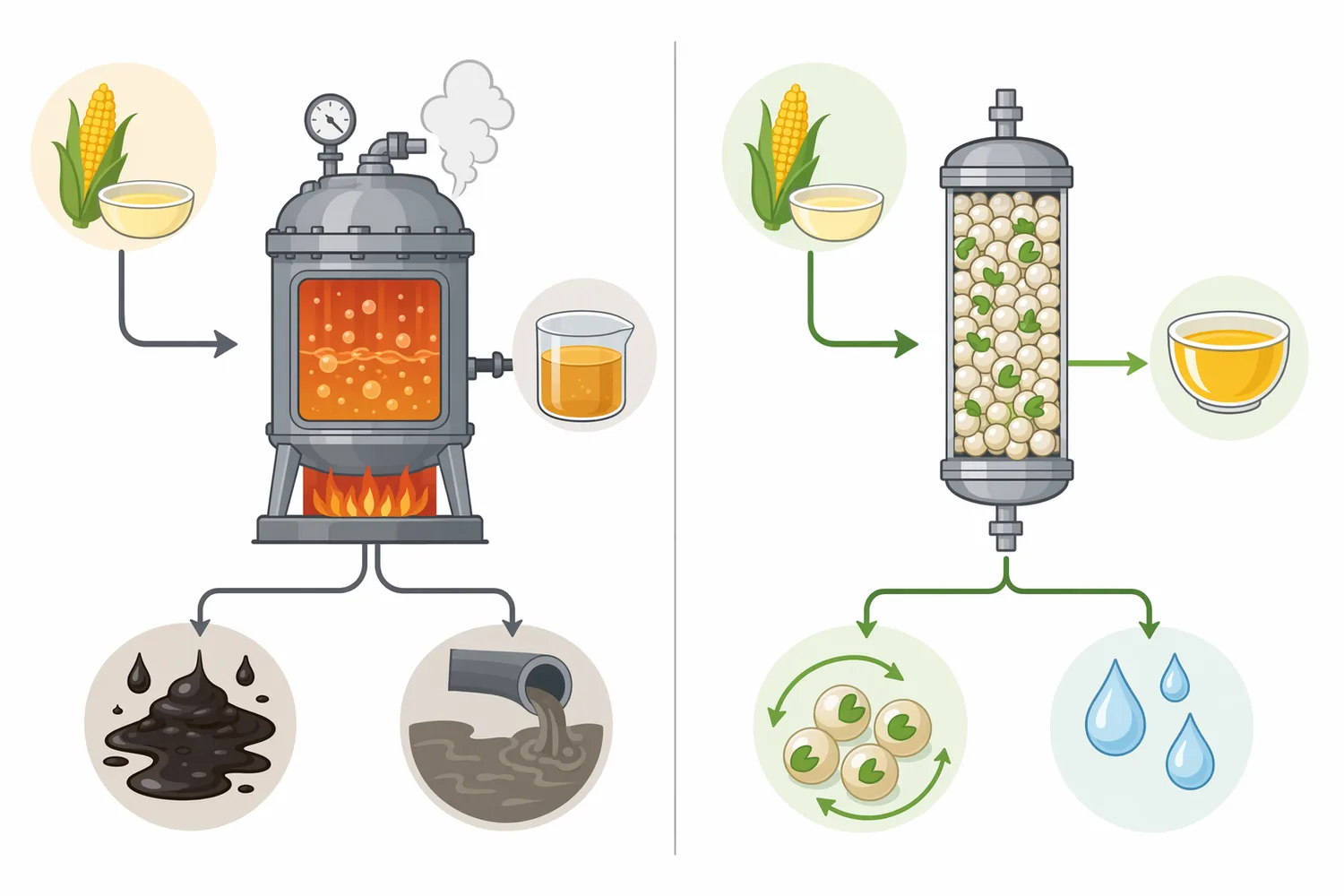
Mechanistically, this application works because the enzyme gives processors a selective path from glucose to fructose under aqueous conditions. Chemical alkaline isomerization can produce unwanted by-products, color formation, and degradation reactions, while enzyme-catalyzed isomerization is more selective for the desired glucose-fructose rearrangement. This selectivity is one reason glucose isomerase became one of the classic large-scale industrial enzymes [1].
In commercial syrup logic, the isomerization step is usually discussed together with equilibrium. A single enzymatic pass does not normally turn all glucose into fructose; instead, it produces a mixed glucose-fructose syrup whose composition reflects the reaction balance. Further refining, enrichment, or blending can then produce different syrup specifications in the wider sweetener process [2].
Glucose isomerase also functions as xylose isomerase in the conversion of D-xylose to D-xylulose. This matters in lignocellulosic processing because hemicellulose-rich materials release xylose, and many fermentation organisms handle xylose less efficiently than glucose unless they are engineered or adapted for pentose metabolism. Converting xylose to xylulose can make the sugar more compatible with downstream metabolic pathways [7].
The xylose reaction is not a side note; it is central to why the enzyme is often named xylose isomerase in microbiology. The same structural principles apply: the enzyme binds an aldose sugar, positions it near metal centers, and supports conversion to the corresponding ketose. Research on lyxose isomerase and related sugar isomerases also shows how substrate specificity can extend across different aldose-ketose pairs, depending on the active-site architecture [7].
Beyond glucose and xylose, the broader glucose/xylose isomerase family has attracted interest for rare-sugar production. These applications are more specialized than high-fructose syrup production because each target sugar requires the right substrate fit, equilibrium behavior, and process integration. Still, the underlying value is similar: an enzyme can rearrange an available sugar into a higher-value isomer with fewer side reactions than many chemical routes [8].
One developing example is D-allulose biocatalysis from D-glucose in engineered microbial systems. In that pathway logic, glucose is first routed through fructose formation, and then additional enzymatic steps can lead toward D-allulose. A recent study improved D-allulose biocatalysis from D-glucose in engineered Escherichia coli by enhancing glucose isomerase expression and substrate supply, showing how GI can be one part of a multi-enzyme rare-sugar conversion design [8].
Glucose isomerase has also been used in tandem catalytic concepts where enzymatic isomerization is paired with chemical catalysis. In one study, glucose was converted toward 5-hydroxymethylfurfural using an immobilized enzyme and a solid acid catalyst, illustrating that glucose-to-fructose isomerization can serve as a front-end step before dehydration chemistry in biomass-derived chemical production [9].
In industrial carbohydrate conversion, immobilization of glucose isomerase is more than a convenience. Immobilization attaches or confines the enzyme on a solid support, allowing syrup to contact the enzyme while the enzyme remains in the reactor. This helps separate enzyme retention from product flow: the soluble sugar stream moves through, while the biocatalyst stays in place for continued use [10].
The practical effect is especially clear in packed-bed reactors. A column can be filled with immobilized glucose isomerase, and glucose syrup can pass through the bed under controlled conditions. The enzyme catalyzes isomerization during residence time in the column, and the exiting stream contains the new glucose-fructose balance. This reactor concept is one reason immobilized glucose isomerase became strongly associated with continuous high-fructose syrup production [2].
Research comparing immobilized glucose isomerase systems has examined both stirred-tank and packed-bed formats. Stirred tanks provide mixing and batch or semi-batch contact, while packed beds provide continuous flow through an immobilized enzyme matrix. The choice changes residence-time distribution, mass transfer, pressure behavior, and how the enzyme experiences substrate and product concentrations over time [2].
Different immobilization chemistries can also alter stability and reuse behavior. Work on thermophilic Anoxybacillus gonensis glucose isomerase immobilized on DEAE-sepharose compared ionic and covalent immobilization approaches, showing that the way the enzyme is attached to a carrier can influence the behavior of the final immobilized biocatalyst [10].
For the buyer using a supplied enzyme product, the key point is not that immobilization changes the fundamental sugar chemistry. It changes how the enzyme is handled in the process. The same glucose-to-fructose rearrangement occurs, but immobilization can make the catalyst easier to retain, reuse, and integrate into continuous operation [1].
Glucose isomerase normally works in water-based carbohydrate systems where the substrate is dissolved and can diffuse into the enzyme active site. Industrial syrup processing often uses relatively high-solids sugar streams, while research systems may use simpler model solutions to isolate enzyme behavior. Kinetic studies of immobilized glucose isomerase have therefore paid attention to substrate protection, mass transfer, and reaction conditions rather than treating the enzyme as if it operated independently of its environment [11].
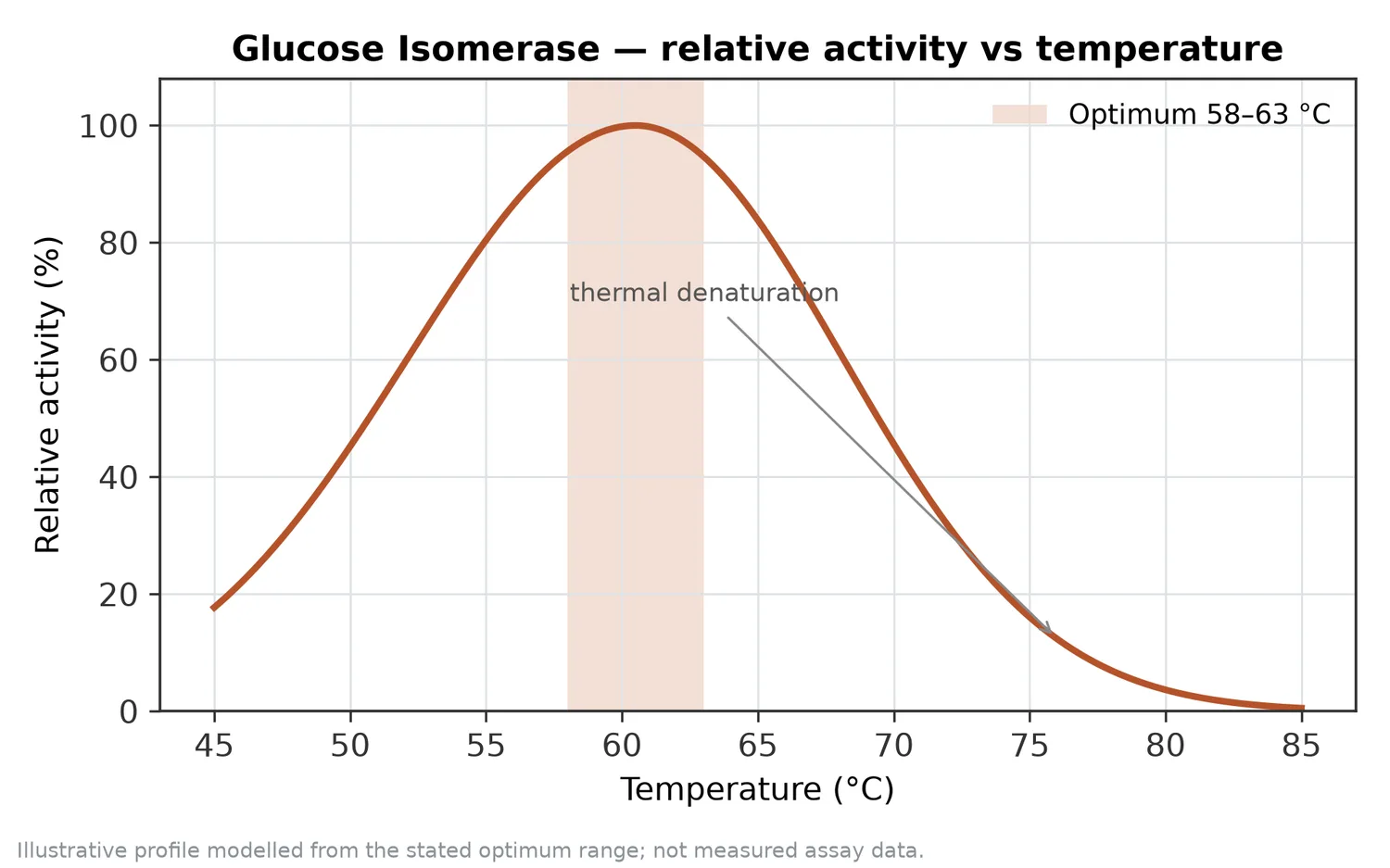
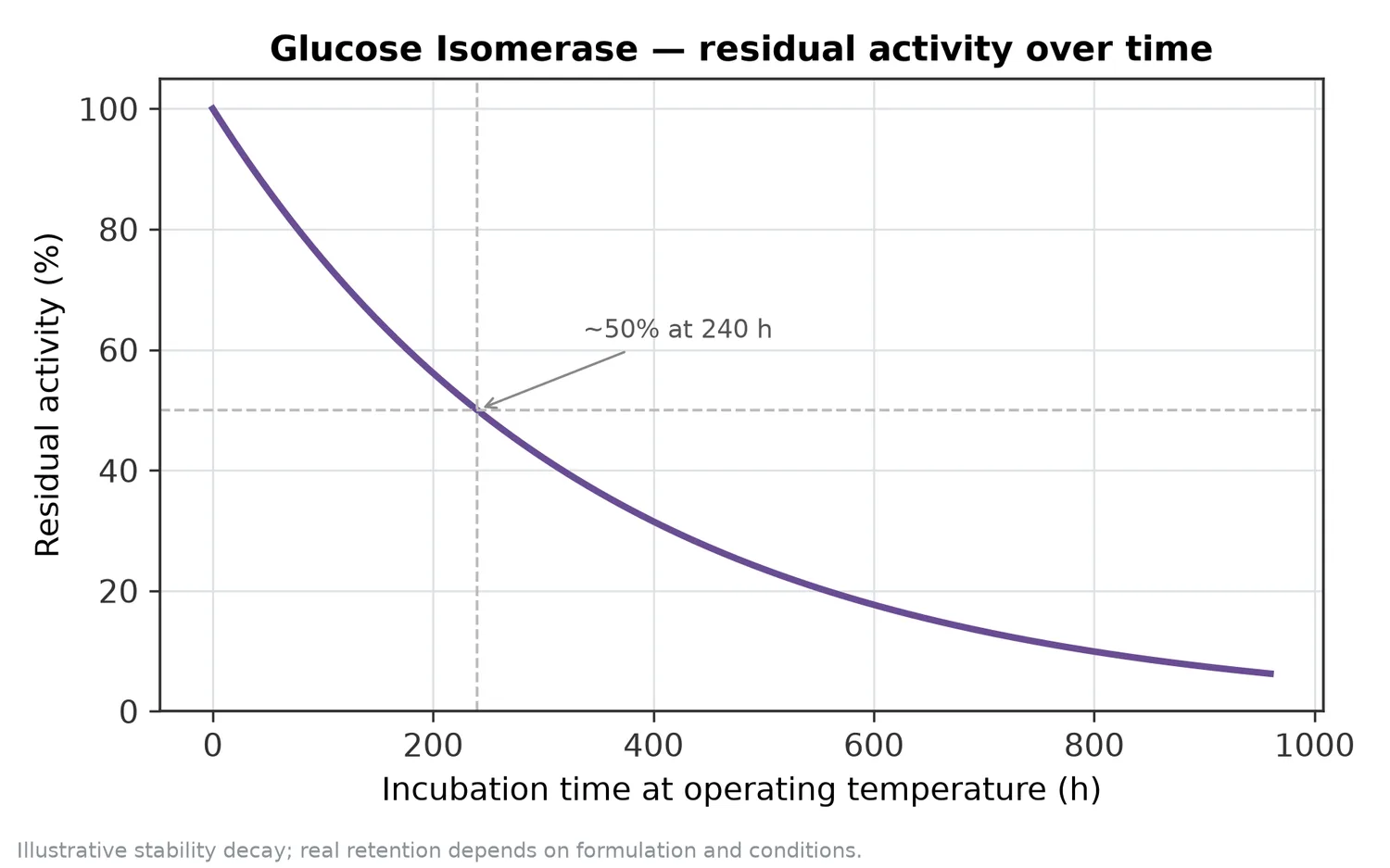
Temperature influences both reaction rate and enzyme lifetime. Higher temperature can improve syrup handling and sugar solubility, and it can also shift reaction speed, but enzymes are proteins and can lose structure if the operating environment exceeds their tolerance. This is why thermostable glucose isomerases and engineered variants remain active research topics for high-temperature carbohydrate conversion [12].
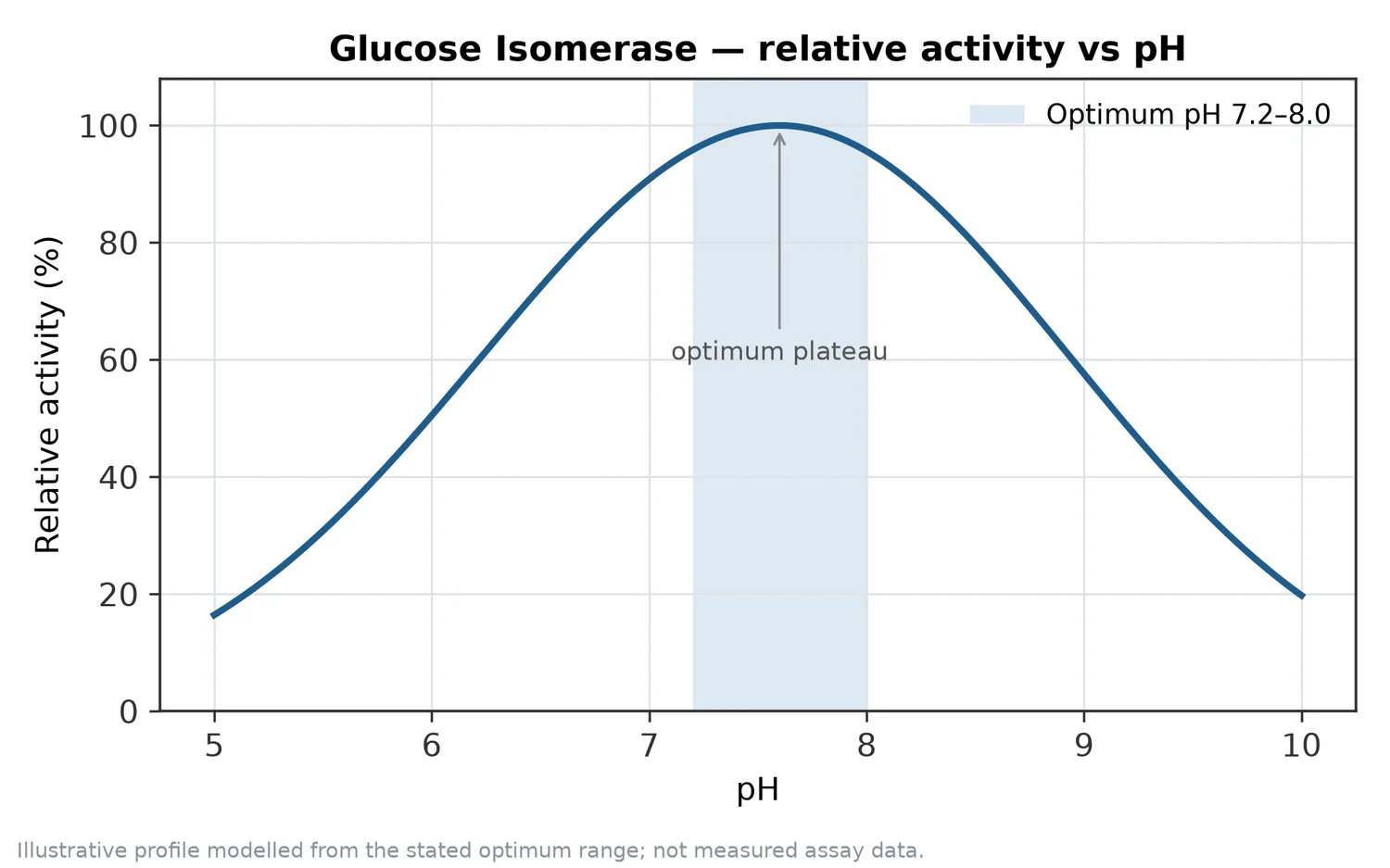
pH also matters because the enzyme’s active-site residues and bound metals must remain in the correct chemical state for substrate binding and hydride transfer. Many reported glucose isomerase processes operate around neutral to mildly alkaline conditions, rather than strongly acidic conditions. This is consistent with the enzyme’s need to coordinate sugar hydroxyl groups and metal ions in a controlled active-site geometry [3].
Metal ions are central to glucose isomerase function. Structural studies of D-xylose isomerase-substrate complexes show evidence for metal movement during catalysis, meaning the metal positions are part of the catalytic cycle rather than passive background features. The metal centers help orient the sugar and stabilize the transition state for isomerization [3].
Substrate concentration can affect observed performance in more than one way. More glucose provides more reactant, but high-solids systems also change viscosity, diffusion, water activity, and product inhibition behavior. Kinetic research on immobilized glucose isomerase in the presence of substrate protection directly reflects this industrial reality: the enzyme is used in concentrated carbohydrate environments, not only in dilute laboratory solutions [11].
Although glucose isomerase is a mature industrial enzyme class, research continues because different applications reward different traits. A syrup process may value thermal robustness and stable operation, while a rare-sugar process may need altered substrate preference. Protein engineering work on xylose/glucose isomerase from Actinoplanes missouriensis used site-directed mutagenesis of the xylose-binding site, showing that changes near the substrate pocket can affect how the enzyme recognizes sugars [13].
Engineering can also target stability. A study of glucose isomerase from Thermoanaerobacter ethanolicus reported enhanced catalytic efficiency and thermostability through site-directed mutagenesis, demonstrating that specific amino-acid changes can improve traits relevant to hot carbohydrate-processing environments [12].
Structural information helps explain why these changes matter. If a mutation changes how a sugar hydroxyl group is held, or how a metal ion is positioned, it can alter binding strength, transition-state stabilization, or product release. That is why glucose isomerase structure is not only academically interesting; it directly informs how different enzyme variants may behave on glucose, xylose, or less common sugars [4].
Glucose isomerase industrial production is usually discussed as part of a complete carbohydrate-conversion chain rather than as a standalone reaction. In high-fructose syrup production, starch must first be converted to glucose-rich syrup by upstream enzymes, then glucose isomerase performs the isomerization step, and downstream processing adjusts the final syrup composition and quality. The glucose isomerase step is therefore central, but it depends on the feed syrup entering it [1].
For biorefinery use, the context is different. The feed may come from lignocellulosic biomass, where pretreatment and hydrolysis release mixed sugars, including glucose and xylose. Glucose/xylose isomerase can support xylose upgrading to xylulose, but overall performance also depends on fermentation organism, inhibitor load, hydrolysate composition, and downstream metabolism [7].
For specialty sugars, glucose isomerase may be one enzyme in a cascade. The D-allulose example shows this clearly: enhancing glucose isomerase expression and substrate supply helped improve D-allulose biocatalysis from D-glucose, but the target product required more than the glucose-to-fructose step alone. This makes GI valuable as a platform enzyme, not a universal one-step answer to every rare-sugar target [8].
The strongest evidence for glucose isomerase uses is in glucose-to-fructose conversion and xylose-to-xylulose conversion. These are the reactions most directly aligned with the enzyme’s established active-site chemistry and industrial history. Other sugar transformations can be credible, but they are more dependent on enzyme source, substrate fit, and process design [1].
The enzyme’s reversibility is important. A glucose isomerase process normally approaches an equilibrium mixture rather than consuming all glucose. That is why high-fructose syrup production is designed around controlled partial conversion, not complete disappearance of glucose. The same principle applies to many aldose-ketose isomerizations: the enzyme accelerates the approach to equilibrium; it does not remove thermodynamic limits [11].
Substrate specificity is also not unlimited. Some sugar isomerases accept multiple related sugars, but small differences in stereochemistry can strongly affect binding. Work on Bacillus licheniformis lyxose isomerase YdaE, for example, highlights how related isomerases can be used in two-step sugar-conversion systems, but also why each substrate-enzyme pairing must be treated as chemically specific [7].
Finally, glucose isomerase is not the same as a medical glucose-regulation product. Terms such as glucose isomerase supplement, glucose phosphate isomerase deficiency, and glucose-6-phosphate isomerase deficiency appear in search behavior, but they do not describe the same professional enzyme application as glucose-fructose conversion in carbohydrate processing.
Enzymes.bio supplies Glucose Isomerase for customers who need a professional enzyme product for carbohydrate-conversion work such as glucose-to-fructose processing, food ingredient development, bioprocess trials, or specialty sugar applications. The product is sold directly online by the 1 kg unit: the buyer places the order, pays online, and the order is processed and shipped.
A Certificate of Analysis and Safety Data Sheet are provided with the order. This article explains the enzyme’s scientific basis and common application areas so buyers understand what glucose isomerase does, how it acts on sugar substrates, and why it is widely used in glucose fructose isomerase applications across food and bioprocessing.
Sold by the 1 kg unit, in stock and ready to ship. Order directly on our store — pay online and we process your order. A Certificate of Analysis and Safety Data Sheet are included with every order.
Buy Glucose Isomerase →Numbered in order of first citation. Open-access sources, each verified reachable at publication; citation numbers in the text link here.