
Hemicellulase is a group of enzymes that breaks down hemicellulose—the branched, non-cellulosic polysaccharide fraction that helps bind plant cell walls together. In processing terms, hemicellulase enzymes can loosen plant-fiber structure, release soluble sugars or oligosaccharides, reduce viscosity, and improve access for other enzymes such as cellulases in lignocellulosic materials [1].
Enzymes.bio supplies Hemicellulase as an online B2B enzyme ingredient sold directly by the 1 kg unit. Buyers can place the order online, pay online, and the order is processed and shipped; a Certificate of Analysis and Safety Data Sheet are included with the order.
A simple answer to “what is hemicellulase?” is that hemicellulase is not one single catalytic protein, but a functional category of enzymes that hydrolyze hemicellulose. Hemicellulose is structurally more varied than cellulose: instead of being mainly a linear glucose polymer, it can include xylans, arabinoxylans, mannans, glucomannans, xyloglucans, arabinans, and substituted side chains containing sugars or ester-linked groups [1].
That structural variety is the reason the term “hemicellulase enzyme” usually refers to a family or blend of activities. Xylanases attack xylan backbones, β-xylosidases shorten xylo-oligosaccharides, mannanases act on mannose-rich chains, and accessory enzymes remove arabinose, glucuronic acid, acetyl, or feruloyl substitutions that otherwise shield the backbone from hydrolysis [2].
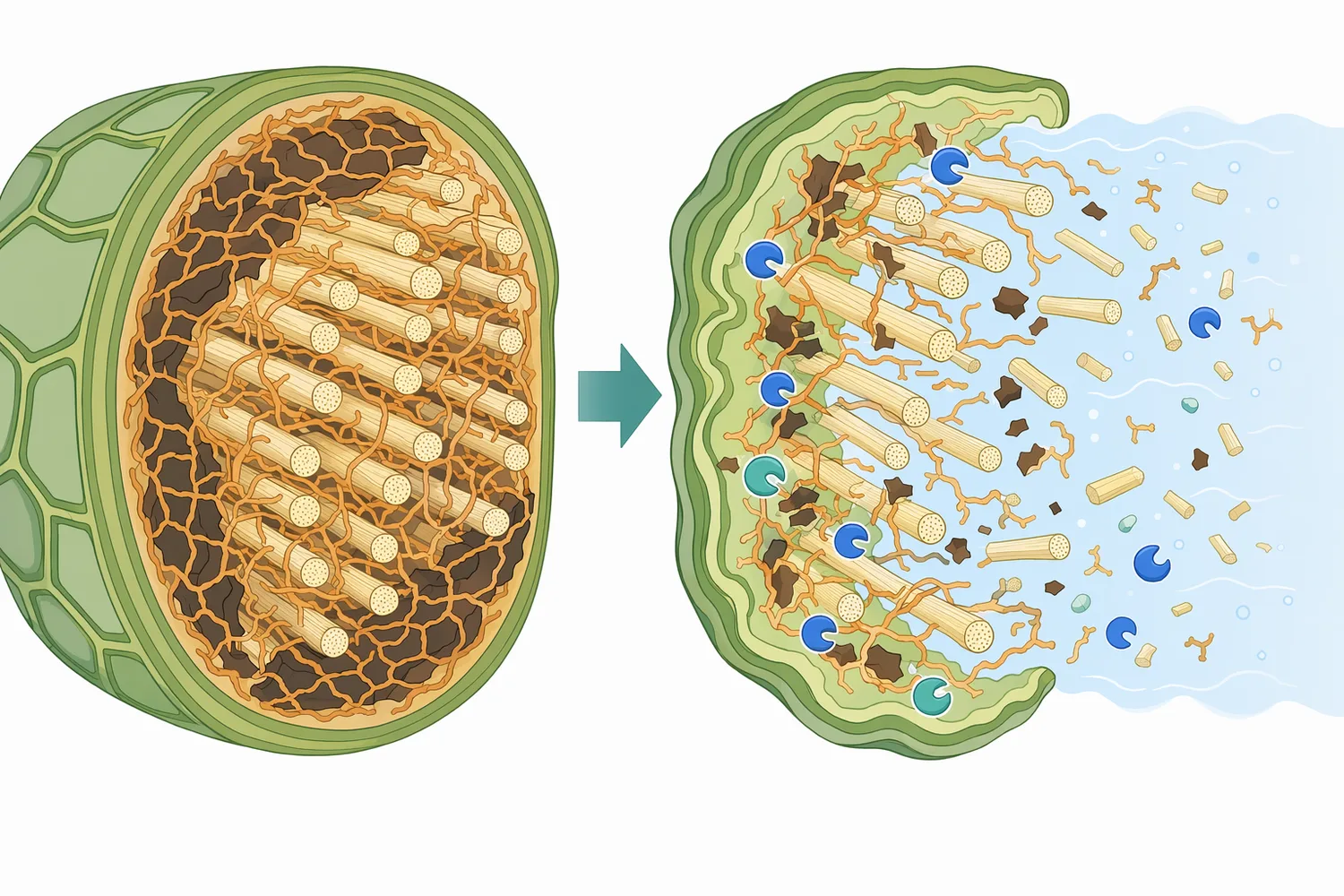
In plant tissue, hemicellulose sits between cellulose microfibrils and lignin-rich regions, functioning like a flexible matrix around stronger reinforcing fibers. When this matrix remains intact, water penetration, enzyme diffusion, sugar release, pressing, filtration, bleaching, and fermentation can all be limited by the physical resistance of the cell wall [3].
A “hemicellulase wiki” definition may stop at “an enzyme that degrades hemicellulose,” but the industrial meaning is more practical: hemicellulase changes the way plant materials behave during processing. By cutting hemicellulose into shorter, more soluble fragments, it can reduce the binding effect of the matrix and make the raw material easier to extract, separate, hydrolyze, or convert [4].
Hemicellulase works by hydrolyzing specific chemical bonds inside hemicellulose polymers. In xylan-rich materials, endo-xylanase cleaves internal β-1,4 linkages in the xylan backbone, creating shorter xylo-oligosaccharides; β-xylosidase can then trim those fragments further toward xylose, depending on the enzyme system present [5].
Many hemicelluloses are decorated with side groups. Arabinofuranosidases remove arabinose branches, glucuronidases remove glucuronic-acid substituents, acetyl xylan esterases remove acetyl groups, and feruloyl esterases can cleave ester-linked ferulic-acid bridges that contribute to crosslinking between hemicellulose and lignin-rich wall components [1].
The physical result is not simply “digestion” in a generic sense. The plant cell wall becomes more open because the hemicellulose network is cut into shorter chains; hydrated fibers may swell differently; soluble fragments move into the liquid phase; viscosity can decrease when long-chain soluble arabinoxylans are shortened; and cellulose surfaces can become more accessible to cellulase enzymes [6].
This is why cellulase and hemicellulase are often discussed together. Cellulase targets cellulose, while hemicellulase targets hemicellulose; when both polymer families are present, removing only one barrier may leave the other still limiting access to the full carbohydrate structure [7].
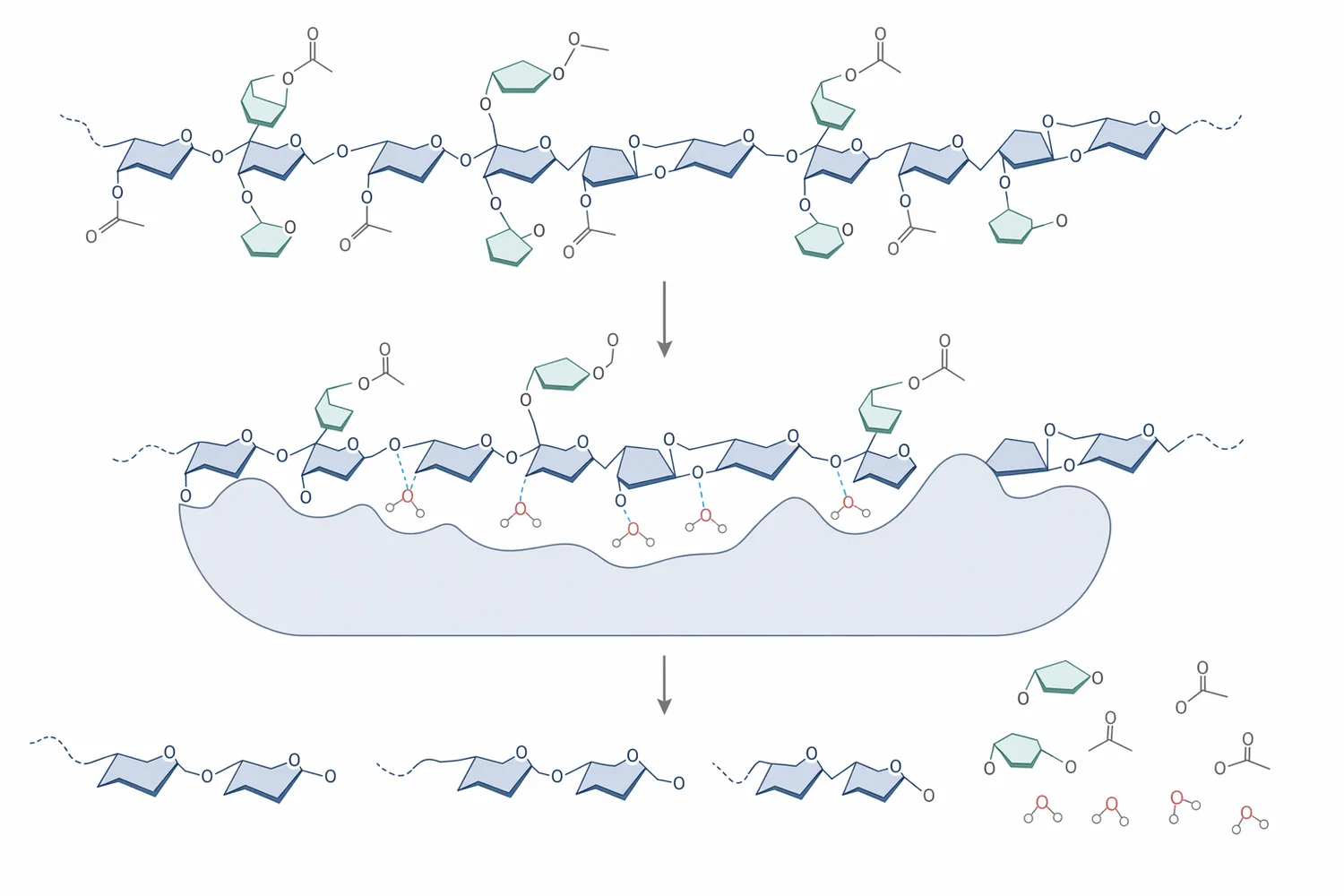
The difference between cellulase and hemicellulase is mainly substrate specificity. Cellulase acts on cellulose, a relatively uniform β-1,4-glucan; hemicellulase acts on the more heterogeneous hemicellulose fraction, where xylan, mannan, arabinoxylan, glucomannan, and side-chain chemistry vary by botanical source [2].
| Enzyme category | Main substrate | What changes in the material | Typical processing role |
|---|---|---|---|
| Hemicellulase | Hemicellulose, including xylan, arabinoxylan, mannan, glucomannan, and related structures | Cuts branched matrix carbohydrates into shorter soluble fragments; can loosen the wall network around cellulose | Improves fiber opening, viscosity control, extraction, sugar release, and access for other enzymes |
| Xylanase | Xylan and arabinoxylan backbones | Cleaves β-1,4-xylan chains; reduces long-chain xylan structure | Key hemicellulase activity in cereal, pulp, and lignocellulosic applications |
| β-Xylosidase | Short xylo-oligosaccharides | Converts small xylan fragments toward xylose | Complements xylanase during deeper hemicellulose hydrolysis |
| Cellulase | Cellulose | Hydrolyzes cellulose chains and cellulose-derived fragments | Releases glucose from cellulose and works best when access to cellulose surfaces is improved |
| Cellulase and hemicellulase enzymes together | Lignocellulosic biomass containing cellulose plus hemicellulose | Reduce multiple structural barriers rather than one polymer fraction only | Supports more complete hydrolysis of agricultural residues, wood-derived materials, and other plant biomass |
In practical language, cellulase is aimed at the “fiber” component, while hemicellulase is aimed at the “matrix” carbohydrate surrounding and interacting with that fiber. In many lignocellulosic systems, cellulase hemicellulase combinations are studied because hemicellulose can physically block cellulase access to cellulose, while cellulose crystallinity can remain a barrier even after hemicellulose modification [3].
The main hemicellulase benefits come from changing plant-wall architecture rather than adding a new chemical ingredient to the final product. When hemicellulose chains are shortened, the material may release more soluble solids, drain or filter more easily, expose cellulose to cellulase, or behave with lower viscosity in wet processing [4].
For biomass conversion, the value is linked to carbohydrate accessibility. Pretreated lignocellulosic biomass is still a complex composite of cellulose, hemicellulose, and lignin, and research on enzymatic hydrolysis repeatedly shows that enzyme adsorption, substrate accessibility, and wall structure strongly influence sugar release [3].
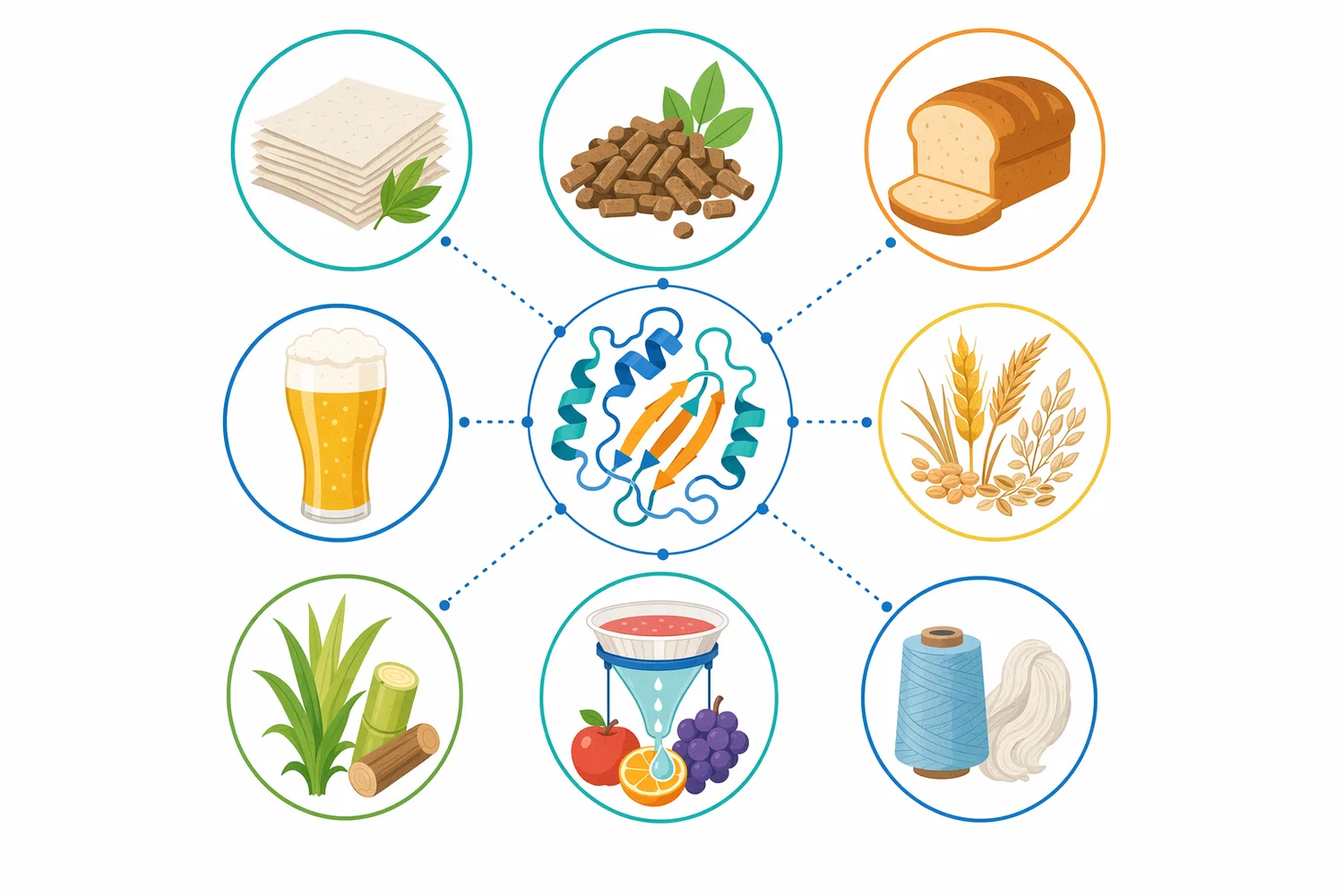
For cereal and flour systems, hemicellulase in bread and bakery processing is valued because arabinoxylans bind water and influence dough rheology. Controlled hydrolysis can modify the way water is held in the dough system, changing handling and crumb-related behavior through changes in the hemicellulose fraction rather than by attacking starch directly [4].
For pulp and paper, xylanase-rich hemicellulase systems can modify xylan associated with pulp fibers. This can improve bleachability because xylan and lignin-associated structures influence how bleaching chemicals penetrate and react with the fiber surface [2].
For feed applications, hemicellulase uses are connected to non-starch polysaccharide breakdown. Plant meals and grains can contain hemicellulose fractions that increase viscosity or physically entrap nutrients; hemicellulase can reduce those barriers by cleaving the relevant fiber components into smaller fragments [1].
For fruit, vegetable, botanical, and cereal extraction processes, hemicellulase may support release of intracellular or wall-bound materials by weakening the wall matrix. The mechanism is especially relevant where hemicellulose contributes to pulp firmness, suspended solids behavior, or extract viscosity [4].
“Hemicellulase xylanase” is a common phrase because xylanase is one of the most important hemicellulase activities. Xylan is abundant in many agricultural residues, cereal brans, hardwoods, and grasses, so enzymes that cleave xylan backbones are central to many hemicellulose-degrading systems [1].
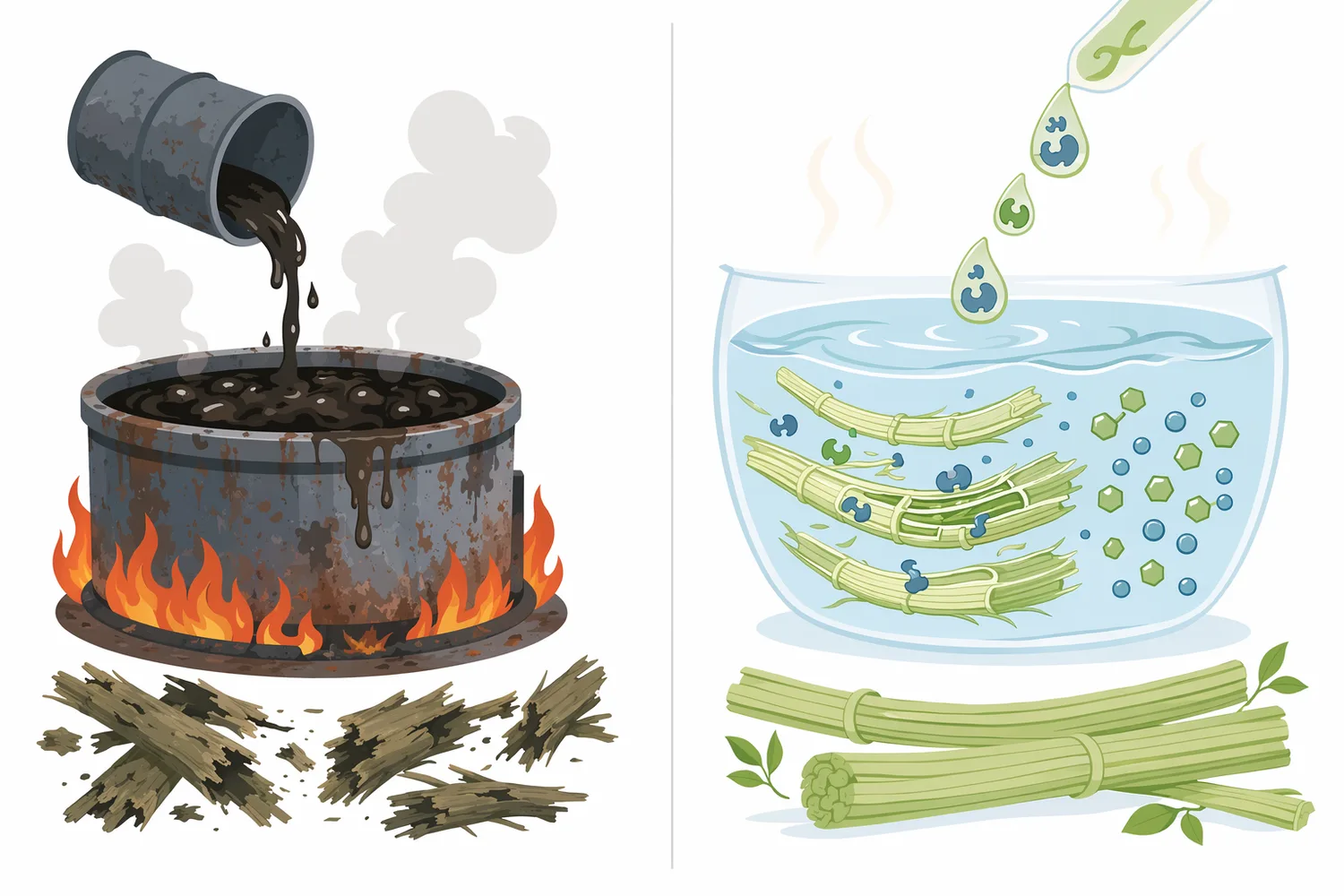
Xylanase alone, however, may not fully deconstruct substituted xylans. Arabinoxylans in cereals contain arabinose side groups; glucuronoxylans contain glucuronic-acid substitutions; acetylated xylans include acetyl groups; and some plant walls include ferulate-linked crosslinks that increase resistance to enzymatic attack [2].
Accessory hemicellulases solve that problem by removing the “decorations” that block backbone access. Once side groups are removed or reduced, backbone-cleaving enzymes can reach more glycosidic bonds, which is why complete hemicellulose degradation is normally described as a cooperative enzyme process [1].
β-Xylosidase adds another layer of completion. After xylanase creates shorter xylo-oligosaccharides, β-xylosidase can act on the chain ends and produce smaller sugars; thermotolerant recombinant β-xylosidase has been studied as a potential addition to lignocellulosic hydrolysis systems because the smaller products can support downstream conversion goals [5].
Many industrial hemicellulase enzymes originate from microorganisms because fungi and bacteria naturally degrade plant biomass. Fungal lignocellulose-degrading systems are widely studied for cellulases, hemicellulases, and accessory enzymes that act together on plant cell walls [4].
Readers often search for “hemicellulase from Aspergillus niger” because Aspergillus species are well-known microbial enzyme sources in industrial biotechnology. Trichoderma species are also prominent: a newly isolated Trichoderma asperellum strain was reported to produce an abundant cellulase-hemicellulase enzyme cocktail for lignocellulosic biomass degradation, illustrating the importance of fungal enzyme systems in plant-fiber breakdown [8].
Bacterial hemicellulases are also important, particularly where processing conditions demand stability. Reviews of thermostable bacterial hemicellulases describe interest in enzymes that remain useful in more demanding industrial environments, including processes involving elevated temperature or pH conditions [1].
The source organism matters because it influences the enzyme profile: one hemicellulase preparation may be richer in xylanase, while another may include stronger mannanase, arabinofuranosidase, esterase, or β-xylosidase contributions. That is why hemicellulase is best understood by function on the substrate rather than by the name alone [2].
In lignocellulosic biomass hydrolysis, hemicellulase helps address one of the central barriers to sugar release: the close association of cellulose, hemicellulose, and lignin. Pretreatment can open the structure, but enzymatic hydrolysis still depends on whether enzymes can reach and act on their target bonds [3].
Hemicellulase contributes by reducing the hemicellulose shield around cellulose microfibrils. When the matrix is cut into smaller fragments, cellulase can contact more cellulose surface, and the liquid phase can accumulate soluble hemicellulose-derived sugars or oligosaccharides [7].
Lignin remains a major complication. Research on alkali-soluble lignin during hydrolysis of ammonia-pretreated biomass shows that lignin-related fractions can affect purified cellulase and hemicellulase activities, which helps explain why two plant substrates with similar carbohydrate content can respond differently in practice [9].
Particle size also matters because enzymes act at accessible surfaces, not inside sealed, dry, or inaccessible structures. Studies on biomass pretreatment and hydrolysis performance show that particle-size effects are tied to pretreatment efficiency, surface exposure, and hydrolysis behavior in bioethanol conversion workflows [10].
At high solids, the challenge becomes more than chemistry. Fed-batch enzymatic hydrolysis has been studied for producing high concentrations of fermentable sugars, reflecting the need to balance solids loading, mixing, water availability, and enzyme access in dense biomass systems [11].
Pretreatment is widely used in lignocellulose processing because untreated biomass is naturally resistant to hydrolysis. Physical, chemical, and physicochemical pretreatments can disrupt lignin-carbohydrate associations, increase surface area, remove or modify hemicellulose, and improve enzyme penetration [3].
Alkaline or ammonia-based pretreatments can be especially relevant to hemicellulose because ester linkages and acetyl substitutions are part of the resistance structure in many plant walls. When those features are reduced, hemicellulase and cellulase can often reach their target polymers more effectively [9].
Surfactants have also been studied in pretreatment and hydrolysis contexts. In glycerol organosolv pretreatment and enzymatic hydrolysis, surfactants were investigated for dual assistance in biomass processing for bioethanol production, reflecting the broader principle that enzyme access and nonproductive binding can shape hydrolysis outcomes [12].
None of this means every hemicellulase application requires aggressive pretreatment. Baking, feed, extraction, and pulp applications may use much milder process conditions; the important point is that hemicellulase performance depends on whether the enzyme can physically contact the hemicellulose bonds it is meant to hydrolyze [4].
In pulp and paper processing, xylanase-type hemicellulase can partially hydrolyze xylan associated with pulp fibers. This modification can improve bleachability because xylan can redeposit on fiber surfaces during pulping and can influence how bleaching chemicals interact with lignin-containing regions [2].
The practical appeal is that enzymatic treatment can support lower chemical intensity while preserving the carbohydrate fiber structure when properly controlled. Reviews of microbial enzymes describe xylanases and related activities as useful in pulp bleaching and broader fiber-processing applications [4].
Thermostable and alkaline-tolerant hemicellulases are of particular interest in this sector because pulp streams may be warm and alkaline compared with food or feed systems. Bacterial hemicellulases are frequently discussed in that context due to their potential robustness under industrial conditions [1].
Hemicellulase in bread is mainly about modifying arabinoxylans and related hemicellulose fractions in flour. These polymers can bind water and influence dough viscosity, extensibility, gas retention, and crumb development, so controlled hydrolysis changes the physical behavior of the dough matrix [4].
The mechanism is different from amylase, which acts on starch, and different from protease, which modifies gluten proteins. Hemicellulase acts on non-starch polysaccharides; when long arabinoxylan chains are shortened, water distribution and soluble fiber behavior can shift in ways that affect processing and final texture [1].
This is one reason cereal-processing systems often use multiple enzymes in a coordinated way. A flour or grain substrate contains starch, protein, cellulose, hemicellulose, lipids, minerals, and minor wall components, so hemicellulase provides one targeted function within a broader plant-material matrix [4].
In animal feed, hemicellulase is used to break down hemicellulose-rich non-starch polysaccharides in grains, brans, oilseed meals, and other plant ingredients. Shortening these polymers can reduce viscosity effects and help release nutrients physically trapped within fiber-rich structures [1].
In plant-based food and beverage processing, hemicellulase may support pressing, maceration, clarification, or soluble-solids release. The enzyme does this by weakening the hemicellulose fraction of the cell wall, which can make tissue less rigid and improve movement of liquid and soluble components out of the plant matrix [4].
For botanical extraction, the same principle applies: the enzyme does not “extract” by itself, but it can make the plant structure less resistant to solvent, water, pressure, or downstream separation. The value comes from changing the wall architecture before or during the extraction step [2].
Some searches around this enzyme include “hemicellulase supplement,” “hemicellulase side effects,” and “pancreatin hemicellulase and bile tablets.” Those phrases relate to consumer digestive products and medical or nutritional use cases, not to this industrial enzyme supply page.
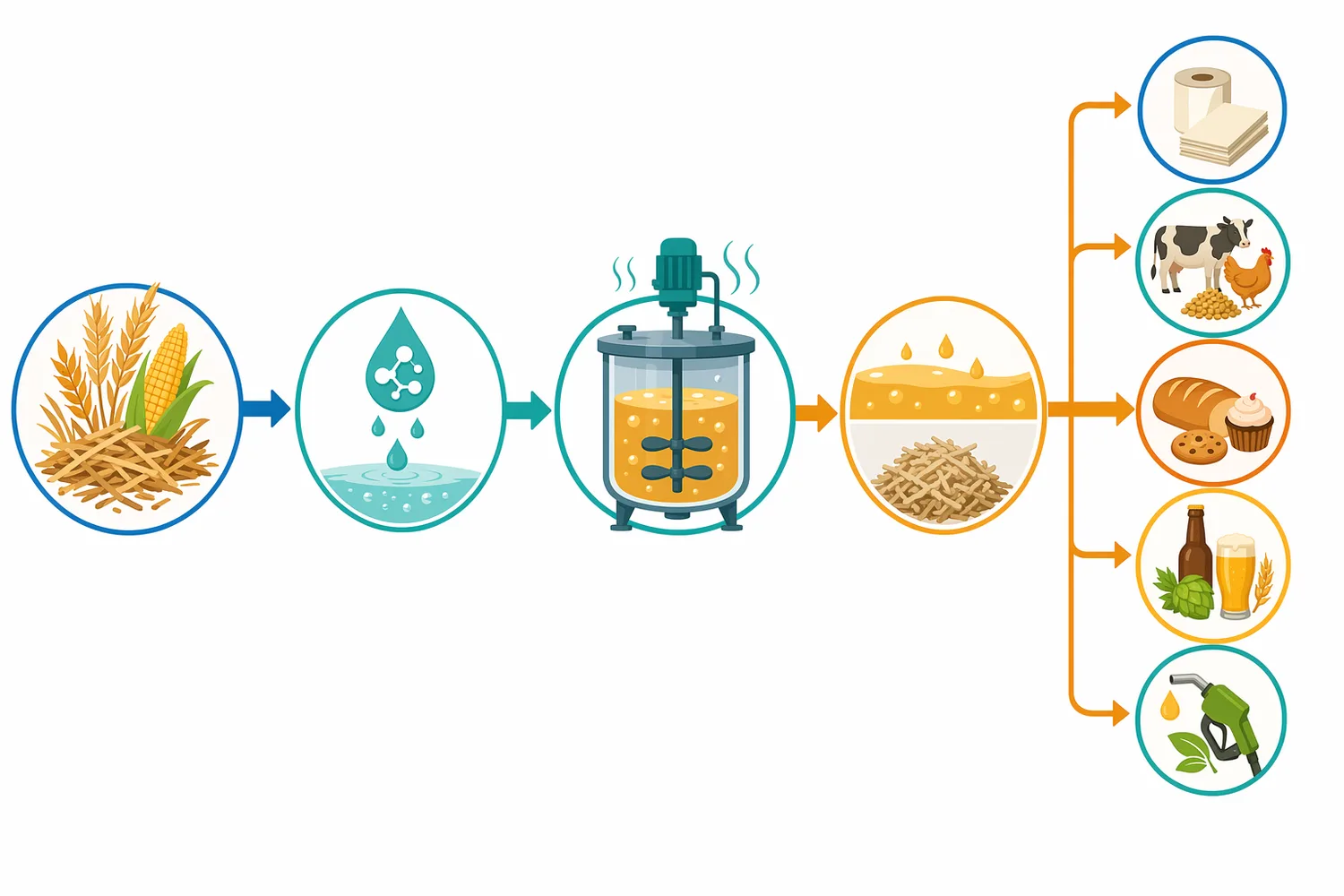
Enzymes.bio supplies Hemicellulase as a processing ingredient for plant-fiber and industrial applications, not as a finished dietary supplement or healthcare product. Buyers looking for digestive tablets, supplement dosage information, or personal-use guidance should follow the labeling and professional advice relevant to those consumer products.
Hemicellulase uses are strongest where hemicellulose is a meaningful barrier or functional component in the raw material. If the processing issue is mainly starch viscosity, protein structure, lipid oxidation, pectin gelation, or lignin recalcitrance, hemicellulase alone may not address the full problem [3].
The substrate itself determines much of the outcome. Wheat bran, corn fiber, soybean hulls, hardwood pulp, softwood pulp, fruit pomace, grasses, and agricultural residues differ in xylan type, mannan content, lignin association, acetylation, branching, and physical accessibility [1].
Process design also affects results. Hydration, mixing, contact time, temperature exposure, pH environment, particle size, solids level, and pretreatment history all influence whether the enzyme reaches its bonds before the process moves to filtration, pressing, fermentation, drying, bleaching, or heat inactivation [10].
Enzyme synergy is often more important than adding more of one activity. Tailored enzyme cocktails for mildly pretreated lignocellulosic biomass have been studied because efficient hydrolysis requires coordinated action on cellulose, hemicellulose, and accessory structural barriers [7].
Enzymes.bio supplies Hemicellulase for customers who want a straightforward online purchase route. The product is sold directly online by the 1 kg unit: place the order, pay online, and the order is processed and shipped.
Each order includes a Certificate of Analysis and Safety Data Sheet. This article is provided to explain the enzyme’s role, mechanism, and application areas so buyers can understand how hemicellulase fits into plant-fiber processing, biomass hydrolysis, pulp treatment, cereal processing, feed applications, and related industrial uses.
Hemicellulase is best viewed as a targeted tool for modifying hemicellulose-containing materials. When the substrate contains xylan, arabinoxylan, mannan, glucomannan, or related matrix polysaccharides, hemicellulase can help open the plant structure, release soluble fragments, and improve access for downstream processing steps [2].
Sold by the 1 kg unit, in stock and ready to ship. Order directly on our store — pay online and we process your order. A Certificate of Analysis and Safety Data Sheet are included with every order.
Buy Hemicellulase →Numbered in order of first citation. Open-access sources, each verified reachable at publication; citation numbers in the text link here.