
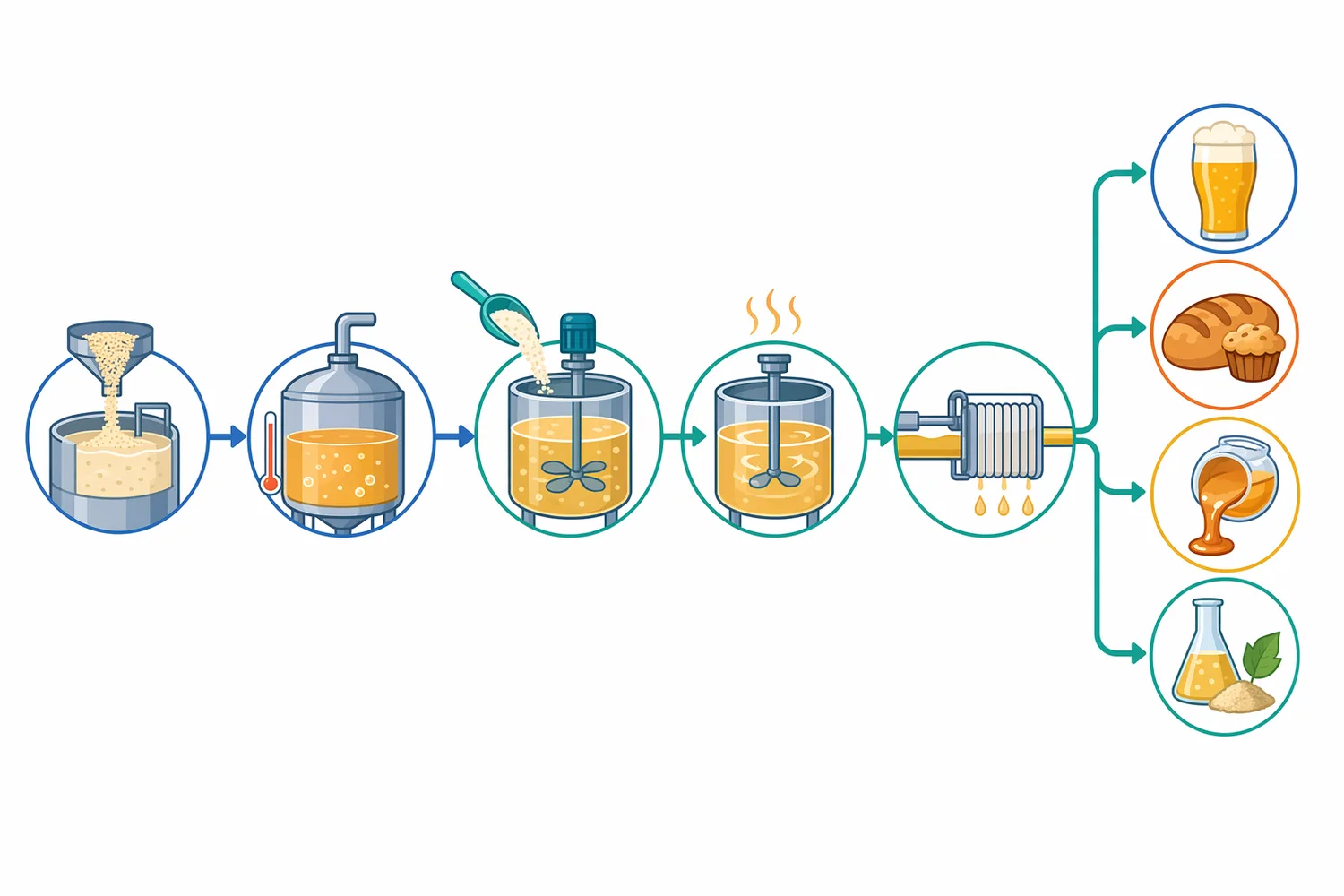
High-temperature resistant α-amylase powder is used to liquefy gelatinized starch in brewing, distilling, starch syrup, and other food-industry processes. It cuts internal α-1,4 glycosidic bonds in starch chains, rapidly reducing mash viscosity and producing soluble dextrins that can be fermented further or saccharified with enzymes such as glucoamylase.
Enzymes.bio supplies high-temperature resistant α-amylase powder for direct online purchase in 1 kg units. After online checkout, the order is processed and shipped, with a Certificate of Analysis and Safety Data Sheet included with the order; the product is presented for starch-processing uses such as brewing, liquefaction, and related industrial applications .
High-temperature resistant α-amylase powder is best understood as a hot-process starch liquefaction enzyme. Its main job is not to make pure glucose in one step, but to turn a thick, gelatinized starch paste into a more fluid dextrin solution that can be mixed, pumped, filtered, fermented, or converted further. Reviews of thermostable amylases consistently describe these enzymes as industrially important because starch processing commonly involves heat, hydration, gelatinization, and viscosity control [1].
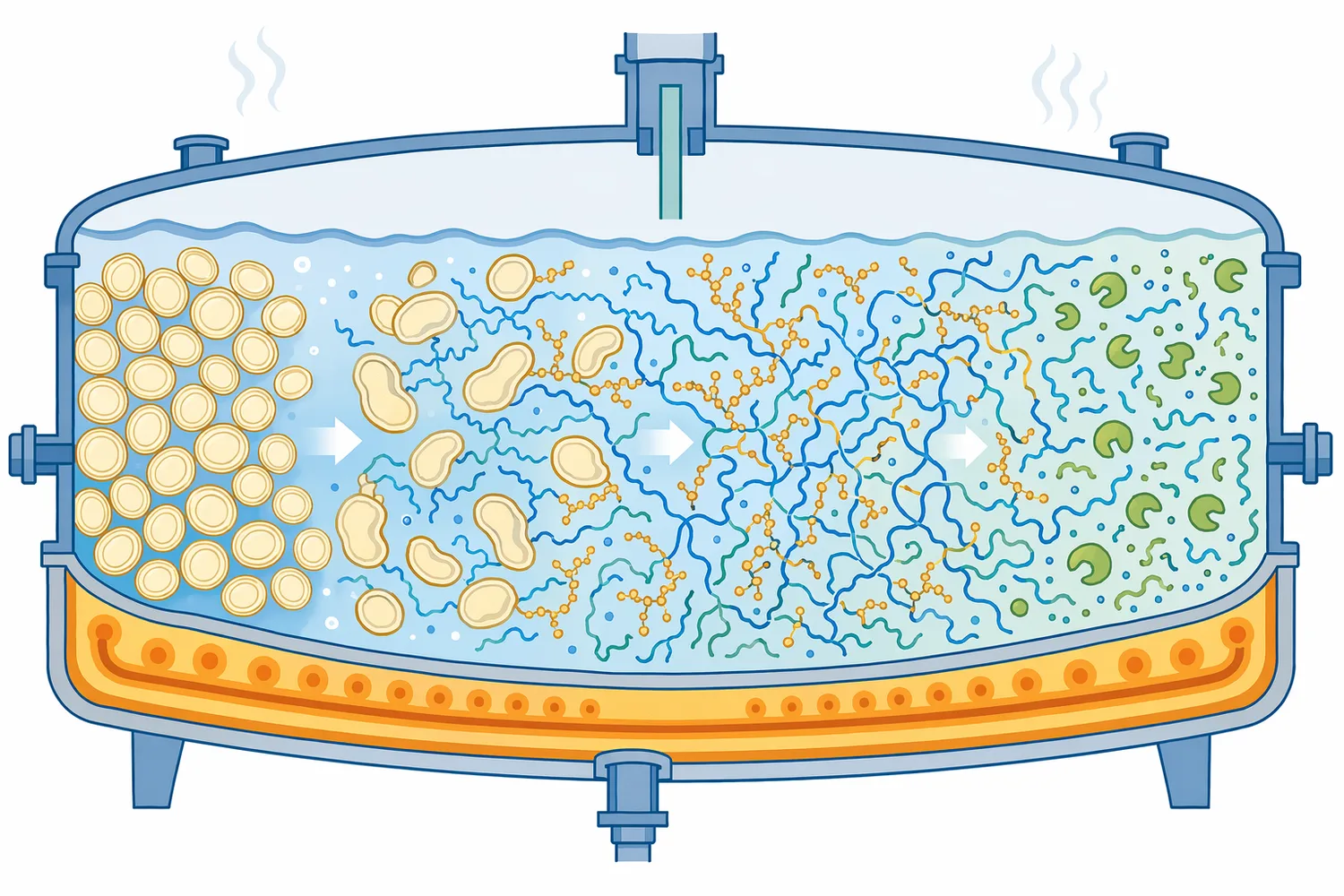
In practical production, starch-rich materials such as corn, rice, wheat, sorghum, cassava, potato, and other cereal or tuber substrates become difficult to handle once heated with water. The granules absorb water, swell, lose crystalline order, and release amylose and amylopectin into the liquid phase. That is when α-amylase becomes useful: it can access the hydrated starch polymers and cut them into shorter fragments, lowering the average molecular size of the starch and reducing the resistance of the mash to flow [2].
The “high-temperature resistant” feature matters because many starch processes operate near or during gelatinization, where heat is doing useful work: opening starch granules, improving hydration, and supporting hygienic, continuous, or high-solids processing. Thermostable α-amylases have therefore been widely studied for industrial relevance, especially where standard enzymes would lose activity too quickly under hot liquefaction conditions [3].
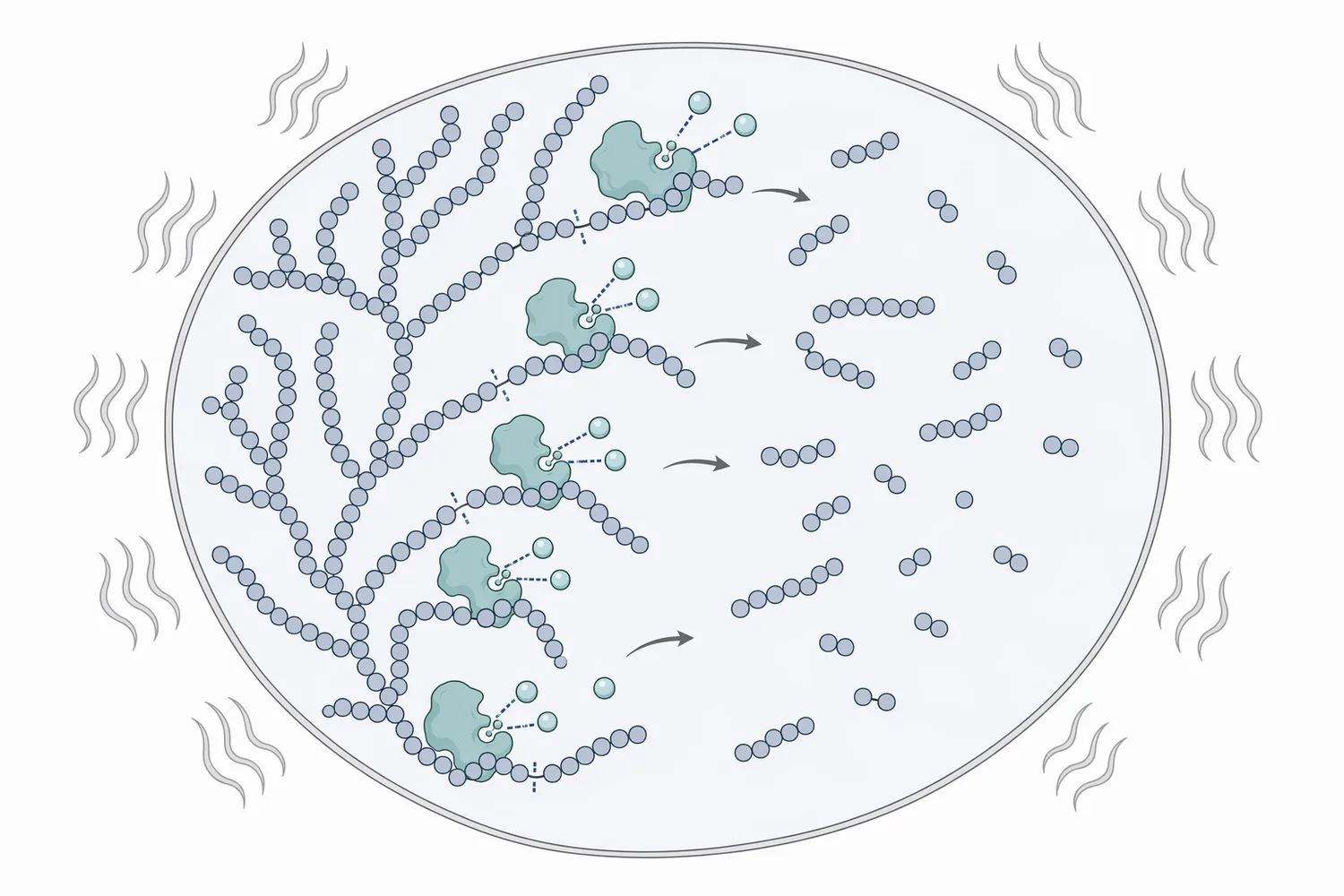
Starch is mainly a mixture of amylose and amylopectin. Amylose is mostly a linear chain of glucose units connected by α-1,4 glycosidic bonds, while amylopectin is a larger, branched polymer with α-1,4-linked chain segments and α-1,6 branch points. α-Amylase acts primarily as an endo-enzyme, meaning it attacks bonds inside the starch chain rather than removing one sugar unit at a time from the end [2].
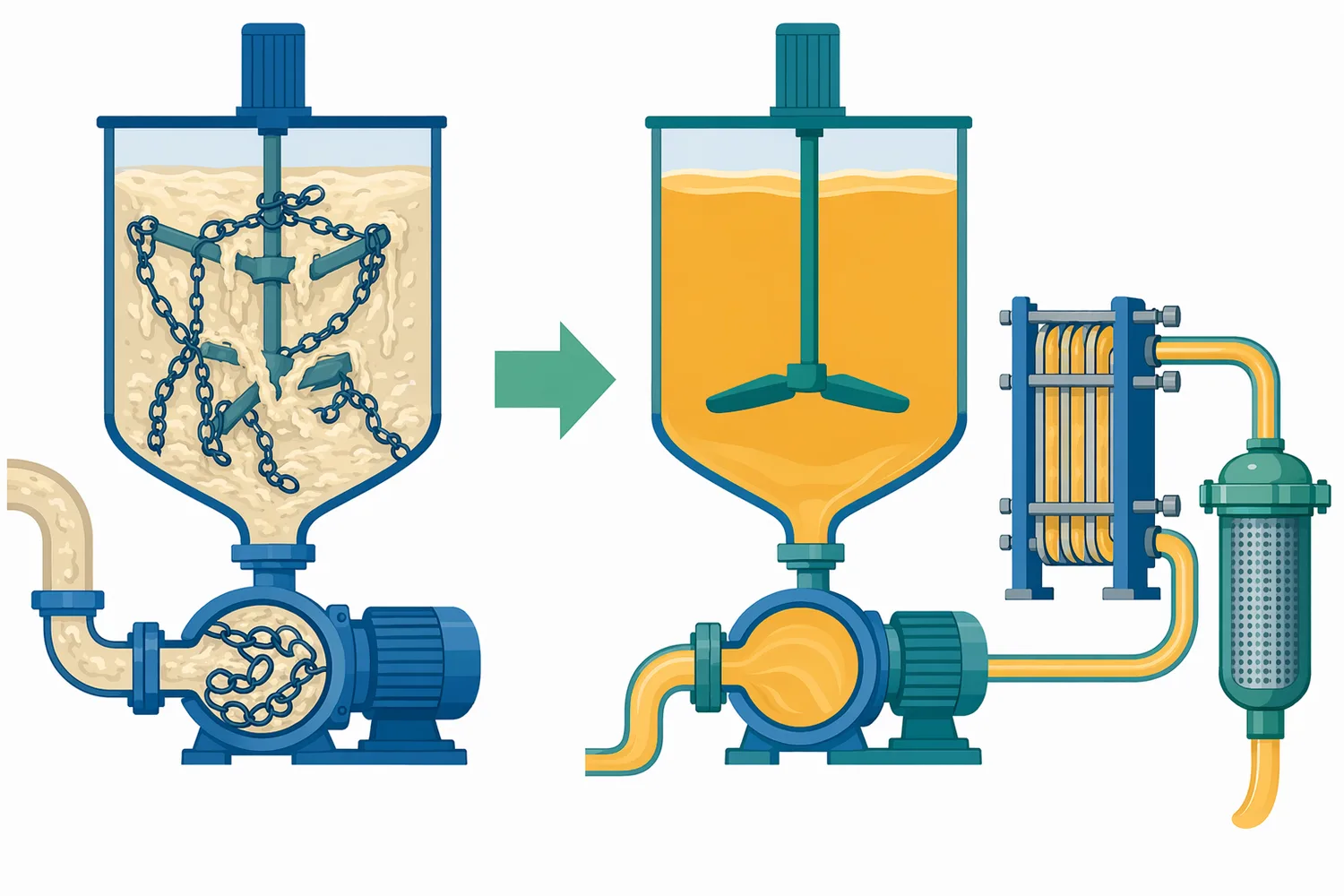
This internal cutting action explains why α-amylase reduces viscosity so quickly. A thick gelatinized starch paste behaves the way it does because long hydrated polymers entangle, trap water, and create drag during mixing or pumping. When α-amylase cleaves internal α-1,4 bonds at many positions along those polymers, each long chain becomes multiple shorter chains; the polymer network loosens, water is less immobilized, and the slurry becomes more mobile [1].
The immediate products are typically dextrins and oligosaccharides, not complete conversion to glucose. That distinction is important in brewing, distilling, and sweetener production. α-Amylase opens and liquefies the starch structure; if the process requires high fermentability or high glucose yield, a saccharifying enzyme such as glucoamylase is often used afterward to release glucose from the non-reducing ends of the dextrin chains [4].
Because α-amylase mainly targets α-1,4 linkages, it does not by itself fully solve every structural feature of starch. Branch points in amylopectin can leave limit dextrins that require other enzyme activities for more complete breakdown. Thermostable amylopullulanases and debranching-related enzymes are studied because α-1,6 branch hydrolysis can improve access to branched starch structures in certain industrial conversion flows [4].
Heating starch in water is not just a temperature step; it changes the physical accessibility of the substrate. Native starch granules are compact, semi-crystalline particles. During gelatinization, they swell, lose internal order, and expose more chain segments to the surrounding liquid. A heat-resistant α-amylase can work during this critical transition, helping prevent the cooked starch mass from becoming too viscous before it is fully mixed or transferred [3].
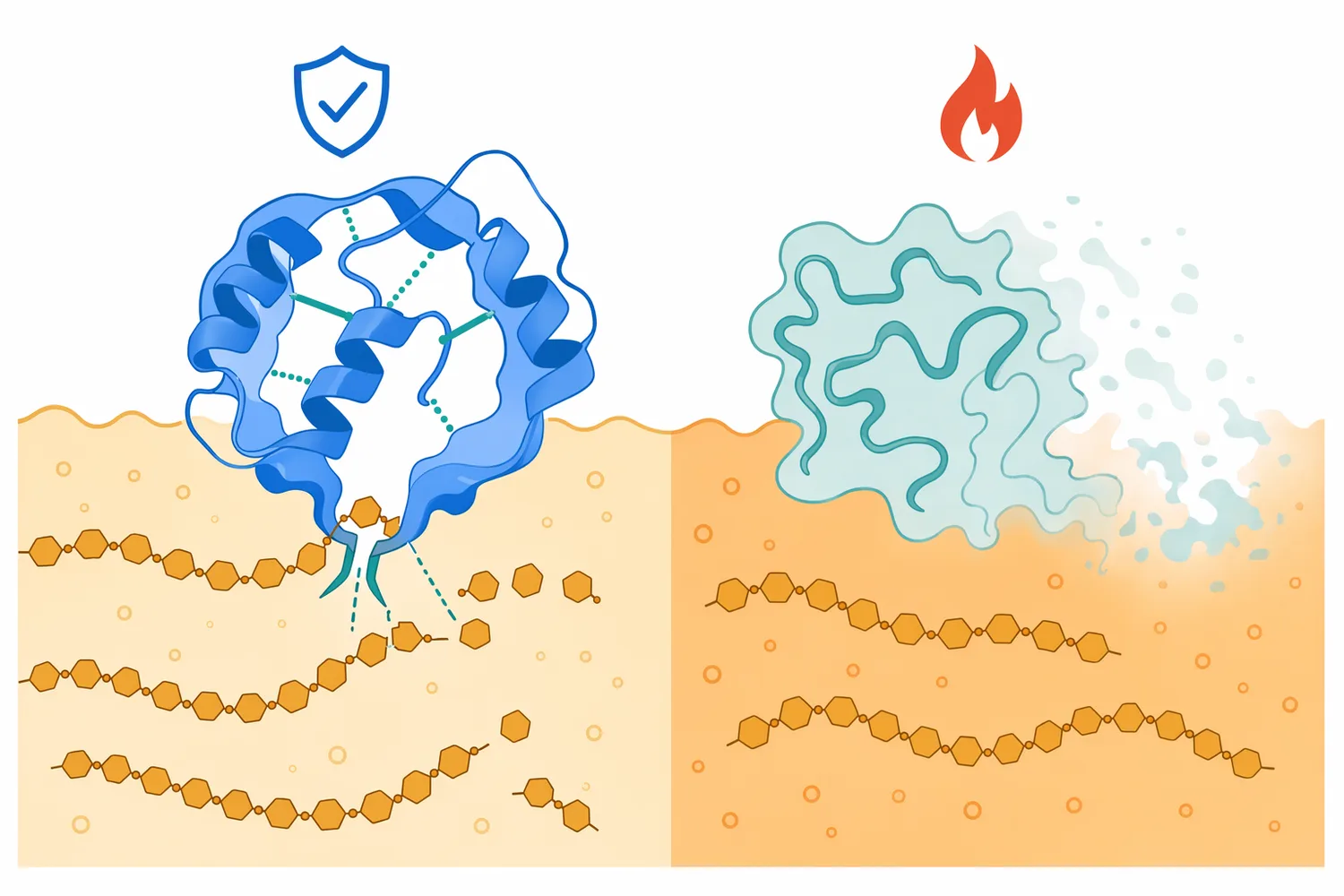
Thermostability also supports more consistent performance in processes where temperature is not perfectly uniform. In real mash systems, hot spots, cooler zones, varying solids content, and changing viscosity all affect enzyme contact with starch. Research on thermostable amylases from thermophilic and Bacillus-related microbial sources has focused on retaining activity and structural integrity under heat because these traits are directly relevant to food, beverage, and starch-conversion operations [1].
At the protein level, thermostability is associated with structural features that help the enzyme maintain its folded, active shape under heat stress. Studies on improving thermostability in Bacillus amyloliquefaciens α-amylase, for example, have examined how amino-acid changes can strengthen stability while preserving catalytic function [5]. That research should not be read as a product-specific mutation statement, but it does explain why industrial α-amylase development pays close attention to protein structure.
Calcium binding, compact folding, salt bridges, hydrophobic packing, and surface charge distribution are among the structural factors commonly discussed in thermostable enzyme research. The practical result, when an α-amylase is suited to hot liquefaction, is that the enzyme can continue cleaving starch while the mash is still hot enough for gelatinization and viscosity control, rather than requiring extensive cooling before enzymatic action begins [2].
Different amylolytic enzymes solve different process problems. The table below is not a product-selection checklist; it is a conceptual map of where high-temperature α-amylase fits in relation to common starch-processing enzyme functions.
| Enzyme type | Main bond or action | Primary process role | Typical material change | Where it commonly fits |
|---|---|---|---|---|
| High-temperature α-amylase | Internal α-1,4 starch bonds | Liquefaction | Long starch chains become shorter dextrins; viscosity drops quickly | Hot cereal mash, starch slurry, adjunct cooking, distilling, syrup pre-treatment |
| Fungal α-amylase | Internal α-1,4 starch bonds, generally used in milder systems | Controlled starch breakdown | Dextrin formation and fermentability adjustment under lower-temperature food conditions | Baking, flour correction, some fermentation-support applications |
| Glucoamylase | Chain-end release of glucose from starch-derived dextrins | Saccharification | Dextrins are converted toward glucose-rich or more fermentable sugar profiles | After α-amylase liquefaction in ethanol, distilling, and glucose syrup processes |
| Pullulanase / amylopullulanase | α-1,6 branch points and related starch structures | Debranching support | Branched dextrins become more accessible to saccharification | Selected high-conversion starch processes and specialty applications |
Thermostable amylases and amylopullulanases are both discussed in industrial starch-conversion literature because liquefaction, debranching, and saccharification are often linked stages rather than isolated reactions [4]. In a typical process logic, α-amylase reduces viscosity first, then other enzymes refine the carbohydrate profile depending on whether the target is wort fermentability, ethanol yield, glucose syrup, maltodextrin, or another carbohydrate ingredient.
In brewing, α-amylase is especially useful when the grist includes starch-rich adjuncts such as rice, corn, sorghum, unmalted wheat, or other cereals. Malt naturally supplies amylolytic enzymes, but high adjunct levels or heat-treated adjunct streams can exceed the conversion capacity of the malt enzymes present. Added α-amylase helps liquefy the cooked adjunct starch so it can be integrated into the mash more consistently [6].
The key brewing effect is physical as much as chemical. A gelatinized adjunct cooker can become very thick before conversion is complete. When α-amylase shortens starch chains, the mash thins, agitation improves, and heat transfer becomes more uniform. That improved fluidity can support better contact between starch, malt enzymes, and yeast-accessible carbohydrate fractions downstream [2].
α-Amylase also affects wort composition by increasing soluble dextrins and shorter carbohydrate chains. These are not all fermentable by brewing yeast, so the final fermentability depends on the broader enzyme system and mash profile. Where the target is a drier or more fermentable beverage base, liquefaction may be followed by saccharifying activity that converts more dextrin material into fermentable sugars [4].
For breweries using cereal adjuncts, the practical value of high-temperature resistance is that starch can be attacked while the adjunct is still in a hot, gelatinized state. Cooling a thick cereal mash before liquefaction can create handling problems; acting at elevated temperature helps reduce viscosity earlier in the process and can make subsequent blending with malt mash easier [1].
Distilling and ethanol production rely on the same fundamental requirement: yeast needs fermentable sugars, not intact starch granules. High-temperature α-amylase is commonly used at the liquefaction stage to convert cooked starch from grains or tubers into dextrins. Those dextrins are then further hydrolyzed into fermentable sugars before or during fermentation, depending on the process design [1].
The viscosity reduction is particularly valuable in high-solids mashes. Corn, wheat, cassava, and similar substrates can form heavy slurries after cooking. By cutting internal starch chains, α-amylase lowers the viscosity load on mixers, pumps, heat exchangers, and transfer lines. This improves physical processability before the saccharification and fermentation stages begin [3].
The biochemical sequence is straightforward: heat makes the starch accessible; α-amylase liquefies the polymer network; saccharifying enzymes generate fermentable sugars; yeast converts those sugars into ethanol and carbon dioxide. Research on starch-hydrolyzing enzymes for bioethanol has emphasized that efficient enzymatic breakdown of starch-rich feedstocks is central to improving ethanol process performance [4].
Industrial interest in thermostable amylases is therefore not theoretical. Reviews of thermophilic microbial amylases connect high-temperature stability with applications in starch liquefaction, brewing, distilling, and biofuel production because these operations frequently combine hot substrate preparation with downstream biological conversion [1].
In food starch processing, α-amylase is used at the front end of conversion. Corn, wheat, cassava, potato, rice, and other starches may be liquefied into dextrin-rich streams that are then processed into maltodextrins, glucose syrups, fermentation feedstocks, or other carbohydrate ingredients. The α-amylase step establishes the first major reduction in molecular size and viscosity [2].
For maltodextrin-type products, controlled α-amylase hydrolysis can be used to produce partially degraded starch fractions rather than fully saccharified glucose. The functional properties of these fractions—solubility, viscosity contribution, body, film formation, and sweetness profile—depend on how far starch hydrolysis proceeds and what downstream steps are applied [1].
In glucose syrup production, α-amylase liquefaction is typically followed by saccharification. The reason is mechanical and enzymatic: glucoamylase works more effectively on soluble dextrins than on a highly viscous mass of long-chain gelatinized starch. By reducing chain length first, α-amylase increases the number of chain ends and creates a more accessible substrate for subsequent glucose formation [4].
The same principle applies to food fermentations that begin with starchy raw materials. The fermentation organism may not be able to use intact starch efficiently, so enzyme-assisted liquefaction and saccharification create a carbohydrate stream that microbes can metabolize. Studies of α-amylase production from microbial sources continue because the enzyme remains a central tool in food biotechnology and starch conversion [7].
Starch is not always the target ingredient; sometimes it is the processing problem. In fruit, vegetable, cereal, and botanical extracts, residual starch can increase viscosity, slow filtration, form haze, or interfere with clarification. α-Amylase can break down the starch fraction into shorter soluble carbohydrates that pass through processing steps more easily [2].
The mechanism is the same as in brewing or syrup production, but the desired outcome is different. Instead of maximizing fermentable sugar, the goal may be improved flow, reduced turbidity risk, or easier separation of insoluble solids. By hydrolyzing starch polymers before they reassociate or settle unpredictably, α-amylase helps stabilize the physical behavior of the extract stream [1].
This can matter in plant-based beverage bases, cereal extracts, fruit preparations containing starchy material, and botanical processing where starch is present alongside pectin, fiber, proteins, phenolics, and minerals. Matrix components can affect enzyme access, but the starch-specific action of α-amylase makes it a logical processing aid when starch is contributing to viscosity or haze [2].
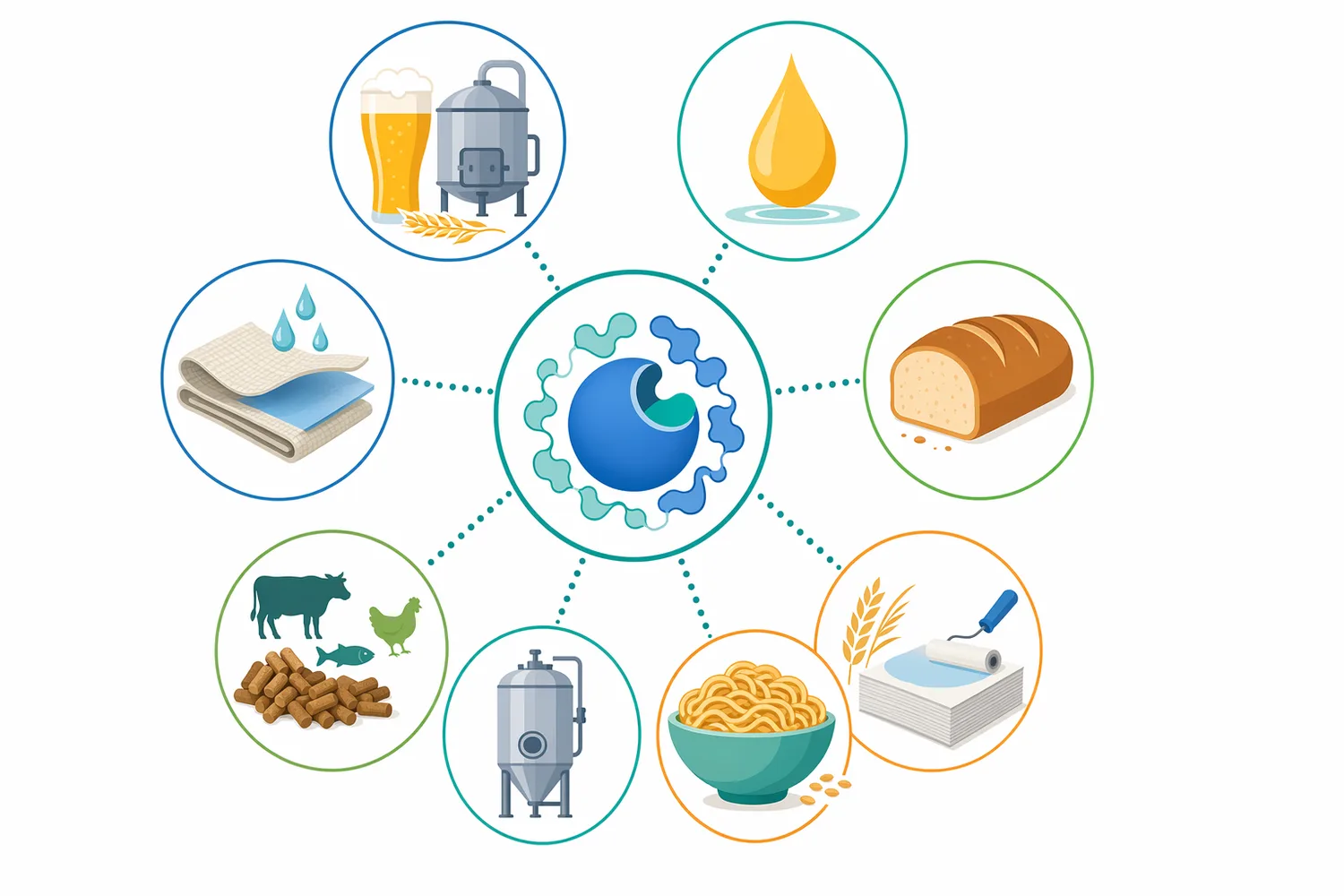
Although the product is positioned for brewing and food-industry starch hydrolysis, α-amylase chemistry is also relevant wherever starch must be modified or removed. Textile desizing is a classic example: starch-based sizing agents applied to yarns can be hydrolyzed enzymatically so the fabric can be washed and processed further. Studies on microbial α-amylases have included applications in textile desizing and starch-rich wastewater treatment [8].
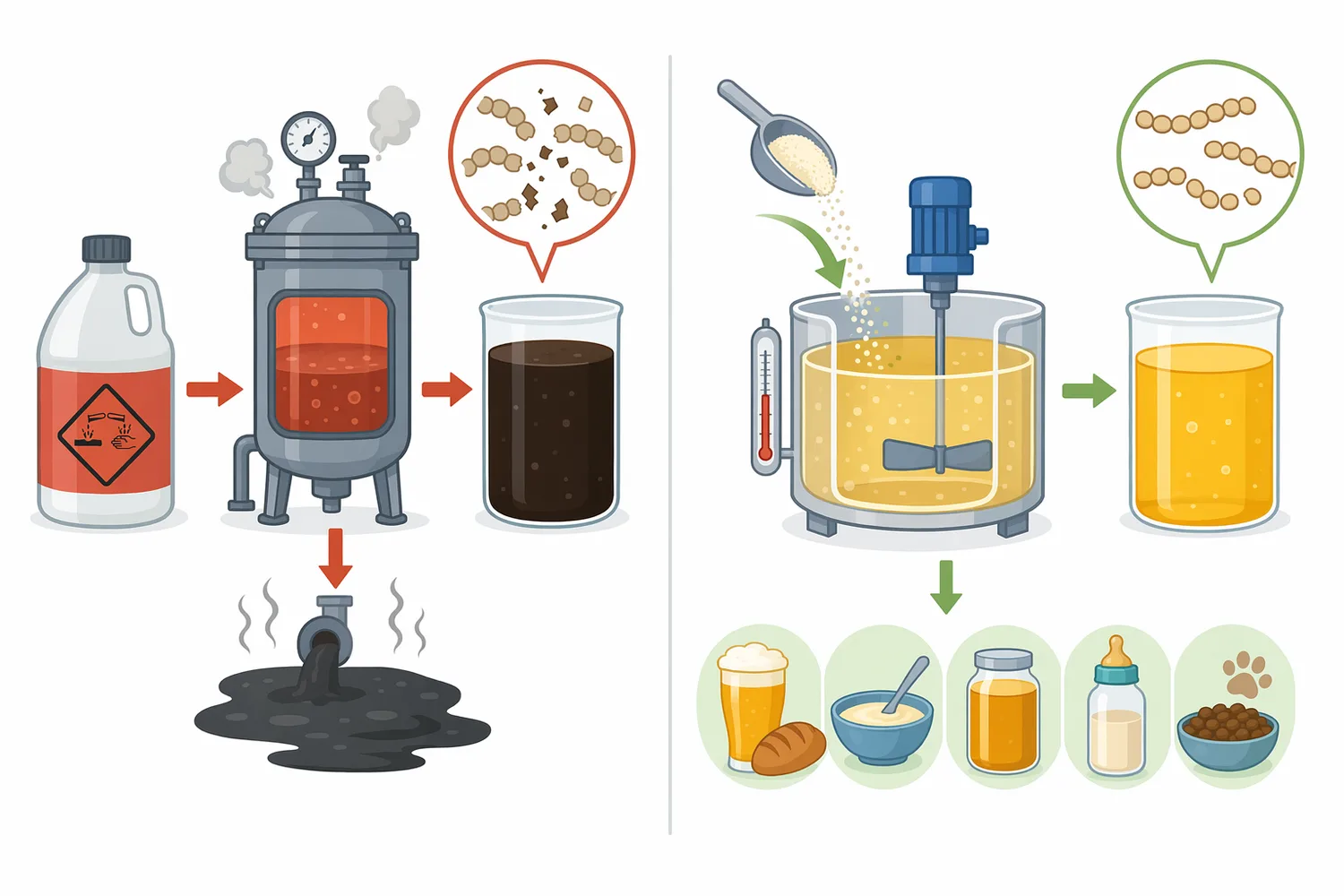
In paper and adhesive applications, starch may be intentionally modified to adjust viscosity, coating behavior, or bonding characteristics. Enzymatic hydrolysis provides a targeted way to shorten starch chains without relying only on harsh chemical or thermal degradation. The same molecular change—cleavage of α-1,4 linkages—explains the usefulness of α-amylase outside beverage and food streams [1].
Wastewater containing starch residues can also benefit from enzymatic pretreatment because large, viscous starch fractions can be harder to handle biologically or mechanically. α-Amylase converts these fractions into smaller carbohydrates that are more soluble and more accessible to downstream microbial treatment, although actual treatment performance depends on the full wastewater composition [8].
The strongest evidence for high-temperature α-amylase is mechanistic and industrial: α-amylases hydrolyze starch, thermostable variants retain function under heat, and starch liquefaction is a core operation in food, beverage, and bio-based processing. Reviews of thermostable amylases from thermophilic microbes describe advances in production, engineering, and industrial applications, reflecting broad interest in enzymes that can operate in heated starch systems [1].
Experimental studies continue to examine α-amylase sources and properties. Work on Bacillus subtilis α-amylase, for example, reflects ongoing research into microbial production and characterization of amylases for starch-related applications [9]. Other research has explored Bacillus licheniformis as a production organism for α-amylase, again reinforcing the role of bacterial amylases in industrial starch hydrolysis [7].
Thermostability research is especially important because heat can unfold proteins, distort active sites, and reduce catalytic activity. Studies on engineered or mutated α-amylases show that relatively small structural changes can influence thermal stability, which is why thermostable enzyme development is a continuing focus for industrial biotechnology [5].
There is also research into raw-starch-digesting and moderately thermostable α-amylases, such as α-amylase from Streptomyces mobaraensis DB13 [10]. These studies are valuable scientifically, but raw starch digestion and hot gelatinized starch liquefaction are not identical process situations. A high-temperature liquefaction enzyme is primarily used where starch has been cooked or hydrated enough for the enzyme to access the polymer chains efficiently.
Food-enzyme safety has its own evidence base. For example, the European Food Safety Authority has published a safety evaluation of an α-amylase food enzyme from a genetically modified Trichoderma reesei strain [11]. That source does not define every α-amylase product on the market, but it illustrates the type of formal safety assessment applied to food-enzyme preparations in regulated contexts.
When α-amylase liquefaction is effective, the first visible change is usually a drop in viscosity. The mash becomes easier to stir, less resistant to pumping, and more uniform in temperature and solids distribution. This physical improvement comes directly from molecular chain shortening: the long hydrated starch polymers that previously formed a thick network are converted into shorter dextrins [3].
The second change is improved enzymatic accessibility for later stages. A liquefied dextrin stream exposes many more chain ends than the original starch paste. Saccharifying enzymes can then act on a more soluble and less viscous substrate, which is why α-amylase is commonly placed before glucoamylase in workflows aimed at glucose formation or high fermentability [4].
The third change is better process control. In a very thick starch mash, uneven mixing can create local zones where starch is under-converted, overheated, or poorly contacted by enzymes. Liquefaction reduces those physical gradients, making the process stream more homogeneous and easier to manage through holding, transfer, filtration, or fermentation [1].
The fourth change is a shift in carbohydrate profile. Long starch polymers are converted into a distribution of dextrins and smaller oligosaccharides. Depending on the process, those dextrins may be the desired product, an intermediate for glucose syrup, a contribution to beverage body, or a substrate for yeast after further saccharification [2].
For buyers who already know they need a hot-process starch liquefaction enzyme, Enzymes.bio offers high-temperature resistant α-amylase powder as a directly purchasable 1 kg product online. The purchase is handled through online checkout, after which the order is processed and shipped with the accompanying Certificate of Analysis and Safety Data Sheet .
The product fits operations where starch is intentionally cooked, gelatinized, or hydrated and where viscosity reduction is a useful processing step. Typical use contexts include brewing adjunct mashes, distilling mashes, starch slurry liquefaction, syrup precursor production, plant extract processing, and other applications where starch breakdown improves handling or downstream conversion [1].
It is equally important to understand what the enzyme is not intended to do alone. α-Amylase is not a complete saccharification system by itself, and it should not be expected to convert all starch directly into glucose. Its primary strength is rapid internal cleavage of starch chains, producing dextrins and lowering viscosity so that the next process stage can work more effectively [4].
It should also not be confused with baking-focused fungal amylase applications. Fungal α-amylases are often discussed in lower-temperature food systems, while thermostable bacterial-type amylases are more closely associated with hot liquefaction and industrial starch processing. The underlying bond hydrolysis is related, but the process environment and desired functional outcome differ [2].
High-temperature resistant α-amylase performs best when the starch is accessible. In most hot liquefaction processes, that means the starch has been sufficiently hydrated and gelatinized for the enzyme to contact the polymer chains. Raw, intact starch granules are physically harder for many enzymes to attack unless the enzyme system has specific raw-starch-digesting capability [10].
Performance in any real material depends on the whole matrix, not just the starch. Fibers, proteins, lipids, minerals, phenolics, particle size, shear, heating history, and solids concentration can all influence how easily the enzyme reaches the starch chains. Reviews of industrial α-amylase applications emphasize that process conditions and substrate structure strongly affect observed hydrolysis performance [1].
Heat resistance should also be interpreted practically. A thermostable enzyme is designed to tolerate hotter processing than less heat-resistant alternatives, but enzymes are still proteins with limits. Excessive heat exposure, unsuitable pH, poor mixing, or inhibitory matrix components can reduce effective activity in any enzymatic process [3].
For food and beverage use, enzyme handling should follow the documentation supplied with the order and the buyer’s own process controls. Food-enzyme safety evaluations in the literature show that α-amylase preparations are considered within formal regulatory frameworks, but each commercial use still needs to fit the applicable process, product category, and local regulatory expectations [11].
High-temperature resistant α-amylase powder from Enzymes.bio is a practical starch-liquefaction enzyme for hot, starch-rich processes. It works by cleaving internal α-1,4 bonds in gelatinized starch, converting long viscosity-building polymers into shorter soluble dextrins. That molecular change explains the main process benefits: thinner mashes, easier pumping and mixing, improved filtration behavior, and better preparation for saccharification or fermentation [2].
The evidence base is strong for α-amylase as a starch-hydrolyzing enzyme and for thermostable amylases as important tools in heated industrial processing. Research on microbial α-amylases, thermostability engineering, raw-starch digestion, and food-enzyme evaluation all supports the broader technical picture: starch structure, enzyme stability, and process temperature are central to successful liquefaction [1].
For buyers ready to use a high-temperature starch liquefaction enzyme, the product is available from Enzymes.bio by direct online purchase in 1 kg units, with order documentation supplied after checkout and shipment processing .
Sold by the 1 kg unit, in stock and ready to ship. Order directly on our store — pay online and we process your order. A Certificate of Analysis and Safety Data Sheet are included with every order.
Buy High Temperature Resistant Α-Amylase Powder 100,000 U/G Brewing Starch Hydrolysis Food Industry Biological Enzymes →Numbered in order of first citation. Open-access sources, each verified reachable at publication; citation numbers in the text link here.