
High-temperature stable alpha amylase enzyme liquid is used in wine-adjacent fermentation when the raw material contains starch—such as rice wine, cereal-based fruit wine, grain adjuncts, or starch-containing botanical ingredients. It hydrolyzes internal α-1,4 bonds in starch, shortening amylose and amylopectin chains into soluble dextrins and maltooligosaccharides so hot mashes become less viscous and easier to prepare for saccharification and fermentation [1].
For conventional grape or fruit wine, alpha amylase is not a replacement for pectinase because its target is starch, not pectin. Its best fit is a hot-processing step where starch must first gelatinize and then be liquefied before yeast or saccharifying enzymes can efficiently convert the carbohydrate stream into fermentable sugars [2].
High-temperature stable alpha amylase enzyme liquid is a starch-liquefying enzyme preparation for beverage and fermentation processes that include starch-bearing materials. Enzymes.bio supplies this product directly online by the 1 kg unit; buyers can purchase through the product page, pay online, and the order is processed and shipped with a Certificate of Analysis and Safety Data Sheet included .
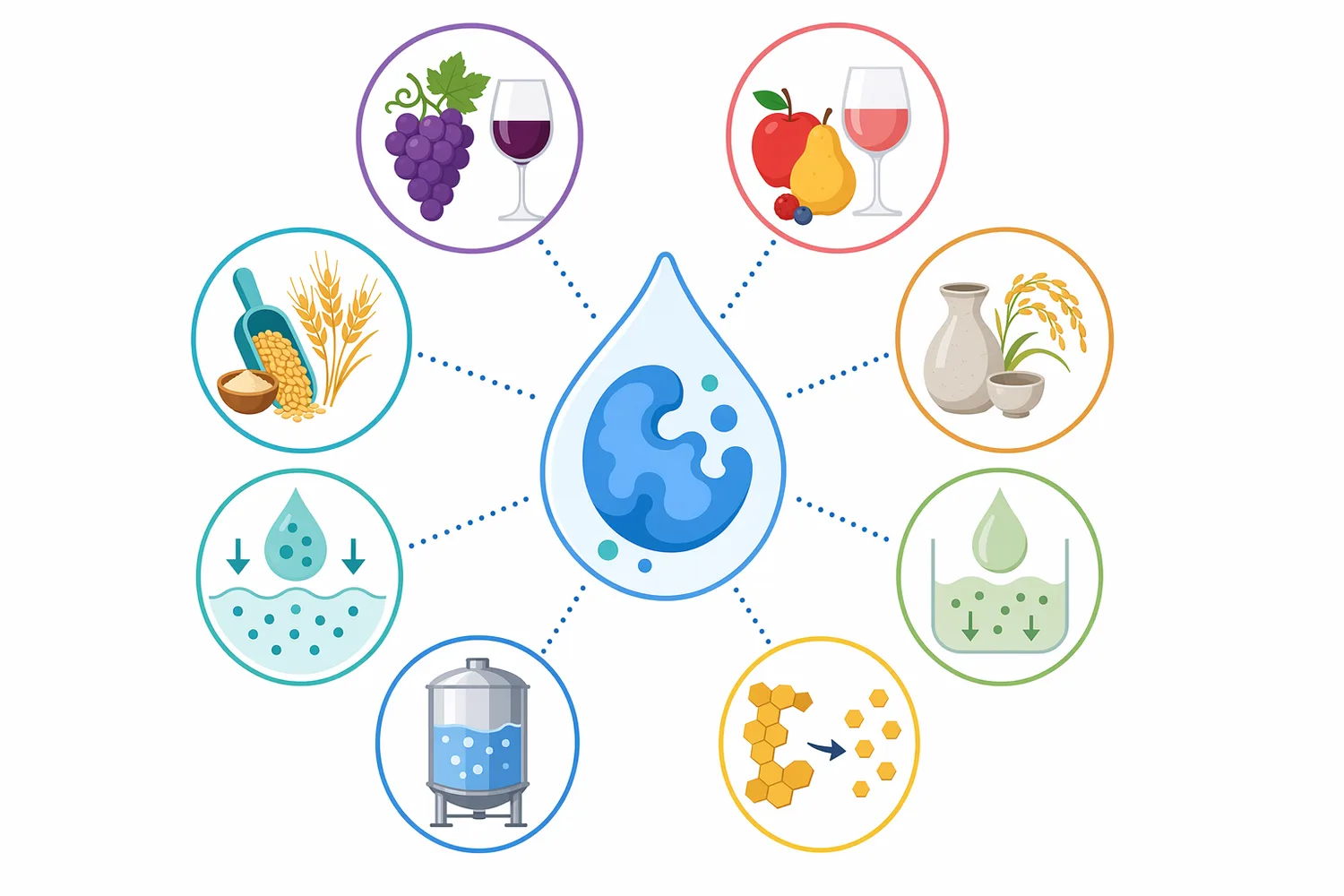
The word “winemaking” in this product context is best understood broadly: rice wine, grain-influenced wine-style beverages, starch-containing fruit wine formulations, brewing-adjacent fermentations, and alcohol processes where cooked starch must be broken down before fermentation. In these systems, alpha amylase acts on the starch fraction of the raw material; it does not perform grape skin maceration, pectin depectinization, protein stabilization, or tannin management [3].
This distinction matters because many beverage clarity and extraction problems are polysaccharide-related, but the polysaccharide type determines the correct enzyme. Pectin-rich grape and fruit matrices are typically addressed with pectinases, while starch-bearing rice, cereal, tuber, or botanical components require amylolytic activity to reduce starch size and viscosity [1].
Starch is mainly built from two glucose polymers: amylose, which is mostly linear, and amylopectin, which is highly branched. Both contain α-1,4 glycosidic bonds along the chain; amylopectin also contains α-1,6 branch points. Alpha amylase is an endo-acting enzyme, meaning it cuts inside α-1,4-linked starch chains rather than removing glucose units one at a time from the chain ends [3].
That internal cutting pattern is the reason alpha amylase rapidly reduces viscosity. A cooked starch slurry can behave like a thick gel because swollen granules and long molecular chains entangle with water and each other. When alpha amylase cleaves many internal α-1,4 bonds, the average chain length drops, the network loses its ability to hold a high-viscosity structure, and the slurry becomes more pumpable and easier to mix [4].
The hydrolysis products are not usually just glucose. Depending on the starch structure, enzyme source, process conditions, and exposure time, alpha amylase produces dextrins, maltodextrins, maltose, maltotriose, and other maltooligosaccharides. These shorter carbohydrates are more accessible to downstream saccharifying enzymes and fermenting microorganisms than intact gelatinized starch [5].
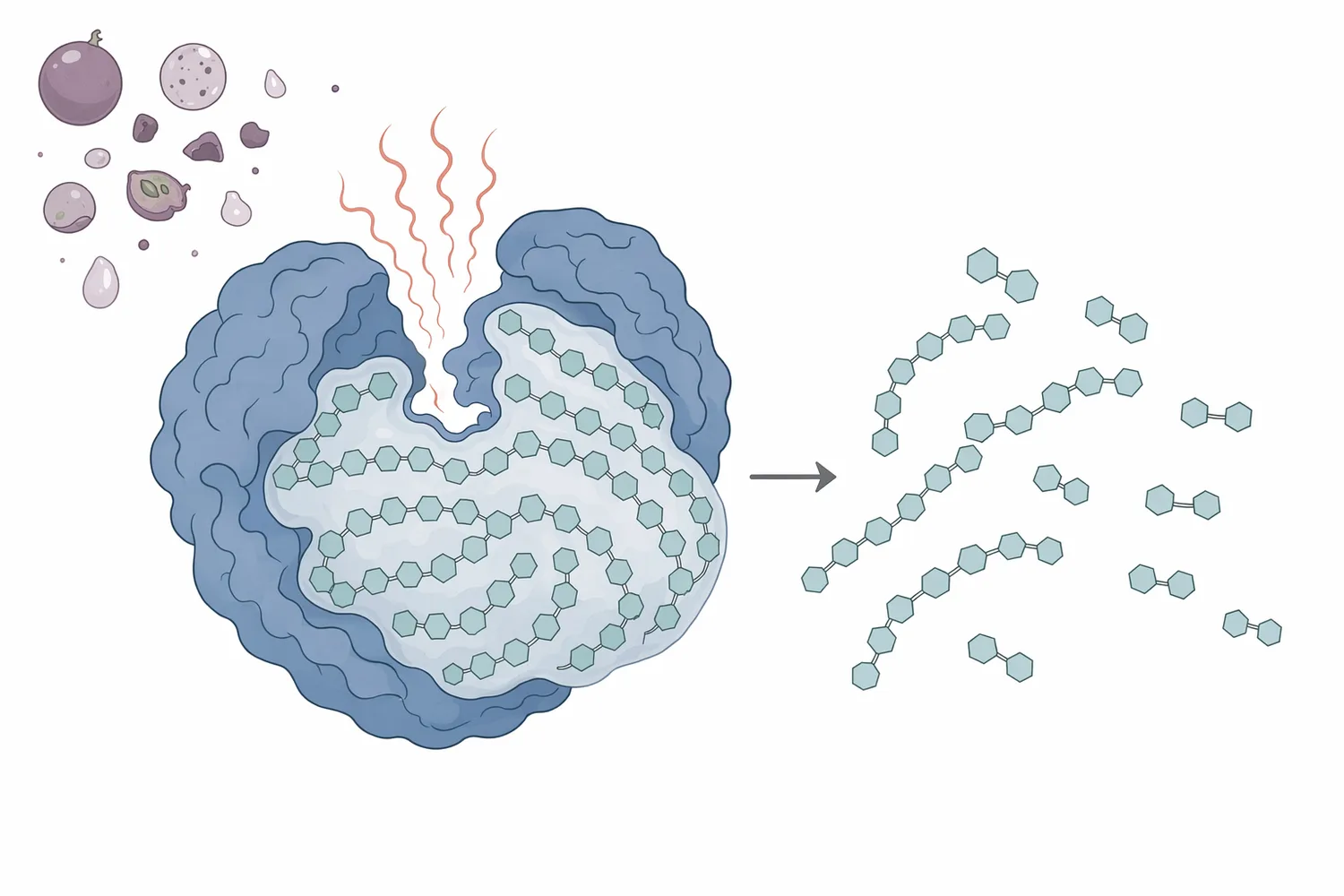
Hot processing improves enzyme access because starch granules are naturally semi-crystalline and resistant to attack in their native form. Heating in water disrupts granule order, swells the granule, releases amylose, and exposes more α-1,4 linkages to enzymatic attack; studies on gelatinisation and enzymatic hydrolysis show that heat treatment changes starch, sugar, and physicochemical profiles before and after enzymatic conversion [2].
Thermostable alpha amylases are useful because starch is most accessible after heat has opened the granule structure. If the enzyme loses function too quickly under those hot conditions, liquefaction becomes slow, incomplete, or impractical. Reviews of thermostable amylases from thermophilic microorganisms emphasize their industrial value in processes that combine heat, starch conversion, and fermentation or food production [1].
A high-temperature-stable liquid format supports a practical sequence: hydrate the starch-bearing raw material, heat it to gelatinize the starch, add or maintain alpha amylase during the liquefaction stage, and then continue with saccharification and fermentation as the process requires. The enzyme’s contribution is the early reduction of starch polymer size, which can improve downstream handling even before sugar conversion is complete [6].
In rice wine or cereal-based wine-style beverages, this step is particularly important because the primary carbohydrate reserve is starch. Yeast cannot directly ferment intact starch in the same way it ferments glucose, fructose, or maltose, so starch first needs to be hydrolyzed into smaller carbohydrates by amylolytic enzymes or by amylase-producing microorganisms [1].
For fruit wine with starch-containing adjuncts, the role is more targeted. Fruit solids may contain pectin, cellulose, hemicellulose, proteins, phenolics, and small amounts of starch depending on fruit type, maturity, and added ingredients. Alpha amylase only addresses the starch portion, but that can be enough to reduce starch haze potential or prevent a cooked adjunct from increasing viscosity [3].
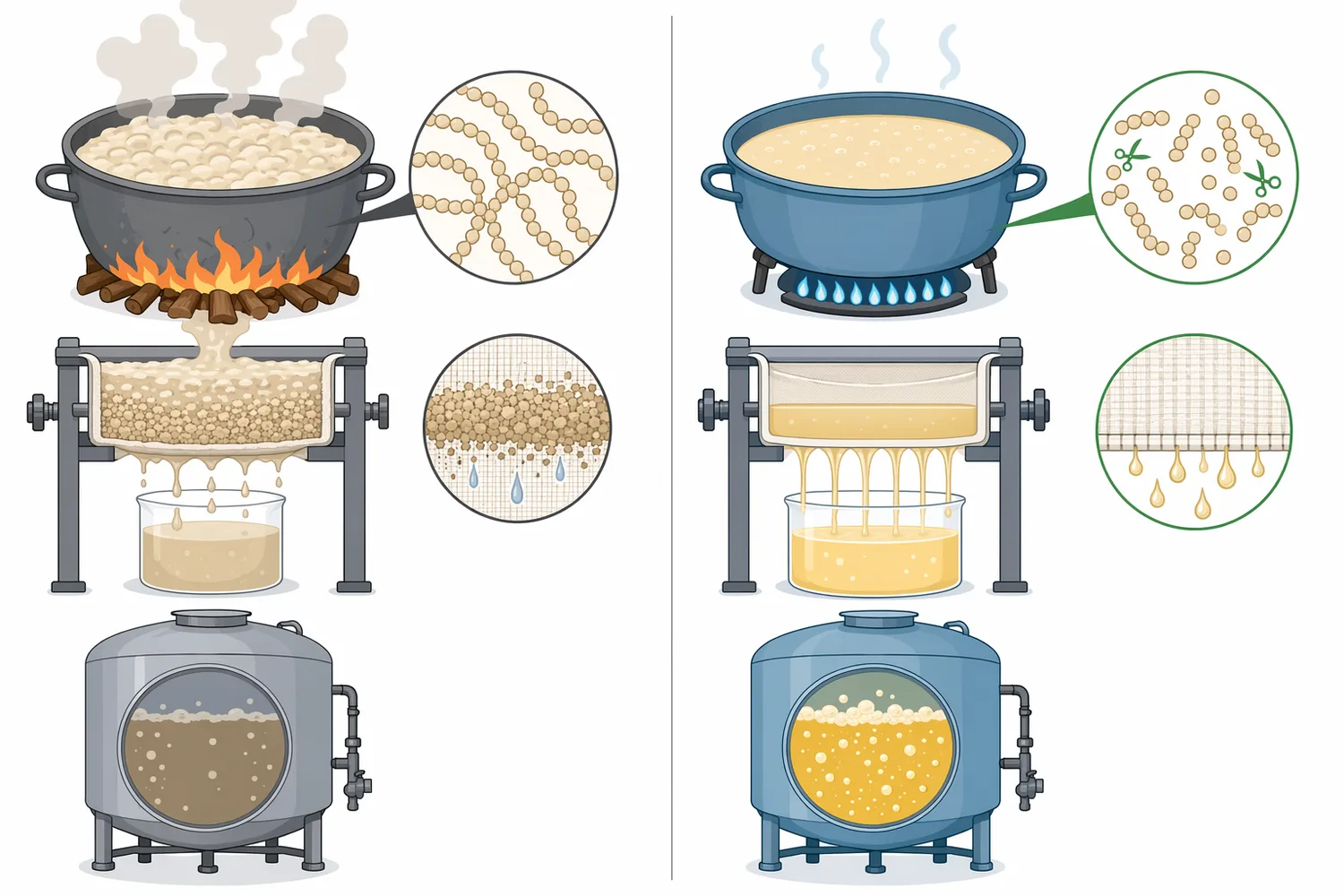
The most visible process change is a reduction in thickness. In a cooked rice or cereal mash, starch gelatinization can create a heavy paste; alpha amylase cuts the long starch chains that create this structure, so the slurry thins as dextrins form. This is a chemical change in polymer size, not simply dilution or mechanical shear [4].
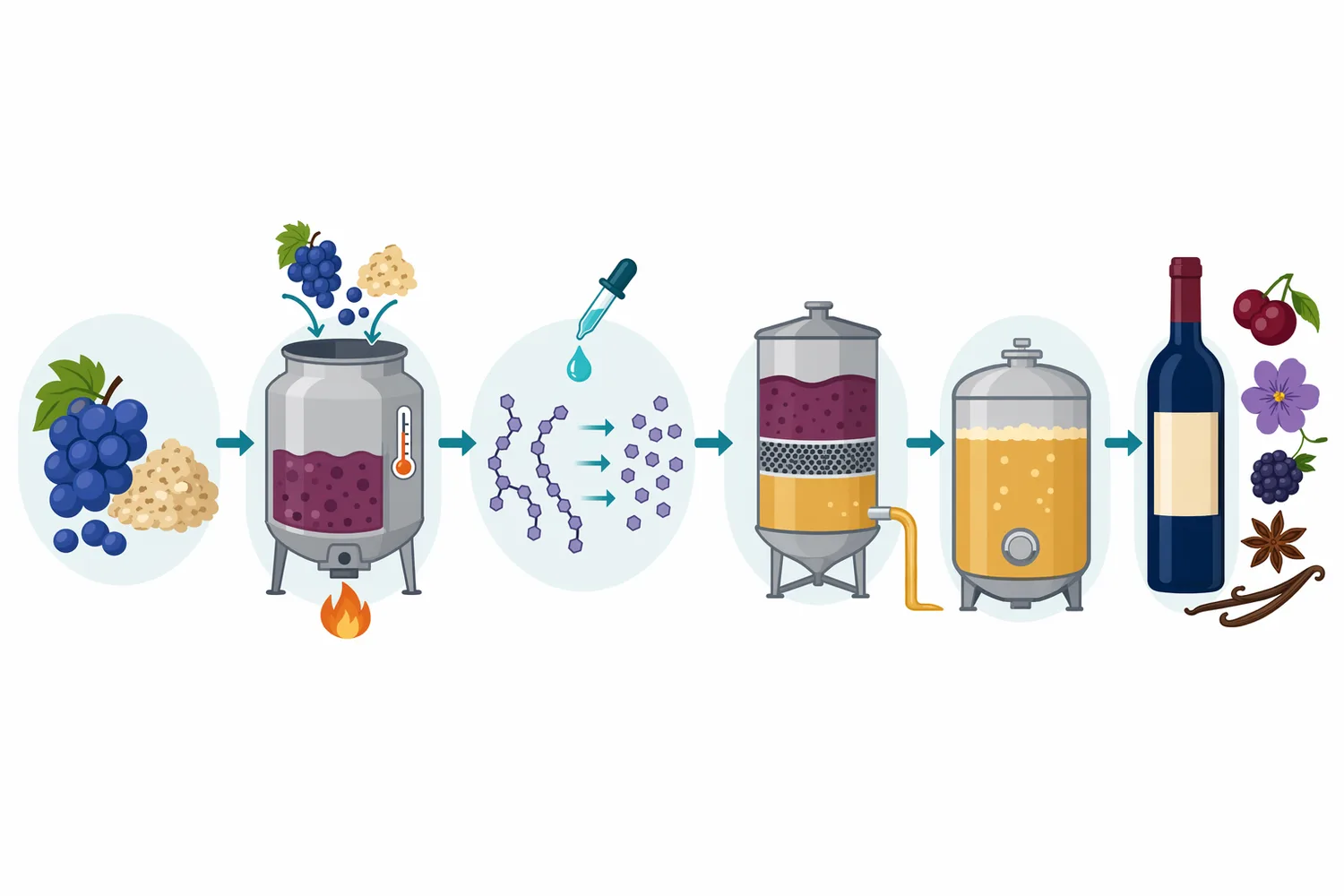
The second change is improved accessibility for the next enzymatic step. Alpha amylase opens the starch polymer internally, creating many new chain ends. Saccharifying enzymes such as glucoamylase can then work from those ends to release glucose more effectively than they could from a small number of long, intact starch molecules [5].
The third change is a shift in haze behavior. Starch and partially degraded starch can contribute to turbidity, sediment, or instability in beverages. By reducing large starch molecules and gelatinized fragments into smaller soluble dextrins, alpha amylase can reduce the amount of starch-like material available to form haze, although final clarity still depends on pectin, protein, phenolics, mineral balance, filtration, and the broader beverage matrix [1].
The fourth change is improved heat and mass transfer during processing. A lower-viscosity mash mixes more uniformly, heats and cools more evenly, and gives enzymes and microorganisms better contact with the carbohydrate substrate. These practical gains come from the same molecular event: cleavage of internal α-1,4 glycosidic bonds in starch chains [3].
Alpha amylase is often discussed alongside other enzymes used in winemaking, brewing, and fermentation, but their targets are different. The table below separates the main roles so the enzyme is used where its chemistry fits the substrate.
| Enzyme type | Main substrate | Primary molecular action | Practical process effect | Where it fits in wine-related processing |
|---|---|---|---|---|
| High-temperature stable alpha amylase | Starch: amylose and amylopectin | Endo-cleaves internal α-1,4 glycosidic bonds | Liquefies cooked starch, reduces viscosity, forms dextrins and maltooligosaccharides | Rice wine, cereal-based wine, grain adjuncts, starch-containing botanicals, hot starch pretreatment |
| Glucoamylase / saccharifying amylase | Dextrins and starch-chain ends | Releases glucose mainly from non-reducing ends | Increases fermentable glucose after liquefaction | Often follows alpha amylase when high fermentable sugar release is required [5] |
| Pectinase | Pectin in fruit cell walls and middle lamella | Depolymerizes pectic substances | Improves juice release, clarification, filtration, and fruit maceration | Grape wine and fruit wine where pectin is the main polysaccharide issue [3] |
| Cellulase / hemicellulase | Cellulose and hemicellulose in plant cell walls | Breaks structural polysaccharides | Can assist extraction, clarification, and biomass softening | Botanical or fruit matrices where cell-wall breakdown is needed [1] |
This comparison also explains why alpha amylase should not be expected to solve every wine-processing issue. If the haze is pectin-driven, pectinase is the direct tool; if the goal is glucose release from already-liquefied dextrins, glucoamylase is the more direct saccharifying enzyme. Alpha amylase’s strength is the first rapid liquefaction of starch under hot process conditions [5].
Thermostable alpha amylases have been studied from thermophilic and Bacillus-related sources because these enzymes are useful in industrial starch conversion. A review of thermostable alpha-amylase activity, stability, and industrial relevance describes the enzyme class as important where processes require starch hydrolysis under conditions that challenge ordinary proteins [6].
Geobacillus and Bacillus organisms are frequent sources of thermostable amylases. For example, a thermostable alpha-amylase from Geobacillus sp. DS3 isolated from Sikidang Crater in Central Java was purified and characterized, illustrating how heat-associated environments are explored for enzymes that retain function under elevated-temperature conditions [7].
A Bacillus licheniformis AT70 alpha amylase was characterized as thermostable, calcium-activated, and capable of hydrolyzing raw starch, with production studied under solid-state fermentation using agricultural wastes. That combination—thermal stability, calcium responsiveness, and starch-hydrolyzing capability—is directly relevant to industrial liquefaction concepts, even though individual product performance depends on the specific commercial preparation [8].
Other Bacillus studies show the same broad pattern. A thermostable alpha amylase from Bacillus subtilis Y25 isolated from decaying yam tuber was produced, purified, and characterized, supporting the wider observation that Bacillus-derived amylases are important candidates for food, starch, and fermentation applications [9].
Recent reviews also focus on production, engineering, and industrial applications of thermostable amylases from thermophilic microbes. The repeated research emphasis is not incidental: high-temperature starch processing requires enzymes that can continue folding correctly, binding substrate, and catalyzing hydrolysis after exposure to heat that would denature many ordinary proteins [1].
An enzyme is a folded protein, and heat can disrupt the interactions that maintain its active shape. Thermostable alpha amylases resist that unfolding better than less stable enzymes through structural features such as stronger intramolecular interactions, compact folding, ion-binding effects, and sequence adaptations that reduce heat-driven denaturation [3].
Calcium is especially relevant to many alpha amylases. Research on a Bacillus licheniformis AT70 enzyme described calcium activation, while other work has examined how calcium and physical modification can improve alpha-amylase stability and catalytic efficiency. Mechanistically, calcium can help stabilize the enzyme’s three-dimensional conformation so the active site remains properly shaped for starch binding and bond cleavage [8].
This does not mean calcium should be treated as a universal process fix or that all amylases respond identically. It means that calcium-binding behavior is a well-established feature in many bacterial alpha amylases and helps explain why some enzyme preparations are suitable for hot starch liquefaction while others lose function more quickly [10].
At the substrate level, thermostability matters because starch liquefaction is time- and contact-dependent. The enzyme must remain folded long enough to bind gelatinized starch, position the α-1,4 bond in the catalytic site, add water across the glycosidic linkage, and release shorter carbohydrate fragments repeatedly through the mash [1].
Not all starch sources hydrolyze in the same way. Rice starch, corn starch, tuber starch, cereal starch, and botanical starches differ in granule size, amylose-to-amylopectin ratio, crystalline order, lipid complexes, protein association, and gelatinization behavior. These structural differences influence how quickly alpha amylase can reach and cleave α-1,4 bonds [4].
A 2024 analysis of starch molecular conformation and enzymatic hydrolysis efficiency highlights that hydrolysis is not only an enzyme property; it is also controlled by the physical and molecular arrangement of starch. More accessible chains are hydrolyzed more readily, while tightly packed or resistant conformations slow enzymatic attack [4].
Pretreatments that weaken starch structure can therefore increase hydrolysis. Studies on microwave-involved stages, melting-freezing pretreatment, and other physical modifications show that changing the starch granule architecture can alter enzymatic hydrolysis behavior by opening pores, disrupting order, or increasing the accessible surface area [11].
For beverage processors, the practical interpretation is straightforward: alpha amylase works on bonds it can physically access. Good gelatinization and dispersion expose the starch; poor hydration, undercooked granules, compact resistant starch structures, or uneven mixing can leave starch protected from enzymatic hydrolysis [2].
Rice wine production depends on converting rice starch into fermentable carbohydrates. High-temperature stable alpha amylase supports the liquefaction part of that conversion by thinning cooked rice starch and creating dextrin fragments that are easier for saccharifying enzymes or amylolytic cultures to convert further [1].
In a rice-based process, the main benefit is not flavor creation by the enzyme itself. The benefit is preparing the carbohydrate matrix so the fermentation organism sees a more accessible sugar stream. A dense cooked rice paste limits mixing and mass transfer; a liquefied starch slurry distributes heat, enzymes, and microorganisms more evenly [2].
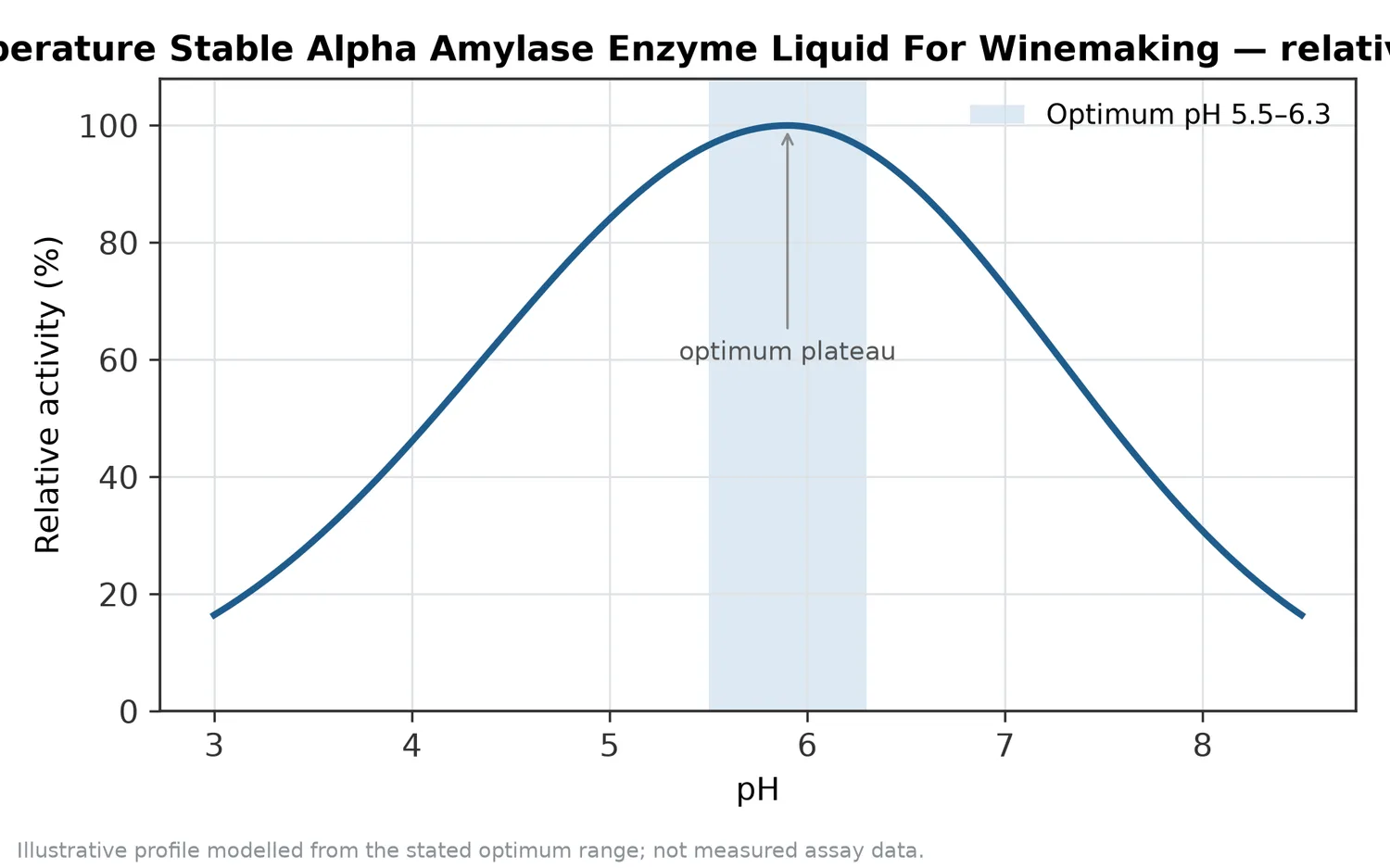
Cereal-based fruit wines and grain-influenced fermented beverages can use the same principle. If a fruit base is supplemented with rice, maize, wheat, sorghum, oats, malt adjuncts, or other starch-containing ingredients, alpha amylase can help prevent the cooked adjunct fraction from becoming the dominant viscosity or haze contributor [5].
Because alpha amylase mainly forms dextrins and oligosaccharides, complete fermentation performance may depend on what follows. When the target is a dry or highly attenuated beverage, downstream saccharification and yeast metabolism determine how much of the liquefied carbohydrate becomes ethanol and carbon dioxide [5].
Most grape, berry, apple, pear, and stone-fruit wines are not starch-driven systems. Their main fermentable sugars are already soluble sugars, and their main clarification challenges often involve pectin, proteins, phenolics, and suspended solids. Alpha amylase becomes relevant only if starch enters the process through ingredients or process design [3].
Examples include cereal adjuncts, rice additions, grain extracts, starch-based botanical carriers, immature plant materials, or hybrid beverage concepts that combine fruit and cooked starch. In those cases, a high-temperature stable alpha amylase can be used during the cooked-starch stage to reduce viscosity before blending, saccharification, or fermentation [1].
Starch haze is another targeted use. If starch or partially gelatinized starch remains in the beverage matrix, it can contribute to turbidity or instability. Alpha amylase reduces the polymer size of that starch fraction, which may make clarification easier when starch is the actual cause of the haze [4].
The enzyme should not be used as a broad substitute for fruit-processing enzyme systems. Pectinase breaks down pectin-rich cell-wall materials, while alpha amylase breaks down starch chains; those are different substrates, different bonds, and different process outcomes [3].
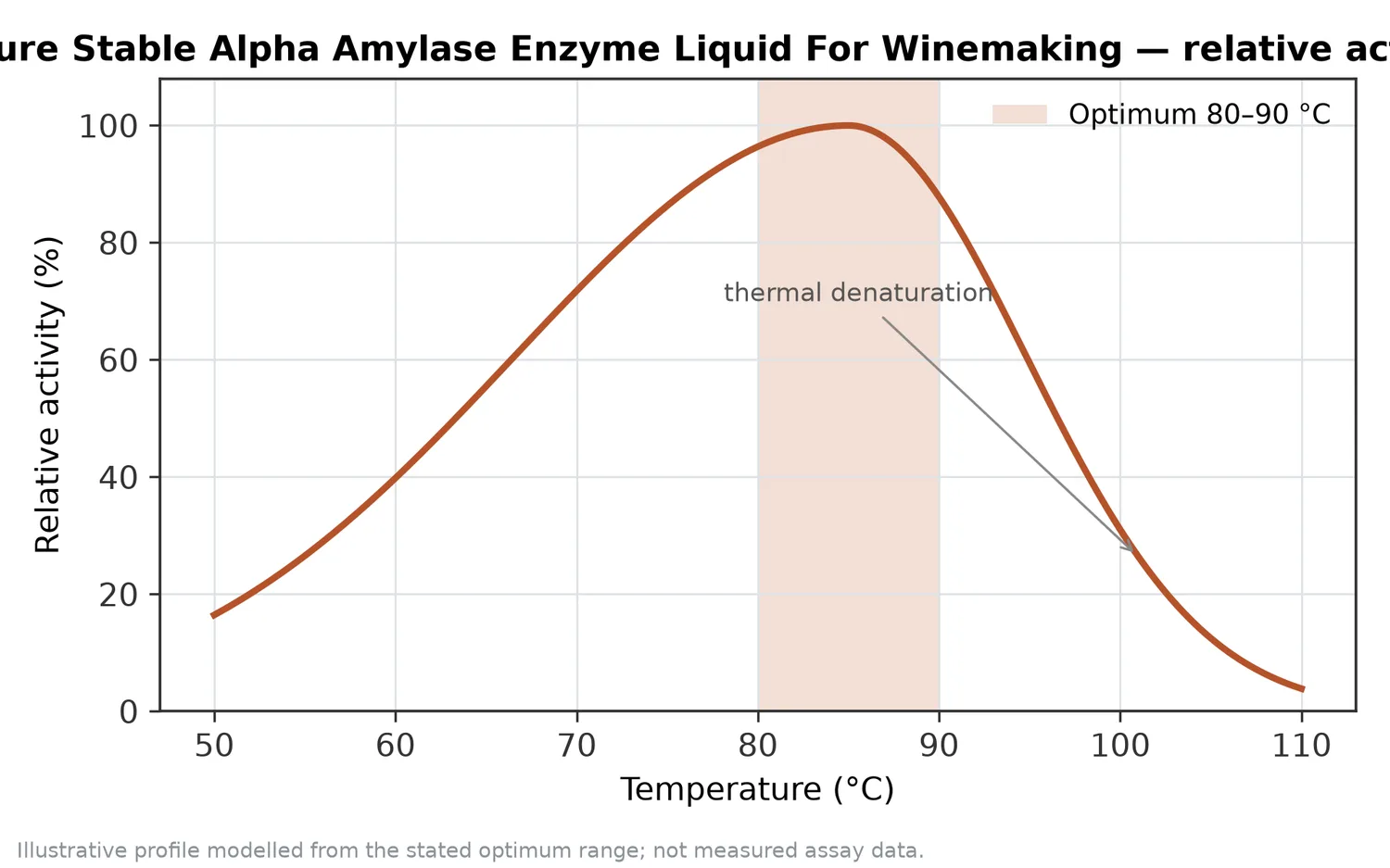
Brewing and alcohol fermentation workflows often involve starch conversion before yeast fermentation. Alpha amylase is central to this because the first step is usually liquefaction: reducing swollen starch polymers into lower-viscosity dextrins and maltooligosaccharides [1].
High-temperature stable alpha amylase is particularly useful when the process includes hot adjunct cooking or a liquefaction hold. Cereal adjuncts can thicken sharply when heated; the enzyme counteracts that thickening by cutting internal starch bonds while the substrate is in its swollen, accessible state [2].
In industrial alcohol production, alpha amylase is commonly paired conceptually with saccharifying enzymes. Alpha amylase opens the starch polymer; glucoamylase or similar enzymes can then release fermentable glucose from the resulting dextrins. Comparative work on corn starch granule hydrolysis shows that different amylolytic enzymes act differently on starch granules, reinforcing why liquefaction and saccharification are separate enzymatic functions [5].
For winemaking-related buyers, this matters when a beverage process sits between wine and brewing—such as rice wine, grain-fruit co-fermentation, or starch-based alcoholic base preparation. Alpha amylase addresses the starch handling step that fruit-only winemaking may not require [1].
The first practical effect is lower viscosity in gelatinized starch systems. As long starch chains are cut into shorter dextrins, the mash loses the polymer length and entanglement responsible for paste-like flow. This can improve mixing, heat transfer, pumping, and downstream separation [4].
The second effect is improved preparation for sugar release. Alpha amylase increases the number of shorter carbohydrate chains available for subsequent hydrolysis. That is why starch conversion processes often distinguish liquefaction from saccharification rather than expecting one enzyme type to do everything [5].
The third effect is more consistent fermentation feed preparation. Yeast fermentation is sensitive to nutrient availability, sugar release, solids distribution, and mass transfer. By making the starch portion more uniform and less viscous, alpha amylase can support a more manageable fermentation substrate [1].
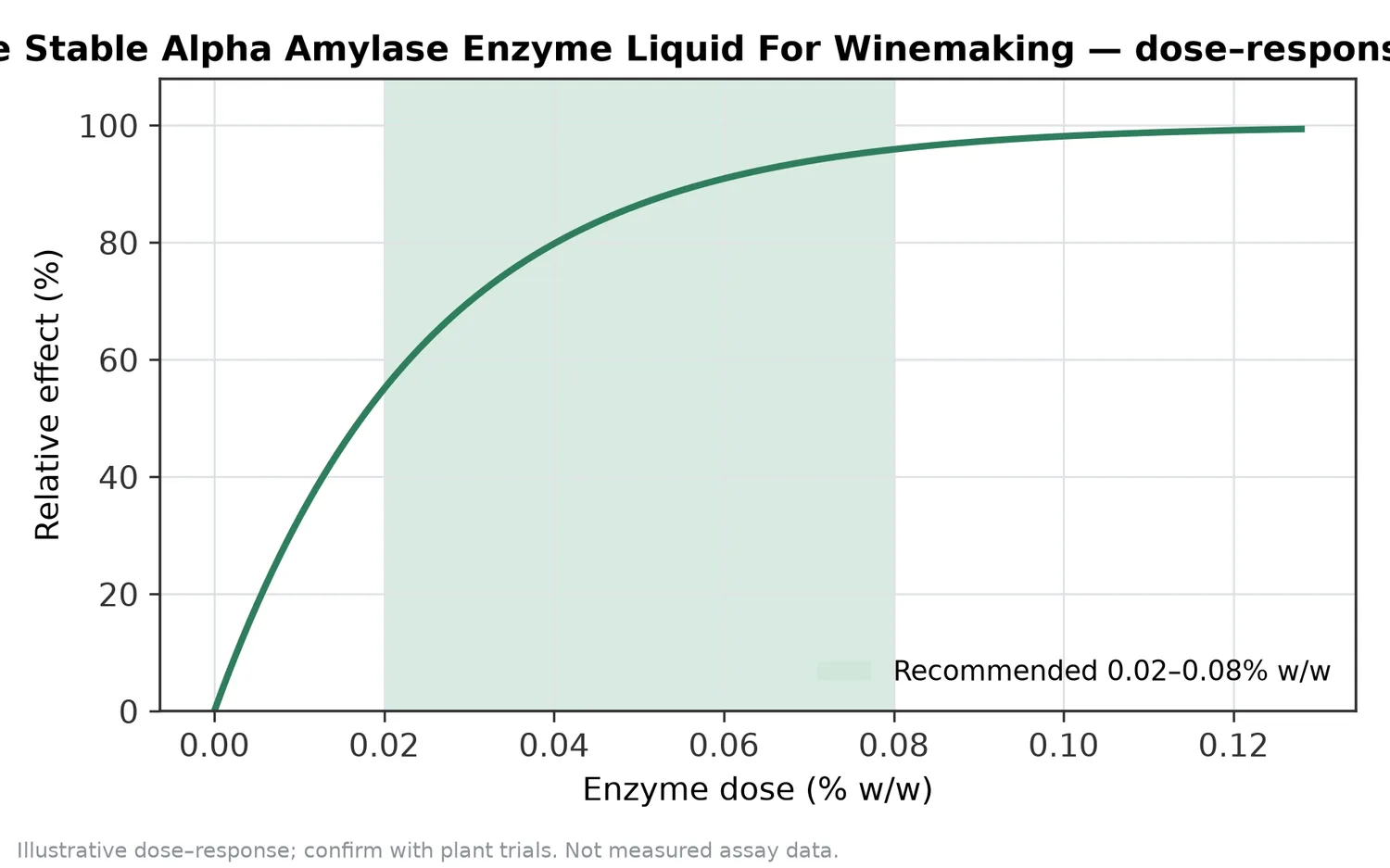
The fourth effect is reduced starch-related instability when starch is present. If turbidity is driven by pectin, protein, yeast, phenolics, or minerals, alpha amylase will not directly solve it; but when residual starch is the issue, enzymatic hydrolysis can reduce the size and persistence of starch-derived haze-forming material [3].
High-temperature stable alpha amylase is not a universal “wine enzyme.” Its substrate specificity is starch, and its main bond target is the internal α-1,4 linkage. It should be used where the process contains starch or starch-derived viscosity, not where the problem is purely pectin, protein, tannin, color extraction, or microbial control [3].
It is also not always a complete sugar-yield enzyme on its own. Alpha amylase liquefies starch and creates dextrins, but saccharifying enzymes are generally responsible for pushing dextrins toward glucose or other fermentable sugars. That division of labor is why enzyme combinations are common in starch-to-fermentation workflows [5].
Results depend strongly on the raw material. A well-gelatinized rice mash, a raw starch granule, a resistant starch fraction, and a fruit blend containing a small amount of cereal all present different access problems to the enzyme. Research on starch conformation and hydrolysis efficiency shows that physical structure can either expose or protect the glycosidic bonds alpha amylase needs to reach [4].
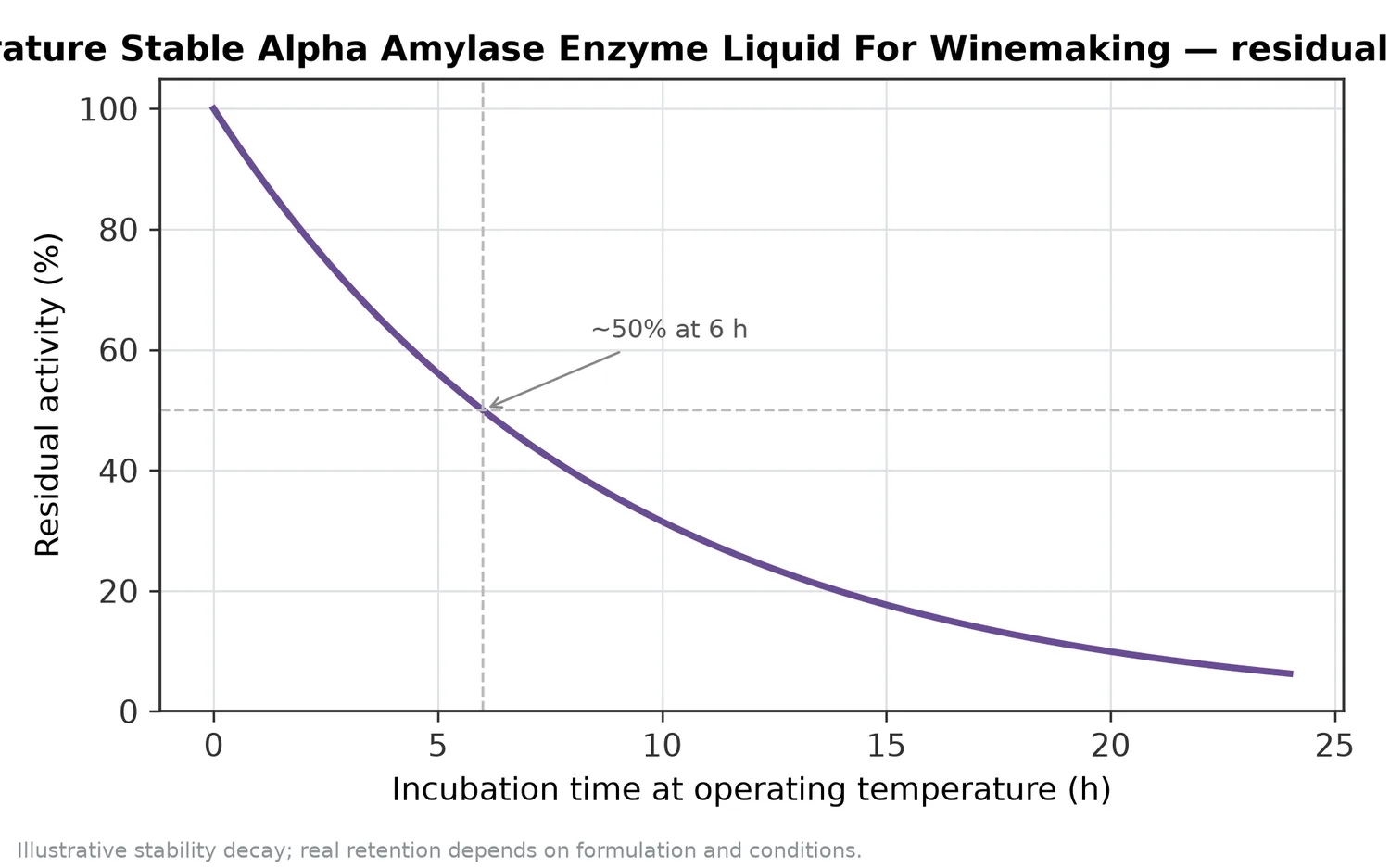
Thermostability should also be interpreted as suitability for hot starch-processing environments, not indestructibility. Any enzyme can lose function if exposed to sufficiently harsh conditions for long enough; thermostable amylases are valuable because their folded structure remains useful over heat conditions relevant to liquefaction better than less stable alternatives [6].
Enzyme preparations are proteins and should be handled as industrial processing aids, not as consumer food ingredients for direct consumption. Avoid unnecessary skin, eye, and inhalation exposure, and follow the Safety Data Sheet supplied with the order for handling, personal protection, and cleanup guidance .
Because enzyme dusts or aerosols can sensitize susceptible individuals, liquid enzyme preparations should still be handled carefully during pouring, dosing, and cleaning. The Certificate of Analysis and Safety Data Sheet provided with the order support routine documentation and safe workplace use without turning the purchase into a custom technical consultation .
Enzymes.bio supplies High-Temperature Stable Alpha Amylase Enzyme Liquid for Winemaking directly online in 1 kg units. The purchase flow is straightforward: select the product, place the online order, pay through the website, and the order is processed and shipped with the accompanying Certificate of Analysis and Safety Data Sheet .
For buyers working with rice wine, cereal-based wine-style beverages, starch-containing fruit wine, brewing adjuncts, or alcohol fermentation feedstocks, this product is best viewed as a hot liquefaction enzyme for the starch fraction of the process. Its value comes from a clear mechanism: it cuts internal α-1,4 starch bonds, reduces chain length, lowers viscosity, and prepares the substrate for downstream saccharification or fermentation [1].
High-temperature stable alpha amylase enzyme liquid is most useful in winemaking-related processes when starch is part of the raw material or haze/viscosity problem. It hydrolyzes internal α-1,4 linkages in gelatinized starch, converting long amylose and amylopectin chains into shorter dextrins and maltooligosaccharides that are easier to handle and easier to convert further [3].
Its strongest applications are rice wine, cereal-based wine-style beverages, grain adjunct liquefaction, starch-containing fruit wine concepts, and alcohol fermentation feedstock preparation. It is not a replacement for pectinase in ordinary grape or fruit wine, and it is not the same as glucoamylase when the objective is maximum glucose release [5].
Enzymes.bio offers the product as an online 1 kg purchase with order processing, shipping, and the accompanying Certificate of Analysis and Safety Data Sheet. For processes where starch needs hot liquefaction before fermentation, this enzyme provides a practical way to reduce viscosity, improve substrate accessibility, and support more consistent downstream conversion .
Sold by the 1 kg unit, in stock and ready to ship. Order directly on our store — pay online and we process your order. A Certificate of Analysis and Safety Data Sheet are included with every order.
Buy High-Temperature Stable Alpha Amylase Enzyme Liquid For Winemaking →Numbered in order of first citation. Open-access sources, each verified reachable at publication; citation numbers in the text link here.