
Industrial-Grade Low-Temperature Scouring Enzyme for Textile Pretreatment is a pectin-lyase enzyme complex supplied by Enzymes.bio for bio-scouring cotton, linen, hemp, and related plant-based textile materials. It is used to reduce pectin-rich surface impurities that restrict wetting, helping fabrics become cleaner, more absorbent, and more consistent for bleaching, dyeing, and finishing under milder pretreatment conditions than conventional high-alkali scouring. Enzymes.bio sells the product directly online by the 1 kg unit; buyers pay online, and the order is processed and shipped with the accompanying Certificate of Analysis and Safety Data Sheet .
Low-temperature scouring enzyme is used in the preparation stage of textile wet processing, before dyeing and finishing. In plant-based fibers, especially cotton, the surface is not only cellulose; it also contains pectin, waxes, proteins, hemicellulose, mineral matter, and other non-cellulosic materials. These surface and primary-wall impurities reduce capillary wetting, slow liquor penetration, and can produce uneven absorbency across a fabric or yarn package. Enzymatic bio-scouring addresses this problem by using a selective catalyst to break down pectin-related structures that help hold hydrophobic impurities on or near the fiber surface [1].
Enzymes.bio’s Industrial-Grade Low-Temperature Scouring Enzyme is described as a liquid compound pectin-lyase enzyme complex for textile pretreatment. The product page positions it for cotton, linen, hemp, blended or interwoven fabrics, and yarn or fabric processing where pectin-related impurities need to be reduced to improve permeability, wettability, hand feel, and downstream dyeing performance .
The term “low-temperature” is important in context. Traditional cotton scouring often relies on strong alkalinity and high thermal input to saponify waxes, dissolve pectic substances, and remove other contaminants. By contrast, low-temperature enzymatic scouring is designed to operate under milder wet-processing conditions, with the product information describing use around pH 7–9 and 50–60 °C for a typical process time of 30–40 minutes . This does not make enzymatic scouring a universal replacement for every caustic step in every mill route, but it does provide a milder pretreatment tool where pectin removal and improved wetting are the primary objectives.
Enzyme-based textile processing has been studied because it can support cleaner production by reducing the intensity of chemical treatment in selected wet-processing steps. Reviews of textile enzyme applications describe enzymes as increasingly relevant to sustainable pretreatment, finishing, and effluent-related strategies, while also noting that process design remains important for reliable industrial performance [1].
Cotton scouring is fundamentally about converting a naturally water-resistant textile surface into a hydrophilic one. Cotton fiber is mostly cellulose, but the outer layers contain non-cellulosic materials that interfere with water access. Pectin is especially significant because it is part of the matrix that binds or associates with waxy and other surface impurities. When pectin remains intact, the fabric may show poor absorbency, slow wet-out, uneven dye liquor uptake, and inconsistent preparation for bleaching or dyeing [2].
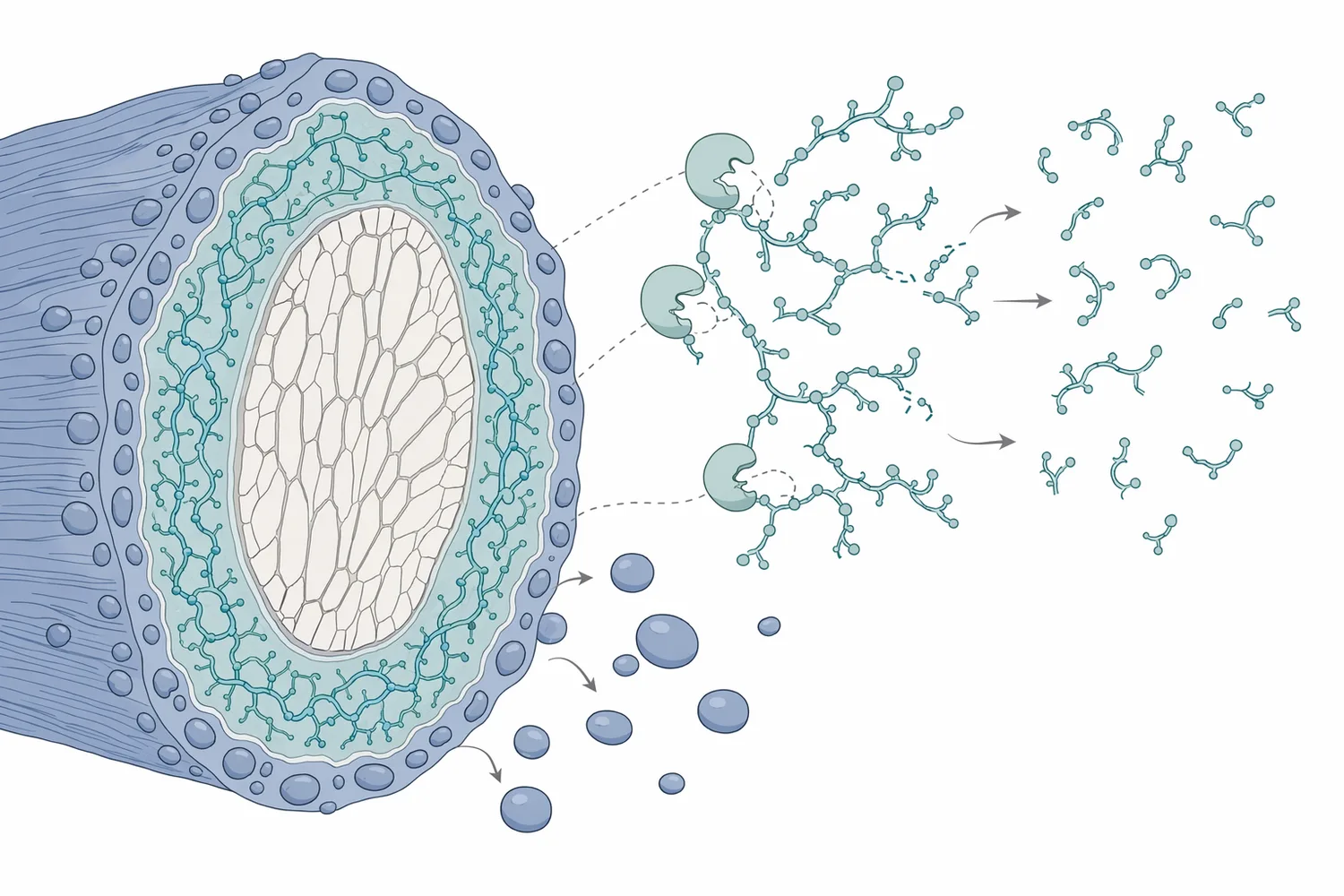
A pectin-lyase enzyme complex works by cleaving pectin molecules rather than attacking the cellulose backbone. As the pectin network is broken down, the surface matrix loosens. Waxes and hydrophobic contaminants that were physically retained by that matrix become easier to remove through the bath, rinsing, and mechanical movement. The practical result is improved fabric wetting: water and treatment liquor can enter the yarn and fabric structure more evenly, which is essential for reproducible dyeing and finishing [3].
The effect is not simply “cleaning” in a general sense. The enzyme changes the surface chemistry and accessibility of the fiber by reducing pectin-rich barriers. This is why pectinases, pectate lyases, and related pectin-degrading enzyme systems are repeatedly discussed in the textile literature as bio-scouring agents for cotton and other plant-based substrates [1].
For linen, hemp, jute, and other bast or lignocellulosic fibers, the same principle applies, although the fiber architecture and impurity profile differ from cotton. Pectin and non-cellulosic binding materials can influence stiffness, wetting, compatibility with dyes, and process uniformity. Recent work on jute bio-scouring, for example, connects enzymatic treatment with improved compatibility in reactive dyeing, reinforcing the broader value of targeted bio-scouring for plant-derived textile fibers [4].
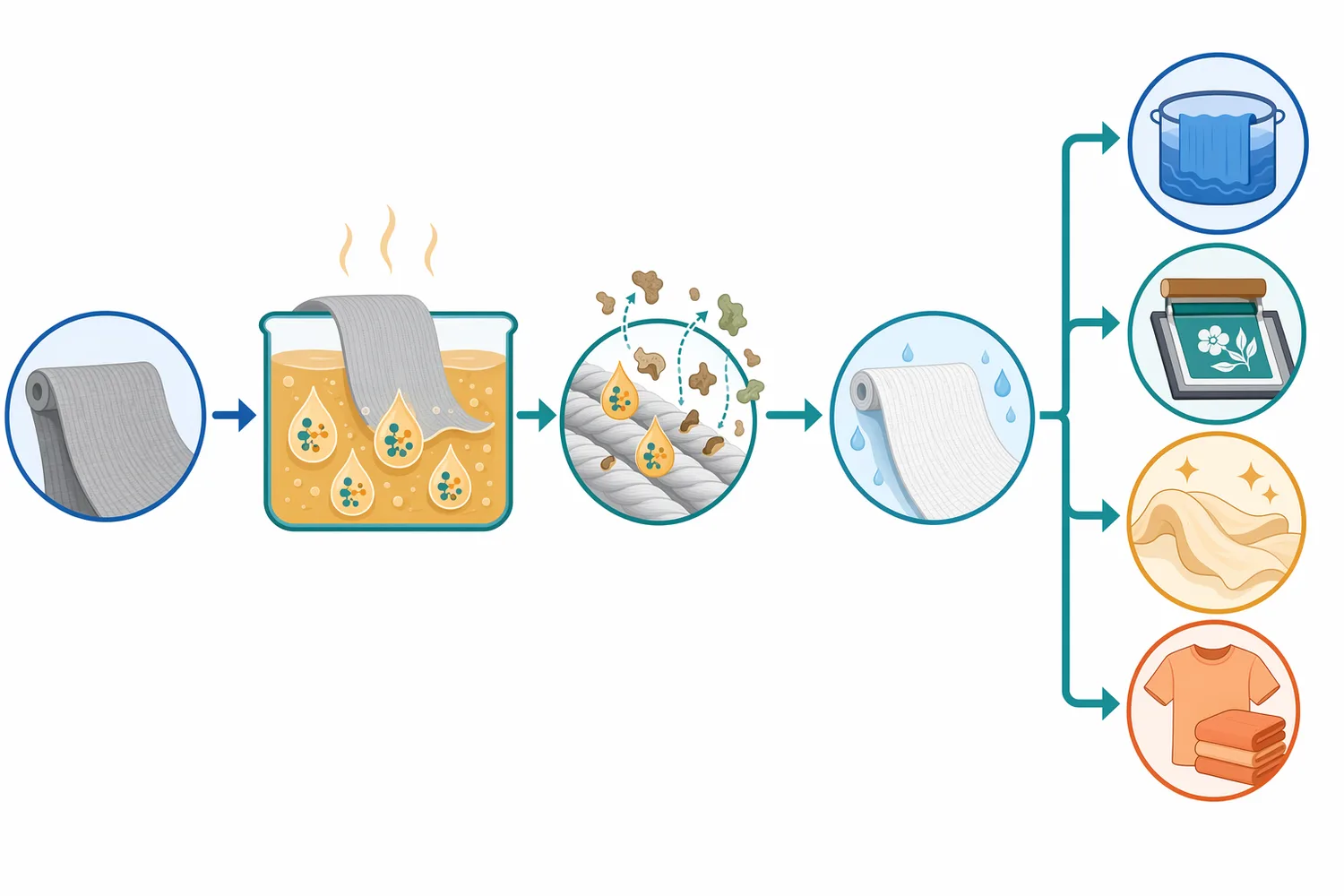
Pectin is a polysaccharide component of plant cell walls and intercellular regions. In raw or insufficiently prepared plant fibers, it contributes to a surface layer that can behave like a glue: it helps retain waxy materials and other impurities that make the fiber less wettable. A pectin-lyase enzyme catalyzes cleavage within pectin structures, reducing their molecular size and disrupting their ability to hold the impurity layer together [3].
Once that pectin framework is cut, the fabric surface becomes more accessible. Hydrophobic materials are no longer anchored as strongly, and the bath can more effectively penetrate capillaries between fibers and within yarns. This is why successful bio-scouring is often observed as faster wetting, better absorbency, and more even preparation for dyeing. The improvement comes from a concrete physical and chemical change: the outer, pectin-rich barrier is partially degraded, allowing the fabric to behave more like a hydrophilic cellulose substrate [2].
Selectivity is the major difference between enzymatic and strongly alkaline scouring. Caustic scouring is powerful and broad; it can remove many types of impurities, but the harsh conditions may also affect the cellulose structure or contribute to fabric weight and strength changes depending on the process. Enzymatic scouring is narrower: it is aimed at pectin-related impurity removal, so its benefit is greatest when pectin breakdown is the limiting step for wetting and preparation [1].
This selectivity also explains why a scouring enzyme should be understood as part of pretreatment, not as a single product that performs every preparation function. Desizing, scouring, bleaching, and bio-polishing address different substrates: starch or size films, pectin and wax-associated impurities, natural color bodies or peroxide chemistry, and protruding cellulose fibrils respectively. Low-temperature scouring enzyme is centered on the scouring function, especially pectin-related surface impurity reduction [5].
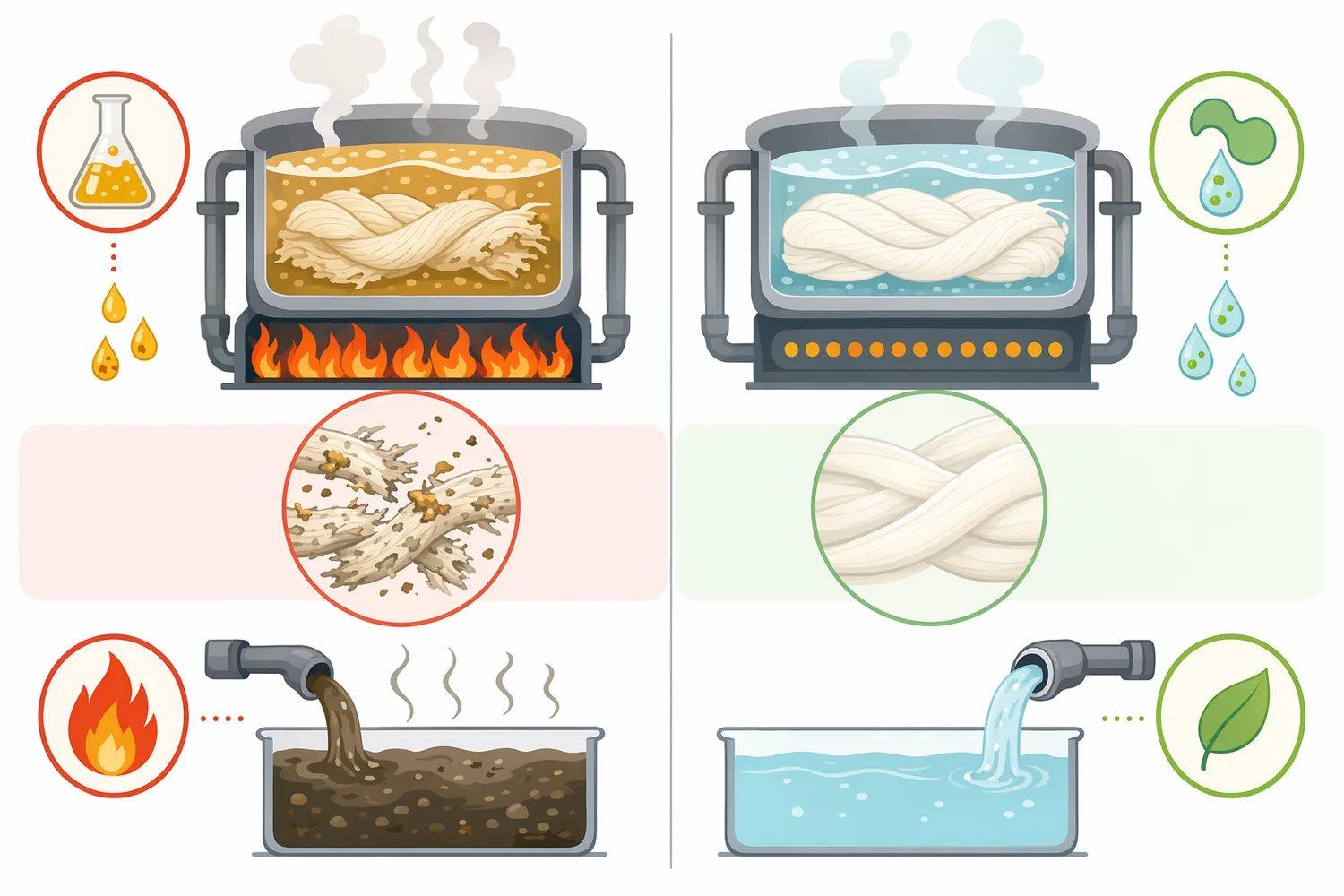
Both alkaline scouring and enzymatic bio-scouring aim to improve wettability and prepare fabric for later wet processing. The practical difference is the way each route acts on the fiber surface. Alkaline scouring uses strong chemistry to remove a broad range of impurities, while enzymatic scouring uses a targeted biological catalyst to reduce pectin-rich structures that restrict absorbency [1].
| Pretreatment route | Main action on plant-fiber impurities | Typical processing character | Strengths | Practical limitations |
|---|---|---|---|---|
| Conventional alkaline scouring | Broad chemical removal and saponification of waxes, pectins, oils, and other non-cellulosic matter | Strongly alkaline, usually more chemically intensive | Robust impurity removal; long-established in cotton preparation | Can increase chemical load, rinsing demand, and risk of cellulose or fabric-quality impact if over-severe |
| Low-temperature enzymatic bio-scouring | Selective degradation of pectin-related structures that hold hydrophobic impurities on the fiber surface | Milder enzymatic treatment; Enzymes.bio product information describes pH 7–9 and 50–60 °C process conditions | Improves wetting and absorbency with reduced reliance on harsh alkali in suitable routes | Does not automatically replace all scouring, bleaching, or desizing chemistry; performance depends on the textile material and process setup |
| Combined or staged pretreatment | Enzymatic pectin removal integrated with other wet-processing steps | Process-specific sequence | Can balance wetting performance, fabric quality, and chemical reduction | Requires practical alignment with the mill’s existing preparation route |
The comparison is best understood as a process choice, not a claim that one method is always superior. Enzymatic bio-scouring is most compelling where improved wettability and pectin removal can be achieved without the full severity of traditional caustic scouring. Research and review literature consistently frame enzymes as tools for more sustainable textile processing, while also recognizing that fabric construction, fiber type, liquor movement, and downstream requirements influence results [1].
The scientific basis for enzymatic scouring is strong because the target substrate is real and relevant: pectin is part of the non-cellulosic impurity system that reduces plant-fiber absorbency. Studies and reviews on textile enzymes identify pectinases and pectate lyases as important agents for cotton bio-scouring because they act on pectic materials while leaving the cellulose fiber largely outside the main catalytic target [1].
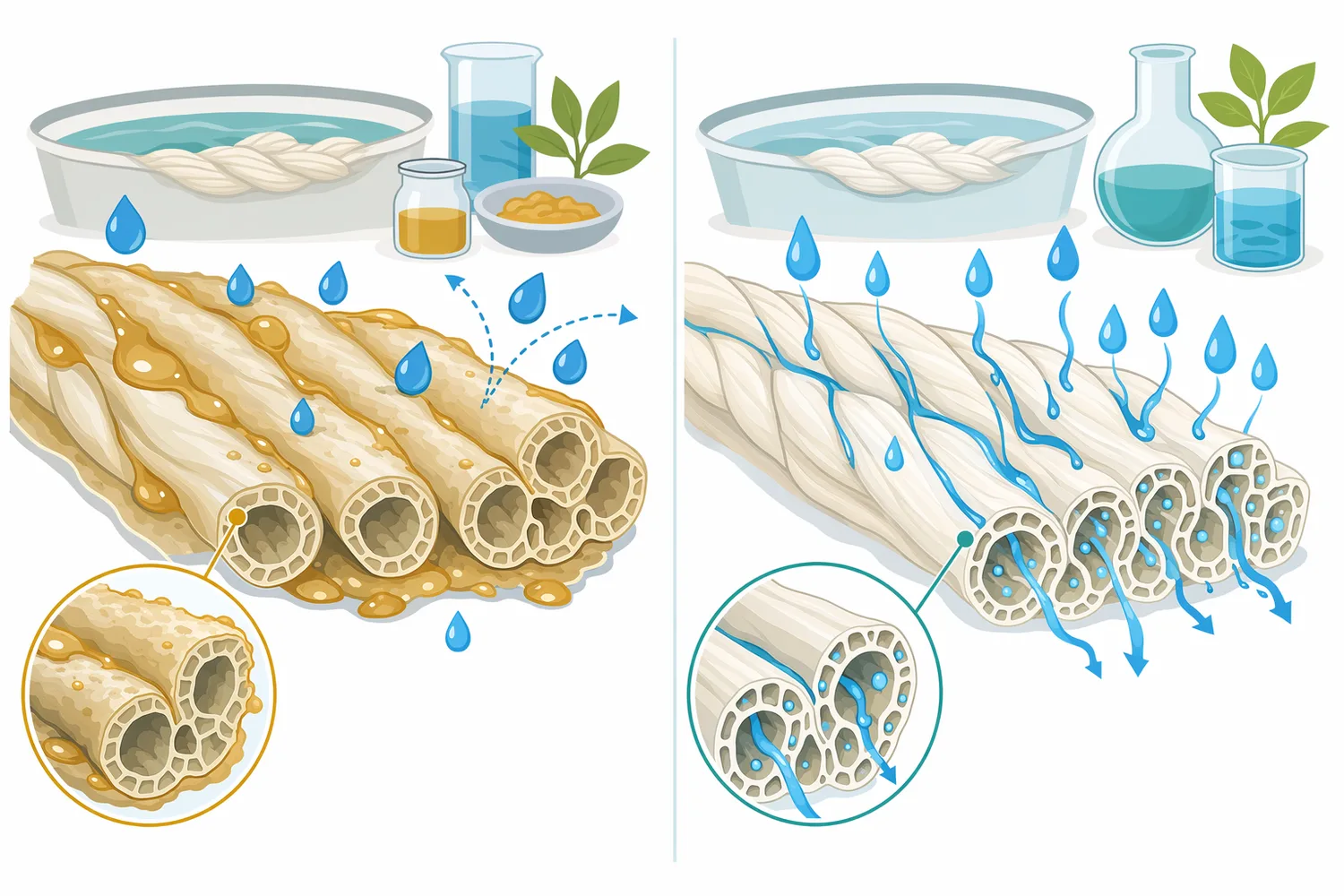
A study on cutinase production and application in enzymatic scouring of cotton fabric also illustrates the broader enzymatic-scouring principle: enzymes can be used to alter the outer impurity layer of cotton and improve preparation characteristics through more selective biochemical action. Although cutinase and pectin lyase act on different substrates, the work supports the wider movement toward enzyme-assisted pretreatment for cotton fabrics [3].
Cotton knitted fabric bio-scouring studies further support the practical aim of using enzymes to produce fabric suitable for later coloration. The key processing outcome is absorbency: after the surface impurities are reduced, the fabric accepts aqueous processing liquor more readily. Improved absorbency is not merely a cosmetic benefit; it affects dyeing levelness, bleaching uniformity, and the reproducibility of finishing treatments [2].
Research on jute bio-scouring extends the concept beyond cotton. Jute contains non-cellulosic constituents that affect dyeing and compatibility with reactive coloration, and enzymatic treatment has been investigated as a route to improve fiber preparation. This matters for buyers working with mixed plant-fiber portfolios because the same core mechanism—selective removal or loosening of non-cellulosic binding materials—can be relevant across several natural fibers [4].
The adoption of enzyme-based textile processing is also shaped by practical barriers. Literature on enzyme-based processing in developing textile sectors notes that change is not only a technical matter; mills must also manage cost perception, process familiarity, worker practice, and confidence in repeatability. This is why product information, realistic claims, and clear use boundaries are important for customer-facing enzyme documentation [6].
Enzymes.bio describes the product for use under moderate scouring conditions, including pH 7–9, a 50–60 °C processing range, and a typical 30–40 minute treatment window depending on the process. Those conditions are materially different from highly caustic, high-temperature cotton scouring routes and are central to the product’s “low-temperature” positioning .
Lower-temperature operation can matter in three practical ways. First, it can reduce the thermal severity applied to the textile substrate. Second, it can support process routes that aim to reduce harsh alkali while still improving fabric wetting. Third, it may simplify integration with other moderate wet-processing steps, provided the overall pretreatment sequence is compatible. Reviews of cold-active and low-temperature enzyme applications emphasize that enzymes able to perform effectively at milder temperatures are valuable in industries seeking lower energy demand and gentler processing conditions [7].
The enzyme mechanism also benefits from this moderate approach. Enzymes are folded proteins with active sites shaped to bind specific substrates. Excessive heat, extreme pH, or incompatible chemicals can disrupt that structure and reduce catalytic function. Low-temperature scouring therefore relies on maintaining conditions where the enzyme can remain active long enough to cleave pectin structures on the fabric surface [8].
At the same time, “low-temperature” does not mean “no process control.” Wetting, bath circulation, time, fabric loading, and contact between enzyme liquor and fiber surface still matter. Enzyme catalysis occurs only where the enzyme can reach its substrate; tightly constructed fabrics, residual size, water hardness interactions, or incompatible auxiliaries can influence the outcome. Water quality is a recognized factor in textile wet processing because hardness can interfere with chemical performance, deposits, and process uniformity [9].
Cotton is the central application for pectin-lyase scouring enzyme because cotton preparation depends heavily on removing surface impurities that restrict hydrophilicity. In knitted cotton, improved wetting can support more even bleaching and dyeing across loop structures. In woven cotton, better liquor penetration can help reduce variability between yarns and fabric zones, particularly where dense construction slows wet-out [2].
For cotton, the practical objective is to convert a hydrophobic or unevenly wetting greige material into a more absorbent substrate. Enzymes.bio’s product information describes benefits including improved fabric cleanliness, wettability, handle, and dyeing performance through reduction of pectins and related non-cellulosic impurities .
Linen and hemp contain plant-wall components and non-cellulosic materials that affect stiffness, absorbency, and dyeing behavior. A pectin-focused scouring enzyme can be useful where the pretreatment goal is to loosen pectin-rich binding materials and improve wet-processing compatibility without relying only on severe alkaline chemistry. Enzymes.bio lists linen and hemp among the relevant textile substrates for this low-temperature scouring enzyme .
Bast fibers can vary more than cotton in natural composition, retting history, and residual impurities. As a result, the visible benefit of enzymatic scouring may appear as improved wetting, cleaner handle, or more uniform dyeing response rather than identical effects across all lots. Research on jute bio-scouring supports the idea that enzymatic pretreatment can enhance compatibility with reactive dyeing in plant-fiber systems where non-cellulosic materials restrict coloration performance [4].
Blended or interwoven fabrics are also listed in the product’s intended application scope. In these constructions, the enzyme’s main action remains on the plant-fiber component and its pectin-associated impurity layer. The value is greatest when cotton, linen, hemp, or another plant-derived component controls absorbency or dyeing uniformity in the overall material .
Because blends combine fibers with different chemical and thermal responses, the enzyme should be viewed as a targeted scouring aid within the broader pretreatment route. For example, synthetic components may not need pectin removal, but they still experience the bath conditions. The benefit therefore comes from improving the plant-fiber fraction while maintaining process conditions suitable for the full fabric construction [5].
The most direct performance benefit is improved absorbency. When pectin and associated surface barriers are reduced, water can spread and penetrate more readily. Faster and more uniform wetting supports later operations because bleaching, dyeing, and finishing depend on consistent contact between the treatment liquor and the fiber surface [2].
Improved dyeing consistency follows from the same mechanism. Dye liquor cannot level properly if some zones wet rapidly while others resist penetration. By opening the surface and reducing pectin-linked hydrophobic barriers, enzymatic scouring can help create a more uniform starting point for coloration. Enzymes.bio’s product page describes the intended outcome as better permeability and more consistent downstream bleaching and dyeing results .
Fabric hand can also improve when the surface impurity layer is reduced. Waxy and pectin-rich residues can contribute to a harsh, uneven, or less responsive feel. Enzymatic scouring does not mechanically soften fabric in the same way as a finishing softener, but by cleaning and opening the surface, it can contribute to a cleaner handle before finishing [3].
A further benefit is reduced dependence on severe caustic treatment where the process allows. Reviews of textile enzyme applications emphasize that enzymatic processing can reduce the environmental burden of conventional wet processing by lowering the need for harsh chemicals in selected steps. The practical sustainability gain depends on the full route, including rinsing, bleaching chemistry, auxiliaries, effluent treatment, and production controls [1].
Textile wet processing is water- and chemical-intensive, and pretreatment is a major contributor because it prepares the fabric for all later value-adding steps. Strong alkaline scouring is effective, but it can increase the load associated with neutralization, rinsing, dissolved impurities, and effluent treatment. Enzyme-based scouring is attractive because it targets a specific impurity class instead of applying broad chemical severity to the whole fiber system [1].
The shift toward bio-based auxiliaries in textile wet processing reflects this wider industry direction. Recent reviews describe increasing interest in alternatives that reduce hazardous substances, improve biodegradability profiles, and support cleaner textile production while maintaining performance expectations. Enzymatic scouring fits that direction because it uses catalytic specificity rather than brute-force alkalinity as the main treatment principle [5].
Cold-active and low-temperature enzyme research adds another sustainability angle. Enzymes that work effectively at lower or moderate temperatures can reduce the need for high heat in selected industrial operations. Reviews of cold-adapted enzymes note their potential in sectors where lower-temperature performance can save energy and protect heat-sensitive materials [10].
For textile pretreatment, these advantages should be stated responsibly. A scouring enzyme can support milder processing and lower caustic reliance, but total environmental impact depends on the complete recipe and production route. If a process still uses intensive bleaching, multiple rinses, or difficult auxiliaries, the enzyme’s contribution is one part of the total sustainability picture [1].
Modern textile processing increasingly values repeatability, automation, and controlled wet-processing sequences. Enzymes can fit this direction because they perform defined catalytic functions under defined conditions. However, enzyme use also requires respect for the biological nature of the catalyst: temperature, pH, contact time, and chemical compatibility affect whether the active enzyme can reach and cleave its substrate [8].
Automation in textile processing can help maintain consistent time, temperature, liquor circulation, and dosing of wet-processing inputs. While automation itself does not guarantee better scouring, it supports the stable operating environment that enzymatic treatments need. Reviews of textile automation describe the industry’s movement toward greater process control, which is relevant when introducing biological catalysts into production routines [11].
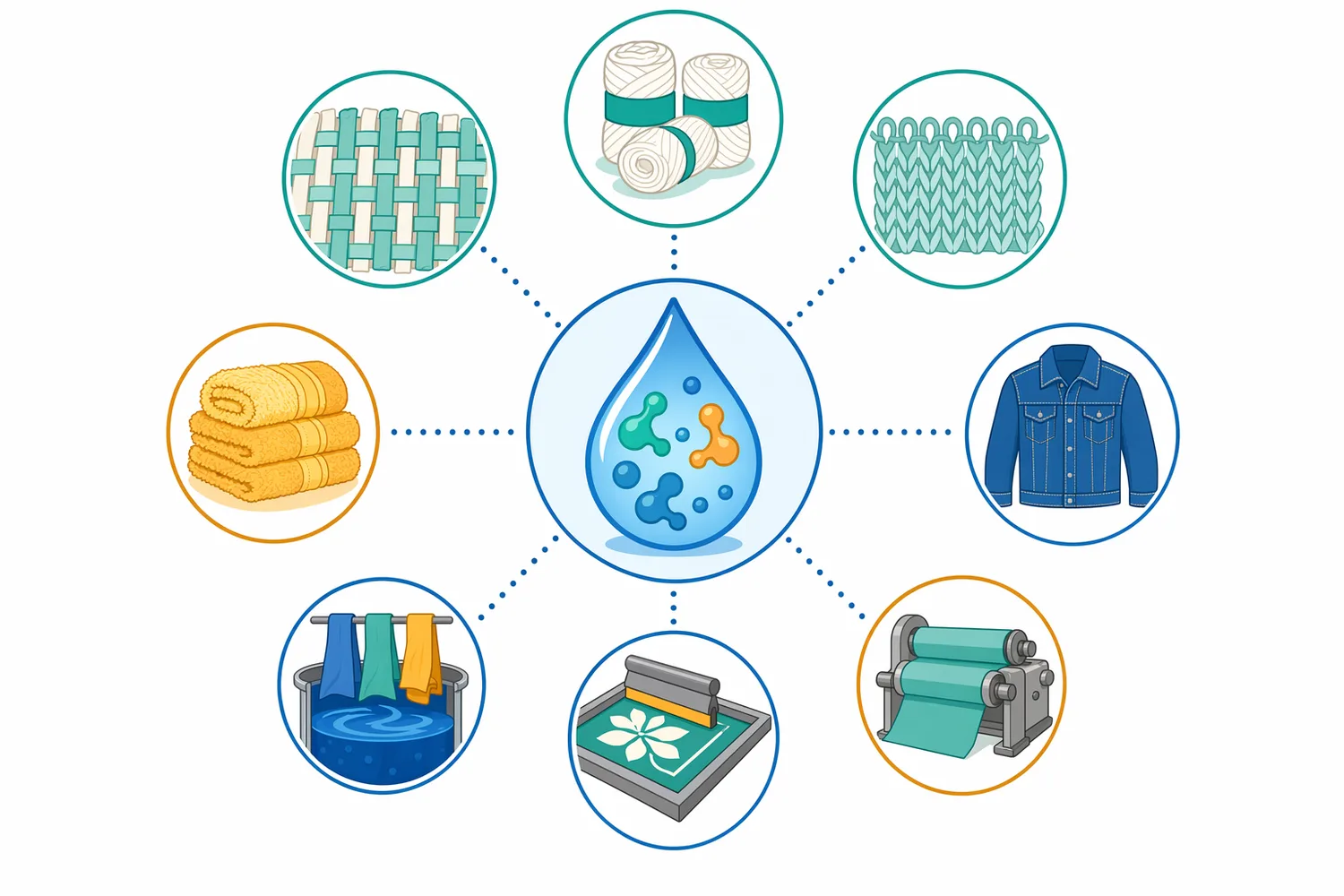
Water hardness and dissolved salts can also influence wet processing. Hard water may contribute to deposits, reduced efficiency of auxiliaries, and uneven results in textile preparation and coloration. Although the scouring enzyme’s primary target is pectin, the surrounding bath chemistry still affects how well loosened impurities are removed and how uniformly the fabric is treated [9].
The most reliable way to understand low-temperature scouring enzyme is therefore as a precision pretreatment tool. It acts on pectin-rich surface structures; the process around it must still deliver wetting, movement, impurity removal, and appropriate follow-on preparation. This balanced view aligns with research discussions that describe enzymes as powerful but process-dependent tools for cleaner textile production [6].
Enzymes.bio supplies Industrial-Grade Low-Temperature Scouring Enzyme as an online 1 kg product for textile pretreatment. The product is presented as a liquid pectin-lyase enzyme complex intended to help reduce pectins and related non-cellulosic impurities on cotton and other plant-based textile materials. Buyers can purchase the 1 kg unit directly online, complete payment, and receive the product with the accompanying Certificate of Analysis and Safety Data Sheet .
For a customer using plant-based textiles, the product’s value is clearest when poor wettability, uneven preparation, or excessive reliance on strong alkaline scouring is a concern. The enzyme does not claim to bleach fabric, remove every type of size, or replace all auxiliaries. Its role is more specific and more technically credible: it helps break down pectin-related barriers so the fabric surface becomes more accessible to water and downstream wet-processing liquors .
This distinction is important because textile pretreatment has multiple targets. Desizing removes size materials; scouring removes natural impurities; bleaching addresses color and whiteness; finishing modifies final handle or performance. A pectin-lyase scouring enzyme belongs in the scouring part of that sequence, where pectin breakdown improves absorbency and supports later steps [5].
The product’s moderate processing conditions are consistent with the wider industrial interest in enzymes that operate under gentler conditions. Low-temperature enzyme applications are valued because they can reduce harsh processing intensity and help protect materials while still delivering a catalytic effect on the intended substrate [7].
A well-matched enzymatic scouring step should make the fabric easier to wet, cleaner at the surface, and more uniform for later bleaching or dyeing. The visible result may be faster water absorption, more even wet-out across the fabric, and improved preparation consistency. These effects arise because pectin degradation loosens the non-cellulosic surface layer that limits capillary action [2].
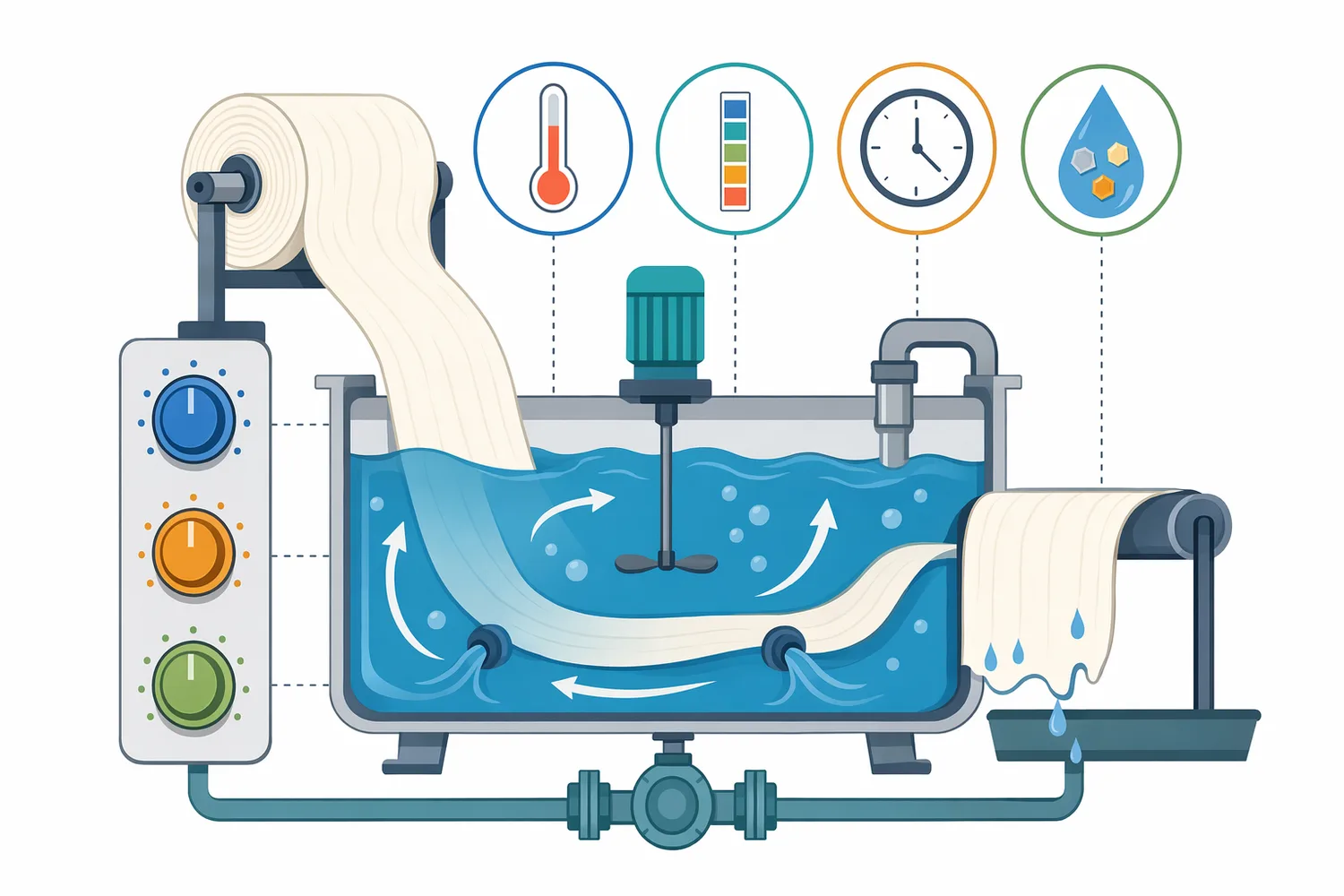
Results vary with fiber type and fabric construction. A lightweight cotton knit, a tightly woven cotton fabric, a hemp blend, and a jute-containing fabric may all present different access pathways for the enzyme. Enzyme molecules must reach pectin-rich regions; if the fabric is dense, heavily sized, oily, or restricted by prior processing residues, the rate and uniformity of scouring can differ [6].
Downstream targets also shape the apparent benefit. If the next step is reactive dyeing, improved absorbency and liquor penetration are directly valuable. If the next step requires high whiteness, enzymatic scouring may support preparation but does not eliminate the need for a suitable bleaching strategy. If the priority is a softer handle, pectin and impurity reduction may contribute, but finishing choices still matter [5].
This is why the best technical claim is not that enzymatic scouring replaces the entire pretreatment department. The accurate claim is that a pectin-lyase scouring enzyme can reduce pectin-related impurities and improve wetting under milder conditions, providing a cleaner and more selective route for the scouring function in suitable textile processes [1].
Industrial-Grade Low-Temperature Scouring Enzyme for Textile Pretreatment from Enzymes.bio is a pectin-lyase enzyme complex for bio-scouring cotton, linen, hemp, and related plant-based textile materials. It is designed to act on pectin-rich surface impurities that restrict wettability, helping fabrics become more absorbent and better prepared for bleaching, dyeing, and finishing .
The mechanism is concrete: the enzyme cleaves pectin structures in the fiber’s non-cellulosic surface matrix. Once that matrix is weakened, waxy and hydrophobic impurities are easier to loosen and remove, improving water access to the cellulose-rich fiber structure. This is the reason pectin-degrading enzymes are widely discussed in textile research as selective bio-scouring tools [1].
Compared with conventional high-alkali scouring, low-temperature enzymatic scouring offers a milder, more targeted pretreatment option. It is not a universal replacement for every wet-processing step, but it can reduce reliance on severe chemistry where the process goal is pectin removal and absorbency improvement. Research on cotton and other plant-fiber bio-scouring supports the technical basis for this application [2].
Enzymes.bio supplies the product directly online by the 1 kg unit. After online purchase and payment, the order is processed and shipped with the relevant Certificate of Analysis and Safety Data Sheet, giving textile customers a straightforward way to obtain a targeted low-temperature scouring enzyme for plant-fiber pretreatment .
Sold by the 1 kg unit, in stock and ready to ship. Order directly on our store — pay online and we process your order. A Certificate of Analysis and Safety Data Sheet are included with every order.
Buy Industrial-Grade Low-Temperature Scouring Enzyme For Textile Pretreatment →Numbered in order of first citation. Open-access sources, each verified reachable at publication; citation numbers in the text link here.