
Keratinase Enzyme For Animal Feed Preparation CAS 9014-01-1 is a proteolytic enzyme preparation used to hydrolyze keratin-rich materials—especially poultry feathers and feather meal—into smaller peptides and amino acids that are more accessible in feed preparation. Keratinase is valuable because feather keratin is naturally insoluble, tightly packed and cross-linked, so ordinary digestion or mild processing does not release its protein value efficiently. Enzymes.bio supplies this keratinase product directly online by the 1 kg unit, with each order processed and shipped after online payment and accompanied by a Certificate of Analysis and Safety Data Sheet .
Keratinase is not a general “protein booster.” It is a targeted enzyme for a specific feed-processing problem: converting resistant structural proteins such as feather keratin into a more usable hydrolysate or protein ingredient. Research on microbial keratinases consistently identifies feather waste as a high-protein but difficult substrate, and shows that keratinase treatment can break down keratin structure into soluble protein fragments, peptides and amino acids [1].
Feathers are produced in very large quantities by poultry processing, and they contain a high proportion of protein. The practical limitation is that most of this protein is present as keratin, a structural protein designed by biology to resist water, microbes, mechanical damage and ordinary proteolysis. Keratin occurs not only in feathers, but also in hair, horn, hoof, wool, fur and scales, making it one of the most abundant animal structural proteins in agricultural by-product streams [2].
For feed preparation, the problem is not simply “how much protein is present.” Crude protein can be high while digestible amino acid availability remains limited. Keratin’s dense architecture shields peptide bonds from ordinary proteases, so untreated or poorly processed feather material can pass through nutrition systems with much of its amino acid value locked inside an insoluble matrix. Reviews of keratin biodegradation describe keratin as recalcitrant because of its high cystine content, disulfide cross-linking, hydrophobic interactions and ordered secondary structure [1].
This is why enzymatic preparation matters. Keratinase attacks the keratin matrix in a way that standard feed processing alone may not achieve under mild conditions. By hydrolyzing the protein into smaller peptides and free amino acids, it can help move feather-derived material from a resistant by-product toward a more nutritionally accessible protein ingredient, provided the final feed is formulated appropriately for the target animal and complies with local regulations [3].
Keratinase is a specialized protease capable of degrading keratin. Many keratinases are produced by bacteria or fungi that use feathers, hair or other keratin-rich materials as nutrient sources. Unlike ordinary proteases that readily cut soluble proteins such as casein or gelatin, keratinases are associated with the ability to act on insoluble keratin, where peptide bonds are physically protected by compact folding and chemical cross-links [2].
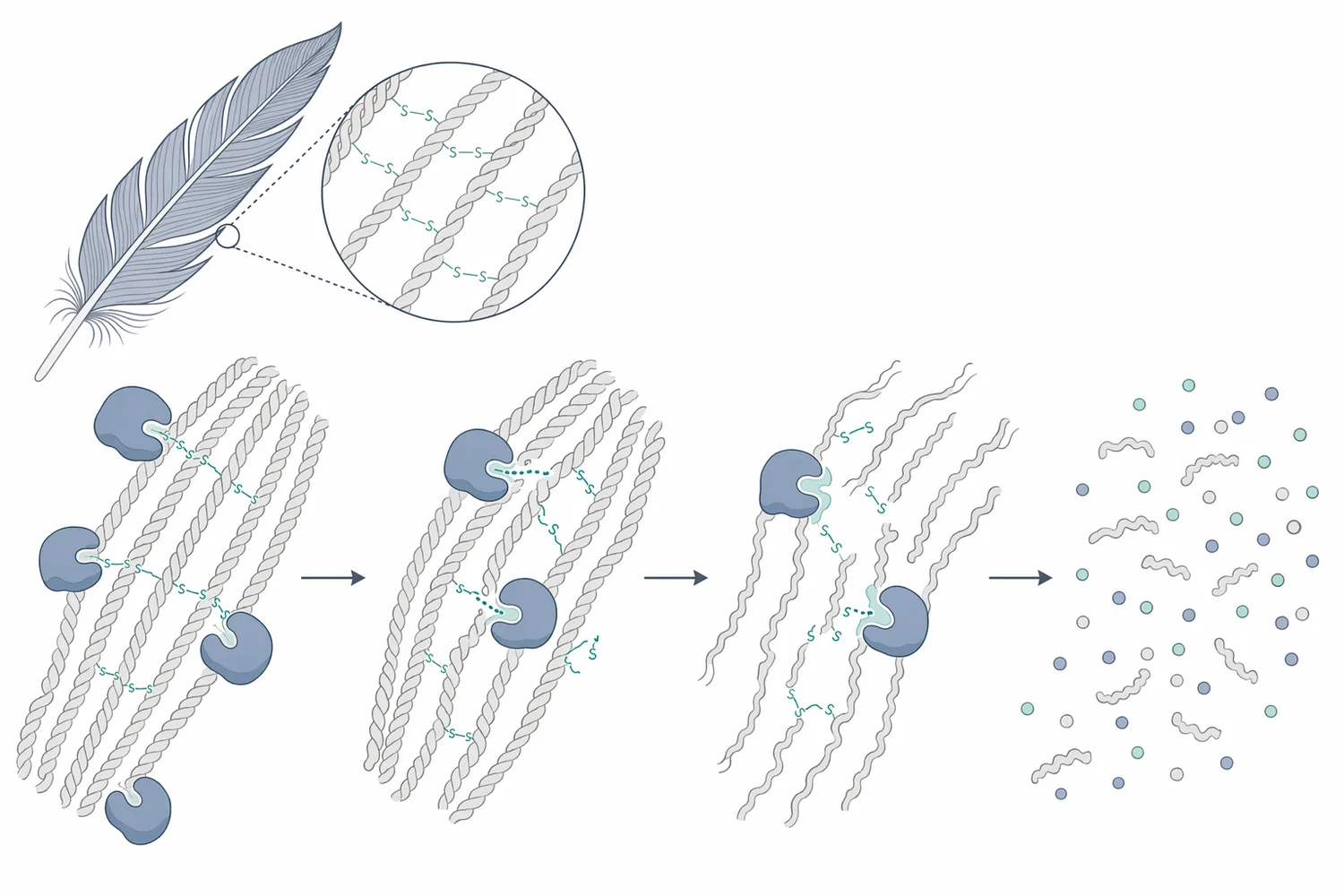
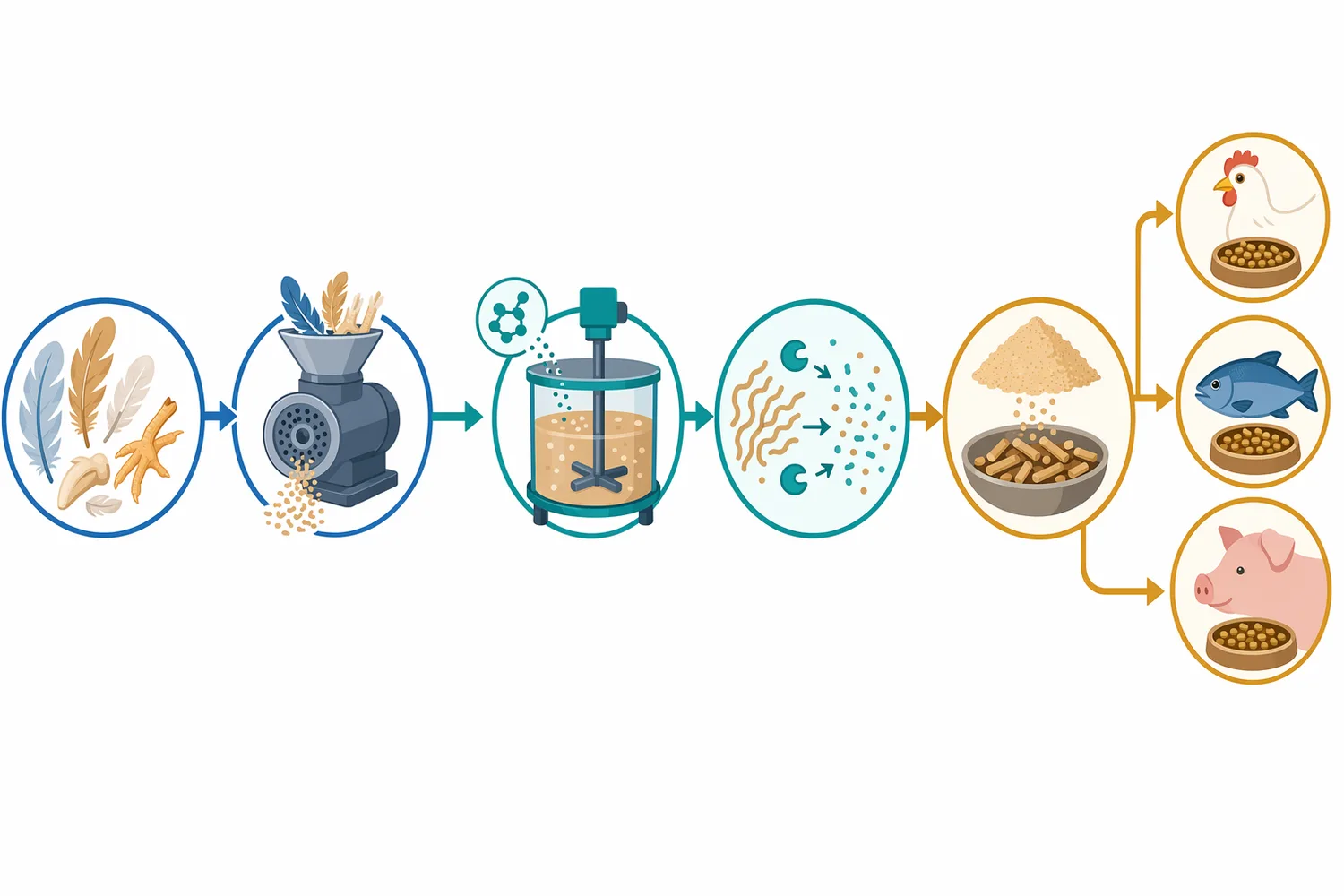
At the substrate level, keratinase treatment changes three important things. First, it loosens the feather’s compact protein architecture by progressively cutting exposed peptide bonds on the keratin surface. Second, as the outer structure opens, more internal peptide bonds become accessible, allowing hydrolysis to continue deeper into the fiber. Third, the insoluble, fibrous protein is converted into a mixture containing soluble peptides, smaller protein fragments and amino acids, which are easier to disperse and use in feed preparation [4].
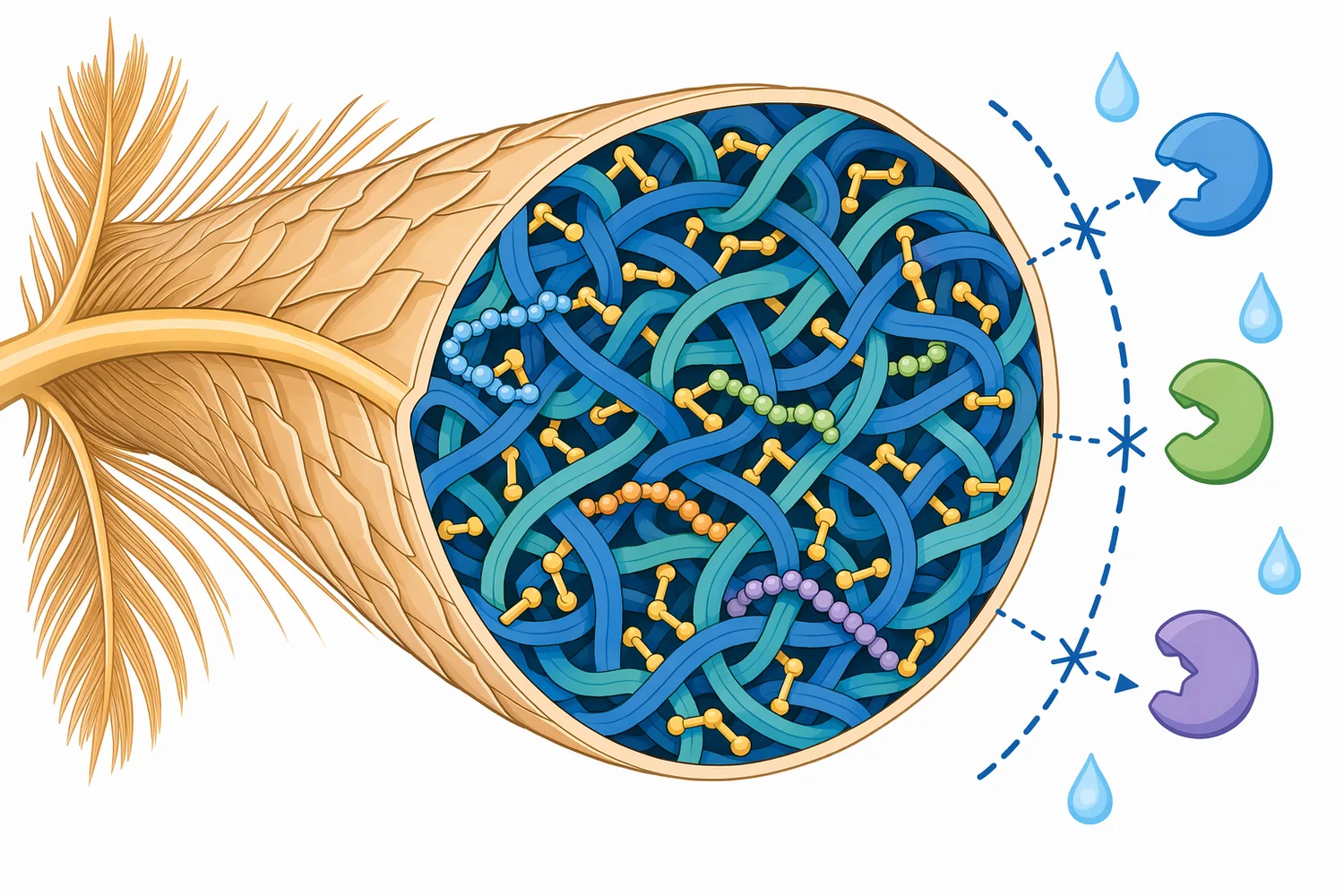
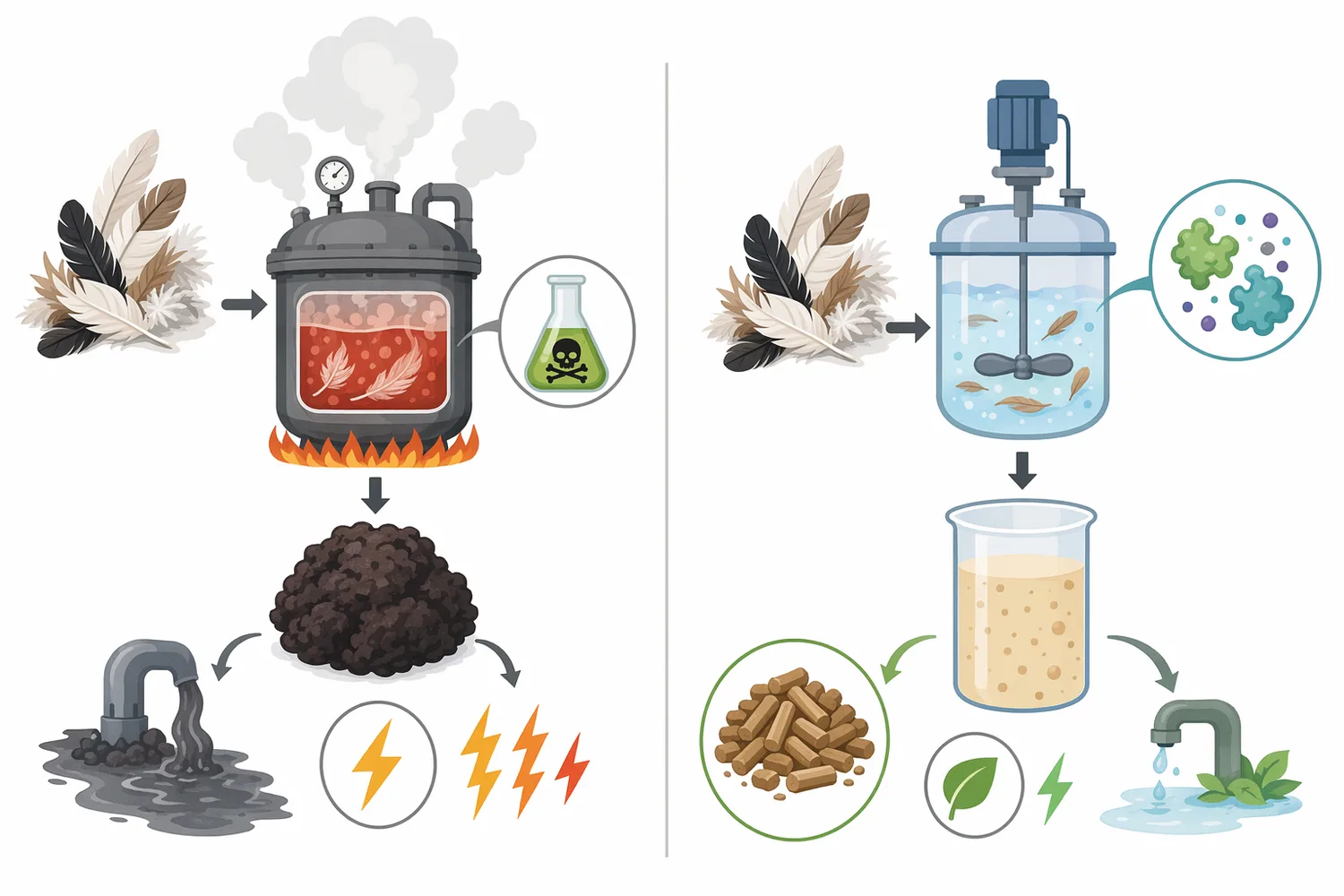
This mechanism explains why keratinase is especially relevant to feather meal improvement. Conventional heat rendering can improve digestibility but may also damage heat-sensitive amino acids if processing is too severe. Enzymatic hydrolysis offers a biological route to unlock keratin under controlled preparation conditions, supporting conversion of feather protein into a more useful ingredient without relying only on harsh heat or pressure [5].
Keratinase belongs to the broad family of proteolytic enzymes, but its application differs from general feed proteases. A general protease may improve digestion of ordinary dietary proteins, while keratinase is selected for its ability to act on hard, insoluble keratin. The difference is practical: soybean meal, fish meal, poultry meal and feather meal do not present the same substrate challenge, even though all contain protein.
| Protease type | Typical substrate focus | Main feed-processing relevance | Limitation for keratin-rich materials |
|---|---|---|---|
| Acid protease | Soluble or partially denatured proteins under acidic conditions | Often discussed in digestive or fermentation-like environments | May cut accessible proteins but does not necessarily open compact keratin efficiently |
| Neutral protease | General proteins near neutral processing conditions | Useful for broad protein hydrolysis in many food and feed systems | Activity on keratin depends on whether the enzyme can access the insoluble fiber |
| Alkaline protease | Proteins processed under alkaline or mildly alkaline conditions | Common in industrial hydrolysis and detergent-type protein breakdown | Some alkaline proteases degrade protein well but still may not be strongly keratinolytic |
| Keratinase | Feather keratin, hair, horn, hoof and related structural proteins | Targeted hydrolysis of resistant keratin into soluble peptides and amino acids | Performance depends on substrate preparation and process compatibility |
The key point is that keratinase is defined by substrate capability, not just by being a protease. Molecular reviews describe keratinase action as a combination of proteolysis and keratin-structure disruption, often involving enzymes that can work on insoluble keratin where ordinary proteases are ineffective or incomplete [2].
Feather meal is attractive because feathers contain amino acids that can contribute to animal nutrition. However, the amino acid profile is not the same as usable nutrition unless those amino acids are digestible and balanced within the full diet. Keratin is particularly rich in cysteine residues that form disulfide bonds, which are critical to the mechanical strength of feathers but also make the protein resistant to digestion [3].
Keratinase treatment helps by increasing solubilization. In keratin hydrolysis studies, feather material is commonly monitored for visible degradation, weight loss, soluble protein release, peptide formation and structural disruption. Sharma and colleagues studied feather degradation by Bacillus velezensis NCIM 5802 and used multi-scale analysis to show how microbial keratinase action changes feather structure during degradation, supporting its relevance for poultry waste management and valorization [4].
A useful way to visualize this is to imagine the feather barb as a tightly twisted cable. Mechanical size reduction can cut the cable into shorter pieces, and heat can soften or denature parts of it, but the cable remains chemically reinforced. Keratinase introduces many small “cuts” into the protein chains, progressively weakening the fiber. As the matrix opens, more surface area becomes available, more peptides dissolve into the liquid phase, and the final material becomes less like intact feather and more like a protein hydrolysate [1].
Most keratinase research begins with microorganisms that naturally degrade feathers. Bacillus species appear frequently because many strains secrete extracellular keratinases and tolerate industrially relevant preparation conditions. Studies on Bacillus licheniformis, Bacillus subtilis, Bacillus velezensis and other organisms report feather or keratin hydrolysis as the central outcome, with application interest in feed, waste management, leather, textiles and agriculture [6].
Gupta and colleagues purified and characterized a Bacillus subtilis keratinase and described its prospective application in the feed industry, reflecting a common research path: identify a keratin-degrading organism, characterize the enzyme’s behavior, then evaluate whether the hydrolysate or degradation process has value in feed preparation [7]. The feed relevance comes from the same biochemical result across studies: insoluble keratin is converted into soluble protein fractions and smaller peptides.
Aina and colleagues reported keratinase from Wickerhamomyces anomalus with prospective poultry feed applications, showing that keratinase is not limited to bacterial sources. Yeast and fungal keratinases are also studied because they may produce different hydrolysis patterns and operate under different processing environments [8]. For a feed-preparation buyer, the important takeaway is not the organism name itself, but the repeated evidence that keratinase activity can transform feather keratin into a more accessible protein fraction.
Recent work continues to improve keratinase expression, stability and production. Saeed and colleagues reviewed molecular strategies to enhance keratinase gene expression and emphasized implications for the poultry feed industry, indicating that keratinase remains an active development area rather than a finished, one-size-fits-all technology [3]. This is relevant because feather hydrolysis outcomes can vary by enzyme source, feather preparation, contact conditions and downstream processing.
When feather keratin is hydrolyzed, several measurable changes occur. The feather loses its intact shape, the barbs and rachis weaken, the surface becomes eroded or pitted, and the insoluble fraction decreases. At the same time, soluble protein, peptides and amino nitrogen increase in the surrounding liquid or hydrolysate. Multi-scale studies of feather degradation use microscopy, structural analysis and biochemical tracking to connect visible feather breakdown with molecular keratin hydrolysis [4].
The nutritional meaning of these changes is straightforward. Intact feather keratin is a poor feed protein source because digestive enzymes cannot easily reach its peptide bonds. A hydrolysate made of smaller peptides presents a larger accessible surface area and less structural shielding. In feed preparation, this can support improved protein accessibility compared with untreated keratin-rich material, although final animal performance still depends on the whole diet and the target species [5].
Hydrolysis also changes handling behavior. Intact feathers are bulky, low-density and difficult to mix evenly into feed systems. Enzymatically treated feather material can become more dispersible after the fiber is broken down, which may make it easier to incorporate into meal or slurry-based processing workflows. This is one reason keratinase is discussed not only as a nutrition aid, but also as a by-product conversion tool for poultry waste management [9].
Keratinase has its clearest feed-preparation role in feather meal improvement. Feather-derived protein can be used in animal feed and pet food systems when properly processed, legally permitted and nutritionally balanced. Enzymatic treatment is relevant because it can help produce a feather protein hydrolysate with more soluble peptides and amino acids than intact feather keratin [5].
For poultry feed, keratinase research often focuses on turning poultry processing by-products back into feed-relevant nutrients. Salehizadeh and colleagues specifically frame feather meal transformation as a route toward high-performance broiler feed, reflecting the industry interest in upgrading feather protein rather than treating it only as waste [5]. That does not mean every treated feather ingredient will automatically improve growth or feed conversion, but it does show why keratinase is being studied in feed development.
For pet food, hydrolyzed animal proteins are used in some formulations for digestibility, palatability or specialty positioning. Keratinase-treated feather protein may be relevant where a controlled hydrolysate is desired, though the final ingredient must be evaluated within the complete recipe. The key technical benefit remains the same: converting a resistant structural protein into smaller fragments that can be more readily processed and assessed as a feed ingredient [1].
For aquafeed, protein ingredient selection is especially important because many aquatic species require nutrient-dense, highly digestible diets. Keratinase-treated protein streams may be explored as part of broader alternative-protein work, especially where poultry by-products are already considered. Research interest in keratinase for feed is aligned with the wider movement toward using enzyme processing to improve nutrient availability from non-traditional or underutilized raw materials [10].
Feather waste creates both a disposal challenge and a nutrient opportunity. Biological keratin degradation can reduce the burden of keratin-rich waste while generating protein hydrolysates, peptides and amino acids with potential agricultural or feed relevance. Reviews of microbial keratinase emphasize waste management as a major driver because keratin-rich wastes are abundant and slow to degrade naturally [1].
Compared with simply discarding or low-value handling of feathers, enzymatic conversion aims to preserve more nutritional value. Harsh chemical or thermal treatments may degrade some amino acids or produce inconsistent material if not carefully controlled. Keratinase-based hydrolysis is attractive because it uses biological specificity: the enzyme targets protein bonds in the keratin matrix, helping release peptide material without treating the entire substrate as waste [2].
Janani and colleagues studied chicken feather degradation using keratinase from Bacillus thuringiensis SJAMB and discussed the agricultural potential of the resulting process, illustrating the broader value chain around feather hydrolysis [9]. While agriculture and feed are different end uses, both depend on the same underlying conversion: insoluble feather keratin is transformed into more soluble nitrogen-containing material.
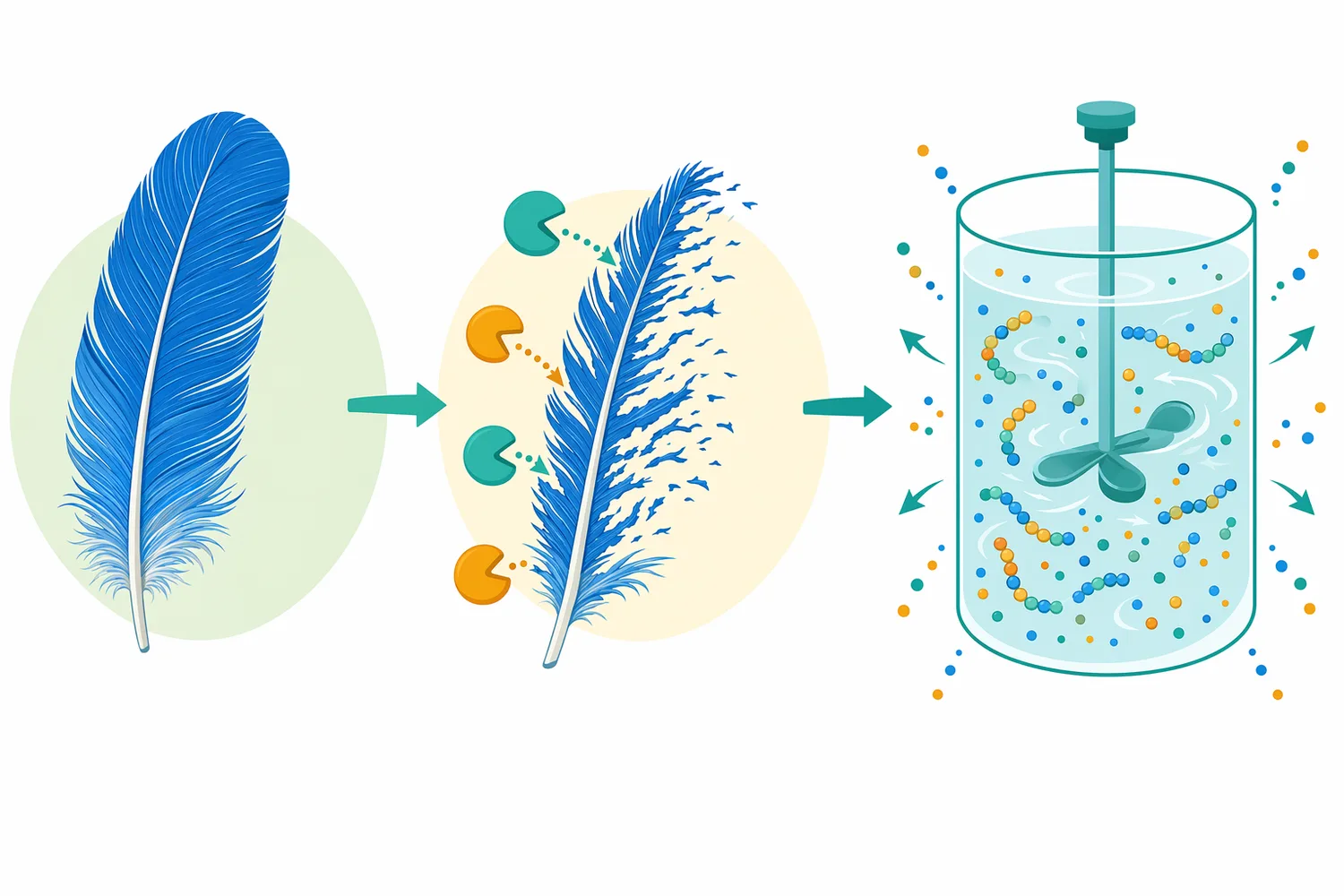
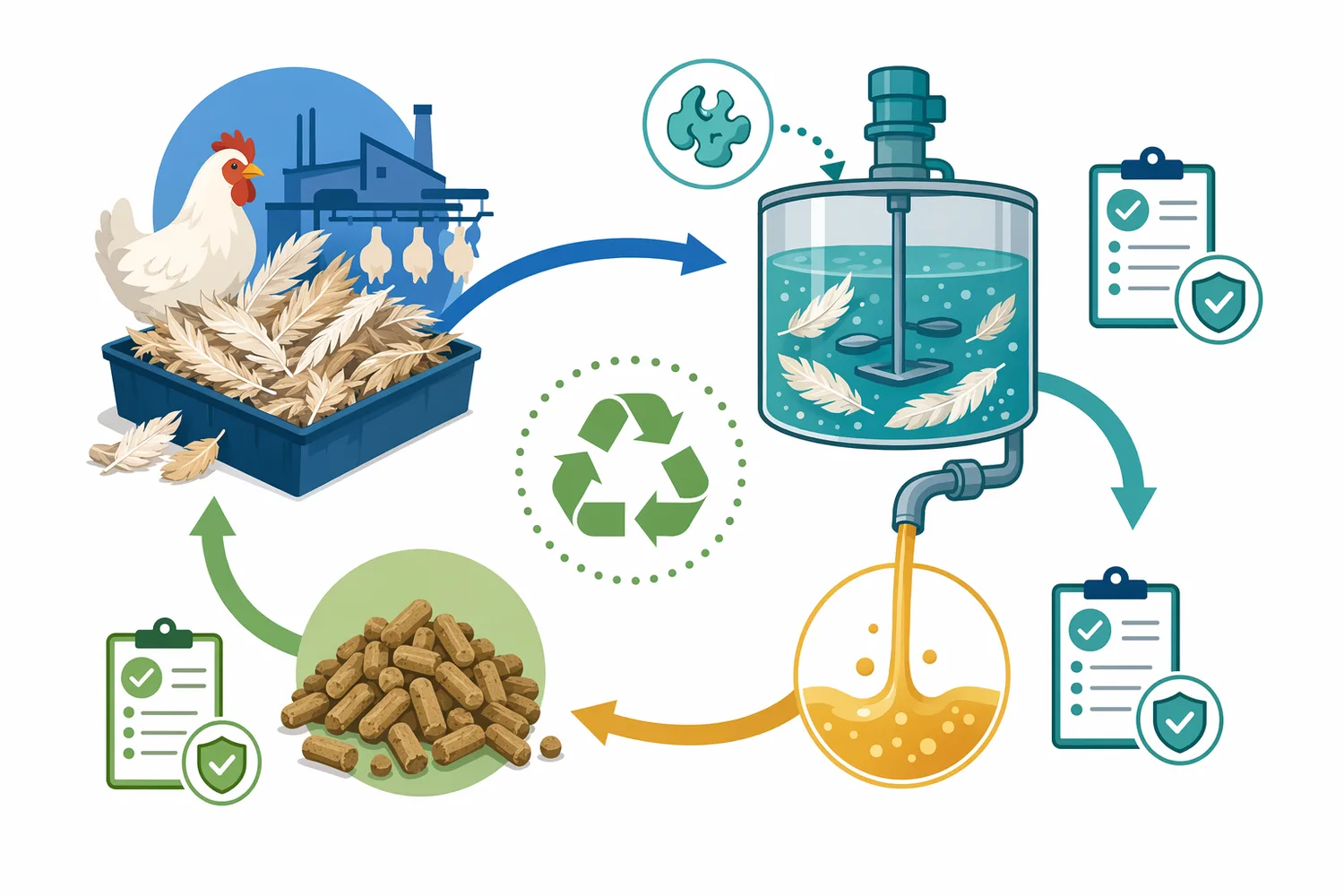
Keratinase is typically used during preparation of keratin-rich raw materials before the final feed is produced. In practice, that means the enzyme is most relevant in hydrolysis, fermentation-like treatment, wet processing or pre-treatment workflows where feather meal or related keratin substrates are brought into contact with water and mixed sufficiently for enzymatic action. Enzymes need physical access to their substrate, so uniform contact between keratinase and the feather-derived material is central to useful hydrolysis [4].
The process environment matters because keratinase action is biochemical, not mechanical. If the substrate is too dry, the enzyme cannot diffuse effectively. If the feather particles are too intact or poorly mixed, hydrolysis may occur only on the surface. If subsequent heating is severe, residual enzyme activity may be reduced, although the already-generated peptides remain part of the hydrolysate. These are general enzyme-processing principles, not product-specific performance guarantees [2].
Different keratinase studies use different organisms, substrates and preparation conditions. Some focus on free enzyme, some on immobilized enzyme systems, and others on whole microbial fermentation. For example, Lotfi and colleagues examined keratinase immobilization onto magnetic cross-linked enzyme aggregates and applied the system to keratin waste hydrolysis, showing that researchers are exploring ways to improve enzyme reuse and operational stability in keratin-processing systems [11]. For buyers using an online 1 kg enzyme product, the practical lesson is that keratinase performance is process-dependent and should be used as a feed-preparation aid rather than a stand-alone nutrition claim.
The main output of keratinase treatment is a hydrolysate containing smaller peptides and amino acids. Smaller peptides are not automatically “better” in every feed, but they are generally more accessible than intact insoluble keratin because digestive enzymes and transport processes encounter shorter, more soluble protein fragments. This is why keratinase is discussed in terms of digestibility support and ingredient upgrading [3].
However, feed value depends on amino acid balance. Feather protein is not a complete replacement for all protein ingredients because its amino acid profile must match the needs of the species and life stage. Keratinase can help release amino acids from keratin, but it does not change the fundamental amino acid composition of the starting material. It improves access to what is already present; it does not create missing nutrients [5].
This distinction is important for responsible expectations. A keratinase-treated feather ingredient may show improved solubility or digestibility compared with untreated material, but final performance depends on formulation, inclusion level, heat history, palatability, energy balance and the presence of other ingredients. Keratinase should therefore be understood as an enzyme for protein accessibility, not as a guarantee of growth performance in isolation [10].
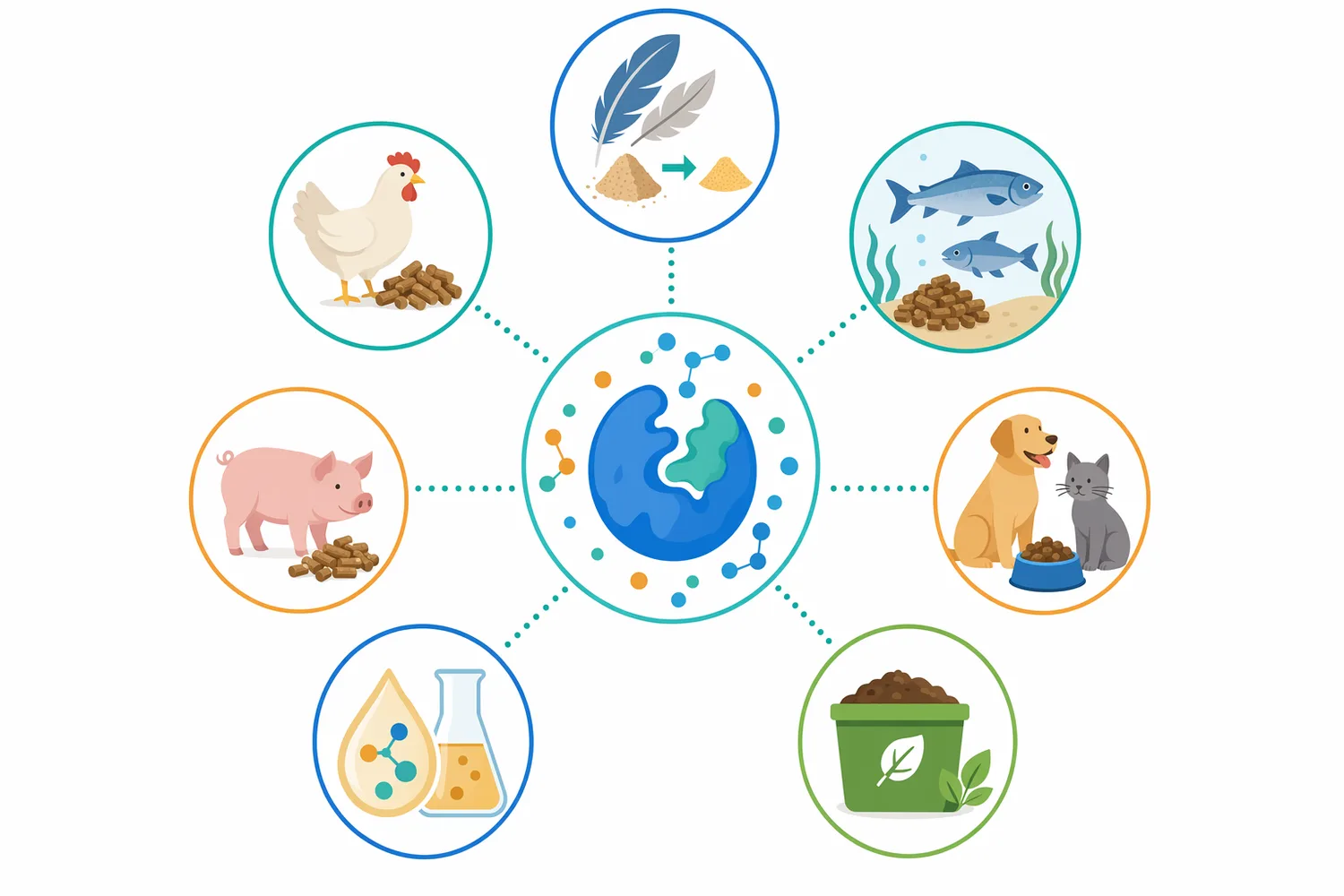
Feed enzymes are widely used to release nutrients that are otherwise trapped in complex feed materials. Phytase targets phytate-bound phosphorus, xylanase targets arabinoxylans and other non-starch polysaccharide structures, and proteases target proteins. Keratinase fits into this broader feed-enzyme logic but focuses on one of the most resistant protein substrates in animal by-products [10].
Carbohydrate-active enzymes are well established in animal feed because plant cell walls can physically and chemically limit nutrient availability. Plouhinec and colleagues reviewed carbohydrate-active enzymes in animal feed, showing how targeted enzymatic action can improve the nutritional use of specific substrate classes [10]. Keratinase applies the same concept to structural animal protein: identify the resistant matrix, then use an enzyme able to break it down.
This makes keratinase complementary rather than interchangeable with other feed enzymes. It is not a phytase substitute, because it does not release phytate phosphorus. It is not a xylanase substitute, because it does not hydrolyze plant cell-wall xylans. Its value is in keratin-rich protein processing, especially where feather-derived material is part of the feed-preparation workflow [2].
Keratinase research continues because industrial feed preparation requires enzymes that are effective, practical and stable enough for real processing environments. Recent studies have examined strain selection, production optimization, immobilization and molecular expression strategies. The goal across these approaches is to improve how much keratinase can be produced, how well it works on keratin, and how reliably it performs during processing [3].
El-Komy and colleagues studied azo-keratin hydrolysis by alginate-immobilized keratinase from Bacillus licheniformis, illustrating one route researchers use to improve enzyme handling and repeated-use potential in controlled systems [6]. Immobilization research is not the same as a standard online powder product, but it shows the level of scientific attention being given to keratinase performance and process fit.
Srivastava and colleagues also examined immobilization of keratinase on chitosan-grafted β-cyclodextrin, reporting improved enzyme properties and application of free keratinase in textile processing [12]. Although textile use differs from feed preparation, the underlying keratin substrate challenge is related: keratin-rich fibers require enzymes that can act on tough structural proteins under application-specific conditions.
The most defensible benefit of keratinase is improved conversion of keratin-rich material into soluble protein fragments. In practical feed-preparation language, keratinase helps reduce the “locked protein” problem in feathers and feather meal. That can support more effective use of poultry by-products, especially where the alternative is a low-value or poorly digestible protein stream [1].
A second benefit is by-product valorization. Poultry feathers are generated continuously, and enzyme treatment offers a route to convert a disposal burden into a potentially useful protein hydrolysate. This supports more circular use of animal processing co-products, provided the resulting material meets feed safety, quality and regulatory requirements [9].
A third benefit is processing flexibility. Keratinase can be incorporated into hydrolysis or pre-treatment workflows where water, mixing and contact time allow enzymatic action. It may also be relevant in combined biological processes, where microbial fermentation and enzyme hydrolysis are used together to upgrade protein-rich materials. Studies on enzyme-fermentation processes in feed show continuing interest in bioconversion as a way to improve by-product value and nutrient availability [13].
Keratinase enzyme powders should be handled with the same care used for other industrial enzyme preparations. Enzymes are proteins, and airborne dust or repeated exposure can irritate the respiratory tract, eyes or skin in susceptible individuals. The Safety Data Sheet supplied with the order should be followed for handling, workplace hygiene and personal protection measures .
The Certificate of Analysis supplied with the order provides lot-specific confirmation for the delivered product, while the Safety Data Sheet provides safe-handling information. Enzymes.bio supplies the keratinase product directly online in 1 kg units; the buyer completes payment online, after which the order is processed and shipped .
Because keratinase is a processing aid for resistant protein substrates, the expected result is substrate hydrolysis, not an automatic animal-performance outcome. The final nutritional value of treated material depends on the starting feather meal or keratin-rich ingredient, the hydrolysis process, downstream heat exposure, formulation balance and the animal species receiving the diet. This is consistent with the broader feed-enzyme field, where enzyme action improves access to targeted nutrients but does not replace complete feed formulation [10].
Keratinase is most relevant where feathers or other keratin-rich animal by-products are present. Feather meal preparation is the primary application because feathers are abundant, protein-rich and structurally resistant. Enzyme treatment can help hydrolyze feather keratin into soluble peptides and amino acids, supporting improved ingredient preparation compared with untreated keratin-rich material [5].
It is also relevant to protein hydrolysate development. Hydrolysates are useful because they are easier to disperse and evaluate than intact fibrous keratin. Depending on the process and final formulation, keratinase-treated materials may be considered for animal feed, pet food or aquafeed applications where permitted and nutritionally appropriate [8].
Keratinase may have secondary relevance in mixed protein-processing systems where broad proteolytic action is useful, but its main value remains keratin degradation. It should not be described as necessary for ordinary plant proteins that do not contain keratin. For soybean meal, cereal grains and plant by-products, other enzymes such as proteases, carbohydrases or phytases may be more directly relevant depending on the substrate [14].
Enzymes.bio offers Keratinase Enzyme For Animal Feed Preparation CAS 9014-01-1 as an online 1 kg product for buyers who need a keratinase enzyme preparation for feed-related processing work. The product is purchased directly online; after payment, the order is processed and shipped, with a Certificate of Analysis and Safety Data Sheet included .
For buyers working with feather meal or keratin-rich by-products, the scientific rationale is strong: keratinase targets the resistant protein structure that limits digestibility and conversion value. Research across bacterial, fungal and yeast keratinases shows that these enzymes can degrade feather keratin and release soluble protein fractions, peptides and amino acids [1].
The most responsible expectation is that keratinase supports preparation of more accessible protein material from keratin-rich substrates. It can help unlock amino acids already present in feathers, improve solubilization and support by-product valorization. It should be used as part of a controlled feed-preparation process and interpreted within the full nutritional, regulatory and safety context of the final feed [3].
Keratinase is a targeted enzyme for converting tough, insoluble keratin—especially poultry feather keratin—into smaller, more accessible protein fragments. Its value in animal feed preparation comes from a concrete biochemical action: it cuts and opens the cross-linked keratin matrix, increasing soluble peptides and amino acids that can be more practically used in feed ingredient development. Enzymes.bio supplies Keratinase Enzyme For Animal Feed Preparation CAS 9014-01-1 directly online by the 1 kg unit, with order documentation supplied after purchase .
Sold by the 1 kg unit, in stock and ready to ship. Order directly on our store — pay online and we process your order. A Certificate of Analysis and Safety Data Sheet are included with every order.
Buy Keratinase Enzyme For Animal Feed Preparation Cas 9014-01-1 →Numbered in order of first citation. Open-access sources, each verified reachable at publication; citation numbers in the text link here.