
Laccase is a multicopper oxidase enzyme that oxidizes phenolic and related organic compounds while reducing molecular oxygen to water. In practical terms, the laccase reaction can convert color bodies, lignin fragments, polyphenols, dyes, and other oxidizable substrates into radicals, quinones, coupled polymers, or more removable transformation products without adding peroxide as the core oxidant [1].
For industrial and food-processing buyers, laccase is most useful where the process goal is controlled oxidation: phenolic management, laccase lignin activation, dye decolorization, wastewater polishing, fiber-surface modification, or selected food and beverage quality applications. Enzymes.bio supplies laccase directly online in 1 kg units; after online payment, the order is processed and shipped, and a Certificate of Analysis and Safety Data Sheet are included with the order .
Laccase, often searched as “laccase enzyme,” belongs to the multicopper oxidase family. The defining feature is not simply that it contains copper, but that its copper centers organize electron flow: the enzyme removes electrons from a suitable substrate and passes them internally to oxygen, which is reduced to water. Reviews of microbial laccase describe this oxygen-driven oxidation chemistry as the basis for applications in food, pulp and paper, textile treatment, wastewater, biosensors, and green chemistry [1].
The term “laccase substrates” covers a broad but not unlimited chemical space. Laccase most readily oxidizes phenolic molecules because phenols can donate an electron and form resonance-stabilized phenoxy radicals. It can also participate in reactions involving some nonphenolic compounds, especially when a mediator system is present; this is why laccase appears in research on lignin chemistry, synthetic oxidation, pollutant degradation, and functional material formation [2].
Fungal laccase is the best-known industrial category, particularly enzymes from white-rot fungi that naturally interact with lignin-rich plant biomass. “Laccase from Trametes versicolor” and “Trametes versicolor laccase” are common search terms because Trametes species have been central model organisms for lignin-modifying oxidoreductases, while other fungal sources, including Aspergillus sp., are also studied in the broader production of laccase enzyme [3].
Bacterial laccase has become a major research area because some bacterial multicopper oxidases tolerate harsher operating conditions than many fungal enzymes. Reviews on bacterial laccase describe interest in thermo-tolerant and pH-tolerant enzymes, dye treatment, bioremediation, and process applications, while newer work continues to discover bacterial laccase-like multicopper oxidases from industrial and environmental samples [4].
Searches for “laccase molecular weight,” “fungal laccase molar mass,” or “molar mass of fungal laccase” often assume laccase is a single molecule with one fixed value. In reality, laccase is a family of related proteins, and the apparent molecular weight depends on organism, isoenzyme, amino-acid sequence, glycosylation, and purification state. Many fungal laccases are reported in the tens-of-kilodaltons range, commonly around the 50–100 kDa region, but that should be understood as a family-level range rather than a universal identity [1].
The same caution applies to “fungal laccase formula” or “fungal laccase chemical formula.” Laccase is not a small molecule such as citric acid or glucose with one stable molecular formula. It is a folded protein containing amino acids, copper centers, and often carbohydrate groups; therefore, any exact formula would be source- and sequence-specific rather than generally applicable to “laccase” as a product category [3].
For process use, this means laccase is better understood by its catalytic function than by a single formula. The practical question is what chemical transformations the enzyme can drive in the target matrix: whether it can oxidize the phenolic, lignin-derived, dye, or pollutant structures present under the intended processing environment [2].
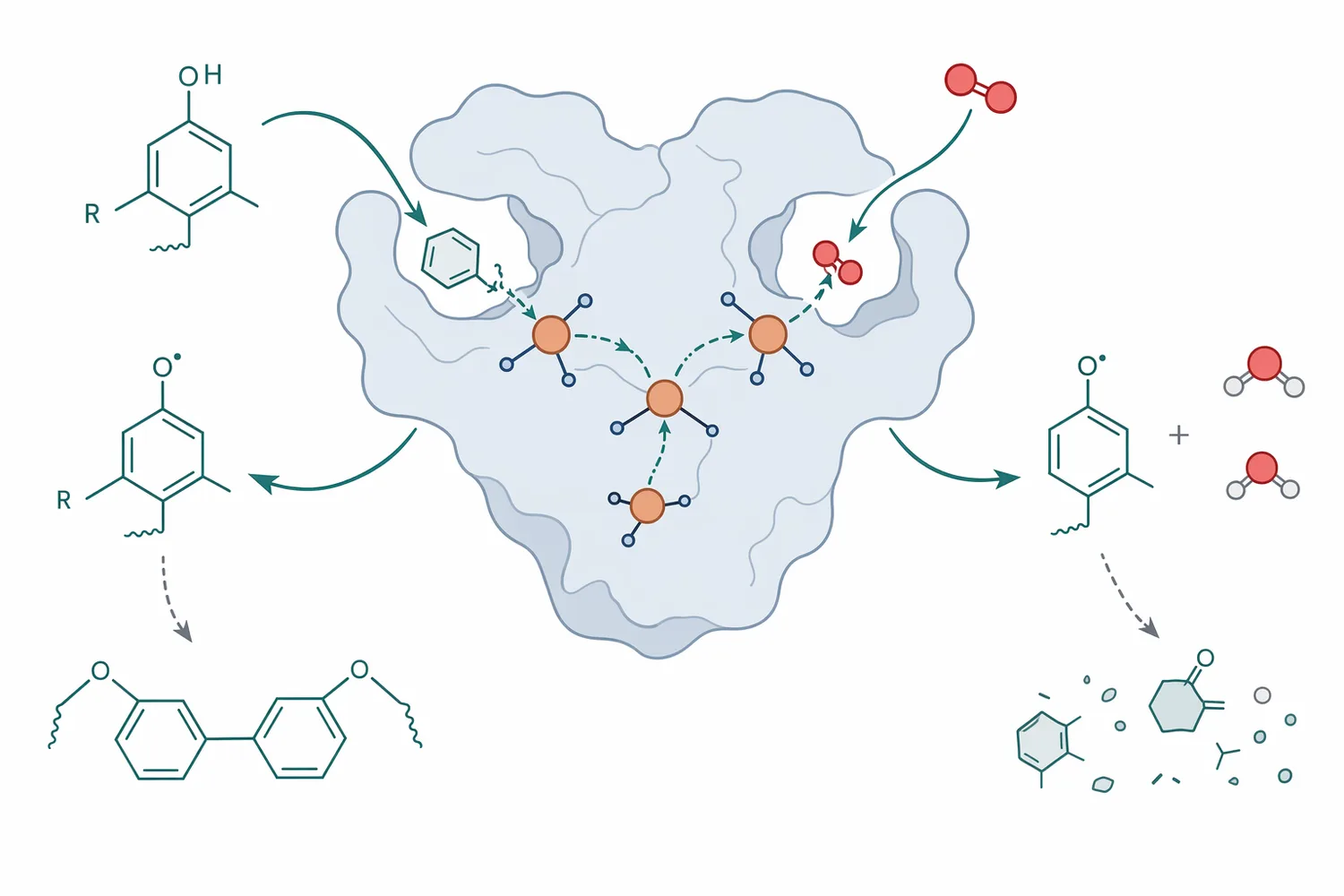
The laccase mechanism begins when an oxidizable substrate approaches the enzyme’s type 1 copper site. A phenolic substrate, for example, loses one electron and often one proton, becoming a phenoxy radical. That radical is more reactive than the starting phenol because its unpaired electron can delocalize across the aromatic ring and oxygen atom, allowing coupling, rearrangement, quinone formation, or further oxidation [1].
Electrons extracted at the type 1 copper site are transferred within the enzyme to the trinuclear copper cluster, where molecular oxygen is bound and reduced. Four one-electron substrate oxidation events supply the reducing equivalents needed to convert one molecule of oxygen into water. This is the central reason laccase is attractive in cleaner oxidation workflows: oxygen is the terminal electron acceptor, and water is the reduction product of the enzymatic cycle [2].
What happens after the first electron transfer depends on the substrate. In a simple phenolic system, laccase-generated radicals may couple to form dimers, oligomers, or larger polymers. In a lignin-rich surface, radicals can form on phenolic lignin units and participate in bond formation or structural rearrangement. In a dye molecule, oxidation can disrupt electron-conjugated chromophores or produce intermediates that are less intensely colored, more easily adsorbed, or more biodegradable [5].
This chemistry is not the same as nonspecific “burning” or mineralization. Laccase does not automatically reduce a complex contaminant to carbon dioxide and water. It initiates controlled oxidation; the downstream result may be polymerization, precipitation, partial degradation, detoxification, color loss, or a change in solubility depending on molecular structure and process conditions [6].
| Laccase format | Practical relevance | Typical strengths | Practical boundaries |
|---|---|---|---|
| Fungal laccase | Commonly associated with lignin, phenolics, food-related polyphenols, dyes, and pulp/fiber applications | Strong track record in lignin-related oxidation and broad phenolic substrate conversion | Performance depends strongly on pH, temperature, oxygen transfer, and matrix composition |
| Bacterial laccase | Studied for wastewater, dye treatment, and robust processing environments | Some bacterial enzymes show interest for broader pH or thermal tolerance | Substrate scope and performance vary widely by organism and enzyme type |
| Immobilized laccase | Used in research for repeated-use treatment, membranes, packed systems, and environmental remediation | Can improve handling, reuse, and resistance to deactivation in some systems | Adds support-material design, mass-transfer limits, and reactor engineering considerations |
Fungal and bacterial laccase are not interchangeable labels; they represent enzyme families with different evolutionary roles and process behaviors. Fungal laccases have a long history in lignin and phenolic oxidation research, while bacterial laccase enzyme production from bacteria is increasingly important for enzymes that may tolerate demanding treatment environments [4].
Immobilized laccase is a separate process concept rather than a different enzyme family. Immobilization attaches or traps the enzyme on a solid support such as a membrane, particle, polymer, carbon material, or metal-organic framework. Reviews describe immobilization as a major strategy for environmental applications because it can improve reusability and operational stability compared with free enzyme in some treatment formats [7].
Lignin is a complex aromatic polymer rich in phenolic and ether-linked structures. In wood, pulp, crop residues, and natural fibers, lignin helps bind plant cell walls and contributes to recalcitrance. Laccase lignin activity matters because the enzyme can oxidize accessible phenolic lignin units and create radical sites on the fiber surface [2].
Once radicals form on lignin, several routes are possible. Radicals may couple with one another, increasing molecular size and forming new C–C or C–O linkages. They may also rearrange into quinone-like structures or react with added mediators or neighboring molecules. In fiberboard and natural-fiber composite concepts, this surface activation can support fiber-to-fiber bonding because lignin becomes a reactive interfacial material rather than a passive coating [1].
This is why laccase application in pulp, paper, and biomass processing is often described as “lignin modification” rather than simply “lignin removal.” In some contexts, the goal is to support delignification or bleaching; in others, it is to activate lignin so fibers bond more effectively. The same enzyme chemistry can therefore be used either to help separate lignin-rich material or to make lignin participate in material formation [2].
Laccase can also be paired with mediator molecules to extend oxidation beyond easily accessible phenolic sites. Mediators are small redox-active compounds that laccase oxidizes first; the oxidized mediator then diffuses and oxidizes less accessible or higher-redox-potential substrates. This concept is important in lignin and synthetic oxidation research, but the added chemistry must be compatible with the final process and product [8].
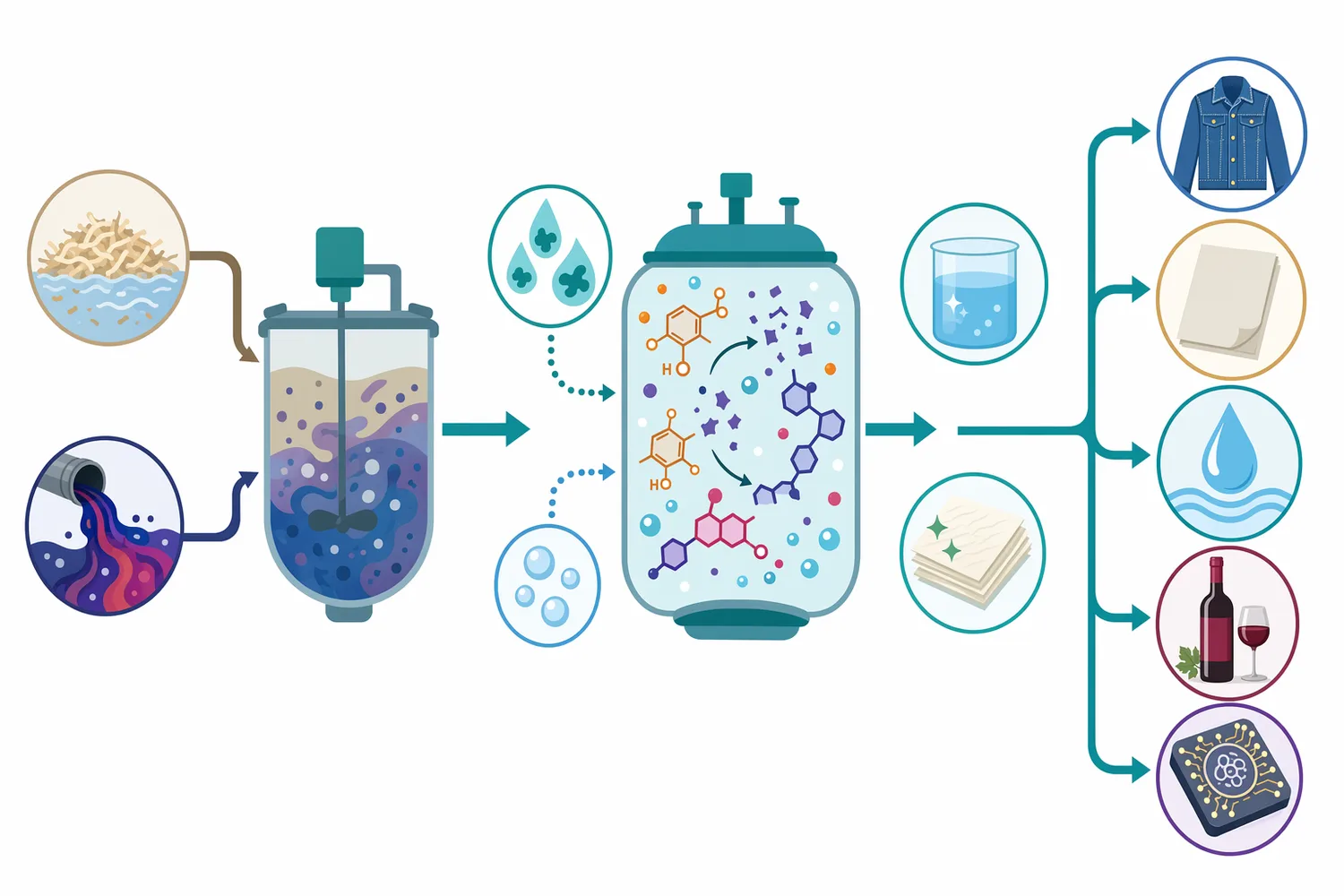
Laccase is widely studied for dye decolorization because many dyes rely on extended conjugated electron systems. Azo dyes, anthraquinone dyes, and other industrial colorants absorb visible light because their molecular structures allow electrons to move through chromophore systems. When laccase removes electrons from dye-related structures or from mediator molecules that then attack the dye, the chromophore can be altered, fragmented, or converted into products with lower visible absorbance [5].
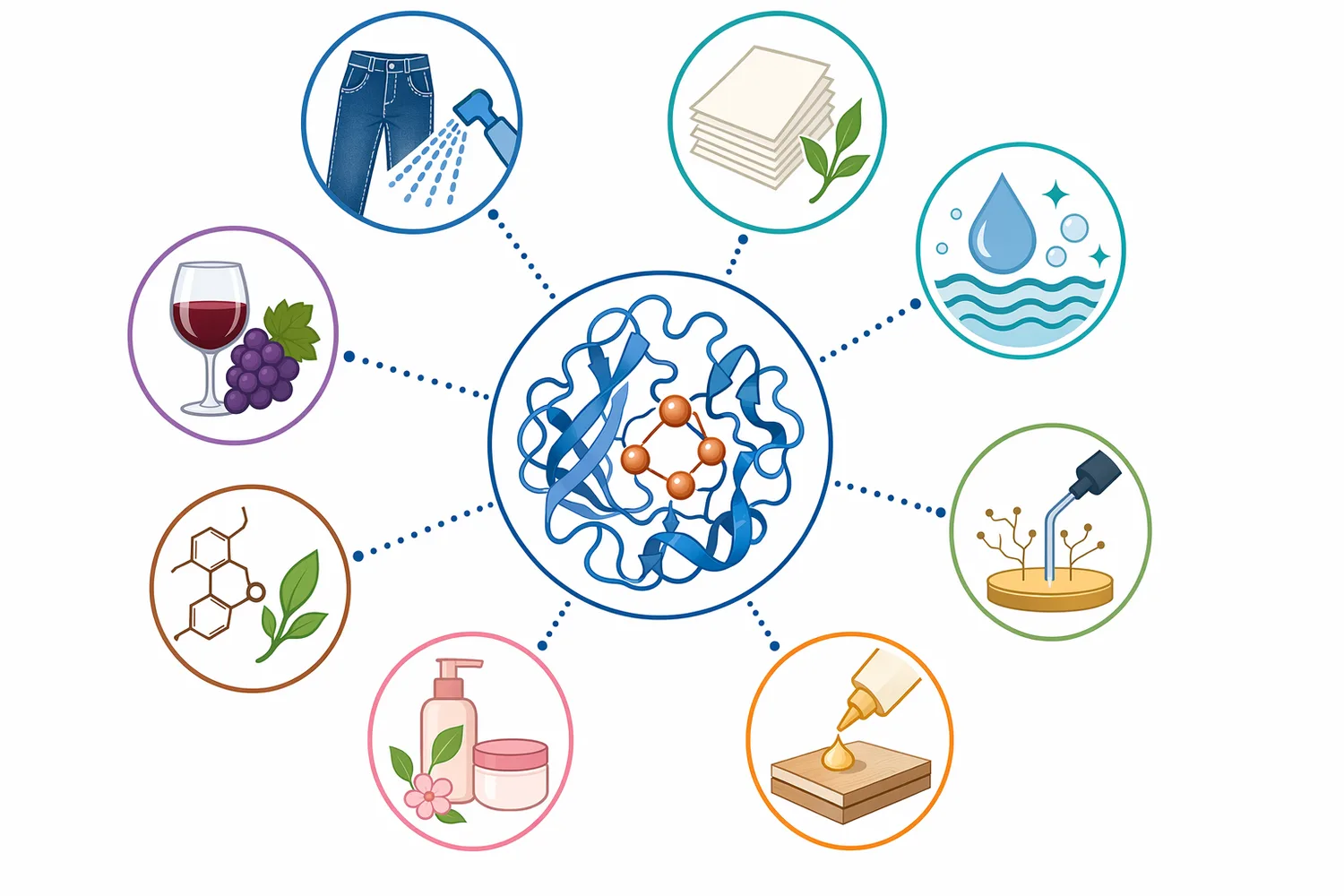
A comprehensive review on enzymatic decolorization of azo dyes describes laccase as a promising tool for abatement of industrial dye pollution. The mechanism is application-specific: in some cases laccase directly oxidizes aromatic rings or substituents; in others, mediator-assisted reactions are needed to reach structures that the enzyme alone oxidizes poorly [5].
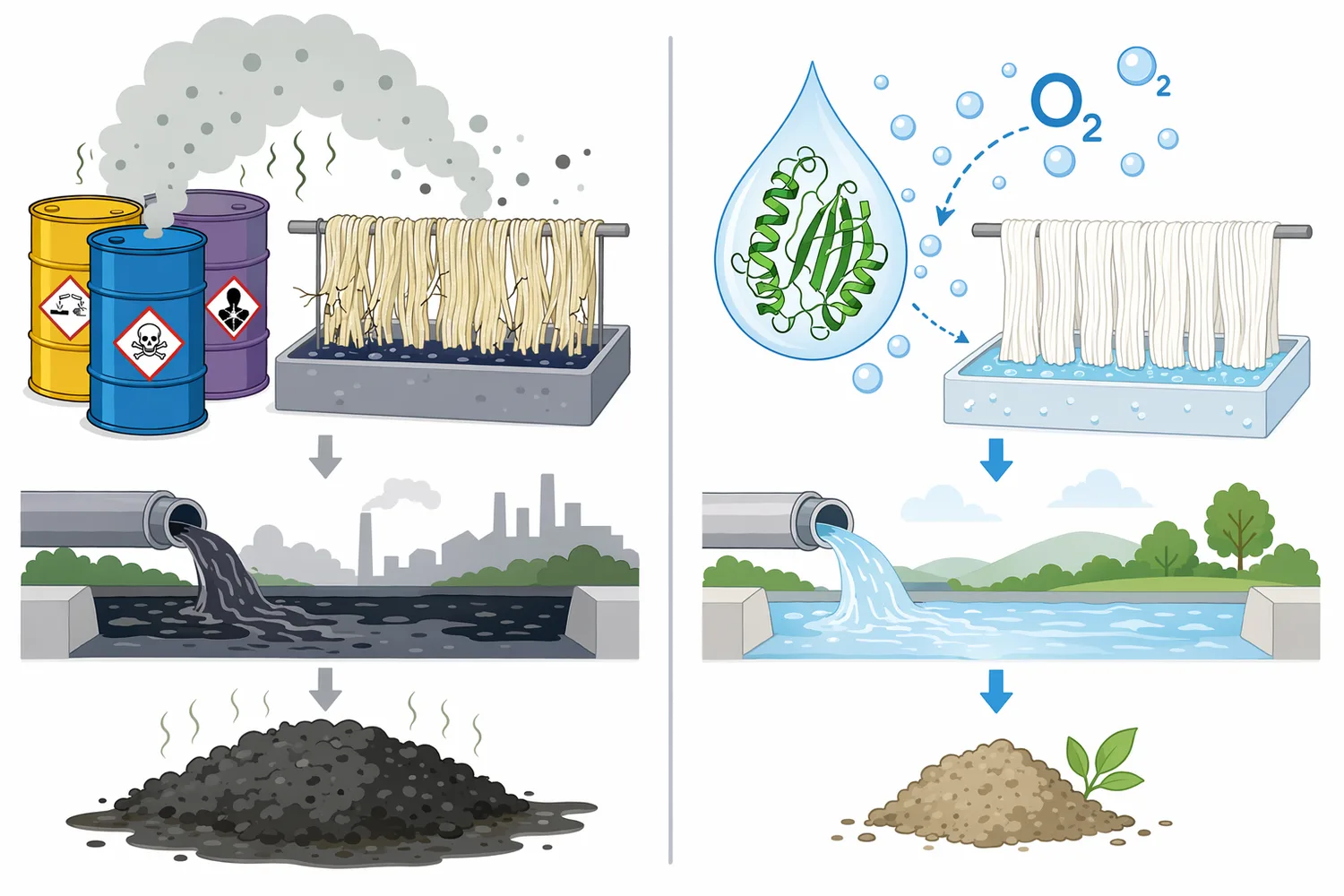
The practical value is not only color removal. Dye-containing effluents may also carry toxicity, high chemical oxygen demand, salts, surfactants, and other additives. Laccase treatment can contribute to pollutant transformation, but the final environmental outcome depends on the full effluent matrix and on whether transformation products are removed, further degraded, or discharged after adequate treatment [6].
Immobilized laccase has been explored for dye removal because wastewater treatment benefits from repeated-use formats. For example, covalent immobilization on poly(vinylidene fluoride) membranes has been studied for biocatalytic dye-pollutant removal from aqueous environments, illustrating how the enzyme can be integrated into a separable material rather than used only as a freely dissolved powder [9].
Food and beverage systems contain many phenolic compounds. Polyphenols influence color, haze formation, bitterness, oxidative stability, aroma development, and browning reactions. Laccase can oxidize these phenolics into quinones and radicals that may polymerize, bind to other macromolecules, or become easier to separate from the liquid phase [2].
In wine and juice-related concepts, this can support clarification or phenolic adjustment when oxidation of selected polyphenols is beneficial. In beer and other beverages, the same underlying chemistry may affect haze-active phenolics and oxidative stability. The important point is that laccase changes the phenolic profile, not merely “cleans” the product; excessive or poorly controlled oxidation can also affect color, aroma, and sensory character [1].
Laccase is also used in food-quality and analytical research. Because many food-quality markers are phenolic or redox-active, laccase can form part of biosensor systems that convert a chemical oxidation event into an electrical or optical signal. Reviews of laccase-based biosensors describe applications in agro-environmental and biomedical contexts, with immobilization and electrode materials playing a central role [6].
Enzymes.bio positions laccase for industrial and food-processing use and supplies it online by the 1 kg unit. The product is intended for process use rather than direct consumption, and the order documentation includes a Certificate of Analysis and Safety Data Sheet .
Laccase is not limited to bulk environmental treatment. It also appears in selective oxidation research, especially when paired with mediators. A well-known example is laccase/TEMPO-mediated oxidation of alcohols using oxygen. In that system, laccase oxidizes TEMPO to an oxoammonium-type active oxidant, and the mediator then oxidizes alcohol substrates to carbonyl products while the enzyme uses oxygen as the terminal electron acceptor [8].
Mechanistically, this is important because the enzyme does not need to fit every alcohol substrate directly into its active site. Instead, laccase activates a small mediator, and that mediator performs the substrate oxidation in solution. This expands the range of chemical transformations available through laccase-based oxidation while still linking the reaction to oxygen reduction at the enzyme [8].
Laccase has also been studied for synthesis of functional phenolic compounds. In iodination research, laccase-catalyzed systems have been used to generate iodinated phenolic products with antifungal activity, showing that laccase can support not only degradation but also constructive synthesis when reactive intermediates are directed toward a target product [10].
For industrial buyers, the practical takeaway is that laccase is a platform for oxidative biocatalysis. It may be used to remove unwanted phenolics, transform pollutants, activate lignin, or build more complex products from phenolic precursors depending on the chemistry of the process [2].
Laccase application in environmental treatment extends to phenols, endocrine-disrupting chemicals, pharmaceuticals, pesticides, and other emerging contaminants. Reviews on environmental applications describe laccase and related oxidases as eco-conscious biocatalysts because they can transform a wide range of pollutants under comparatively mild conditions [11].
The mechanism again begins with electron abstraction. If the contaminant has phenolic, anilide, aromatic amine, or other oxidizable groups, laccase may generate radicals or quinones that undergo coupling, breakdown, or binding to humic-like matter. In some treatment systems, polymerization can be useful because larger oxidized products become easier to remove by filtration, sedimentation, adsorption, or membrane separation [6].
Laccase also appears in composting and humification research. In livestock manure composting, extracellular laccase has been discussed as a driver of humification because it oxidizes phenolic precursors into reactive intermediates that can couple into more stable humic substances. This is a useful example of laccase chemistry producing larger, more stable organic matter rather than simply degrading molecules into smaller fragments [12].
Immobilized laccase is especially relevant in environmental remediation because wastewater matrices can deactivate enzymes through pH stress, temperature changes, salts, surfactants, proteases, or inhibitors. Reviews describe immobilization on bio-based supports, membranes, and advanced materials as a way to improve enzyme retention, reuse, and resistance to process stress in selected systems [13].
Free laccase powder is straightforward to disperse into a compatible liquid process, but once dissolved it is usually difficult to recover. Immobilized laccase addresses that limitation by binding the enzyme to a support. The support can act as a handle, allowing the biocatalyst to be retained in a column, membrane, bead bed, or reactor rather than leaving with the treated liquid [7].
The support is not passive. It can influence enzyme conformation, access of substrates to the active site, oxygen diffusion, water activity, and local pH. If the support restricts mass transfer, the apparent reaction rate may fall even when the enzyme remains active. If the support stabilizes the enzyme’s folded structure and keeps it accessible, operational performance can improve [14].
Metal-organic frameworks, bio-based materials, polymer membranes, carbon materials, and crosslinked aggregates are all active areas of laccase immobilization research. Reviews on MOF-supported laccase describe these materials as promising because they can provide high surface area, tunable pores, and protective microenvironments, although translating those benefits into robust industrial operation still requires careful process engineering [14].
Recent work on crosslinked laccase aggregates and framework-confined laccase illustrates a broader trend: researchers are not changing only the enzyme, but the physical environment around the enzyme. The goal is to preserve the active conformation, improve oxygen and substrate access, and keep the catalyst in a recoverable form [15].
The production of laccase enzyme is commonly discussed in terms of microbial fermentation, strain selection, induction, medium composition, and heterologous expression. Fungal laccase production has historically received the most attention because many lignin-degrading fungi naturally secrete extracellular laccases into their environment [3].
Copper often plays a role in laccase production because laccase is a copper enzyme and copper can act as an inducer in some fungal systems. In research on the white-rot fungus Trametes pubescens, copper addition enhanced laccase activity formation, demonstrating how medium composition can strongly influence enzyme expression during fermentation [16].
Bacterial laccase enzyme production from bacteria is also expanding. Reviews describe bacterial laccases as attractive for industrial applications because some show robustness under conditions that may be difficult for fungal enzymes. Newer studies use computational screening and metagenomic analysis to identify laccase-like multicopper oxidases from industrial wastewater environments, reflecting the search for enzymes already adapted to challenging matrices [17].
Research on Bacillus laccase for industrial dye bioremediation further illustrates this direction. A thermo- and pH-stable laccase from Bacillus drentensis 2E was characterized and applied to dye treatment, showing why bacterial laccases are being explored where temperature, pH, and effluent complexity matter [18].
Because laccase uses oxygen, oxygen transfer is a real process variable. In a well-mixed aqueous system with sufficient dissolved oxygen, the enzyme can continue passing electrons from substrate to oxygen. In a viscous, oxygen-poor, or poorly mixed matrix, the reaction may slow because the terminal electron acceptor becomes limiting, even if substrate is present [1].
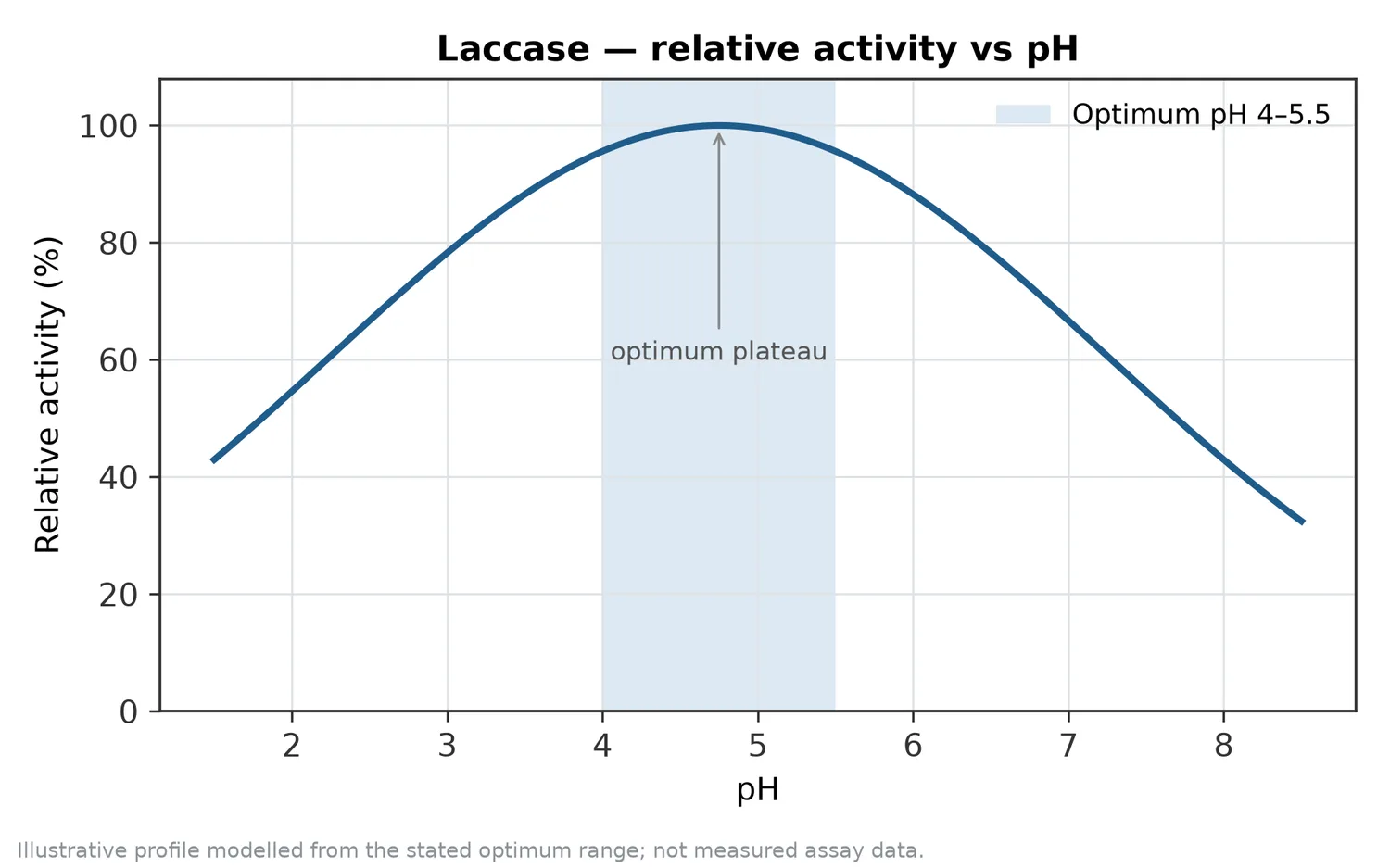
pH affects both the enzyme and the substrate. Phenolic substrates change ionization state with pH, which changes how easily they donate electrons. The enzyme’s copper centers and surrounding amino acids also respond to pH, influencing substrate binding, electron transfer, and stability. This is why a laccase reaction that works in one liquid system cannot be assumed to perform identically in another [2].
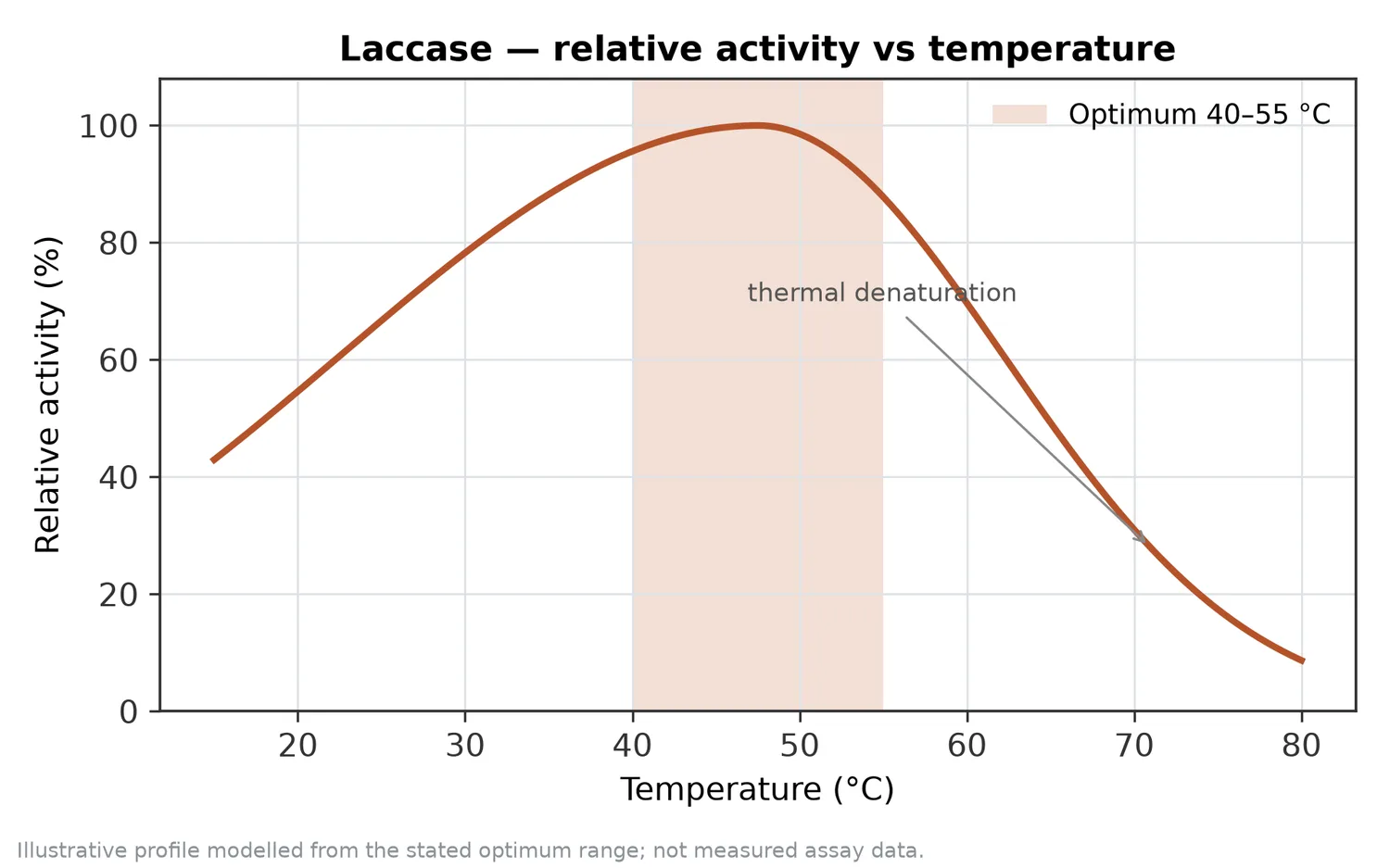
Temperature has a dual role. Raising temperature may increase molecular motion and short-term reaction speed, but excessive heat can unfold the protein or disrupt the copper-site geometry needed for electron transfer. Some bacterial laccases are studied specifically because they may better tolerate elevated temperatures or broader pH windows, while many fungal laccases are valued for strong activity in milder environments [4].
The matrix can matter as much as the target substrate. Salts, surfactants, solvents, metals, chelators, reducing agents, proteases, suspended solids, and natural organic matter can all change how laccase behaves. In wastewater, for example, one pollutant may be oxidizable, while other components compete for oxidation, inhibit the enzyme, consume radicals, or interfere with downstream removal [11].
The main benefit of laccase is controlled oxidation using oxygen. For compatible substrates, this can reduce reliance on harsher oxidants and allow transformations under milder conditions. The enzyme’s strength is especially clear in phenolic systems, lignin-containing materials, dye decolorization, environmental remediation, and selected food-processing applications [1].
A second benefit is the diversity of reaction outcomes. Laccase can help remove color, create crosslinks, promote polymerization, form quinones, activate lignin, modify polyphenols, and support mediator-based oxidation. That flexibility is why laccase appears in reviews covering wastewater treatment, food processing, pulp and paper, biosensors, pharmaceuticals, and materials [2].
The main boundary is specificity in the real matrix. “Broad substrate range” does not mean every organic compound is a good laccase substrate. Molecules with unsuitable redox potential, poor solubility, inaccessible reactive groups, or steric barriers may respond slowly unless a mediator or complementary process is used [6].
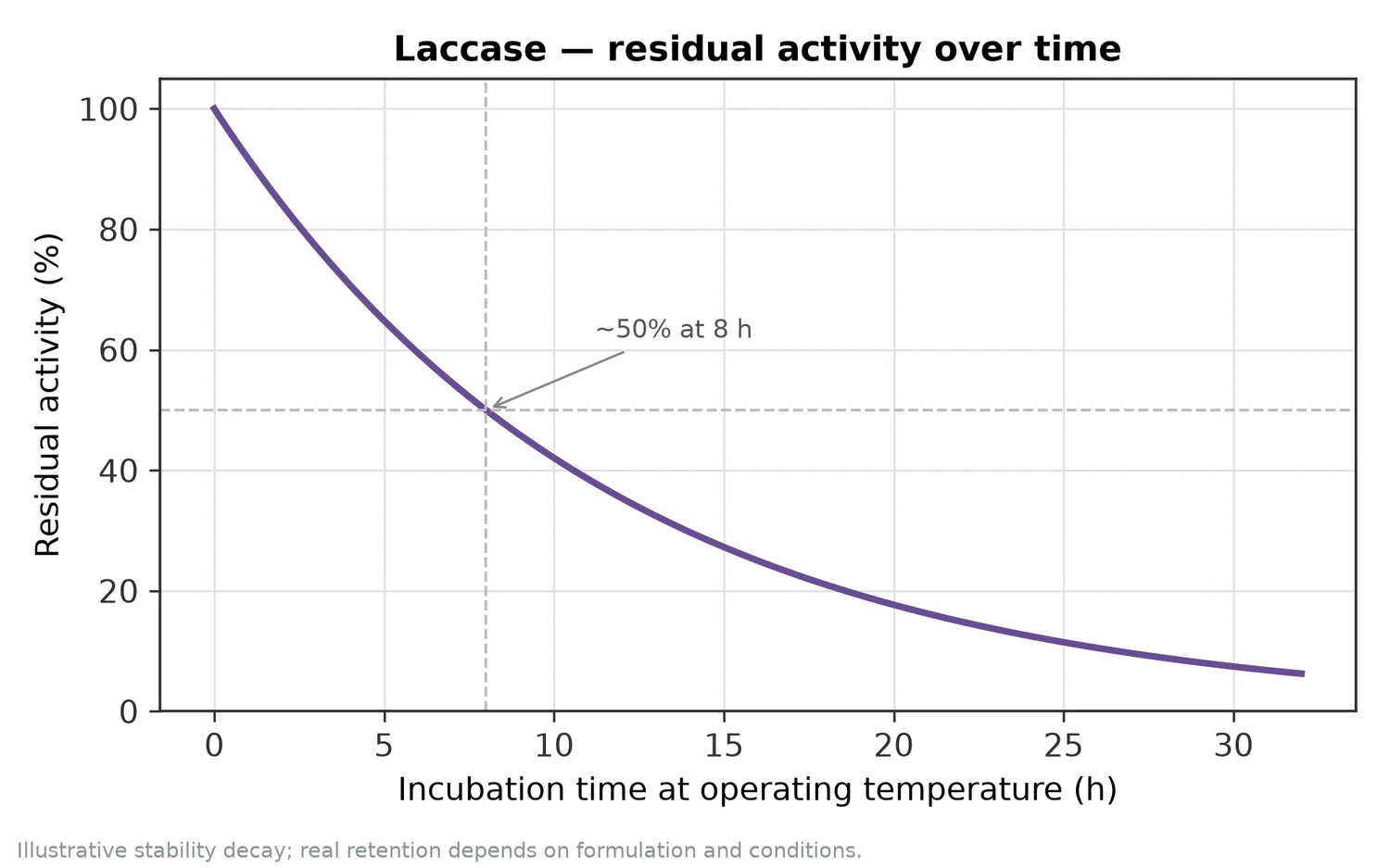
Another boundary is enzyme lifetime. Free laccase can lose activity through heat, pH stress, proteolysis, inhibitors, or adsorption to solids. Immobilization can help in some systems, but it also introduces support cost, mass-transfer design, and reactor considerations. Reviews consistently present immobilization as promising, not as an automatic solution for every application [7].
Enzymes.bio supplies laccase for industrial and food-processing buyers through a direct online purchase model. The product is sold by the 1 kg unit; the buyer completes payment online, and the order is then processed and shipped. A Certificate of Analysis and Safety Data Sheet accompany the order .
This format is suited to buyers who already know they want laccase for process trials, production use, formulation work, or internal evaluation in an established application area. The science behind laccase is broad, but the product purchase itself is straightforward: select the 1 kg unit online, complete checkout, and receive the shipped enzyme with order documentation .
Laccase is a well-established enzyme platform for oxygen-driven oxidation. Its multicopper active structure removes electrons from phenolic, lignin-derived, dye-related, and other compatible substrates, then transfers those electrons to oxygen to form water. The immediate substrate changes—radical formation, quinone formation, coupling, polymerization, or chromophore disruption—explain why the enzyme is useful in lignin modification, dye treatment, wastewater remediation, food phenolic management, and green synthetic chemistry [1].
The strongest fit is where the target process already involves oxidizable organic compounds: polyphenols, phenolic pollutants, lignin-rich fibers, aromatic dye structures, or mediator-compatible substrates. Laccase is not a universal oxidant, but when the chemistry fits, it offers a practical biocatalytic route to controlled oxidation under comparatively mild processing conditions [2].
Enzymes.bio makes laccase available for direct online purchase in 1 kg units, with the order processed and shipped after online payment and documentation included. For buyers seeking a laccase enzyme for controlled oxidation, laccase lignin treatment, dye decolorization research, environmental treatment, or food-processing applications, it provides a direct supply route backed by a substantial body of published enzyme research .
Sold by the 1 kg unit, in stock and ready to ship. Order directly on our store — pay online and we process your order. A Certificate of Analysis and Safety Data Sheet are included with every order.
Buy Laccase →Numbered in order of first citation. Open-access sources, each verified reachable at publication; citation numbers in the text link here.