
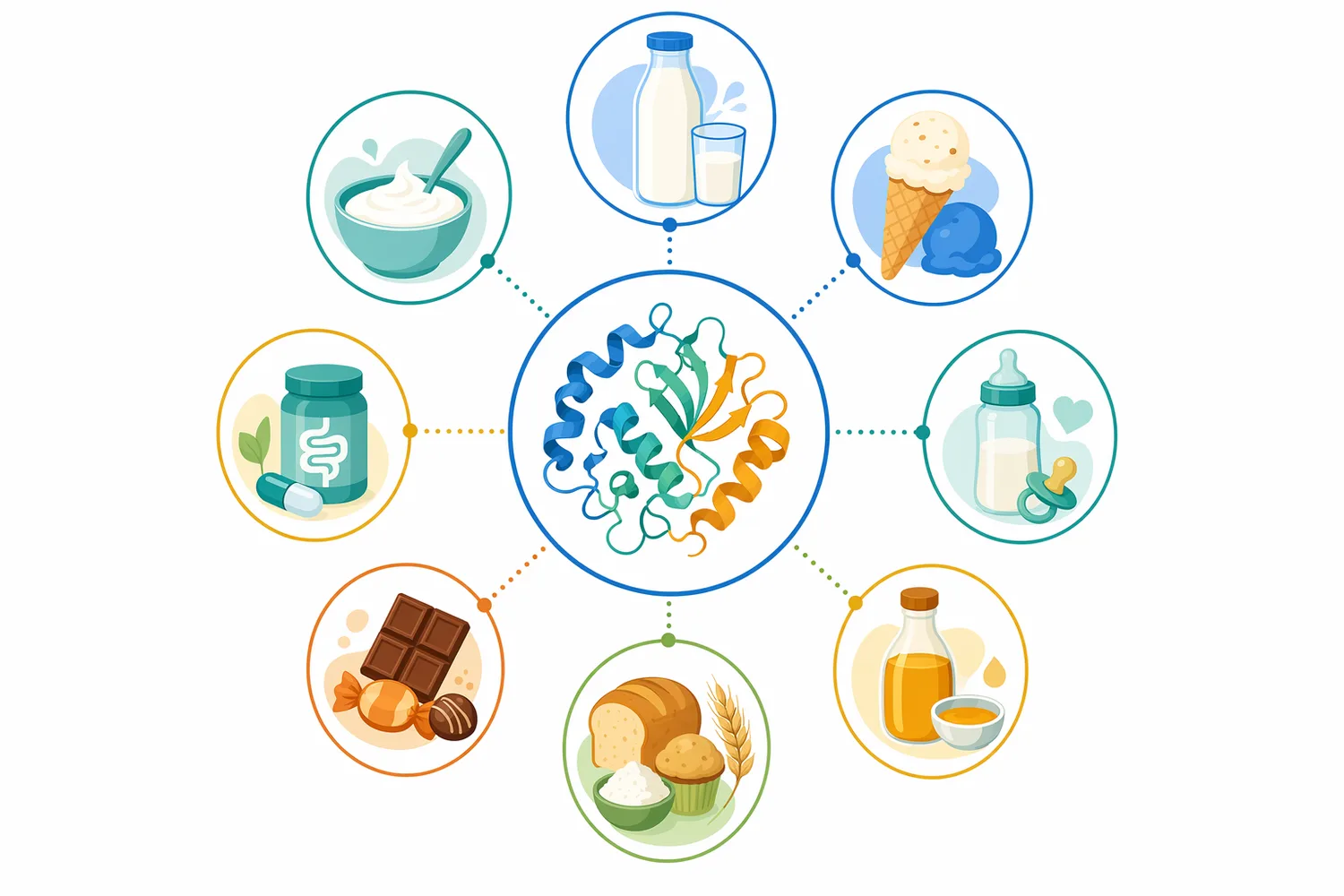
Lactase, also called β-galactosidase, breaks lactose—the main carbohydrate in milk—into glucose and galactose. That single reaction is the basis for lactose-reduced and lactose-free dairy products, improved sweetness in selected milk systems, reduced lactose crystallization in frozen or concentrated dairy, and digestive lactase supplements for lactose intolerance. In food processing, the same enzyme chemistry can also support whey valorization and, under different process conditions, galacto-oligosaccharide formation rather than simple lactose hydrolysis [1].
Enzymes.bio supplies Lactase directly online by the 1 kg unit. Buyers can purchase online, pay at checkout, and the order is processed and shipped; a Certificate of Analysis and Safety Data Sheet are provided with the order.
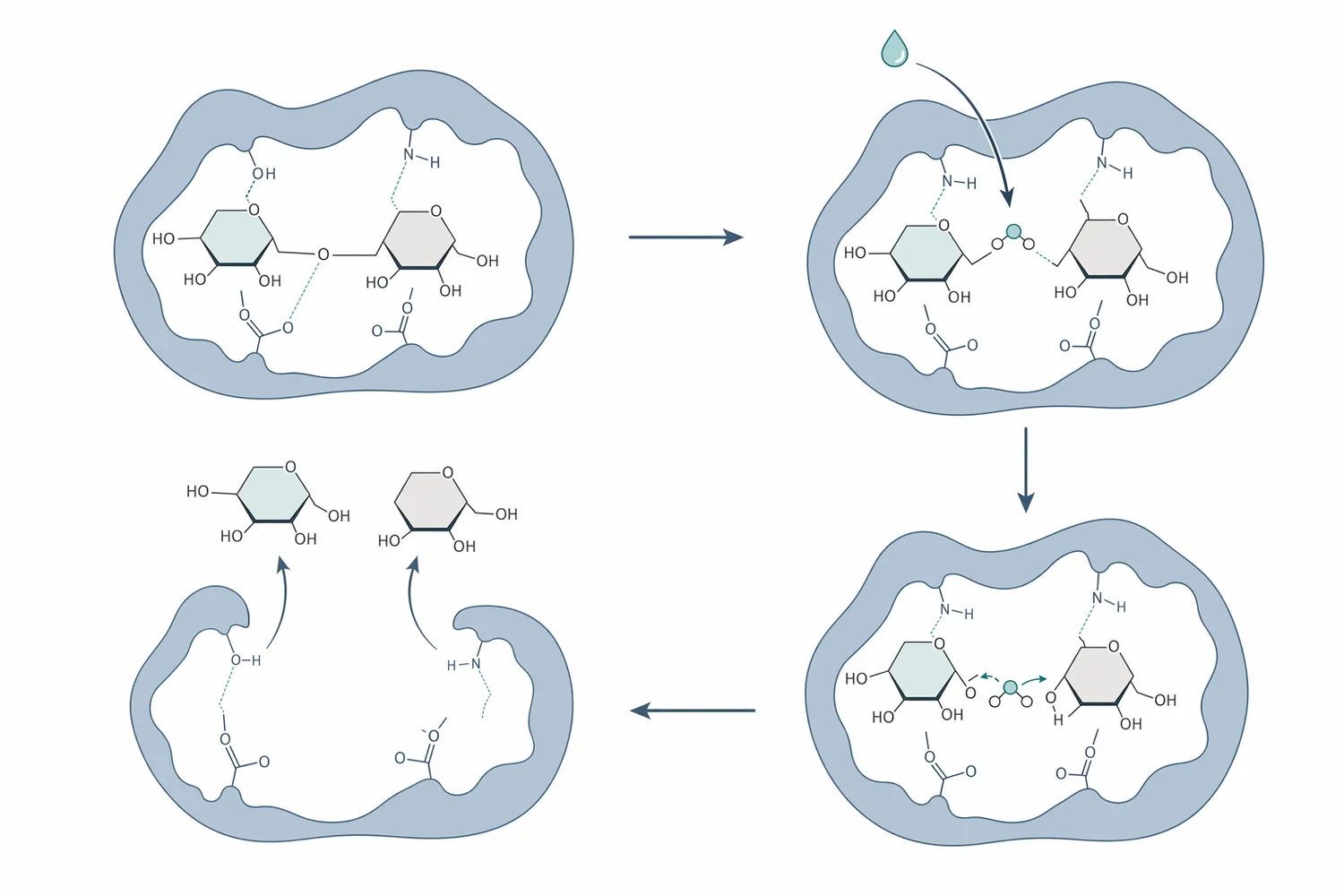
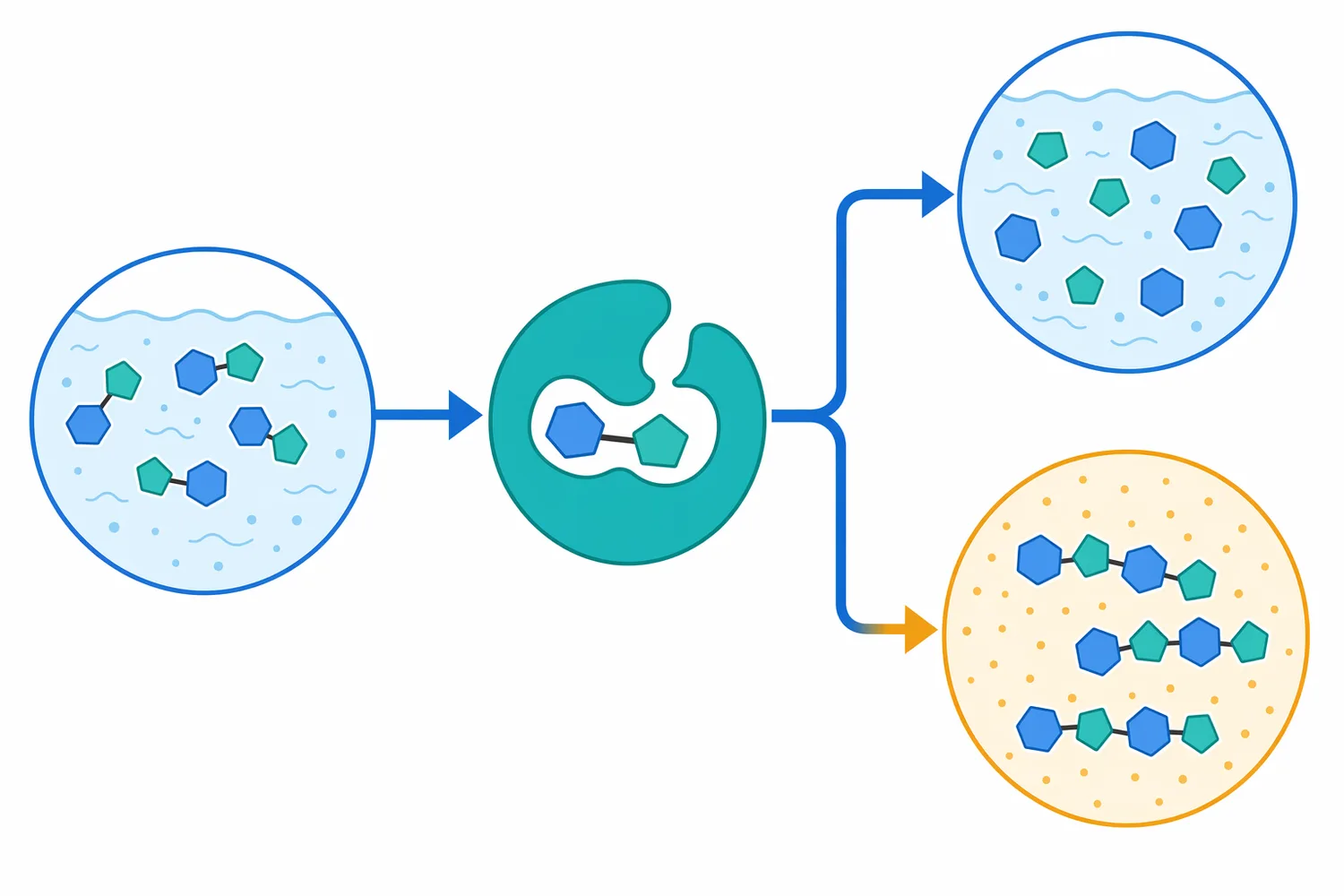
Lactase is the common name for β-galactosidase, an enzyme that acts on β-galactosidic bonds. In milk and whey, its most important substrate is lactose, a disaccharide made from one glucose unit and one galactose unit. Lactase catalyzes hydrolysis: water is used to split the bond between those two sugars, so intact lactose decreases while glucose and galactose increase [1].
That chemical change is small but commercially important. Lactose is less sweet and less soluble than the mixture of monosaccharides produced after hydrolysis. Once lactose is split, the dairy matrix contains sugars that are easier for lactose maldigesters to absorb, contribute more sweetness, and are less likely to create lactose crystal defects in certain concentrated or frozen products [1].
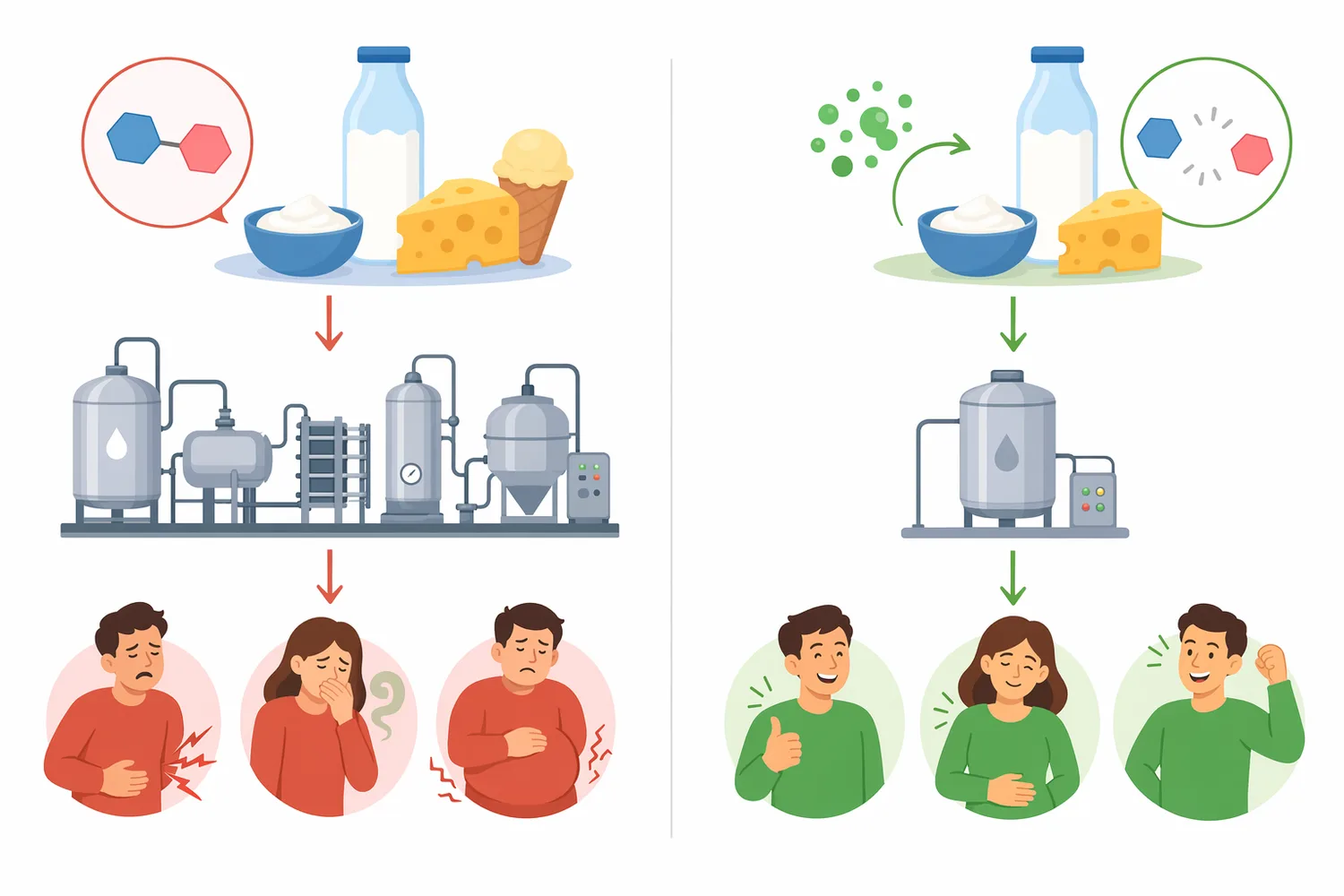
In the human digestive system, lactase is normally located at the brush border of the small intestine. When intestinal lactase activity is low, more lactose can pass undigested into the colon, where microbial fermentation and osmotic effects may contribute to gas, bloating, abdominal discomfort, and diarrhea in susceptible people [2]. This is why lactase enzyme supplements, lactase pills, a lactase pill, lactase tablet, or lactase tablets are commonly associated with lactose intolerance support rather than with general digestion.
For food and dairy applications, the objective is different: the enzyme is applied to the product before consumption so that lactose is already hydrolyzed in the milk, whey, yogurt base, ice cream mix, or other dairy ingredient. This is the foundation of many lactose-reduced and lactose-free dairy processes and is distinct from consumer lactase supplements for lactose intolerance, which are taken with dairy foods to help digestion in the body [1].
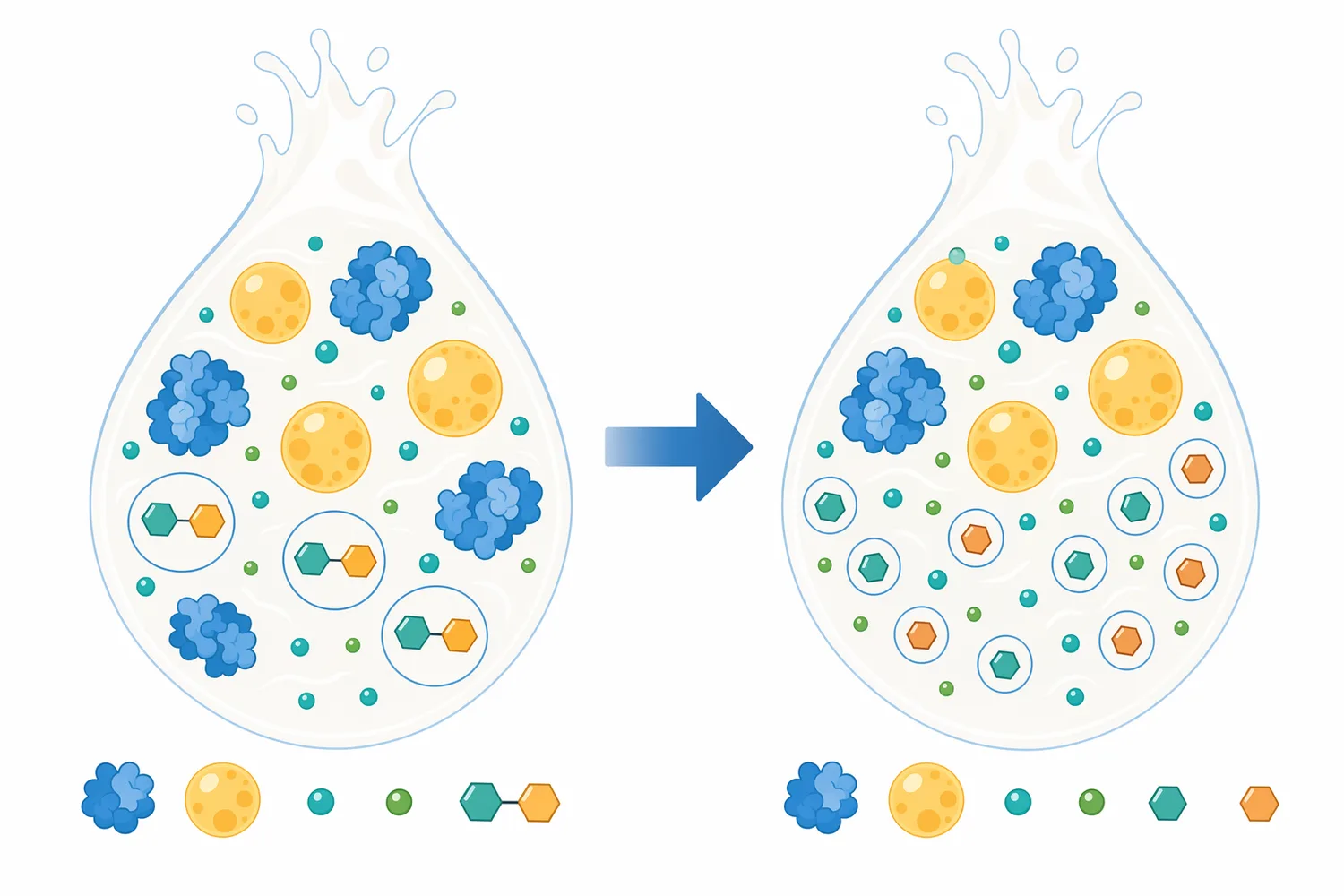
Milk naturally contains lactose as its major carbohydrate. Analytical reviews of milk and dairy products describe lactose as a central quality and composition parameter because it affects nutritional labeling, dairy processing behavior, and the classification of lactose-reduced or lactose-free products [3]. Lactase treatment changes the carbohydrate profile without removing the milk proteins, minerals, fat, or overall dairy identity of the product.
The immediate processing effect is that lactose concentration declines and the concentrations of glucose and galactose rise. Because glucose and galactose are sweeter than lactose, the treated dairy product can taste sweeter even though the total carbohydrate mass is not necessarily increased. This is why lactase is often discussed as a tool for sweetness adjustment and sugar-reduction strategies in dairy, while still requiring formulation judgment in products where sweetness, acidity, flavor release, and texture must remain balanced [1].
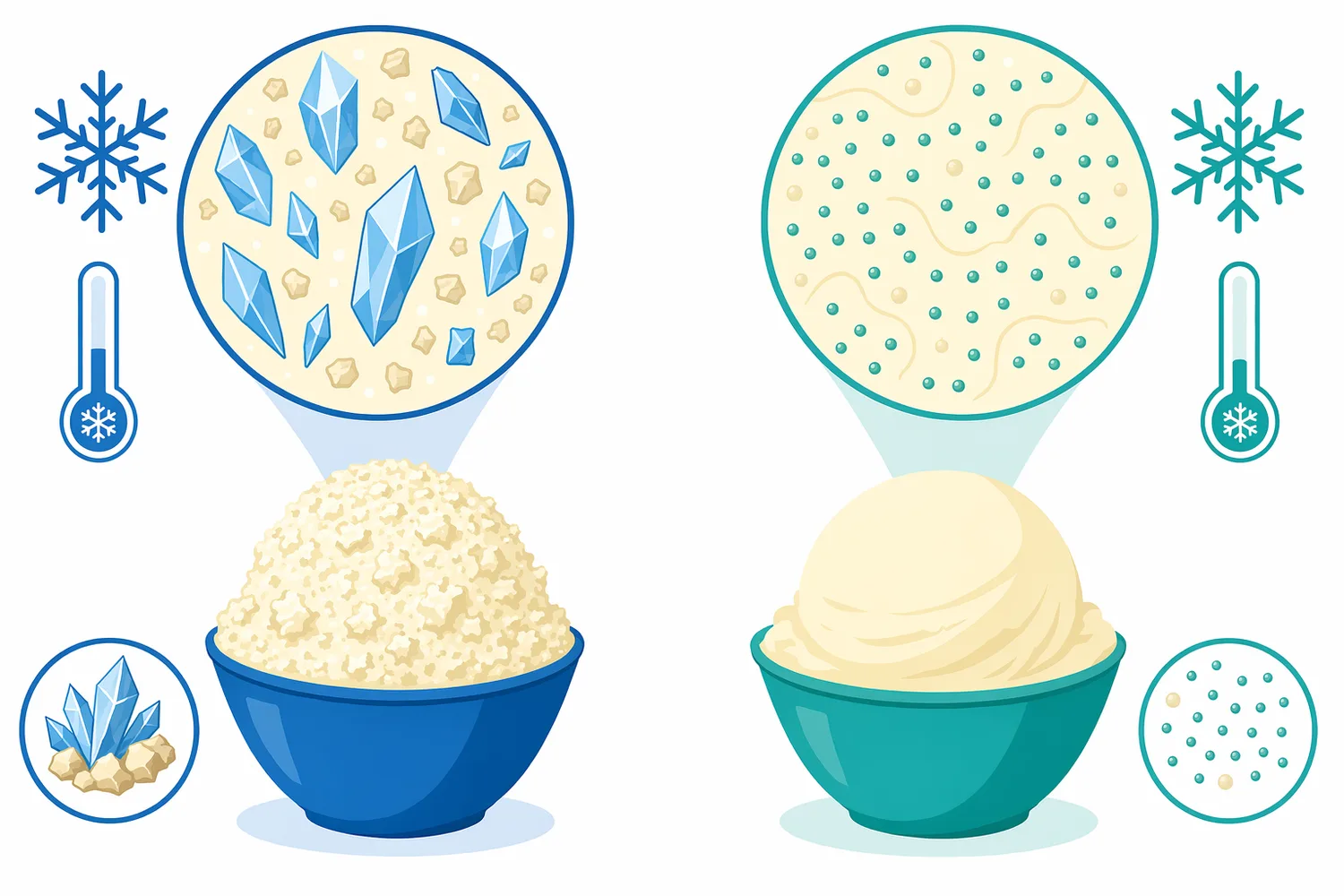
Lactose hydrolysis also improves the behavior of dairy products where crystallization is a quality risk. Lactose crystals can create sandy or gritty texture in concentrated milk, frozen desserts, and high-solids dairy systems. By converting lactose into more soluble monosaccharides, lactase reduces the pool of intact lactose available to crystallize during cooling, freezing, evaporation, or storage [1].
A further benefit appears in whey processing. Cheese whey contains lactose, and untreated lactose can be a limitation when whey is used as a fermentation substrate or when dairy by-products are being converted into higher-value ingredients. Hydrolyzing whey lactose produces glucose and galactose, which are more directly fermentable by many microorganisms and more flexible for food and ingredient applications [1].
Before lactase treatment, a dairy system contains lactose molecules dispersed in the aqueous phase. Each lactose molecule is composed of galactose linked to glucose through a β-glycosidic bond. Lactase binds the lactose molecule at its active site, positions the bond for reaction, and catalyzes cleavage so the original disaccharide becomes two separate monosaccharides [1].
After treatment, the product is not “dairy-free” and it is not depleted of milk protein. Caseins, whey proteins, minerals, fat globules, and most non-lactose components remain present. What changes is the carbohydrate composition: less intact lactose, more glucose, and more galactose. This distinction is important for labeling, allergen communication, and sensory expectations because lactase does not remove milk allergens or change the product into a non-dairy food [3].
The reaction also changes sweetness perception. Lactose has relatively low sweetness compared with glucose and galactose, so hydrolysis can increase perceived sweetness in milk and dairy mixes. The effect is not the same as simply adding sucrose: the sweetness develops from the milk’s own carbohydrate fraction, while the overall product matrix still controls the final sensory profile [1].
In frozen products, the mechanism extends beyond sweetness. Smaller sugars affect freezing behavior and solubility differently than lactose, helping reduce the likelihood that lactose will form perceptible crystals. In practice, this can support smoother texture in ice cream, frozen yogurt, and related products where lactose concentration, storage temperature variation, and total solids all influence texture stability [1].
Lactase enzymes are found in yeasts, fungi, bacteria, plants, and animals, but commercial food uses have historically relied heavily on microbial sources. Reviews describe β-galactosidases from organisms such as Kluyveromyces, Aspergillus, Bacillus, and other microorganisms, with differences in pH behavior, temperature tolerance, and suitability for milk, whey, acidic dairy, or specialized ingredient processes [1].
| Conceptual lactase category | Typical processing context | What makes it useful | Practical boundary |
|---|---|---|---|
| Neutral lactase | Milk and many sweet dairy systems | Performs in the near-neutral environment typical of milk; commonly associated with lactose-free milk production | Heat treatment and holding sequence still affect final hydrolysis |
| Acid lactase | Acid whey, fermented dairy, acidic food systems | Better suited to lower-pH environments where neutral enzymes may lose performance | Not automatically ideal for neutral milk processing |
| Thermostable lactase | Warmer process streams or specialized hydrolysis steps | Can remain active at temperatures where less stable enzymes lose function | Higher thermal tolerance does not remove the need to protect product quality |
| Immobilized lactase | Continuous or repeated-use processing concepts | Enzyme is held on a support so product can pass through or contact the catalyst | Support design, fouling, hygiene, and mass transfer strongly affect usefulness |
The table is not a purchasing checklist; it illustrates why “lactase” is a family of enzymes rather than one identical material in every application. A lactase enzyme that works well in milk may not behave the same way in acidic whey, and a thermostable bacterial β-galactosidase may be studied for process conditions that differ from standard chilled milk hydrolysis [4].
Temperature, pH, contact time, enzyme amount, and the dairy matrix all influence lactose hydrolysis. A study specifically examining temperature, pH, and enzyme addition in milk hydrolysis showed that these variables materially affect lactose conversion, confirming what process engineers see in practice: lactase performance is not determined by the enzyme alone but by the interaction between enzyme and matrix [5].
Milk is a buffered, protein-rich system, and its composition can influence how quickly lactose is hydrolyzed. Higher temperatures generally accelerate enzyme reactions until the enzyme begins to lose stability; lower temperatures slow the reaction but may be used when chilled holding is needed for product quality or hygiene. The practical result is that industrial lactose hydrolysis may be designed as a shorter warm treatment or a longer refrigerated holding step depending on the dairy process [5].
pH matters because the active site of β-galactosidase depends on correctly ionized catalytic groups and a stable protein structure. If the pH moves too far from the enzyme’s preferred range, substrate binding and catalytic turnover decline. This is why lactases from yeast, fungi, and bacteria are studied for different pH environments, including neutral milk and more acidic dairy streams [1].
Thermal stability is another differentiator. In work on a thermostable β-galactosidase from Bacillus stearothermophilus, researchers characterized an enzyme with potential for milk lactose hydrolysis under elevated-temperature conditions compared with less heat-tolerant lactases [4]. For processors, the significance is not simply “hotter is better”; rather, a more heat-stable lactase can create different options for where hydrolysis is positioned relative to heating, holding, cooling, and downstream formulation.
The best-established application for lactase is production of lactose-free and lactose-reduced milk. In a typical concept, milk is heat-treated as required for safety and shelf life, then lactase is allowed to act under controlled conditions until the lactose level is reduced to the target specification for the product category. The resulting milk retains its dairy proteins and minerals while containing much less intact lactose [1].
Because lactose is converted rather than physically removed, lactose-hydrolyzed milk often tastes sweeter than untreated milk. This is a predictable consequence of glucose and galactose formation. In some products, that sweetness is welcomed; in others, it must be managed through formulation, blending, processing sequence, or product positioning [1].
Long-shelf-life dairy products introduce additional complexity. Research on lactose-free UHT milk has examined how the timing of lactose hydrolysis can influence protein cross-linking and casein polymerization during storage. This matters because lactose-free UHT milk is not only a carbohydrate-conversion problem; heat treatment, storage time, protein chemistry, and sugar chemistry all interact in the final product [6].
For customers working with lactose-reduced dairy concepts, the essential mechanism remains the same: lactase lowers lactose by splitting it. However, the final eating or drinking experience depends on the broader dairy system—heat load, protein stability, minerals, fat content, packaging, storage time, and the intended sensory profile all shape the finished product [6].
Fermented dairy products add another layer because microorganisms are also acting on the substrate. Traditional fermentation can reduce lactose content as starter cultures metabolize sugars, and fermented foods have long been discussed in relation to lactose intolerance because some people tolerate yogurt and fermented dairy better than equivalent amounts of milk [7].
Lactase can be used in fermented dairy to pre-hydrolyze lactose, making glucose and galactose available before or during fermentation. This can influence acidification behavior, residual sugars, sweetness, and sensory balance. The benefit is not only lactose reduction; hydrolysis can change how cultures access carbohydrate and how the final product tastes [1].
In yogurt-style systems, the enzyme’s point of addition matters because pasteurization or other heat treatments can inactivate proteins, including enzymes, while post-heat-treatment addition requires careful processing control. The scientific principle is straightforward: lactase must remain active long enough in the dairy matrix to hydrolyze lactose, but the broader process must still protect product quality and safety [5].
Fermentation and lactase treatment should also be viewed as complementary rather than identical. Fermentation consumes some lactose and changes the food through acid production, protein gel formation, aroma development, and microbial activity. Lactase specifically cleaves lactose into glucose and galactose, so it can be used to target carbohydrate conversion without relying solely on culture metabolism [7].
In frozen desserts and concentrated milk systems, lactose crystallization is a practical defect. When lactose becomes supersaturated and crystallizes, consumers may perceive a sandy or gritty texture. Lactase reduces that risk by decreasing intact lactose and increasing more soluble sugars, which changes the physical behavior of the sweet dairy phase [1].
The same hydrolysis can contribute to sweetness in frozen dairy. Because cold temperatures suppress sweetness perception, formulators often need to manage sweetness carefully in ice cream or frozen yogurt. Lactase-generated glucose and galactose can support sweetness perception while also reducing crystallization pressure from lactose [1].
Frozen yogurt is a particularly relevant example because it combines fermentation, freezing, and dairy solids. Lactase treatment can affect residual lactose, sweetness, freezing behavior, and texture at the same time. The practical value comes from the way one enzymatic reaction changes both the carbohydrate profile and the physical behavior of the system [7].
In concentrated dairy ingredients, such as certain milk concentrates or sweetened systems, lactose crystallization risk is also tied to total solids, water activity, temperature history, and storage. Lactase is not the only control point, but it addresses the root substrate by converting lactose before it can crystallize [3].
Whey is one of the most important dairy by-product streams, and lactose is a major component of its solids. When whey lactose is hydrolyzed, the resulting glucose and galactose are often more useful for fermentation and ingredient development than intact lactose, especially for organisms that do not efficiently metabolize lactose directly [1].
This matters for both economic and environmental reasons. Whey streams can carry a substantial organic load, and lactose is a major contributor to that load. Enzymatic hydrolysis does not by itself create a finished valorization process, but it can make the carbohydrate fraction more accessible for downstream conversion into food ingredients, fermentation products, or other value-added outputs [1].
The same principle is relevant when whey permeate or lactose-rich dairy streams are used as substrates. Lactase changes the sugar profile, and that change can alter microbial growth, acid production, flavor development, and yield in fermentation systems. The enzyme therefore functions as an enabling step in broader dairy bioprocessing rather than only as a lactose-intolerance tool [1].
Although lactase is best known for hydrolysis, β-galactosidase can also catalyze transgalactosylation under selected conditions. In that pathway, a galactosyl group is transferred to another sugar molecule rather than simply being released through hydrolysis. The products can include galacto-oligosaccharides, often abbreviated GOS [1].
The balance between hydrolysis and transgalactosylation depends strongly on the reaction environment. High lactose concentration and reduced water availability can favor transfer reactions, while more dilute aqueous systems favor simple hydrolysis. This is why lactose-free milk production and GOS ingredient production are related by enzyme chemistry but very different in process design [1].
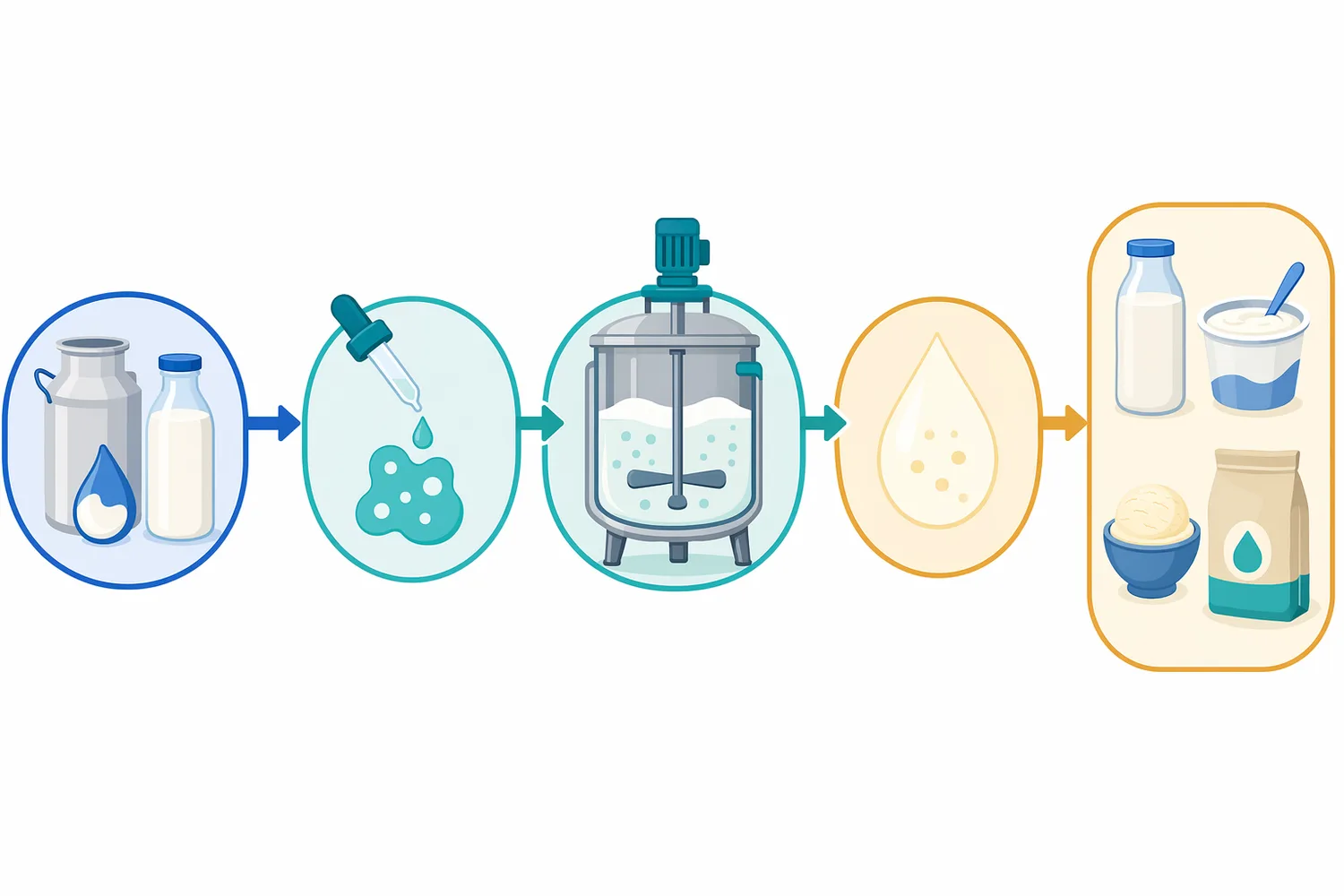
GOS production is a specialized application because the goal is not just to remove lactose. The process aims to create defined or enriched oligosaccharide mixtures with prebiotic value, while managing residual lactose, monosaccharides, and product purification. Lactase therefore has a dual role in dairy biotechnology: it can simplify lactose into absorbable sugars or help convert lactose into higher-value oligosaccharides [1].
Immobilized lactase systems attach or entrap the enzyme on a support so it can be reused or applied in continuous processing concepts. Research has examined lactase immobilization using biopolymers, alginate, chitosan-based materials, bentonite, and other supports, reflecting strong interest in improving enzyme stability and operational reuse [8].
The value of immobilization is easy to understand mechanistically. Free lactase disperses into the product and acts throughout the liquid phase, while immobilized lactase remains associated with a carrier. Product can contact the enzyme and leave with reduced lactose, while the enzyme is retained. This concept can reduce enzyme carryover and support repeated use, but only if the support allows good substrate access and avoids excessive diffusion limitations [9].
Encapsulation is related but often used for controlled release or protection. Studies on lactase microencapsulation and hydrogel systems show that the local microenvironment around the enzyme can affect activity, stability, and release behavior. The mechanism is concrete: the shell or gel can buffer the enzyme from unfavorable external conditions, but it can also slow lactose diffusion into the enzyme-containing phase [10].
These technologies are scientifically important, but they are more process-dependent than simple addition of soluble lactase. Carrier composition, particle size, internal pH, fouling behavior, and contact pattern all affect results. For most readers, the key takeaway is that immobilization and encapsulation are advanced lactase formats studied to control where the enzyme is, how long it remains active, and how it contacts lactose [11].
Lactase also appears in consumer health contexts as a lactase enzyme supplement or lactase enzyme dietary supplement. Health-system guidance describes lactase capsules or tablets as products that help replace the enzyme the body uses to break down lactose in dairy foods, and they are commonly taken with the first bite or drink of lactose-containing food [12].
This is the basis for terms such as lactase supplements for lactose intolerance, lactase supplement, lactase enzyme for lactose intolerance, lactose intolerance lactase enzyme, enzyme lactase supplement, and lactase enzyme supplements. These phrases all point to the same biological function: supplying lactase at the time lactose is consumed so the lactose can be hydrolyzed into glucose and galactose [12].
It is important to separate supplement positioning from industrial enzyme use. A consumer lactase tablet is designed for oral use with meals, while lactase used in dairy processing is applied to the food matrix to reduce lactose before the product reaches the consumer. Both rely on β-galactosidase chemistry, but the dosage form, regulatory context, handling, and intended use are different [12].
Lactase supplements do not make a person non-allergic to milk and do not remove milk proteins from food. They address lactose digestion only. Similarly, lactose-free dairy made with lactase still contains dairy proteins unless separately formulated otherwise, so lactose intolerance language should not be confused with milk allergy language [2].
Microbial lactases used in food applications have been evaluated in the scientific literature. A safety evaluation of a lactase enzyme preparation derived from Kluyveromyces lactis reported toxicological and safety assessment work supporting its use as a food enzyme preparation under the evaluated conditions [13].
Safety, however, is always tied to the intended application and regulatory environment. Food enzyme use, supplement use, and processing-aid use can be treated differently depending on jurisdiction and product category. Lactase itself acts on lactose, but the finished product claim—such as “lactose-free,” “lactose-reduced,” or supplement-related digestive support—must match the applicable rules for the market where the product is sold [3].
Responsible product communication should also be precise about what lactase does not do. It does not remove dairy allergens, eliminate all carbohydrates, or convert milk into a plant-based product. It reduces lactose by hydrolysis, and that is the scientifically supported core function [1].
For Enzymes.bio customers, the practical purchasing model is simple: Lactase is available online by the 1 kg unit, and each order is accompanied by documentation for the supplied lot. The scientific value of the enzyme comes from the established β-galactosidase reaction; the buyer’s formulation, process, and intended product category determine how that reaction is applied.
Lactase is most clearly valuable where lactose is the problem to be solved. In milk and dairy beverages, it enables lactose-reduced and lactose-free positioning while preserving the core dairy matrix. In yogurt and fermented dairy, it can support lactose reduction and sweetness development alongside culture activity [7].
In frozen desserts and concentrated dairy, lactase helps address physical quality issues caused by lactose crystallization. The enzyme changes the sugar system itself rather than only masking the texture problem. That makes it a useful processing tool where lactose solids, freezing, storage, and mouthfeel interact [1].
In whey and dairy by-product processing, lactase can make lactose-rich streams more versatile. Hydrolysis produces glucose and galactose, which can be more accessible to downstream microbes and more useful in ingredient applications. This supports the broader movement toward using dairy side streams as resources rather than waste [1].
In specialized biotechnology, lactase can also support GOS production through transgalactosylation. That application requires different reaction priorities from lactose-free milk processing, but it demonstrates why β-galactosidase remains important beyond one product category [1].
Enzymes.bio supplies Lactase as a 1 kg product available for direct online purchase. The ordering process is designed for straightforward buying: add the 1 kg unit online, complete payment, and the order is processed and shipped.
A Certificate of Analysis and Safety Data Sheet are provided with the order. These documents support responsible handling and internal documentation without changing the core scientific point: lactase is used because it hydrolyzes lactose into glucose and galactose.
For dairy, food, beverage, ingredient, and nutrition applications, lactase remains one of the most established enzyme tools available. Its value comes from a well-defined mechanism, broad evidence in milk and whey systems, and practical effects that processors can see in lactose reduction, sweetness, crystallization control, fermentation behavior, and lactose-intolerance-oriented product development [1].
Sold by the 1 kg unit, in stock and ready to ship. Order directly on our store — pay online and we process your order. A Certificate of Analysis and Safety Data Sheet are included with every order.
Buy Lactase →Numbered in order of first citation. Open-access sources, each verified reachable at publication; citation numbers in the text link here.