
Lipase enzyme powder for bread baking helps modify flour and dough lipids during mixing and fermentation, creating small amounts of emulsifier-like lipid products inside the dough. In suitable bread formulas, this can support dough handling, gas-cell stability, loaf volume, crumb softness, and freshness, while excessive lipid hydrolysis can reduce performance rather than improve it. Enzymes.bio supplies Lipase Enzyme Powder for Bakers as a direct online 1 kg product; after online purchase, the order is processed and shipped with a Certificate of Analysis and Safety Data Sheet.
Lipase is a lipid-converting enzyme. In bread dough, its main role is to act on fats and lipid-like molecules that are naturally present in wheat flour or introduced through added oils, shortenings, butter, dairy ingredients, seeds, inclusions, or improver systems. Although flour lipids are a small fraction of the total flour mass, they have a disproportionate effect on gas retention, dough strength, crumb grain, and the eating quality of bread because they sit at interfaces: between gas and liquid, starch and water, protein and water, and fat and water. A recent baking-enzyme review describes lipases as part of the modern enzyme toolbox used from dough development through shelf-life improvement, alongside amylases, xylanases, proteases, and other processing enzymes [1].
In practical bakery terms, lipase does not “add fat” and does not work like a conventional emulsifier dosed into the recipe. Instead, it changes part of the lipid population already present in the dough. Lipase hydrolyzes ester bonds in lipid molecules, releasing smaller lipid fragments such as free fatty acids, mono- or diglyceride-type molecules, and lysolipid-type structures, depending on the lipid substrate and the enzyme’s specificity. These reaction products are more surface-active than many native lipids because they carry both water-attracting and fat-attracting regions, allowing them to position themselves at gas-cell and dough-water interfaces more effectively.
That interface activity is why lipase can be valuable in bread. During mixing and proofing, yeast generates carbon dioxide and the dough expands; during baking, gas cells expand further until the crumb structure sets. If the bubble walls are weak, gas coalesces or escapes, giving lower volume, uneven crumb, or collapse. If lipid modification creates the right balance of surface-active molecules, the gas-cell films become more stable, gluten films can stretch more uniformly, and the dough can retain fermentation gas more efficiently. Research on lipase-treated wheat flour bread has linked loaf-volume improvement to the hydrolysis of specific accessible wheat lipids, including glycolipid and phospholipid classes, into lysolipid products that support bread structure [2].
A wheat dough is often described mainly in terms of gluten, starch, water, yeast, and salt, but flour lipids are also part of the dough architecture. Some lipids are “free” and relatively accessible, while others are associated with starch granules, protein surfaces, or membranes from the grain. Their functional behavior depends not only on their amount but also on their polarity, chain structure, and how they interact with gluten proteins, starch, added fats, and emulsifiers. This is why two flours with similar protein content can respond differently to the same dough conditioner or enzyme system.
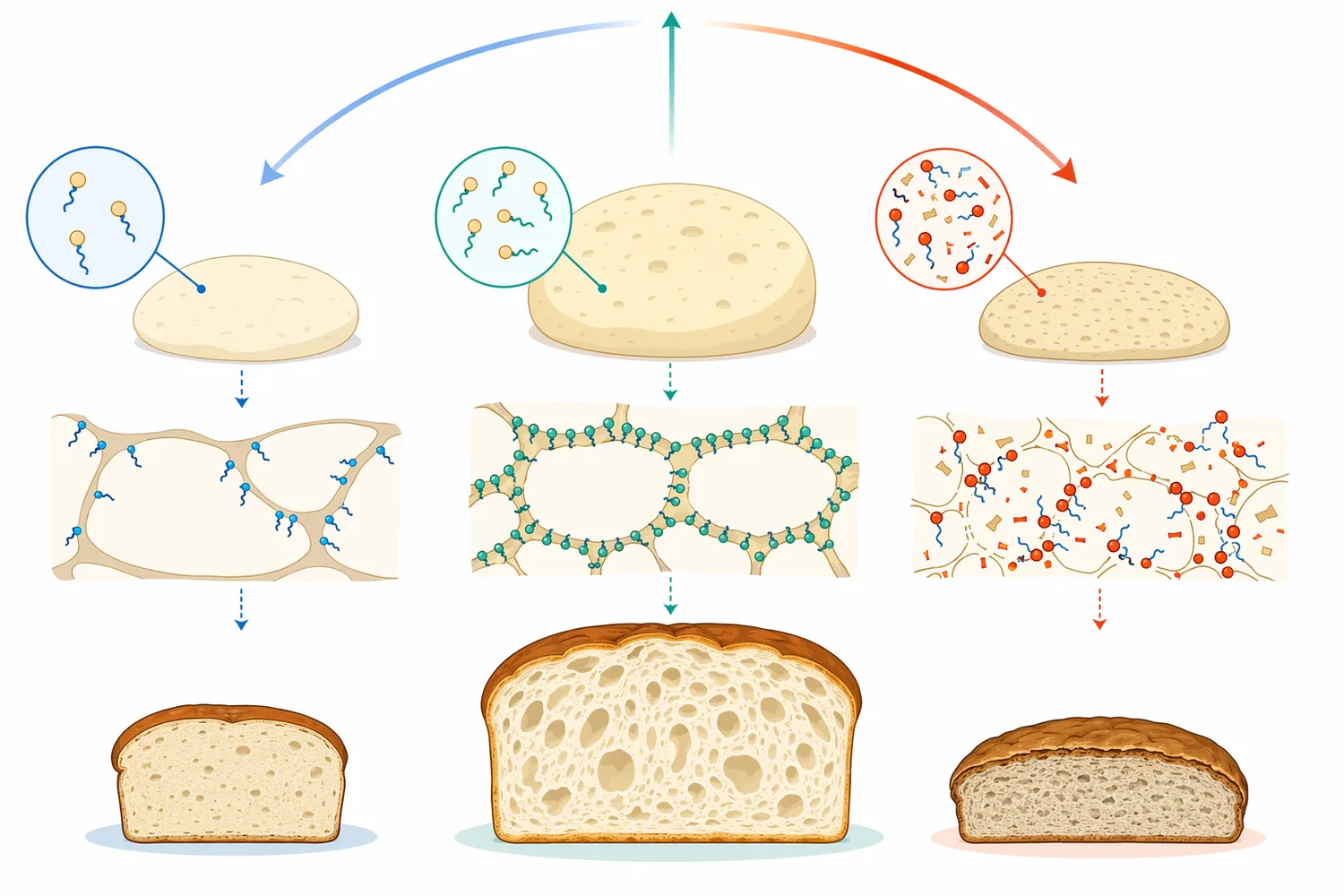
Lipase action is most useful when it improves the functional balance between native lipids and their hydrolysis products. Native lipids may be less mobile or less surface-active; once modified, some become better able to stabilize dough interfaces. However, the benefit is not unlimited. If hydrolysis proceeds too far, useful lipid structures can be depleted, the gas-cell interface can become less stable, and the crumb can become firmer or less resilient. The same wheat-bread research that found loaf-volume benefits from selected lipid hydrolysis also reported that excessive lipase treatment decreased loaf volume, showing that the effect depends on balance rather than on maximum lipid breakdown [2].
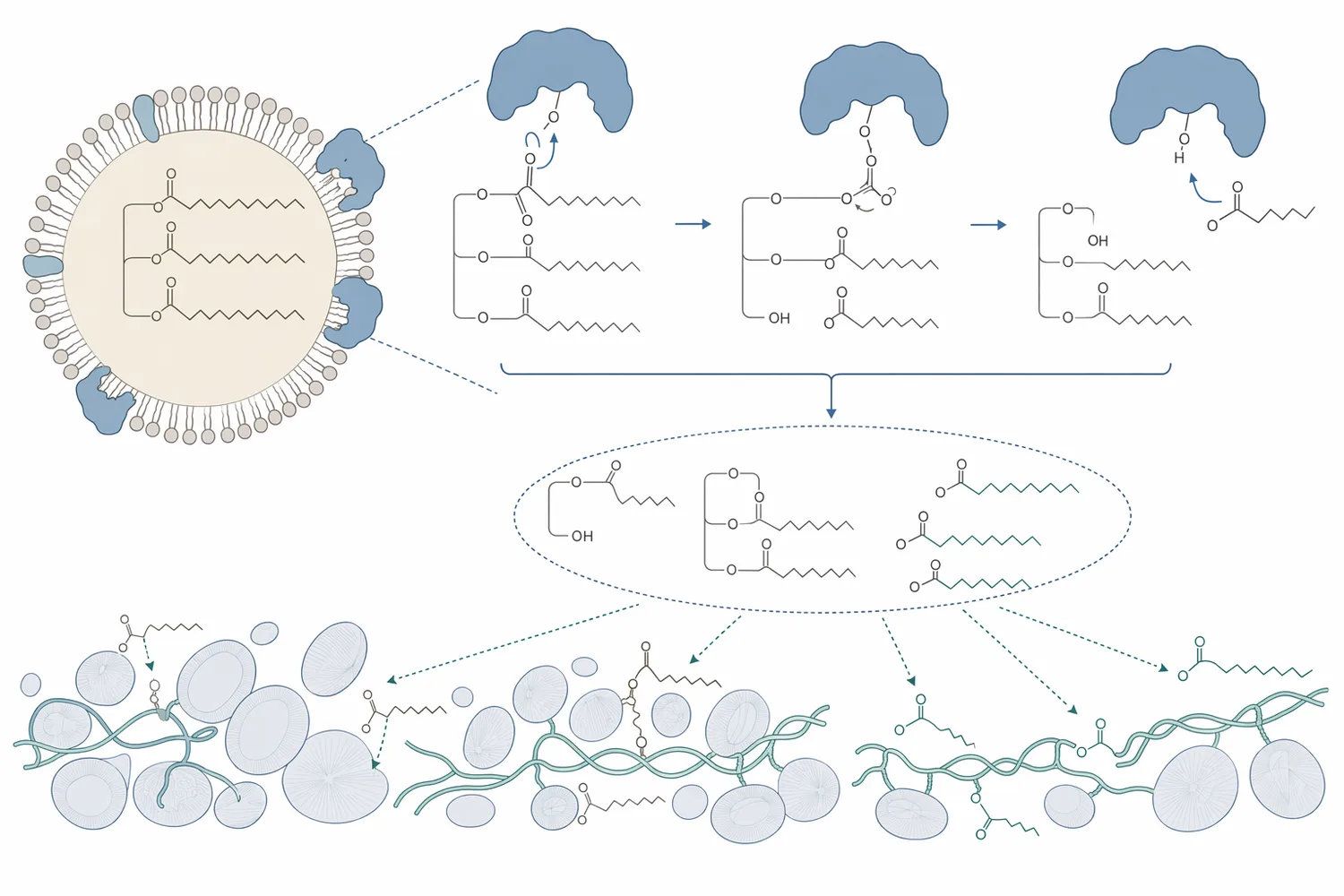
This balance also helps explain why lipase effects are formulation-dependent. A lean pan bread, a milk bread, a bun with shortening, a seeded loaf, and a high-fiber bread all contain different lipid pools and different competing interfaces. In a formula already rich in added emulsifiers or fats, lipase may have a different effect than in a lean dough. In an enriched dough, lipase may act on added fat as well as flour lipids, changing both dough structure and flavor development. That can be beneficial, neutral, or excessive depending on the system, so lipase should be understood as a precise dough-processing aid rather than a universal softness additive.
The most important change is the conversion of relatively hydrophobic lipid molecules into more amphiphilic molecules. “Amphiphilic” means one part of the molecule associates with water while another part associates with fat or air-interface regions. In dough, amphiphilic molecules can migrate to gas-cell surfaces, where they reduce interfacial tension and help the bubble wall resist rupture. This is similar in concept to what traditional emulsifiers do, but lipase generates part of that functionality in situ from the dough’s own lipid substrates.
A second change is improved distribution of lipid material through the dough phase. During mixing, native flour lipids and added fats may not spread evenly across all gluten and gas-cell surfaces. Lipase-generated lipid fragments are often more mobile and more surface-active, so they can redistribute to sites where they affect dough rheology and foam stability. In breadmaking, that can translate into smoother dough development, better tolerance to handling, and a more even gas-cell network. A 2024 study focused specifically on commercial lipase incorporation and the technological properties of bread, reflecting the continuing interest in lipase as a practical bakery ingredient rather than only a biochemical concept [3].
A third change occurs through interaction with starch. During baking, starch gelatinizes and amylose leaches from granules; during cooling and storage, starch chains reorganize, contributing to firming and staling. Certain lipid molecules can form complexes with amylose, changing how starch behaves during gelatinization and retrogradation. Lipase does not replace amylase in anti-staling systems, but lipid modification can influence crumb firmness and moisture perception when the formula is balanced. Studies on bread storage and texture continue to show that crumb firming is a multi-factor process involving starch digestibility, starch structure, and storage-driven physical changes, not one single ingredient effect [4].
A fourth change can involve aroma and flavor. Lipid hydrolysis releases free fatty acids, which can be precursors for desirable or undesirable volatile compounds depending on the formula, fermentation, baking profile, and storage conditions. Controlled lipid modification may contribute to baked flavor complexity, while excessive lipid oxidation can create off-notes. Work on cereal thermal stabilization has shown that enzyme activity and lipid oxidation are connected to aroma profiles in grain systems, highlighting why lipid-converting enzymes must be balanced in cereal processing [5].
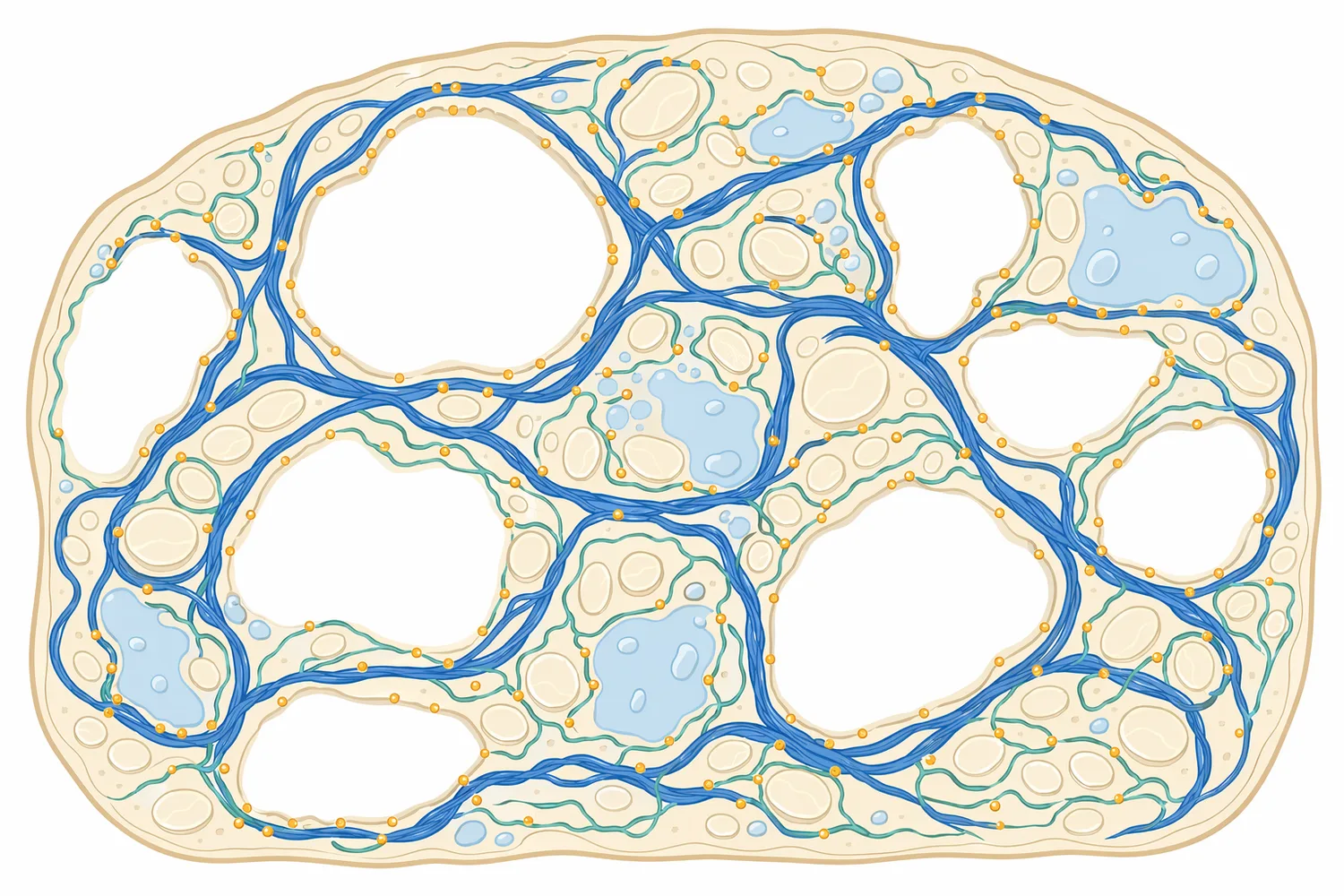
Lipase is often used conceptually alongside amylase, xylanase, and protease, but these enzymes act on different substrates and solve different problems. The most successful bakery enzyme systems usually work because each enzyme modifies a specific part of the dough structure: starch, arabinoxylans, proteins, or lipids. The table below shows the distinction at a practical level.
| Enzyme type | Main dough substrate | What the enzyme changes | Typical breadmaking contribution | Main caution |
|---|---|---|---|---|
| Lipase | Flour lipids and added fats | Converts selected lipids into more surface-active fragments | Supports gas-cell stability, dough handling, loaf volume, crumb softness, and emulsifier-reduction strategies | Too much lipid hydrolysis can reduce volume or affect texture |
| Alpha-amylase | Damaged starch and gelatinizing starch | Produces smaller dextrins and fermentable sugars | Supports fermentation, crust color, volume, and softness | Excessive starch breakdown can cause sticky crumb |
| Xylanase | Arabinoxylans in wheat cell walls | Modifies water-binding fiber fractions | Can improve dough machinability, volume, and crumb structure | Over-treatment can weaken dough or make it sticky |
| Protease | Gluten proteins | Partially hydrolyzes protein network | Can improve extensibility in tight doughs, crackers, or some specialty products | Excessive protein breakdown weakens gas retention |
This comparison is important because lipase should not be expected to do the work of starch- or gluten-targeting enzymes. For example, if a bread is firming mainly because starch retrogradation is too rapid, amylase-type approaches may be more central. If a dough is too elastic and resists sheeting, protease may be more relevant. Lipase’s distinctive value is lipid-interface engineering: it changes how the dough’s lipid fraction participates in gas retention, crumb structure, and softness. Reviews of enzyme applications in baking consistently describe these enzymes as complementary tools rather than interchangeable additives [1].
A well-balanced lipase system can support dough handling because modified lipids help lubricate and stabilize the gluten-starch matrix without simply weakening it. During mixing, gluten proteins hydrate and align; during dividing and moulding, the dough must stretch without tearing or becoming sticky. Surface-active lipid products can help distribute stress across the dough film surrounding gas cells, reducing localized rupture and supporting a more uniform structure.
For bakers, the practical result may be dough that feels less harsh or less sticky, shapes more consistently, and gives more predictable proof height. This is particularly relevant in pan bread, sandwich bread, buns, rolls, and toast bread, where uniform scaling and moulding matter to final symmetry and slice quality. Research on enzyme combinations in gluten-based bread quality reinforces that enzyme effects must be assessed in the full dough system, because sourdough acidity, gluten quality, starch behavior, and added enzymes can interact in ways that change the final loaf [6].
Loaf volume depends on gas production, gas retention, and thermal setting. Yeast can produce enough carbon dioxide, but if the dough film cannot retain it, loaf volume remains low. Lipase-generated lysolipids and related surface-active molecules can strengthen or stabilize the gas-cell interface, allowing more gas to remain in the dough through proofing and early oven spring. The result, when balanced, is a larger loaf with a more open and even crumb structure.
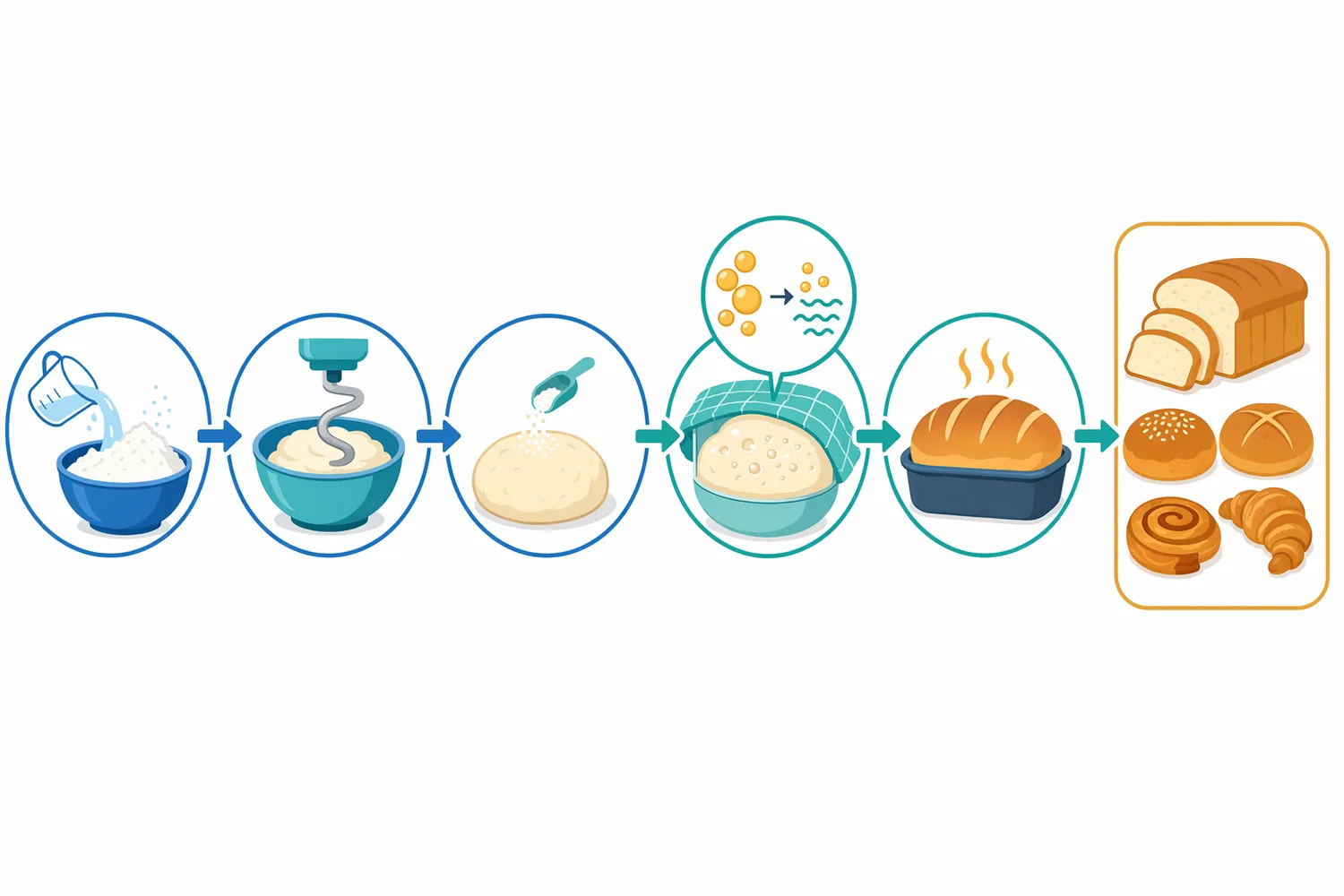
The mechanistic evidence is strongest in wheat bread systems where specific flour lipid classes are accessible to lipase. In the key wheat-flour work, hydrolysis of selected lipid substrates into lysolipids was identified as a principal contributor to loaf-volume improvement, while excessive hydrolysis reversed the benefit and caused volume loss [2]. This “optimum zone” behavior is typical of powerful processing enzymes: the right conversion improves structure, but too much conversion changes the substrate pool in a way that weakens the system.
Softness is not just a moisture number. A soft crumb depends on gas-cell size distribution, starch gel structure, gluten continuity, water mobility, and lipid-starch-protein interactions. Lipase can support softness by improving gas-cell stability and producing finer, more resilient crumb architecture. A loaf with better gas retention and a more uniform cell network often feels softer because compression is spread across many small cell walls rather than concentrated in dense crumb zones.
Lipase may also contribute to softness through lipid-starch interactions. Certain lipid products can interact with amylose during baking and influence how the crumb firms during cooling. This does not make lipase a direct substitute for anti-staling amylase, but it helps explain why lipase is often discussed as part of a broader freshness system. Bread shelf-life research shows that texture loss during storage is driven by both internal crumb changes and external conditions such as packaging and moisture movement [7].
Freshness in bread is affected by starch retrogradation, moisture redistribution, crust softening, crumb firming, microbial spoilage, and packaging. Lipase mainly contributes to the physical-textural side of freshness rather than acting as a preservative. By improving initial crumb structure and modifying lipid interactions in the dough, lipase can help the bread start with a softer, more resilient crumb and may slow the rate at which that crumb becomes firm.
Shelf-life enhancement in bread is rarely controlled by one ingredient. Reviews on bread shelf life describe a combination of formulation, processing, packaging, and microbial control approaches, with enzymes playing a role in maintaining quality over time [8]. Lipase fits within this broader approach as a structure- and texture-supporting processing aid. Its contribution is strongest when the rest of the formulation also supports water management, starch behavior, and microbial stability.
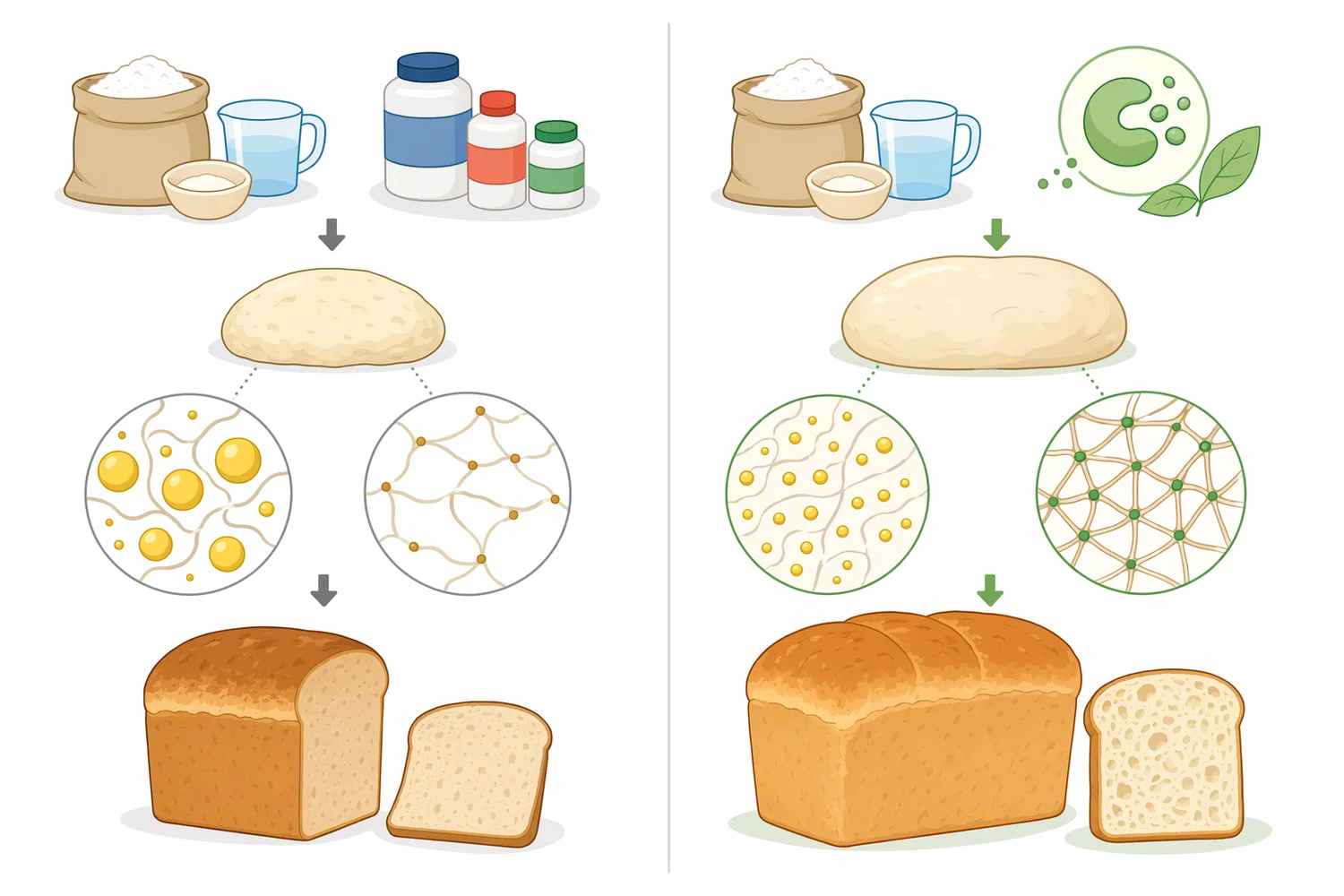
One reason bakers use lipase is to reduce reliance on conventional emulsifiers while still supporting loaf volume and softness. Traditional emulsifiers are added as functional ingredients; lipase works differently by converting part of the existing lipid fraction into emulsifier-like molecules during dough processing. This can support cleaner ingredient positioning where the bakery formula and product expectations allow it.
The mechanism is concrete: lipase creates amphiphilic lipid fragments in the dough. These fragments can align at gas-cell surfaces and interact with starch and gluten components, performing some of the structural roles associated with emulsifier systems. However, lipase does not automatically replace every emulsifier in every bread. Some formulas rely on emulsifiers for very specific properties such as high-volume pan bread tolerance, frozen dough stability, or extended softness targets. In those cases, lipase may support reduction or reformulation, but the outcome depends on the complete recipe and process.
Clean-label reformulation also intersects with sourdough and fermentation strategies. Sourdough can improve flavor, acidity, texture, and shelf-life characteristics in certain breads, while enzymes can adjust specific structural properties. Studies on long-fermented sourdough rye bread and sourdough-supported gluten-free rice breads show that fermentation systems can meaningfully affect technological and shelf-life outcomes, but their effects depend strongly on flour type and formulation [9]. Lipase can sit alongside these approaches as a lipid-modifying tool rather than a replacement for fermentation design.
Pan bread is a natural application for lipase because volume, crumb uniformity, slicing quality, and softness are all highly visible to the customer. In this format, even small improvements in gas retention and crumb resilience can change loaf height, slice appearance, and eating quality. Lipase can support the formation of a more stable gas-cell network during proofing and oven spring, especially when the flour lipid profile and overall dough system respond well.
For sandwich bread, the value is not only high volume but also fine, even crumb. A crumb with large voids, collapsed sidewalls, or dense streaks performs poorly in slicing and sandwich assembly. Lipase’s interface effect can help stabilize the cellular structure so that the final crumb is more uniform. The strongest evidence remains tied to balanced lipid hydrolysis in wheat systems, where specific lipid conversion products are associated with improved loaf structure [2].
Buns and rolls require softness, extensibility, and shape retention. A dough that is too weak spreads; a dough that is too tight resists expansion and produces dense crumb. Lipase can help by improving the way lipid materials participate in the dough film, contributing to smoother expansion and a softer bite. In enriched buns, the added fat content means there are more lipid materials in the system, so the effect may differ from lean bread.
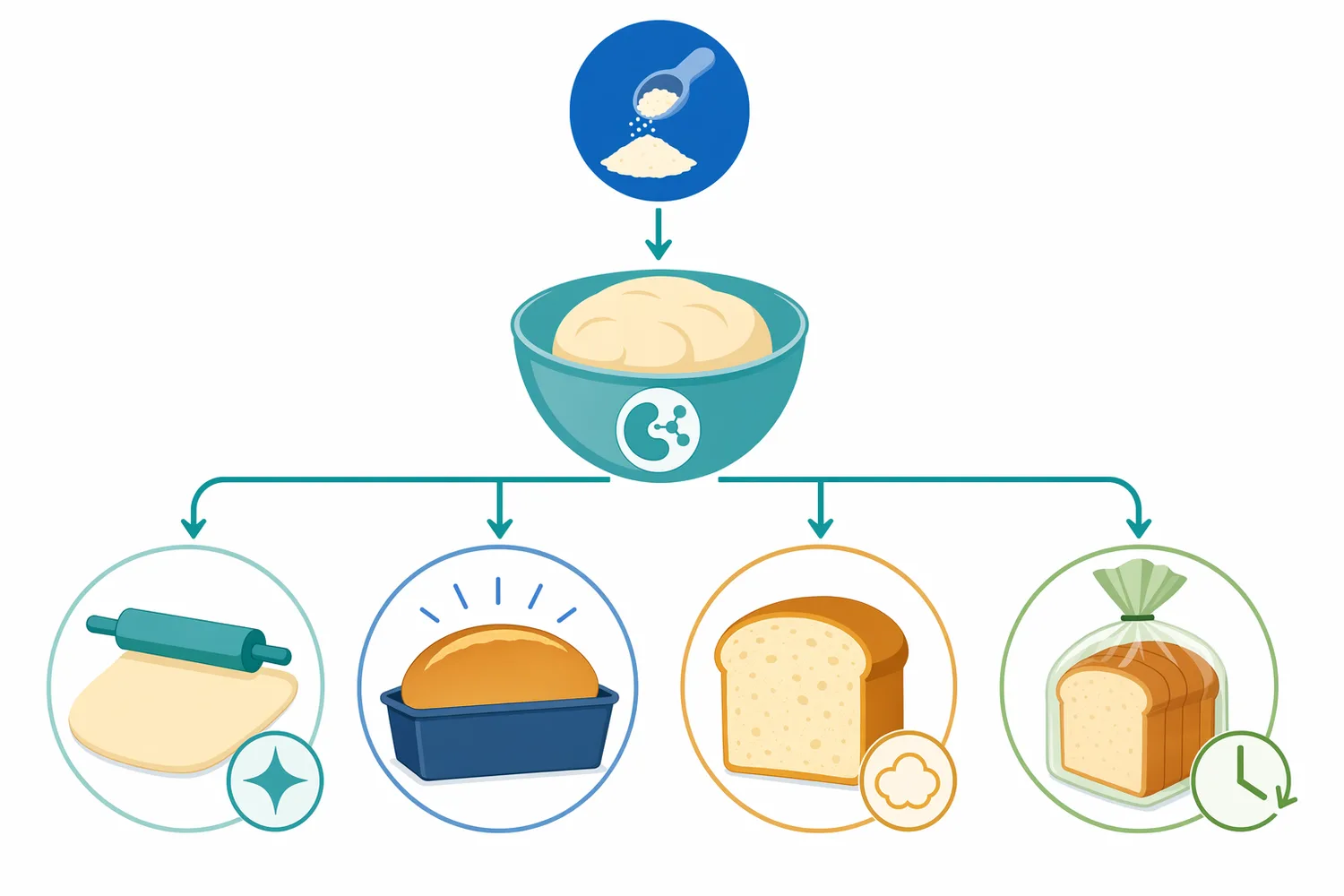
Soft bakery goods also rely on pleasant eating texture after cooling and, often, after storage. Lipase may contribute to initial softness and resilience, while other ingredients and enzymes manage sweetness, starch breakdown, moisture retention, and shelf life. This is why lipase is best viewed as one functional component in the formulation rather than the sole driver of finished quality.
Sourdough systems introduce acidity, microbial metabolites, and longer fermentation time, all of which can change enzyme behavior and dough structure. Lipase may still be useful, but the dough environment is different from straight-dough pan bread. Acidification affects gluten behavior, starch interactions, and the solubility of some flour components, while sourdough microbes can contribute their own enzymatic activities.
Research on sourdoughs, enzymes, and their combinations in gluten-based bread quality highlights that combined systems can produce different outcomes from either sourdough or enzymes alone [6]. For bakers, the key point is that lipase’s lipid-modifying action remains the same in principle, but its visible performance will reflect the fermentation system, flour type, and final product target.
Gluten-free breads and composite breads depend less on gluten structure and more on starch gels, hydrocolloids, proteins from non-wheat sources, fibers, and emulsification. Lipase may still affect fat distribution, gas-cell stability, and crumb softness, but the mechanism is expressed through a different matrix. Without gluten, the gas-cell wall is formed by starch, gums, proteins, and other structuring agents, so lipid-interface effects may not translate exactly as they do in wheat bread.
Sourdough-supplemented gluten-free rice breads with chickpea flour have been studied for quality and shelf-life characteristics, illustrating the broader trend toward enzyme and fermentation tools in non-traditional bread matrices [10]. Lipase can be relevant in such systems where lipids and emulsification affect gas retention, but performance should be understood as matrix-dependent.
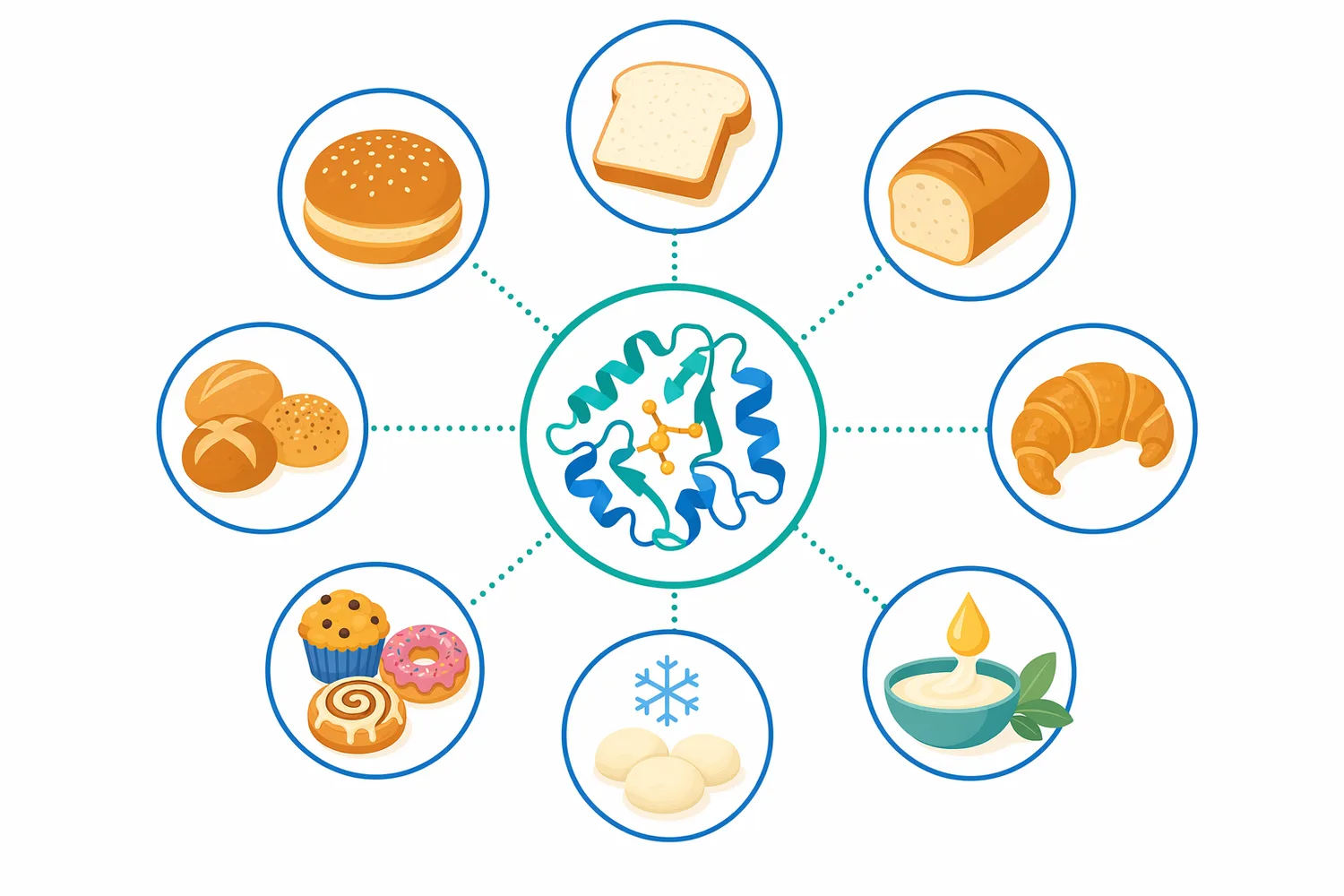
High-fiber and seeded breads often contain more lipids, more insoluble particles, and more water-binding materials than standard white bread. Bran, seeds, pulses, and functional inclusions can interrupt gluten continuity, absorb water, or introduce native enzymes and oils. Lipase may help improve lipid distribution and gas-cell stability in some of these systems, but it cannot fully compensate for severe gluten dilution or poor hydration balance.
Fortified breads also vary widely. Goji-containing ciabatta, cereal-based plant beverage breads, purple corn pan breads, and other functional bakery products show how new ingredients can change dough behavior, nutritional profile, bioactivity, and consumer appeal [11]. In such products, lipase should be understood as a texture and structure tool whose effect depends on the complete ingredient system, not as a guarantee of volume improvement in every fortified dough.
The central rule for lipase in bread baking is that more is not automatically better. Because lipase changes the lipid population, the goal is controlled conversion. Too little conversion may not create enough surface-active material to be visible in dough handling or loaf quality. Too much conversion can deplete useful native lipids, overproduce free fatty acids, destabilize gas cells, alter flavor, or increase firmness. The wheat-bread evidence showing both improvement and decline under different lipase treatment levels is a clear reminder that lipase has an optimum functional window [2].
Balance also means considering the rest of the dough system. Added emulsifiers, oils, shortenings, dairy powders, egg ingredients, seeds, and high-lipid inclusions can all change what lipase has available to act on. Likewise, fermentation time affects how long the enzyme can work before heat inactivation during baking. Dough temperature, hydration, flour type, and acidity also shape the reaction environment. These are formulation realities rather than supplier specifications: lipase works through chemistry in the dough, and the dough’s composition determines how that chemistry appears in the finished bread.
Another responsible-use point is that lipase is not primarily an antimicrobial shelf-life ingredient. It can support physical freshness and crumb softness, but mold control and microbial shelf life require other approaches such as hygienic processing, packaging, acidity management, moisture control, or approved preservation systems. Studies on bread shelf-life enhancement and packaging emphasize that maintaining bread quality over storage involves several interacting factors, not a single enzyme action [8].
Enzymes.bio supplies Lipase Enzyme Powder for Bakers for bread-baking use as a direct online product sold by the 1 kg unit. The buyer completes the purchase online, and the order is then processed and shipped. A Certificate of Analysis and Safety Data Sheet come with the order.
This product is supplied for customers who already understand their bakery process and want a lipase enzyme powder for use in bread applications. Enzymes.bio is a supplier, not the product manufacturer and not a testing laboratory. The purpose of this document is to explain the science behind lipase in baking in a practical, evidence-based way so that buyers can understand what the enzyme is doing in the dough and why its effect depends on balanced lipid modification.
Lipase enzyme powder for bread baking works by modifying flour and dough lipids into more surface-active compounds that can stabilize gas cells, support dough handling, improve loaf volume, and contribute to crumb softness. Its value comes from targeted lipid conversion inside the dough, especially the creation of emulsifier-like lipid products from accessible wheat lipid fractions. The best-supported mechanism is not a vague “improver” effect but a concrete change in the dough’s lipid-interface behavior.
The same mechanism also explains the main limitation. Lipase must be balanced because excessive hydrolysis can reduce loaf volume, affect texture, or change flavor. Used appropriately within a suitable bread formula, lipase is a practical enzyme tool for bakers seeking better structure, softness, freshness support, and potential emulsifier reduction. Enzymes.bio makes the product available for direct 1 kg online purchase, with order documentation included for the buyer’s records.
Sold by the 1 kg unit, in stock and ready to ship. Order directly on our store — pay online and we process your order. A Certificate of Analysis and Safety Data Sheet are included with every order.
Buy Lipase Enzyme Powder For Bakers - 120 000U/G - Lipase Enzyme For Bread Baking →Numbered in order of first citation. Open-access sources, each verified reachable at publication; citation numbers in the text link here.