
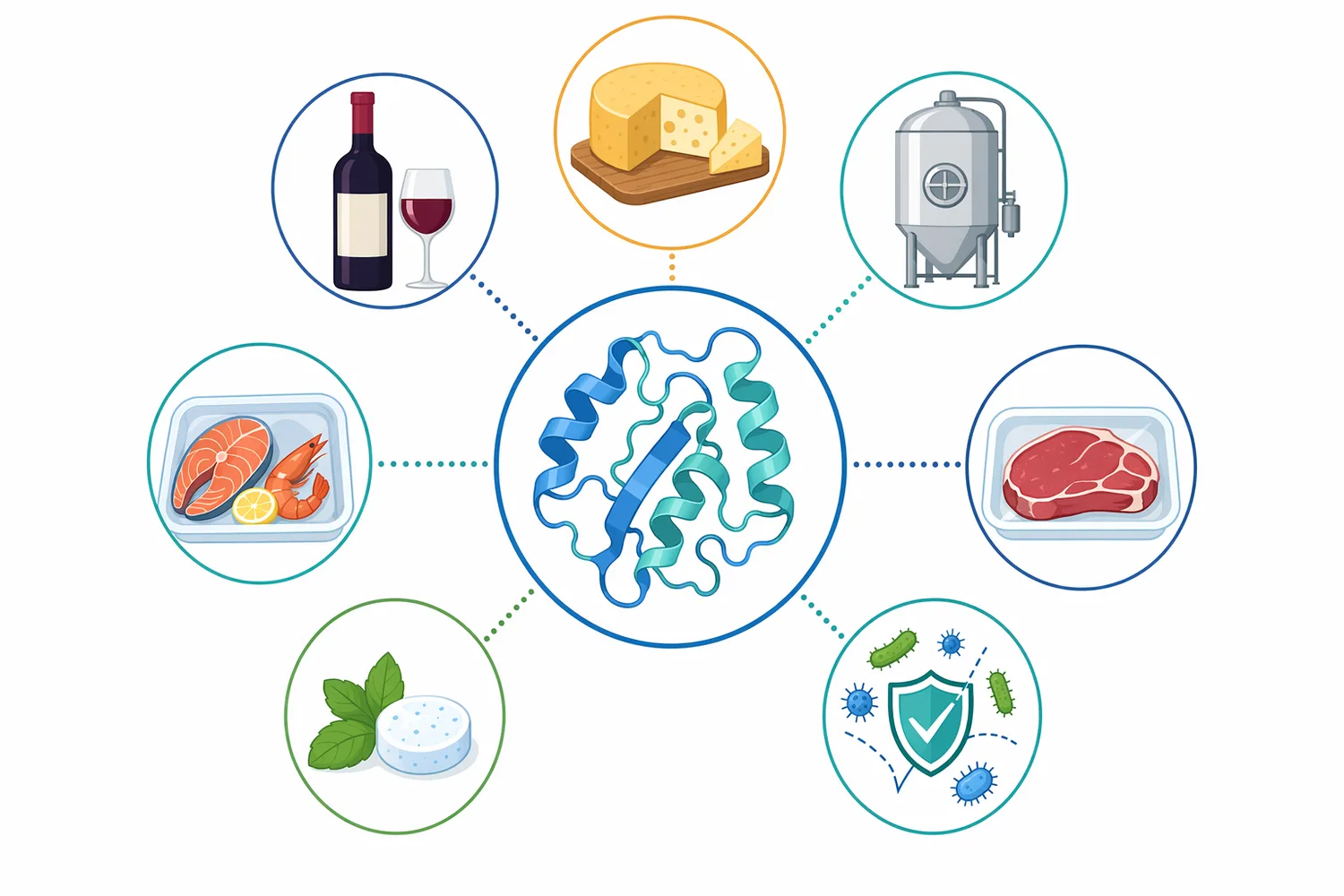
Lysozyme CAS No. 12650-88-3 is an antibacterial enzyme that weakens susceptible bacteria by cutting specific bonds in peptidoglycan, the structural mesh of the bacterial cell wall. It is especially relevant where Gram-positive spoilage organisms are a concern, including selected food, wine, and beverage preservation systems, and it is also widely used for bacterial cell-wall disruption in biotechnology workflows.
Enzymes.bio supplies Lysozyme CAS No. 12650-88-3 directly online by the 1 kg unit. Buyers place and pay for the product online; the order is then processed and shipped, with a Certificate of Analysis and Safety Data Sheet provided with the order .
Lysozyme is a naturally occurring antibacterial enzyme also known as muramidase. Its commercial identity is commonly associated with lysozyme from chicken egg white, one of the best-known and most extensively described sources of the enzyme, and CAS No. 12650-88-3 is used to identify lysozyme in chemical and commercial references [1].
The reason lysozyme remains important in industrial applications is its unusually concrete mode of action. Rather than working as a broad, non-specific preservative, lysozyme attacks a defined structural target in bacteria: the carbohydrate backbone of peptidoglycan. When this wall material is hydrolyzed, susceptible bacterial cells lose mechanical strength, become more vulnerable to osmotic stress, and may lyse or fail to grow effectively.
In practical terms, lysozyme is valued where an enzyme-based antibacterial function fits the finished product or process. Enzymes.bio presents lysozyme for food and wine applications, reflecting its established role in preservation systems where control of susceptible bacteria is part of the product design . The strongest fit is not “all-purpose sterilization”; it is targeted antibacterial support in matrices where the target organisms and process conditions allow the enzyme to contact its cell-wall substrate.
Lysozyme also has a recognizable biological background. It occurs naturally in animal tissues and secretions and is commonly discussed as part of innate antimicrobial defense, including in secretions such as tears and saliva. This natural role helps explain why lysozyme became an important model enzyme in biochemistry and why its antibacterial mechanism has been studied for decades.
Bacterial cells need a wall to maintain shape and resist internal pressure. In many bacteria, that wall is built from peptidoglycan, a tough mesh made from repeating sugar units crosslinked by short peptides. Lysozyme acts on the sugar-chain portion of that mesh, hydrolyzing β(1→4) glycosidic linkages between N-acetylmuramic acid and N-acetyl-D-glucosamine residues.
That bond cleavage matters mechanically. Peptidoglycan works because many repeating units are connected into a continuous load-bearing network. When lysozyme cuts enough of the glycosidic links, the network becomes discontinuous. The bacterium can no longer rely on the wall to resist osmotic pressure or maintain shape, so the cell envelope weakens and the cell may rupture or become easier to control by other preservation hurdles.
The enzyme’s specificity also explains its limitations. Lysozyme does not “seek out” every spoilage organism in the same way. It acts where its substrate is present and accessible. Bacteria with exposed peptidoglycan are more vulnerable; organisms whose wall structures are shielded, modified, or fundamentally different may be less affected. This is why lysozyme is best described as a targeted antibacterial enzyme rather than a universal antimicrobial system.
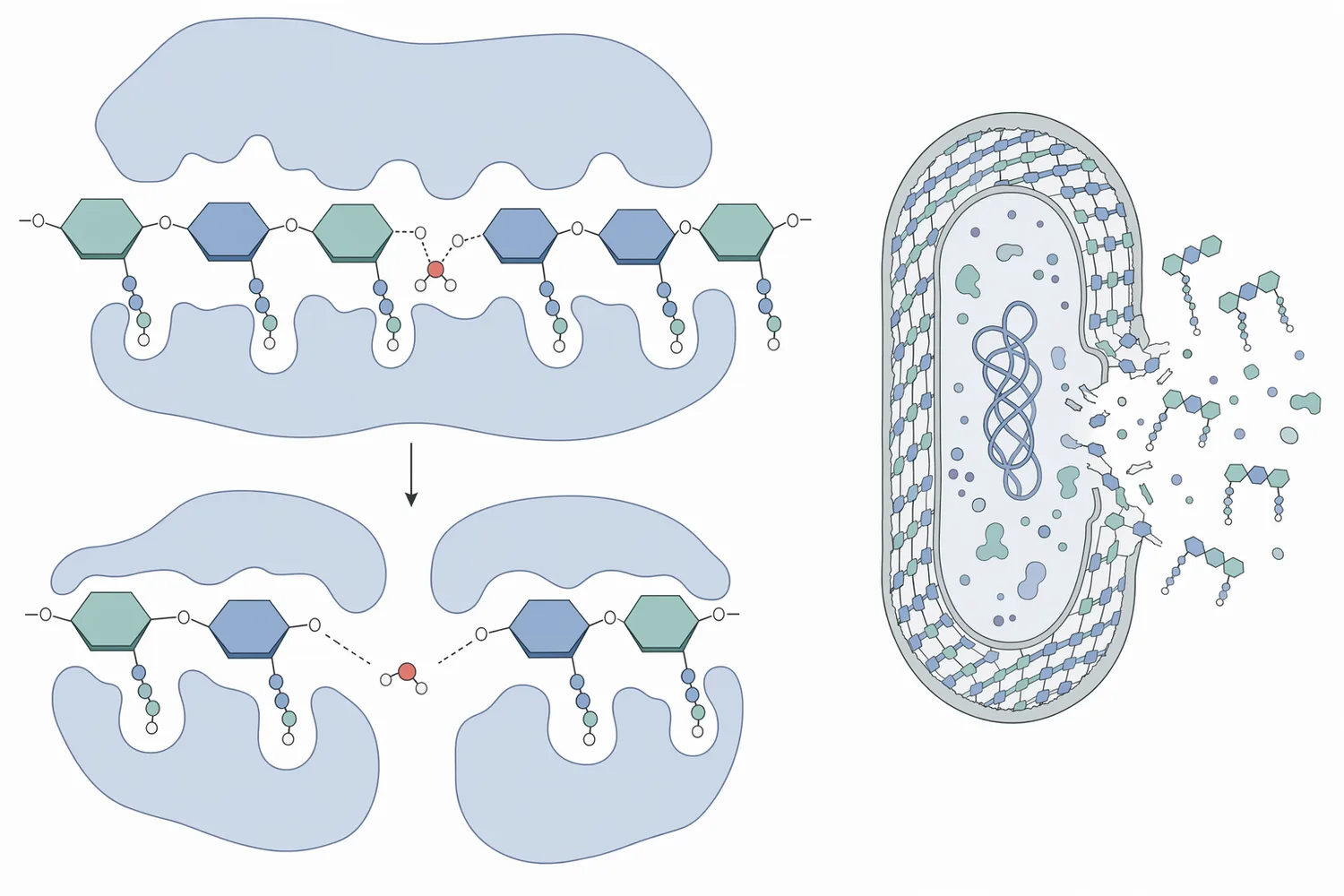
Gram-positive bacteria are generally the clearest target group because their cell walls contain a thick, relatively exposed peptidoglycan layer. In those cells, lysozyme can physically reach the wall substrate more readily. Gram-negative bacteria also contain peptidoglycan, but it lies behind an outer membrane that restricts enzyme access; under ordinary conditions, that membrane can make Gram-negative organisms less susceptible.
The same mechanism explains why synergistic systems can matter. If another compatible hurdle weakens the Gram-negative outer membrane, lysozyme may gain better access to the peptidoglycan layer. Chelating agents are often discussed in this context because they can disrupt stabilizing interactions in the outer membrane, making the cell envelope more permeable and allowing lysozyme’s wall-cutting function to become more relevant.
Lysozyme is most useful when its enzyme mechanism complements the rest of the product environment. In food, wine, and beverage settings, preservation rarely depends on one factor alone. pH, salt, alcohol, refrigeration, heat history, packaging, competing flora, and permitted preservatives can all influence microbial outcome. Lysozyme contributes a specific antibacterial pressure: enzymatic degradation of accessible bacterial wall peptidoglycan .
The following comparison shows how lysozyme differs conceptually from other common preservation hurdles. It is not a replacement for all of them; instead, it is one possible component in a formulation or process where its target and conditions align.
| Preservation or processing tool | Primary effect on microorganisms | What changes in the cell or product environment | Practical fit |
|---|---|---|---|
| Lysozyme | Enzymatic attack on bacterial cell-wall peptidoglycan | Cuts β(1→4) linkages in the wall backbone, weakening susceptible bacterial cells | Best aligned with accessible peptidoglycan, especially many Gram-positive bacteria |
| Heat treatment | Thermal damage to cells and enzymes | Denatures proteins, disrupts membranes, and reduces viable microbial load depending on process severity | Useful where the product tolerates heat and thermal processing is permitted |
| Low pH / acidification | Environmental stress and inhibition | Reduces intracellular pH control and interferes with metabolism of sensitive organisms | Common in acidic foods and beverages, but organism tolerance varies |
| Salt or reduced water activity | Limits available water for microbial growth | Creates osmotic stress and reduces microbial proliferation | Useful in salted, dried, cured, or concentrated products |
| Alcohol in fermented beverages | Membrane and metabolic stress | Disrupts microbial physiology and reduces growth of many organisms | Relevant in wine, sake, beer, and other alcoholic systems |
| Chelating or permeability-enhancing hurdles | Weakens protective envelope structures in some bacteria | Can destabilize outer membrane barriers, potentially improving access to peptidoglycan | Most relevant when Gram-negative resistance is a concern |
This comparison is important because lysozyme’s value comes from precision, not breadth. A broad chemical preservative may inhibit several organism groups through generalized metabolic or membrane stress, while lysozyme’s defining action is a highly specific cut in bacterial wall material. That specificity can be an advantage when the microbial risk matches the enzyme’s substrate; it can also be a limitation when the main concern is yeast, mold, or resistant Gram-negative bacteria.
Lysozyme is used as an enzyme-based preservative aid in selected food systems where bacterial spoilage control is relevant. Enzymes.bio identifies lysozyme for food applications, and product pages describe its use in food and beverage contexts where antibacterial functionality is desired .
In food matrices, lysozyme’s action is most straightforward when the spoilage concern includes Gram-positive bacteria. The enzyme does not need to penetrate deeply into a eukaryotic cell or interfere with a complex metabolic pathway; it only needs sufficient contact with accessible peptidoglycan. When the enzyme reaches that wall substrate, hydrolysis of the glycosidic backbone reduces wall integrity and can lower the ability of susceptible bacteria to survive or proliferate.
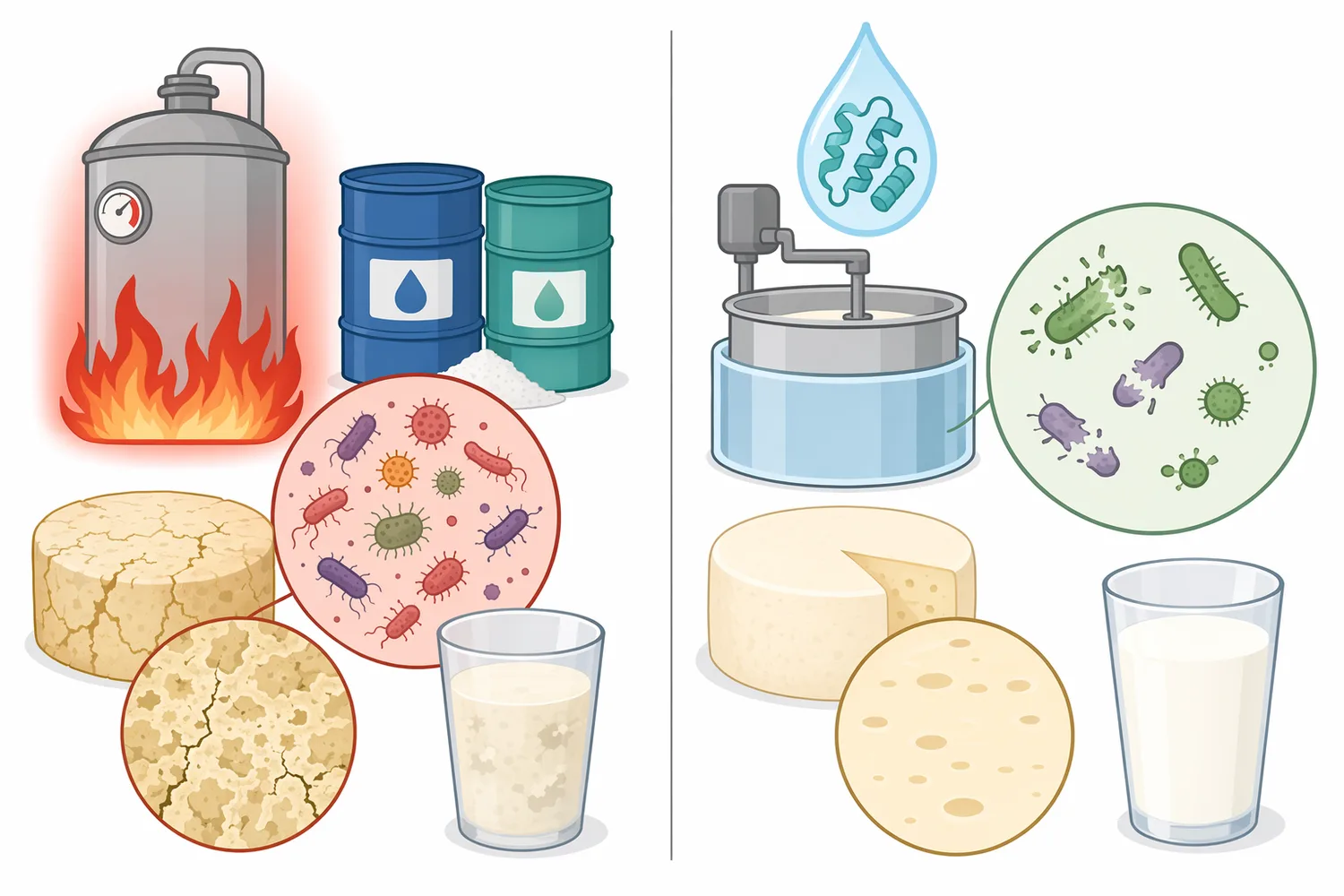
Protein-rich and moisture-containing foods can be vulnerable to bacterial spoilage, but their formulation chemistry can also influence enzyme performance. Proteins, salts, fats, pH, and processing heat can all affect the way an enzyme remains soluble, stable, and able to contact bacterial cells. Lysozyme therefore works best as part of a considered preservation system rather than as a simple add-on expected to perform identically in every food matrix.
For buyers purchasing lysozyme online, the practical takeaway is that the ingredient provides a well-established antibacterial mechanism that may support microbial control in compatible food applications. The final outcome still depends on the finished product, organism profile, process sequence, and regulatory framework that applies to the product category and market .
Wine is one of the best-known commercial application areas for lysozyme. Enzymes.bio presents lysozyme for food and wine use, reflecting the enzyme’s role as a preservation aid in fermented beverage systems .
In wine, lysozyme is commonly associated with control of lactic acid bacteria. The mechanistic fit is clear: many lactic acid bacteria are Gram-positive, meaning their peptidoglycan-rich walls are comparatively accessible to lysozyme. When lysozyme cleaves the wall backbone, the bacterial cells become weakened, which can help limit unwanted bacterial activity in a broader wine-stability program.
This is particularly relevant in wines where bacterial growth can change acidity, aroma, texture, or stability. Lysozyme does not perform the same job as sulfites, filtration, temperature control, sanitation, or alcohol; instead, it adds a different mode of action. A multi-hurdle approach is common in beverage preservation because microorganisms respond differently to alcohol, pH, nutrient availability, and antimicrobial agents .
Lysozyme is also discussed in relation to sake and other beverage systems. The same principles apply: the enzyme is most relevant when the microbial issue involves susceptible bacteria and when beverage chemistry allows the protein enzyme to remain functional long enough to act. Alcohol content, pH, phenolic composition, and process timing can all influence the practical result.
For wine and beverage buyers, lysozyme’s appeal is that it offers enzyme-based antibacterial control without acting as a flavoring, acidulant, or heat process. Its function is structural and microbiological: it weakens certain bacterial cells by damaging their wall architecture .
Lysozyme’s strongest and most reliable antibacterial rationale is against bacteria with accessible peptidoglycan. Gram-positive organisms fit this profile because their thick peptidoglycan layer sits outside the cytoplasmic membrane and is not protected by the additional outer membrane found in Gram-negative bacteria.
This structural difference is not a minor detail; it is the reason organism type matters so much. In a Gram-positive cell, lysozyme can encounter its substrate directly at the exterior wall. In a Gram-negative cell, the enzyme must first overcome or bypass the outer membrane before it can reach the thin peptidoglycan layer beneath. If the outer membrane remains intact, it can act as a physical barrier that limits lysozyme’s effect.
That does not mean Gram-negative systems are impossible, but it does mean claims should be realistic. Where membrane-disrupting or permeability-enhancing conditions are present, lysozyme access may improve. In preservation language, this is a hurdle effect: one factor compromises the barrier, and lysozyme then acts on the wall substrate that becomes more accessible.
Yeasts and molds are a different issue. Their cell walls are not built from bacterial peptidoglycan in the same way, so lysozyme’s defining peptidoglycan-hydrolyzing mechanism does not directly translate to broad antifungal performance. If a finished product’s primary spoilage risk is yeast or mold, lysozyme should not be treated as the central control mechanism for those organisms.
Beyond food and beverage preservation, lysozyme is widely recognized in biotechnology and microbiology for bacterial cell-wall disruption. The same wall-cleaving mechanism that helps control susceptible bacteria can also be used to weaken cells intentionally so that intracellular material is easier to release.
In bacterial lysis workflows, lysozyme is often used to soften or digest the peptidoglycan layer before or alongside other disruption steps. Once the wall is weakened, mechanical shear, osmotic changes, detergents, or other process conditions can more readily open the cell. This makes lysozyme useful where the goal is not preservation but access to cellular contents such as proteins, nucleic acids, or other intracellular components.
The link between preservation and lysis is therefore direct. In both cases, lysozyme changes the same structure: the bacterial wall. The difference is the intended outcome. In a food or beverage, the goal is to suppress or limit unwanted bacterial activity; in a technical workflow, the goal is controlled disruption of bacterial cells for downstream handling.
Because the enzyme acts on a structural polymer rather than on a single organism-specific metabolic enzyme, it has broad relevance across many bacteria whose peptidoglycan is reachable. However, accessibility remains the key limitation. Cell envelope architecture, growth state, medium composition, and accompanying disruption methods all influence how readily the enzyme’s wall-cutting action translates into lysis.
Lysozyme is also described in commercial and technical contexts beyond food and beverages, including antibacterial functionality in selected personal care and oral care products. Enzymes.bio materials identify broader application relevance, while the enzyme’s scientific basis remains the same: peptidoglycan hydrolysis in susceptible bacteria .

In oral care, lysozyme’s natural association with saliva and innate defense makes it especially recognizable. Its role is not cosmetic in the narrow sense; it contributes a biological antibacterial function by targeting bacterial wall material. In products where susceptible bacteria are relevant and the formulation environment is compatible, lysozyme can support an antimicrobial positioning based on enzyme action rather than only conventional preservative chemistry.
In skin and hygiene-oriented formulations, the same caution applies as in foods: lysozyme is not a universal antimicrobial for every organism. Formulation pH, surfactants, oils, alcohols, and other ingredients may affect protein stability or activity. The enzyme’s role should therefore be understood as targeted antibacterial functionality that must fit the product’s chemistry and regulatory category.
For commercial buyers, the important point is that lysozyme’s cross-sector relevance comes from a single, well-understood mechanism. Whether the application is beverage preservation, food protection, bacterial lysis, or hygiene-oriented formulation, the enzyme’s practical value depends on whether it can reach and hydrolyze bacterial peptidoglycan.
Lysozyme is a protein enzyme, so its performance depends on the environment in which it is used. pH can influence charge, solubility, enzyme-substrate interaction, and the structure of both the enzyme and bacterial surface. Literature commonly discusses lysozyme activity across acidic to mildly alkaline conditions, but no single pH statement predicts performance in every finished product.
Temperature matters because enzymes have folded three-dimensional structures. Moderate heat may be tolerated under some conditions, while more severe heat exposure can reduce activity by unfolding or damaging the protein. In real products, the effect of heat also depends on exposure time, moisture, salts, alcohol, sugars, and surrounding proteins.
Ionic strength can influence lysozyme in two ways. First, salts affect electrostatic interactions between the positively charged enzyme surface and negatively charged bacterial cell-wall components. Second, salts can change the broader physical chemistry of the formulation, influencing solubility and diffusion. These effects help explain why lysozyme may behave differently in a low-salt beverage than in a high-salt or protein-rich food matrix.
Other ingredients can also matter. Surfactants, alcohols, fatty materials, polyphenols, and other reactive or binding components may influence protein behavior or microbial envelope properties. Some of these effects may reduce enzyme function; others may help lysozyme reach its target by changing the bacterial surface. This is why lysozyme should be viewed as an ingredient whose mechanism is well defined, but whose performance is still application-dependent.
Lysozyme is often described as comparatively robust among enzymes, but “robust” does not mean unaffected by processing. Like any protein, it can be altered by excessive heat, unfavorable pH, prolonged exposure to incompatible solvents, or interactions with formulation components. The practical question is whether enough functional enzyme remains available in the product or process at the point where antibacterial action is needed.
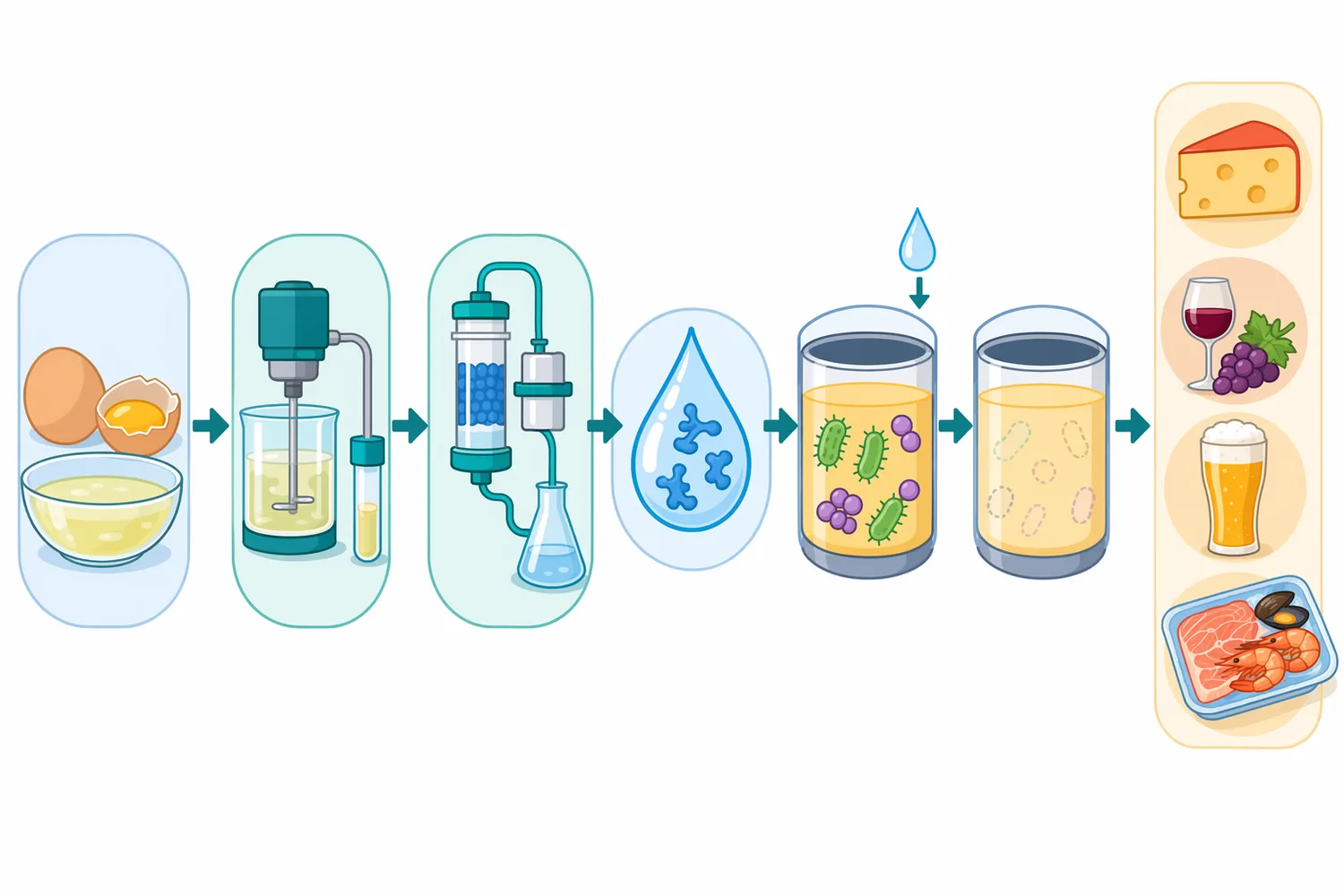
In wine and other fermented beverages, the environment may include alcohol, organic acids, phenolics, minerals, proteins, and dissolved oxygen. Each can influence enzyme behavior or microbial susceptibility. Lysozyme’s role is therefore best understood as a targeted antibacterial contribution within that matrix, not as a guarantee that every possible spoilage organism will be controlled .
In food systems, complexity can be even greater. Fats and proteins may bind or shield microorganisms, salts may alter electrostatic interactions, and heat processing may occur before or after enzyme addition. These conditions do not invalidate lysozyme’s mechanism; they simply determine how effectively the enzyme can express that mechanism in the finished product.
In technical cell-disruption workflows, the same compatibility logic applies. Lysozyme is effective when it reaches peptidoglycan under conditions that preserve enzyme function long enough for wall hydrolysis. If the bacterial envelope is unusually resistant or the process environment interferes with the enzyme, additional disruption steps may be needed to achieve the desired cell opening.
Enzymes.bio supplies Lysozyme CAS No. 12650-88-3 directly online by the 1 kg unit. The purchasing process is straightforward: the buyer selects the product, pays online, and the order is processed and shipped .
A Certificate of Analysis and Safety Data Sheet are provided with the order. These documents support routine product documentation and safe handling, while the product page provides the commercial route for purchasing the 1 kg unit online .
Enzymes.bio is a supplier, not a manufacturer or testing laboratory. The product information is intended to help buyers understand lysozyme’s identity, mechanism, and general application relevance without turning the purchase process into a custom technical development project .
Lysozyme has established relevance in food, wine, and antibacterial applications, but finished-product acceptability depends on the rules that apply in the buyer’s market and product category. Food, beverage, cosmetic, oral care, and technical applications may each be subject to different requirements, permitted-use conditions, labeling expectations, or internal validation practices .

The safest technical positioning is precise: lysozyme is an antibacterial enzyme that hydrolyzes bacterial peptidoglycan. It is most relevant against susceptible bacteria, particularly many Gram-positive organisms. It should not be described as a universal preservative for all bacteria, yeast, mold, viruses, or mixed microbial communities.
This precision protects product design as well as marketing language. When lysozyme is used where its substrate is accessible, its mechanism is easy to explain and technically credible. When it is expected to control organisms outside its main target range, results may be inconsistent unless other preservation hurdles carry the additional burden.
For buyers, the practical value is clarity. Lysozyme offers a known enzyme mechanism, a long scientific history, and recognized commercial use in food and wine contexts. Used with realistic expectations, it can be a useful antibacterial ingredient in compatible systems .
Lysozyme continues to be relevant because it connects a clear biochemical action with practical commercial uses. Its defining reaction—hydrolysis of β(1→4) linkages in bacterial peptidoglycan—directly explains why it can weaken susceptible bacteria, support preservation strategies, and assist bacterial cell disruption.
For food and beverage applications, the enzyme offers targeted antibacterial support without relying on a broad chemical-preservative mechanism. For wine and fermented beverages, it is especially relevant where Gram-positive bacteria are part of the microbial concern. For biotechnology workflows, it provides a biologically specific way to weaken bacterial walls before downstream processing .
The main limitations are equally clear. Lysozyme depends on access to peptidoglycan, so Gram-negative outer membranes can restrict activity, and yeast or mold control is not its primary function. Formulation chemistry and process conditions also influence the final result. These limitations are not weaknesses in the science; they are the practical boundaries of a specific enzyme mechanism.
Enzymes.bio supplies Lysozyme CAS No. 12650-88-3 as a 1 kg product for direct online purchase. Buyers can order and pay online, after which the order is processed and shipped with a Certificate of Analysis and Safety Data Sheet included .
Sold by the 1 kg unit, in stock and ready to ship. Order directly on our store — pay online and we process your order. A Certificate of Analysis and Safety Data Sheet are included with every order.
Buy Lysozyme Cas No.12650-88-3 →Numbered in order of first citation. Open-access sources, each verified reachable at publication; citation numbers in the text link here.