
Lysozyme is an egg-white-derived antimicrobial enzyme used in food preservation to help control susceptible bacteria, especially many Gram-positive organisms. It works by attacking peptidoglycan in bacterial cell walls, weakening the cell envelope so bacteria are less able to grow, survive osmotic stress, or persist during storage. In fruit, vegetable, dairy, beverage, meat, seafood, and prepared-food systems, lysozyme is best used as one targeted antimicrobial hurdle rather than as a universal preservative for every spoilage organism or food matrix [1].
Enzymes.bio supplies food-grade hen egg white lysozyme as an online-order ingredient for preservation applications. The product is sold directly online by the 1 kg unit; after online payment, the order is processed and shipped, with a Certificate of Analysis and Safety Data Sheet included.
Food-grade lysozyme is a protein enzyme most commonly obtained from hen egg white, where it naturally contributes to the egg’s defense against bacterial contamination. In food technology, lysozyme is valued because it brings a biological antimicrobial mechanism into preservation systems that are designed to reduce spoilage while avoiding unnecessarily severe processing [2].
The enzyme is also known as muramidase or N-acetylmuramidase. Its defining action is hydrolysis of specific bonds in peptidoglycan, the rigid mesh-like material that gives bacterial cell walls mechanical strength. When that wall is cut and weakened, susceptible bacteria lose structural protection, become more vulnerable to pressure differences across the membrane, and may stop growing or lyse depending on the organism and food environment [3].
For practical food use, lysozyme should be understood as a targeted antimicrobial, not a broad-spectrum sterilant. Its strongest and most established activity is against Gram-positive bacteria because their peptidoglycan layer is more exposed. Gram-negative bacteria are harder targets because an outer membrane sits outside the peptidoglycan layer and can physically limit lysozyme access to the wall material it needs to attack [1].
That distinction matters in fruit and vegetable preservation, prepared foods, beverages, and refrigerated products because spoilage is rarely caused by one organism under one condition. A produce surface may carry mixed bacteria, yeasts, and molds; a cheese may be vulnerable to particular spore-forming bacteria during ripening; a refrigerated ready-to-eat product may need multiple hurdles to control different microbial risks. Lysozyme is most useful where its bacterial target and contact conditions fit the product system [2].
The substrate for lysozyme is bacterial peptidoglycan, a layered polymer made from sugar chains cross-linked by short peptides. In Gram-positive bacteria, this peptidoglycan structure forms a thick, accessible wall outside the cell membrane. Lysozyme cleaves the glycosidic linkage between N-acetylmuramic acid and N-acetylglucosamine units in the peptidoglycan backbone, so the wall loses continuity and strength [3].
That chemical cut has a physical consequence. A bacterial cell wall is not just a shell; it resists internal turgor pressure and helps the cell maintain shape during growth. When lysozyme opens breaks in the peptidoglycan network, the cell envelope becomes mechanically compromised. In a food matrix with salts, acids, refrigeration, competing organisms, or other antimicrobial hurdles, that weakened cell is less able to repair, divide, and maintain viability [1].
This is why lysozyme often performs best as part of preservation systems that already apply mild stress to microorganisms. Refrigeration slows repair and growth; acidity changes membrane and enzyme stress; salt affects water movement; packaging and coatings influence where antimicrobial activity is concentrated. Lysozyme contributes a wall-directed mechanism that can make susceptible bacteria easier to suppress without relying on heat or chemical preservatives alone [2].
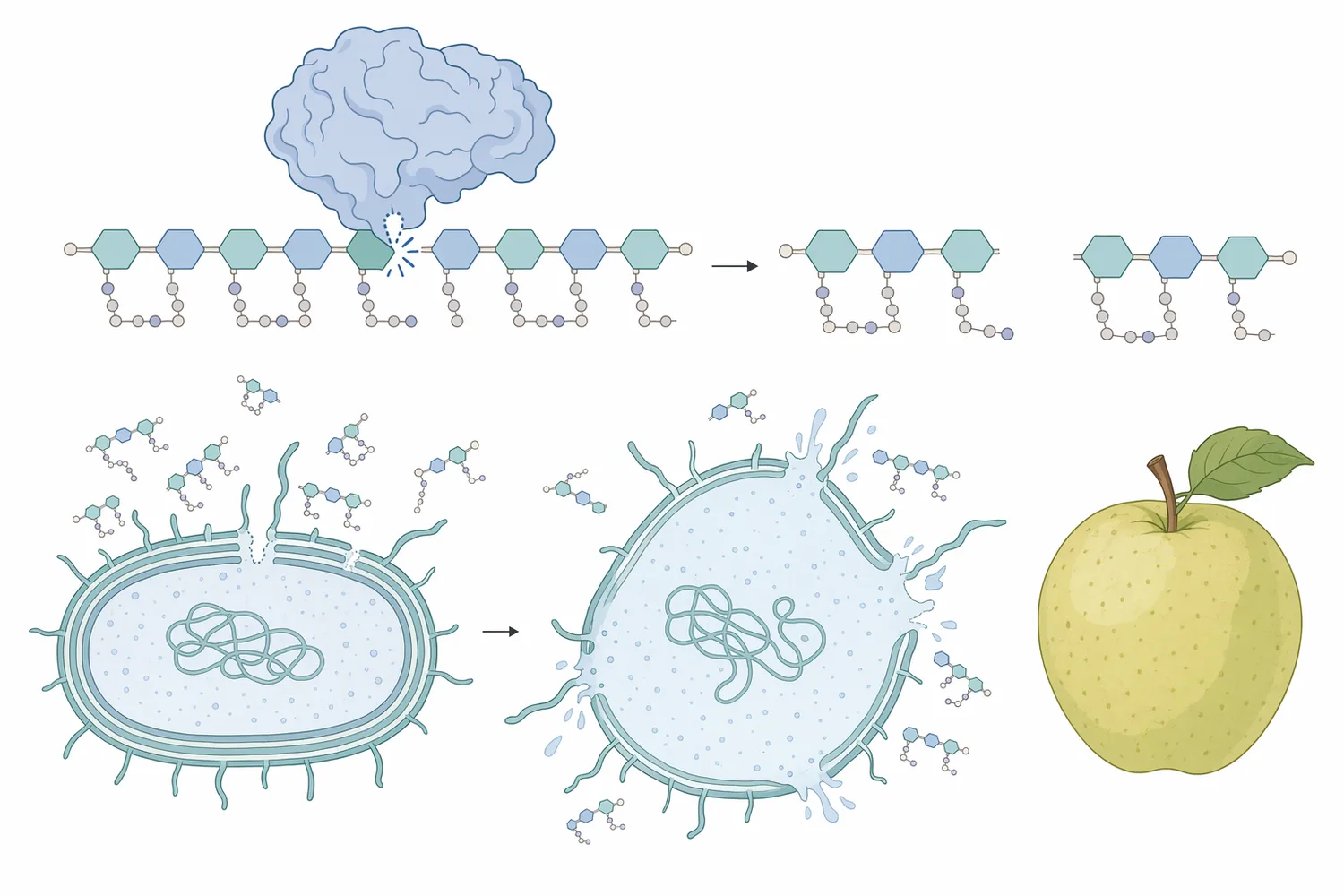
Lysozyme also has antimicrobial behavior that is not explained only by classical peptidoglycan hydrolysis. Reviews describe lysozyme as having both enzymatic and non-enzymatic antibacterial effects, including interactions involving cationic regions of the protein that can disturb bacterial surfaces under some conditions. This helps explain why modified, unfolded, immobilized, or combined lysozyme systems are studied for broader antimicrobial performance, even though native egg white lysozyme remains best known for Gram-positive control [1].
The difference between Gram-positive and Gram-negative bacteria is central to realistic expectations. Gram-positive organisms have a thick peptidoglycan-rich wall that is comparatively accessible from the outside. Lysozyme can reach and cleave its substrate more readily, so many Gram-positive spoilage and safety-relevant bacteria are logical targets in food preservation [3].
Gram-negative bacteria also contain peptidoglycan, but it is located beneath an outer membrane containing lipopolysaccharide. That outer membrane acts as a permeability barrier. Native lysozyme may be present in the food, but if it cannot reach the peptidoglycan layer in sufficient contact, the enzyme’s wall-cleaving activity is restricted [1].
This does not mean lysozyme has no role in systems where Gram-negative bacteria are present. It means the preservation design usually needs additional hurdles that make the outer membrane less protective or that control Gram-negative organisms by other mechanisms. Research on bio-preservation repeatedly emphasizes combined antimicrobial strategies because food matrices contain diverse microorganisms and because single interventions rarely control every microbial group equally [4].
The same logic applies to yeasts and molds. Lysozyme’s primary substrate is bacterial peptidoglycan, not fungal cell-wall polymers. In products where yeasts and molds dominate spoilage, lysozyme may still contribute to bacterial control, but other preservation measures are normally needed for fungal stability [1].
Lysozyme sits within a wider landscape of natural and conventional food preservation methods. Its main value is targeted antibacterial action under mild processing conditions; it does not replace sanitation, cold-chain control, heat treatment where needed, packaging, acidity management, or product-specific validation. The comparison below shows where lysozyme fits conceptually.
| Preservation tool | Main antimicrobial mechanism | Typical strength in food systems | Important limitation |
|---|---|---|---|
| Lysozyme | Cleaves peptidoglycan in bacterial cell walls, weakening susceptible cells | Strong fit for many Gram-positive bacterial targets; useful in dairy, beverages, prepared foods, produce systems, and coatings | Native enzyme is less effective against many Gram-negative bacteria because of the outer membrane barrier [1] |
| Bacteriocins such as nisin | Antimicrobial peptides can disrupt membranes and inhibit susceptible bacteria | Well studied in bio-preservation, often used for Gram-positive control | Activity depends strongly on food composition, target organism, and distribution in the food matrix [5] |
| Natural phenolics | Multiple targets, including membranes, proteins, oxidative balance, and metabolic systems | Broad interest for natural preservation and plant-derived antimicrobial positioning | Sensory impact, solubility, stability, and matrix interactions can limit use [6] |
| Antioxidants | Reduce oxidative deterioration and may contribute indirectly to quality protection | Valuable for slowing rancidity, color loss, and oxidative quality decline | Antioxidant action is not the same as targeted bacterial cell-wall hydrolysis [7] |
| Thermal processing | Heat damages microbial proteins, membranes, and cellular systems | Powerful and widely used for microbial reduction | Excessive heat can affect texture, color, flavor, nutrients, and fresh-like quality [8] |
This comparison is useful because lysozyme is sometimes described simply as a “natural preservative.” That phrase is directionally correct, but incomplete. Lysozyme is specifically a wall-active antimicrobial enzyme with a defined bacterial substrate; its advantage is not that it does everything, but that it contributes a clean, well-characterized mechanism to preservation designs where susceptible bacteria are part of the problem [3].
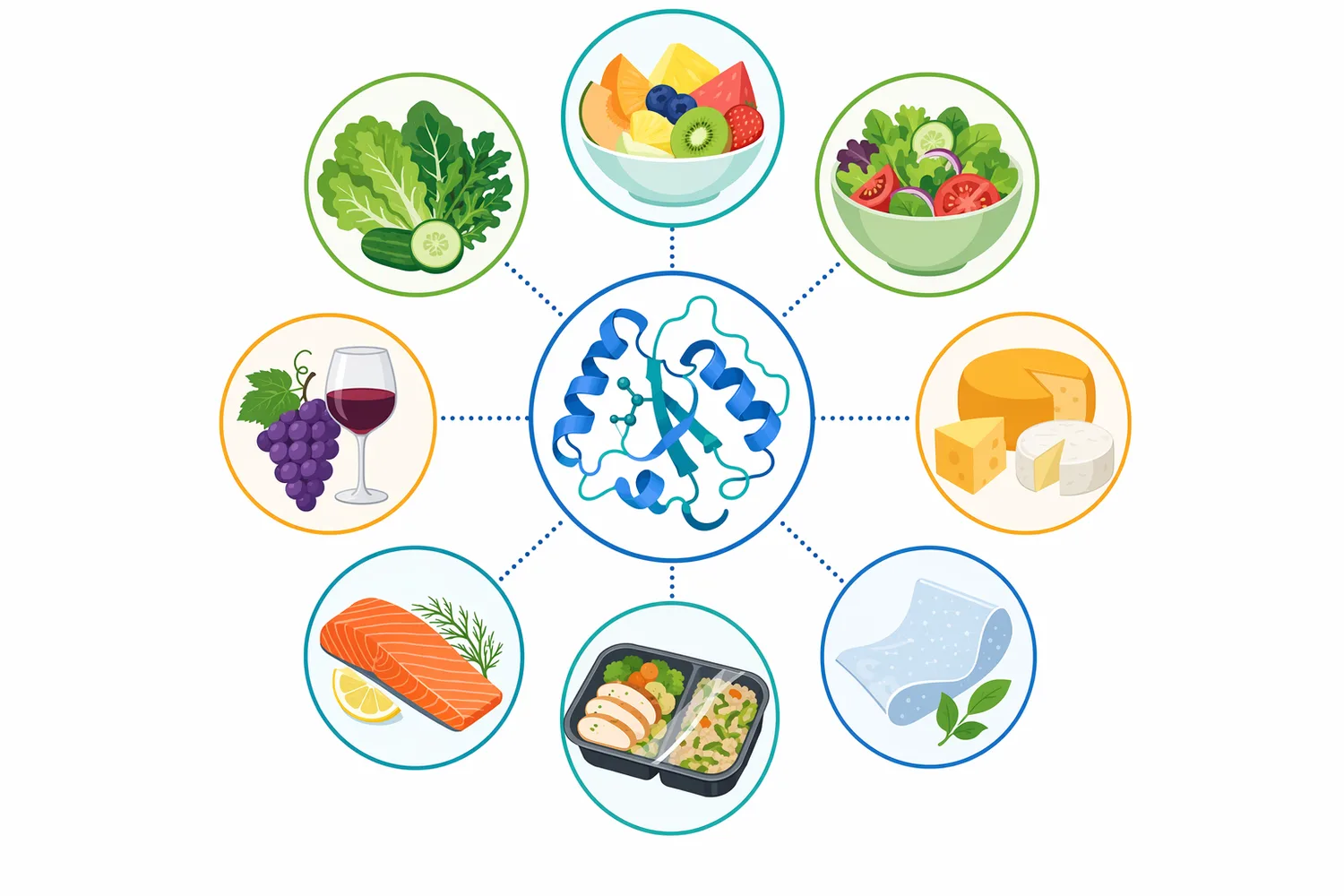
Lysozyme has a long history in food science, especially as hen egg white lysozyme. Reviews of its food-industry use describe applications in cheese, wine and other fermented systems, meat and seafood products, fruits and vegetables, edible films, and active packaging concepts. The recurring conclusion is that lysozyme can inhibit susceptible bacteria and help extend shelf life when the food matrix allows the enzyme to reach its target [2].
A review focused on new developments in lysozyme research highlights both the enzyme’s established antimicrobial value and its limitations. It discusses lysozyme’s food applications, its regulatory acceptance in certain contexts, its sensitivity to complex food environments, and the need for strategies that improve stability or broaden antimicrobial performance against harder-to-control organisms [1].
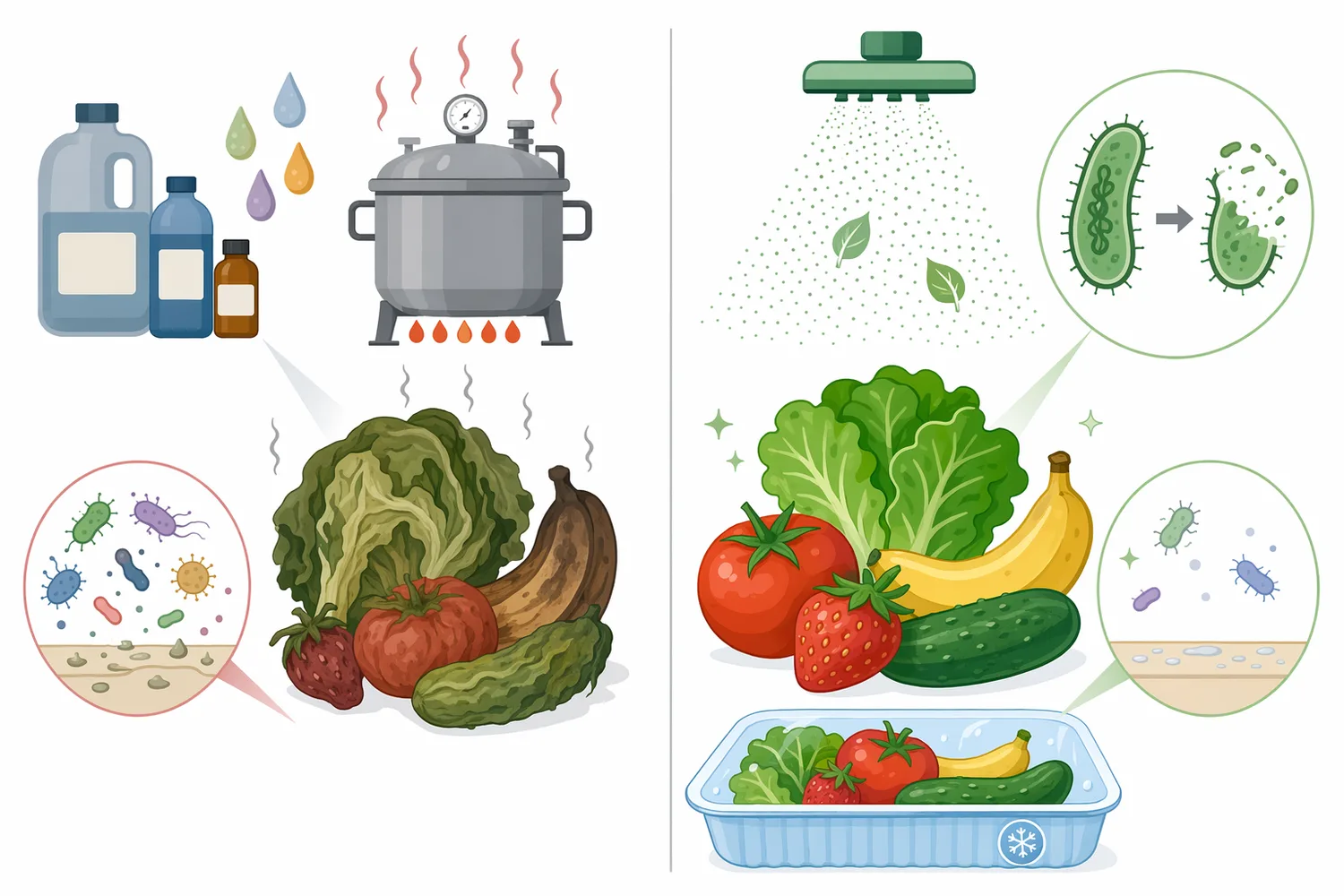
Food preservation research also places lysozyme within a broader move toward bio-preservation. Recent reviews of antimicrobial metabolites and biological preservation systems note growing interest in antimicrobials derived from animals, plants, and microorganisms as alternatives or complements to conventional synthetic preservatives. Lysozyme fits that category because it is a naturally occurring protein with a specific antibacterial mechanism [4].
The evidence is strongest where target organisms are Gram-positive and where lysozyme can be distributed effectively. Cheese is the most recognized example, but the same wall-directed rationale applies to selected beverage, meat, seafood, refrigerated, and prepared-food systems. Fruit and vegetable applications are promising and documented, but performance is more variable because produce surfaces, native microflora, pH, water activity, and storage conditions differ widely across products [2].
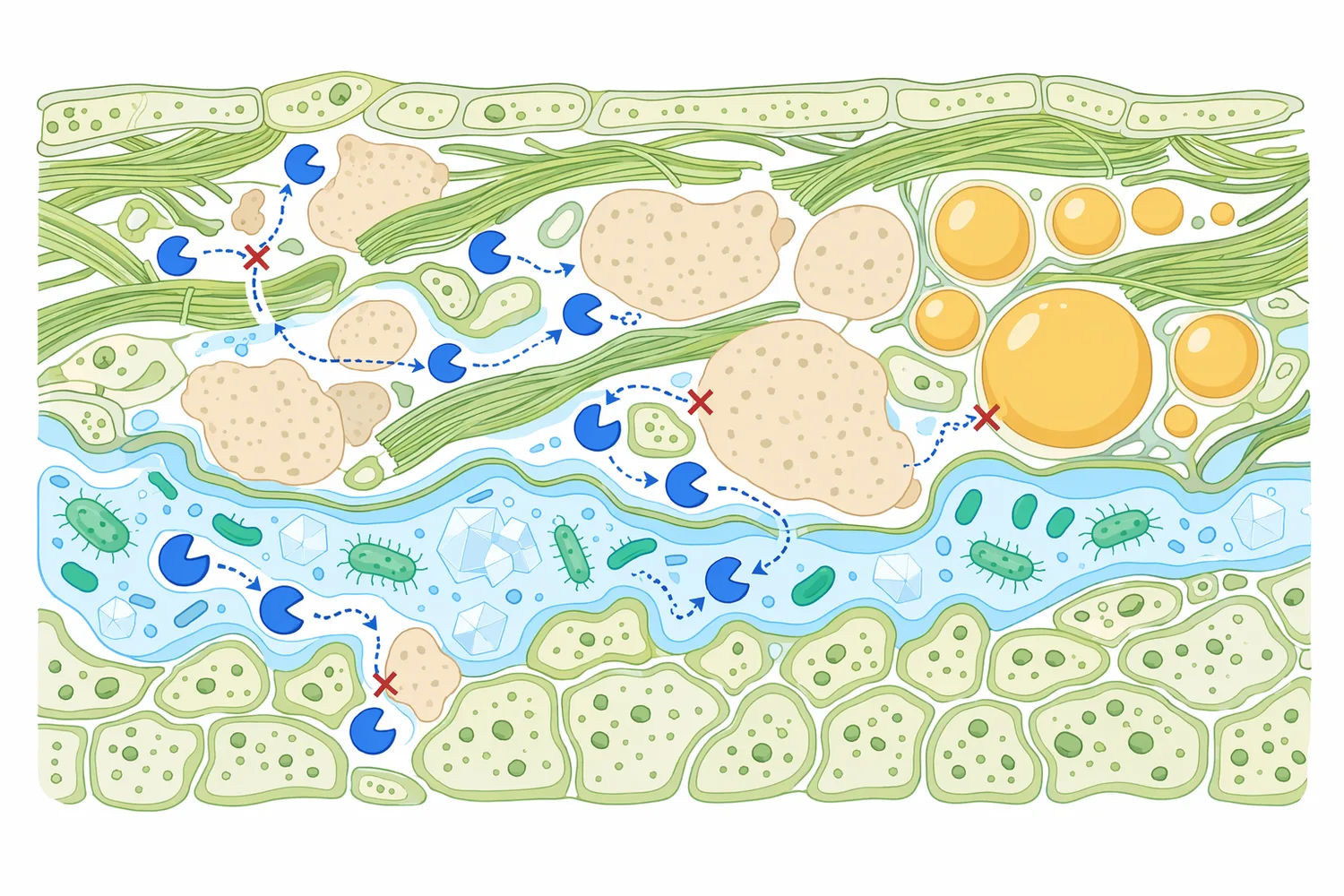
Fruit and vegetable preservation is a surface-driven challenge as much as a formulation challenge. Many spoilage organisms are located on cut surfaces, peel surfaces, wash-water contact points, damaged tissue, or packaging interfaces. For lysozyme to contribute, it must be present where susceptible bacteria are located and remain active long enough to affect growth during storage [2].
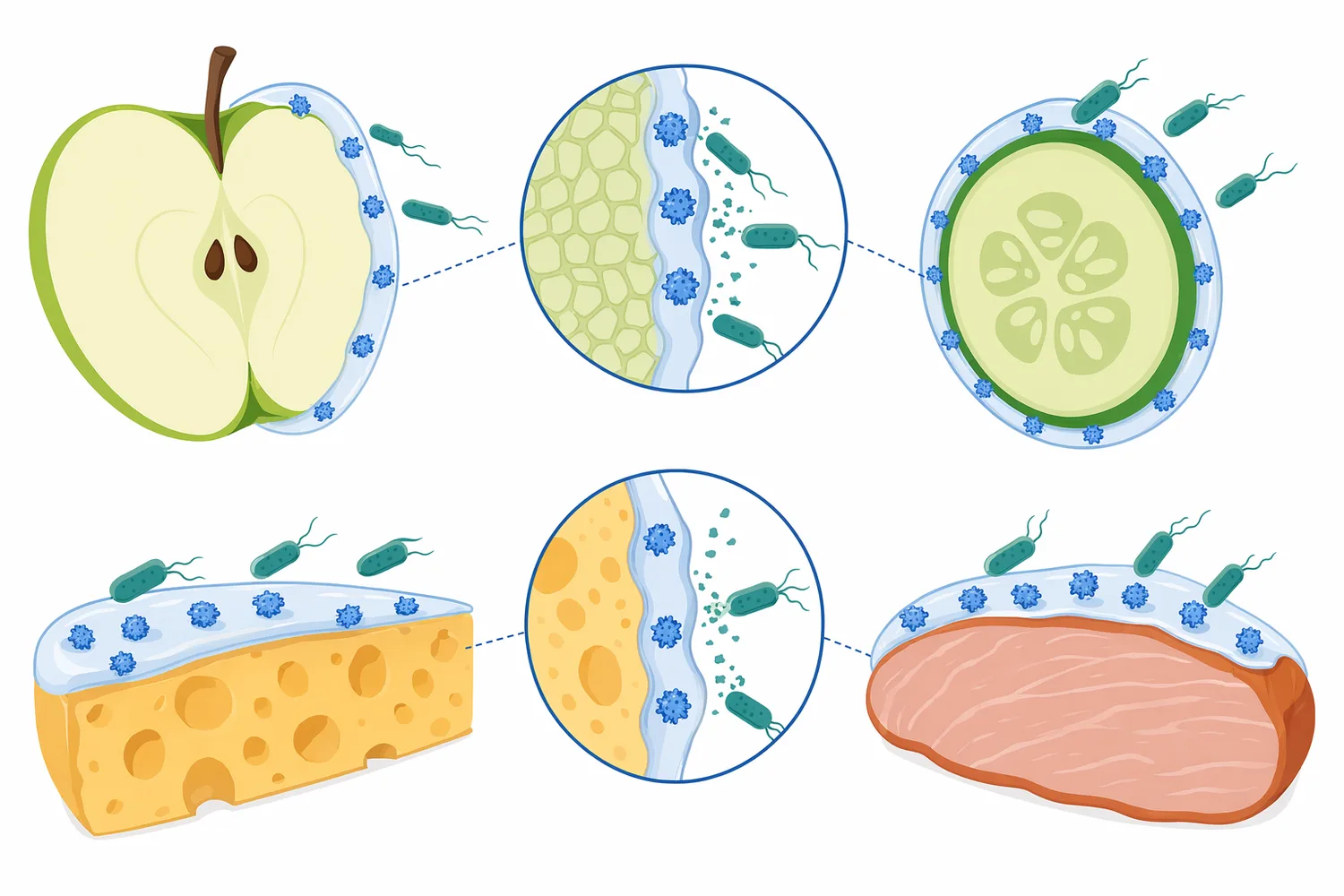
In fresh produce systems, lysozyme is most often relevant as part of coatings, dips, surface treatments, or packaging concepts rather than as a hidden preservative inside a uniform liquid matrix. The reason is simple: contamination is frequently uneven and surface-localized. A coating or surface application can place antimicrobial activity closer to the microbial load, while refrigeration and hygienic handling reduce the growth pressure around it [9].
The enzyme’s mechanism is especially relevant for Gram-positive bacteria on produce or prepared vegetable products. If those organisms contribute to spoilage or safety concerns, lysozyme can weaken their cell walls and reduce their ability to proliferate during chilled storage. If spoilage is mainly driven by Gram-negative bacteria, yeasts, or molds, lysozyme alone should not be expected to provide complete preservation [1].
Produce composition can also influence performance. Acidic fruits, high-moisture cut vegetables, waxy skins, exuded plant fluids, phenolic compounds, salts, and other ingredients can all affect enzyme contact, microbial physiology, and antimicrobial persistence. This is why lysozyme is better positioned as one component in an integrated preservation approach than as a single additive expected to deliver identical results across all fruits and vegetables [2].
Edible films and biopolymer coatings are an important research direction for produce and minimally processed foods. Reviews of food packaging films and active packaging describe the use of biopolymers and antimicrobial compounds to localize preservation effects at the food surface. Lysozyme is compatible with that concept because it can be incorporated or immobilized in surface-oriented materials intended to reduce microbial growth where contamination occurs [9].
Cheese is one of the clearest food applications for lysozyme. Hard and semi-hard cheeses can suffer from defects linked to undesirable bacterial activity during ripening and storage. Lysozyme’s ability to inhibit susceptible Gram-positive bacteria makes it useful for helping control organisms associated with quality loss, gas formation, texture defects, and flavor problems in appropriate cheese systems [2].
The mechanism fits the cheese matrix because many relevant spoilage organisms have accessible peptidoglycan-rich cell walls. By hydrolyzing those walls, lysozyme suppresses bacterial growth pressure during the extended time frames involved in ripening. This is particularly valuable because ripened cheeses are not simply processed and consumed immediately; they remain biologically active systems in which microbial balance affects final quality [1].
Lysozyme’s use in cheese also illustrates an important point for other foods: enzyme preservation is not only about initial microbial reduction. It can also be about slowing outgrowth over time. In long-shelf-life or ripened products, preventing a small susceptible population from expanding can be as important as reducing counts immediately after processing [2].
Lysozyme has also been discussed for fermented beverages such as wine and other systems where lactic acid bacteria may cause unwanted changes. In these products, the goal is often not total microbial elimination, but selective control: certain bacteria are desirable at one stage and undesirable at another. A targeted antimicrobial can help manage that balance when used in a suitable process context [2].
In fermented beverages, lysozyme’s value comes from its action against susceptible bacteria that could otherwise alter acidity, aroma, clarity, or stability. Because the enzyme attacks bacterial walls rather than sugars, acids, or aroma compounds directly, it offers a mechanism that is different from acidification or heat. However, the beverage’s pH, alcohol content, phenolic composition, and processing sequence can influence how much activity remains available [1].
This is another area where lysozyme should be seen as a controlled tool, not as a universal preservative. Fermentation systems contain complex microbial communities, and some organisms may be less susceptible. The enzyme is most relevant when the target population is lysozyme-sensitive and when the product matrix allows sufficient contact [2].
Reviews of lysozyme in the food industry report its use or investigation in meat, sausages, seafood, tofu, salads, cooked vegetable dishes, and other prepared foods. These categories often need microbial control under refrigerated or mild-processing conditions, where maintaining texture, fresh taste, and visual quality is important [2].
In meat and seafood, lysozyme can contribute to control of susceptible bacteria on surfaces or within processed matrices. However, these foods are compositionally complex: proteins, fats, salts, moisture, and native enzymes can influence antimicrobial distribution and microbial stress responses. The practical role of lysozyme is therefore to add a targeted wall-active hurdle, especially where Gram-positive bacteria are part of the spoilage or safety concern [3].
In tofu and prepared foods, water activity and nutrient availability can support microbial growth if sanitation, packaging, and cold-chain handling are not well controlled. Lysozyme can help inhibit susceptible bacteria, but it does not substitute for hygienic production or temperature control. Its benefit is most realistic when it is integrated with the broader preservation design of the finished food [1].
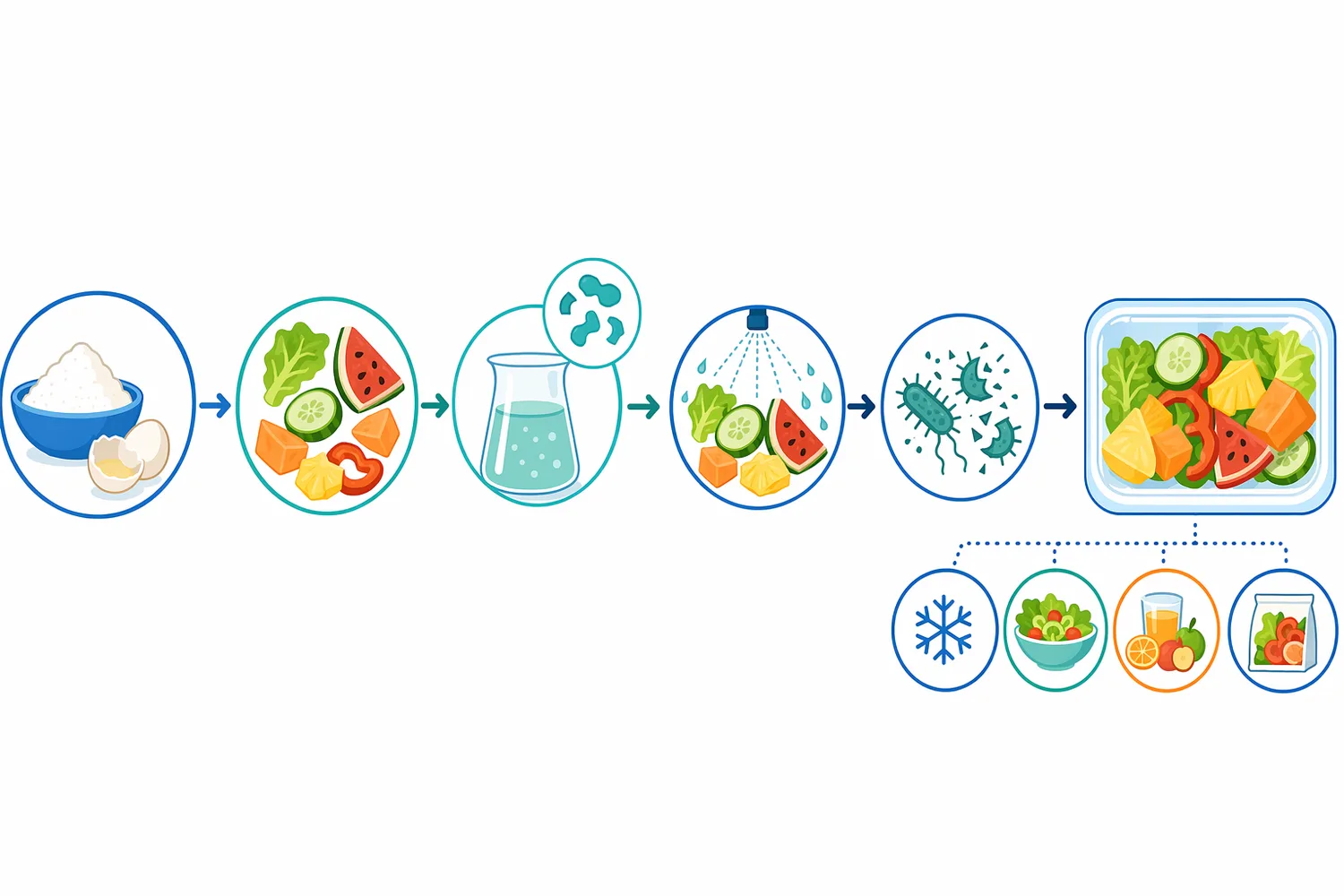
For refrigerated ready-to-eat foods, this targeted role is especially important. Products such as salads, cooked vegetable preparations, deli-style items, and composite foods may be sensitive to strong heat treatment or aggressive preservatives. Lysozyme can provide an additional antibacterial mechanism while helping preserve sensory qualities when the microbial target is appropriate [2].
Food is not a simple laboratory buffer. It contains proteins, carbohydrates, fats, salts, acids, minerals, phenolics, fibers, and physical structures that can change how an antimicrobial enzyme behaves. Lysozyme may bind to food components, become less mobile, be partially protected, or be prevented from contacting bacteria depending on the matrix [1].
Proteins and polysaccharides can alter diffusion and binding. Fats and emulsions can change where bacteria reside and how easily the enzyme reaches them. Plant tissues can release phenolics and acids after cutting, while dairy and meat systems contain abundant proteins that may interact with added enzymes. These effects do not make lysozyme ineffective, but they explain why performance is product-specific [2].
Nutrient content can also change antimicrobial outcomes. Research on nisin and lysozyme against Listeria monocytogenes has examined how nutrient availability affects antimicrobial efficacy, reflecting a broader food-safety reality: bacteria under nutrient-rich conditions may recover and grow differently than bacteria under nutrient-limited stress. Preservation performance depends not only on the antimicrobial molecule, but also on the growth environment surrounding the target organism [10].
Temperature and storage time further shape results. Chilled storage slows microbial metabolism and can strengthen the overall preservation effect, while temperature abuse may allow surviving organisms to recover or multiply. Lysozyme is therefore best understood as a shelf-life support tool within a controlled food system, not as an override for poor handling [1].
Modern food preservation increasingly relies on combinations of mild interventions rather than one severe treatment. This “hurdle” logic is used because different microorganisms have different vulnerabilities: one hurdle may weaken the cell wall, another may reduce membrane stability, another may slow metabolism, and another may limit oxygen or moisture [4].
Lysozyme contributes a cell-wall hurdle. When paired with refrigeration, acidity, salt, packaging, edible coatings, bacteriocins, phenolic compounds, or other natural antimicrobials, it can help reduce the chance that susceptible bacteria will grow during storage. The goal is not necessarily to intensify one intervention, but to make several compatible stresses work together [5].
Bacteriocins such as nisin are often discussed alongside lysozyme because both are natural antimicrobial tools with strong relevance to Gram-positive control. They do not work identically: lysozyme attacks peptidoglycan, while bacteriocins may interfere with cell membranes or cell-wall synthesis pathways. Used conceptually, that difference helps explain why combinations can be more effective than relying on one antimicrobial mechanism alone [5].
Plant phenolics offer another complementary mechanism. They can act on membranes, proteins, enzymes, oxidative balance, and quorum-related pathways, giving them a multitarget profile. In a food system where sensory impact and formulation compatibility are acceptable, phenolics may complement lysozyme’s more specific wall-cleaving activity [6].
Thermal processing remains one of the most powerful preservation methods, but heat can affect color, texture, fresh flavor, and nutrient-sensitive qualities. Lysozyme is not a replacement for required pasteurization or sterilization; rather, it can support milder preservation strategies where product quality depends on avoiding excessive heat exposure [8].
One of the most practical ways to use lysozyme’s mechanism is to place it where microbes are most likely to grow. Active packaging and edible coatings do this by concentrating antimicrobial functionality at the product surface instead of dispersing it throughout the entire food. This is particularly relevant for cut produce, cheese surfaces, seafood, sliced foods, and ready-to-eat items [9].
Biopolymer films can act as carriers for antimicrobial agents. Reviews of packaging systems discuss proteins, polysaccharides, emulsions, and composite films as ways to manage release, improve contact, and reduce microbial growth at food interfaces. Lysozyme fits these systems because it is a protein antimicrobial that can be embedded, coated, or immobilized depending on the material design [9].
Immobilization and structural modification are also studied because native lysozyme can lose effectiveness in complex foods or may not reach Gram-negative peptidoglycan efficiently. Research reviews describe approaches such as adsorption, embedding, self-assembly, and conjugation as ways to improve stability or broaden antibacterial function. These are research and application directions rather than a claim that every lysozyme ingredient behaves the same way [1].
For a food developer, the practical message is straightforward: lysozyme’s best performance often depends on location and access. If the enzyme remains far from bacteria, or if the target organism’s wall is shielded, the mechanism cannot fully operate. Coatings and packaging concepts are attractive because they address that contact problem directly [2].
Hen egg white lysozyme has a long record of food-industry use and is recognized in reviews as a permitted or accepted preservative in relevant food applications, including discussion of its status in the United States and its European food additive designation in specified contexts. Regulatory permissions are category- and jurisdiction-dependent, so finished foods must follow the rules that apply in their market [1].
Because this lysozyme is egg-derived, allergen communication is important. Egg proteins are relevant to egg-sensitive consumers, and lysozyme used as a food ingredient may need to be declared according to applicable labeling requirements. This is not a minor detail: the same natural origin that makes egg white lysozyme attractive for food preservation also places it within egg-allergen management [2].
Safety expectations should also distinguish preservation support from food-safety replacement. Lysozyme can inhibit susceptible bacteria, but it does not replace good hygiene, validated processing, proper refrigeration, packaging integrity, or the safety controls required for the food category. It should be used as an ingredient within a compliant food system, not as a corrective measure for poor process control [3].
Lysozyme is well supported as a natural antimicrobial enzyme for food preservation, especially where Gram-positive bacteria are the relevant target. It can help delay spoilage, support shelf-life extension, and reduce the need to rely on harsh single-step interventions when it is used in a compatible food matrix [1].
Its limitations are equally important. Native hen egg white lysozyme is generally less effective against many Gram-negative bacteria because their outer membrane limits access to the peptidoglycan substrate. It is also not designed to control yeasts and molds as its primary function, so foods with fungal spoilage pressure usually require additional preservation measures [3].
Fruit and vegetable preservation illustrates both the opportunity and the limitation. Lysozyme can contribute to antimicrobial surface control, particularly in coatings, washes, or integrated hurdle systems, but fresh produce varies too widely for one identical outcome to be assumed. Surface structure, cut damage, pH, native microflora, storage temperature, and packaging all influence results [2].
The strongest way to position lysozyme is therefore precise: it is a well-studied, egg-white-derived, food-grade antimicrobial enzyme that helps control susceptible bacteria through cell-wall hydrolysis. It is especially useful in preservation systems where Gram-positive bacteria matter and where the formulation or surface treatment allows enzyme contact with the target cells [1].
Enzymes.bio supplies food-grade hen egg white lysozyme for food preservation applications, including fruit and vegetable preservation concepts, dairy and cheese, fermented beverages, prepared foods, meat, seafood, coatings, and packaging-related antimicrobial systems. The product is supplied directly online by the 1 kg unit, with checkout and payment handled through the website.
Enzymes.bio is the supplier of this product, not the manufacturer or a testing laboratory. After online purchase, the order is processed and shipped, and the Certificate of Analysis and Safety Data Sheet are included with the order.
Lysozyme is best chosen for applications where its mechanism matches the preservation challenge: susceptible bacterial control, especially Gram-positive organisms, as part of a broader food-quality and shelf-life strategy. Used with realistic expectations, it offers a credible natural antimicrobial option supported by decades of food-industry research and practical use [2].
Sold by the 1 kg unit, in stock and ready to ship. Order directly on our store — pay online and we process your order. A Certificate of Analysis and Safety Data Sheet are included with every order.
Buy Lysozyme Food Grade Food Fruit And Vegetable Preservation Additive 20000 U/Mg Vitality Egg White Extract - 200G →Numbered in order of first citation. Open-access sources, each verified reachable at publication; citation numbers in the text link here.