
Maltogenic amylase is a starch-modifying baking enzyme used to help bread stay softer for longer. Its main value is anti-staling: it acts on gelatinized starch during baking, generating maltose and short starch fragments that reduce the tendency of crumb starch to recrystallize and firm during storage [1].
For bakeries making sandwich bread, buns, rolls, and other soft yeast-raised products, maltogenic amylase is best understood as a freshness-retention tool rather than a dough-strengthener or preservative. Enzymes.bio supplies Maltogenic Amylase Enzyme for Baking directly online by the 1 kg unit; orders are paid online, processed, and shipped with a Certificate of Analysis and Safety Data Sheet included.
Maltogenic amylase, also described in the literature as maltogenic α-amylase, is a glucan 1,4-α-maltohydrolase with the enzyme classification EC 3.2.1.133. It belongs to the broader group of amylolytic enzymes that act on starch, but its baking role is more specific than simply “breaking down flour starch”: it preferentially produces maltose and short malto-oligosaccharides from starch-derived chains, which is why it is called maltogenic [1].
In bread, the key substrate is starch from flour. Wheat flour starch is present as granules that become increasingly hydrated and gelatinized during baking; as heat and water disrupt the granule structure, starch chains become more accessible to enzymatic action. Maltogenic amylase is valued because it can act during this heating window, when starch is changing from a granular material in dough into a gel-like structural component of the crumb [2].
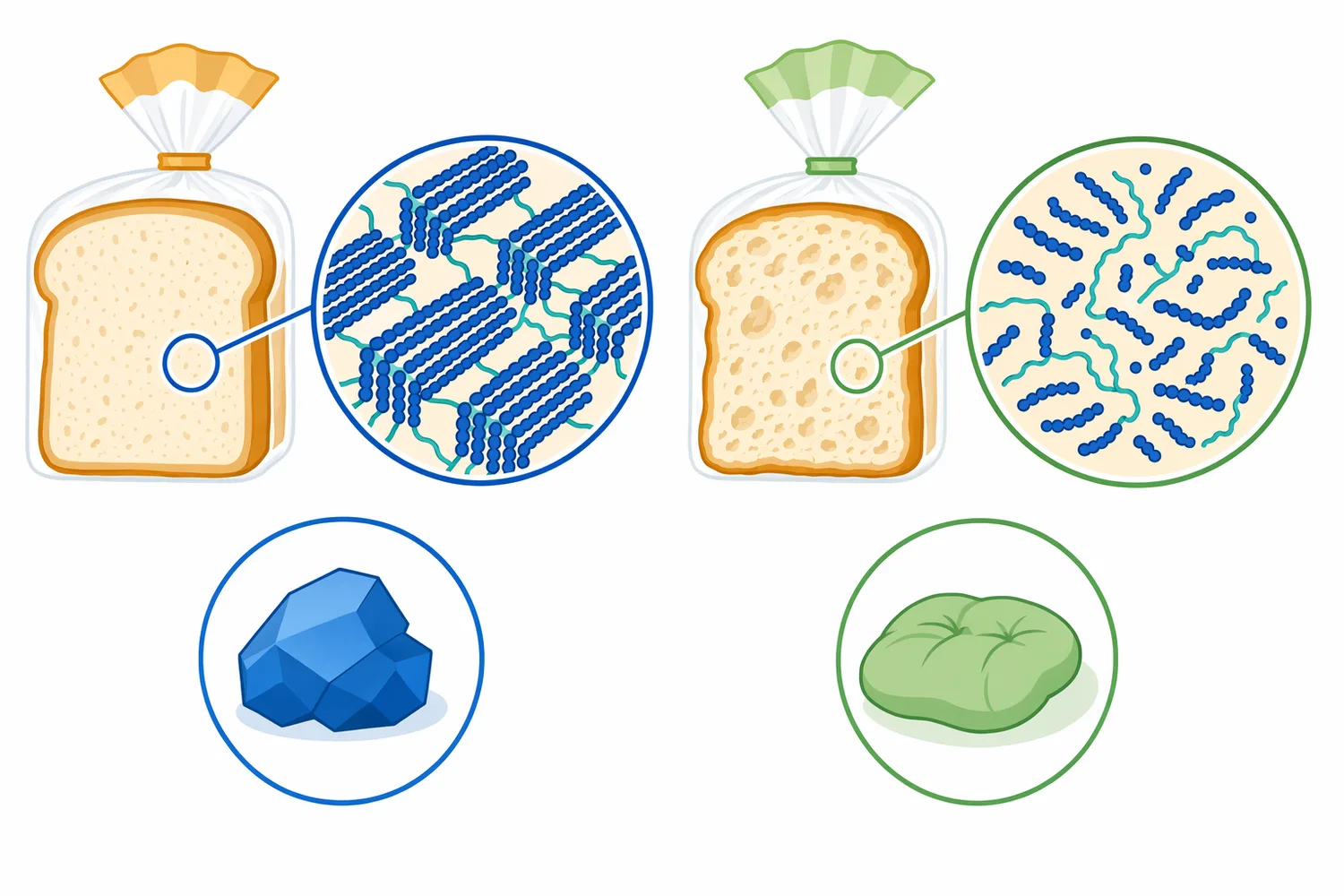
This matters because bread staling is not only a moisture-loss problem. A loaf can be wrapped and still become firm because starch molecules inside the crumb gradually reassociate after baking. The result is a crumb that feels drier, tougher, less resilient, and less fresh even when total moisture has not dropped dramatically. Research on maltogenic amylase in starch-based products consistently connects its practical baking value with its ability to modify starch structure and slow the changes associated with retrogradation [1].
For a bakery buyer, the practical takeaway is straightforward: maltogenic amylase helps the crumb lose softness more slowly. It does not replace proper mixing, fermentation, baking, cooling, slicing, or packaging, and it is not a mold-control preservative. Its strongest evidence is in softness retention and anti-staling performance in starch-rich baked goods [3].
Bread crumb starts as a foam-like dough structure: gas cells are surrounded by gluten, starch, water, lipids, sugars, and other flour components. During baking, gas expansion and protein setting help define loaf volume, while starch gelatinization fills and stabilizes the crumb structure. Once the bread cools, the same starch network that helped create a soft crumb begins to reorganize, which is a major contributor to firming during storage [2].
Maltogenic amylase acts by hydrolyzing α-1,4 linkages in starch-derived chains. In practical terms, it clips longer starch chains into smaller carbohydrates, especially maltose and short malto-oligosaccharides. These smaller fragments do not pack back together in the same way as longer starch chains, so they interfere with the formation of a more rigid, recrystallized crumb structure over time [1].
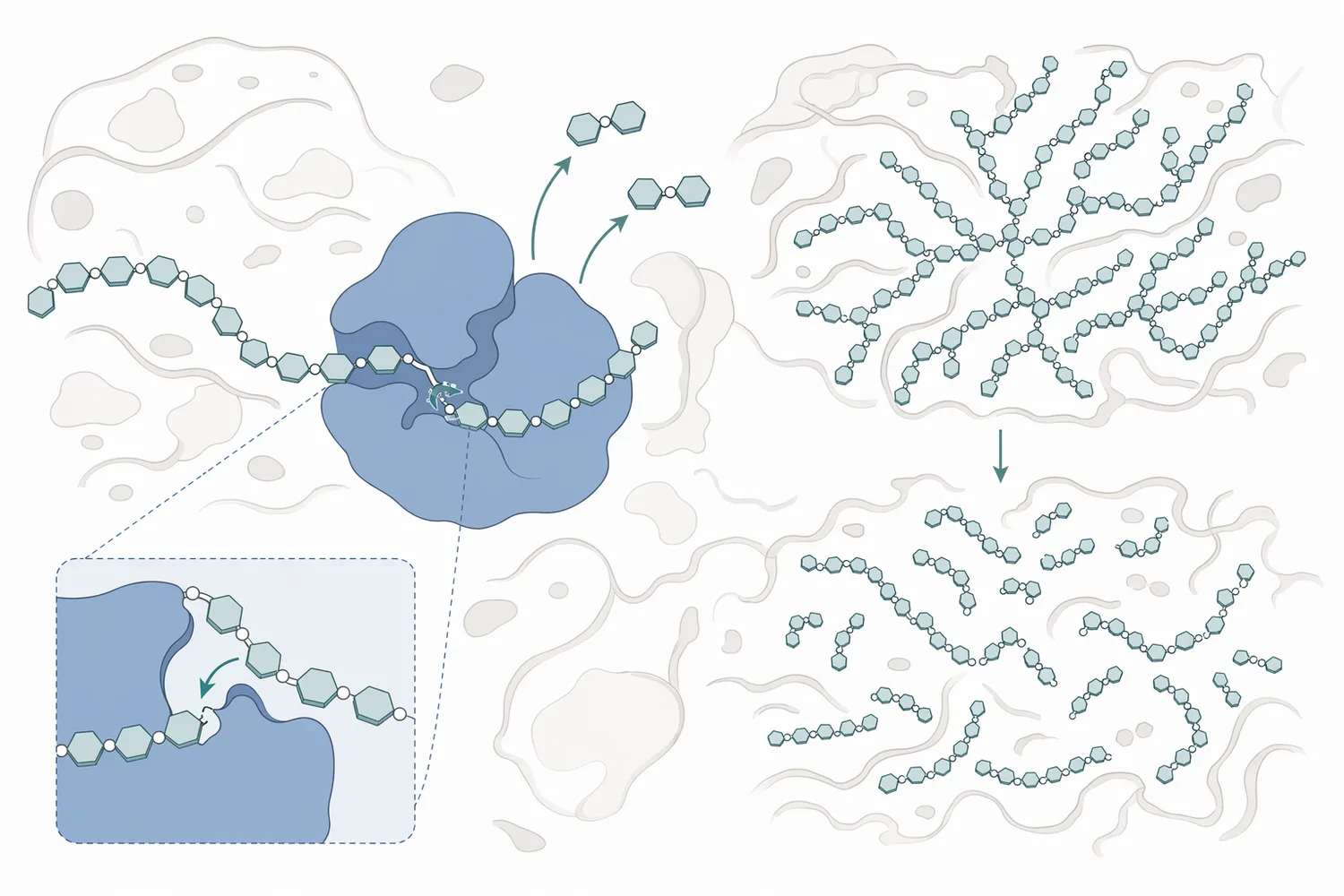
The enzyme’s effect is especially relevant to amylopectin, the highly branched starch fraction that is strongly associated with longer-term crumb firming. After baking, amylopectin branches can gradually align and crystallize. When maltogenic amylase shortens some of those branch segments, the starch network has less ability to form the same firm, ordered structure, so the crumb remains more flexible and tender for longer [3].
This mechanism also explains why maltogenic amylase is different from an ingredient that simply adds moisture or fat. It does not “coat” the crumb to create softness, and it does not work by masking staling after it occurs. It changes the starch during processing so that the crumb structure that forms after baking is less prone to rapid firming during storage [1].
The same starch hydrolysis also changes the carbohydrate profile in the crumb. Maltose and related short sugars can influence yeast fermentation, crust color, aroma development, and perceived eating quality, depending on the formula and process. However, those effects are secondary to the enzyme’s main commercial value in bread: slowing the textural changes that consumers recognize as staling [4].
The most direct evidence for maltogenic amylase in baking comes from bread-focused studies and starch-product reviews. A review of maltogenic amylase structure, molecular modification, and effects on starch-based products describes the enzyme as widely used in baking because it improves bread softness, elasticity, and shelf life through its action on starch [1].
White bread research has also examined maltogenic amylase activity directly in the bread matrix rather than only in isolated starch systems. Reichenberger and co-workers studied maltogenic amylase from Geobacillus stearothermophilus in white bread and followed bread crumb changes during storage, including analysis across a 96-hour period. That kind of work is important because bread is a complex food matrix, and enzyme behavior in actual crumb is more relevant than activity measured only in simplified model systems [4].
Another line of evidence comes from imaging-based studies of staling. Amigo and colleagues investigated the spatial evolution of white wheat bread crumb staling over time using near-infrared hyperspectral imaging and evaluated the effect of maltogenic α-amylases. This is useful because bread does not stale uniformly: crust-adjacent zones and crumb center can change differently, and imaging helps show how anti-staling effects develop across the loaf structure rather than at one sampled point only [3].
Studies on new and modified maltogenic amylases also support the same application direction. Work on a maltogenic amylase from Bacillus licheniformis R-53 reported significant improvement in bread quality and extension of shelf life, while later directed-evolution work focused on improving activity and thermostability to further improve bread quality and shelf life [5]. These studies reinforce why thermal behavior matters in baking: the enzyme must remain useful long enough to act as starch becomes accessible, but it should not create excessive breakdown that damages crumb quality.
Directed evolution research on Bacillus licheniformis R-53 maltogenic amylase is especially relevant because it connects enzyme structure and baking performance. Improving thermostability can allow the enzyme to function more effectively during the baking phase when starch gelatinization exposes hydrolysable chains. In practical bread terms, that can translate into a softer crumb and slower firming when the enzyme’s action is well matched to the process [6].
Broader work on enzymatic modification of starch supports the same principle beyond one enzyme source. Enzymatic starch modification can change swelling, pasting, gelation, hydrolysis behavior, and retrogradation, all of which affect the texture of starch-based foods. Maltogenic amylase is one tool within that broader category, but its value in bread is unusually clear because the end-use problem—crumb firming—is directly linked to starch reassociation [2].
Bakeries often use more than one enzyme type, but different enzymes solve different problems. Maltogenic amylase should not be confused with every amylase or with enzymes that target gluten, arabinoxylans, or lipids. Its strongest role is starch-based softness retention, while other enzyme classes may affect dough handling, loaf volume, crumb openness, or machinability [7].
| Enzyme type | Main bakery substrate | Typical functional direction | What changes in the bread system | Main limitation to understand |
|---|---|---|---|---|
| Maltogenic amylase | Gelatinized starch and starch-derived chains | Slower crumb firming and improved softness retention | Produces maltose and short malto-oligosaccharides that reduce starch recrystallization | Best for anti-staling; not a mold preservative or gluten strengthener |
| Conventional α-amylase | Damaged and gelatinized starch | Fermentation support, sugar release, crust color, volume effects | Generates smaller dextrins and fermentable sugars from starch | Excessive starch breakdown can harm crumb structure |
| Xylanase | Arabinoxylans in flour cell-wall material | Dough handling, gas retention, loaf volume, crumb structure | Modifies water-binding and viscosity effects of hemicellulose fractions | Effects depend strongly on flour type and formula |
| Protease | Gluten proteins | Dough relaxation and machinability | Partially hydrolyzes protein network, reducing resistance | Not intended for softness retention through starch anti-retrogradation |
| Lipase / lipid-modifying enzymes | Flour and added lipids | Dough stability, crumb structure, emulsifier-like effects | Alters lipid functionality and interactions with starch/protein | Mechanism is different from amylase-based starch modification |
The table highlights why maltogenic amylase is often positioned as an anti-staling enzyme rather than a general-purpose bread improver. In whole wheat dough and bread systems, studies evaluating individual enzyme effects show that enzyme responses are formulation-dependent, and the same “enzyme” label does not predict the same bread outcome across all substrates [7].
This distinction is also useful when comparing maltogenic amylase with clean-label bread improver strategies. Research on conventional and hybrid thermal-enzymatic modified wheat flours shows that enzymatic and thermal treatments can be used to improve bread systems without relying on traditional chemical improvers, but the functionality depends on what part of the flour system is being modified [8].
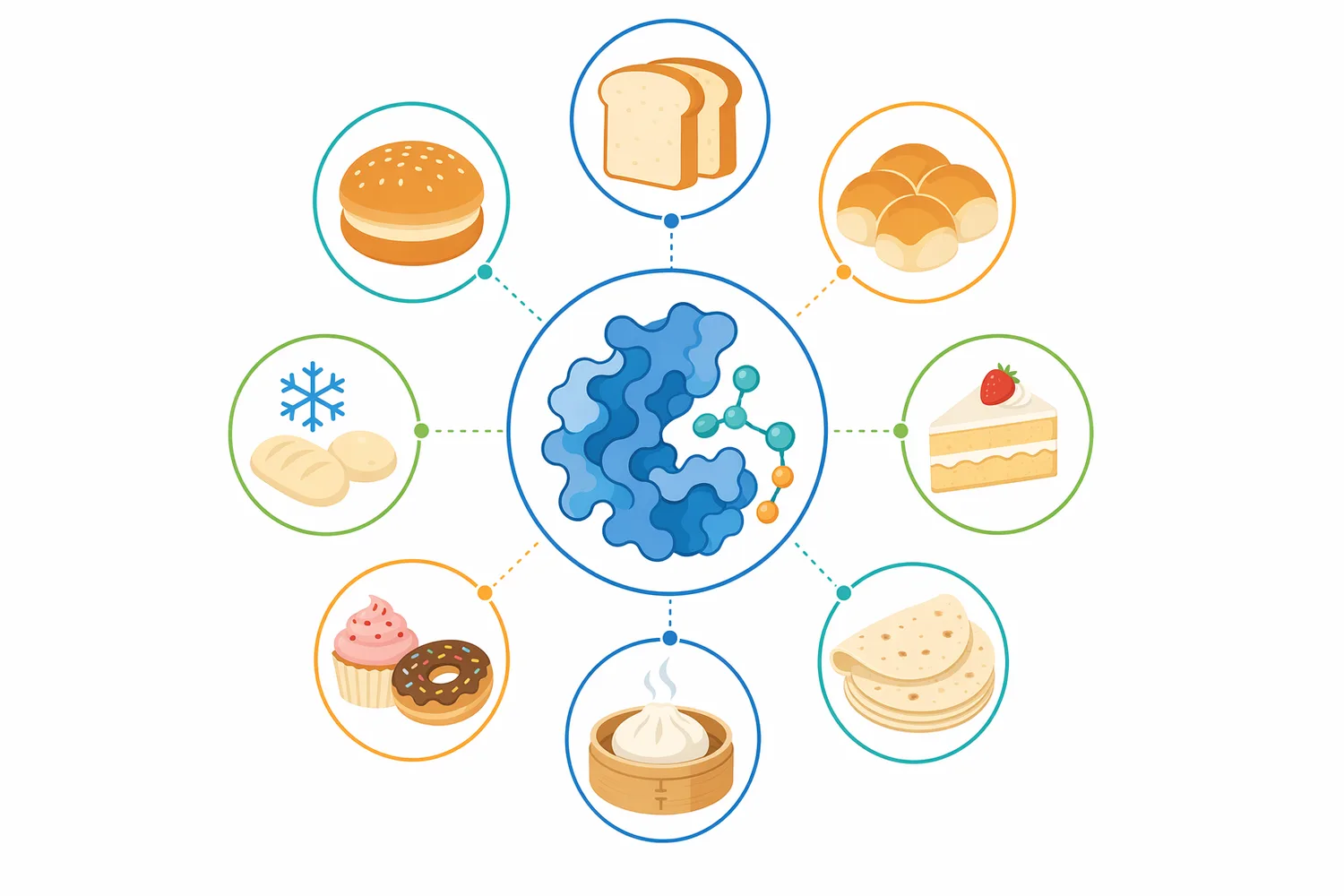
Packaged sandwich bread is one of the strongest applications for maltogenic amylase because the consumer expectation is clear: slices should remain soft, flexible, and pleasant for several days after baking. The enzyme supports that goal by reducing the rate at which the crumb changes from elastic and tender to firm and short-biting [3].
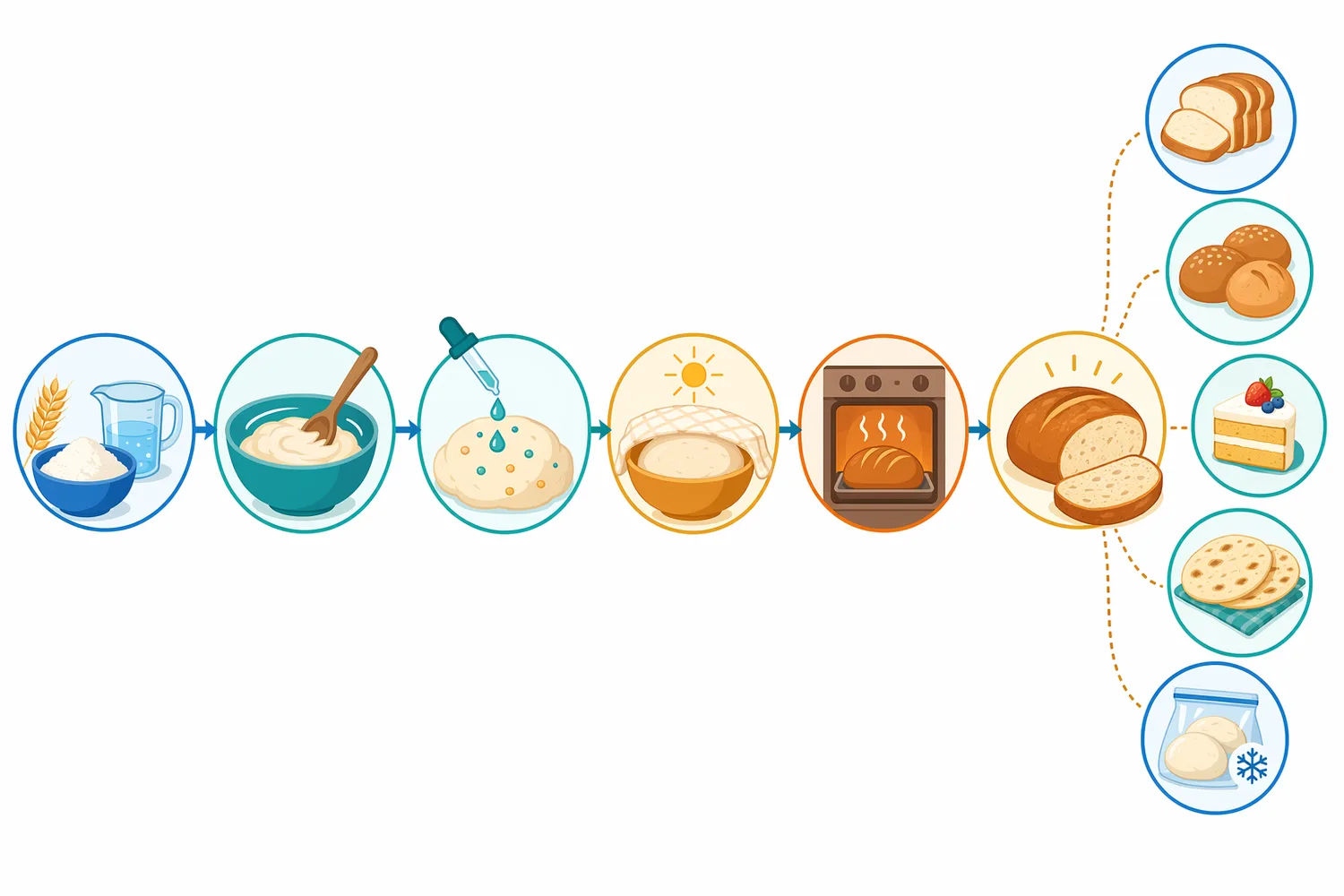
In this application, the benefit is not only the first-day softness. Many formulas can produce a soft loaf immediately after cooling; the harder challenge is maintaining a consistent bite through slicing, bagging, distribution, shelf display, and home storage. Maltogenic amylase addresses the starch retrogradation side of that quality loss, which is why it is so commonly associated with anti-staling performance [1].
Soft buns and rolls often have a richer formula than standard pan bread, with sugar, fat, dairy solids, or emulsifier systems contributing to tenderness. Even in these enriched systems, starch remains a major structural component, so slowing starch firming can help preserve the soft bite expected in burger buns, dinner rolls, sandwich rolls, and similar products [2].
The practical value is especially noticeable after cooling and packing, when products that were soft at depanning begin to lose resilience. Maltogenic amylase helps by modifying the starch network before that firming process dominates the eating texture. It should be viewed as part of a complete softness system, alongside formula balance and process control, rather than as a standalone correction for all texture defects [1].
Frozen dough and frozen storage create additional quality stresses: ice formation, yeast stress, water redistribution, and changes in dough structure can affect final bread volume and sensory quality. Enzyme systems have been studied as a way to improve frozen dough bread quality, including sensory attributes and mechanisms behind final bread performance [9].
For frozen or part-baked applications, maltogenic amylase’s relevance remains its action on starch and its contribution to softness after baking. The broader frozen-bread system may also involve gluten strength, yeast survival, formulation solids, and freezing conditions, so the enzyme’s role should be understood as one contribution to finished crumb quality, not as a complete frozen-dough solution [10].
Whole wheat and high-fiber breads contain bran, fiber fractions, and additional water-binding components that can complicate crumb softness. Enzyme effects in whole wheat systems can differ from refined wheat bread because bran disrupts gluten structure, competes for water, and changes dough rheology [7].
Maltogenic amylase can still be useful where starch firming is part of the shelf-life problem, but it does not remove the structural effects of bran or fiber. In these breads, crumb quality is shaped by water management, gluten development, particle size, fermentation, and baking as well as starch retrogradation. That is why research on individual enzymes and vital wheat gluten in whole wheat systems is relevant: the bread outcome depends on the full matrix, not one ingredient alone [7].
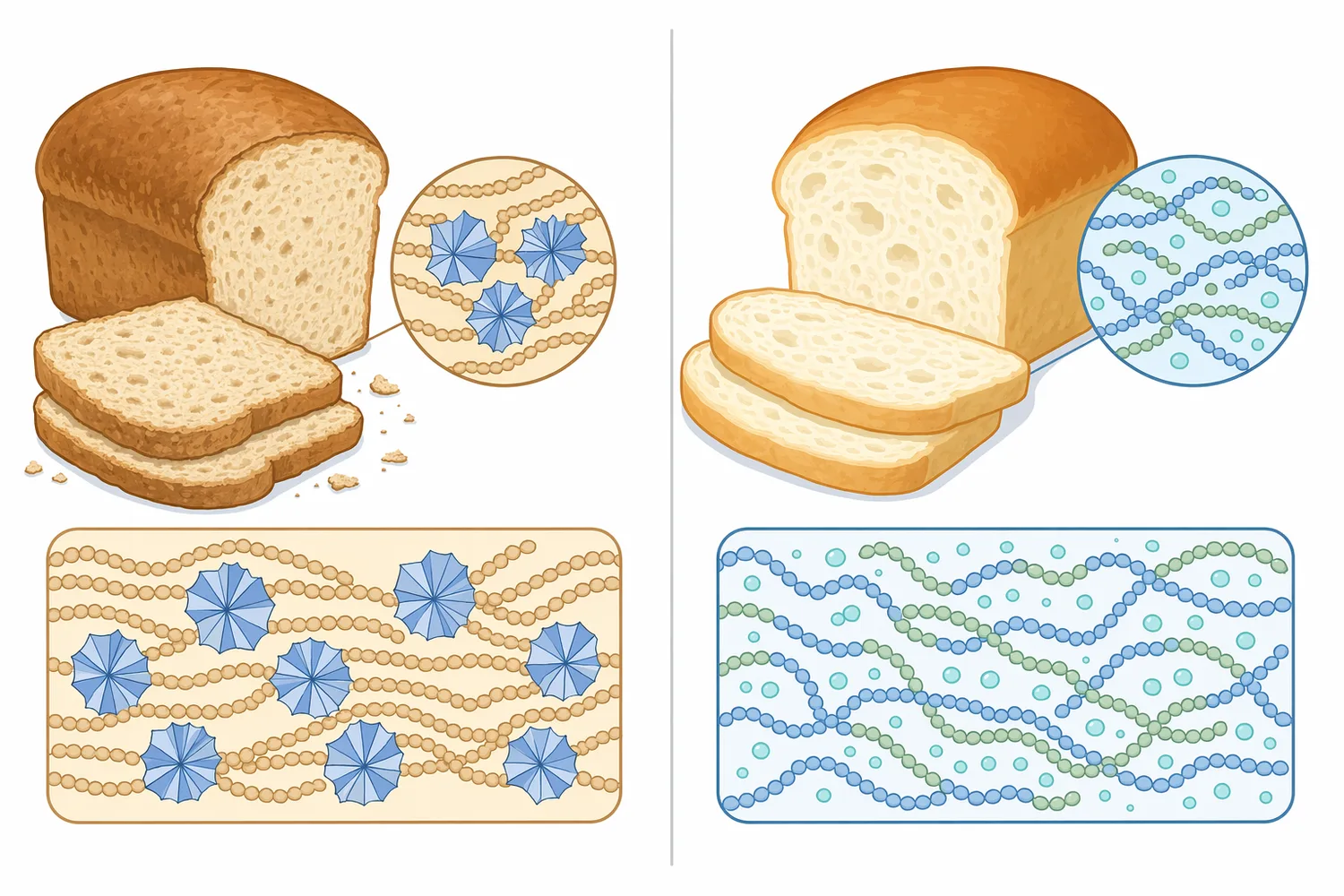
Because maltogenic amylase produces maltose and short carbohydrate fragments, it can influence the pool of sugars available in the dough and crumb. Yeast can use fermentable sugars during proofing, while reducing sugars can participate in Maillard reactions during baking, contributing to crust browning and aroma development. These effects are real, but they should be kept in proportion: maltogenic amylase is primarily an anti-staling enzyme in bread systems [4].
The amount and timing of sugar release matter. If starch hydrolysis occurs when yeast can still access and ferment sugars, it may support gas production. If sugars remain into the bake, they can contribute to browning reactions at the crust surface. In actual bread, these outcomes are shaped by fermentation time, existing formula sugars, flour amylase background, bake profile, and water availability [2].
This is why maltogenic amylase is not simply interchangeable with added sugar or malt flour. Added sugar changes sweetness, osmotic pressure, yeast behavior, browning, and flavor directly. Maltogenic amylase changes the starch substrate enzymatically, producing sugars and fragments in situ as processing conditions make starch available [1].
Bread studies that examine carbohydrate composition are useful because they connect enzyme use with measurable changes inside the loaf. Research determining direct activity of maltogenic amylase in white bread helps explain how residual enzymatic action and sugar composition relate during storage, rather than treating the enzyme as if all activity ended the moment the dough entered the oven [4].
Maltogenic amylase works on starch, but starch is embedded in a complete bakery matrix. Flour quality, starch damage, protein level, water absorption, mixing energy, fermentation schedule, fat and sugar levels, emulsifiers, bake conditions, cooling time, slicing, and packaging all affect finished bread texture. The enzyme can reduce one major route to staling, but it cannot compensate for every process or formulation issue [8].
For example, a loaf that is underbaked may retain excess moisture and show gummy texture, while a loaf that is overbaked may lose tenderness for reasons unrelated to starch retrogradation alone. Similarly, poor cooling or premature packaging can create condensation and surface defects that maltogenic amylase is not designed to solve. The enzyme is most effective when the baseline bread process already produces a sound loaf and the target improvement is softness retention [3].
Ingredient interactions also matter. Emulsifiers, fibers, hydrocolloids, fats, and proteins can all influence water distribution and starch accessibility. In wheat dough and bread research, individual enzymes produce different effects depending on the surrounding formula, showing that the same enzyme class can behave differently across flour systems and ingredient sets [7].
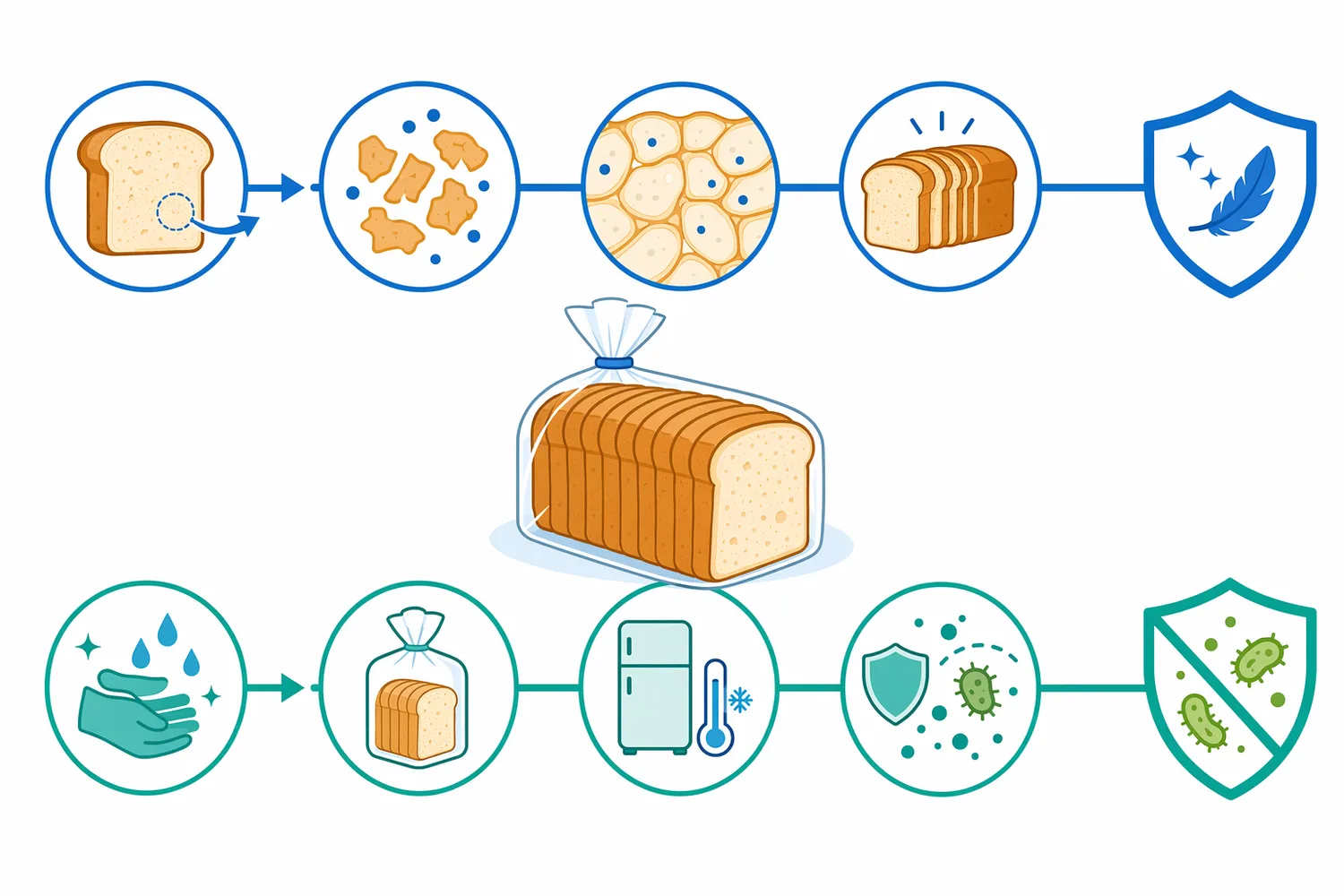
This is especially important in clean-label and preservative-free breads. Clean-label shelf-life work often addresses mold inhibition, water activity, fermentation systems, or natural antimicrobial ingredients, while maltogenic amylase mainly addresses textural staling. A bread can stay soft yet still be microbiologically limited, or it can be protected against mold yet become firm; these are related shelf-life concerns but not the same problem [11].
It is important to separate freshness retention from microbial shelf life. Maltogenic amylase helps bread remain softer by modifying starch and slowing crumb firming. It should not be presented as a mold-killing ingredient or a replacement for hygiene, packaging control, approved preservatives where used, or validated clean-label antimicrobial systems [11].
Mold growth depends on contamination level, water activity, pH, packaging atmosphere, storage temperature, and the presence or absence of inhibitory ingredients. Research on clean-label additives for mold inhibition in preservative-free bread focuses on antimicrobial strategies, which are different from the starch-modifying mechanism of maltogenic amylase [11].
That distinction helps set realistic expectations. In a packaged loaf, maltogenic amylase may help the bread still feel fresh at a point when an untreated loaf would already be firm. However, the microbial shelf life of that same loaf must be managed through the bakery’s normal food-safety and packaging systems [3].
Maltogenic amylase is normally incorporated into the dough system so it can distribute through the flour and water phase before baking. Its most important functional window occurs as starch becomes hydrated and gelatinized, making the substrate more accessible. From there, the enzyme’s effect carries forward into storage because the starch network has been modified before retrogradation progresses [1].
The intended outcome is a softer crumb over time, not a dramatic change in dough identity. In well-balanced formulas, the dough should still be mixed, fermented, sheeted or molded, proofed, baked, cooled, and packed according to the bakery’s established process. The enzyme’s contribution is seen most clearly when comparing texture retention over storage rather than judging only the warm loaf immediately after baking [4].
As with any functional baking enzyme, balance matters. Too little functional effect may not deliver a noticeable shelf-life improvement, while excessive amylolytic action in a bread system can contribute to undesirable texture such as weakness, gumminess, or stickiness. This is why maltogenic amylase is best used as a controlled ingredient within a stable formula and process, not as an open-ended addition [2].
Enzymes.bio supplies Maltogenic Amylase Enzyme for Baking as a professional bakery ingredient sold directly online by the 1 kg unit. The ordering model is simple: the buyer places the order online, pays online, and the order is processed and shipped.
Enzymes.bio is a supplier, not the manufacturer or laboratory producer of the enzyme. Each order includes a Certificate of Analysis and Safety Data Sheet, giving the buyer the standard product documentation needed for receiving, handling, and internal records.
Maltogenic amylase is one of the most established enzyme tools for improving bread softness retention. It works by modifying gelatinized starch during baking, producing maltose and short malto-oligosaccharides that reduce the ability of starch chains to recrystallize into a firmer crumb during storage [1].
The best-supported applications are packaged sandwich bread, buns, rolls, and other soft yeast-raised products where the main quality target is slower crumb firming. It can also influence sugar availability, crust color, and aroma, but those effects are secondary to its main anti-staling function [4].
For buyers who need a practical starch-modifying enzyme for bread freshness, Enzymes.bio offers Maltogenic Amylase Enzyme for Baking for direct online purchase in 1 kg units, with order documentation included.
Sold by the 1 kg unit, in stock and ready to ship. Order directly on our store — pay online and we process your order. A Certificate of Analysis and Safety Data Sheet are included with every order.
Buy Maltogenic Amylase Enzyme For Baking →Numbered in order of first citation. Open-access sources, each verified reachable at publication; citation numbers in the text link here.