
Mannanase Digestive Enzyme – Viscosity Reduction Enzyme is used to hydrolyze β-mannan polysaccharides that make plant-based materials thick, difficult to process, or less digestible. By cutting β-1,4 bonds in mannans, galactomannans, glucomannans, and related hemicelluloses, mannanase converts long water-binding chains into shorter fragments, which can reduce viscosity and lessen mannan-related anti-nutritional effects. Enzymes.bio supplies this enzyme ingredient directly online by the 1 kg unit; buyers pay online, and the order is processed and shipped with a Certificate of Analysis and Safety Data Sheet.
Mannanase, more precisely β-mannanase or endo-β-1,4-mannanase, is a carbohydrase that acts on β-mannan-type polysaccharides. These polysaccharides are hemicellulose components of many plant materials and include linear mannans, galactomannans with galactose side groups, glucomannans containing both mannose and glucose in the backbone, and galactoglucomannans that combine backbone variation with side-chain substitution. A review of mannan hydrolysis describes β-mannanase as a central enzyme in the depolymerization of these mannan structures, often working alongside β-mannosidase and α-galactosidase where more complete breakdown is desired [1].
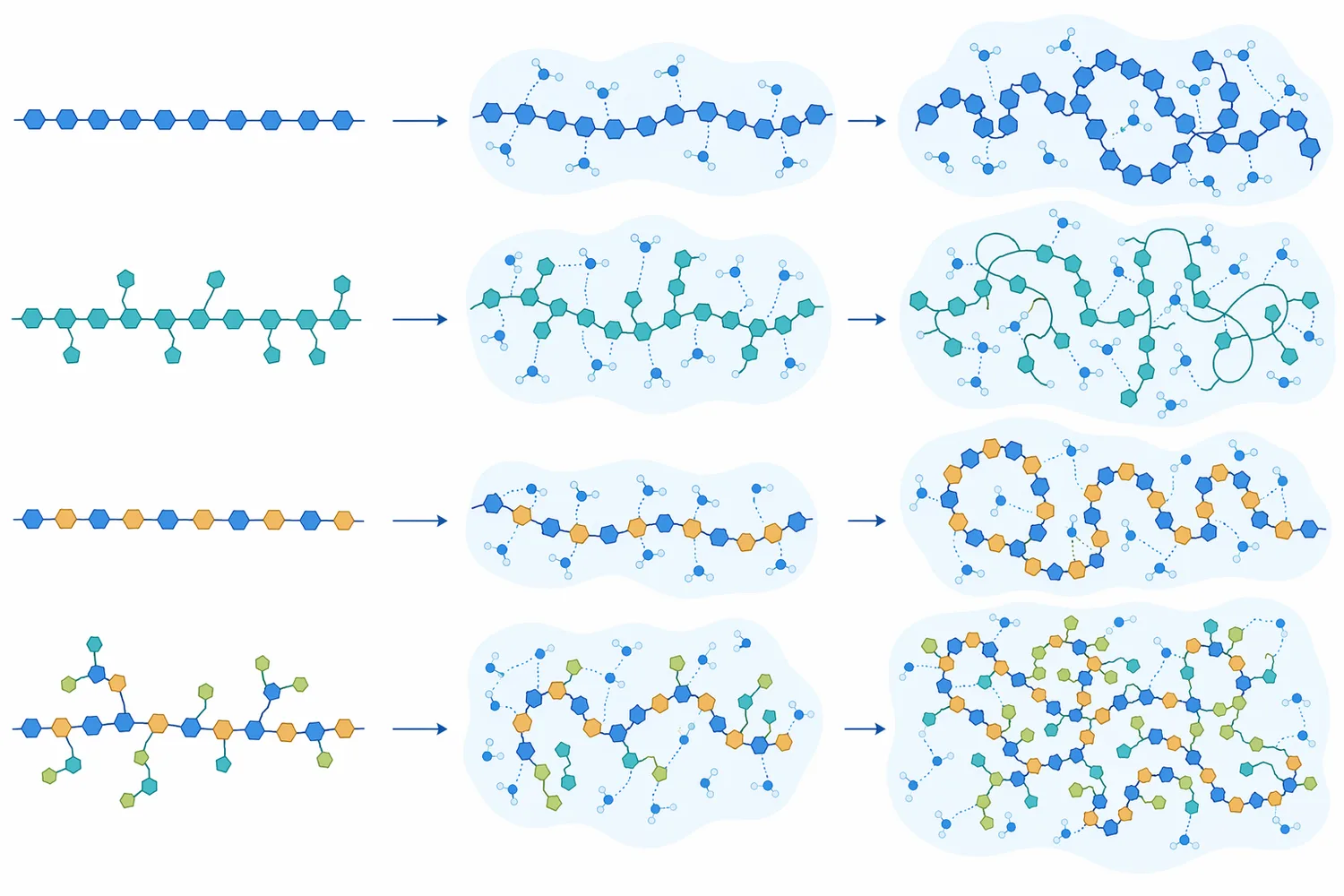
The practical value of mannanase comes from the physical behavior of mannans in water. Long soluble polysaccharide chains occupy large hydrodynamic volume, bind water, and entangle with one another; this produces thick solutions, slow flow, and poor mass transfer. When mannanase cleaves the β-1,4-linked backbone internally, the average chain length falls, the polymers entangle less, and the material can become easier to mix, pump, hydrate, filter, or digest. Research on recombinant β-mannanases repeatedly uses their ability to hydrolyze mannan substrates into mannooligosaccharides as the key functional outcome, showing that the enzyme’s core action is chain shortening rather than nonspecific “fiber digestion” [2].
This is why mannanase is relevant both as a digestive enzyme and as a viscosity reduction enzyme. In feed and digestive enzyme blends, it targets a defined fraction of plant fiber that monogastric animals do not efficiently degrade on their own. In processing applications, it is used where mannan-rich gums, meals, extracts, or slurries create excess viscosity. The same biochemical event—hydrolysis of β-mannan chains—explains both effects.
β-Mannans are not one single ingredient; they are a family of plant structural and storage polysaccharides. In galactomannans, for example, a mannose-rich β-1,4 backbone is decorated with α-galactose side groups. In glucomannans, glucose residues are included in the backbone. These structural differences influence how accessible the backbone is to mannanase and how much viscosity the polymer can create, which is why mannan hydrolysis is often discussed as a system involving β-mannanase plus accessory enzymes that remove side groups or finish hydrolysis of shorter fragments [1].
From a processing perspective, high-molecular-weight galactomannans are particularly important because they can form very viscous aqueous systems at low inclusion levels. The polymer chains hydrate and expand, increasing resistance to flow. Mannanase does not “thin” such systems by dilution or by chemically changing water; it reduces viscosity by cutting the polymer itself. Once the long chains are converted into shorter oligosaccharides, they no longer bridge and entangle to the same extent, so the solution or slurry can behave more like a lower-molecular-weight carbohydrate system.
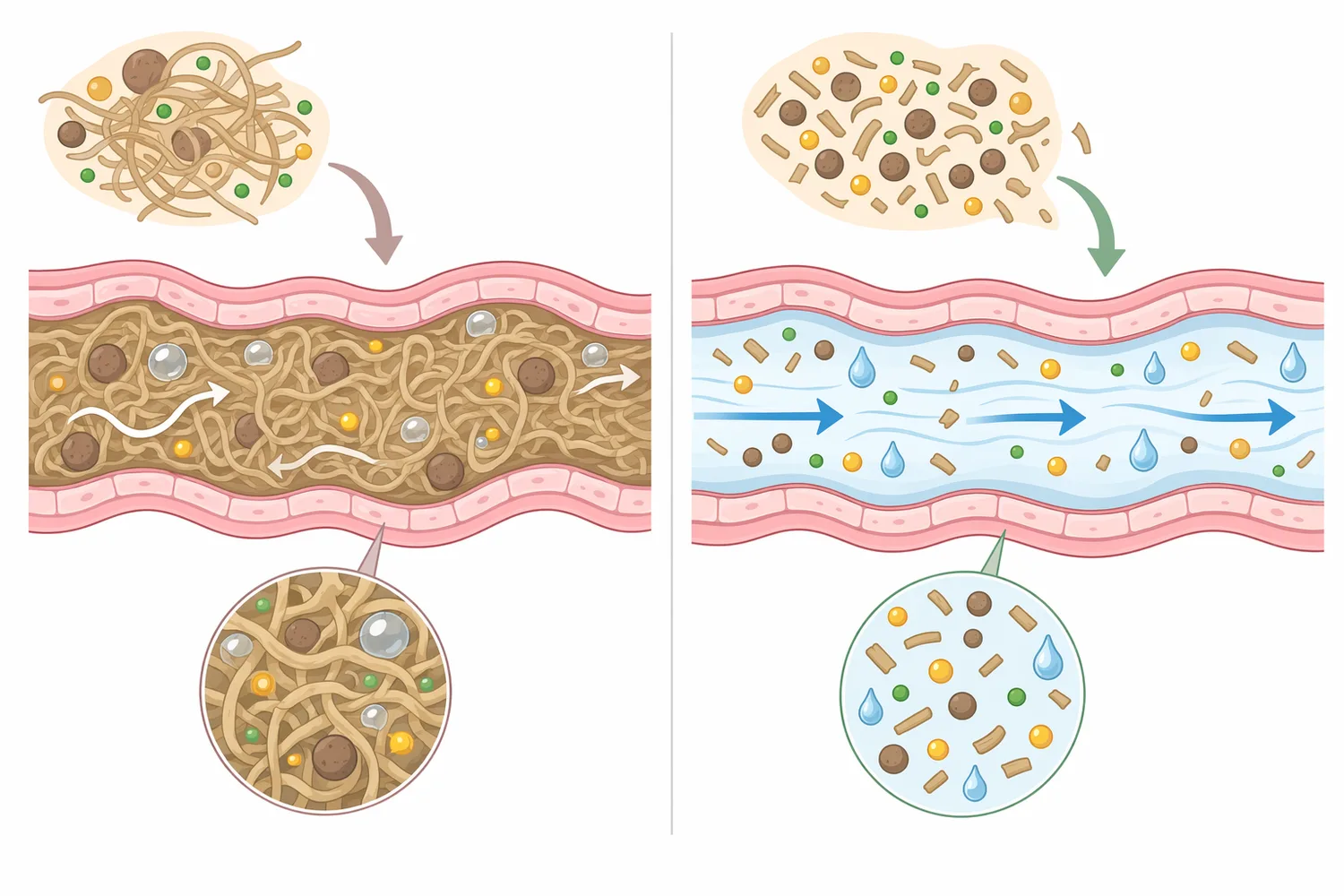
From a nutrition perspective, soluble β-mannans can behave as anti-nutritional fibers. They may increase intestinal digesta viscosity, interfere with contact between digestive enzymes and nutrients, and affect how energy is partitioned in the animal. Recent work in newly weaned pigs specifically evaluates β-mannanase in relation to intestinal health and growth when animals are fed different feed types, reflecting the continuing interest in mannan hydrolysis as a practical nutrition tool rather than only a processing aid [3].
Mannanase is primarily an endo-acting enzyme. That means it attacks internal points along the β-mannan backbone instead of simply trimming one sugar at a time from the end. This is important for viscosity reduction because a small number of internal cuts can rapidly reduce polymer size. A long chain with many thousands of sugar units contributes strongly to viscosity; when that same chain is cut into multiple shorter segments, the reduction in flow resistance can be disproportionate to the number of bonds cleaved.
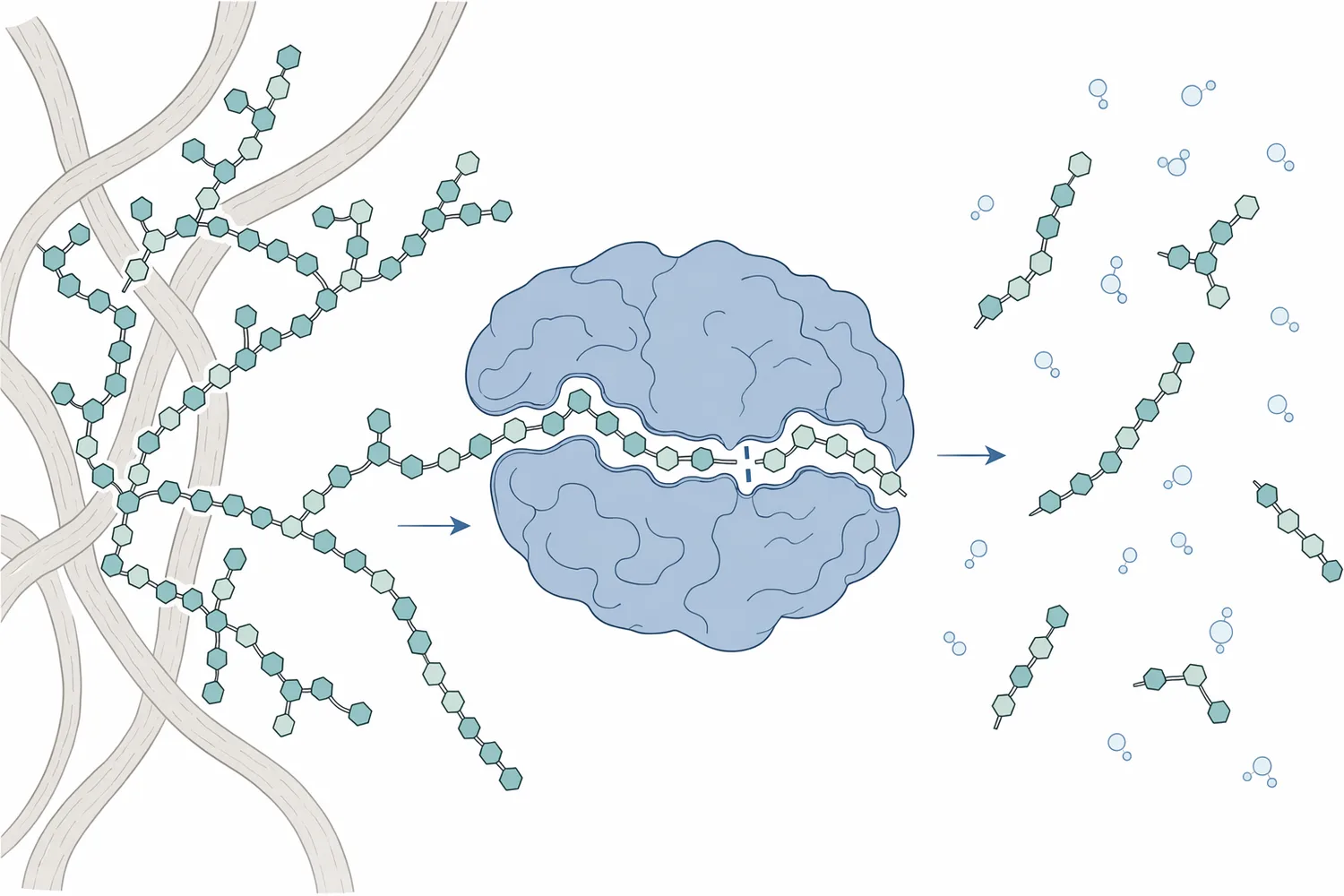
The hydrolysis reaction adds water across the glycosidic bond. In chemical terms, the β-1,4 linkage between mannose residues is broken, producing shorter mannan fragments and mannooligosaccharides. Studies on β-mannanase expression and application commonly describe the conversion of mannan substrates into mannooligosaccharides, which are shorter carbohydrates formed directly from backbone cleavage [4].
This molecular change has several practical consequences. First, viscosity can fall because shorter chains have lower hydrodynamic volume and fewer chain-chain interactions. Second, hydration behavior can change: partially hydrolyzed polymers typically bind and immobilize less water than intact gums. Third, in digestive environments, smaller fragments may be less able to form a physical barrier around nutrients or increase digesta viscosity. Fourth, partial hydrolysis can expose plant cell-wall structures to other enzymes, especially where mannan is part of a broader hemicellulose matrix.
Accessory enzymes can matter where the mannan is highly substituted. α-Galactosidase can remove galactose side groups from galactomannans, while β-mannosidase can further hydrolyze short mannan-derived fragments. The review literature describes the hydrolysis of mannans as a coordinated process involving β-mannanase, β-mannosidase, and α-galactosidase, with each enzyme acting on a different part of the polymer or product mixture [1].
Mannanase is best understood as a targeted enzyme, not a universal fiber treatment. It overlaps conceptually with other carbohydrases because all of them act on plant polysaccharides, but the bond specificity and substrate family are different. The table below places mannanase in context with common plant-fiber enzymes.
| Enzyme type | Main substrate target | What it changes in the material | Typical relevance |
|---|---|---|---|
| Mannanase | β-mannans, galactomannans, glucomannans, galactoglucomannans | Cuts β-1,4 mannan backbone; reduces chain length and mannan-driven viscosity | Mannan-rich plant meals, gums, feed ingredients, digestive enzyme blends |
| Xylanase | Arabinoxylans and xylans | Breaks xylan backbone; can reduce viscosity from cereal non-starch polysaccharides | Wheat, rye, some cereal-based feeds and processing streams |
| β-Glucanase | β-glucans | Hydrolyzes β-glucan chains that can raise viscosity | Barley, oats, cereal-rich systems |
| Cellulase | Cellulose | Acts on β-1,4-glucan cellulose fibers; often limited by crystallinity | Plant cell-wall modification and fiber breakdown |
| Pectinase | Pectins | Breaks pectin networks that affect gelation, clarification, and viscosity | Fruit, vegetable, and juice processing |
This comparison matters because viscosity can have different causes. If thickness comes from guar-like galactomannan, mannanase is mechanistically relevant. If it comes mainly from pectin, starch, xanthan, β-glucan, or protein gelation, mannanase would not be expected to solve the problem by itself. Food enzyme reviews emphasize that microbial enzymes are used across food applications because different enzymes provide different substrate-specific transformations; the practical benefit comes from matching the enzyme’s catalytic action to the material being processed [5].
The clearest evidence for mannanase function is biochemical: β-mannanase hydrolyzes mannan polymers into shorter products. Multiple studies in the verified literature describe production, characterization, or expression of β-mannanases and then apply them to mannan substrates to generate mannooligosaccharides or partially hydrolyzed gums. For example, recombinant β-mannanase from Bacillus licheniformis DSM 13 has been studied for producing mannooligosaccharides from mannan substrates, directly demonstrating the conversion of larger mannan polymers into shorter carbohydrate products [2].
A 2021 study expressed a glycoside hydrolase family 26 β-mannanase from Aspergillus niger in Pichia pastoris and used it for production of partially hydrolyzed fenugreek gum. Fenugreek gum is rich in galactomannan, so this work is directly relevant to viscosity-focused applications: partial hydrolysis of the gum means the high-molecular-weight galactomannan network has been enzymatically shortened rather than physically diluted [6].
Another study characterized a GH26 β-mannanase from Paenibacillus polymyxa and applied it to the production of mannooligosaccharides. The repeated focus on mannooligosaccharide production across studies is significant because these products are the molecular evidence of backbone cleavage. In processing language, the enzyme changes the polymer-size distribution of the material [7].
Enzyme architecture also affects how mannanase interacts with real substrates. Work on a blue mussel β-mannanase examined distal substrate-binding tryptophans and their role in hydrolysis and transglycosylation, showing that substrate binding is not just a passive event; specific amino-acid residues help position the mannan chain for catalytic action [8]. This supports the practical view that mannanase performance depends on access to the mannan backbone and on enzyme-substrate contact within the hydrated material.
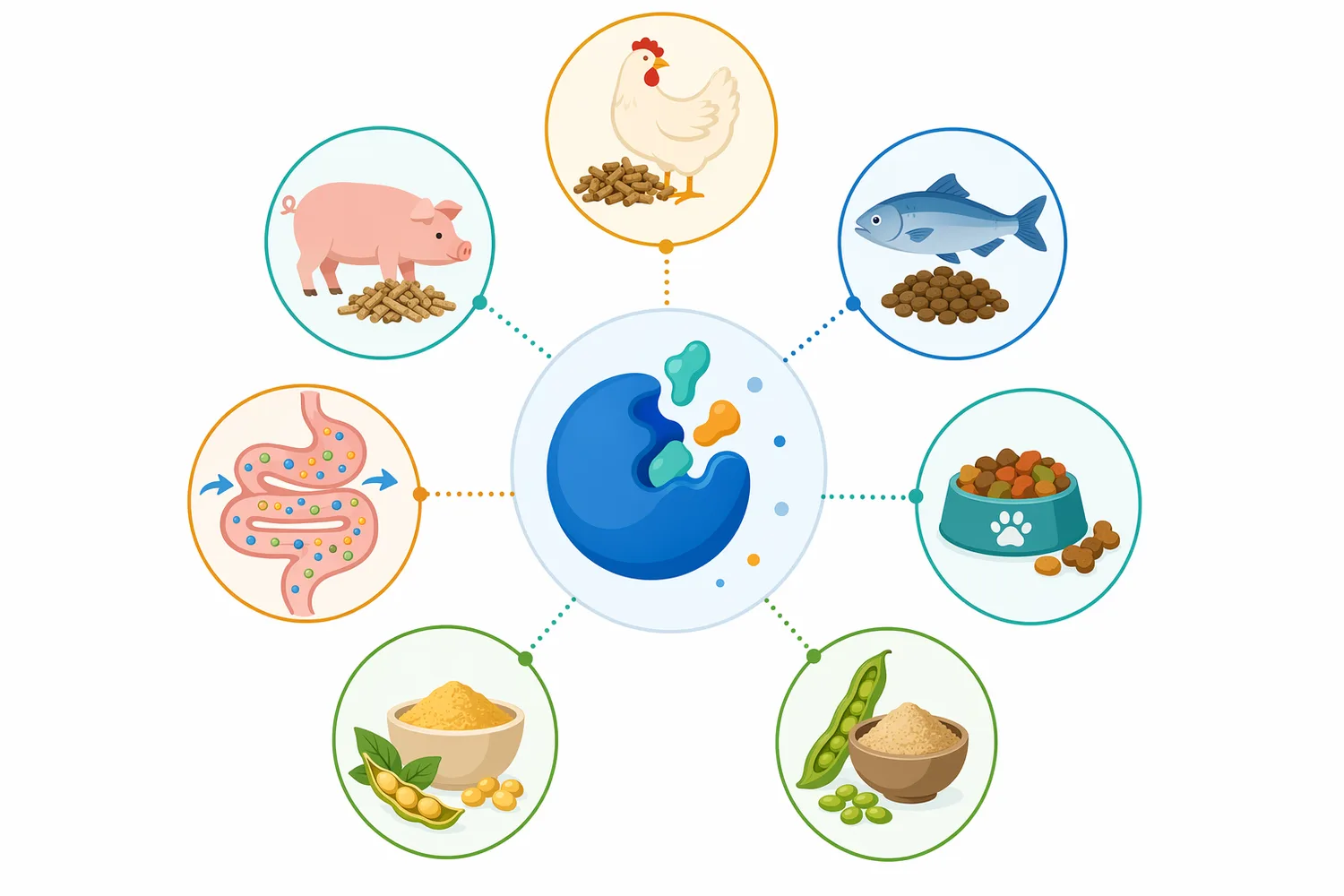
In animal feed, mannanase is used because many plant-derived ingredients contain non-starch polysaccharides that animals do not efficiently digest. These fibers can bind water, increase digesta viscosity, and reduce the efficiency with which nutrients are released from the feed matrix. Reviews of enzyme utilization in fish feed describe exogenous enzymes as tools for improving nutrient use in aquaculture diets, including the breakdown of plant-derived components that otherwise reduce digestibility [9].
For monogastric animals, the relevance is especially direct because their endogenous enzyme systems are not designed to extensively hydrolyze β-mannan hemicelluloses. When mannanase is included in a feed or digestive enzyme blend, it supplies a catalytic function that the animal’s own digestive secretions provide only poorly or not at all. The enzyme begins acting once water is available and the substrate is accessible, cutting mannan chains during processing hydration or digestive transit depending on the application conditions.
A 2024 study on newly weaned pigs evaluated the nutritional and functional roles of β-mannanase on intestinal health and growth when animals were fed two different types of feed. Newly weaned pigs are a useful model because their digestive systems are still adapting, and changes in fiber viscosity, nutrient release, and gut environment can influence performance and intestinal outcomes [3].
In ruminant nutrition, β-mannanase has also been reviewed for dairy cattle performance and environmental sustainability. Although ruminants have microbial fermentation capacity that differs from monogastric digestion, mannan-rich feed components can still affect nutrient availability and ration efficiency. A 2025 review specifically explores β-mannanase supplementation in dairy cattle nutrition, performance, and environmental context, showing that the enzyme is not limited to one animal category [10].
Aquaculture is another area of interest because fish and shrimp feeds increasingly use plant proteins and other vegetable ingredients. Reviews on aquaculture feed additives emphasize both the benefits and the need for careful regulatory frameworks, reflecting the broader movement toward functional feed ingredients that support performance while managing risk [11]. In this context, mannanase belongs to the wider category of feed enzymes used to improve the handling and digestibility of plant-based feed components.
Outside of animal nutrition, mannanase is useful wherever mannan-containing plant materials create processing limitations. Thick slurries can reduce mixing efficiency, slow heat transfer, overload pumps, and make filtration or separation more difficult. When the viscosity source is a mannan-type polymer, mannanase can reduce the average molecular weight of that polymer and change the way the material flows.
Fenugreek gum is a good example because it is a galactomannan-rich substrate. The study using GH26 β-mannanase from Aspergillus niger to produce partially hydrolyzed fenugreek gum illustrates the core industrial concept: rather than removing the gum, the enzyme modifies it into a lower-molecular-weight material with different functional properties [6].
Plant seeds also illustrate the natural role of mannan hydrolysis. In seeds, endo-β-mannanase participates in weakening or mobilizing mannan-rich structures during germination and processing. Research on Coffea arabica seeds examined endo-β-mannanase activity in seed structures under different processing and drying conditions, showing that mannanase activity is relevant to real plant tissues, not only purified laboratory substrates [12].
In lignocellulosic biomass, mannans can be embedded in a matrix with cellulose, xylan, lignin, and other hemicelluloses. A study on softwood hydrolysis by Aspergillus mannanase examined the role of a carbohydrate-binding module, highlighting that access and binding are critical when the substrate is not freely soluble [13]. For buyers using mannanase in plant processing, this distinction is important: soluble gums, suspended meals, and intact fiber matrices can respond differently because the enzyme must physically reach the bonds it hydrolyzes.
One outcome of mannanase treatment is the formation of mannooligosaccharides. These are shorter chains derived from mannan hydrolysis, typically containing mannose-rich structures and sometimes retaining substituted patterns depending on the original substrate. Studies on recombinant β-mannanase production often focus on mannooligosaccharide generation because it is a measurable product of enzymatic chain cleavage and can be relevant to functional ingredient development [2].
Partial hydrolysis is often more practical than complete degradation. For viscosity reduction, the goal may be to shorten the polymer enough to improve flow while retaining some carbohydrate functionality. For digestive enzyme blends, the goal is usually to reduce the anti-nutritional effect of the intact polymer rather than convert every fragment into individual sugars. This is why β-mannanase is often paired conceptually with accessory enzymes but remains valuable on its own: internal backbone cuts can create large physical changes even before full saccharification occurs.
The exact product profile depends on the substrate structure. A galactomannan with many galactose branches may yield substituted oligosaccharides, while a more linear mannan may produce different chain-length distributions. The mannan hydrolysis review describes how β-mannanase, β-mannosidase, and α-galactosidase interact in this process, with β-mannanase producing shorter backbone fragments and the other enzymes acting on ends or side groups [1].
Mannanase is most relevant where the material contains accessible β-mannan structures. This includes mannan-rich gums, certain legume and seed fractions, palm-kernel-derived materials, some plant meals, and other hemicellulose-rich ingredients. If the viscosity or digestibility problem is not caused by mannans, the enzyme’s effect will naturally be limited because its catalytic target is absent or minor.
Water availability is also essential. Enzymes operate in hydrated environments because hydrolysis uses water and because the enzyme and substrate must diffuse or come into contact. In a dry blend, mannanase is present but largely inactive until moisture becomes available during processing, soaking, pelleting, digestion, extraction, or another hydrated step. This is a general biochemical principle for hydrolytic enzymes and is consistent with the way food and feed enzymes are applied to transform hydrated substrates [5].
Temperature, pH, residence time, and physical access influence any enzyme reaction. These factors do not change what mannanase is; they change how much opportunity it has to contact and hydrolyze β-mannan chains before conditions become unfavorable or the process moves on. Studies on mannanase production and characterization routinely examine enzyme behavior under defined experimental conditions because catalytic performance is condition-dependent, even though the underlying reaction remains β-mannan backbone hydrolysis [14].
Processing history can also matter. Heat treatment, drying, extrusion, or chemical exposure may change substrate accessibility or enzyme stability. Coffee seed research, for example, examined endo-β-mannanase activity in relation to processing and drying, reinforcing that plant matrix condition and process environment influence observed enzyme action [12].
When mannanase is used in a mannan-rich aqueous system, the most direct expected benefit is reduced viscosity. This can make a slurry or solution easier to mix, transfer, disperse, or incorporate into a formulation. The mechanism is not cosmetic: the enzyme reduces the chain length of the polymer that was creating the viscosity.
In feed and digestive applications, the expected benefit is more targeted than the broad phrase “better digestion.” Mannanase specifically helps hydrolyze β-mannan-type fibers that can behave as anti-nutritional components in plant-based diets. The resulting shorter fragments can reduce the physical and physiological burden associated with intact soluble mannans, supporting more efficient use of the overall formulation.
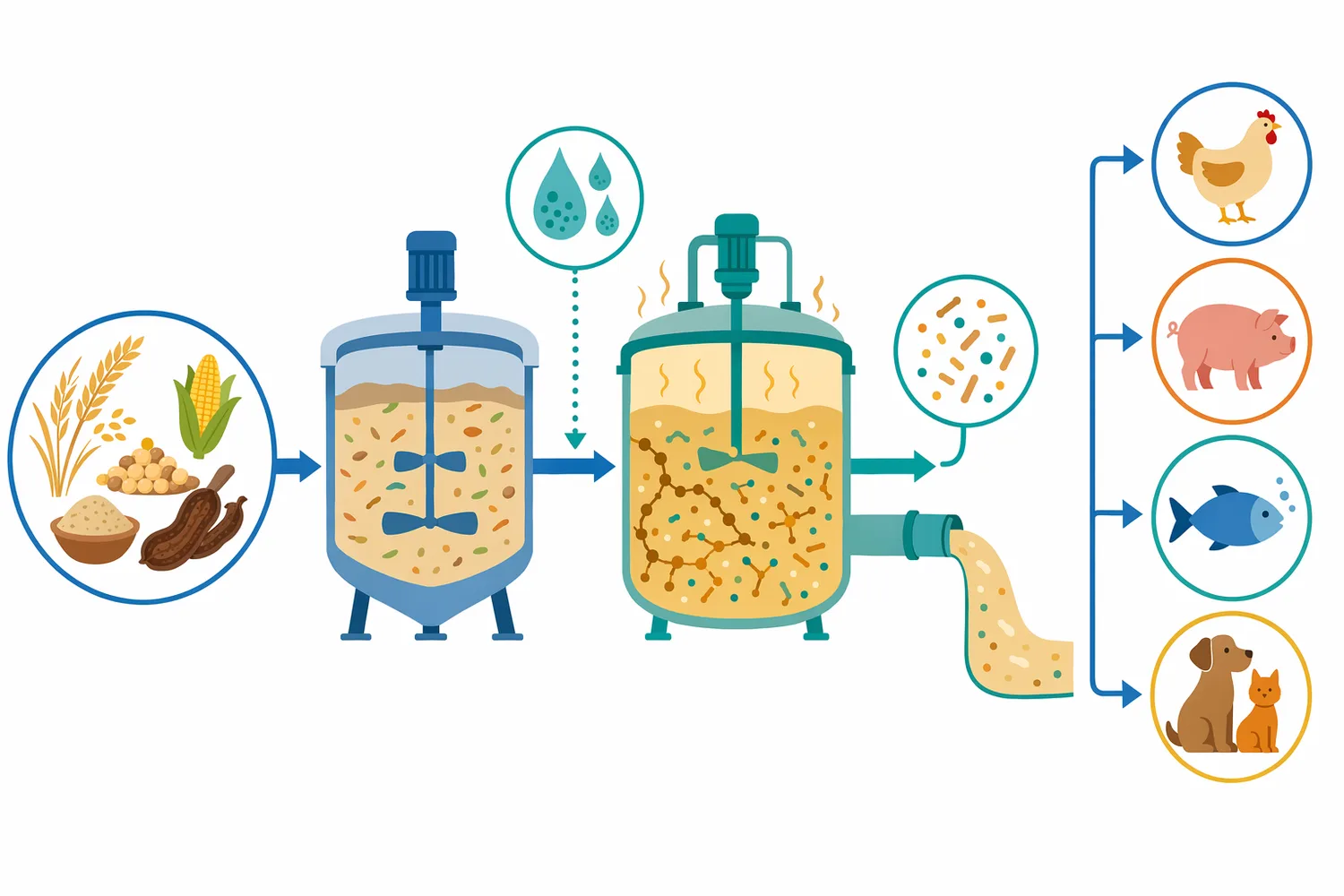
In plant-based ingredient processing, mannanase can help manage raw materials that are attractive for cost, sustainability, or nutrition but difficult because of their gum or hemicellulose content. Its value is strongest where the plant matrix contains a meaningful mannan fraction and where hydrolysis can occur under moist processing conditions. Reviews of microbial enzymes in food industry applications emphasize that enzymes are valuable because they enable specific biochemical transformations under comparatively mild processing conditions [5].
It is equally important to define the boundary of the benefit. Mannanase does not replace protease for proteins, amylase for starch, pectinase for pectin, xylanase for xylan, or cellulase for cellulose. It does not guarantee the same result across every ingredient or formulation. Its usefulness follows the substrate: when β-mannans are a real contributor to viscosity or reduced digestibility, mannanase has a clear biochemical role.
Mannanase can be part of digestive enzyme blends designed for plant-heavy materials. In such blends, it complements enzymes that act on other macromolecules: proteases hydrolyze proteins, lipases hydrolyze fats, amylases hydrolyze starches, and other carbohydrases act on different plant polysaccharides. Mannanase contributes the β-mannan-specific activity within that broader blend.
This positioning should remain technical and ingredient-focused. Mannanase helps hydrolyze β-mannan fibers; it should not be presented as a medical treatment or as a universal solution for digestive discomfort. In feed and animal nutrition, its value is best described in relation to mannan-containing raw materials, nutrient availability, intestinal conditions, and performance outcomes reported in the relevant species and diet context.
The pig, dairy, aquaculture, and enzyme-review literature all point in the same general direction: exogenous enzymes can improve the use of plant-based feed materials when they address a real substrate limitation. For mannanase, that limitation is the presence of β-mannan structures that increase viscosity, resist endogenous digestion, or interfere with efficient nutrient use [3].
Viscosity can be reduced by dilution, heat, mechanical shear, chemical modification, or enzymatic hydrolysis. Mannanase differs because it changes the molecular size of a specific polysaccharide under relatively mild conditions. Dilution lowers solids concentration but increases volume. Heat may temporarily reduce viscosity but can require energy and may not permanently change polymer structure. Mechanical shear may help dispersion but does not necessarily break glycosidic bonds in a controlled way.
Enzymatic hydrolysis is more selective. Mannanase recognizes and cleaves β-mannan backbones, so the treatment is most meaningful when the thickening polymer is a mannan. This selectivity is an advantage when a targeted change is desired, and a limitation when the viscosity comes from other gums or polymers. The broader food-enzyme literature describes microbial enzymes as important processing tools precisely because they catalyze defined transformations rather than broad, uncontrolled chemical changes [5].

For many process engineers, the key difference is permanence. Once a mannan chain is hydrolyzed into shorter fragments, its contribution to viscosity is changed because the polymer itself has changed. If the same material is later cooled or rested, the original long-chain mannan network does not simply reappear.
Enzymes.bio supplies Mannanase Digestive Enzyme – Viscosity Reduction Enzyme as a B2B enzyme ingredient available for direct online purchase by the 1 kg unit. Buyers place the order and complete payment online; the order is then processed and shipped. A Certificate of Analysis and Safety Data Sheet are included with the order.
Enzymes.bio is a supplier, not a manufacturer or analytical laboratory. This document is intended to explain the enzyme’s technical function, relevant mechanisms, and evidence base in practical language for buyers using mannanase in feed, digestive enzyme, or plant-processing contexts.
Mannanase is a targeted enzyme for materials where β-mannans are responsible for excess viscosity, reduced processability, or anti-nutritional effects. It works by hydrolyzing β-1,4 bonds in mannan backbones, converting long water-binding polymers into shorter fragments and mannooligosaccharides. This molecular change explains why mannanase can reduce mannan-driven viscosity and support digestion or feed efficiency in applications built around plant-derived ingredients.
The strongest technical fit is in mannan-rich systems: galactomannan gums, certain seed and legume fractions, palm-kernel-derived materials, vegetable feed ingredients, and plant slurries where soluble hemicellulose contributes to thickness. The enzyme is not a universal fiber solution, but when the substrate is β-mannan, its mechanism is direct, specific, and well supported by mannan hydrolysis literature [1].
Enzymes.bio makes this enzyme available for straightforward online purchase in 1 kg units, with order documentation supplied at shipment.
Sold by the 1 kg unit, in stock and ready to ship. Order directly on our store — pay online and we process your order. A Certificate of Analysis and Safety Data Sheet are included with every order.
Buy Mannanase Digestive Enzyme - Viscosity Reduction Enzyme →Numbered in order of first citation. Open-access sources, each verified reachable at publication; citation numbers in the text link here.