
Mannanase is a feed enzyme used to break down mannan-type hemicellulose in plant ingredients such as soybean meal, palm kernel meal and sesame meal. By cutting beta-mannan, galactomannan and glucomannan structures into smaller carbohydrates, it can help reduce mannan-related anti-nutritional effects, lower digesta viscosity and improve nutrient access in suitable feed formulas .
For buyers using plant-based feed ingredients, the practical value of mannanase is substrate-specific: it works where the diet contains mannan structures for the enzyme to hydrolyze. Enzymes.bio supplies Mannanase Enzyme for Animal Feed Additives directly online in 1 kg units, with a Certificate of Analysis and Safety Data Sheet included with the order .
Mannanase, more precisely beta-mannanase, is a carbohydrase enzyme used in animal feed to hydrolyze mannan-containing non-starch polysaccharides. These mannans are part of the hemicellulose fraction of many plant materials and are not fully digested by monogastric animals using their own endogenous enzymes. The Enzymes.bio product information describes beta-mannanase as an enzyme that splits beta-1,4-glycosidic bonds in beta-mannan, galactomannan and glucomannan, producing smaller fragments such as mannose oligosaccharides and mannose .
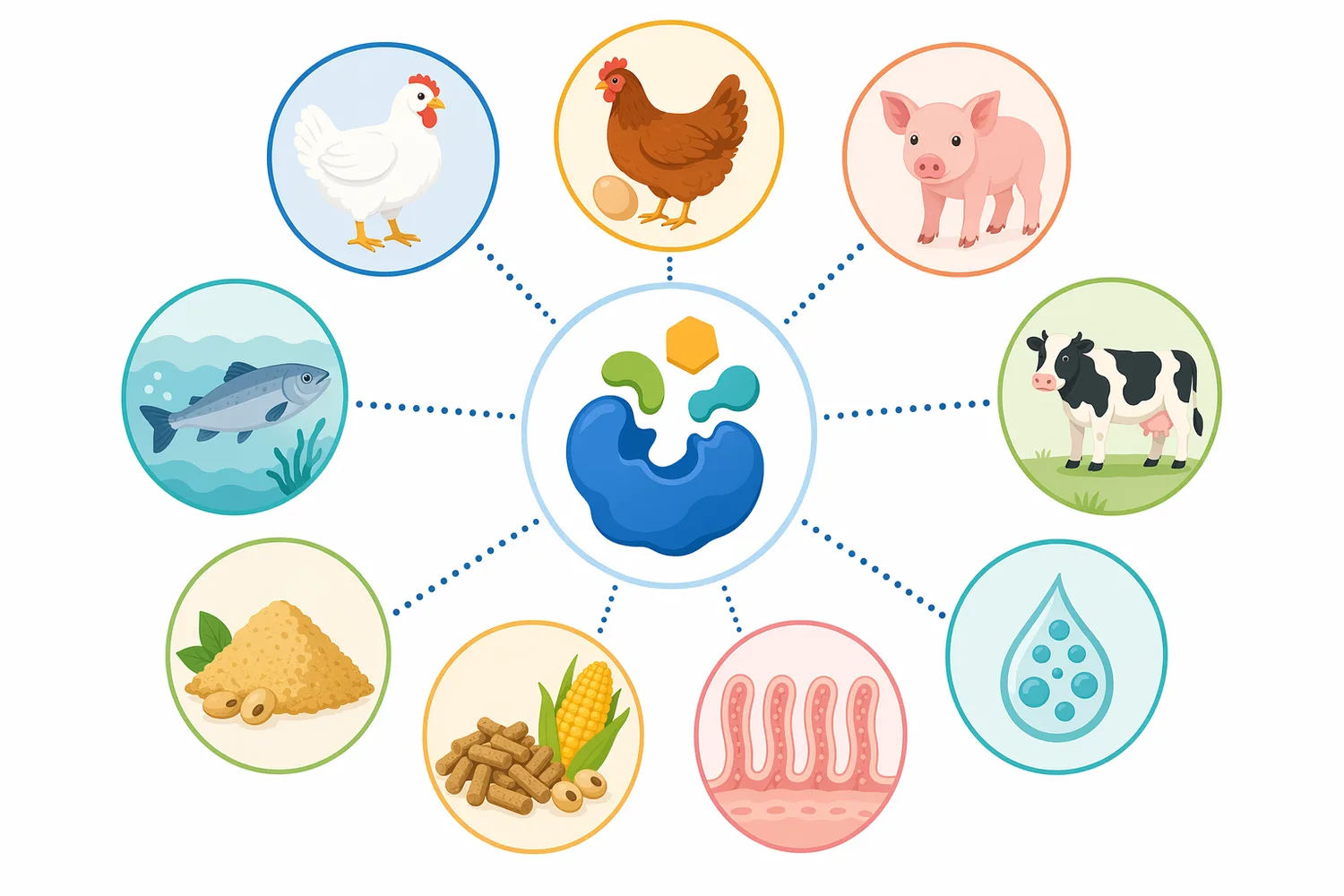
This matters because modern poultry, swine and aquaculture feeds often depend on plant protein meals and agricultural by-products. Soybean meal is widely used as a protein source, while palm kernel meal, copra-derived meals and sesame meal may be included where local availability and cost make them attractive. These ingredients can bring useful protein and energy into a formula, but they also bring cell-wall carbohydrates, including mannan fractions that can interfere with efficient digestion [1].
Mannanase is therefore not a general-purpose “performance additive” in the abstract. Its role is more specific: it targets mannan structures that can otherwise increase intestinal viscosity, trap nutrients within cell-wall material or contribute to reduced feed efficiency. The Enzymes.bio product page presents the enzyme for animal feed additive use and identifies mannan in feed plant materials as a relevant substrate, especially in palm kernel meal, soybean meal and sesame meal .
The word “mannan” covers a family of polysaccharides built mainly from mannose sugar units. In beta-mannan, mannose units are linked along a backbone by beta-1,4 bonds. In galactomannan, that mannose backbone carries galactose side groups. In glucomannan, the backbone contains both glucose and mannose units. These structural differences matter because they influence solubility, viscosity and how easily the polysaccharide interacts with water and other feed components [1].
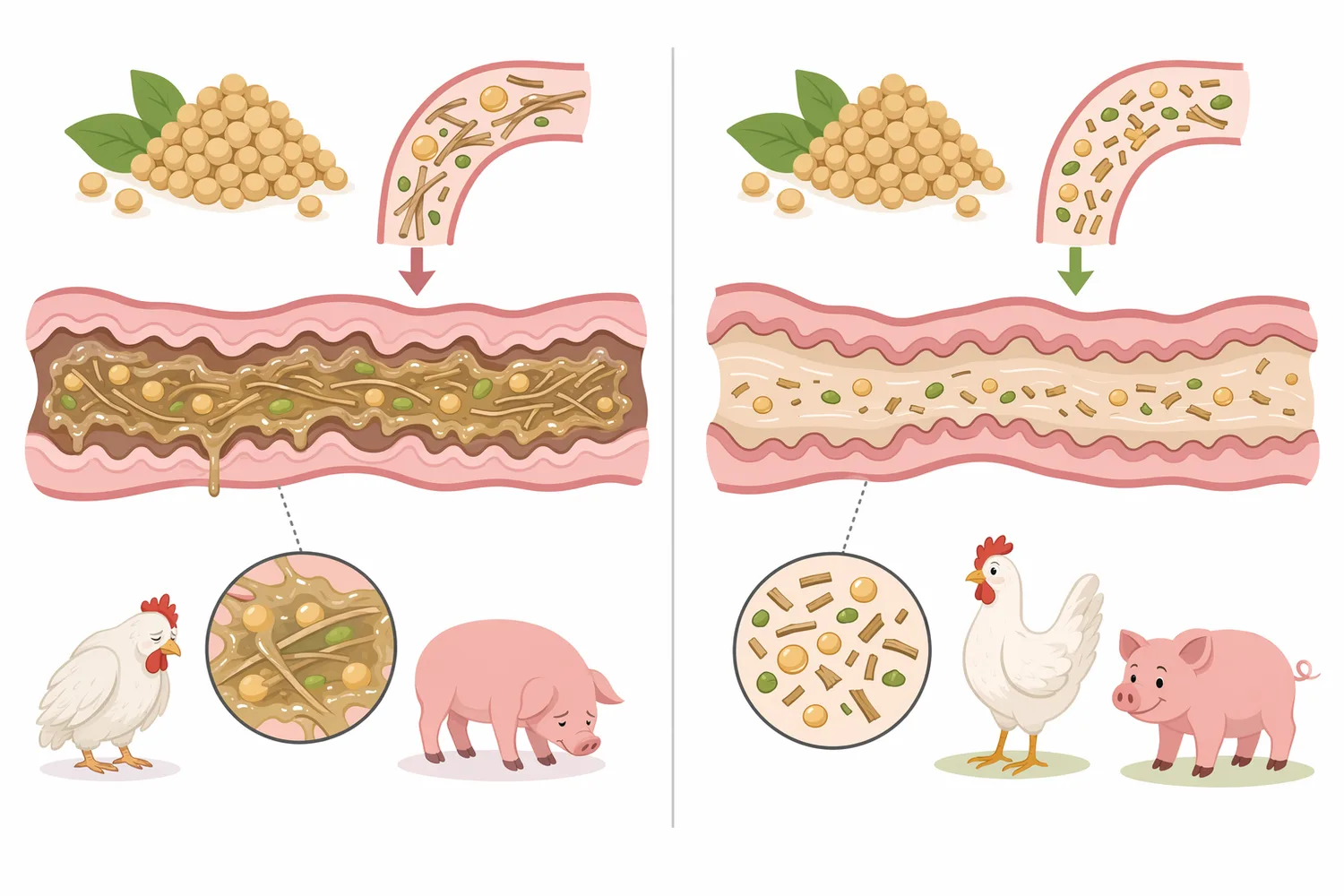
In the animal gut, long-chain mannans can behave differently from simple dietary sugars or starch. They are part of the plant cell-wall matrix, where they contribute to structural strength and water-binding behavior. When these polymers remain intact, they may increase the thickness of intestinal contents and limit the physical access of digestive enzymes to nutrients embedded in the feed particle. Enzymes.bio’s product information specifically notes that mannan can increase chyme viscosity and retard digestion and absorption of nutrients .
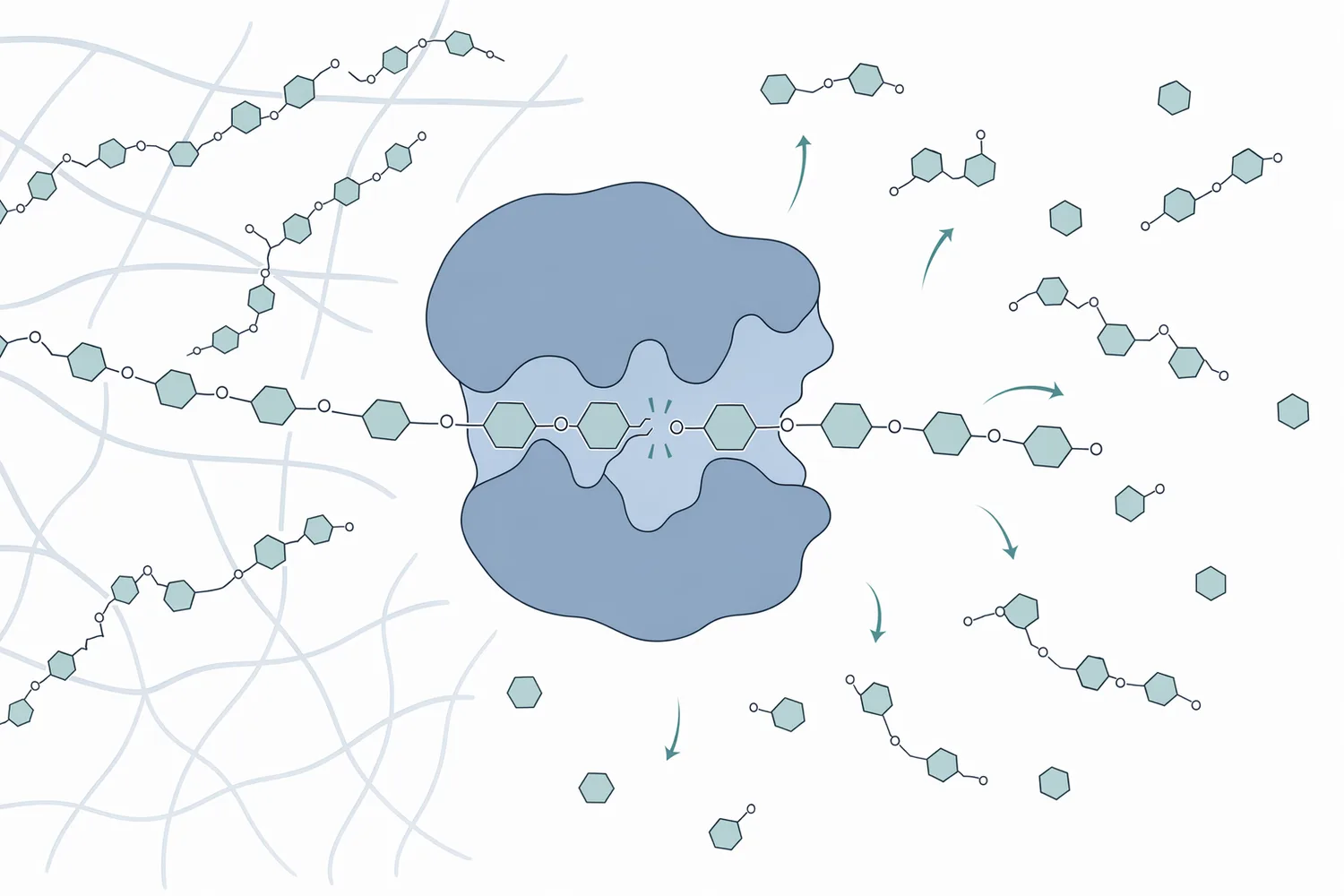
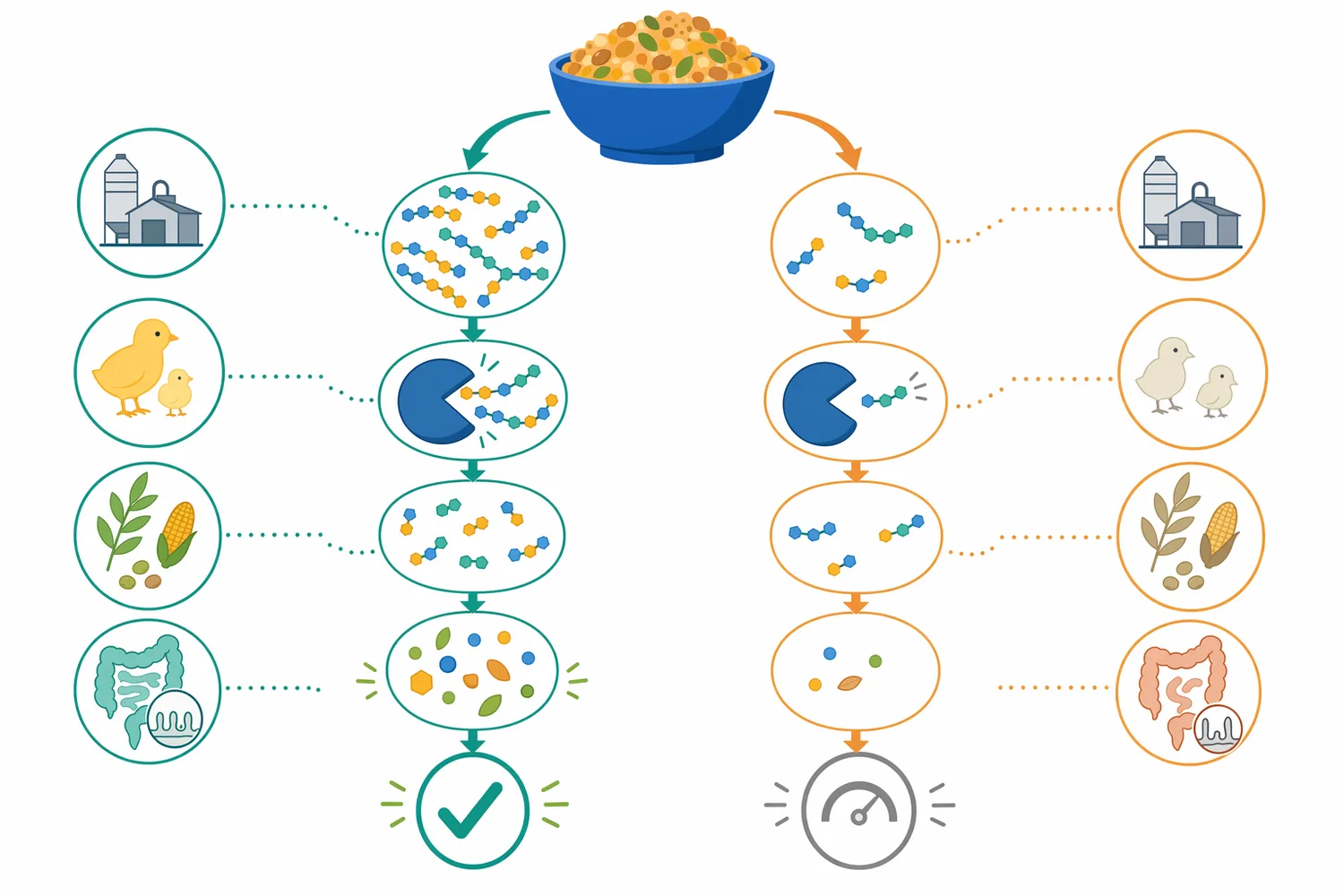
Beta-mannanase acts by cutting the beta-1,4 linkages in these polymers. Mechanistically, this shortens the mannan chain length and reduces the polymer’s ability to form viscous, water-holding structures. The same hydrolysis can also open parts of the plant cell-wall matrix, making associated nutrients more accessible to endogenous digestive enzymes such as amylases, proteases and lipases .
Mannans are not anti-nutritional simply because they are “fiber.” Some insoluble fiber can support gut function depending on species and diet, but soluble or partially soluble non-starch polysaccharides can create practical digestive challenges. When mannan-rich fractions hydrate in the digestive tract, they can thicken the digesta and slow the movement of nutrients toward the intestinal surface [1].
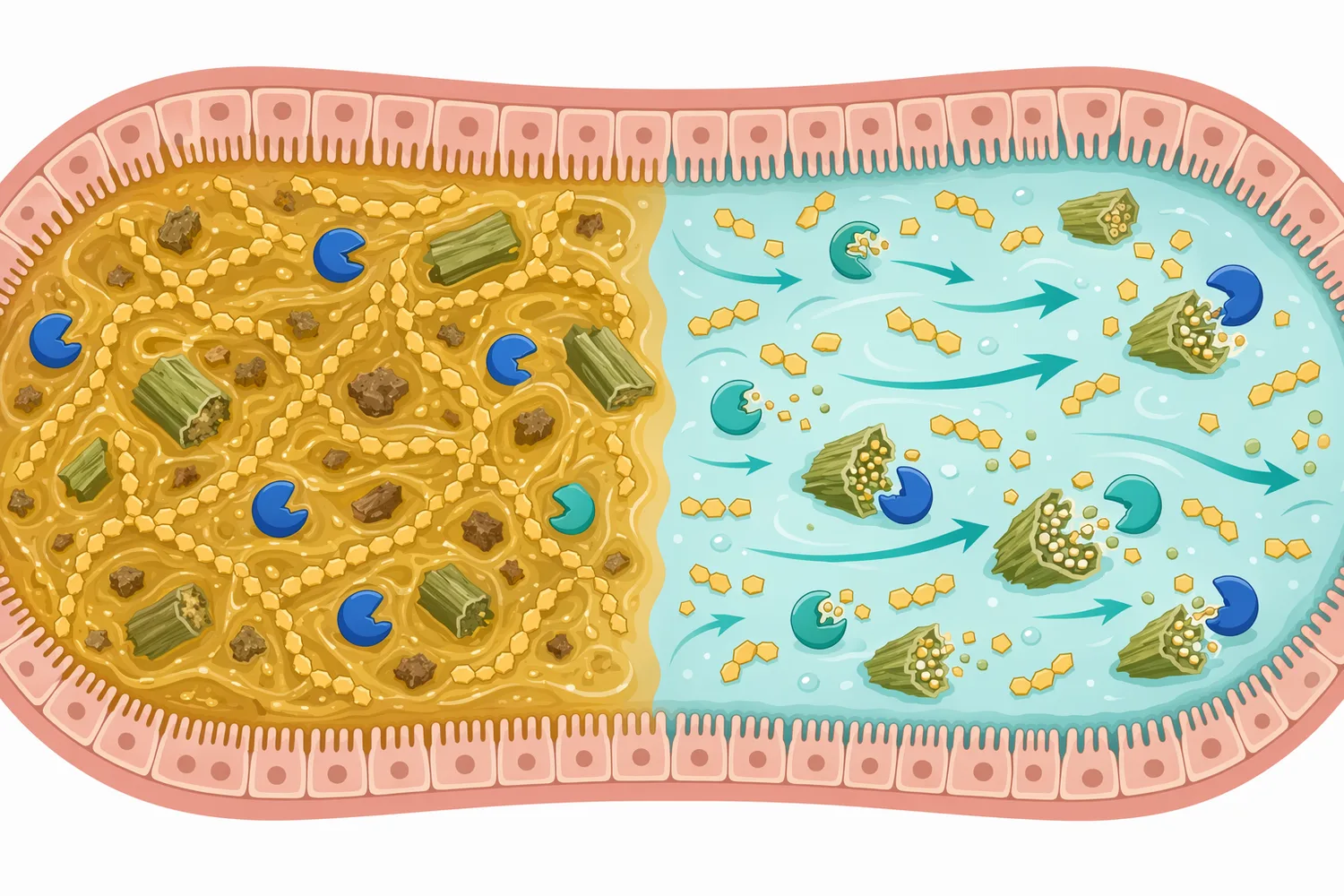
Higher digesta viscosity affects digestion in several concrete ways. First, it slows diffusion: enzymes, bile salts and nutrients move less freely through a thicker intestinal matrix. Second, it reduces contact efficiency: digestive enzymes may not reach starch, protein and lipid substrates as readily when those nutrients remain physically embedded in plant cell-wall material. Third, it can alter transit characteristics, which changes how long nutrients remain available for enzymatic digestion and absorption .
Mannanase addresses these effects at their source by reducing the size and structure of the mannan polymers. A long-chain mannan molecule contributes more to viscosity and encapsulation than a shorter oligosaccharide fragment. Once the enzyme cuts the backbone, the resulting fragments are less able to maintain the same thickened gel-like behavior, and the feed matrix becomes more open to digestion .
A practical way to understand mannanase is to picture a plant feed particle as a nutrient package surrounded by cell-wall material. Inside that package are nutrients animals can use: protein, starch, fat, minerals and other components. Around and between those nutrients are structural polysaccharides, including mannans, arabinoxylans, cellulose and other hemicelluloses. If the structural matrix is only partly broken, some nutrients remain less accessible as the feed moves through the gut [1].
Mannanase cuts one specific part of that matrix: mannan-containing hemicellulose. It does not digest all plant fiber, and it does not replace the animal’s own digestive enzymes. Instead, it reduces a targeted barrier. When beta-mannanase hydrolyzes beta-mannan, galactomannan and glucomannan, the polymer is converted into shorter mannose-containing oligosaccharides and smaller carbohydrate fragments .
The immediate physical effect is a reduction in the chain length of the substrate. Shorter chains bind and structure water differently than intact long-chain polysaccharides. This is why mannanase is associated with reduced viscosity in feeds containing soybean meal, palm kernel meal or other mannan-containing plant meals. The nutritional effect follows from the physical change: improved movement of digestive fluids, better exposure of nutrients and reduced anti-nutritional pressure from intact mannans .
The clearest case for mannanase is in feed formulas that contain meaningful amounts of mannan-rich plant ingredients. Enzymes.bio’s product information specifically names palm kernel meal, soybean meal and sesame meal as feed plant materials where mannan occurs widely . These ingredients are common in commercial feed systems because they can supply protein, energy or cost-effective bulk, but their fiber fractions can vary substantially.
Soybean meal is especially relevant because it is widely used across poultry and swine diets. Even in otherwise conventional grain-soy diets, the soybean meal fraction can introduce beta-mannan structures that the animal cannot fully hydrolyze without enzymatic support. In such diets, mannanase is used to help reduce the mannan-related portion of the non-starch polysaccharide burden [1].
Palm kernel meal and copra-type ingredients often make mannanase even more relevant because they are associated with higher fiber and mannan-containing hemicellulose fractions. These meals can be economically attractive, but their efficient use depends on managing the digestibility limitations created by their cell-wall carbohydrates. Mannanase provides a targeted route to hydrolyze the mannan fraction rather than treating the ingredient as a single undifferentiated source of fiber .
Sesame meal and related oilseed meals may also contribute mannan-containing material depending on origin and processing. In these formulas, mannanase can support the broader goal of making plant-derived nutrients more accessible. The response remains formulation-dependent because enzyme action requires a matching substrate; low-mannan formulas will naturally provide less opportunity for beta-mannanase to create a measurable digestive change [1].
In broiler and layer diets, mannanase is most often discussed in relation to plant protein meals and non-starch polysaccharide management. Poultry have limited endogenous capacity to degrade many hemicellulose structures, so intact mannans can pass through the upper digestive tract while still affecting viscosity and nutrient exposure. The product information for Enzymes.bio’s mannanase highlights its use in animal feed to degrade feed mannan, reduce anti-nutritional effects and support feed digestibility .
In broiler feeding, the practical objective is usually improved nutrient access from soybean meal, palm kernel meal or other plant-based ingredients. When mannanase cuts mannan polymers, it can help reduce the physical barrier around nutrients and reduce the thickening effect of hydrated polysaccharides in the intestine. This may support feed utilization where the formula contains enough relevant substrate and where management, health and processing conditions are otherwise suitable [1].
For laying hens, the same mechanism applies, but the production objective is different. The focus is typically consistent nutrient use over a longer feeding period rather than rapid growth alone. In layer feeds containing mannan-bearing meals, beta-mannanase can be used as part of a plant-fiber management strategy to support efficient digestion without changing its basic role as a substrate-specific enzyme .
Swine diets also rely heavily on soybean meal and other plant protein sources. Young pigs, in particular, can be sensitive to dietary anti-nutritional factors because their digestive and immune systems are still developing. Mannan-containing non-starch polysaccharides may contribute to lower nutrient accessibility and altered digesta characteristics, especially in formulas with higher levels of plant meal inclusion [1].
Mannanase supports swine nutrition by acting before intact mannans pass undigested through the gastrointestinal tract. By hydrolyzing beta-1,4 mannan linkages, the enzyme reduces the size of mannan polymers and helps limit the viscosity and encapsulation effects associated with those structures. This is a mechanical and biochemical action, not a pharmacological one: the enzyme changes the feed substrate so that digestion can proceed more efficiently .
The practical response in swine depends on diet composition, animal age, ingredient quality and overall gut condition. A formula based largely on low-mannan ingredients may show less response than one using soybean meal, palm kernel meal or other higher-mannan plant fractions. This diet-dependent response is consistent with the broader feed-enzyme principle that carbohydrases deliver value by matching enzyme specificity to the polysaccharides present in the feed [1].
Aquaculture feeds increasingly use plant proteins to reduce reliance on marine ingredients. This shift can introduce more non-starch polysaccharides into diets for fish and shrimp, including mannan-containing fractions from oilseed meals and other plant materials. Mannanase can be considered where these plant ingredients create digestibility challenges linked to mannan hemicellulose [1].
In aquafeeds, the digestive physiology of the target species matters greatly. Carnivorous fish, omnivorous fish and shrimp differ in gut structure, enzyme capacity, transit time and tolerance for plant fiber. Mannanase does not remove every limitation of plant-based aquafeeds, but it can hydrolyze one defined carbohydrate fraction when beta-mannan, galactomannan or glucomannan substrates are present .
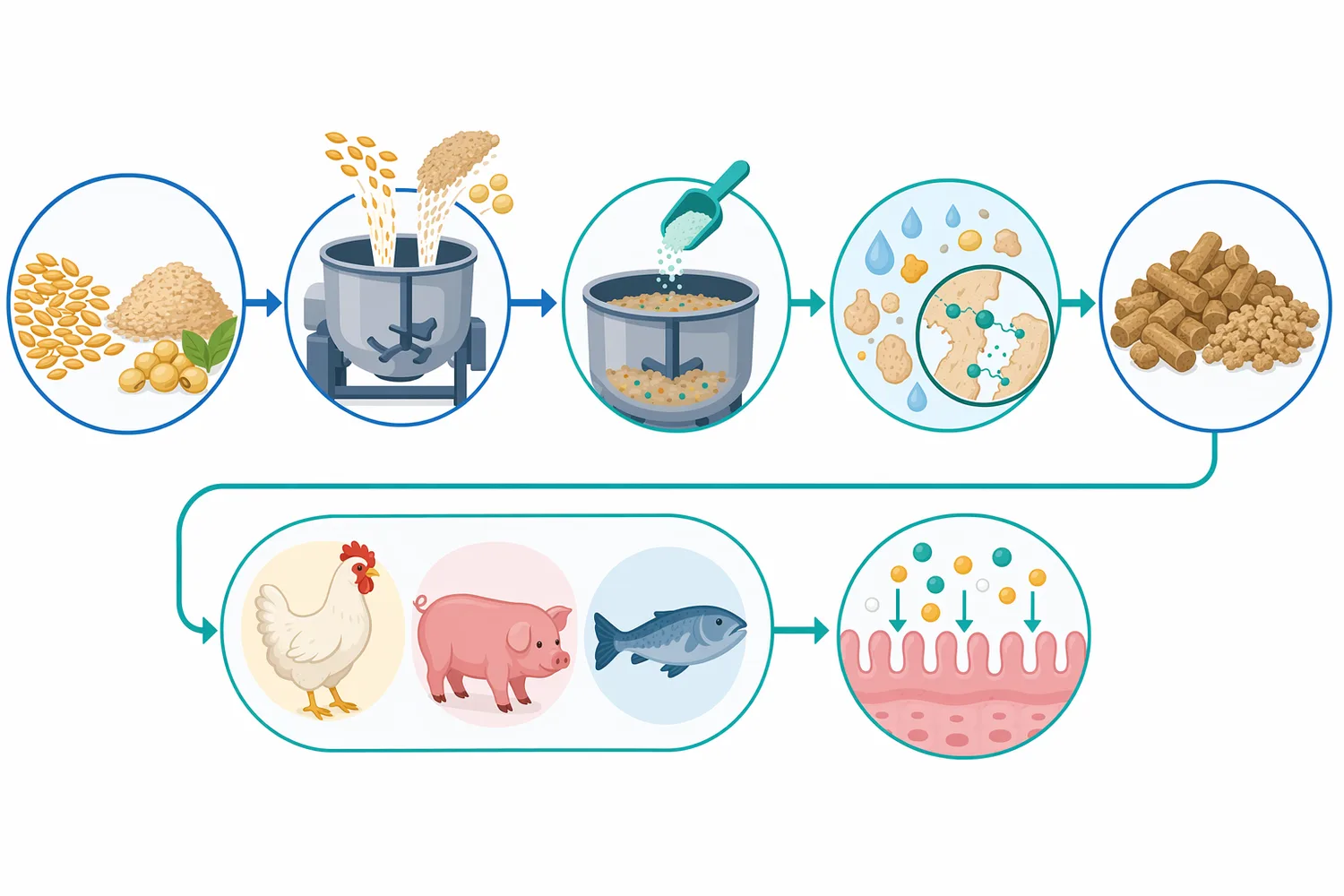
Feed processing also matters in aquaculture because pellets must maintain water stability while still allowing digestion after ingestion. A feed enzyme must remain compatible with the finished-feed system and then act under digestive conditions. The underlying mechanism remains the same: mannanase reduces the size and anti-nutritional impact of mannan polymers in the feed matrix [1].
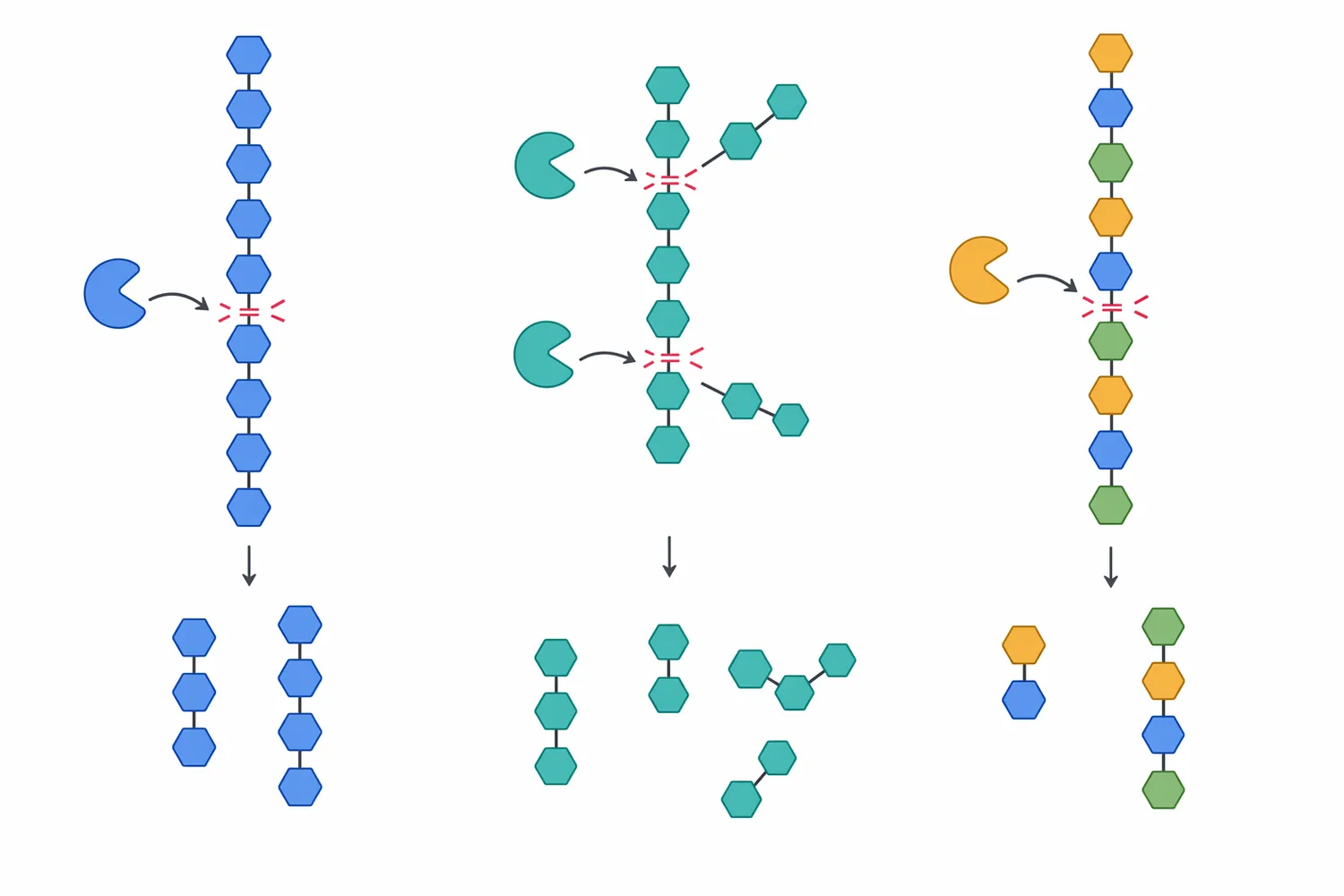
Mannanase is often discussed alongside other feed enzymes, but the functions are not interchangeable. Each enzyme class targets a different chemical structure in the feed. This distinction is important because a carbohydrase only works on the polysaccharide bonds it is capable of hydrolyzing; mannanase is valuable when mannan-type hemicellulose is part of the formulation [1].
| Enzyme class | Main feed substrate targeted | What changes in the feed matrix | Practical relevance |
|---|---|---|---|
| Mannanase | Beta-mannan, galactomannan and glucomannan | Cuts beta-1,4 mannan linkages into shorter mannose-containing fragments | Supports diets containing soybean meal, palm kernel meal, sesame meal and related mannan-bearing plant meals |
| Xylanase | Arabinoxylans and related xylan structures | Reduces xylan-chain effects on viscosity and cell-wall encapsulation | Common in grain-based diets where arabinoxylans are a key non-starch polysaccharide |
| Cellulase | Cellulose and related beta-glucan structures | Hydrolyzes cellulose-type structural fiber where accessible | More relevant where cellulose-rich fiber is a limiting factor |
| Phytase | Phytate-bound phosphorus | Releases phosphorus and reduces phytate’s mineral-binding effect | Used for phosphorus availability and mineral nutrition rather than viscosity control |
| Protease | Protein fractions | Hydrolyzes peptide bonds to support protein breakdown | Targets protein digestibility, not carbohydrate cell-wall viscosity |
The table shows why mannanase should be understood as a precise tool rather than a broad fiber-degrading additive. If the main challenge is phytate, phytase is the relevant enzyme. If the challenge is arabinoxylan viscosity, xylanase is more directly matched. If the challenge is mannan-related viscosity and nutrient encapsulation, beta-mannanase has the biochemical specificity required [1].
The central nutritional benefit of mannanase is improved access to nutrients already present in the feed. It does not add protein, energy or minerals; instead, it helps the animal use a larger share of what the formula already contains. By degrading mannan and reducing its anti-nutritional effects, the enzyme can support better feed digestibility and nutrient utilization in suitable diets .
Viscosity reduction is one of the most direct mechanisms. When long-chain mannan polymers are hydrolyzed, the digesta becomes less dominated by intact, water-structuring polysaccharides. Lower viscosity can improve the movement of digestive enzymes and soluble nutrients, allowing endogenous digestion to operate more effectively in the intestinal environment [1].
Nutrient release is the second major mechanism. Mannan-containing hemicellulose is part of the plant cell-wall network that can physically restrict access to nutrients. Mannanase weakens this network by cutting one of its structural carbohydrate components. As the matrix opens, protein, starch, fat and minerals embedded in the feed particle may become more available for digestion and absorption .
A third possible contribution is the formation of mannose-containing oligosaccharides. Enzymes.bio’s product information notes that mannanase hydrolysis produces mannose oligosaccharides and mannose, and it also associates these oligosaccharides with support for gut microflora balance . This should be interpreted as a supportive mechanism that can vary with animal species, diet composition, gut health and management conditions.
Performance outcomes from mannanase should be interpreted through the feed matrix. Where the diet contains enough beta-mannan or related substrates, the enzyme has a clear target and a plausible route to improved feed utilization. Where the substrate is limited, the opportunity for benefit is correspondingly smaller. This is why mannanase is best described as a targeted enzyme for plant-based diets rather than a universal additive [1].
The product information states that mannanase can increase feed digestibility, improve feed utilization and support animal growth performance . Those outcomes are consistent with the mechanism: reduced anti-nutritional pressure, lower viscosity and improved nutrient release can all contribute to better use of feed. However, actual results in animals also depend on genetics, age, health status, ingredient variability, feed processing and housing conditions.
This balanced view is important in commercial use. Enzyme response is rarely explained by one factor alone. Mannanase may contribute to performance when the formula contains soybean meal, palm kernel meal, sesame meal or other mannan-bearing inputs, but it works within the total nutrition and management system rather than replacing sound feed formulation [1].
Feed enzymes must remain functional through the conditions they encounter before and after ingestion. Mannanase is supplied for animal feed additive use as a powder-format product, and Enzymes.bio presents the product for feed applications where mannan degradation and viscosity reduction are desired . As with all enzyme products, the practical effect depends on the enzyme retaining enough functional structure to act on its substrate.
From a mechanism standpoint, enzymes are proteins with active sites that must fit their target bonds. If the active site is disrupted, the enzyme cannot efficiently hydrolyze the beta-1,4 linkages in mannan. Feed manufacturing conditions, moisture, storage environment and the final feed matrix can all influence how much active enzyme reaches the animal’s digestive tract [1].
The product information describes the enzyme as suitable for animal feed additive use and identifies feed-relevant benefits such as reduced chyme viscosity, degradation of feed mannan and improved nutrient digestion and utilization . In practice, this means the product is intended for incorporation into feed systems where the enzyme can contact mannan-containing material and act under digestive conditions.
Mannanase does not replace balanced nutrition. Animals still require adequate metabolizable energy, digestible amino acids, minerals, vitamins, fatty acids and water. The enzyme can help improve access to nutrients in mannan-containing feed materials, but it is not itself a complete nutritional solution [1].
Mannanase also does not break down all plant fibers. Its defined role is hydrolysis of beta-mannan, galactomannan and glucomannan structures through cleavage of beta-1,4 mannan linkages. Other non-starch polysaccharides, such as arabinoxylans, cellulose or pectic substances, require different enzyme activities if they are the main limiting structures in the feed .
It should not be treated as a medicine or disease-control product. Mannanase is a feed enzyme used to modify the digestibility characteristics of plant-derived ingredients. Any improvements in gut conditions or nutrient use arise from changes in the feed substrate and digestive environment, not from a drug-like action [1].
Finally, mannanase does not guarantee the same response in every formula. Ingredient quality, inclusion level, processing history and animal physiology all affect the amount of accessible mannan substrate and the practical value of hydrolyzing it. This is why the most reliable technical framing is substrate-specific: mannanase supports diets where mannan-related anti-nutritional effects are relevant .
Enzymes.bio supplies Mannanase Enzyme for Animal Feed Additives as a feed enzyme product sold directly online in 1 kg units. Buyers can place the order through the product page, pay online and have the order processed and shipped; a Certificate of Analysis and Safety Data Sheet are included with the order .
The product is presented for animal feed additive use, with the intended function of degrading feed mannan, reducing mannan-related anti-nutritional effects, lowering chyme viscosity and supporting feed digestibility. Enzymes.bio acts as the supplier of the product and provides the online purchasing route for the 1 kg unit .
For handling, the product page indicates that the powder should be kept sealed in a dry, cool place away from direct sunlight. This is consistent with the general need to protect enzyme proteins from avoidable moisture, heat and environmental exposure before use .
The value of mannanase is easiest to understand by following the substrate. Plant meals bring mannan-containing hemicellulose into the feed. In the gut, intact mannans can contribute to viscosity and nutrient encapsulation. Beta-mannanase hydrolyzes those structures into shorter fragments, reducing their physical impact and helping digestive processes reach nutrients more effectively [1].
This makes mannanase especially relevant where soybean meal, palm kernel meal, sesame meal or similar ingredients are part of the feed matrix. In those diets, the enzyme’s activity is connected to a recognizable chemical target rather than a vague performance claim. The product information from Enzymes.bio identifies these plant materials as important sources of mannan and describes the enzyme’s role in splitting mannan structures into smaller mannose-containing products .
For feed businesses using plant-derived ingredients, mannanase offers a targeted way to address one of the known limitations of non-starch polysaccharides. Its strongest technical case is not that it changes the animal directly, but that it changes the feed substrate during digestion: long-chain mannan becomes shorter fragments, viscous digesta becomes less constrained by intact polymers, and nutrients trapped in plant cell-wall structures become more accessible [1].
Enzymes.bio supplies this mannanase product for animal feed additive applications in a straightforward online purchasing format. The science behind its use is substrate-specific and practical: when mannan-rich plant ingredients create anti-nutritional pressure, beta-mannanase provides a defined enzymatic route to reduce that pressure and support more efficient nutrient utilization .
Sold by the 1 kg unit, in stock and ready to ship. Order directly on our store — pay online and we process your order. A Certificate of Analysis and Safety Data Sheet are included with every order.
Buy Mannanase Enzyme For Animal Feed Additives ≥10000U/G →Numbered in order of first citation. Open-access sources, each verified reachable at publication; citation numbers in the text link here.