
Direct answer: Meat Protein Hydrolysis Enzyme is a protease-based processing aid used to break meat, poultry, fish, and animal byproduct proteins into smaller peptides and amino-acid-rich fractions. In processing terms, it helps convert dense, insoluble, or underused animal protein streams into soluble hydrolysates for savory ingredients, nutritional protein bases, brines, pet food palatants, feed ingredients, and byproduct valorization applications. Enzymes.bio supplies Meat Protein Hydrolysis Enzyme for direct online purchase by the 1 kg unit, with orders paid online and processed for shipment .
Enzymatic hydrolysis is used because it changes the protein itself: peptide bonds are cleaved, large muscle and connective-tissue proteins are shortened, water-soluble peptide fractions increase, and downstream separation or drying can become more practical. The same chemistry also explains why process control matters—too little hydrolysis may leave proteins poorly soluble, while excessive or poorly matched hydrolysis can generate bitter peptides or a hydrolysate profile that does not fit the intended food, pet food, feed, or ingredient system [1].
Meat Protein Hydrolysis Enzyme is a proteolytic enzyme preparation for animal-protein substrates. “Proteolytic” means that the enzyme cuts peptide bonds, the chemical links that join amino acids into long protein chains. In meat systems, those chains are not floating freely: they are folded into muscle proteins, embedded in connective tissue, associated with fat, or present in mixed byproduct matrices such as trimmings, mechanically separated meat, viscera, bones with adhering tissue, or seafood processing residues [1].
The purpose of hydrolysis is to move the material from intact protein toward smaller peptides and free amino acids. That shift changes how the ingredient behaves: large proteins that were tightly packed or only partly soluble can become more dispersible in water, peptide-rich liquids can be separated from solids and fat, and the finished hydrolysate may contribute savory flavor, digestibility, water-binding behavior, or nutrient density depending on the substrate and process [2].
This is not the same as simply cooking meat. Heat denatures proteins by unfolding them and changing their physical structure; enzymes cleave specific bonds in the protein chain. In practice, industrial hydrolysis may combine grinding, heating, enzyme reaction, enzyme inactivation, separation, concentration, and drying, but the enzyme step is what converts intact proteins into a peptide-rich hydrolysate rather than only a cooked slurry [2].
Meat contains several major protein families, and each responds differently during hydrolysis. Myofibrillar proteins such as myosin and actin form the contractile structure of muscle; sarcoplasmic proteins are more water-soluble proteins inside the muscle cell; connective-tissue proteins such as collagen form tougher structural networks; blood-derived proteins and organ proteins may be present in byproduct streams. A protease does not “dissolve meat” in a vague sense—it attacks accessible peptide bonds and progressively shortens these proteins into peptides [1].
As the reaction proceeds, the first visible changes are usually physical. Grinding increases surface area, warm water allows proteins to hydrate, and agitation brings enzyme molecules into contact with exposed protein sites. Once the enzyme cleaves enough peptide bonds, the protein matrix loosens: tissue particles soften, soluble nitrogen increases, and liquid-phase peptides become easier to separate from bone particles, connective fragments, fat, or insoluble solids [2].
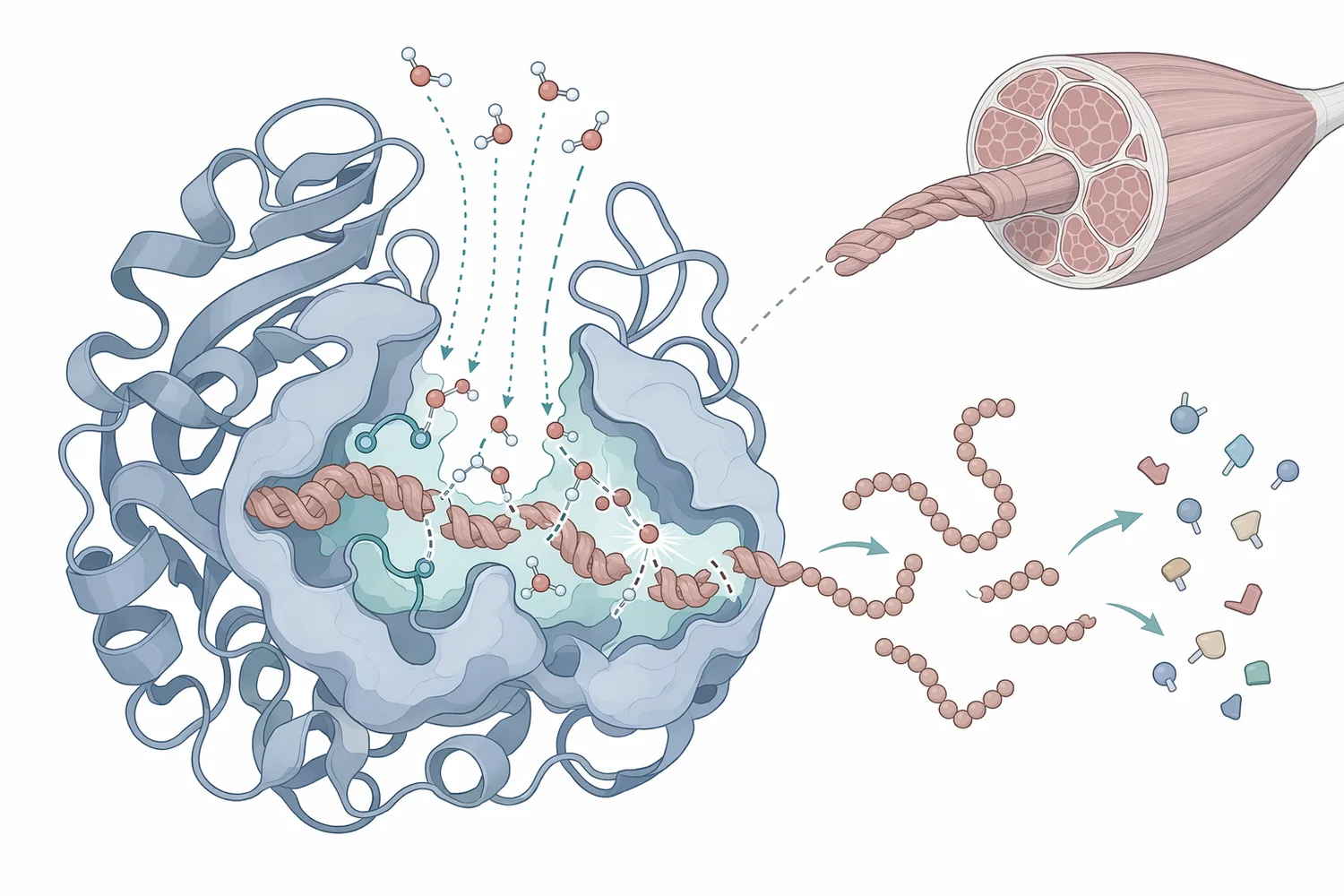
At the molecular level, shorter peptides have different surface chemistry from intact proteins. Cleavage exposes new amino and carboxyl ends and reveals hydrophilic or hydrophobic side chains that were buried inside the folded protein. This is why hydrolysis can change solubility, emulsification, foaming, gelation, water-holding, and flavor release: the substrate is not merely smaller, it presents a different chemical surface to water, oil, salts, heat, and taste receptors [3].
The same mechanism explains the main sensory risk. Many meat proteins contain hydrophobic amino-acid regions. If hydrolysis releases small hydrophobic peptides at perceptible concentrations, bitterness can increase. Controlled hydrolysis aims to reach useful solubility, flavor, or functional change without pushing the peptide profile into an overly bitter or unbalanced range [3].
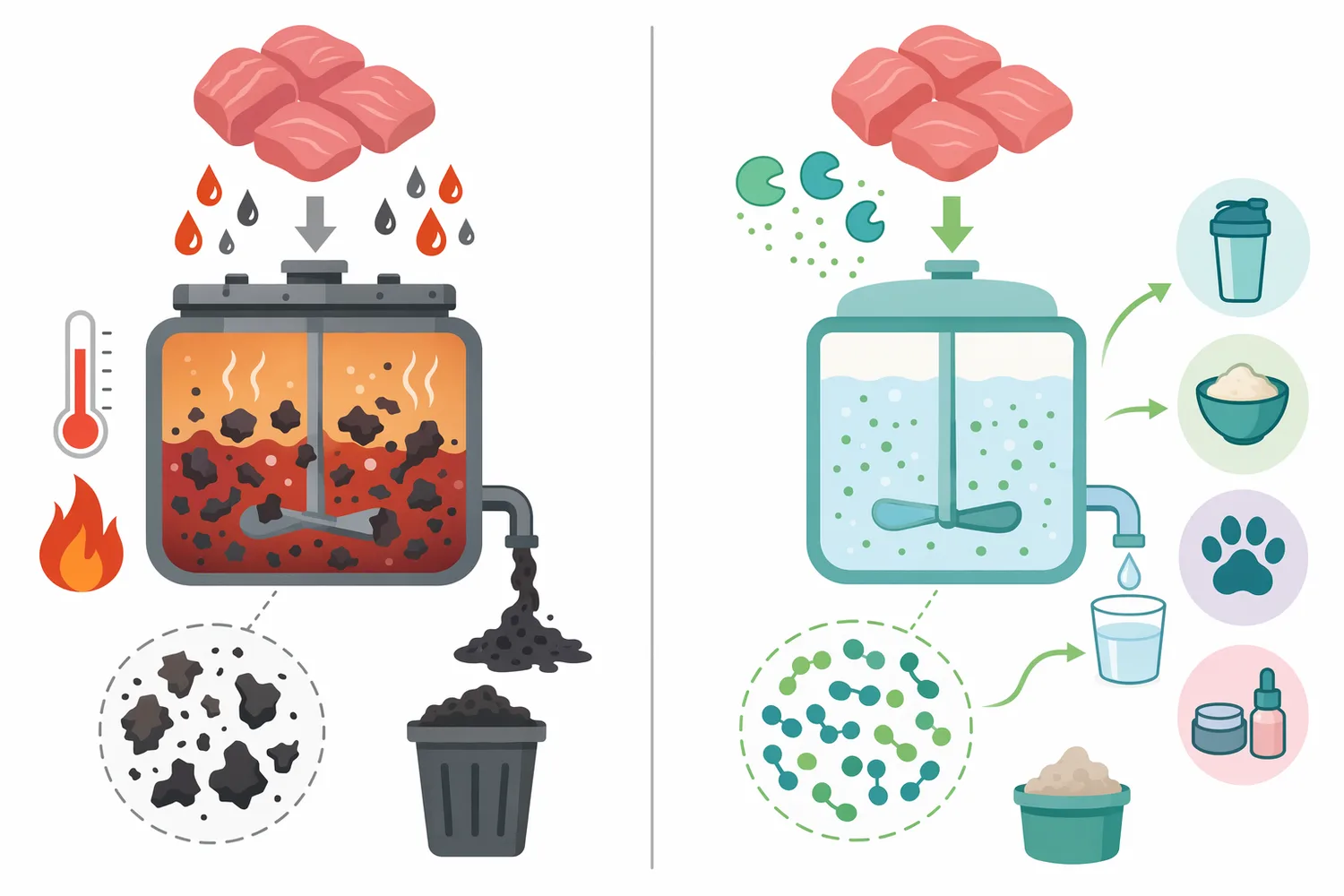
Animal byproducts can be processed by several routes, including rendering, thermal hydrolysis, and enzymatic hydrolysis. Rendering is effective for separating fat and producing meals, while thermal hydrolysis uses heat and often pressure to break down tougher structures. Enzymatic hydrolysis is different because the protein conversion is driven by protease action under milder aqueous conditions before downstream separation or drying [2].
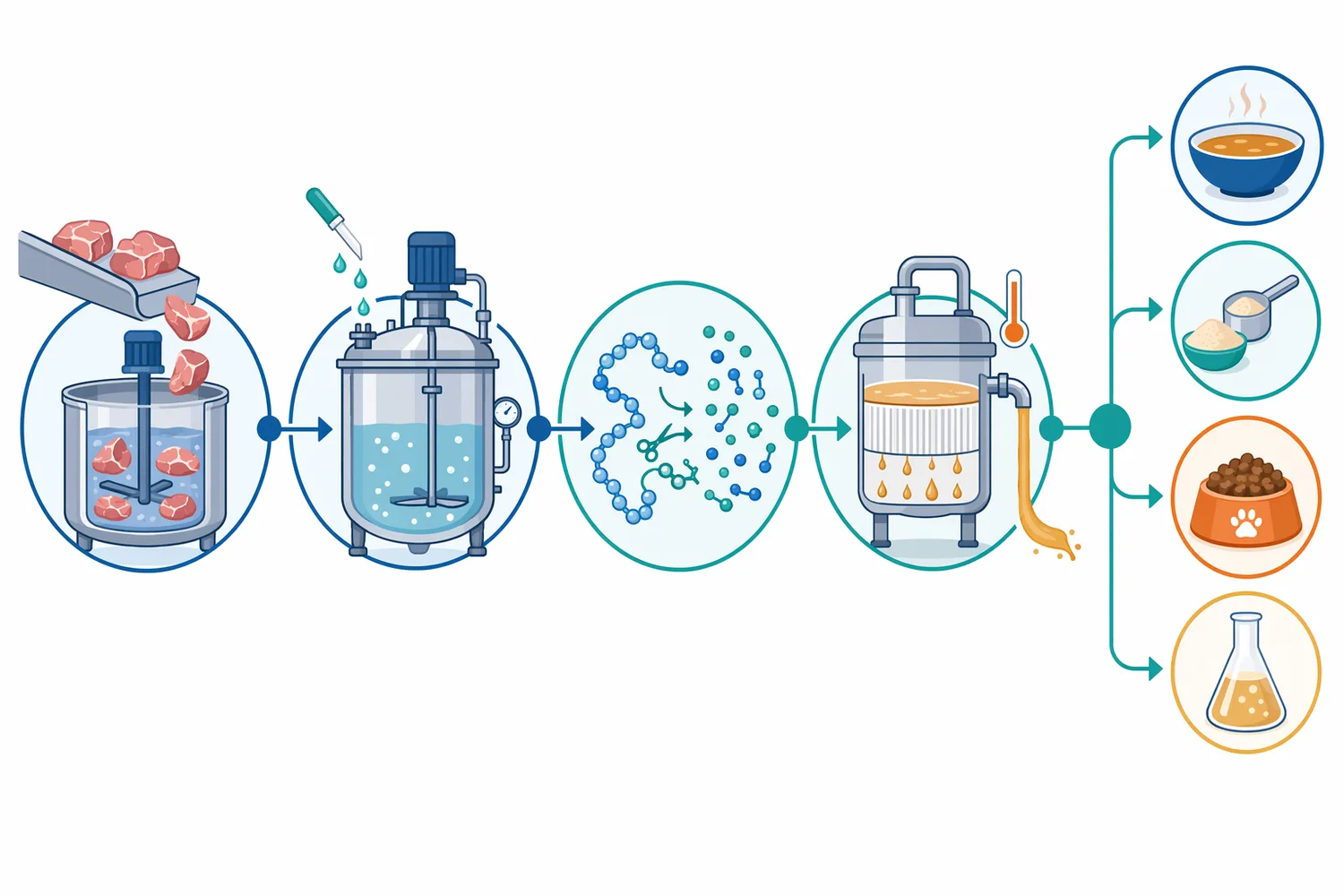
In meat and poultry byproduct processing, industrial hydrolysis systems commonly begin with particle-size reduction, heating to a moderate processing temperature, enzyme treatment, heat inactivation, and separation of oil, solids, and protein-rich liquid. Alfa Laval describes enzymatic meat and poultry byproduct hydrolysis as a route for producing hydrolyzed proteins used in soups, savory products, dietary drinks, protein bars, injection brines, and starter diets, illustrating that the process is established beyond laboratory research [2].
Thermal and enzymatic routes are not interchangeable. Heat can be useful where bone, collagen-rich connective tissue, or hard mixed material must be broken down aggressively. Enzymes are often preferred when the goal is a peptide-rich liquid with controlled flavor, digestibility, or functional properties, because proteases can act more selectively on protein bonds rather than relying only on severe heat [1].
| Hydrolysis route | What mainly drives protein breakdown | Typical practical effect | Where it fits conceptually |
|---|---|---|---|
| Enzymatic hydrolysis | Protease cleavage of peptide bonds | Produces peptide-rich hydrolysates under comparatively mild aqueous processing | Savory bases, brines, soluble protein ingredients, pet food palatants, feed protein streams, byproduct valorization |
| Thermal hydrolysis | Heat, often with pressure and time | Denatures and breaks down proteins and connective structures more broadly | Tougher collagenous or bone-containing materials where strong structural breakdown is needed |
| Conventional rendering | Heat-driven separation of fat, water, and solids | Produces fat and rendered meals rather than a controlled peptide hydrolysate | Bulk stabilization and separation of animal byproducts |
The term “Meat Protein Hydrolysis Enzyme” describes the application, not one single enzyme molecule. Proteases are commonly grouped by the pH environment where they perform best, and that influences the type of substrate environment in which hydrolysis is practical. Meat, fish, poultry, viscera, and shellfish hydrolysis studies show that enzyme choice and process conditions strongly affect hydrolysis outcome, peptide profile, and bioactivity measurements [4].
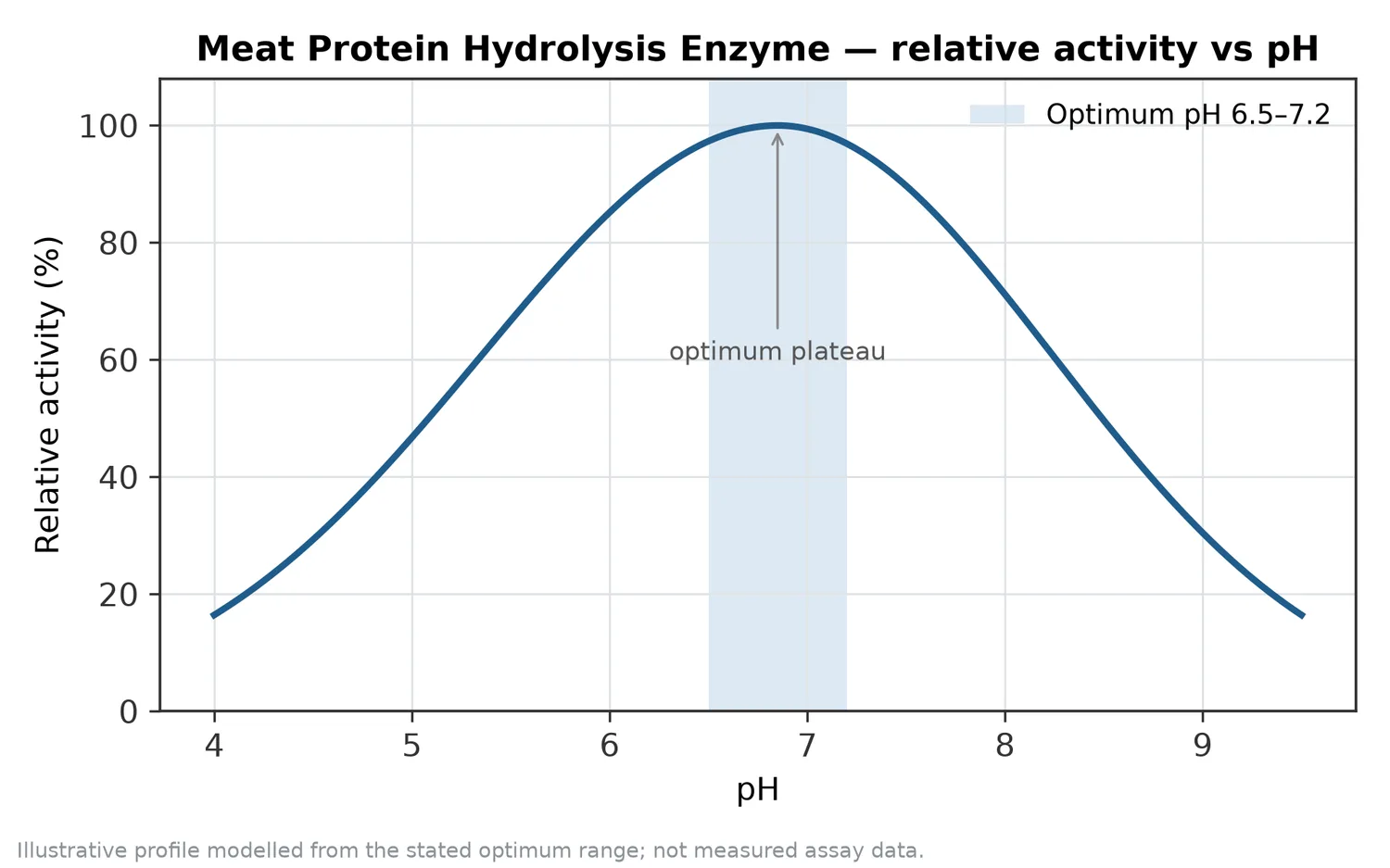
The distinction is useful because pH changes protein structure before the enzyme even cuts it. Acidic conditions can unfold some proteins and favor enzymes such as pepsin-like proteases; neutral systems can be gentler for mixed food matrices; alkaline systems can swell and expose certain muscle and connective proteins, making them more accessible to alkaline proteases. The enzyme and pH environment together determine which peptide bonds are most exposed and which peptides are released [1].
| Protease environment | Conceptual behavior on meat proteins | Common hydrolysate implications | Main caution |
|---|---|---|---|
| Acid protease conditions | Proteins may unfold under low pH, exposing bonds that acid proteases can cleave | Can be useful where acidic processing is compatible with the substrate and downstream product | Low pH can change flavor, mineral solubility, and protein behavior |
| Neutral protease conditions | More moderate environment for mixed protein systems | Often associated with balanced hydrolysis where extreme pH is undesirable | May be slower or less aggressive depending on substrate structure |
| Alkaline protease conditions | Alkalinity can swell proteins and expose peptide bonds, supporting extensive hydrolysis | Can produce soluble peptide-rich fractions efficiently in some animal-protein streams | Excessive hydrolysis can increase bitterness or alter functionality |
This table is conceptual rather than a product specification. In actual meat hydrolysis, pH interacts with temperature, time, fat level, particle size, salt, endogenous enzymes, and the toughness of the raw material. Studies on shellfish, fish, poultry, bovine bone extract, and meat byproducts repeatedly show that optimized hydrolysis conditions depend on the substrate and the desired outcome, whether that is peptide yield, antioxidant activity, ACE-inhibitory activity, spray-dried powder quality, or functional performance [5].
A 2025 review on enzymatic hydrolysis of proteins from meat-industry co-products and byproducts describes the field as a route for converting underused animal materials into protein hydrolysates with food, feed, and functional ingredient potential. This matters commercially because meat processing produces heterogeneous protein-rich streams, and enzymatic hydrolysis offers a way to recover value without treating all material as low-grade waste [1].
Meat trimming waste research has specifically examined how extraction pH affects physicochemical and functional properties of protein hydrolysates. That focus is important because trimmings are a realistic industrial substrate: they contain mixed muscle, connective tissue, fat, and soluble proteins, and their behavior during hydrolysis depends heavily on how proteins are extracted and exposed before or during enzymatic treatment [6].
Mechanically separated meat from Nile tilapia has also been used to obtain protein concentrate and characterize enzymatic hydrolysis behavior. Although tilapia is a fish substrate rather than red meat, it is a close practical analogue for processors handling animal-protein residues: the raw material is mechanically disrupted, heterogeneous, and rich in muscle proteins that can be converted into hydrolysate fractions [7].
Chicken processing streams are another strong example. Chicken viscera proteins have been hydrolyzed to obtain hydrolysates with antioxidant properties, while chicken processing byproducts have also been studied for protein hydrogel formation in food applications. Together, these studies show that poultry byproducts can be treated as functional protein resources rather than only waste or rendering feedstock [8].
Bovine bone extract has been investigated as a protein source for enzymatic hydrolysis and antioxidant peptide identification in the context of cultured meat applications. That example is useful because it shows hydrolysis being applied not just to muscle tissue but also to protein-containing animal extracts associated with bone and connective material, where peptide generation may support high-value ingredient concepts [9].
Fish and seafood research adds further evidence because these substrates are often processed as mixed muscle, frame, viscera, skin, or shellfish meat residues. Studies on shark meat hydrolysates, cod processing waste, mussel meat, Asiatic hard clam, blood cockle, angel wing clam, and flower crab all demonstrate that enzymatic hydrolysis is widely investigated across animal protein matrices for peptide production, hydrolysate functionality, or bioactivity-related measurements [10].
The most important finished-product change is solubility. Intact meat proteins may be poorly soluble, especially after heat exposure or in mixed byproduct streams containing connective tissue and fat. Protease cleavage reduces molecular size, exposes ionizable groups, and releases peptides that remain dispersed in water more readily than the original protein network [1].
The second major change is processability. A hydrolyzed slurry can often be separated into fat, insoluble solids, and a protein-rich liquid phase more effectively than untreated ground material. Industrial hydrolysis flows commonly integrate separation, evaporation, and drying after the enzyme step, which is why enzymatic hydrolysis is used to produce liquid broths, concentrates, or spray-dried hydrolysate powders [2].
A third change is flavor potential. Hydrolysis releases peptides and amino acids that can contribute savory, brothy, roasted, meaty, or umami-supporting notes, particularly when used in combination with heat processing or Maillard reaction systems. A review of bioactivities generated from meat proteins by enzymatic hydrolysis and the Maillard reaction highlights how peptide generation and subsequent reactions can create biologically and sensorially active compounds from meat proteins [3].
Functional behavior may also change. Depending on hydrolysis extent, peptides can improve water interaction, participate at oil-water interfaces, or alter viscosity and gelation. However, functionality does not move in only one direction: limited hydrolysis can expose useful surface activity, while excessive hydrolysis may break proteins too far for gel formation or weaken water-binding structures [11].
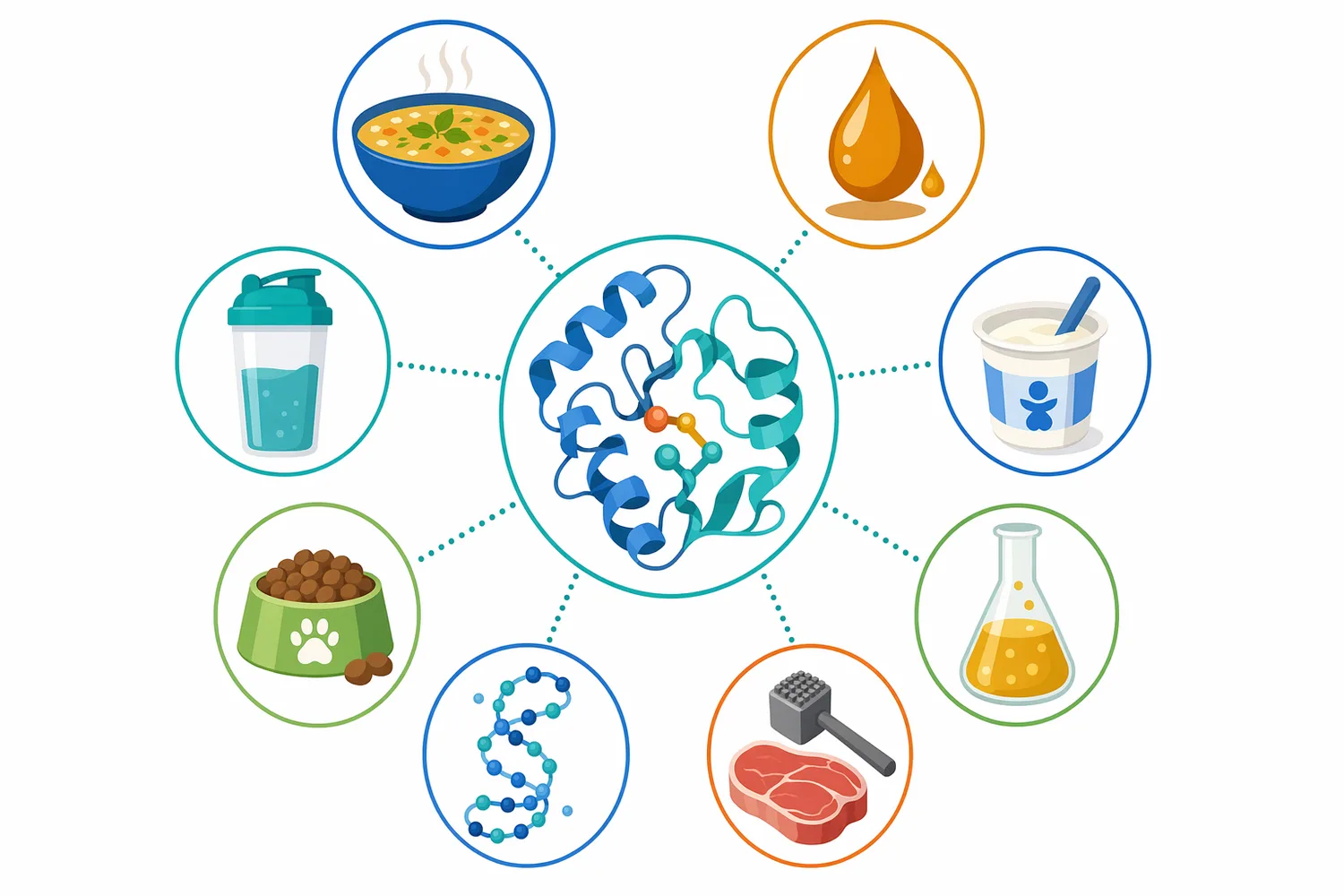
Hydrolyzed meat protein ingredients are used where soluble animal protein, savory taste, and processing convenience are needed. The hydrolysate may be kept as a liquid concentrate or dried into powder, depending on the intended formulation. Industrial meat and poultry hydrolysis is associated with applications such as soups, savory products, dietary drinks, protein bars, noodle sachets, and other ingredient systems where peptide-rich protein can be easier to incorporate than intact meat solids [2].
In a broth or seasoning base, the value comes from both solubility and taste chemistry. Hydrolysis releases smaller peptides and amino acids that disperse through the liquid phase and can interact with salt, sugars, nucleotides, yeast extracts, spices, and heat-generated flavor compounds. This is why hydrolyzed animal proteins are often used as building blocks in savory systems rather than as simple protein fortifiers [3].
Hydrolyzed protein is also relevant to injection brines because soluble peptides can enter a meat system more easily than coarse protein particles. In a brine, the hydrolysate may contribute soluble solids, nitrogen, flavor, and water-interaction effects, while the finished outcome still depends on the meat matrix, salt level, pH, heat treatment, and other formulation components [2].
The mechanism is straightforward: smaller peptides can disperse through the aqueous brine and interact with water and muscle surfaces. Some peptides expose polar groups that bind water; others affect ionic strength or surface activity. However, too much breakdown can reduce structure-building ability, so brine applications usually depend on controlled hydrolysis rather than maximum hydrolysis [11].
Pet food palatants often rely on hydrolyzed animal proteins because peptides, amino acids, fats, and Maillard-derived compounds can deliver strong aroma and taste cues. Enzymatic hydrolysis helps release soluble nitrogen compounds from meat, poultry, fish, or viscera streams, making them suitable for coating, gravies, digestible protein ingredients, or flavor systems after appropriate downstream processing [1].
Digestibility is also relevant. Smaller peptides generally require less breakdown than intact structural proteins before absorption, which is one reason hydrolyzed proteins are widely studied for nutritional and feed applications. Still, digestibility, palatability, and finished-product tolerance must be understood as properties of the final formulation, not automatic claims from enzyme use alone [8].
Hydrolyzed animal protein streams can be used in feed applications where soluble peptides, amino acids, and high protein density are useful. Industrial hydrolysis guidance lists weaning and starter livestock diets among applications for hydrolyzed proteins, reflecting the practical interest in protein fractions that are easier for young animals to utilize than coarse or highly processed meals [2].
The enzyme’s contribution is to change the raw material before drying or blending. Instead of relying only on heat-treated meal, the process can generate a peptide-rich liquid that can be concentrated and dried into a more uniform ingredient. The final feed value depends on amino acid profile, digestibility, palatability, fat content, mineral level, and processing hygiene [1].
Although the product is described as a meat protein hydrolysis enzyme, the same protease chemistry applies to fish and seafood muscle proteins. Studies on mussel meat, clam meat, blood cockle, angel wing clam, flower crab, shark meat, cod processing waste, and tilapia mechanically separated meat show broad research interest in converting aquatic animal proteins into peptide-rich hydrolysates [12].
Seafood substrates are often especially suitable because frames, trimmings, viscera, and low-value muscle residues contain recoverable protein but may be difficult to sell in intact form. Enzymatic hydrolysis can transform those residues into liquids or powders with improved solubility and measurable functional or bioactivity-related properties, depending on the enzyme and process [13].
Collagen-rich materials behave differently from lean muscle. Collagen’s triple-helix structure and crosslinks make it less accessible than many muscle proteins, so heat, hydration, particle-size reduction, and enzyme exposure all influence how much collagen-derived peptide enters solution. Enzymatic processing may support recovery of collagen-containing hydrolysates, but tougher bone or connective matrices may still require more intensive thermal pretreatment or combined processing [2].
For meat trimmings and byproducts, this distinction matters because the same batch may contain lean tissue, skin, tendon, fascia, fat, and bone fragments. A hydrolysis process that works well for soluble muscle proteins may not fully convert collagenous tissue unless the structure is opened sufficiently for enzyme access [1].
Enzymatic meat hydrolysis usually begins with size reduction. Smaller particles expose more protein surface and reduce the distance enzyme molecules must diffuse before reaching peptide bonds. This is why grinding or mincing is commonly integrated before the enzyme reaction in industrial meat and poultry hydrolysis workflows [2].
Water is not just a carrier; it is part of the reaction environment. Hydrolysis consumes water when peptide bonds are cleaved, and the slurry must allow enzyme, substrate, and released peptides to move. Too little water can limit contact and mixing, while too much water may dilute the process stream and increase later evaporation demand [1].
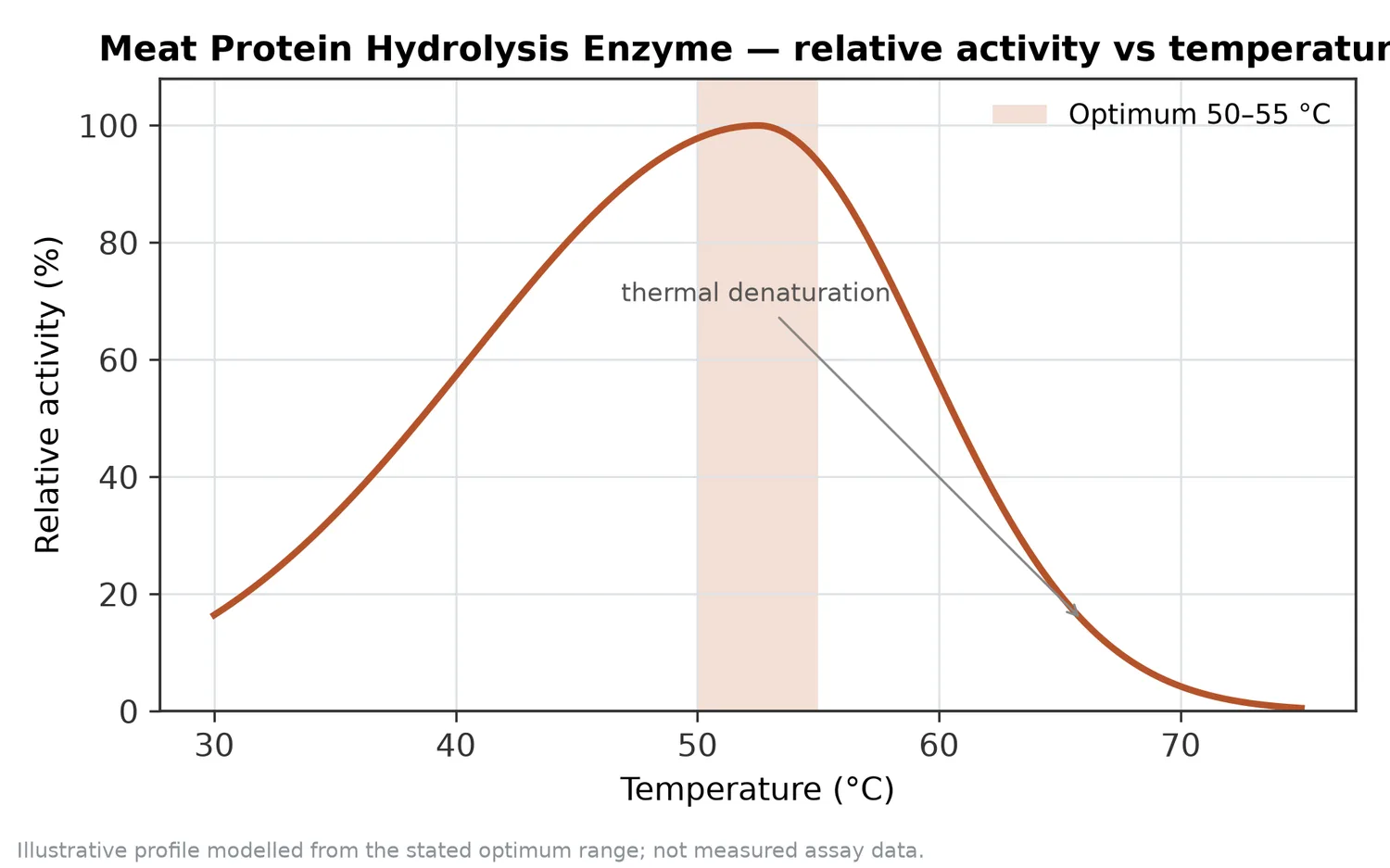
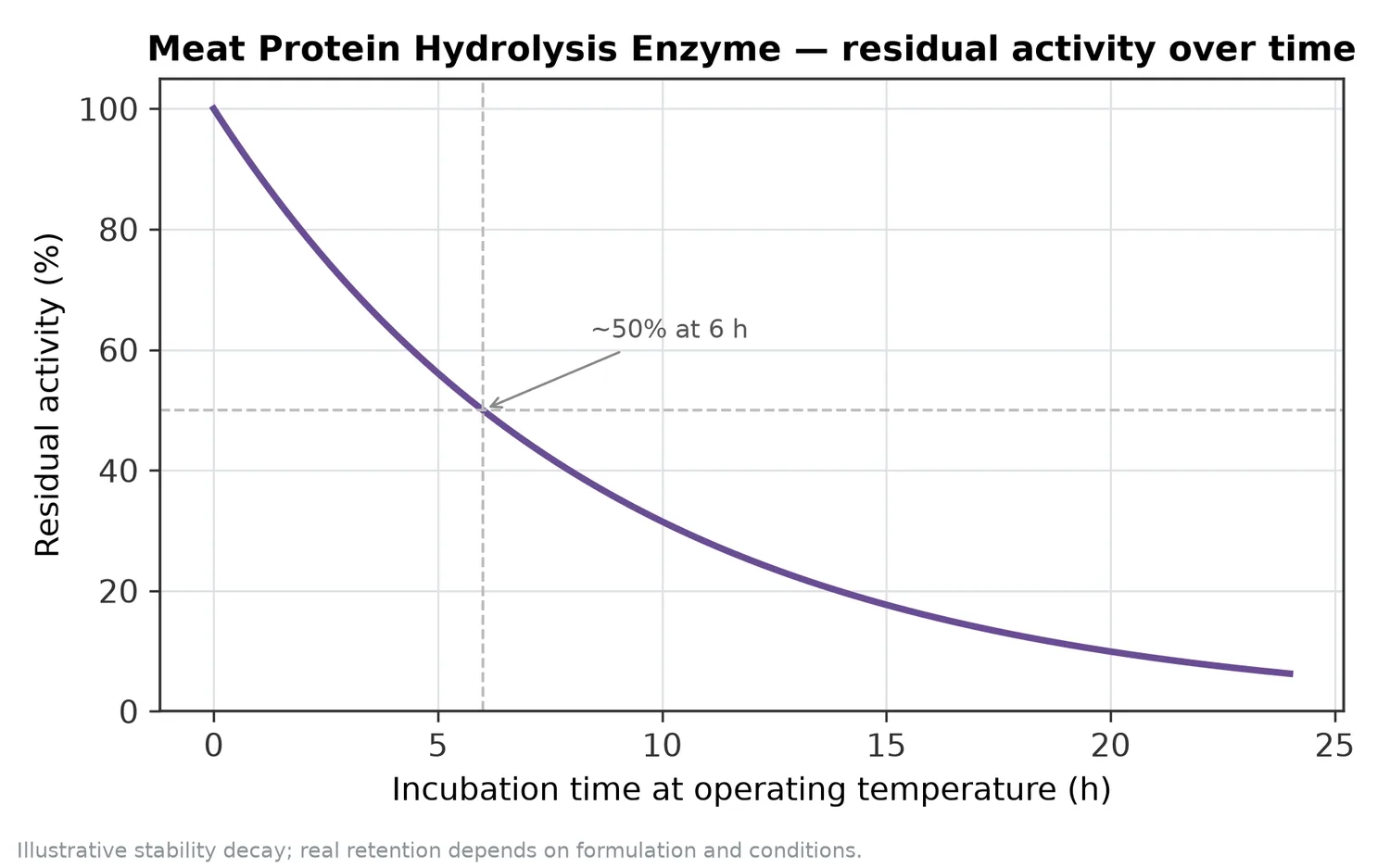
Temperature affects both reaction speed and enzyme stability. Moderate heating usually increases molecular motion and helps unfold some proteins, improving enzyme access. Excessive heat, however, can inactivate the enzyme before sufficient hydrolysis has occurred, which is why industrial enzymatic hydrolysis is commonly described as a controlled-temperature process followed by a deliberate heat step to stop the reaction [2].
pH affects the charge and shape of proteins as well as the active site of the enzyme. Near a protein’s isoelectric region, solubility can fall and aggregation may increase; away from that region, electrostatic repulsion can improve dispersion. Proteases also have pH-dependent catalytic behavior, so pH shapes both substrate accessibility and enzyme performance [4].
Reaction time determines how far hydrolysis proceeds. Early hydrolysis may release large peptides and improve dispersion; longer hydrolysis may increase small peptides and free amino acids. Past a certain point, additional hydrolysis may reduce desirable functionality or intensify bitterness, so “more hydrolysis” is not automatically better [3].
Fat level and separation also matter. Fat can interfere physically by coating protein particles or changing heat transfer and mixing, but it can also be a valuable co-product. Enzymatic hydrolysis systems are often integrated with decanting or separation steps so protein-rich liquid, lipids, and insoluble solids can be recovered in more useful streams [2].
Hydrolysis can support savory flavor development because meat proteins contain amino acids and peptide sequences that contribute to broth-like and umami-supporting taste. When those peptides and amino acids are heated with reducing sugars or other reactive compounds, Maillard chemistry can further develop roasted, cooked, and meaty notes [3].
The challenge is balance. A hydrolysate intended for a soup base may benefit from stronger peptide intensity than one intended for a neutral protein ingredient. A pet food palatant may prioritize aroma impact, while a nutritional drink base may need lower bitterness and cleaner flavor. These differences are caused by peptide size distribution, amino acid composition, fat oxidation products, heat history, and downstream concentration [1].
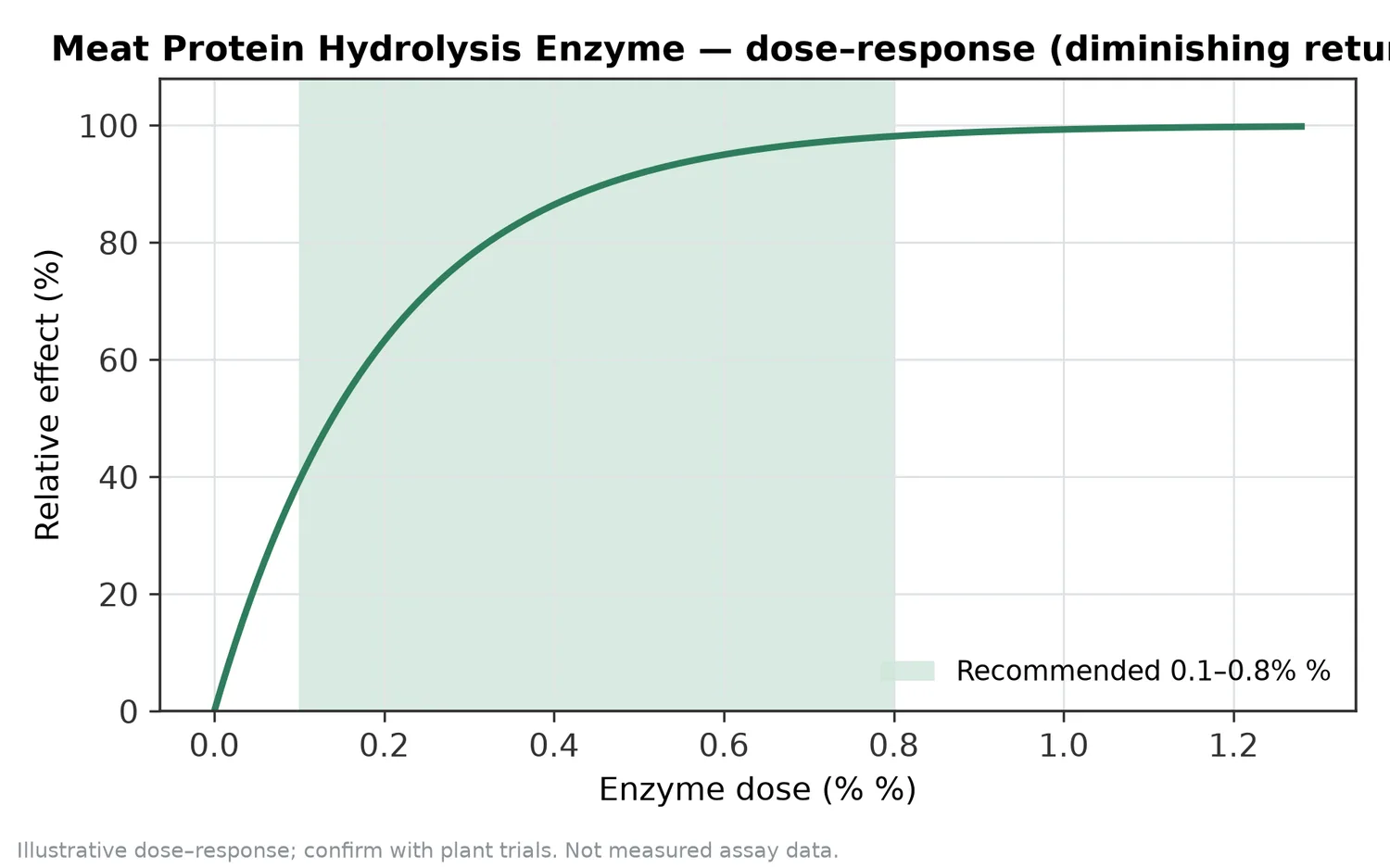
Bitterness is the best-known limitation. Hydrophobic peptides released during hydrolysis can bind bitter taste receptors, and their impact depends on peptide sequence, molecular size, concentration, and the surrounding food matrix. This is why controlled hydrolysis and appropriate downstream formulation are important when the hydrolysate will be used in human food or premium pet food [3].
Oxidation should also be considered in animal-protein streams. Meat and fish lipids can oxidize during storage, grinding, heating, and drying, producing rancid or metallic notes that may mask or distort the intended savory profile. Hydrolysis improves protein utilization, but it does not remove the need for hygienic handling, fresh raw material, controlled heating, and suitable preservation of the finished hydrolysate [1].
Many studies investigate animal-protein hydrolysates for bioactive properties such as antioxidant activity or angiotensin-converting enzyme inhibitory activity. Examples include hydrolysates from clam, mussel, blood cockle, angel wing clam, flower crab, chicken viscera, bovine bone extract, and other animal substrates [14].
This research is scientifically useful because it shows that enzyme-generated peptides can have measurable biological activity in controlled test systems. It also explains why peptide sequence matters: two hydrolysates with the same protein content can behave differently if the enzyme releases different peptides [9].
However, bioactive peptide results should not be treated as automatic claims for every hydrolyzed meat protein. Activity depends on raw material, enzyme, hydrolysis conditions, peptide concentration, digestion stability, final formulation, and regulatory context. A Meat Protein Hydrolysis Enzyme can support peptide generation, but any health, therapeutic, or disease-related claim belongs to the tested finished product, not to enzyme use alone [3].
Meat and poultry processing generate valuable protein-containing co-products that are not always used to their full potential. Enzymatic hydrolysis provides a way to recover soluble protein fractions from trimmings, mechanically separated meat, viscera, frames, and other streams, helping convert them into ingredients rather than treating them only as waste [1].
The sustainability value is practical rather than abstract. If a processor can recover protein hydrolysate, fat, collagen-containing fractions, or mineral-rich solids from the same input stream, more of the animal is used and less material is downgraded. Industrial hydrolysis systems are built around that logic: convert, separate, concentrate, and stabilize the useful fractions [2].
This is particularly relevant for mixed byproducts, where intact saleable cuts are not the target. Hydrolysis can make heterogeneous material more uniform by converting variable protein structures into soluble peptides. The resulting hydrolysate can then be used in applications where ingredient consistency, solubility, and flavor contribution are more important than the original physical form of the meat [6].
Meat Protein Hydrolysis Enzyme fits applications where the goal is controlled protein breakdown: hydrolyzed meat protein, poultry hydrolysate, fish protein hydrolysate, savory broth bases, brine ingredients, pet food palatants, feed protein ingredients, and animal byproduct valorization streams. The strongest evidence supports protease use for converting animal proteins into peptide-rich hydrolysates and for improving the usability of meat, poultry, seafood, and byproduct proteins [1].
The enzyme should be understood as a processing tool, not a finished flavor, nutrition, or bioactivity guarantee. Substrate quality, pretreatment, pH, temperature, reaction time, heat inactivation, separation, drying, and final formulation all influence the hydrolysate. The same enzyme-driven mechanism that improves solubility and peptide release can also create bitterness or functionality loss if hydrolysis is pushed too far [3].
For buyers who need a practical supply format, Enzymes.bio offers Meat Protein Hydrolysis Enzyme for direct online purchase by the 1 kg unit. The order is placed and paid for online, then processed and shipped; a Certificate of Analysis and Safety Data Sheet are supplied with the order .
Sold by the 1 kg unit, in stock and ready to ship. Order directly on our store — pay online and we process your order. A Certificate of Analysis and Safety Data Sheet are included with every order.
Buy Meat Protein Hydrolysis Enzyme →Numbered in order of first citation. Open-access sources, each verified reachable at publication; citation numbers in the text link here.