
Medium Temperature α-Amylase is used to hydrolyze starch by cutting internal α-1,4 glycosidic bonds in amylose and amylopectin, converting thick starch pastes into shorter dextrins, maltose-rich fragments, and soluble carbohydrates. In food and beverage processing, that action mainly helps reduce viscosity, improve handling of starch slurries, support fermentable sugar formation, and prepare starch streams for further conversion.
Enzymes.bio supplies this food-grade α-amylase directly online in 1 kg units. The buyer pays online, the order is processed and shipped, and a Certificate of Analysis and Safety Data Sheet are provided with the order.
Medium Temperature α-Amylase Starch Hydrolysis Food Grade is a processing enzyme for controlled breakdown of starch-containing materials under warm, moderate processing conditions. It is relevant where starch is present as a major functional component: corn, wheat, rice, cassava, potato, oats, peas, and other cereal, pulse, or tuber-derived systems. The practical aim is not simply to “add an enzyme,” but to change the physical and molecular behavior of starch so it becomes easier to pump, mix, cook, ferment, filter, dry, or formulate.
α-Amylase is one of the central starch-degrading enzymes because it acts inside starch chains rather than only trimming units from chain ends. Scientific work on GH-13 α-amylase describes its use for saccharification of starch-rich biomass, reflecting the enzyme family’s core role in converting large starch polymers into smaller carbohydrate fragments [1]. In industrial terms, this makes α-amylase especially useful at the liquefaction or dextrinization stage, where long starch molecules must be shortened quickly enough to reduce paste thickness and improve downstream process control.
The “medium temperature” positioning is important for buyers who want food-grade starch hydrolysis without moving into harsher high-temperature liquefaction conditions. Different α-amylases have different temperature behavior, and thermostability engineering studies show that heat stability can be modified substantially by changes in the enzyme structure [2]. A medium-temperature product is therefore best understood as an enzyme intended for warm food-processing environments where starch is accessible and where excessive thermal severity is not the goal.
If your process uses starch-rich ingredients and you need lower viscosity, more soluble dextrins, or better preparation for fermentation or saccharification, Medium Temperature α-Amylase is the relevant enzyme class. It works by hydrolyzing internal α-1,4 bonds in starch, so the most immediate visible change is that a thick gelatinized starch paste becomes less viscous as the polymer chains are cut into shorter fragments.
Enzymes.bio sells this product online by the 1 kg unit. After online payment, the order is processed and shipped, with a Certificate of Analysis and Safety Data Sheet included with the order.
Starch is built mainly from two glucose polymers: amylose and amylopectin. Amylose is mostly linear, while amylopectin is highly branched. Both contain α-1,4 glycosidic linkages along their chains; amylopectin also contains α-1,6 branch points. α-Amylase attacks the internal α-1,4 linkages, so one long chain is converted into many shorter chains rather than being removed one glucose at a time.
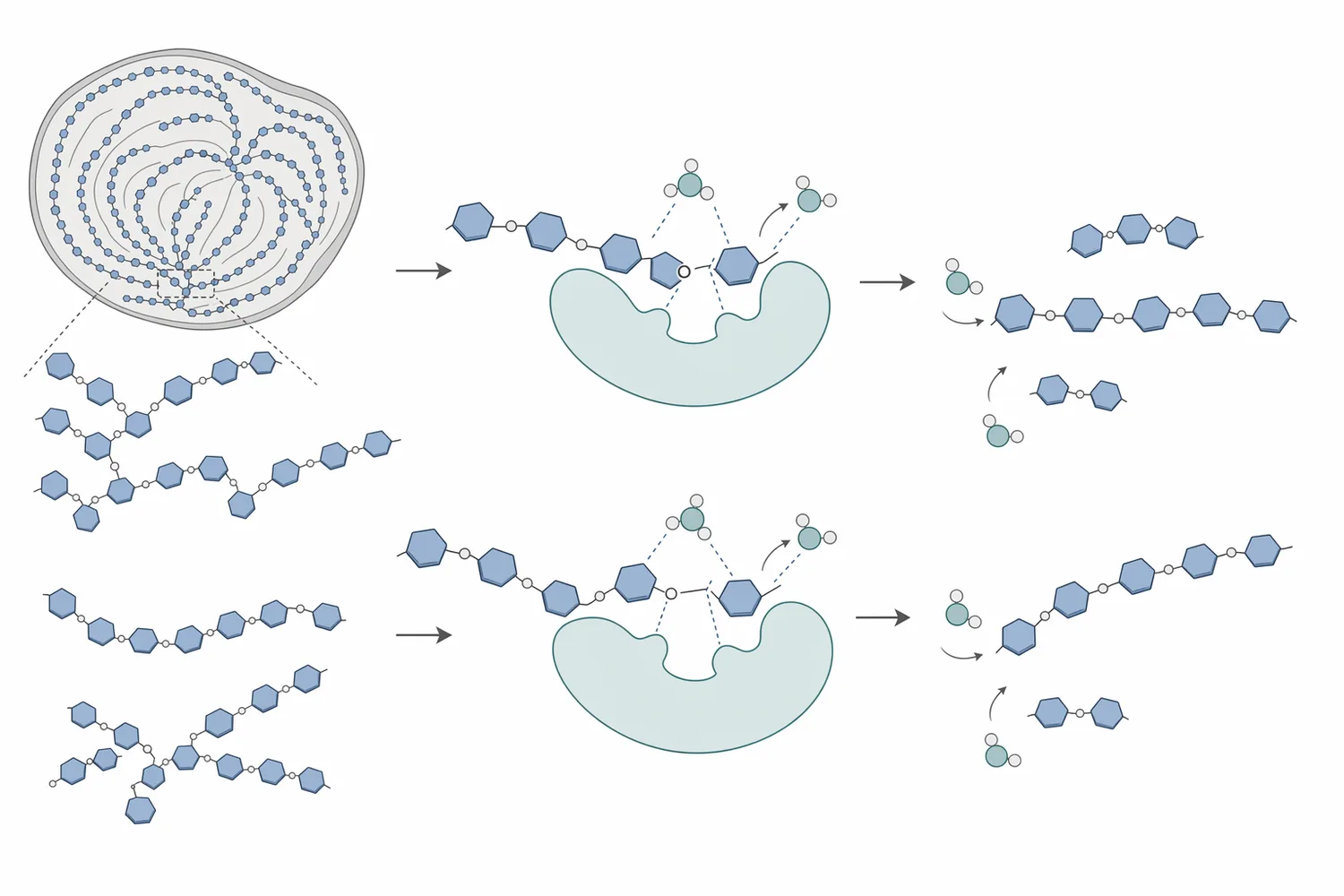
That internal cutting pattern explains the enzyme’s process value. A long hydrated starch chain contributes strongly to viscosity because it entangles with other chains and binds water throughout the paste. When α-amylase cuts that chain into shorter pieces, the network loses length and continuity. The slurry or paste flows more easily because the fragments no longer create the same degree of molecular entanglement. Studies of starch hydrolysis during germination and technological processing describe α-amylase as a key enzyme in the mechanism of starch degradation, including in pea starch systems where the enzyme participates in breakdown of storage starch into smaller carbohydrates [3].
The enzyme must first contact accessible starch. Native starch granules are semi-crystalline particles, and their internal structure can limit enzyme access. Adsorption studies on α-amylase and starch crystallites show that enzyme interaction with starch surfaces is an important part of the hydrolysis process, because the catalyst has to bind or approach the substrate before bond cleavage can occur [4]. In food processing, heating starch with water usually helps by swelling granules, disrupting crystalline order, and exposing chains that the enzyme can attack more readily.
Once the enzyme is working, the molecular-weight distribution shifts downward. Instead of very large amylose and amylopectin molecules dominating the system, the material contains dextrins and smaller maltooligosaccharides. These fragments may still contribute body, but they behave differently from native or fully gelatinized starch: they are more soluble, less paste-forming, and more suitable as intermediates for further enzymatic conversion.
The same starch source can behave very differently depending on its physical state. Dry flour, partially swollen granules, a fully gelatinized paste, and an already dextrinized stream all present different access patterns to α-amylase. Research on rapid starch gelatinization during rice bio-extrusion highlights how gelatinization and α-amylase activation can occur together under thermomechanical processing, changing both starch structure and process behavior [5].
| Starch state in the process | What the enzyme can access | Main practical change after α-amylase action | Why it matters |
|---|---|---|---|
| Native or partly hydrated granules | Mostly surface-accessible starch and damaged regions | Slower or more limited hydrolysis | Useful where gentle modification is enough, but intact granules restrict access |
| Swollen or gelatinizing starch | More exposed amylose and amylopectin chains | Rapid viscosity reduction and dextrin formation | Common target state for liquefaction-style processing |
| Cooked starch paste | Highly accessible polymer chains | Strong reduction in paste thickness and molecular size | Improves pumping, mixing, heat transfer, and downstream conversion |
| Pre-hydrolyzed dextrin stream | Shorter soluble fragments | Further narrowing of carbohydrate profile if conditions allow | Useful when controlling body, sweetness development, or fermentability |
This is why α-amylase performance cannot be separated from cooking, hydration, shear, solids content, and the structure of the raw material. A rice starch system, a cassava slurry, and a wheat flour dough all contain starch, but the enzyme sees different levels of exposed substrate. In Monascus fermentation research, different α-amylases showed different effectiveness in rice starch degradation, and improved degradation promoted pigment production, illustrating how enzyme-substrate fit changes process outcomes in starch-rich media [6].
The most noticeable process effect of α-amylase is often a rapid fall in viscosity. This happens because viscosity in gelatinized starch systems depends heavily on long-chain polymers. Long chains increase resistance to flow by forming an extended hydrated network. When α-amylase cuts internal α-1,4 bonds, the chain length drops, the network breaks apart, and the paste becomes easier to move.
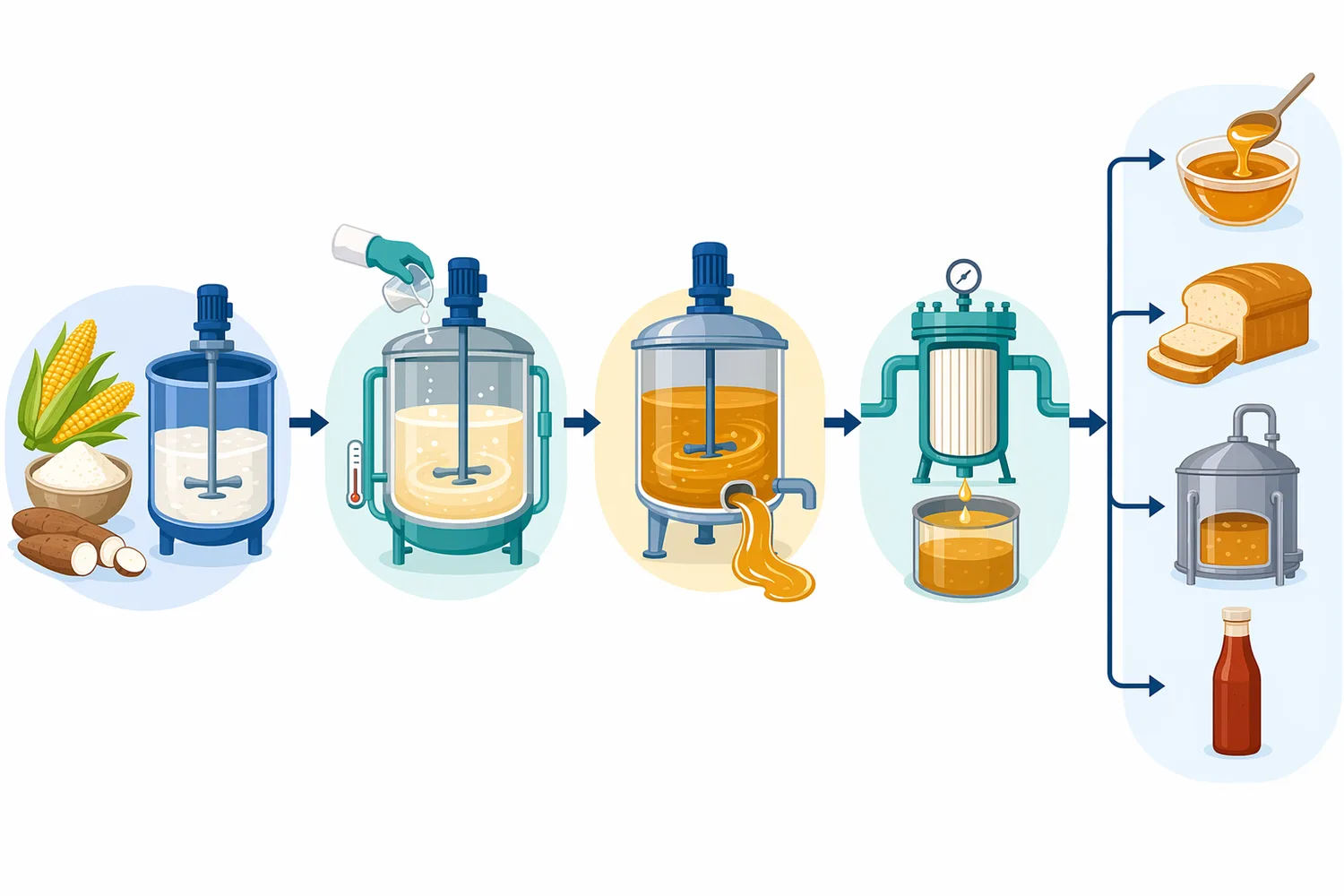
This is not the same as complete conversion to glucose. α-Amylase is primarily a liquefying and dextrinizing enzyme; it reduces chain length and creates soluble carbohydrate fragments. If a process requires high glucose production, α-amylase is often followed by other enzymes that are better suited to terminal saccharification. The distinction is important because a buyer using α-amylase should expect viscosity reduction and dextrin formation first, not instant complete sugar conversion.
Food matrices can also slow or redirect hydrolysis. A study on insoluble dietary fiber from wheat bran found that the fiber retarded starch digestion by reducing α-amylase activity, showing that non-starch components in the matrix can interfere with enzyme access or effectiveness [7]. In practical food systems, bran, proteins, lipids, phenolic compounds, gums, and insoluble particles may alter how easily the enzyme reaches starch chains.
α-Amylase is often used with other starch enzymes, but its role is distinct. The table below shows the conceptual difference so the intended use is clear.
| Enzyme type | Main action pattern | Typical carbohydrate effect | Process role |
|---|---|---|---|
| α-Amylase | Endo-acting cleavage of internal α-1,4 bonds | Dextrins, maltose-containing fragments, maltooligosaccharides | Liquefaction, viscosity reduction, opening starch for further conversion |
| β-Amylase | Exo-acting removal from non-reducing chain ends | Maltose-rich profile | Fermentable sugar development in malt- or cereal-based processes |
| Glucoamylase | Exo-acting release of glucose from chain ends, with branch activity depending on enzyme and conditions | Glucose-rich profile | Saccharification after liquefaction |
| Debranching enzymes | Cleavage of α-1,6 branch points | More linear chains and improved access for further hydrolysis | Used where amylopectin branches limit conversion |
The practical takeaway is that α-amylase is the front-end cutter. It opens the starch structure by shortening the major chains, lowering viscosity, and creating a carbohydrate stream that can be used as-is or converted further. This front-end role is consistent with broader research on α-amylase as a starch-degrading enzyme for saccharification of starch-rich biomass [1].
In starch liquefaction, the goal is to convert a thick starch paste into a lower-viscosity dextrin stream. α-Amylase does this directly by cutting internal α-1,4 linkages. The result is easier mixing, improved heat transfer, reduced pumping resistance, and a more manageable material for later processing.
This application is relevant in corn, wheat, cassava, potato, rice, and mixed starch streams. It can support production of maltodextrin-type ingredients, syrup intermediates, fermentable substrates, or process streams that need reduced viscosity before drying, filtration, concentration, or fermentation. Work on α-amylase in starch-rich biomass supports the enzyme’s broader relevance for saccharification-oriented processing [1].
In bakery systems, α-amylase modifies starch during dough handling, proofing, and heating. The enzyme can release smaller carbohydrates that yeast can use, while also changing starch gel behavior during baking. Controlled starch breakdown can support loaf volume, crumb softness, crust color development, and eating quality, depending on the formulation and process.
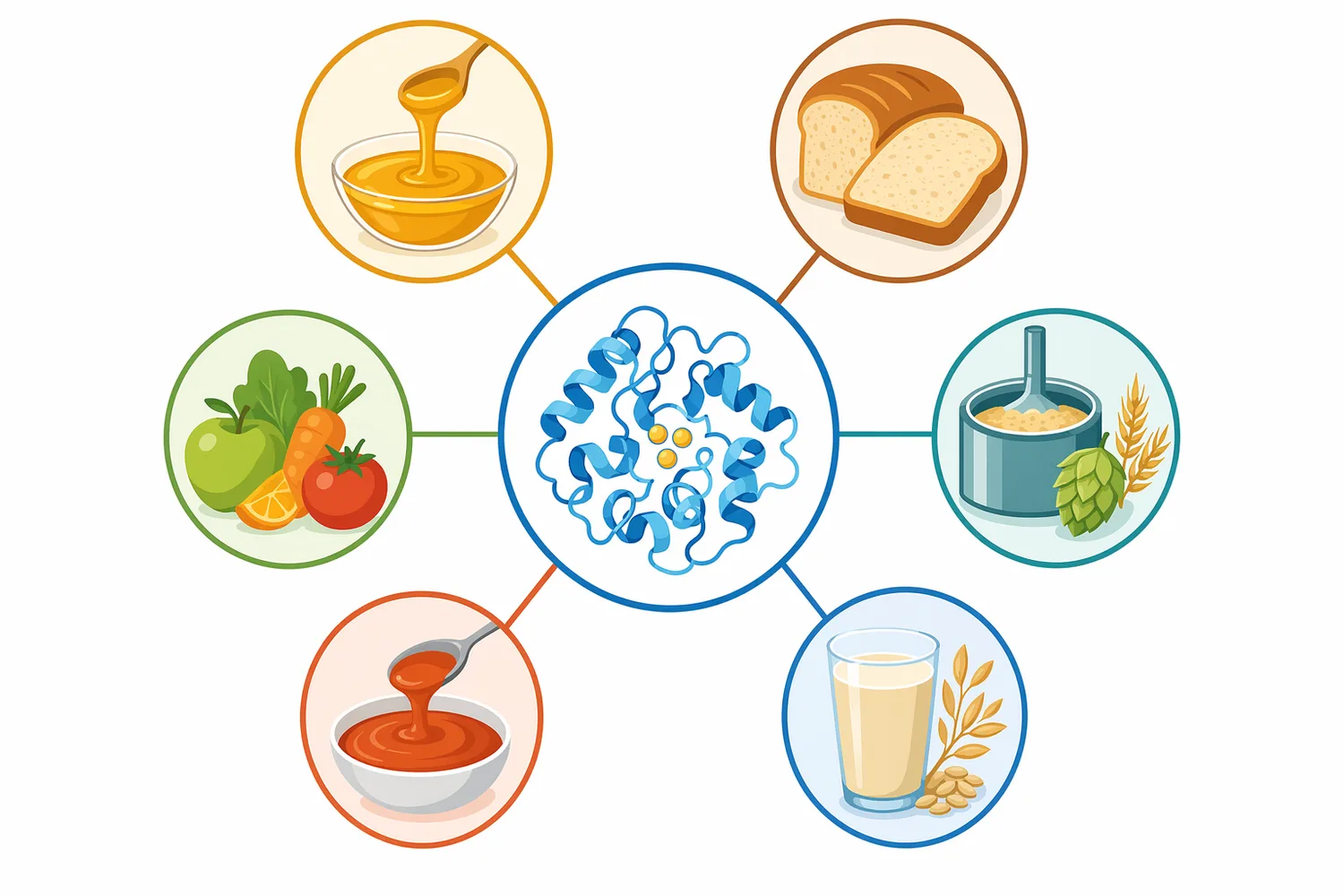
The effect must remain controlled because excess starch breakdown can weaken structure or create tacky textures. Research on pre-harvest sprouting in wheat emphasizes that α-amylase is closely linked to starch degradation and grain quality problems when enzyme activity becomes excessive before harvest [8]. That biological example is useful for food processing because it shows the same principle: α-amylase can improve functionality when controlled, but too much starch breakdown changes cereal structure.
Recent work on gluten-free bread made with high-protein rice flour examined the effects of α-amylase on bread properties, showing continuing interest in using the enzyme to manage starch-based structure in formulations without gluten’s elastic network [9]. In gluten-free systems, starch is often a primary structure-forming component, so enzymatic adjustment of starch can be especially influential.
Brewing, distilling, and cereal fermentation depend on converting starch into carbohydrates that microorganisms can consume. α-Amylase contributes by liquefying starch and producing shorter fragments that can be further converted to fermentable sugars. The immediate process value is improved mash handling and better access for subsequent carbohydrate conversion.
The same principle appears in microbial production systems. In Monascus ruber research, rice starch degradation by α-amylase supported pigment production, demonstrating how better starch breakdown can improve the availability of carbon sources in fermentation media [6]. For food and beverage operations, the mechanism is similar: starch must be opened and shortened before microorganisms or downstream enzymes can use it efficiently.
Plant-based beverages often start from grains or pseudocereals that contain starch. If starch remains too intact, the beverage may become overly thick, pasty, unstable, or gritty. α-Amylase can reduce that starch burden by converting swollen or cooked starch into smaller soluble carbohydrates, improving flow and helping develop mild natural sweetness.
The main change is physical as much as chemical. A slurry that behaves like thin porridge can become more drinkable because the starch network has been cut down. Rice bio-extrusion research shows how α-amylase activation during processing can moderate rapid starch gelatinization, a useful concept for beverage and cereal processes where heat, shear, and enzyme activity interact [5].
Many prepared foods rely on starch for body, but excessive starch viscosity can complicate processing or create a heavy texture. α-Amylase can be used to reduce viscosity in starch-thickened systems where a lighter flow, smoother mouthfeel, or better pumping behavior is desired. Because the enzyme acts on the starch backbone, it changes the structure at the source rather than simply diluting the product.
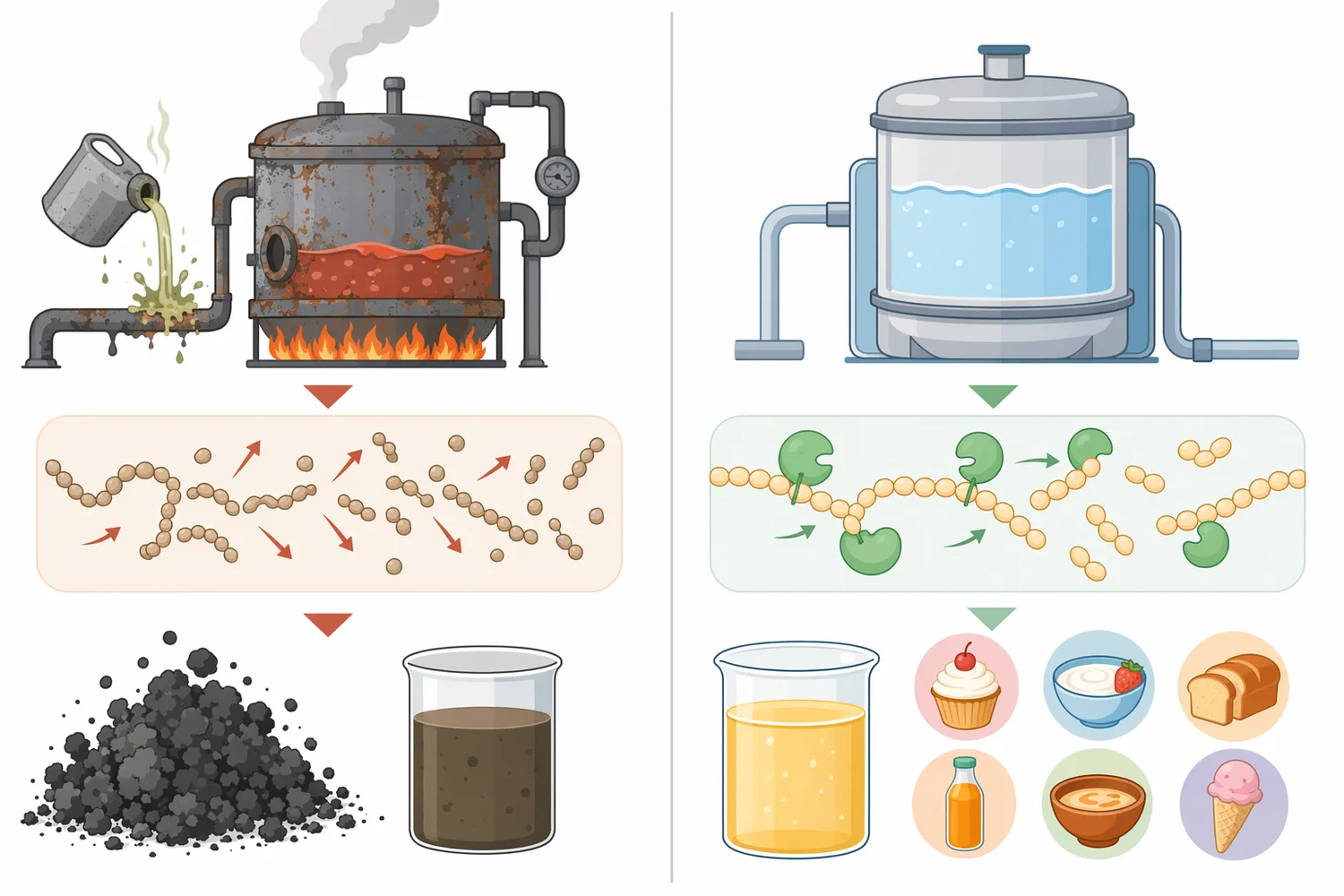
The endpoint matters. Partial hydrolysis may create a smoother, more pourable product while still retaining body; extended hydrolysis can thin the system much further. The mechanism of starch degradation described in technological starch processing studies reinforces that α-amylase changes the actual carbohydrate structure, not just the apparent texture [3].
α-Amylase can also help create modified starch-derived ingredients. By changing molecular size, it can alter solubility, viscosity, gel behavior, digestibility, and interaction with other food components. This is useful in dry mixes, beverages, confectionery intermediates, extruded foods, and prepared meals where native starch behavior is not ideal.
Starch degradation is also a natural biological process in many stored plant foods. Chestnut cold-storage research on cold-induced sweetening, for example, links storage-related carbohydrate changes with starch metabolism, showing how shifts from starch toward smaller sugars can affect food quality [10]. Industrial α-amylase use applies the same broad biochemical principle in a controlled processing context.
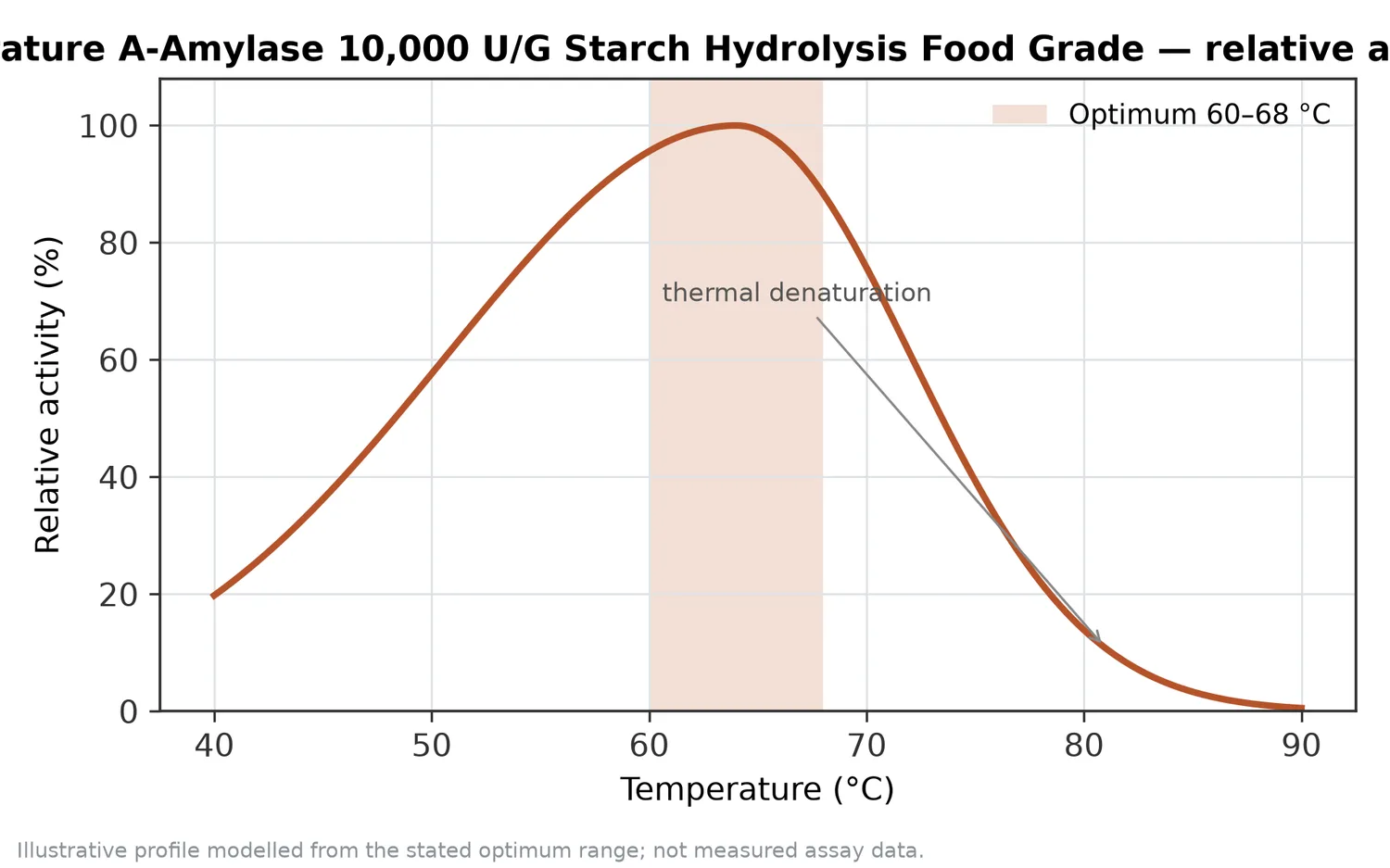
A medium-temperature α-amylase is intended for warm conditions where starch is hydrated, swollen, or gelatinized enough for enzyme access. The ideal practical window depends on the product documentation and the food matrix, but the core process principle is straightforward: enough heat is needed to make starch accessible, while excessive heat can reduce enzyme function.
Thermostability research on Bacillus amyloliquefaciens α-amylase shows that enzyme structure strongly influences how well α-amylase tolerates heat [2]. That is why α-amylases are often described by temperature suitability: some are built for high-temperature liquefaction, while others are better for moderate food-processing conditions. Medium-temperature products fit processes where controlled hydrolysis is desired without relying on extreme heat stability.
pH also affects enzyme behavior because the catalytic residues in the active site must be in the correct protonation state to break glycosidic bonds efficiently. Mechanistic work on pancreatic α-amylase has shown that ions and active-site chemistry can influence the acid-base catalyst involved in hydrolysis [11]. In food processing, this means strongly unsuitable pH conditions can reduce hydrolysis even if the starch is well gelatinized.
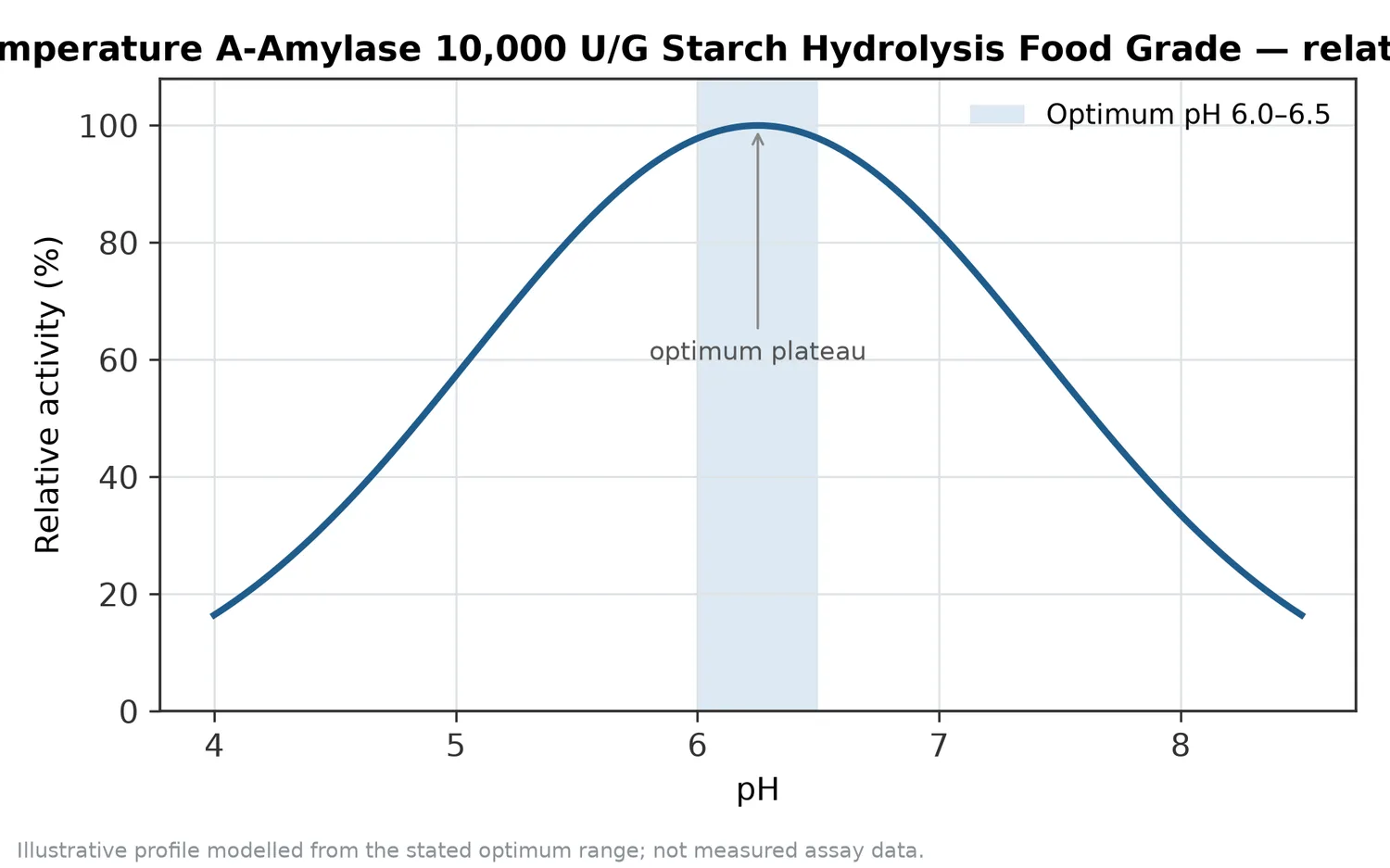
Mineral environment and formulation can also matter. Studies probing chloride ion effects in pancreatic α-amylase show that small ions can influence enzyme mechanism and activity in some α-amylase systems [12]. A commercial food enzyme preparation is designed for practical use, but the broader science explains why process water, salts, acidity, and food ingredients can affect observed performance.
A typical starch hydrolysis sequence can be understood in five concrete steps:
Hydration and heating
Starch granules absorb water. As heating continues, granules swell and crystalline regions loosen. The starch becomes more accessible to enzyme attack.
Enzyme contact with accessible starch
α-Amylase diffuses through the liquid phase and contacts exposed amylose and amylopectin segments. Adsorption or close approach to starch surfaces is part of the physical path to hydrolysis [4].
Internal bond cleavage
The enzyme active site positions a section of starch chain and catalyzes cleavage of α-1,4 glycosidic bonds. One large molecule becomes two shorter fragments; repeated action creates a distribution of dextrins.
Viscosity reduction
Shorter fragments no longer form the same extensive hydrated network. The paste thins, mixing improves, and heat transfer becomes more uniform.
Endpoint control by the process
The hydrolysate can be used as a dextrinized ingredient, fermented, dried, filtered, concentrated, or treated with additional enzymes if a different sugar profile is required.
This sequence is why α-amylase is usually associated with liquefaction before complete saccharification. It solves the physical problem first: long starch chains make the system thick; α-amylase shortens them.
Food materials are not pure starch. Wheat flour contains gluten proteins, bran particles, lipids, minerals, and endogenous enzymes. Rice flour contains starch granules embedded in a plant matrix. Oats contain beta-glucans and lipids. Pulses contain proteins, fibers, and natural enzyme inhibitors. These components can change how quickly α-amylase reaches starch and how the hydrolysate behaves after starch is cut.
The wheat bran fiber study is a clear example: insoluble dietary fiber reduced α-amylase activity and slowed starch digestion, demonstrating that non-starch material can physically or chemically interfere with enzyme action [7]. In an industrial food process, this may appear as slower thinning, uneven hydrolysis, or differences between refined starch and whole-grain materials.
Processing can also reduce or modify inhibitors in raw materials. Research on underutilized legumes examined how processing methods affect trypsin, chymotrypsin, and α-amylase inhibitors, reflecting the reality that some plant ingredients contain compounds that interact with digestive or processing enzymes [13]. For buyers using pulse, cereal, or whole-food substrates, it is useful to understand that pretreatment and formulation can influence enzyme response even when the enzyme itself is functioning normally.
α-Amylase is a well-established food-processing enzyme category. EFSA has evaluated food enzyme α-amylase from a genetically modified Bacillus licheniformis strain, illustrating the regulatory and safety assessment framework used for food enzymes in the European context [14]. Such evaluations consider the enzyme source, production organism, manufacturing information, intended use, dietary exposure, and toxicological information as relevant to food-enzyme safety review.
This article is educational and application-focused; it does not replace the documentation supplied with the order or the buyer’s own regulatory responsibilities for a finished food or beverage. Enzymes.bio supplies the product online in 1 kg units, and the Certificate of Analysis and Safety Data Sheet are provided with the order.
Most food users apply soluble enzyme preparations directly to the process stream, but research also explores immobilized enzymes in food applications. Immobilization can retain enzymes on a support material so they can be reused or separated more easily, and reviews describe immobilized enzymes as a growing area of interest for food-industry applications [15]. This is relevant scientifically, but it is separate from the ordinary use of a supplied food-grade α-amylase product.
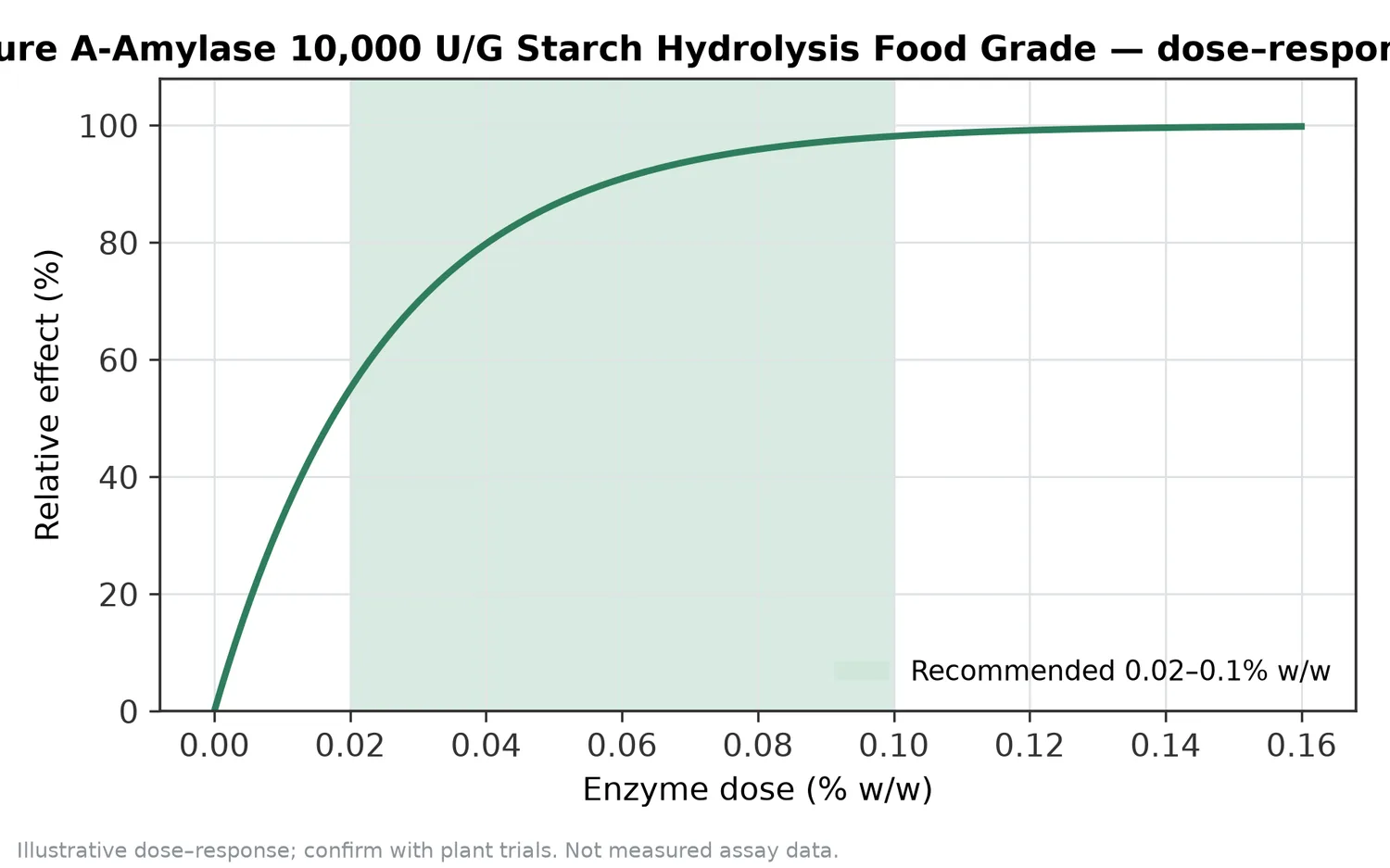
The important point for a buyer is that α-amylase chemistry remains the same: the enzyme must contact starch and cleave glycosidic bonds. Whether the enzyme is soluble, immobilized, or expressed in a biological system, the practical outcome still depends on starch accessibility, temperature, pH, residence time, and the food matrix.
When α-amylase is acting effectively on a gelatinized starch system, the first process change is usually thinning. A paste that resists agitation becomes easier to stir; a slurry that loads pumps heavily becomes more mobile; a cooked cereal base becomes less glue-like. This change can occur before any strong sweetness is perceived because dextrins and maltooligosaccharides do not behave like pure glucose.
A second change is improved downstream convertibility. Once α-amylase has shortened amylose and amylopectin, other enzymes or microorganisms can access the carbohydrate pool more effectively. This is why α-amylase is often used before saccharification, fermentation, or ingredient finishing. The Monascus rice starch study is a useful example of how different α-amylase performance in starch degradation can influence a downstream biological production outcome [6].
A third change is altered texture. In bakery, beverage, sauce, or filling systems, starch is often responsible for body and structure. Hydrolyzing it can soften, thin, or stabilize the product depending on how far conversion proceeds. In gluten-free rice bread research, α-amylase was studied specifically because changing starch behavior can change bread properties where rice flour is a major structural ingredient [9].
The core science is strong: α-amylase hydrolyzes starch and related α-glucans by attacking internal α-1,4 linkages, producing shorter carbohydrate fragments. Research across starch-rich biomass, cereal systems, rice fermentation, baking, and plant starch metabolism supports the central role of α-amylase in starch degradation [1].
However, results in a real food process depend on the substrate and process environment. Raw-material type, starch damage, granule swelling, cooking history, water availability, pH, temperature, shear, fiber content, and other ingredients can all change the apparent rate and endpoint of hydrolysis. The wheat bran fiber findings show clearly that even when starch is present, other matrix components can reduce α-amylase action [7].
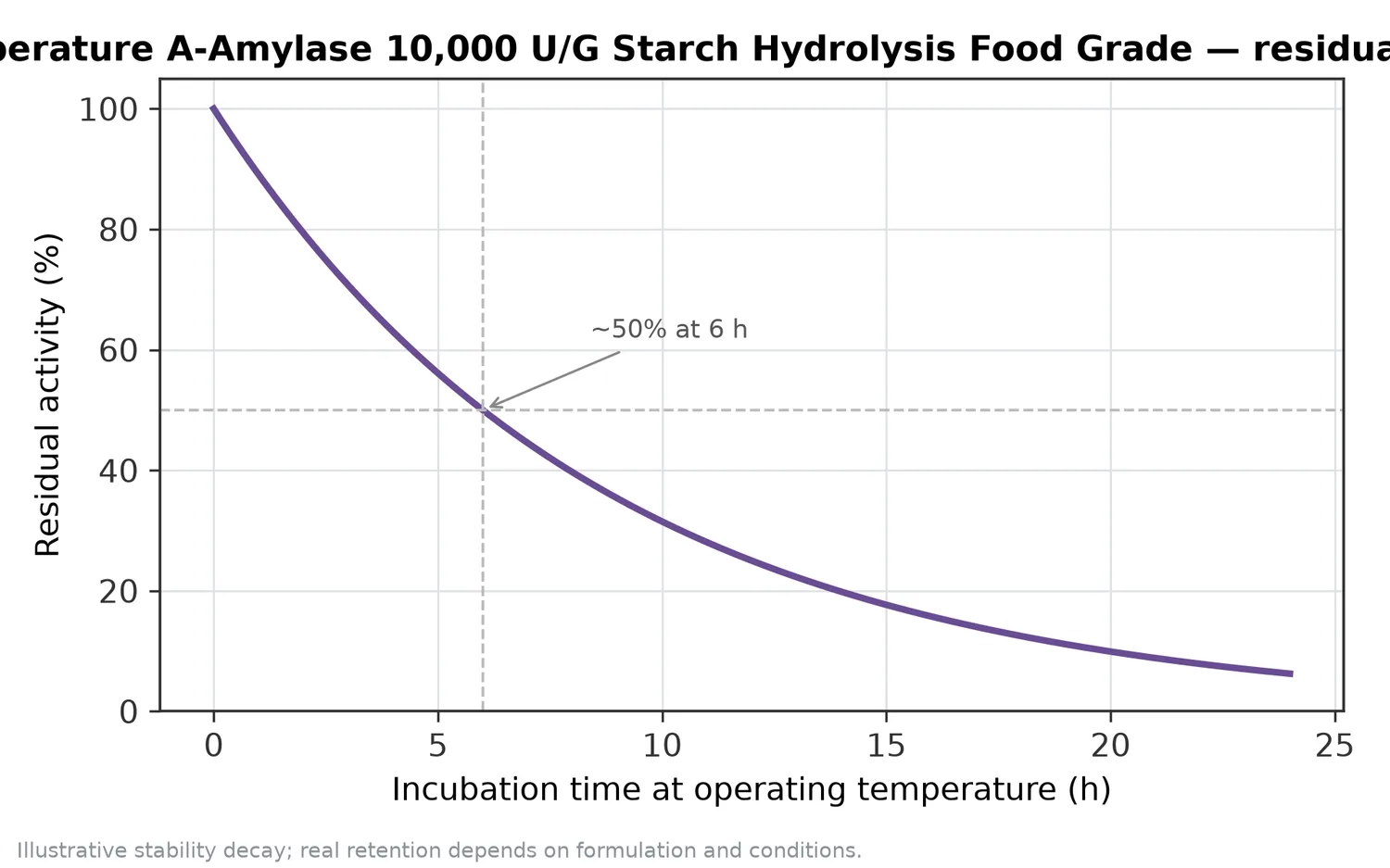
It is also important not to treat all α-amylases as identical. Thermostability studies demonstrate that α-amylase performance can change with enzyme structure, especially under heat stress [2]. Medium Temperature α-Amylase should therefore be understood as a practical food-grade enzyme for moderate starch hydrolysis conditions, not as a universal substitute for every high-temperature or highly specialized starch-conversion enzyme.
Enzymes.bio supplies Medium Temperature α-Amylase Starch Hydrolysis Food Grade directly online in 1 kg units. The purchasing process is simple: add the product to the online order, pay online, and the order is processed and shipped. A Certificate of Analysis and Safety Data Sheet are provided with the order.
Enzymes.bio is a supplier of the product, not a manufacturer or laboratory producer of the enzyme. The product is best viewed as a ready-to-purchase food-grade α-amylase option for buyers who need controlled starch hydrolysis in applications such as liquefaction, cereal processing, plant-based beverages, brewing substrates, bakery systems, and starch-based ingredient modification.
Medium Temperature α-Amylase is a food-grade starch hydrolysis enzyme that cuts internal α-1,4 bonds in starch, shortening amylose and amylopectin into dextrins and smaller soluble carbohydrates. The direct processing result is lower viscosity, improved handling of gelatinized starch systems, and better preparation for fermentation, saccharification, drying, filtration, or formulation.
Its value comes from a concrete molecular change: long starch polymers that create thick pastes are broken into shorter fragments that flow more easily. Research on α-amylase in starch-rich biomass, cereal systems, rice processing, baking, and starch metabolism supports its established role in starch degradation and food-process functionality [1].
Enzymes.bio sells this product online by the 1 kg unit, with online payment, order processing, and shipment. A Certificate of Analysis and Safety Data Sheet are included with the order.
Sold by the 1 kg unit, in stock and ready to ship. Order directly on our store — pay online and we process your order. A Certificate of Analysis and Safety Data Sheet are included with every order.
Buy Medium Temperature Α-Amylase 10,000 U/G Starch Hydrolysis Food Grade →Numbered in order of first citation. Open-access sources, each verified reachable at publication; citation numbers in the text link here.