
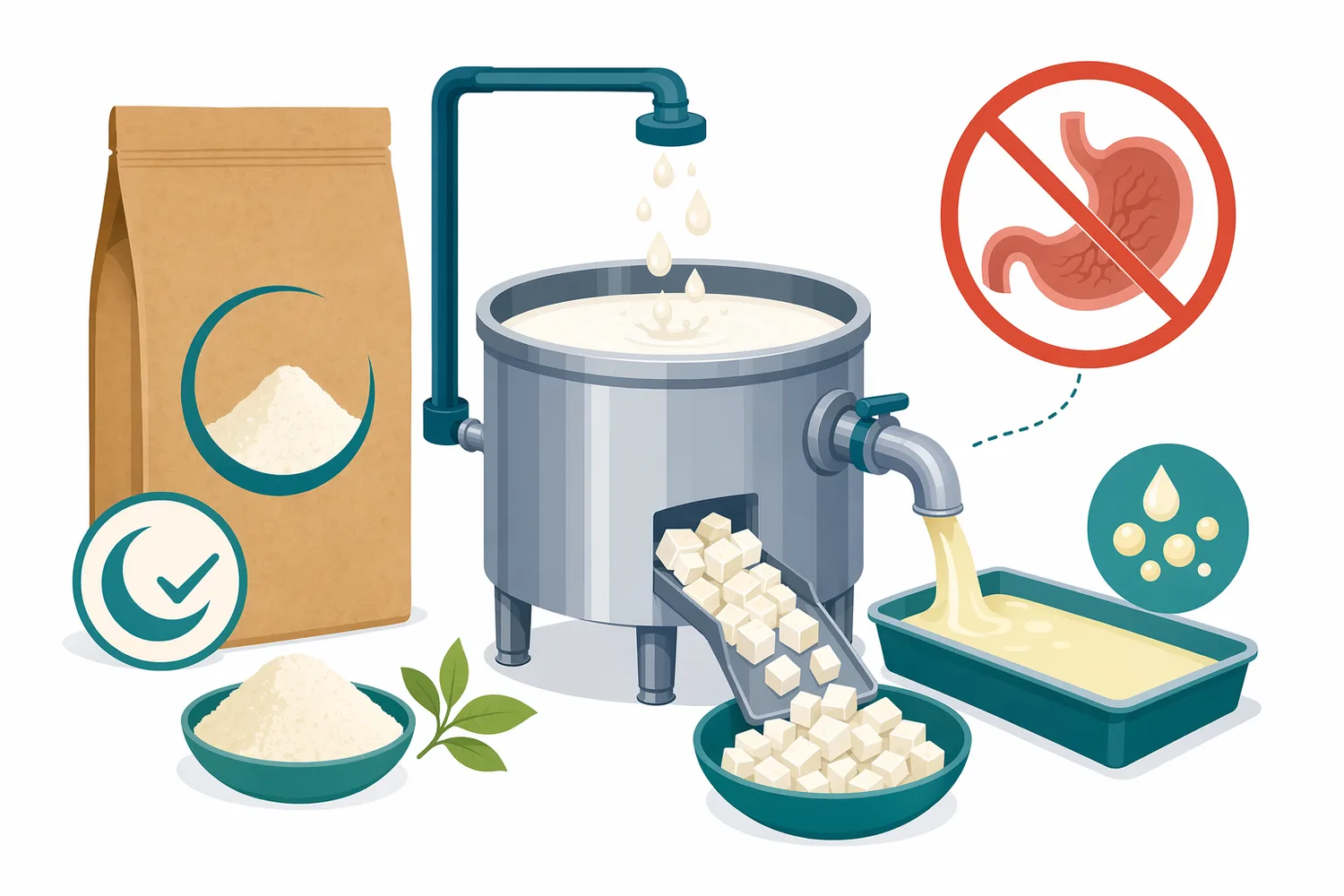
Microbial Rennet Cheese Enzyme Powder is a Halal-certified cheese rennet enzyme used to coagulate milk into curd during cheese making. It works by enzymatically destabilizing casein micelles—the protein particles that keep milk fluid—so they aggregate into a gel network that can be cut, drained, pressed, or ripened depending on the cheese style. Enzymes.bio supplies this powdered rennet directly online by the 1 kg unit, with online payment, order processing, shipping, and order documentation including a Certificate of Analysis and Safety Data Sheet.
Rennet is one of the defining processing aids in rennet-set cheese: it converts prepared milk from a stable liquid dispersion into a curd that can retain fat and casein while releasing whey. Traditional rennets are associated with enzymes such as chymosin and pepsin A from the abomasum of calves, goats, lambs, or cows, while microbial rennet belongs to the broader group of non-calf coagulants used to perform the same core milk-clotting function in cheese manufacture [1].
Microbial rennet is relevant where a cheese maker wants the technological effect of rennet without relying on an enzyme extracted from young ruminant stomach tissue. In scientific and regulatory literature, microbial milk-clotting enzymes include preparations such as mucorpepsin from Rhizomucor miehei, a food enzyme category evaluated separately from animal rennet preparations [2]. For a Halal-positioned cheese ingredient, the important commercial point is not simply that the enzyme is “microbial,” but that the actual supplied product carries Halal certification.
Enzymes.bio supplies this product as a powdered enzyme preparation for buyers who want a straightforward ordering route: purchase the 1 kg unit online, pay online, and the order is processed and shipped. The Certificate of Analysis and Safety Data Sheet are included with the order documentation, supporting routine ingredient intake and safe handling without turning the purchase into a custom technical project.
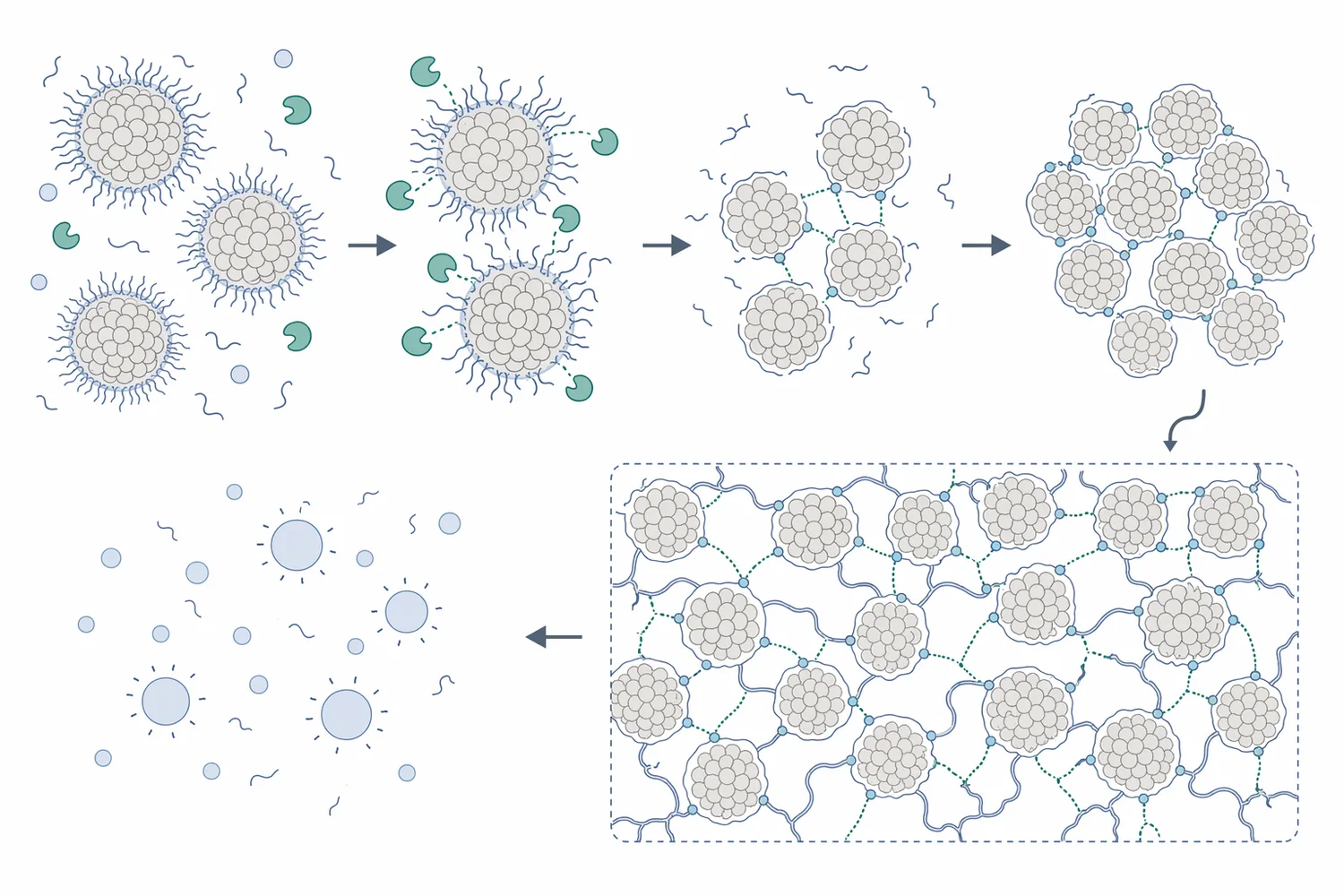
Milk appears uniform, but it is a structured colloidal system. Most of the cheese-forming protein is present as casein micelles: nanoscale assemblies of casein proteins, calcium phosphate, water, and minerals. These micelles stay dispersed because their surface layer helps prevent the particles from clumping together under normal milk conditions; the outer κ-casein layer is especially important because it creates steric and electrostatic stabilization around the micelle.
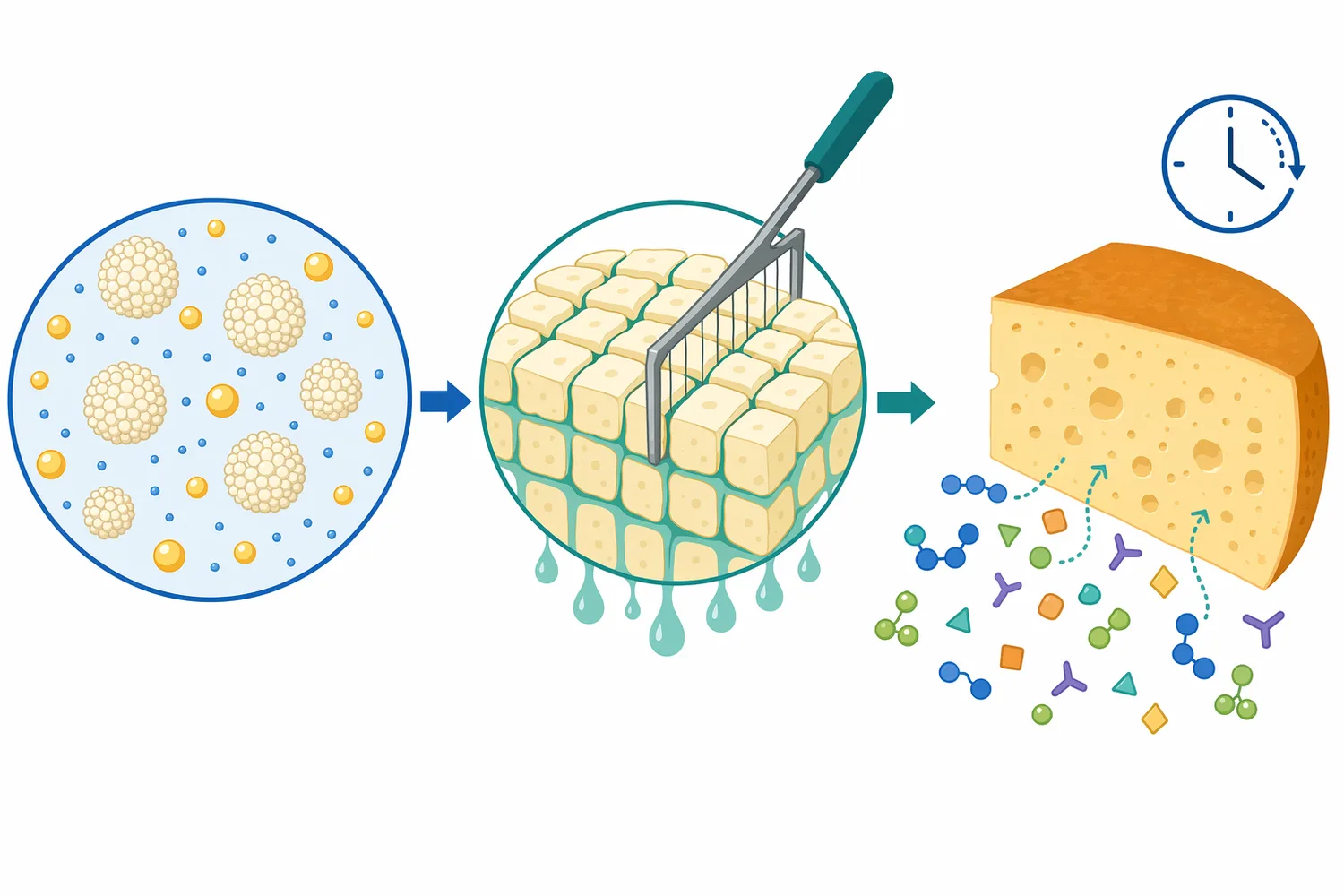
Rennet coagulation begins when the enzyme cleaves κ-casein on the surface of the micelle. Once that stabilizing layer is cut, the micelles no longer repel each other as effectively. They begin to collide, stick, and build a three-dimensional gel network. This network traps fat globules, casein, minerals, and part of the water phase, while the remaining serum becomes whey. Enzyme technology reviews describe food enzymes as process tools that create functional changes in food matrices by acting on specific molecular bonds rather than by simply “adding texture” from outside [3].
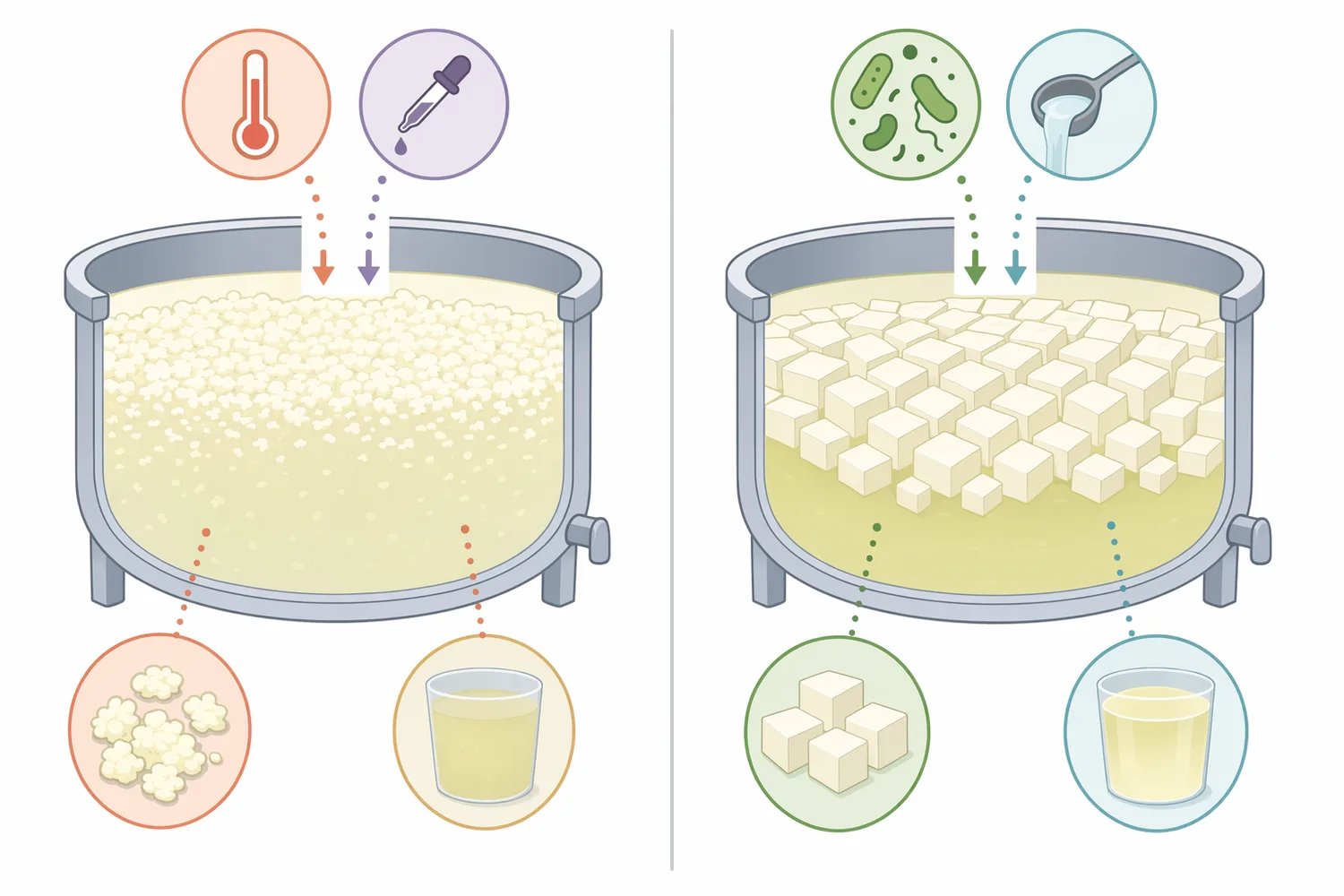
The practical effect in the vat is visible: milk thickens, forms a set gel, and eventually reaches a curd firmness that allows cutting or draining. Cutting the curd increases surface area and encourages whey expulsion; smaller curd particles generally lose moisture more readily, while larger pieces retain more moisture. The rennet step therefore influences not only whether a curd forms, but also the downstream moisture, yield distribution, and texture that the cheese maker can build through cutting, cooking, salting, pressing, and ripening.
Microbial rennet should be understood as a proteolytic coagulant, not as a generic thickener. It does not work like starch, gum, or acid alone. Its action starts at the protein level: the enzyme changes the behavior of casein micelles, which then rearrange into a gel. That is why rennet selection and process control affect curd firmness, whey separation, amino acid release, and sensory outcomes—topics directly reflected in comparative dairy studies of cheeses made with different rennet enzymes [4].
Several types of coagulants are used in cheese production. They are not identical, because their enzyme composition, specificity, and residual proteolytic behavior can differ. Animal rennet commonly contains chymosin with pepsin A, while microbial rennet may contain fungal or microbial aspartic proteases such as mucorpepsin; plant coagulants may contain broader plant proteases, and fermentation-produced chymosin is produced through microbial fermentation but designed to provide chymosin activity [5].
| Coagulant category | Typical source concept | Main processing role | Practical positioning |
|---|---|---|---|
| Animal rennet | Abomasum-derived enzyme preparations from ruminants | Cleaves casein to initiate milk gelation and curd formation | Traditional benchmark for many cheese styles; animal origin may not suit all dietary or religious positioning |
| Microbial rennet | Enzymes produced from selected microorganisms, including fungal sources | Provides milk-clotting protease activity for curd formation | Useful for Halal-certified and animal-rennet-free cheese formulations when the supplied product is appropriately certified |
| Fermentation-produced chymosin | Chymosin produced through controlled fermentation | Targets the same cheese-making function as chymosin-based rennet | Often used where chymosin-like specificity is desired without calf extraction |
| Plant protease coagulants | Proteases from botanical materials such as selected fruits or plants | Can coagulate milk but may also create broader proteolysis | Useful in certain regional or specialty cheeses; effects can differ strongly by plant source |
The table is conceptual rather than a specification guide. The key point for buyers of Enzymes.bio Microbial Rennet Cheese Enzyme Powder is that it belongs to the microbial rennet category and is positioned for Halal cheese applications. Studies comparing rennet enzymes in products such as Lyubitelskyi cheese show that the coagulant choice can affect amino acid composition and sensory parameters, which is why microbial rennet should be treated as a functional cheese ingredient rather than a commodity thickening agent [4].
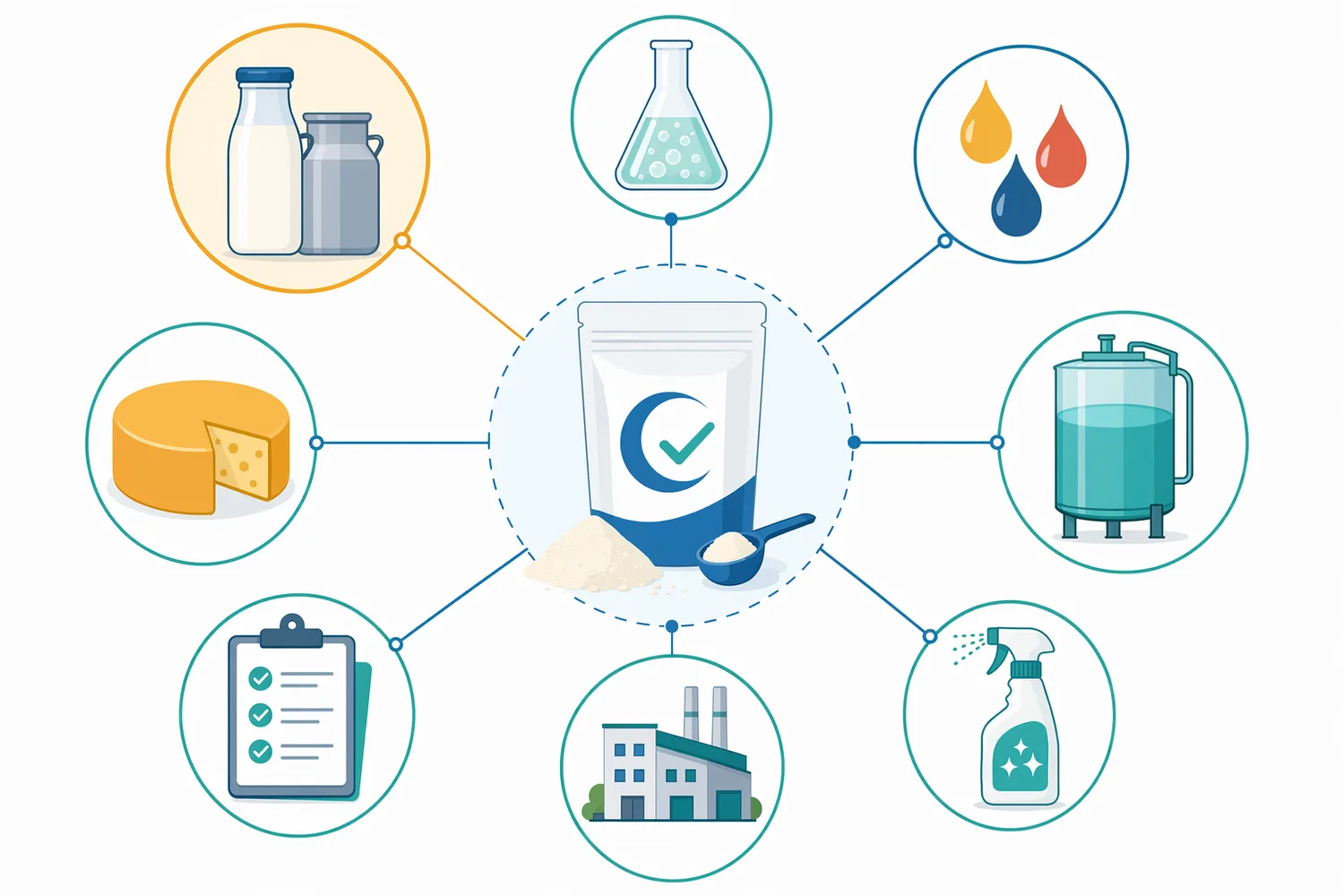
Halal suitability in cheese is closely connected to ingredient origin and processing controls. A microbial rennet avoids the direct issue of enzyme extraction from animal stomach tissue, and a Halal-certified microbial rennet gives cheese makers a clearer route for Halal-oriented product development. Broader Halal industry research emphasizes that Halal systems are not limited to final food labels; they connect ingredients, processing, assurance, consumer trust, and sustainable market participation [6].
For enzyme ingredients specifically, Halal food research recognizes the importance of enzyme sourcing and production pathways. Enzyme engineering and fermentation approaches are discussed in the context of Halal food applications because enzymes can be technologically essential while still raising origin and compliance questions [7]. In practical cheese production, a Halal-certified microbial rennet can support a Halal formulation, but the finished cheese still depends on the status of milk ingredients, cultures, colors, flavors, brines, sanitation practices, and other processing aids used in the full process.
This distinction matters commercially. The rennet can be Halal-certified, but it does not automatically certify the entire cheese or the facility. It functions as one compliant ingredient within the buyer’s broader Halal control system. Enzymes.bio supplies the rennet product and accompanying order documentation; the customer applies it within their own formulation, production, and certification framework.
The scientific literature consistently treats rennet choice as a meaningful variable in cheese composition and quality. A study on whey and cottage cheese examined amino acid composition under various rennet enzymes, showing that the coagulant used in cheese making can be studied not only for curd formation, but also for how it relates to protein breakdown products distributed between curd and whey [8]. This is important because cheese is not simply coagulated milk; it is a protein matrix that continues to evolve during draining, storage, and ripening.
Research on Lyubitelskyi cheese compared the effects of different rennet enzymes on amino acid composition and sensory parameters [4]. That framing reflects a practical reality: enzymes that all “set milk” can still influence flavor development, texture perception, and biochemical profile differently. In aged or semi-aged cheeses, residual proteolysis can release peptides and amino acids that contribute to savory notes, bitterness, body breakdown, or ripening complexity depending on the enzyme and process.
Cottage cheese research also shows that rennet-related choices can be linked with microbiological indicators when different rennet leavens are used [9]. This does not mean rennet replaces hygienic processing or culture control. Rather, it shows that dairy researchers evaluate rennet systems as part of a complete cheese-making environment, where coagulation, acidity, microbial ecology, moisture, and storage conditions interact.
Cream cheese research provides another example of how rennet participates in texture formation alongside other enzymes or formulation choices. A 2024 study on cream cheese evaluated physicochemical characteristics based on different ratios of bromelain enzyme and rennet enzyme [10]. Although bromelain and rennet are different proteases, the study’s focus underscores the same principle: changing proteolytic enzyme systems can change the structure and measurable properties of soft cheese matrices.
Regulatory safety evaluations also distinguish among enzyme sources. EFSA publications have separately evaluated animal rennet preparations containing chymosin and pepsin A from calf, goat, lamb, cow, or mixed abomasum sources [11], while another evaluation addressed mucorpepsin from the non-genetically modified Rhizomucor miehei strain FRO [2]. These documents reinforce that “rennet” is a functional category containing different enzyme origins, not a single identical material.
In a typical rennet-set process, milk is prepared to the target composition and temperature, starter cultures may be used to begin acid development, and rennet is then dispersed into the vat. After mixing, the milk is left largely undisturbed so the enzymatic phase and aggregation phase can progress. The gel must develop without being broken too early; premature agitation can disrupt the forming casein network and produce weak curd particles.
Acidity changes how readily casein micelles aggregate after κ-casein destabilization. As starter cultures convert lactose into lactic acid, the mineral balance and charge behavior of casein shift, making the protein system more receptive to coagulation. If the milk is too far from the intended acidity profile, the curd may form slowly, set weakly, retain too much moisture, or acidify unevenly during draining. Food enzyme technology literature treats this kind of enzyme performance as matrix-dependent: the same enzyme action can produce different outcomes depending on substrate condition and process environment [3].
Calcium availability also matters because calcium helps bridge and strengthen the aggregating casein network. Heat treatment, milk source, seasonality, and composition can alter mineral balance, so the same rennet addition can behave differently in different milks. Once the κ-casein surface layer is removed, calcium-mediated interactions help determine how quickly micelles form a cohesive gel and how firm that gel becomes before cutting.
Curd cutting translates the enzyme-formed gel into a controlled drainage system. When the curd is cut, whey begins to move out of the protein network. The timing and extent of cutting affect moisture retention, curd strength, and the amount of fine particles lost into whey. Because rennet choice can influence the gel’s firmness and fracture behavior, studies that compare rennet enzymes in cheese often examine not only coagulation, but also compositional and sensory outcomes after processing [4].
Microbial rennet is especially relevant in fresh and soft cheese systems where a reliable curd set and clean whey separation are needed without a long ripening period. In these products, the cheese maker often wants a curd that forms predictably, drains to the desired moisture, and supports a mild flavor profile. Cottage cheese studies using different rennet enzymes show that rennet choice is applicable to fresh cheese systems where curd and whey composition can be measured directly [8].

Soft cheese and cream cheese applications are also a natural fit because the curd structure must be smooth, cohesive, and moisture-retentive rather than brittle. The cream cheese study involving rennet enzyme and bromelain enzyme demonstrates how enzymatic treatment can affect physicochemical characteristics in a high-moisture cheese matrix [10]. For a microbial rennet powder, this supports its relevance in soft cheese development where protein network formation is central to spreadability, body, and whey control.
Semi-hard cheeses can also use microbial rennet where the target product tolerates or benefits from the enzyme’s proteolytic profile. In these cheeses, curd firmness at cutting, whey expulsion, pressing behavior, salt uptake, and ripening all interact. Because comparative research on rennet enzymes includes sensory and amino acid outcomes, microbial rennet should be evaluated by the customer in the context of the intended cheese style and ripening plan, rather than assumed to be identical to every animal rennet or fermentation-produced chymosin [4].
For Halal-certified cheese lines, microbial rennet offers a practical route to avoid animal abomasum-derived coagulants. Animal rennet safety evaluations specifically identify preparations containing chymosin and pepsin A from calf or other ruminant abomasum sources [12]. A microbial rennet with Halal certification gives the buyer a different sourcing basis while preserving the core cheese-making function of enzymatic coagulation.
The first visible change is gel formation, but the more important technological change is the creation of a casein network. Before rennet action, casein micelles are dispersed; after rennet action, they are linked into a structure that can be cut and drained. This network determines how fat is retained, how whey exits, and how curd particles respond to heat, stirring, salting, or pressing.
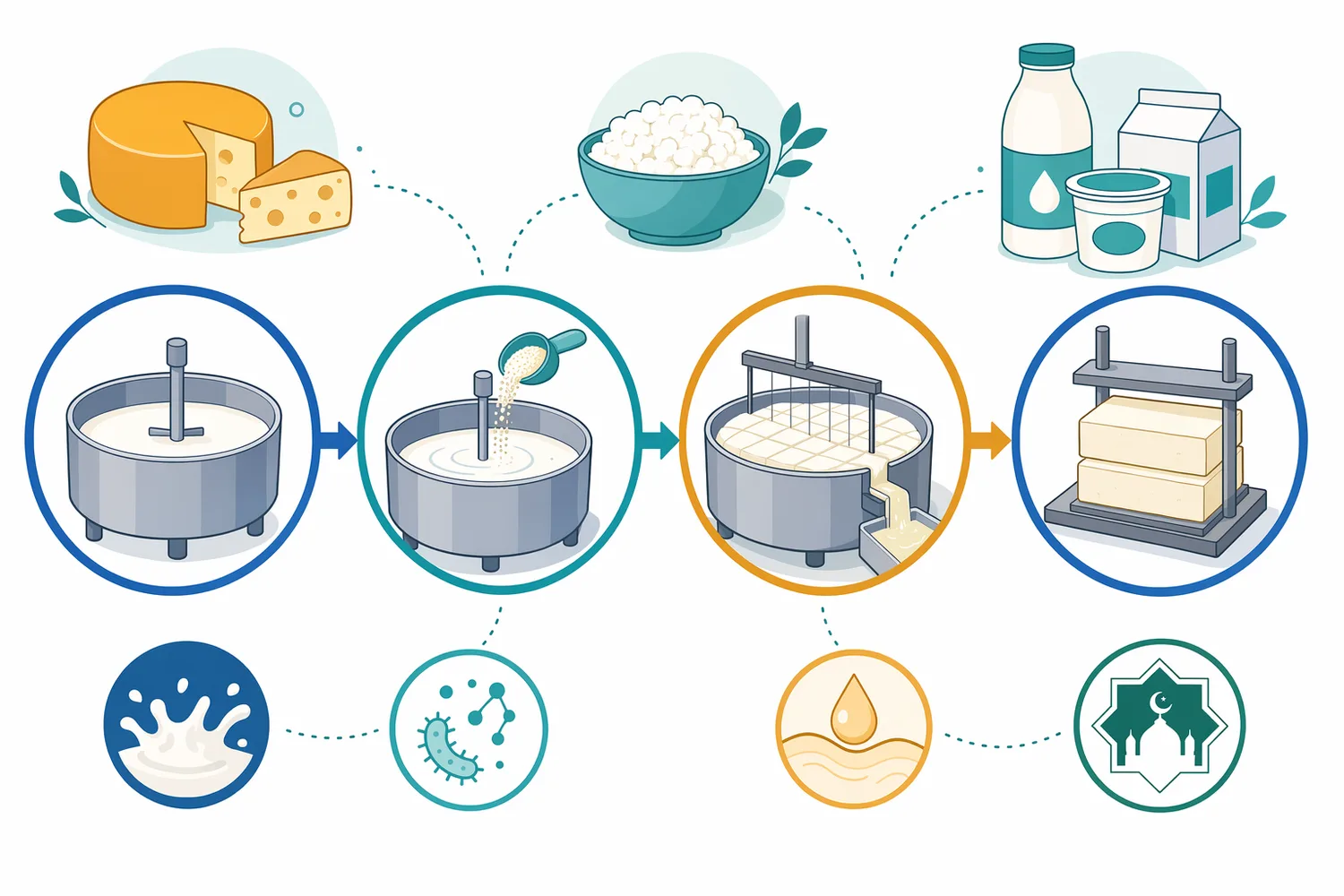
The second change is partitioning between curd and whey. When the gel contracts and is cut, soluble components move into whey, while casein and much of the fat remain in curd. Rennet-related studies of whey and cottage cheese amino acid composition are useful because they examine how cheese-making conditions and enzyme choice relate to the distribution of protein-derived components in the final dairy fractions [8].
The third change is the start of a longer biochemical pathway. Even after the curd has formed, residual enzyme action, starter culture enzymes, and native milk enzymes may continue breaking proteins into peptides and amino acids. That breakdown can soften texture and create flavor precursors, but excessive or poorly matched proteolysis can also create defects. Comparative studies that include sensory parameters acknowledge that rennet choice can be connected to what the eater ultimately perceives in the cheese [4].
The fourth change is microbiological context. Rennet itself is not a substitute for pasteurization, hygiene, starter selection, or cold-chain control, but the curd environment created by coagulation influences moisture, acidity, and nutrient availability. Cottage cheese research on microbiological indicators under different rennet leavens reflects the fact that cheese quality is built from the combined behavior of enzymes, microbes, milk composition, and process conditions [9].
A powder format is convenient for buyers who want a shelf-stable, easy-to-ship enzyme ingredient in a compact unit. Compared with bulky liquid ingredients, powder can simplify receiving, storage space, and transport. The practical value is straightforward: the buyer can order the 1 kg unit online from Enzymes.bio, receive the product with its documentation, and use it according to their own process controls.
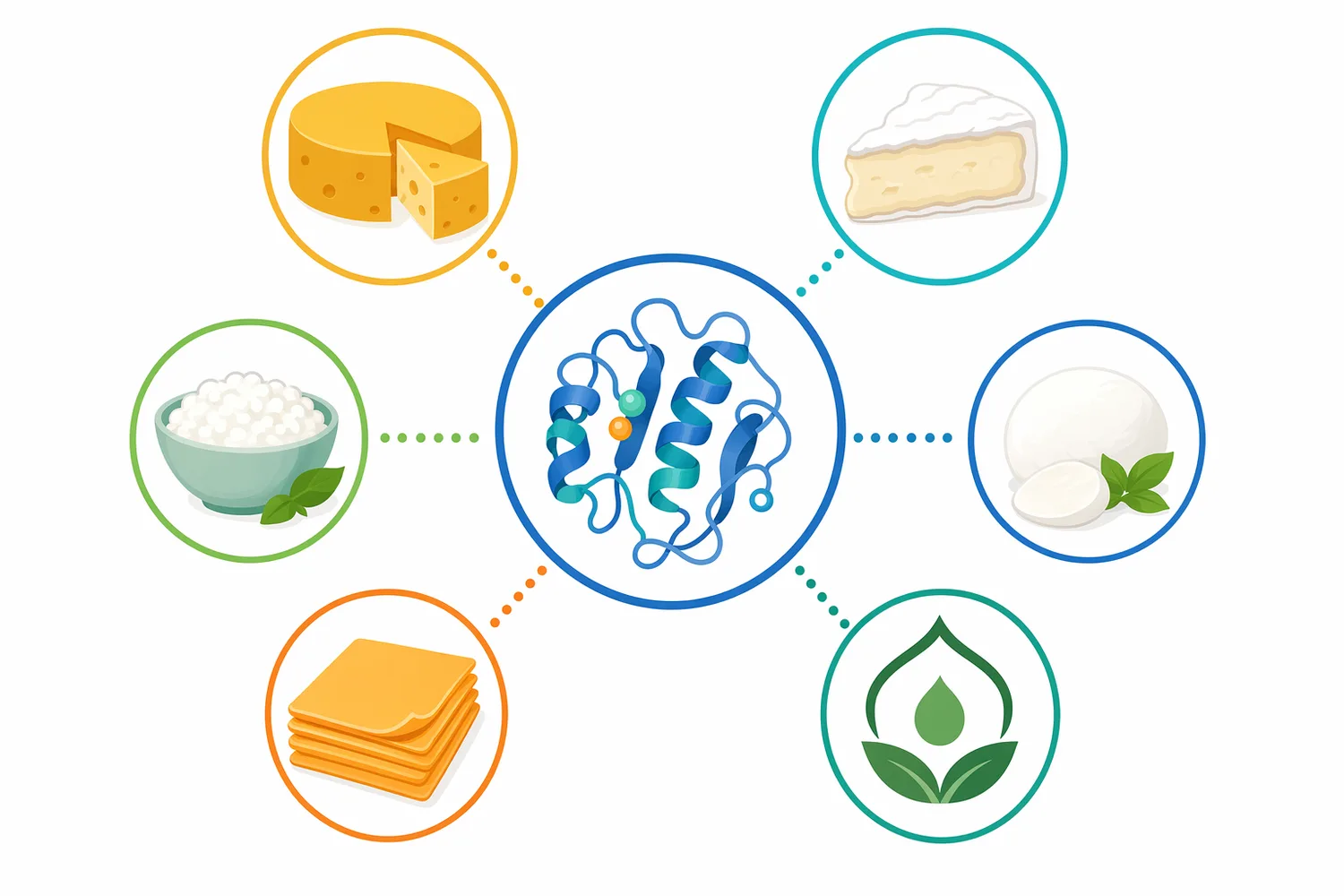
Microbial origin also supports animal-rennet-free product positioning. Since animal rennet preparations are associated with enzymes recovered from ruminant abomasum tissue [13], a microbial rennet offers a different origin story for brands that need to address vegetarian, ethical, or Halal-sensitive ingredient expectations. The Halal certification attached to this product is the key assurance point for Halal-oriented use.
From a processing standpoint, microbial rennet provides the cheese maker with the same essential manufacturing function: milk coagulation. It creates the curd foundation on which later steps depend. The final cheese character, however, still comes from the whole process—milk standardization, cultures, acidification, rennet dispersion, curd handling, heating, salting, pressing, packaging, and storage—not from the enzyme alone.
Microbial rennet is a proven cheese coagulant category, but it should not be treated as universally interchangeable with every other rennet in every cheese. Different coagulants can vary in specificity and secondary proteolysis. That difference is one reason studies compare rennet enzymes by amino acid composition, sensory attributes, physicochemical characteristics, and microbiological indicators rather than evaluating only whether milk sets [4].
Longer-ripened cheeses require particular attention because protein breakdown continues over time. A coagulant that performs well in a fresh cheese may not produce the same flavor balance in a cheese aged for weeks or months. Proteolysis can be desirable when it releases flavor precursors and softens body, but too much or the wrong pattern of peptide formation can affect bitterness, texture breakdown, or consistency.
Milk source and composition also matter. Cow, goat, sheep, buffalo, and other milks differ in casein structure, fat, minerals, and buffering behavior, so a coagulant’s apparent performance is always tied to the milk system in which it is used. The broader food enzyme literature emphasizes that enzyme action depends on substrate structure and processing environment, which is especially true in dairy matrices where protein, mineral, fat, and acid equilibria are tightly linked [3].
Finally, Halal-certified rennet supports Halal cheese production but does not certify all other materials or operations involved in making the finished cheese. Halal assurance is system-based: it includes ingredients, processing aids, cleaning materials, segregation, documentation, and labeling controls. Research on Halal industry development highlights that certification and trust depend on coordinated management across the food value chain, not on a single ingredient claim alone [6].
Enzymes.bio supplies Microbial Rennet Cheese Enzyme Powder – Halal Certified Cheese Rennet Enzyme directly online by the 1 kg unit. The buying process is simple: add the product to the online order, pay online, and the order is processed and shipped. A Certificate of Analysis and Safety Data Sheet are provided with the order documentation.
For cheese makers and food businesses, the product’s value is functional and practical: it provides a Halal-certified microbial rennet in powder form for enzymatic milk coagulation. It helps create the curd structure needed for fresh, soft, and selected semi-hard cheese applications, while giving buyers an alternative to abomasum-derived animal rennet. The science behind its use is well established: rennet enzymes act on milk proteins to destabilize casein micelles, form a curd gel, and enable the separation of curds and whey that defines cheese manufacture [3].
Sold by the 1 kg unit, in stock and ready to ship. Order directly on our store — pay online and we process your order. A Certificate of Analysis and Safety Data Sheet are included with every order.
Buy Microbial Rennet Cheese Enzyme Powder - Halal Certified Cheese Rennet Enzyme →Numbered in order of first citation. Open-access sources, each verified reachable at publication; citation numbers in the text link here.