
Multifunctional Textile Scouring & Anti-Redeposition Surfactant is a surfactant-based textile auxiliary for scouring, washing, preparation before dyeing, and enzyme-supported wet processing. It helps processing liquor wet the fabric, loosen oily and waxy impurities, hold removed soils in the bath, and reduce redeposition onto the textile surface.
For cotton, bast fibers, cellulosic blends, synthetics, and garments, the practical value is straightforward: cleaner fabric surfaces and more uniform wetting give dyeing and finishing steps a better starting point. Enzymes.bio supplies this product directly online in 1 kg units; the buyer pays online, the order is processed and shipped, and a Certificate of Analysis and Safety Data Sheet accompany the order.
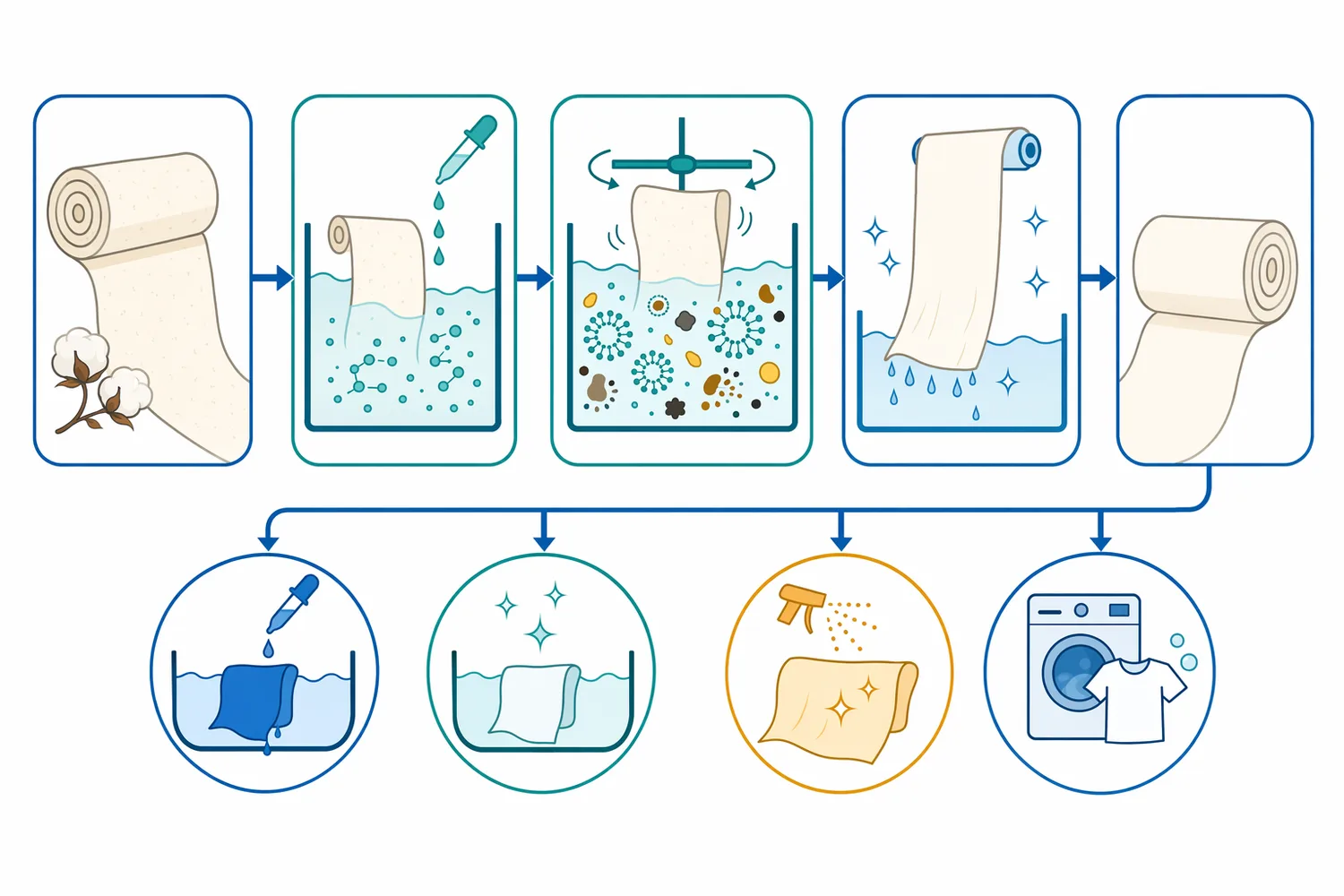
Multifunctional Textile Scouring & Anti-Redeposition Surfactant is not an enzyme. It is a wet-processing auxiliary used where textile materials need better wetting, detergency, emulsification, dispersion, and bath cleanliness during preparation or washing. In practical textile terms, it helps the liquor reach the fiber surface, detach hydrophobic impurities, and keep loosened material away from the fabric until the bath is drained and rinsed.
Scouring is one of the foundation steps in textile preparation because untreated or partially prepared fibers carry non-fiber materials that interfere with water absorbency, dye penetration, and finishing uniformity. Cotton and other cellulosic fibers may contain waxes, fats, pectic substances, proteins, mineral matter, seed-coat fragments, spin finishes, knitting oils, or handling soils depending on the fiber source and process history; these materials can make the substrate patchy in wetting and inconsistent in dyeing response [1].
A multifunctional surfactant is useful because preparation is rarely a single chemical event. In one bath, the process may need rapid wet-out, penetration into yarn and fabric interstices, emulsification of oils, dispersion of fine particles, control of suspended soil, and support for later dyeing or rinsing. Patent literature on multifunctional scouring and dyeing auxiliaries for cellulose-rich fabrics reflects this integrated approach, describing surfactant-containing systems intended to remove impurities, improve wettability, assist leveling, and reduce reliance on more severe process conditions [2].
Uneven wetting is one of the most visible preparation problems because it carries forward into nearly every downstream operation. If a fabric does not absorb water uniformly, dye liquor and finishing chemicals also reach different zones at different rates. That can appear as unlevel shade, streakiness, dullness, local dye buildup, or inconsistent hand after finishing.
The mechanism is physical as much as chemical. Greige or inadequately prepared fabric often presents hydrophobic surfaces: waxes, oils, lubricants, or residual processing auxiliaries resist contact with water. A surfactant reduces the surface tension of the bath so the liquid spreads rather than beads, enters capillaries between fibers and yarns, and contacts the impurities that need to be removed. Research on cotton fiber modification and detergent performance highlights the importance of cotton surface chemistry and polysaccharide accessibility in achieving more sustainable and effective textile cleaning outcomes [1].
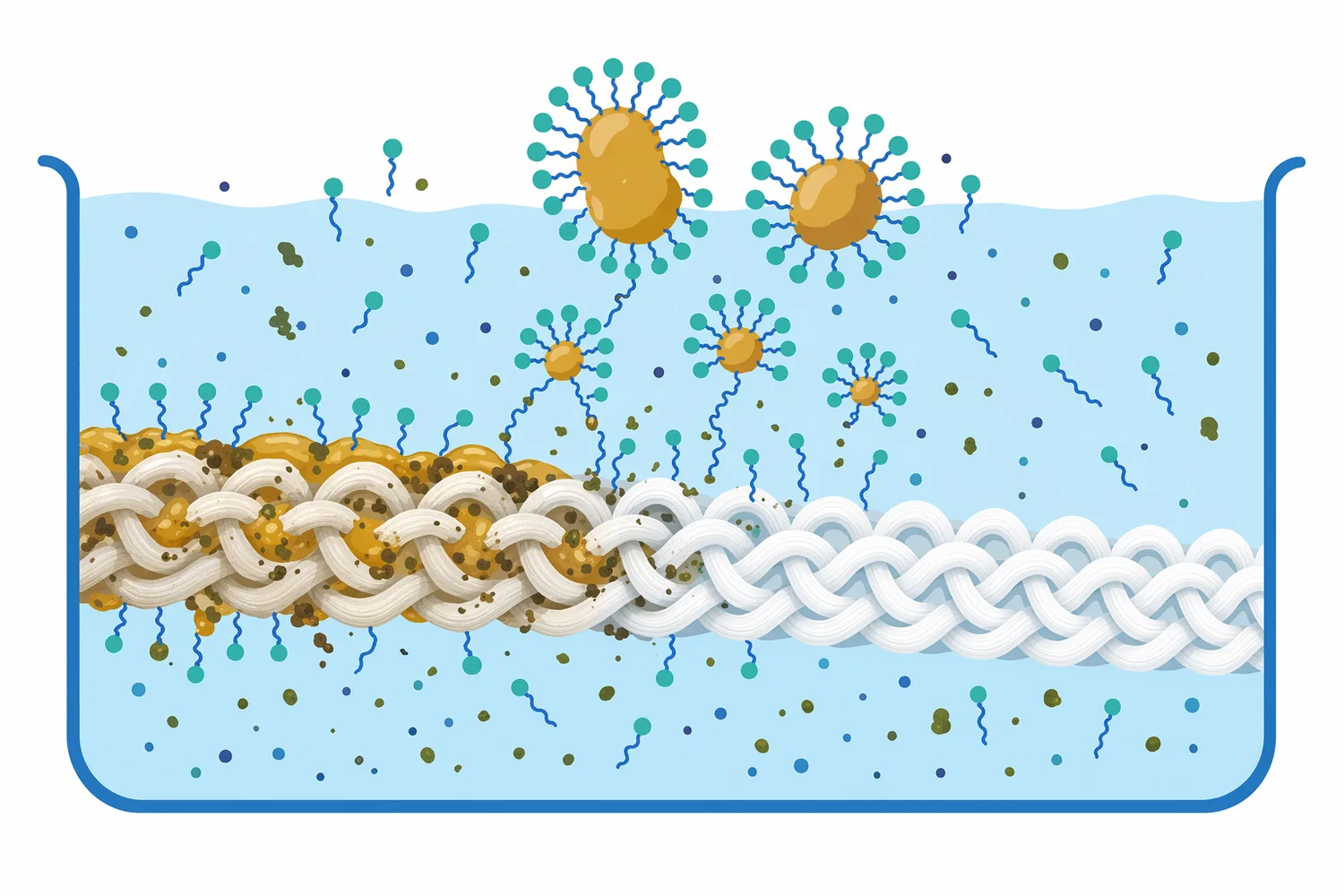
Once the liquor enters the fabric, it still has to remove material that does not naturally dissolve in water. Oils and waxes prefer other oils; particulate soils may cling to the fiber surface; polymeric residues may be trapped in yarn structure. The oil-loving portion of a surfactant molecule associates with hydrophobic matter, while the water-loving portion remains compatible with the aqueous bath. This is what allows oily material to be lifted, broken into fine droplets, and transported away instead of remaining as a continuous film on the textile.
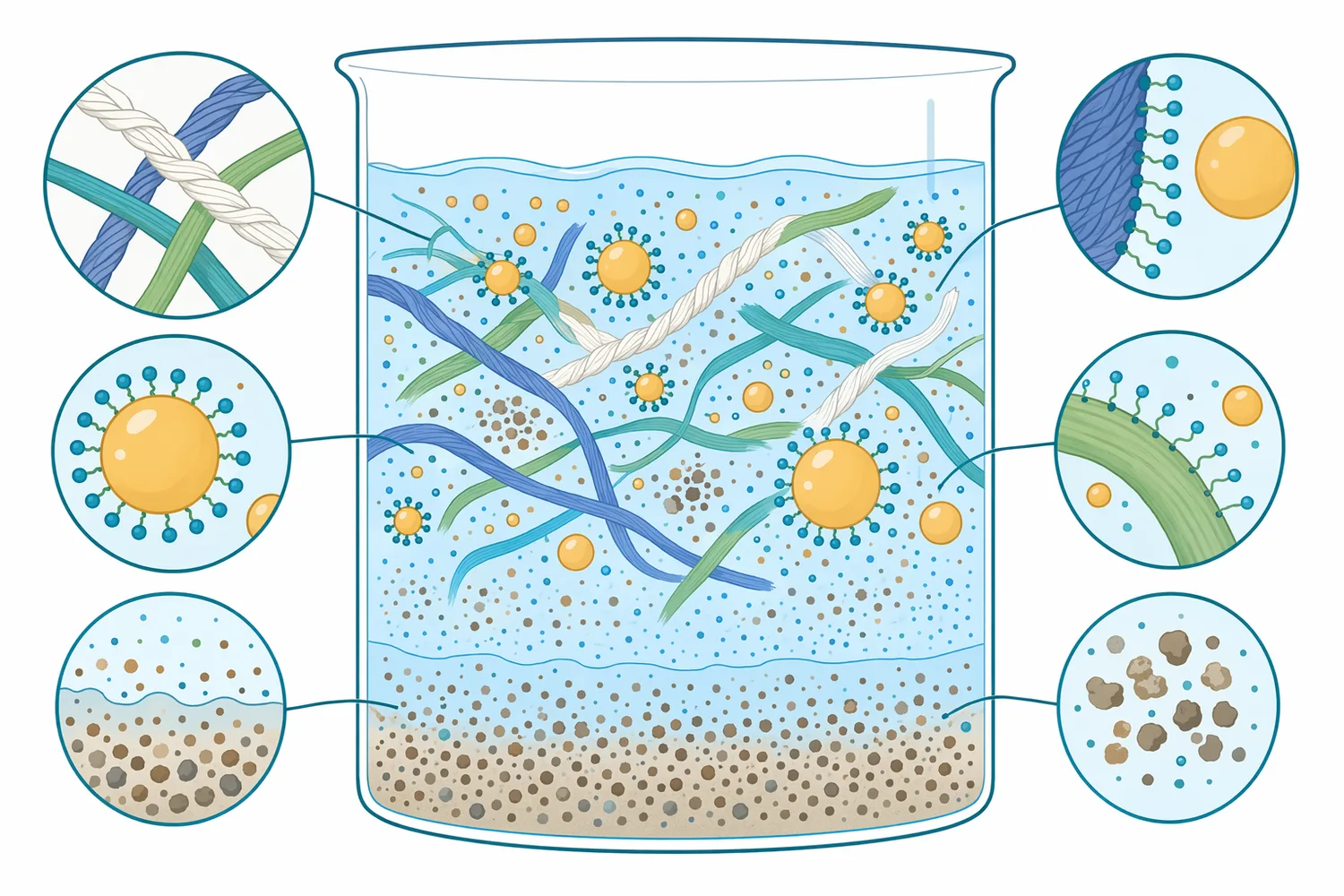
Scouring is not complete when soil detaches from the fiber. In a real bath, detached material remains close to the textile for minutes or longer while the goods circulate, rotate, or are mechanically agitated. Without adequate dispersion and anti-redeposition control, loosened oil droplets, wax fragments, fines, or pigment-like particles can return to the fabric surface and create grey cast, specks, dull shade, harshness, or inconsistent absorbency.
Anti-redeposition works by changing the behavior of suspended soil and fiber surfaces in the bath. Surfactant and polymeric anti-redeposition systems can create hydrated, repulsive, or sterically protected interfaces around particles and fibers, making it less favorable for soil to reattach. Classic radiotracer studies on sodium carboxymethyl cellulose and cotton investigated anti-redeposition by tracking how soil interacted with cotton in washing systems, supporting the long-standing principle that surface adsorption and barrier formation can reduce soil return to cellulosic substrates [3].
The same principle matters for synthetic fabrics, but the surface chemistry is different. Polyester, polyamide, acrylic, and blended substrates can attract hydrophobic soils and oily residues strongly, especially in recirculating wash or preparation baths. Research on polymeric anti-redeposition agents for washing synthetic fabrics addresses this need directly: redeposition control is not only a cotton problem, but a broader textile-cleaning function governed by the interaction between soil, polymer or surfactant, water chemistry, and fiber surface [4].
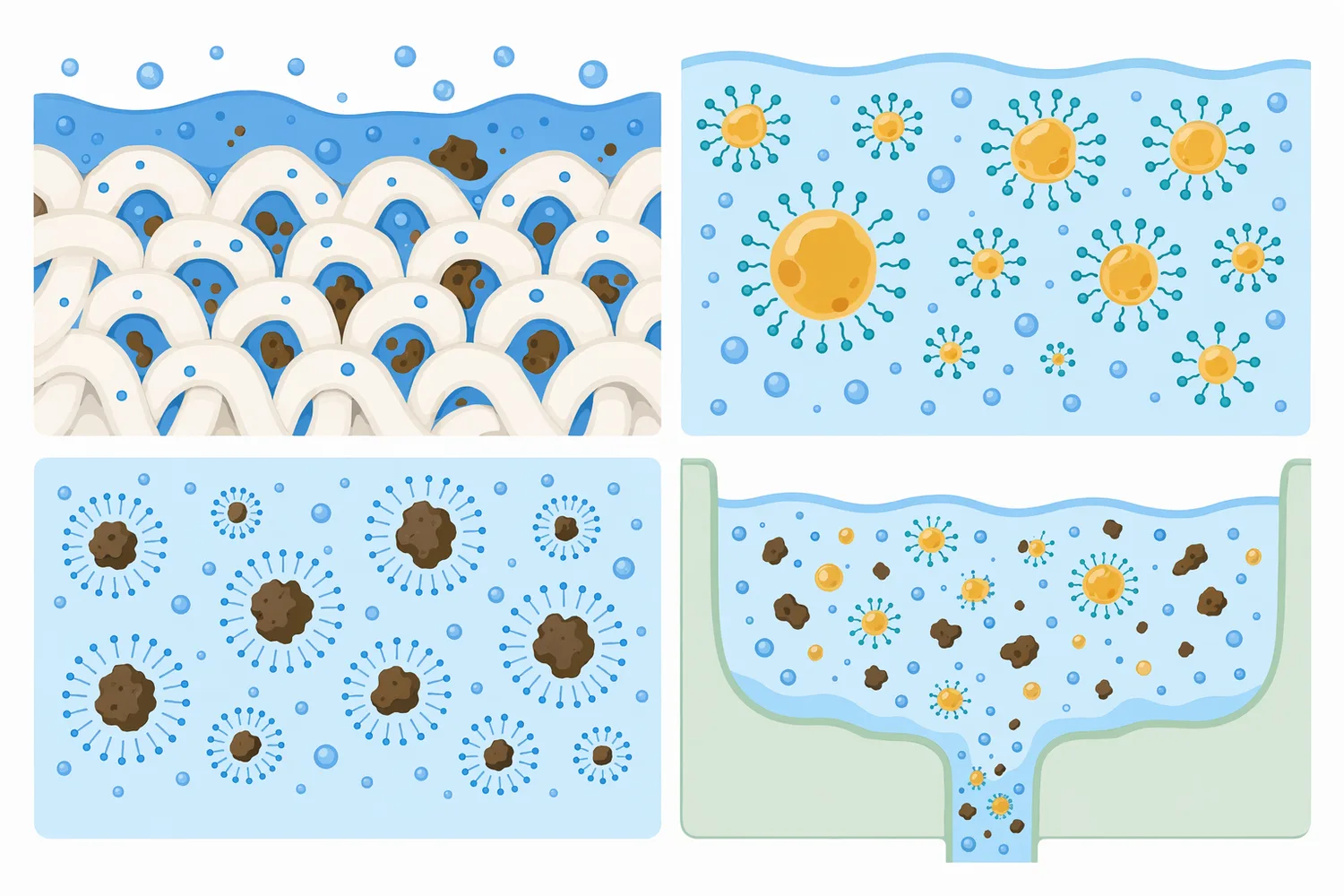
The first function is wetting. Surfactant molecules orient at air-water, fiber-water, and oil-water interfaces, lowering interfacial tension. When interfacial tension drops, the bath spreads more easily across the textile and penetrates into yarn bundles, fabric pores, and compact constructions that plain water may enter slowly or unevenly.
This matters because textile impurities are not located only on a flat exterior surface. Cotton waxes, seed-coat fragments, knitting oils, and size or finish residues may be distributed through yarn structure or held at fiber crossover points. Better wetting increases contact between the liquor and those sites, giving detergency, alkali, enzymes, or other process components access to the material they need to act on. Enzymatic and lower-impact cotton-cleaning research continues to emphasize that surface accessibility and controlled modification of cotton fiber components are central to effective preparation and laundering [1].
The second function is emulsification. Hydrophobic impurities do not mix with water by themselves, so the bath needs molecules that can bridge oil and water. Surfactants surround tiny oil or wax domains with their hydrophobic tails oriented inward and hydrophilic heads outward, allowing those droplets to remain suspended in water long enough to be drained and rinsed.
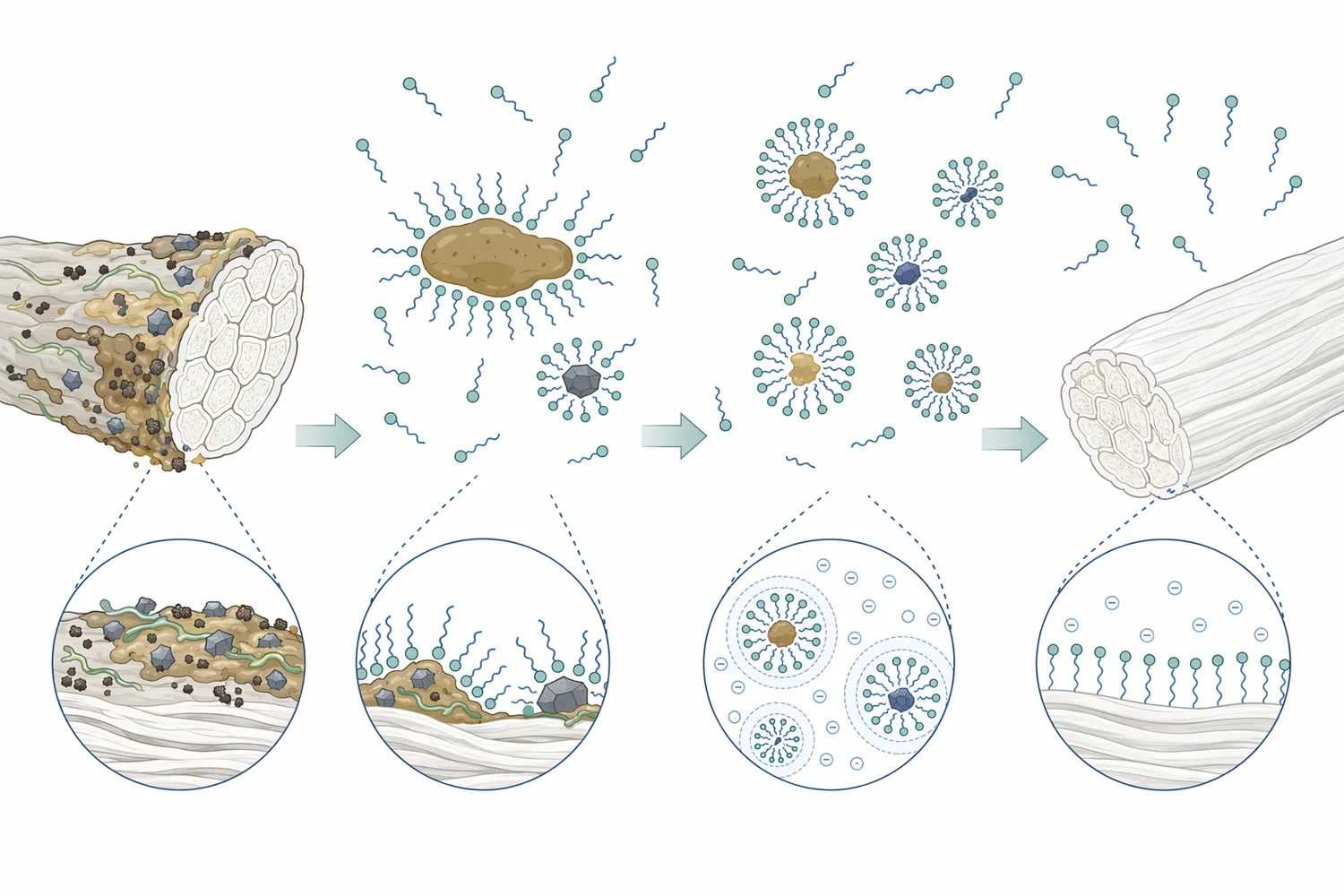
This is especially important in scouring because the removed materials are often a mixture rather than a single soil. Natural waxes may combine with spin finishes, lubricant residues, or loose fiber fragments. If the emulsified droplets coalesce into larger oil films, they can redeposit or create streaks. A well-functioning scouring surfactant keeps these materials finely dispersed, increasing the probability that they leave with the spent liquor.
The third function is dispersion. Textile baths often contain fine particles: dust, cellulosic fines, seed-coat fragments, pigment traces, degraded size, insoluble mineral matter, or fragments of loosened surface deposits. These particles can settle, agglomerate, or lodge back onto the textile if they are not stabilized in the bath.
Dispersing action works by helping particles remain separated. Surfactant adsorption can change particle surface energy, while polymeric anti-redeposition effects can add steric spacing or hydration layers. Textile deposition research in laundering contexts shows that textile substrate, formulation chemistry, and realistic wash conditions strongly influence what deposits on fabrics and how much remains after processing [5].
The fourth function is soil suspension. In simple terms, the bath has to carry removed material like a vehicle until the drain and rinse stages. If the bath loses suspension stability, the textile becomes the nearest large surface available for soil to attach to.
Anti-redeposition action is therefore a time-dependent control function. It is not only about removing more soil at the beginning of the process; it is about keeping loosened material away from the fabric throughout circulation, hold time, cooling, and rinsing. This is why anti-redeposition is particularly useful in garment washing, batch scouring, combined preparation, and any process where removed impurities remain in contact with the goods for an extended period.
The table below places a multifunctional scouring and anti-redeposition surfactant in context. It does not replace the process recipe; instead, it clarifies the role such an auxiliary plays alongside conventional or enzyme-supported preparation.
| Scouring approach | Main action on the textile | Typical strengths | Practical limitations | Where a multifunctional surfactant contributes |
|---|---|---|---|---|
| Conventional alkaline scouring | Uses strong alkalinity to remove or saponify natural fats, waxes, pectins, and other impurities | Robust impurity removal; widely established for cotton preparation | Can increase chemical load, energy demand, wastewater burden, and risk of harsh handle or fiber impact if not controlled | Improves wetting, oil removal, bath dispersion, and rinsing of loosened impurities |
| Enzyme-supported bioscouring | Uses substrate-specific enzymes to modify or remove selected non-cellulosic materials under milder conditions | Supports lower-impact preparation concepts; can improve absorbency while reducing severe chemistry | Enzymes act on specific substrates and may need supportive auxiliaries for wetting and removal of hydrophobic material | Helps the bath reach the fiber, emulsifies loosened oils and waxes, and reduces redeposition during treatment |
| Surfactant-assisted washing or preparation | Uses surface-active chemistry to wet, detach, emulsify, disperse, and suspend soils | Broad utility across fibers, blends, garments, and post-treatment washes | Does not chemically digest every impurity on its own; performance depends on the overall process | Provides the wetting, detergency, anti-redeposition, and bath-stabilizing functions central to this product |
| Combined scouring-dyeing concepts | Integrates preparation and coloration functions to reduce separate process stages | Can reduce process time, baths, and handling when well controlled | Higher demand for bath stability and compatibility | Supports uniform wetting, impurity removal, leveling support, and control of loose soil in the same bath |
Multifunctional scouring-dyeing auxiliary patents describe precisely this process logic: combine wetting, impurity removal, chelation or stabilization concepts, and dyeing support so the fabric enters coloration with improved absorbency and more stable bath behavior [2].
Enzymes and surfactants do different jobs. Enzymes catalyze specific reactions on specific substrates: amylases attack starch-based sizes, pectinases act on pectic substances, cellulases modify cellulose surfaces, catalases decompose residual hydrogen peroxide, and other enzymes may be used in defined textile processes. Surfactants do not catalyze those reactions; they improve contact, transport, removal, dispersion, and rinsing around them.
That distinction is useful in enzyme-supported scouring. An enzyme may loosen a structural impurity or modify the fiber surface, but hydrophobic waxes, oils, and loosened debris still need to leave the fabric and stay in the bath. A scouring and anti-redeposition surfactant supports the physical part of that removal: it helps the liquor penetrate, assists the detachment of oily material, and keeps released soil suspended.
Cotton-focused enzymatic research also points toward a broader sustainability objective: improving cleaning and preparation through more targeted fiber-surface modification rather than relying only on severe conventional chemistry. Enzymatic modification of cotton fiber polysaccharides has been described as an enabler of more sustainable laundry detergent approaches, reinforcing the value of combining biochemical specificity with effective surfactant transport and anti-redeposition chemistry [1].
Cotton preparation is a primary use area because cotton carries natural impurities that reduce absorbency and interfere with dyeing. A scouring surfactant helps wet the fiber mass, remove oily and waxy components from the surface, and keep detached materials dispersed during the bath cycle.
This is especially relevant for knitted and woven cotton prepared before reactive dyeing. Reactive dyeing depends on liquor access to fiber surfaces and internal accessible zones; if hydrophobic residues remain unevenly distributed, dye uptake can become uneven. Multifunctional surfactant support improves the physical conditions for dyeing by promoting uniform wetting and reducing the chance that scoured-off matter returns to the fabric.
Cellulose-rich regenerated fibers such as viscose, modal, lyocell-type materials, and their blends may not carry the same natural wax profile as raw cotton, but they still encounter spin finishes, processing oils, handling soils, and particulate contamination. Patent literature on multifunctional scouring and dyeing agents explicitly includes cellulose-rich fabric concepts, showing the technical relevance of surfactant-based wetting and impurity-removal systems beyond greige cotton alone [2].
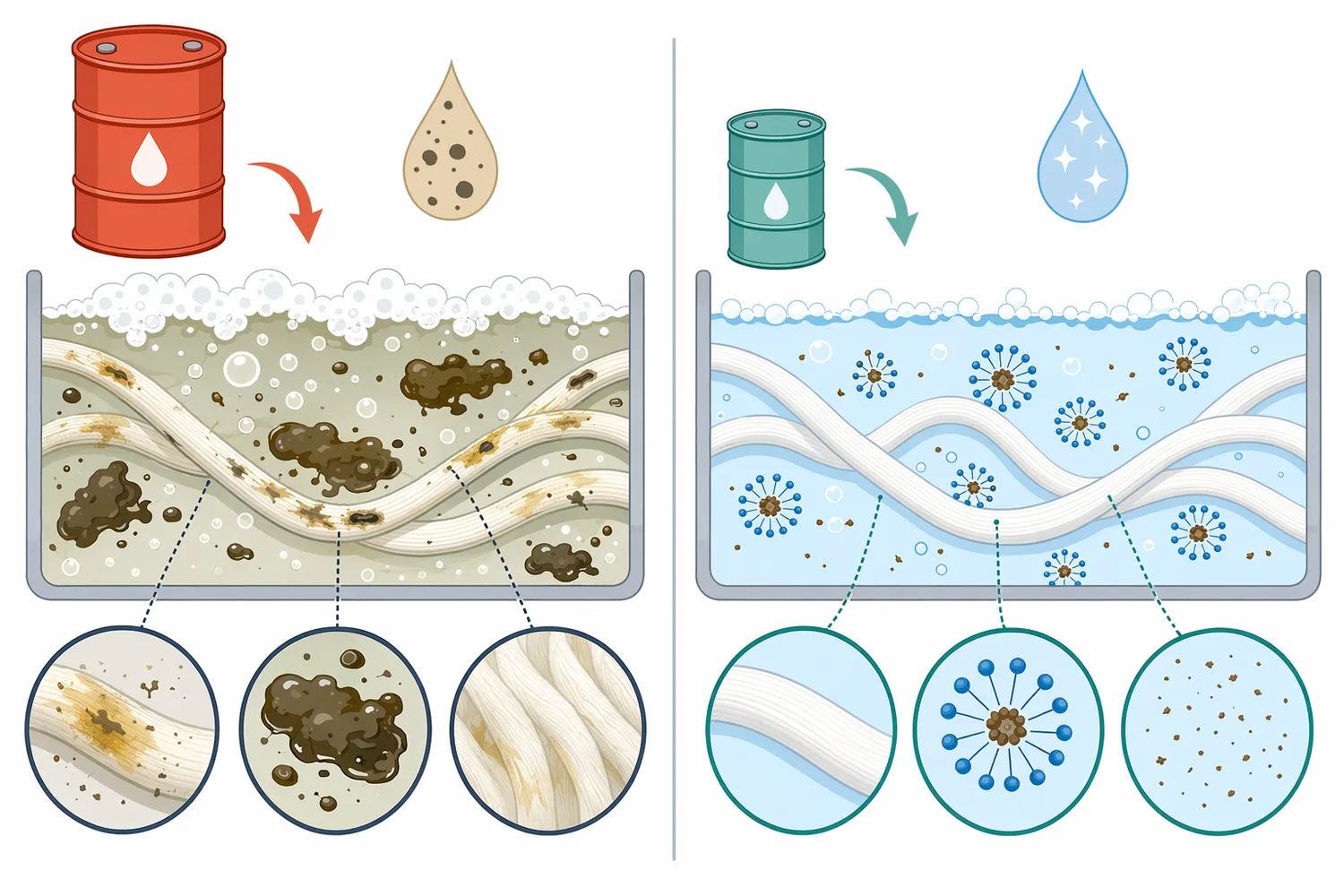
Garment washing places a high premium on anti-redeposition because the bath often contains a complex mixture of lint, softener residues, dyestuff traces, abrasion products, oils, and particulate soil. As garments tumble or circulate, removed material can repeatedly contact the fabric surface.
A multifunctional surfactant helps reduce this risk by dispersing loose matter and emulsifying hydrophobic residues. In practice, this supports a cleaner appearance and more consistent handle, particularly when garments have high surface area, raised fibers, brushed finishes, or dark shades where redeposited lint or dulling is easy to see.
The same concept applies to fabric washing after desizing, bleaching, enzymatic treatment, or dyeing. Once a process step has loosened impurities, the wash stage must remove them effectively. Anti-redeposition support is valuable because rinsing is not simply dilution; it is the controlled removal of suspended and emulsified matter from a moving textile system.
Jute, ramie, flax, hemp, and other bast fibers contain non-cellulosic components such as pectins, hemicelluloses, lignin-associated materials, waxes, and natural oils. These materials can reduce softness, absorbency, and dyeing consistency if not adequately removed or modified.
Enzyme-based and lower-impact scouring studies on natural fibers have focused on replacing or reducing harsh chemical treatments while improving absorbency and dyeability. In such systems, a surfactant contributes by improving liquor penetration into fiber bundles and supporting the removal of loosened hydrophobic matter. The surfactant is not performing the enzymatic breakdown, but it helps move the by-products and associated soils out of the textile structure.
Natural-fiber blends can be more complex because different components may have different surface energies and soil affinities. A cotton-polyester blend, for example, may contain cotton impurities, synthetic-fiber spin finish residues, and hydrophobic soils that prefer the polyester phase. Anti-redeposition control helps reduce the transfer of loosened material from one fiber component back onto another during circulation.
Synthetic fabrics do not require cotton-style removal of natural waxes, but they still need wetting, oil removal, washing, and redeposition control. Polyester and other hydrophobic fibers can retain oily soils strongly, and their surfaces may encourage redeposition if oily droplets are not well emulsified.
Research specifically addressing polymeric soil anti-redeposition for synthetic fabrics confirms that this is a distinct and important detergency challenge. The substrate matters: soil behavior on synthetic fibers is not identical to soil behavior on cotton, which is why surfactant and anti-redeposition effects are considered across both natural and synthetic textile systems [4].
A multifunctional scouring surfactant can therefore be useful in synthetic fabric preparation, heat-setting residue removal, garment washing, and blend processing where oils, finishes, and fine particulate matter must be controlled. The expected benefit is cleaner bath behavior and reduced return of loosened contaminants to the textile surface.
Textile wet processing is highly sensitive to water chemistry. Hardness ions, suspended solids, residual alkalinity, electrolytes, and auxiliary interactions can influence wetting, emulsification, dye behavior, and redeposition. A surfactant system can improve the physical handling of oils and soils, but the whole bath environment still determines final results.
Multifunctional systems are valuable because they help stabilize multiple interfaces at once: fiber-water, oil-water, soil-water, and sometimes dye-fiber environments. When these interfaces are more controlled, the bath is less likely to produce localized impurity buildup or unstable emulsions. This is one reason multifunctional scouring and dyeing auxiliary concepts combine wetting and detergency with other bath-support functions rather than treating scouring as a single-action event [2].
Substrate differences also matter. Studies of deposition on different textiles under realistic laundering conditions show that fabric type affects how materials deposit and persist. That principle applies beyond fragrances: any suspended or emulsified material in a textile bath interacts with the fiber surface, so redeposition control must be understood as a fabric-and-bath phenomenon rather than as a standalone chemical label [5].
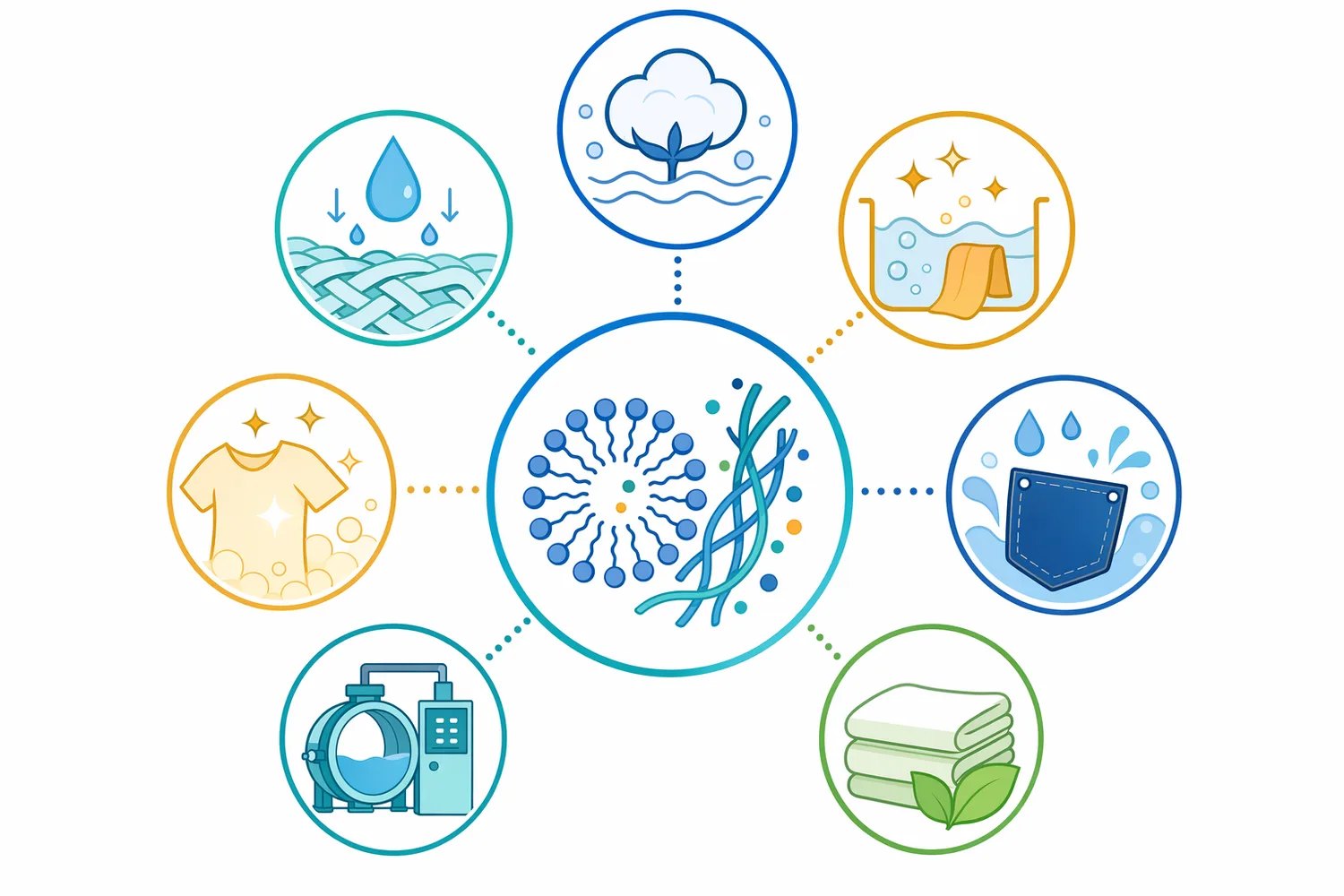
Lower-impact textile preparation is a major driver for enzyme-supported and multifunctional auxiliary approaches. Conventional preparation can consume significant water, energy, alkali, and rinsing capacity. If preparation can be made more targeted, more efficient, or less severe while maintaining quality, the process can support broader sustainability goals.
Enzyme-supported textile processing is widely discussed because enzymes can act under milder conditions and on defined substrates. Industry and technical literature describe enzymes in desizing, scouring, biopolishing, peroxide removal, and other textile applications, with the general aim of reducing severe chemistry while maintaining processing performance.
A surfactant-based scouring and anti-redeposition auxiliary contributes to the same direction from a different angle. It can help the bath do more useful work by improving wetting, increasing contact with impurities, stabilizing removed soils, and supporting rinsing efficiency. Those functions can complement enzyme-supported or lower-alkali concepts, although the final environmental outcome depends on the full process design, machinery, water use, effluent handling, and fabric specification.
The most immediate change is wet-out. Instead of water sitting on hydrophobic patches or entering the fabric slowly, the liquor spreads and penetrates more evenly. This does not simply make the fabric “cleaner” in a general sense; it changes the contact pattern between bath and substrate, allowing the process chemistry to reach areas that were previously shielded by air, wax, oil, or compact yarn structure.
The second change is surface cleanliness. Oils and waxes that previously formed discontinuous films or localized deposits are broken into bath-compatible droplets. Particulate matter is less likely to agglomerate and sit back down on the textile. This produces a fabric surface that is more uniformly accessible for dye, finish, or further washing.
The third change is bath stability. A bath containing loosened impurity is not automatically a cleaning bath; it can become a redeposition bath if the removed matter is not controlled. Anti-redeposition action keeps the removed material dispersed or suspended long enough to leave with the spent liquor. Radiotracer work on cotton anti-redeposition mechanisms illustrates that preventing soil return is a measurable surface-interaction problem, not merely a rinsing afterthought [3].
The fourth change is process consistency. More uniform wetting and less redeposition reduce the variability that can appear as shade differences, dullness, specks, or inconsistent handle. The surfactant does not guarantee a perfect process under all conditions, but it supports the physical conditions required for repeatable wet processing.
Enzymes.bio supplies Multifunctional Textile Scouring & Anti-Redeposition Surfactant directly online by the 1 kg unit. The buyer places the order and pays online; the order is then processed and shipped. A Certificate of Analysis and Safety Data Sheet come with the order.
This format is intended for straightforward purchasing rather than a custom development process. The product should be understood as a general textile wet-processing auxiliary for scouring, washing, anti-redeposition support, and enzyme-compatible process concepts where the user’s existing process knowledge and fabric requirements guide application.
Multifunctional Textile Scouring & Anti-Redeposition Surfactant is a surfactant-based process aid for textile preparation, washing, scouring, and related wet-processing steps. Its core functions are wetting, penetration, emulsification of oils and waxes, dispersion of particulate matter, and reduction of redeposition during processing.
The scientific basis is well established at the mechanism level. Textile substrates carry hydrophobic and particulate impurities that interfere with absorbency and dyeing; surfactants reduce interfacial tension, help detach hydrophobic material, and stabilize loosened soils in the bath. Anti-redeposition research on cotton and synthetic fabrics shows that preventing removed soil from returning to the textile is a real and important detergency function governed by surface interactions, bath chemistry, and substrate type [3].
The product is especially relevant for cotton and cellulose-rich preparation, garment washing, post-treatment washing, bast-fiber processing, synthetic fabrics, blends, and enzyme-supported wet-processing routes. It is not a universal replacement for every scouring chemical or enzyme, but it is a practical multifunctional auxiliary for achieving cleaner fabric surfaces, more uniform wetting, and better control of soil movement in the processing bath.
Sold by the 1 kg unit, in stock and ready to ship. Order directly on our store — pay online and we process your order. A Certificate of Analysis and Safety Data Sheet are included with every order.
Buy Multifunctional Textile Scouring & Anti-Redeposition Surfactant →Numbered in order of first citation. Open-access sources, each verified reachable at publication; citation numbers in the text link here.