
Nattokinase is a fermentation-derived proteolytic enzyme associated with Bacillus subtilis natto, the microorganism used to make the traditional Japanese fermented soybean food natto. In commercial use, it is mainly used as a nattokinase supplement ingredient for capsules, tablets, and dry blends positioned around enzyme nutrition, natto fermentation, and circulatory-wellness education. Enzymes.bio supplies Nattokinase directly online by the 1 kg unit, with the order processed and shipped after online purchase and a Certificate of Analysis and Safety Data Sheet included.
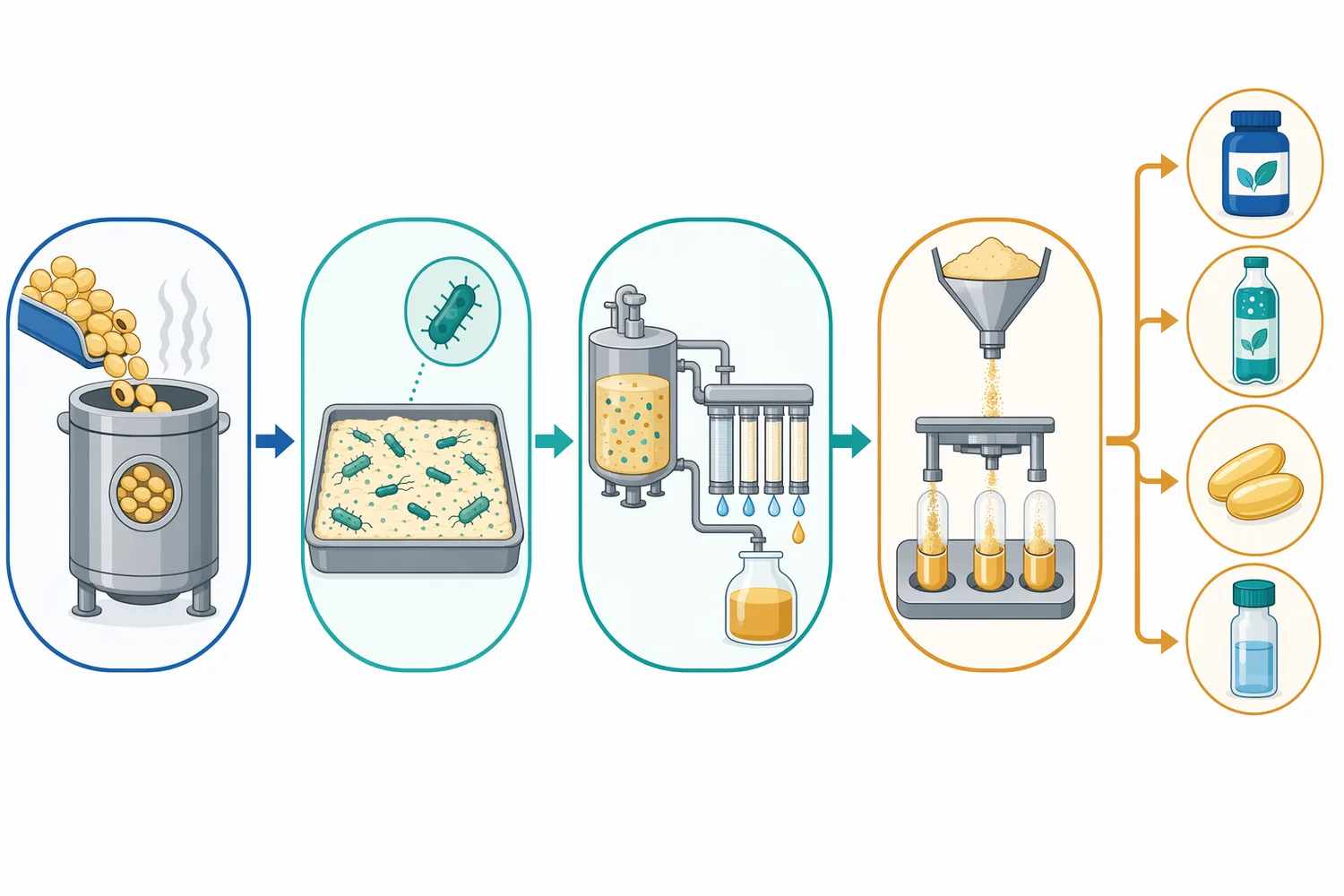
Nattokinase is best understood as a microbial protease: an enzyme that cuts peptide bonds in proteins. Its commercial identity comes from natto fermentation, where Bacillus subtilis natto grows on cooked soybeans and produces several characteristic fermentation products, including nattokinase and poly-γ-glutamic acid, the sticky polymer associated with natto’s texture [1]. This is why searches for “nattokinase food,” “nattokinase foods,” or even “nattokinase beans” usually lead back to natto, the fermented soybean food, rather than to ordinary unfermented soybeans.
For supplement and functional-food applications, the value of nattokinase is not that it behaves like a general soy ingredient. It is used because it is an enzyme with proteolytic and fibrinolytic research interest. Reviews describe nattokinase as a subtilisin-like serine protease from Bacillus fermentation, with published work focused on fibrin degradation, thrombus-related models, oral use, and broader cardiovascular-wellness endpoints [2]. That enzyme-specific role is what separates a concentrated nattokinase ingredient from whole natto powder, soybean flour, or other fermented soy materials.
In finished products, nattokinase is most often seen in capsules, tablets, and powder blends where a brand wants to communicate “natto-derived enzyme” without asking the consumer to eat natto itself. Natto has a distinctive odor, sticky texture, and strong fermented flavor; those sensory traits are part of its traditional food identity but can be difficult in modern supplement formats. A nattokinase ingredient allows the enzyme story to be used in a compact format that fits conventional dietary supplement manufacturing and consumer use patterns [3].
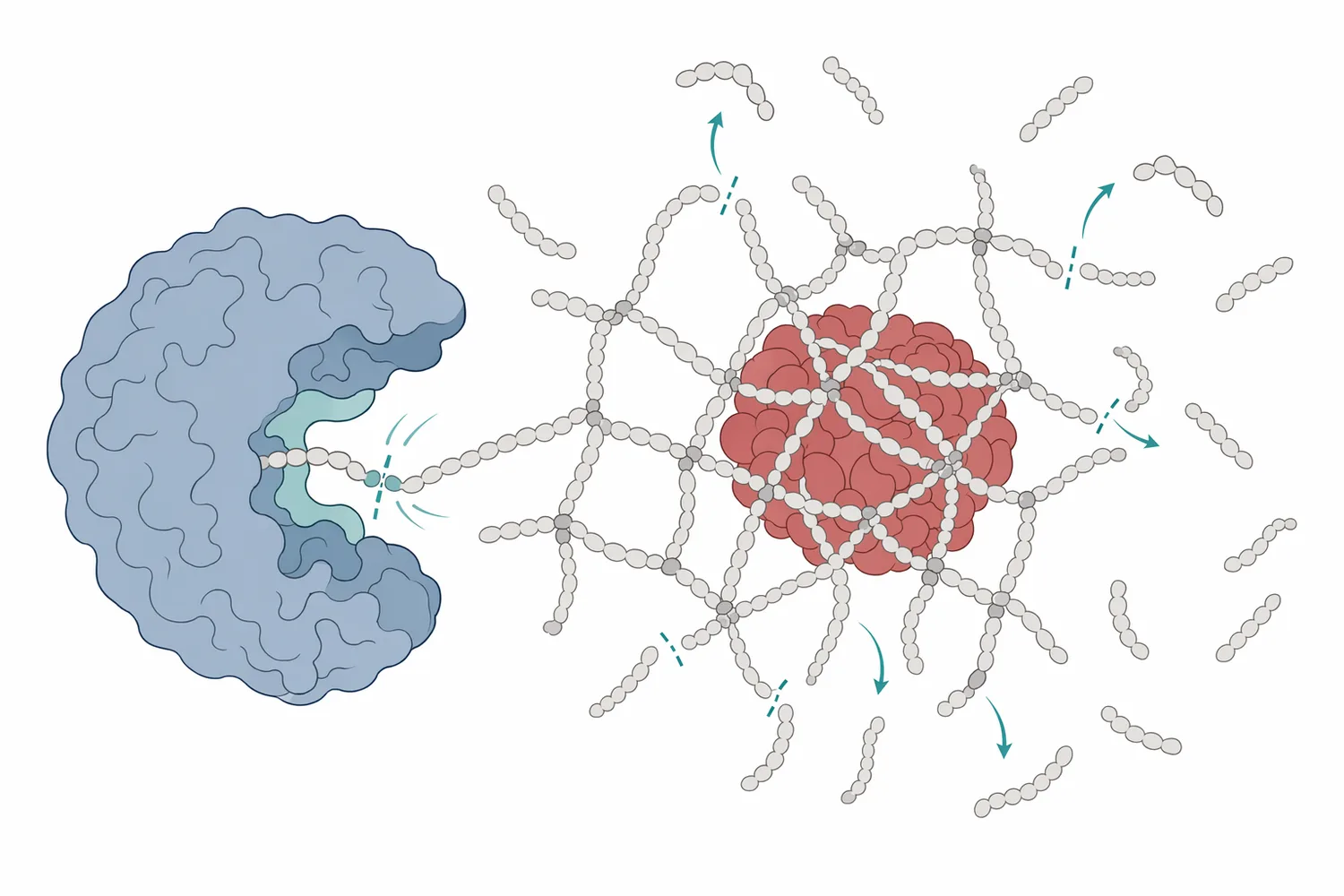
The core mechanism is proteolysis. Proteins are long chains of amino acids folded into functional structures; proteases such as nattokinase recognize accessible peptide bonds and cleave them, converting a larger protein network into smaller fragments. In the context of nattokinase research, the substrate of greatest interest is fibrin, the insoluble protein mesh that helps stabilize blood clots after the coagulation cascade converts soluble fibrinogen into fibrin strands [2].
Fibrin is not a loose pile of protein. It is a crosslinked, mesh-like structure that traps blood cells and reinforces a clot. A fibrinolytic enzyme acts by cutting protein bonds within that mesh, which weakens the network and changes its physical integrity. In laboratory and model systems, this can appear as a clearer zone, reduced clot mass, or breakdown of a fibrin-containing structure, depending on the design of the experiment; the underlying change is that the continuous fibrin network is being fragmented into smaller protein pieces [4].
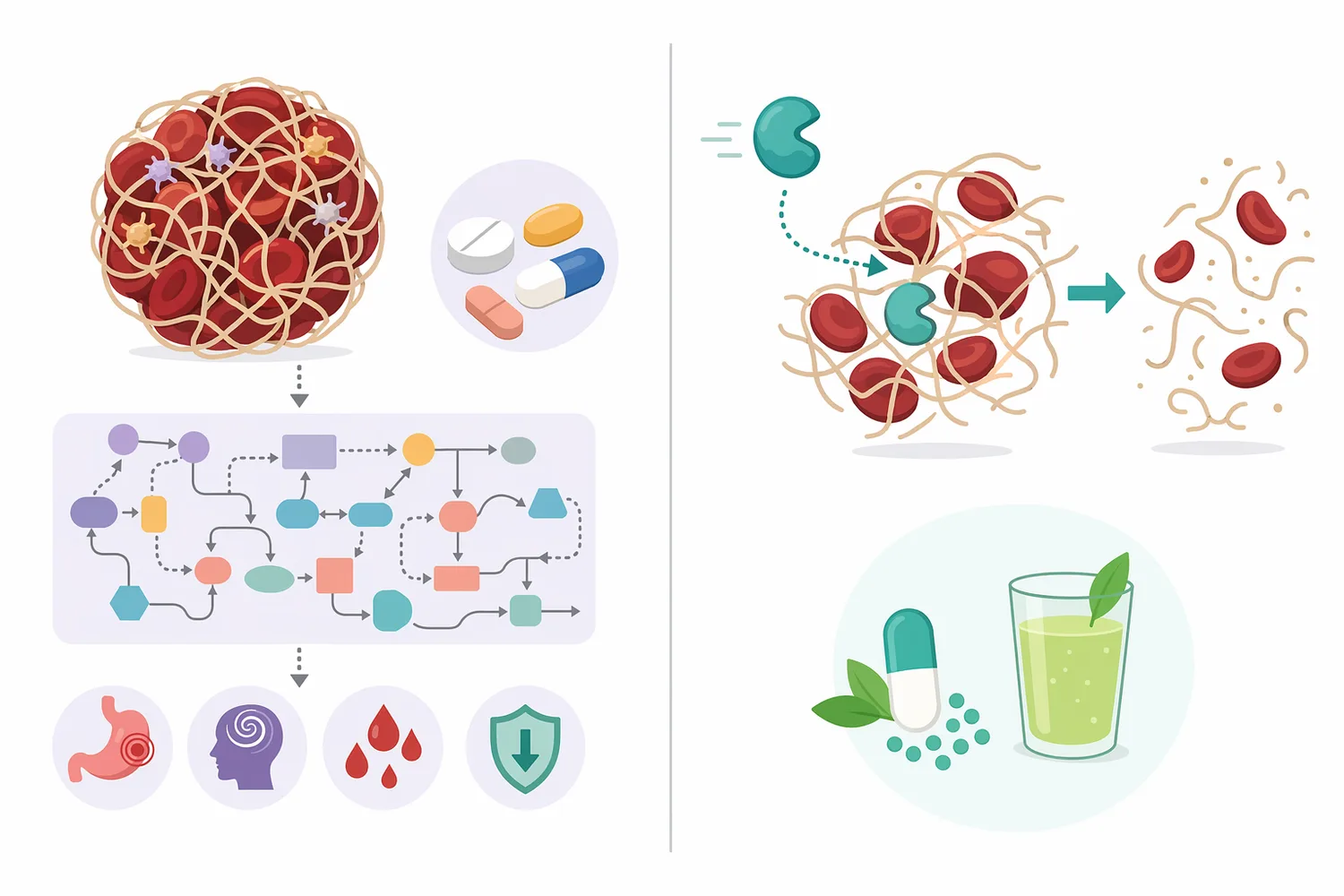
Nattokinase is also discussed in relation to the body’s endogenous fibrinolytic system. Human fibrin turnover is normally controlled by plasmin, plasminogen activators, inhibitors, platelets, endothelial factors, and coagulation proteins. Reviews describe nattokinase research as involving both direct fibrin-degrading activity and indirect effects on fibrinolytic balance, but these mechanisms should not be converted into drug-like claims for finished supplements [3]. In practical customer-facing language, nattokinase can be described as a natto-derived protease studied for fibrin-related protein breakdown, not as a product that “treats” or “dissolves” dangerous clots.
This distinction matters. Clotting is essential for wound repair, and unwanted interference with hemostasis can be risky for some people. Nattokinase benefits are therefore best communicated as part of responsible circulatory-wellness education, while avoiding language that implies prevention or treatment of stroke, thrombosis, heart attack, or any other disease. That approach is more accurate scientifically and more appropriate for dietary supplement and functional wellness positioning [5].
Traditional natto is made by fermenting soybeans with Bacillus subtilis natto. During fermentation, the organism secretes enzymes and produces metabolites that change the soybean matrix: proteins are partially hydrolyzed, flavor compounds develop, and the characteristic sticky polymer network appears. Nattokinase is one of the enzymes associated with this fermentation ecology, which is why natto remains the central cultural and scientific reference point for nattokinase supplements [6].
A nattokinase supplement uses the enzyme concept without requiring whole natto food. This matters because the supplement buyer is usually looking for a measured, convenient format such as a capsule or tablet, while the consumer of natto food is accepting a full fermented-soy sensory experience. The two are related, but they are not interchangeable: natto food contains a complex mixture of soybean nutrients, fermentation products, microbial materials, and vitamins, while a nattokinase ingredient is used specifically for the enzyme component [1].
This distinction also helps explain why consumers search for combinations such as “nattokinase with vitamin K2,” “nattokinase vitamin K2,” “vitamin K2 and nattokinase,” or “vitamin K2 nattokinase.” Natto is known in the wellness market as a source associated with both nattokinase and vitamin K2, but the two are different types of ingredients. Nattokinase is a protein enzyme; vitamin K2 is a fat-soluble vitamin involved in vitamin K-dependent biological processes. Some finished products combine vitamin K2 with nattokinase for category positioning, but the ingredients should be described separately and accurately [2].
Nattokinase belongs to the broader family of proteolytic enzymes, but it is not positioned in the same way as every other protease. Some proteases are mainly used for digestion, some for food protein modification, and some for industrial processing. Nattokinase is commercially distinctive because of its natto origin and its fibrin-related research history [3].
| Protease type | Conceptual operating environment | Typical commercial association | How it changes protein substrates | Relevance to nattokinase positioning |
|---|---|---|---|---|
| Acid proteases | Acidic environments | Digestive and food-processing contexts where low-pH protein hydrolysis is useful | Cleave proteins under acidic conditions, often changing solubility, texture, or digestibility | Useful comparison, but not the main identity of nattokinase |
| Neutral proteases | Near-neutral environments | Food protein modification, peptide generation, process aids | Break proteins into smaller peptides with moderate substrate specificity | Shows the general protease principle but lacks natto-specific positioning |
| Alkaline / subtilisin-like proteases | Mildly alkaline to neutral-alkaline research contexts, depending on enzyme source and formulation | Microbial proteases, detergents, protein hydrolysis, specialty enzyme ingredients | Cleave accessible peptide bonds in structured or soluble proteins | Nattokinase is commonly discussed as a subtilisin-like serine protease with fibrin-related research interest [2] |
| Nattokinase | Natto-derived enzyme context; used in supplement and functional wellness products | Nattokinase supplement, fermented-soy enzyme, circulatory-wellness education | Cuts protein substrates relevant to fibrin-focused studies and proteolytic enzyme positioning | Distinguished by Bacillus subtilis natto origin and published fibrinolytic research [4] |
The table is not a purchasing checklist; it is a conceptual map. The practical message is that nattokinase is a protease, but its commercial value comes from the specific combination of natto fermentation heritage, fibrinolytic research, and consumer recognition.
The strongest foundation for nattokinase is its production biology. Biotechnology reviews describe nattokinase as a key enzyme from Bacillus natto-related fermentation and summarize advances in strain development, expression systems, molecular modification, stability improvement, and application research [1]. This gives the ingredient a clear scientific identity: it is not an undefined “fermented soybean extract,” but a named enzyme associated with microbial fermentation.
Research has also explored how nattokinase interacts with protein substrates. Recent work on purification, fibrinolytic activity, and substrate binding investigated nattokinase from Bacillus subtilis and focused on how the enzyme recognizes fibrin-related substrates [4]. Mechanistically, substrate binding is important because an enzyme must first interact with a protein surface before catalytic residues can cut peptide bonds. Stronger or more favorable binding can increase the likelihood that cleavage occurs at accessible sites within the fibrin or fibrinogen structure.
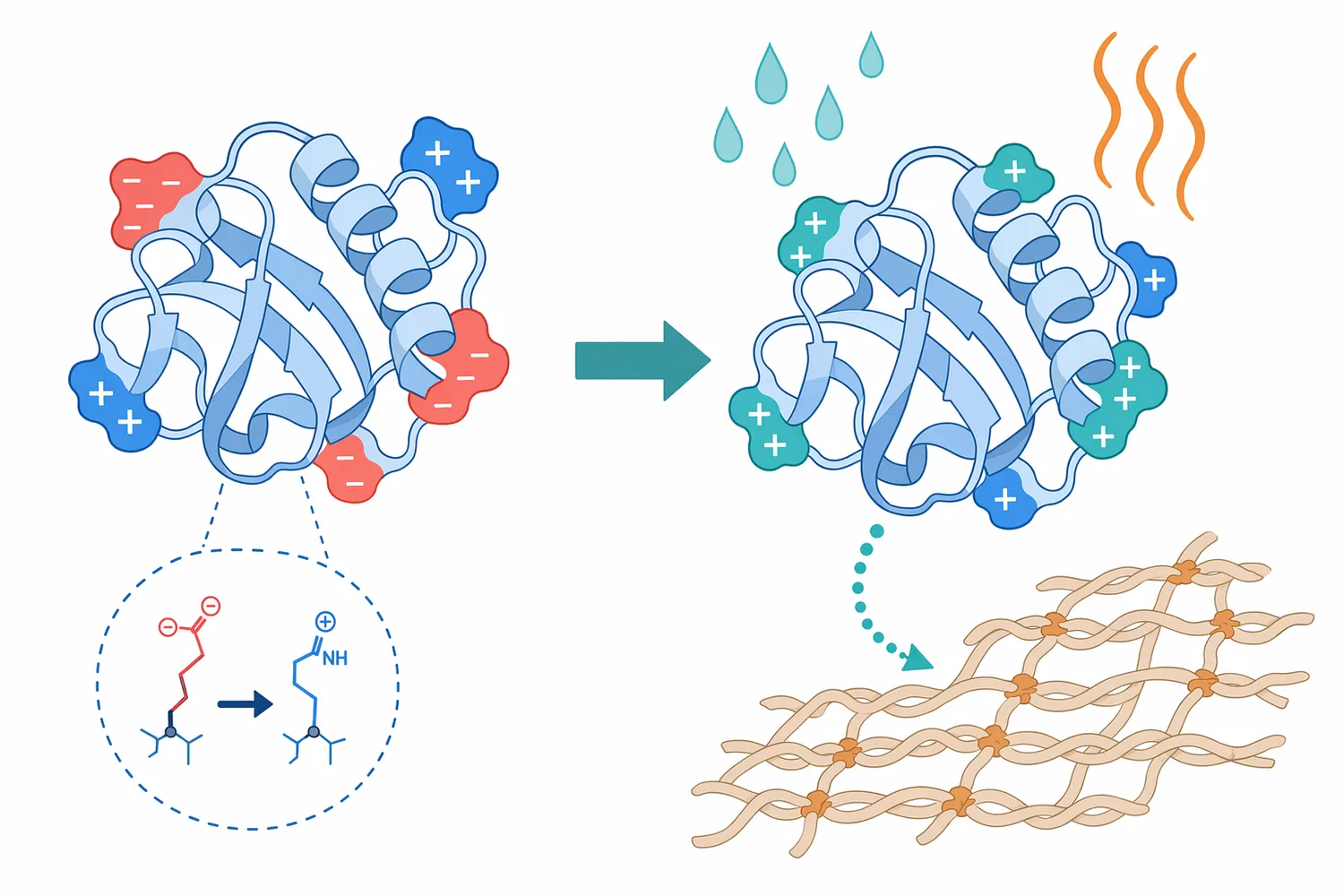
Other studies have examined how the enzyme’s amino acid sequence and surface properties affect performance. Surface charge engineering has been used to improve fibrinolytic activity, acid resistance, and thermostability in nattokinase variants [7]. The mechanism is concrete: changing charged amino acids on the enzyme surface can alter how the protein folds, how it resists unfolding, and how it interacts with charged regions on a substrate or in the surrounding solution. This type of work helps explain why nattokinase performance is not only about the active site; the surrounding protein architecture also affects stability and substrate contact.
Expression research further shows that nattokinase can be studied outside the original natto fermentation organism. Heterologous expression in Pichia pastoris has been investigated for nattokinase from B. subtilis natto, followed by assessment of thrombolytic activity in model systems [8]. For commercial readers, the important point is not the expression platform itself; it is that nattokinase has been treated as a defined enzyme target in biotechnology, with researchers examining production, folding, secretion, and functional behavior.
A 2024 review describes nattokinase as an adjuvant strategy of research interest for non-communicable disease contexts, summarizing fibrinolytic, antithrombotic, anti-inflammatory, and antioxidant effects reported across experimental and clinical literature [3]. The review-level picture is that nattokinase has attracted attention because it touches several biological systems relevant to cardiovascular wellness: protein turnover in fibrin structures, blood-flow-related markers, oxidative stress, inflammatory signaling, and vascular risk factors.
The mechanism behind the fibrinolytic theme is the most direct. Fibrin is a protein polymer, and nattokinase is a protease. When the enzyme encounters accessible fibrin regions, it can hydrolyze peptide bonds, which interrupts the continuity of the fibrin mesh. In a simplified physical sense, a continuous net becomes shorter strands and fragments; that is why nattokinase is repeatedly evaluated in fibrin-focused research models [4].
The antithrombotic discussion is broader and should be handled with care. “Thrombotic” outcomes in humans involve platelets, coagulation factors, vascular endothelium, fibrinolytic inhibitors, blood pressure, lipid status, and underlying medical conditions. Reviews discuss nattokinase in relation to these systems, but supplement language should not imply that a nattokinase supplement can replace anticoagulant or antiplatelet medication [2]. Responsible wording keeps the ingredient in the category of researched enzyme nutrition and circulatory wellness, not disease treatment.
Antioxidant and anti-inflammatory findings are more indirect. Enzyme preparations and fermentation-derived materials may influence oxidative markers or inflammatory mediators in experimental systems, but these effects are not the same as the direct proteolytic cleavage of fibrin. For customer-facing content, the clearest and most defensible mechanism remains: nattokinase is a natto-derived protease studied for protein breakdown in fibrin-related systems, with broader wellness research continuing around vascular and metabolic markers [3].
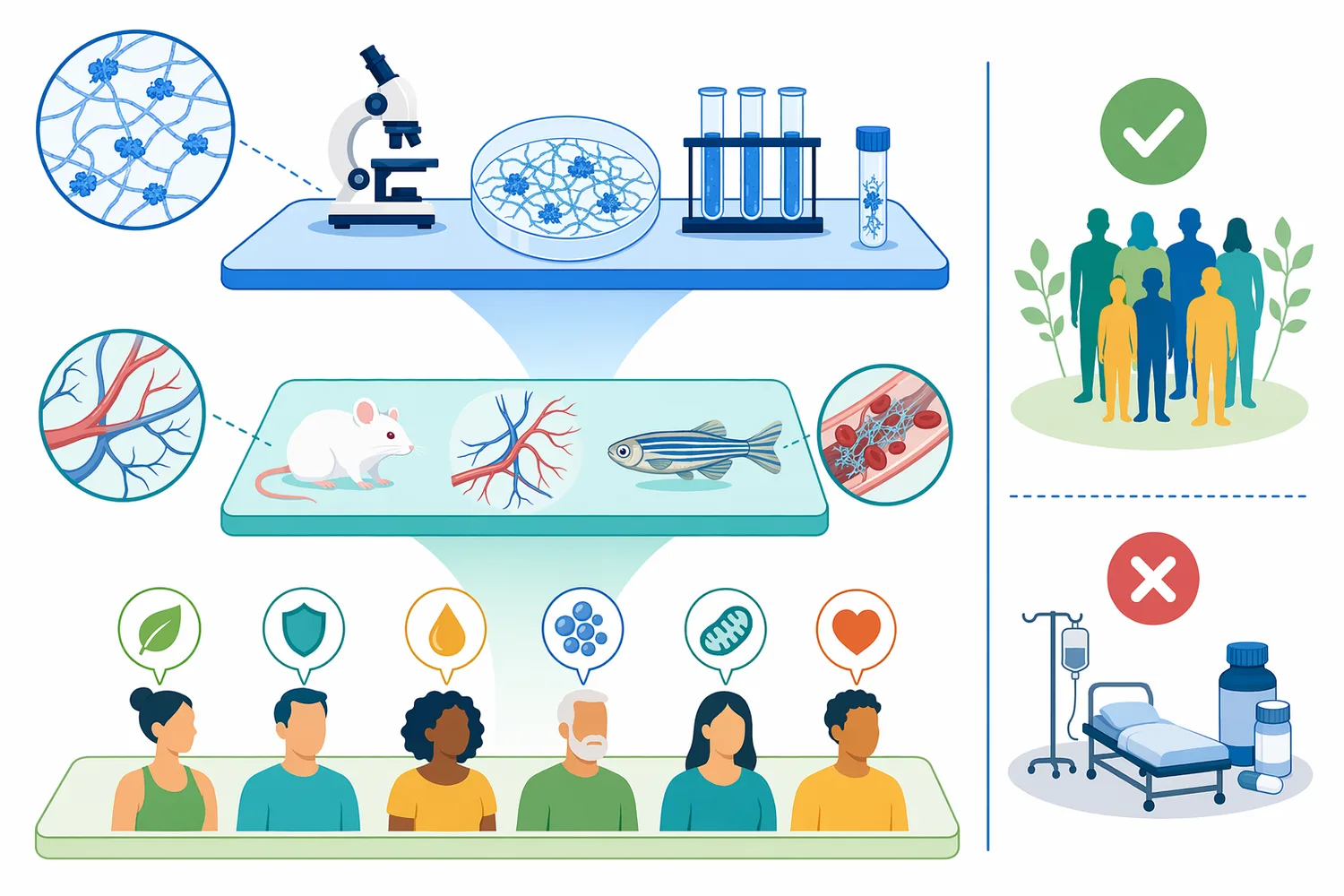
Human research on nattokinase includes controlled and observational-style studies, but it should be interpreted with appropriate caution. A randomized, double-blind, placebo-controlled, multicenter North American clinical trial reported that nattokinase consumption was associated with reduced blood pressure and reduced von Willebrand factor, a cardiovascular risk marker, in the study population [9]. The relevance for finished-product education is that nattokinase has been studied in humans using cardiovascular-related endpoints, not only in bench experiments.
Von Willebrand factor is important because it participates in platelet adhesion and reflects aspects of vascular and hemostatic biology. A reported reduction in that marker does not mean a supplement product can claim to prevent clots or treat vascular disease. It does, however, support why nattokinase continues to appear in circulatory-wellness discussions and why the enzyme is commonly positioned in cardiovascular-support supplement concepts [9].
A larger clinical study with 1,062 participants examined nattokinase in relation to atherosclerosis progression and hyperlipidemia management [10]. The scale of that study is notable because many enzyme ingredients are supported mainly by small mechanistic experiments. Even so, claims made for any finished nattokinase supplement still depend on the product’s jurisdiction, labeling category, formulation, consumer population, and the exact claim language used.
Reviews of nattokinase as an oral antithrombotic agent summarize additional human and preclinical evidence, including effects on fibrinolytic factors and cardiovascular-related markers [2]. The appropriate conclusion is balanced: the literature provides a credible rationale for nattokinase benefits in the circulatory-wellness category, but it does not justify drug-like promises. Customers using nattokinase in finished products should keep claims educational, structure/function-oriented where permitted, and clearly separated from medical treatment claims.
Nattokinase is a protein, and proteins can unfold or lose function when exposed to harsh heat, extreme pH, moisture, or incompatible processing conditions. This is not unique to nattokinase; it is a general feature of enzyme ingredients. When a protease unfolds, the three-dimensional arrangement of its catalytic residues changes, and the enzyme can no longer position the substrate correctly for peptide-bond cleavage [7].
Research on nattokinase stability has therefore focused on ways to protect activity under challenging conditions. Surface charge engineering studies show that changes to the enzyme surface can improve acid resistance and thermostability, which means the folded protein structure becomes more resilient under acidic or heated stress [7]. Mechanistically, this can occur because electrostatic interactions, salt bridges, and surface hydration patterns help stabilize the folded state and reduce unwanted unfolding.
Other work has investigated embedding nattokinase in layered biopolymer structures made with chitosan and γ-polyglutamic acid, followed by evaluation of fibrinolytic activity, stability, and behavior in simulated digestion [11]. The logic is straightforward: a protective surrounding matrix can reduce direct exposure to destabilizing conditions, slow diffusion, and help preserve enzyme structure until the intended release environment. This type of research is relevant to finished-product innovation, even when a simple capsule or dry blend remains the most common commercial format.
For practical formulation thinking, the key is that nattokinase should be treated as an active protein ingredient rather than as an inert mineral or flavor powder. Excessive heat, aggressive moisture exposure, and incompatible processing steps can reduce enzyme functionality. That is why nattokinase is most naturally aligned with dry supplement formats, post-process addition concepts, and functional products where the enzyme does not need to survive severe food-processing conditions [3].
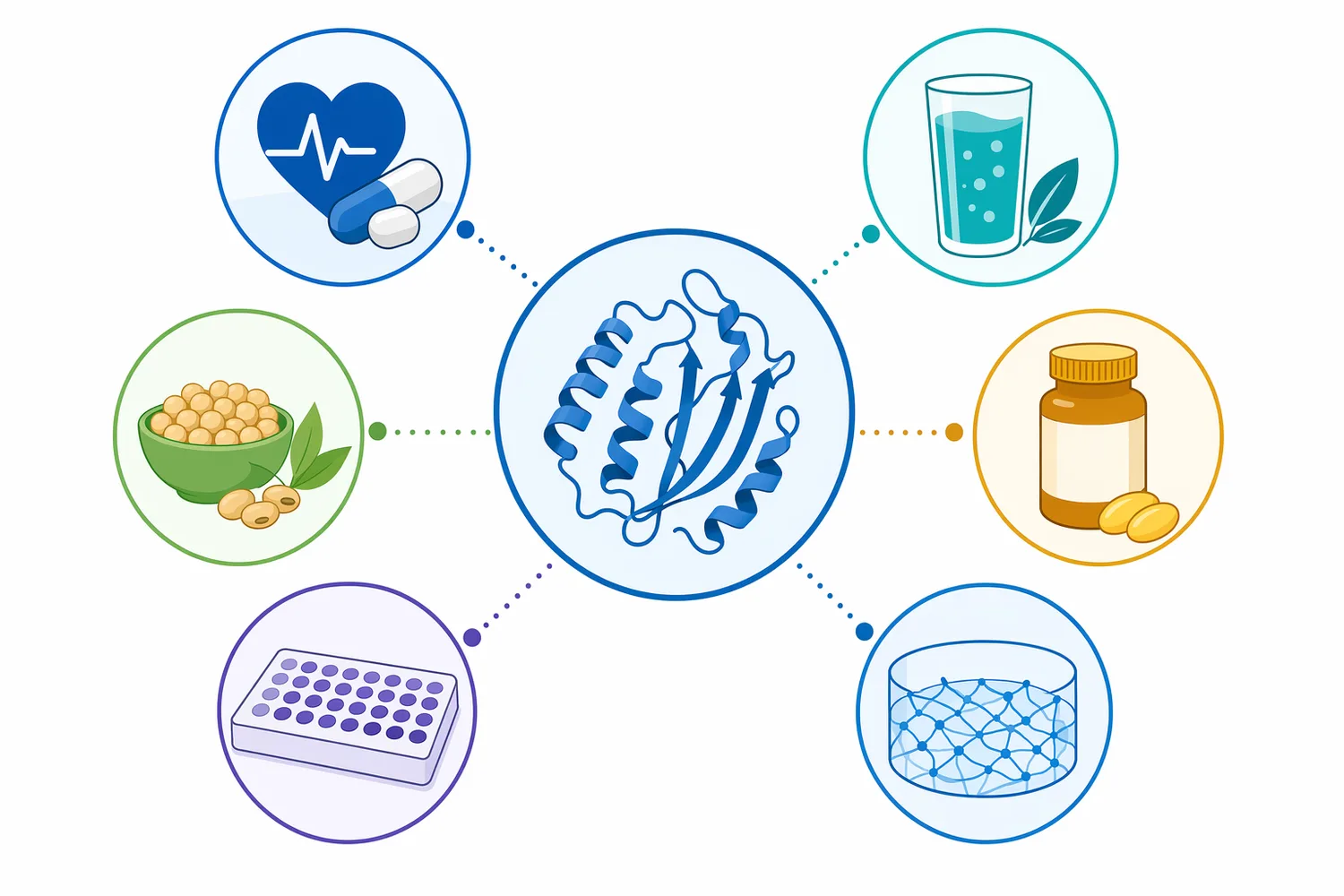
The most familiar application is the nattokinase supplement category. Capsules and tablets allow the enzyme to be delivered in a compact, consumer-friendly format, while the product story can focus on natto fermentation, proteolytic enzyme function, and circulatory-wellness education. This is also where consumers most often compare nattokinase supplements with other cardiovascular-wellness ingredients [2].
In this application, the mechanism can be explained simply: nattokinase is a protease studied for its interaction with fibrin-related protein structures. That explanation is more accurate than saying the ingredient “thins blood” or “removes clots,” both of which can imply drug-like effects. A responsible finished-product page can discuss nattokinase benefits as researched functional potential while avoiding guarantees of clinical outcomes [5].
Nattokinase can also support functional food concepts, especially where the brand story is built around traditional fermentation and modern enzyme nutrition. Fermented soybean foods are widely studied for bioactive compounds and physiologically relevant components, and natto is one of the best-known examples in this space [1]. The challenge is that many food processes involve heat, water activity, shear, or storage conditions that may not suit an enzyme protein.
For this reason, nattokinase is generally more compatible with low-heat or post-processing concepts than with baked, boiled, or retorted products. The product developer’s task is to preserve the enzyme’s folded structure and avoid conditions that would denature it. If the enzyme unfolds, the active site no longer holds the protein substrate in the correct geometry, and proteolytic function declines [7].
The pairing of vitamin K2 and nattokinase is common in consumer search behavior because natto is strongly associated with both. A product labeled around “nattokinase and vitamin K2” or “vitamin K2 with nattokinase” should still explain that these ingredients do different things. Nattokinase is an enzyme; vitamin K2 is a vitamin. Their shared natto association does not make them interchangeable [2].
This distinction is especially important for consumer understanding. Someone searching for “nattokinase with vitamin K2” may assume the two are naturally the same category of compound, but the formulation story should separate enzyme activity from vitamin nutrition. Clear language reduces confusion and supports a more credible finished product.
Nattokinase may also be used in dry blends positioned around enzyme wellness, fermentation-derived ingredients, or proteolytic activity. In these formats, it can sit alongside other enzymes or functional ingredients, provided the finished product’s claims remain appropriate. The most credible positioning is to identify nattokinase as a natto-derived protease with published fibrinolytic research interest [3].
Powder blends need careful handling because enzymes are proteins that can be affected by moisture and incompatible ingredients. The physical change to avoid is denaturation or premature interaction with other protein substrates in the blend. Keeping the enzyme in a dry, compatible matrix helps preserve its intended role until consumption.
The phrase “nattokinase benefit” is often used online in a broad way, covering everything from cardiovascular wellness to blood pressure, circulation, and enzyme support. A more technically accurate explanation is that nattokinase benefits are best understood through three layers: enzyme identity, mechanistic plausibility, and human research signals. The identity layer is strong: nattokinase is a natto-derived protease from Bacillus fermentation [1].
The mechanistic layer is also credible: nattokinase can cleave protein substrates, and fibrin is a protein network relevant to clot structure. This explains why fibrinolytic research is central to the ingredient’s reputation. The actual molecular event is peptide-bond hydrolysis, which converts larger fibrin structures into smaller fragments and weakens the continuity of the protein mesh [4].
The human-outcome layer is promising but must be framed carefully. Trials and reviews report effects on cardiovascular-related markers, including blood pressure and von Willebrand factor in a controlled North American study, and broader findings in a large study of atherosclerosis progression and hyperlipidemia management [9]. These data support continued interest in nattokinase supplements, but they do not turn every finished product into a treatment for cardiovascular disease.
Good customer-facing language might describe nattokinase as “a natto-derived enzyme studied for fibrin-related protein breakdown and circulatory-wellness applications.” Less appropriate language would claim that nattokinase “prevents strokes,” “dissolves dangerous clots,” or “replaces blood thinners.” The first phrasing reflects the enzyme mechanism and research category; the second group of claims crosses into medical territory [5].
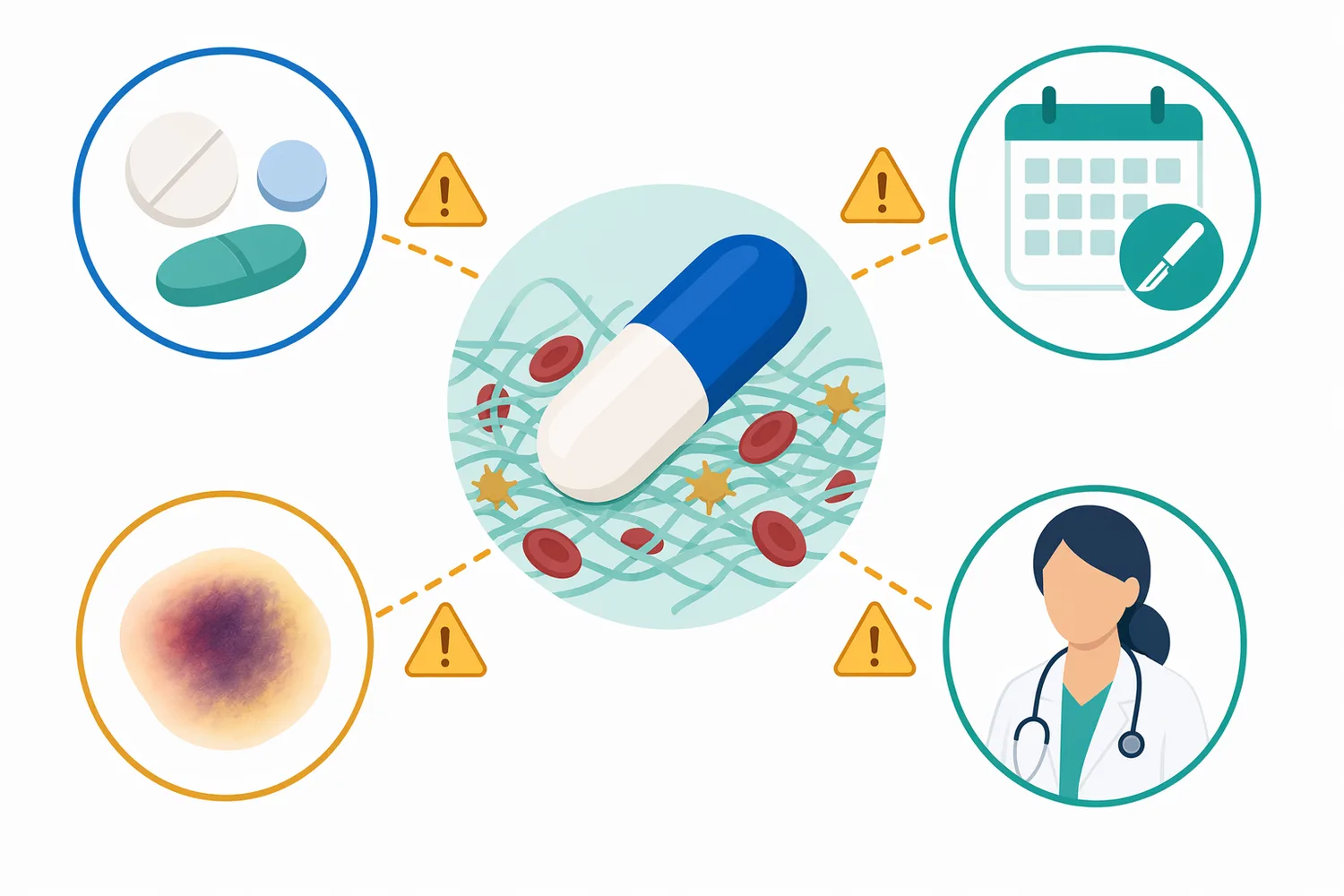
Because nattokinase is discussed in relation to fibrinolytic and antithrombotic mechanisms, consumer safety language should be conservative. Sources aimed at clinical and integrative-medicine audiences caution that nattokinase may be inappropriate for some people, particularly those using anticoagulant or antiplatelet medications, those with bleeding disorders, or those preparing for surgery, unless guided by a qualified healthcare professional [5]. This is why searches for “nattokinase side effects,” “nattokinase side effect,” “side effects nattokinase,” and “side effects of nattokinase” should be addressed responsibly rather than ignored.
The mechanism behind this caution is understandable. If an ingredient influences fibrin turnover, platelet-related markers, or fibrinolytic balance, it may theoretically add to other interventions that affect bleeding or clotting. That does not mean every consumer will experience adverse effects, but it does mean supplement labeling and consumer education should avoid casual language around clotting biology [2].
Potential concerns discussed in public health and integrative-medicine references include bleeding risk, bruising, interaction with blood-thinning medications, and use around surgical procedures [5]. For finished products, this type of caution is not a weakness; it signals that the ingredient is being presented with respect for its biological context. Nattokinase should be marketed as a researched enzyme ingredient, not as a casual wellness powder with no physiological relevance.
Enzymes.bio supplies Nattokinase as a 1 kg online-order enzyme ingredient for customers who already have a defined use case, such as supplement production, functional wellness blending, or product development involving natto-derived enzymes. The buying model is simple: the product is purchased directly online by the 1 kg unit, payment is completed online, and the order is processed and shipped. A Certificate of Analysis and Safety Data Sheet are included with the order.
For most commercial concepts, nattokinase fits best where the finished product can preserve the enzyme’s protein structure. Capsules, tablets, and dry blends are the most natural formats because they avoid the harshest processing conditions. If a concept involves beverages, gummies, bars, or heat-treated foods, the key technical issue is whether the enzyme protein remains folded and functional after processing and storage; enzyme denaturation is a structural change, not just a labeling concern [7].
Nattokinase also works well where the product story needs to connect traditional fermentation with modern enzyme science. The natto association is recognizable, while the enzyme format is cleaner and easier to use than whole fermented soybeans. That combination explains why nattokinase supplements remain a distinct category rather than simply being replaced by natto food [6].
The strongest positioning for nattokinase is specific, evidence-aligned, and not overstated. It can be described as a natto-derived proteolytic enzyme from Bacillus subtilis natto fermentation, used in dietary supplements and functional wellness products. It can also be described as an enzyme studied for fibrin-related protein breakdown and circulatory-wellness applications [3].
The most defensible educational message is mechanistic: nattokinase is a protease, and proteases cut proteins. In fibrin-focused research, the relevant substrate is the fibrin protein mesh; cleavage of that mesh changes it from a continuous network into smaller fragments. This is concrete, understandable, and grounded in enzyme function [4].
The less defensible message is medical certainty. Nattokinase should not be presented as a guaranteed way to prevent, treat, or reverse cardiovascular disease. Human studies and reviews support continued interest in nattokinase benefits, including cardiovascular-related markers, but finished-product claims must stay within the appropriate regulatory and safety boundaries [9].
Nattokinase is a practical ingredient for customers building products around nattokinase supplements, fermented-soy enzyme positioning, natto-derived wellness concepts, or carefully worded circulatory-support education. Its value comes from the combination of a recognizable traditional food origin and a specific biochemical role as a proteolytic enzyme.
Enzymes.bio supplies Nattokinase directly online by the 1 kg unit. After online purchase and payment, the order is processed and shipped, with a Certificate of Analysis and Safety Data Sheet included.
Sold by the 1 kg unit, in stock and ready to ship. Order directly on our store — pay online and we process your order. A Certificate of Analysis and Safety Data Sheet are included with every order.
Buy Nattokinase →Numbered in order of first citation. Open-access sources, each verified reachable at publication; citation numbers in the text link here.