
Neutral cellulase powder is used in denim garment washing to create controlled wash-down, smoother surface feel, reduced fuzz, and stone-wash effects under near-neutral wet-processing conditions. It works by selectively weakening exposed cotton microfibrils on the denim surface so that garment tumbling removes dye-bearing surface fibers without relying only on pumice abrasion. Enzymes.bio supplies Neutral Cellulase Powder online by the 1 kg unit; the buyer pays online, the order is processed and shipped, and a Certificate of Analysis and Safety Data Sheet are included with the order.
Denim finishing is a balance between appearance and garment integrity. A laundry may need a worn look, softer handle, cleaner seams, reduced surface fuzz, and visible shade reduction, but the same wash must also protect tear strength, tensile strength, seam stability, garment dimensions, and pocketing cleanliness. Published denim-washing studies commonly evaluate this balance by measuring color change, fabric weight loss, strength, shrinkage, bagging behavior, and wash-related comfort or handle rather than judging the wash only by visual fading [1].
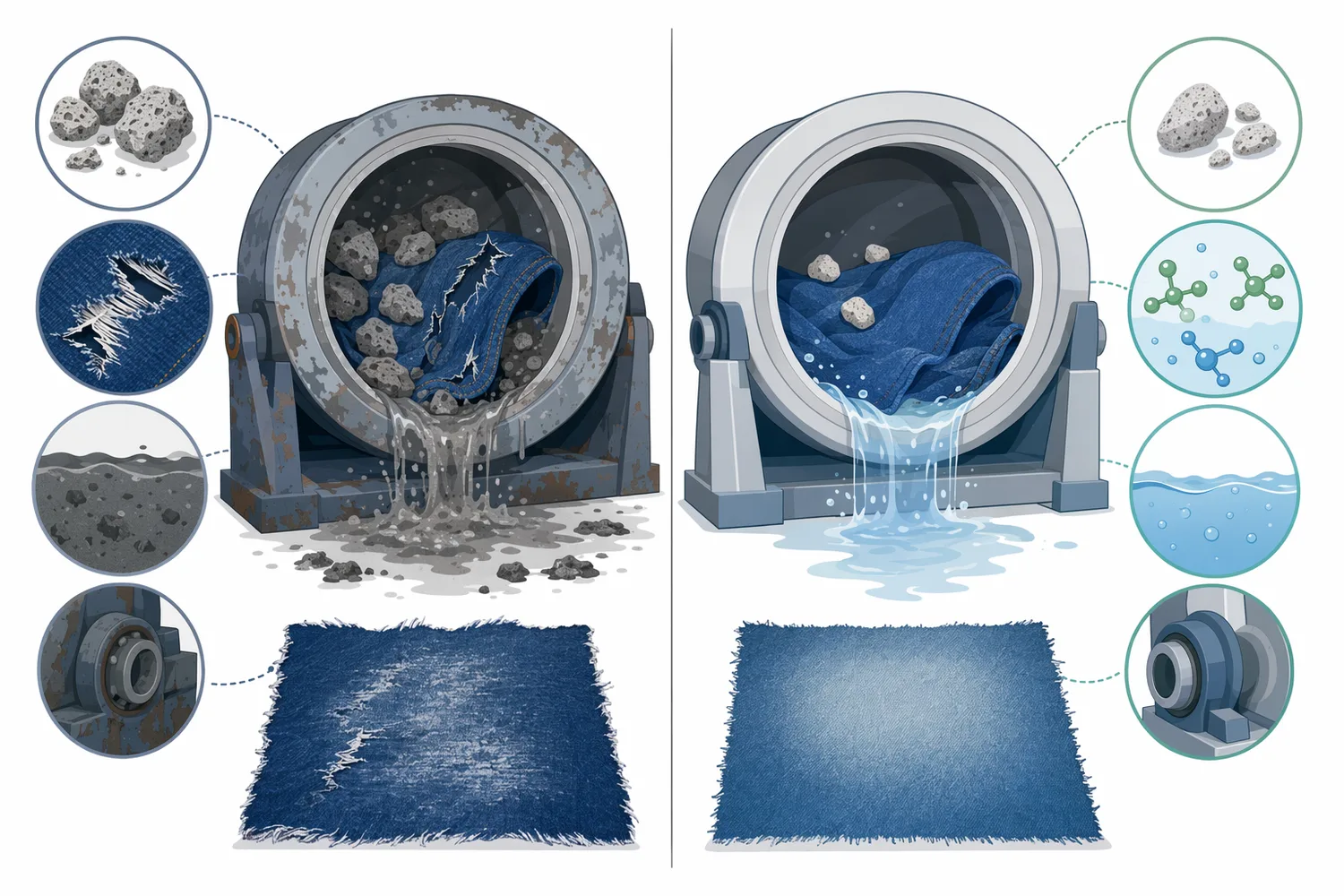
Traditional stone washing creates abrasion by repeatedly striking and rubbing garments with pumice. That physical abrasion can be effective, but it also brings process burdens: stone dust, sludge, machine wear, manual handling, blocked drains, and more aggressive fabric damage in high-friction areas. Enzyme-assisted denim washing was developed because cellulase can generate part of the same surface removal effect biochemically, reducing dependence on stones while keeping the visual language of aged denim [2].
Neutral cellulase is especially useful where the desired effect is controlled bio-stoning rather than harsh chemical attack. It targets accessible cellulose at the fabric surface, so the visible change is concentrated where yarns, fibrils, and raised fiber ends are exposed to liquor and mechanical movement. This is why enzyme washing can improve surface smoothness and visual wash-down while still requiring careful control of time, temperature, mechanical action, and rinse-off in the garment-washing sequence [3].
Cotton denim is built mainly from cellulose, a long-chain glucose polymer held together by β-1,4 glycosidic linkages. Cellulase enzymes hydrolyze those cellulose linkages, but in denim finishing the aim is not to digest the garment. The useful action is limited surface modification: loosening tiny fibrils and exposed fiber ends so they can detach during tumbling, taking some surface-bound indigo and lint with them [4].
Denim yarns are not uniformly dyed through the fiber in the same way as many piece-dyed fabrics. Indigo denim typically carries much of its color near the outer yarn layers, which is why abrasion reveals lighter interior fiber and produces the familiar worn contrast. When neutral cellulase weakens the outermost cellulose microfibrils, mechanical movement can release those dye-bearing fragments from high-contact zones such as seams, hems, thighs, pockets, and raised twill ridges [5].
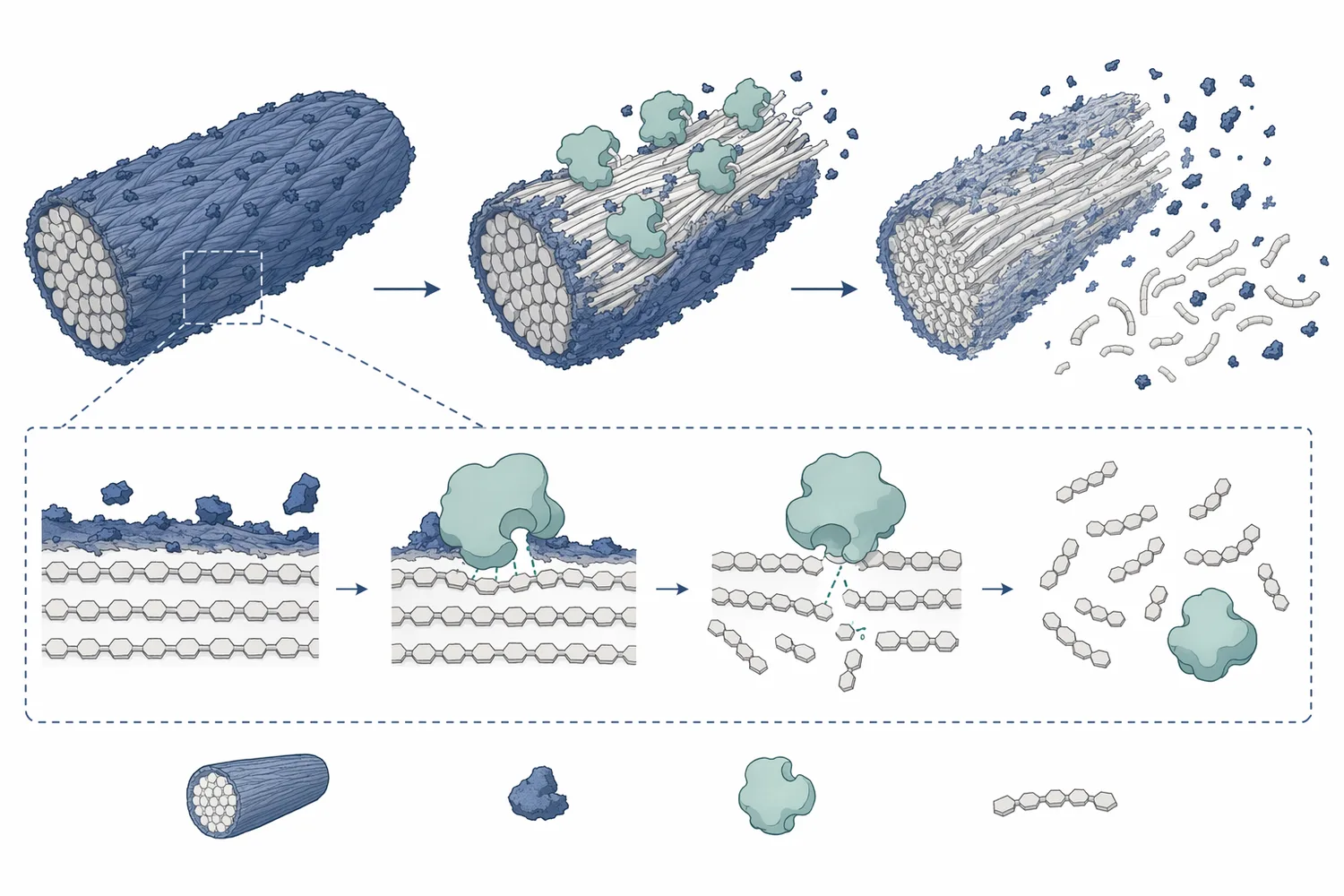
The result is a combination of biochemical and mechanical effects. The enzyme hydrolyzes accessible cellulose bonds; the washing machine supplies bending, compression, rubbing, and garment-to-garment contact; rinsing removes loosened cellulose fragments, lint, and detached dye particles. This combined mechanism explains why cellulase washing changes shade, softness, fuzz level, and appearance more effectively than a static soak would do on its own [6].
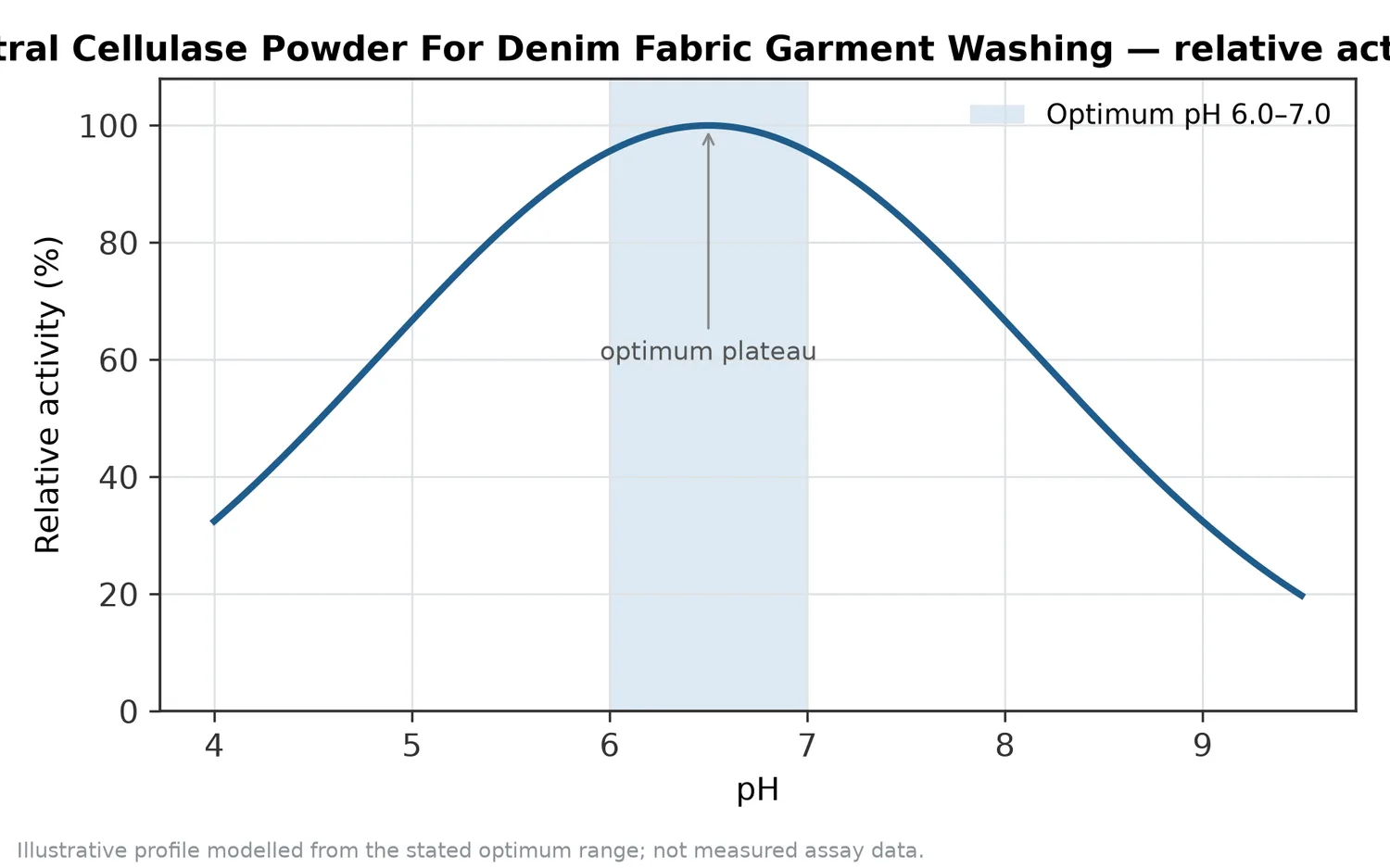
Neutral cellulase is not “neutral” because it has no effect; it is neutral because it is intended to operate around near-neutral wash conditions instead of strongly acidic conditions. This matters in denim because pH affects enzyme behavior, dyestuff redeposition, cotton swelling, auxiliary chemistry, and the handling of downstream finishing steps. Comparative denim work has shown that cellulase type and process conditions influence color removal, weight loss, and backstaining behavior [2].
Different cellulase systems can produce different denim effects because enzyme composition, pH environment, fiber accessibility, and dye redeposition behavior all interact. The following comparison is conceptual rather than a product specification; it summarizes how these enzyme categories are commonly understood in garment washing and textile-enzyme literature.
| Cellulase type | Typical denim-finishing role | What changes on the fabric | Practical trade-off |
|---|---|---|---|
| Acid cellulase | Strong wash-down and aggressive bio-stoning in acidic baths | More rapid removal of exposed surface cellulose and dye-bearing fibrils | Can increase backstaining risk and fabric weight loss if not controlled; some studies report stronger color removal with more staining in certain dyed denim systems [2] |
| Neutral cellulase | Controlled bio-stoning, anti-fuzz finishing, softer handle, cleaner contrast | Weakens accessible cotton microfibrils under near-neutral conditions so tumbling removes surface lint and indigo-bearing fragments | Generally selected for balanced abrasion and cleaner processing where lower backstaining is important; still requires controlled washing conditions [6] |
| Alkaline cellulase | Surface modification where compatibility with more alkaline textile conditions is useful | Acts on cellulose under less acidic processing environments, depending on enzyme design | Useful in some textile systems, but the denim effect depends strongly on enzyme composition, garment construction, and wash sequence [7] |
Neutral cellulase often sits in the practical middle ground for denim garment washing. It can deliver meaningful abrasion and surface polishing without pushing the wash into strongly acidic conditions, and this can be helpful when the processor wants a cleaner cast, controlled contrast, and reduced redeposition of released indigo. Neutral-pH cellulase systems have been reported as effective for denim stone-washing while causing less backstaining than an acid cellulase comparator in published enzyme-washing work [2].
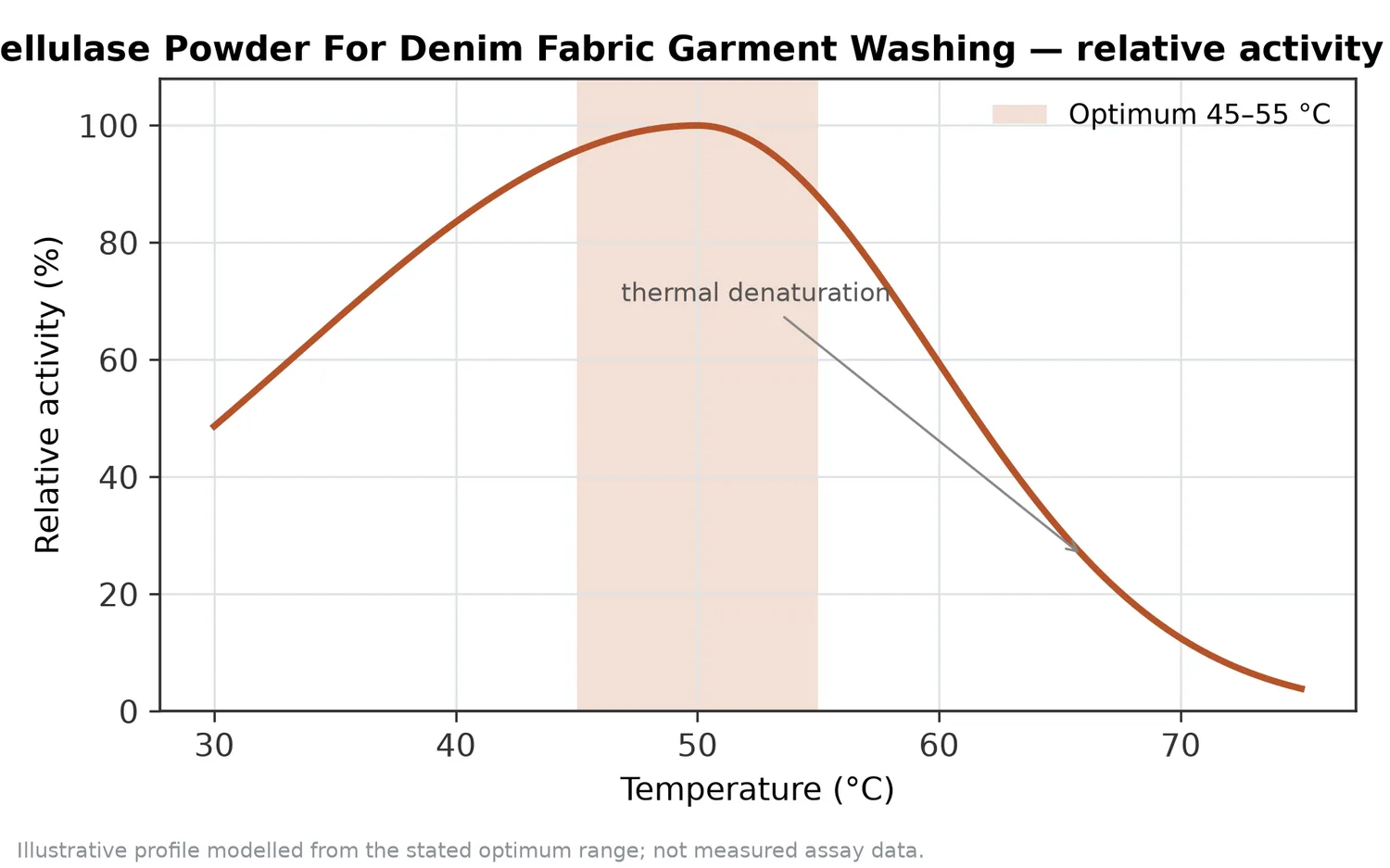
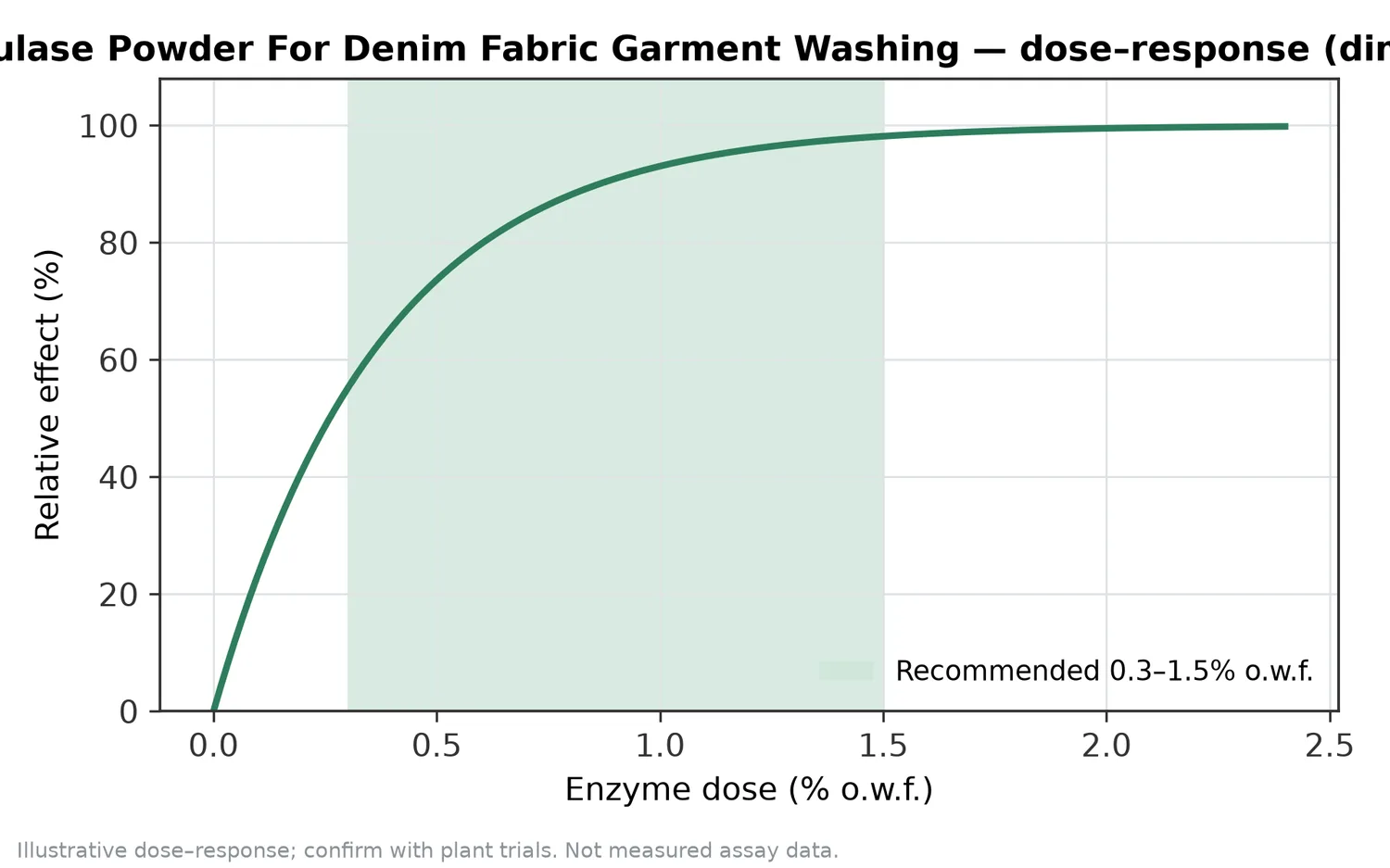
The comparison also shows why cellulase washing should not be treated as a simple “more enzyme equals more quality” process. Stronger cellulolytic action may increase shade loss, but it can also increase fabric weight loss, reduce strength, or create a duller appearance if released dye redeposits. Denim studies that use experimental designs repeatedly treat enzyme treatment, processing time, and mechanical action as interacting variables, not independent switches [3].
In bio-stoning, neutral cellulase attacks the most accessible cellulose first: loose fiber ends, surface fibrils, abraded yarn areas, and the raised points of the twill structure. These areas have more exposed cellulose surface than the protected interior of the yarn. As cellulase weakens those fibrils, the wash’s mechanical action breaks them away, creating localized fading and a smoother fabric face [4].
This is different from simply bleaching the dye. Cellulase does not need to chemically destroy indigo to create a faded look. Instead, it removes small dyed cellulose fragments from the surface, exposing paler fiber beneath and changing how light reflects from the fabric. That is why enzyme wash-down can produce a natural worn effect, especially in zones where the garment receives high abrasion in the washer [5].
Biopolishing is the same core chemistry applied to surface quality. Raised fibrils scatter light, hold lint, increase roughness, and make fabric feel fuzzier. When neutral cellulase weakens and removes those protruding fibrils, the fabric surface becomes cleaner and smoother to the touch. Textile reviews describe cellulases as key enzymes for cotton finishing because they can improve softness and surface appearance through controlled cellulose hydrolysis [7].
The change is physical as well as visual. Removing surface fuzz can make a garment feel softer even without heavy softener use because the skin contacts a smoother surface with fewer protruding fiber ends. In denim, this smoother handle is often valued alongside the visible wash-down because customers associate a less harsh surface with a broken-in garment [6].
The most visible purpose of denim cellulase washing is shade reduction. As cellulase weakens surface cotton microfibrils and the washer removes them, small dye-bearing fragments leave the fabric. This produces a worn look that can range from mild clean-up to a more obvious stone-wash effect depending on the fabric, dye system, garment construction, and wash intensity [2].
Backstaining is the main color-related risk. Detached indigo or sulphur-dye particles can redeposit onto weft yarns, pocketing, labels, sewing thread, and already-faded garment areas. The result can be a greyer, dirtier, lower-contrast appearance rather than the clean blue-white contrast often desired in denim finishing. Published comparisons of washing methods and effluent impact highlight that denim wash outcomes must be judged by both fabric appearance and the behavior of released residues in the wash bath [1].
Neutral cellulase is commonly used where lower backstaining is a priority because near-neutral processing can be gentler on dye redeposition behavior than some acid cellulase systems. Research comparing cellulase treatments on dyed denim has reported differences in color removal, weight loss, and staining between acid and neutral systems, showing that the enzyme environment changes both the fading effect and the cleanliness of the final shade [2].
The dye system matters. Indigo and sulphur-dyed denim may not respond identically because the dye chemistry, particle behavior, yarn penetration, and washing-off characteristics differ. A cellulase process that gives clean abrasion on one fabric may need adjustment on another fabric to avoid excessive shade loss, dull cast, or staining. This is one reason denim-washing research often evaluates multiple response variables rather than only one color measurement [3].
Because cellulase acts on cellulose, it can affect fabric mass and strength if the process is too aggressive. Controlled surface hydrolysis is useful; excessive hydrolysis can weaken yarns, reduce tear resistance, lower tensile strength, or exaggerate worn areas beyond the intended design. Studies on denim washing routinely include physical-property testing because visual fading alone does not confirm that the garment remains fit for use [1].
Weight loss is a practical indicator of how much fiber material has been removed. Some weight loss is expected in bio-stoning because the process deliberately removes surface fibrils and lint, but unnecessary loss can reduce fabric durability. Research on enzymatic washing parameters shows that process variables influence garment behavior, including dimensional and mechanical outcomes, which is why controlled exposure is central to enzyme washing [3].
Shrinkage and bagging are also relevant in finished garments. Denim is a structured fabric, and washing changes yarn relaxation, fabric geometry, and stress recovery. Studies on denim garment shrinkage and mechanical properties use statistical approaches such as principal component analysis to understand how multiple fabric responses move together after processing [8].
Bagging behavior matters for jeans because knees, seat areas, and other stressed zones can develop residual deformation after wear. Research specifically examining washing treatment and residual bagging height shows that finishing operations influence how denim behaves under repeated deformation and recovery, not only how it looks immediately after laundering [9].
Neutral cellulase should therefore be understood as a finishing tool with both aesthetic and engineering consequences. It can help create softness, surface clean-up, and wash-down, but the same cellulose modification that gives these benefits must be kept within the useful surface zone. When properly integrated into a wash sequence, the goal is a garment that looks aged without feeling prematurely damaged [10].
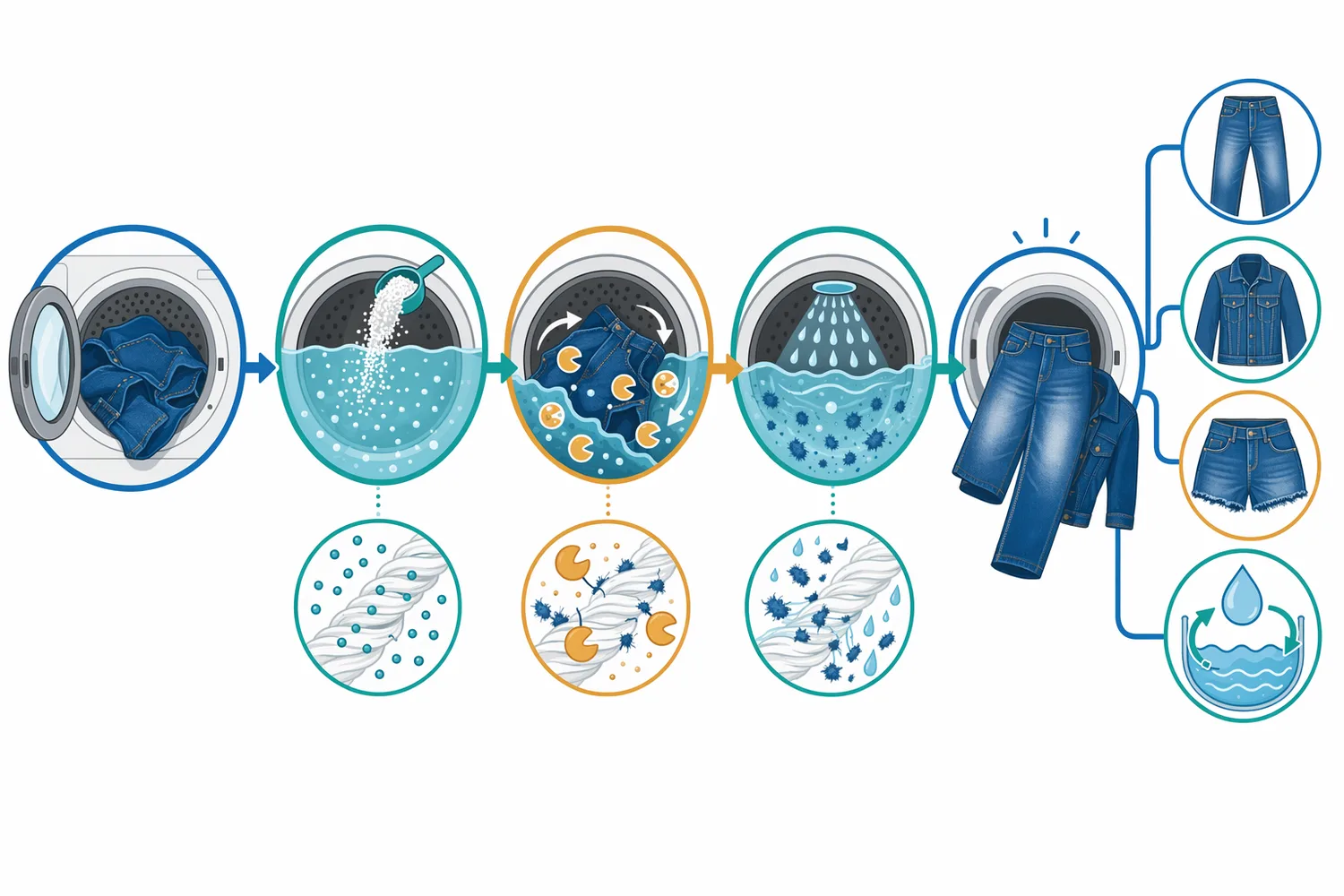
In a typical denim laundry sequence, cellulase treatment is applied after the fabric or garment has been prepared enough for the enzyme to reach the cotton surface. Desizing or preparatory washing removes size, loose impurities, and some process residues that can interfere with uniform wetting. Once the garment is wetted and moving freely, neutral cellulase can contact exposed fiber surfaces and begin controlled hydrolysis [5].
Mechanical action is essential. The enzyme weakens the surface fibrils, but garment movement removes them. The washer’s tumbling action creates repeated fabric-to-fabric and fabric-to-machine contact, so high points of the garment abrade more strongly than recessed areas. This is why cellulase washing can generate naturally uneven contrast rather than a flat, uniform color loss [6].
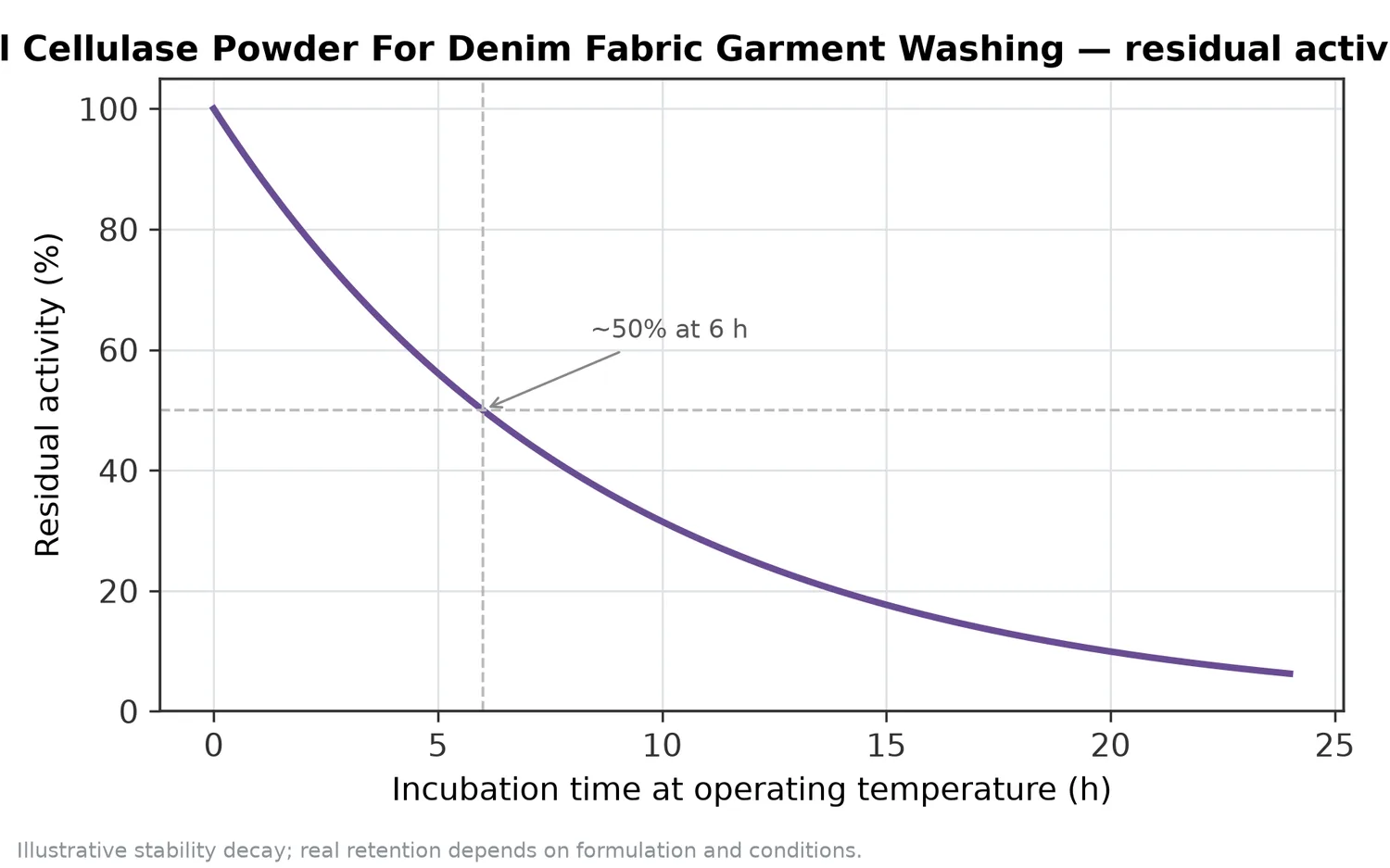
The enzyme step is normally followed by process conditions that stop further cellulase action and by rinsing to remove loosened fiber fragments and dye particles. This stop-and-rinse stage is important because cellulase left active for too long can continue acting on cotton. Denim studies examining enzymatic treatment parameters reinforce that the final garment properties depend on the combined effects of treatment intensity, exposure time, and mechanical movement [3].
Neutral cellulase can also be combined with other denim finishing methods. Laser fading, ozone, resin effects, softening, and mechanical abrasion each change the garment in different ways. Recent work on laser-treated denim shows that modern finishing often combines physical, chemical, and mechanical routes to reach target appearance and performance, with each step influencing fabric tension properties and final quality [11].
The sustainability value of neutral cellulase comes from replacing part of a harsh mechanical or chemical burden with a catalytic biological process. Enzymes act under comparatively mild wet-processing conditions and are used to trigger specific substrate changes rather than broadly attacking the fabric or bath chemistry. Reviews of cellulase enzyme technology describe textile processing as one of the important industrial application areas for microbial cellulases [4].
Reduced pumice dependence is one of the clearest operational advantages. Less stone use can mean less sludge, less stone handling, reduced machine abrasion, and fewer problems with stone fragments lodged in pockets or seams. Enzymatic denim treatment has been discussed in the literature as a more sustainable route for achieving denim wash effects compared with conventional approaches that rely heavily on stones and harsher processing [2].
Effluent impact is another reason denim processors use enzyme-assisted routes. Denim washing releases dye particles, fiber fragments, auxiliaries, and suspended solids into the wash liquor. Comparative work on washing methods and effluent environmental impact shows that finishing choices influence both fabric properties and the wastewater profile, making process route selection important beyond the garment’s appearance [1].
Microfiber release is increasingly important as well. Industrial denim washing can emit synthetic microfibers when garments contain elastane, polyester sewing components, labels, pocketing, or blended yarns. Research on synthetic microfiber emissions from denim industrial washing identifies the manufacturing wash stage as a source that deserves attention, especially as stretch and blended denim constructions become more common [12].
Neutral cellulase does not by itself solve every wastewater or microfiber challenge. However, it fits into a broader movement toward lower-impact textile processing by enabling targeted cotton surface modification under milder conditions. This aligns with reviews describing microbial enzymes as tools for more sustainable textile operations, including finishing and fabric modification [7].
Denim is not one uniform substrate. Ring-spun yarns, open-end yarns, stretch yarns, core-spun constructions, fabric weight, twill direction, yarn count, twist, and finishing history all influence how the garment responds in the washer. Research on core-spun yarn and denim fabric properties before and after washing demonstrates that yarn and fabric construction variables affect performance after wet processing [10].
Stretch denim adds another layer of complexity because elastane-containing yarns respond differently to heat, relaxation, friction, and chemical exposure than 100% cotton yarns. The cellulase acts on cotton cellulose, but the garment’s final growth, recovery, and comfort depend on the whole fabric structure. That is why strength, elasticity, shrinkage, and bagging outcomes must be considered alongside shade [8].
Dyeing and preparation history also matter. Indigo shade depth, sulphur topping, overdying, coating, resin application, and prior finishing can all affect how accessible the cotton surface is and how released color behaves in the wash bath. Studies comparing denim treatments regularly show that finishing responses differ across fabric types, which is why enzyme washing is best viewed as a controlled finishing stage rather than a universal one-step effect [13].
Garment design affects the visible result too. Thick seams, rivets, pocket edges, belt loops, and folded hems create pressure points during tumbling. Neutral cellulase helps weaken surface fibers, but the garment’s construction determines where mechanical removal is strongest. The high-low abrasion pattern created by this interaction is part of what makes enzyme-washed denim look naturally worn [6].
Neutral Cellulase Powder is intended for denim garment washing where the goal is controlled cotton surface modification. In practical terms, buyers use it to support bio-stoning, surface clean-up, anti-fuzz finishing, softer handle, and reduced reliance on pumice. The strongest results come when the enzyme step is integrated into an established garment-wash sequence rather than treated as a stand-alone fading chemical [5].
Expected visual effects include a clearer denim surface, reduced fuzz, softened twill ridges, and controlled shade reduction. The mechanism is removal of small cellulose fragments from the surface, so the appearance is linked to actual fiber modification rather than only optical brightening or dye destruction. This makes cellulase particularly relevant for denim styles that need authentic worn contrast [4].
Expected hand-feel effects include smoother touch and less harsh surface texture. As protruding fibrils are removed, the fabric face becomes less fuzzy and more polished. This can make the garment feel more comfortable and finished, especially after subsequent rinsing and softening steps [7].
Expected process benefits include lower dependence on stones and the possibility of cleaner wash-down when compared with more aggressive acid cellulase approaches. The exact garment result still depends on the laundry’s fabric, dye system, machine action, and washing sequence, but the literature supports neutral cellulase as a relevant tool for controlled denim finishing and backstaining management [2].
Neutral cellulase is effective because it acts on cotton, and that is also why it must be used responsibly. If the enzyme exposure is too strong for the fabric or wash design, it can contribute to excess weight loss, reduced tear strength, over-fading, seam weakness, or a limp handle. Published denim-washing research consistently treats physical performance as part of wash evaluation, not as an afterthought [1].
It is also not a complete replacement for every finishing method. Enzyme washing can reduce stone intensity and improve surface polishing, but fashion effects such as whiskers, localized destruction, resin creases, laser designs, or very high-contrast abrasion may still involve other processes. Modern denim finishing frequently combines methods, and research on laser and industrial washing shows that combined treatments can change fabric tension and quality outcomes [11].
Backstaining can be reduced but not ignored. Released dye must be kept from redepositing through suitable washing, rinsing, and bath management within the laundry’s existing process. Neutral cellulase helps by operating in a processing window often associated with cleaner denim washing, but fabric dye system and machine conditions still determine the final shade cleanliness [2].
Finally, cellulase does not act equally on every garment component. It targets cellulose, so cotton-rich areas respond most directly. Blends, elastane cores, synthetic sewing threads, trims, coatings, and labels respond according to their own materials and finishes. Denim research on post-washing fabric properties reinforces that finished-garment behavior is the result of the whole textile system, not only the enzyme step [10].
Enzymes.bio supplies Neutral Cellulase Powder for Denim Fabric Garment Washing directly online by the 1 kg unit. The purchase process is straightforward: the buyer places the order online, pays online, and the order is then processed and shipped.
A Certificate of Analysis and Safety Data Sheet are included with the order. For buyers running denim garment washing, the product is best understood as an enzyme-based processing aid for controlled cotton surface modification: bio-stoning, anti-fuzz finishing, cleaner wash-down, softer handle, and reduced reliance on purely mechanical abrasion.
Neutral cellulase has become an established tool in denim finishing because it works with the structure of cotton denim rather than against it. By weakening accessible surface fibrils and allowing washer action to remove them, it helps create authentic worn effects while supporting a more controlled and potentially lower-impact washing process than heavy stone-only abrasion [7].
Sold by the 1 kg unit, in stock and ready to ship. Order directly on our store — pay online and we process your order. A Certificate of Analysis and Safety Data Sheet are included with every order.
Buy Neutral Cellulase Powder For Denim Fabric Garment Washing →Numbered in order of first citation. Open-access sources, each verified reachable at publication; citation numbers in the text link here.