
Neutral Protease is a protein-cutting enzyme used when a process needs controlled hydrolysis without strongly acidic or strongly alkaline conditions. It breaks peptide bonds inside proteins, reducing large protein structures into smaller peptides and more soluble fragments while operating around neutral pH.
For industrial and applied bioprocessing, the main value of a neutral protease enzyme is process compatibility: it can modify protein-rich materials under milder pH conditions used in foods, fermentation streams, protein hydrolysates, and selected biological-material workflows. Enzymes.bio supplies Neutral Protease directly online by the 1 kg unit; buyers pay online, and the order is processed and shipped with a Certificate of Analysis and Safety Data Sheet included.
Neutral Protease is a functional category rather than one single enzyme from one single organism. The shared function is proteolysis at or near neutral pH: the enzyme hydrolyzes peptide bonds in proteins, converting high-molecular-weight protein structures into smaller peptides and amino-acid-containing fragments. Proteases as a group are widely used industrial biocatalysts because they can replace harsher chemical protein treatments in applications ranging from food processing to detergents, leather, waste treatment, and biotechnology [1].
At the substrate level, the neutral protease function is concrete: a folded or aggregated protein presents peptide bonds on accessible surfaces, and the enzyme cleaves selected bonds inside the chain. These internal cuts reduce chain length, disrupt tertiary and quaternary structure, and expose new charged and hydrophilic ends. In a liquid process, that can lower viscosity, increase solubility, release peptides, change foaming or emulsifying behavior, and make downstream fermentation or extraction steps easier to manage.
Neutral protease examples come from many microbial and biological sources. Research has described neutral protease production by Aspergillus oryzae, Rhizopus oligosporus, Aeromonas hydrophila, and Bacillus species, showing that “neutral protease” covers a family of enzymes with related pH behavior but source-specific properties [2]. A well-known industrial lineage is neutral protease from Bacillus subtilis and related Bacillus organisms; an early industrial paper on a cloned neutral protease gene in Bacillus subtilis illustrates how important this enzyme type has been for applied enzyme technology [3].
In commercial and cell-processing literature, buyers may also encounter names such as dispase neutral protease, Worthington neutral protease, neutral protease from Clostridium histolyticum, or neutral protease NP from Clostridium histolyticum. These names should not be treated as interchangeable specifications; they point to source-specific enzymes or product traditions. For example, Worthington describes Dispase as a neutral metalloendopeptidase with mild proteolytic action, commonly used for cell and tissue dissociation contexts [4].
A protein is not simply a linear chain floating freely in water. In many real substrates—soy protein, insect pupa protein, collagen-containing waste, fungal biomass, or cell-associated extracellular matrix—the protein is folded, cross-associated, partially insoluble, or embedded in a larger structure. Neutral Protease acts first where peptide bonds are physically accessible, then progressively opens the structure as cuts accumulate.
The first practical change is molecular-size reduction. Large proteins become medium peptides, then smaller peptides as hydrolysis continues. This matters because large proteins often form gels, sediments, haze, or high-viscosity slurries, while smaller peptides are more likely to remain dispersed in the aqueous phase. In food and fermentation systems, protease hydrolysis can also increase the pool of assimilable nitrogen, including peptides and free amino acids, which can influence flavor development and microbial metabolism [5].
The second change is exposure of new chemical groups. Every peptide-bond cleavage creates a new amino terminus and carboxyl terminus. Those new chain ends alter charge distribution and water interaction, which is why hydrolysis can change solubility, emulsification, bitterness, browning potential, and reactivity in downstream steps. The enzyme is not “dissolving” protein in a chemical sense; it is cutting the backbone so the material behaves differently.
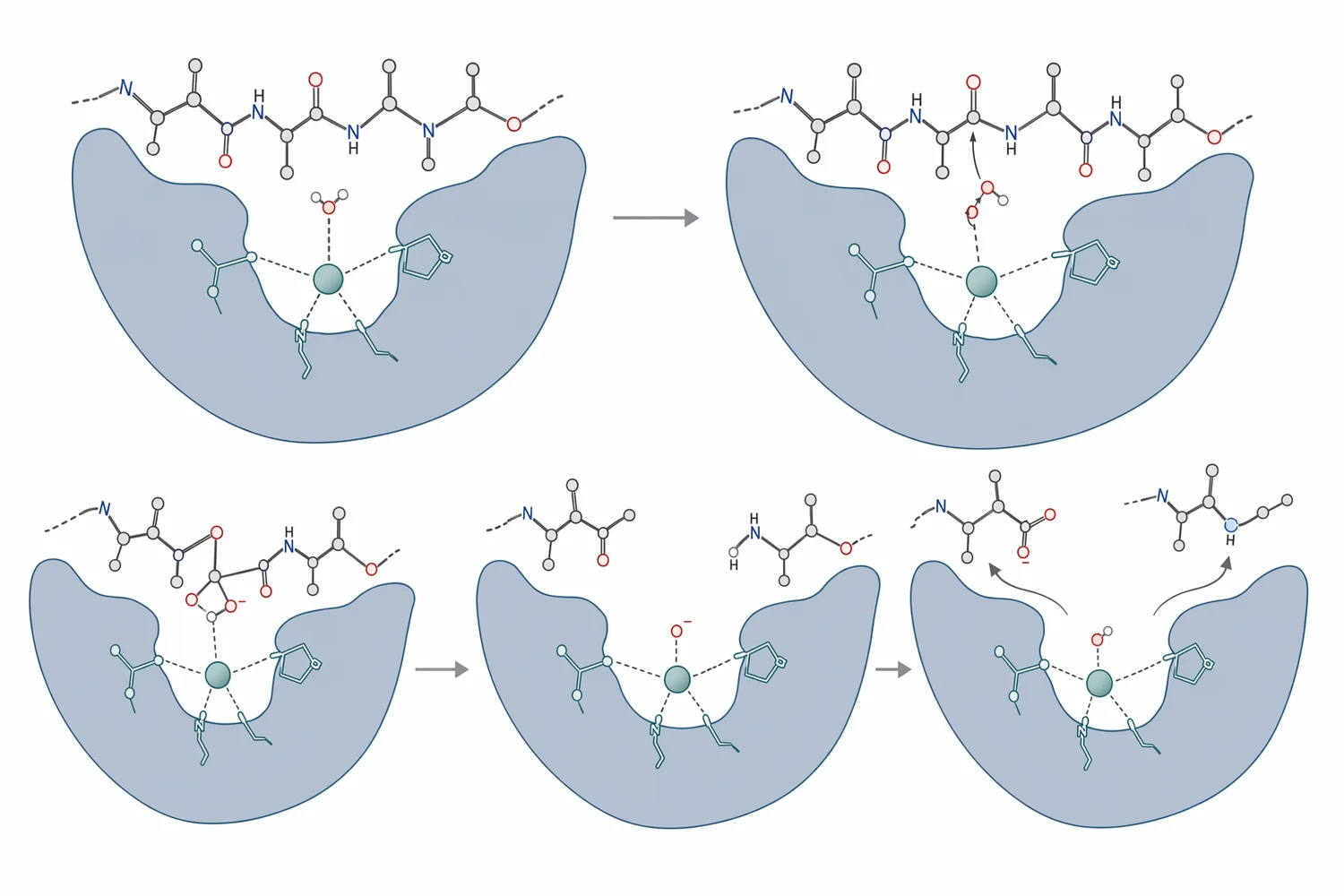
The third change is structural loosening. In matrix-rich materials, proteins are part of a network: collagen-associated structures, basement-membrane proteins, cytoskeletal attachments, or aggregated storage proteins. Neutral Protease can weaken non-collagenous or exposed protein links around a structure, making the network more permeable or easier to separate. This is one reason neutral proteases are discussed in tissue dissociation and extracellular-matrix processing rather than only in bulk protein hydrolysis [4].
The same protein can behave very differently at low, neutral, or high pH. Strong acid can unfold proteins, hydrolyze sensitive components, alter flavor, or require corrosion-resistant equipment and neutralization. Strong alkali can increase solubilization but may also change amino-acid side chains, darken materials, and affect downstream product quality. A neutral protease enzyme gives the process a biological cutting mechanism without forcing the whole system far from neutral pH.
| Protease type | Typical process environment | What changes in the substrate | Where it tends to fit conceptually |
|---|---|---|---|
| Acid protease | Acidic systems | Protein cleavage under low pH; often paired with acid-tolerant substrates or processes | Acidified foods, digestive-style hydrolysis, low-pH fermentation contexts |
| Neutral protease | Near-neutral systems | Internal peptide-bond cleavage while avoiding strong acid or strong alkali; useful for moderate-pH materials | Food protein hydrolysis, fermentation support, peptide preparation, biological-material processing |
| Alkaline protease | Alkaline systems | Protein cleavage under high pH; can support strong cleaning or high-pH solubilization | Detergents, leather processing, alkaline waste treatment, some industrial hydrolysis steps |
This distinction is conceptual rather than absolute. Protease reviews describe proteases as a broad industrial enzyme class with different catalytic types, pH behaviors, and application fields, including major alkaline protease applications as well as neutral and other protease systems [1]. The practical reason neutral protease is attractive is not that it is always “stronger,” but that it can make useful cuts while keeping the process closer to the pH range of many food, fermentation, and biological materials.
A neutral pH range also helps when the substrate contains sensitive non-protein components. In a protein-rich food slurry, for example, sugars, lipids, pigments, phenolics, minerals, and aroma precursors may all be present. Using a near-neutral enzyme step can reduce the need for pH swings that might change color, taste, phase behavior, or salt load after neutralization.
The literature shows broad microbial capability for neutral protease production. Aspergillus oryzae has been studied for neutral protease production in both submerged and solid-state fermentation, reflecting its importance as a food-associated fungus and industrial enzyme source [2]. A. oryzae is also known for secreted proteases used in traditional fermentations, where protein breakdown contributes to amino nitrogen and flavor-active peptide formation.
Neutral protease I from Aspergillus oryzae has been expressed and identified as a thermolysin-like protease, which is useful context because thermolysin-like enzymes are typically metalloproteases that rely on metal-associated catalytic chemistry [6]. Mechanistically, a metalloprotease uses an active-site metal environment to polarize water and help attack the peptide bond. The result is hydrolysis of the amide linkage rather than simple denaturation.
Bacillus organisms are another major source area. Research on Bacillus amyloliquefaciens has focused on engineering strains for high neutral-protease-producing capacity and optimizing fermentation conditions, while another study isolated a B. amyloliquefaciens D1 protease and applied it to soybean milk fermentation to increase free amino acids [7]. The relevance for buyers is that Bacillus neutral proteases are not laboratory curiosities; they are part of a long industrial enzyme tradition.
Other organisms broaden the neutral protease landscape. Rhizopus oligosporus has been studied for neutral protease production under solid-state fermentation using mixed agro-industrial residues, and Aeromonas hydrophila has been reported as a source for neutral protease production improvement by statistical methods [8]. These studies support a practical point: neutral protease activity is a recurring industrial target across fungi and bacteria because protein hydrolysis at moderate pH is useful in many material streams.
Dispase is one of the best-known neutral protease examples in biological-material work. Worthington describes Dispase as a neutral protease with mild proteolytic action and notes its use where tissue dissociation or cell separation is required [4]. Its role is different from a broad destructive digestion: the purpose is often to loosen protein contacts enough for separation while limiting unnecessary damage to the target structure.
Mechanistically, this is about selective accessibility. In tissues or layered biological materials, some proteins are exposed on surfaces or interfaces, while others are protected inside fibrils, membranes, or dense matrices. A dispase-type neutral protease attacks accessible peptide bonds in susceptible proteins, weakening attachments between layers or around cells. When paired with mechanical handling or other enzymes, the substrate can separate with less brute force.
The term “mild” should not be misunderstood as inactive. Neutral proteases are still protein-cleaving enzymes. Their advantage is that they can work under moderate pH and, depending on the enzyme, may show cleavage behavior suited to loosening extracellular or intercellular protein contacts. This is why dispase neutral protease appears in cell culture and tissue-processing contexts where strong chemical conditions would be inappropriate [4].
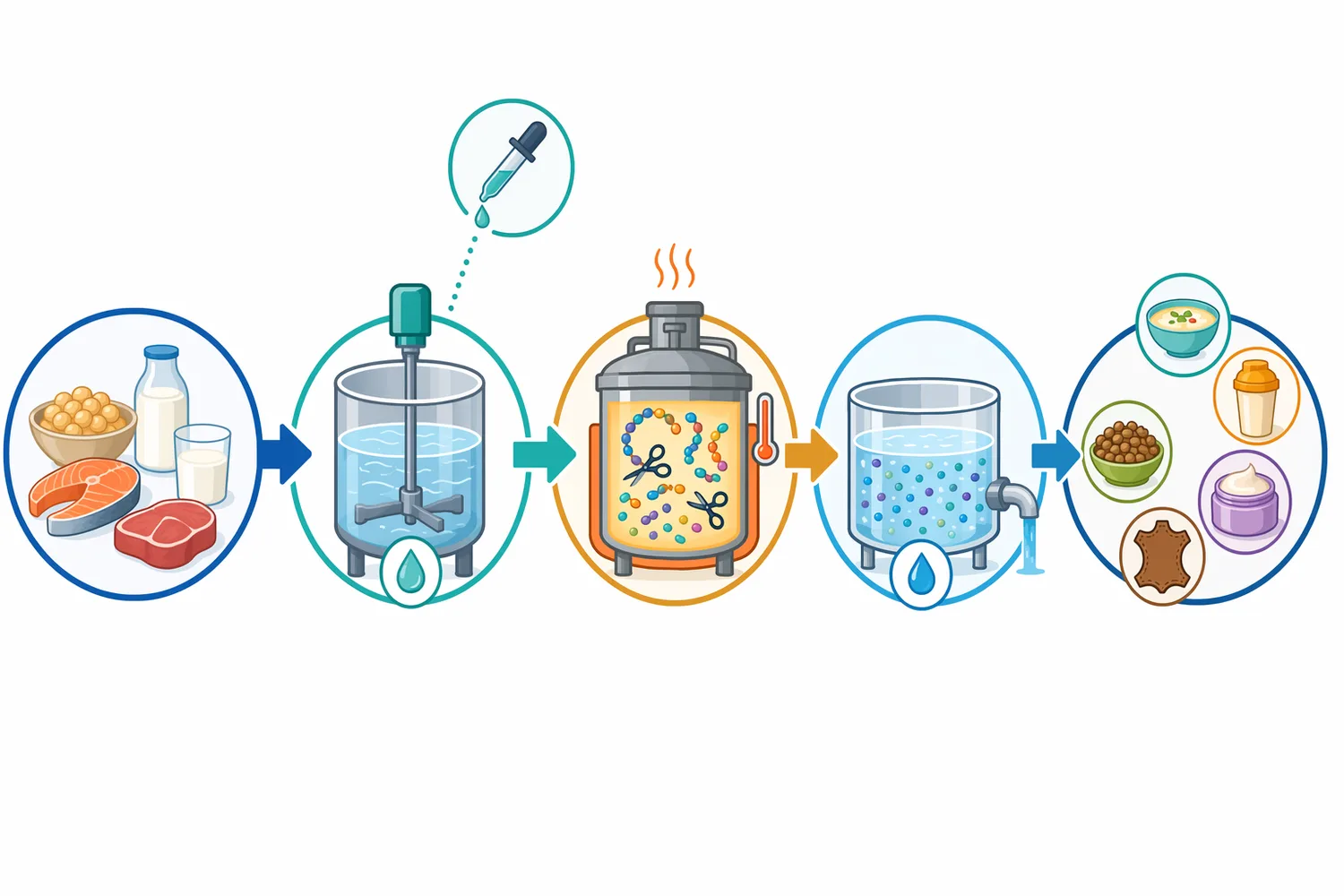
Food protein processing is one of the most intuitive uses for Neutral Protease. Many food raw materials contain proteins that are too large, too insoluble, or too bland in their intact form. Controlled enzymatic hydrolysis releases peptides and amino acids that can improve dispersibility, support fermentation nutrition, and contribute to savory or fermented flavor systems. Proteases are widely recognized as versatile enzymes in food, feed, and other industrial uses because they act directly on the protein fraction rather than requiring severe chemical treatment [1].
Soy-based fermentation provides a clear example of why proteolysis matters. In soybean milk fermentation, a Bacillus amyloliquefaciens D1 protease was applied to produce large amounts of free amino acids, showing how protease action can convert protein-bound nitrogen into smaller, more fermentation-relevant molecules [5]. In practical terms, the enzyme cuts storage proteins into peptides, then further hydrolysis increases free amino acids that affect nutrition, taste, and microbial utilization.
Neutral Protease can also be part of protein hydrolysate development. A study on defatted Antheraea pernyi pupa protein used combined neutral protease hydrolysis to generate peptides with antioxidant activity, demonstrating that neutral protease can participate in producing functional peptide mixtures from non-traditional protein sources [9]. The important mechanism is not that the enzyme “adds” antioxidant activity; it releases peptide sequences that were previously locked inside the parent protein.
Plant-protein hydrolysates follow the same basic logic. Enzymatic hydrolysis of mulberry leaf protein has been investigated for antioxidant peptide generation, reinforcing a broader peptide science pattern: protein sources can contain encrypted bioactive sequences that become measurable only after enzymatic cleavage [10]. Neutral Protease may be one useful route among several protease options, depending on which peptide bonds are exposed and which peptide profile the process needs.
Different proteases cut different bonds with different preferences. Even when two enzymes reduce protein size to a similar degree, the peptide mixture can be very different because the cut sites differ. A neutral protease enzyme may release one set of peptides, while papain, trypsin, pepsin, alkaline protease, or flavourzyme-type preparations release another set. This is why peptide taste, solubility, bioactivity, and downstream filtration behavior can change when the enzyme changes.
The Antheraea pernyi pupa protein study is useful because it focused on combined neutral protease hydrolysis and measured antioxidant peptide outcomes [9]. At the material level, defatted insect pupa protein is a dense, non-traditional protein substrate; enzymatic hydrolysis breaks its storage and structural proteins into shorter fragments. Some of those fragments can donate electrons, chelate metals, or interact with radical species in test systems, depending on amino-acid sequence and composition.
A neutral protease does not guarantee the same peptide profile in every protein. Soy proteins, fungal proteins, collagen-rich materials, leaf proteins, and insect proteins have different amino-acid sequences, folding patterns, cross-links, and accessibility. The enzyme’s effect is therefore partly biochemical and partly physical: it cuts preferred sites only when those sites can be reached.
Neutral Protease is also relevant where protein-rich by-products need to be modified or converted into more useful forms. Leather processing and collagen-containing solid wastes are examples because the material is protein-dense, structurally tough, and often difficult to treat uniformly. A study on collagen-containing solid wastes in leather production investigated protease application as part of improving the characteristics of biochar made from those wastes [11].
In collagen-containing materials, the enzyme does not simply “melt” the substrate. Collagen has a triple-helical structure and is often physically associated with other proteins, fats, minerals, and process chemicals. Protease action can attack accessible non-collagen proteins and partially exposed collagen-associated regions, loosening the matrix and changing how the waste behaves during later thermal or conversion steps.
This is a good example of why neutral pH can be attractive. If the goal is controlled pre-treatment rather than complete chemical destruction, near-neutral enzymatic action may change the material enough to improve handling or conversion while avoiding some side effects of strongly acidic or strongly alkaline treatment. Protease reviews consistently identify leather and waste-management applications as important industrial areas for proteolytic enzymes [1].
Extracellular matrix is a protein-rich network made from collagens, glycoproteins, proteoglycans, and associated proteins. In living tissues, proteases remodel this network during growth, repair, and disease; in applied processing, enzyme exposure can be used to loosen or separate matrix-associated structures. Dispase neutral protease is commonly discussed in this context because it can act at interfaces where cells, basement membranes, or tissue layers are connected [4].
The mechanism is based on weakening attachment points. If a cell or tissue layer is held in place by protein contacts, cutting a portion of those contacts reduces the force needed to separate the structure. Compared with harsh pH or high mechanical shear, enzyme-mediated loosening can be more controlled because it targets peptide bonds rather than all chemical interactions at once.
This does not mean every neutral protease is appropriate for every biological material. Source, catalytic type, and cleavage preference matter. The general educational takeaway is that neutral proteases can participate in matrix loosening because the matrix contains protein substrates, and near-neutral pH is compatible with many aqueous biological handling conditions.
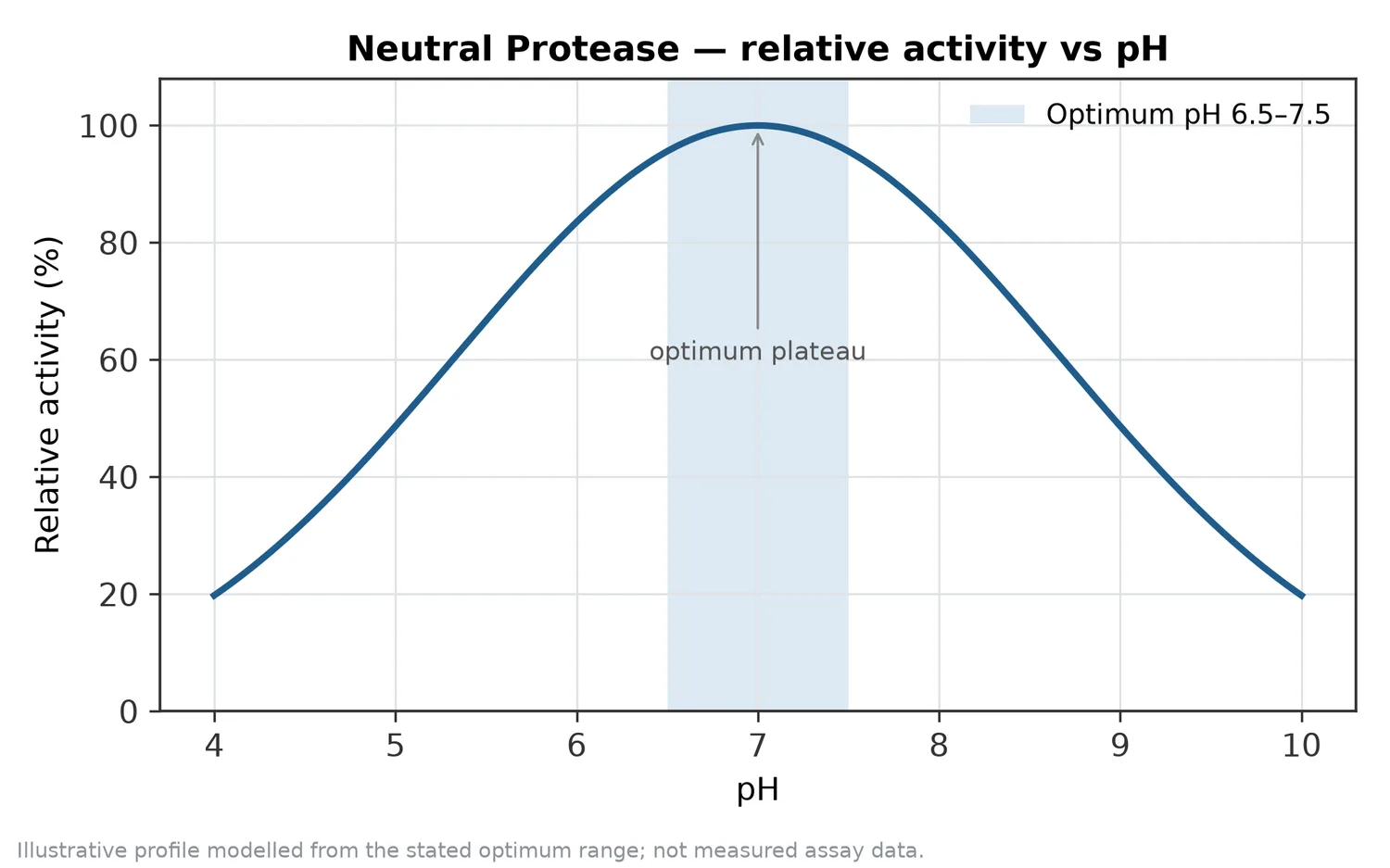
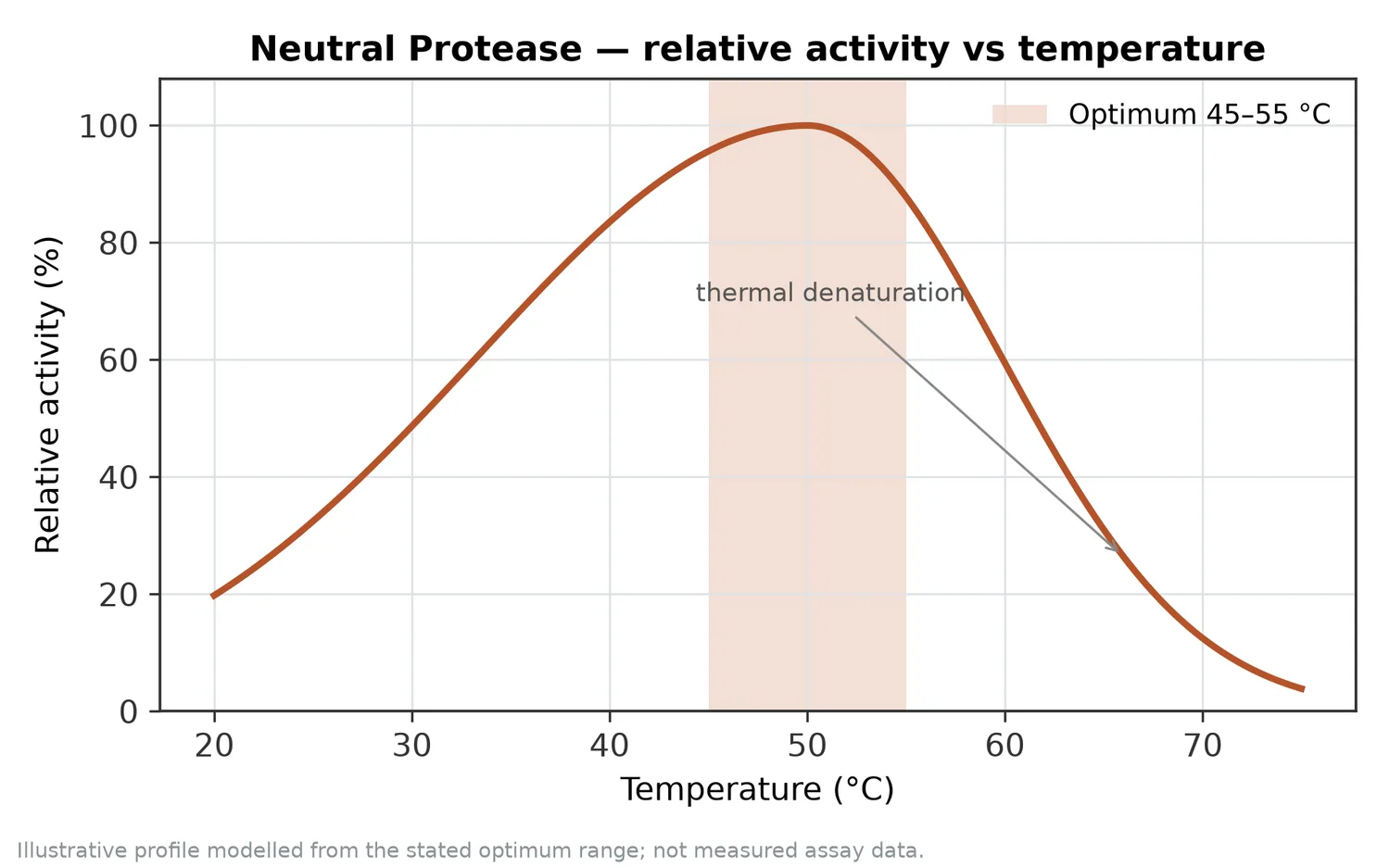
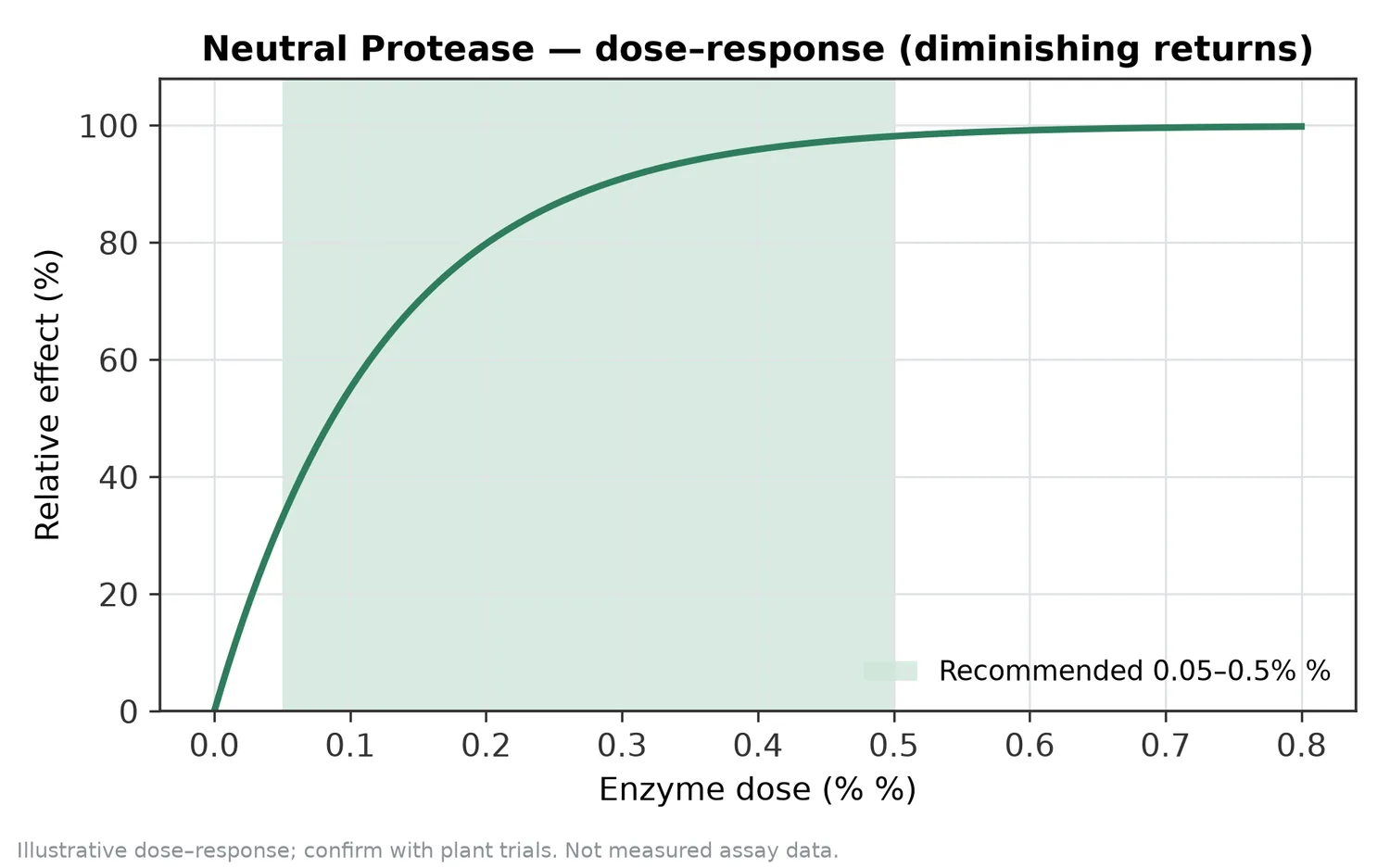
Neutral Protease performance depends on the physical and chemical environment around the substrate. pH affects enzyme ionization and protein charge; temperature affects molecular motion and enzyme stability; salts influence folding and solubility; and contact time determines how far hydrolysis proceeds. These factors change the number of productive enzyme-substrate encounters and the stability of the enzyme during processing.
For metalloprotease-type neutral proteases, metal chemistry can be especially important. Worthington’s Dispase information identifies it as a neutral protease and notes inhibition by chelating agents, which is consistent with the broader concept that some neutral proteases depend on metal-associated catalytic or structural features [4]. In practical terms, a chelator can bind required metal ions, reducing the active enzyme population and slowing hydrolysis.
Substrate preparation also matters. A protein that is finely dispersed, hydrated, and accessible will usually be hydrolyzed more readily than the same protein in large dry particles or dense aggregates. Heat history matters too: moderate unfolding can expose cleavage sites, while severe aggregation can hide them. Neutral Protease acts on peptide bonds, but the rate of cutting depends on whether those bonds are physically reachable.
Process endpoints are also about degree of change, not just presence or absence of enzyme. Short exposure may soften or partially solubilize a material; longer exposure may produce smaller peptides, more free amino groups, and stronger changes in taste, viscosity, or filtration behavior. Because protease action continues while the enzyme remains active, processes generally define an endpoint through time, temperature shift, pH change, or another inactivation-compatible step suited to the material.
Alkaline proteases are often associated with high-pH industrial processes such as detergents, leather processing, and some waste treatments. Reviews describe alkaline proteases as highly significant industrial enzymes because they remain active under alkaline conditions and support applications where high pH is already part of the process [12]. Neutral Protease fills a different role: it is most relevant when the substrate or desired product benefits from avoiding strong alkalinity.
This difference changes the product outcome. At high pH, proteins may swell, unfold, and solubilize more aggressively, which can be helpful in cleaning or dehairing but less desirable in flavor-sensitive foods or moderate-pH fermentations. Near-neutral proteolysis relies more on enzymatic bond cleavage than on chemical disruption from the bulk medium. That can give a gentler route to viscosity reduction, peptide release, or matrix loosening.
Neutral and alkaline proteases can therefore be understood as complementary tools rather than direct substitutes. If a process is already alkaline, alkaline protease may be a natural fit. If the material needs moderate pH, a neutral protease enzyme may provide the protein-cutting function without forcing a major pH excursion.
Neutral Protease is useful because it hydrolyzes proteins, and that same property calls for normal enzyme-handling care. Enzyme powders and aerosols should be handled according to the Safety Data Sheet supplied with the order. Protease reviews describe these enzymes as powerful industrial biocatalysts, and their broad usefulness comes from the same catalytic activity that can affect exposed proteinaceous materials [1].
In production environments, the practical caution is straightforward: avoid unnecessary inhalation, skin or eye exposure, and uncontrolled contact with protein-containing materials. Neutral Protease should be used only for appropriate industrial, food-processing, research, or technical applications consistent with the buyer’s process controls and regulatory obligations.
Enzymes.bio supplies Neutral Protease directly online in 1 kg units. The buyer places the order online, pays online, and the order is then processed and shipped. A Certificate of Analysis and Safety Data Sheet are included with the order.
Neutral Protease is best understood as a near-neutral protein-hydrolysis tool. It cuts peptide bonds, reduces protein size, releases peptides and amino-acid-containing fragments, and can loosen protein-rich structures under milder pH conditions than acid or alkaline processing. The scientific literature supports its broad relevance across microbial enzyme production, Bacillus and Aspergillus protease systems, protein hydrolysates, food fermentation, collagen-containing materials, and dispase-style biological-material workflows [3].
For buyers who need a practical neutral protease enzyme in a straightforward online purchasing format, Enzymes.bio provides a simple route: purchase the 1 kg unit online, complete payment, and receive the product with the accompanying documentation needed for responsible handling and internal records.
Sold by the 1 kg unit, in stock and ready to ship. Order directly on our store — pay online and we process your order. A Certificate of Analysis and Safety Data Sheet are included with every order.
Buy Neutral Protease →Numbered in order of first citation. Open-access sources, each verified reachable at publication; citation numbers in the text link here.