
Papain collagen hydrolase is a plant-derived protease used to break down collagen-rich pigskin and fish materials into smaller peptide fractions under controlled aqueous processing conditions. It works by cleaving accessible peptide bonds in collagen and gelatinized collagen structures, helping convert tough, fibrous protein raw materials into hydrolysates that are easier to disperse, dry, blend, and formulate. Enzymes.bio supplies this papain product directly online by the 1 kg unit; after online payment, the order is processed and shipped with a Certificate of Analysis and Safety Data Sheet.
Papain is best understood as a broad-spectrum cysteine protease rather than a narrowly collagen-only enzyme. That distinction matters: collagen’s native triple helix is resistant and structurally organized, but once pigskin or fish collagen has been cleaned, size-reduced, swollen, heated, gelatinized, or otherwise opened up, papain can access peptide bonds and reduce large protein chains into smaller fragments. Research across collagen, gelatin, meat, whey, soy, fish, cartilage, and marine by-product substrates supports papain’s role as a practical protein-hydrolysis enzyme for converting dense protein matrices into more usable hydrolysates [1].
Papain is a proteolytic enzyme traditionally associated with papaya latex and classified as a cysteine protease. In practical processing language, it is a molecular cutting tool: it attacks peptide bonds in proteins, producing shorter peptides and, depending on processing intensity, smaller soluble nitrogen-containing fractions. Papain extraction, purification, and characterization studies continue to describe it as a valuable plant protease because of its ability to hydrolyze diverse protein substrates rather than requiring one highly specific protein sequence [2].
For pigskin and fish collagen, the important point is substrate accessibility. Intact collagen is not simply a loose protein chain; it is built from three polypeptide chains packed into a triple helix, further organized into fibrils and tissue structures. Papain performs best when the process has made peptide bonds physically reachable—through hydration, swelling, heat-assisted unfolding, partial gelatinization, mechanical size reduction, or prior removal of non-collagen material. Once those structural barriers are reduced, papain can cleave exposed peptide bonds and shift the material from fibrous collagen toward lower-molecular-size collagen hydrolysate fractions [3].
Fish collagen and pigskin collagen behave differently in processing because their tissue structure, thermal stability, fat content, mineral content, odor profile, and native collagen organization are not identical. Fish skin and scale collagen studies often focus on extraction, gelatin hydrolysates, peptide generation, and antioxidant or other functional properties, while porcine collagen peptide work examines how enzymatic hydrolysis changes collagen peptide characteristics and traceability-related profiles. The same enzyme mechanism applies, but the starting material determines how quickly the substrate opens and what peptide mixture is produced [4].
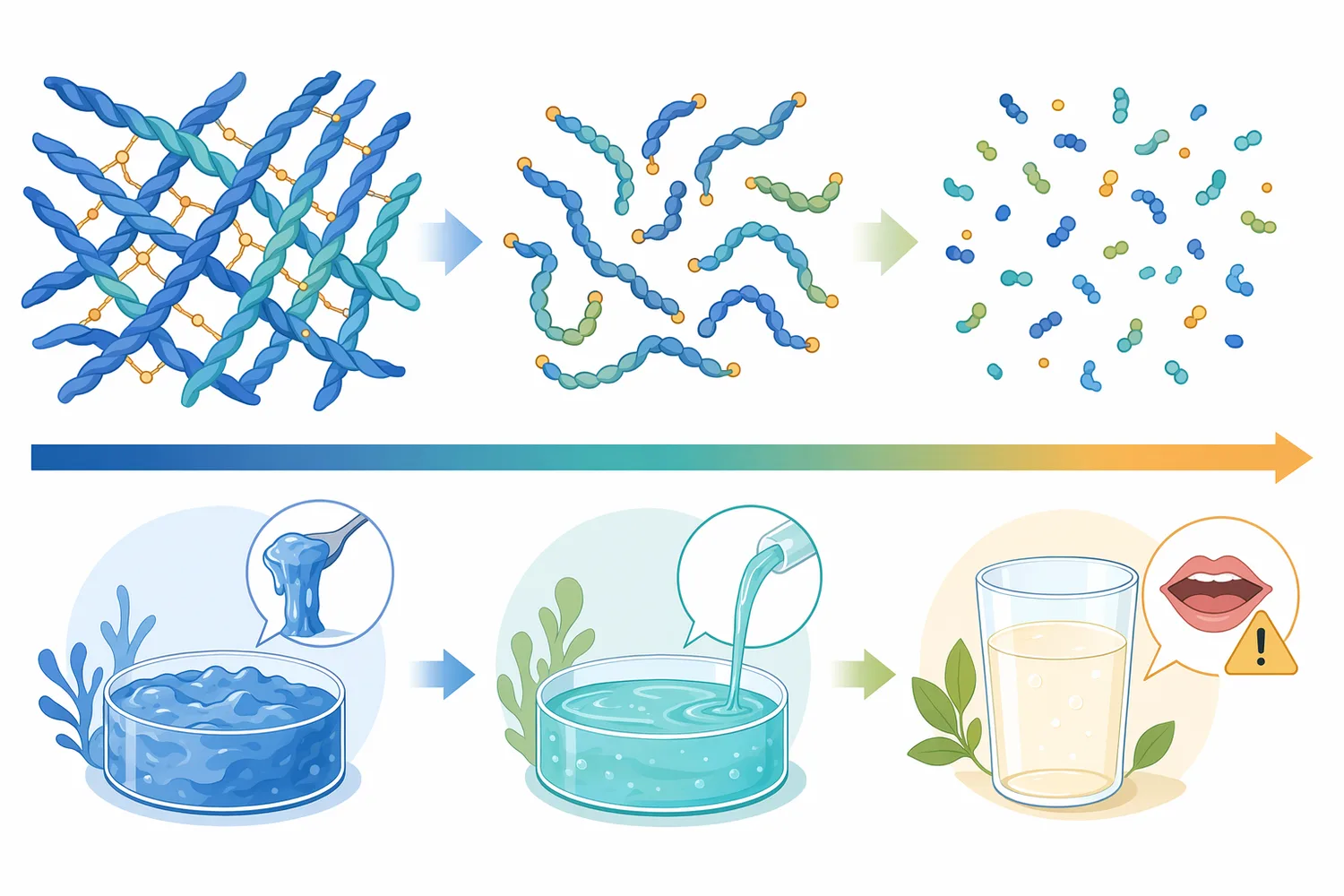
During papain hydrolysis, collagen does not merely “soften” in a vague sense. Large collagen or gelatin chains are cut into shorter peptides; as chain length falls, the material typically becomes less fibrous, more dispersible, and easier to move through downstream operations such as filtration, concentration, drying, and blending. The protein network loses some of its long-chain structure, so viscosity, gel strength, water binding, solubility, bitterness risk, and heat behavior can all change depending on how far hydrolysis proceeds [5].
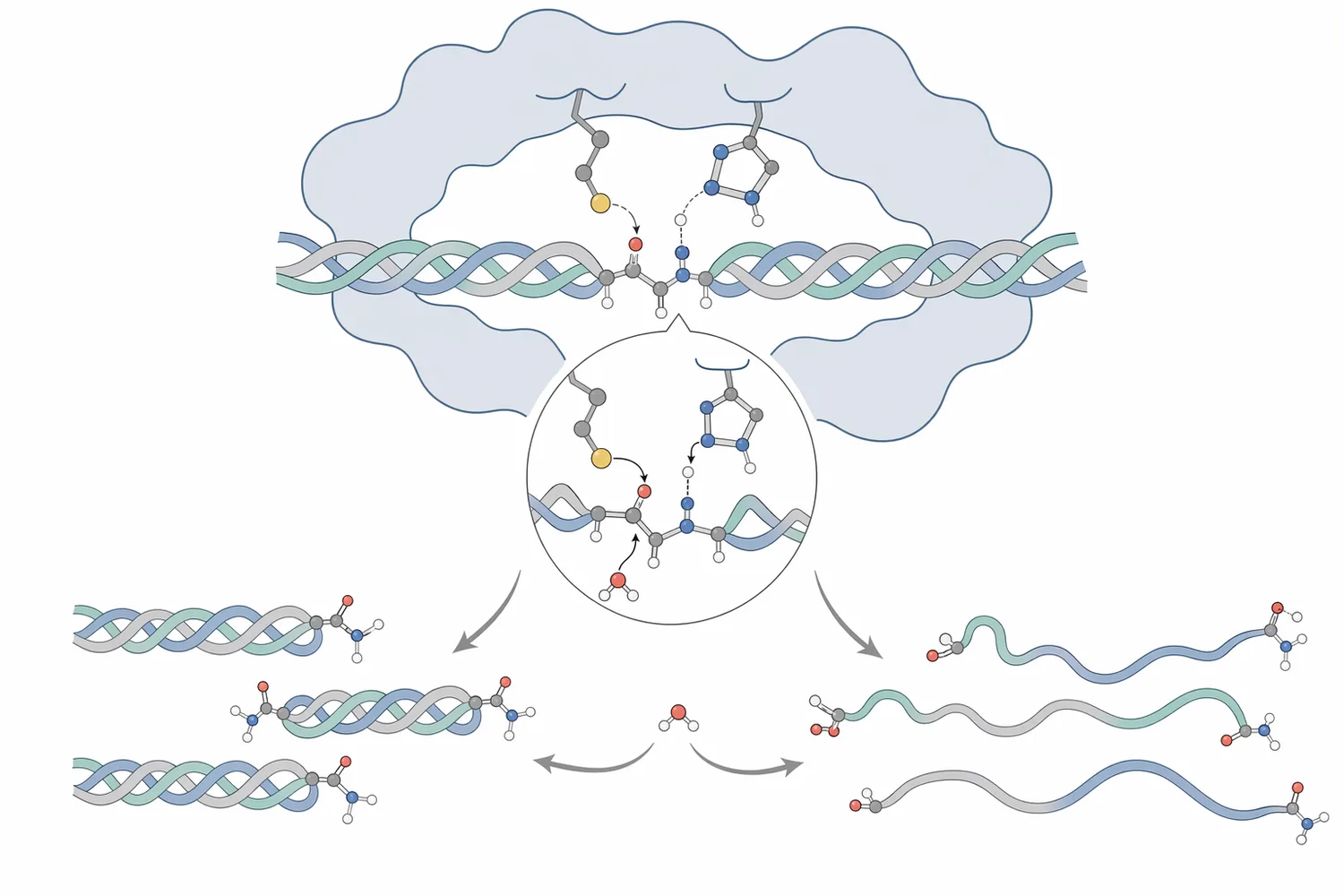
At the molecular level, papain’s cysteine protease mechanism depends on a reactive sulfur-containing catalytic group. The enzyme positions an accessible peptide bond in its active site, activates the catalytic residue for nucleophilic attack, forms a transient enzyme-linked intermediate, and then releases a shortened peptide after water completes the cleavage step. This cycle repeats across many accessible points on the protein, which is why papain can progressively reduce a collagen or gelatin substrate rather than making only a single cut [6].
The visible processing effect depends on degree of hydrolysis. Limited hydrolysis may reduce viscosity, improve dispersion, or partially modify gel behavior while preserving some larger peptide structure. More extensive hydrolysis produces smaller peptides that may dissolve more readily but can also alter taste, reduce gel-forming ability, or increase the proportion of low-molecular-weight fragments. Studies on protein hydrolysis with papain, including whey and plant proteins, show that enzymatic breakdown is not a single fixed outcome; it is a controlled conversion whose final peptide profile depends on reaction conditions and substrate preparation [7].
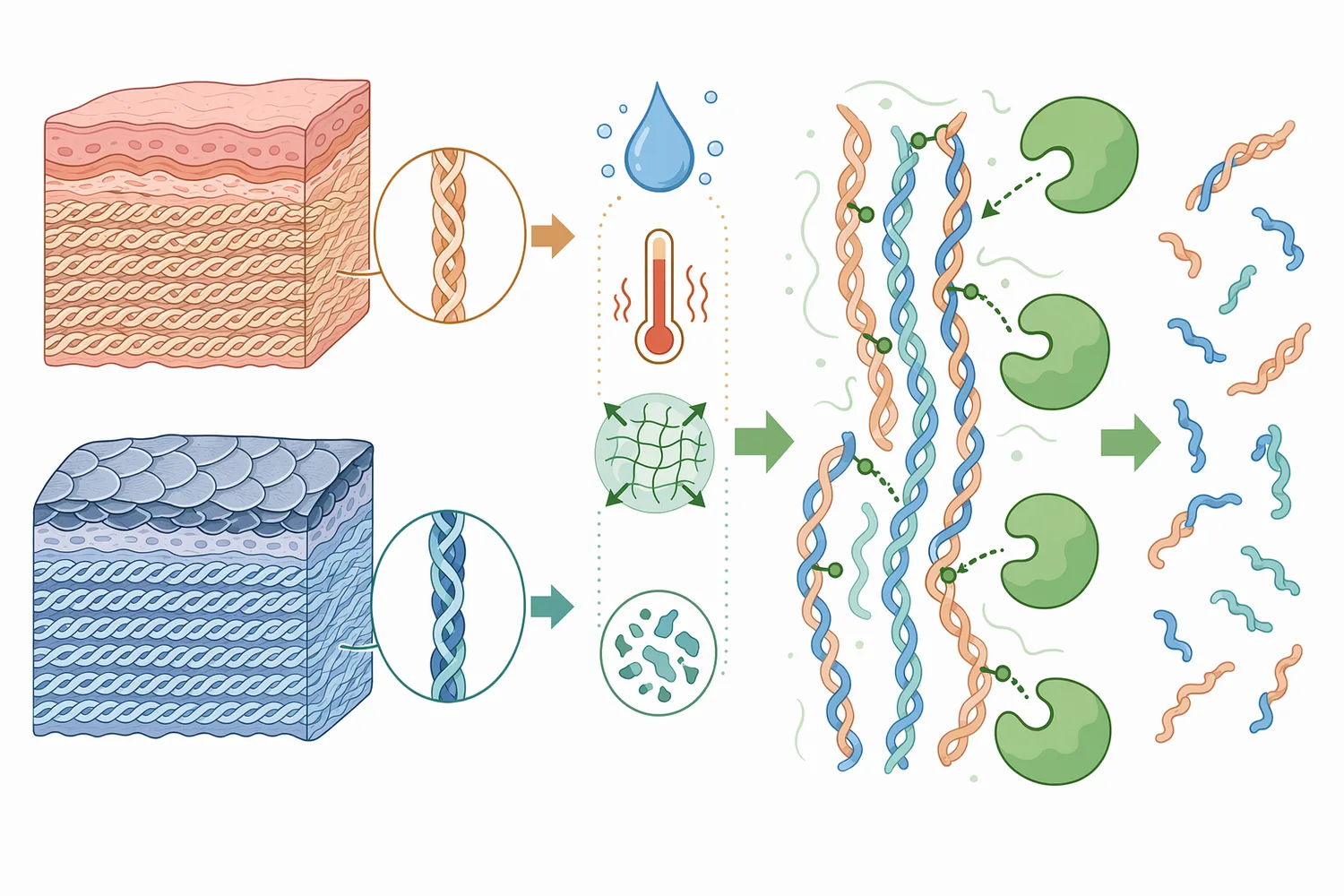
Pigskin collagen is a major collagen source because skin contains abundant structural protein. Its processing challenge is the same reason it is valuable: the tissue is tough, crosslinked, and designed biologically to resist breakdown. Chemical pretreatments and heat can open this structure, but enzymes such as papain provide a biochemical route for controlled protein reduction once collagen chains are sufficiently accessible [8].
In porcine collagen peptide production, enzymatic hydrolysis affects peptide composition, antioxidant-related behavior, and analytical traceability characteristics. That is important for ingredient developers because collagen source and hydrolysis route both influence the peptide mixture that results. Papain’s broad proteolytic action can contribute to this transformation by cutting exposed regions of collagen-derived protein chains, supporting conversion from high-molecular structural protein toward peptide-rich hydrolysate [8].
Papain also fits pigskin collagen processing because it is a non-animal enzyme used to process an animal-derived substrate. The final hydrolysate remains porcine in origin, but the processing enzyme itself is plant-derived. For buyers working with porcine collagen materials, that distinction can be useful when documenting the production route, especially where the enzyme source is relevant to internal formulation or labeling discussions [2].
Fish collagen sources include skin, scales, bones, and other marine by-products. These materials can be attractive because they convert seafood side streams into value-added protein ingredients, but they also bring practical issues: mineral load in scales or bones, variable odor, seasonal raw-material variation, and differences in collagen thermal behavior compared with mammalian collagen. Papain-assisted approaches have been studied in fish collagen and gelatin contexts, including gelatin hydrolysates from fish scales and collagen-related materials from marine sources [4].
Fish scale gelatin hydrolysate research is especially relevant because scales contain collagen embedded in a mineralized structure. Enzymatic hydrolysis helps shift extracted gelatin or collagen-derived material toward peptide mixtures that can be evaluated for antioxidative, antihypertensive, or antidiabetic properties. These studies do not mean every fish collagen hydrolysate will show the same functional profile, but they do show how proteolytic processing can turn fish collagen side streams into peptide-containing ingredients of higher practical value [4].
Fish skin collagen studies also show how enzyme choice and hydrolysis process influence functional outcomes. Work on hydrolyzed collagen from defatted Asian sea bass skin examined how different enzyme types and hydrolysis processes affected antioxidant and wound-healing-related in vitro activities, illustrating that the enzyme route changes the peptide population and therefore the measured properties of the hydrolysate. Papain is part of this broader enzyme-processing toolkit for marine collagen conversion [9].
Collagen hydrolysis can be approached with different protease types and different processing chemistries. Papain is often valued because it can work as a broad cysteine protease under comparatively moderate conditions, while acid and alkaline routes may open structure differently and produce different side effects. The table below is conceptual rather than a product-selection checklist; it explains how the processing environment tends to change collagen behavior and why papain is commonly used as a general collagen hydrolase option [1].
| Approach | Main action on collagen-rich substrate | What changes in the material | Practical implication |
|---|---|---|---|
| Acid-assisted processing | Swells collagen, disrupts ionic interactions, helps open tissue structure | Fibers loosen; collagen becomes more accessible; excessive exposure can affect color, odor, or downstream neutralization needs | Often used as a pretreatment or extraction aid rather than the only route to controlled peptide generation |
| Papain / near-neutral protease hydrolysis | Cleaves accessible peptide bonds once collagen or gelatin structure is opened | Long protein chains become shorter peptides; viscosity and dispersibility can shift strongly with time | Useful for controlled conversion of pigskin or fish collagen into hydrolysate fractions |
| Alkaline protease processing | Promotes protein breakdown under higher-pH conditions | Can rapidly reduce proteins but may also alter sensitive components, color, or sensory profile depending on substrate | Can be effective, but process impact may be broader than desired for some collagen ingredients |
| Combined or staged processes | Uses pretreatment to expose collagen, followed by enzymatic peptide generation | Accessibility and peptide profile are managed in sequence | Common in collagen extraction and hydrolysate workflows where yield, clarity, odor, and peptide size all matter |
The value of papain is not that it eliminates process control; rather, it gives the process a controllable biochemical cutting step. In collagen extraction from tannery raw trimmings, for example, papain has been investigated as part of a greener enzyme-assisted strategy to improve collagen recovery from difficult raw material. That type of work reflects the broader reason enzymes are used in collagen processing: they can reduce reliance on harsher chemical or thermal inputs while still opening dense protein structures [3].
Several collagen-related studies support the technical basis for papain in collagen and gelatin workflows. Papain has been used in bone gelatin processing from tilapia, where hydrolysis was paired with acid treatment to characterize gelatin obtained from fish bone material. This is directly relevant to marine collagen processing because it shows papain being applied to a collagen-rich aquatic by-product rather than only to generic soluble proteins [10].
Research on yellowfin tuna skin collagen powder used a papain-soluble collagen method while varying salt concentration, connecting papain treatment with collagen extraction and particle-size outcomes. That type of study is useful because it links papain not only with peptide bond cleavage but also with the physical properties of collagen-derived powders, including how the processed material behaves as particles after extraction and drying [11].
Papain is also used beyond collagen itself to release valuable matrix components from cartilage and marine tissues. In chicken keel cartilage, papain hydrolysis conditions were optimized for releasing glycosaminoglycans, showing that papain can help digest protein-rich extracellular matrix and liberate associated biomolecules. Sea cucumber work similarly used enzyme-assisted extraction to obtain fucosylated chondroitin sulfate, reinforcing the role of proteases in opening marine connective tissue matrices [12].
The same principle applies to collagen-active peptide development. Studies on composite enzyme hydrolysis for collagen-active peptides emphasize the structure–activity relationship: the biological or functional behavior of a peptide mixture depends on which peptide sequences are released, their size, and their amino-acid composition. Papain can be one of the proteolytic tools used to generate such mixtures, but the resulting function is always tied to the actual peptide population produced [5].
Papain’s usefulness in collagen processing is strengthened by its broader record across protein hydrolysis. Whey protein enzymatic breakdown research has used papain-derived hydrolysates to discover new biologically active peptides, showing that papain can release functional peptide sequences from compact food proteins. Although whey is structurally different from collagen, the underlying enzymatic event—peptide-bond cleavage followed by peptide-mixture formation—is the same [7].
Papain has also been studied in soy protein hydrolysis, where hydrolysis conditions were optimized and the resulting hydrolysates evaluated for biological effects in cell-based work. This supports papain’s general role as a protein-modifying enzyme, especially when the objective is to convert a bulk protein into a more complex peptide mixture for further formulation or evaluation [13].
In limited hydrolysis of soybean and mung bean proteins, protease species affected protein structure, interfacial behavior, and foaming properties. That finding is important for collagen hydrolysates too: the enzyme chosen does not just reduce protein size; it changes the functional behavior of the resulting ingredient. For collagen peptides, similar logic applies to solubility, emulsification behavior, water interaction, drying performance, and sensory profile [14].
Papain’s ability to reduce specific allergenic or structural proteins has also been explored, including work on papain hydrolysis and tropomyosin levels in shrimp. While allergen management requires specific validation and is not automatically transferable to collagen processing, the study illustrates papain’s capacity to modify resistant animal proteins in food matrices through enzymatic cleavage [15].
A collagen hydrolysis process normally begins before the enzyme is added. Raw material must be cleaned, size-reduced, and prepared so that water and enzyme can reach the protein. In pigskin, this often means dealing with fat, connective tissue density, and thermal opening of collagen; in fish materials, it may involve scale minerals, skin pigments, odor precursors, or residual non-collagen proteins. Papain’s effectiveness depends strongly on whether the substrate has been made accessible enough for enzyme contact [3].
Once papain is added, the reaction is governed by contact between enzyme and exposed peptide bonds. Early in hydrolysis, large chains are cut into medium-size fragments; as the reaction continues, those fragments can be cut further into smaller peptides. The process therefore moves through stages: tissue loosening, viscosity change, solubilization, peptide accumulation, and, if extended too far, possible over-hydrolysis that may affect taste or functional body [5].
Temperature, pH, time, water ratio, substrate particle size, and pretreatment all influence the final hydrolysate. These variables affect both enzyme activity and collagen accessibility, so the same papain addition can produce different results in fish skin, fish scales, pigskin gelatin, or partially extracted collagen. Published optimization studies in collagen and cartilage matrices show that papain hydrolysis is usually treated as a process-dependent conversion rather than a one-condition-fits-all operation [12].
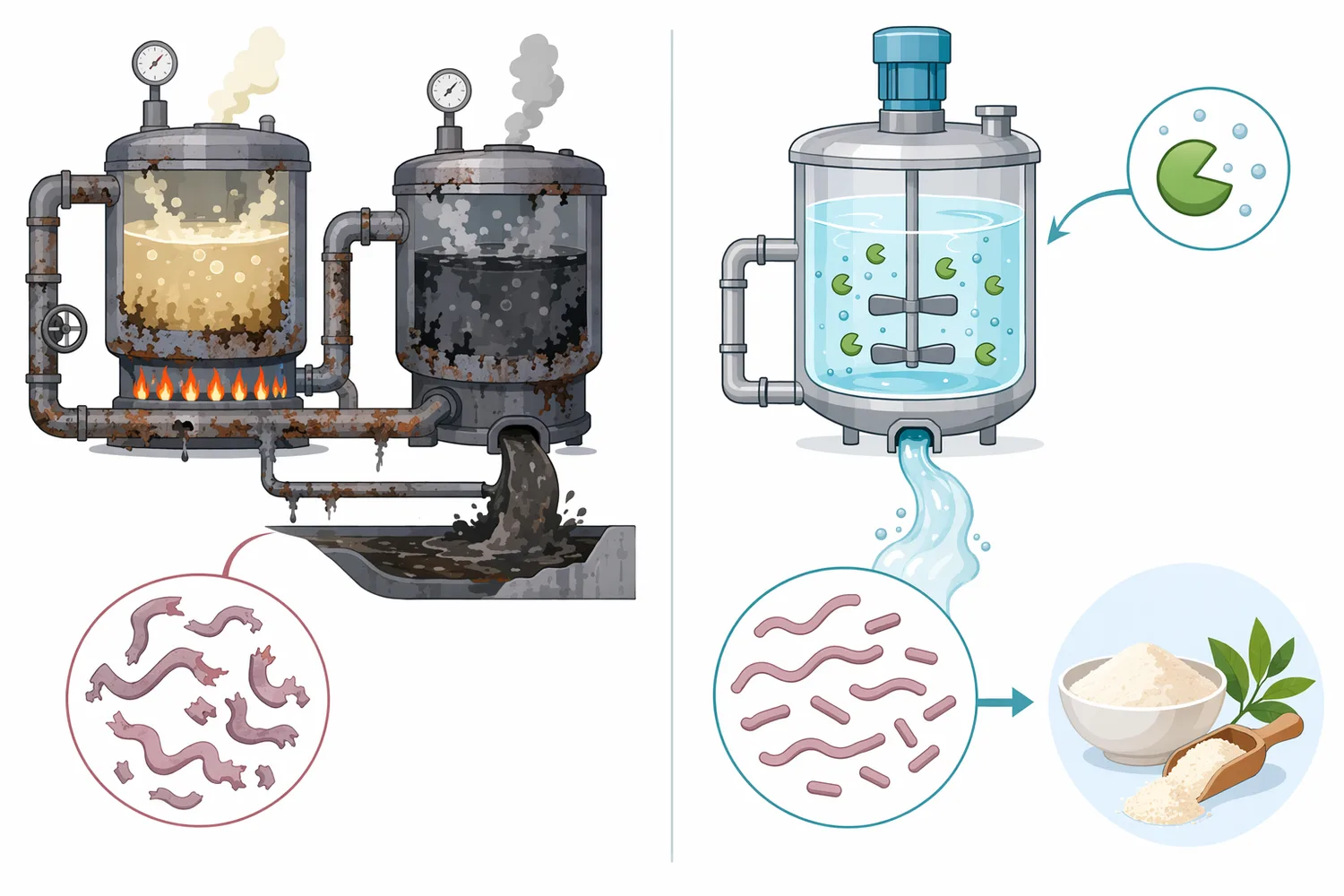
Downstream handling also matters. After hydrolysis, the enzyme reaction is typically brought under control by heat treatment or other process steps, and the hydrolysate may then be clarified, concentrated, filtered, deodorized, dried, or blended depending on its intended use. Those steps can change appearance, particle behavior, flavor profile, and application performance just as much as the hydrolysis step itself [11].
The first benefit is controlled reduction of large structural proteins. Collagen’s long chains and organized fibrils are valuable but difficult to formulate directly. Papain helps reduce those structures into smaller peptides, making the material easier to process in liquid systems and easier to convert into powders or blends where rapid dispersion is important [4].
The second benefit is broad substrate tolerance. Papain can act on many protein substrates, which is useful when natural raw materials vary by species, tissue type, season, age, handling history, and pretreatment. This broadness is especially relevant for fish collagen streams, where skin, scale, and bone fractions can behave quite differently even within the same seafood processing operation [9].
The third benefit is compatibility with side-stream valorization. Collagen-containing by-products from seafood, meat, and leather-related streams can be difficult to use in their original form, but enzyme-assisted processing can help convert them into collagen, gelatin, or peptide materials with more practical value. Papain-assisted collagen extraction from tannery raw trimmings is a clear example of using enzymatic processing to improve recovery from challenging collagen-rich material [3].
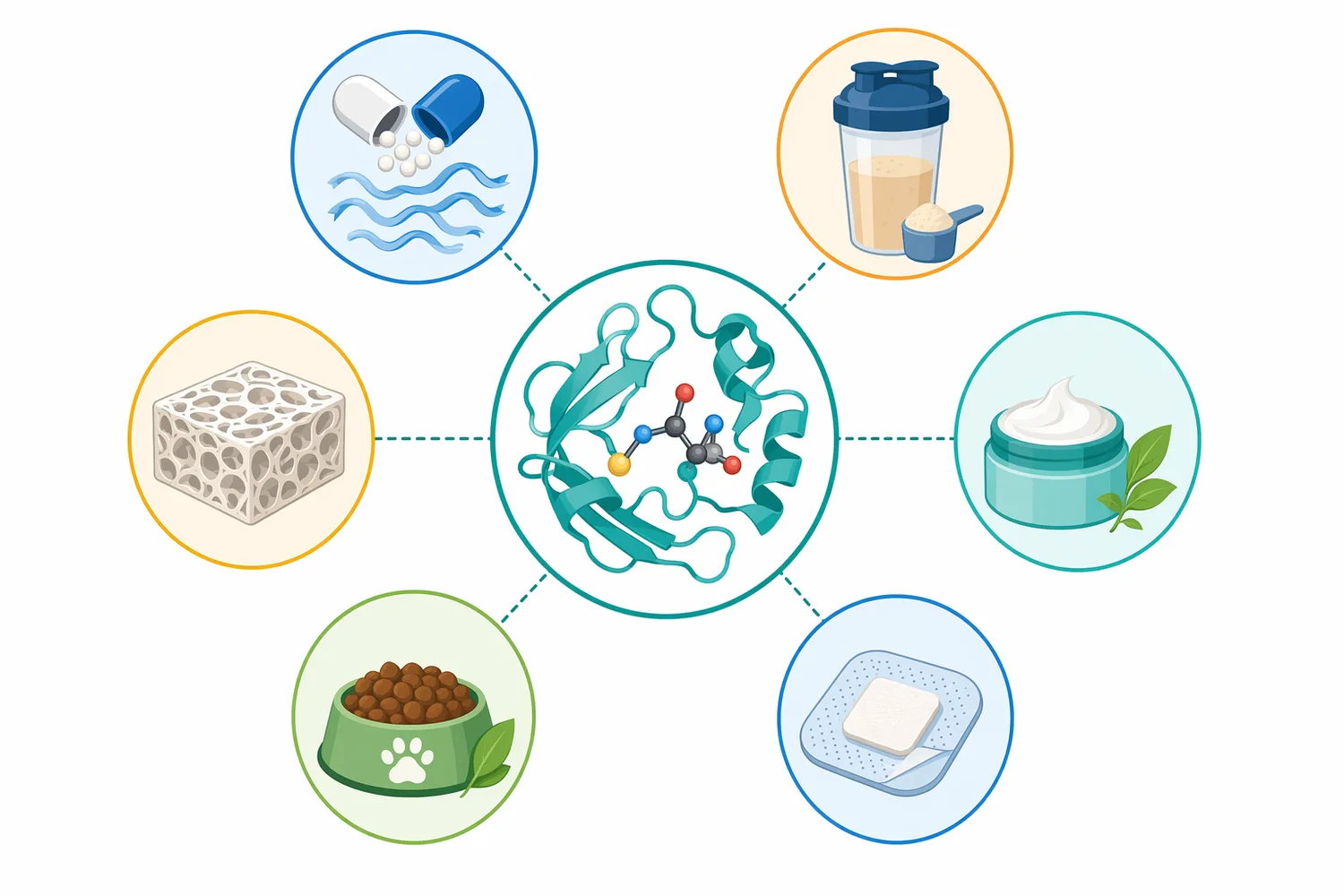
The fourth benefit is application flexibility. Papain-derived collagen hydrolysates may be considered for food, nutrition, cosmetic ingredient, pet nutrition, or technical protein uses, depending on raw material quality, processing route, regulatory context, and finished-product requirements. Research on fish gelatin hydrolysates and collagen peptides shows why peptide mixtures are attractive: hydrolysis can create fractions that are evaluated for solubility, antioxidant behavior, enzyme-inhibitory activity, and other functional properties [16].
In food and nutrition ingredients, papain can support the production of hydrolyzed collagen or gelatin hydrolysates intended for powders, beverages, bars, tablets, capsules, soups, sauces, or other protein-containing formats. The functional target is usually not gel strength; it is often dispersibility, manageable viscosity, neutral formulation behavior, and consistent peptide-rich composition. Fish scale gelatin hydrolysate studies show how collagen-rich aquatic by-products can be transformed into hydrolysates evaluated for nutritional and functional properties [4].
In cosmetic and personal-care ingredient development, hydrolyzed collagen is used because smaller peptide fractions are easier to formulate than intact collagen. Papain itself is also known in personal-care contexts as a proteolytic enzyme, but when used upstream for collagen hydrolysis, its main role is to generate collagen-derived peptides for later formulation. Any finished cosmetic claim still depends on the final composition and applicable regulatory framework [17].
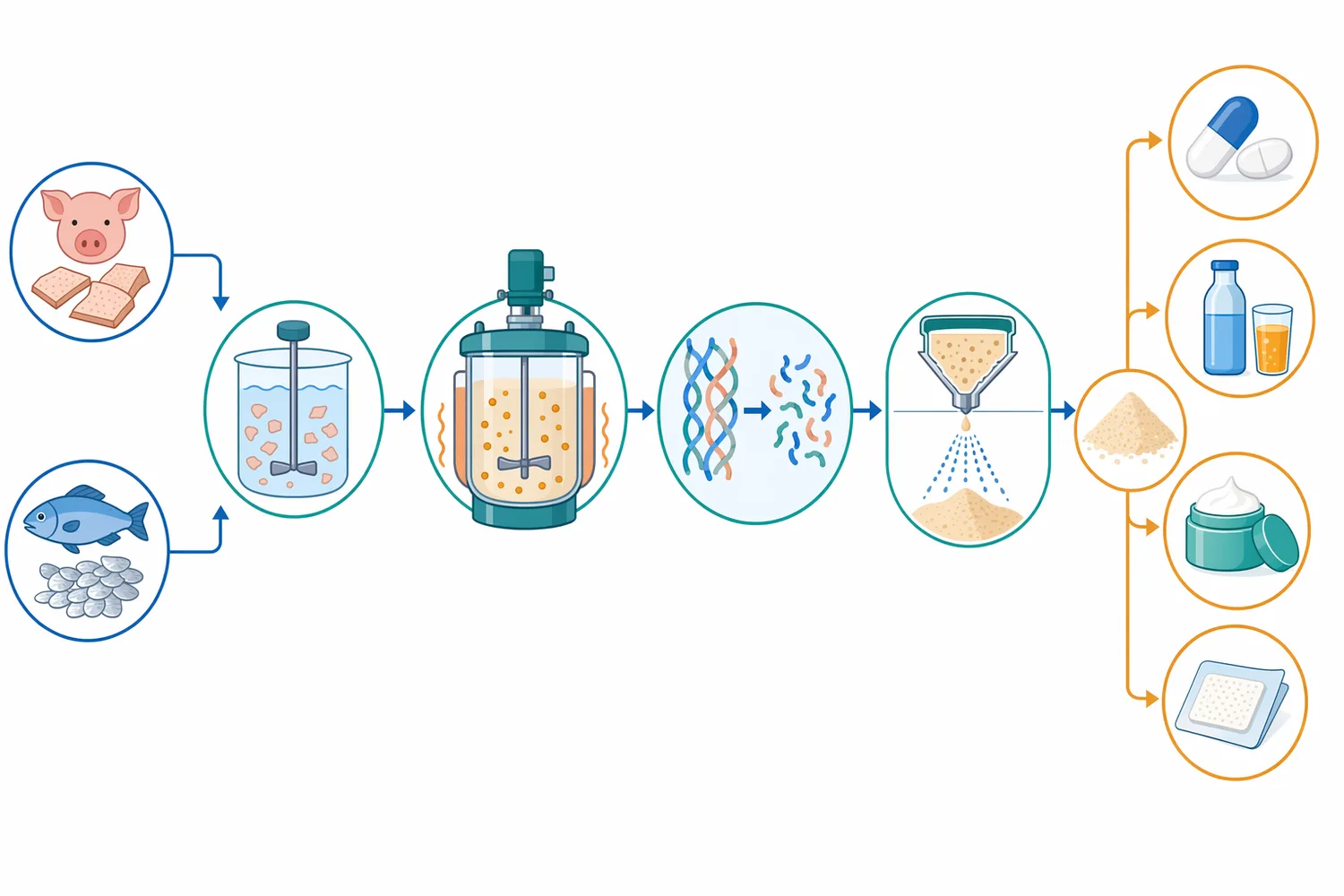
In pet nutrition and animal nutrition, collagen hydrolysates can serve as proteinaceous ingredients with texture, palatability, or nutritional positioning value. Papain’s role is upstream: it modifies the substrate so the resulting ingredient is easier to incorporate and digestibility-related properties can be evaluated. Studies using papain in artificial diets and protein hydrolysis contexts illustrate why proteases are relevant to feed and aquaculture nutrition work [18].
In technical protein processing, papain can help convert low-value or difficult collagenous materials into more manageable hydrolysates for further separation, drying, or blending. This is particularly relevant where the starting material is not suitable for direct high-value use but contains recoverable protein. Enzyme-assisted collagen extraction research from tannery raw trimmings highlights this technical upgrading role [3].
Papain does not guarantee a single fixed peptide molecular-weight profile. Because it is a broad protease, the peptide mixture depends on substrate preparation, water content, reaction conditions, hydrolysis time, and downstream treatment. Two processes using the same enzyme can produce different peptide distributions if one begins with native fish skin and the other begins with heat-denatured pigskin gelatin [5].
Papain also does not automatically guarantee a health effect from a finished collagen peptide ingredient. Studies on collagen peptides, fish gelatin hydrolysates, whey hydrolysates, and other papain-treated proteins may report antioxidant, enzyme-inhibitory, or cell-based effects, but those results belong to the specific substrate, hydrolysis process, peptide mixture, and test model used. A commercial finished-product claim requires product-specific evidence and regulatory review [16].
Papain does not eliminate sensory management. Extensive hydrolysis can increase small peptides and free amino groups, which may improve solubility but can also contribute to bitterness, odor release, or changes in mouthfeel depending on the raw material. Fish collagen streams in particular may require careful upstream cleaning and downstream deodorization or polishing if the finished application is taste-sensitive [9].
Papain should also not be viewed as a substitute for raw-material control. If pigskin or fish collagen substrates contain excessive fat, minerals, pigments, degraded protein, or process contaminants, enzymatic hydrolysis may make some components more dispersible rather than removing them. The enzyme cuts proteins; it does not by itself purify the entire matrix [11].
Papain stability is influenced by moisture, temperature exposure, pH environment, and the chemical state of its catalytic cysteine residue. Reviews on papain stabilization and encapsulation emphasize that papain can lose performance when exposed to unfavorable chemical or physical conditions, which is why enzyme form, process timing, and controlled addition are important in practical use [6].
Immobilization research also shows why papain stability is a recurring theme: scientists have investigated ways to improve reusability, protect activity, and manage enzyme behavior in different media. While that research is not the same as using a powdered processing enzyme in collagen hydrolysis, it reinforces the practical point that papain’s performance depends on how the enzyme is exposed to the processing environment [1].
In collagen hydrolysis, the safest general approach is to treat papain as an active protein catalyst: add it when the substrate is ready, avoid unnecessary exposure to harsh conditions before contact with the collagen, and control the reaction so hydrolysis stops at the desired functional point. The purpose is not maximum breakdown at all costs; the purpose is a reproducible peptide mixture suited to the intended downstream application [12].
Enzymes.bio supplies papain collagen hydrolase enzyme directly online by the 1 kg unit. The buying process is straightforward: the customer purchases online, pays online, and the order is processed and shipped. A Certificate of Analysis and Safety Data Sheet are included with the order.
Enzymes.bio is a supplier, not a manufacturer or testing laboratory. The scientific basis for the product rests on papain’s well-established proteolytic function and the published use of papain across collagen, gelatin, cartilage, marine by-product, meat, dairy, and plant-protein hydrolysis research. For customers working with pigskin or fish collagen, the practical value is clear: papain provides a proven enzymatic route for cutting accessible collagen-derived protein chains into smaller peptide fractions under controlled processing conditions [1].
Papain collagen hydrolase is therefore a practical enzyme option for buyers who want to process porcine or marine collagen materials into hydrolysates. Its strength is broad, well-documented protein hydrolysis; its final outcome depends on the substrate and process. Used with appropriate process control, it can help transform tough collagen-rich raw materials into peptide-containing ingredients suitable for further formulation, drying, blending, or application development.
Sold by the 1 kg unit, in stock and ready to ship. Order directly on our store — pay online and we process your order. A Certificate of Analysis and Safety Data Sheet are included with every order.
Buy Papain 650,000 U/G Pigskin Fish Collagen Hydrolase Enzyme →Numbered in order of first citation. Open-access sources, each verified reachable at publication; citation numbers in the text link here.