
Papain enzyme tenderizes beef and steak by hydrolyzing proteins that help hold muscle fibers and connective tissue together. In practical terms, controlled papain treatment weakens the structures that make some cuts feel tough, so the cooked meat requires less force to bite and chew.
For marinated steaks, beef strips, cubes, and other value-added beef formats, papain is most useful when it is evenly distributed and given enough contact time to soften the meat without over-digesting it. Because papain is a broad plant protease, the main process risk is excessive softening or a pasty surface texture if exposure is not controlled; this risk is well recognized in reviews of plant proteases for meat processing [1].
Enzymes.bio supplies Papain Enzyme for Beef and Steak Tenderizing as an online product sold directly by the 1 kg unit. Buyers place and pay for the order online, and the order is then processed and shipped; a Certificate of Analysis and Safety Data Sheet come with the order.
Papain is a plant-derived protease associated with papaya latex and papaya fruit systems. In meat processing, its value comes from its ability to cut peptide bonds in meat proteins, reducing the integrity of protein networks that contribute to toughness. Scientific reviews describe papain, bromelain, and ficin as established plant proteolytic enzymes used for meat tenderization, with papain among the best-known examples [1].
In beef and steak applications, papain is not used primarily for flavor, curing, preservation, or color development. Its core function is texture modification. When papain contacts the meat surface or penetrates through a marinade or brine system, it begins breaking down accessible proteins in muscle fibers and connective-tissue-associated structures. The result, when controlled, is a softer bite and improved chewability.
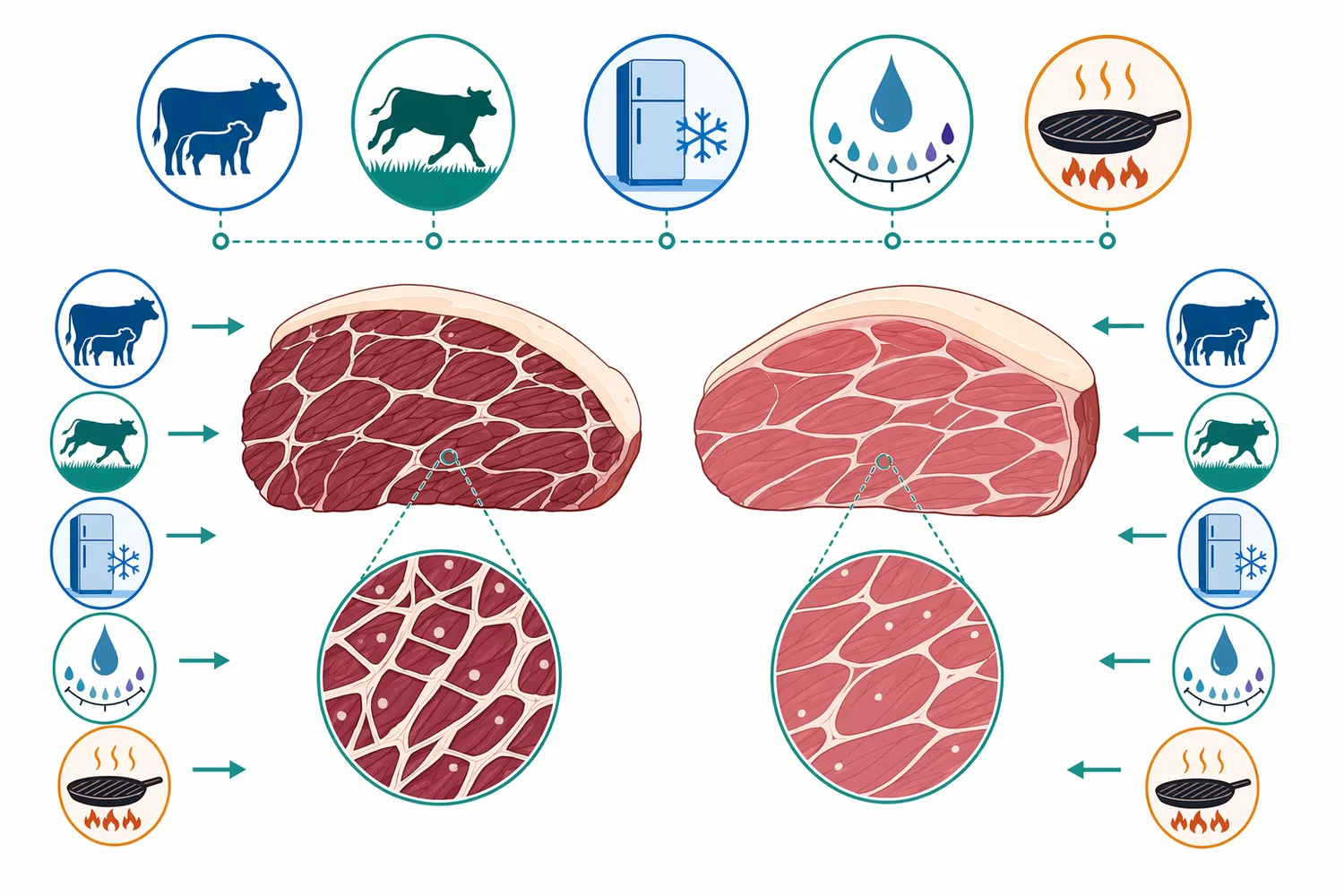
This matters because beef tenderness is not determined by one factor alone. Meat texture is shaped by muscle type, post-mortem changes, connective tissue, pH, water-holding behavior, cooking conditions, and the condition of structural proteins inside the muscle. Reviews on meat tenderness emphasize that pH, color, and tenderness are interrelated quality attributes, and that tenderness depends strongly on biochemical and structural changes after slaughter [2].
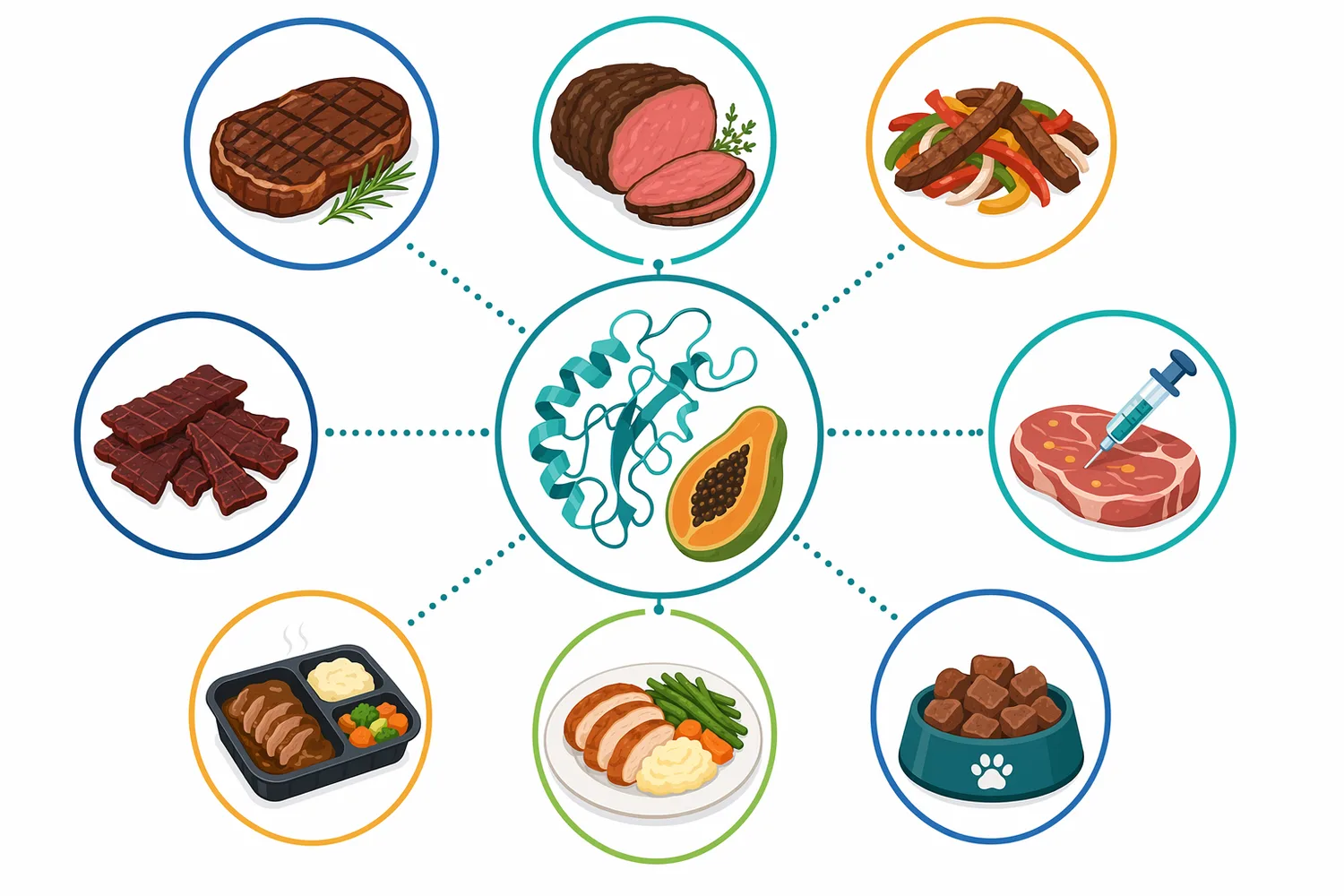
Papain gives processors and product developers an additional way to influence those structural changes. Instead of relying only on aging, mechanical tenderization, or long marination, papain actively accelerates proteolysis in the meat system. That makes it especially relevant for tougher beef cuts, value-added marinated steaks, sliced beef, fajita strips, stir-fry beef, kebab cubes, and prepared-meal beef components where consistent tenderness is part of the eating-quality target.
A beef muscle is not a uniform block of protein. It contains long muscle fibers bundled together, connective tissue layers surrounding and linking those fibers, and internal cytoskeletal proteins that help maintain cellular structure. Toughness is felt during chewing when these structures resist cutting, compression, and fragmentation.
Papain acts by hydrolyzing proteins in these structures. At the microscopic level, enzymatic tenderization weakens the continuity of the muscle matrix: proteins that once connected, supported, or reinforced the tissue are partially broken into smaller fragments. This reduces the resistance of the meat when a tooth, knife, or texture-measuring blade passes through it. Reviews of endogenous proteolytic systems in meat describe how post-mortem tenderness is strongly influenced by protein breakdown, particularly changes in structural and cytoskeletal proteins during storage and processing [3].
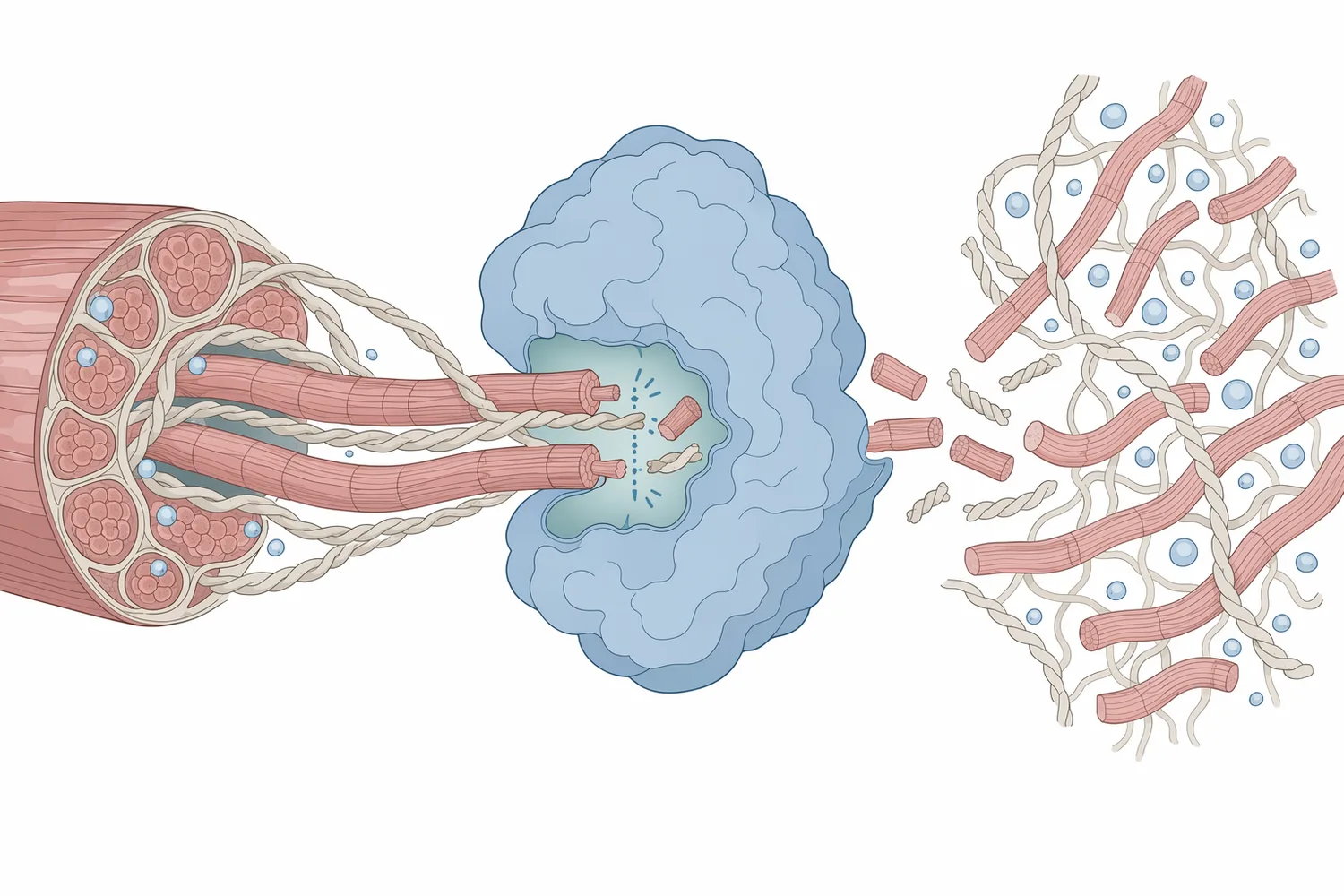
The key difference is that papain is an added protease, not one of the meat’s own endogenous enzymes. Endogenous systems such as calpains and cathepsins contribute to natural tenderization during aging, but their activity depends on the animal, muscle, storage conditions, and post-mortem biochemistry. Papain supplies an external proteolytic effect that can be designed into a marinade, brine, or surface treatment.
Papain is broad in action. That is both its strength and its limitation. It can attack multiple protein targets that contribute to toughness, which is why it can be effective on firm meat. But because it is not highly selective for only one toughness-related structure, excessive exposure can continue breaking down proteins beyond the desired tender point. Reviews of plant proteolytic enzymes warn that uncontrolled enzymatic action may cause excessive tenderization and undesirable soft or mushy textures [1].
A useful way to visualize the process is to think of a tough beef muscle as a reinforced protein network. Papain does not “melt” the meat; rather, it cuts many small links within that network. With controlled treatment, enough links are weakened to improve bite. With over-treatment, too many links are cut, and the meat can lose resilience, slicing strength, and natural fibrous bite.
Tenderness variability is a practical challenge in beef. Two steaks can look similar yet eat differently because the underlying muscle biology is different. Muscles used heavily for locomotion generally contain more connective tissue and can be firmer. Meat from older animals may have more mature collagen cross-links, making connective tissue less soluble during cooking. Post-mortem handling, aging time, pH decline, and cooking endpoint also influence tenderness.
The scientific literature consistently treats meat tenderness as a multi-factor quality trait. Reviews on meat pH, color, and tenderness explain that pH affects protein behavior, water-holding capacity, appearance, and eating quality, all of which can influence how a cooked steak is perceived [2]. This is one reason a tenderizing enzyme must be understood as part of the full meat system rather than as an isolated additive.
Papain is particularly useful where toughness comes from protein structures that are accessible to enzymatic hydrolysis. In thin products, strips, cubes, or marinated steaks, enzyme contact can be more effective because there is greater surface area relative to thickness. In thicker whole-muscle products, distribution becomes more important because surface-only activity may not match the texture of the interior.
Thermal processing also changes the outcome. Cooking denatures myofibrillar proteins, shrinks connective tissue, drives moisture movement, and changes the firmness of the meat. Reviews of thermal and non-thermal processing in meat describe how processing conditions alter protein, sensory, chemical, and oxidative properties, reinforcing that tenderness is affected by both biochemical treatment and the later cooking step [4].
Papain’s use in meat tenderization is supported by a broad body of research on plant proteases and by applied studies in different meat systems. Reviews of plant proteolytic enzymes identify papain as one of the common enzymes used to improve meat tenderness, alongside bromelain and ficin [1].
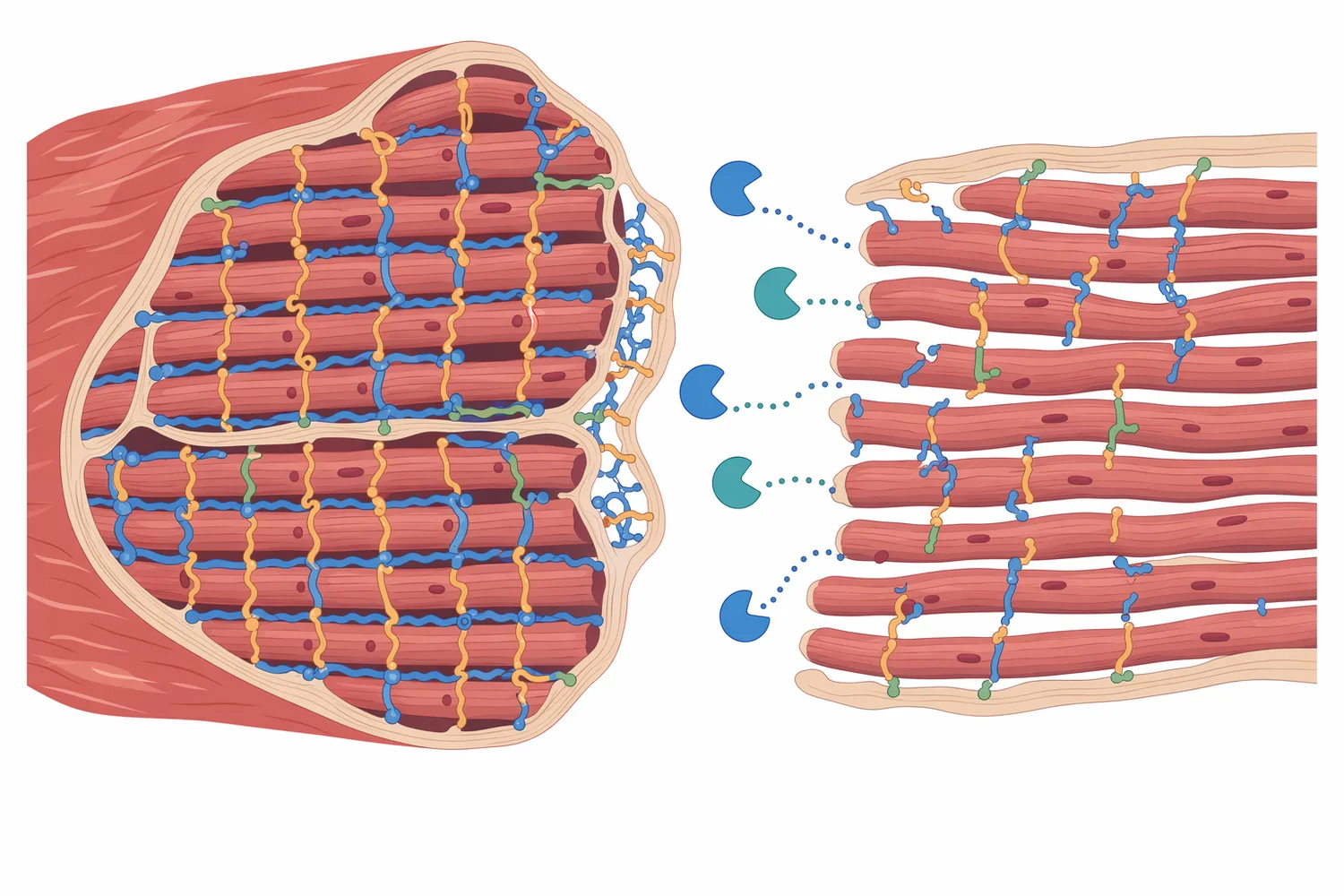
A 2023 review on enzymatic reactions in meat processing describes enzymes as active tools for changing meat and meat products, including reactions that affect texture, flavor development, and processing performance [5]. For tenderizing applications, the central reaction is proteolysis: the cleavage of proteins into smaller peptides and fragments.
Applied studies have evaluated papain in meat systems beyond standard steak cuts, which is valuable because the mechanism of toughness—muscle fiber integrity, connective tissue, and structural protein resistance—is shared across meat types. Research on plant proteolytic enzymes for rabbit meat tenderization, for example, reflects the wider use of these enzymes to improve tenderness in meats where natural texture can be firm [6].
Papain has also been studied in buffalo calf meat as a natural tenderizer, demonstrating relevance in red-meat systems where toughness and consumer acceptability are practical concerns [7]. Although buffalo calf meat is not identical to beef steak, it is a useful comparison because both are mammalian muscle foods with tenderness governed by muscle fiber structure, connective tissue, and cooking behavior.
A study on the addition of papain and bromelain in a marinade for tenderizing beef directly supports the use of papain in beef marinade systems [8]. The marinade context is particularly important for commercial steak and beef products because it reflects a common way to distribute enzyme, salt, flavor components, and water across the meat surface or into cut pieces.
Papain and bromelain have also been evaluated in sukuti, an indigenous dried meat product of Nepal, with attention to sensory and chemical quality [9]. Dried meat systems are different from fresh steak, but the study reinforces a wider point: plant proteases can influence not only softness but also product quality attributes that matter to acceptance, especially when proteolysis continues during processing.
Papain is often discussed with other proteases because meat tenderization can be achieved through different enzymatic routes. The table below provides a practical conceptual comparison without reducing the choice to a single “best” enzyme.
| Tenderizing route | Source or type | Main action in meat | Practical strength | Main caution |
|---|---|---|---|---|
| Papain | Plant cysteine protease from papaya systems | Broad hydrolysis of accessible muscle and connective-tissue-associated proteins | Strong, well-known tenderizing effect; fits marinades and value-added beef formats | Can over-soften if exposure is excessive |
| Bromelain | Plant protease from pineapple systems | Proteolysis of muscle proteins and related structures | Commonly studied with papain in tenderizing systems | Also requires control to avoid texture defects |
| Ficin | Plant protease from fig systems | Proteolytic weakening of meat structure | Recognized in reviews as a traditional tenderizing enzyme | Less familiar in many beef applications than papain |
| Endogenous aging enzymes | Naturally present meat enzymes | Post-mortem breakdown of structural proteins over time | Supports natural tenderness development during aging | Slower and dependent on animal, muscle, and storage conditions |
Reviews of plant proteases consistently place papain, bromelain, and ficin among the commonly used meat-tenderizing enzymes, while reviews of endogenous proteolytic systems explain how natural post-mortem proteolysis contributes to tenderness during storage [1].
This comparison is useful because it shows where papain fits. It is not the only tenderizing pathway, and it does not replace the natural changes that occur in meat after slaughter. Instead, it provides an added, process-driven proteolytic effect that can be incorporated into the product design.
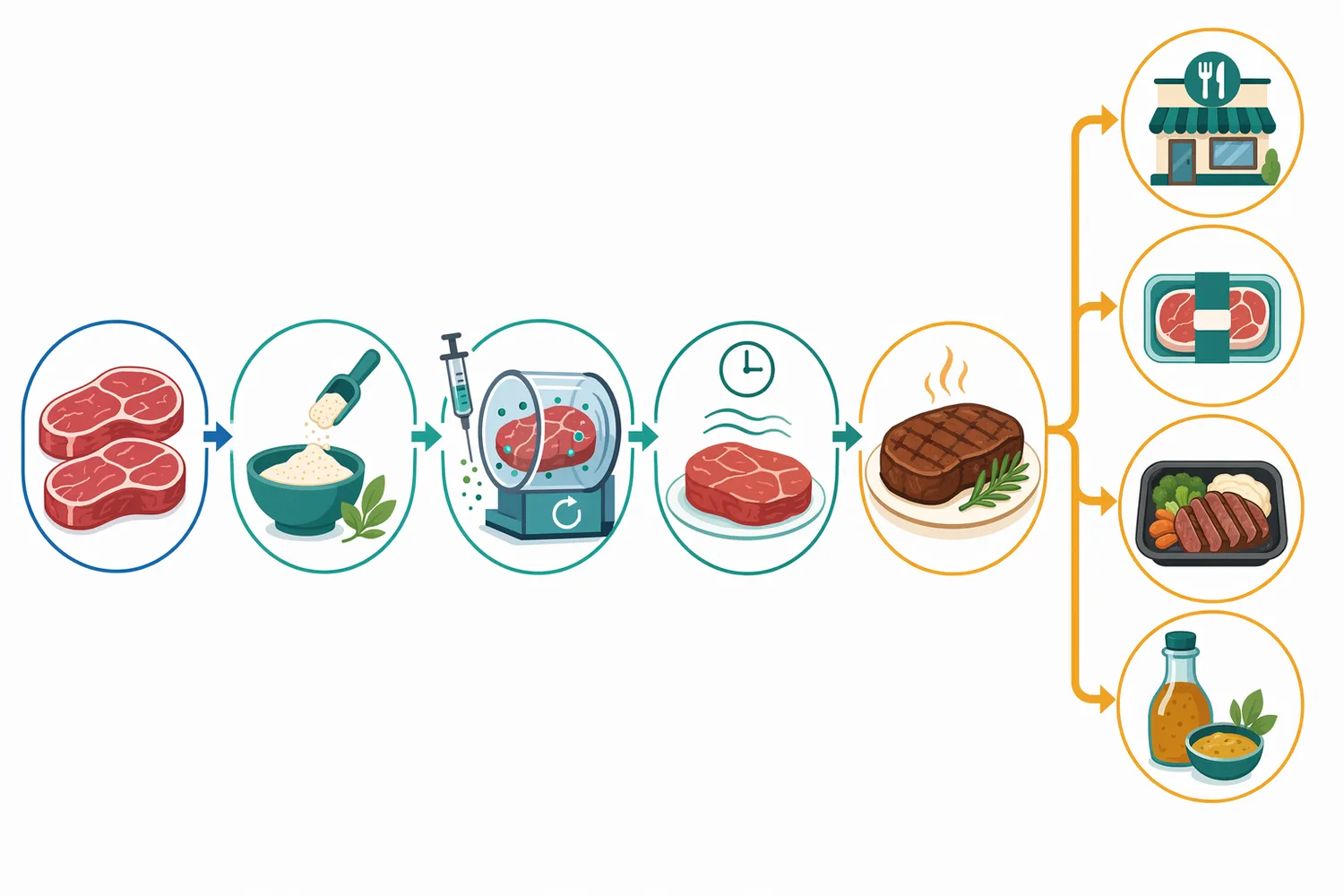
Papain is especially practical in marinade and brine systems because these liquids help bring the enzyme into contact with the meat. In a simple surface treatment, papain acts first where it touches: the exterior of the steak or cut piece. In a marinade, tumbling or mixing can improve contact across more of the meat surface. In smaller cuts, strips, cubes, and thin slices, the enzyme has a shorter distance to act before cooking.
Beef marinade systems are a logical application because marinades already exist to deliver salt, flavor, moisture, acids, spices, or functional ingredients. Adding papain changes the marinade from a mainly flavor-and-moisture system into a texture-modifying system. The beef marinade study comparing papain and bromelain is directly relevant because it evaluates enzyme addition in the same type of format used for tenderized beef products [8].
The mechanism in a marinade is concrete. Water carries dissolved or dispersed enzyme to the meat surface. Salt and other ingredients can alter protein swelling, water binding, and diffusion behavior. As papain contacts accessible proteins, it cleaves them into shorter fragments. The treated surface becomes less resistant, and in thinner products the tenderizing effect can influence a larger proportion of the bite.
Surface treatment can be effective for thin steaks or sliced beef, but it can create uneven texture if the outside receives much more enzymatic action than the center. This is why product geometry matters. A thin fajita strip or stir-fry slice can tenderize more uniformly than a thick whole-muscle steak under the same surface-contact conditions.
Papain needs contact time to hydrolyze meat proteins. During that time, the enzyme repeatedly binds to protein substrates, cleaves peptide bonds, releases fragments, and moves on to other accessible sites. More contact time generally allows more hydrolysis, but the relationship is not simply “more is better.” Once enough structural proteins have been weakened, additional hydrolysis may reduce the natural fibrous bite.
Temperature affects enzyme activity because protein motion, enzyme conformation, and substrate accessibility all change with heat. Chilled conditions slow reactions; warmer processing conditions generally accelerate enzymatic action until the enzyme structure begins to lose activity. For beef and steak products, this means the same formulation can behave differently depending on whether the meat is held cold, brought toward ambient preparation temperatures, or cooked soon after treatment.
Cooking adds another layer. Heat denatures meat proteins, firms some structures, solubilizes or shrinks connective tissue depending on time and temperature, and eventually reduces enzyme activity. Reviews of meat processing show that thermal and non-thermal treatments produce dynamic changes in protein structure and sensory properties, so enzymatic tenderization should be understood together with the final cooking process [4].
In practice, the finished eating texture reflects the sequence: raw material structure, papain contact, holding conditions, and cooking endpoint. A steak that is lightly treated and cooked quickly may show a moderate tenderness improvement. A thin strip exposed for longer may become much softer because more of its total mass has been accessible to the enzyme. If exposure is excessive, the surface may lose cohesion and feel pasty rather than naturally tender.
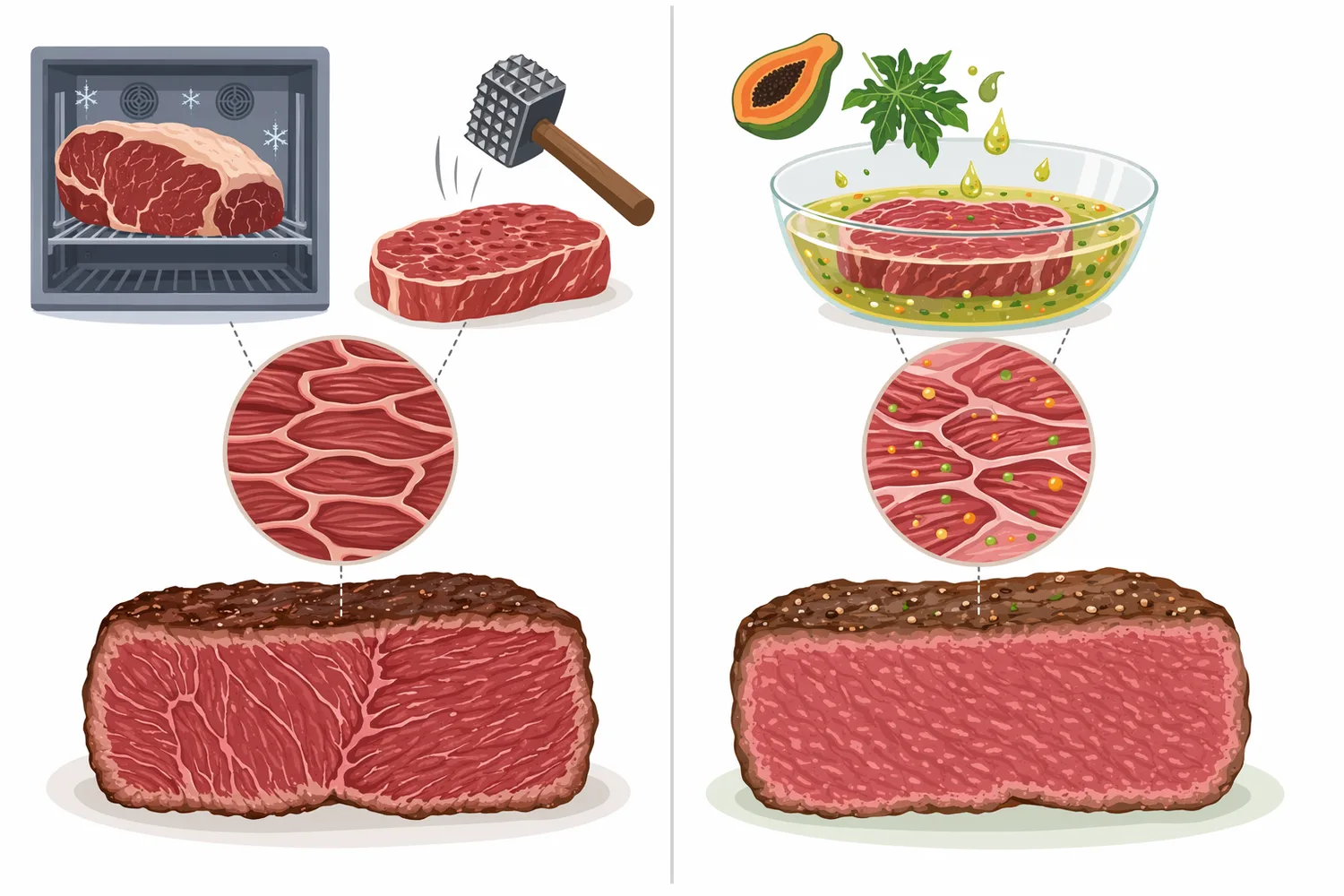
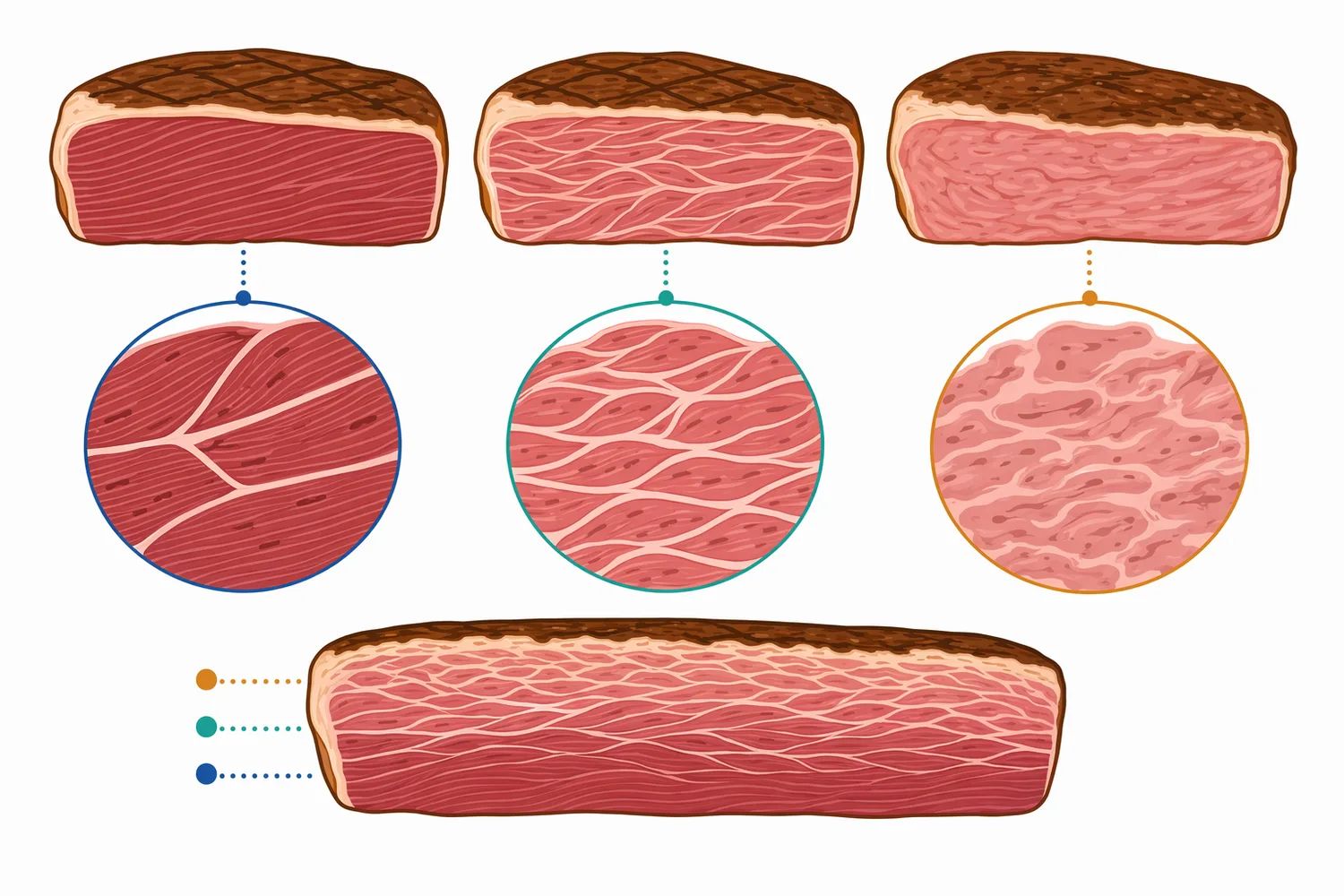
The most important quality risk with papain is over-tenderization. Because papain is a broad protease, it can continue degrading proteins after the desired tenderness has been reached, especially if the meat remains under conditions where the enzyme is active. The result can be a texture described as soft, mushy, mealy, or lacking the natural fibrous resistance expected from beef.
This risk is not a reason to avoid papain; it is a reason to use it deliberately. The literature on plant proteases explicitly notes that these enzymes can cause excessive tenderization when their action is not controlled [1]. For steak products, that control is about matching the treatment to the cut, thickness, formulation, holding time, and cooking method.
Over-tenderization is easiest to understand structurally. A desirable tender steak still has organized muscle fibers that separate during chewing. An over-treated steak has lost too much structural integrity: the protein network no longer fractures cleanly but collapses or smears. That difference is why papain is most successful when used as a controlled texture-improvement tool rather than as an unrestricted softening agent.
Uneven distribution is the second major risk. If papain stays concentrated on the surface, the outside can become very soft while the center remains comparatively firm. In strips, diced beef, or thin slices, this is less severe because the distance from surface to center is small. In thicker steaks, process design becomes more important because the interior may not receive the same degree of enzymatic action.
Tenderness is the main target, but papain treatment can also influence other eating-quality attributes indirectly. When proteins are hydrolyzed, water binding, surface texture, slicing behavior, and cooking response may change. These effects are not always negative, but they need to be understood because a beef product is judged as a whole eating experience.
Protein breakdown may improve perceived juiciness when a softer bite requires less chewing effort. At the same time, too much surface proteolysis can make purge, marinade pickup, or cooked surface texture behave differently. Reviews of dynamic changes in meat during processing emphasize that protein, sensory, chemical, and oxidative properties shift together during thermal and non-thermal treatments [4].
Papain is not a freshness solution. Meat spoilage and freshness indicators are governed by microbial activity, protein and nitrogen compound degradation, storage conditions, and handling. Total volatile basic nitrogen is widely discussed as a spoilage-related index for meat and seafood systems, reflecting the formation of volatile nitrogenous compounds during deterioration [10]. Papain should therefore be viewed as a tenderizing enzyme, not as a preservative or a substitute for normal chilled-chain and food-safety controls.
Papain is also not a phosphate replacement by itself. Phosphates in meat processing can influence pH, ionic strength, protein functionality, water retention, and texture. Reviews of phosphate alternatives show that replacing phosphate functionality is technically challenging because phosphates affect multiple meat-system properties at once [11]. Papain’s primary function is proteolysis, so its contribution is texture modification rather than the full functional role associated with phosphate systems.
Papain is most relevant where tenderness improvement creates a clear product benefit. In ready-to-cook marinated steaks, papain can help reduce toughness in firmer cuts and support a more consistent bite after grilling, pan-cooking, or oven preparation. In these products, the marinade system provides a practical way to distribute the enzyme before cooking.
For beef strips and thin-cut products, papain can be especially effective because thin geometry improves enzyme access. Stir-fry beef, fajita strips, hot-pot slices, shawarma-style beef, kebab pieces, and diced beef can all benefit from a tenderizing approach where surface contact reaches a meaningful portion of the product.
Prepared meals and foodservice-style beef components can also benefit when cooked texture must remain acceptable after chilling, reheating, or holding. Papain can help soften firm pieces before the product enters a cooking or assembly step. However, because reheating and holding further change protein texture, the final process—not only the raw marination step—determines the eating result.
Papain is also relevant for value recovery from firmer muscles. Some beef cuts have good flavor but lack the tenderness expected in premium steak formats. Enzymatic tenderization can help reposition such cuts into marinated, sliced, or ready-to-cook products where improved tenderness and controlled seasoning increase acceptance. Research on enzymatic reactions in meat processing supports the broader use of enzymes as tools to modify meat properties and create value-added products [5].
Papain can be used as part of a broader tenderization strategy. Aging, mechanical tenderization, marination, high-pressure processing, ultrasound, and cooking method all influence final tenderness. The goal is not to replace every other method but to use proteolysis where it adds measurable eating-quality value.
Aging relies on the meat’s own enzymes and post-mortem biochemical changes. It can improve tenderness over time, but it requires storage time and is affected by muscle type and carcass conditions. Papain accelerates protein breakdown externally, which can be useful when a product format does not allow long aging or when the target texture needs additional support.
Mechanical tenderization disrupts the physical structure of meat by cutting or piercing fibers. Papain works chemically by hydrolyzing proteins. The two mechanisms are different: one creates physical breaks, while the other weakens the protein network at a molecular level. When multiple tenderization methods are combined, their effects can be additive, so texture control becomes more important.
High-pressure processing and other emerging technologies can also alter meat structure and protein behavior. Reviews of high-pressure processing in meat describe its effects on meat and meat products, including changes to texture and functional properties [12]. Papain belongs to the enzymatic side of this toolbox, where the active change is proteolytic cleavage rather than pressure-induced structural modification.
A buyer purchasing papain for beef and steak tenderizing should expect a functional enzyme ingredient intended to modify texture through proteolysis. It is best suited to products where the process allows controlled contact between the enzyme and meat proteins before cooking or further processing.
Papain should not be expected to make every cut identical. A heavily worked muscle with high connective tissue, a thin marinated strip, and a premium steak cut will not respond in the same way. The enzyme acts on accessible proteins, but the starting structure of the meat still matters. Reviews of meat tenderness and endogenous proteolysis make clear that tenderness is shaped by both biological variation and processing history [3].
The strongest applications are those where papain’s mechanism matches the product need: reducing chewiness, improving bite, and supporting more consistent tenderness. This is why papain has a natural fit in marinated beef, portioned steak products, sliced beef, and value-added meat systems.
The clearest limitation is texture control. If too much protein structure is lost, the product can move past “tender” into “soft” or “mushy.” For that reason, papain should be treated as a powerful processing aid or functional ingredient whose effect depends on contact, distribution, temperature, time, and the meat format.
Papain is effective because it reacts with proteins. That same property means enzyme powders should be handled carefully according to the Safety Data Sheet supplied with the order. In meat applications, the practical quality objective is to achieve enough proteolysis to improve tenderness while preserving the recognizable fibrous structure of beef.
Uniform application is important. A well-distributed treatment gives a more predictable bite, while localized concentration can create soft spots. This is particularly relevant when papain is used in dry rubs, surface applications, or marinades that do not contact all pieces evenly.
The finished product should be judged after the intended cooking method, not only in the raw state. Papain changes the raw protein structure, but consumers experience the cooked structure. Thermal processing changes protein firmness, moisture release, and connective tissue behavior, so the final eating quality is the result of both enzymatic treatment and cooking [4].
Papain also needs to be kept in its proper role. It is a tenderizing enzyme, not a substitute for freshness management, food-safety controls, or good manufacturing practice. Spoilage chemistry, microbial growth, and volatile nitrogen formation are separate meat-quality issues from controlled enzymatic tenderization [10].
Enzymes.bio supplies Papain Enzyme for Beef and Steak Tenderizing directly online by the 1 kg unit. The buying process is straightforward: the product is purchased and paid for online, then the order is processed and shipped.
A Certificate of Analysis and Safety Data Sheet come with the order. This gives buyers the standard documentation needed to receive and handle the product appropriately while keeping the purchase process simple.
Enzymes.bio is a supplier. This article is intended to help buyers understand papain’s role, mechanism, evidence base, and practical relevance in beef and steak tenderizing applications before purchasing the 1 kg product online.
Papain is a well-established plant protease for meat tenderization. It works by hydrolyzing proteins in the muscle and connective-tissue-associated structure of meat, reducing the resistance that makes tougher beef cuts harder to bite and chew. Reviews of plant proteolytic enzymes consistently identify papain as a common tenderizing enzyme, alongside bromelain and ficin [1].
For beef and steak products, papain is most useful in controlled applications such as marinades, brines, surface treatments, thin-cut beef, strips, cubes, and value-added ready-to-cook items. Its main advantage is effective tenderization; its main caution is over-softening if exposure is excessive or uneven.
Used deliberately, papain can help create softer, more consistent beef products while preserving the eating character of steak. The practical goal is not to erase the natural structure of beef, but to weaken toughness-related proteins enough to deliver a cleaner bite, easier chew, and more reliable tenderness.
Sold by the 1 kg unit, in stock and ready to ship. Order directly on our store — pay online and we process your order. A Certificate of Analysis and Safety Data Sheet are included with every order.
Buy Papain Enzyme For Beef And Steak Tenderizing →Numbered in order of first citation. Open-access sources, each verified reachable at publication; citation numbers in the text link here.