
Papain enzyme is a plant-derived cysteine protease used to hydrolyze proteins into smaller peptides by cleaving peptide bonds inside the protein chain. In practical processing, that means tough, insoluble, fibrous, or structure-forming proteins can be softened, opened, solubilized, extracted, or converted into hydrolysates under milder conditions than strong acid or alkali treatment. Enzymes.bio supplies Papain Enzyme for Protein Hydrolysis directly online by the 1 kg unit; buyers purchase online, and the order is processed and shipped with a Certificate of Analysis and Safety Data Sheet.
Papain is best understood as a controlled protein-cutting enzyme. It is associated with Carica papaya and belongs to the cysteine protease class, a group of proteases whose active site uses a cysteine residue to attack peptide bonds in proteins. The practical result is hydrolysis: large protein molecules are converted into shorter peptide fragments, and with sufficient reaction time or complementary enzymes, the peptide mixture can shift further toward smaller peptides and amino-acid-rich fractions [1].
For a process engineer or technical buyer, the important point is not simply that papain “breaks down protein.” It changes the physical behavior of the substrate. A dense muscle protein network can become softer; a collagen-rich skin matrix can become more extractable; a protein layer holding non-protein material in place can be weakened; and a protein-rich by-product can be converted into a soluble hydrolysate instead of remaining a low-value solid residue. Recent work on papain for collagen extraction from tannery raw trimmings and gelatin processing from Pangasius skin reflects this same central use: enzymatic cleavage makes protein matrices more accessible to downstream extraction and conversion [2].
Papain is also valued because it can act in water-based processing rather than requiring aggressive chemical hydrolysis. Chemical hydrolysis can be fast, but it may also produce harsh reaction conditions, high salt loads after neutralization, amino acid damage, darkening, off-flavors, or excessive breakdown. Enzymatic hydrolysis is generally used when the processor wants more controlled modification of protein structure rather than indiscriminate destruction of the raw material.
Proteins are chains of amino acids folded into three-dimensional structures and often cross-associated with fats, minerals, polysaccharides, or other proteins. Papain cleaves peptide bonds within accessible parts of those chains. Mechanistically, cysteine proteases use a nucleophilic sulfur-containing active-site residue to attack the peptide bond carbonyl; the bond is split by hydrolysis, leaving two shorter peptide fragments where one longer chain existed before [1].
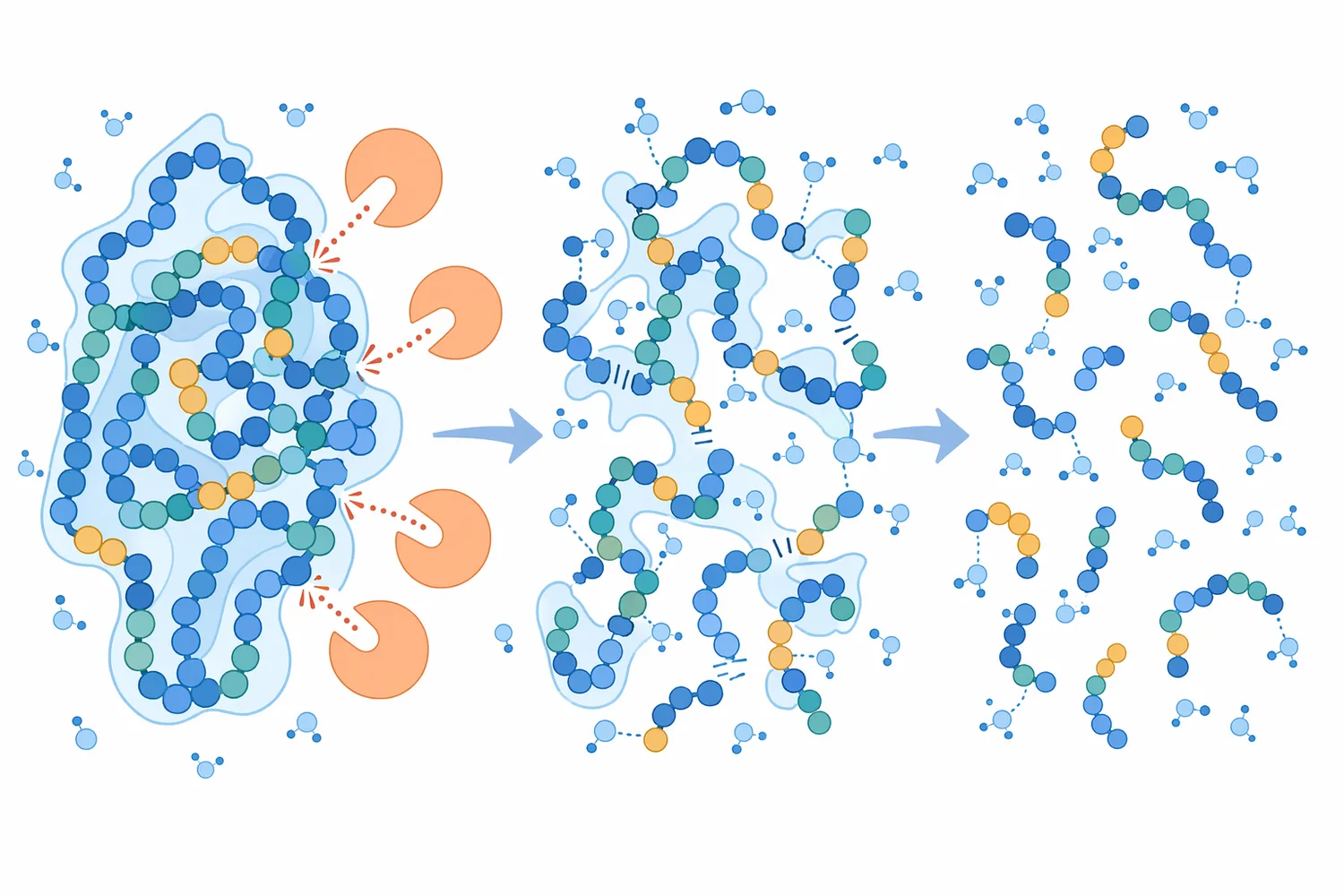
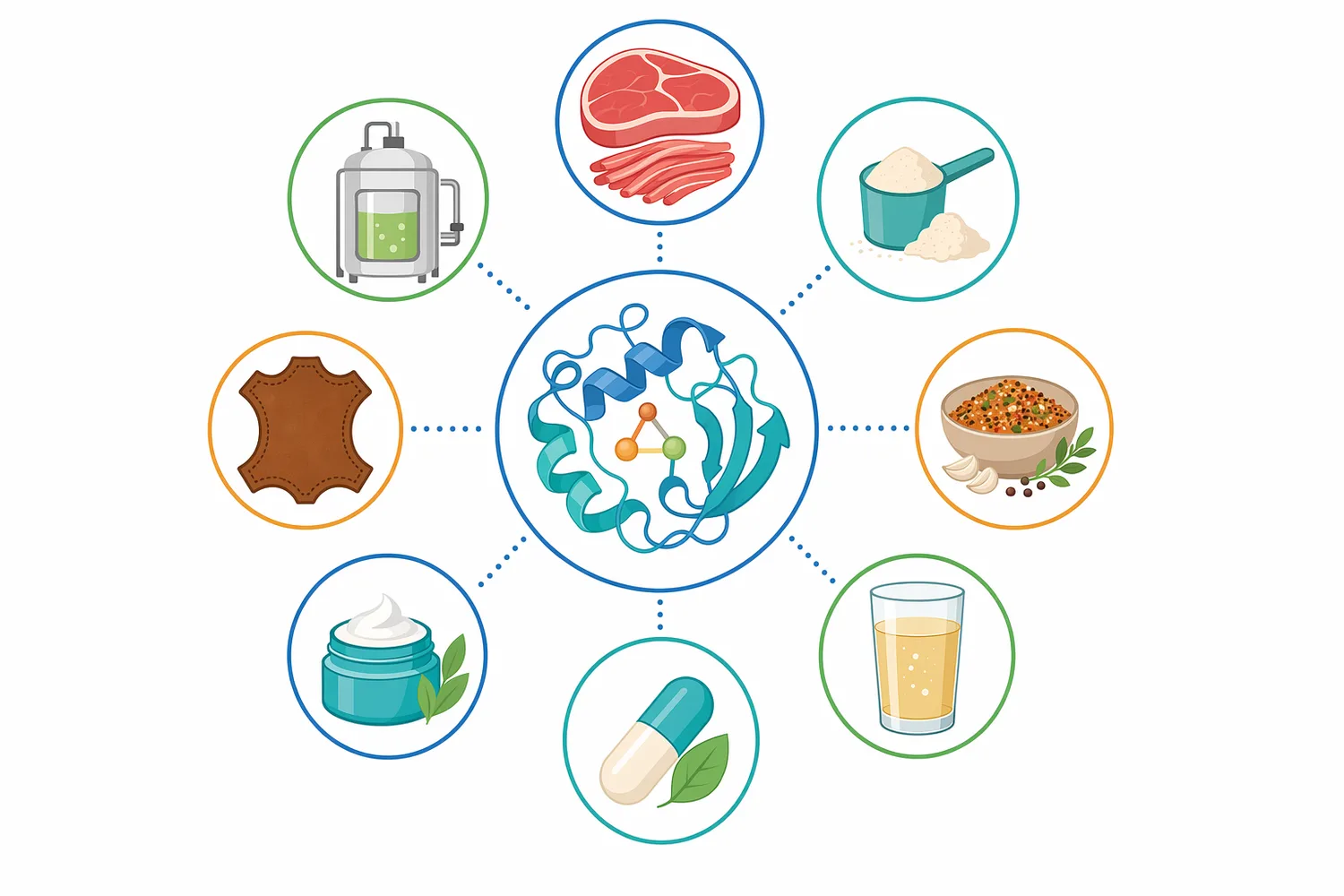
This molecular cutting has several visible process effects. First, molecular weight decreases: long chains become shorter peptide fragments. Second, folded structures loosen because internal bonds that helped maintain the protein’s shape are broken. Third, solubility can change because newly exposed charged or polar groups interact differently with water. Fourth, texture changes because the protein network can no longer resist mechanical stress in the same way. These are the same basic reasons papain is used across apparently different sectors such as meat tenderization, gelatin extraction, collagen recovery, and leather bating [3].
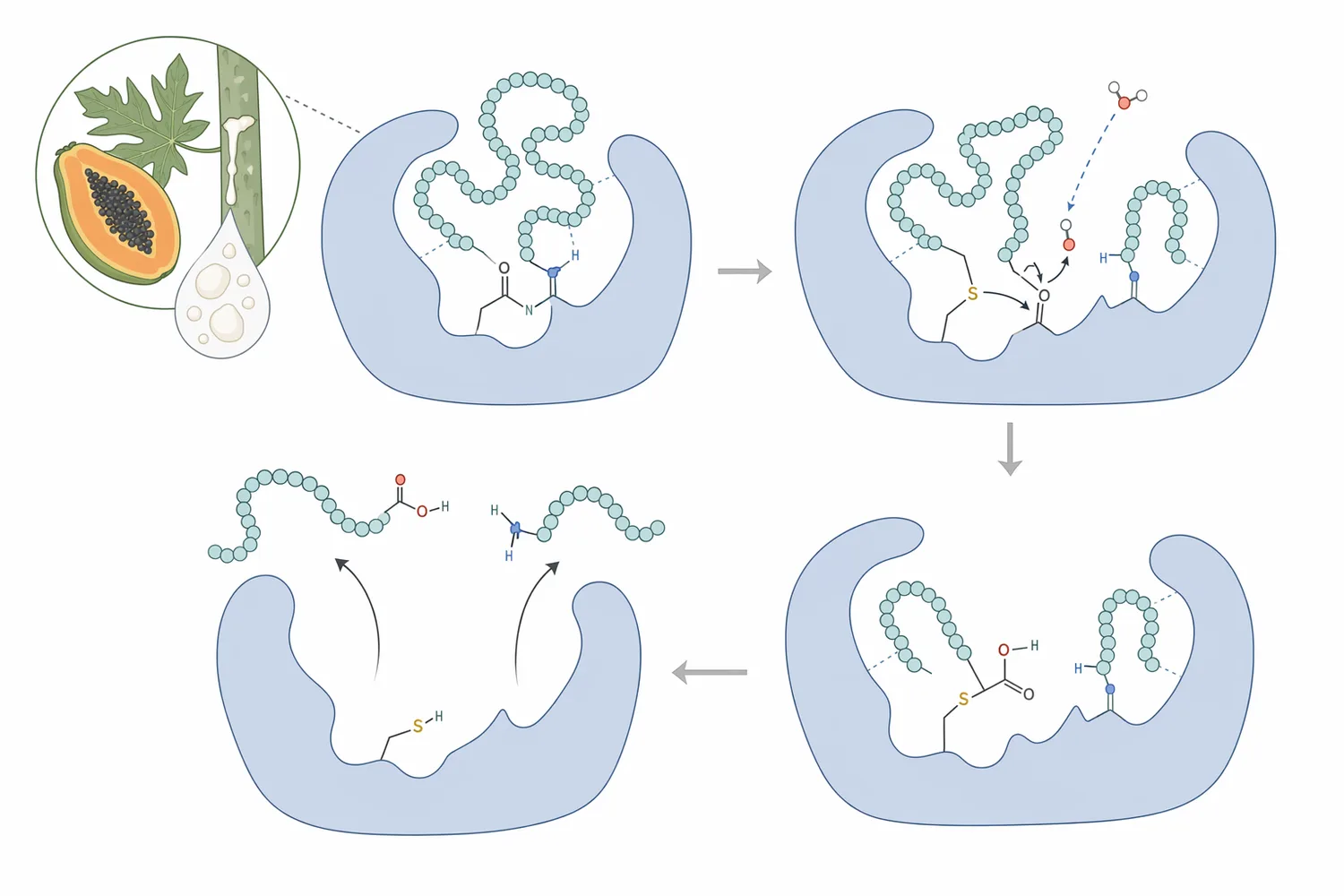
Papain behaves mainly as an endoprotease, meaning it can cleave within protein chains rather than only trimming amino acids one at a time from chain ends. That makes it useful when the goal is to rapidly reduce protein structure, open a matrix, or generate a mixed peptide hydrolysate. It also means papain does not produce a single pure peptide; in normal industrial hydrolysis it produces a distribution of peptide sizes that depends on substrate structure, reaction time, pH, temperature, water availability, and the presence of other processing aids [4].
Papain is useful where the protein substrate is valuable but physically difficult to process. Collagen-rich trimmings, fish skin, meat, connective tissue, hair-root proteins, epidermal proteins, and other proteinaceous residues are not just “protein content”; they are structured biological materials. Their functional value is locked inside networks that resist simple water extraction. Papain helps unlock that value by cutting the protein network at accessible sites [2].
In collagen and gelatin-related processing, papain can support conversion of skins, trimmings, and other collagen-containing residues into extractable protein fractions. Gelatin production from Pangasius skin using papain is a representative example: the enzyme is applied to a fish-skin substrate where controlled protein cleavage helps transform a tough biological material into a gelatin process stream [5]. The same principle underlies papain-assisted collagen extraction from tannery raw trimmings, where enzymatic treatment is investigated as a greener strategy to improve recovery from a protein-rich waste material [2].
In meat systems, papain is widely discussed for tenderization because muscle texture depends on myofibrillar proteins and connective tissue. When papain cleaves structural proteins, the meat matrix loses some mechanical strength: fibers separate more easily, connective tissue resistance falls, and cooked bite can become softer. A review on papain in meat-product technology describes this application area directly, reflecting its longstanding role in modifying animal protein texture [3].
In leather processing, papain and other proteases are relevant because hides and skins contain more than the collagen fibers needed for finished leather. Unwanted proteins, hair-associated structures, epidermal residues, interfibrillary materials, and scud can interfere with softness, grain quality, dyeing, and uniformity. Enzymatic bating uses protease action to clean and open the fiber structure more gently than purely chemical treatment; studies on papain combined with surfactant in the bating process evaluate exactly these physical leather-property outcomes [6].
Papain is not the only protease used in industry. Acid proteases, neutral proteases, alkaline proteases, and plant proteases all hydrolyze peptide bonds, but they fit different processing environments. The useful comparison is not “which enzyme is best” in the abstract; it is how the enzyme’s chemistry fits the protein matrix and the surrounding process.
| Protease type | Typical process environment | Main practical fit | What changes in the substrate | Conceptual limitation |
|---|---|---|---|---|
| Acid protease | Acidic systems | Protein breakdown where low pH is already part of the process | Proteins unfold under acid conditions and peptide bonds become accessible to acid-active enzymes | Less suitable where the product or material is damaged by acid |
| Neutral protease | Near-neutral systems | Mild hydrolysis of food, feed, and biological proteins | Protein chains are shortened while avoiding extreme pH exposure | May be less aggressive on highly resistant matrices |
| Alkaline protease | Mildly to strongly alkaline systems | Detergent, leather, dehairing, and protein-residue removal applications | Swollen protein structures and surface residues are cleaved under alkaline conditions | Can be too harsh for pH-sensitive materials |
| Papain cysteine protease | Mild aqueous systems, commonly near mildly acidic to neutral conditions | Controlled hydrolysis of food proteins, meat, collagen/gelatin substrates, cosmetic keratin, and leather bating | Internal peptide bonds are cleaved, reducing protein network strength and creating mixed peptide fractions | Results remain substrate-dependent and require controlled processing |
This comparison helps explain why papain is frequently selected for applications where strong acid or strong alkali would be undesirable. It also explains why papain is sometimes used with other enzymes or process aids rather than alone: different proteases expose different cleavage sites, and a combination can create a hydrolysis pattern that one enzyme by itself may not achieve [7].
Collagen is a highly structured protein. It is not simply dissolved by adding water because collagen molecules are organized into fibrils and stabilized by extensive intermolecular interactions. To extract collagen or produce gelatin, the structure must be opened enough to allow water penetration, heat transfer, and release of soluble protein fractions, while avoiding uncontrolled degradation that would reduce functional quality [2].
Papain contributes by cleaving accessible protein regions in and around the collagen matrix. In tannery raw trimmings, enzymatic treatment can help separate useful collagenous material from a dense waste stream. The 2024 study on papain-assisted collagen extraction used process optimization by MW-TOPSIS, indicating that the researchers treated yield and process performance as multi-variable outcomes rather than a single-factor reaction [2]. That is important in real processing because collagen recovery depends on how enzyme exposure, material swelling, extraction conditions, and downstream separation work together.
For fish-skin gelatin, the same mechanism appears in a different raw material. Pangasius skin contains collagen embedded in a fish-skin matrix; papain treatment can help partially hydrolyze matrix proteins so gelatin extraction becomes more feasible. The goal is not to digest everything into very short peptides, because gelatin functionality depends on retaining enough chain length to gel or thicken. The useful hydrolysis window is therefore controlled: enough cleavage to release and modify the protein, not so much that the gelatin becomes an over-hydrolyzed peptide soup [5].
This is why papain is often described as a “mild” protein hydrolysis tool, but mild does not mean weak. It means the enzyme can modify protein structure under less chemically aggressive conditions, provided the reaction is stopped or moved to the next step before excessive hydrolysis occurs. In collagen and gelatin work, that balance determines whether the outcome is improved extractability, altered viscosity, changed gel strength, or excessive loss of structure [5].
Meat tenderness depends on both muscle fibers and connective tissue. Myofibrillar proteins form the contractile structure of muscle, while collagen and elastin-rich connective tissues contribute toughness, especially in cuts with high connective tissue content. Papain hydrolyzes peptide bonds in these proteins, weakening the network that gives meat its chew resistance [3].
At the product level, papain tenderization works because smaller and partially cleaved protein structures resist bite and shear less effectively. When structural proteins are clipped, fibers separate more easily. When connective tissue proteins are partially hydrolyzed, the matrix holding fibers together becomes less rigid. This is why papain has long been associated with marinades, injected tenderizers, and processed meat applications where texture uniformity is desired [3].
The same action can become a limitation if hydrolysis proceeds too far. Over-treatment may create mushy texture, excessive drip, or loss of clean muscle bite. Papain is therefore best understood as a process tool for controlled softening, not as a generic tenderizing additive to be added without regard to exposure time, substrate thickness, moisture, and heat treatment. The enzyme changes the protein network irreversibly once peptide bonds are cleaved [3].
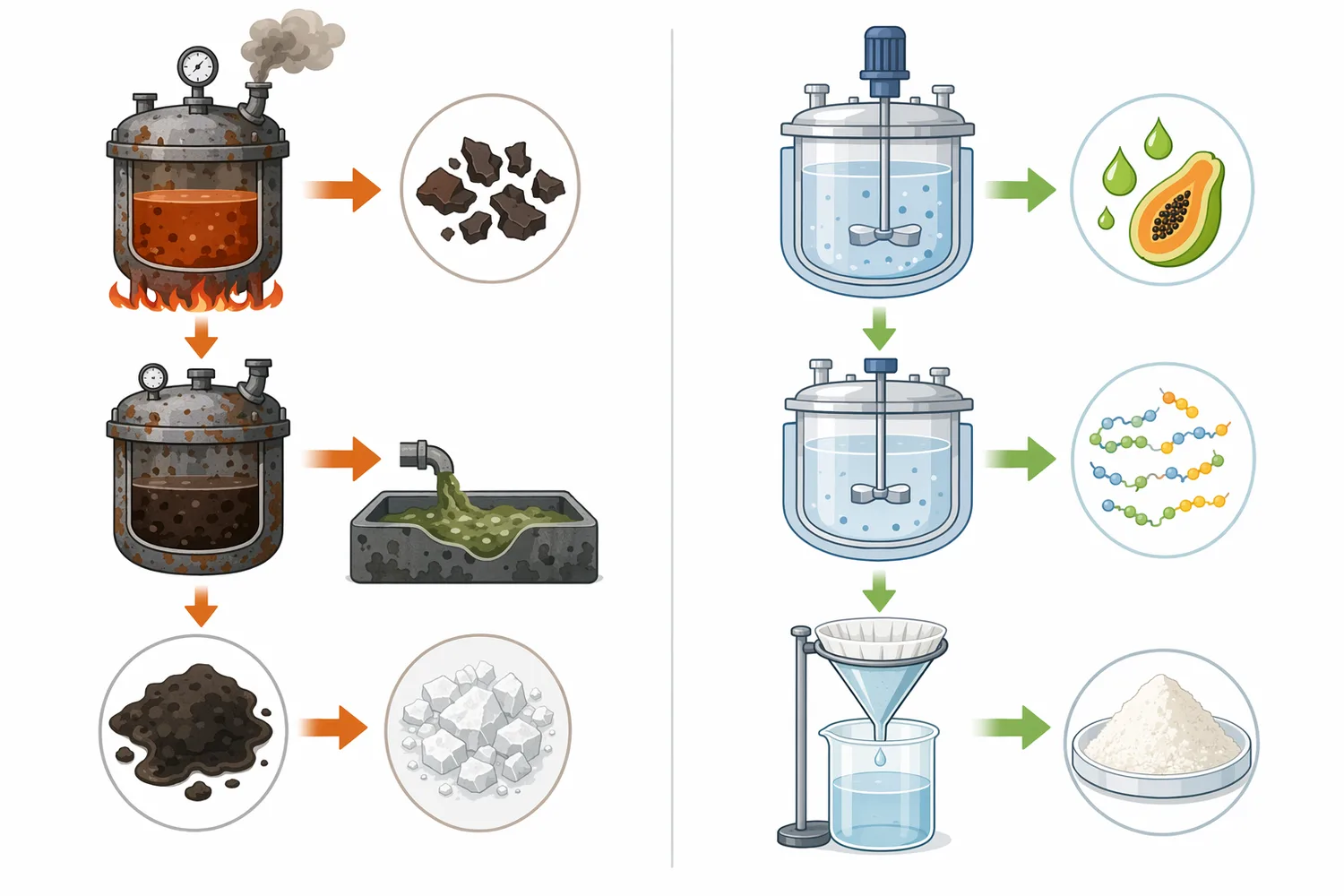
Leather manufacture is a protein-processing industry. Hides and skins are mainly collagen, but the beamhouse stages must remove or modify non-collagenous materials while preserving the collagen fiber network that becomes leather. Protease-based processing has been reviewed as a cleaner leather-processing route because enzymes can reduce reliance on harsh chemicals in selected stages [7].
During bating, proteases such as papain help remove unwanted proteins and open the hide fiber structure after liming. The physical effect is a cleaner, softer, more uniform material. A study evaluating papain combined with surfactant in the bating process focused on physical leather properties, which is exactly where papain’s mechanism becomes commercially relevant: protein cleavage is useful only if it improves softness, flexibility, grain condition, or processing uniformity without damaging the collagen backbone excessively [6].
Enzymatic unhairing is related but more aggressive. The target is the protein structure around hair roots, epidermis, and follicle-associated materials. Enzymes weaken the attachment of hair and epidermal tissues so they can be removed with less chemical burden. Recent work on enzyme-based unhairing, including metal-organic-framework enzyme systems, reflects continuing interest in making this stage more sustainable and more controlled [8].
Papain’s value in leather is therefore not “digesting the hide.” It is selective enough, under controlled exposure, to attack nonessential or surface-accessible proteins while the process preserves the collagen architecture needed for leather strength. This is the difference between useful bating and destructive over-hydrolysis [9].
Many industries generate protein-rich side streams: tannery trimmings, fish skins, seafood residues, animal tissues, plant residues, and cosmetic or food-industry wastes. These materials may have high protein content but low immediate value because the protein is insoluble, heterogeneous, or bound in a complex matrix. Papain hydrolysis can convert some of that protein into extractable collagen, gelatin, peptides, or soluble hydrolysates [2].
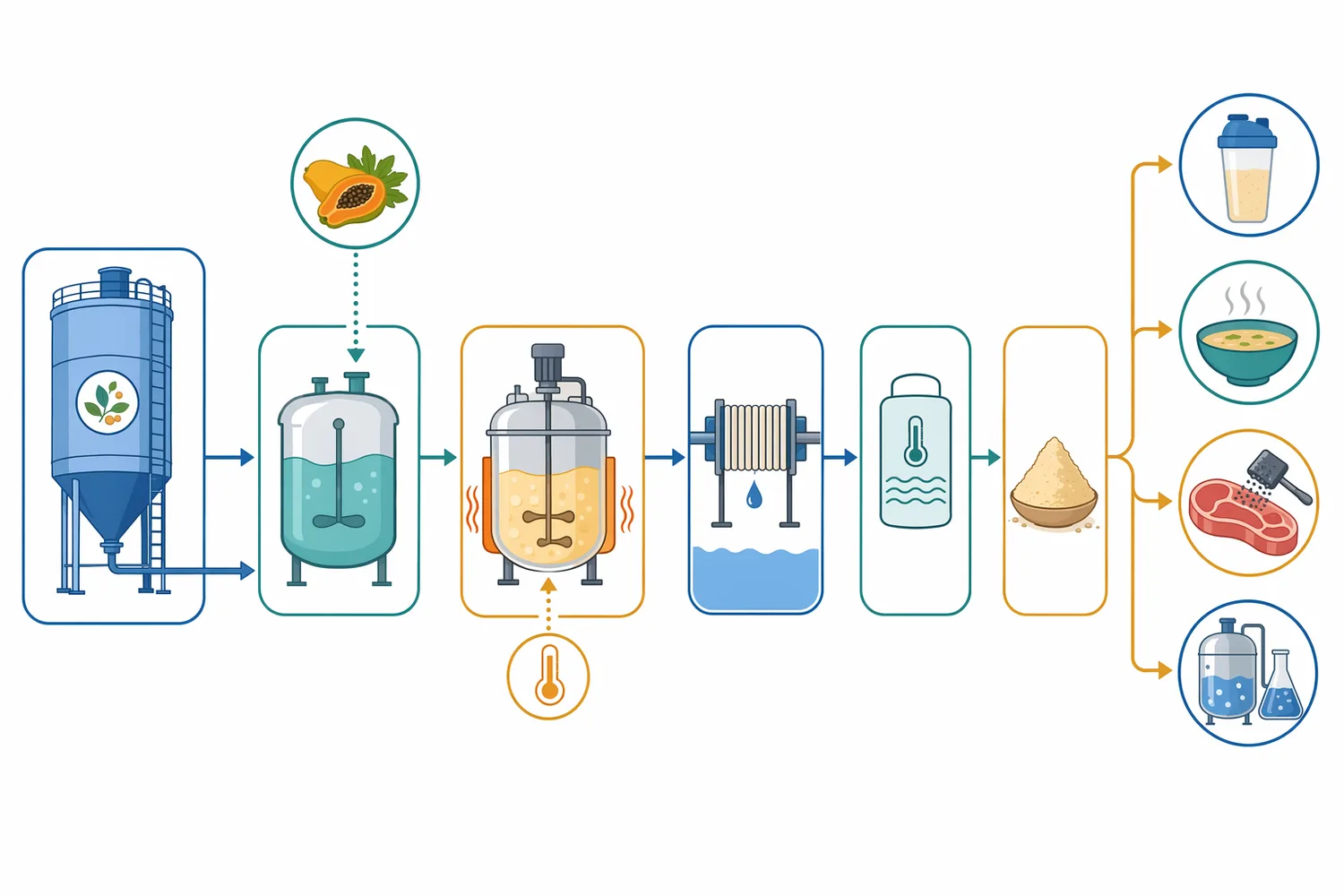
The value proposition is especially clear where the alternative is disposal or low-grade use. Papain-assisted collagen extraction from tannery raw trimmings is framed as a green strategy, showing how enzyme hydrolysis can support resource recovery from a difficult protein stream [2]. Similarly, gelatin processing from Pangasius skin uses a fish-processing side stream as a raw material for a more functional ingredient [5].
Enzyme-assisted extraction is also used outside conventional protein hydrolysates. Work on fucosylated chondroitin sulfate extraction from sea cucumber uses enzyme-assisted processing to recover valuable biomolecules from marine tissue, where proteolysis can help open the protein matrix surrounding the target compound [10]. In these cases, papain’s role is often to remove or loosen protein barriers rather than to make the protein itself the only product.
In cosmetic applications, papain is relevant because the outer skin layer contains protein-rich corneocytes and keratin-associated structures. Enzymatic exfoliation relies on protease action to weaken protein connections at the surface, supporting removal of dead skin cells without the same mechanical abrasion profile as scrubs. Reviews of sustainable cosmetic products and bio-based processing include food-industry waste and fermentation-derived approaches, reflecting broader demand for milder, biologically derived functional ingredients [11].
Papain’s mechanism in this setting is still protein hydrolysis. The substrate is not a food protein or hide; it is keratin-rich surface material. By cleaving accessible protein bonds, papain can reduce adhesion between dead surface cells. Formulation control matters because protease action on skin-contact products must be limited, predictable, and compatible with the finished product format [1].
This cosmetic use is conceptually close to leather and meat processing: papain modifies a protein structure at the surface or within a matrix. The desired result changes by application—exfoliation in cosmetics, softness in leather, tenderness in meat—but the underlying biochemical event remains peptide-bond hydrolysis [1].
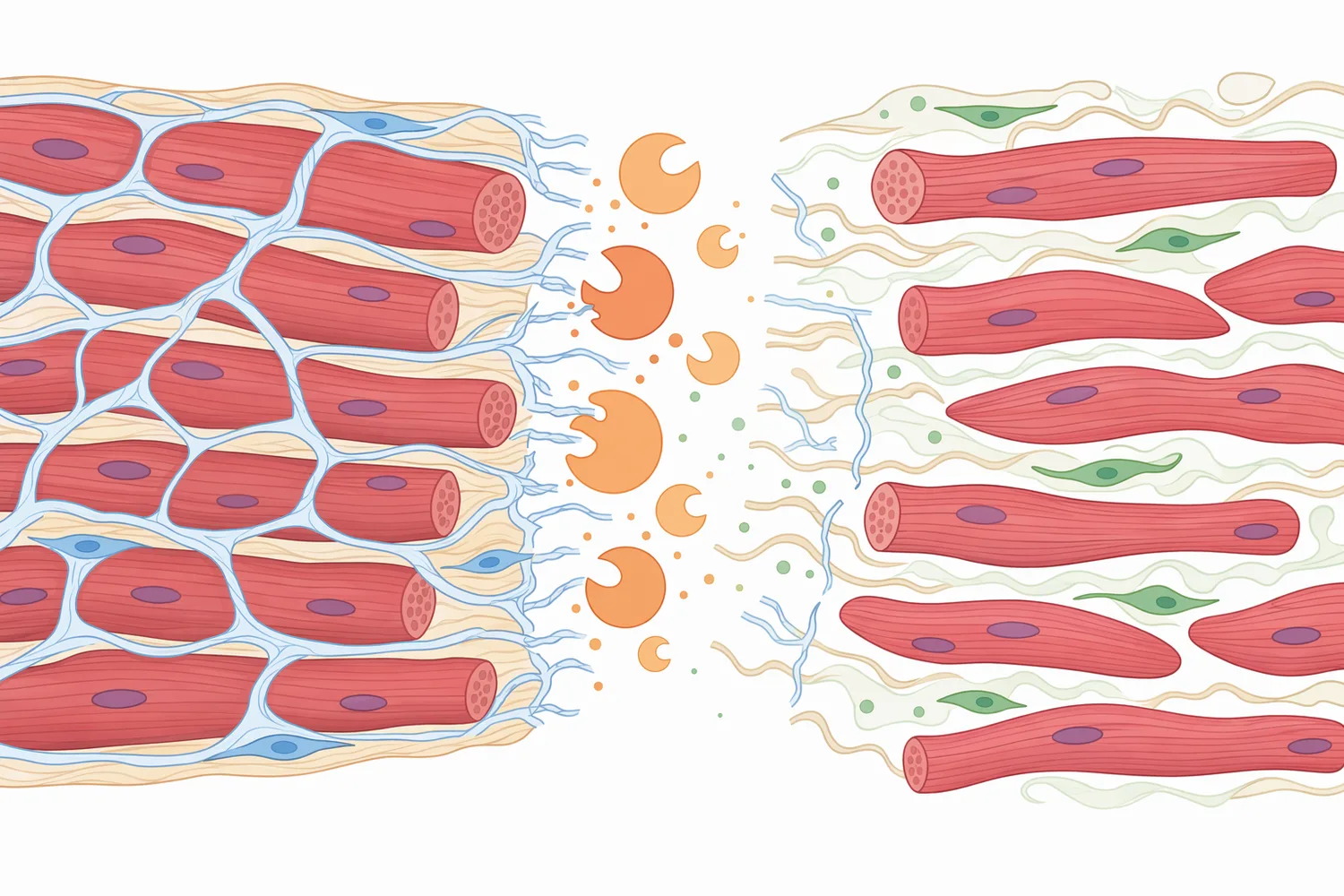
Some research focuses on immobilizing papain on carriers rather than using it only as a free enzyme in solution. Immobilization can improve handling, enable recovery of the enzyme carrier, or change how the enzyme contacts the substrate. For example, studies have investigated microfibrillated cellulose from seaweed-processing residue as a carrier for papain enzyme in alginate-based hydrogels, and magnetic chitosan beads as papain immobilization carriers [12].
The mechanism is straightforward: papain remains the catalytic component, while the carrier controls its physical location and contact with the substrate. In a free-enzyme system, papain disperses throughout the liquid phase. In an immobilized system, the substrate must diffuse to the enzyme surface or into the carrier matrix, and the hydrolysis zone becomes more localized. This can be useful in research and specialized processing, though many bulk hydrolysis applications still use free enzyme because direct contact and simple mixing are practical [13].
Immobilization studies also show that papain is not a static commodity concept. Researchers continue to test new carriers, stabilization methods, and process designs to make proteolysis more controllable. That continuing research activity supports papain’s relevance as an established enzyme with ongoing technical development [12].
Papain hydrolysis depends strongly on the condition of the substrate. A soluble protein isolate exposes peptide bonds differently from a fish skin, a tannery trimming, a meat surface, or a hide in a bating drum. Before papain can cleave a bond, that bond must be accessible; dense, dry, crosslinked, highly folded, or fat-coated materials usually respond differently from hydrated and opened protein structures [2].
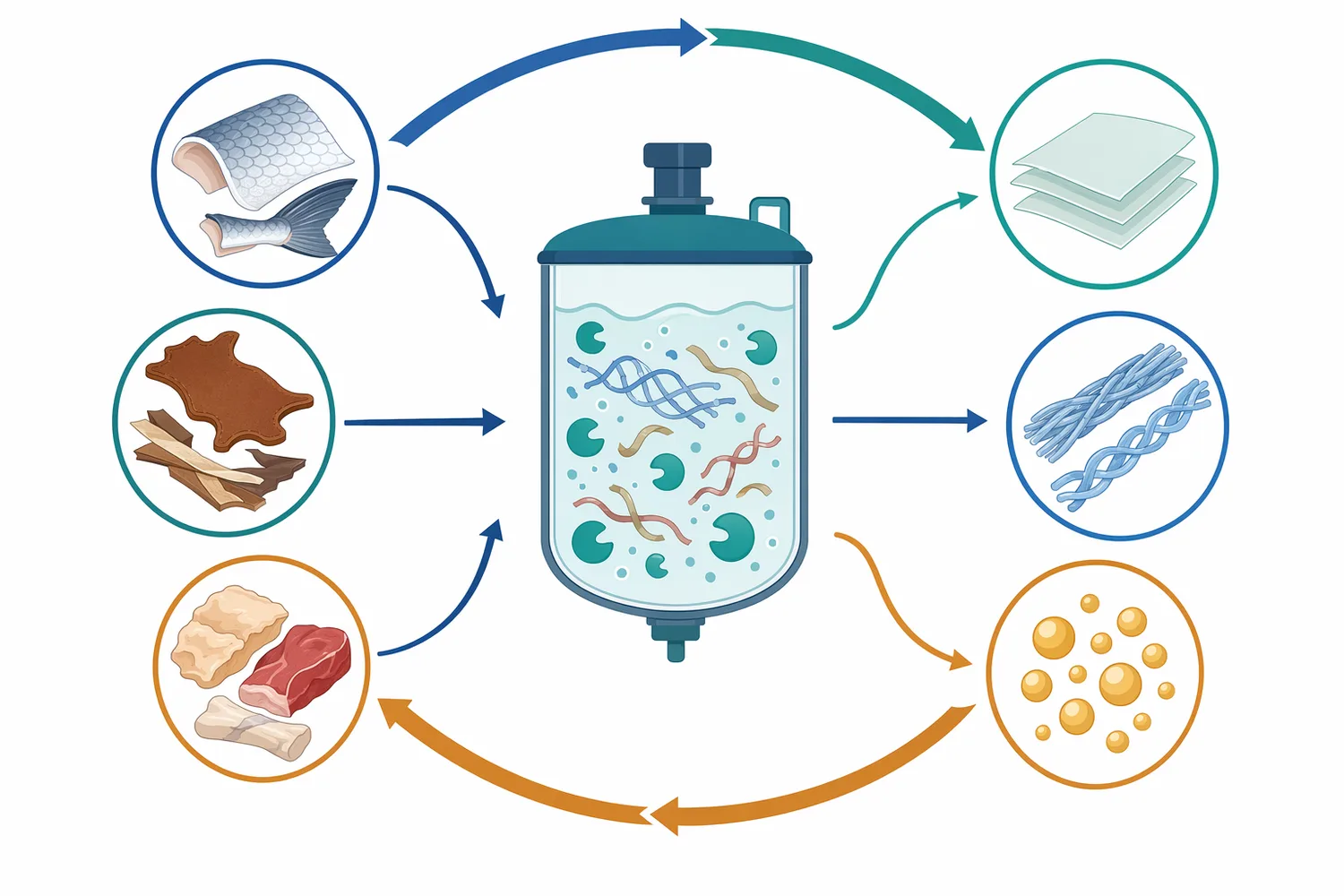
pH and temperature affect both the enzyme and the substrate. Protein charge changes with pH, which can unfold, compact, or aggregate the substrate. Temperature changes protein flexibility and reaction rate, but excessive heat can denature the enzyme itself. Published optimization work on papain activity using response surface methodology reflects this multi-variable reality: performance is not controlled by one factor alone, but by the interaction of conditions around the enzyme and substrate [14].
Time is equally important. Early in hydrolysis, papain may mainly cut the most accessible peptide bonds, causing a rapid drop in molecular size or mechanical strength. Later, the remaining proteins and peptides may be less accessible or already shortened, so the hydrolysis pattern changes. In applications such as gelatin or meat, the correct endpoint matters because partial hydrolysis may be desirable while excessive hydrolysis can reduce texture, gelation, or product integrity [5].
Papain can also be affected by the surrounding formulation. Surfactants, salts, fats, polyphenols, oxidants, reducing agents, and physical treatments can alter protein exposure or enzyme stability. The leather bating study using papain with surfactant is a useful example: the surfactant is not merely a background additive; it can influence wetting, penetration, and access to protein surfaces, changing how papain expresses its proteolytic effect in the hide matrix [6].
Papain can generate peptides, but a papain hydrolysate is not automatically a finished functional ingredient with guaranteed biological activity. Peptide function depends on amino-acid sequence, chain length, concentration, matrix, digestion stability, and the test method used to evaluate the effect. Research on enzyme-assisted extraction and papain hydrolysis supports the technical feasibility of producing useful fractions, but finished-product claims need evidence specific to the actual hydrolysate and its intended use [10].
The same caution applies to allergen, digestibility, flavor, and bioactivity language. Hydrolysis can reduce intact protein size and may destroy some epitopes or expose new ones, depending on the protein and hydrolysis pattern. It can also create bitter peptides as well as desirable savory or functional peptides. Papain is therefore a credible tool for protein modification, not a shortcut around validation when the final product makes sensitive nutrition, health, cosmetic, or performance claims [1].
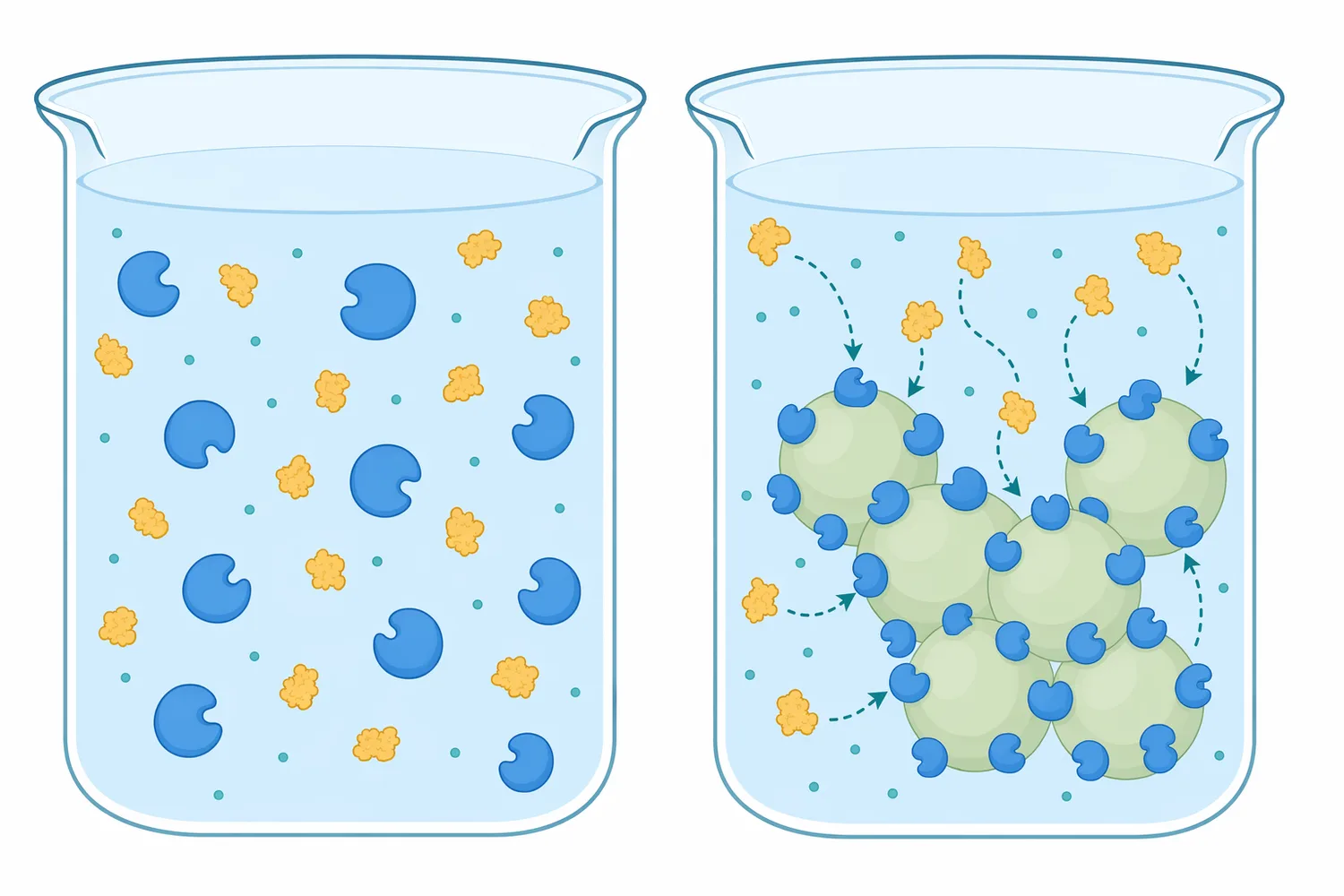
For industrial materials such as leather or gelatin, the key performance claims are usually physical rather than biological: softness, extractability, viscosity, gel behavior, handle, grain condition, or yield. Even there, papain’s effect is substrate-specific. The same enzyme action that improves opening and extraction in one matrix can over-soften or weaken another if the process is not controlled [9].
Enzymes.bio supplies Papain Enzyme for Protein Hydrolysis as a direct online product sold by the 1 kg unit. Buyers can place the order and pay online; after purchase, the order is processed and shipped. A Certificate of Analysis and Safety Data Sheet accompany the order.
The product is intended for businesses working with enzyme-assisted protein modification, including hydrolysate development, meat and seafood protein processing, collagen and gelatin applications, cosmetic protein modification, leather-related processing, and other uses where controlled proteolysis is valuable. The scientific basis is clear: papain cleaves peptide bonds, and that cleavage changes protein size, solubility, structure, texture, and extractability [1].
Papain is most useful when its role is defined as controlled hydrolysis rather than indiscriminate breakdown. In a collagen stream, that may mean improved extraction. In gelatin, it may mean opening the skin matrix while preserving useful chain length. In meat, it may mean tenderization. In leather bating, it may mean removal of unwanted proteins and improved fiber opening. Across these uses, the enzyme is the same type of tool: a cysteine protease that converts resistant protein structures into more workable materials [3].
Sold by the 1 kg unit, in stock and ready to ship. Order directly on our store — pay online and we process your order. A Certificate of Analysis and Safety Data Sheet are included with every order.
Buy Papain Enzyme For Protein Hydrolysis →Numbered in order of first citation. Open-access sources, each verified reachable at publication; citation numbers in the text link here.