
Papain is a papaya-derived cysteine protease used wherever controlled protein breakdown is useful: meat tenderizing, protein hydrolysis, cosmetic exfoliation, feed and nutrition concepts, and selected technical processing applications. The enzyme papain works by hydrolyzing peptide bonds, so large, structured proteins are converted into smaller peptides and amino-acid fragments under comparatively mild conditions [1].
For buyers who need papain powder in a practical pack size, Enzymes.bio supplies Papain directly online by the 1 kg unit. The buyer pays online, the order is processed and shipped, and a Certificate of Analysis and Safety Data Sheet are provided with the order.
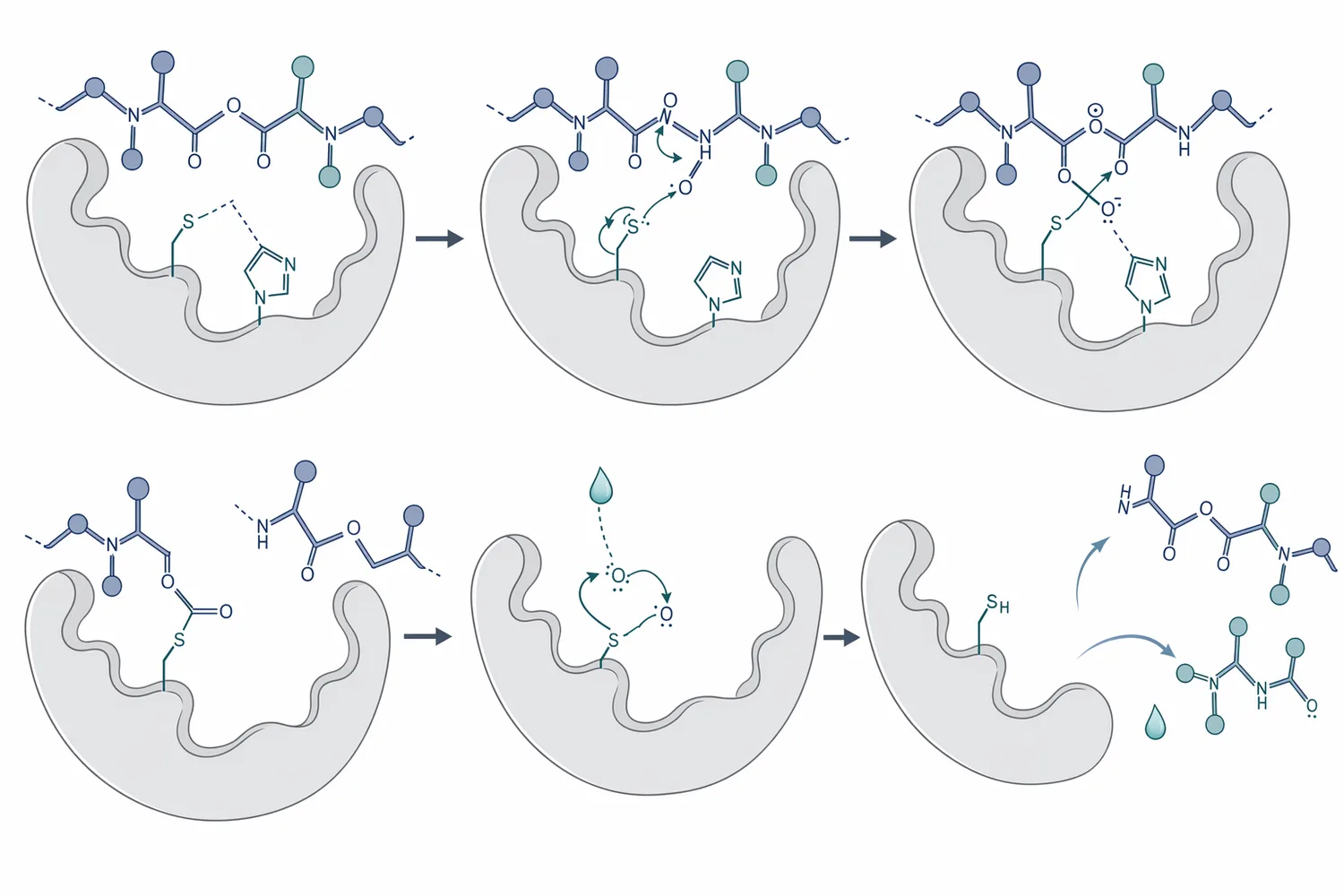
Papain is a proteolytic enzyme obtained from Carica papaya, especially the latex of the papaya plant. In enzyme classification terms, papain is a cysteine protease: its catalytic action depends on an active-site cysteine residue that participates directly in breaking peptide bonds in proteins [1].
In practical terms, papain acts as a protein cutter. Proteins such as muscle proteins, milk proteins, plant storage proteins, gelatin, keratin and gluten-like networks are long chains folded into larger structures; papain attacks accessible peptide bonds in those chains, producing shorter fragments that are usually softer, more soluble, easier to disperse, or easier to digest depending on the application [2].
That mechanism explains why papain appears in so many search and product contexts: papain meat tenderiser, papain meat tenderizer, meat tenderizer with papain, papain tenderizer, meat tenderizer papain, papain powder meat tenderizer, papain supplement and general “what is papain” searches all point back to the same biochemical capability—controlled proteolysis. The useful effect is not magic seasoning or surface coating; it is a real chemical change in the target protein matrix [1].
Papain should not be confused with unrelated named terms that sometimes appear in search data, such as Sullivan papain, Sullivan papain block, Sullivan papain block McGrath or Sullivan papain block McGrath Cannavo. Those phrases are not standard descriptors for industrial papain enzyme powder; for food, cosmetic, feed or technical use, the relevant material is the papain enzyme itself.
Papain hydrolyzes peptide bonds, the amide links that connect amino acids into proteins. When water participates in this enzyme-catalyzed reaction, one long protein chain becomes two shorter chains; repeated cleavage produces a distribution of peptides and smaller fragments [1].
The visible or functional result depends on what protein structure is being modified. In meat, cleavage within muscle and connective-tissue proteins reduces the integrity of the dense protein network, so the bite can become softer. In plant proteins, partial hydrolysis can expose hydrophilic and hydrophobic regions that were buried inside the folded structure, changing solubility, emulsification and foaming behavior. In skin-care formulations, papain can help loosen protein-rich material at the surface by acting on keratin-associated structures [3].
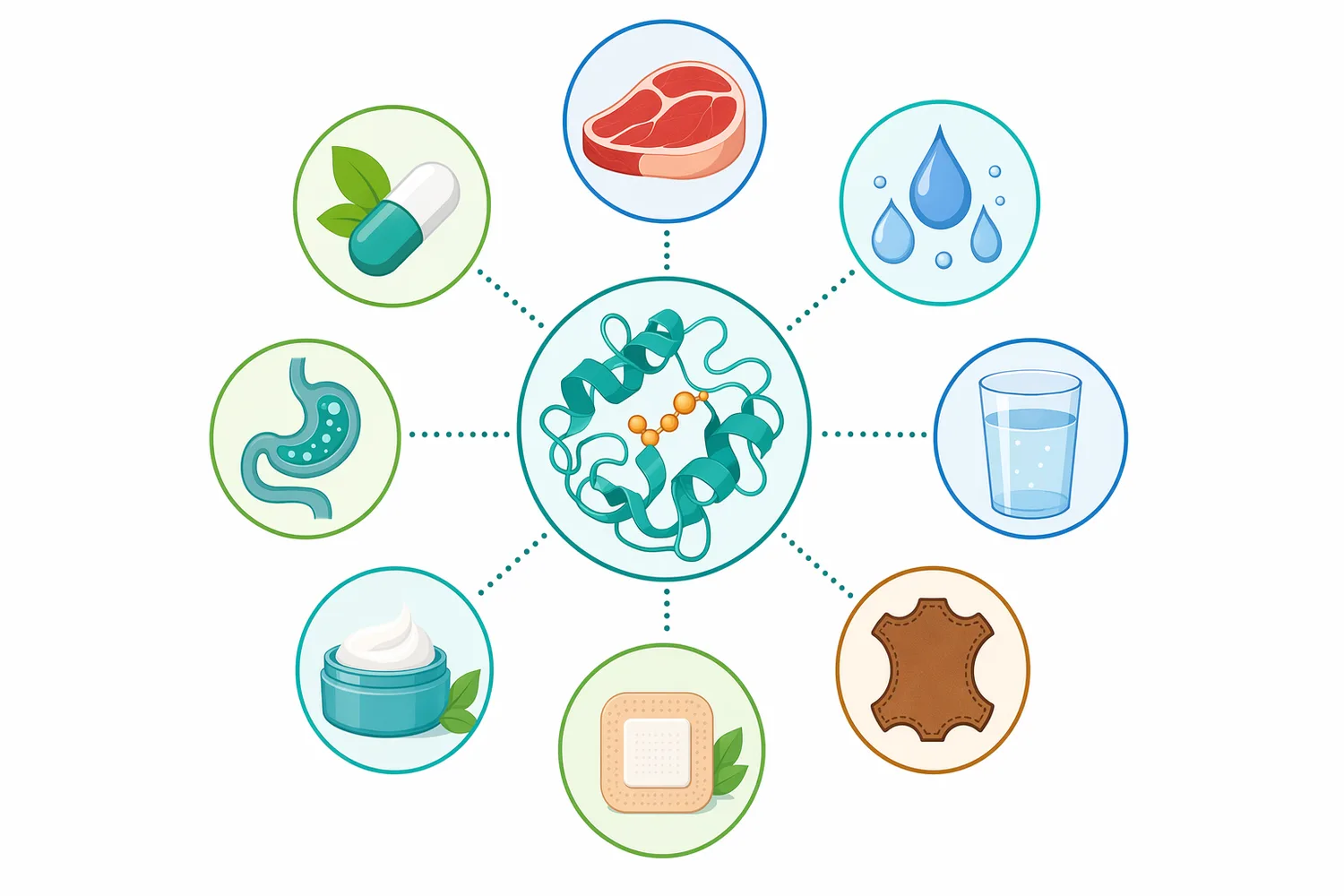
Papain is considered broad-acting compared with highly sequence-specific proteases. That breadth is useful in processing because real substrates—meat, plant flours, dairy matrices, gelatin, cosmetic residues—contain mixtures of proteins rather than one purified target. The same breadth also means process exposure matters: too little hydrolysis may give no meaningful change, while excessive hydrolysis can weaken texture too far, produce bitterness in protein hydrolysates, or reduce viscosity where structure is needed [2].
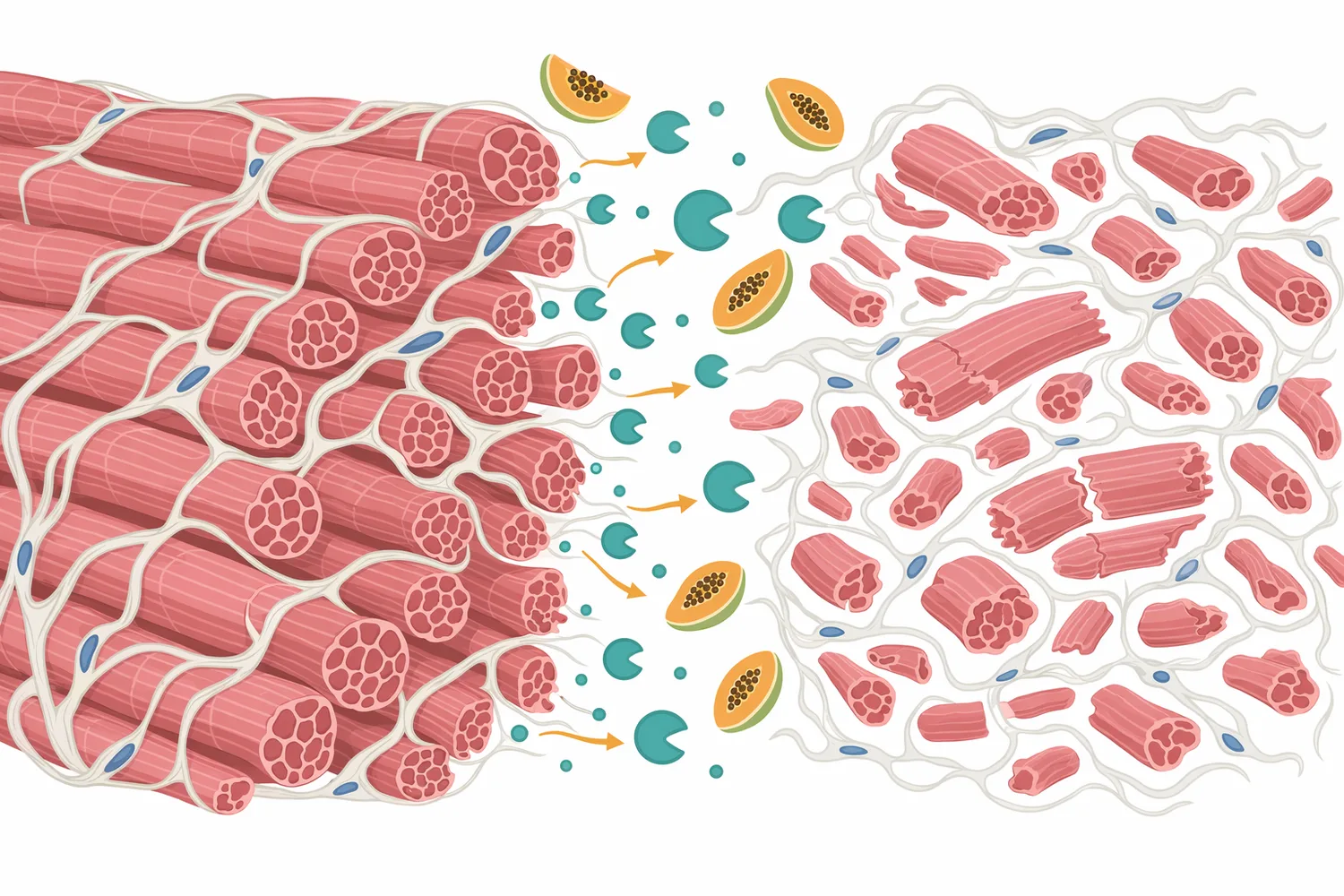
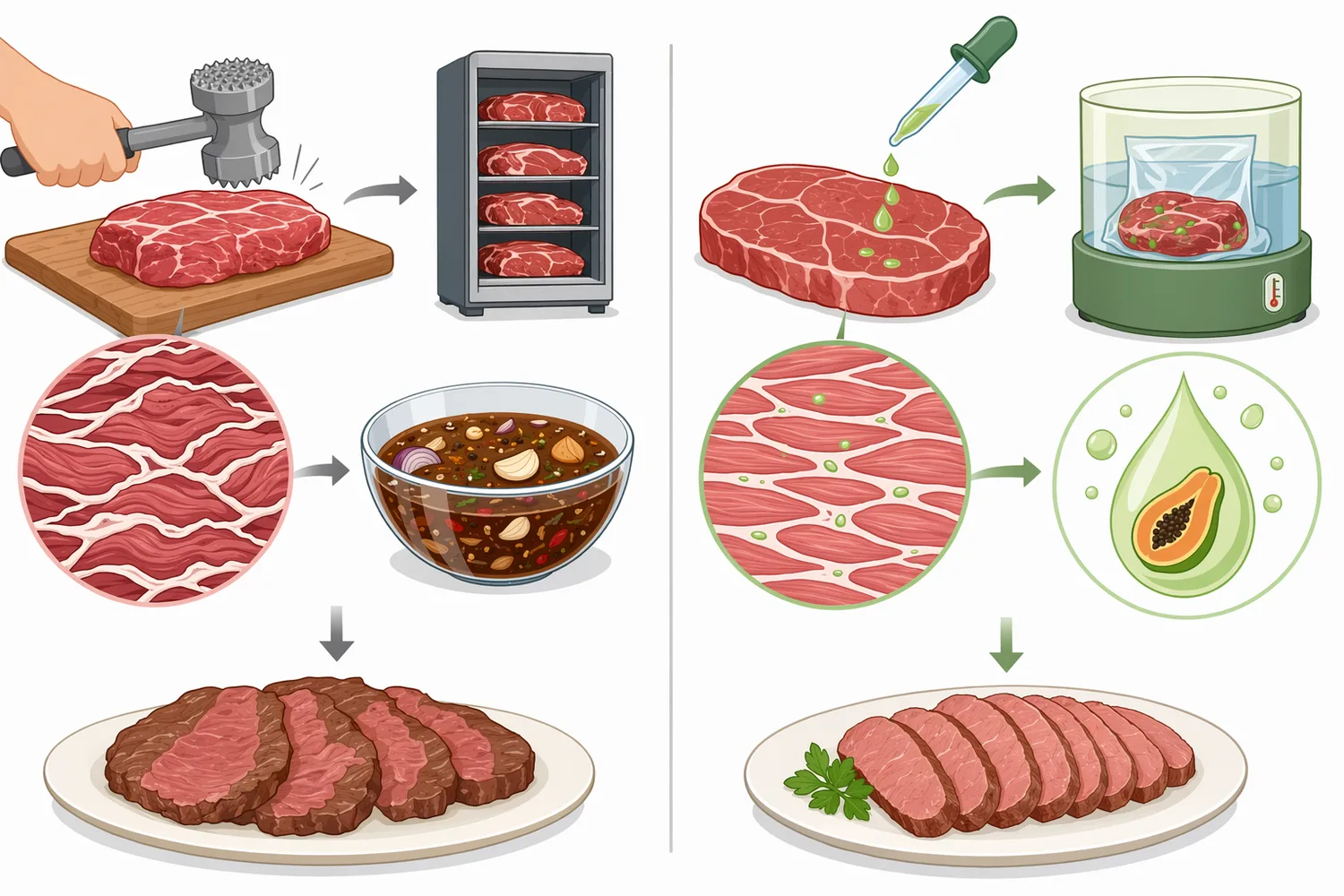
Papain is best known commercially as a meat tenderizing enzyme. A papain meat tenderizer powder works because meat toughness is partly determined by organized muscle proteins and connective-tissue structures; papain cuts accessible peptide bonds in those proteins, reducing resistance during chewing [2].
In raw meat, muscle fibers contain myofibrillar proteins arranged into ordered bundles, while connective tissue contributes additional firmness. When papain reaches these proteins—through surface application, marinade contact, injection, tumbling or other food-processing contact—it partially hydrolyzes the protein network. The practical result is a softer structure because the long protein chains no longer hold together with the same continuity [1].
This explains both the appeal and the caution around papain as meat tenderizer. Papain can improve tenderness in tougher cuts, but because it is not limited to one single connective-tissue target, excessive contact can produce a mushy surface or overly softened bite. In other words, papain tenderizer performance is controlled by contact time, temperature, moisture, pH and how far the enzyme penetrates into the meat matrix [2].
Consumers often think of meat tenderizer papain as a simple kitchen ingredient, but the same biochemical principle applies in industrial food systems. For a meat processor or prepared-food producer, papain is valuable when the target is predictable protein softening rather than flavor masking. The enzyme changes the substrate itself; it does not merely hide toughness with salt, acid or seasoning [1].
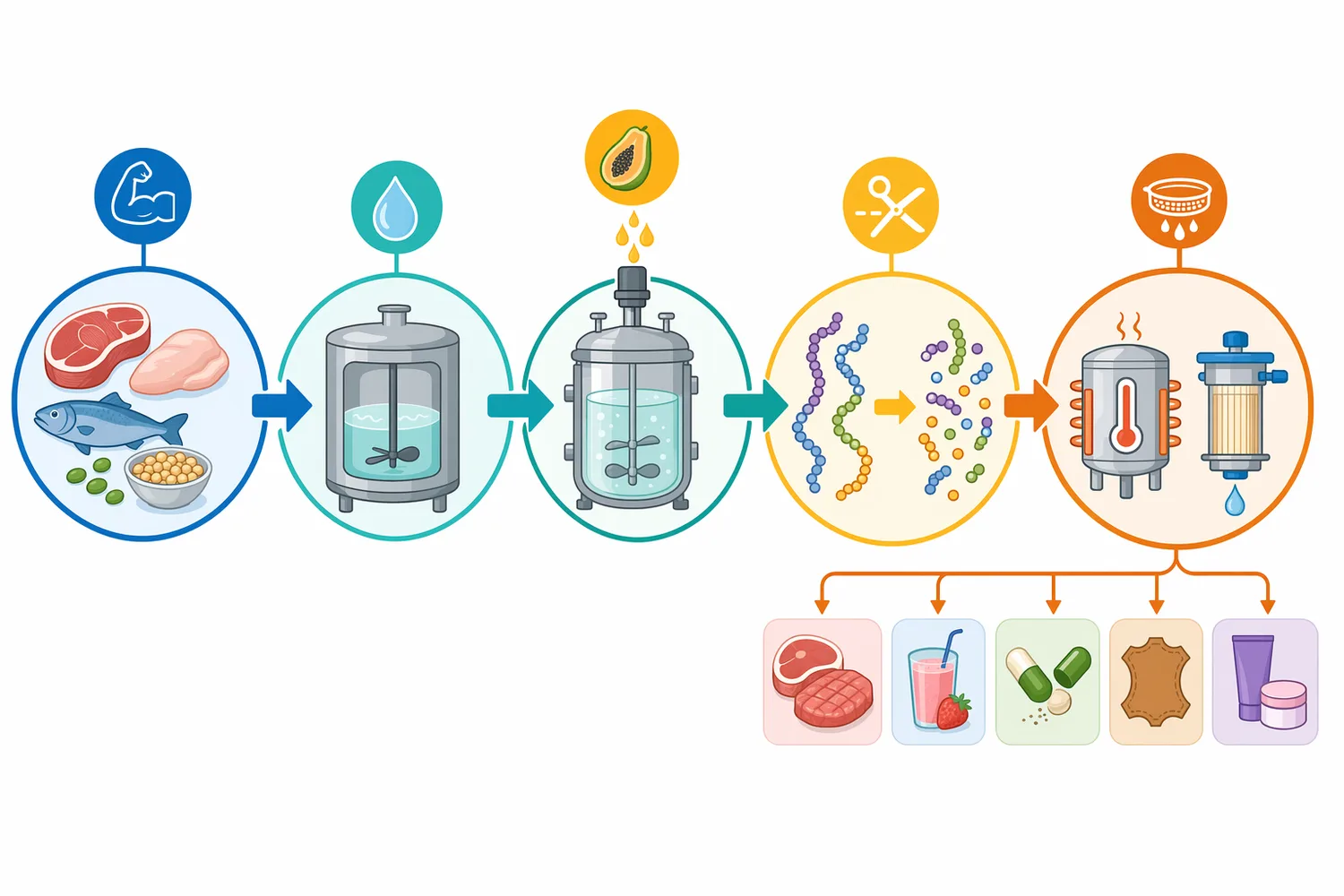
Papain enzymes are also used to produce protein hydrolysates. In these processes, the goal is not tenderness but conversion of intact proteins into smaller peptides that may have improved solubility, dispersibility, emulsifying behavior or other functional characteristics [4].
Research on potato proteins illustrates this role. Studies using selected proteases, including papain, have examined enzymatic generation of peptides from potato proteins and characterized changes in structural properties after hydrolysis [4]. The practical significance is that plant proteins can become easier to use in formulated foods when enzymatic treatment reduces aggregation or changes surface activity.
A more recent study on potato protein hydrolysis with papain and bromelain evaluated the resulting functional and emulsifying properties for gluten-free cake emulsifier applications. The important processing concept is that partial proteolysis can create peptides that move more effectively to oil-water or air-water interfaces, helping stabilize emulsions or foams in baked systems [5].
Papain can also be used with animal-derived proteins. Fish-scale gelatin hydrolysate research has explored enzymatic hydrolysis as a route to peptide-rich fractions and evaluated antioxidant, antihypertensive and antidiabetic properties in the resulting materials [6]. Those findings support papain’s processing value, while any final nutrition or health claim for a finished hydrolysate still depends on the specific ingredient, evidence package and applicable regulations.
When papain modifies a protein ingredient, several functional changes may occur at the same time. Cleavage can reduce molecular size, unfold compact regions, expose charged or hydrophobic groups, and change how the protein interacts with water, fat, air bubbles or other biopolymers [4].
In plant-protein systems, this can help address common formulation problems such as poor solubility or gritty texture. Shorter peptides may hydrate more readily than the parent protein, while newly exposed side chains can change emulsification and foam stability. This is why papain enzyme treatment is often discussed in relation to alternative proteins, bakery systems, beverages and nutritional powders [5].
In dairy-related matrices, papain’s proteolytic action must be handled carefully because milk proteins are central to gel formation, body and texture. Research on buffalo milk Dangke, a traditional dairy product, evaluated product properties in the presence of probiotic culture, demonstrating how milk-protein systems are highly sensitive to biochemical and processing changes [7]. Where papain is used in dairy or dairy-adjacent applications, the intended outcome should be partial modification rather than uncontrolled digestion.
With gelatin and collagen-derived materials, papain can reduce large protein structures into smaller gelatin hydrolysate peptides. The resulting peptide profile affects solubility, viscosity, gel strength and bioactivity testing outcomes, which is why enzyme choice and hydrolysis severity are important in gelatin hydrolysate development [6].
Papain has a long history in studies of cereal proteins because gluten toxicity and gluten structure are protein-driven phenomena. A classic study examined the mechanism by which crude papain destroyed the toxic action of wheat gluten in the context of coeliac disease research [8].
That historical work should not be read as permission to make modern gluten-free claims for papain-treated wheat ingredients. However, it does demonstrate an important biochemical fact: papain can substantially alter gluten proteins because gluten’s functional and biological behavior depends on peptide sequences and protein structure [8].
In practical food processing, papain may be considered wherever cereal protein modification is desired, such as changing dough characteristics, reducing protein network strength, or developing hydrolysates. The key point is that papain does not remove gluten as a physical contaminant; it enzymatically fragments protein chains, and the acceptability of any finished product depends on validated testing and regulatory requirements [2].
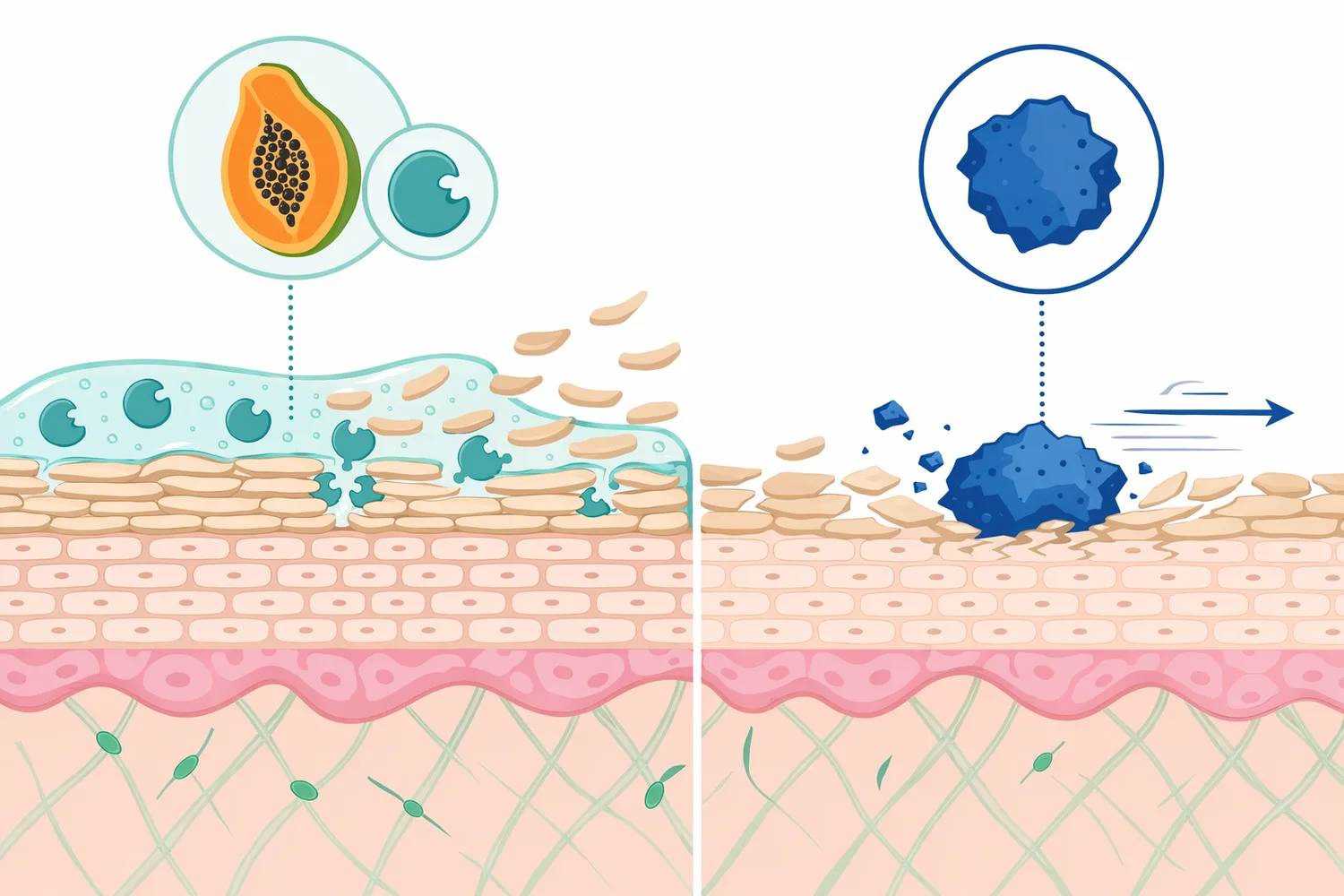
Papain is widely used in cosmetic exfoliation concepts because the outermost skin surface contains protein-rich dead cells and keratin-associated structures. Papain gel has also been studied as a deproteinizing agent for tooth enamel, which highlights the same basic capability: selective attack on proteinaceous surface material [3].
In an enzyme exfoliant, papain does not abrade skin like a scrub particle. Instead, it helps loosen protein links that contribute to the adhesion of dead surface cells. This is why enzyme-based exfoliation can be positioned differently from mechanical exfoliation, although final consumer tolerance depends on formulation design, exposure time and rinse-off or leave-on conditions [3].
Papain’s cosmetic value is therefore strongest where the desired effect is surface protein modification. The enzyme should not be described as a general anti-aging drug or therapeutic skin treatment without appropriate product-specific evidence. Its well-supported function is proteolytic: helping break down accessible protein material in a controlled topical context [1].
Papain is also used in feed and nutrition-related formulations because dietary proteins must ultimately be reduced to peptides and amino acids before absorption. Enzyme papain can pre-hydrolyze protein ingredients or contribute to protein breakdown concepts in formulated products [2].
In animal feed, the practical idea is to improve how protein-rich raw materials behave in the digestive or processing environment. If a protein ingredient is difficult to disperse, resistant to digestion, or variable in quality, controlled enzymatic hydrolysis can sometimes improve consistency. However, animal performance depends on the whole diet, species, life stage, processing conditions and management system, not on papain alone [1].
Papain supplement searches often focus on digestive comfort or general wellness. Papaya has a long history in traditional and medicinal use, and reviews describe a broad range of reported uses for different parts of Carica papaya [9]. For responsible product positioning, papain should be described primarily as a protease rather than as a guaranteed treatment for digestive or inflammatory conditions.
Safety evaluation also matters in supplement and nutrition contexts. An in vitro genotoxic and cytotoxic safety evaluation of papain from Carica papaya examined papain using cell-based safety methods, contributing to the evidence base for responsible use [10]. Finished-product claims and recommended use directions remain outside the enzyme’s basic biochemical identity and depend on the final formulation.
Papain is used in a range of technical settings wherever protein residues, protein structures or protein-containing raw materials need controlled modification. Reviews of industrial applications describe papain’s use across food, pharmaceutical, textile, detergent, leather, cosmetic and related sectors [2].
In proteinaceous residue removal, the enzyme’s value is direct: residues containing blood proteins, milk proteins, tissue proteins, gelatin, egg proteins or other biological materials can be softened or partially solubilized when peptide bonds are hydrolyzed. Papain is not a universal cleaner—starch, cellulose, pectin, mineral scale and fats are better addressed by other chemistries or enzymes—but it is well suited to protein-based soils [1].
In biotechnology and pharmaceutical-adjacent workflows, papain’s proteolytic specificity can be useful for controlled cleavage tasks. Papain is historically known in antibody fragmentation, where proteolysis can separate antigen-binding regions from other antibody portions under defined process conditions; the broader principle is that papain can cut proteins in ways that create useful fragments rather than complete amino-acid mixtures [2].
Papain is also relevant in dental and biomedical material research. Papain gel as a deproteinizing agent for tooth enamel is one example of research where the enzyme is applied to modify a protein-containing surface before further treatment [3]. Such examples show papain’s versatility, but regulated medical or dental use requires appropriate product-specific compliance.
Papain is often discussed alongside other proteases, but not all proteases behave the same way. The most useful distinction for process thinking is not “stronger” versus “weaker,” but the environment where the enzyme is most compatible and the type of protein modification desired [1].
| Protease type | Typical process environment | How it modifies proteins | Common fit | Practical distinction |
|---|---|---|---|---|
| Acid proteases | Acidic systems | Hydrolyze proteins where low pH is part of the process | Some beverage, fermentation or digestion-simulation contexts | Useful when the substrate is already acidic; not interchangeable with papain in near-neutral systems |
| Neutral proteases | Near-neutral systems | Partial hydrolysis with relatively balanced protein modification | Food proteins, hydrolysates, flavor systems | Often chosen where texture and flavor control are important |
| Alkaline proteases | Alkaline systems | Strong protein soil removal or hydrolysis under high-pH conditions | Detergents, technical cleaning, some leather/textile uses | Better suited to high-pH processes than papain |
| Papain | Mildly acidic to near-neutral systems in many uses | Broad cysteine-protease action that cuts accessible peptide bonds in many proteins | Meat tenderizing, hydrolysates, cosmetics, feed and technical protein digestion | Plant-derived protease valued for broad substrate action under comparatively mild conditions |
Papain is therefore not simply a substitute for every protease category. Its advantage is broad, plant-derived proteolysis in applications where the matrix can tolerate the enzyme’s working conditions and where controlled partial hydrolysis is the desired outcome [2].
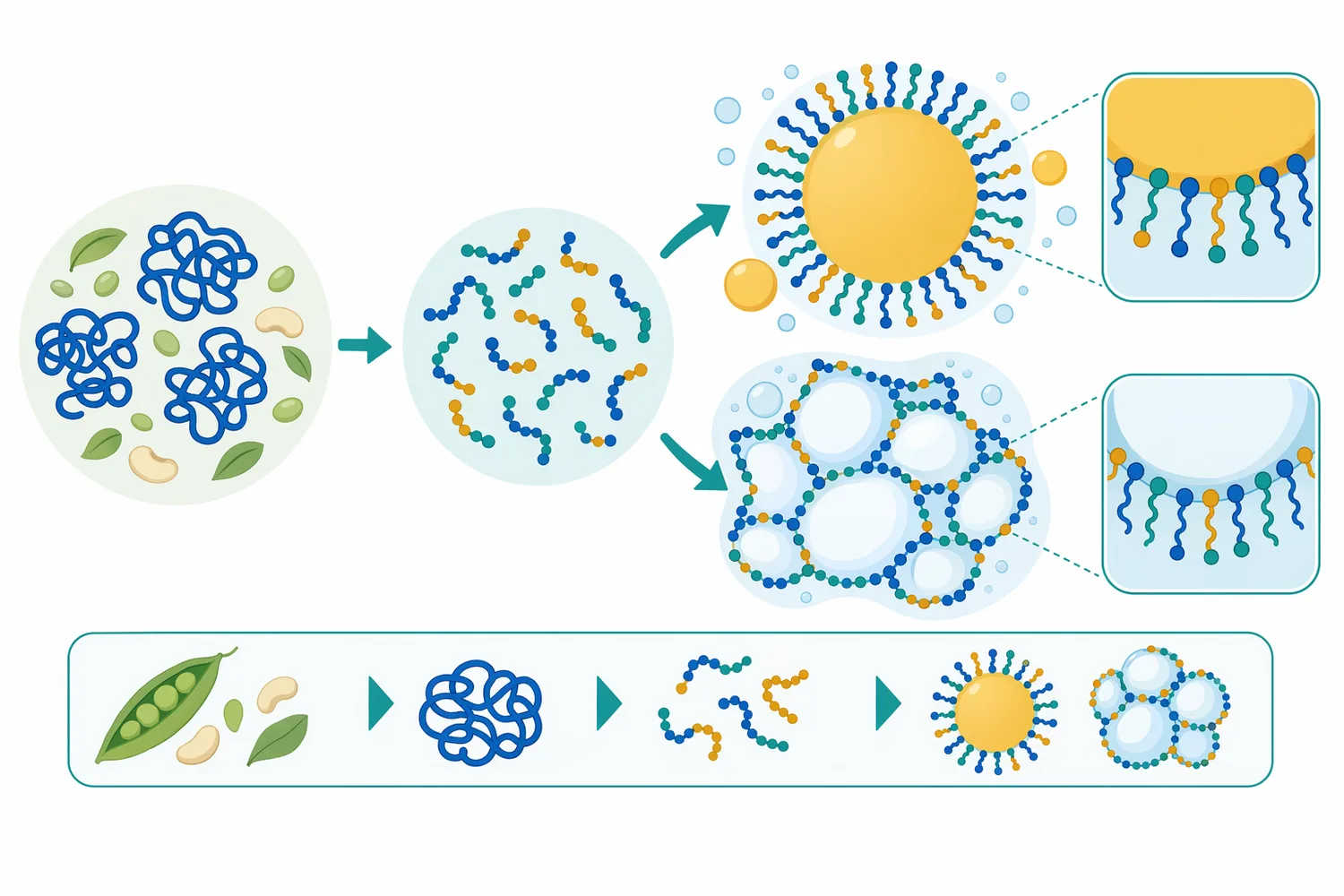
Papain performance depends on the contact between enzyme and substrate. If the target protein is buried inside a dense, dry, fat-coated or highly structured matrix, hydrolysis will be slower or more surface-limited. If the protein is hydrated, dispersed and accessible, papain can act more efficiently [1].
pH affects the ionization state of both the enzyme active site and the substrate protein. Reviews of papain extraction and properties describe papain as functioning most usefully around mildly acidic to neutral conditions, which aligns with many meat, plant-protein and cosmetic systems [1]. Very harsh acidity or alkalinity can reduce useful enzyme action by changing the enzyme structure or the protein substrate.
Temperature also changes the rate of proteolysis. Warmer conditions generally increase reaction speed up to the point where the enzyme begins losing structure; cold conditions slow the reaction. In food use, this matters because papain can continue acting during holding or marination until heat, formulation conditions or process termination reduces activity [2].
Time is equally important. Papain creates a progressive change: first surface softening or initial peptide release, then deeper hydrolysis or more extensive breakdown as exposure continues. The ideal endpoint depends on the application—tender meat, soluble hydrolysate, stable emulsion, exfoliating cosmetic or protein-residue removal all require different degrees of proteolysis [4].
Water availability is another practical factor. Enzymes need molecular mobility, and hydrolysis requires water as a reactant. A dry papain powder meat tenderizer will not meaningfully tenderize until it is hydrated and brought into contact with the meat surface; similarly, dry protein powders usually need adequate hydration before enzymatic treatment is effective [1].
The strongest evidence for papain is its core identity as a protease from Carica papaya with broad industrial use in protein hydrolysis applications. Reviews consistently describe papain as an enzyme used in food, feed, pharmaceutical, cosmetic and technical sectors because it breaks down proteins [2].
Evidence is also strong for papain as a meat tenderizer because meat tenderness is directly related to protein structure, and papain’s mechanism directly changes that structure. The same logic supports papain use in protein hydrolysates, where the desired output is a peptide mixture rather than an intact protein [1].
Application evidence is growing in plant-protein functionality. Potato protein work with papain and other proteases demonstrates how enzymatic hydrolysis changes structural and functional properties relevant to gluten-free baking and emulsification [5]. This is especially relevant as formulators seek better performance from plant proteins that may otherwise have limited solubility or poor interfacial behavior.
There is also credible research interest in bioactive peptides from hydrolyzed proteins. Fish-scale gelatin hydrolysate studies, for example, have evaluated antioxidant, antihypertensive and antidiabetic properties after enzymatic processing [6]. For commercial communication, however, those findings should be treated as ingredient-specific research rather than as universal claims for all papain-treated proteins.
The more cautious area is human therapeutic positioning. Papaya and papain appear in traditional medicine reviews, and papaya plant materials have been associated with many reported health uses [11]. But papain itself should not be promoted as a disease treatment unless the finished product has the required evidence and regulatory status.
Papain is bioactive because it digests proteins, and that same activity requires sensible handling. Proteolytic enzymes can irritate skin, eyes or respiratory tissues in susceptible individuals, particularly when powders become airborne or when concentrated enzyme contacts sensitive tissue [10].
Allergy potential should also be taken seriously. Papain is derived from papaya latex, and people with sensitivities to papaya, latex-like plant materials or proteolytic enzymes may react. This is relevant for workplace handling and for finished products that may contact skin or be consumed [9].
For cosmetic products, papain’s useful exfoliating action can become irritating if the product is too aggressive for the skin type or contact conditions. The desired effect is controlled surface protein loosening, not uncontrolled barrier disruption [3].
For food, feed and supplement applications, papain should be used within the applicable regulatory and formulation framework for the finished product. Enzymes.bio supplies Papain as an enzyme ingredient; any claims made for a final consumer product remain the responsibility of the finished-product seller.
Enzymes.bio supplies Papain directly online in 1 kg units. The purchase process is simple: the buyer places the order and pays online, then the order is processed and shipped.
A Certificate of Analysis and Safety Data Sheet come with the order, supporting routine documentation needs for professional use. Enzymes.bio is a supplier of enzyme ingredients, not a manufacturer or testing laboratory, so the product page is designed to make purchasing straightforward rather than to create a custom development project.
For buyers searching terms such as papain enzyme, papain enzymes, papain meat tenderizer, papain powder meat tenderizer or meat tenderizer with papain, the key point is the same: papain is a practical protease ingredient for applications where controlled protein breakdown is the intended function.
Papain is a versatile plant-derived cysteine protease from papaya, valued because it cuts peptide bonds and converts structured proteins into smaller peptides. That mechanism supports its most established uses: meat tenderizing, protein hydrolysate production, plant-protein functionality improvement, cosmetic exfoliation, feed and nutrition concepts, and technical protein digestion [2].
Its performance is best understood through the substrate: papain changes meat by weakening protein networks, changes plant proteins by altering solubility and surface behavior, changes gelatin by producing smaller peptides, and changes keratin-rich surfaces by loosening proteinaceous material. The evidence is strongest when the claimed benefit follows directly from proteolysis; broader supplement or therapeutic claims require much more product-specific support [10].
Enzymes.bio supplies Papain online by the 1 kg unit, with the order processed and shipped after online payment and documentation provided with the order. For buyers who need a practical papain enzyme powder for protein-focused applications, papain offers a well-established route to controlled enzymatic protein modification.
Sold by the 1 kg unit, in stock and ready to ship. Order directly on our store — pay online and we process your order. A Certificate of Analysis and Safety Data Sheet are included with every order.
Buy Papain →Numbered in order of first citation. Open-access sources, each verified reachable at publication; citation numbers in the text link here.