
Pectin lyase is a pectin-degrading enzyme used when methyl-esterified pectin is creating viscosity, haze, poor pressability, or slow filtration in plant-based processing streams. Its main function is to cut the pectin backbone by β-elimination, shortening long pectin chains into unsaturated pectic fragments so the material flows, clarifies, filters, or releases liquid more readily [1].
For online buyers, Enzymes.bio supplies Pectin Lyase directly by the 1 kg unit. The product can be purchased and paid for online; the order is then processed and shipped, with a Certificate of Analysis and Safety Data Sheet included with the order.
Pectin is one of the major structural polysaccharides in plant cell walls, especially in fruits, vegetable tissues, peels, pulps, and fiber-rich plant residues. It is built largely from galacturonic acid units in α-1,4-linked chains, with part of the carboxyl groups present as methyl esters; this methylation pattern is central to how different pectin-degrading enzymes recognize and cleave the polymer [2].
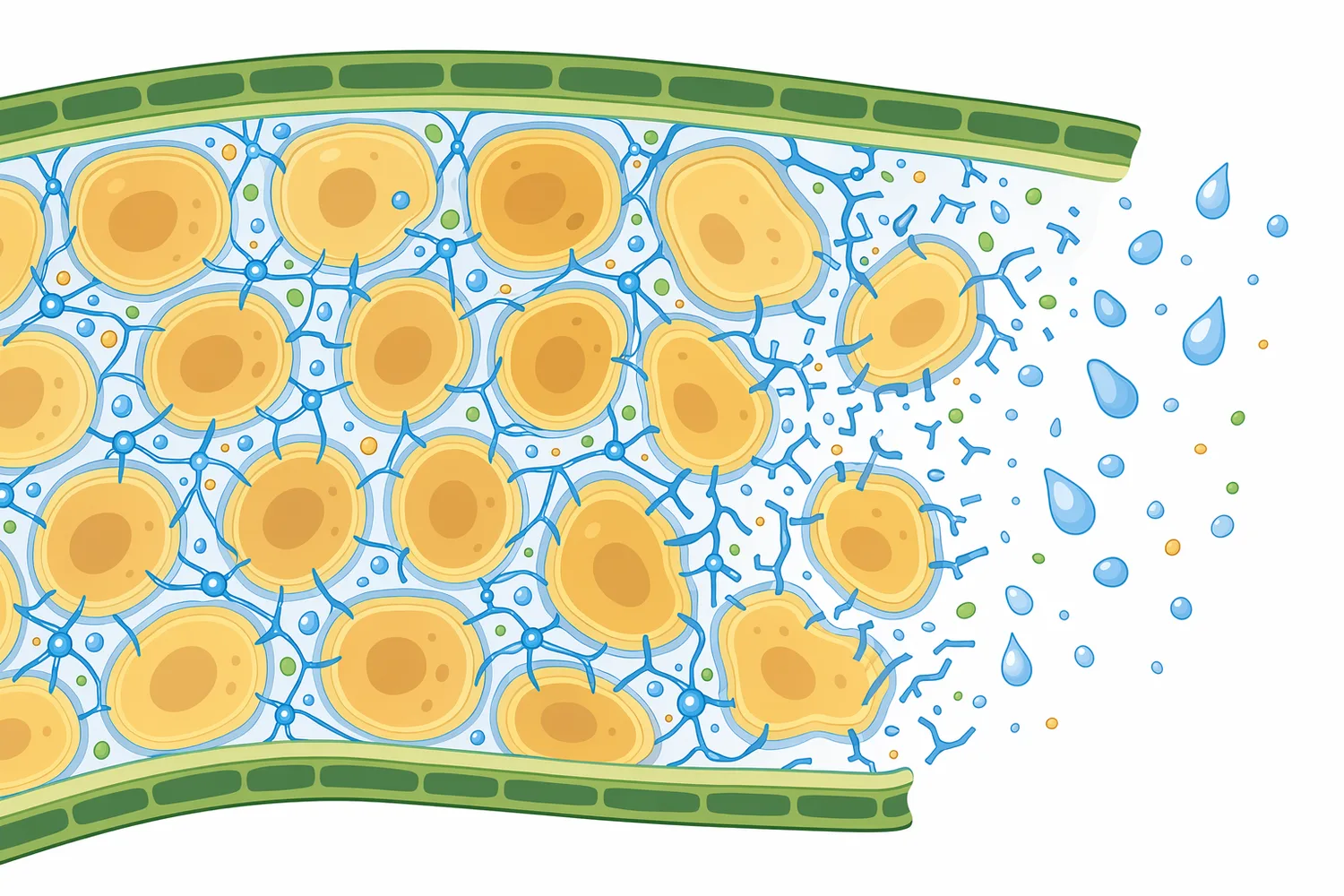
The practical pectin lyase function is to attack the methyl-esterified regions of pectin and reduce polymer length. In a juice, mash, pulp, or extract, long pectin molecules can bind water, increase viscosity, stabilize suspended particles, hold cells together, and slow filtration; when pectin lyase cuts those chains internally, the physical network weakens even before all pectin has been fully degraded [1].
That distinction matters in processing. The enzyme does not need to dissolve the entire plant matrix to be useful. A relatively small amount of backbone cleavage can lower the average molecular size of pectin enough to change flow behavior, release entrapped liquid, reduce filter blinding, or make clarification easier in pectin-rich systems [3].
Pectin is abundant in many plant-derived materials used in beverages, fruit preparations, vegetable processing, extracts, and agro-industrial by-products. Citrus peels, apple pomace, many fruit pulps, and other plant residues are widely discussed as pectin-containing resources, and pectin’s gelling, thickening, and water-binding properties are exactly the same features that can become obstacles during processing [4].
At the cell-wall level, pectin helps fill the spaces between cellulose and hemicellulose and contributes to the middle lamella that holds plant cells together. In intact fruit tissue, this is useful for firmness; in processing, it can make juice release, pressing, enzymatic maceration, extraction, or clarification slower because liquid and soluble compounds remain trapped inside a pectin-supported structure [5].
In beverages, pectin can also interact with suspended particles and colloidal material. Orange juice cloud behavior, for example, has long been associated with pectin and pectic substances, showing why pectin modification can change whether a juice remains cloudy, clarifies, or forms unstable haze during processing and storage [6].
The same chemistry appears outside beverages. In plant fibers, pectin can limit wetting and interfere with removal of non-cellulosic materials. In pectin-rich side streams, it can increase viscosity and make pumping, mixing, separation, or downstream treatment more difficult. Pectin lyase is used because it targets one of the structural causes of these problems rather than relying only on heat, acid, alkali, or mechanical force [7].
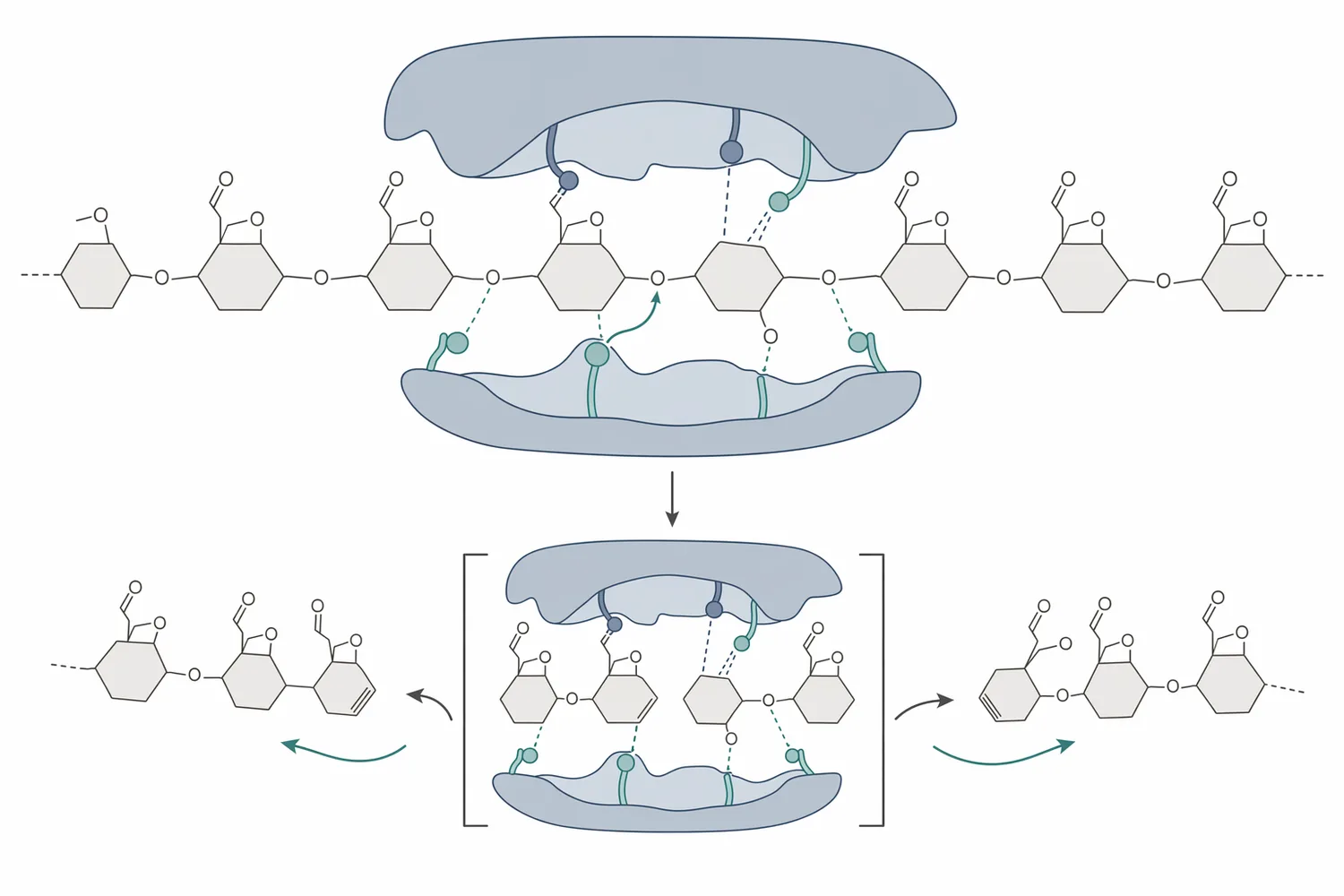
Pectin lyase is a lyase, not a conventional hydrolase. Instead of adding water across a glycosidic bond, it cleaves the pectin backbone by a trans-elimination, commonly described as β-elimination. The reaction breaks α-1,4 linkages in methyl-esterified galacturonan regions and produces unsaturated pectic oligosaccharides as characteristic products [1].
Mechanistically, the enzyme acts on the polymer chain where the galacturonic acid residues remain methyl-esterified. Cleavage creates a double bond in the product, often described in pectic chemistry as an unsaturated galacturonate-containing end group. This is why pectin lyase products differ from those formed by simple hydrolysis and why the enzyme is classified separately from polygalacturonases [1].
For the process engineer, the most important consequence is molecular-size reduction. A long pectin molecule behaves like a water-binding, viscosity-building chain; after internal cleavage, the same pectin mass is distributed into shorter fragments that entangle less, hold less structure, and interfere less with filtration or liquid release. This is the physical reason pectin lyase can deliver a noticeable viscosity change without needing complete conversion of pectin to monomers [3].
Many pectin lyases are described as endo-acting enzymes, meaning they cut within the polymer rather than removing units only from the chain ends. Endo action is valuable for viscosity reduction because cutting a long chain in the middle rapidly lowers molecular weight; repeated internal cuts quickly collapse the network effect that makes pectin-rich streams thick or difficult to clarify [1].
The phrase pectin lyase vs pectate lyase is important because the two enzyme names sound similar but their preferred substrates differ. Pectin lyase is associated with methyl-esterified pectin, while pectate lyase acts mainly on de-esterified pectate or low-methyl galacturonan regions. Both use elimination chemistry, but they are not interchangeable in every substrate [1].
| Enzyme type | Main target in pectic material | Main reaction style | Practical implication |
|---|---|---|---|
| Pectin lyase | Methyl-esterified pectin, especially highly esterified homogalacturonan regions | β-elimination / trans-elimination | Useful where methylated pectin is driving viscosity, haze, poor pressing, or plant-tissue cohesion [1] |
| Pectate lyase | De-esterified pectate or low-methyl galacturonan | β-elimination / trans-elimination | More relevant when pectin has already been de-esterified or the substrate is naturally pectate-rich [1] |
| Polygalacturonase | Galacturonan chains, often more effective on de-esterified regions | Hydrolysis | Breaks glycosidic bonds by water addition; commonly part of broader pectinase systems [3] |
| Pectin methylesterase | Methyl ester groups on pectin | De-esterification | Removes methyl groups and changes pectin charge and gel behavior rather than directly functioning as the main chain-cleaving lyase [2] |
Pectin methylesterase is often discussed alongside pectin lyase because it changes the degree of methylation of pectin. By removing methyl ester groups, it can convert pectin toward pectate-like regions, altering calcium binding, gel behavior, and susceptibility to other pectinases. Pectin lyase is different because its key value is direct cleavage of methyl-esterified pectin regions without first requiring that de-esterification step [2].
This specificity is not a limitation when the substrate fits the enzyme. In many fruit and plant materials, a significant portion of pectin is methyl-esterified, and the ability to cut that polymer directly can be valuable for clarification, extraction, and viscosity reduction. Where pectin is already low-methyl or highly de-esterified, other pectinolytic enzymes may play a larger role in the overall breakdown pattern [1].
Pectin’s effect is disproportionate to its concentration because high-molecular-weight polymers can dominate viscosity and colloidal behavior. A long pectin chain can span water-rich regions, interact with suspended particles, and help create a weak gel or haze-supporting network. When pectin lyase cuts the chain, the same material becomes shorter and less able to bridge, entangle, and stabilize dispersed solids [3].
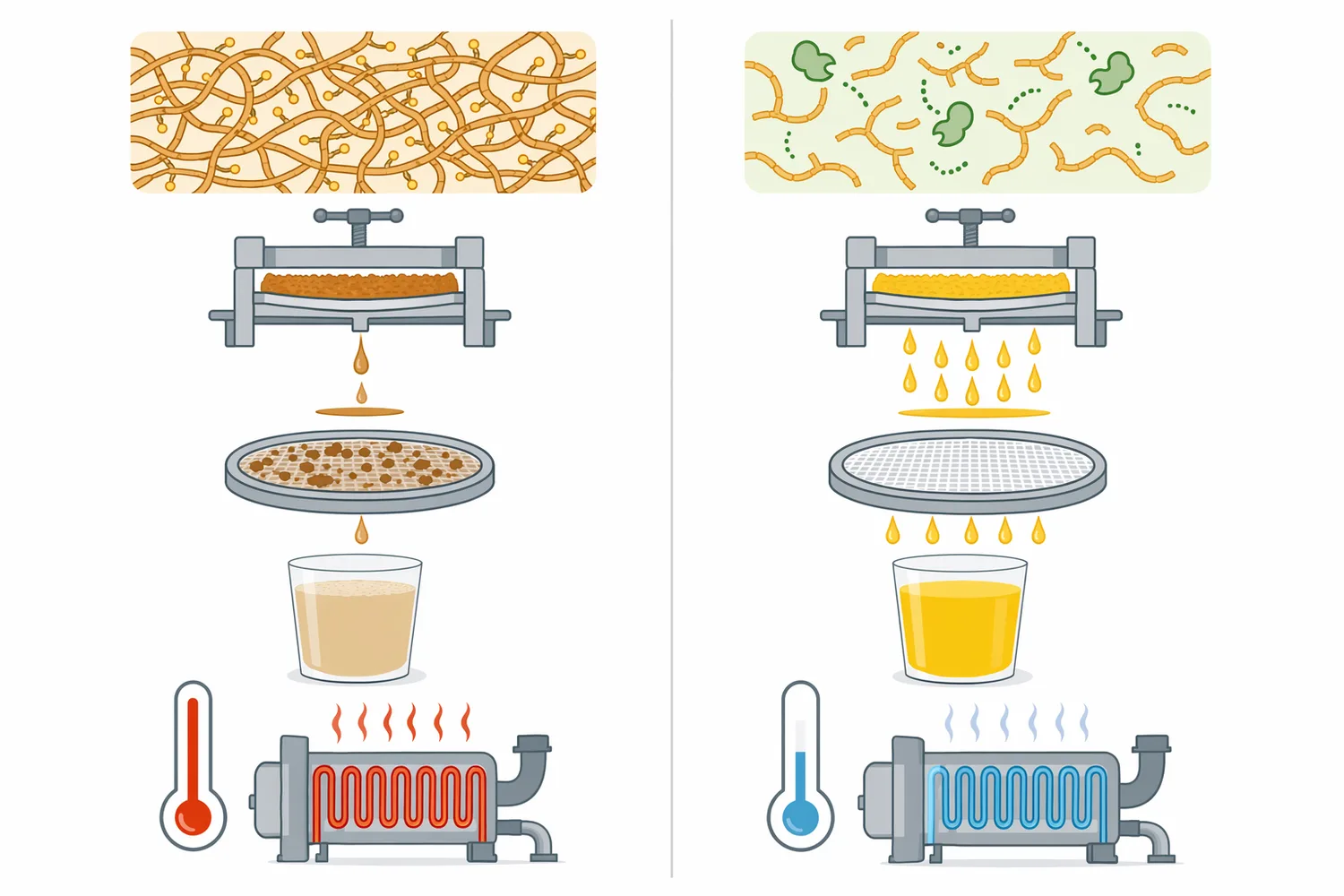
In a fruit mash, that change improves pressability because cell-wall and middle-lamella structures no longer hold liquid as tightly. In a juice, shorter pectin fragments create less resistance to flow through filter media. In a concentrate stream, reduced pectin network formation can lower the risk of excessive thickening or gel-like behavior during evaporation and handling [3].
The visible result may be clearer juice, faster separation, lower apparent viscosity, or improved extract release, depending on the material and process. The underlying cause is the same: enzymatic depolymerization changes pectin from a structure-forming polymer into smaller fragments that contribute less to the processing bottleneck [8].
Fruit juice is one of the best-known application areas for pectin lyase and related pectinases. Fruit pulps and juices contain pectin from cell walls and middle lamellae; after crushing or pressing, that pectin can dissolve or disperse into the liquid, increasing viscosity and stabilizing suspended particles that would otherwise settle or filter more easily [8].
In clarification, pectin lyase helps by depolymerizing methyl-esterified pectin so suspended solids have less polymer support. As the pectin network weakens, fine particles can aggregate, settle, float, or be retained more predictably by filtration, depending on the process design. The enzyme’s role is therefore not simply “haze removal” but removal of the pectin-driven stabilization that makes haze persistent [6].
A 2024 study focused on Bacillus velezensis pectin lyase for fruit juice processing, reflecting continuing interest in pectin lyase as a tool for improving juice clarification and process efficiency [8]. Such work supports the established processing rationale: when pectin is a main contributor to viscosity or cloud stability, enzymatic chain cleavage can improve the separation behavior of the juice.
Pectin lyase can also support color and soluble-solids release in crushed fruit systems because pectin-rich cell-wall material is part of the barrier around intracellular contents. When the enzyme loosens the pectin framework, pressing or extraction can recover liquid more effectively. The practical effect is most relevant in pectin-rich fruits and pulps where mechanical pressing alone leaves valuable liquid or soluble material trapped in the mash [5].
Viscosity reduction is one of the clearest industrial reasons to use pectin lyase. High-viscosity juice or fruit extract flows slowly through screens, membranes, and filter beds; it also requires more pumping energy and can transfer heat less efficiently during concentration. Pectin lyase addresses the polymer cause of that viscosity rather than simply diluting or heating the material [3].
The enzyme’s endo-type action is especially useful here. Cutting a long polymer at internal points rapidly lowers average molecular weight, and viscosity can fall sharply before the polymer is fully degraded. This is why pectin lyase can be effective in processing contexts where the goal is not complete pectin removal but a functional reduction in thickness and filtration resistance [3].
In fruit concentrates, pectin can contribute to jellification or excessive thickening during evaporation. By shortening pectin before concentration, pectin lyase can help create a stream that remains easier to pump, heat, and handle. The expected benefit is not a change in sugar concentration itself, but a change in the pectin network that otherwise makes concentrated fruit material difficult to manage [8].
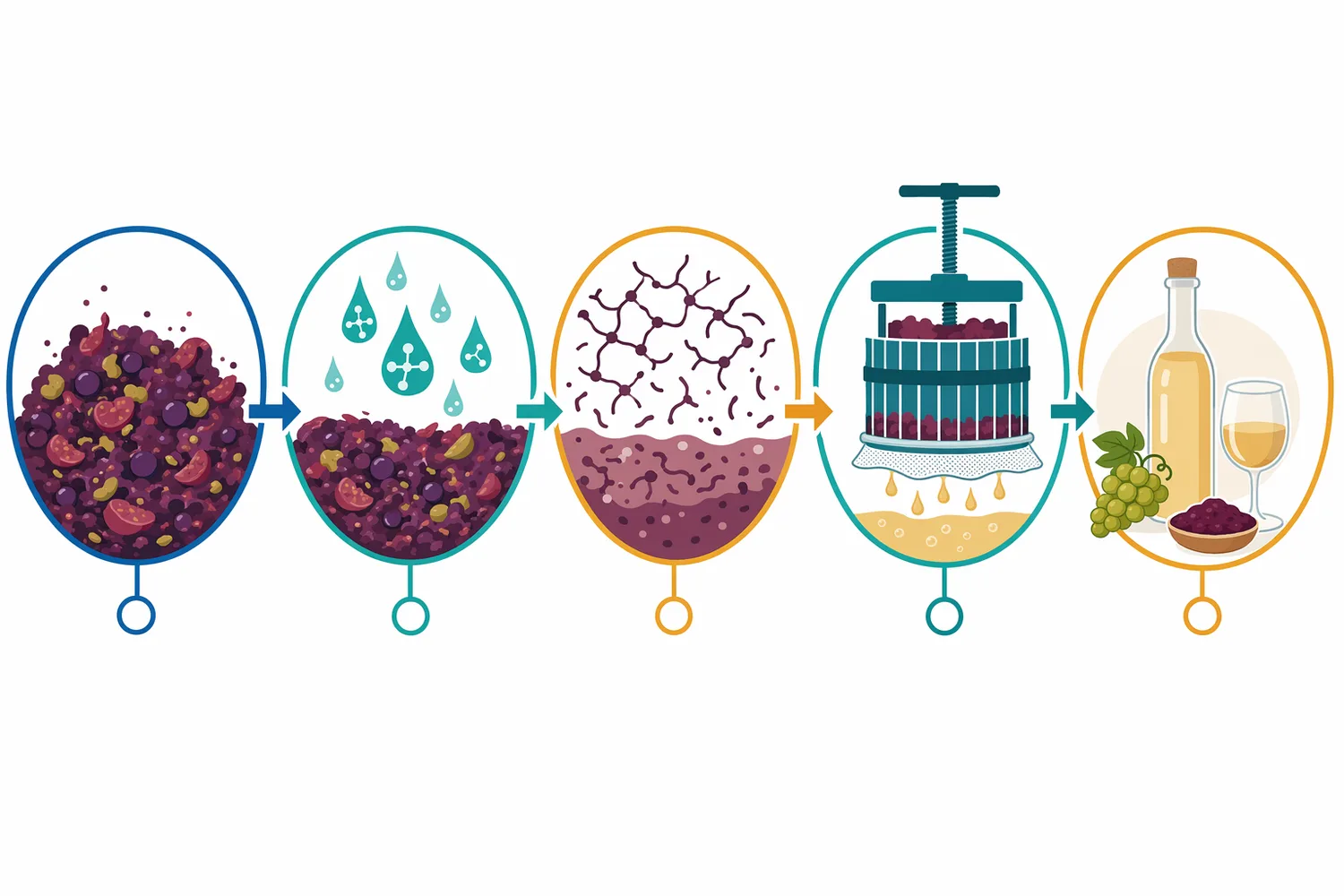
Pectin lyase is relevant to plant extraction because pectin is one of the barriers that limits release of intracellular and cell-wall-associated material. In fruits, vegetables, peels, pomace, and botanical raw materials, target compounds may be physically trapped inside tissues or retained by pectin-supported structures. Depolymerizing pectin weakens that barrier and can make mechanical extraction more efficient [4].
In maceration, the desired outcome is controlled tissue breakdown rather than complete liquefaction. Pectin lyase can help separate cells by weakening methyl-esterified pectin in the middle lamella, improving the release of juice, soluble solids, pigments, flavors, or other extractable components. The same mechanism supports production of purées, fruit preparations, and plant-derived extracts where texture and separation behavior must be controlled [5].
Pectin-rich by-products are also important because modern processing increasingly seeks value from peels, pomace, and agro-industrial residues. Reviews on pectin extraction and valorization emphasize that plant side streams can contain meaningful pectin fractions; enzymes that modify pectin can therefore help with handling, fractionation, or downstream conversion of these materials [9].
Although fruit processing is the most familiar application, pectin lyase also fits broader plant-material processing. In natural fibers, pectin acts as a non-cellulosic binder and surface component. Removing or modifying pectin can improve wetting, retting, and preparation of fibers for later finishing while avoiding some of the harshness associated with strong chemical treatments [7].
Alkaline pectin lyases are particularly relevant to textile and fiber settings because many fiber-processing operations are not run under acidic beverage-like conditions. A 2024 study on alkaline pectin lyase from Bacillus licheniformis reflects the interest in enzymes that retain function under more alkaline process environments, which can be useful in applications such as bioscouring and fiber treatment [10].
In papermaking, pulp processing, and pectic wastewater or residue handling, the target is often processability: reducing viscosity, improving drainage, or breaking down pectin-rich material that interferes with separation. Pectinolytic lyases are discussed in industrial contexts because they can modify pectin selectively under milder conditions than many non-enzymatic treatments [7].
Published pectin lyase characterizations show that operating behavior depends on enzyme source, structure, immobilization, and substrate. Many fruit-processing pectinases are associated with mildly acidic conditions and moderate processing temperatures, while alkaline pectin lyases have been studied for textile and fiber applications where higher pH compatibility is valuable [10].
Reported pectin lyase-related summaries commonly describe activity across broad conditions, with examples spanning approximately pH 5.5–10.5 and 35–65°C depending on the enzyme source and formulation context. That breadth should be interpreted as evidence of enzyme diversity, not as a single universal operating window for every pectin lyase product or every substrate [7].
The plant material itself also matters. A fruit juice, a citrus peel slurry, a cotton scouring bath, and a pectic wastewater stream differ in pH, dissolved solids, particle size, native pectin structure, ionic composition, and residence time. These factors influence how quickly pectin lyase can access methyl-esterified regions and how strongly chain cleavage translates into lower viscosity, better clarification, or improved extraction [8].
Immobilization research also shows how process context can change enzyme behavior. In one study, purified pectin lyase from Pseudomonas putida was immobilized onto magnetic lily flower-derived nanoparticles and evaluated for industrial applicability, illustrating how enzyme stability, reuse, and handling can be studied for pectin lyase systems without changing the basic pectin-cleaving function of the enzyme [7].
The scientific basis for pectin lyase is well established at the reaction level. Classic characterization work on pectin lyases and methyl oligogalacturonates described how these enzymes act on pectins and methylated oligomers, supporting the core understanding that pectin lyase cleaves methyl-esterified pectin through elimination chemistry [1].
More recent work continues to improve pectin lyase expression and performance. A 2023 study used flow-cytometric cell sorting with UV mutagenesis to improve pectin lyase expression, demonstrating ongoing bioprocess interest in producing pectin lyase more effectively [11]. This type of research is useful because industrial adoption depends not only on catalytic function but also on practical enzyme availability.
Thermostability is another active development area. A 2024 study used machine-learning-guided multi-site combinatorial mutagenesis to enhance pectin lyase thermostability, reflecting the importance of maintaining activity under processing temperatures and during operational use [12]. For users, the practical message is that pectin lyase is not a static research enzyme; it is an enzyme class under continuing optimization for industrial performance.
Expression studies on alkaline pectin lyase from Bacillus licheniformis also show how microbial pectin lyases are being adapted for different application environments. Alkaline compatibility is especially relevant where pectin removal must occur outside the mildly acidic conditions typical of many fruit juices [10].
After pectin lyase treatment, the most important chemical change is shorter methylated pectic fragments with unsaturated ends. The most important physical change is reduced ability of pectin to form continuous, viscosity-building, haze-stabilizing, or cell-binding networks. These two levels—chemical cleavage and physical process improvement—are directly connected [1].
In a juice, reduced pectin chain length can mean lower viscosity and easier passage through filters. In a mash, it can mean improved release of liquid under pressing. In a plant extract, it can mean less pectin interference during separation. In a fiber process, it can mean pectin-rich surface material is weakened or removed more selectively than with aggressive bulk chemical attack [7].
The enzyme does not “consume” all plant solids, nor does it replace mechanical processing. It changes the pectin fraction so existing unit operations—pressing, settling, centrifugation, filtration, evaporation, washing, or extraction—can work against a less resistant matrix. That is why pectin lyase is often best understood as a process-enabling enzyme for plant-derived streams [8].
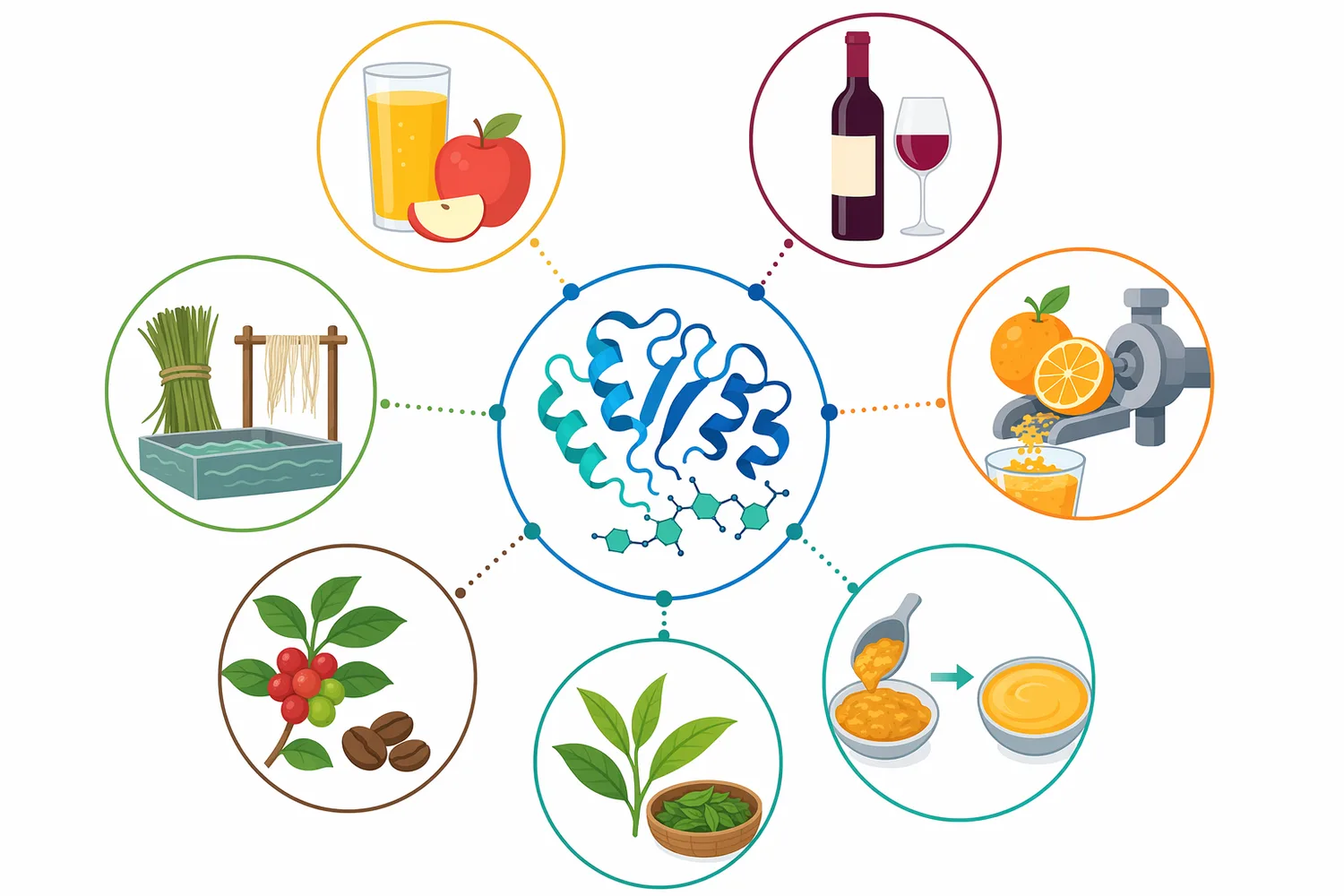
Pectin lyase is most relevant when the processing problem is linked to methyl-esterified pectin. Common examples include viscous fruit juice, slow clarification, poor press yield, pectin-rich pulps, plant extracts with filtration resistance, and fiber systems where pectin acts as a binder or surface impurity. In these cases, the enzyme’s ability to cut methylated pectin directly is the central advantage [1].
It is less appropriate to treat pectin lyase as a universal pectinase for every pectic substrate. Pectin chemistry varies by plant source, maturity, extraction history, and processing conditions. Low-methyl pectin, de-esterified pectate, and rhamnogalacturonan-rich domains may respond differently and may involve other pectinolytic enzymes in broader enzyme systems [13].
That specificity is part of the value proposition. Pectin lyase gives targeted action on a defined pectin structure, which can support cleaner viscosity reduction or clarification when methyl-esterified pectin is the main problem. Used in that context, it provides a mild biochemical route to modify plant materials without relying solely on severe pH, high temperature, or harsh chemical treatment [7].
Enzymes.bio supplies Pectin Lyase as a direct online product for buyers who need a 1 kg enzyme unit for plant-material processing applications. The purchase is completed online, payment is made online, and the order is then processed and shipped.
A Certificate of Analysis and Safety Data Sheet are included with the order. The scientific background above is provided to help buyers understand what pectin lyase does, where it is commonly used, and why its substrate specificity matters in fruit, vegetable, fiber, extraction, and pectin-rich processing streams.
Pectin lyase is a targeted pectinolytic enzyme for methyl-esterified pectin. By cleaving the pectin backbone through β-elimination, it converts long viscosity-building polymers into shorter unsaturated fragments, which can improve flow, clarification, filtration, pressing, extraction, and plant-tissue breakdown where pectin is the limiting barrier [1].
The enzyme is especially relevant in fruit juice and beverage clarification, pectin-rich mashes, plant extracts, fiber treatment, and other plant-based processes where methylated pectin creates handling or separation problems. Its value comes from a concrete mechanism: selective depolymerization of pectin so the substrate behaves differently in downstream processing [8].
Sold by the 1 kg unit, in stock and ready to ship. Order directly on our store — pay online and we process your order. A Certificate of Analysis and Safety Data Sheet are included with every order.
Buy Pectin Lyase →Numbered in order of first citation. Open-access sources, each verified reachable at publication; citation numbers in the text link here.