
Pectinase Enzyme Powder is used to break down pectin, the gel-forming plant polysaccharide that contributes to viscosity, haze, slow filtration, and incomplete liquid release in many fruit and plant materials. In practical processing, pectinase can make mash, pulp, juice, wine must, plant extracts, and some natural fibers easier to press, clarify, filter, or soften because it cuts the pectin network that holds water and fine solids in place [1].
Enzymes.bio supplies Pectinase Enzyme Powder for B2B industrial and food-processing use through its online store. Buyers can purchase the 1 kg product directly online; payment is completed online, the order is processed and shipped, and the order is supplied with a Certificate of Analysis and Safety Data Sheet.
Pectinase is best understood as a family of enzymes that act on pectic substances rather than as one single biochemical action. Pectin itself is a complex plant cell-wall polysaccharide, rich in galacturonic acid units, that helps bind plant cells together in the middle lamella and contributes to the structure, firmness, and water-holding capacity of fruit tissue, vegetable tissue, and many plant-derived residues [2]. When fruit is crushed, milled, heated, pressed, or extracted, pectin may move into the liquid phase and form a hydrated network that traps liquid and stabilizes suspended particles.
That hydrated pectin network is the reason pectin-rich materials can behave differently from simple liquids. A fruit pulp may resist pressing because water is physically held inside the cell-wall matrix; a juice may remain cloudy because pectin keeps fine particles dispersed; a filtration step may slow down because pectin increases viscosity and forms compressible fouling layers on filter media. Pectinase changes those properties by cleaving pectin into shorter fragments or modifying the pectin chain so that it can no longer hold the same gel-like structure [1].
In production language, pectinase does not “dissolve everything.” It selectively weakens one important plant-structure component. Cellulose, hemicellulose, starch, protein, waxes, and insoluble particles may still be present, but the removal or shortening of pectin can be enough to make juice flow more freely, improve press drainage, reduce haze stability, or make plant fibers more accessible to other process steps [3].
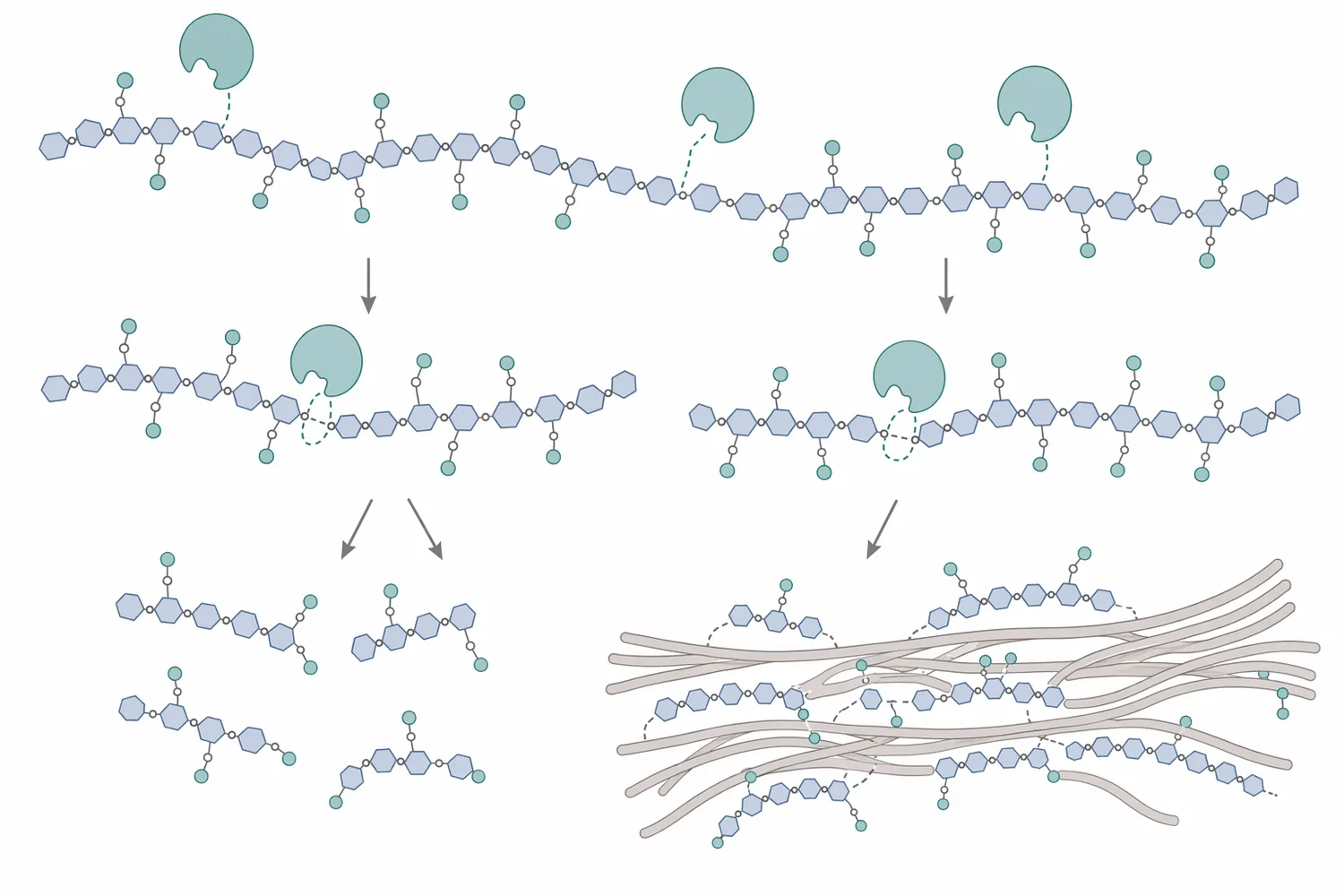
The most useful way to understand pectinase is to picture pectin as a water-swollen mesh. In fruit pulp or plant tissue, that mesh binds water, links cell-wall components, and holds fine particles in suspension. Pectinase attacks the chemical bonds or structural features that keep this mesh intact, so the long pectin chains become shorter, less able to entangle, and less able to maintain viscosity [2].
Different pectinase-related enzyme actions contribute in different ways. Polygalacturonases hydrolyze bonds within polygalacturonic acid regions of pectin, reducing polymer length. Pectin lyases and pectate lyases split pectin chains by an elimination mechanism, which also reduces chain size and changes how pectin behaves in solution. Pectin esterases remove methyl ester groups from pectin, changing charge and accessibility and often making pectin more susceptible to other pectinolytic enzymes [4].
The visible processing effects follow from those molecular changes. When the pectin chain is shortened, viscosity falls because the liquid no longer contains as many long, entangled, water-binding polymers. When pectin no longer coats or bridges fine particles as effectively, haze particles can aggregate, settle, centrifuge, or filter more readily. When pectin in the middle lamella is weakened, plant cells separate more easily and trapped liquid can drain from mash or pulp with less resistance [1].
| Pectin-related processing issue | What pectin is doing in the material | What pectinase changes | Practical result processors look for |
|---|---|---|---|
| Thick fruit mash or puree | Hydrated pectin chains bind water and increase flow resistance | Chain cleavage reduces polymer length and network strength | Lower viscosity, easier pumping, better heat transfer |
| Cloudy juice or wine must | Pectin stabilizes suspended particles and colloidal haze | Pectin breakdown reduces haze stability | Faster clarification and more predictable filtration |
| Low press drainage | Pectin-rich cell walls retain liquid inside pulp | Middle-lamella weakening improves cell separation | More liquid release from mash or pomace |
| Slow filtration | Pectin contributes to slimy, compressible fouling layers | Reduced viscosity and weaker colloidal structure improve flow | Less filtration resistance and clearer filtrate |
| Harsh fiber preparation | Pectin binds waxes and non-cellulosic surface materials | Pectic binder is selectively removed or loosened | Improved wettability and softer natural fibers |
Fruit juice clarification is one of the clearest and best-established uses of pectinase. In unclarified fruit juice, pectin does more than make the liquid thick: it can stabilize colloidal particles so that they remain suspended even after settling, centrifugation, or coarse filtration. Pectinase reduces that stabilization by cutting pectin chains, allowing fine pulp fragments, protein-polyphenol complexes, and other suspended solids to aggregate or separate more efficiently [1].
Apple and citrus systems illustrate the value of this mechanism. These fruits contain enough pectin to create persistent haze and filtration difficulty, especially when pulp has been mechanically disrupted. Studies on microbial pectinases have repeatedly evaluated their ability to clarify fruit juices, including orange and apple juice, because these substrates show practical changes in clarity when pectin is degraded [5].
In papaya juice processing, immobilized pectinase-alginate bead research has examined changes in physicochemical properties, antioxidant activity, and reusability during enzymatic treatment. Although immobilized systems are more specialized than ordinary soluble enzyme use, the underlying process goal is the same: reduce the pectin-driven structure that keeps juice viscous or cloudy, while supporting clearer and more manageable processing streams [6].
Pectinase can also support filtration after clarification. When pectin is intact, filters may blind quickly because viscous juice moves slowly and pectin-rich solids form dense, deformable cakes. After enzymatic pectin breakdown, the liquid phase can move through filtration media more readily, and the retained solids are less likely to behave as a sticky pectin gel [1].
In winemaking, pectinase is used because grapes contain pectin in skins, pulp, and cell-wall material. During crushing and pressing, that pectin can reduce juice release, carry haze into must, and slow later clarification. Enzymatic pectin degradation helps weaken the structure of grape tissue and reduces the pectin load in the liquid, which supports pressing, settling, racking, and filtration steps .
The same mechanism is relevant in fruit wines beyond grapes. Research on Mopan persimmon wine fermentation with pectinase evaluated optimization and mechanism, reflecting the way high-pectin fruit materials can benefit from enzymatic pretreatment before or during fermentation. In such systems, pectinase can change mash rheology and soluble solids release by disrupting cell-wall pectin that otherwise traps liquid and soluble compounds inside fruit tissue [7].
Pectinase can also affect sensory-relevant extraction indirectly. By loosening cell-wall structures, it can help release soluble compounds that were physically trapped in pulp or skin tissue. That does not mean pectinase creates aroma or color compounds by itself; rather, it improves access to compartments where those compounds are located and can make normal pressing or maceration more effective [8].
For white wine processing, the practical benefit is often cleaner juice handling: improved drainage from crushed grapes, faster sedimentation of suspended solids, and lower filtration resistance. For red or fruit wines, the emphasis may include extraction of juice and soluble components from skins or pulp. In both cases, the biochemical target remains pectin, and the value depends on how much pectin is limiting the process .
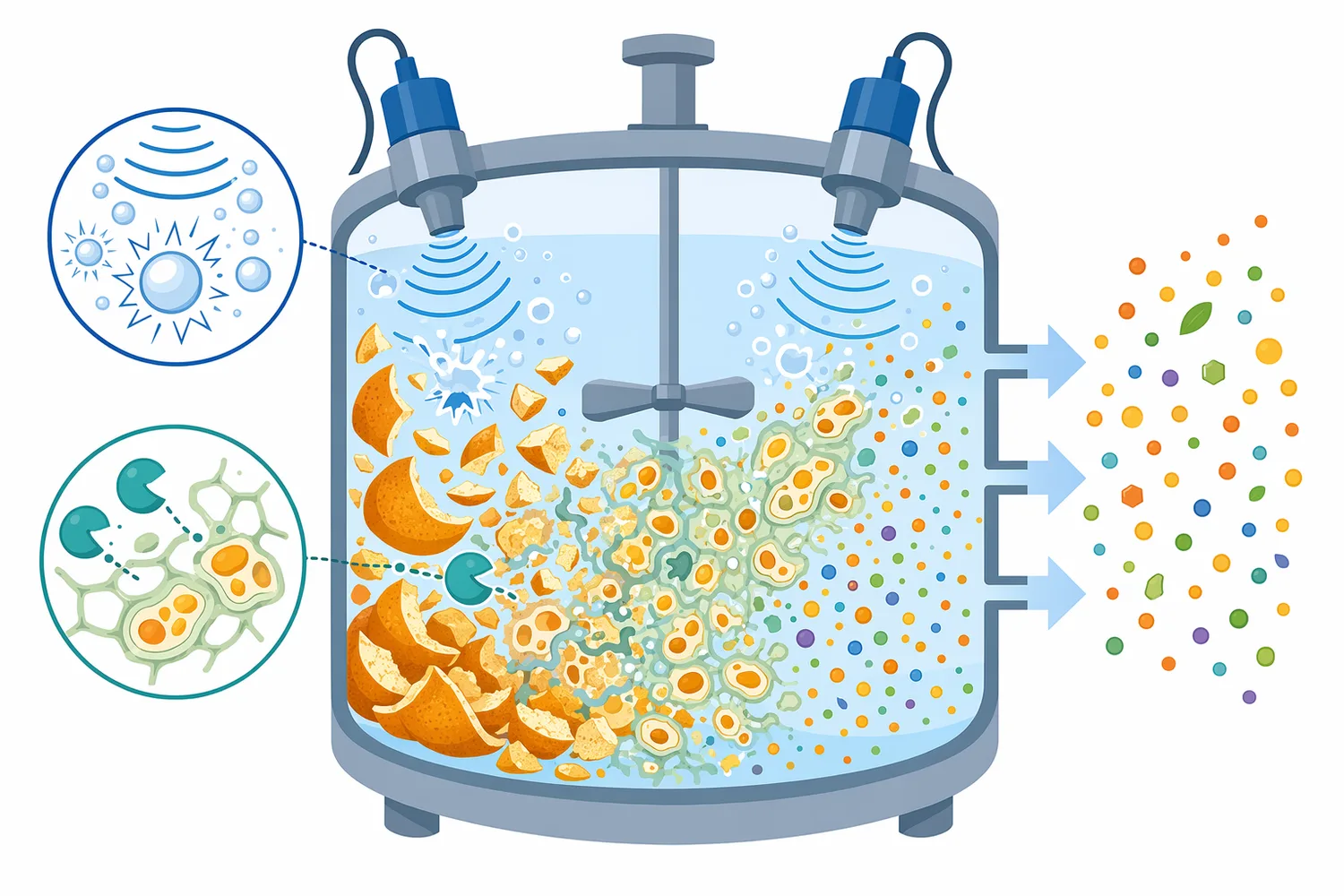
Pectinase is also useful where the goal is not simply clear juice, but recovery of valuable extractives from fruit pulp, peel, or processing residues. Orange processing waste, for example, contains pectin-rich peel and membrane materials that can restrict extraction and retain phenolic compounds inside plant tissue. A study on ultrasonic-assisted enzymatic processing of orange waste evaluated pectinase concentration, ultrasonic time, and pH as variables affecting phenolic compound extraction, showing how enzyme action can be combined with physical disruption to improve release [9].
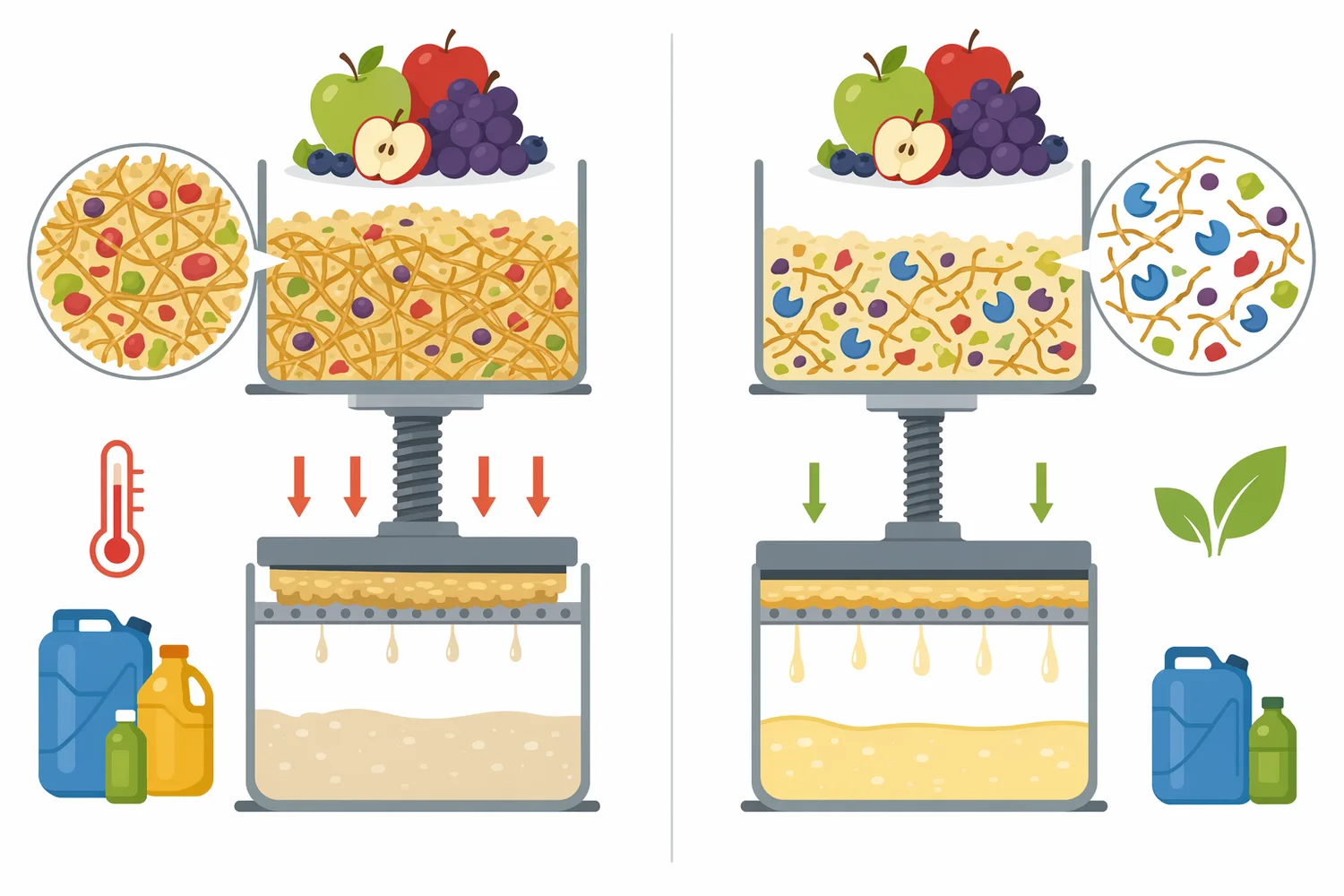
The reason ultrasound and pectinase can complement each other is mechanical and biochemical. Ultrasound can disrupt tissue and improve mass transfer, while pectinase weakens the pectin network that holds cell-wall material together. When the pectin matrix is degraded, solvents or juice can access trapped soluble compounds more effectively, and released compounds can diffuse out of the tissue with less resistance [9].
Recent work on grape, cherry, and strawberry pulp pretreatment with pectinase and cellulase also reflects this broader extraction role. Pectinase targets the pectic matrix, while cellulase targets cellulose-rich cell-wall regions; together they can open plant tissue more thoroughly than either action alone in substrates where multiple wall polymers restrict release [8].
This is important for processors working with fruit by-products, pulp residues, or high-solids streams. Pectinase can help convert a difficult, viscous plant slurry into a more extractable material, making it easier to recover juice, soluble solids, pigments, phenolics, or other desired components depending on the process design [10].
Pectinase applications extend beyond conventional juice and wine. In tea processing, fungal pectinase production through solid substrate fermentation of estate waste has been studied for improving enzymatic oxidation and increasing the quality of CTC tea. The relevance is again linked to plant cell-wall modification: pectinase can help alter the accessibility and release of compounds involved in oxidation and flavor development [11].
Soy processing has also been investigated with enzyme combinations that include pectinase. An Aspergillus niger study examined pectinase and α-galactosidase production for enzymatic soy processing, reflecting the fact that plant food matrices often contain multiple structural and soluble carbohydrates that affect extraction, texture, and processing efficiency [12].
These examples show why pectinase is often part of a broader enzyme strategy rather than a stand-alone solution to every plant-processing challenge. If the main barrier is pectin, pectinase is directly relevant. If the barrier includes cellulose, hemicellulose, starch, protein, or other polymers, pectinase may be used alongside other enzyme types, each targeting a different part of the plant matrix [3].
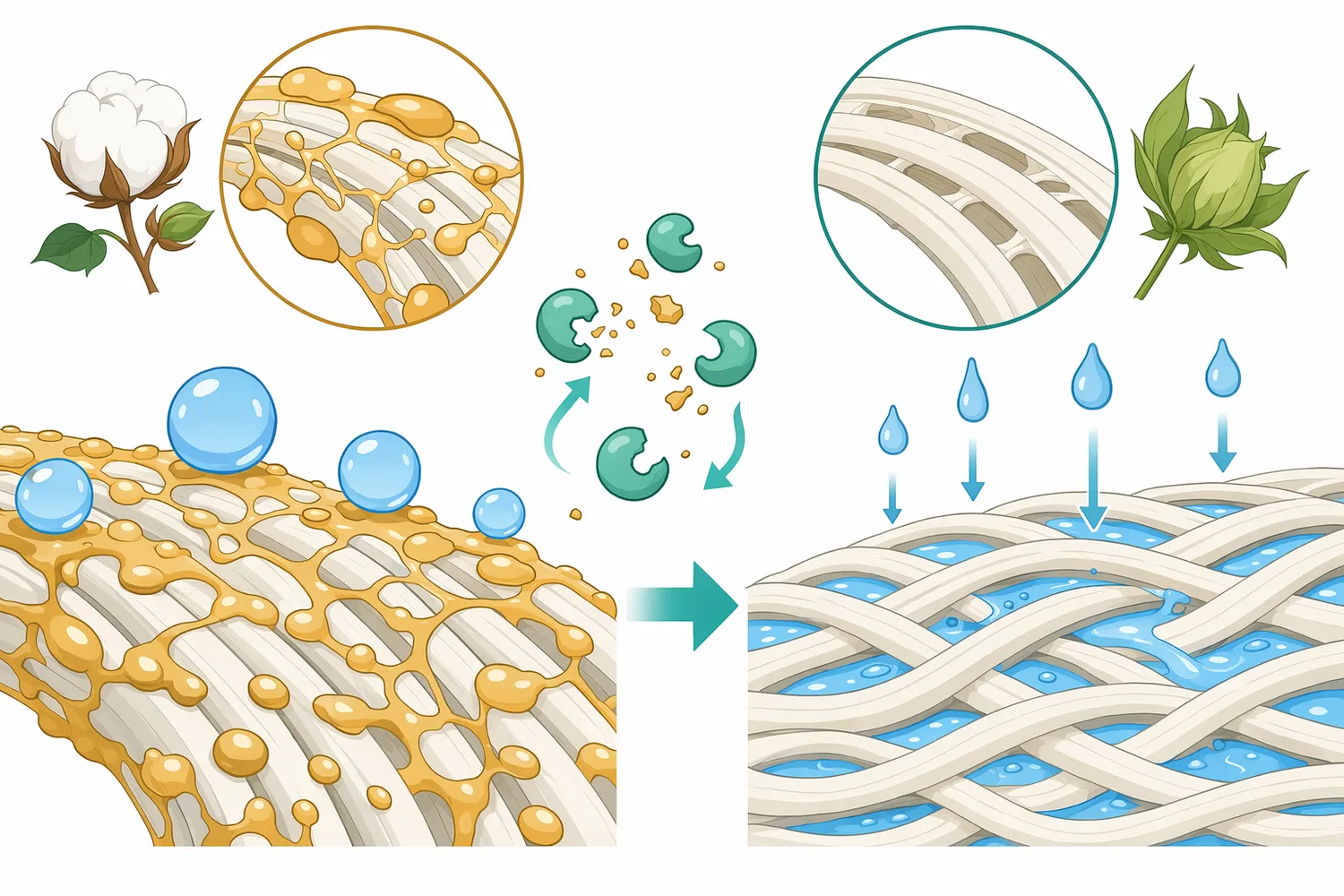
Pectinase also has an established role in textile bioscouring, especially for cotton and other plant fibers. Raw cotton contains non-cellulosic impurities such as pectin, waxes, proteins, and mineral matter on or near the fiber surface. Pectin helps bind some of these surface components, so pectinase treatment can loosen the outer matrix and improve water absorbency without relying solely on harsh alkaline scouring [5].
The practical change in cotton preparation is wettability. Untreated cotton repels water partly because waxy and pectic surface materials block rapid wetting. When pectinase removes or weakens pectic binders, water can penetrate the fiber surface more effectively, supporting dyeing, finishing, or further wet processing. This is why pectinase is discussed in biotechnology approaches to textile preparation and coloration [13].
Banana pseudostem fiber is another example of a lignocellulosic plant material where pectin contributes to stiffness and fiber bundle cohesion. A 2023 study on biosoftening banana pseudostem fiber used cellulase and pectinase isolated from Aspergillus niger for textile-industry relevance, showing how pectinase can help separate and soften natural fibers when combined with other cell-wall-degrading enzymes [14].
Recent work on Thermomyces lanuginosus polygalacturonase also evaluated textile bioscouring, connecting a defined pectin-degrading enzyme action with improvements in fiber preparation. The key point is selectivity: pectinase targets pectic substances rather than the main cellulose backbone of cotton or many natural fibers, so it can support gentler surface modification when used appropriately [15].
Pectinase can contribute to plant biomass processing because agricultural residues are composite materials. Corn stover, bagasse, fruit peels, soybean hulls, and similar residues contain cellulose, hemicellulose, lignin, pectin, proteins, and extractives in varying proportions. Pectin may not be the largest component, but it can still interfere with enzyme access, water movement, and structural deconstruction [3].
Sequential enzyme action is often important in biomass hydrolysis. Work on corn stover has shown that using different fiber-degrading enzymes sequentially can enhance degradation, which supports the practical concept that one enzyme can expose or loosen a structure for the next enzyme. In that context, pectinase can help disrupt pectic regions that contribute to cell-wall cohesion and limit access to other polysaccharides [3].
Sugarcane bagasse bleaching has also been studied with crude xylanase and pectinase enzymes to reduce bleaching effluent toxicity. Here, pectinase is not used for beverage clarification but as part of a more eco-friendly fiber-processing approach, where enzymatic pretreatment modifies plant polymers before chemical bleaching and can reduce the burden of downstream treatment [16].
Agro-industrial residues are also important in pectinase research because fruit peels and other pectin-containing wastes can serve as fermentation substrates for microbial enzyme production. Reviews and recent studies describe this as a low-cost and sustainable route for microbial pectinase production, linking enzyme supply science with residue valorization and circular bioeconomy goals [17].
Most industrial pectinases are microbial in origin, with fungi, bacteria, and yeasts widely studied as enzyme producers. Microbial production matters because microorganisms can secrete pectin-degrading enzymes extracellularly, can be cultivated on pectin-rich substrates, and can generate enzymes with different behavior in acidic, neutral, or alkaline environments [18].
Fungal pectinases are especially prominent in fruit and food applications because many fungal enzymes perform well in acidic plant systems. Aspergillus species, for example, are repeatedly studied for pectinase production and use in food-processing contexts, including fruit processing, soy processing, and tea-related applications [12].
Bacterial pectinases are also important, particularly where neutral or alkaline process conditions are relevant. Bacillus species have been studied for pectinase production, purification, characterization, and textile biopreparation, making them useful reference organisms for understanding pectinase behavior beyond acidic juice systems [19].
Yeasts and actinomycetes add further diversity. Studies on yeast pectinase production and Streptomyces thermocarboxydus pectinase characterization show that pectin-degrading capability is distributed across multiple microbial groups, which helps explain why pectinase is available for such varied processing environments [20].
Pectinase is not used in only one type of process environment. Fruit juice, wine, and many fruit extracts are naturally acidic. Some plant extract and food processes are closer to neutral. Textile bioscouring and some fiber treatments may operate under more alkaline conditions. The pectinase family is broad enough that different microbial enzymes have been studied across these environments [18].
| Processing context | Typical substrate environment | Main pectin-related challenge | How pectinase helps | Literature examples |
|---|---|---|---|---|
| Acidic fruit and beverage systems | Fruit mash, juice, must, wine, fruit pulp | Viscosity, haze, trapped juice, slow clarification | Breaks pectin in pulp and liquid phase, reducing gel structure and haze stability | Fruit processing and juice clarification research [1] |
| Near-neutral plant extract systems | Some vegetable, soy, or mixed plant slurries | Cell-wall resistance and limited release of soluble components | Weakens pectic cell-wall regions so extraction or downstream enzyme action is easier | Soy and plant-processing enzyme studies [12] |
| Alkaline or mildly alkaline textile systems | Cotton, natural fibers, bioscouring baths | Pectic binders hold waxes and impurities on fiber surfaces | Removes or loosens pectin, improving wettability and surface preparation | Cotton and micropoly biopreparation research [5] |
| Biomass and residue processing | Bagasse, stover, fruit peel, agro-industrial waste | Composite cell walls restrict access to target polymers | Opens pectin-associated regions and complements other fiber-degrading enzymes | Sequential biomass enzyme studies [3] |
This comparison is conceptual, not a statement that one product behaves identically in every environment. It shows why pectinase is discussed in such different industries: the same biochemical target, pectin, causes different operational problems depending on the substrate and process.
Pectinase performance depends on the material being treated. A clear apple juice, a crushed grape mash, an orange peel slurry, cotton fabric, and banana pseudostem fiber all contain pectin in different physical locations. In juice, pectin may be dissolved or colloidally dispersed; in mash, it may still be embedded in cell-wall fragments; in natural fiber, it may be part of a surface matrix that also contains waxes and hemicellulose [14].
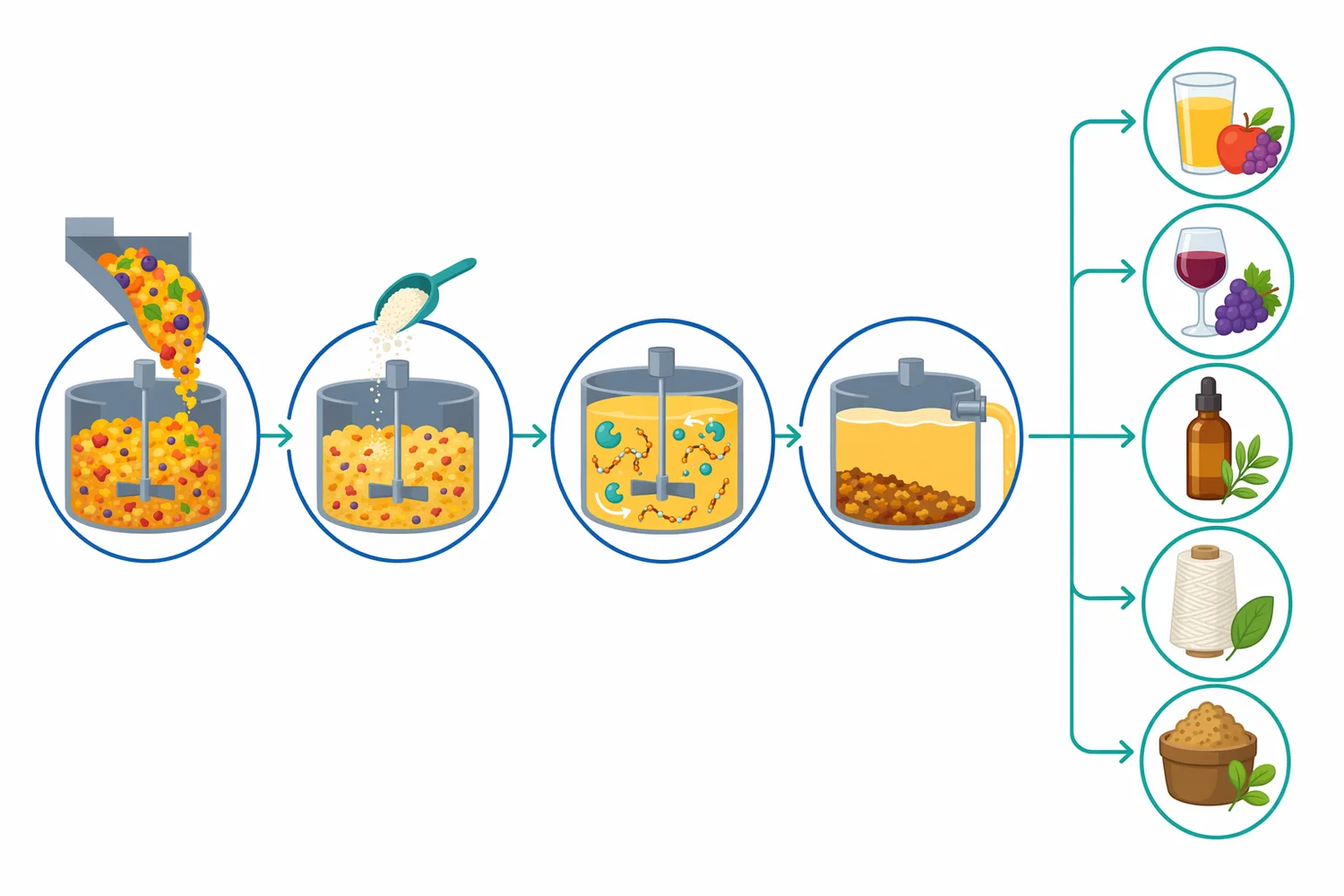
Mixing and contact are important because pectinase must physically reach pectin. In a low-solids juice, distribution is relatively straightforward. In a thick fruit mash or fiber slurry, uneven enzyme contact can leave untreated zones where pectin remains intact. Good dispersion helps the enzyme contact the pectin-rich surfaces and liquid phase more uniformly [9].
Temperature and pH influence enzyme structure and substrate behavior. Enzymes are folded proteins, and their active sites work best within compatible process conditions. Pectin itself also changes behavior with pH, ionic environment, soluble solids, and degree of esterification, so the same enzyme treatment can produce different results in different fruits or plant materials [2].
Contact time affects the extent of pectin breakdown. Short exposure may reduce some viscosity but leave enough pectin to stabilize haze or slow filtration. Longer exposure can allow more chain cleavage, but practical processes balance enzyme reaction time against throughput, product quality, and the timing of pressing, clarification, fermentation, or finishing operations [7].
Other ingredients can also influence outcomes. High solids, phenolic compounds, alcohol, salts, and suspended plant particles can affect how readily the enzyme reaches pectin or how the treated material clarifies. This is one reason published studies often optimize treatment conditions for a specific substrate rather than assuming that all fruit or plant materials respond in the same way [21].
The first observable change in many pectin-rich liquids is a reduction in thickness. A fruit mash that was resistant to stirring may become more mobile as long pectin chains are shortened. This is not simply dilution; it is a structural change in the hydrated polymer network that reduces resistance to flow [1].
A second common change is improved liquid release. When pectin in the middle lamella and cell-wall matrix is weakened, pulp particles separate more readily, and liquid can drain from tissue fragments during pressing or settling. In grape, apple, citrus, and other fruit systems, this can make downstream separation steps more efficient .
A third change is better clarification behavior. As pectin is degraded, suspended solids are less protected by pectin and can form larger aggregates that settle, centrifuge, or filter more predictably. This is why pectinase is so widely associated with clear juice, wine clarification, and filtration support [1].
In textile or fiber systems, the observable change is different. Rather than clarity, the desired result may be improved absorbency, softer handle, or easier removal of surface impurities. Pectinase contributes by attacking the pectic binders that help hold non-cellulosic materials on the fiber surface [5].
Pectinase is most valuable when pectin is a meaningful barrier. If a process problem is caused mainly by starch gelatinization, protein haze, cellulose recalcitrance, lipid films, or mineral scale, pectinase alone will not address the whole issue. However, many fruit and plant materials contain pectin alongside other polymers, so pectinase often plays a central role in a broader enzyme-aided workflow [3].
For example, pectinase and cellulase together can be useful in plant tissue disruption because pectin and cellulose have different structural roles. Pectin is a matrix and middle-lamella component, while cellulose provides much of the load-bearing framework. Acting on both can improve extraction or softening more than acting on one polymer alone, depending on the substrate [8].
Pectinase and xylanase can also complement each other in fibrous residues such as bagasse, where hemicellulose and pectin both influence fiber structure and chemical accessibility. Research on enzymatic bagasse bleaching reflects this multi-enzyme logic: modifying more than one non-cellulosic component can reduce the severity or environmental burden of later chemical steps [16].
The practical takeaway is that pectinase is a targeted tool. Its strength is not broad destruction of plant material; it is the specific weakening of pectin-related viscosity, haze stability, liquid retention, and fiber-surface binding.
Enzymes.bio supplies Pectinase Enzyme Powder as an online B2B product for industrial and food-processing use. The product is sold directly online by the 1 kg unit: the buyer places the order, pays online, and the order is processed and shipped.
A Certificate of Analysis and Safety Data Sheet are supplied with the order. As with any enzyme powder, handling should be done with attention to dust control and workplace safety because enzymes are proteins and airborne enzyme dust can be irritating or sensitizing in occupational settings.
Pectinase should be viewed as a processing aid for pectin-containing materials. It is especially relevant where pectin is contributing to high viscosity, cloudy juice, slow clarification, filtration bottlenecks, incomplete pressing, or plant-fiber surface impurities.
Pectinase Enzyme Powder targets pectin, the plant polysaccharide responsible for many viscosity, haze, water-binding, and tissue-cohesion effects in fruit and plant materials. By cutting or modifying pectin chains, it weakens the gel-like network that traps liquid and stabilizes suspended solids [2].
The best-established applications are fruit juice, wine, fruit pulp, and plant extract processing, where pectinase can support lower viscosity, improved liquid release, clearer juice, and easier filtration. Research also supports its use in textile bioscouring, natural fiber softening, biomass processing, and agricultural residue valorization [5].
Enzymes.bio supplies the product online in 1 kg units for B2B industrial and food-processing buyers. Orders are placed and paid for online, then processed and shipped with the Certificate of Analysis and Safety Data Sheet included.
Sold by the 1 kg unit, in stock and ready to ship. Order directly on our store — pay online and we process your order. A Certificate of Analysis and Safety Data Sheet are included with every order.
Buy Pectinase Enzyme Powder 200,000U/Ml Cas 9014-01-1 →Numbered in order of first citation. Open-access sources, each verified reachable at publication; citation numbers in the text link here.