
Phospholipase Bread Making Improver is a bakery enzyme used to modify lipids in dough so the dough structure can hold fermentation gas more effectively. In bread applications, this lipid modification can support stronger dough, improved gas retention, better oven spring, higher loaf volume, and a more uniform crumb when the formula and process are well controlled. Lipase-type bakery enzymes are described as improving gas bubble stability, strengthening the dough network, increasing loaf volume, and producing a more uniform crumb structure in wheat bread systems .
Enzymes.bio supplies Phospholipase Bread Making Improver as an online 1 kg product for commercial baking use. The buyer places and pays for the order online; the order is then processed and shipped, with a Certificate of Analysis and Safety Data Sheet included with the order.
Phospholipase Bread Making Improver belongs to the wider group of lipid-modifying bakery enzymes. In bread dough, these enzymes act on lipid materials naturally present in flour and, where present, lipids contributed by added fats, oils, egg ingredients, lecithin, dairy ingredients, or other formula components. Baking enzyme overviews group lipases with other enzyme classes used to adjust dough texture, handling, volume, crumb structure, and freshness in modern bread-making systems [1].
The important distinction is that phospholipase targets phospholipids: molecules with both water-attracting and fat-attracting regions. Wheat flour contains only a small lipid fraction compared with starch and protein, but the polar lipids within that fraction have a large functional influence because they sit at interfaces: between gas and water, starch and gluten, and fat and water. When phospholipase modifies these phospholipids, it can generate more surface-active molecules that behave like in-situ emulsifying agents inside the dough rather than simply adding an external emulsifier.
This is why phospholipase is best understood as a dough-structure improver rather than a fermentation enzyme. It does not create carbon dioxide like yeast, and it does not mainly release sugars from starch like amylase. Instead, it helps the dough system use the gas that yeast already produces by improving the stability of the thin films around gas cells during mixing, proofing, and early oven expansion. Industrial baking descriptions of lipase action emphasize this same pathway: lipid modification improves gas bubble stability during fermentation and strengthens the dough network, which supports lighter texture and improved loaf volume .
In practical terms, the visible result is usually not one single change but a combination of changes. Dough may appear more tolerant during processing, gas cells may remain more evenly distributed, oven spring may be more controlled, and the baked crumb may show fewer large holes or collapsed areas. These outcomes depend on the flour, formula, mixing energy, fermentation schedule, and how the phospholipase sits within the wider enzyme and improver system.
Bread dough is a hydrated, viscoelastic foam. Gluten proteins form an extensible network, starch granules occupy much of the dough mass, yeast produces carbon dioxide, and water enables mobility and enzyme action. Lipids are present at lower levels, but their position at interfaces gives them disproportionate importance for gas cell stability.
During mixing, air is incorporated into dough as small nuclei. During fermentation, yeast-generated carbon dioxide diffuses into these nuclei, and during baking the gas expands further while starch gelatinizes and gluten sets. If the surrounding dough films are too weak, gas escapes or bubbles coalesce into large irregular cells. If the films are stable enough, the loaf expands more evenly and the crumb sets into a finer, more regular structure.
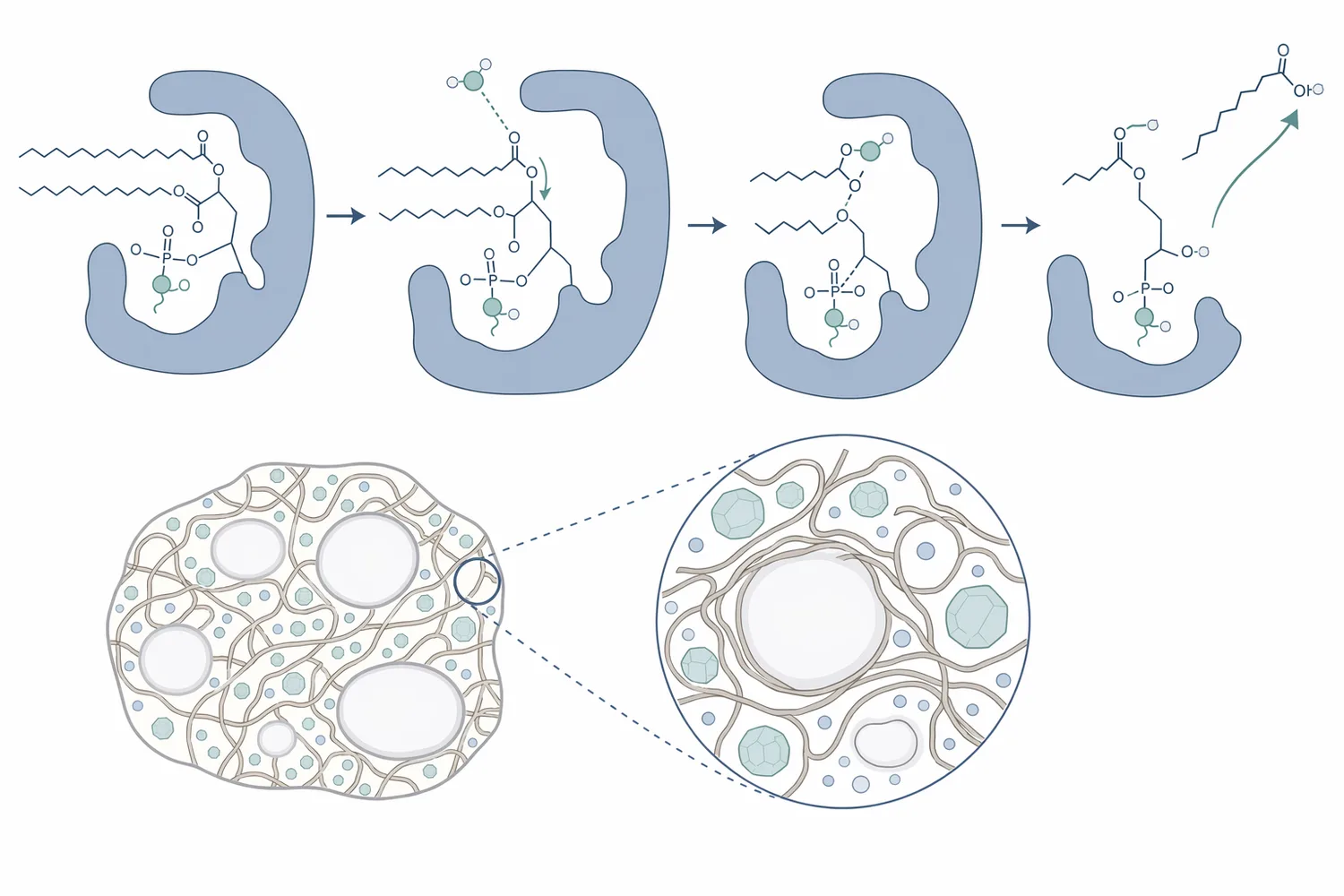
Phospholipids help organize these interfaces because one part of the molecule is compatible with water-rich dough phases and another part is compatible with lipid-rich or air-adjacent phases. Phospholipase changes these molecules enzymatically, typically increasing the concentration of modified polar lipids that can migrate to interfaces and lower interfacial tension. In bakery language, this supports emulsification and gas-cell stabilization rather than acting directly as a gluten-building ingredient.
The same interface concept explains why traditional emulsifiers such as DATEM, SSL, mono- and diglycerides, and lecithin have long been used in bread. Phospholipase does not make every formula emulsifier-free, but it can support the same broad functional space by converting existing lipid substrates into more active forms during dough development. Reviews of improvers and functional ingredients in whole wheat bread describe dough and bread quality as the result of interacting ingredients that influence gluten structure, gas retention, loaf volume, texture, and staling behavior [2].
This mechanism is especially relevant where gas retention is the limiting factor. In a weak dough, yeast may produce sufficient gas, but the dough cannot retain it. In that case, more fermentation is not the answer; the structure around the gas cells must be improved. Lipid-modifying enzymes address that structural side of bread-making.
A stronger dough is not simply a tougher dough. In bread production, useful dough strength means the dough can stretch, hold gas, tolerate handling, and recover from mechanical stress without tearing or collapsing. Phospholipase supports this by improving the behavior of gas-cell films and the interaction between gluten, starch, water, and lipids.
When the dough network holds together more effectively, it can better withstand dividing, rounding, moulding, panning, proofing, and oven transfer. This matters in commercial production because dough is exposed to repeated mechanical stress before it becomes bread. Reviews of hydrolytic enzymes in wheat dough describe how different enzyme classes alter proteins, starch, arabinoxylans, and lipids, producing direct and indirect effects on dough rheology and bread quality [3].
Phospholipase is most relevant where the desired direction is improved tolerance and gas retention rather than gluten relaxation. For example, protease is often associated with extensibility and softening in selected products, while phospholipase-type action is associated with interface stabilization and dough strengthening. That difference matters because using the wrong enzyme category can push dough in the opposite direction from the intended process effect.
Bread volume depends on two linked events: gas must be produced, and gas must be retained. Amylase systems can help ensure fermentable sugar availability and crust color, while yeast drives carbon dioxide production. Phospholipase contributes mainly to the retention side by improving the stability of the gas-cell structure.
During proofing, stabilized bubbles are less likely to merge into larger weak pockets or rupture. During early baking, those bubbles expand as gas warms and water vapor pressure rises. If the dough structure remains elastic and coherent long enough, the loaf can achieve better oven spring before heat sets the final crumb. Baking lipases are specifically associated with enhancing gas bubble stability during fermentation, strengthening the dough network, and improving loaf volume .
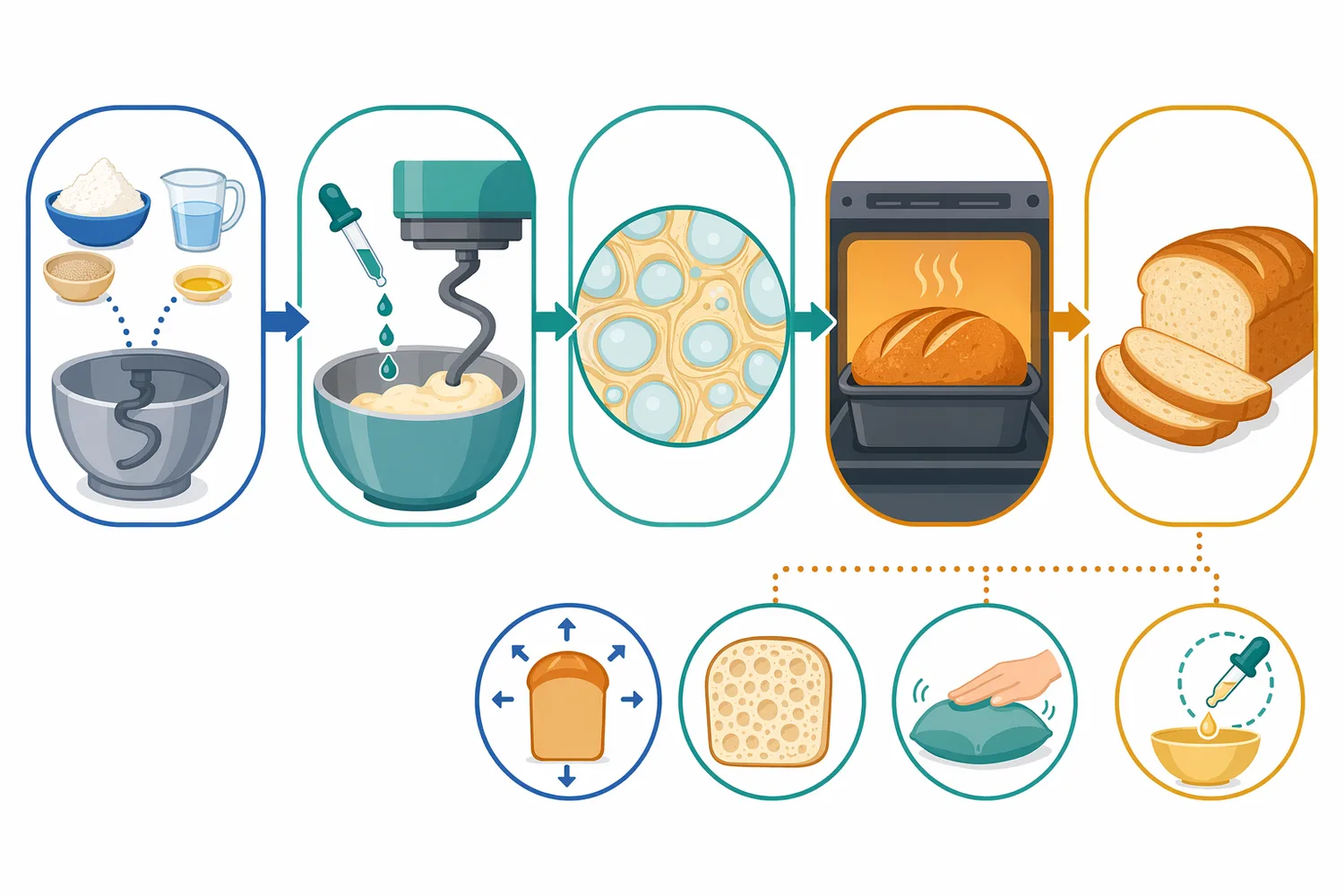
The effect is formula-dependent. A dough with very poor gluten quality may still need broader strengthening support, while a highly oxidized or overly tight dough may not benefit from additional strengthening in the same way. Phospholipase is therefore best viewed as a functional part of a balanced bread improver approach, not as a correction for every possible flour or process issue.
Crumb quality reflects what happened to gas cells throughout mixing, proofing, and baking. If gas cells were stable and evenly distributed, the crumb tends to be finer and more uniform. If bubbles coalesced, collapsed, or migrated unevenly, the crumb may show large holes, streaks, weak sidewalls, or irregular texture.
By increasing the surface activity of lipid materials inside the dough, phospholipase can help maintain smaller, more stable gas cells. The result can be a crumb structure that looks more consistent and slices more cleanly, particularly in pan bread, sandwich bread, buns, and rolls where uniformity is commercially important. Industrial lipase literature for baking describes improved crumb uniformity as part of the benefit profile of lipid modification in wheat flour doughs .
This is different from anti-staling softness, although the two can overlap in sensory perception. A finer, more uniform crumb often feels softer and more resilient because the cell walls are distributed more evenly. However, for long-term softness retention driven by starch retrogradation, maltogenic amylase is usually the more directly targeted enzyme class.
Many bread formulas use emulsifiers for dough strength, volume, softness, or crumb control. Phospholipase can support formulas that aim to reduce reliance on added emulsifiers because it generates functionality from lipid substrates already present in the system. This is a practical reason lipid-modifying enzymes are attractive in cleaner-label or simpler-label reformulation work.
The mechanism is not “enzyme replaces emulsifier” in a universal one-to-one sense. Traditional emulsifiers are added in known chemical forms and act immediately once dispersed. Phospholipase acts during the moist dough phase and depends on available lipid substrate, dough hydration, mixing, time, and process conditions. Bakery enzyme suppliers describe lipase-based solutions as helping reduce reliance on emulsifiers while maintaining bread volume and crumb structure, but the extent of replacement is product- and process-specific.
For some bread systems, phospholipase may allow a meaningful reduction in conventional emulsifiers. In others, it may be more valuable for improving tolerance and crumb quality while existing emulsifiers remain part of the formula. The benefit is therefore best judged by the finished bread target rather than by assuming a universal replacement rule.
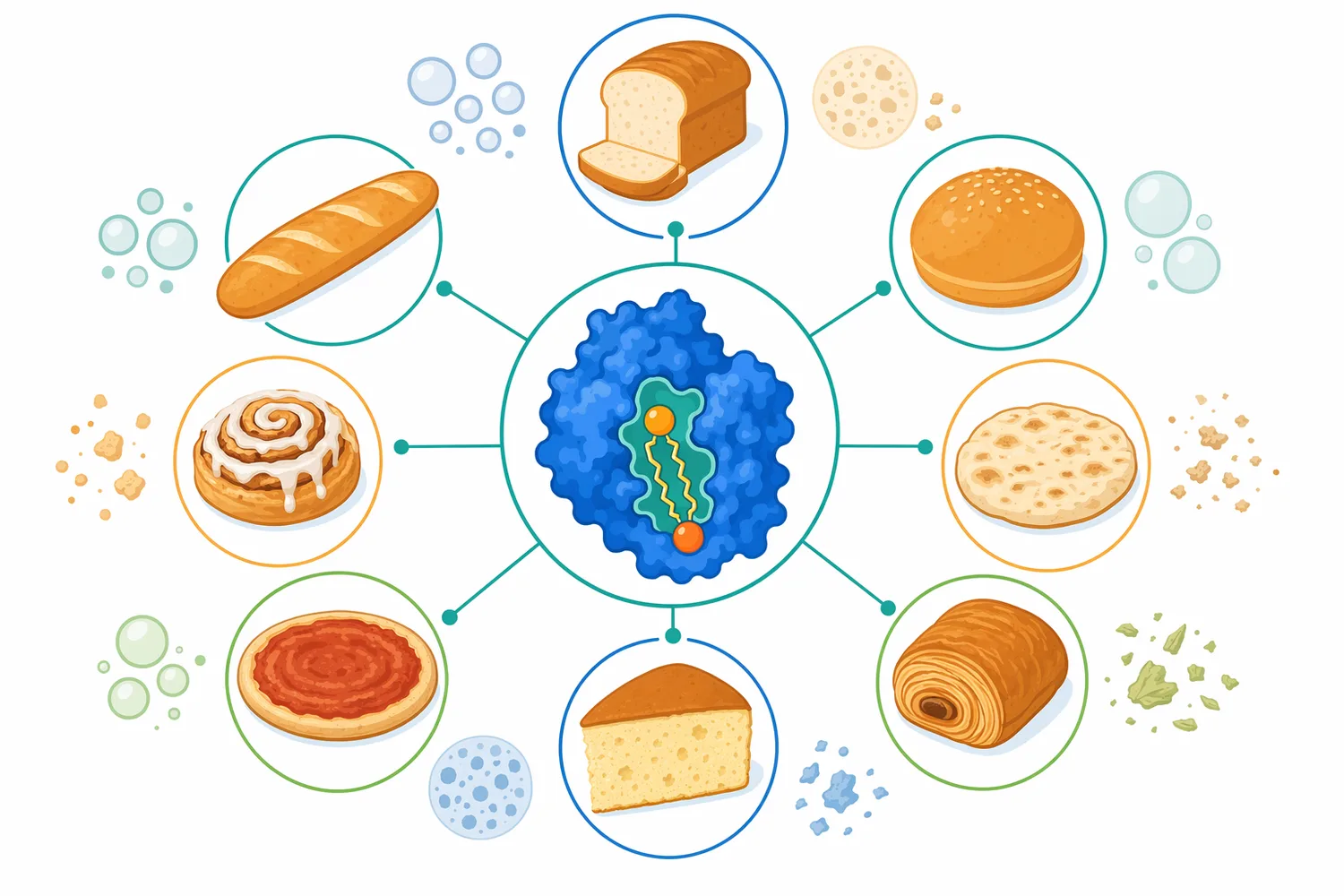
Phospholipase is one enzyme category within a broader bakery enzyme toolkit. Each enzyme class changes a different substrate, so the effects are not interchangeable. A useful way to understand phospholipase is to compare it with the enzymes more commonly discussed in bread improver systems.
| Enzyme category | Main substrate in dough | What changes physically | Typical bread-making contribution |
|---|---|---|---|
| Phospholipase / lipase | Flour lipids, phospholipids, added lipid substrates | Produces more surface-active lipid species; improves gas-cell interface stability | Dough strengthening, gas retention, loaf volume, crumb uniformity |
| Alpha-amylase | Damaged starch and gelatinizing starch fractions | Releases smaller starch fragments and fermentable sugars | Fermentation support, crust color, volume contribution |
| Maltogenic amylase | Starch during baking and cooling | Modifies starch behavior associated with firming | Softness retention and anti-staling support |
| Xylanase / hemicellulase | Arabinoxylans and hemicellulose fractions | Changes water distribution and cell-wall polysaccharide behavior | Dough handling, gas retention, volume, reduced stickiness in some systems |
| Glucose oxidase | Glucose, with oxygen participation | Promotes oxidative strengthening pathways | Dough strength and stability |
| Protease | Gluten proteins | Reduces protein network resistance and increases extensibility | Dough relaxation for selected breads, biscuits, crackers, and extensible doughs |
This comparison shows why phospholipase is not a general-purpose “more enzyme” addition. Its value lies in lipid-interface engineering. Reviews of baking enzymes describe amylases, proteases, lipases, oxidases, xylanases, and cellulases as distinct tools that modify starch, protein, lipid, and fiber components to alter dough development, texture, machinability, and shelf life [1].
Enzyme combinations can be powerful because bread dough is not controlled by one substrate alone. For example, xylanase can change water distribution and arabinoxylan behavior, amylase can support fermentable sugar supply, and phospholipase can improve gas-cell stability. A 2024 study on combined α-amylase, xylanase, and cellulase reported that enzyme combinations can improve dough properties and bread quality, illustrating the broader principle that different enzyme activities can work through complementary substrate effects [4].
At the same time, more enzyme activity is not automatically better. If a dough becomes too extensible, too sticky, too weak, or too tight, bread quality can decline. The practical aim is balance: sufficient dough strength and gas retention without losing machinability or eating quality.
Phospholipase is especially relevant in bread types where volume, crumb regularity, and slice performance are important. Pan bread and sandwich bread depend on controlled oven spring and a fine, even crumb. A dough that retains gas evenly during proofing and baking is more likely to produce slices with consistent cell structure and fewer large voids.
In these products, phospholipase can support a stable dough foam. The enzyme acts before the crumb is set: during mixing, bulk fermentation or resting, intermediate proofing, final proof, and the early stage of baking. Once baking heat denatures the enzyme and fixes the crumb structure, the quality effect is already built into the loaf architecture.
Whole wheat and high-fiber versions can be more challenging because bran particles, fiber, and non-starch polysaccharides can interrupt the gluten network and compete for water. A review of whole wheat bread improvers notes that functional ingredients are often used to address the negative effects of bran and fiber on dough properties, loaf volume, and bread texture [2]. In those systems, phospholipase may be one part of a wider improver strategy rather than the only functional tool.
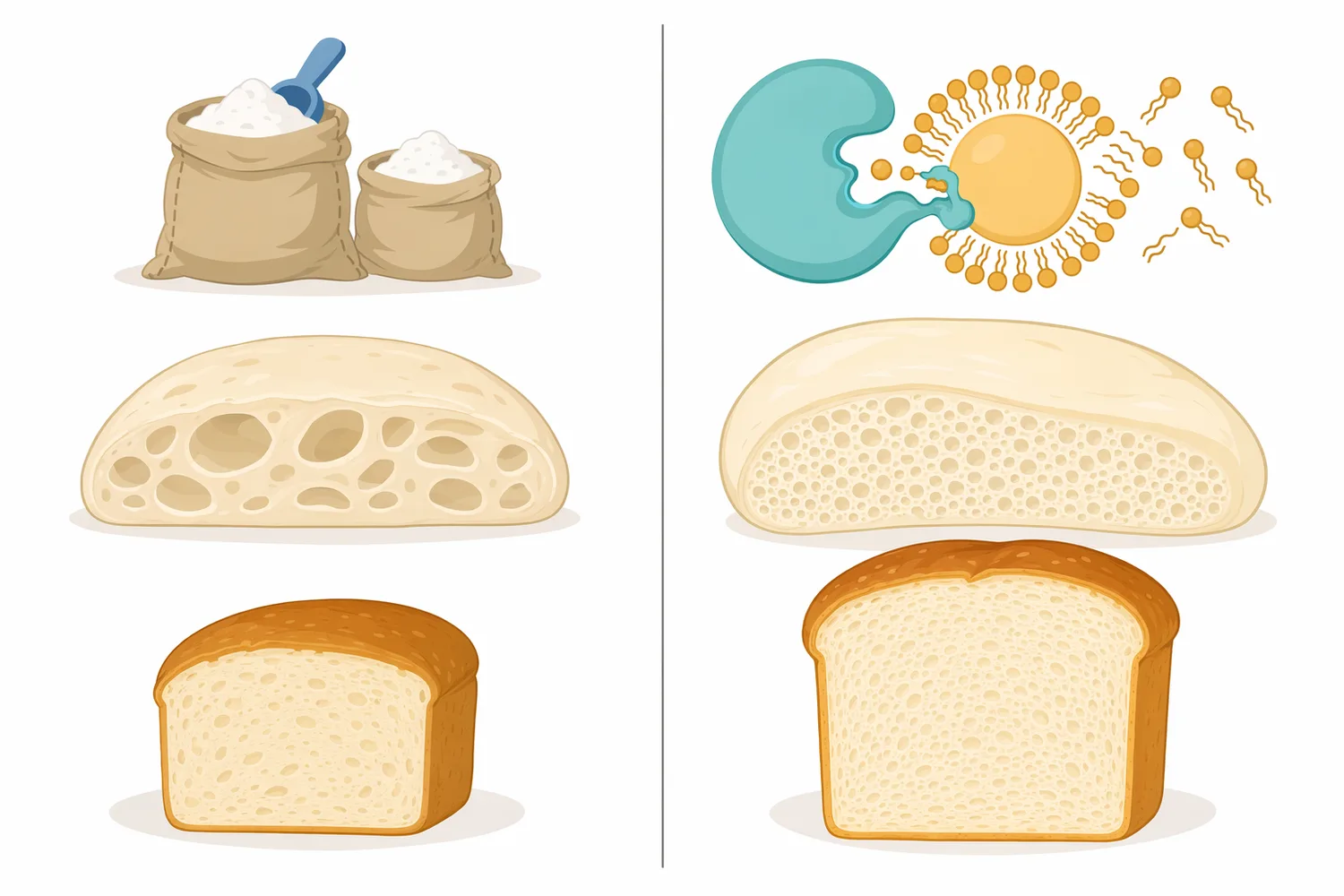
Buns and rolls require dough that can expand well, maintain shape, and produce a soft, appealing bite. Enriched formulas may contain sugar, fat, dairy ingredients, egg ingredients, or emulsifiers, all of which change hydration, gluten development, and lipid behavior. Phospholipase can be useful where lipid-interface performance and gas retention influence the final shape and crumb.
In enriched dough, fat can lubricate the structure and tenderize the crumb, but it can also interfere with gluten hydration and gas-cell wall strength if the system is not balanced. Phospholipase may improve how lipid materials are distributed at interfaces, helping the dough hold gas while still allowing the soft eating quality expected in buns and rolls. Baking enzyme literature consistently treats lipases as texture-refining and emulsification-related tools within dough systems [1].
For hamburger buns, hot dog buns, sweet rolls, and similar products, the value is often seen in a combination of improved volume, more uniform crumb, and better resilience after slicing or compression. These are structural effects, not flavor-generation effects.
Phospholipase-type functionality can also be relevant beyond conventional baked pan bread where gas-cell stability and dough rheology are important. In steamed bread enriched with potato pulp, research on emulsifiers and enzymes showed that such functional additions influence dough rheological properties and quality characteristics, reinforcing the idea that dough structure can be adjusted through enzyme and emulsifier systems [5].
Steamed bread differs from baked bread because heat transfer, crust formation, and moisture conditions are different. However, the underlying need for a stable gas-cell network remains. A phospholipase improver may therefore be relevant where dough strength, uniform expansion, and crumb texture are the main quality targets.
Specialty wheat products, multigrain breads, and formulas with vegetable powders or legume ingredients may also benefit from improved gas retention, although these systems introduce additional variables. For example, alternative plant ingredients can dilute gluten or change water absorption, so phospholipase may need to work alongside other formulation tools to maintain structure.
Phospholipase is primarily discussed here as a wheat bread improver because wheat gluten provides the main elastic network that traps gas. In gluten-free bread, structure is built differently, often through starch gels, hydrocolloids, proteins from non-wheat sources, sourdough fermentation, and emulsification systems. Sourdough studies in rice-based gluten-free bread show that fermentation strategies can improve quality, but the structural challenge is fundamentally different from wheat dough [6].
In gluten-free systems, lipid modification may still influence emulsification and gas-cell stability, but it cannot replace the unique elastic properties of gluten. For that reason, phospholipase should be considered a structure-supporting tool rather than a stand-alone solution for gluten-free bread architecture.
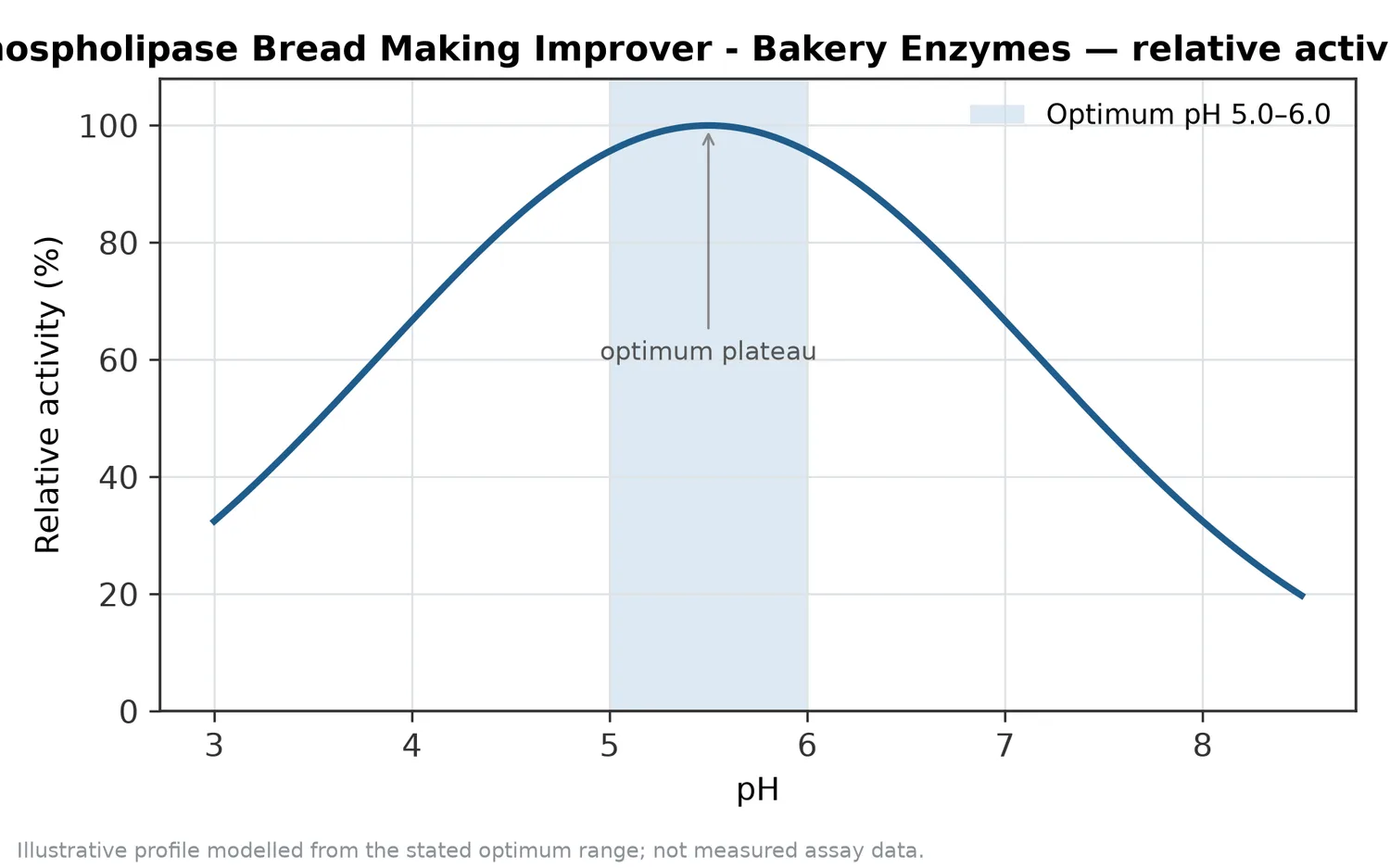
Phospholipase begins to matter when flour, water, and other ingredients are mixed and the dough becomes hydrated. Hydration allows enzyme movement, exposes lipid substrates, and creates the mechanical conditions where air is incorporated. The enzyme does not need the finished loaf environment; it needs the moist dough phase where substrates and interfaces are forming.
As mixing develops the gluten network, lipid materials are redistributed. Some lipids associate with gluten proteins, some interact with starch surfaces, and some migrate toward air-water interfaces around incorporated gas cells. Phospholipase modifies susceptible phospholipids in this dynamic environment, increasing the share of molecules that can stabilize those interfaces more effectively.
This is a physical-chemical change, not simply a “strength additive” effect. The dough becomes better organized at microscopic interfaces. That organization can translate into better macroscopic handling because the gas-cell walls are less prone to rupture under mechanical stress.
During fermentation, gas bubbles expand and test the strength of the surrounding dough films. If those films cannot stretch evenly, they rupture or merge. If they are stabilized, the dough can expand with a more uniform internal structure.
Phospholipase supports this stage by improving the emulsifying behavior of lipid components around bubbles. Surface-active modified lipids help reduce interfacial instability, making it easier for gas cells to remain separate rather than coalescing into large voids. Industrial descriptions of baking lipases connect this exact function to better gas retention and improved loaf volume .
The benefit can be especially noticeable in processes where proofing tolerance is important. A dough that holds gas more reliably has a wider margin before collapse, although it still depends on correct fermentation control and dough strength.
In the oven, yeast activity initially increases and then stops as temperature rises. Gas expands, water vapor forms, starch gelatinizes, and gluten proteins denature. The critical window for phospholipase-related performance is before the final structure sets.
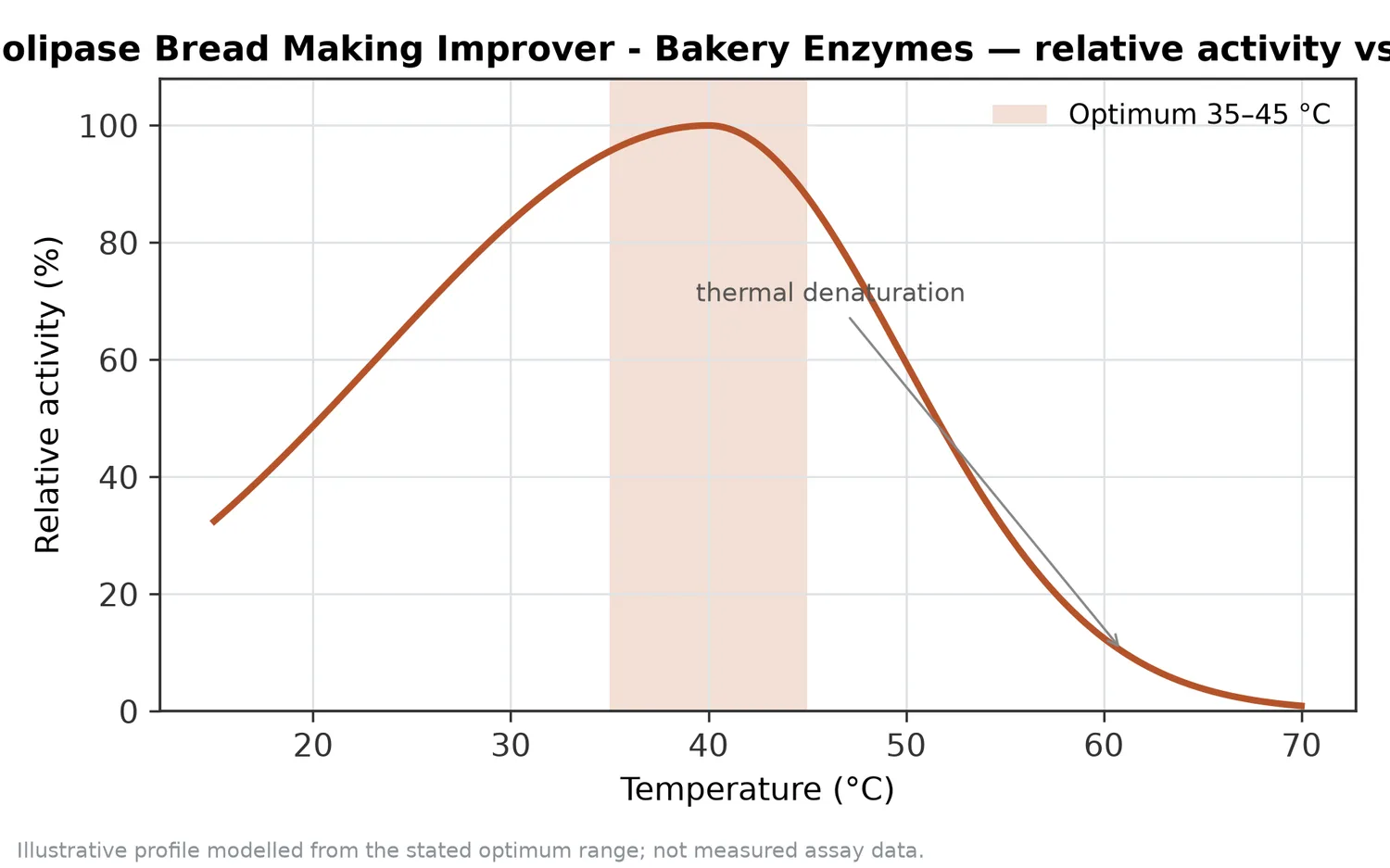
If the dough films remain stable during this early heating phase, the loaf can expand more evenly. If they fail too early, the loaf may show poor volume, sidewall weakness, coarse crumb, or collapse. By the time the crumb is fully set, the enzyme itself is no longer the active focus; the important result is the structure created before heat inactivation.
This explains why phospholipase is often associated with oven spring and crumb uniformity rather than with post-bake enzymatic activity. The enzyme’s functional contribution is made during dough development and early baking.
The evidence for phospholipase bread improvers sits within a larger body of research on bakery enzymes, improvers, and functional ingredients. Modern reviews describe enzymes as important tools for improving dough development, bread quality, texture, and shelf life, while also emphasizing that effects depend on the enzyme type and the food matrix [1].
Hydrolytic enzyme reviews provide the mechanistic basis: enzymes can act directly on starch, protein, lipid, or cell-wall substrates, and those direct changes can indirectly reshape gluten behavior, dough viscosity, gas retention, and crumb structure [3]. Phospholipase fits this model because it changes lipid chemistry, and the downstream effect is seen in dough structure and gas-cell stability.
Studies on other bakery enzyme combinations also support the broader principle that targeted substrate modification improves bread quality. Combined α-amylase, xylanase, and cellulase activities have been reported to improve dough properties and bread quality, largely by changing starch- and fiber-related behavior rather than lipid behavior [4]. Xylanase and cellulase from Trichoderma afroharzianum have also been studied for wheat bread quality enhancement, again showing that enzyme-driven changes in dough components can translate into finished bread improvements [7].
Research on emulsifiers and enzymes in steamed bread enriched with potato pulp is particularly relevant conceptually because it connects enzyme and emulsifier systems with dough rheology and finished product quality [5]. Phospholipase bridges these two areas: it is an enzyme, but its practical effect is closely related to emulsification and interface stability.
The most specific support for the product category comes from baking lipase descriptions that identify lipid modification as a route to improved gas bubble stability, dough strength, loaf volume, and crumb uniformity . Phospholipase is a more specific member of the lipid-modifying enzyme family, so the lipase evidence is directly relevant while still allowing for differences between individual enzyme preparations and bread systems.
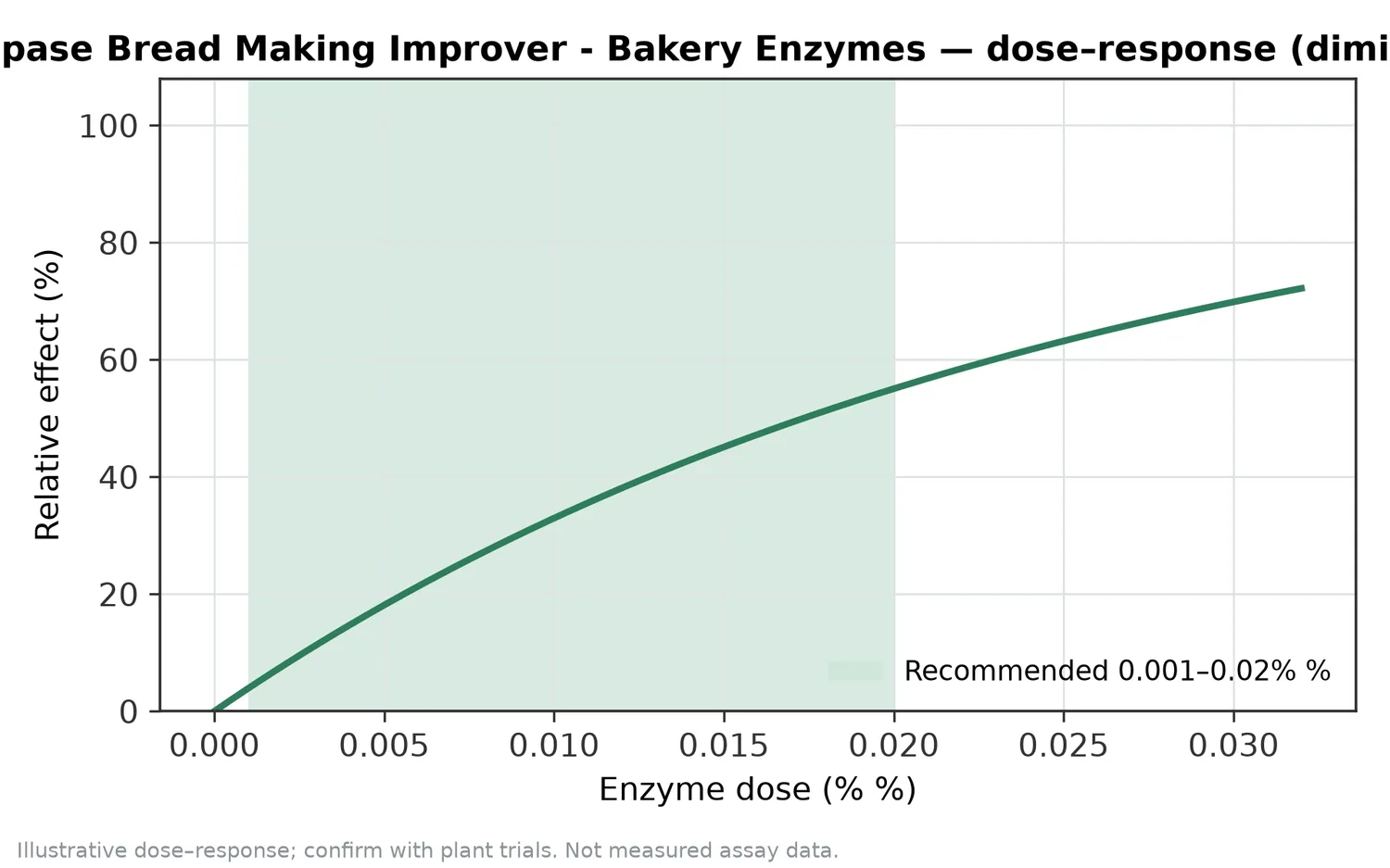
Phospholipase performance is shaped by the dough system in which it is used. Wheat flour quality is a major factor because protein quantity, protein quality, damaged starch, endogenous enzyme activity, and minor lipid composition all influence dough behavior. Gluten strength itself varies by cultivar and protein network characteristics, and research on wheat cultivars shows that gluten strength is connected to complex regulatory and compositional differences [8].
The starch-gluten relationship also matters. Gluten proteins do not act in isolation; they interact with starch granules and the hydrated dough matrix. Research on wheat starch and gluten proteins shows that starch interactions can affect gluten aggregation behavior and digestibility, highlighting how dough structure depends on component interactions rather than on gluten alone [9].
Added ingredients can shift the outcome. Sugar affects water availability and fermentation dynamics. Fat tenderizes and lubricates the dough but also changes lipid interfaces. Milk solids, egg ingredients, fibers, seeds, legume flours, or root and tuber ingredients can dilute gluten, bind water, or add their own emulsifying materials. Studies on non-wheat additions such as cowpea in bread show that nutritional enrichment can influence acceptability and quality, illustrating the practical trade-off between formulation goals and bread performance [10].
Frozen dough and delayed processing create another set of structural stresses. Ice formation, water redistribution, and freeze-thaw damage can weaken gluten and gas retention. Research on plastic fats in frozen dough highlights the importance of interactions among water, gluten, and starch in maintaining frozen dough quality [11]. In such systems, phospholipase may support interface stability, but it remains only one part of the total structural strategy.
A balanced bread improver system often addresses several limitations at once: gas production, gas retention, dough strength, extensibility, water distribution, crumb softness, and process tolerance. Phospholipase contributes most directly to lipid modification and gas-cell stability.
Where the main weakness is insufficient fermentable sugar, an amylase-type function is more directly relevant. Where dough is overly elastic and difficult to sheet or relax, protease may be more relevant. Where bran, fiber, or arabinoxylans are creating water-management and handling problems, xylanase or hemicellulase may play a larger role. Where long softness is the dominant target, maltogenic amylase is often central.
Phospholipase becomes especially attractive when the product goal involves dough strength, loaf volume, crumb regularity, or reduced reliance on conventional emulsifier systems. It is also valuable when a formula already has enough gas production but loses volume because the dough cannot retain that gas efficiently. This is the structural gap lipid-modifying enzymes are designed to address.
Enzyme interactions should be understood practically. A dough strengthened by phospholipase may respond differently when xylanase also changes water distribution, or when oxidizing systems further tighten the gluten network. Reviews of functional ingredients in bread stress that dough quality emerges from interacting components, not isolated ingredients [2].
Enzymes.bio supplies Phospholipase Bread Making Improver for buyers who want a bakery enzyme ingredient available by direct online purchase. The product is sold by the 1 kg unit: the buyer adds the item to the online order, pays online, and the order is processed and shipped.
A Certificate of Analysis and Safety Data Sheet are included with the order. These documents support routine receiving, handling, and internal documentation for the delivered product without changing the practical role of the ingredient: it is a lipid-modifying bakery enzyme intended for bread and dough systems.
As with all enzyme ingredients, responsible handling matters. Enzyme powders should be handled according to the Safety Data Sheet and applicable workplace procedures, particularly because airborne enzyme dust can be sensitizing if mishandled. Food additive and processing-aid overviews note that enzymes are widely used in bread-making, but their use should fit the relevant food-processing and regulatory context [1].
Phospholipase Bread Making Improver is most useful where bread quality depends on stronger dough structure, more reliable gas retention, and a finer, more uniform crumb. Its mechanism is concrete: it modifies phospholipid substrates in the hydrated dough, increasing surface-active lipid species that stabilize gas-cell interfaces and support the gluten-starch-lipid matrix during fermentation and early baking.
That mechanism explains the main quality effects associated with lipid-modifying bakery enzymes: improved dough tolerance, better oven spring, increased loaf volume, more uniform crumb, and potential support for emulsifier reduction. Lipase-type bakery enzymes are specifically described as improving gas bubble stability, strengthening the dough network, and improving loaf volume and crumb structure .
The best way to understand phospholipase is not as a universal bread improver, but as a targeted tool for the lipid-interface side of dough performance. In a well-managed bread process, it can help the dough hold onto the gas already generated by fermentation, allowing the loaf to expand more evenly and set into a more consistent structure. For buyers looking for a directly available 1 kg bakery enzyme product, Enzymes.bio provides Phospholipase Bread Making Improver online with order documentation included.
Sold by the 1 kg unit, in stock and ready to ship. Order directly on our store — pay online and we process your order. A Certificate of Analysis and Safety Data Sheet are included with every order.
Buy Phospholipase Bread Making Improver - Bakery Enzymes →Numbered in order of first citation. Open-access sources, each verified reachable at publication; citation numbers in the text link here.