
Direct answer: Phospholipase enzymes improve bread dough by modifying phospholipids naturally present in flour or supplied by ingredients such as lecithin, egg, dairy, and fats. This lipid conversion forms more surface-active molecules, including lysophospholipids in phospholipase A-type reactions, which can strengthen gas-cell films, support loaf volume, improve crumb uniformity, and contribute to softer eating quality when the formula contains suitable lipid substrates [1]. Enzymes.bio supplies Phospholipase Enzymes as Bread Making Improver directly online by the 1 kg unit; after online purchase, the order is processed and shipped, with a Certificate of Analysis and Safety Data Sheet included with the order .
Phospholipase Enzymes as Bread Making Improver is used in bakery formulations where the performance target is not simply fermentation, but better use of the dough’s existing structure: gas retention, dough tolerance, crumb texture, and finished-bread softness. In a mixed dough, phospholipids sit at boundaries between water, gluten proteins, starch granules, fat droplets, and gas cells. Phospholipase changes these boundary-active lipids into forms that behave more like functional emulsifying agents inside the dough system, which is why the enzyme is relevant to bread quality rather than only to lipid processing [2].
The key concept is interfacial functionality. Bread dough is a hydrated, aerated, viscoelastic mass: it must stretch during fermentation, retain carbon dioxide, survive mechanical handling, and then set during baking. Phospholipase can improve this process by changing how polar lipids orient at gas-cell and fat-water interfaces. The effect is physical as well as chemical: the modified lipids can help stabilize thin dough films around gas bubbles, reduce coalescence of gas cells, and support a finer crumb structure when the rest of the formulation and process are in balance [1].
Enzymes.bio supplies this product as an online B2B bakery enzyme ingredient, sold by the 1 kg unit for buyers who want to purchase directly rather than begin a custom development project. Enzymes.bio is a supplier, not a manufacturer or laboratory, and the product is presented for practical bakery use with documentation accompanying the shipped order .
Wheat dough quality is usually discussed in terms of gluten, starch, yeast, salt, water, and mixing energy, but lipids are also important. Flour lipids, added fats, egg-derived phospholipids, milk components, lecithin, and oilseed ingredients can all contribute polar lipids that locate themselves at interfaces. These interfaces are where dough strength, bubble stability, and crumb fineness are decided during mixing, proofing, oven spring, and early baking [2].
A phospholipid molecule contains a water-attracting head group and one or more fatty-acid chains that prefer a non-water environment. Because of this dual character, phospholipids naturally migrate to boundaries: the surface of gas bubbles, the surface of dispersed fat, and contact zones between starch, protein, and water. When phospholipase acts on those molecules, it changes their shape, polarity, and packing behavior, which changes how they support or disturb the dough films that hold fermentation gas [1].
For phospholipase A2-type reactions, the enzyme hydrolyzes the ester bond at the sn-2 position of a phospholipid, releasing a free fatty acid and leaving a lysophospholipid. This is not just a minor chemical edit. A lysophospholipid has a different molecular geometry from its parent phospholipid, so it can pack differently at an interface and interact differently with starch and protein surfaces. In bakery terms, that molecular change can translate into improved gas-cell stability, smoother dough handling, better loaf symmetry, and a softer, more uniform crumb in responsive formulas [1].
Other phospholipase families act at different bonds within phospholipid molecules. Phospholipase D, for example, cleaves the phosphodiester linkage to generate phosphatidic acid and the corresponding head-group alcohol, and phospholipase C-type enzymes release diacylglycerol from phospholipid substrates. These mechanisms are chemically different, but the bakery logic is similar: changing phospholipid structure changes how lipids behave in a hydrated, aerated dough matrix [3].
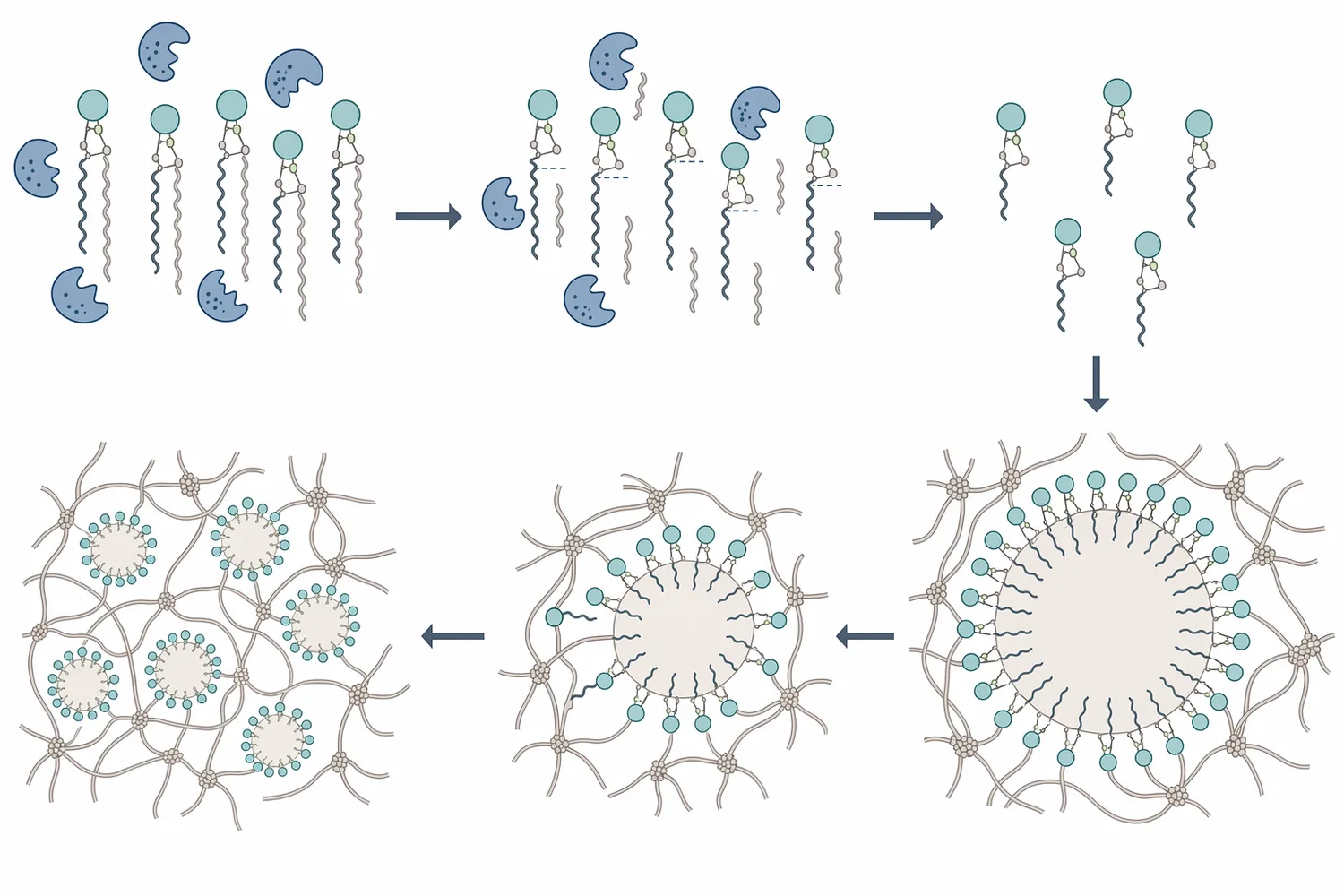
During mixing, flour particles hydrate, gluten proteins develop a network, starch granules disperse, and air is incorporated into the dough. These air cells later receive carbon dioxide from yeast fermentation. If the films around the cells are weak, bubbles merge or rupture; if they are too rigid, expansion is restricted. Phospholipase helps by adjusting the lipid layer and lipid-protein interactions at these gas-cell interfaces, making the dough film more capable of stretching without immediate collapse [1].
This mechanism is different from amylase. Amylase acts mainly on starch, generating smaller carbohydrates that can affect yeast fermentation, crust color, and crumb softness. Phospholipase acts mainly on phospholipid substrates, so its most direct contribution is interface stabilization and emulsifier-like behavior within the dough. That distinction matters because a phospholipase bread improver should not be viewed as a sugar-generating enzyme or a substitute for fermentation control [2].
The enzyme’s effect also differs from ordinary lipase. Lipases hydrolyze triglycerides into partial glycerides and free fatty acids, which can influence flavor, dough lubrication, and lipid functionality. Phospholipases target phospholipids, which are especially important at interfaces because of their polar head groups. In bread formulas that contain lecithin, egg, dairy, whole-grain fractions, or naturally higher polar-lipid content, phospholipase has more relevant substrate to modify [4].
The result is best understood as a change in dough architecture. A responsive dough may show better tolerance through mixing and makeup, improved proof stability, more controlled oven spring, increased loaf volume, and a crumb with smaller, more evenly distributed cells. These outcomes are not caused by the enzyme “adding strength” in a simple mechanical sense; they arise because modified lipids change how the dough’s protein-starch-water-gas interfaces behave under stress [1].
Bread improver systems often combine several enzyme functions because bread quality is controlled by multiple substrates at once. Starch, arabinoxylans, proteins, triglycerides, and phospholipids each influence dough in a different way. Research across baking enzymes shows that enzyme combinations are widely used to adjust flour performance and finished-bread quality, rather than relying on a single activity for every problem [2].
| Enzyme type | Main substrate in dough | Primary functional change | Typical bread-quality contribution | How it differs from phospholipase |
|---|---|---|---|---|
| Phospholipase | Phospholipids from flour, lecithin, egg, dairy, or lipid-rich ingredients | Converts phospholipids into more surface-active lipid derivatives | Dough tolerance, gas-cell stability, loaf volume, crumb softness, emulsifier-like functionality | Acts directly on polar lipids at interfaces |
| Amylase | Starch and damaged starch | Produces smaller starch fragments and fermentable carbohydrates | Fermentation support, crust color, crumb softness, anti-firming contribution depending on type | Acts on starch, not lipid interfaces |
| Xylanase | Arabinoxylans and related hemicelluloses | Modifies water-binding and cell-wall polysaccharides | Improved dough handling, volume, crumb structure, especially in wheat and whole-grain systems | Acts on non-starch polysaccharides |
| β-glucanase | β-glucans in cereal materials | Reduces viscosity and modifies soluble fiber behavior | Useful in some whole-grain, oat, barley, rye, and sourdough-style systems | Targets cereal gums rather than phospholipids |
| Lipase | Triglycerides and related neutral lipids | Forms partial glycerides and fatty acids | Can affect dough lubrication, softness, aroma, and lipid functionality | Targets neutral fats more than phospholipids |
This comparison shows why phospholipase is valued as a bread making improver: it addresses a part of dough structure that starch- and fiber-acting enzymes do not directly control. Xylanase research in wholewheat bread, for example, focuses on arabinoxylan modification and its impact on dough and bread structure, while phospholipase targets the polar-lipid chemistry that governs interfacial behavior [5].
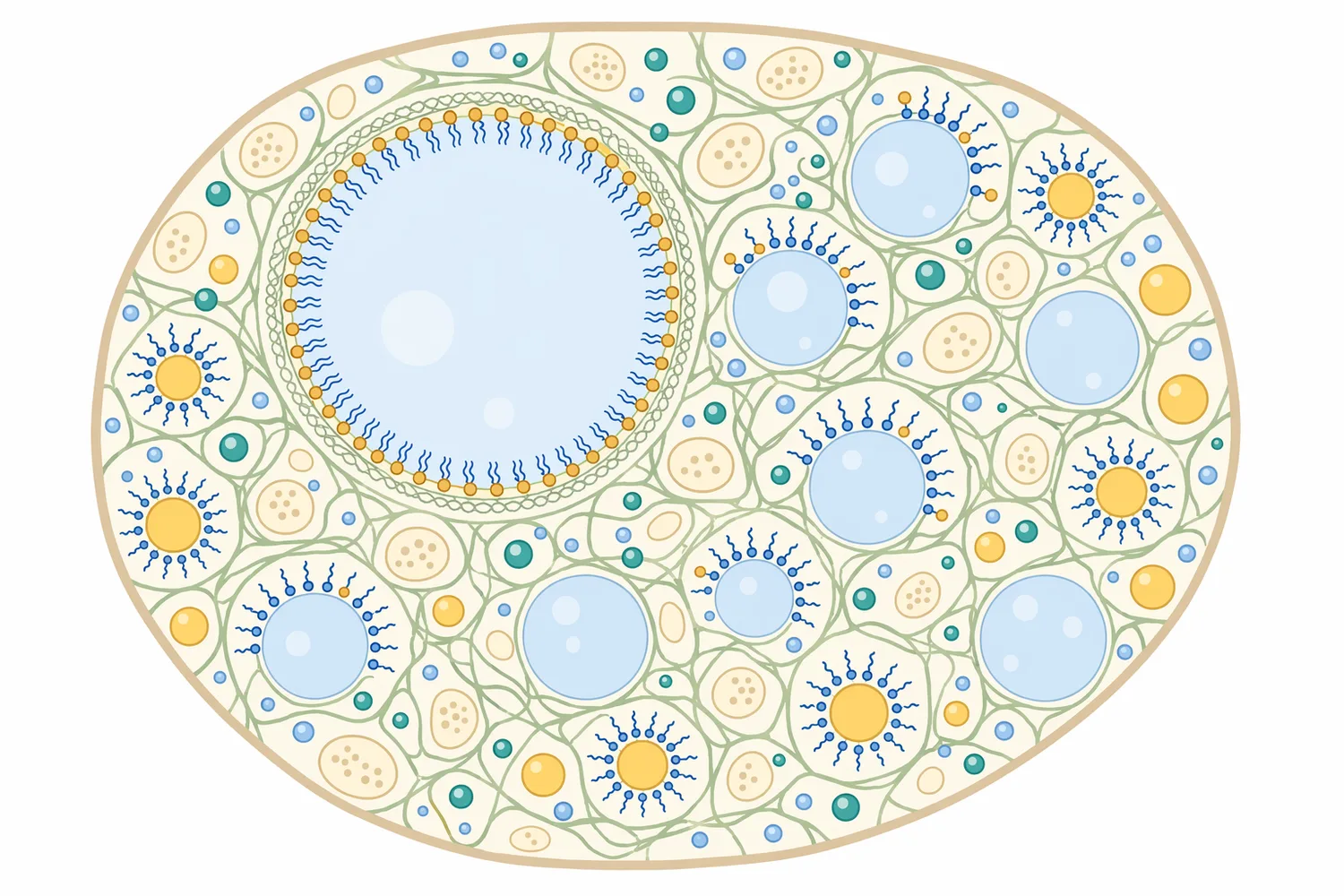
Dough handling problems often appear as stickiness, tearing, poor tolerance during makeup, inconsistent proof height, or irregular loaf shape. Many causes are possible, including flour variability, hydration imbalance, excessive mechanical stress, bran interference, or weak gluten quality. Phospholipase does not correct all of these causes, but it can improve how the dough structure manages air cells and dispersed lipids, which can make the dough feel more tolerant in processing [2].
The practical mechanism is the formation of more effective interfacial lipids. When lysophospholipids and related lipid products are formed from suitable phospholipid substrates, they can help align and stabilize surfaces inside the dough. This can reduce bubble coalescence and support a smoother distribution of gas cells during fermentation and early oven expansion. The bakery-visible result may be better shape control, more consistent crumb grain, and less collapse in formulas that respond well to lipid-interface modification [1].
Loaf volume depends on both gas production and gas retention. Yeast generates carbon dioxide, but the dough must hold that gas long enough for oven spring and crumb setting. Phospholipase can support the retention side of the equation by improving the stability of thin films around gas cells. This is especially important in pan bread, soft rolls, buns, and other products where volume and crumb evenness are commercial quality markers [2].
In a dough with suitable polar lipids, phospholipase-generated lipid products can strengthen or reorganize the surface layer around gas cells. A stronger interfacial film can expand more evenly during proofing and early baking, reducing the risk of large voids, weak sidewalls, or coarse crumb. The enzyme’s role is therefore not to make more gas, but to help the dough use fermentation gas more efficiently [1].
Crumb softness is influenced by starch gelatinization, moisture distribution, gluten structure, emulsifier function, fat level, and storage-related firming. Phospholipase contributes through lipid modification: the more surface-active products formed during dough processing can interact with starch and protein surfaces and help create a finer crumb structure. A finer, more uniform cell network often gives bread a softer bite and improved slicing behavior [2].
The effect is particularly relevant where the formula already contains phospholipid sources. Lecithin, egg ingredients, dairy components, and whole-grain fractions can all provide substrates that phospholipase may convert into more functional interfacial lipids. In such formulas, the enzyme helps unlock functionality from ingredients already present rather than acting as a conventional added emulsifier [1].
Bread firming during storage is not caused by one factor. Starch retrogradation, moisture migration, protein-starch interactions, and the formulation’s emulsifier system all matter. Phospholipase may contribute to freshness by improving the lipid environment around starch and protein components, but it should be understood as one part of a broader formulation approach rather than a stand-alone anti-staling solution [2].
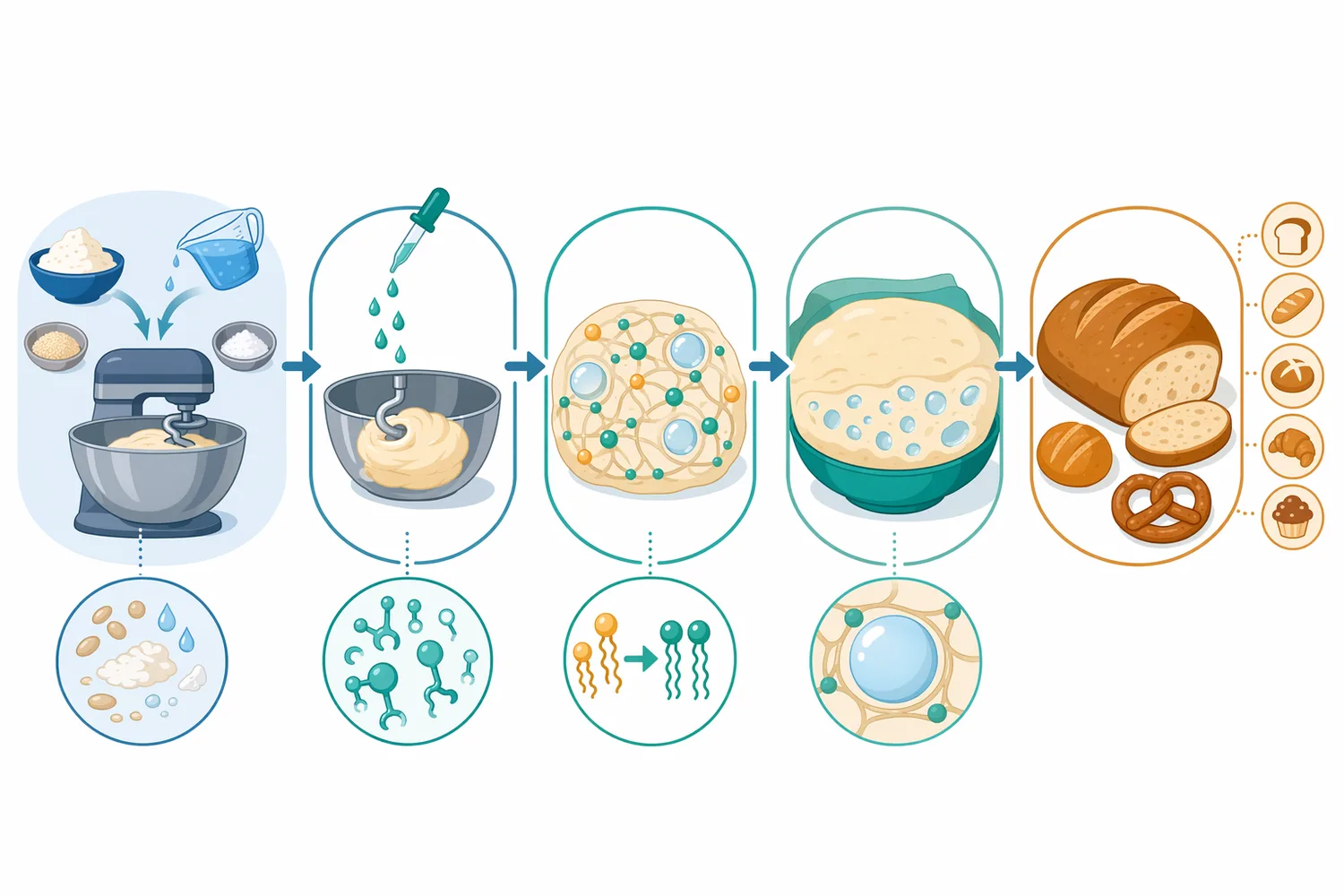
This is why phospholipase is often considered alongside enzymes such as amylases and xylanases. Amylases can affect starch breakdown and crumb softness, while xylanases can modify arabinoxylans that influence dough water distribution and gas retention. Phospholipase adds a complementary lipid-interface mechanism, which can help round out a bread improver system where softness, volume, and processing tolerance are all important [6].
Phospholipase is most relevant when the dough contains phospholipid substrates. Wheat flour contains native lipids, but the amount and composition vary with flour type and extraction rate. Whole-grain flours and richer flour fractions may contribute more lipid complexity, while formulas with lecithin, egg, dairy ingredients, or oilseed materials provide additional polar-lipid opportunities for enzymatic modification [2].
In formulas containing lecithin, phospholipase can change the functional balance of lecithin-derived phospholipids. Lecithin is already surface-active, but enzymatic conversion can create lipid species with different orientation, solubility, and packing behavior. This can alter how the dough handles gas-cell stabilization and how the crumb sets during baking. The effect depends on the complete formula, but the chemical reason is concrete: the enzyme changes the molecular structure of the lipid emulsifier system [1].
Egg-containing bakery formulas may also respond because egg yolk contributes phospholipids that are naturally emulsifying. In enriched doughs, buns, rolls, and soft breads, the combined presence of fat, sugar, proteins, and phospholipids creates many interfaces where phospholipase chemistry can matter. The enzyme can support softness and structure when the dough needs both extensibility and stability during proofing and oven spring [4].
Whole grain and high-fiber breads present a different challenge. Bran and fiber can interrupt gluten continuity, increase water demand, and reduce loaf volume. Enzymes such as xylanases are often studied for these systems because arabinoxylans and cell-wall materials strongly affect water distribution and dough behavior. Phospholipase can complement those approaches by working on the lipid-interface side of the structure rather than the fiber-polysaccharide side [5].
Pan bread relies on controlled expansion, symmetrical loaf shape, fine crumb, and softness over shelf life. Phospholipase is well matched to these goals because small improvements in gas-cell stability can visibly affect loaf height and crumb uniformity. In a typical pan-bread matrix, the enzyme acts during mixing, fermentation, proofing, and early heating, before the structure sets and the enzyme is inactivated by baking heat [2].
The most practical benefit is a stronger, more uniform internal foam. A pan bread dough must expand upward in a constrained tin, so uneven gas retention can lead to coarse crumb, weak corners, or poor slicing quality. By modifying phospholipids into more functional interfacial molecules, phospholipase can help support a more even gas-cell network and a softer finished crumb in suitable formulas [1].
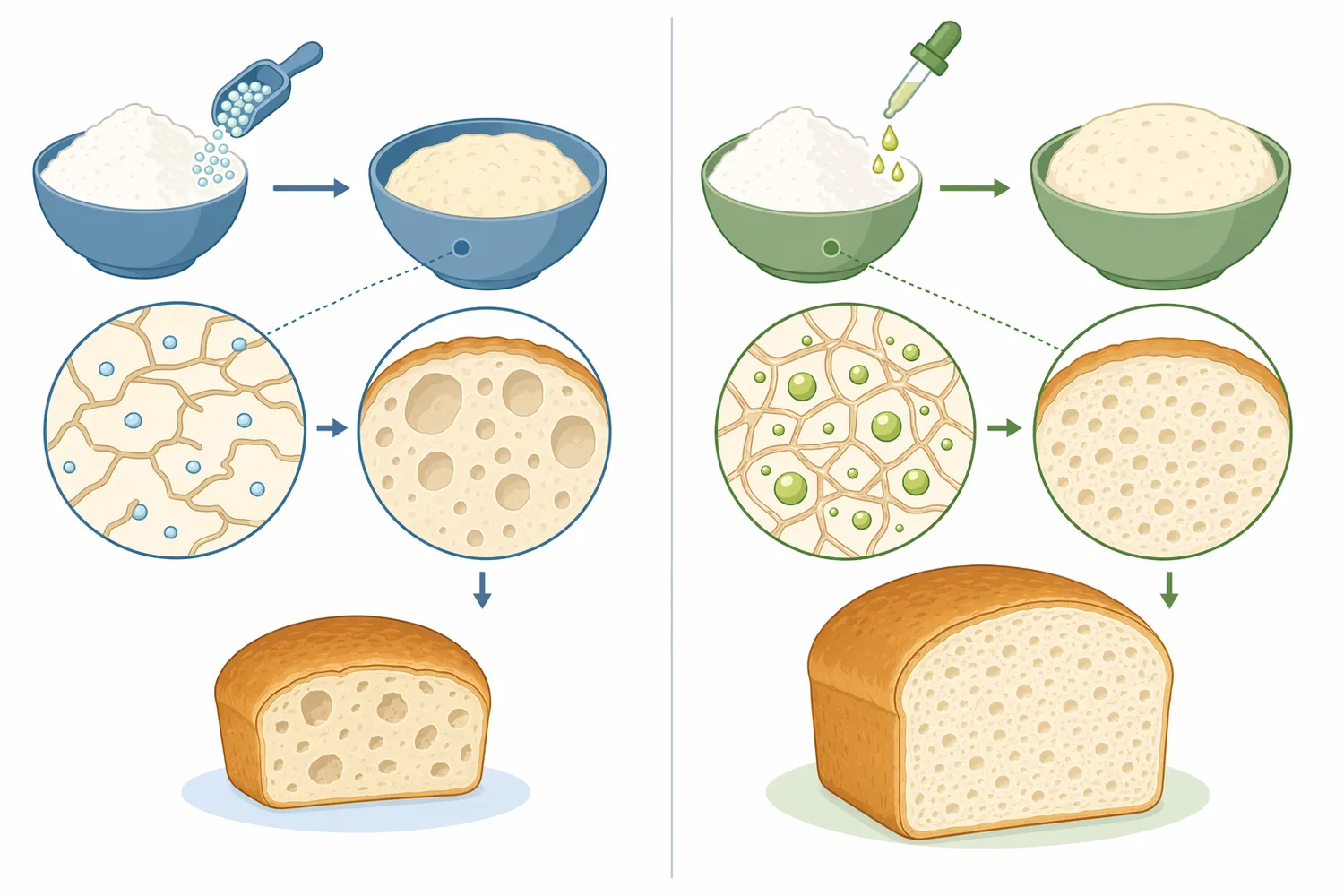
Hamburger buns, hot-dog rolls, dinner rolls, and other soft breads need a tender bite, good volume, and reliable performance through dividing, rounding, sheeting, moulding, and proofing. These products often contain fat, sugar, milk solids, egg, lecithin, or other enrichment ingredients, which can increase the relevance of lipid modification. Phospholipase can help improve the way these ingredients contribute to structure rather than acting only as flavor or richness components [4].
In soft breads, the desired texture is not simply “strong.” The dough must be extensible enough to expand but stable enough not to collapse. Phospholipase supports that balance through surface-active lipid products that help stabilize gas-cell films while maintaining a tender crumb. This mechanism is particularly useful where volume, softness, and crumb resilience must be achieved together [1].
Wholewheat and rye-wheat breads are more structurally complex than white pan bread. Bran, pentosans, soluble fibers, damaged starch, and variable water absorption can all reduce volume or make crumb texture denser. Studies on xylanase in wholewheat bread show that modifying cereal cell-wall polysaccharides can improve bread characteristics, highlighting the broader principle that targeted enzyme action can address specific substrate-related limitations [5].
Phospholipase plays a different role in these systems. It does not remove bran interference or directly break down arabinoxylans, but it can improve lipid functionality in formulas where whole-grain fractions bring additional polar lipids. In a rye-wheat or high-fiber dough, the best results usually come from complementary mechanisms: enzymes acting on fibers and starches help manage water and fermentability, while phospholipase supports lipid-interface stability [7].
Sourdough and mixed fermentation systems introduce organic acids, microbial metabolites, altered dough rheology, and changes in starch and protein behavior. Research on bacterial sourdough and enzymes in rye-wheat bread demonstrates that enzyme use can be part of practical bread-quality management in these more complex systems [7].
In sourdough-style formulas, phospholipase may be useful where dough strength, softness, and gas retention need support despite acidity, fiber, or flour variability. The enzyme’s lipid-interface mechanism remains the same, but the visible outcome depends on the balance between fermentation, dough development, and the substrate available for phospholipid conversion. It should therefore be viewed as a functional contributor within the bread system, not as a direct replacement for fermentation control [2].
Gluten-free bread lacks the gluten network that normally traps gas and gives wheat bread its elastic structure. These formulas often rely on starches, hydrocolloids, proteins, emulsifiers, egg, lecithin, and enzymes to build a workable foam-like matrix. Phospholipase can be relevant where phospholipid-containing ingredients are present, because modifying those lipids can help improve interfacial stability in a system that otherwise has limited natural gas retention [2].
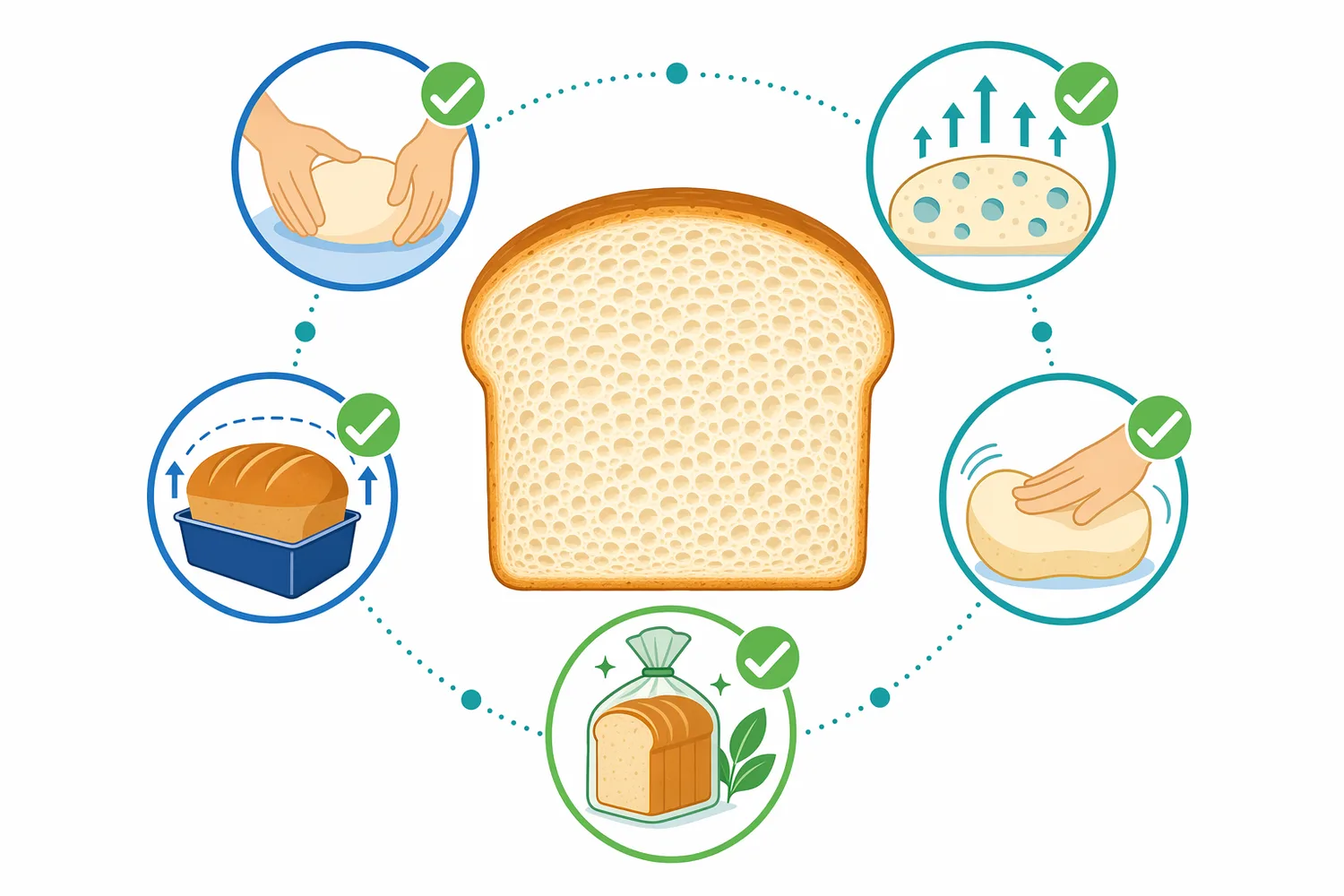
The role should be described carefully: phospholipase is not a gluten substitute. It cannot create the viscoelastic protein network of wheat dough. What it can do is help surface-active lipid components perform more effectively, which may support volume and crumb texture when combined with the right starch, protein, hydrocolloid, and process design [1].
The strongest evidence for phospholipase in bread improvement begins with the enzyme chemistry. Phospholipase A2-type enzymes hydrolyze phospholipids to form lysophospholipids and free fatty acids, and this reaction changes the physical behavior of lipids at water-lipid interfaces. Because bread dough contains exactly these kinds of hydrated lipid interfaces, the mechanism maps directly onto real dough structure [1].
A broader review of enzymes in bread making describes the importance of biotechnological enzymes in improving dough and bread characteristics. This supports the practical context in which phospholipase is used: modern bread improvers commonly rely on targeted enzymatic modification of flour components rather than only on chemical additives or mechanical changes [2].
Applied baking studies also show how different enzyme classes affect bread quality through distinct substrates. Xylanase research in wholewheat bread, for example, focuses on hemicellulose modification and its effect on dough and finished loaf properties, while thermostable xylanase work demonstrates how enzyme engineering and application can be directed toward improved bread making performance [5][6].
Starch-acting and lipid-acting enzymes are also studied together in bakery contexts. Research on amylase produced from a Bacillus strain and applied with fungal lipase in bread making reflects the practical reality that bread quality often improves through combined effects on starch conversion and lipid functionality, not through a single pathway alone [8].
Recent work on β-1,3-1,4-glucanase in sourdough bread making further illustrates the importance of matching enzyme function to the substrate challenge in the formula. In cereal systems containing β-glucans or other viscosity-building polysaccharides, glucanase activity addresses a different barrier from phospholipase, which is why multi-enzyme bread improvers are often built from complementary activities [9].
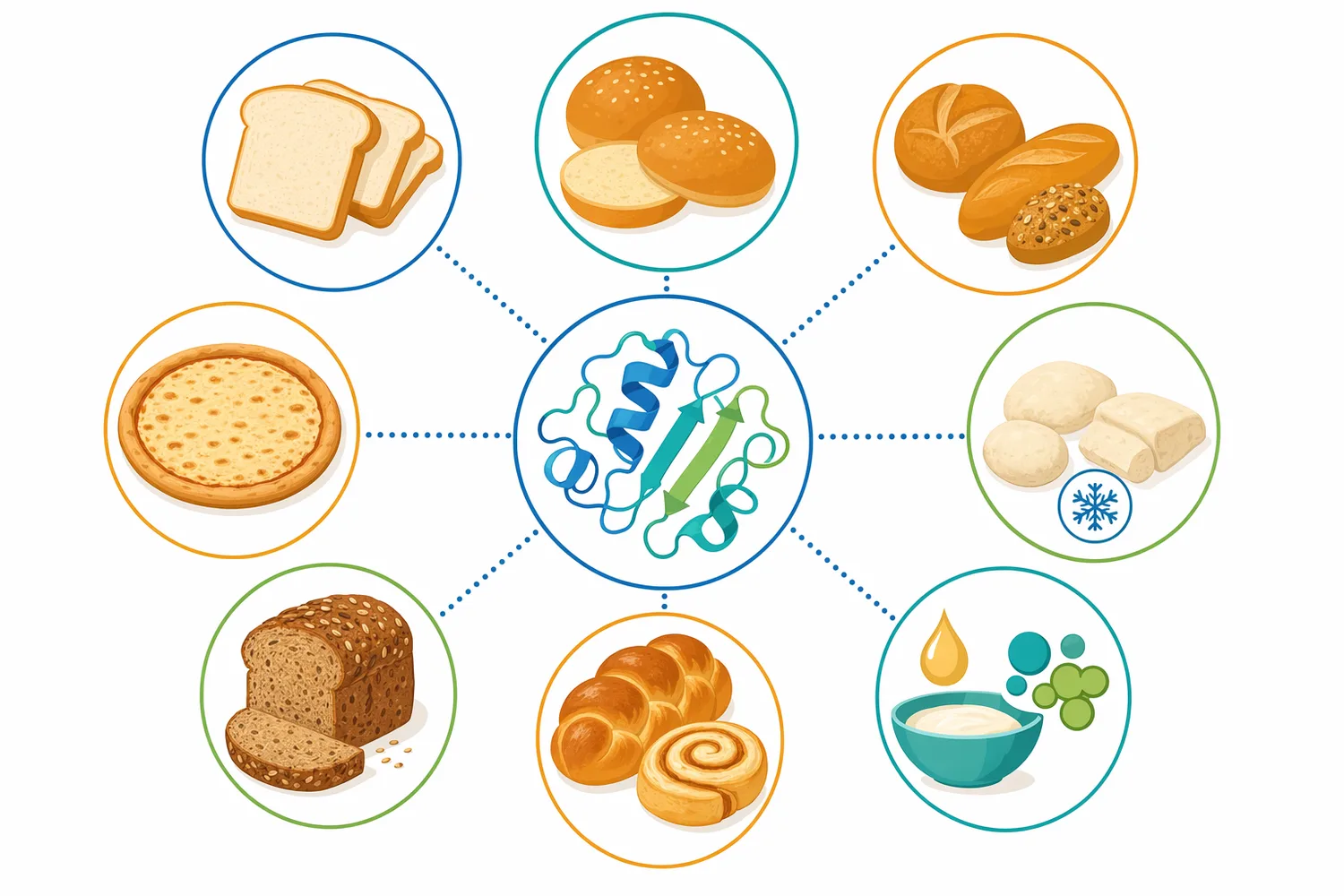
Phospholipase should be understood as a targeted bakery improver enzyme, not a universal correction for every bread defect. It does not replace suitable flour, adequate hydration, controlled mixing, correct yeast performance, proper proofing, or an appropriate bake. Its most direct contribution is lipid-interface modification, so formulas with accessible phospholipid substrates are generally the most logical place for the enzyme to show value [1].
Performance can vary because bread doughs vary. Flour extraction, whole-grain content, added fats, lecithin, egg, dairy ingredients, fermentation style, sugar level, salt level, and mechanical processing all change the environment in which the enzyme acts. This is normal for bakery enzymes: the same enzyme mechanism can produce different visible effects depending on the surrounding formulation and process [2].
It is also important to distinguish phospholipase from emulsifier addition. Added emulsifiers introduce a defined functional ingredient into the formula. Phospholipase, by contrast, modifies lipids that are already present or added as part of other ingredients. That can be attractive in formulas where the goal is to improve the functionality of existing lipid sources, but it also means the response depends on the substrate available in the dough [1].
Enzymes.bio supplies Phospholipase Enzymes as Bread Making Improver directly online by the 1 kg unit. Buyers can place the order online, pay online, and the order is then processed and shipped. A Certificate of Analysis and Safety Data Sheet are included with the order, giving the documentation normally needed for receipt and handling of the purchased product .
The product is best viewed as a practical bakery enzyme ingredient with a clear scientific rationale: phospholipase modifies phospholipids into more functional interfacial lipid products, which can help bread dough retain gas, improve crumb structure, and support softness when the formula provides suitable substrates. For bakeries making pan bread, buns, soft rolls, whole-grain breads, rye-wheat breads, sourdough-style products, or enriched formulas with lecithin, egg, dairy, or fats, that mechanism makes phospholipase a valuable bread making improver to consider within a balanced formulation [2].
Phospholipase improves bread not by increasing yeast activity or directly strengthening gluten, but by changing the lipid chemistry at the interfaces that hold the dough’s gas-cell structure together. In phospholipase A-type reactions, phospholipids are converted into lysophospholipids and free fatty acids, which can alter emulsification, gas-cell stability, crumb uniformity, and softness in responsive bread systems [1]. Enzymes.bio offers Phospholipase Enzymes as Bread Making Improver for direct online purchase in 1 kg units, with the order processed and shipped after online payment .
Sold by the 1 kg unit, in stock and ready to ship. Order directly on our store — pay online and we process your order. A Certificate of Analysis and Safety Data Sheet are included with every order.
Buy Phospholipase Enzymes As Bread Making Improver →Numbered in order of first citation. Open-access sources, each verified reachable at publication; citation numbers in the text link here.