
Phytase enzyme is added to plant-based poultry and livestock feeds to break down phytate, the main storage form of phosphorus in grains, oilseeds, legumes, and many by-products. By hydrolyzing phytate, phytase releases usable phosphate, reduces the anti-nutritional effects of intact phytate, and can help lower phosphorus losses in manure when the feed formulation is designed around that effect. [1]
Enzymes.bio supplies Phytase Enzyme For Poultry Feed – Livestock Ruminant Animals Feed Enzymes for feed and industrial-processing applications, sold directly online by the 1 kg unit. Buyers purchase through the website, pay online, and the order is processed and shipped with the accompanying Certificate of Analysis and Safety Data Sheet.
Modern poultry feed, pig feed, and many livestock diets rely heavily on plant ingredients: corn, wheat, barley, soybean meal, canola meal, legumes, oilseed meals, grain co-products, and increasingly a range of alternative plant-derived materials. These ingredients contain phosphorus, but a large proportion of that phosphorus is stored as phytic acid or phytate, a molecule animals cannot always digest efficiently on their own. In non-ruminant animals such as broilers, layers, turkeys, pigs, and many fish, the natural digestive system does not provide enough phytase activity to fully release this bound phosphorus during the normal passage time of feed through the gut. [2]
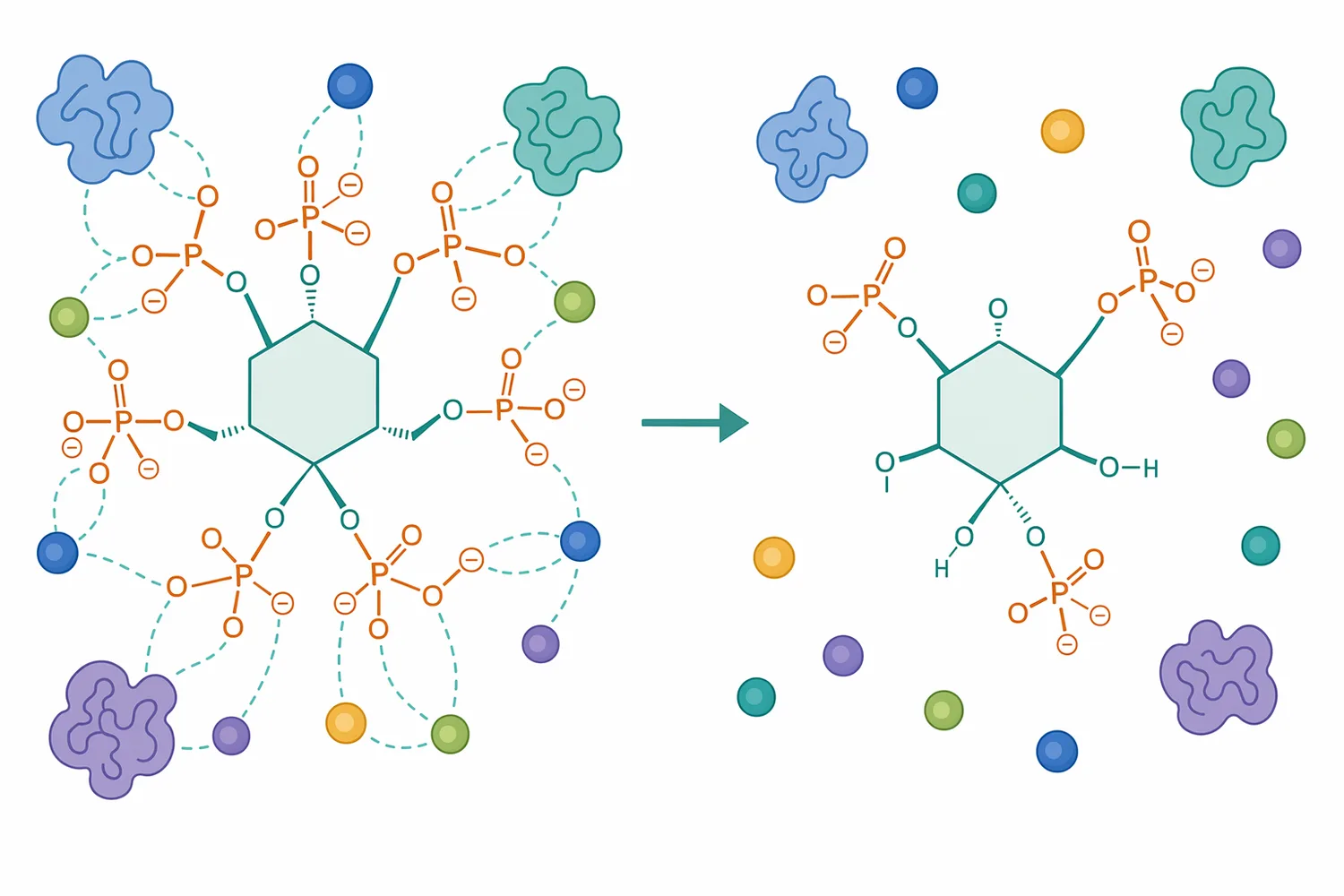
The practical problem is not that the feed lacks phosphorus entirely; it is that much of the phosphorus is chemically inaccessible. Phytate holds phosphate groups on a myo-inositol ring through phosphate ester bonds. Those phosphate groups are nutritionally valuable, but while they remain attached to phytate, they pass through the digestive tract with limited absorption. Phytase changes the chemistry of the feed during digestion by cutting those ester bonds, progressively converting phytate into lower inositol phosphates and inorganic phosphate that can be absorbed. [1]
This makes phytase one of the most established feed enzymes in poultry nutrition. Reviews of commercial poultry enzyme technology describe phytase as a central tool for improving phosphorus utilization in cereal- and oilseed-based diets, while broader feed enzyme reviews group phytase with enzymes that improve nutrient availability, feed efficiency, and the environmental profile of animal production systems. [3]
Phytate is not just “bound phosphorus.” It is a strongly charged molecule that can interact with minerals, proteins, and digestive conditions in ways that reduce nutritional value. Because phytate carries multiple phosphate groups, it can bind positively charged minerals such as calcium, zinc, iron, magnesium, and manganese. These complexes are less soluble and less available for uptake, especially in sections of the digestive tract where minerals and proteins are already competing for solubility and absorption. [2]
When intact phytate remains in the digesta, it can therefore behave as an anti-nutritional factor. It can keep phosphorus unavailable, reduce the availability of certain trace minerals, and interfere with nutrient digestion indirectly through mineral-protein interactions. In poultry diets based on wheat, canola meal, soybean meal, or other phytate-rich plant ingredients, this is one reason phytase can produce effects beyond simple phosphorus release. [4]
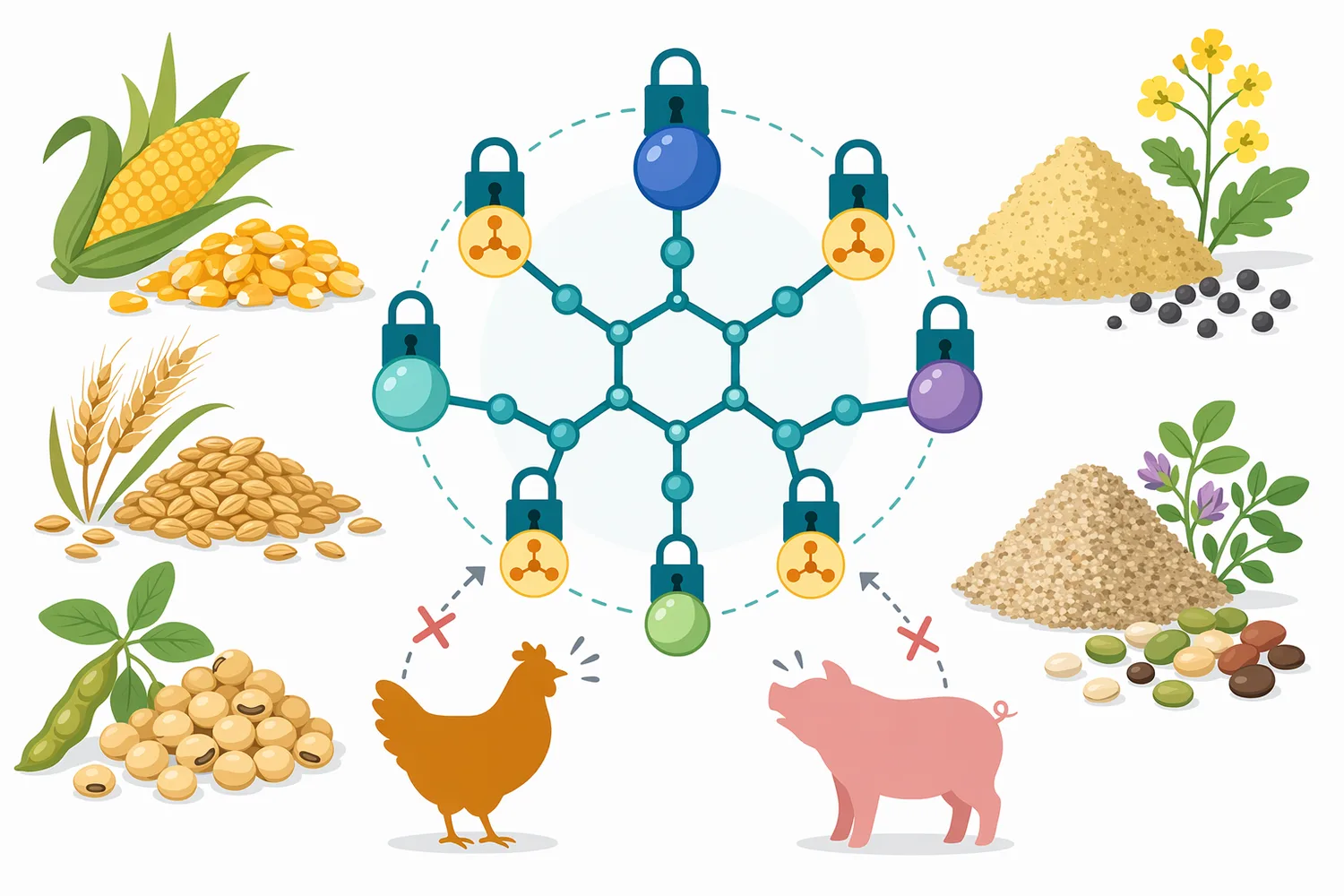
Phytase reduces that anti-nutritional pressure by removing phosphate groups from phytate. As phosphate groups are hydrolyzed, the molecule’s charge density falls. A less highly phosphorylated inositol molecule has a reduced ability to bind minerals tightly, so more mineral ions can remain soluble and available for absorption. The released inorganic phosphate can then contribute directly to skeletal mineralization, energy metabolism, cellular signaling, and other phosphorus-dependent physiological processes. [1]
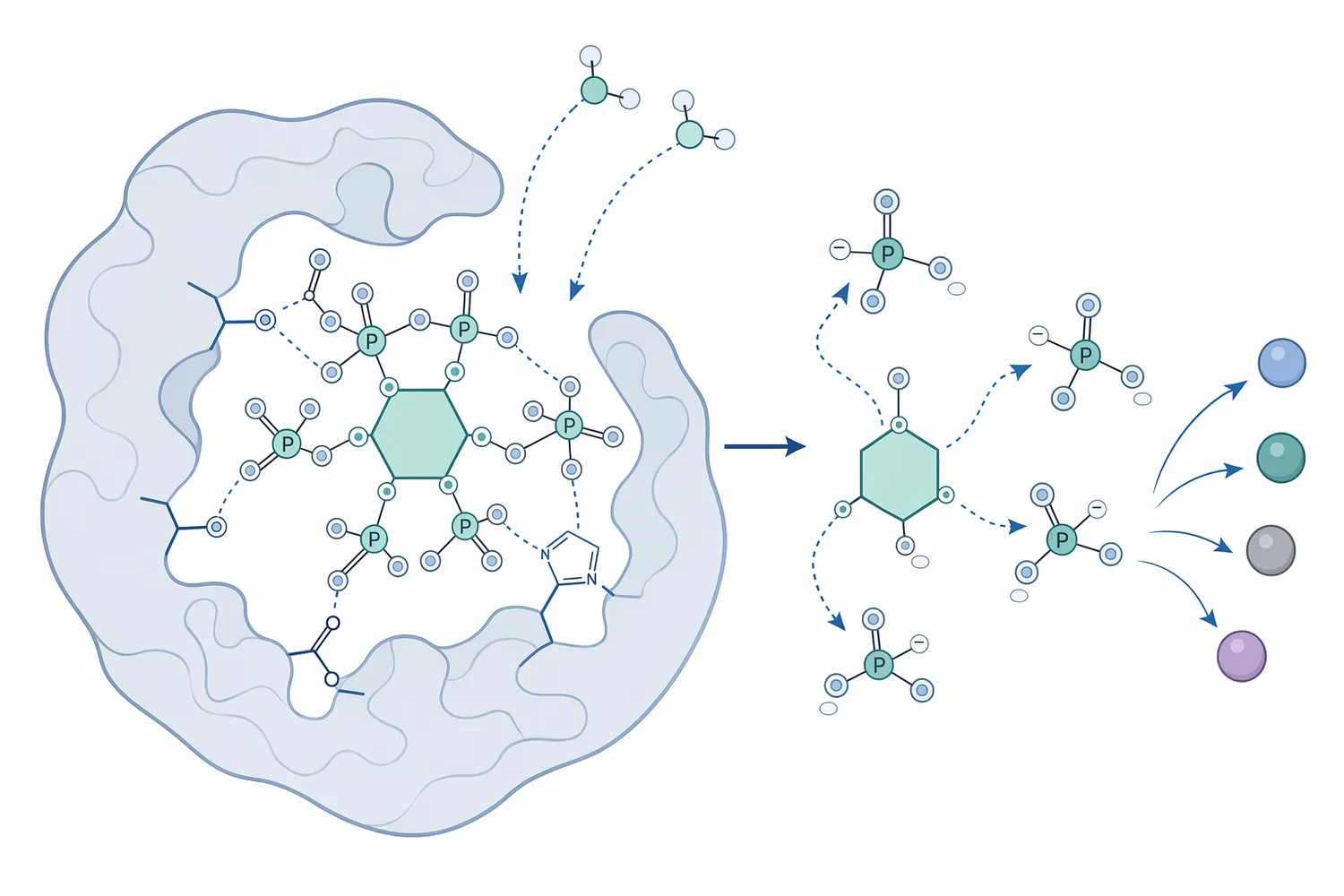
At the substrate level, phytase is a phosphomonoesterase. Its job is to recognize phytate and catalyze the hydrolysis of phosphate ester bonds. In water, the enzyme helps split a bond between the inositol ring and a phosphate group. The result is one free phosphate ion and one inositol phosphate molecule with fewer phosphate groups than before. This reaction can occur repeatedly, so phytate is progressively dephosphorylated rather than converted in a single step. [2]
That sequence matters in animal feed. The first phosphate groups removed from phytate often produce partially dephosphorylated inositol phosphates. These intermediates generally bind minerals less strongly than the original phytate molecule. As hydrolysis continues, more phosphate becomes available for absorption, and the anti-nutritional strength of the original phytate structure is reduced. The useful outcome in feed is therefore twofold: more available phosphorus and less intact phytate remaining to tie up other nutrients. [1]
In poultry, the timing of this reaction is important because feed moves relatively quickly through the digestive tract. The enzyme must contact the phytate-containing feed particles after hydration, remain active through relevant digestive conditions, and act before the digesta leaves the sections where released phosphorus can be absorbed. This is why phytase stability in feed processing and digestive environments has been a repeated research focus. [5]
Poultry is the core application area for feed phytase because broilers, layers, and other birds are commonly fed cereal- and oilseed-meal diets with meaningful phytate content. Reviews on phytase biochemistry and poultry application describe its role in improving phosphorus availability, supporting mineral nutrition, and reducing the need to rely only on inorganic phosphorus sources in plant-rich diets. [2]
A classic poultry example is wheat/canola meal-based feed. Research specifically examining poultry fed wheat/canola meal diets reported improved phosphorus availability when phytase was supplemented. That finding is important because wheat and canola meal are widely used plant feed ingredients, and both can contribute phytate-bound phosphorus that poultry cannot efficiently access without enzymatic hydrolysis. [4]
Commercial poultry enzyme reviews also emphasize that phytase was one of the enzyme technologies that changed how poultry diets could be formulated around nutrient availability rather than only total nutrient content. In practice, this means the nutrition value of plant phosphorus is not treated as fixed; phytase makes a portion of that phosphorus nutritionally usable by changing its chemical form inside the digestive process. [3]
Research has continued beyond simple phosphorus release. Studies in broilers have examined phytase in relation to growth performance, organ development, blood profile, digestibility, and intestinal barrier-related responses. These studies reflect the current understanding that phytase affects the gut nutrient environment, not only the phosphorus number in a ration. [6]
Phytase has also been studied in combination with other feed strategies. For example, work on broilers receiving moringa leaf meal with phytase evaluated nutrient digestibility, showing how phytase can be considered in diets that include alternative plant ingredients with their own fiber, mineral, and anti-nutritional profiles. [7]
Heat stress changes feed intake, metabolism, mineral balance, and gut function in poultry. Under these conditions, the value of improving nutrient availability can become more visible because birds may consume less feed while still needing sufficient phosphorus and minerals for maintenance, growth, or egg production. Research in Japanese quails reported benefits from phytase supplementation under heat stress conditions, adding to the evidence that phytase may support nutrient utilization when production conditions are challenging. [8]
This does not mean phytase is a “heat stress treatment.” It means the enzyme’s core function—making phytate-bound nutrients more available—can remain relevant when birds face environmental pressures that reduce performance. In practical terms, when feed intake drops or metabolism is stressed, nutrients locked in phytate are even less useful if they leave the bird undigested. Phytase helps convert part of that inaccessible nutrient pool into a form the animal can use. [8]
Recent broiler research has also tested phytase alongside other enzymes, such as subtilisin-like protease, and has measured outcomes including digestibility, immune organs, and expression of intestinal barrier genes. These studies are useful because commercial feed digestion is not a single-enzyme process: proteins, starches, minerals, fiber fractions, and phytate interact within the same gut environment. [9]
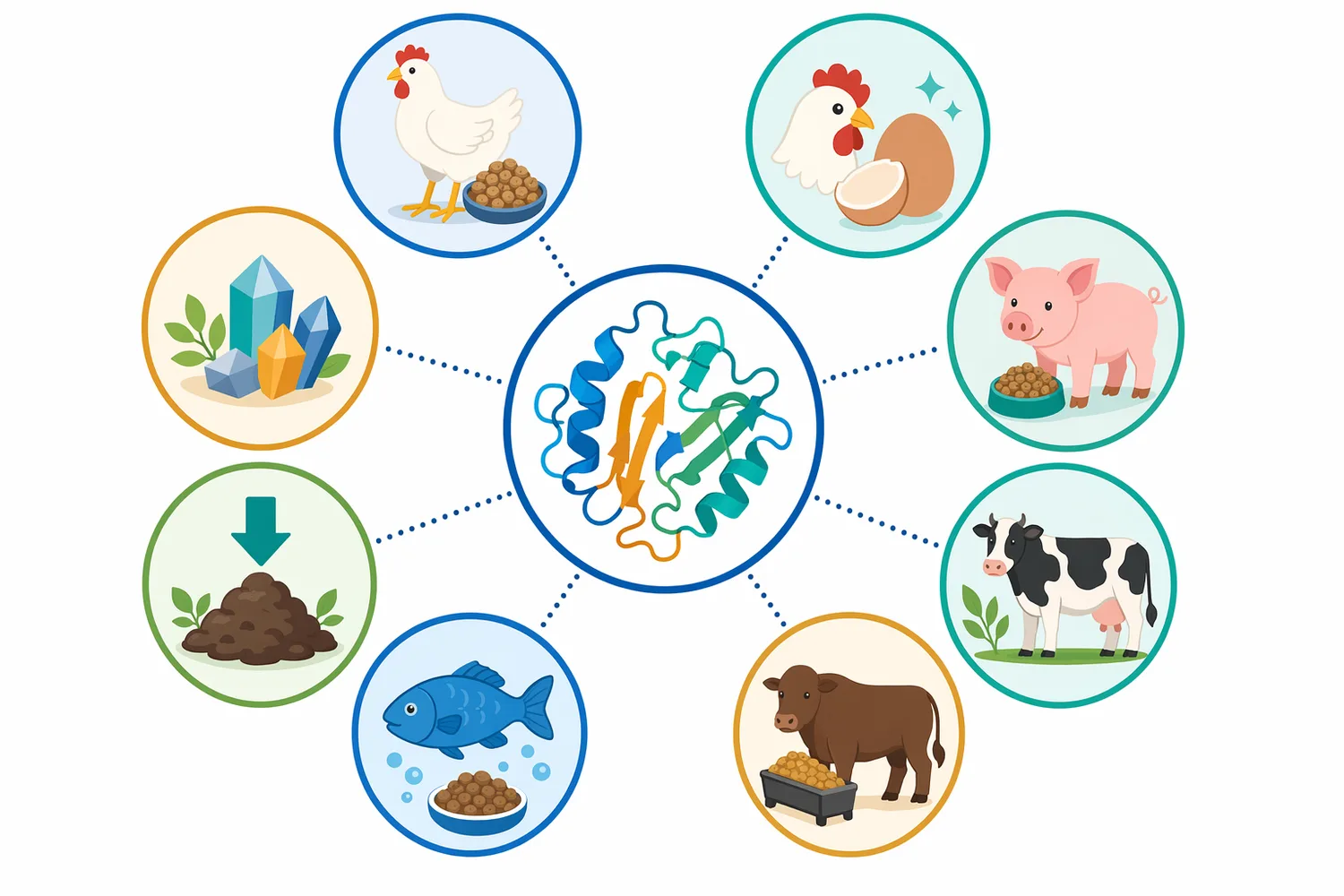
Phytase is most strongly associated with poultry and swine, but the same biochemical principle—hydrolyzing phytate to release phosphate—can be relevant wherever plant phytate limits nutrient use. The strength of expected benefit varies by animal species, diet, digestive physiology, and feed-processing conditions. [10]
| Feed application | Why phytase is relevant | What changes in the feed/digestion process | Evidence strength in the supplied literature |
|---|---|---|---|
| Poultry feed | Cereal- and oilseed-based diets contain phytate; birds have limited endogenous phytase activity | Phytate is hydrolyzed, phosphate is released, mineral binding pressure is reduced | Strong; poultry is the most established application area in the cited reviews and studies [2] |
| Swine feed | Pigs are monogastric animals and also use plant-based diets with phytate-bound phosphorus | More plant phosphorus becomes available, supporting lower phosphorus waste when diets are formulated accordingly | Strong in general feed enzyme literature, commonly grouped with poultry applications [10] |
| Aquaculture feed | Plant proteins and grain ingredients are increasingly used in aquafeeds, introducing phytate | Phytase can release phosphorus from plant ingredients that fish may otherwise utilize poorly | Emerging and species-dependent; strongest when diets contain meaningful plant phytate [1] |
| Ruminant and broader livestock feed | Rumen microbial activity changes phytate degradation compared with monogastrics | Use is more formulation-dependent because rumen fermentation already modifies plant nutrients | Application is possible, but interpretation should be more cautious than poultry or swine |
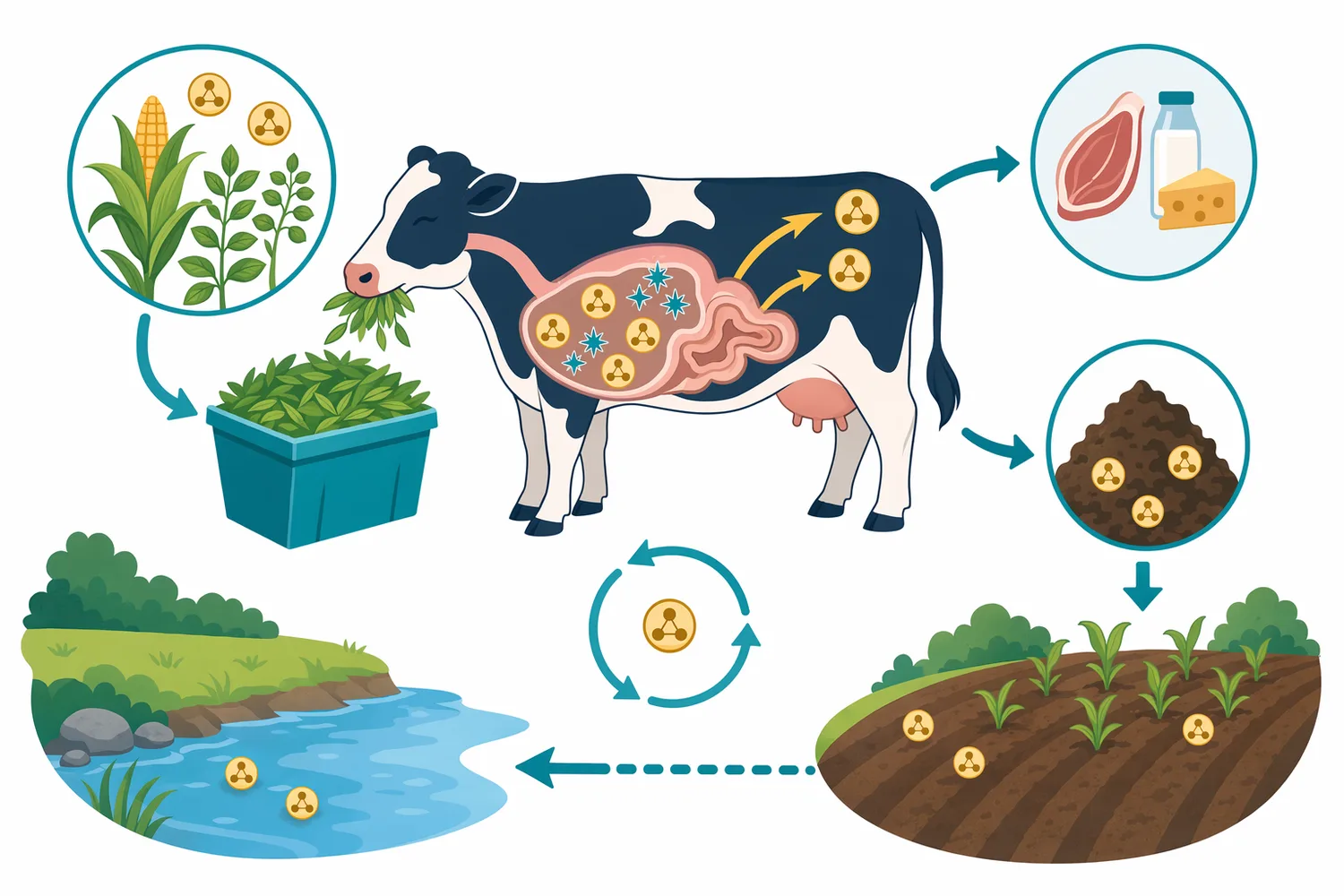
The product name includes livestock and ruminant animal feed, and phytase is used in broader animal nutrition where plant-bound phosphorus is relevant. However, ruminants are not the same as poultry or pigs. Cattle, sheep, and goats have a rumen microbial ecosystem that can degrade many plant compounds before the feed reaches the lower digestive tract. This microbial fermentation can change how phytate is processed and how much supplemental phytase contributes in a given ration. [1]
For this reason, phytase in ruminant feed should be understood as a targeted enzyme option rather than a universal requirement. It may be more relevant in young animals with developing rumen function, in feeds with substantial plant phytate, in mineral-management strategies, or in systems focused on manure phosphorus reduction. The mechanism remains the same—phytate hydrolysis—but the digestive environment is different, so the practical effect is more dependent on the complete feeding system.
The distinction is important for buyers using one product category across multiple animal applications. In poultry feed, phytase addresses a well-defined limitation: birds do not efficiently release phytate phosphorus. In ruminants, the rumen microbiome already contributes enzymatic activity, so supplemental phytase is better viewed as part of the overall feed and mineral strategy rather than as a direct copy of poultry use. [1]
Feed enzymes must remain functional after mixing, handling, and—in many cases—pelleting or conditioning. Phytase is a protein, and proteins can lose their three-dimensional structure under heat, moisture, pressure, or unfavorable chemical conditions. When that structure is disrupted, the active site no longer fits the substrate correctly, and phytate hydrolysis falls. Research on fungal phytase stability as a poultry feed additive has specifically examined stability because feed processing can determine how much enzyme remains available during digestion. [5]
The key point is that phytase must survive enough of the manufacturing and digestive pathway to do its job. If the enzyme is inactivated before the animal consumes the feed, the phytate remains largely intact. If it survives feed handling but is rapidly degraded in the digestive tract before contacting phytate, the practical result is also reduced. This is why phytase research has examined acid resistance, thermal stability, carriers, and delivery systems. [11]
Some research has explored biological delivery approaches, such as probiotic lactic acid bacteria engineered to express acid-resistant phytase. The significance is not that every feed system uses that approach, but that acid tolerance is scientifically important: the enzyme must function in acidic digestive conditions where phytate hydrolysis can occur before the feed moves further through the gut. [11]
Other work has examined carriers for phytase in poultry contexts. For example, sugar cane juice has been studied as a liquid supplement and phytase carrier in poultry by in vitro evaluation. Carrier studies matter because enzyme distribution, contact with substrate, and stability during feed preparation can influence whether the enzyme actually reaches phytate in a useful state. [12]
The environmental case for phytase is straightforward. When animals cannot digest phytate phosphorus, that phosphorus is excreted. Manure phosphorus can be beneficial as a fertilizer when applied responsibly, but excessive phosphorus loading contributes to nutrient runoff risk and can affect soil and water systems. By making more plant phosphorus digestible, phytase can reduce the fraction of phosphorus leaving the animal unused. [1]
This is why phytase is often discussed not only as a cost and nutrition tool, but also as an environmental feed enzyme. Poultry manure research comparing phytase-related strategies with inorganic phosphorus fertilization reflects the broader interest in how feed phosphorus management affects soil–plant systems downstream. The enzyme acts in the animal, but the consequences extend to manure composition and nutrient cycling. [13]
The mechanism behind the environmental benefit is chemical rather than abstract. Phytase reduces the amount of intact phytate phosphorus that passes through digestion. More phosphorus is absorbed and retained for biological functions, and less is excreted as unavailable bound phosphorus. The environmental result depends on diet formulation, animal performance, manure handling, and land application practices, but the biochemical direction is well established. [10]
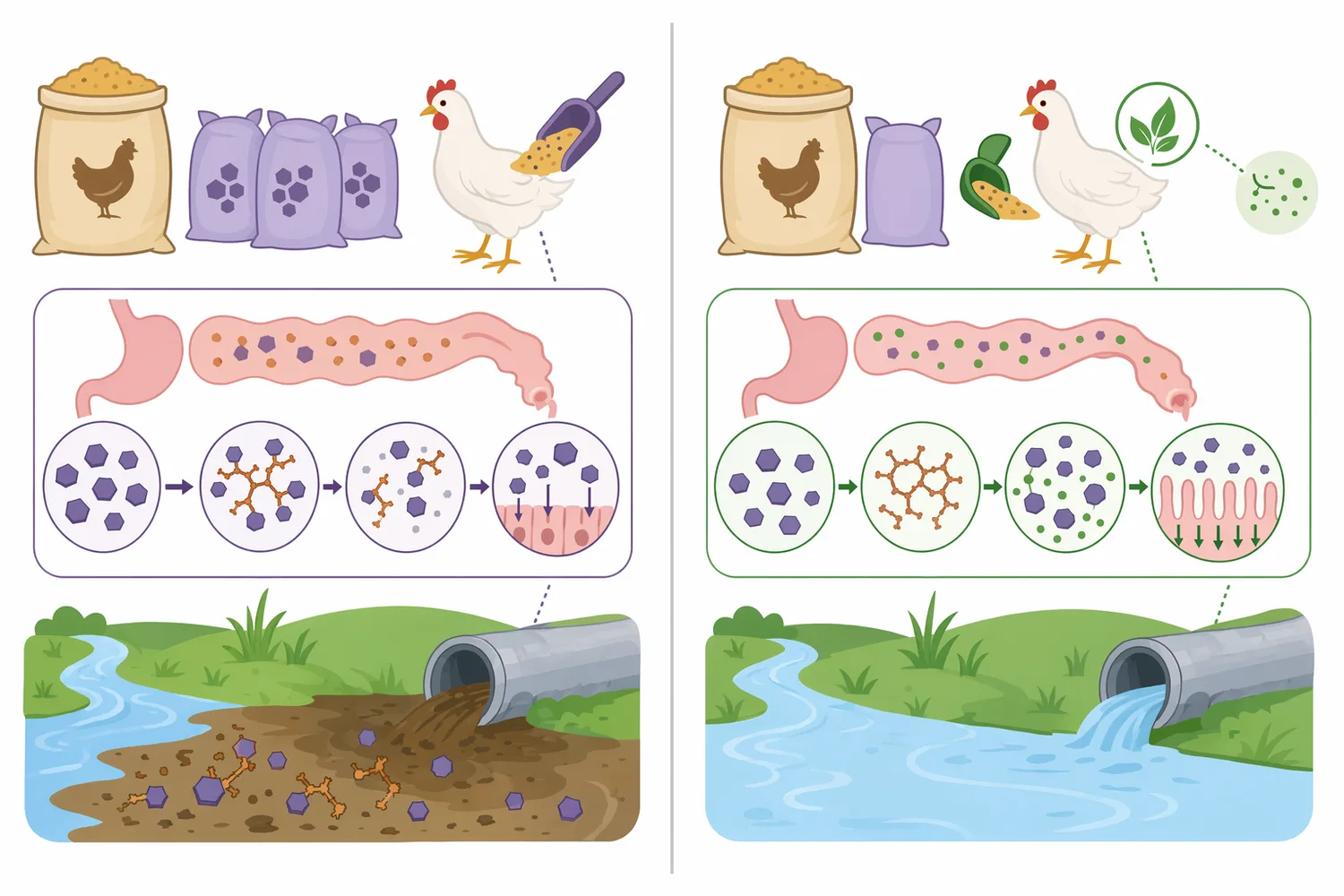
Feed producers are increasingly evaluating alternative ingredients, including fruit and vegetable residues, agro-industrial by-products, and other plant-derived materials. Reviews of fruit and vegetable peels as animal feed emphasize their nutritional potential while also noting the need to account for variable composition and anti-nutritional factors. Where those ingredients contribute phytate or interact with mineral availability, phytase may be relevant as part of the feed enzyme approach. [14]
Pineapple waste and similar fruit-processing by-products are also being reviewed for animal feed potential. These materials can add fermentable carbohydrates, fiber, minerals, and plant bioactives, but they also introduce variability compared with conventional grains and oilseed meals. Phytase is not a universal solution for every by-product, but it is directly relevant when phosphorus is present in phytate-bound form or when phytate contributes to mineral-binding effects. [15]
Insect meals are another sustainability-driven feed ingredient category. They are not phytate-rich in the same way as cereals or oilseed meals, but they are often used in diets that still contain plant ingredients. In such mixed diets, phytase continues to target the plant phytate fraction rather than the insect ingredient itself. This distinction matters: the enzyme works on a specific substrate, so its value follows the presence of phytate in the complete feed. [16]
The primary benefit of phytase is improved access to plant phosphorus. Instead of treating phytate phosphorus as mostly unavailable, the enzyme converts part of that bound phosphorus into absorbable phosphate. In poultry and swine nutrition, this can support more efficient use of cereals, oilseed meals, and plant protein ingredients. [2]
A second benefit is reduced reliance on added inorganic phosphorus sources when the overall ration is formulated to account for phytase-released phosphorus. Phytase does not create phosphorus; it changes the availability of phosphorus already present in plant ingredients. That distinction is important because the enzyme’s value depends on the feed matrix containing enough phytate substrate to hydrolyze. [3]
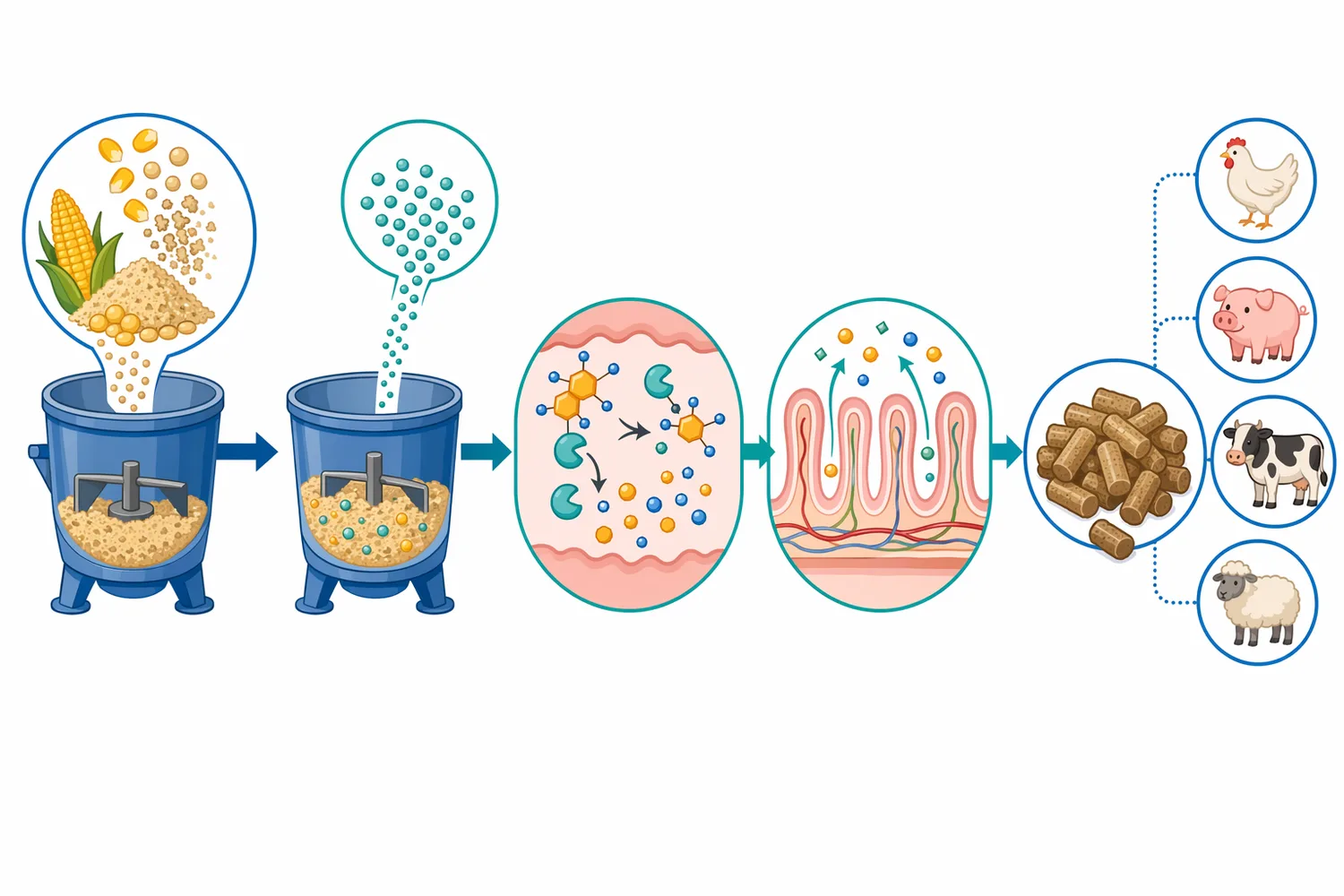
A third benefit is reduced anti-nutritional pressure from intact phytate. As phytase removes phosphate groups, the molecule becomes less able to bind minerals strongly. This can support mineral availability and may contribute to improved digestibility outcomes observed in poultry studies. [7]
A fourth benefit is lower phosphorus excretion potential. If more phosphorus is absorbed, less undigested phytate phosphorus passes into manure. This is one of the reasons phytase is widely discussed in connection with both feed efficiency and environmental management. [13]
Phytase is often used alongside other feed enzymes, but it has a distinct substrate. Xylanases target arabinoxylans, beta-glucanases target beta-glucans, proteases target proteins, and phytase targets phytate. In a plant-based feed, these substrates can coexist in the same particle, which is why multi-enzyme strategies are studied in poultry and livestock nutrition. [10]
The value of phytase within such systems is its mineral and anti-phytate function. A protease may improve protein hydrolysis, but it does not release phosphate from phytate. A carbohydrase may reduce viscosity or cell-wall constraints, but it does not directly remove phosphate groups from the inositol ring. Phytase fills that specific biochemical role, and other enzymes can complement it by improving access to nutrients held within plant structures. [9]
This complementarity is visible in research combining phytase with other enzymes in broilers. Studies examining subtilisin-like protease with histidine acid phytase have evaluated growth performance, digestibility, immune organs, and intestinal barrier gene expression, reflecting a broader interest in how enzyme systems influence the gut environment rather than isolated nutrient release alone. [9]
Enzymes.bio supplies Phytase Enzyme For Poultry Feed – Livestock Ruminant Animals Feed Enzymes as an online product for feed and industrial-processing use. The product is sold directly by the 1 kg unit: buyers place the order through the website, complete online payment, and the order is then processed and shipped. A Certificate of Analysis and Safety Data Sheet accompany the order.
Enzymes.bio is a supplier, not a manufacturer or laboratory. The value to the buyer is straightforward access to a feed enzyme product category that is well established in the scientific literature, especially for poultry and other monogastric feeds containing phytate-rich plant ingredients.
The product should be understood through the mechanism described above: phytase acts on phytate, releases inorganic phosphate, reduces phytate’s mineral-binding effect, and supports more efficient use of plant-derived phosphorus. Results in any feed system depend on the animal species, the ingredients used, the presence of phytate substrate, and the processing conditions the enzyme experiences before consumption. [1]
Phytase is one of the most important enzyme categories in poultry feed because it addresses a specific and common limitation of plant-based diets: phosphorus is present, but much of it is locked in phytate. By hydrolyzing phytate, phytase releases absorbable phosphate and reduces the anti-nutritional effects of the original molecule. [2]
The strongest evidence base is in poultry and other monogastric animals, where endogenous phytase activity is limited and plant-based diets are common. Ruminant use is possible in broader livestock feed contexts, but it is more formulation-dependent because rumen fermentation changes how plant nutrients are processed before absorption. [10]
For buyers using plant-rich feed systems, Phytase Enzyme For Poultry Feed – Livestock Ruminant Animals Feed Enzymes from Enzymes.bio offers a direct online route to purchase a 1 kg phytase enzyme product for feed and industrial-processing applications, with order documentation supplied after purchase and shipment.
Sold by the 1 kg unit, in stock and ready to ship. Order directly on our store — pay online and we process your order. A Certificate of Analysis and Safety Data Sheet are included with every order.
Buy Phytase Enzyme For Poultry Feed - Livestock Ruminant Animals Feed Enzymes →Numbered in order of first citation. Open-access sources, each verified reachable at publication; citation numbers in the text link here.