
Phytase is a phytate-degrading enzyme that releases phosphate from phytic acid, the main phosphorus-storage compound in many grains, oilseed meals, brans, legumes, and other plant-derived materials. In practical feed and food applications, phytase helps convert poorly available phytate-bound phosphorus into more usable phosphate while reducing phytate’s tendency to bind minerals such as calcium and zinc.
Enzymes.bio supplies Phytase as a 1 kg enzyme product available for direct online purchase. Each order is processed and shipped after online payment, with a Certificate of Analysis and Safety Data Sheet included.
The simplest phytase definition is: phytase is an enzyme that hydrolyzes phytic acid, also known as phytate or inositol hexakisphosphate. Phytic acid contains an inositol ring carrying six phosphate groups, which is why it is often described as a phosphorus-storage molecule in seeds and grains rather than as immediately available nutritional phosphorus [1].
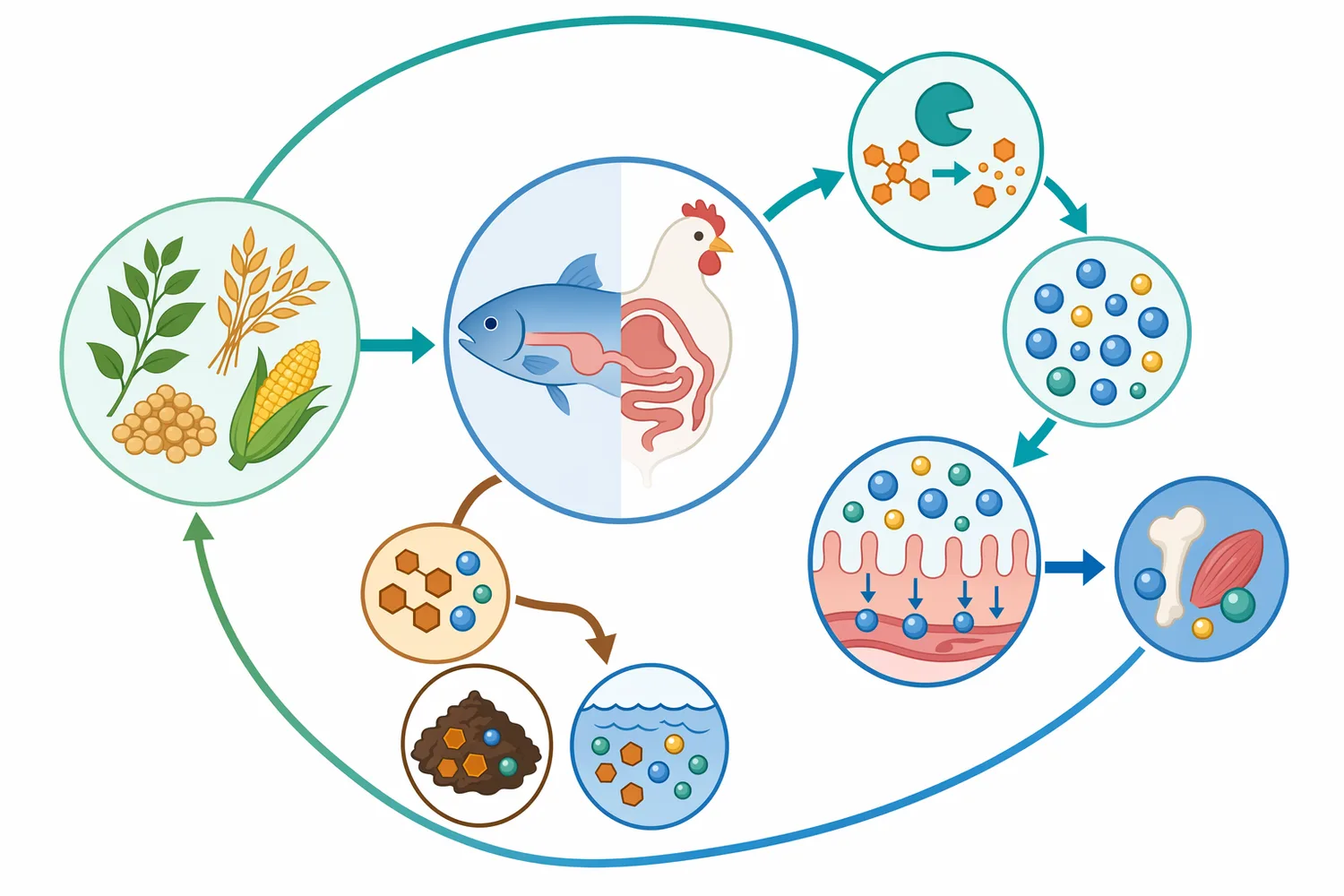
The enzyme phytase works by removing phosphate groups from that inositol-phosphate structure. Instead of one single “breakdown” event, the reaction proceeds step by step: IP6 can be converted into lower inositol phosphates such as IP5, IP4, IP3, and smaller forms as phosphate groups are cleaved away. The practical result is an increase in free phosphate and a reduction in the intact phytate molecule that binds minerals tightly [2].
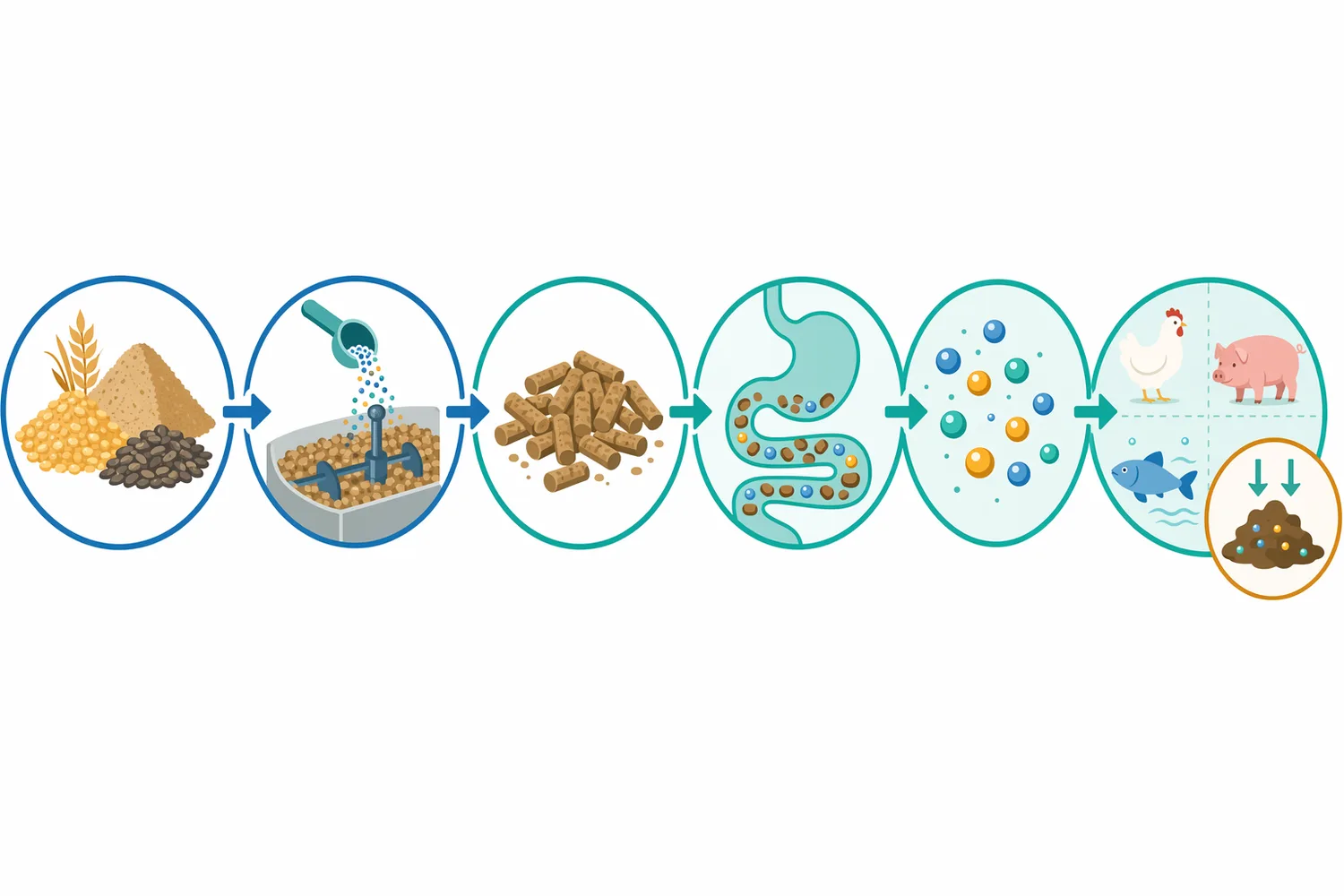
This mechanism explains why phytase enzymes are widely discussed in feed nutrition. Poultry, pigs, and many fish do not fully utilize phytate-bound phosphorus from plant ingredients, so a meaningful fraction of plant phosphorus can pass through the digestive tract unused. Exogenous phytase supplementation has therefore become a major approach for improving phosphorus utilization in monogastric diets [3].
Phytase in food processing is based on the same chemistry. Where cereal flours, whole grains, bran fractions, legumes, or plant proteins contain phytate, phytase can reduce the anti-nutritional effect of the intact phytate molecule and support improved mineral solubility or bioaccessibility. Work with wholemeal wheat bread, for example, has examined phytase-active lactic acid bacteria and their effect on mineral solubility in a real food matrix rather than in a purified chemical system [4].
Phytic acid is not an artificial contaminant. It is a natural seed compound that stores phosphorus for germination, and it can also play beneficial biological roles in plants and human nutrition depending on context. The industrial challenge is that the same molecule can reduce nutrient availability when it remains intact in feed or food matrices [1].
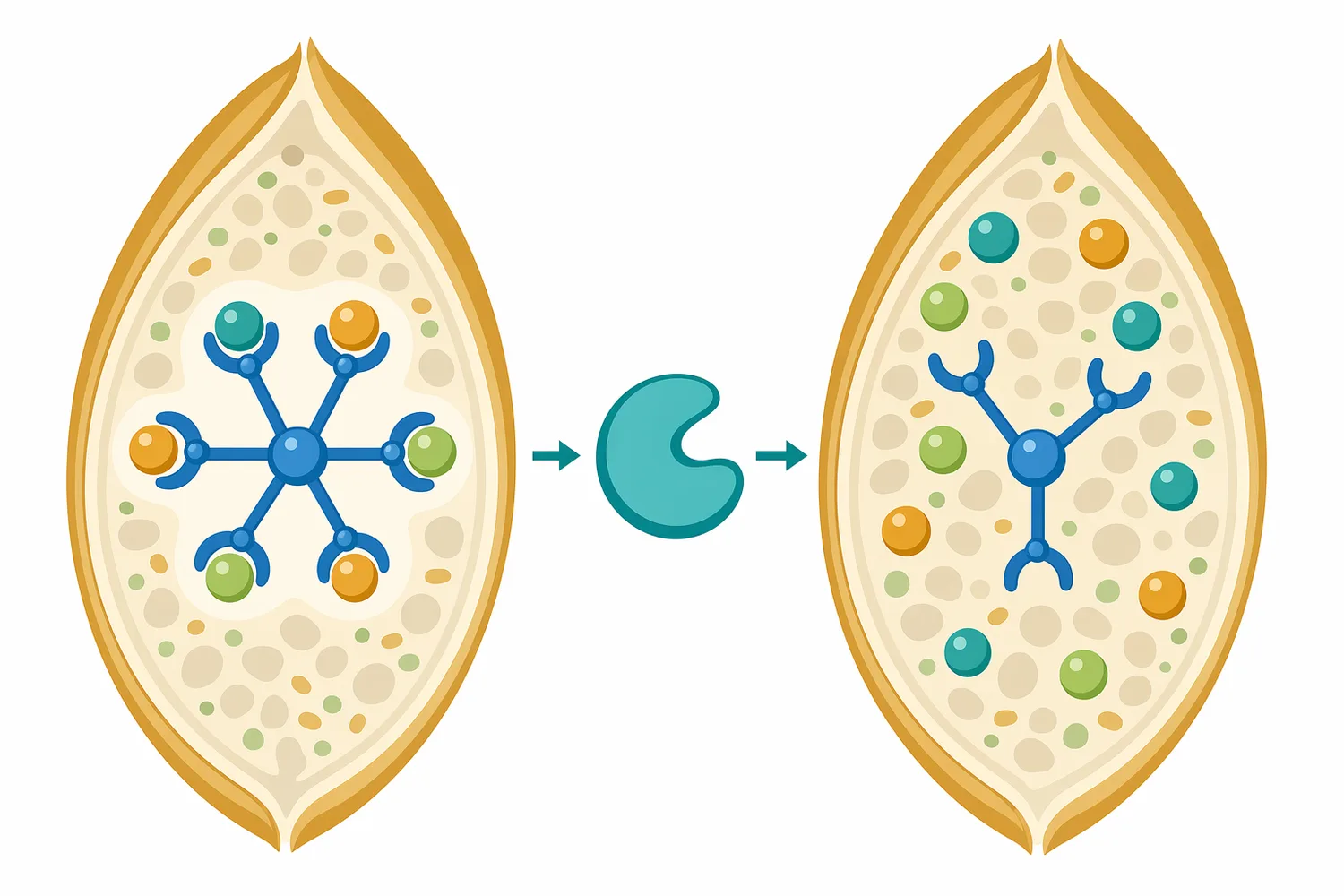
The problem comes from charge and binding. The phosphate groups on phytate carry negative charges that can associate with positively charged minerals, including calcium, zinc, magnesium, iron, and other cations. When these phytate-mineral complexes form under digestive or processing conditions, the mineral can become less soluble and less available for absorption or use [5].
This is why phytate is often called an anti-nutritional factor in plant-heavy diets. It is not “toxic” in the ordinary sense; rather, it locks nutrients into chemical associations that the animal or processing system may not efficiently separate. Phytase reduces that effect by cutting phosphate groups from the phytate molecule, weakening its ability to form these complexes [2].
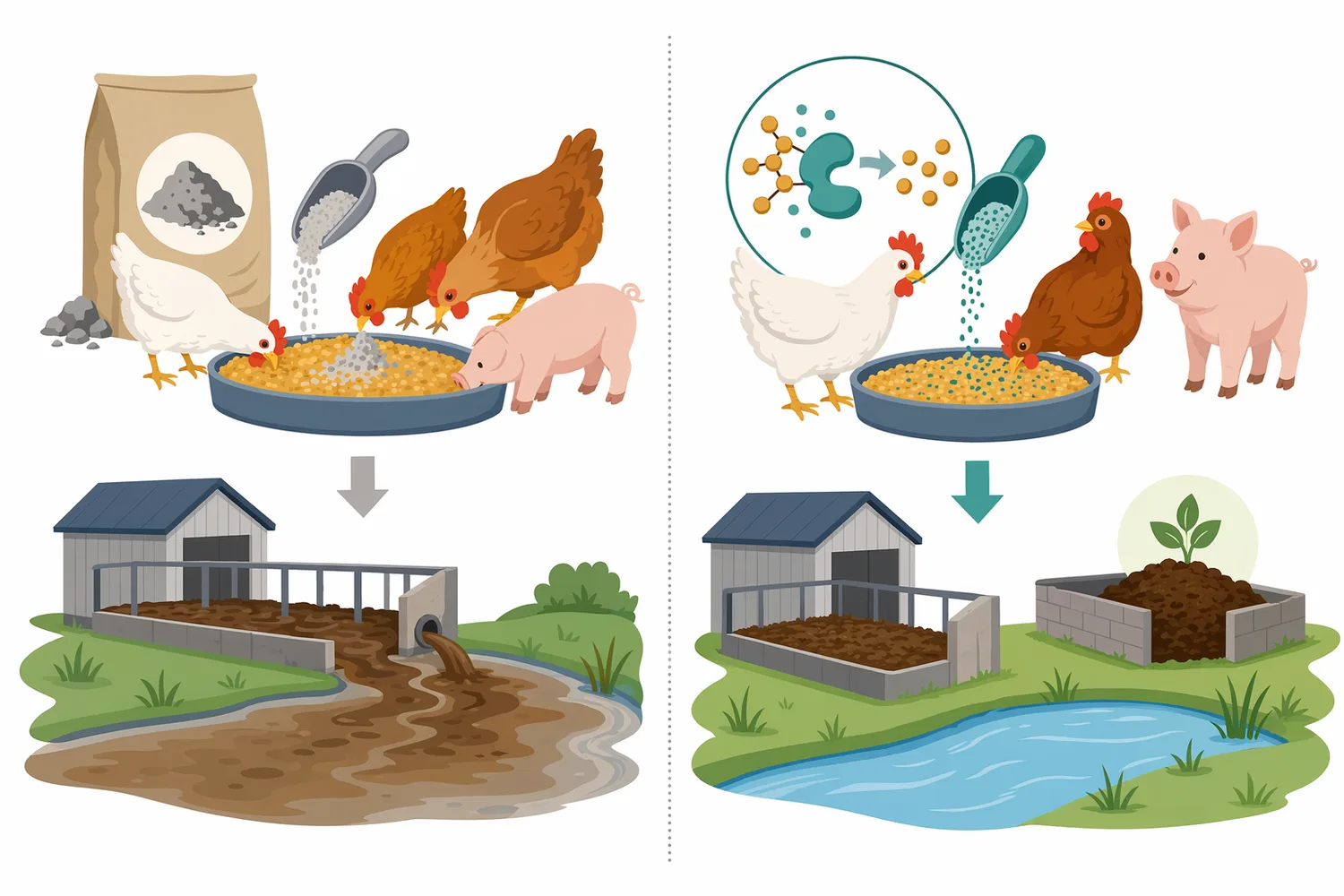
In feed applications, phytate also affects formulation economics and environmental outcomes. If phytate-bound phosphorus is not used efficiently, additional inorganic phosphorus may be included in the diet, and more unused phosphorus may be excreted. Broiler research continues to evaluate phytase together with calcium-to-phosphorus balance because calcium, phosphorus, and phytate chemistry are tightly linked in the digestive tract [6].
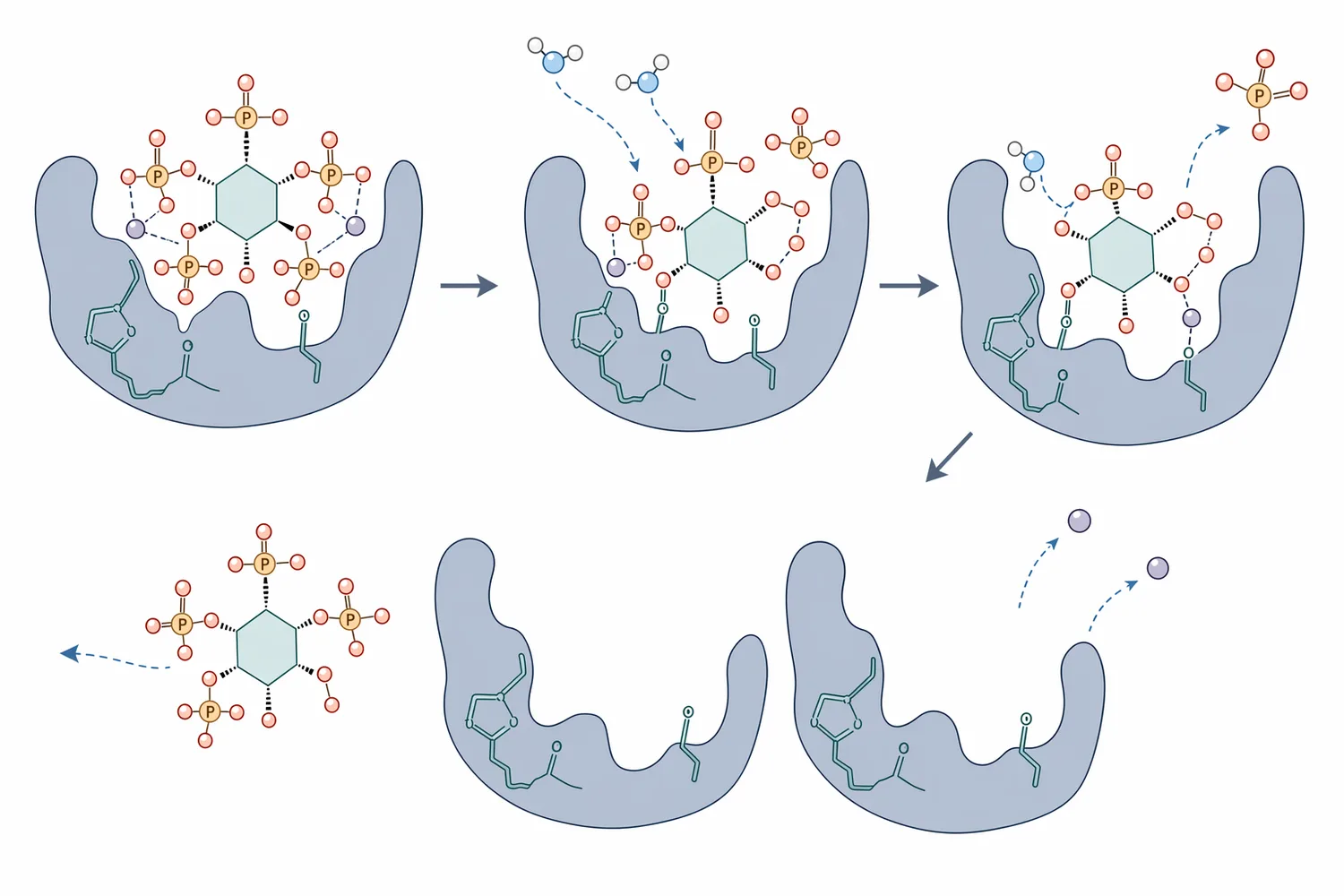
Phytase acts directly on phytate, not on starch, cellulose, fat, or protein as its primary substrate. Its active site recognizes the inositol-phosphate structure and catalyzes hydrolysis of phosphate ester bonds. Each hydrolysis step releases a phosphate group and leaves behind a lower inositol phosphate with fewer binding sites [2].
That structural change is important because intact IP6 binds minerals more strongly than partially dephosphorylated forms. As phosphate groups are removed, the molecule’s mineral-chelating capacity declines, and minerals that were tied into phytate complexes may become more soluble. In practical terms, the enzyme does not “add” minerals; it helps make minerals already present in the material less chemically trapped [5].
The reaction can also influence protein and amino acid nutrition indirectly. Phytate can associate with proteins and digestive enzymes, particularly under pH conditions where electrostatic binding is favorable. Reducing intact phytate may therefore make the surrounding matrix less inhibitory, although the size of this effect depends on ingredient type, processing history, animal species, and overall diet design [7].
A useful way to understand phytase is to compare the material before and after enzymatic action:
| Material feature | Before phytase action | After phytase action |
|---|---|---|
| Main phosphorus form | More phosphorus held as phytate-bound phosphorus | More phosphate released from phytate |
| Mineral binding | Stronger binding of cations such as calcium and zinc | Reduced binding as phytate is dephosphorylated |
| Inositol phosphate profile | More intact IP6 and higher inositol phosphates | More lower inositol phosphate intermediates |
| Nutritional effect | Lower availability of some plant-derived phosphorus and minerals | Improved potential availability, depending on matrix and conditions |
| Environmental implication in feed | More unused phosphorus can pass into manure | Better phosphorus utilization can reduce phosphorus output |
This is why phytase is often described as both a nutritional enzyme and an environmental enzyme in animal production. Its primary biochemical effect is narrow and specific, but that effect sits at a critical point in plant-based phosphorus flow: the conversion of bound phosphorus into a form that can be absorbed or used more efficiently [8].
Poultry diets commonly rely on corn, wheat, soybean meal, cereal by-products, and other plant ingredients that contain phytate. Broiler studies have therefore examined phytase not only as a phosphorus-releasing enzyme, but also in relation to growth performance, mineral utilization, bone characteristics, and dietary calcium-to-phosphorus ratios [6].
A 2024 broiler study evaluated supplemental exogenous phytase with different total calcium-to-total phosphorus ratios while using soybean meal as the sole dietary phosphorus source. That test design is relevant because it places phytase into a practical plant-phosphorus context rather than treating it as an isolated enzyme reaction; the measured outcomes included performance, mineral utilization, and bone characteristics [6].
More recent broiler work has also examined how corn particle size, soybean meal phytate content, and phytase inclusion interact. This matters because phytase can only act efficiently where the phytate substrate is physically accessible, and feed particle structure can affect how enzymes, water, and digestive fluids reach phytate-containing plant tissues [9].
Reviews of phytase supplementation in broilers describe the enzyme as a tool for improving nutrient utilization and physiological health markers, while also recognizing that performance responses depend on diet composition and production context. That balanced interpretation is important: phytase has a clear biochemical target, but live-animal outcomes are shaped by the whole diet and digestive environment [3].
Pigs, like poultry, have limited ability to hydrolyze all phytate-bound phosphorus in plant-based diets without added phytase. This makes swine feed one of the central commercial applications for the phytase enzyme, especially where diets contain cereal grains and oilseed meals with substantial phytate phosphorus [10].
A study in growing-finishing pigs investigated microbial phytase effects on ileal digestibility of minerals, plasma and urine metabolites, and bone mineral concentrations. The inclusion of ileal digestibility and bone mineral measures is important because it connects the enzyme’s chemical action to physiologically relevant endpoints in the animal [10].
The mechanism in pigs is the same as in poultry: phytase releases phosphate from phytate before the intact molecule passes through the digestive tract. As intact phytate declines, less phosphorus remains locked in plant storage form, and the diet can make better use of phosphorus that was already present in the plant ingredients [2].
Zinc is especially relevant in pig and poultry nutrition because phytate can bind zinc strongly. Reviews on zinc/phytase interactions emphasize that zinc, phytate, and phytase should be understood as a connected digestive-tract system: phytate can reduce zinc availability, while phytase can reduce phytate’s binding capacity and thereby influence zinc utilization [5].
Search phrases such as “zinc phytase,” “zinc/phytase,” “zinc with phytase,” and “zinc phytase supplementation” usually point to one underlying issue: phytate can bind zinc, and phytase can help reduce that binding. Phytase is not zinc itself; rather, it is the enzyme that modifies the phytate molecule so that zinc-phytate complexes become less dominant under suitable conditions [5].
This distinction matters for product interpretation. A “zinc/phytase supplement” or “zinc phytase supplement” in feed or nutrition discussions may refer to using zinc and phytase together in a formulation, but the enzyme’s role remains catalytic phytate hydrolysis. It does not replace zinc, calcium, phosphorus, or other minerals; it changes the chemical availability of nutrients already present in the system [5].
The zinc-phytate issue is also relevant for plant-based food. Whole grains, legumes, brans, and oilseed-derived ingredients can be nutritious while still containing phytate that limits mineral solubility. Reducing phytate enzymatically is one reason phytase in food processing is studied for mineral bioaccessibility rather than only for feed conversion or animal performance [4].
Aquaculture feeds increasingly use plant proteins and plant meals to reduce dependence on marine-derived ingredients. That shift creates a phytate challenge because many plant ingredients bring phytate-bound phosphorus into diets for species that may not efficiently hydrolyze it [8].
In rainbow trout nutrition research, phytase has been evaluated for its effect on in vitro protein and phosphorus bioaccessibility of two lupin species. Lupins are relevant because they are plant protein sources with potential value in fish diets, but their phytate content can limit how much of their phosphorus and associated nutrients are accessible [11].
A broader review of phytase as a functional feed additive in aquaculture describes three linked outcomes: growth promotion, nutrient utilization, and environmental mitigation. The environmental component is particularly important in water systems because phosphorus released into the aquatic environment can contribute to nutrient loading [8].
As in terrestrial animal feed, phytase performance in aquaculture depends on the ingredient matrix and the digestive conditions of the target species. The enzyme must encounter accessible phytate before the substrate leaves the zone where enzymatic hydrolysis can occur; otherwise, the theoretical phosphorus in the ingredient remains partly unavailable [8].
Phytase in food applications is most relevant where plant materials are consumed with their phytate-rich fractions intact. Wholemeal wheat bread, whole grains, brans, legume flours, and plant-protein ingredients are examples of matrices where phytate reduction may improve mineral solubility or nutritional quality [4].
Natural grain phytase varies by species and grain fraction. Research comparing wheat, rye, barley, and oats found that phosphorus and phytase activity are not distributed identically across cereals, which matters for processes that aim to separate or manage phytate-rich fractions [12].
This is the technical basis behind searches for “phytase foods” or “foods high in phytase.” Some grains and fermented food systems can contain endogenous or microbial phytase activity, but the presence of a food ingredient does not guarantee effective phytate degradation; the enzyme must remain active under the actual moisture, pH, time, and processing conditions of the food system [12].
Fermentation is one food-processing route where phytase can become important. Lactic acid bacteria with phytase activity have been studied in wholemeal wheat bread, where acidification and microbial enzyme activity can work together to change mineral solubility. In this setting, the food matrix is not just a carrier; it determines whether phytate becomes accessible to enzymatic hydrolysis [4].
Phytase is most relevant in materials where phytate is abundant and nutritionally limiting. These include cereal grains, brans, oilseed meals, pulses, legumes, and plant-protein concentrates. The enzyme’s value comes from matching a phytate-containing substrate with conditions that allow hydrolysis to occur [2].
In cereal systems, phytate is often concentrated in outer grain layers and germ-associated fractions rather than being evenly distributed throughout the kernel. This helps explain why brans and whole-grain materials can be nutritionally rich while also carrying higher phytate-related mineral-binding potential [12].
In soybean meal and other oilseed meals, phytate can be a significant part of the phosphorus pool. Broiler research using soybean meal as the sole dietary phosphorus source highlights how phytase can be studied specifically in a plant-phosphorus context, where the enzyme’s purpose is to unlock phosphorus already embedded in the ingredient [6].
In lupin-based fish feed research, the same principle applies to aquaculture ingredients: phytase can improve access to phosphorus and potentially protein fractions in plant materials intended for fish diets. The enzyme is not limited to one crop; it is limited by the presence and accessibility of phytate [11].
For phytase to work, three things must happen together: the enzyme must remain active, phytate must be accessible, and enough contact time must exist for hydrolysis. This is true whether the application is feed digestion, fermented cereal food, or pre-treatment of a plant ingredient [2].
Moisture is important because enzyme reactions occur in an aqueous environment. Dry phytate locked inside intact plant cells is less available than phytate exposed by grinding, hydration, fermentation, or digestion. Particle size research in broilers reflects this practical point: the physical form of feed can influence how substrates and enzymes interact [9].
pH also matters because phytases are proteins with catalytic groups that operate best in certain acidity ranges. Many feed phytases are designed or selected for activity in acidic digestive compartments where early phytate hydrolysis is valuable, while food fermentations may create acidic environments that support phytate breakdown by endogenous or microbial enzymes [4].
Heat exposure can matter because enzymes can lose structure when processing conditions are severe. Research on phytases includes interest in thermostable and proteolysis-resistant enzymes, such as a phytase characterized from Penicillium polonicum associated with a marine sponge, because stability can affect whether activity remains available after processing or during digestion [13].
Low-temperature activity is another area of enzyme research, especially for systems where processing or digestion does not occur at high temperatures. A low-temperature-active phytase from Erwinia carotovora has been reported, illustrating how different microbial phytases can have distinct operating characteristics [14].
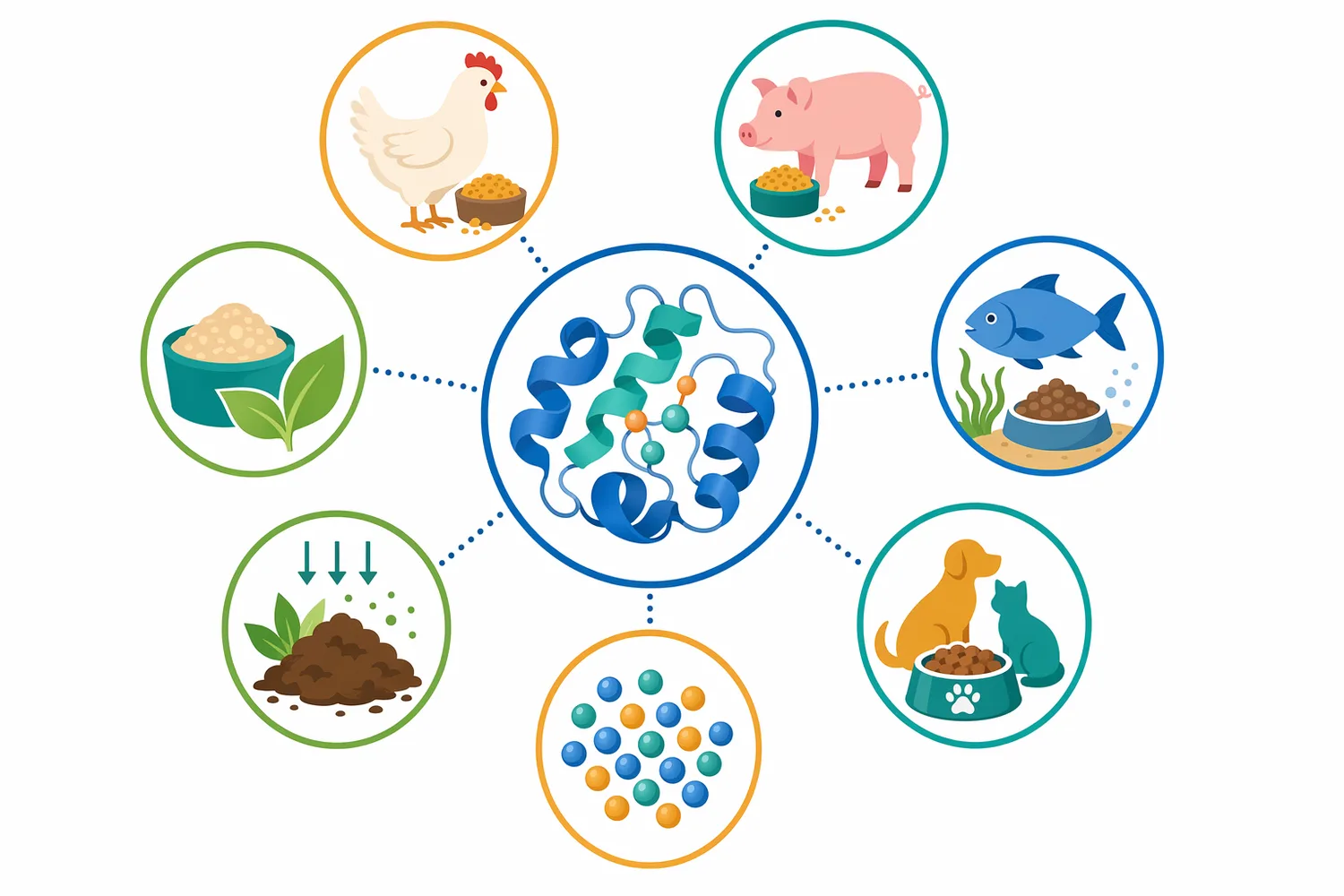
Phytase has the same core reaction across industries, but the reason for using it differs by matrix and end use. The table below shows how the same enzyme chemistry translates into different practical outcomes.
| Application area | Typical phytate-containing material | Main technical purpose | What phytase changes |
|---|---|---|---|
| Poultry feed | Corn, wheat, soybean meal, cereal by-products | Improve phosphorus utilization and support mineral nutrition | Hydrolyzes phytate before it passes through the digestive tract |
| Swine feed | Cereals, oilseed meals, mixed plant-based diets | Increase availability of plant phosphorus and reduce unused phosphorus | Releases phosphate and reduces mineral binding |
| Aquaculture feed | Lupin, soybean, and other plant protein ingredients | Improve phosphorus bioaccessibility in plant-based fish diets | Converts phytate-bound phosphorus into more accessible phosphate |
| Whole-grain and fermented foods | Wholemeal flour, bran-rich products, cereal fermentations | Improve mineral solubility and reduce anti-nutritional phytate | Dephosphorylates IP6 during hydration or fermentation |
| Plant ingredient processing | Brans, pulses, protein concentrates | Improve nutritional quality of plant-derived ingredients | Lowers intact phytate and changes the inositol phosphate profile |
The key point is that phytase is not a general “plant food enhancer.” It is a specific phytate hydrolysis tool. Its strongest value appears when phytate is a known constraint and the processing or digestive environment gives the enzyme access to that substrate [2].
The most strongly supported benefit is improved release of phosphorus from phytate. This is the direct biochemical function of phytase and the basis for its use in animal feed, food fermentation, and plant ingredient processing [2].
In monogastric animal diets, better release of plant-bound phosphorus can reduce dependence on added inorganic phosphorus when the overall formulation is designed around the enzyme’s contribution. This is one reason phytase has become a standard feed-enzyme category in poultry and swine nutrition [3].
Improved mineral availability is also well supported mechanistically, especially for minerals affected by phytate binding. Zinc is a major example because zinc-phytate interactions are significant in the digestive tract, and phytase can reduce the intact phytate responsible for that binding [5].
Environmental mitigation is another established reason for phytase use in feed. If more phosphorus is absorbed and less passes through unused, manure phosphorus output can decrease, reducing nutrient loss from animal production systems. Aquaculture reviews make the same connection between phytase, nutrient utilization, and lower phosphorus release to the environment [8].
Food and ingredient applications are more matrix-specific but technically credible. Studies with wholemeal wheat bread and cereal fractions show that phytase-related activity can influence mineral solubility and phytate management in real plant-based food systems, not only in purified laboratory substrates [4].
Phytase does not digest every anti-nutritional factor in plant materials. It does not break down cellulose like cellulase, starch like amylase, or protein like protease as its primary role. Its core substrate is phytate, and its main chemical action is phosphate ester hydrolysis [2].
Phytase also does not create phosphorus, calcium, zinc, or other minerals. It can only release or improve access to nutrients already present in the feed or food material. If the raw material has limited total mineral content, phytase cannot compensate by generating minerals that are not there [5].
It should not be described as a guaranteed growth promoter. Animal performance responses depend on many factors, including ingredient composition, phytate level, mineral balance, feed processing, species, life stage, and overall diet design. Reviews of phytase supplementation in broilers support nutrient-utilization benefits while still treating performance as context-dependent [3].
For human nutrition language, care is also needed. A phytase supplement, phytase supplements, or zinc/phytase supplement may appear in search terminology, but industrial phytase is best described by its enzymatic function rather than by unsupported health claims. The defensible statement is that phytase reduces phytate and can improve mineral solubility or bioaccessibility under suitable conditions [4].
Enzymes.bio supplies Phytase for buyers who need a phytate-degrading enzyme product in a straightforward online purchasing format. The product is sold directly online by the 1 kg unit; after online payment, the order is processed and shipped.
A Certificate of Analysis and Safety Data Sheet are included with the order. Enzymes.bio’s role is to supply the enzyme product through this direct online model, not to act as the enzyme manufacturer or as an application laboratory.
For technical users, the important takeaway is clear: phytase is a well-established enzyme for reducing phytate in plant-based feed and food matrices. Its value comes from a concrete mechanism—stepwise removal of phosphate groups from phytic acid—which releases phosphate and reduces phytate’s mineral-binding effect [2].
Phytase is most useful where plant ingredients contain enough phytate for that molecule to limit phosphorus, zinc, calcium, or broader mineral availability. In poultry, swine, aquaculture, cereal food, and plant-ingredient processing, the same enzyme reaction can support better nutrient access by converting phytate-bound phosphorus into more available phosphate [8].
The strongest evidence base is in animal nutrition, especially poultry and pigs, where phytase supplementation has been studied against outcomes such as mineral utilization, phosphorus digestibility, bone characteristics, and growth performance. Food applications are also technically relevant, particularly in whole-grain and fermented systems where phytate reduction can improve mineral solubility [6].
For buyers looking for phytase enzyme availability without a quotation process, Enzymes.bio offers Phytase in a 1 kg online purchase format with order documentation included. The science behind the product is specific, practical, and well established: phytase targets phytate, releases phosphate, and reduces the nutrient-binding effect of intact phytic acid.
Sold by the 1 kg unit, in stock and ready to ship. Order directly on our store — pay online and we process your order. A Certificate of Analysis and Safety Data Sheet are included with every order.
Buy Phytase →Numbered in order of first citation. Open-access sources, each verified reachable at publication; citation numbers in the text link here.