
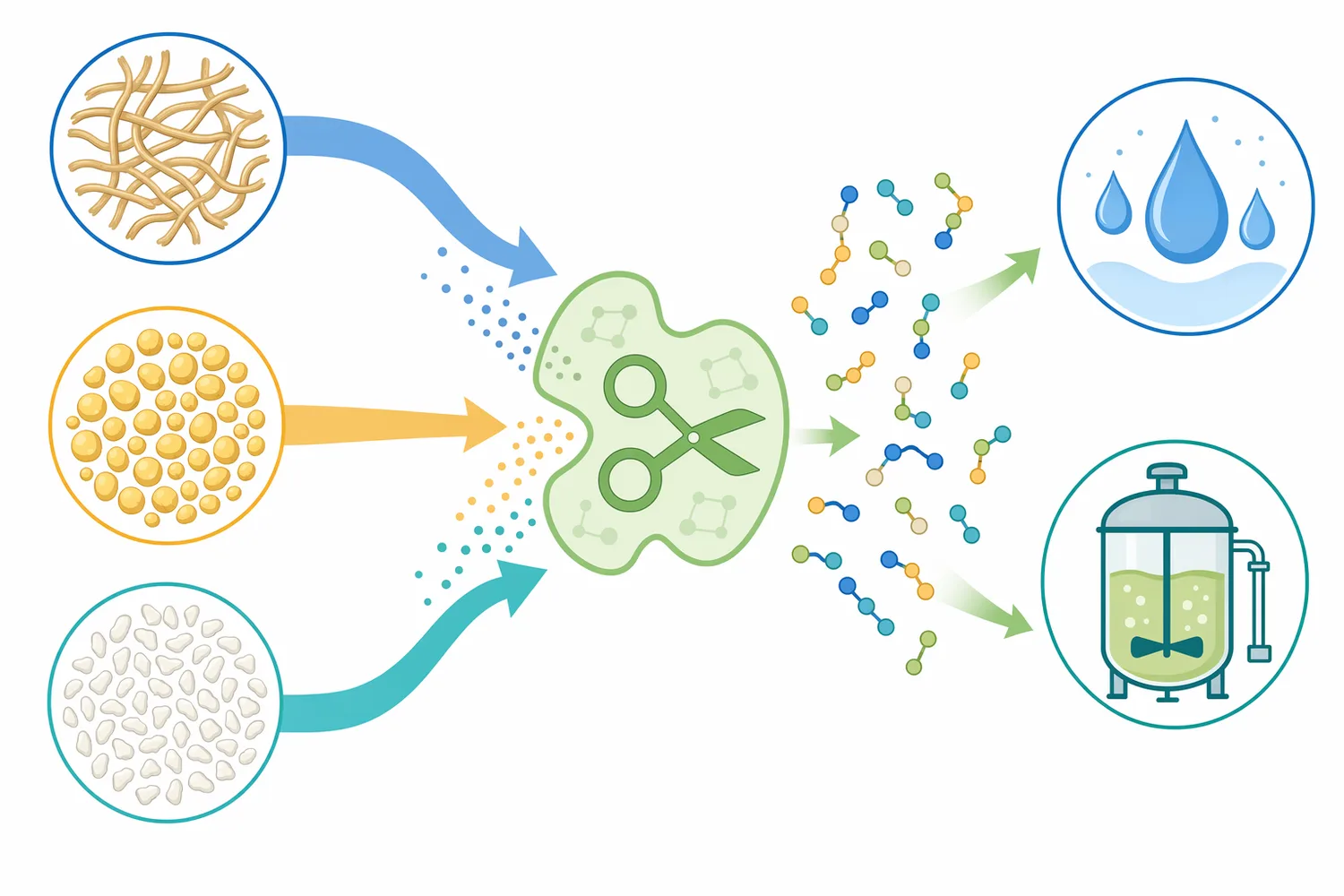
Plant Proteolytic Enzyme Wheat Gluten Flour Special Enzyme For Corn And Rice Hydrolysis is a cereal protein hydrolysis aid supplied by Enzymes.bio for buyers who need to modify wheat gluten flour and protein-containing corn or rice materials. It works by cleaving peptide bonds in cereal proteins, converting part of the intact protein network into shorter peptides that can disperse more easily, change viscosity and texture, and contribute peptide nitrogen in fermentation or ingredient systems.
This enzyme should be understood as a protease, not as an amylase, cellulase, or all-purpose grain-degrading enzyme. In wheat, its primary action is on gluten proteins; in corn, it is relevant to corn gluten meal and zein-rich protein fractions; in rice, it supports rice protein modification rather than starch conversion. Enzymes.bio supplies the product directly online by the 1 kg unit, with payment handled online and the order processed and shipped with a Certificate of Analysis and Safety Data Sheet included .
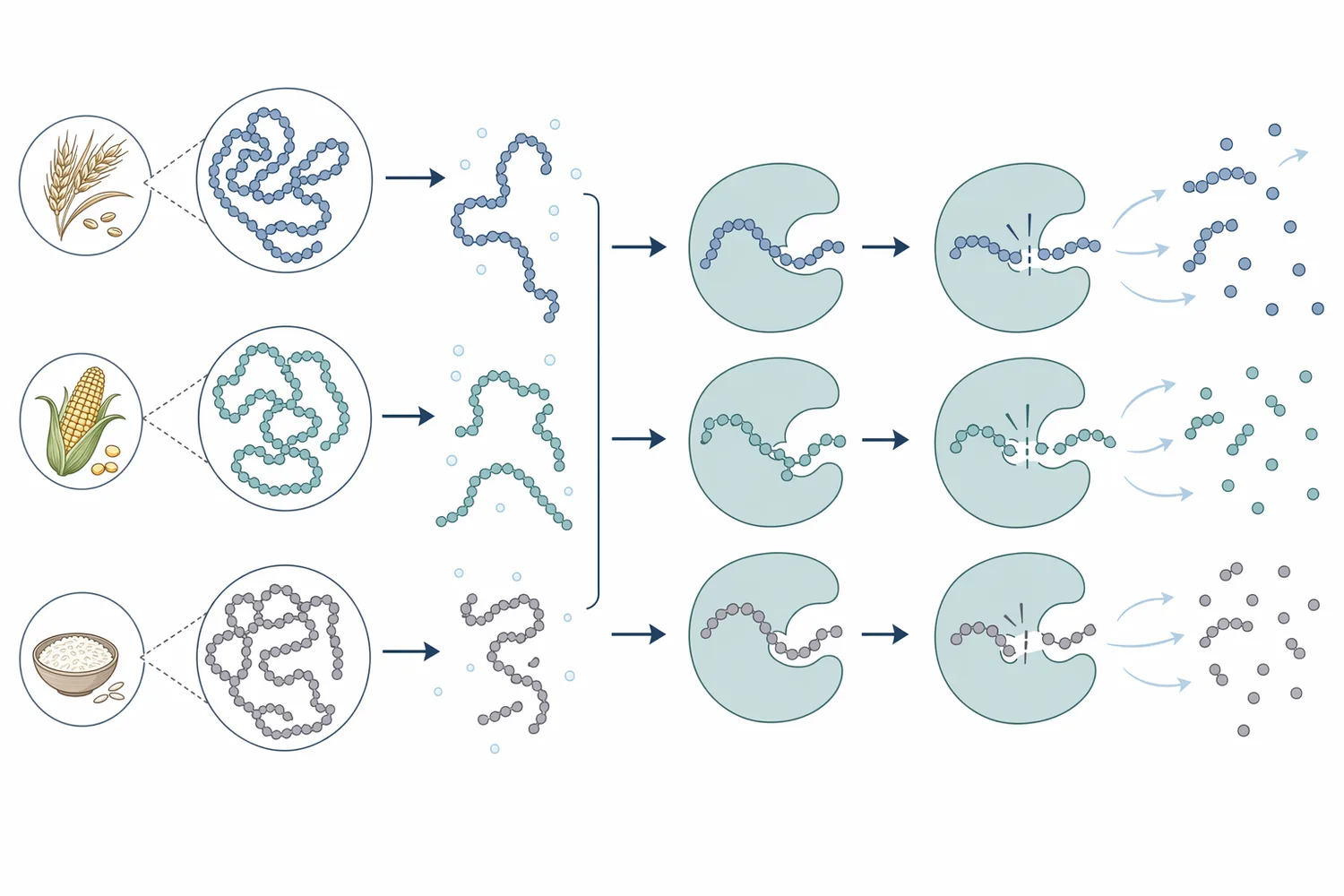
Plant proteins are built from long chains of amino acids folded into compact structures and, in cereal materials, often embedded within starch, fiber, lipid, and mineral matrices. A proteolytic enzyme acts on the protein portion of that matrix by cutting peptide bonds inside or near the ends of protein chains, producing smaller peptides and other amino-containing fragments. Reviews of plant protein modification consistently describe enzymatic hydrolysis as a route to alter solubility, interfacial behavior, digestibility, and bioactive peptide release without needing the harsher conditions associated with some chemical modification methods [1].
For wheat gluten flour, the practical result is a change in the gluten network. Gluten’s viscoelastic behavior comes mainly from gliadin and glutenin proteins: gliadins contribute extensibility and flow, while glutenins contribute elasticity and network strength. When protease treatment cuts these proteins, the continuous network becomes less intact, exposing new charged and hydrophilic groups, reducing molecular size, and changing how the material hydrates, mixes, thickens, foams, emulsifies, or gels [2].
For corn and rice substrates, protease treatment is best interpreted as protein modification inside a broader cereal-processing context. Corn gluten meal contains hydrophobic storage proteins, especially zein-rich fractions, that can be poorly soluble in water; rice proteins also have distinctive composition and structure that affect digestibility and ingredient functionality. A protease can make these protein fractions smaller and more accessible, but starch liquefaction, saccharification, cellulose breakdown, and hemicellulose breakdown remain the work of other enzyme classes [3].
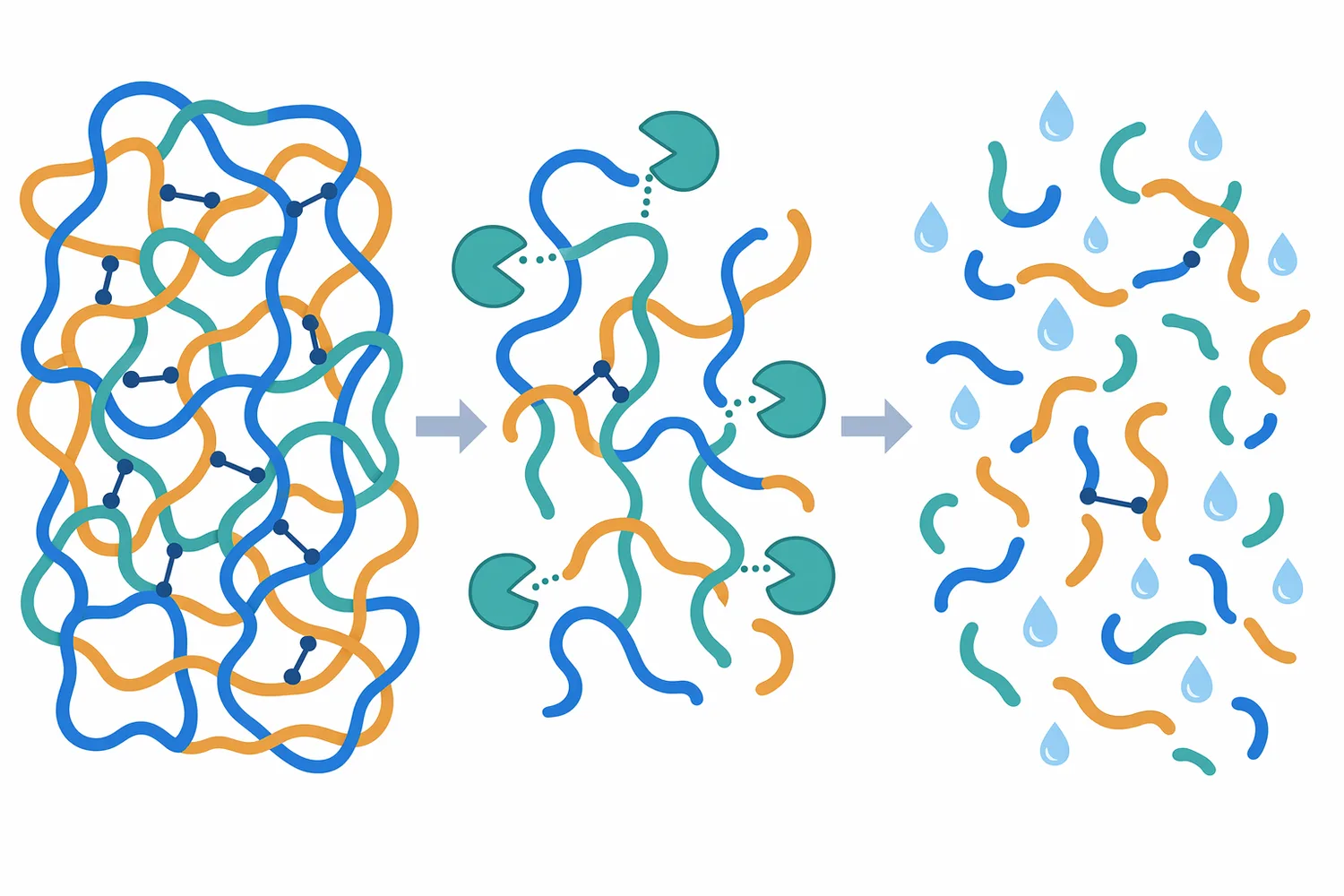
Wheat gluten flour is valuable because it is concentrated, widely available, and protein-rich, but it can be difficult to disperse because its proteins are designed to form a cohesive network. In hydrated systems, glutenin polymers and gliadin fractions interact through disulfide bonding, hydrogen bonding, hydrophobic interactions, and physical entanglement. Partial proteolysis reduces the size and connectivity of these structures, which can lower excessive elasticity and make the protein phase more manageable in slurries, dough-like systems, sauces, batters, and blended plant-protein formulations [4].
The mechanism is not simply “breaking gluten” in an undefined way. Protease access begins at exposed or flexible regions of the protein, especially where hydration has opened the structure enough for the enzyme to bind. Once peptide bonds are cleaved, the average protein chain length decreases, more chain ends are created, and previously buried amino acid side chains may become exposed. This can increase water interaction and dispersibility at moderate hydrolysis levels, while deeper hydrolysis can generate a broad mixture of short peptides with different solubility, bitterness, and surface activity [5].
This is why controlled protein hydrolysis can produce very different outcomes depending on processing conditions. Mild modification may make gluten easier to hydrate or disperse while retaining some body-building functionality. More extensive hydrolysis can weaken structure, reduce dough-like elasticity, and shift the material toward a peptide-rich hydrolysate rather than a network-forming protein. The general plant protein literature emphasizes that functionality depends on the balance between molecular unfolding, peptide bond cleavage, aggregation, and exposure of hydrophilic or hydrophobic regions [6].
In finished food systems, these structural changes can affect texture and stability. Smaller peptides often diffuse faster to air-water or oil-water interfaces, which can support foaming or emulsification in some cases; however, if hydrolysis goes too far, the peptides may become too short to form strong interfacial films. Similarly, limited hydrolysis may reduce viscosity and improve flow, while excessive protein breakdown can remove the structure needed for gel strength or chew. These trade-offs are a central theme in enzymatic modification of plant proteins [1].
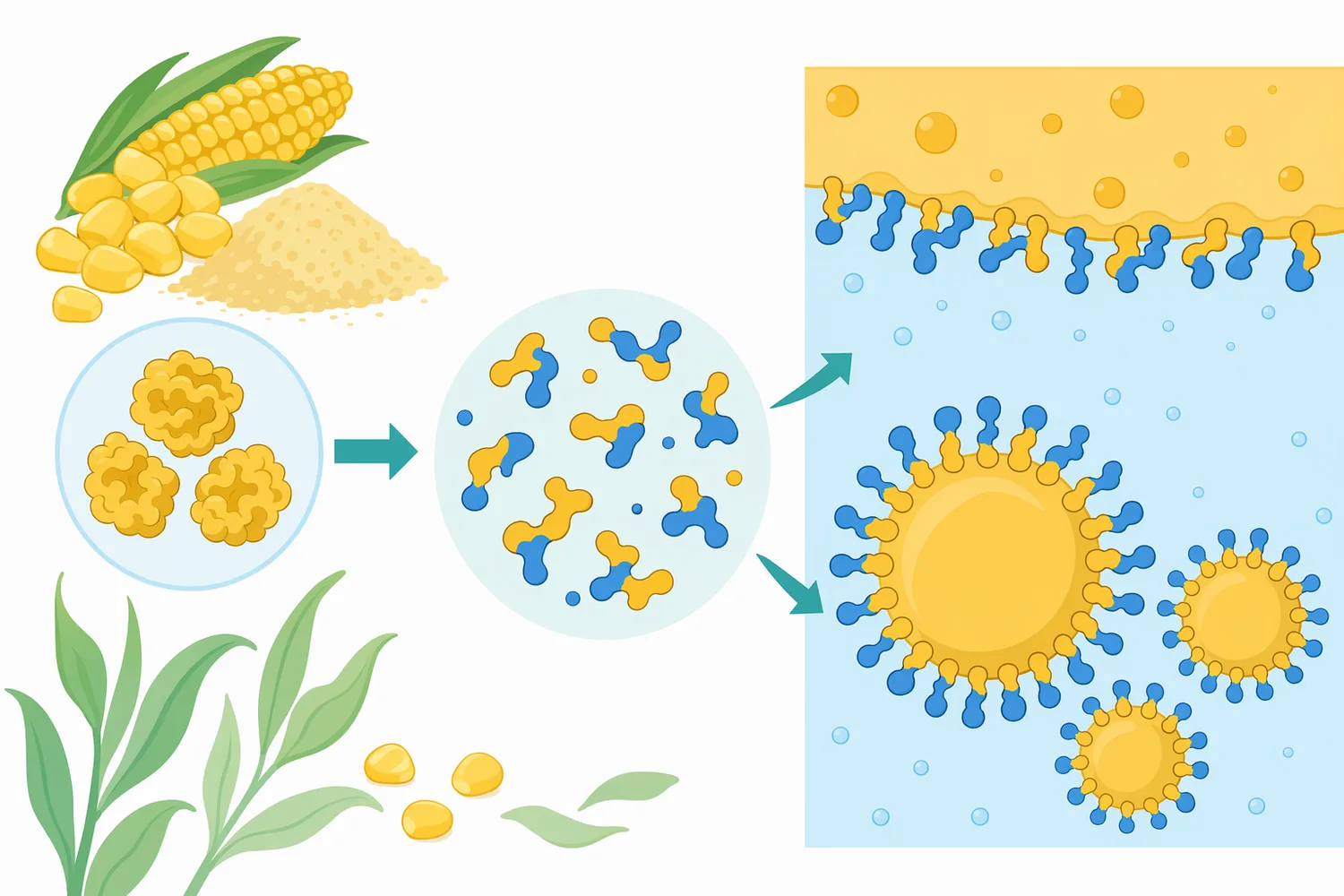
Corn protein hydrolysis is especially relevant where the substrate contains corn gluten meal or other protein-rich fractions rather than mainly starch. Corn gluten meal is known for hydrophobic storage proteins, with zein being the characteristic prolamin fraction. Zein’s strong hydrophobicity can make it difficult to use in aqueous foods unless it is physically, chemically, or enzymatically modified. Reviews focused on zein describe enzymatic and chemical modification as strategies for improving its food application potential [3].
Proteolytic treatment changes corn protein by reducing molecular size and disrupting compact hydrophobic associations. When zein-rich proteins are partially hydrolyzed, the resulting peptides can present a different balance of hydrophobic and hydrophilic regions at their surfaces. That matters because water dispersibility, emulsion formation, and interaction with other food components depend on whether the peptide surface can both interact with water and adsorb at interfaces. In practice, protease can help convert a relatively insoluble corn protein stream into a more functional hydrolysate, though the exact performance depends on the overall formulation and processing route [3].
Research on corn gluten meal hydrolysis also shows why process monitoring is important in industrial cereal protein work. A study on ultrasonic-assisted enzymatic hydrolysis of corn gluten meal used real-time near-infrared monitoring to follow the hydrolysis process, reflecting the practical reality that protein breakdown is dynamic rather than a fixed on/off event. As hydrolysis proceeds, peptide distribution, soluble fraction, and functional behavior change continuously, which is why a corn protein hydrolysate is usually defined by its intended performance rather than by the mere fact that protease was added [7].
Corn gluten meal is also of interest as a source of functional and potentially bioactive peptides. Work on antioxidant cyclic peptides from corn gluten meal reflects a broader trend: cereal protein streams are increasingly treated not only as bulk protein but also as sources of specific peptide structures with targeted functional properties. A plant proteolytic enzyme fits into this landscape as a practical tool for peptide generation, although any claim about a finished product’s bioactivity must be supported by the buyer’s own formulation and validation work [8].
Rice is naturally free from wheat gluten proteins, so protease treatment in rice processing should not be framed as gluten destruction. Instead, its role is to modify rice proteins, improve protein accessibility, and support rice-based ingredient systems where protein behavior affects dispersibility, nutrition, texture, or fermentation performance. A comprehensive review on rice proteins highlights their composition, structural modification, functional properties, and industrial food applications, showing that rice protein is a serious functional ingredient category rather than an inert by-product [9].
Rice proteins can be less soluble than many food formulators would prefer, partly because of their compact structure and the way they associate within grain matrices. Proteolysis can open that structure by cutting proteins into smaller peptides, increasing the number of ionizable end groups, and changing the balance between hydrophobic aggregation and water interaction. In rice beverages, rice protein ingredients, rice malt systems, or gluten-free formulations, this can help create a more dispersible protein phase, though starch behavior still depends on gelatinization and amylolytic processing rather than protease action [9].
Rice malt and rice-derived ingredients also show how cereal hydrolysis often involves multiple biochemical transformations. Pilot-scale work on gluten-free rice malt extract powder reflects the industrial interest in rice as a base for gluten-free food applications, where carbohydrate conversion, flavor development, soluble solids, and protein-derived components may all matter. In such systems, protease can contribute to the protein side of the process while other enzymes and thermal steps govern starch conversion and final extract characteristics [10].
Because rice applications often overlap with gluten-free product development, it is important to keep the terminology precise. A protease used with rice is not “removing gluten” from rice; rather, it is modifying rice protein. That distinction protects product accuracy and helps avoid inappropriate claims. Reviews on plant protein alternatives emphasize that plant proteins differ significantly by source, and successful modification depends on the native structure and matrix of each protein rather than a single universal treatment model [5].
The phrase “corn and rice hydrolysis” can mean several different things in industry. It may refer to starch conversion into sugars, fiber breakdown into fermentable carbohydrates, protein hydrolysis into peptides, or a combined process where several of these happen in sequence. A plant proteolytic enzyme addresses the protein part of that picture. It does not replace amylase for starch, cellulase for cellulose, or xylanase for hemicellulose.
| Enzyme class | Main substrate in cereals | What actually changes | Typical process contribution |
|---|---|---|---|
| Protease / plant proteolytic enzyme | Wheat gluten, corn gluten meal, zein-rich proteins, rice proteins | Peptide bonds are cleaved; protein chains become smaller peptides; protein network strength, solubility, viscosity, and interfacial behavior can change | Protein modification, peptide generation, fermentation nitrogen support, improved protein handling |
| Amylase / glucoamylase-type enzymes | Starch in wheat, corn, and rice | Starch chains are broken into smaller dextrins and sugars | Liquefaction, saccharification, brewing, malt extract, sweetener, and fermentation sugar production |
| Cellulase | Cellulose in bran, husk, straw, cob, and other fibrous residues | Cellulose fibers are hydrolyzed into shorter carbohydrates and sugars | Biomass conversion, fiber modification, fermentable sugar release from residues |
| Xylanase / hemicellulase | Arabinoxylans and hemicelluloses in grain cell walls | Cell-wall polysaccharides are shortened, reducing viscosity and improving extractability | Dough and mash handling, fiber modification, cereal extract processing |
| Phytase | Phytate-bound phosphorus in bran and grain fractions | Phytate is dephosphorylated, releasing more available phosphorus and reducing mineral binding | Nutritional improvement and fermentation support |
This distinction is especially important for corn and rice. If the process target is a protein hydrolysate, protease is directly aligned with the substrate. If the target is glucose syrup, ethanol sugar release, or fiber saccharification, protease may still assist by modifying proteins around the matrix, but the primary conversion requires carbohydrate-active enzymes. Current cereal and plant-protein research supports this multi-enzyme view rather than treating one enzyme as a universal solution [11].
Proteases are often discussed by the pH environment in which they are most useful. This is a conceptual classification, not a substitute for the documentation supplied with a specific product order. The key point is that protein structure and enzyme shape both respond to pH: if the processing environment changes the charge pattern of the substrate or the enzyme’s active site, hydrolysis behavior changes as well.
| Protease environment | Conceptual behavior | Typical substrate effect | Where it may matter in cereal processing |
|---|---|---|---|
| Acid-side protease conditions | Protein substrates may unfold differently as charge balance shifts; some enzymes remain active where acidic foods or fermentations operate | Can help hydrolyze proteins in acidic slurries or fermented systems when the enzyme remains compatible | Acidified cereal preparations, fermented grain systems, some flavor or peptide processes |
| Near-neutral protease conditions | Often compatible with mild food-processing environments and many hydrated cereal slurries | Can support controlled protein modification while limiting extreme protein denaturation | Wheat gluten dispersions, corn protein hydrolysates, rice protein modification, mixed plant-protein systems |
| Alkaline-side protease conditions | Higher pH can increase swelling or unfolding of some proteins, improving access, while also changing peptide charge | Can produce stronger solubilization effects in some protein systems but may also alter flavor, color, or downstream compatibility | Specialized protein extraction or hydrolysis steps where the broader process tolerates alkaline conditions |
The science behind this table is structural rather than merely procedural. pH influences ionization of amino acid side chains, which changes protein folding, aggregation, and enzyme-substrate attraction. Temperature, hydration, mixing, and contact time also affect how often the enzyme collides with accessible peptide bonds. Reviews of plant protein modification repeatedly stress that functional outcomes come from the combined effect of protein structure, process conditions, and the extent of hydrolysis [2].
One of the most useful outcomes of protease treatment is improved protein dispersibility. Large storage proteins can aggregate because hydrophobic regions cluster away from water, while disulfide-linked or physically entangled networks resist dispersion. When protease cuts the chains, the fragments may hydrate more readily, move more freely, and remain suspended more easily. This is why enzymatic hydrolysis is widely studied as a tool for improving plant protein solubility and functionality [1].
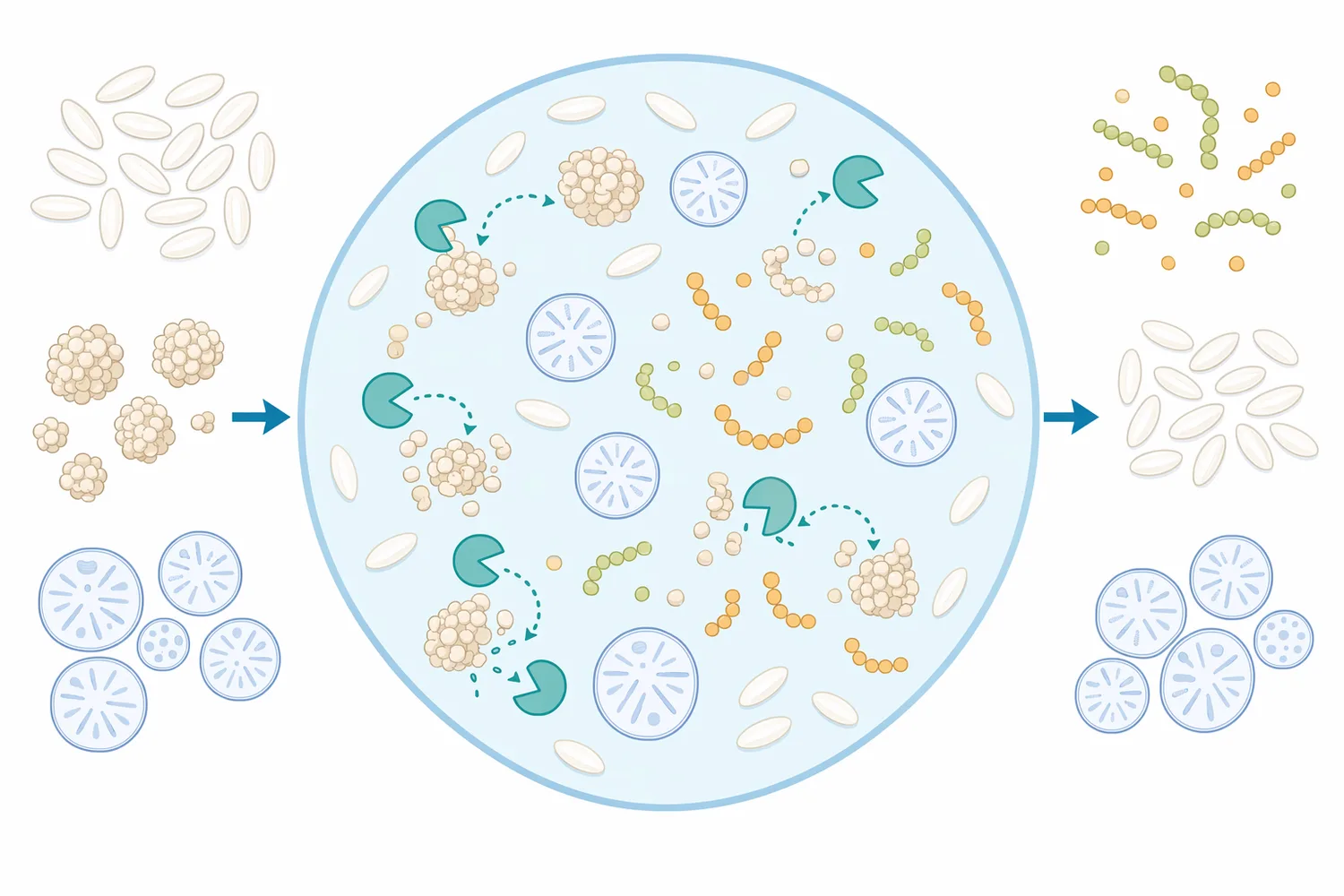
Proteolysis can also change viscosity and flow. In wheat gluten flour, intact gluten proteins can form a continuous elastic network when hydrated and worked. Cutting those chains reduces network continuity, which can lower resistance to mixing or pumping in hydrated systems. In corn and rice protein dispersions, smaller peptides can reduce particulate aggregation and change how the protein phase interacts with starch, lipids, fibers, and salts. These changes are valuable when the goal is not to build dough strength but to create a manageable hydrolysate or functional ingredient [4].
Foaming and emulsification can improve when hydrolysis creates peptides that move quickly to interfaces and expose both water-loving and oil- or air-interacting regions. However, the relationship is not linear. Peptides must be large enough and flexible enough to form a stabilizing film; if hydrolysis becomes too extensive, the fragments may adsorb but fail to create durable interfacial structure. Reviews on modified plant proteins for encapsulation and delivery applications describe this balance between solubility, surface activity, and structural integrity [12].
Protein hydrolysis can also support fermentation by releasing peptides and amino-containing nitrogen. Microorganisms often benefit from accessible nitrogen sources, and cereal substrates may contain proteins that are not immediately available without enzymatic or biological breakdown. In grain fermentations, protease can therefore complement starch-converting enzymes: amylases release fermentable carbohydrates, while proteases help release peptide nutrients from the protein fraction. The broader literature on enzymatic plant protein modification supports peptide generation as one of the central outcomes of controlled hydrolysis [6].
Plant protein hydrolysates are increasingly studied not only for processing functionality but also for nutritional and bioactive potential. Enzymatic hydrolysis can release peptide sequences that were inactive or inaccessible inside the parent protein. Once liberated, these peptides may show antioxidant activity, enzyme-inhibitory effects, or other measured activities in research systems, although translating those findings into finished-product claims requires appropriate substantiation [1].
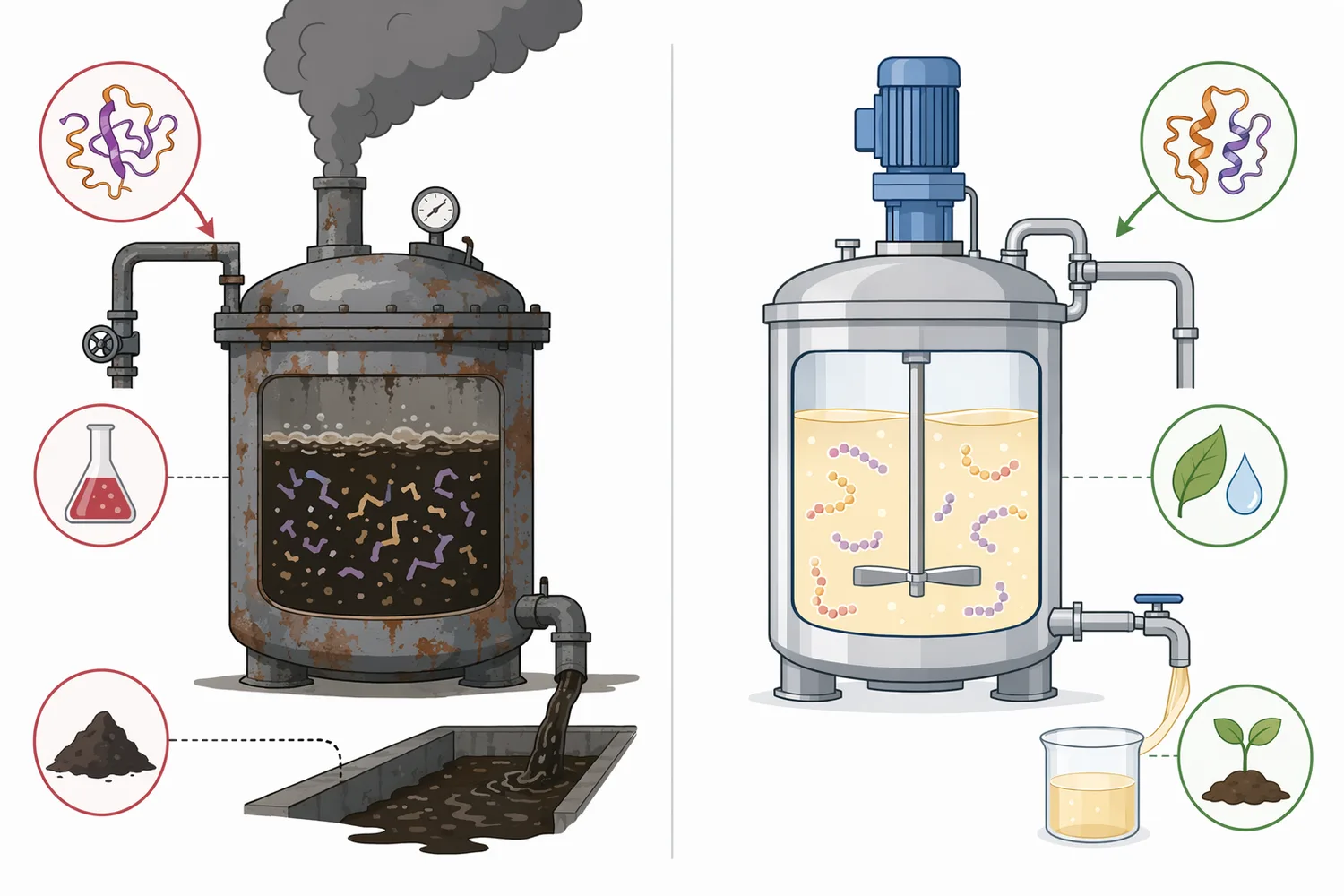
Evidence from non-cereal plant proteins helps explain the mechanism. A comparative study of chickpea and lentil proteins treated with plant proteases such as bromelain, ficin, and papain focused on enhanced oligopeptide and free tryptophan release. The key lesson for cereal processing is that plant proteases can generate distinct peptide profiles depending on enzyme specificity and substrate structure; the substrate is not merely “digested,” but converted into a new molecular mixture with its own functional properties [13].
For corn gluten meal, research interest in antioxidant cyclic peptides shows how cereal protein streams may become sources of higher-value peptide ingredients. The protease step can be part of producing a peptide pool, while separation, concentration, and finished formulation determine the final ingredient profile. This reinforces a practical point: protease treatment is a biochemical conversion step, not a finished claim by itself [8].
For rice proteins, structural modification is similarly tied to food functionality. Rice protein reviews describe modification approaches that influence solubility, digestibility, emulsification, foaming, and gelation. Protease treatment can therefore support rice-based foods where protein performance is important, including gluten-free products, plant-protein blends, beverages, and semi-solid foods, provided the final formulation is validated for the desired texture and stability [9].
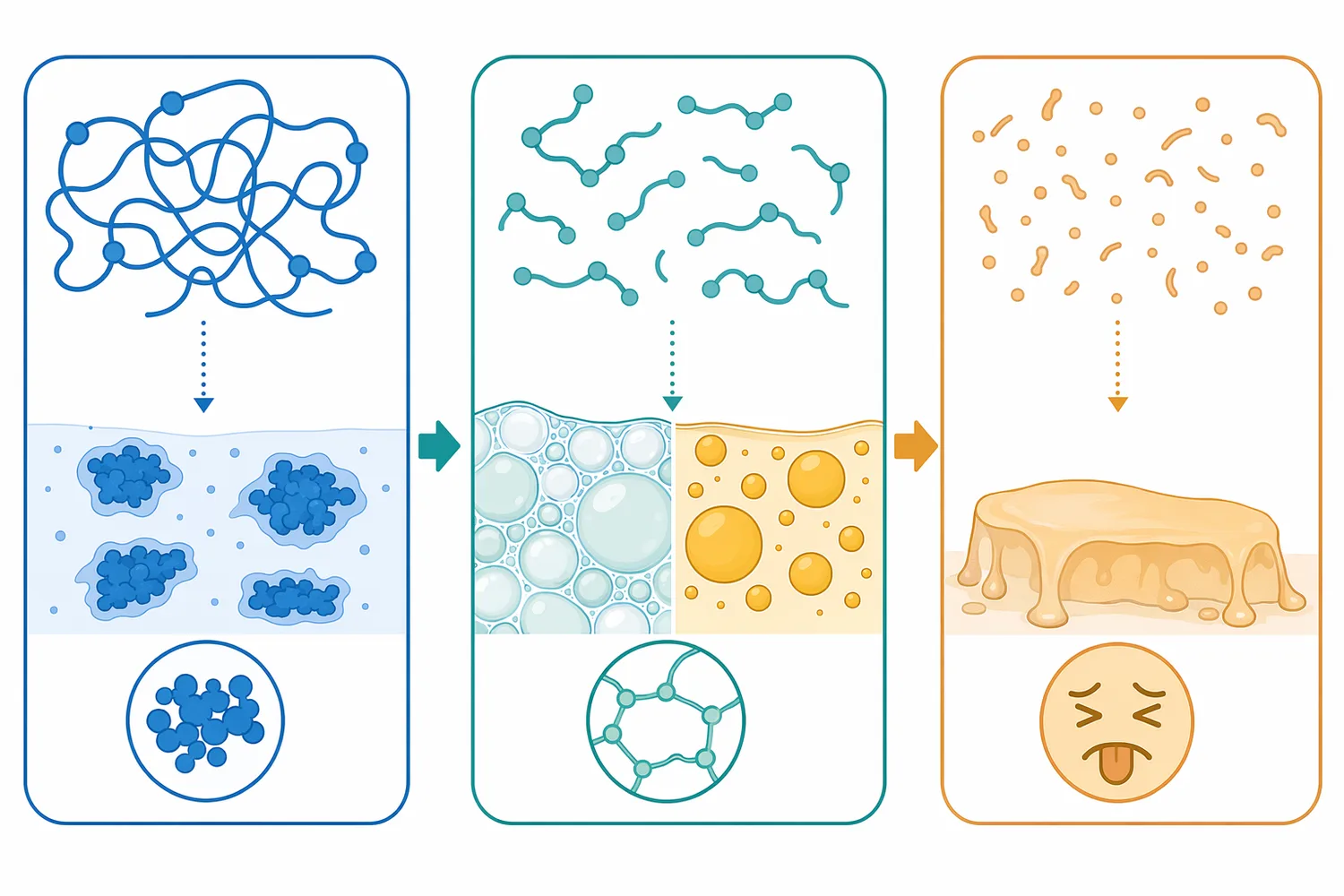
Protein hydrolysis has a useful range, but more hydrolysis is not always better. As proteins are cut into peptides, hydrophobic amino acid sequences can become exposed. These sequences may contribute bitterness, especially when peptide profiles contain small hydrophobic fragments. This is a known issue across plant protein hydrolysates and is one reason controlled hydrolysis is preferred over excessive protein breakdown [5].
Texture can also move in opposite directions depending on the product. In a wheat gluten system where elasticity is a problem, partial proteolysis may be beneficial because it weakens the network and improves processability. In a bakery or meat-analogue structure where gluten-like strength is needed, the same breakdown could reduce elasticity, chew, or shape retention. Developments in plant proteins for meat and fish analogues show that protein structure must be managed carefully because gelation, fibrous texture, water binding, and bite depend on maintaining the right molecular architecture [14].
For emulsions, foams, and encapsulation systems, the same balance applies. Moderate hydrolysis can increase solubility and surface mobility, while over-hydrolysis can reduce film strength. Research on modified plant proteins as microencapsulating agents shows that structural changes can improve delivery and protection of bioactive compounds, but performance depends on the modified protein’s ability to form and maintain an effective barrier or interface [15].
Because the product name includes wheat gluten flour, it is important to distinguish gluten modification from a guaranteed gluten-free outcome. Protease treatment can reduce intact gluten structures and generate smaller gluten-derived peptides. It may also reduce measurable gluten epitopes under certain controlled processes, depending on enzyme specificity and treatment conditions. However, gluten-related safety and labeling require validated finished-product testing and compliance with the rules in the intended market [4].
This distinction matters for buyers using wheat-derived materials. A protease can support process development for wheat gluten hydrolysates, wheat bran treatment, or modified wheat protein ingredients, but the presence or absence of immunologically relevant peptide sequences is not determined by the enzyme name alone. Reviews on plant proteins and gluten-related modification emphasize that protein structure, peptide sequence, and digestion resistance all influence final biological relevance [2].
For rice applications, the situation is different because rice does not contain wheat gluten proteins. Protease treatment may support gluten-free formulation by improving rice protein functionality, but it is not needed to remove gluten from rice itself. Gluten-free rice malt work illustrates the interest in rice as a cereal base for gluten-free products, while protease remains one possible tool for improving the protein side of rice-based systems [10].
This plant proteolytic enzyme is most directly aligned with wheat gluten flour modification. Buyers may use it where intact gluten is too elastic, too cohesive, or insufficiently dispersible for the intended process. By partially hydrolyzing gliadin and glutenin structures, the enzyme can help shift wheat gluten from a network-forming material toward a more dispersible protein hydrolysate or modified ingredient system [4].
A second application area is corn protein hydrolysis, particularly corn gluten meal or zein-rich streams. Protease treatment can help generate smaller peptides from hydrophobic corn proteins, supporting improved dispersion, functional ingredient development, or peptide-oriented processing. Research on zein modification and corn gluten meal hydrolysis supports this application direction, while also showing that corn protein behavior is strongly influenced by its hydrophobic storage protein structure [3].
A third application area is rice protein modification in rice-based foods and ingredient systems. In rice slurries, rice protein concentrates, rice malt-related products, or gluten-free formulations, protease can contribute to protein softening, peptide release, and dispersibility. The enzyme does not perform the starch-converting role of amylases, but it can complement rice processing where protein behavior affects texture, stability, or nutrition [9].
A fourth application area is fermentation support in cereal systems. Protease-generated peptides and amino-containing compounds can contribute nitrogen nutrition, while other enzymes release fermentable sugars from starch or fiber. This division of labor is useful in wheat, corn, and rice processes where the carbohydrate and protein fractions both influence fermentation performance [6].
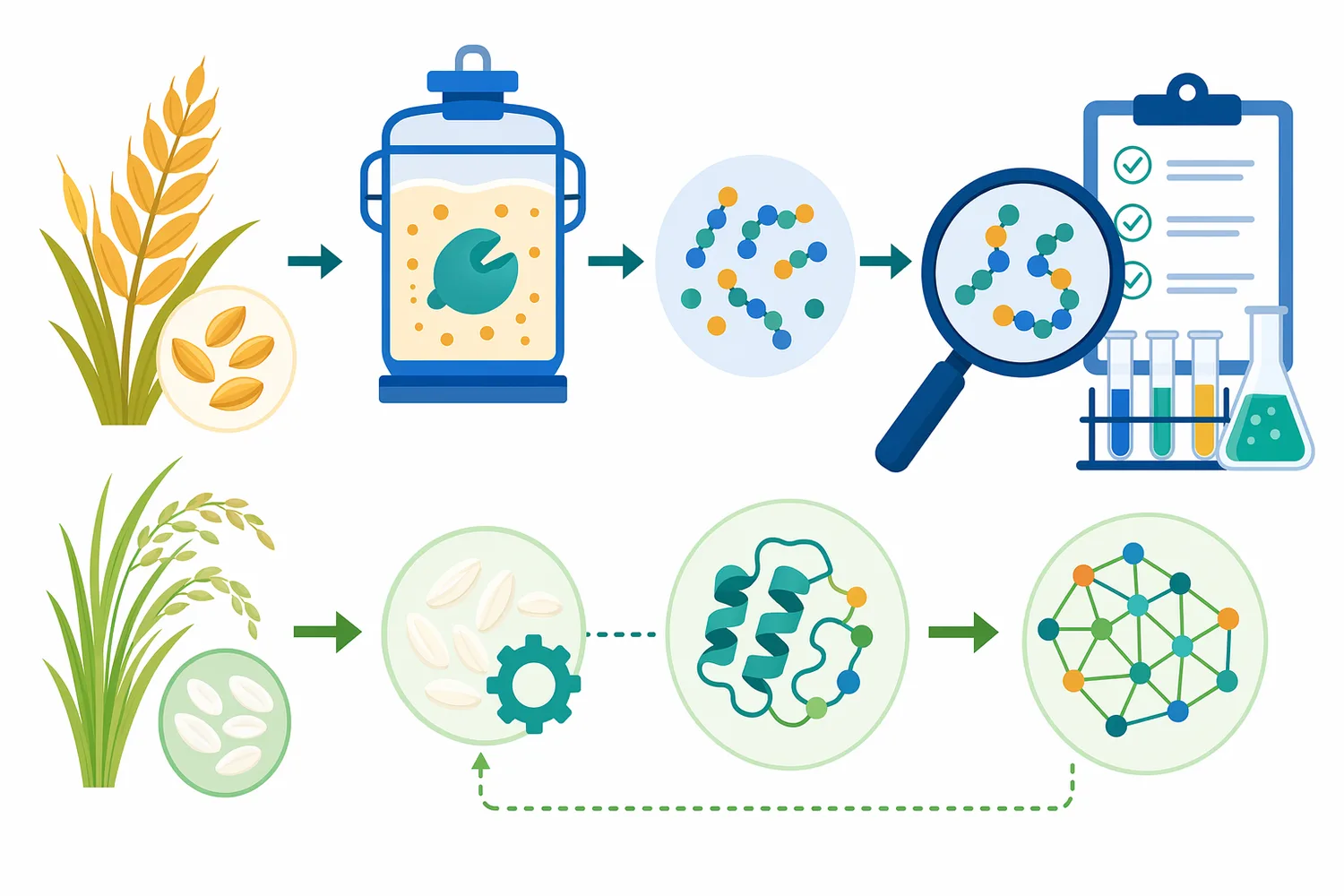
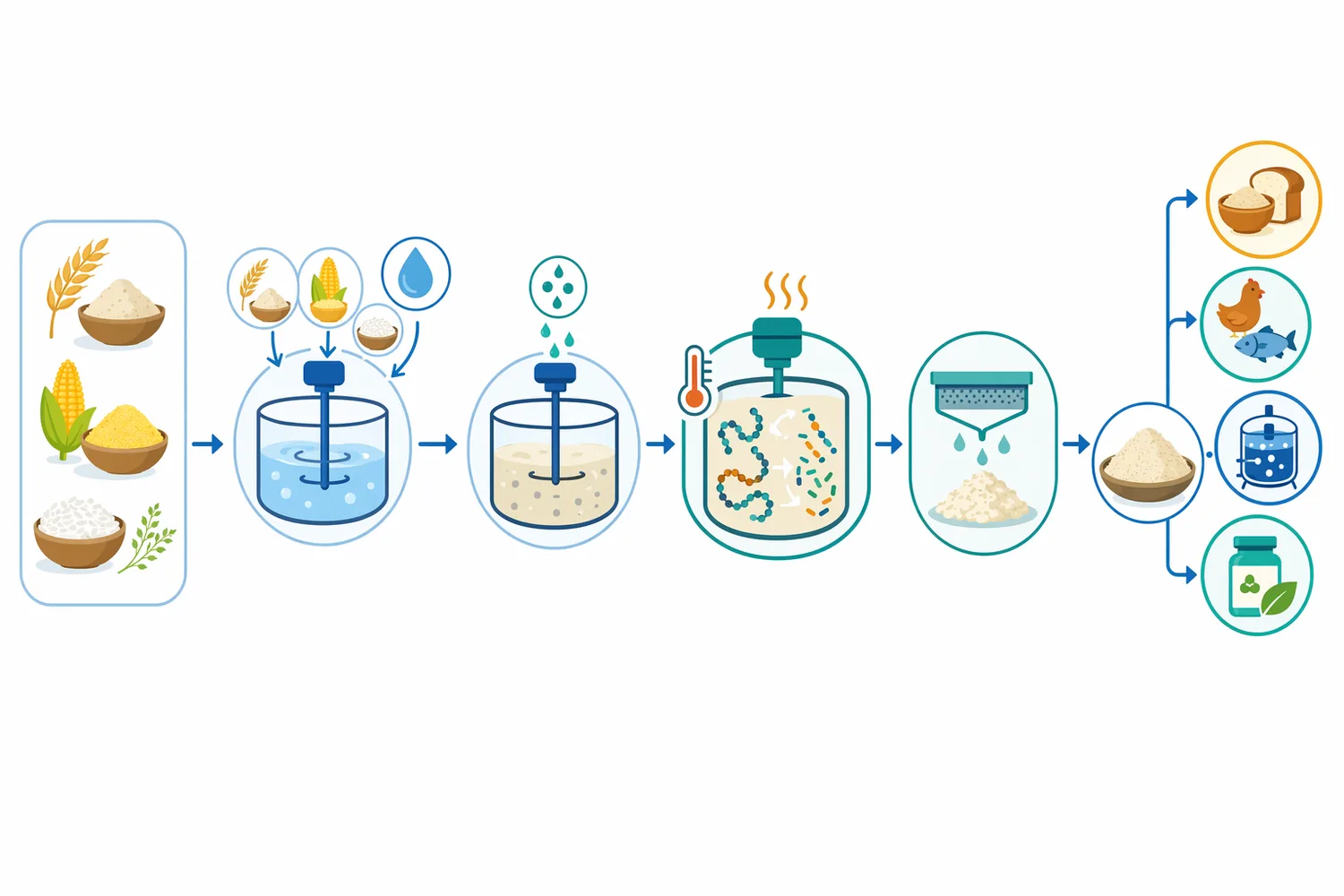
In real processing, the enzyme needs access to hydrated protein. Dry flour, compact granules, or poorly dispersed protein particles limit enzyme contact because the active site must physically reach peptide bonds. Hydration, mixing, and sufficient contact time allow the protein to swell, unfold partially, and expose cleavage sites. This is why protease treatment is commonly used in slurries, dough-like masses, mashes, dispersions, or other water-containing systems rather than as a purely dry reaction [1].
Thermal steps also matter because heat changes both the substrate and the enzyme. Moderate heating may help unfold proteins and improve access, but excessive heat can denature the enzyme or drive protein aggregation before hydrolysis occurs. Later heating can be useful when the desired extent of hydrolysis has been reached, because it can reduce remaining enzymatic activity and stabilize the functional state of the ingredient. Plant protein modification reviews describe this interaction between enzymatic treatment and physical processing as central to final performance [6].
The buyer should also expect different raw materials to respond differently. Wheat gluten flour, wheat bran, corn gluten meal, rice protein, rice flour, and mixed cereal substrates do not present the same protein composition or accessibility. Even within the same crop, milling, heat history, particle size, and prior extraction can change how easily protease reaches the protein. Structure-function reviews of plant proteins emphasize that the starting matrix strongly influences the outcome of any modification method [2].
Enzymes.bio supplies Plant Proteolytic Enzyme Wheat Gluten Flour Special Enzyme For Corn And Rice Hydrolysis directly through its online product page by the 1 kg unit. The buyer can place the order online, pay online, and the order is then processed and shipped. A Certificate of Analysis and Safety Data Sheet are included with the order, supporting straightforward receipt and internal documentation for the purchased product .
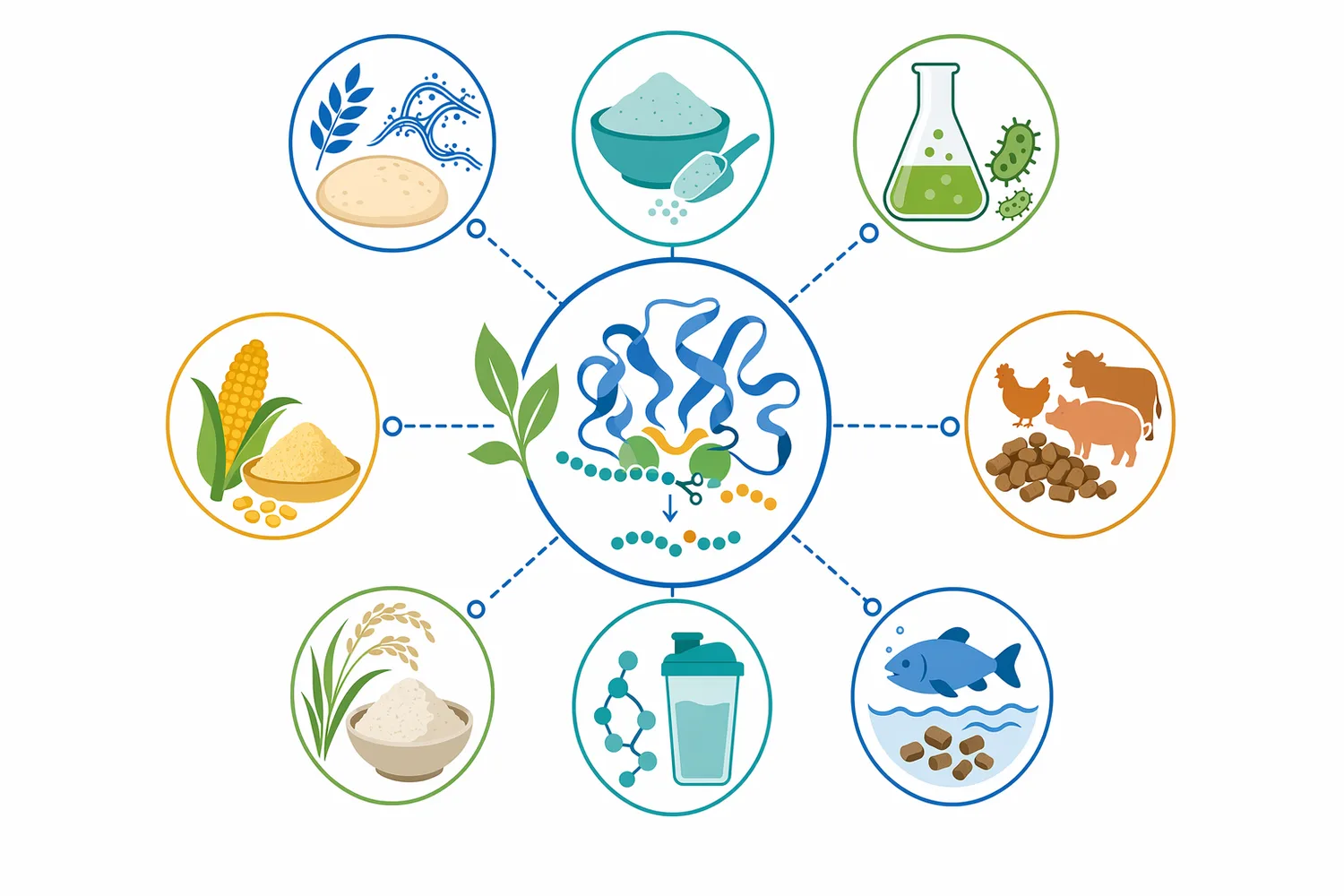
This educational article is intended to clarify what the enzyme does and where it fits scientifically. It should be read as a practical explanation of cereal protein hydrolysis: protease for protein, amylase for starch, cellulase and hemicellulase for fiber, and phytase for phytate. Within that framework, a plant proteolytic enzyme is a focused tool for modifying wheat gluten flour, corn protein fractions, and rice proteins into smaller peptide-rich materials with changed handling and functional properties [1].
Plant proteolytic enzymes are well supported in the scientific literature as tools for modifying plant proteins. In wheat gluten flour, they cut gliadin and glutenin structures, weakening or reshaping the gluten network and creating smaller peptides with different hydration, viscosity, and functional behavior. In corn, they are relevant to corn gluten meal and zein-rich protein streams, where hydrophobic storage proteins can be converted into more functional hydrolysates. In rice, they support rice protein modification and gluten-free formulation work without replacing the starch-converting role of amylases [3].
Used with realistic expectations, Plant Proteolytic Enzyme Wheat Gluten Flour Special Enzyme For Corn And Rice Hydrolysis is best understood as a cereal protein hydrolysis aid for buyers who want to change protein structure, improve protein handling, generate peptide-rich hydrolysates, or complement broader grain-processing systems. It is not a universal cereal-degrading enzyme, and it should not be confused with enzymes that hydrolyze starch or fiber. Enzymes.bio makes the product available for direct online purchase in 1 kg units, with the order processed and shipped after online payment .
Sold by the 1 kg unit, in stock and ready to ship. Order directly on our store — pay online and we process your order. A Certificate of Analysis and Safety Data Sheet are included with every order.
Buy Plant Proteolytic Enzyme Wheat Gluten Flour Special Enzyme For Corn And Rice Hydrolysis →Numbered in order of first citation. Open-access sources, each verified reachable at publication; citation numbers in the text link here.