
Pullulanase is a starch-debranching enzyme used in brewing to open α-1,6 branch points in amylopectin-derived dextrins, making those branched fragments easier for amylolytic enzymes to convert into fermentable sugars. In beer production, its main value is cost-effective wort fermentability control: higher attenuation, drier beer profiles, better adjunct starch utilization, and more complete conversion where branched dextrins would otherwise remain in the wort. Pullulanase is most effective as part of a starch-conversion system, complementing α-amylase and glucoamylase rather than replacing them [1].
Enzymes.bio supplies Pullulanase Enzyme for Cost-Effective Beer Brewing for buyers who want to purchase the product directly online by the 1 kg unit. Orders are paid for online, then processed and shipped; a Certificate of Analysis and Safety Data Sheet are included with the order.
Beer brewing is, in part, a controlled starch-conversion process. Malted barley and cereal adjuncts contain starch that must be gelatinized, solubilized, liquefied, and hydrolyzed into sugars that brewing yeast can metabolize. The challenge is that cereal starch is not only made of straight chains: amylopectin contains many α-1,6 branch points, and these branch points create dextrin structures that can resist complete conversion when only ordinary chain-cutting enzymes are active [2].
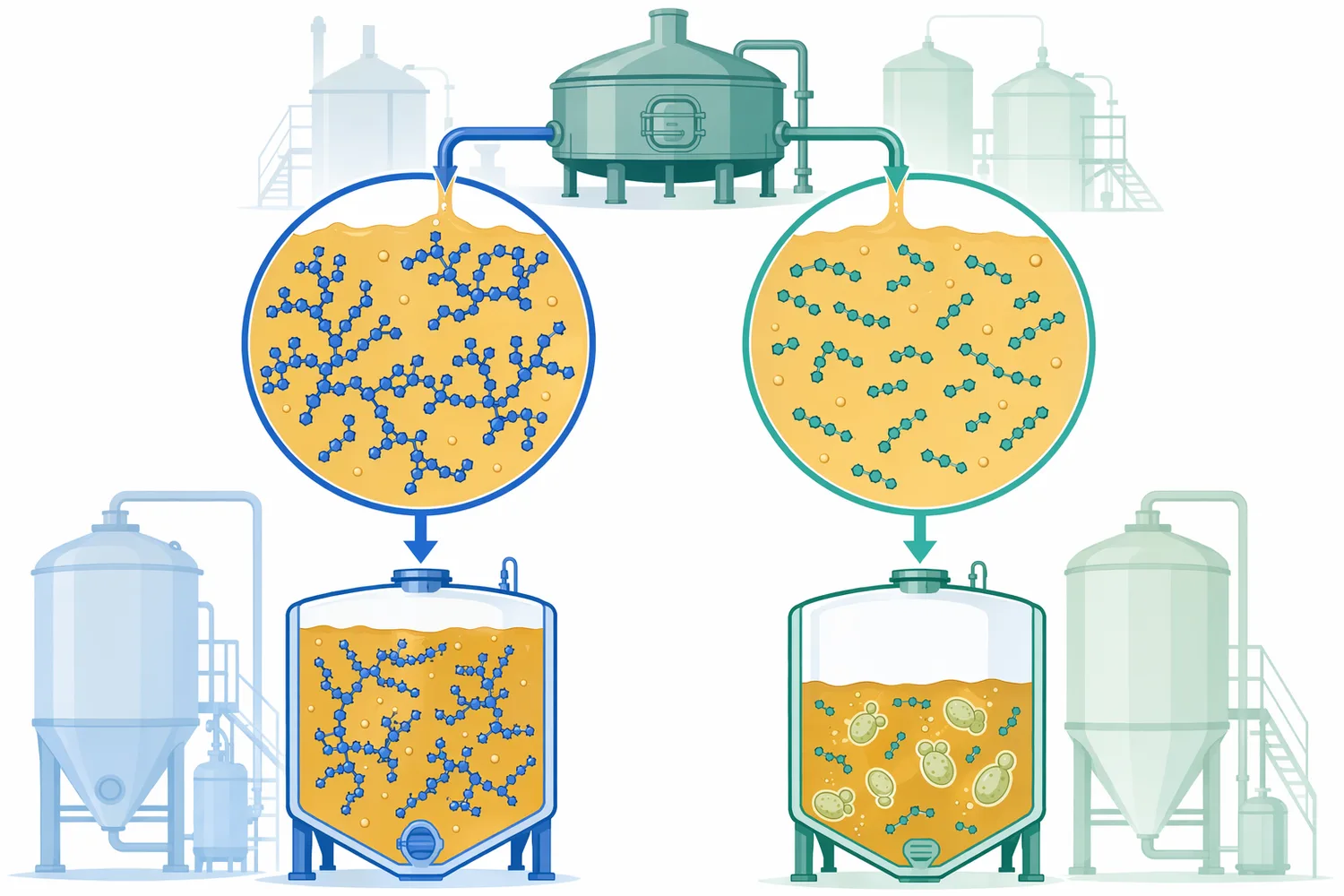
Pullulanase addresses that specific structural bottleneck. Instead of randomly cutting along the linear α-1,4 backbone like α-amylase, pullulanase targets the branch architecture itself. By cleaving α-1,6 linkages in branched starch fragments, it converts “tree-like” dextrins into more linear chains. Those newly linearized fragments are more accessible to β-amylase, glucoamylase, and other saccharifying enzymes, which can then release maltose, glucose, and related fermentable sugars more efficiently [1].
This is why pullulanase is relevant to cost-effective brewing. If the same raw material produces a wort with improved fermentability, the brewer can often achieve a drier fermentation profile, higher apparent attenuation, or better adjunct utilization without relying only on more malt-derived enzymatic power. Research on high-gravity maize mashes specifically investigated pullulanase together with proteolytic enzymes and non-starch-polysaccharide-degrading enzymes, showing that pullulanase belongs in the practical toolkit for cereal-based, high-solids fermentations where starch conversion and fermentability are central process concerns [3].
Starch is mainly composed of amylose and amylopectin. Amylose is mostly linear, while amylopectin is highly branched. In a mash, enzymes do not “see” starch as one uniform substrate; they encounter swollen granules, soluble chains, partially hydrolyzed dextrins, and branched limit fragments produced as other enzymes work. The fine molecular structure of starch has been identified as a significant controller of malting, mashing, and fermentation performance, which means the architecture of the carbohydrate—not just the total starch content—affects brewing outcomes [2].
During mashing, α-amylase can rapidly reduce viscosity and break long starch molecules into shorter dextrins by attacking internal α-1,4 bonds. However, α-amylase does not remove every branch point. β-amylase releases maltose from non-reducing ends, but its action slows or stops near branch points. Glucoamylase can release glucose from chain ends and may work around some branched structures, but debranching improves access because it creates more linear chains with more usable ends for saccharification [4].
Classic wort dextrin research used β-amylase and the debranching enzyme pullulanase to analyze wort dextrin structure, which is important because it shows that wort carbohydrates include branched dextrin fractions that need more than simple linear-chain hydrolysis to be fully understood or converted [4]. In practical brewing language, these branched dextrins are part of why two mashes with similar extract can behave differently in fermentation: one may contain a larger proportion of sugars yeast can consume, while another may retain more residual dextrin and body.
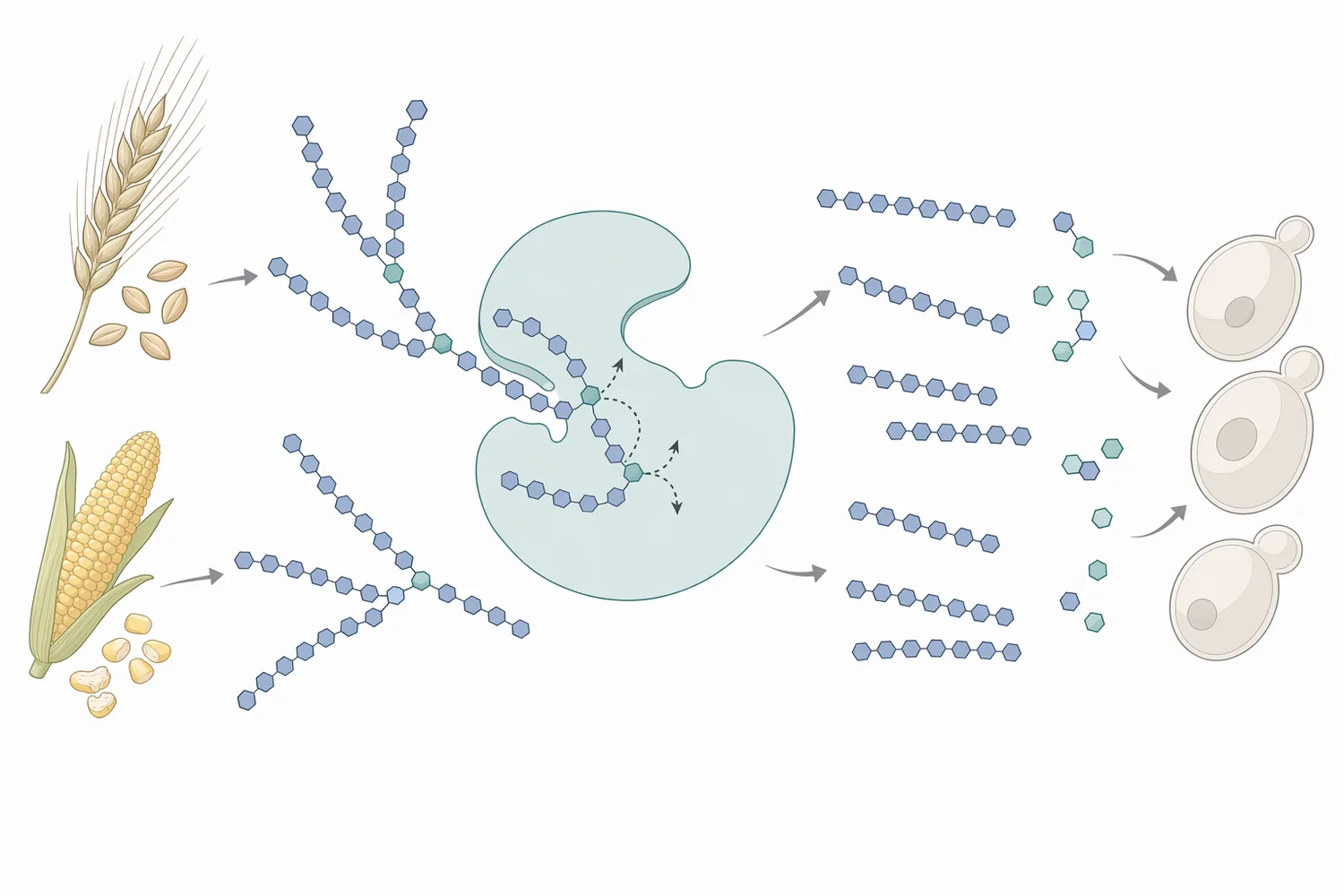
Pullulanase does not directly ferment sugar and does not replace yeast performance. Its contribution happens upstream, in the carbohydrate profile of wort. By changing branched dextrins into less-branched or linear fragments, it shifts the wort toward a composition that brewing yeast can ferment more completely after other amylolytic enzymes finish saccharification. That mechanism is especially relevant when the desired beer is dry, highly attenuated, or lower in residual carbohydrate [5].
Pullulanase is best understood by comparing it with the other enzyme activities normally discussed in starch conversion. Each enzyme changes a different part of the substrate, so their practical effects are complementary rather than interchangeable.
| Enzyme activity | Main substrate action | What changes in the mash or wort | Brewing relevance |
|---|---|---|---|
| α-Amylase | Cuts internal α-1,4 bonds in starch chains | Long starch molecules become shorter dextrins; viscosity falls; starch becomes more processable | Liquefaction and extract development |
| β-Amylase | Releases maltose from non-reducing chain ends | Produces fermentable maltose but slows near branch points | Maltose formation and standard malt-driven fermentability |
| Glucoamylase / amyloglucosidase | Releases glucose from chain ends | Dextrins are converted further toward glucose | High attenuation, dry beer, low residual carbohydrate |
| Pullulanase | Cleaves α-1,6 branch points in amylopectin-derived dextrins | Branched dextrins become more linear and accessible to other enzymes | Debranching, improved fermentability, better adjunct starch utilization |
| β-Glucanase | Breaks β-glucans rather than starch | Wort viscosity and filtration behavior may improve | Lautering, filtration, and high-β-glucan raw materials |
| Protease | Hydrolyzes proteins and peptides | Protein solubility, FAN availability, and foam-active fractions may change | Yeast nutrition and protein modification, not starch debranching |
Pullulanase’s unique value is the α-1,6 branch point. In a simplified example, imagine a branched dextrin with several short side chains. Before debranching, β-amylase can release maltose from exposed ends but cannot pass through the branch junction efficiently. After pullulanase removes the branch point, the side chain becomes a separate linear glucan, creating additional chain ends and less steric obstruction. That makes subsequent saccharification more complete because the rest of the enzyme system has better access [1].
This division of labor also explains why pullulanase alone is not usually described as a complete brewing starch-conversion solution. It does not provide the same liquefying action as α-amylase, and it does not by itself guarantee a highly fermentable wort. Its role is to remove structural barriers so the liquefying and saccharifying enzymes can continue working on starch-derived material that would otherwise remain partly resistant [4].
A high-attenuation beer depends on wort fermentability. When more of the carbohydrate fraction is converted into sugars yeast can consume, the final beer generally finishes drier, with less residual sweetness and a lighter body. Pullulanase contributes by reducing the branched dextrin fraction that can persist after ordinary amylase activity, helping shift the carbohydrate balance toward fermentable sugars when the rest of the process is designed for that outcome [5].
This is especially relevant for beer styles and production goals where dryness is intentional rather than accidental. Light beer innovation literature discusses the technological focus on producing beers with reduced carbohydrate contribution and altered body, which places strong emphasis on controlling fermentable and non-fermentable carbohydrate fractions [5]. Pullulanase does not define the style by itself, but it supports the wort-side chemistry needed for drier, more completely fermented products.
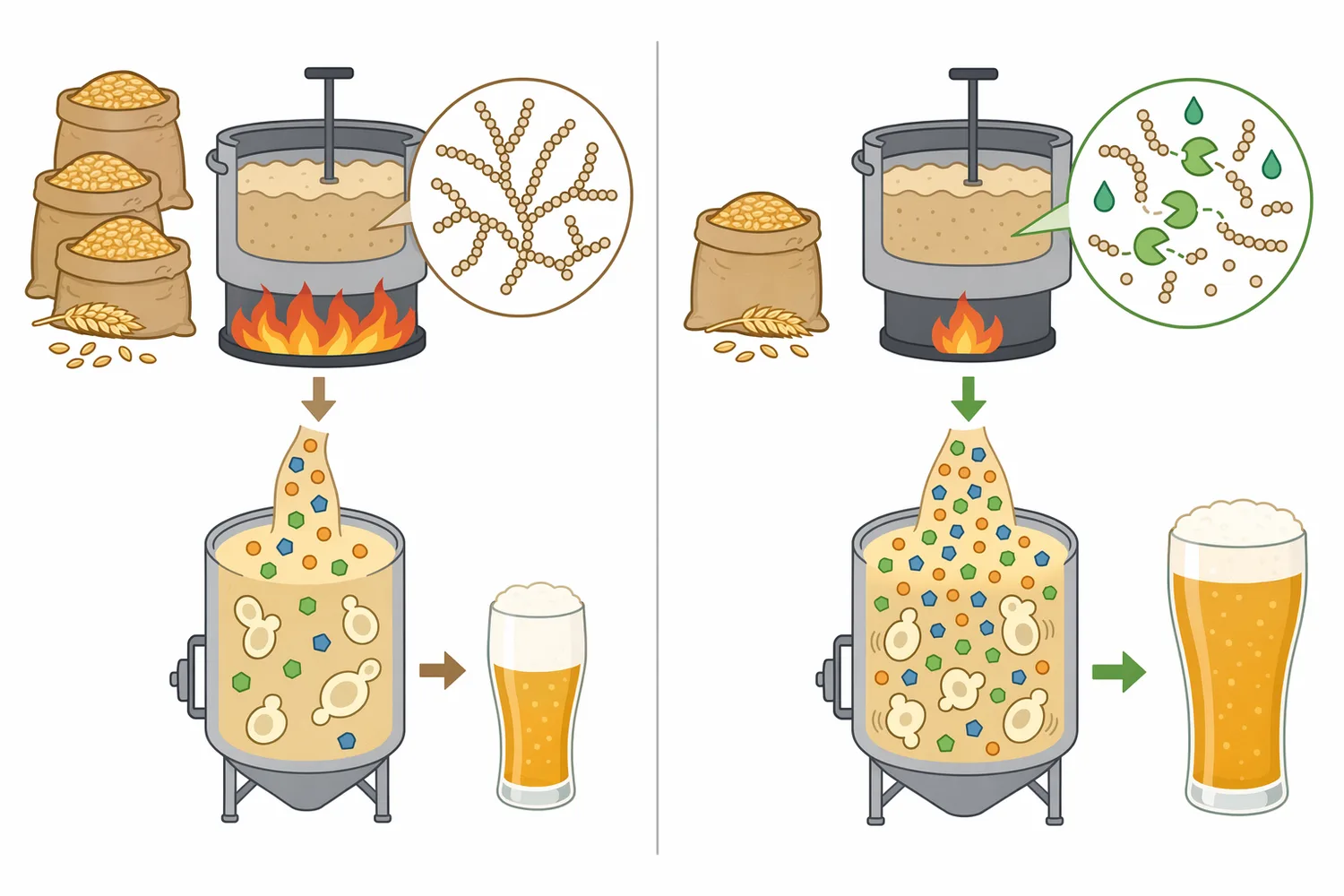
Adjunct brewing changes the starch-conversion equation because adjuncts may contribute different starch structures, gelatinization behavior, protein levels, and endogenous enzyme limitations compared with well-modified malt. Maize, rice, sorghum, and other cereals can be valuable for cost and flavor design, but they often require more deliberate enzymatic support to achieve consistent extract and fermentability. The high-gravity maize mash study that included pullulanase is directly relevant here because it examined enzyme-assisted fermentation of maize-based mashes, a practical model for high-starch adjunct processing [3].
Sorghum beer research has also focused on dextrin composition, reinforcing that non-barley cereals can leave important dextrin fractions that influence the finished beverage [6]. Pullulanase is useful in this context because its target is not barley-specific; it acts on branched starch-derived substrates wherever accessible amylopectin-like dextrins are present. The brewing value comes from converting a structural feature of cereal starch—branching—rather than from altering malt flavor or yeast metabolism.
High-gravity brewing and high-solids fermentations increase the importance of efficient starch hydrolysis. When more extract is packed into a mash or fermentation substrate, incomplete conversion can become more costly because residual dextrins represent carbohydrate that was extracted but not fully converted into fermentable material. Pullulanase is relevant because it can help reduce one cause of residual dextrin persistence: α-1,6 branching in amylopectin-derived fragments [3].
In high-gravity maize mash research, pullulanase was evaluated alongside other enzyme types, which is realistic because concentrated cereal systems rarely depend on only one enzyme function. Proteolytic enzymes can affect nitrogen availability and mash behavior, while enzymes that degrade non-starch polysaccharides can influence viscosity and processability. Pullulanase’s role within that broader system is specifically carbohydrate debranching, not protein hydrolysis or fiber breakdown [3].
Although beer and whisky production differ in final product, both depend on converting cereal starch into fermentable sugars. Research on Scotch whisky production has examined the identification and behavior of branched dextrins, which supports the broader point that branched starch fragments matter in beverage fermentations beyond beer alone [7]. The same carbohydrate logic applies: branched dextrins can remain after initial hydrolysis, and debranching can change how completely the carbohydrate fraction becomes available for fermentation.
For brewers, this cross-category evidence is useful because it shows that branched dextrin behavior is not a niche brewing curiosity. It is a recurring issue in cereal-based fermentations. Pullulanase is valuable because it addresses a defined molecular structure—the branch point—rather than relying on a general claim of “better conversion” without a mechanism [7].
The cost-effectiveness of pullulanase is not simply a matter of enzyme price. The value comes from what changes in the process: more complete use of starch, improved fermentability, greater flexibility with adjuncts, and potentially more predictable attenuation. A thermodynamic comparison of enzyme use in beer brewing evaluated enzymes in relation to resource use, reflecting the broader industrial interest in enzymatic processing as a way to influence brewing efficiency and material utilization [8].
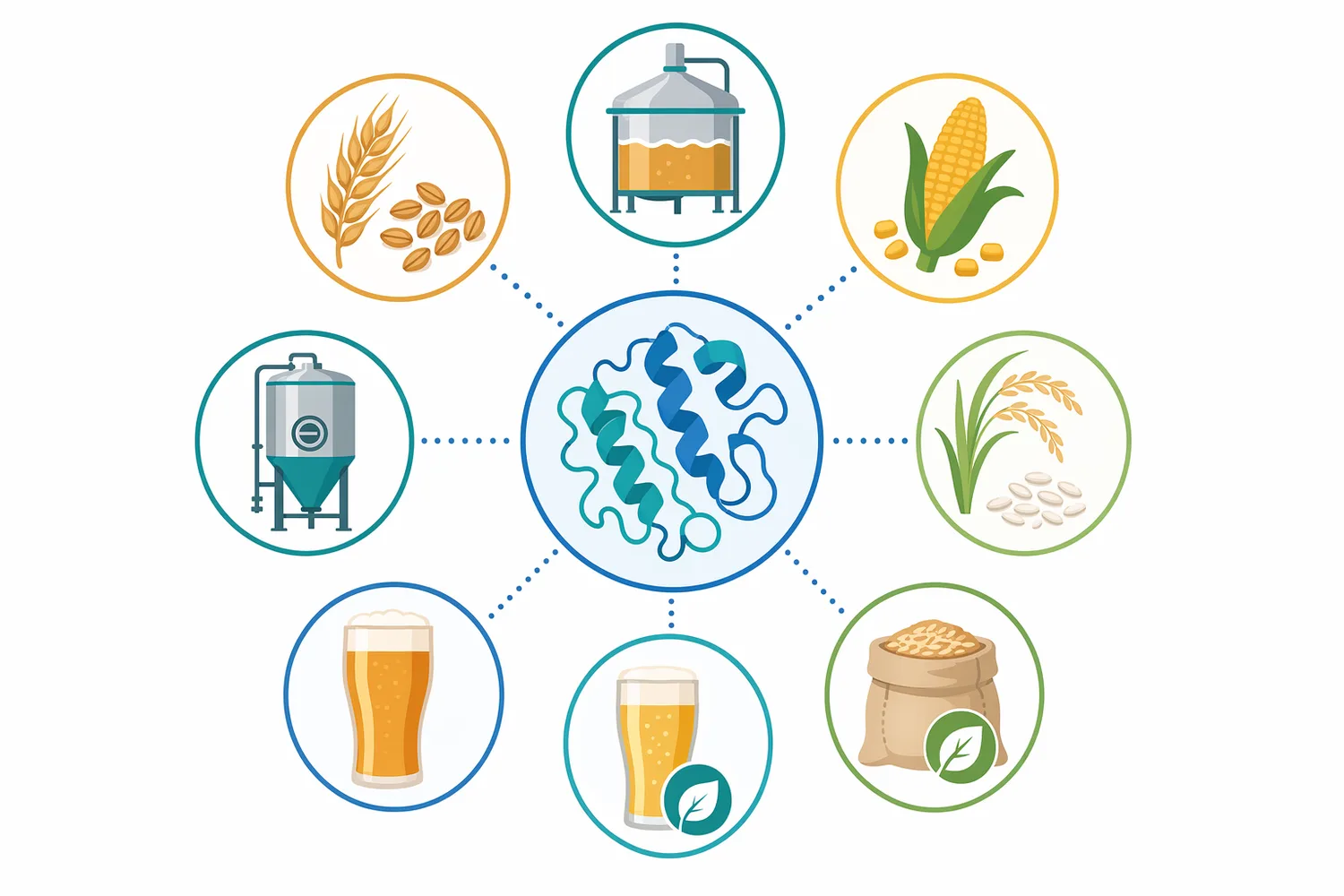
When pullulanase opens branched dextrins, it can make existing starch-derived material more accessible to the rest of the enzyme system. That matters because starch that remains as unfermentable dextrin still contributes extract, but not necessarily fermentable extract. In a beer designed for high attenuation, residual branched dextrin can represent unused fermentable potential. By reducing that limitation, pullulanase can support a more efficient conversion path from cereal starch to yeast-available sugar [1].
Adjunct flexibility is another cost-related benefit. Brewers may use adjuncts for flavor, supply-chain, or cost reasons, but adjuncts can introduce processing variability. Pullulanase does not erase differences between cereals, and it does not replace proper cereal cooking or mash management. It does, however, target a common starch feature—amylopectin branching—that appears across brewing grains and adjuncts, which makes it useful when the goal is more complete carbohydrate conversion from mixed raw materials [2].
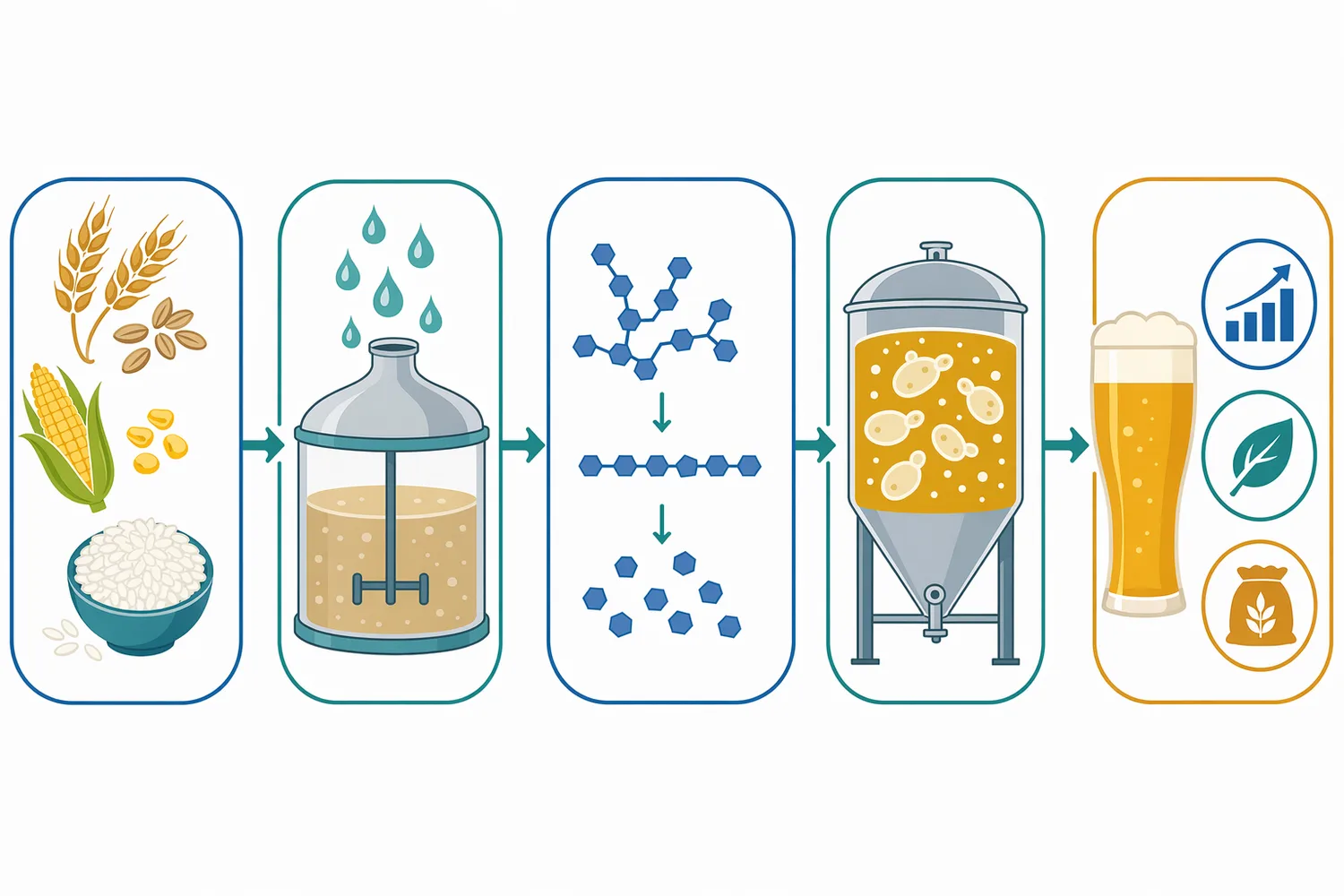
The direct effect of pullulanase is on wort carbohydrate structure. Before debranching, the wort can contain branched dextrins with limited fermentability. After debranching, more of those structures become linear glucans or shorter chains that other enzymes can convert further. This can increase the proportion of fermentable sugars relative to residual dextrin when the overall enzyme system and mash conditions support full saccharification [4].
That carbohydrate shift affects fermentation because yeast does not metabolize all wort carbohydrates equally. Brewing yeast readily ferments glucose, fructose, sucrose, maltose, and maltotriose to varying degrees depending on strain and conditions, but larger dextrins remain largely non-fermentable in standard beer fermentation. Pullulanase therefore influences fermentation indirectly: it changes what the yeast is given, rather than changing the yeast’s own metabolic capacity [9].
A more fermentable wort can produce a lower final gravity and a drier sensory profile, but it may also reduce body if taken too far for the intended beer. That is why pullulanase is most appropriate where dryness, high attenuation, or lower residual carbohydrate is desired. For beers built around fullness, residual dextrin, or rounded malt body, extensive debranching may work against the intended profile [5].
Pullulanase should not be treated as a universal beer-quality enzyme. It primarily affects starch-derived carbohydrate structure. Beer flavor and stability also depend on yeast health, fermentation temperature management, oxygen exposure, raw materials, acid balance, and packaging. For example, recent work on acetaldehyde accumulation highlights the importance of yeast metabolism and fermentation health in beer quality, which is a different quality pathway from wort starch debranching [10].
Similarly, lactic and acetic acid can influence primary fermentation performance and bottle-conditioning behavior, showing that microbial and acid conditions can affect beer outcomes independently of starch conversion [11]. Pullulanase can help prepare a more fermentable wort, but it cannot correct contamination, poor fermentation management, unsuitable yeast handling, or flavor instability after packaging.
Foam and haze also involve mechanisms outside pullulanase’s main function. Beer foam is strongly influenced by proteins, polypeptides, hop compounds, carbonation, and stabilizing or destabilizing colloids. Research on hydrocolloids for beer foam stabilization focuses on foam behavior rather than starch debranching, which illustrates that improving fermentability and improving foam are different technical objectives [12].
Pullulanase performs best when its substrate is accessible. In practical terms, the starch must first be adequately hydrated, heated, disrupted, or liquefied so that branched dextrins are available to the enzyme. If starch remains trapped in intact particles or ungelatinized granules, debranching activity cannot fully express its value because the enzyme cannot efficiently reach the internal branch points [2].
The outcome is also process-dependent. Mash program, raw material composition, adjunct level, other enzyme activities, wort concentration, and fermentation design all influence the final effect. This is why pullulanase should be viewed as a targeted tool for fermentability management rather than as a guarantee of a fixed attenuation number in every recipe. The same debranching mechanism can be valuable in one beer and excessive in another, depending on whether the desired product is crisp and dry or full-bodied and dextrinous [5].
It is also important to separate starch conversion from non-starch problems. If the main issue is high wort viscosity from β-glucans, pullulanase is not the primary enzyme for that job. If the main issue is insufficient yeast-assimilable nitrogen, proteolytic or raw-material factors are more relevant. Pullulanase is specifically valuable when branched starch-derived dextrins are limiting fermentability or efficient carbohydrate utilization [1].
The strongest scientific support for pullulanase comes from its well-defined biochemical role as a debranching enzyme. Pullulanase is widely discussed as an industrial enzyme that hydrolyzes pullulan and starch-related branched carbohydrates, with particular importance in starch saccharification and food carbohydrate processing [1]. This directly supports its brewing relevance because brewing relies on controlled cereal starch hydrolysis.
Brewing-specific evidence includes classic wort dextrin structural analysis using pullulanase, which shows that debranching enzymes are relevant to understanding wort carbohydrate architecture [4]. This is not merely a laboratory curiosity: if wort dextrins contain branched structures, then a debranching enzyme can change how those dextrins are converted during mashing or saccharification.
Cereal-fermentation evidence also supports the application logic. The high-gravity maize mash study evaluated fermentation with pullulanase among other enzymes, linking pullulanase to real high-starch fermentation systems rather than only purified substrate chemistry [3]. Research on branched dextrins in Scotch whisky and dextrins in sorghum beer further supports the idea that branched carbohydrate fractions are meaningful in beverage fermentations using different cereal bases [7].
The evidence should be interpreted realistically. Pullulanase has a strong mechanistic basis and clear relevance to fermentability, but the magnitude of benefit in a specific brewery process depends on the recipe and process design. It is most accurate to say that pullulanase can support more complete starch conversion and higher fermentability where branched dextrins are present and where complementary enzymes and fermentation conditions allow the released carbohydrate to be converted and consumed [2].
Enzymes.bio supplies Pullulanase Enzyme for Cost-Effective Beer Brewing as an online product for professional food and beverage processing use. Buyers can purchase the 1 kg unit directly online, pay through the website, and have the order processed and shipped. A Certificate of Analysis and Safety Data Sheet are included with the order.
The product is best viewed as a brewing processing aid for starch debranching. Its function is not to replace malt, yeast, or the broader mash program, but to improve access to branched starch-derived dextrins so the starch-conversion system can work more completely. For buyers producing dry, highly attenuated, adjunct-containing, or carbohydrate-conscious beers, pullulanase offers a direct biochemical route to improving wort fermentability [1].
Pullulanase improves brewing economics by acting on a specific inefficiency in starch conversion: branched dextrins that resist full hydrolysis. By cleaving α-1,6 branch points, it converts those dextrins into more linear fragments that other amylolytic enzymes can convert into fermentable sugars. The practical result can be higher attenuation, a drier finish, improved adjunct starch use, and more complete carbohydrate conversion when the brewing process is designed for those outcomes [4].
For cost-effective brewing, the key advantage is precision. Pullulanase does not make broad, unsupported changes to beer; it changes a defined molecular feature of wort carbohydrates. That makes it especially useful in processes where starch utilization, fermentability, and residual carbohydrate control have direct value. Enzymes.bio makes the product available for direct online purchase by the 1 kg unit, with order documentation supplied after purchase.
Sold by the 1 kg unit, in stock and ready to ship. Order directly on our store — pay online and we process your order. A Certificate of Analysis and Safety Data Sheet are included with every order.
Buy Pullulanase Enzyme For Cost Effective Beer Brewing →Numbered in order of first citation. Open-access sources, each verified reachable at publication; citation numbers in the text link here.