
Soy Protein Modification Enzyme is used to alter soy protein structure so soy flour, soy protein concentrate, soy protein isolate, and soy-containing formulations can perform better in food and ingredient systems. In practice, enzymatic treatment can improve solubility, dispersion, emulsification, water and oil retention, gel behavior, texture, and—in carefully validated processes—reduce response from specific allergenic soy proteins.
The mechanism is structural: the enzyme changes the protein itself. Depending on the enzyme system, it may cut soy proteins into smaller peptides through hydrolysis or promote new covalent links between protein chains, which changes how the protein hydrates, unfolds, aggregates, forms films, binds water or oil, and builds texture.
Enzymes.bio supplies Soy Protein Modification Enzyme directly online by the 1 kg unit for professional food and ingredient use. Orders are placed and paid for online, then processed and shipped; a Certificate of Analysis and Safety Data Sheet are supplied with the order.
Soy protein modification is not simply “adding an enzyme” to a recipe. It is a controlled processing step that changes the molecular behavior of soy proteins. Soy proteins are mainly made up of albumins and globulins, with the storage proteins 7S β-conglycinin and 11S glycinin being especially important for food functionality. These globular proteins are folded into compact structures, and their behavior changes with water, heat, pH, salts, shear, and other formulation conditions.
In food systems, those folded structures determine whether soy protein disperses smoothly, remains suspended, stabilizes oil droplets, forms a gel, binds water, retains oil, or contributes to a firm and elastic texture. When the protein is too compact, poorly hydrated, aggregated, or insufficiently surface-active, the finished product may show sediment, gritty mouthfeel, weak emulsion stability, poor texture, phase separation, or inconsistent viscosity.
Soy Protein Modification Enzyme is used to adjust those behaviors by modifying the protein structure. Two broad enzymatic routes are widely discussed in soy protein research:
These two routes can create very different outcomes. Hydrolysis often improves dispersion, solubility, and interfacial behavior when controlled properly. Cross-linking tends to build stronger or more cohesive protein networks where texture, firmness, elasticity, or water retention are the target.
Soy protein is widely used because it is plant-based, abundant, nutritionally valuable, and functional across many food categories. However, native soy protein is not ideal in every formulation. Its compact globular structure can limit solubility, especially in systems where pH, minerals, heat history, or processing stress encourage aggregation.
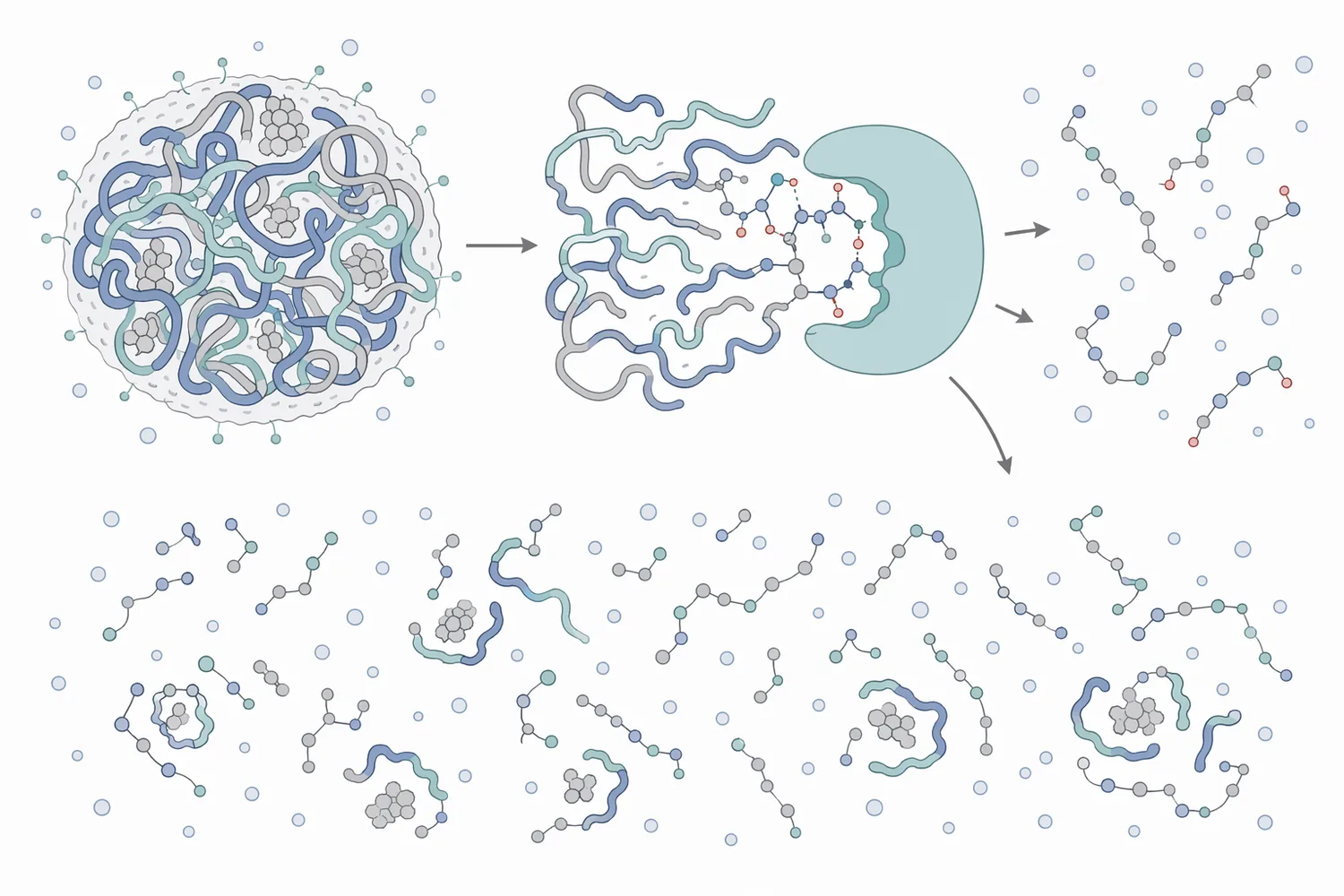
Poor solubility is one of the most common performance limitations. If soy protein does not hydrate well, it may form lumps during mixing, settle in beverages, produce rough mouthfeel, or behave inconsistently during heating. In powders, poor wetting and slow dispersion can make reconstitution difficult. In sauces and emulsions, incomplete protein hydration may reduce emulsion stability. In structured foods, uncontrolled aggregation may create brittle, dry, or uneven textures.
Soy protein’s functional behavior is also sensitive to processing history. Heating can unfold proteins and sometimes improve functionality, but it can also promote aggregation. Salt can screen charges and change protein-protein interactions. pH affects net charge and therefore solubility, swelling, aggregation, and gelation. Shear can help disperse protein, but it cannot always reverse insoluble aggregation.
Enzymatic modification is valuable because it acts directly on the protein rather than relying only on mechanical mixing or thermal treatment. By changing peptide length, molecular flexibility, exposed hydrophobic and hydrophilic regions, and available reactive sites, the enzyme can alter how soy protein behaves in water, oil-water interfaces, gels, and structured matrices.
Hydrolysis is the best-known route for enzymatic soy protein modification. A proteolytic enzyme cleaves peptide bonds in soy proteins such as 7S β-conglycinin and 11S glycinin. This does not simply “break down protein” in a general sense; it changes molecular size distribution, surface exposure, charge distribution, flexibility, and the balance between soluble and aggregated material.
When hydrolysis is controlled, several practical changes may occur:
For solubility, the key effect is that smaller peptides generally have less tendency to remain trapped in large insoluble aggregates. When polar groups are exposed, the protein fragments interact more readily with water. This can improve dispersion in beverage bases, instant powders, nutritional blends, sauces, and slurry systems.
For emulsification, hydrolysis can help if it produces peptides that are mobile enough to reach the oil-water interface but still large enough to form a stabilizing film. Proteins and peptides stabilize emulsions because they contain both water-interacting and oil-interacting regions. At the interface, the molecule can orient itself so hydrophobic regions interact with oil while hydrophilic regions remain in the water phase. Controlled hydrolysis can expose these regions and improve interfacial adsorption.
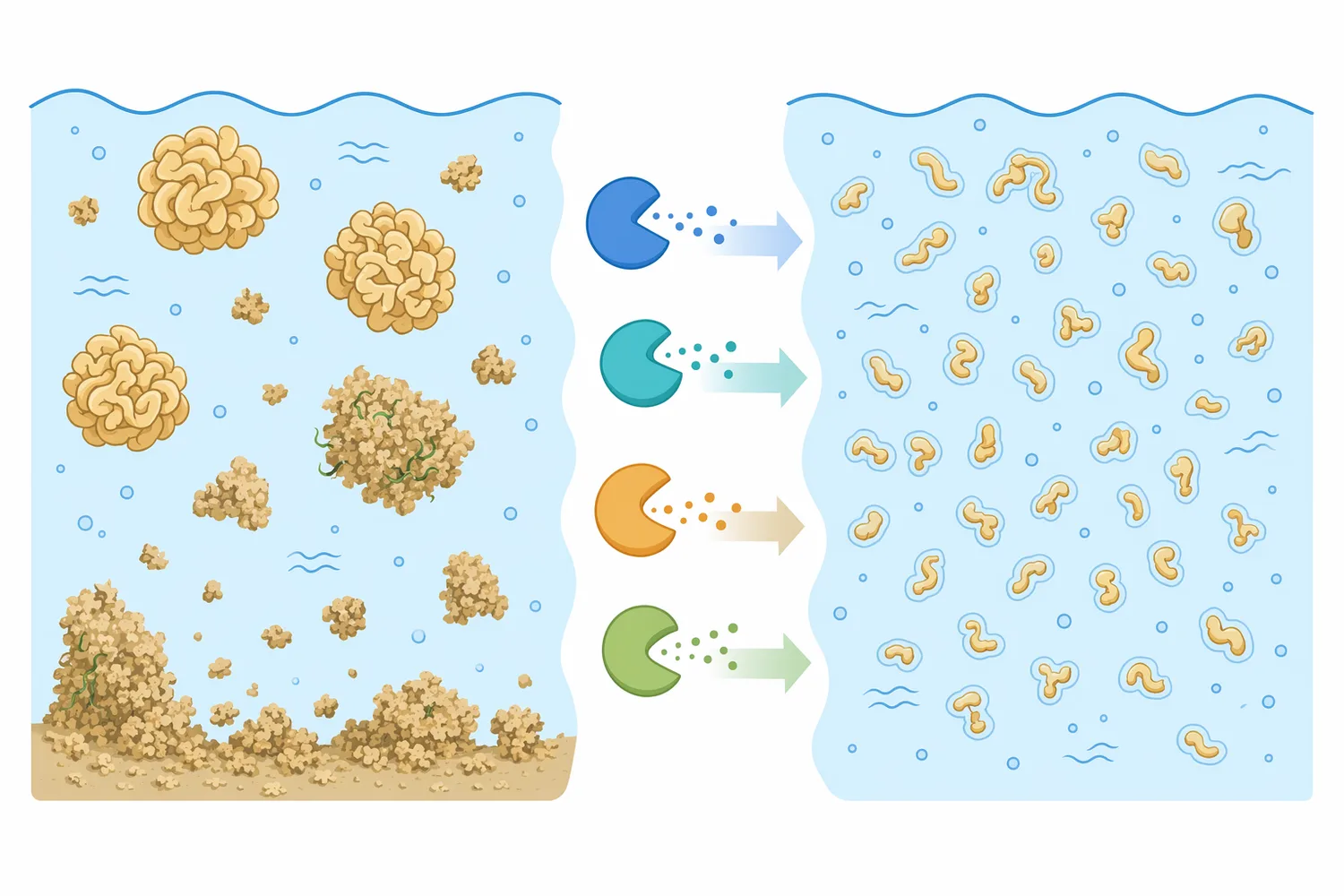
However, more hydrolysis is not always better. If hydrolysis goes too far, peptides may become too small to form strong interfacial films or cohesive gels. Excessive hydrolysis may reduce structure, thin the product too much, weaken gel strength, or contribute bitter taste from certain hydrophobic peptides. The practical goal is not maximum breakdown; it is the right degree of structural change for the finished application.
Some soy protein modification systems work in the opposite direction from hydrolysis. Instead of cutting proteins into smaller fragments, cross-linking enzymes help connect protein chains. In food protein systems, this can involve reactions between amino acid side chains such as glutamine and lysine residues, forming covalent links within or between protein molecules.
Cross-linking changes the way soy protein builds structure. When protein chains are connected into a network, the system may show improved gel firmness, elasticity, water retention, sliceability, chew, or resistance to breakdown during heating. This is relevant in meat analogues, structured plant-protein foods, tofu-like systems, fillings, gels, and hybrid formulations where protein must contribute physical strength.
The mechanism is concrete: cross-links reduce the mobility of protein chains and help them act as a connected matrix rather than separate dissolved molecules. That matrix can trap water, hold oil droplets, reinforce texture, and resist collapse during handling or cooking. In a plant-based meat system, for example, stronger protein networking may help hold juiciness and structure. In a gelled soy system, cross-linking may support firmness and water retention.
Cross-linking is not automatically desirable in every soy application. In a beverage, excessive network formation could increase viscosity, create particles, or destabilize suspension. In a powder for instant drinks, too much cross-linking could reduce dispersibility. This is why the processing target matters: hydrolysis is often used where dispersion and solubility are the priority, while cross-linking is more relevant where network formation and texture are the priority.
| Modification route | What happens to the soy protein | Typical functional direction | Where it can help | Main control point |
|---|---|---|---|---|
| Enzymatic hydrolysis | Peptide bonds are cleaved; 7S and 11S proteins are reduced into smaller peptides | Often improves solubility, dispersion, hydration, interfacial activity, and processability when controlled | Beverages, instant powders, sauces, emulsions, nutritional blends, some pre-treatments for texturized foods | Avoiding under-treatment or over-hydrolysis, because both can limit performance |
| Enzymatic cross-linking | Protein chains become covalently connected through new linkages | Often improves gel strength, cohesion, elasticity, water retention, and structural integrity | Meat analogues, gels, structured plant-protein products, tofu-like foods, formed products | Avoiding excessive network formation where smooth dispersion or low viscosity is needed |
| Sequential or combined modification | Protein is first loosened, partially hydrolyzed, unfolded, or otherwise made more reactive, then networked or stabilized | Can balance solubility, flexibility, structure, and texture | Advanced soy ingredient systems and structured foods | Matching the order and intensity of treatments to the intended product behavior |
Solubility is one of the most important performance targets for modified soy protein. Native soy protein can be difficult to disperse because compact globular structures and aggregated material resist hydration. Enzymatic hydrolysis can reduce molecular size and expose water-interacting groups, allowing the protein material to disperse more evenly.
This matters in plant-based beverages, ready-to-mix powders, nutritional drinks, protein-fortified sauces, and liquid ingredient bases. Better dispersion can reduce visible sediment, improve mouthfeel, shorten mixing time, and make the product more consistent from batch to batch. It can also support more predictable viscosity because the protein phase is more uniformly hydrated.
In powdered systems, improved wetting and hydration are especially valuable. A published study using cavitation jet technology combined with proteolytic enzymatic hydrolysis of soybean flour reported improved solubility and reduced wetting time. The reported process used a physical treatment together with enzymatic hydrolysis, so the result should not be attributed to enzyme action alone, but it clearly shows how protein structural modification can improve powder rehydration behavior.
Soy protein can stabilize emulsions because it is amphiphilic: parts of the molecule interact with water, and other parts interact with oil. In an emulsion, protein must migrate to the oil-water interface, unfold or orient at that interface, and form a film that resists droplet coalescence.
Enzymatic modification can improve this behavior by changing molecular mobility and surface exposure. Large globular proteins may be too compact or slow-moving to cover new oil droplets efficiently during mixing. Controlled hydrolysis can create smaller peptides that move more readily to the interface. If those peptides still retain enough chain length and amphiphilic character, they can help stabilize oil droplets.
This is relevant in dressings, sauces, dips, plant-based dairy alternatives, emulsified meat analogues, nutrition emulsions, and flavor or oil delivery systems. The practical result may be better oil dispersion, reduced creaming, improved mouthfeel, or more stable viscosity. As always, hydrolysis must be controlled because overly small peptides may not form a strong enough film around oil droplets.
Water and oil retention are important in soy-based foods because they influence juiciness, yield, texture, and eating quality. Soy protein can bind water through polar groups and physical entrapment in a protein network. It can also retain oil through hydrophobic interactions and matrix structure.
Hydrolysis can expose additional water-binding or oil-interacting sites, while cross-linking can strengthen the network that holds water and oil in place. The best route depends on the product. A beverage may benefit from more soluble peptides, while a plant-based burger or formed product may need a stronger protein network to hold oil and water during cooking.
In textured or extruded foods, water distribution strongly affects expansion, chew, and structural uniformity. Enzyme-modified soy protein may help manage hydration before, during, or after texturization, depending on how it is incorporated into the process.
Soy proteins are important gel-forming proteins. Heat, pH, salts, and protein concentration can unfold and aggregate 7S and 11S globulins into networks. Those networks determine firmness, elasticity, brittleness, water release, and bite.
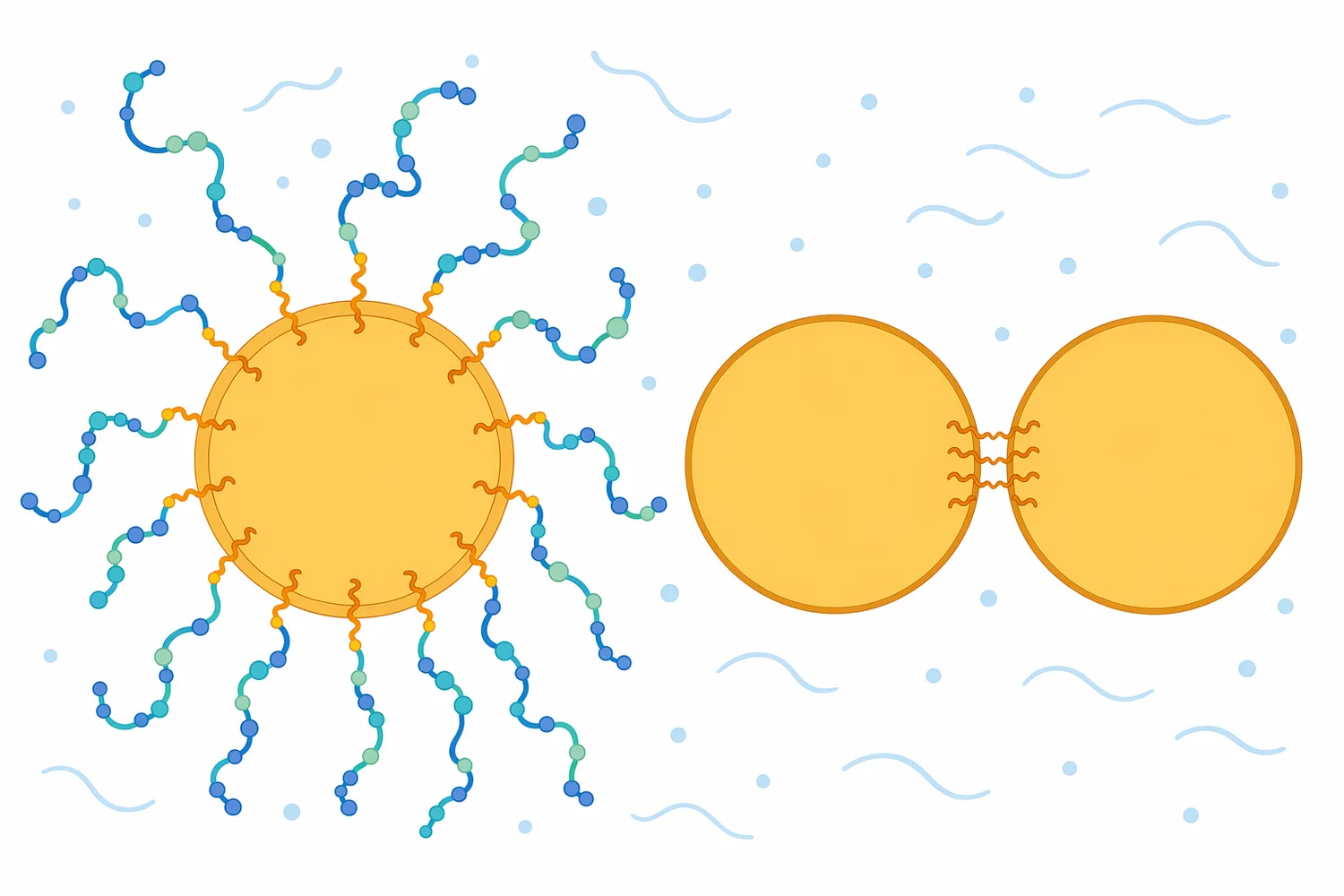
Enzymatic modification changes gel behavior in two main ways. Hydrolysis can make proteins more flexible and soluble, but too much hydrolysis can weaken the long-chain interactions needed for strong gels. Cross-linking can strengthen networks by creating covalent connections between protein chains. A more connected network may show improved firmness, elasticity, and water retention.
For plant-based meat analogues, the target is rarely “maximum firmness.” The desired texture may include bite, chew, juiciness, sliceability, resilience, and cooking stability. Enzymatic modification can support those properties by changing how soy protein interacts with water, fat, fibers, starches, gums, and other proteins in the matrix.
Soy beverages and protein drinks depend on hydration, suspension stability, viscosity control, and smooth mouthfeel. Poorly soluble soy protein can settle, form sediment, or create chalkiness. Controlled enzymatic hydrolysis can help reduce large protein structures and improve the amount of protein that remains dispersed.
In beverage systems, the modification target is usually balanced: enough hydrolysis to improve solubility and reduce aggregation, but not so much that the product becomes thin, bitter, or unstable. Heat treatment, minerals, sweeteners, stabilizers, and pH all influence the final behavior of modified soy protein.
Powdered soy protein products need good wetting, fast dispersion, and low lump formation. If the protein resists hydration, consumers or downstream processors may see floating powder, clumps, sediment, or uneven viscosity. Enzymatic modification can improve reconstitution by changing particle hydration behavior and protein solubility.
The combined cavitation-enzyme study noted earlier reported reduced wetting time and improved functional properties in soybean flour after treatment. While that process included both physical and enzymatic effects, it illustrates a key principle for instant products: improving protein structure and hydration behavior can translate directly into better powder performance.
Soy protein is widely used in patties, nuggets, sausages, mince analogues, and other structured plant-protein products. These systems require hydration, binding, oil retention, bite, chew, and stability during cooking. Enzymatic treatment can contribute in different ways depending on the target texture.
Limited hydrolysis may improve dispersion, hydration, or flexibility before structuring. Cross-linking may improve cohesion and gel strength after proteins are hydrated and aligned. In some systems, a combination of controlled protein breakdown and network formation can help create a more meat-like texture with better moisture retention.
In sauces and dressings, soy protein may contribute body, emulsification, and nutritional value. Enzymatic modification can improve the way soy protein interacts with oil droplets and the surrounding water phase. Better interfacial behavior can support smoother texture and improved stability.
This is especially useful where soy protein is used not only for nutrition but also for structure. A modified soy protein ingredient may help support viscosity, reduce oil separation, and improve mouthfeel in creamy systems.
Soy protein affects water absorption, dough handling, browning, texture, expansion, and nutritional profile in bakery and snack systems. Enzyme-modified soy protein may improve water and oil retention, alter viscosity, or change the way protein contributes to structure during heating.
In extruded foods, protein hydration and aggregation are central to texture development. Controlled modification may help manage the balance between flow, expansion, chew, and final structural integrity. The outcome depends strongly on the soy material and the rest of the formulation.
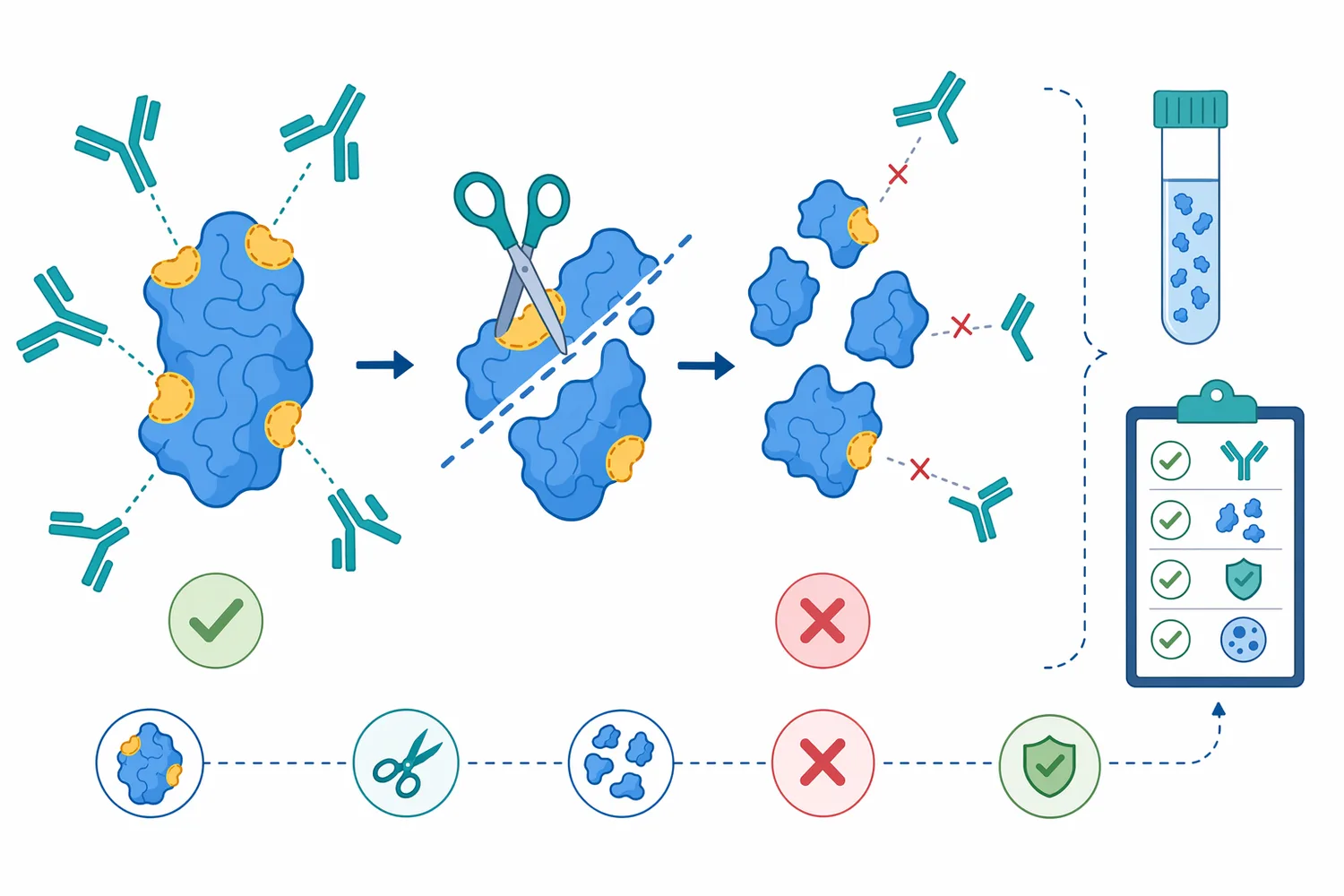
Soy contains several allergenic proteins, including 7S, 11S, Gly m Bd 30K, and Gly m Bd 28K. Enzymatic degradation can reduce response to some allergenic proteins by breaking them into smaller fragments and disrupting epitopes that immune proteins recognize.
This is a specialized application and should be handled carefully. A recent Food Chemistry study reported that cavitation jet technology combined with proteolytic enzymatic hydrolysis using flavourzyme proteases reduced allergenic protein by 96% and also improved solubility, wetting time, and oil absorption capacity. That result is promising, but it came from a combined physical and enzymatic process under defined study conditions, including treatment at 50–55°C. It should not be generalized to every enzyme-only soy process.
For finished-product allergen positioning, analytical validation and regulatory review are essential. Enzymatic treatment can support allergen-reduction research, but it does not remove the need for product-specific evidence.
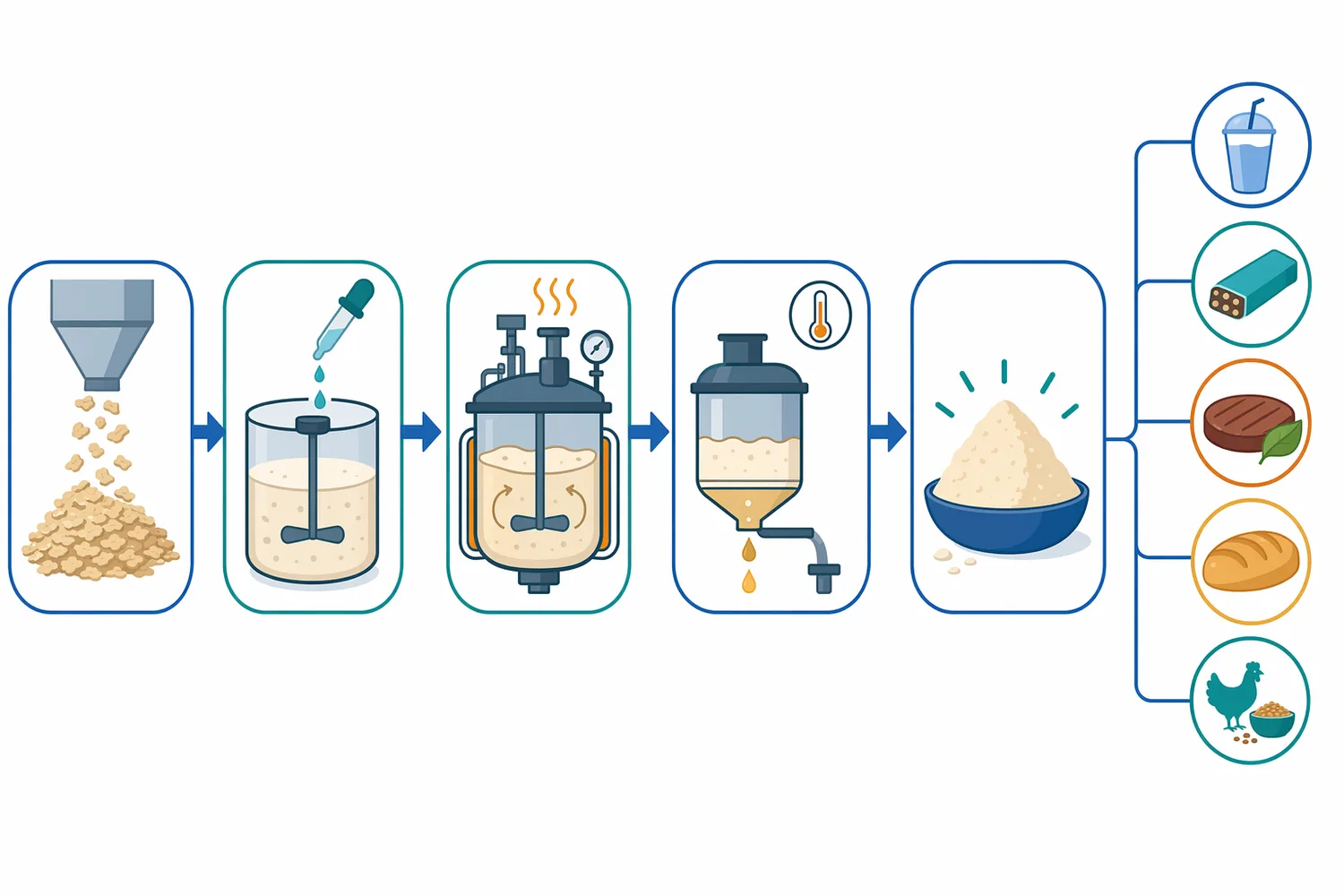
Soy Protein Modification Enzyme is typically used in an aqueous soy protein system where the enzyme can contact the protein substrate. The substrate may be soy flour, soy protein concentrate, soy protein isolate, a slurry, a beverage base, or another soy-containing formulation. Hydration and mixing are important because the enzyme can only act effectively on accessible protein regions.
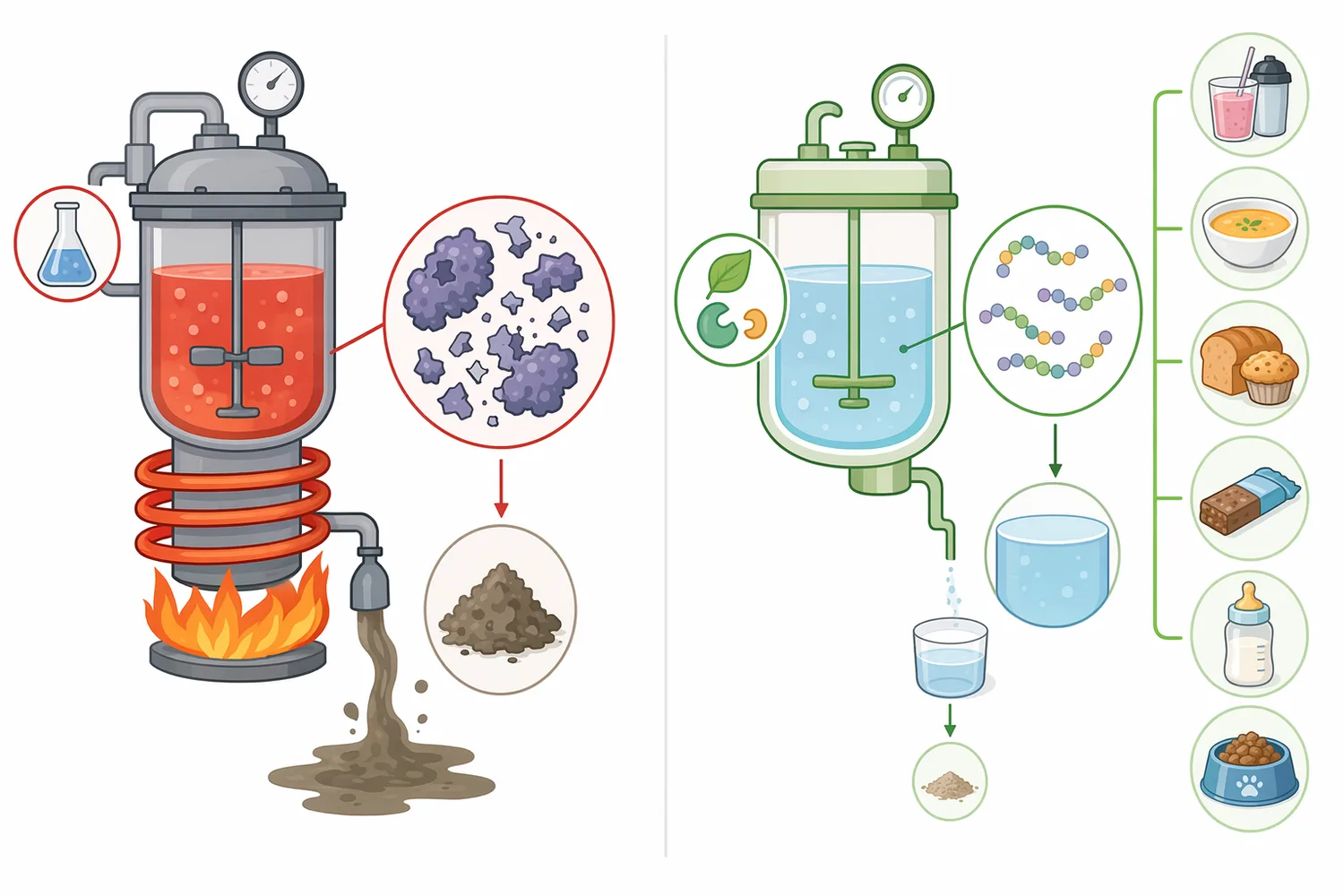
Processing conditions are set to allow the enzyme to modify the protein while preserving the target food quality. In general terms, this includes controlled hydration, suitable temperature, appropriate pH, sufficient mixing, and a defined reaction period. Once the desired modification is reached, downstream heating or processing may be used to stabilize the system, depending on the product.
The most important principle is control. Under-treatment may leave the protein largely unchanged. Over-treatment may reduce gel strength, create excessive thinning, or produce bitter peptides. In cross-linking systems, insufficient reaction may not build enough structure, while excessive network formation may reduce dispersion or create an overly firm texture.
Soy protein can be modified by physical, chemical, and enzymatic methods. Chemical modification can be effective, but it may involve reagents that are difficult to remove or that create safety, labeling, or process-complexity concerns. It may also cause irreversible changes that are less targeted than enzyme action.
Enzymatic modification is attractive because enzymes work under comparatively mild food-processing conditions and act with greater specificity. Instead of broadly exposing protein to reactive chemicals, the process uses biological catalysts that target particular bonds or side-chain reactions. This makes enzymatic treatment a useful route for cleaner protein modification strategies, especially where the objective is improved function without harsh chemical processing.
That does not mean enzymatic treatment is automatically simpler in every process. It still requires controlled conditions and application-specific evaluation. But the mechanism is inherently suited to food protein systems because it modifies the protein through defined biochemical reactions rather than broad chemical derivatization.
Soy Protein Modification Enzyme is a functional processing tool, not a universal fix. Results depend on the soy substrate, formulation, processing sequence, and the type of enzymatic modification involved.
Several limitations are important:
These limitations are not reasons to avoid enzymatic modification. They simply reflect the fact that soy protein functionality is structural and system-dependent. The best outcomes come from using the enzyme as part of a controlled process rather than as a generic additive.
Enzymes.bio supplies Soy Protein Modification Enzyme directly online by the 1 kg unit. The product is intended for professional food, ingredient, and formulation use in soy-based systems where enzymatic protein modification is part of the process design.
Orders are placed and paid for online, then processed and shipped. A Certificate of Analysis and Safety Data Sheet are supplied with the order.
Soy Protein Modification Enzyme helps modify soy protein functionality by changing protein structure. Through hydrolysis, it can reduce large soy proteins into smaller peptides that hydrate, disperse, and interact differently with oil-water interfaces. Through cross-linking or related non-hydrolytic modification, it can help build stronger protein networks for texture, gel strength, and water or oil retention.
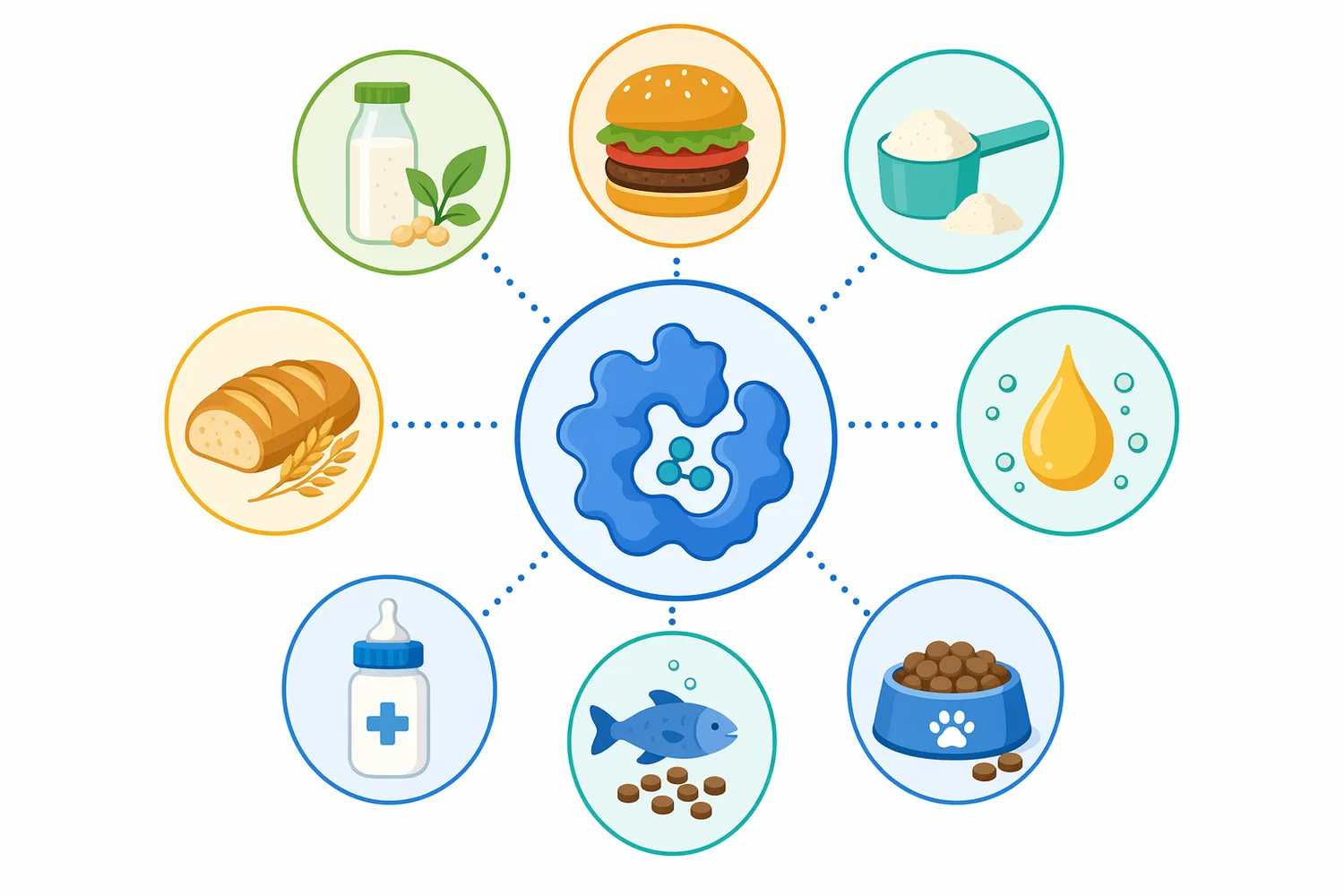
The strongest practical value is in applications where native soy protein underperforms: beverages, instant powders, emulsified foods, sauces, dressings, meat analogues, bakery systems, extruded products, and specialized soy protein bases. Used with controlled processing, Soy Protein Modification Enzyme gives food and ingredient developers a targeted way to improve soy protein performance while avoiding many of the drawbacks associated with harsher chemical modification routes.
Sold by the 1 kg unit, in stock and ready to ship. Order directly on our store — pay online and we process your order. A Certificate of Analysis and Safety Data Sheet are included with every order.
Buy Soy Protein Modification Enzyme →Numbered in order of first citation. Open-access sources, each verified reachable at publication; citation numbers in the text link here.