
Special Microbe Bacteria Used for Solid Garbage Treatment is a microbial consortium product for supporting the biological breakdown of biodegradable solid garbage, especially food scraps, plant residues, paper-like organics, and other compostable waste fractions. It works by helping active bacteria colonize moist organic particles and release enzymes that cut starches, proteins, fats, cellulose, and related polymers into smaller compounds that microbes can consume during aerobic degradation. Composting remains a managed process: oxygen, moisture, mixing, feedstock balance, temperature, and contamination control determine whether the biology can perform effectively [1].
Enzymes.bio supplies this product directly online by the 1 kg unit. The buyer pays online, the order is processed and shipped, and a Certificate of Analysis and Safety Data Sheet are provided with the order.
Special Microbe Bacteria Used for Solid Garbage Treatment is best understood as a biological process-support product, not as a single purified enzyme and not as a universal waste-disposal shortcut. In solid garbage treatment, the target material is the biodegradable organic fraction: kitchen waste, market waste, yard trimmings, crop residues, manure-containing solids, plant-processing residues, and paper-like materials that can be decomposed by microorganisms under managed conditions. Composting guidance from the U.S. EPA defines composting as an aerobic, microorganism-driven decomposition process that converts organic materials into a stable soil amendment when the process is properly managed [1].
The product concept is based on a simple but important reality: mixed organic waste is chemically diverse. A banana peel, cooked rice, vegetable trimming, wet cardboard, grass clipping, and manure particle do not break down through one pathway. A microbial consortium is useful because different bacteria can contribute different extracellular enzymes and metabolic steps, allowing the community to attack soluble sugars, starch, proteins, fats, and structural plant fibers in parallel rather than relying on one organism to do everything [2].
For a buyer using a 1 kg online-purchased product, the practical expectation should be clear: the microbes support decomposition where the waste environment already allows biological activity. They need contact with biodegradable material, available water, enough oxygen in the waste mass, and temperatures compatible with microbial growth. If solid garbage is compacted, waterlogged, contaminated with non-compostable materials, or deprived of air, the same biological limitations that slow ordinary composting will also limit an added microbial consortium [3].
Organic solid waste is not inert. In landfills and unmanaged dumps, biodegradable fractions continue to transform over time, producing leachate, gases, odor-causing compounds, and variable stabilization profiles. A 2025 study on municipal solid waste degradation and stabilization in Chinese landfills highlights that the degree of degradation and stabilization is a central issue in understanding how landfilled waste changes after disposal [4].
Composting and other biological treatment routes aim to move that decomposition into a more controlled setting. Instead of allowing food and plant residues to decay slowly in oxygen-limited landfill layers, aerobic treatment encourages microorganisms to use oxygen while converting biodegradable carbon into microbial biomass, heat, carbon dioxide, water, and more stable humified organic matter. Reviews of composting options for municipal solid waste emphasize that composting is a major treatment pathway but also note the operational challenges associated with mixed feedstocks, process duration, odor, and quality control [3].
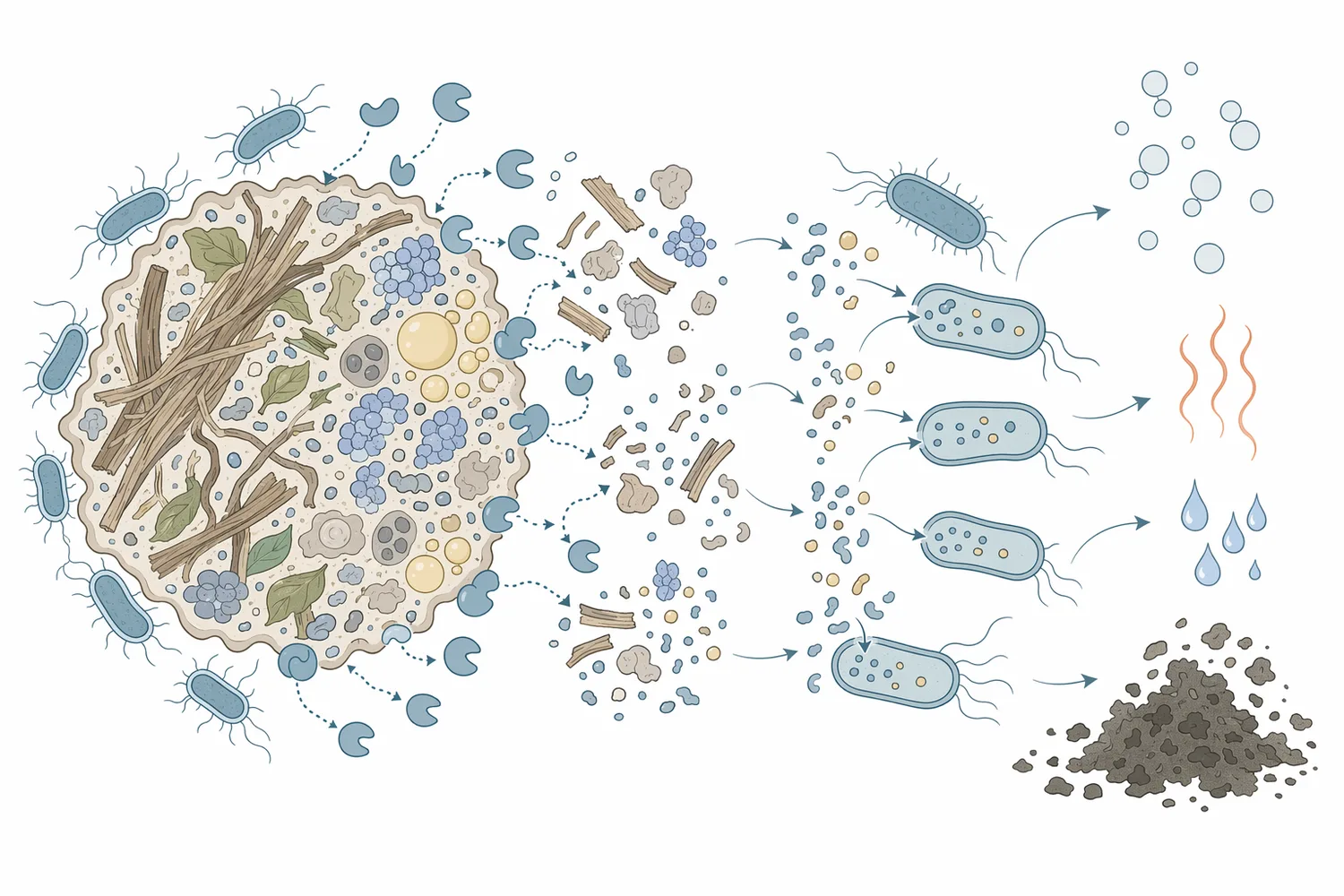
Microbial support is especially relevant where the waste stream contains a high proportion of putrescible material. Food scraps and wet vegetable residues decompose rapidly at the surface but can turn anaerobic inside compacted piles; yard waste provides structure and carbon but may contain tougher lignocellulosic fibers; paper and cardboard absorb moisture but degrade at different rates depending on coating, particle size, and contamination. A microbial consortium helps by increasing the biological “toolbox” available on the waste surface, but it still depends on the physical design of the pile or treatment system [5].
The first step is colonization. Bacteria must physically reach the waste particles, adhere to moist surfaces, and multiply where nutrients are available. In practical terms, this means the product is most relevant to biodegradable material with exposed surface area: chopped food waste, shredded plant residues, broken-down paper fibers, and mixed organic solids. If large compacted pieces or sealed packaging dominate the waste, the microorganisms have less surface to colonize and less access to the internal substrate [1].
Once attached, bacteria produce extracellular enzymes. “Extracellular” matters because most solid garbage molecules are too large to pass directly into microbial cells. Starch, cellulose, proteins, and fats must be cut outside the cell into soluble sugars, peptides, amino acids, glycerol, and fatty acids. Research focused on increasing enzymatic activity and sugar release during aerobic degradation of organic solid waste directly supports this mechanism: enzymatic breakdown is a key step in converting solid organic matter into smaller, more bioavailable compounds [5].
After hydrolysis, microbes absorb the smaller molecules and metabolize them. Under aerobic conditions, much of the easily degradable carbon is oxidized, releasing heat and carbon dioxide while supporting new microbial biomass. That heat generation is why active composting systems often warm up: the pile is not “heating itself” chemically in isolation; it is the metabolic activity of many microbes consuming available organics and releasing energy. EPA composting guidance identifies oxygen, moisture, particle size, and temperature as key factors because they directly affect whether this metabolism can proceed efficiently [1].
The final stage is stabilization. As sugars, soluble proteins, and easily degradable residues are consumed, the remaining material becomes less putrescible. Plant fibers are progressively fragmented, microbial biomass turns over, and the organic matter shifts toward a more stable compost-like matrix. Stabilization is not instantaneous; studies of municipal solid waste and landfill systems treat stabilization as a measurable process that changes over time, not as a single event triggered by adding microbes [4].
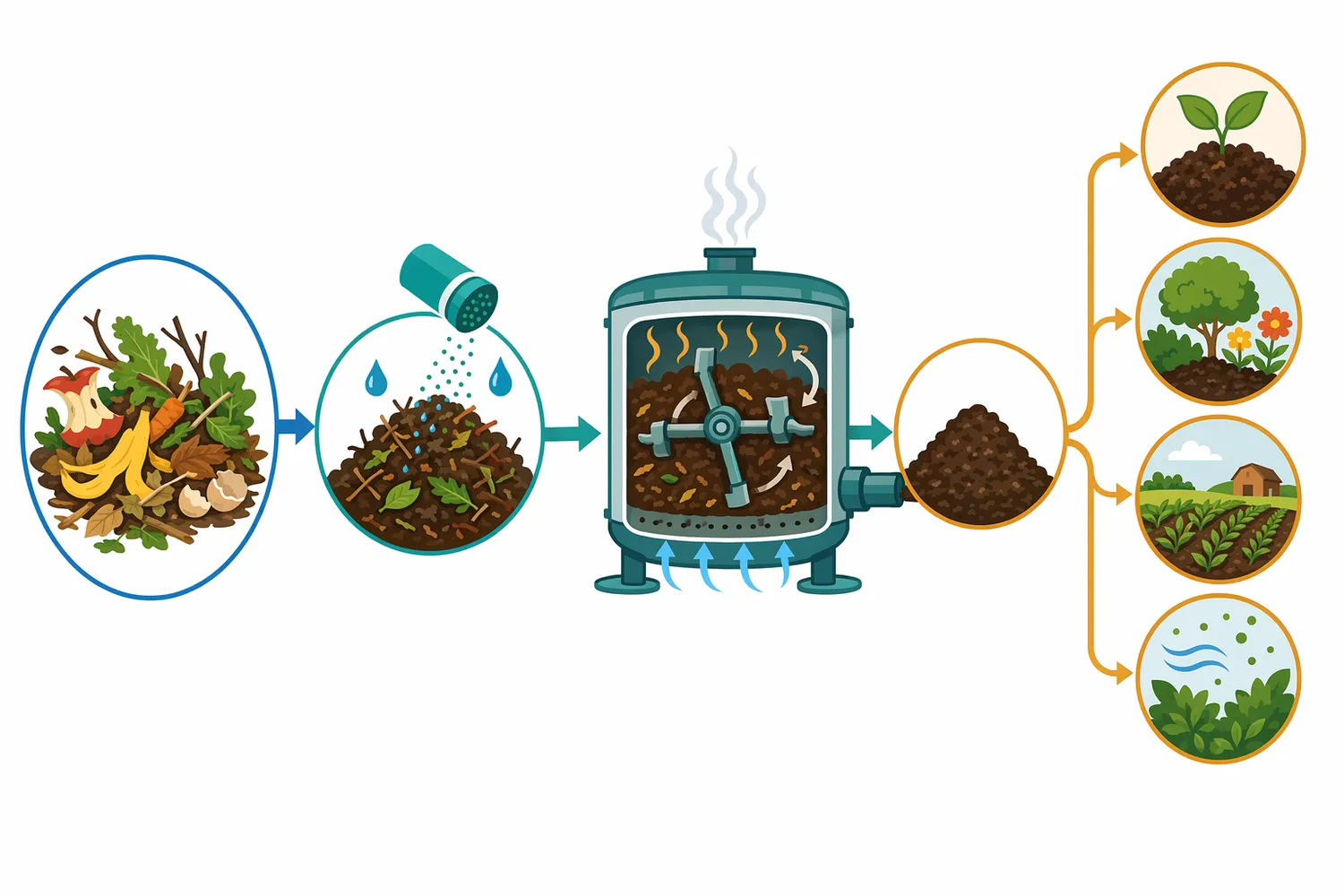
Different waste fractions respond differently because their chemistry is different. A microbial product does not make all garbage disappear at the same rate; it helps the biological community process biodegradable substrates according to their accessibility, water content, and molecular structure.
| Waste fraction | Main biodegradable components | What microbial enzymes do | What visibly or chemically changes |
|---|---|---|---|
| Cooked grains, bread, starchy food waste | Starch and simple carbohydrates | Amylase-type activity cuts starch chains into smaller sugars | Softening, loss of structure, increased soluble sugars, rapid microbial heat generation when oxygen is available |
| Fruit and vegetable residues | Sugars, pectin, hemicellulose, cellulose, organic acids | Pectin- and fiber-degrading enzymes loosen plant cell walls | Tissue collapse, moisture release, faster mixing into the composting mass |
| Protein-rich food residues | Proteins and peptides | Protease-type activity cuts proteins into peptides and amino acids | Faster conversion to soluble nitrogen compounds; odor risk if oxygen is poor or nitrogen is excessive |
| Fatty or oily residues | Triglycerides and other lipids | Lipase-type activity releases glycerol and fatty acids | Gradual reduction of greasy material; oxygen demand can be high during further breakdown |
| Leaves, stems, paper-like organics | Cellulose, hemicellulose, lignin-associated fibers | Cellulose and hemicellulose are hydrolyzed; lignin-rich structures slow access | Gradual fiber weakening and darkening; slower conversion than food scraps |
| Mixed municipal organic waste | Variable carbohydrates, proteins, fats, fibers, inert contaminants | Multiple enzyme systems act in parallel where surfaces are accessible | Uneven but progressive stabilization when sorting, moisture, and aeration are adequate |
Plant-processing residues are a good example of why this enzyme-driven view matters. Work on enzymatic degradation of solid waste from fruit and vegetable canning enterprises reflects the same basic challenge seen in many commercial organic waste streams: the substrate contains moisture-rich plant tissue, soluble nutrients, and structural fibers that must be opened up by enzymes before microorganisms can fully metabolize them [6].
Solid garbage treatment can follow different biological routes. Special Microbe Bacteria Used for Solid Garbage Treatment is most naturally aligned with aerobic organic waste degradation and composting-style systems, although organic waste may also be managed through anaerobic digestion or may degrade slowly in landfills if not diverted. The comparison below helps clarify what changes when oxygen and process control are present.
| Pathway | Oxygen condition | Main microbial process | Typical target output | Relevance to special microbe bacteria |
|---|---|---|---|---|
| Managed aerobic composting | Oxygen is intentionally maintained | Aerobic bacteria and fungi hydrolyze and oxidize organic matter, generating heat and stabilizing residues | Compost-like stabilized organic material | Strongest fit when the goal is solid organic garbage decomposition and stabilization |
| Anaerobic digestion of organic fraction of municipal solid waste | Oxygen is excluded | Hydrolytic, acidogenic, acetogenic, and methanogenic communities convert organics toward biogas and digestate | Biogas plus digestate requiring further management | Related biological route, but operated under different conditions and microbial ecology |
| Landfill degradation | Oxygen becomes limited and heterogeneous | Slow mixed aerobic/anaerobic degradation occurs across layers and over time | Stabilized waste over long periods, landfill gas, leachate | Not the intended controlled-use model; degradation is slower and harder to manage |
| Thermal treatment of combustible fractions | Biological activity is not the core mechanism | Heat converts combustible fractions rather than relying on microbial metabolism | Energy recovery, ash, emissions-control residues | Different technology class; not a microbial treatment route |
Anaerobic digestion has its own established microbial ecology. Reviews of methanogenic communities in anaerobic treatment of organic waste describe specialized microbial groups that cooperate in oxygen-free systems to convert organic matter toward methane production, which is very different from the oxygen-supported decomposition expected in composting [7].
Bio-physical pre-treatments for anaerobic digestion of the organic fraction of municipal solid waste are also studied to improve biogas production and digestate quality. That literature is relevant because it shows how strongly organic-waste performance depends on pre-treatment, substrate accessibility, and downstream use of the treated material, but it should not be confused with simple aerobic composting support [8].
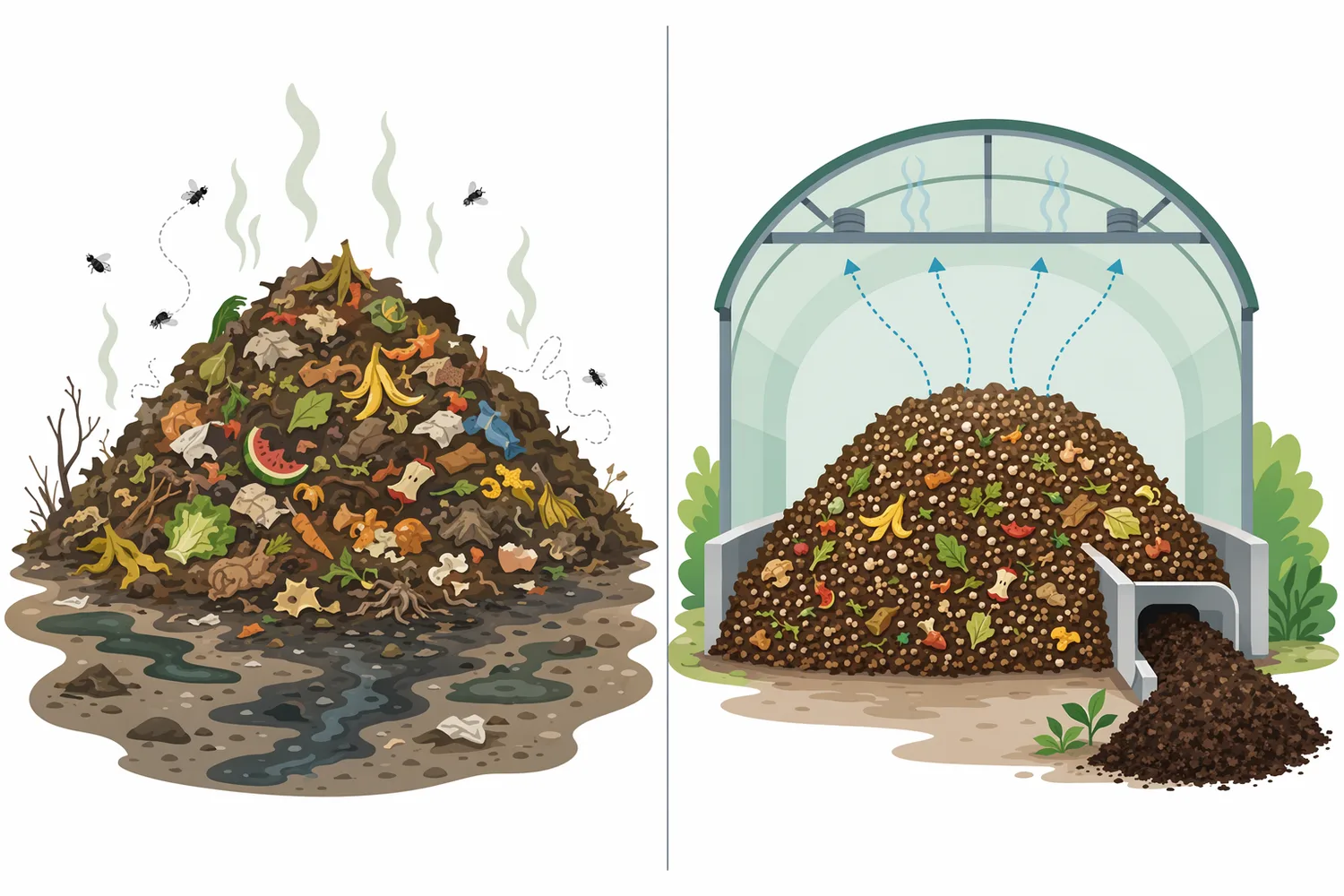
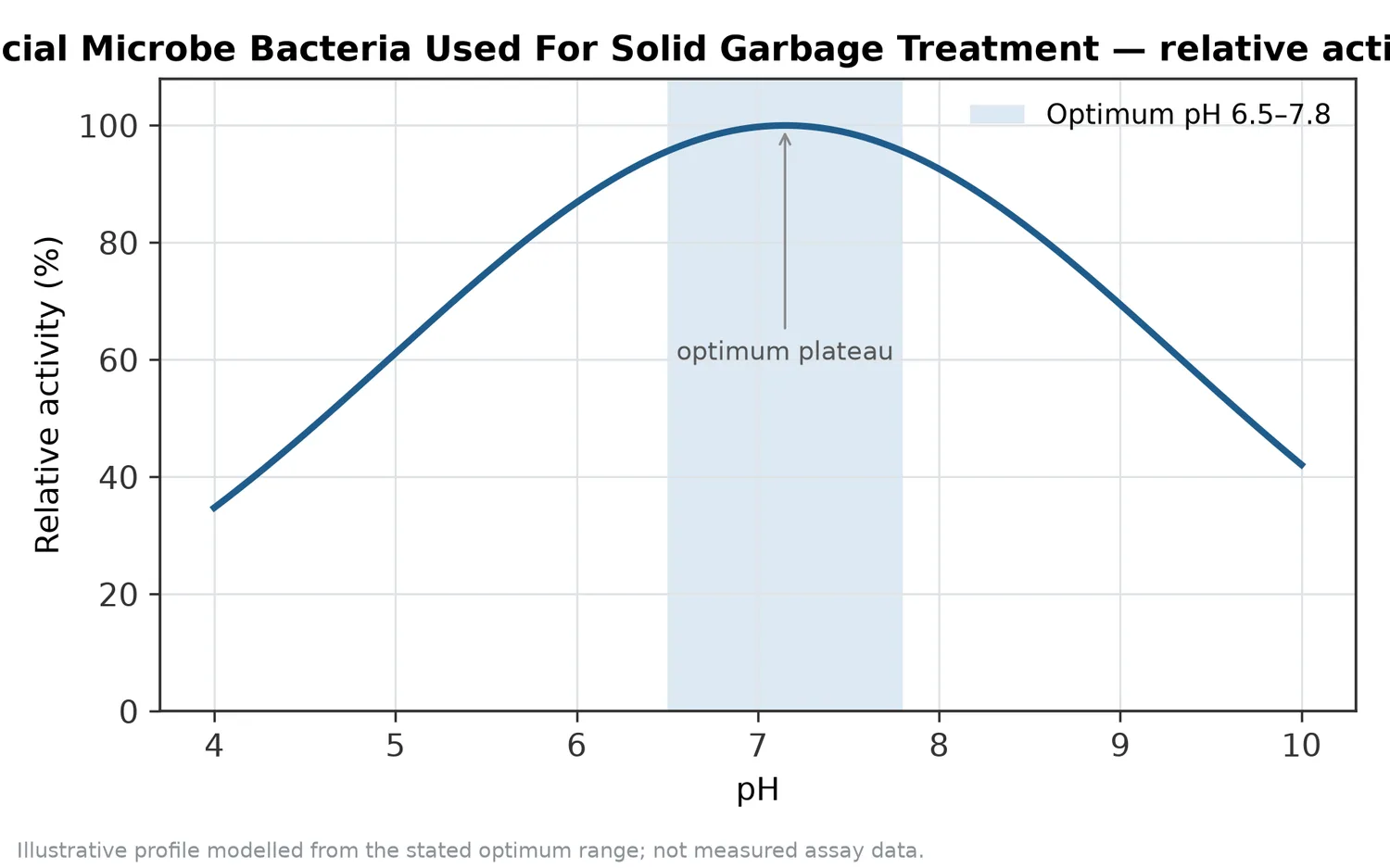
Oxygen is the most important distinction between aerobic composting and uncontrolled rotting. In an oxygenated waste mass, aerobic microbes can efficiently metabolize soluble compounds and generate heat. In a compacted, wet, oxygen-starved pocket, anaerobic pathways become more important, and these can produce stronger odors and slower stabilization. EPA composting guidance emphasizes oxygen flow as a central factor in turning organic materials into quality compost [1].
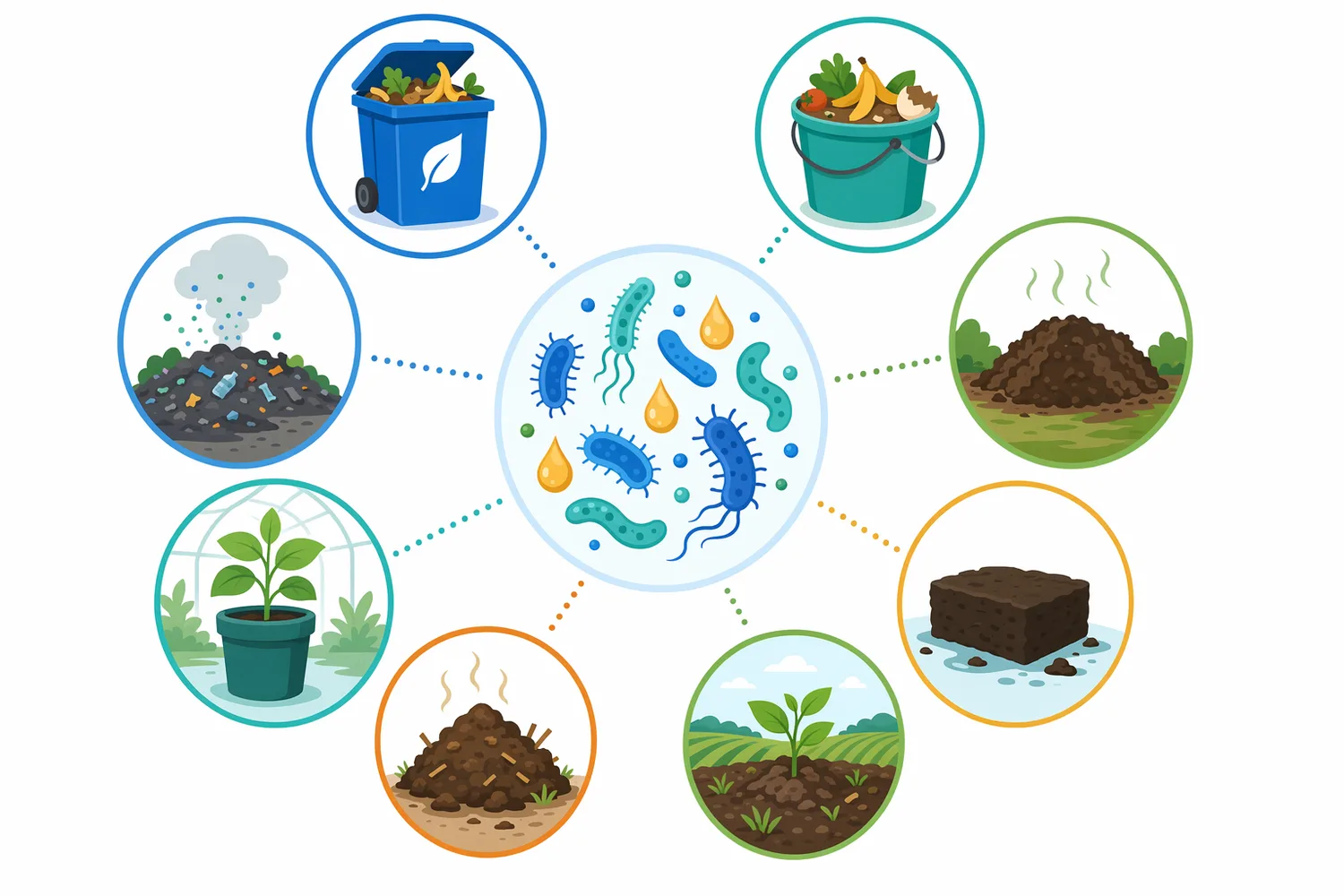
Moisture must be balanced rather than maximized. Bacteria require water for enzyme diffusion, nutrient transport, and cell growth, but excess water fills pore spaces and prevents air movement. This is why wet food waste often performs better when mixed with drier, more structural material such as leaves, chipped yard waste, or absorbent paper-like organics. Reviews of municipal solid waste composting challenges repeatedly identify process control as essential because the waste matrix itself can block the conditions microorganisms require [3].
Particle size affects access. Smaller particles expose more surface area for microbial colonization and enzyme contact, which can accelerate early breakdown. However, very fine, wet material can mat together and reduce airflow. The practical balance is to expose surfaces without creating an airless paste; this is a physical limitation of composting, not a limitation unique to any one microbial product [1].
Feedstock balance also matters because microbial metabolism requires both carbon and nitrogen. Carbon-rich materials supply energy and structure, while nitrogen-rich materials support microbial growth. Too much readily degradable nitrogen in a wet pile can increase odor risk, while too much dry carbon can slow the process because microbial growth becomes nutrient-limited. Composting treatment reviews describe this type of balancing challenge as one reason municipal organic waste requires active management rather than simple dumping [3].
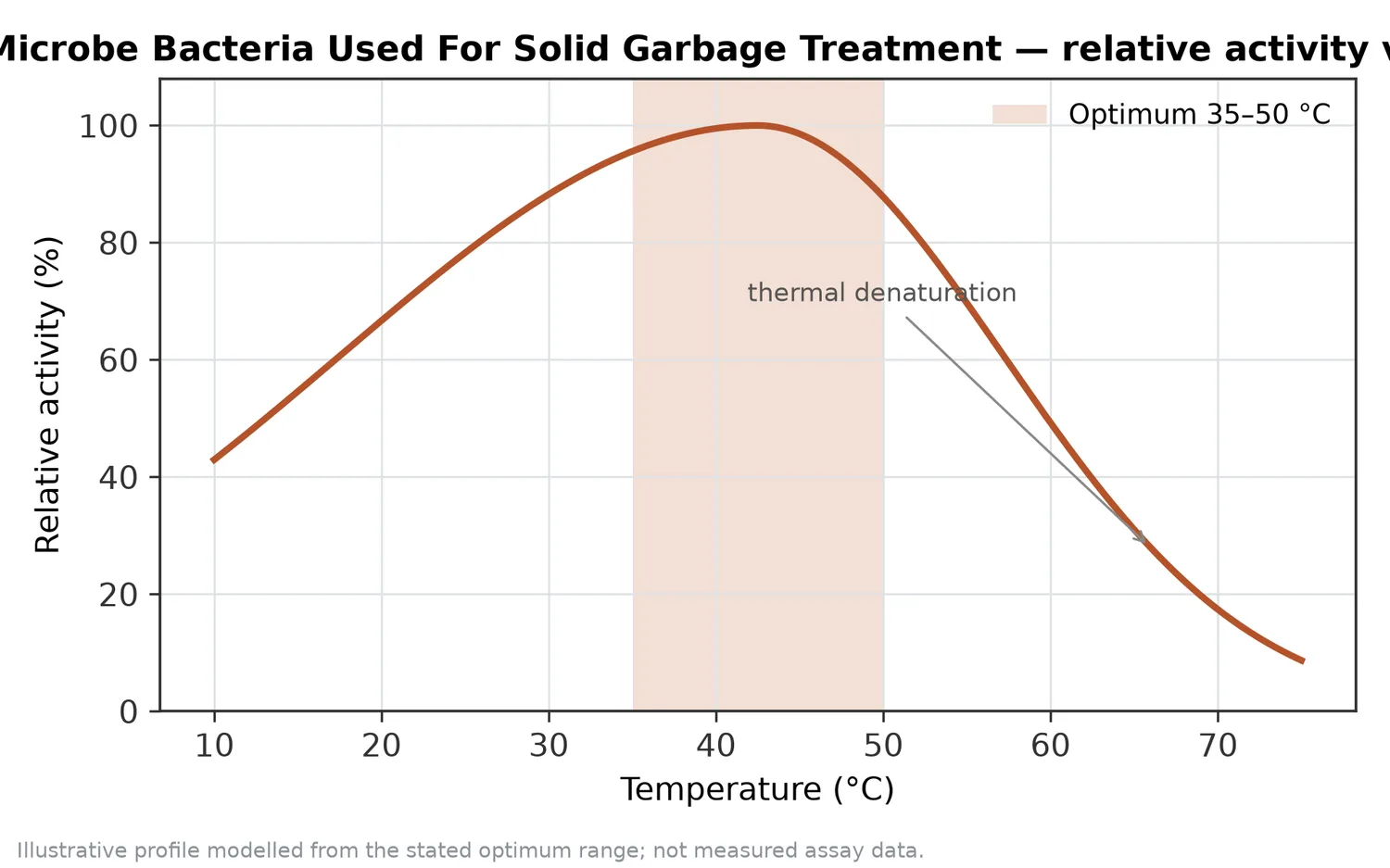
Temperature is both an outcome and a control factor. When microbes actively oxidize organic matter, heat accumulates in the pile or vessel. Warm and thermophilic phases can accelerate degradation of many easily biodegradable substrates, but temperature extremes or uneven heating can leave parts of the waste underprocessed. Composting guidance treats temperature as a key process variable because it reflects the interaction of microbial activity, pile size, moisture, oxygen, and available substrate [1].
The most direct support for this product category comes from the broader body of research showing that microorganisms isolated from municipal solid waste environments can participate in degradation. A 2024 study on efficient microorganisms isolated for degradation from municipal solid waste in Chhatrapati Sambhajinagar, Maharashtra, India, reflects the practical research direction: identify organisms already associated with waste degradation and evaluate their ability to support breakdown of solid waste materials [2].
A second relevant evidence stream focuses on enzymatic activity during aerobic degradation. Research on increasing enzymatic activity and sugar release in organic solid waste during aerobic degradation is particularly important because sugar release is a measurable sign that complex carbohydrates are being hydrolyzed into soluble, microbially available forms. This supports the practical mechanism behind microbial inoculants: better extracellular hydrolysis can make the first stage of solid waste conversion more active [5].
Food-processing waste provides another applied context. The fruit and vegetable canning industry generates wet, biodegradable residues rich in plant tissues, soluble organics, and fibers. Investigation of enzymatic degradation in that type of enterprise waste is relevant to solid garbage treatment because many municipal and commercial organics contain similar vegetable, fruit, and plant-cell-wall substrates [6].
At a system level, municipal solid waste management research increasingly recognizes that biological treatment is only one part of a broader strategy. Reviews comparing scientific and policy perspectives on municipal solid waste management show that technology, governance, environmental priorities, and implementation conditions all influence which waste-treatment approaches are successful in practice [9].
Technology reviews covering solid waste management from 2019 to 2024 also show the field moving toward integrated approaches rather than single-solution thinking. Biological products fit best when they are used to improve the organic-treatment portion of that system, while recyclables, inert materials, hazardous materials, and non-compostable contaminants are managed through other routes [10].
Special Microbe Bacteria Used for Solid Garbage Treatment should be applied with a realistic understanding of what “solid garbage” contains. The biologically suitable fraction is organic and biodegradable. Glass, metals, stones, many multilayer packages, and most conventional plastic items are not appropriate targets for routine composting-style microbial treatment. They may pass through the system physically unchanged and reduce the quality of the treated output [3].
Synthetic polymer biodegradation is an active research area, but it is not the same as ordinary composting of mixed garbage. Reviews on enzymatic degradation of synthetic textile waste and microplastic mitigation describe promising biotechnological routes while also emphasizing current challenges and future opportunities, which means the field remains specialized and material-dependent rather than a general solution for mixed plastic waste [11].
Even biodegradable plastics can behave differently from food or yard waste. Research on microbial acclimation of thermophilic anaerobic digestate reported enhanced biogas production and biodegradation of polylactic acid in combination with the organic fraction of municipal solid waste, but that work was in a thermophilic anaerobic digestion context, not a general claim that all plastic-like materials rapidly decompose in an aerobic garbage pile [12].
Contamination also affects the liquid fraction associated with solid waste. Landfill leachate treatment reviews show that leachate contains complex mixtures requiring dedicated treatment systems and microbial ecology; a solid-waste microbial product should not be viewed as a replacement for leachate management where liquid waste streams are generated [13].
Odor is usually a sign that some part of the waste mass is decomposing under unfavorable conditions. When food waste is very wet, compacted, or overloaded with easily fermentable material, oxygen transfer becomes limited. Microbes still metabolize the substrate, but the pathways shift, and intermediate compounds can accumulate. Aerobic microbial support helps most when the physical process also restores air space, mixes wet and dry fractions, and keeps the pile from becoming a saturated anaerobic block [1].
Leachate forms when water drains through organic waste, carrying soluble organic matter, nitrogen compounds, salts, and other contaminants. Reviews of landfill leachate treatment technologies describe advanced treatment needs because leachate composition can be difficult and environmentally significant. For solid garbage treatment, this reinforces the importance of moisture control: the goal is active moist decomposition, not uncontrolled liquid runoff [14].
Greenhouse-gas implications are also part of the waste-management context. Studies evaluating greenhouse gas emissions from municipal solid waste leachate treatment show that waste liquids and biological treatment systems can have measurable emission profiles. Good aerobic solid-waste management is therefore not only about faster breakdown; it is also about keeping the process controlled enough to reduce avoidable anaerobic zones, odors, and poorly managed emissions [15].
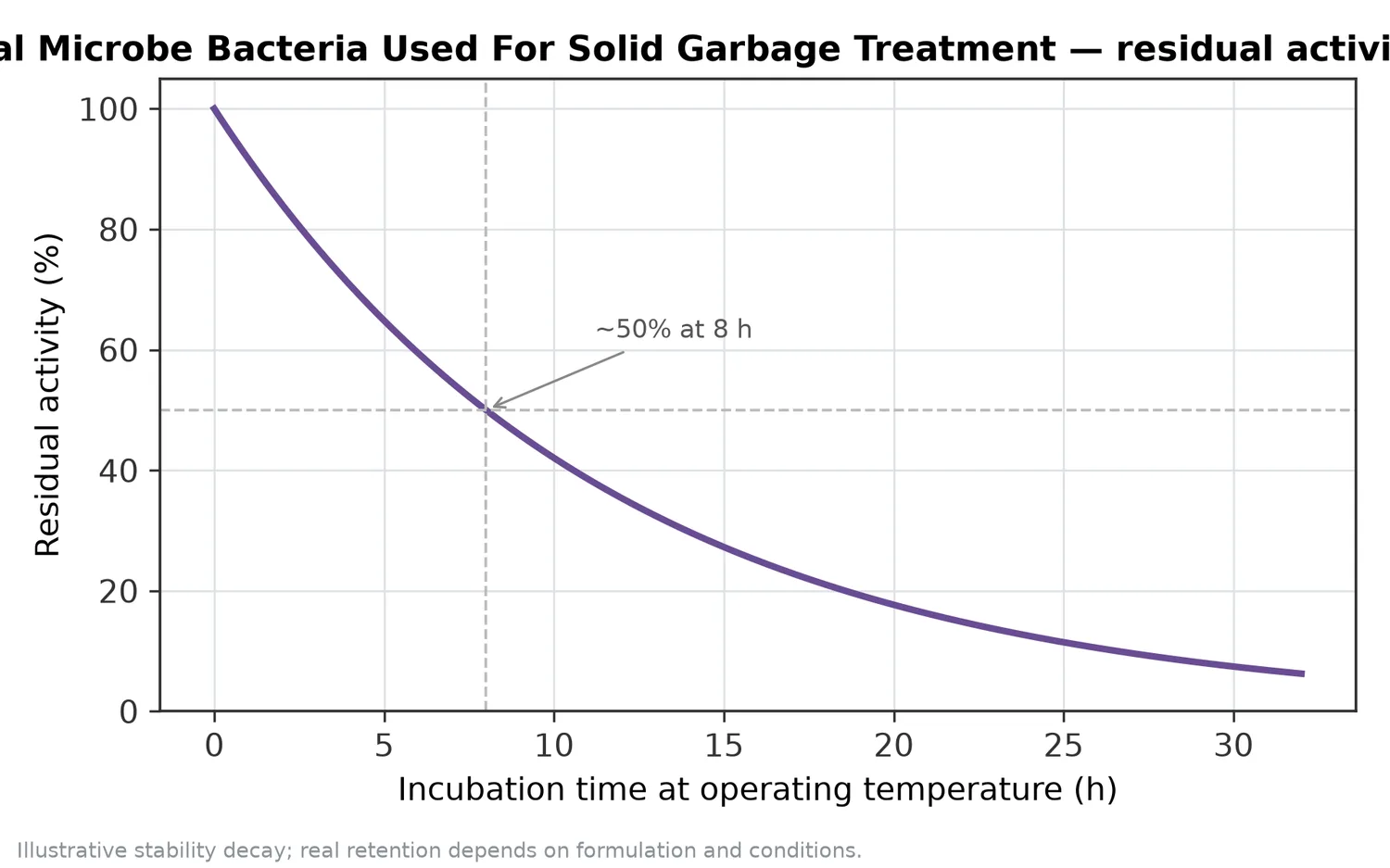
Stabilization should be judged as a process outcome, not as an immediate product claim. Material becomes more stable as readily degradable compounds decline, microbial heat output falls, odor decreases, and the remaining organic matter becomes less reactive. Landfill stabilization research illustrates that organic waste continues changing over extended periods, which is why managed composting systems still require time for active decomposition and curing [4].
In decentralized food-waste treatment, the product can support biological activity in bins, drums, small windrows, or other systems where food scraps are mixed with dry bulking material. The most important substrate changes are rapid hydrolysis of starches and soft plant tissues, release of soluble nutrients, and faster colonization of fresh waste surfaces. The same aerobic degradation principles described in organic solid waste research apply: enzymatic activity and soluble sugar release are early indicators that the biological process has access to the substrate [5].
In municipal or community-scale organics processing, microbial support may be used where the incoming waste stream is variable. Markets, cafeterias, residential organics, yard waste, and paper-like materials can arrive with different moisture levels and particle sizes. Composting reviews emphasize that municipal solid waste treatment by composting faces challenges precisely because the feedstock is heterogeneous, so biological support works best as part of an already managed organics stream [3].
In agricultural and horticultural settings, the relevant substrates may include crop residues, spoiled produce, manure-containing solids, bedding, and plant-processing waste. These materials often contain both readily degradable nutrients and slower lignocellulosic fibers. Enzymatic degradation studies in fruit and vegetable processing residues are useful here because they show why plant-cell-wall breakdown is a central mechanism in converting moist agricultural organics into a more stable material [6].
In sustainability and circular-economy programs, the product belongs in the organics-recycling portion of the system. Research on enabling a sustainable circular economy in municipal solid waste management highlights that solid waste solutions depend on linked drivers and barriers rather than isolated interventions. A microbial consortium can help the biological conversion step, while sorting, collection, contamination control, and end-use planning remain separate but necessary parts of the circular system [16].
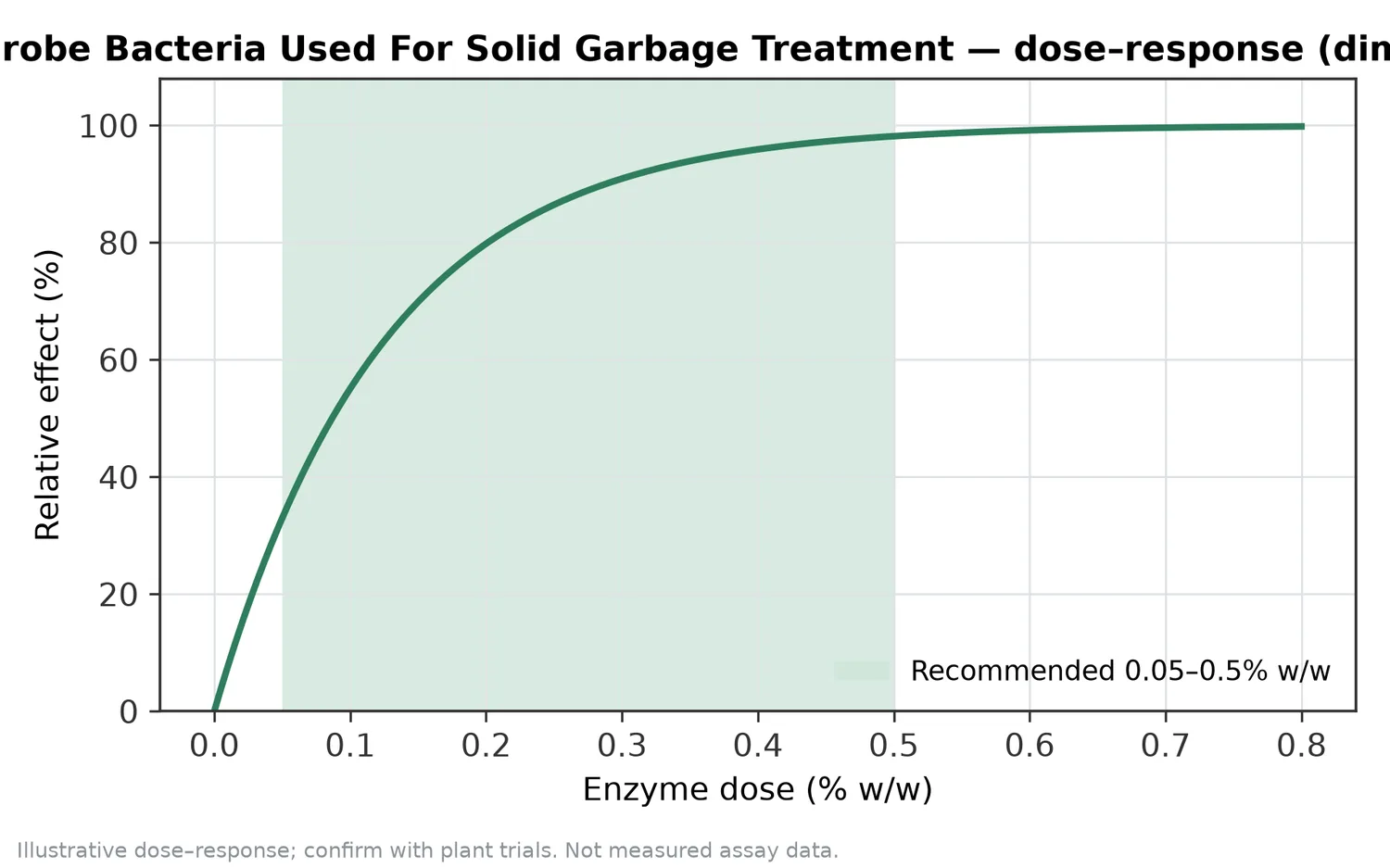
The main benefit is more active biological conversion of the biodegradable fraction. By adding a consortium intended for solid garbage treatment, the waste mass receives additional bacteria capable of colonizing organic particles and contributing hydrolytic enzyme activity. Where conditions are favorable, this can support faster softening, solubilization, and microbial consumption of food and plant residues compared with poorly populated or biologically stressed material [2].
A second benefit is better use of the waste’s own biochemical energy. Organic garbage already contains carbon and nutrients; microbial treatment channels those compounds through biological pathways instead of leaving them to decay slowly in a landfill. Composting guidance frames this as a way to recycle organic materials into a beneficial amendment rather than treating them only as disposal burden [1].
A third benefit is improved stabilization potential. As biodegradable substrates are consumed and transformed, the material becomes less putrescible and more suitable for downstream curing or soil-amendment production, depending on the process and local requirements. Studies on degradation and stabilization of municipal solid waste reinforce that stabilization is a meaningful endpoint in waste treatment, particularly when compared with uncontrolled landfill aging [4].
A fourth benefit is compatibility with broader organics-management systems. Biological products do not require the waste stream to be chemically uniform; they are designed around the fact that mixed organics contain many substrates. This makes microbial consortia conceptually well matched to food-and-yard-waste blends, plant residues, and other biodegradable solid garbage streams, provided the system maintains the basic conditions required for microbial life [3].
The product should not be expected to correct severe process problems on its own. If the waste is sealed in plastic bags, saturated with liquid, lacking airflow, overloaded with grease, or mixed with large amounts of inert material, the bacteria cannot fully contact or metabolize the biodegradable fraction. Biological performance follows the environment: oxygen, moisture, particle access, temperature, and feedstock composition shape the outcome [1].
The product also should not be used as a claim that contaminated mixed garbage becomes safe or finished compost automatically. Compost quality depends on what enters the system and how the process is run. Non-compostable packaging, produce stickers, glass, metals, treated materials, and chemical contaminants can persist even while food and plant matter decompose. Municipal solid waste composting reviews identify contamination and product-quality challenges as central issues for composting systems [3].
Plastic degradation claims require particular caution. While microbial and enzymatic routes for some synthetic polymers are being researched, reviews of microplastic mitigation and synthetic textile waste biodegradation make clear that this area remains technically challenging. For routine solid garbage treatment, the practical target remains the biodegradable organic fraction, not conventional plastics or mixed packaging waste [11].
Finally, biological treatment should align with local rules, site procedures, and intended end use. A microbial product can support decomposition, but it does not replace environmental controls, worker-safety practices, odor-management planning, or any regulatory requirements that apply to waste handling and composting operations. Current solid waste management research consistently treats technology as one component within a larger operational and governance system [9].
Enzymes.bio supplies Special Microbe Bacteria Used for Solid Garbage Treatment directly online in 1 kg units. The buyer completes payment online, after which the order is processed and shipped.
A Certificate of Analysis and Safety Data Sheet are provided with the order. This article is intended to explain the product category, the biological mechanism, and the appropriate application context for biodegradable solid garbage treatment; it is not a substitute for site-specific waste-management procedures or local regulatory guidance.
Special Microbe Bacteria Used for Solid Garbage Treatment supports the aerobic biological decomposition of biodegradable solid garbage by reinforcing the microbial community that colonizes organic waste and releases enzymes into the substrate. The strongest and most practical application is composting-style treatment of food scraps, yard waste, plant residues, manure-containing solids, and paper-like organics under conditions that allow oxygen transfer, moisture balance, substrate contact, and time for stabilization [1].
The science supports the concept: municipal solid waste and organic solid-waste studies show that degradation depends on microbial activity, enzymatic hydrolysis, substrate accessibility, and process conditions. Used responsibly, the product is a process-support tool for the organic fraction of solid garbage—not a substitute for sorting, aeration, moisture control, or proper handling of plastics, inerts, leachate, and contaminated materials [5].
Sold by the 1 kg unit, in stock and ready to ship. Order directly on our store — pay online and we process your order. A Certificate of Analysis and Safety Data Sheet are included with every order.
Buy Special Microbe Bacteria Used For Solid Garbage Treatment →Numbered in order of first citation. Open-access sources, each verified reachable at publication; citation numbers in the text link here.