
Thermostable alpha-amylase is a starch hydrolysis enzyme used to cut long starch polymers into shorter, more soluble carbohydrates, reducing paste viscosity and improving handling in heated starch processes. It works mainly by hydrolyzing internal alpha-1,4 glycosidic bonds in amylose and amylopectin, producing dextrins, maltose, and smaller sugars while leaving branch-point structures for other enzymes or downstream processing to address. Thermostability is valuable because many starch systems are heated to hydrate, swell, or gelatinize starch before efficient enzymatic liquefaction can occur [1].
Enzymes.bio supplies Starch Hydrolysis Enzyme Alpha Amylase Thermostable Enzyme for direct online purchase by the 1 kg unit. Buyers order and pay online, and the order is then processed and shipped with a Certificate of Analysis and Safety Data Sheet included.
Alpha-amylase belongs to the broader amylase enzyme family, which catalyzes the breakdown of starch and related polysaccharides into smaller carbohydrate fragments. In practical starch processing, its most important feature is that it acts inside the starch chain rather than only nibbling from the chain end. That “endo” action rapidly shortens long glucose polymers, which is why alpha-amylase is often associated with liquefaction, viscosity reduction, and preparation of starch for later saccharification or fermentation steps [1].
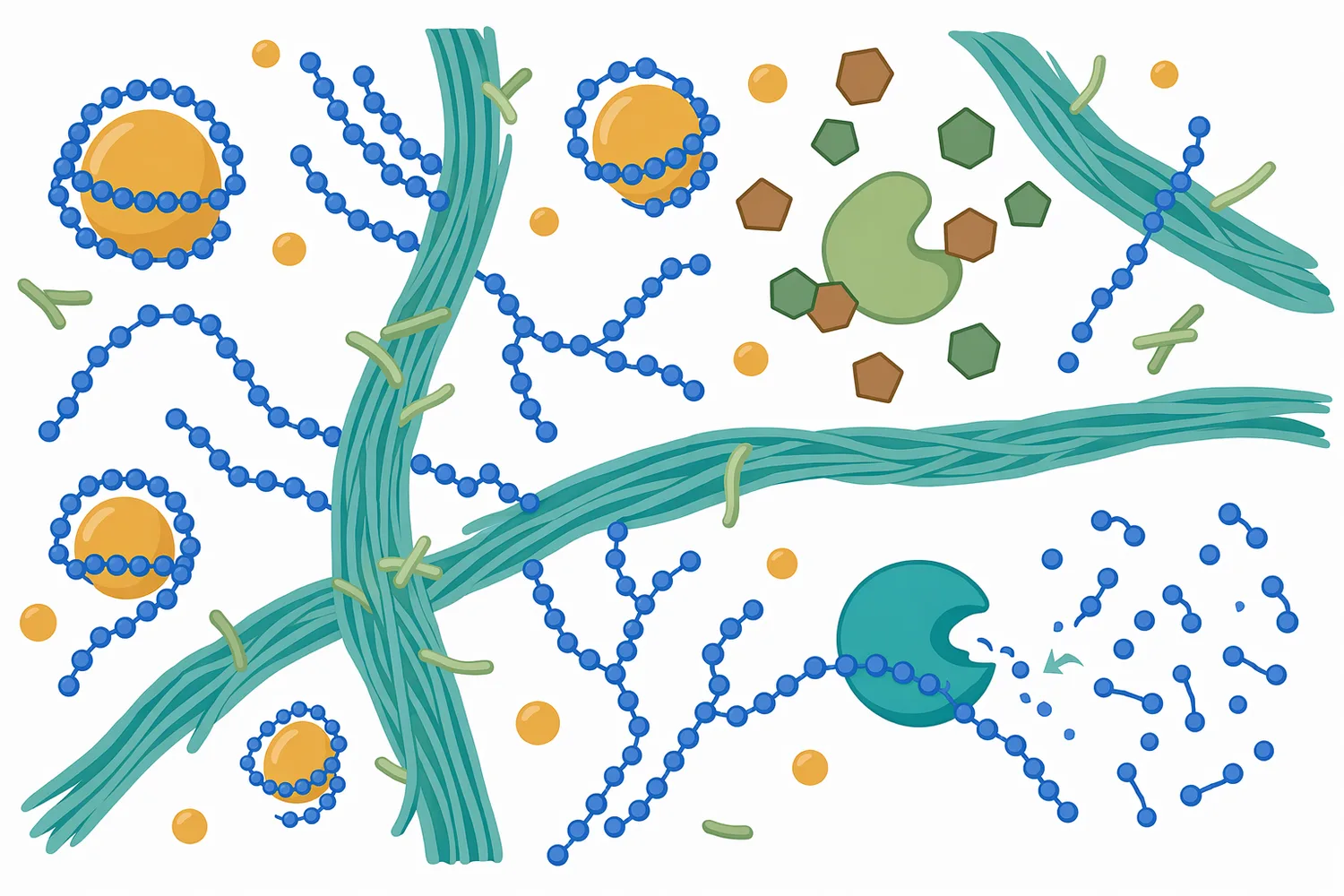
Starch is not a single uniform molecule. It is mainly composed of amylose, a mostly linear polymer of glucose units, and amylopectin, a highly branched polymer. Alpha-amylase attacks the alpha-1,4 linkages that connect glucose units along those chains. As the enzyme cuts those internal bonds, very long chains become shorter dextrins and soluble oligosaccharides; the physical result is that a thick paste loses body, flows more easily, and becomes easier to mix, pump, heat, or further convert [1].
The enzyme does not normally remove every structural feature of starch on its own. Amylopectin contains alpha-1,6 branch points, and alpha-amylase is not primarily a debranching enzyme. That is why alpha-amylase is well suited to liquefaction but is often not the only enzyme used when a process is designed for maximum glucose formation. In starch-to-sugar workflows, alpha-amylase opens and shortens the polymer network first; other saccharifying or debranching activities may then act more efficiently on the smaller, more accessible fragments [1].
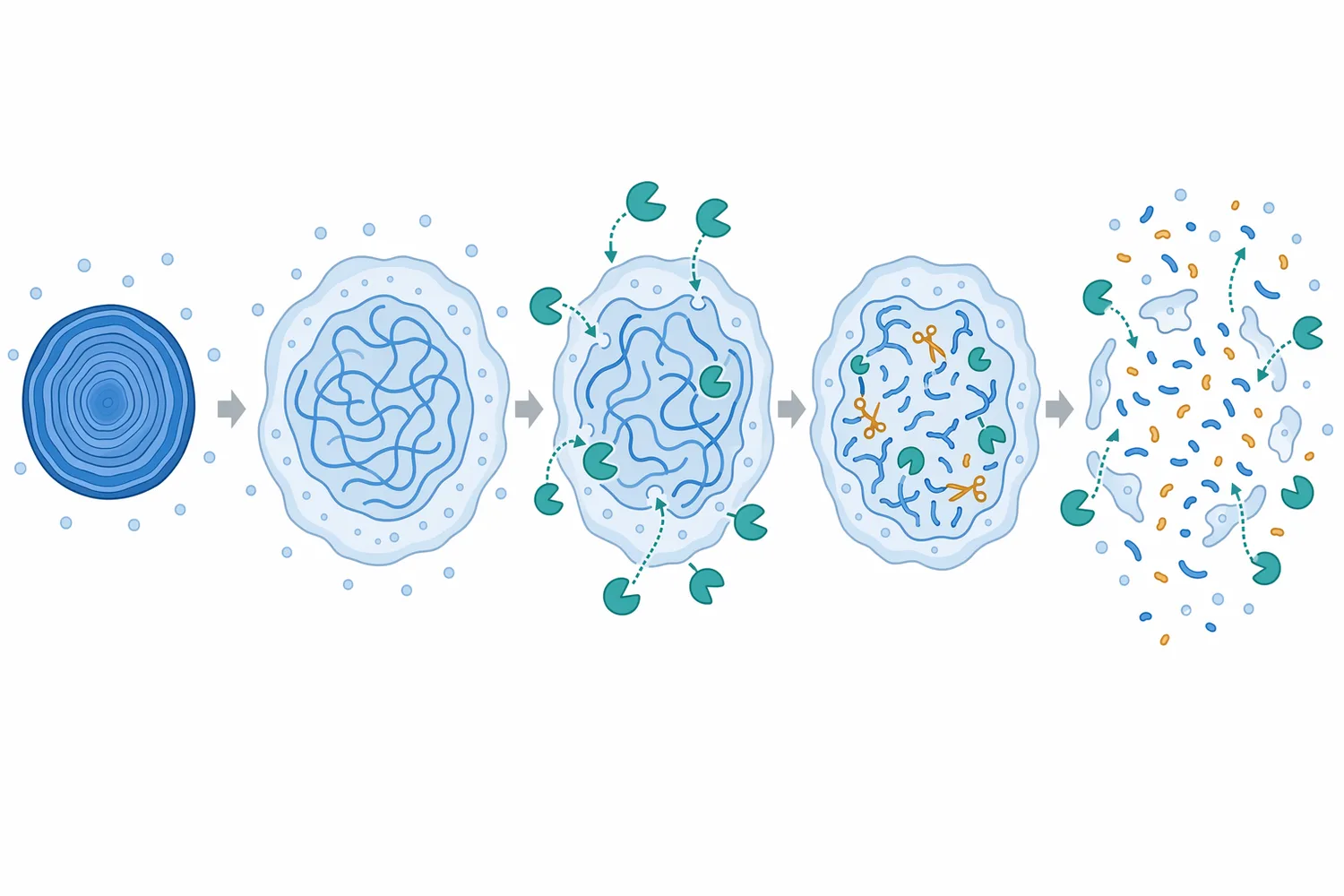
Heat changes starch before the enzyme even begins its work. Native starch granules can be compact, semi-crystalline, and partly resistant to enzymatic access. When water and heat are applied, granules hydrate, swell, lose ordered structure, and expose more of the polymer chains that alpha-amylase can attack. This is why many starch operations combine controlled heating with enzymatic treatment: heat makes the substrate more accessible, while the enzyme prevents the swollen starch from becoming a highly viscous mass [2].
The challenge is that enzymes are proteins, and ordinary proteins can unfold under thermal stress. A thermostable alpha-amylase is useful because it can continue functioning in warmer starch streams where less stable enzymes may lose performance. Research continues to focus on thermostable alpha-amylases from heat-adapted microbial sources such as Geobacillus and Bacillus strains, reflecting their industrial relevance where elevated temperatures are part of the process environment [3].
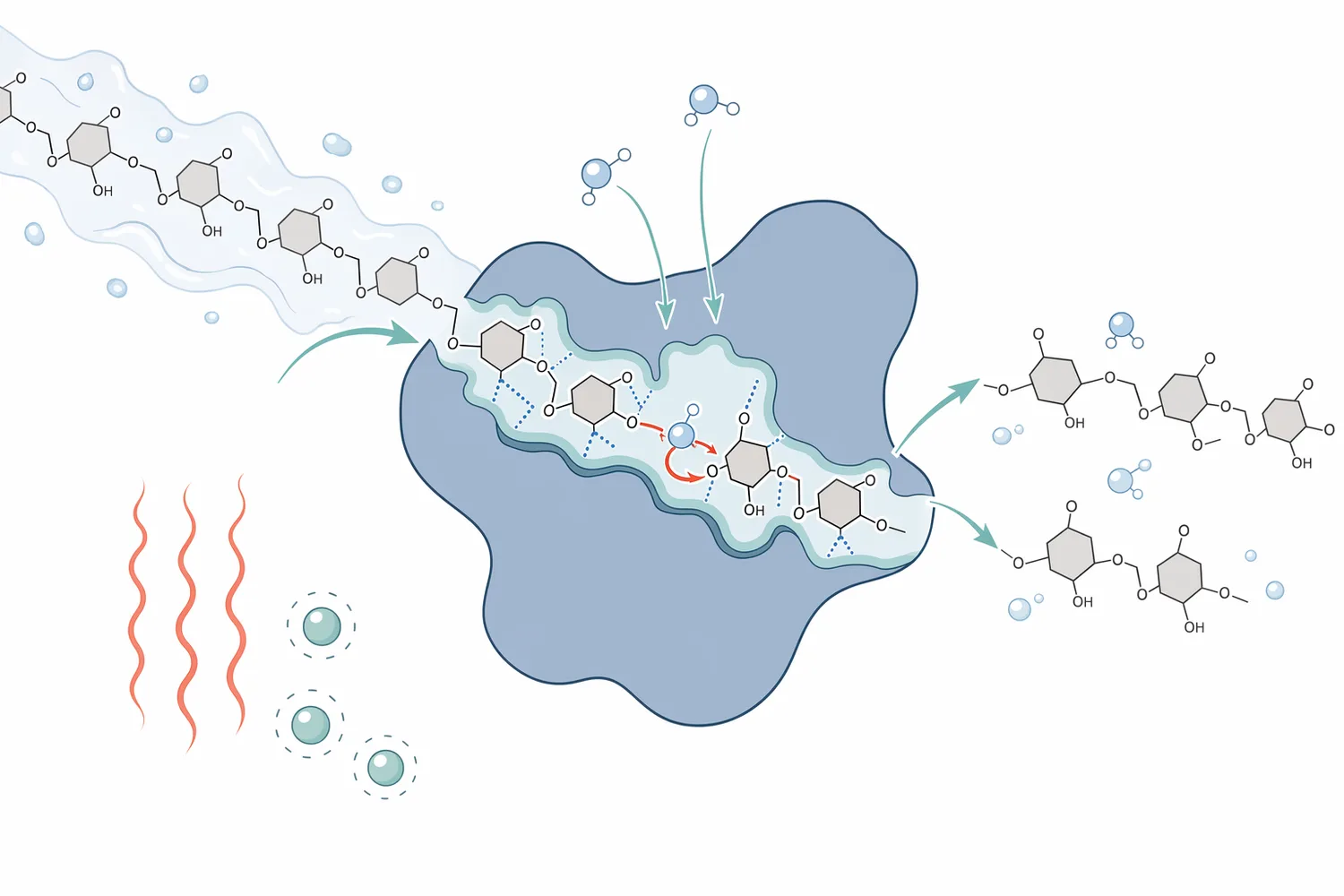
Thermostability also supports more consistent processing during the most viscosity-intensive phase of starch handling. When starch gelatinizes, viscosity can rise sharply and create mixing limitations, localized overheating, poor mass transfer, or difficult pumping. If alpha-amylase remains active during this stage, it cuts chains as they become available, converting a high-viscosity paste into a lower-viscosity dextrin-rich stream. The practical change is mechanical as much as chemical: a material that resists agitation becomes easier to circulate, transfer, and process.
At the molecular level, alpha-amylase binds starch segments in its active site and positions alpha-1,4 glycosidic bonds for hydrolysis. Hydrolysis means water is used to break a covalent bond between glucose units. Each cut reduces polymer chain length. Since viscosity in gelatinized starch depends strongly on the size, entanglement, and hydration of long polymers, many internal cuts can quickly reduce the network strength of the paste even before all starch has been converted to small sugars [1].
This explains why alpha-amylase can have a large process effect without complete starch conversion. A small number of strategic internal cleavages can turn very large amylose and amylopectin chains into much shorter fragments. These fragments hold water differently, entangle less strongly, and move more freely in solution. In processing terms, the same starch solids can become less resistant to flow because the polymer architecture has changed.
The granule-level changes are also important. Studies on starch systems show that amylolytic treatment can affect pore formation, enzyme accessibility, pasting behavior, and retrogradation-related properties. Once an enzyme creates openings or weakens the outer structure of a starch granule, additional chains become easier to reach. This can produce a progressive effect: initial hydrolysis improves access, and improved access allows more hydrolysis [4].
In food-structured systems, alpha-amylase action can also influence the release and accessibility of other components. For example, research on starch-based filled hydrogels found that simulated in-mouth size reduction and alpha-amylase addition affected lipid digestion and beta-carotene bioaccessibility. The broader lesson for industrial users is that starch hydrolysis can change not only carbohydrate size, but also the physical matrix that holds fats, colors, flavors, actives, or other ingredients [2].
Different starch-degrading enzymes are sometimes discussed together, but they do not do the same job. Alpha-amylase is especially associated with rapid internal chain cleavage and viscosity reduction. Other enzyme activities may be used where the target is a different sugar profile, slower modification, or more complete conversion. The comparison below is conceptual and application-oriented rather than a product specification.
| Enzyme type | Main action on starch | Typical process effect | Practical implication |
|---|---|---|---|
| Alpha-amylase | Cuts internal alpha-1,4 bonds in starch chains | Rapid dextrin formation and viscosity reduction | Strong fit for liquefaction, desizing, starch residue breakdown, and preparing starch for later conversion |
| Beta-amylase | Releases maltose units mainly from non-reducing chain ends | More maltose-oriented conversion | More dependent on available chain ends and less focused on rapid paste thinning |
| Glucoamylase | Releases glucose from chain ends and can act further on dextrins | Higher glucose formation over time | Often associated with saccharification after alpha-amylase has shortened starch chains |
| Debranching enzymes | Act on branch-point linkages in amylopectin | Improved access to branched structures | Useful when branch architecture limits conversion by enzymes that mainly act on alpha-1,4 linkages |
This distinction matters because “starch hydrolysis” can mean different outcomes. A liquefaction process may prioritize fast viscosity reduction, while a sweetener or fermentation process may prioritize sugar composition. Alpha-amylase provides the initial structural breakdown that makes many of those later outcomes easier to achieve [1].
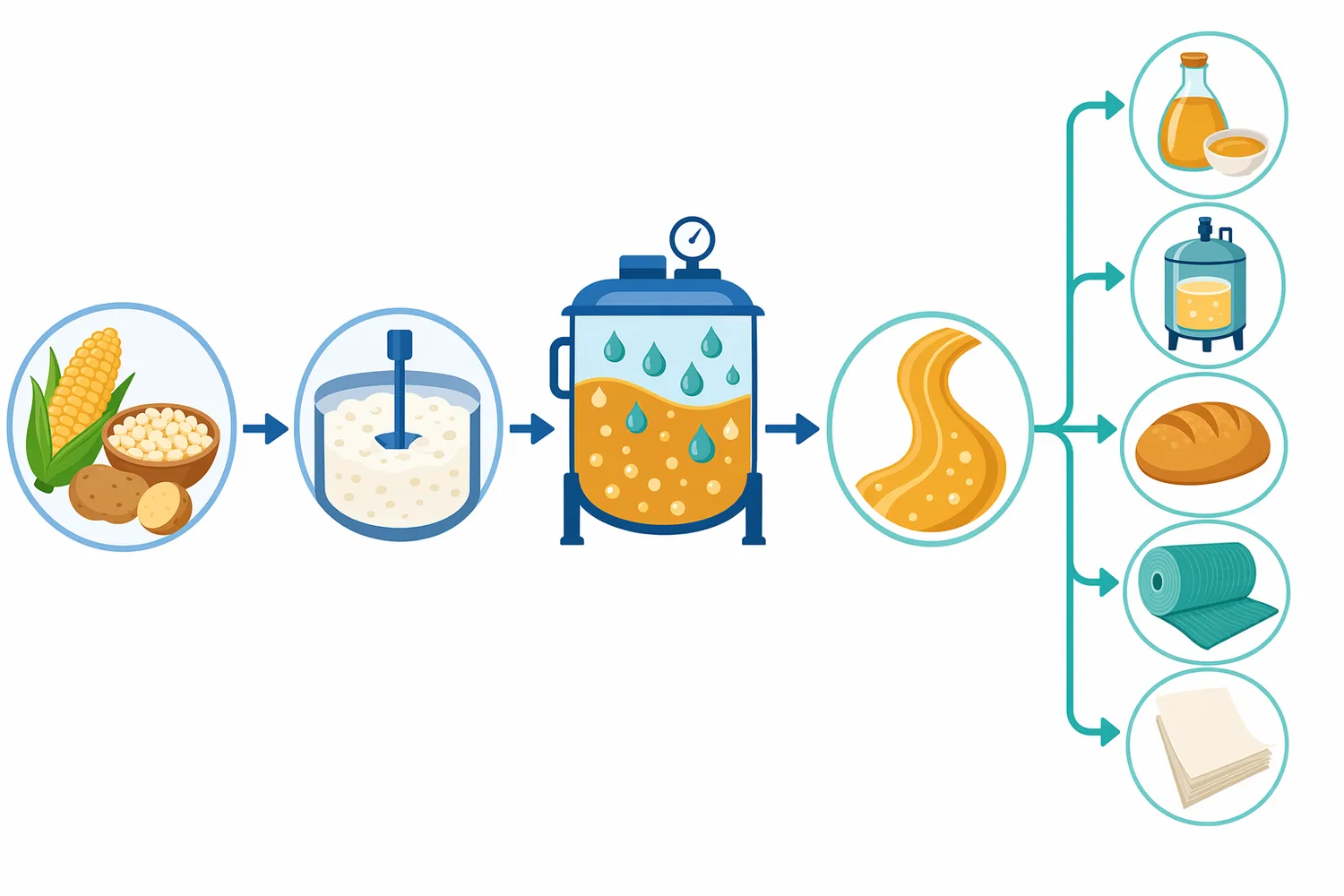
The central use of thermostable alpha-amylase is liquefaction of gelatinized starch. In a hot aqueous starch system, long polymers generate viscosity; alpha-amylase shortens those polymers and produces dextrins. The immediate benefit is improved flow and handling. The downstream benefit is that dextrinized starch is more accessible to additional enzymes, microbes, or processing steps than intact gelatinized starch [1].
This role is relevant to starch derived from corn, wheat, cassava, rice, potato, and other agricultural materials. Research on amylolytic enzyme production and bioethanol from cooked-rice residues illustrates the continuing interest in converting starch-rich leftovers and off-spec carbohydrate streams into more usable substrates. In these systems, alpha-amylase helps shift starch from a bulky polymeric material into soluble carbohydrate fragments that can be further processed [5].
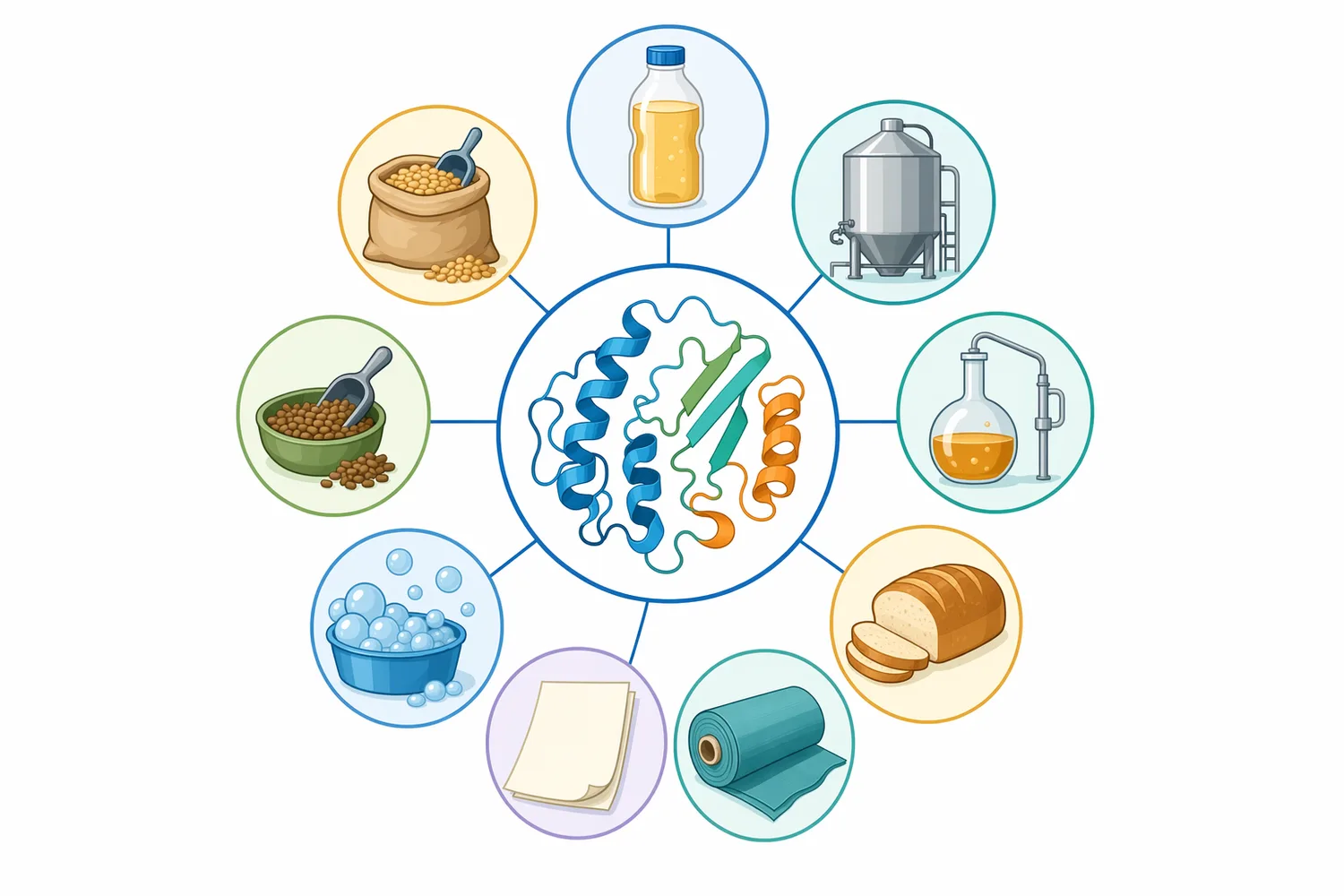
In food and beverage operations, alpha-amylase can support slurry handling, cereal processing, brewing-related starch conversion, and controlled modification of starch functionality. Its action changes the molecular size distribution of starch, which can alter viscosity, mouthfeel, digestibility, and the way starch interacts with other ingredients. These effects are why alpha-amylase appears across research on cereal grains, wheat starch behavior, and starch digestion [6].
Wheat is a useful example because alpha-amylase activity strongly affects grain and flour quality. Reviews of preharvest sprouting and late-maturity alpha-amylase in wheat discuss how alpha-amylase activity changes starch behavior during grain development and processing. While those studies focus on crop and quality issues rather than supplied enzyme use, they show the same underlying fact: alpha-amylase materially changes starch structure and functional performance [6].
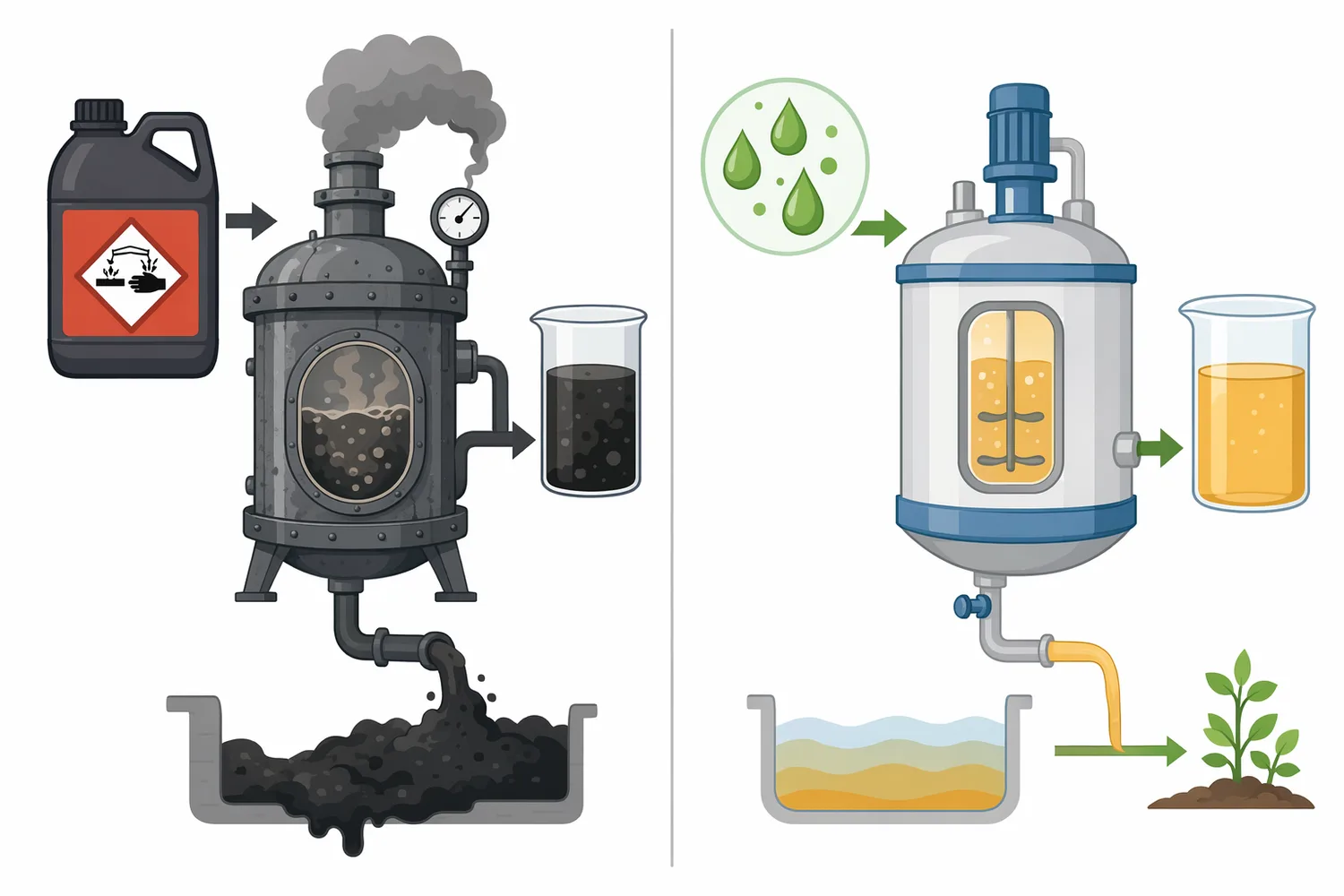
Textile desizing is a classic application for alpha-amylase. Starch-based sizing is applied to yarns to improve strength and weaving performance, but that starch must be removed before later dyeing, finishing, or coating steps. Alpha-amylase hydrolyzes the starch film into smaller, more washable carbohydrates, allowing removal without relying only on harsher chemical breakdown routes.
The mechanism fits the application closely. A starch size works because long hydrated polymers form a continuous film around fibers. When alpha-amylase cuts those polymers, the film loses strength and cohesion. Short dextrins are more water-dispersible and can be washed away more easily, reducing residual starch that could interfere with downstream textile finishing. Studies on microbial alpha-amylase production have specifically evaluated application to textile desizing, supporting its practical relevance beyond food starch conversion [7].
Food, bakery, rice, noodle, starch, and textile operations can generate water streams containing gelatinized or suspended starch. Starch in wastewater can contribute to viscosity, settling issues, and organic load. Alpha-amylase does not “treat wastewater” in the same way as a full biological treatment system, but it can hydrolyze starch residues into smaller soluble carbohydrates that are easier to disperse and more accessible to downstream treatment processes.
This use is especially logical when starch is present as paste, coating, or residue. The enzyme attacks the polymeric structure causing thickness or deposits. Instead of physically grinding or chemically degrading the residue, alpha-amylase cleaves the carbohydrate backbone. Research on amylase production from low-cost agricultural substrates and residues reflects the broader interest in using amylolytic enzymes for waste valorization and starch-rich stream management [5].
Starch-based soils are common in food handling and cleaning: sauces, cereal residues, gravies, chocolate-containing soils, and cooked starch films can adhere strongly to surfaces or fabrics. Amylase helps by breaking the starch binder into soluble fragments. Once the starch network is weakened, surfactants, water flow, and mechanical action can remove the remaining soil more effectively.
Research using banana peel as a substrate for alpha-amylase production by Aspergillus oryzae included application interest in detergent and food-industry contexts. The important point for cleaning systems is not simply that the enzyme “removes stains,” but that it targets the carbohydrate matrix holding particulate and oily residues in place. Once the starch matrix is hydrolyzed, the soil structure becomes less cohesive [7].
Alpha-amylase is also studied in feed and biomass systems where starch availability affects fermentation and digestibility. In rehydrated corn silage, exogenous amylolytic enzymes have been evaluated for effects on fermentation, nutritive value, and in vivo digestibility. Such work reflects a broader principle: when starch is a major energy source, enzymatic pre-treatment or supplementation can alter how much carbohydrate becomes available and how quickly it is accessed [8].
For starch-rich biomass streams, the practical value depends on the matrix. Whole grains, bran, residues, and by-products contain starch embedded with fiber, protein, lipids, or phenolic compounds. Alpha-amylase can hydrolyze accessible starch, but overall conversion is influenced by how exposed the starch is and whether other components physically or chemically restrict enzyme access.
The most important performance factor is starch accessibility. Native granules, damaged starch, cooked starch, milled grain, and gelatinized paste present very different surfaces to the enzyme. A hydrated, swollen starch paste exposes more alpha-1,4 linkages than a compact raw granule. That is why heat, water, particle size, and mixing often have a strong influence on how quickly hydrolysis is observed [2].
The surrounding matrix can also slow or redirect hydrolysis. Wheat bran research has shown that insoluble dietary fiber can retard starch digestion by reducing alpha-amylase activity. In practical terms, fiber-rich materials may physically limit contact between enzyme and starch, adsorb enzyme, alter water distribution, or create diffusion barriers that slow movement of enzyme and hydrolysis products [9].
Lipids and structured starch complexes can reduce hydrolysis as well. Some starch fractions are resistant because glucose chains are held in arrangements that are less available to alpha-amylase. In starch-lipid or highly ordered structures, the enzyme may reach only exposed regions while protected segments remain intact for longer. This is one reason identical enzyme addition can produce different outcomes in purified starch, whole flour, cooked grains, or food residues.
Plant phenolics and other minor constituents may also affect enzyme action. Research in food and nutrition often studies alpha-amylase inhibition because slowing starch digestion can be nutritionally useful. For industrial hydrolysis, the same concept is a reminder that raw materials rich in polyphenols, fibers, or complexing agents may not respond like clean starch slurries [10].
Many industrially relevant alpha-amylases are microbial because microbes offer diverse enzyme properties and can be associated with different environmental adaptations. Bacillus species are frequently studied for alpha-amylase production, including Bacillus subtilis, Bacillus licheniformis, and Bacillus amyloliquefaciens. Thermally adapted strains are of special interest because their enzymes may retain structure and activity under heat exposure that would destabilize less robust proteins [11].
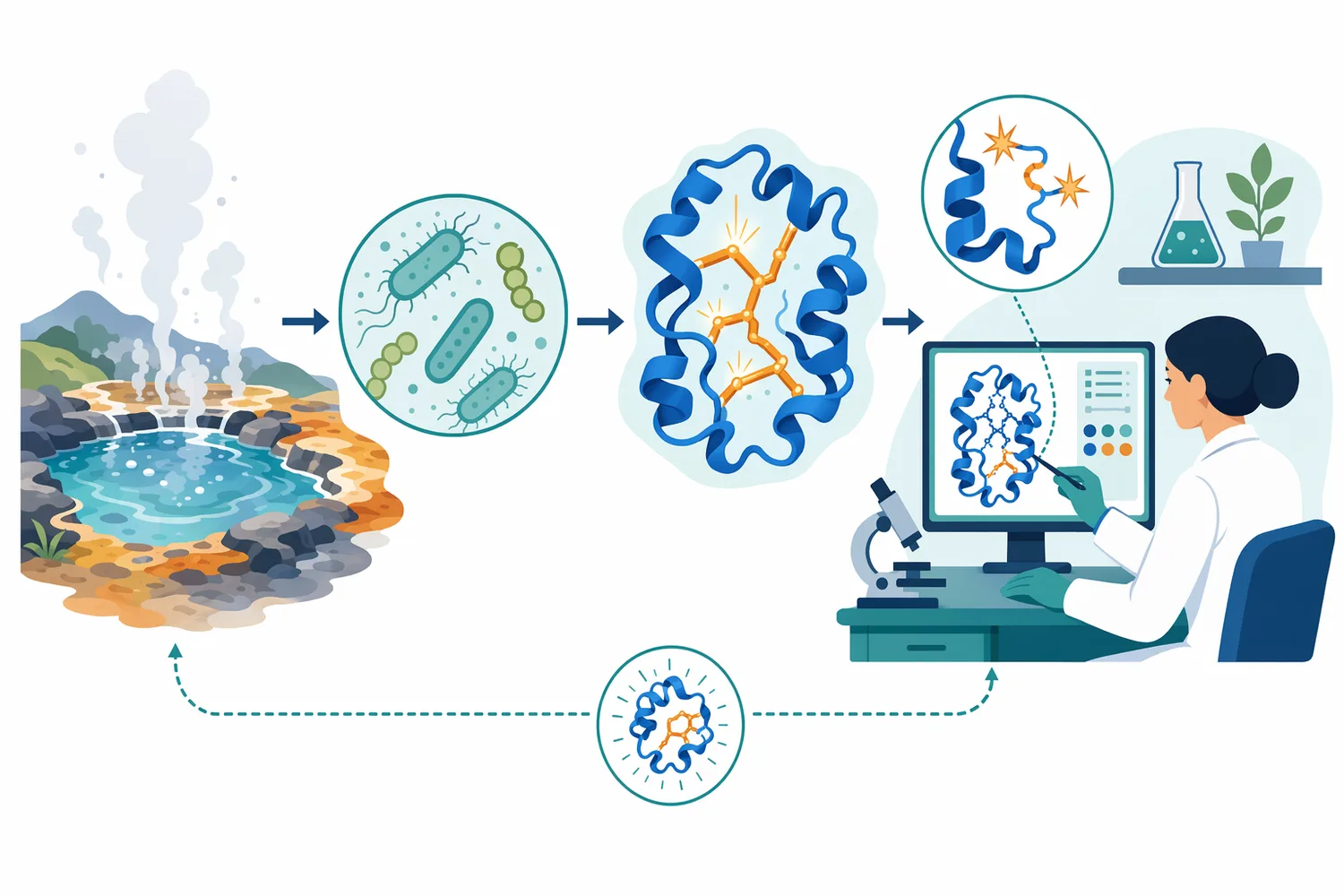
Hot-spring and thermophilic environments are a common focus in thermostable enzyme discovery. A study on a novel Bacillus licheniformis strain isolated from a local hot spring reflects this approach: environments exposed to heat can select organisms and proteins that tolerate higher thermal stress. For starch processors, the relevance is the same principle behind thermostable alpha-amylase products: a more heat-tolerant enzyme better matches heated starch operations [12].
Thermostability can also be improved through protein engineering. Research on Bacillus amyloliquefaciens alpha-amylase has explored multipoint mutations to improve thermostability. This type of work shows that heat tolerance is not a vague marketing term; it is connected to enzyme structure, amino-acid interactions, folding stability, and resistance to thermal unfolding [13].
Other studies have examined production of thermostable alpha-amylase in different biological systems, including transgenic soybean. While production platform is not the main concern for a buyer using a supplied enzyme product, such research reinforces the commercial and technical importance of thermostable alpha-amylase as a target enzyme for industrial biotechnology [14].
Research on wheat late-maturity alpha-amylase demonstrates that alpha-amylase expression can alter starch properties during grain development and germination. This is important because it shows alpha-amylase effects are visible at the material-property level, not only in test tubes. When starch is hydrolyzed or structurally modified, measurable changes can appear in pasting behavior, grain quality, and downstream processing performance [4].
Studies of preharvest sprouting and late-maturity alpha-amylase in wheat also highlight why uncontrolled alpha-amylase can be a quality problem in grain, even though controlled alpha-amylase is useful in processing. In sprouting grain, premature enzyme activity can degrade starch before milling or baking. In an industrial process, the same catalytic power is applied deliberately and at the intended stage to reduce viscosity or generate dextrins [6].
In feed applications, exogenous amylolytic enzymes have been studied for their influence on fermentation and digestibility of rehydrated corn silage. This supports the broader understanding that alpha-amylase changes carbohydrate availability in complex biological materials, not just purified starch. However, it also shows that matrix, moisture, fermentation state, and biological context influence outcomes [8].
In food digestion models, alpha-amylase is often used to simulate oral or intestinal starch breakdown. Research on starch-based hydrogels shows that adding alpha-amylase during simulated in-mouth processing changed downstream digestion and bioaccessibility behavior. For industrial readers, this is useful evidence that alpha-amylase modifies structure early in processing and can affect later release, flow, and conversion properties [2].
Alpha-amylase is not a universal complete-conversion enzyme. Its strength is rapid internal cleavage of alpha-1,4 linkages, which makes it excellent for thinning and dextrin formation. If the desired endpoint is very high glucose production, the remaining dextrins, branch structures, and short oligosaccharides may require other enzyme activities or process steps. This is a functional distinction, not a weakness: liquefaction and saccharification are related but not identical operations [1].
Alpha-amylase also cannot overcome every accessibility barrier instantly. Starch trapped inside intact plant cell walls, embedded in fiber-rich matrices, complexed with lipids, or associated with inhibitory compounds may hydrolyze more slowly than purified gelatinized starch. Studies showing that wheat bran fiber can retard alpha-amylase-related starch digestion illustrate how non-starch components can materially influence hydrolysis [9].
Thermostability should also be understood correctly. A thermostable enzyme is more suited to heated operation than a heat-sensitive enzyme, but it is still a protein with operating limits. Excessive heat, incompatible chemistry, or prolonged harsh exposure can reduce enzymatic function. The practical value of thermostability is that it extends usefulness in warm starch systems; it does not make the enzyme indestructible [3].
Enzymes.bio supplies Starch Hydrolysis Enzyme Alpha Amylase Thermostable Enzyme as a B2B enzyme product available for direct online purchase by the 1 kg unit. The purchasing process is straightforward: the buyer places the order online, pays online, and the order is processed and shipped. A Certificate of Analysis and Safety Data Sheet are included with the order.
Enzymes.bio is a product supplier, not a manufacturer or testing laboratory. This article is provided to explain the science, mechanism, and practical relevance of thermostable alpha-amylase in starch hydrolysis applications. Site-specific use, safety handling, and regulatory suitability remain the responsibility of the buyer’s own process and compliance controls.
Thermostable alpha-amylase is a practical enzyme for processes where starch must be liquefied, thinned, removed, or prepared for further conversion. It works by cutting internal alpha-1,4 glycosidic bonds in starch chains, converting large viscosity-building polymers into shorter dextrins and soluble carbohydrates. That molecular action explains its value in starch liquefaction, textile desizing, cleaning, food and beverage processing, starch-rich residues, and related heated systems [1].
Its thermostable character is especially relevant where starch is processed warm or hot to improve hydration, swelling, gelatinization, and enzyme access. Research on thermophilic and engineered alpha-amylases, starch structure changes, feed digestibility, and food-matrix hydrolysis all points to the same practical conclusion: when the substrate is accessible and the process environment is compatible, alpha-amylase can make starch-containing materials easier to handle, convert, wash, or process [13].
Sold by the 1 kg unit, in stock and ready to ship. Order directly on our store — pay online and we process your order. A Certificate of Analysis and Safety Data Sheet are included with every order.
Buy Starch Hydrolysis Enzyme Alpha Amylase Thermostable Enzyme →Numbered in order of first citation. Open-access sources, each verified reachable at publication; citation numbers in the text link here.