
Bacterial alpha amylase is a starch-liquefying enzyme used to convert gelatinized starch into lower-viscosity hydrolysis products such as dextrins, maltodextrin-type intermediates, maltose-rich fragments, and other soluble oligosaccharides. It works by cutting internal α-1,4 glycosidic bonds in starch chains, so long amylose and amylopectin molecules become shorter, more pumpable, and more accessible for downstream conversion [1].
For buyers using starch in food, fermentation, brewing, distilling, textile, paper, or related applications, the practical value is controlled viscosity reduction. Enzymes.bio supplies Starch Hydrolysis Products – Bacterial Alpha Amylase Enzyme for direct online purchase by the 1 kg unit; the order is paid for online, processed, and shipped, with a Certificate of Analysis and Safety Data Sheet included.
Bacterial alpha amylase belongs to the larger group of amylolytic enzymes used to hydrolyze starch. In industrial language, it is best understood as a liquefaction enzyme: it breaks down large starch polymers into shorter carbohydrate chains, rapidly reducing the thickness of a cooked starch paste. Reviews of microbial alpha-amylases describe them as major industrial enzymes because they act directly on starch, one of the most abundant carbohydrate raw materials used in food, feed, fermentation, paper, textile, and bio-based processing [1].
The word “bacterial” describes the enzyme source class. Bacterial alpha-amylases are widely studied because many bacterial strains produce extracellular amylases with useful process stability, including enzymes from Bacillus species. Studies on Bacillus pacificus, Bacillus licheniformis, and Bacillus subtilis show continued research interest in bacterial alpha-amylase production, characterization, and optimization under different culture and processing conditions [2].
The key functional point is that alpha amylase does not digest starch randomly into one uniform final molecule. It cleaves internal α-1,4 linkages along starch chains, producing a mixture of soluble dextrins, oligosaccharides, maltose-containing fragments, and smaller reducing sugars depending on the starch source and process conditions. That is why it is commonly used before saccharifying enzymes when the target is a highly fermentable or high-glucose syrup stream, but may be used as the main enzyme where partial hydrolysis products are the desired output [1].
In practical starch hydrolysis, this matters because native starch and gelatinized starch behave very differently. Native starch granules are compact and semi-crystalline, while heated starch in water swells, gelatinizes, and forms a thick paste. Once alpha amylase cuts the long polymer chains, the paste loses its high molecular-weight network structure; viscosity drops because the shortened chains no longer entangle and hold water in the same way.
Starch is mainly built from two glucose polymers: amylose, which is mostly linear, and amylopectin, which is highly branched. Both contain many α-1,4 glycosidic bonds along their chains, while amylopectin also contains α-1,6 branch points. Alpha amylase attacks the internal α-1,4 bonds, so it shortens both amylose chains and the linear segments of amylopectin [1].
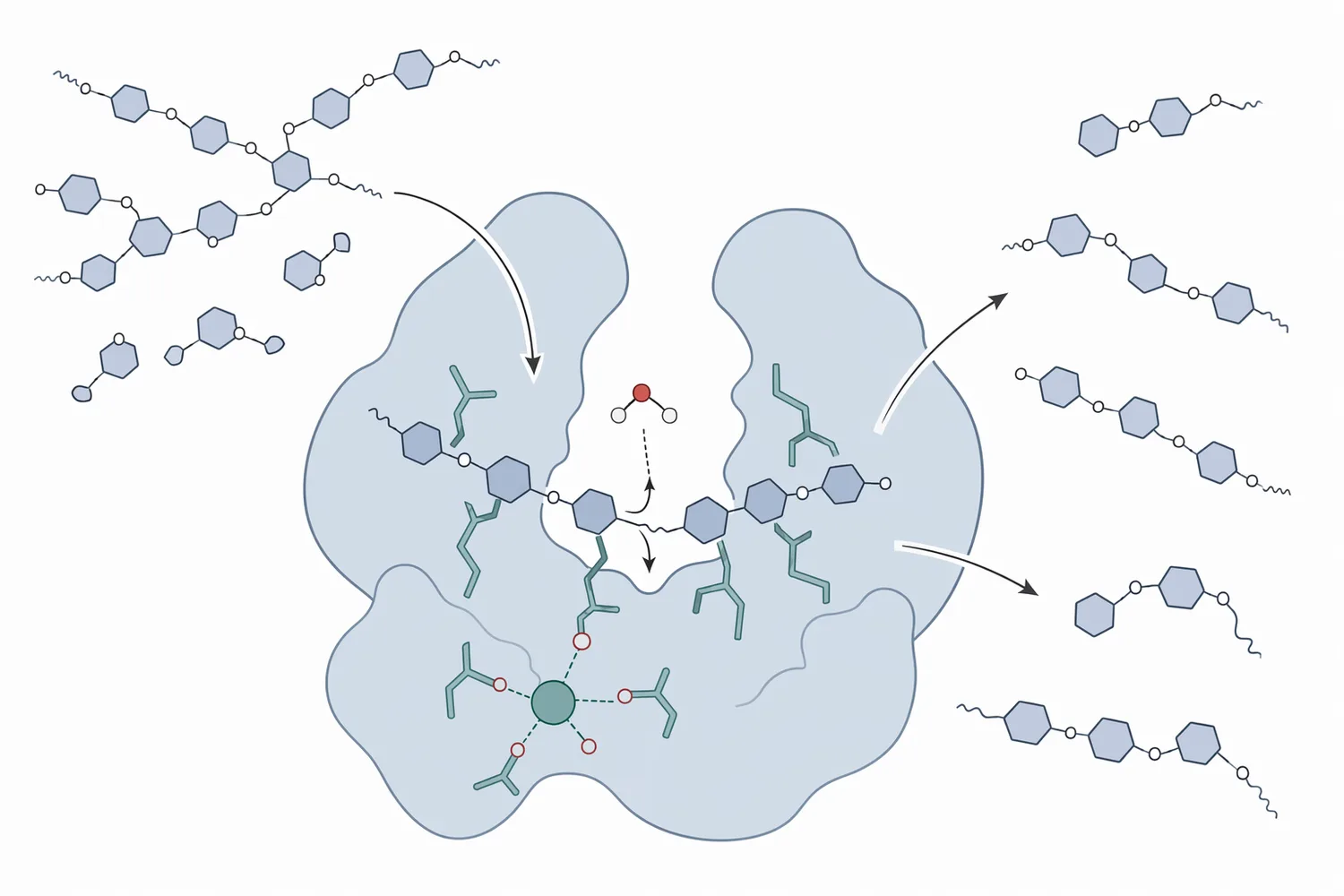
That internal cutting pattern explains the immediate process effect. A cooked starch slurry is viscous because long hydrated chains and swollen granule fragments form a continuous, resistant matrix. When alpha amylase breaks those chains internally, the average chain length falls quickly. Shorter molecules slide past one another more easily, water is released from the swollen network, and the material becomes easier to stir, pump, meter, filter, or feed into the next process step.
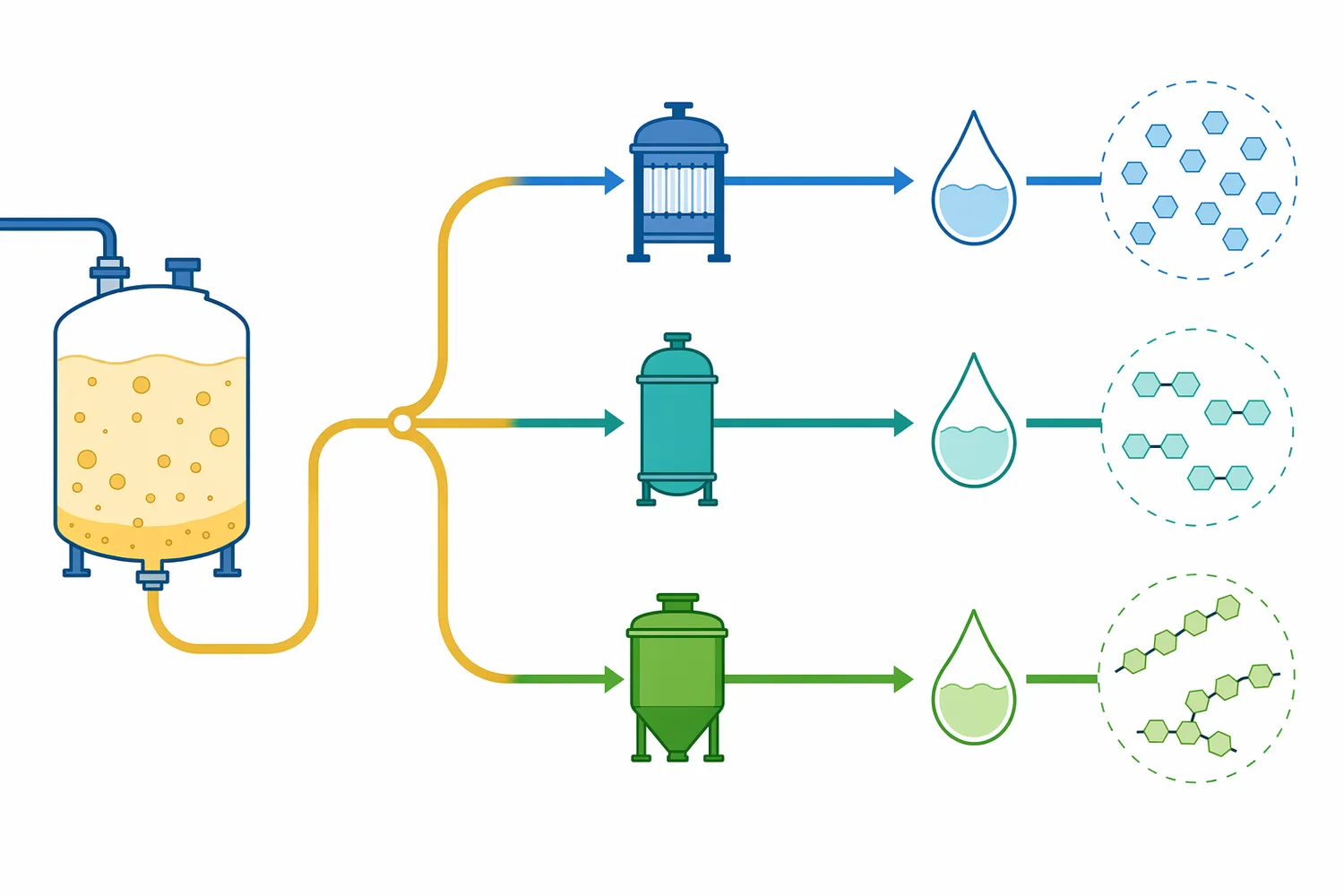
The products of this first-stage hydrolysis are not identical to the products of complete saccharification. Alpha amylase typically leaves a distribution of dextrins and oligosaccharides because it cannot fully remove every glucose unit from every chain end in the way a saccharifying exo-enzyme can. This is why alpha amylase is strongly associated with liquefaction and dextrinization, while other enzymes are often used later when the goal is a more specific sugar profile [1].
Starch structure also affects enzyme access. A dense granule, a retrograded paste, a high-amylose starch, or a complex food matrix may not expose the same number of hydrolysable bonds as a well-gelatinized slurry. Characterization studies of microbial alpha-amylases repeatedly evaluate temperature, pH, and substrate effects because the same catalytic function can perform differently as the physical environment around the starch changes [3].
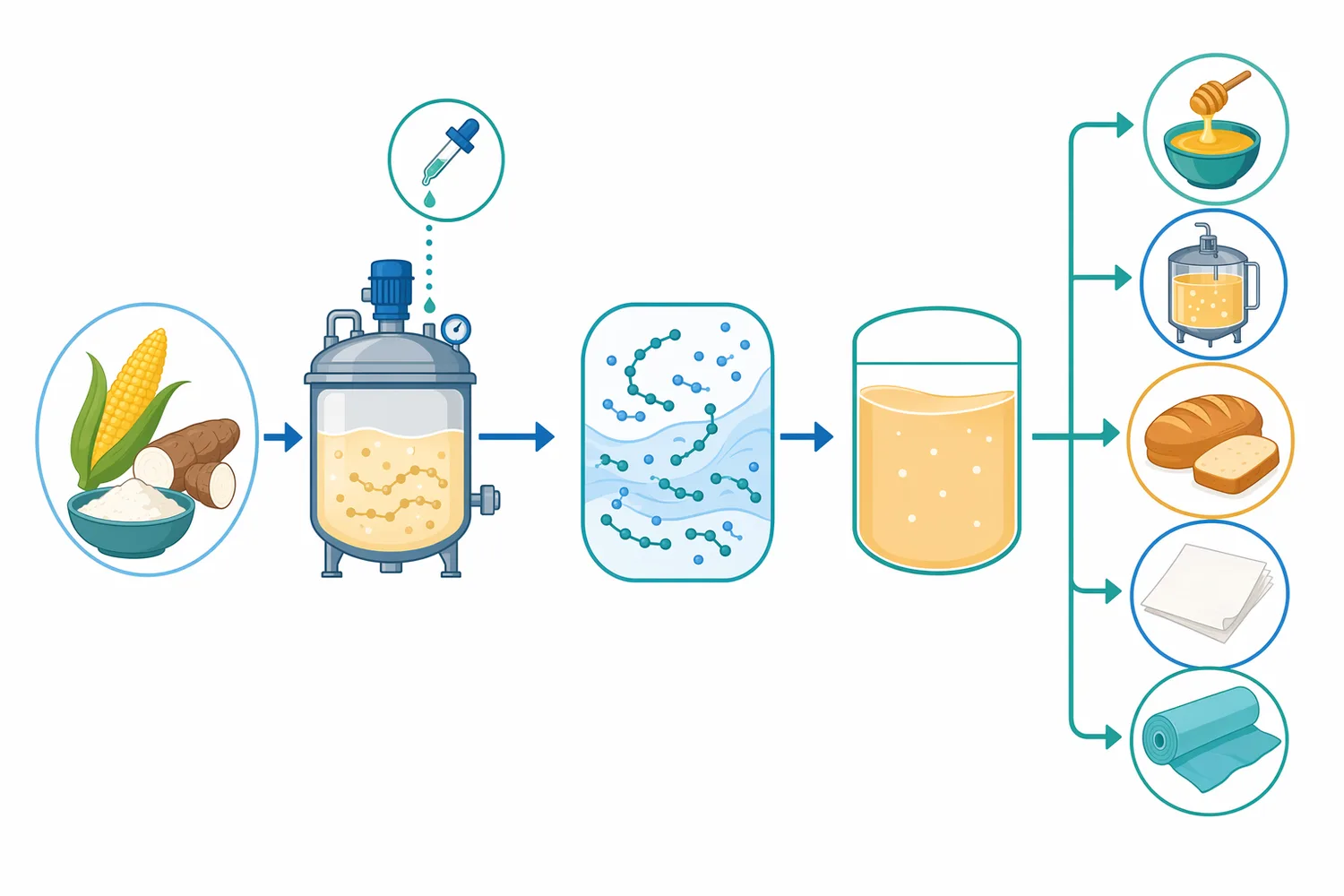
The typical sequence for alpha-amylase-based liquefaction is straightforward at a conceptual level. Starch is dispersed in water, heated so granules swell and open, treated with bacterial alpha amylase, and then held until the desired degree of viscosity reduction or dextrinization is reached. The liquefied stream can then be used directly or converted further, depending on the application.
The first visible change is usually thinning. A high-solids starch paste that resists mixing becomes more fluid because the enzyme has reduced the molecular size of the starch. This does not mean the starch has disappeared; it means the starch has been transformed from large, high-viscosity polymers into lower-molecular-weight carbohydrate fragments.
The second change is improved accessibility. Once alpha amylase has opened the starch structure, downstream enzymes or microorganisms can reach more chain ends and soluble fragments. This is important in sweetener, brewing, distilling, and fermentation applications, where liquefaction prepares starch for further conversion into fermentable sugars. Industrial reviews describe alpha-amylase as central to starch processing because it creates the lower-viscosity intermediate stream needed for later process steps [1].
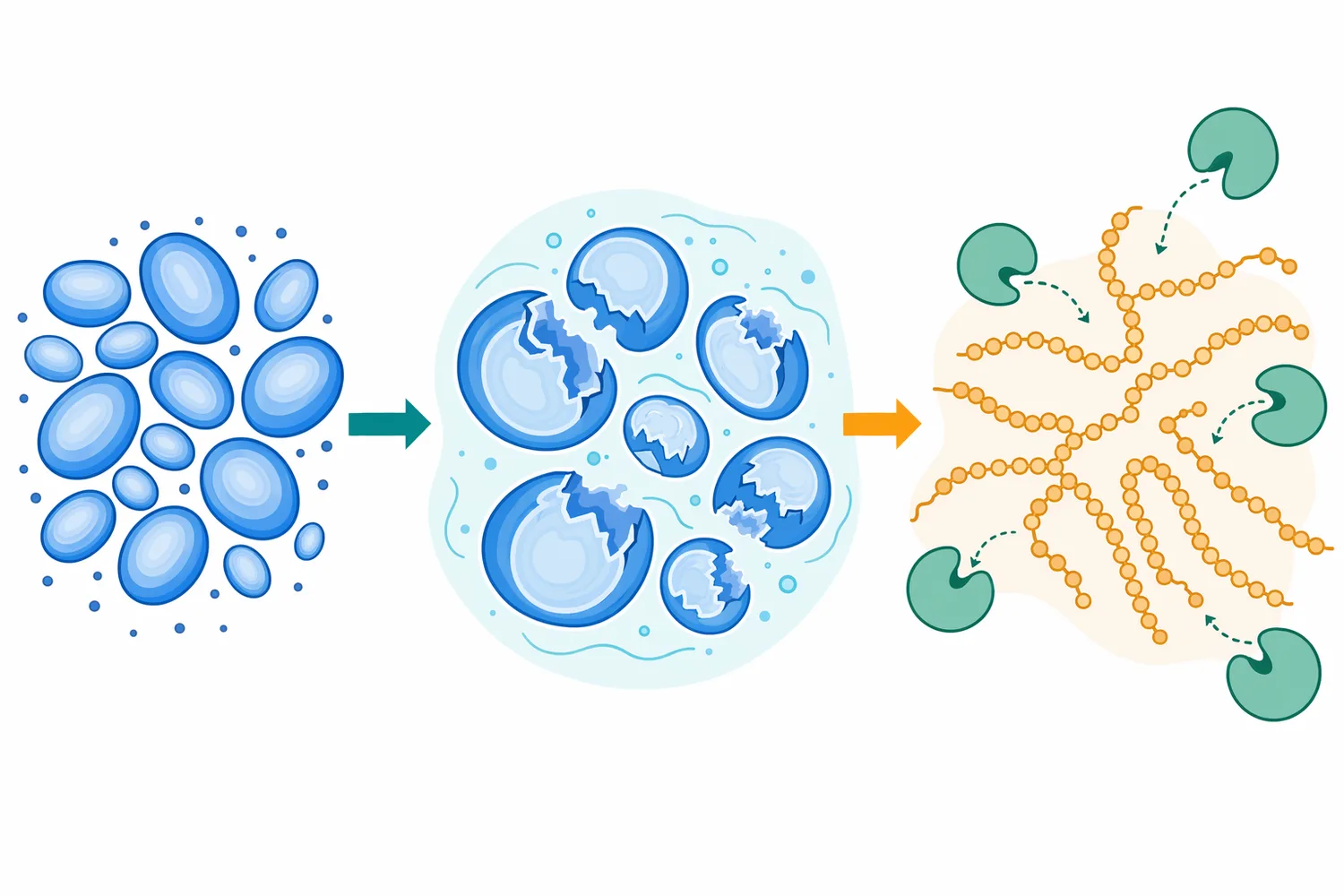
The third change is functional modification. Dextrins and maltodextrin-type products behave differently from native starch: they usually disperse more readily, generate lower viscosity at comparable solids, and can provide body or carrier functionality without forming the same paste texture as unhydrolyzed starch. The exact functionality depends on the extent of hydrolysis and the carbohydrate distribution, but the underlying mechanism is always the same: shorter chains produce different physical behavior.
Alpha amylase is often discussed alongside other amylolytic enzymes, but each enzyme has a different cutting pattern and therefore a different process role. The distinction is important because bacterial alpha amylase is strongest where the aim is rapid liquefaction and partial hydrolysis, not necessarily complete conversion to a single sugar [1].
| Enzyme type | Main action on starch | Typical process role | Main practical effect |
|---|---|---|---|
| Bacterial alpha amylase | Cuts internal α-1,4 bonds within starch chains | Liquefaction, dextrinization, viscosity reduction | Rapid thinning of gelatinized starch and formation of soluble dextrins/oligosaccharides |
| Glucoamylase / amyloglucosidase | Releases glucose units mainly from chain ends | Saccharification after liquefaction | Higher glucose formation from liquefied dextrins |
| Beta amylase | Releases maltose units from non-reducing chain ends | Maltose-rich conversion in selected processes | Increased maltose formation rather than broad internal liquefaction |
| Debranching enzymes | Act on branch linkages such as α-1,6 bonds | Support more complete conversion of amylopectin-derived dextrins | Reduces branched limit dextrins and improves downstream saccharification |
This comparison also explains why bacterial alpha amylase is commonly placed early in starch conversion. It rapidly reduces molecular size inside the polymer network, creating a more manageable substrate. Once the starch has been liquefied, other enzymes may be used if the desired product is a more specific glucose-rich or maltose-rich syrup.
The strongest evidence for bacterial alpha amylase is the breadth of its established industrial use. Microbial alpha-amylases are repeatedly described in the literature as important biocatalysts for starch-processing industries because they hydrolyze starch into smaller carbohydrates and support applications across food, fermentation, textile, paper, detergent, pharmaceutical, and biofuel sectors [1].
Research on bacterial strains continues because alpha-amylase performance depends on enzyme source and operating environment. A study of Bacillus pacificus associated with the brown alga Turbinaria ornata examined cultural conditions, purification, and biochemical characterization of the produced alpha amylase, illustrating how bacterial enzymes are evaluated for properties relevant to applied starch hydrolysis [2].
Other work has focused on Bacillus strain optimization and thermostable alpha-amylase production. Rodrigo and co-workers compared growth conditions to identify a superior Bacillus strain producing thermostable alpha amylase, while Khatun and co-workers investigated improvement of alpha-amylase activity from Bacillus licheniformis through UV radiation and modified media composition [4]. These studies are not descriptions of the Enzymes.bio supply chain, but they reinforce why bacterial alpha-amylases remain a major research and industrial enzyme class.
Solid-state fermentation studies also show the broad production interest around amylases. Abdullah and co-workers reported enhanced alpha-amylase production using a bacterial co-culture approach in solid-state fermentation, and Isabel and co-workers investigated amylase-producing bacterial strains from industrial waste in a bioprocessing and optimization context [5]. This body of work supports the general technical maturity of bacterial alpha-amylase as an enzyme category.
Fungal alpha-amylases are also widely studied, which is useful context even when the product of interest is bacterial alpha amylase. For example, research on Aspergillus oryzae used agroindustrial wastes to produce alpha amylase by solid-state fermentation, and later work characterized alpha amylase from Aspergillus niger XJ42 [6]. The comparison highlights that alpha-amylase activity is widespread in microbial systems, while bacterial preparations are particularly associated with robust liquefaction uses.
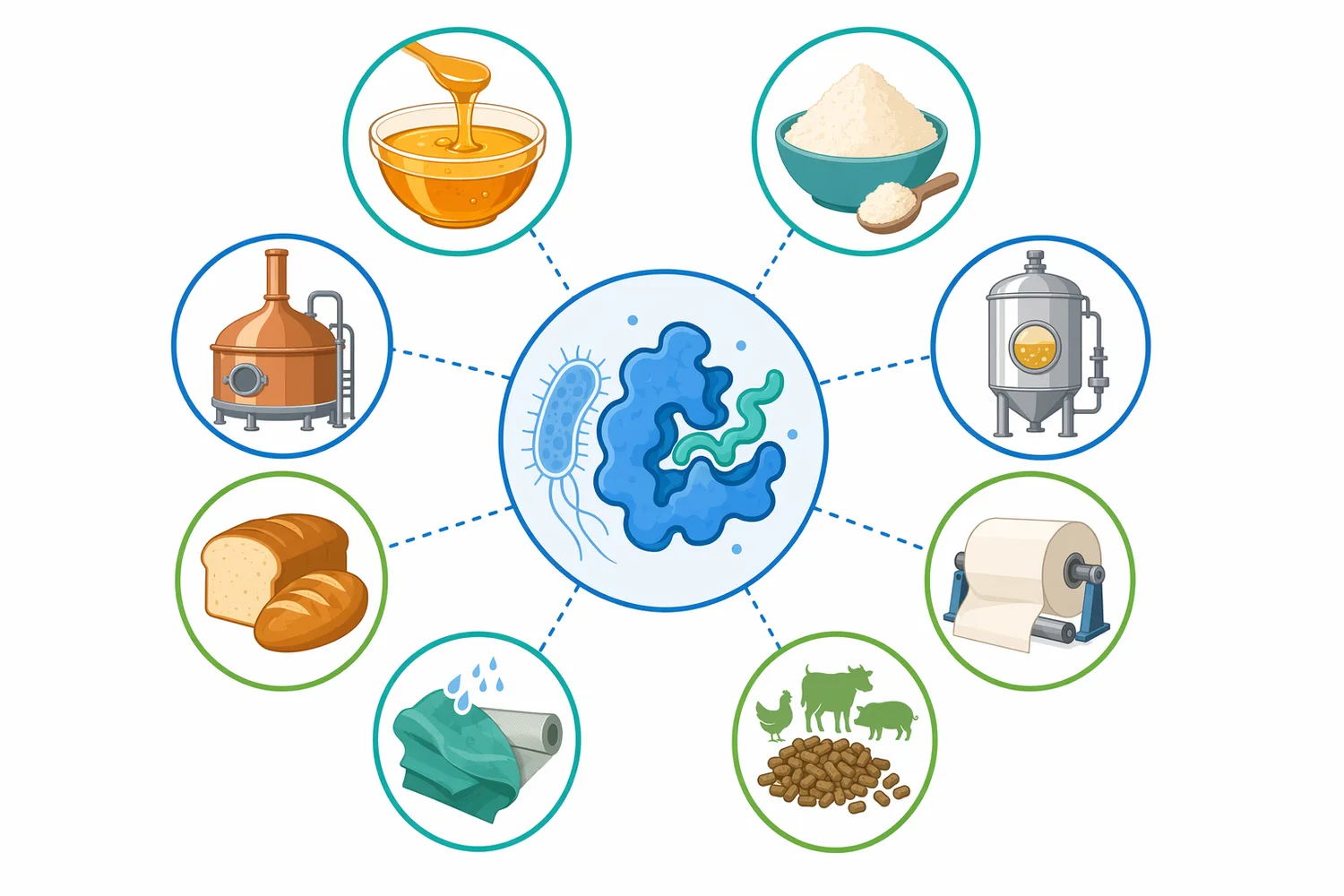
In food starch processing, bacterial alpha amylase is used where native starch must be converted into lower-viscosity, more soluble, or more functional carbohydrate ingredients. Partial hydrolysis can produce dextrin and maltodextrin-type streams that provide body, carrier properties, controlled sweetness, or solids contribution without the heavy paste viscosity of unmodified starch. The enzyme’s role is to shorten the starch chains so the material behaves less like a gel-forming polymer and more like a soluble carbohydrate system [1].
This is especially relevant when starch is processed at higher solids. Without liquefaction, gelatinized starch can become too thick for efficient agitation and heat transfer. Alpha-amylase treatment reduces that resistance by cutting the chains that create the paste structure, allowing a more uniform process and a more manageable intermediate for drying, blending, or further conversion.
For glucose syrup, maltose syrup, and other starch-derived sweetener streams, bacterial alpha amylase is commonly used as the liquefaction step. It does not by itself define the final syrup profile; instead, it creates the dextrin-rich intermediate that can be treated further by saccharifying enzymes. This staged approach reflects the different cutting patterns of starch-conversion enzymes: alpha amylase thins the substrate first, and later enzymes refine the sugar profile [1].
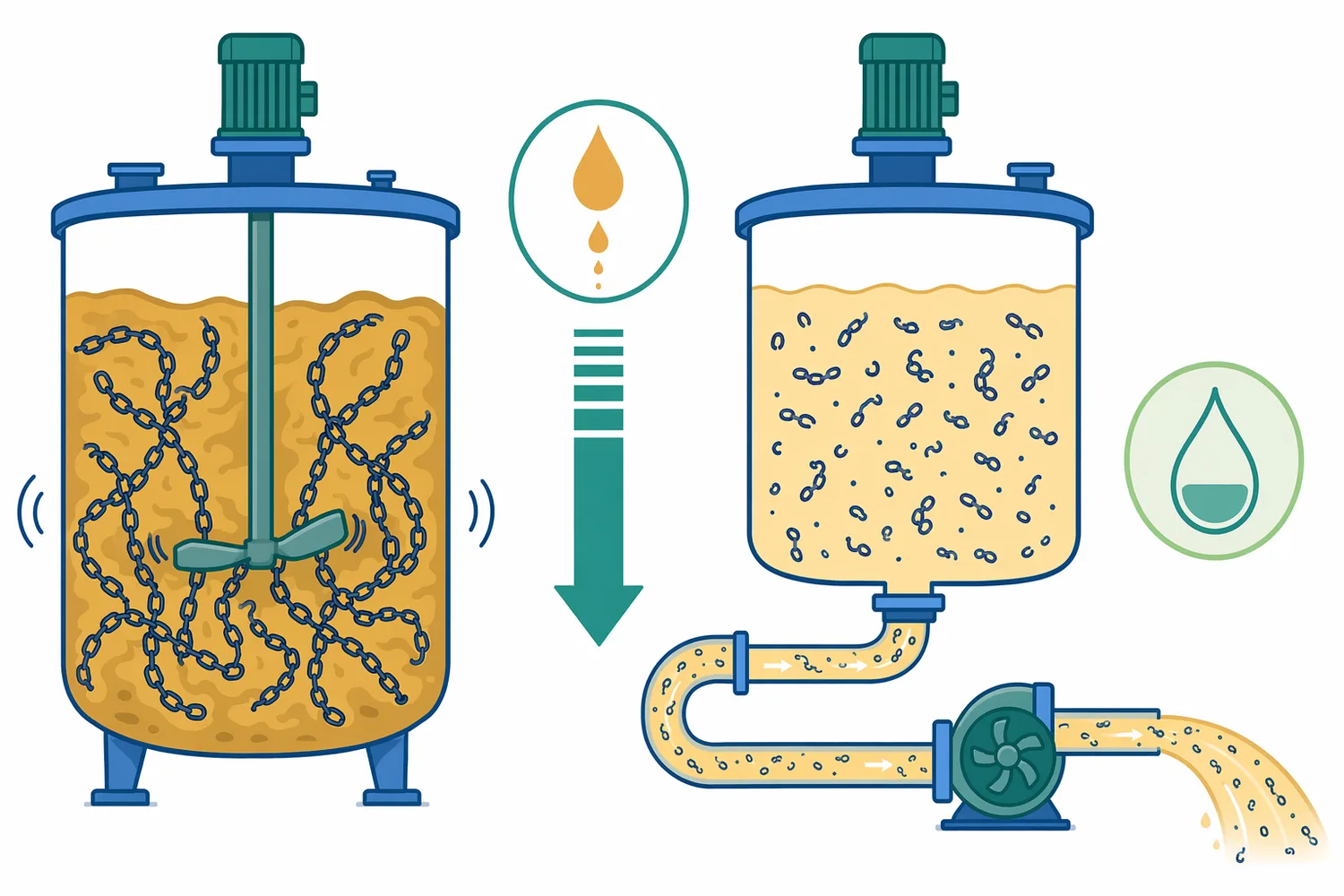
The practical advantage is that downstream conversion is easier when the starch is no longer a thick, high-molecular-weight paste. Liquefied dextrins present more accessible chain ends and lower resistance to mixing, which supports more consistent saccharification and more controllable processing.
Starch-based brewing, distilling, and fermentation processes require carbohydrates that microorganisms can use. Yeast and many industrial microbes do not efficiently consume intact starch granules or long starch polymers, so starch must first be hydrolyzed into soluble fermentable or semi-fermentable carbohydrates. Alpha amylase begins that conversion by producing dextrins and smaller oligosaccharides from gelatinized starch [1].
In grain or tuber-based systems, alpha-amylase action also supports slurry handling before fermentation. Lower viscosity improves mixing, temperature uniformity, and transfer. Where further fermentability is required, saccharifying enzymes or malt-derived enzymes may follow, but bacterial alpha amylase remains important because it creates the liquefied substrate those later steps act on.
Starch is commonly used in textile sizing because it helps strengthen yarns during weaving. After weaving, that starch must be removed so fabric can be dyed, finished, or processed further. Alpha amylase is useful because it hydrolyzes the starch size into soluble fragments that can be washed away more easily than intact starch films [1].
The mechanism is the same as in food starch liquefaction, but the process goal is different. Instead of producing a carbohydrate ingredient, the goal is controlled breakdown and removal of a starch-based coating. By cutting the starch polymer into smaller dextrins, the enzyme weakens the film and increases solubility, helping release it from the textile surface.
In paper and packaging applications, starch may be used for surface sizing, coating, strength development, or adhesive-related functions. Alpha-amylase can be relevant where starch viscosity must be adjusted or where starch-containing residues need to be modified. Industrial reviews include paper among the major application areas for microbial alpha-amylases [1].
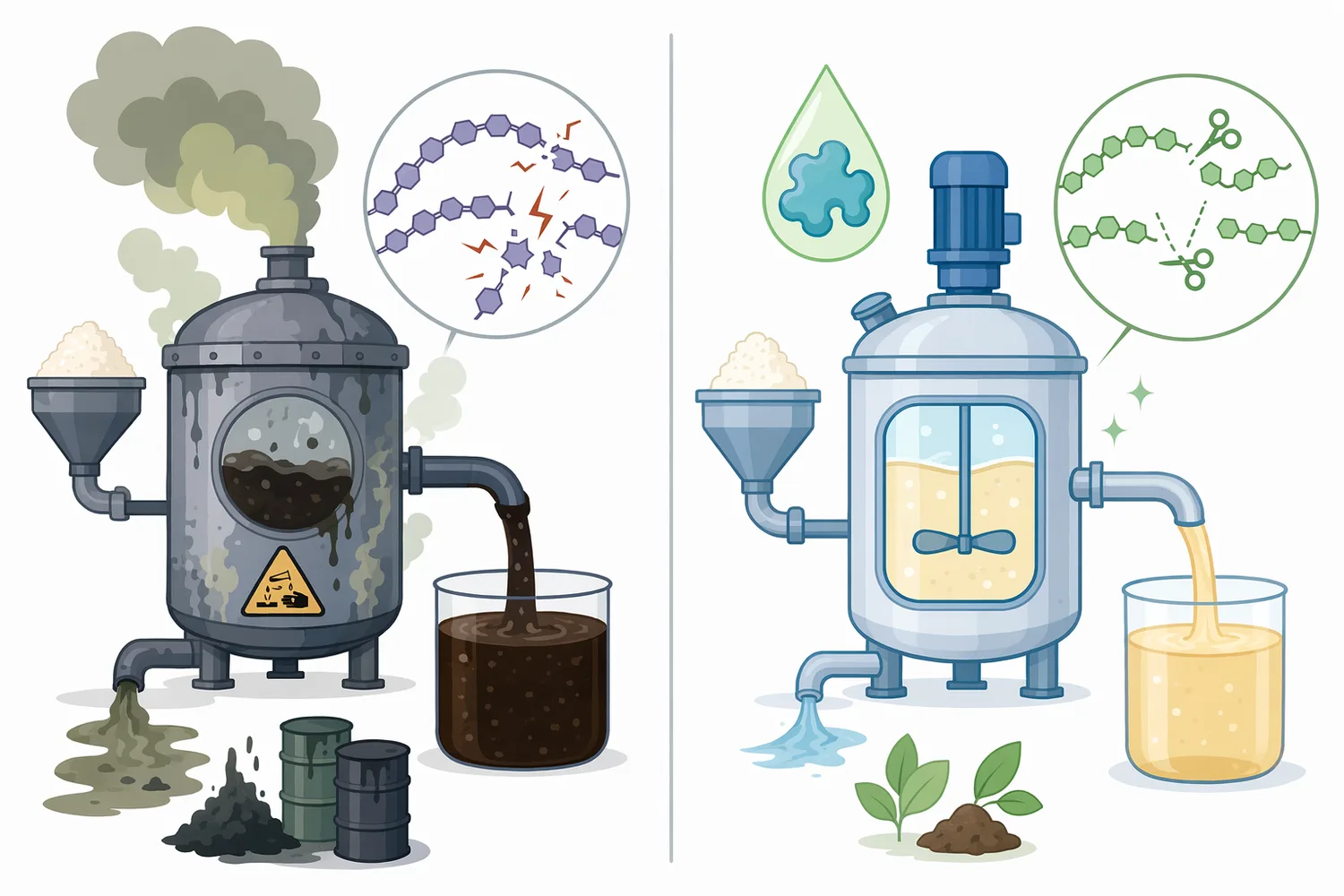
The value is control over starch molecular size. A starch solution that is too viscous may be difficult to apply evenly, while a partially hydrolyzed starch can offer different flow behavior. Alpha amylase gives processors a biological route to reduce chain length rather than relying only on thermal or chemical modification.
Although starch hydrolysis products are the main focus, alpha amylase is also studied in cleaning-related contexts because many soils and residues contain polysaccharides. A marine bacterium, Pantoea agglomerans, was reported to produce alpha amylase with antibiofilm potential, showing that amylase activity can influence polysaccharide-containing matrices beyond conventional starch slurry processing [7].
For starch-containing residues, the mechanism remains bond cleavage. The enzyme breaks the carbohydrate portion into smaller, more water-dispersible fragments, which can help detach or weaken deposits when the residue contains accessible starch-like material. These uses are application-specific, but they illustrate the broader usefulness of alpha amylase wherever starch contributes to viscosity, adhesion, or film formation.
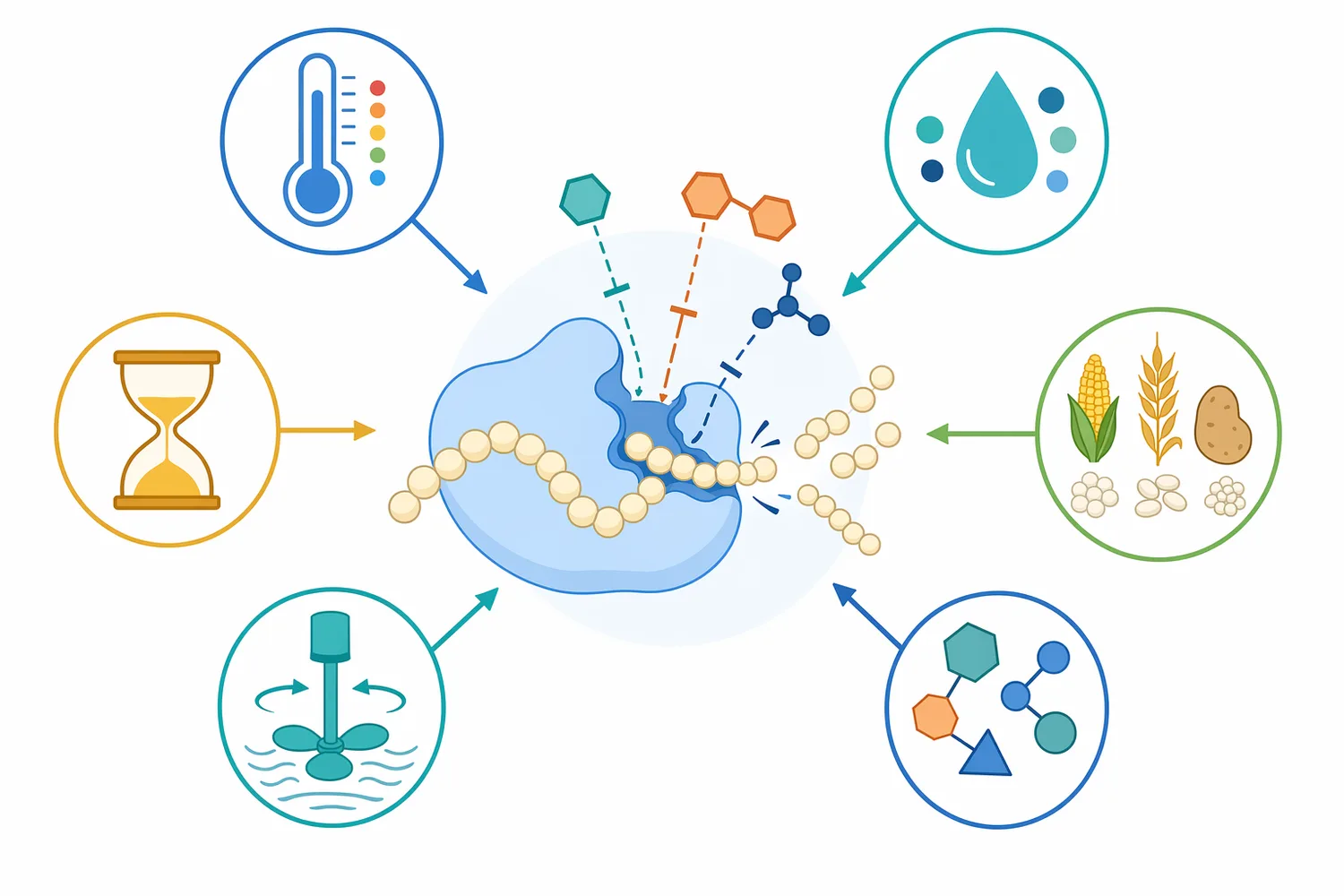
Bacterial alpha amylase is typically used in an aqueous starch system where starch has been dispersed and heated enough to become accessible. Gelatinization is important because intact starch granules can physically restrict enzyme access, while swollen and opened starch exposes more α-1,4 linkages. The more accessible the substrate, the more effectively alpha amylase can shorten chains and reduce viscosity.
Temperature matters because both starch structure and enzyme stability are temperature-dependent. Heat opens starch granules and lowers paste resistance, but excessive heat can also deactivate enzymes. Thermal-deactivation research, including work on immobilized alpha amylase, shows why enzyme stability is a major technical topic in amylase applications [8].
pH also affects catalytic performance because the enzyme’s active-site chemistry depends on the ionization state of amino acid residues involved in binding and hydrolysis. Bacterial alpha-amylase studies routinely examine pH effects during biochemical characterization, reflecting the fact that the enzyme’s shape, charge distribution, and catalytic efficiency are influenced by the surrounding medium [2].
Hydrolysis time changes the product distribution. Shorter treatment generally produces partial thinning and larger dextrins, while longer treatment can push the distribution toward smaller oligosaccharides until the enzyme reaches the practical limit of its action under those conditions. The relationship is not simply “more time equals better product”; it depends on the target viscosity, downstream conversion, and desired carbohydrate profile.
The composition of the starch source also matters. Corn, wheat, cassava, potato, rice, and other starches differ in granule size, amylose content, amylopectin branching, lipid or protein association, and gelatinization behavior. Those differences change how quickly water penetrates the granule, how the paste forms, and how easily alpha amylase reaches hydrolysable bonds.
Complex matrices can influence hydrolysis beyond the starch itself. Plant materials may contain polyphenols, fibers, proteins, salts, or other components that interact with enzymes or limit access to starch. Literature on alpha-amylase inhibition, including studies of digestive enzyme inhibitors for type 2 diabetes research, demonstrates that small molecules can reduce amylase action by binding to the enzyme or affecting its interaction with starch [9].
Bacterial alpha amylase is highly effective for liquefaction, but it should not be treated as a universal one-step conversion enzyme. Its main action is internal cleavage of α-1,4 starch linkages, so it is strongest at rapidly reducing viscosity and producing dextrins. If the target is a highly specific glucose, maltose, or debranched sugar profile, additional enzyme steps may be required after alpha-amylase treatment [1].
It is also realistic to expect different results with different starches and process histories. A freshly gelatinized slurry, a cooked-and-cooled retrograded starch, and a complex grain mash can present very different physical substrates. Alpha amylase can only hydrolyze bonds it can access, so dispersion, gelatinization, mixing, and matrix composition all affect the apparent speed and extent of hydrolysis.
Another practical expectation is that “more hydrolysis” is not always better. For maltodextrin-type products, texture, solubility, sweetness, browning tendency, and drying behavior may depend on maintaining a controlled partial conversion rather than pushing as far as possible. For textile or paper uses, the correct endpoint may be sufficient viscosity reduction or starch removal rather than maximum sugar generation.
Finally, enzyme stability has limits. Alpha amylase is a protein catalyst, and proteins can lose structure under excessive heat, extreme pH, or incompatible chemical conditions. Thermal deactivation studies reinforce that amylase performance is tied to maintaining a folded, catalytically active structure long enough to complete the intended hydrolysis [8].
The most immediate benefit is viscosity reduction. By cutting long starch chains internally, bacterial alpha amylase changes a thick paste into a more fluid dextrin-rich stream. This can make mixing, heating, pumping, transfer, and downstream enzyme treatment more practical in starch-based processes [1].
A second benefit is controlled partial conversion. Because alpha amylase produces dextrins and oligosaccharides rather than instantly converting starch to one final sugar, it is useful where the target is a functional hydrolysis product. That includes applications where body, carrier performance, lower viscosity, or processability are more important than maximum sweetness.
A third benefit is better preparation for downstream saccharification or fermentation. Liquefaction exposes more accessible carbohydrate fragments and reduces the mechanical burden of handling starch. This helps create a more suitable intermediate for later conversion in syrup, brewing, distilling, and fermentation systems.
A fourth benefit is broad application fit. The same core chemistry—hydrolysis of starch α-1,4 linkages—supports different industries: food starch conversion, maltodextrin-type ingredient production, brewing adjunct processing, fermentation feedstocks, textile desizing, paper starch modification, and removal of starch-containing residues. The end use changes, but the biochemical mechanism stays consistent.
Enzymes.bio supplies Starch Hydrolysis Products – Bacterial Alpha Amylase Enzyme for direct online purchase by the 1 kg unit. Buyers can place the order and pay online; the order is then processed and shipped. A Certificate of Analysis and Safety Data Sheet are included with the order.
This product page is intended to help buyers understand the enzyme’s role in starch hydrolysis: it is a bacterial alpha amylase used for liquefaction, dextrinization, and viscosity reduction in starch-containing systems. It is best suited to applications where starch must be converted into more manageable hydrolysis products or prepared for further processing.
Bacterial alpha amylase converts starch by hydrolyzing internal α-1,4 glycosidic bonds in amylose and amylopectin. The immediate result is shorter carbohydrate chains; the practical process result is lower viscosity, improved solubility, and formation of dextrins and oligosaccharides. This makes the enzyme especially useful in starch liquefaction and in the production of starch hydrolysis products [1].
The enzyme is widely supported by microbial amylase literature and by continued research into bacterial alpha-amylase production, characterization, stability, and application. Studies of Bacillus and other microbial alpha-amylases show why this enzyme class remains central to starch processing and related industrial uses [4].
For food, fermentation, brewing, distilling, textile, paper, and other starch-based processes, bacterial alpha amylase should be viewed as a controlled hydrolysis tool. It does not replace every downstream enzyme, but it performs the essential first transformation: turning high-viscosity gelatinized starch into a lower-viscosity, more accessible carbohydrate stream ready for its next use.
Sold by the 1 kg unit, in stock and ready to ship. Order directly on our store — pay online and we process your order. A Certificate of Analysis and Safety Data Sheet are included with every order.
Buy Starch Hydrolysis Products - Bacterial Alpha Amylase Enzyme →Numbered in order of first citation. Open-access sources, each verified reachable at publication; citation numbers in the text link here.