
Superoxide dismutase, often abbreviated SOD, is an antioxidant metalloenzyme that converts two superoxide radicals into oxygen and hydrogen peroxide. In practical terms, the superoxide dismutase definition is not “a general antioxidant,” but a specific catalytic system for lowering superoxide burden in biological, cosmetic, nutrition, and research-oriented formulations where oxidative stress is relevant [1].
For buyers searching for where to buy superoxide dismutase, Enzymes.bio supplies Superoxide Dismutase directly online by the 1 kg unit. The current superoxide dismutase price is shown on the product page, payment is completed online, and the order is processed and shipped with a Certificate of Analysis and Safety Data Sheet.
To define superoxide dismutase clearly: it is a family of enzymes that catalyze the dismutation of the superoxide radical anion, written as O₂•⁻. “Dismutation” means that two molecules of the same reactive species are transformed in opposite redox directions—one superoxide molecule is oxidized to oxygen, while the other is reduced to hydrogen peroxide [1].
The central reaction is:
2 O₂•⁻ + 2 H⁺ → O₂ + H₂O₂
That equation is the practical foundation for most superoxide dismutase benefits claimed in technical, cosmetic, nutrition, or research contexts. SOD does not remove every oxidant from a system; it specifically accelerates conversion of superoxide into oxygen and hydrogen peroxide, after which catalase, peroxidases, glutathione-linked systems, or other antioxidant components may further manage hydrogen peroxide [2].
Superoxide itself forms when oxygen accepts one electron. In cells and biological materials, this can happen during mitochondrial respiration, inflammatory oxidative bursts, metal-catalyzed reactions, enzymatic side reactions, or exposure to environmental stressors. If superoxide is not controlled, it can participate in chain reactions that affect lipids, proteins, nucleic acids, pigments, and sensitive actives [1].
This specificity is what makes superoxide dismutase protein different from many small-molecule antioxidants. A small antioxidant molecule is often consumed when it reacts, while SOD acts catalytically: its metal center cycles between oxidation states and can process repeated superoxide molecules as long as the protein remains structurally intact and the active site remains functional [3].
The substrate of SOD is the superoxide radical anion. Superoxide is both oxygen-derived and negatively charged, so the enzyme’s active site is shaped to bring this reactive species close to a redox-active metal cofactor. The protein scaffold does not simply “hold” the metal; it creates an electrostatic and geometric environment that guides superoxide into productive contact with the catalytic center [1].
In a simplified Cu/Zn SOD cycle, copper alternates between reduced and oxidized states. One superoxide molecule donates an electron and becomes oxygen; another superoxide molecule accepts an electron, combines with protons, and becomes hydrogen peroxide. Zinc in Cu/Zn SOD supports the structural and electrostatic organization of the active site rather than serving as the main redox-cycling atom [3].
This two-step redox cycling explains why the enzyme is called a dismutase. It does not merely “neutralize” superoxide by absorbing it. It gives two superoxide molecules a fast reaction path that avoids less controlled reactions with nitric oxide, iron-sulfur clusters, membrane lipids, or protein side chains [4].
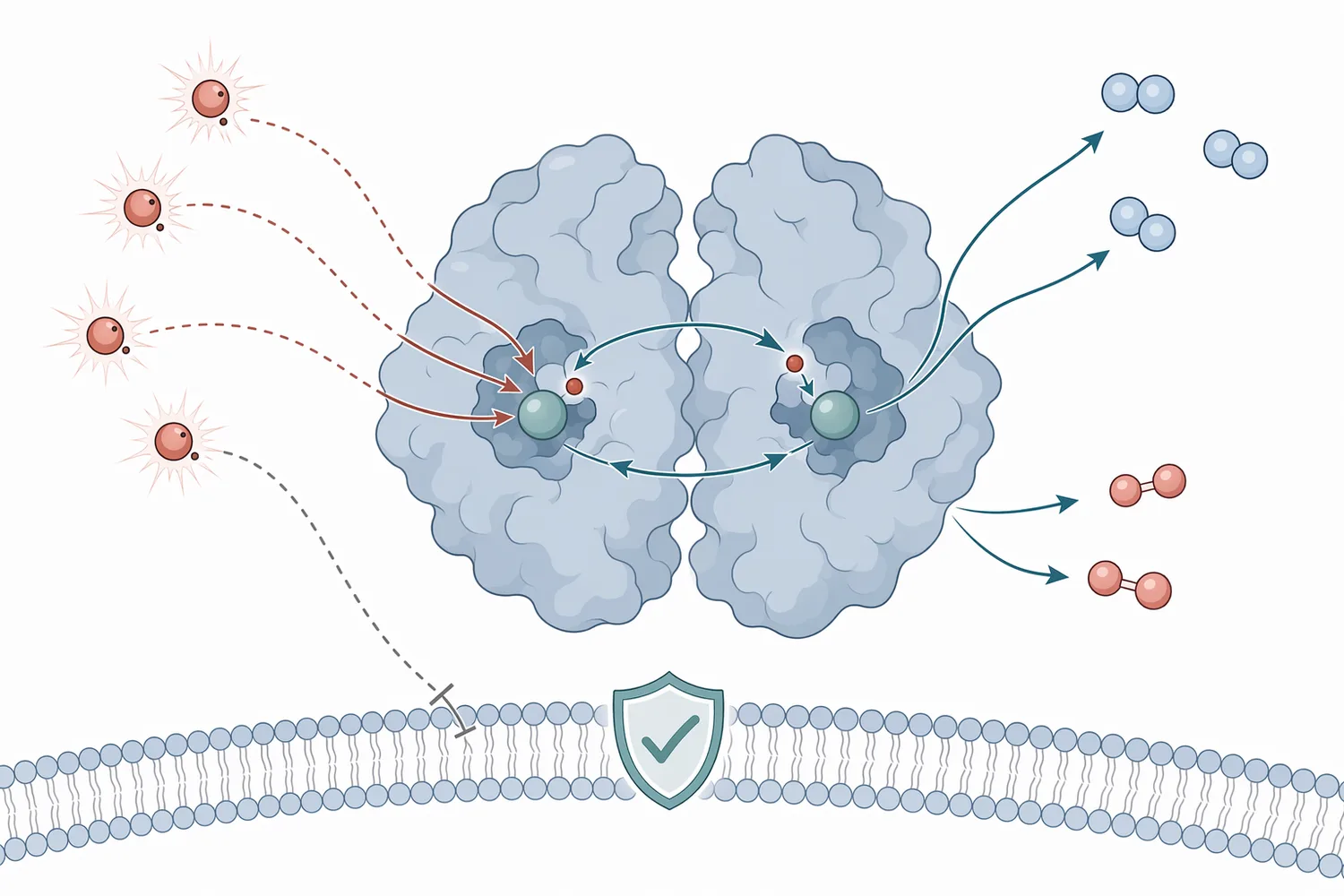
Hydrogen peroxide formation is not a defect in the mechanism; it is part of the antioxidant network. Hydrogen peroxide is less radical-like than superoxide, diffuses differently, and is handled by catalase and peroxidase systems in many biological contexts. That is why SOD is best understood as the first stage of superoxide control, not as a complete antioxidant system by itself [2].
Cu/Zn SOD also illustrates why redox context matters. Research has shown that bicarbonate can be required for the peroxidase function of Cu/Zn SOD at physiological pH, meaning the same protein environment can support chemistry beyond ordinary superoxide dismutation under certain conditions [5]. For formulation language, this reinforces a responsible point: SOD is a redox enzyme, and its behavior depends on its surrounding chemical environment.
The phrase “types of superoxide dismutase” can refer either to metal families or to biological isoforms. The common metal-based families include copper/zinc SOD, manganese SOD, iron SOD, and nickel SOD in certain organisms. In human and mammalian biology, SOD1, SOD2, and SOD3 are often discussed as distinct isoforms with different locations and roles [1].
| SOD type or isoform | Main biological location or association | Functional significance | Practical interpretation |
|---|---|---|---|
| Cu/Zn SOD, often linked with SOD1 | Mainly cytosolic in many mammalian discussions, with additional biological roles reported | Converts superoxide through a copper redox center supported by the protein and zinc-associated structure | Often used as the reference model when explaining the superoxide dismutase definition and classic SOD mechanism [3] |
| MnSOD, often linked with SOD2 | Mitochondrial matrix in mammalian systems | Controls superoxide generated near mitochondrial respiration and influences redox signaling | Important in discussions of energy metabolism, oxidative injury, and redox-controlled cell behavior [4] |
| Extracellular SOD, often linked with SOD3 | Extracellular matrix and extracellular fluids | Helps control superoxide outside cells and near vascular or tissue interfaces | Relevant when discussing extracellular antioxidant defense and tissue-level redox balance [6] |
| FeSOD and other microbial or plant forms | Bacteria, plants, algae, and other organisms | Performs the same superoxide dismutation chemistry using different metal architecture | Important in enzyme diversity, biotechnology, and source-dependent performance discussions [1] |
| SOD mimics and nanozyme systems | Synthetic or bioinspired catalytic systems | Designed to imitate SOD-like redox cycling | Useful for understanding why metal geometry, accessibility, and stability are central to SOD-like function [2] |
SOD1 is often the isoform people mean when they search for “superoxide dismutase 1.” Cu/Zn SOD1 is widely studied not only as a dismutase enzyme but also as a protein involved in broader cellular processes, including redox-related signaling and interactions that extend beyond a single antioxidant reaction [3].
SOD2, the mitochondrial manganese form, is important because mitochondria are major sites of oxygen metabolism. Manganese superoxide dismutase is positioned where superoxide can be generated during electron transport, and reviews connect SOD2 with redox-control of signaling events, including processes relevant to cell stress and disease models [4].
SOD3 is the extracellular isoform. Its biological importance is visible in genetic association studies, including work linking polymorphisms in the superoxide dismutase-3 gene with emphysema in chronic obstructive pulmonary disease research populations [6]. For product communication, the key point is not disease treatment; it is that extracellular superoxide control is biologically meaningful.
The strongest evidence for SOD is mechanistic. Reviews going back decades describe superoxide dismutase as a central antioxidant enzyme family whose function is to protect cells and biomolecules from superoxide toxicity [1]. This is the most durable basis for claims about superoxide dismutase benefits: the enzyme has a defined substrate, a defined catalytic reaction, and a defined role in antioxidant defense.
Evidence also supports the biological importance of endogenous SOD systems. Female mice lacking copper-zinc superoxide dismutase showed reduced fertility in a study of Cu/Zn SOD deficiency, demonstrating that loss of this antioxidant enzyme can have organism-level consequences [7]. That kind of model is not a finished-product claim, but it confirms that SOD biology is not incidental.
SOD2 research provides another example of biological relevance. In hyperoxia-exposed mice, enhanced manganese-containing superoxide dismutase activity gave partial protection in a transgenic lung antioxidant-defense model [8]. The word “partial” matters: SOD can contribute meaningfully to oxidative stress defense, but it is one component in a network rather than a universal shield.
Human observational studies also connect SOD status with physiological redox conditions. Serum superoxide dismutase has been associated with vascular structure and function in hypertensive and diabetic patients, placing SOD within broader antioxidant and cardiovascular research rather than as a standalone therapeutic agent [9].
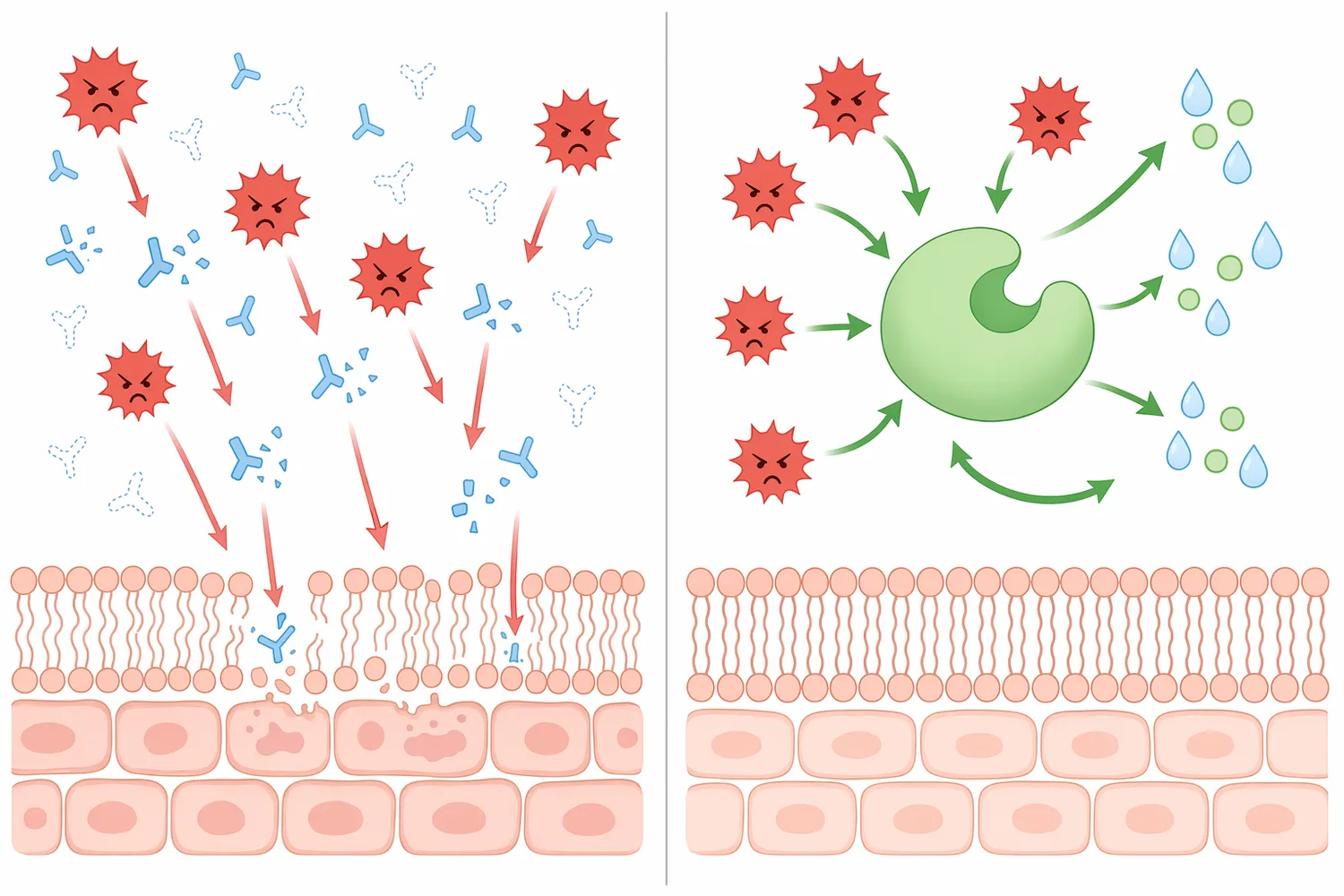
In nutrition and exercise science, SOD activity is studied as part of systemic antioxidant adaptation. Endurance training was reported to improve plasma superoxide dismutase activity in healthy elderly subjects, supporting the idea that SOD participates in adaptive redox responses to physiological stress [10].
The supplement field has also explored SOD-rich ingredients. A Cucumis melo extract rich in superoxide dismutase activity was reported to have antioxidant and anti-inflammatory properties in research settings [11]. For a buyer considering a sod superoxide dismutase supplement or superoxide dismutase supplements, this kind of work supports the category rationale while still leaving finished-product performance dependent on formulation and use context.
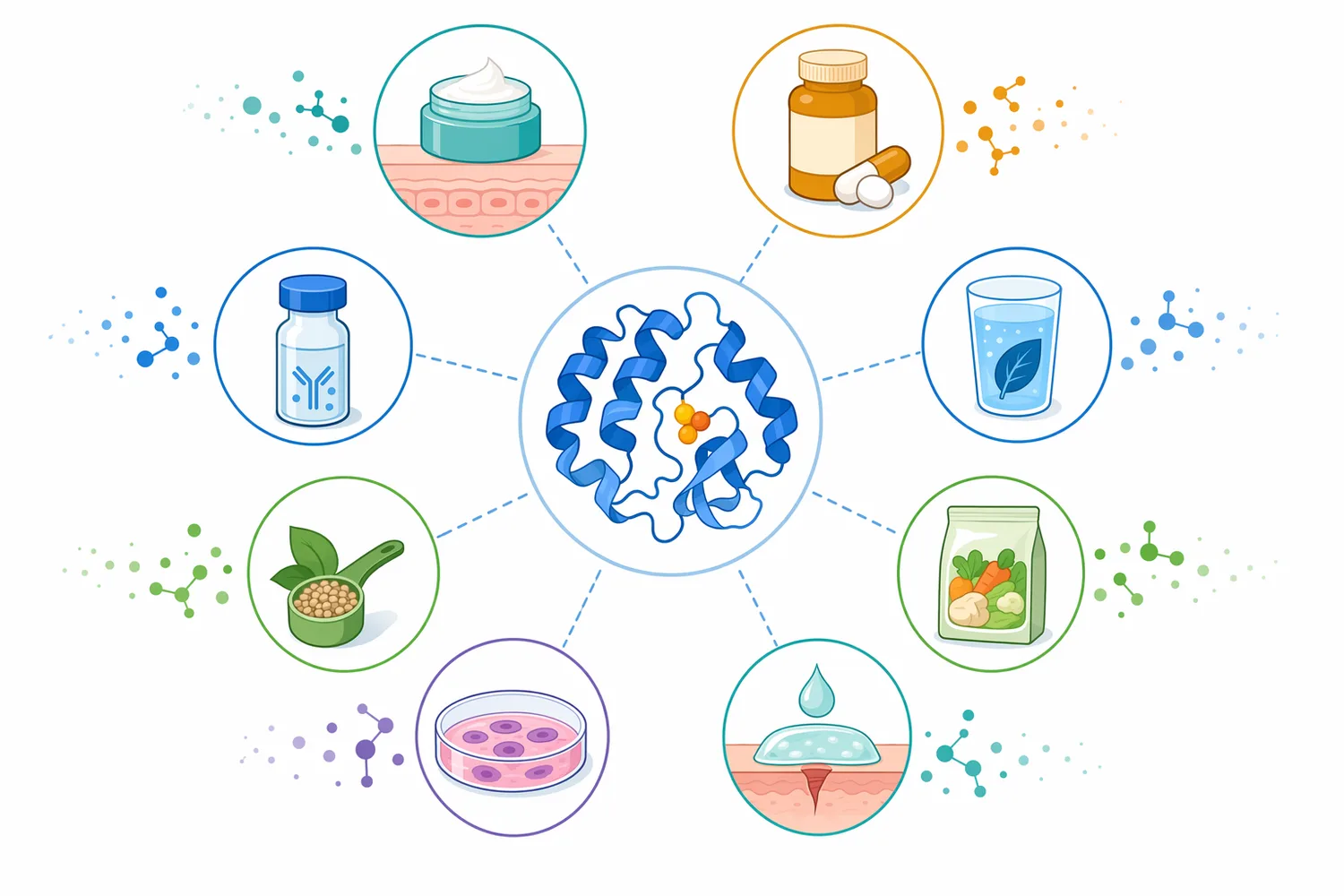
Superoxide dismutase supplement positioning is usually built around oxidative-stress support, antioxidant defense, active lifestyle concepts, or healthy-aging language where regulations permit. A superoxide dismutase SOD supplement is most accurately described as supplying an enzyme with a specific superoxide-converting mechanism, not as replacing the body’s full antioxidant network [2].
The main technical challenge for oral use is that SOD is a protein enzyme. Proteins can be affected by digestion, moisture, formulation excipients, processing, and storage environment. Scientific reviews and application literature repeatedly treat delivery, stability, and bioavailability as important issues for SOD use beyond its native biological location [2].
Research on antioxidant supplementation also shows why claims should be measured. In Graves’ disease patients, antioxidant supplementation was studied in relation to erythrocyte SOD activity, copper and zinc levels, and total antioxidant status, illustrating that SOD-related outcomes are embedded in wider mineral, enzyme, and antioxidant systems [12].
For nutrition formulations, the practical benefit of SOD is its differentiated mechanism. Vitamin C, vitamin E, polyphenols, carotenoids, selenium-dependent enzymes, catalase-linked systems, and SOD do not perform the same chemistry. SOD’s role is upstream superoxide conversion, which can complement broader antioxidant-positioned concepts when the final product is appropriately developed and labeled [1].
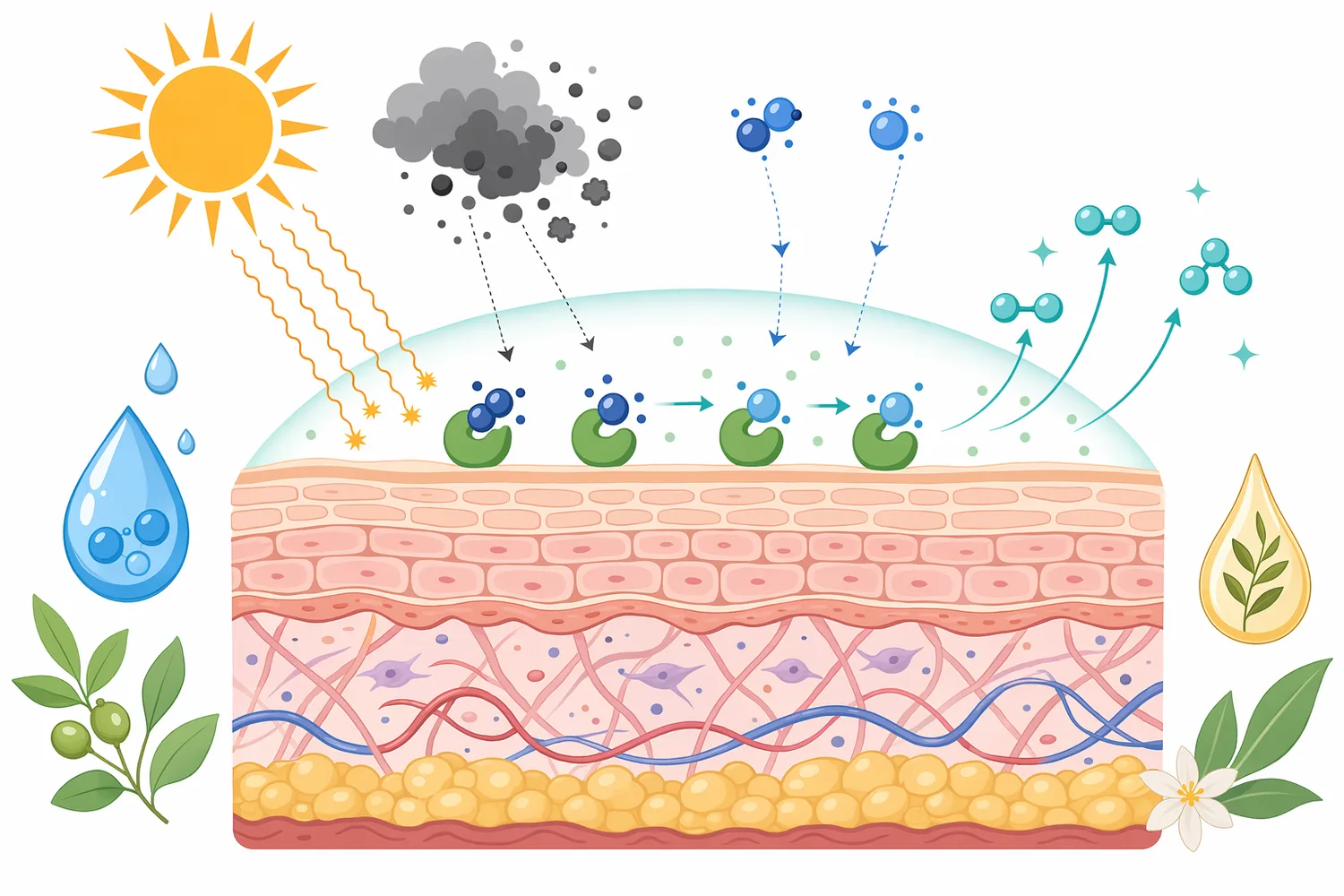
Skin is continuously exposed to oxygen, ultraviolet light, pollution, inflammatory mediators, and environmental stressors. Cu/Zn superoxide dismutase in human skin has been reviewed as part of current knowledge on cutaneous antioxidant defense, supporting the relevance of SOD in skin biology and cosmetic science [13].
In a topical concept, SOD’s mechanism is concrete: it targets superoxide radicals that may arise in skin-surface or skin-associated oxidative environments. By converting superoxide into oxygen and hydrogen peroxide, it can support an antioxidant-positioned formulation concept without implying that the enzyme alone resolves every pathway involved in visible aging or irritation [13].
This distinction is important for responsible cosmetic language. “Antioxidant support,” “helps address superoxide radicals,” and “supports oxidative-stress defense in the formulation concept” are more scientifically aligned than broad promises such as reversing aging. Reviews of SOD in skin emphasize relevance, but cosmetic performance still depends on formulation stability, delivery to the intended site, and finished-product testing [13].
Modern cosmetic and biomedical research is also interested in more robust SOD-like materials. Bioinspired copper single-atom nanozymes have been investigated as SOD-like antioxidants in sepsis-treatment research, showing how strongly the field values catalytic superoxide control even when the material is not a natural SOD protein [14]. The relevance for formulators is conceptual: stable redox-active architecture is central to SOD-like antioxidant design.
In food and beverage concepts, SOD may be considered where antioxidant positioning, functional differentiation, or oxidative-stress language is permitted. Reviews of superoxide dismutase describe applications across food, nutrition, and related industrial fields, reflecting long-standing interest in SOD as an antioxidant enzyme rather than only as a laboratory protein [1].
The substrate-level mechanism remains the same in food systems: SOD converts superoxide to oxygen and hydrogen peroxide. However, food matrices can contain sugars, proteins, polyphenols, metals, acids, salts, oxygen, and processing stresses that affect protein structure or redox chemistry. That is why SOD is most credible when positioned as a targeted antioxidant enzyme ingredient rather than a universal preservative [2].
Glycation is one example of how formulation environment can matter for proteins. Alliin from Allium sativum was studied for inhibitory effects on glycation of superoxide dismutase, highlighting that SOD protein structure and function can be affected by reactions relevant to sugar-rich or reactive matrices [15].
Food applications also intersect with plant and microbial SOD diversity. In rice blast disease-resistance research, Osa-miR398b was reported to affect hydrogen peroxide production and disease resistance through multiple superoxide dismutases, showing that SOD families participate in plant redox responses as well as animal antioxidant systems [16].
SOD is a frequent research tool because it gives investigators a way to probe whether superoxide is involved in a biological effect. If adding SOD changes an oxidative-stress outcome in a model system, that supports the idea that superoxide contributes to the mechanism being studied [1].
The enzyme is also useful because different isoforms map to different biological compartments. SOD1 helps frame cytosolic and intracellular superoxide control, SOD2 frames mitochondrial redox stress, and SOD3 frames extracellular superoxide control. That compartment-specific biology is one reason SOD appears across research areas such as vascular function, lung biology, metabolism, skin, and inflammatory models [4].
SOD research also demonstrates that antioxidant biology is not simply “more is always better.” Reactive oxygen species can damage biomolecules, but they can also act as signals. MnSOD has been reviewed in the redox-control of signaling events that drive metastasis, showing that superoxide and hydrogen peroxide handling can influence cell behavior in context-dependent ways [4].
This is why finished-product language should focus on mechanism and support. SOD helps manage superoxide radicals; it does not erase all oxidative signaling, and it should not be represented as a disease treatment in ordinary supplement, cosmetic, or industrial ingredient communication [2].
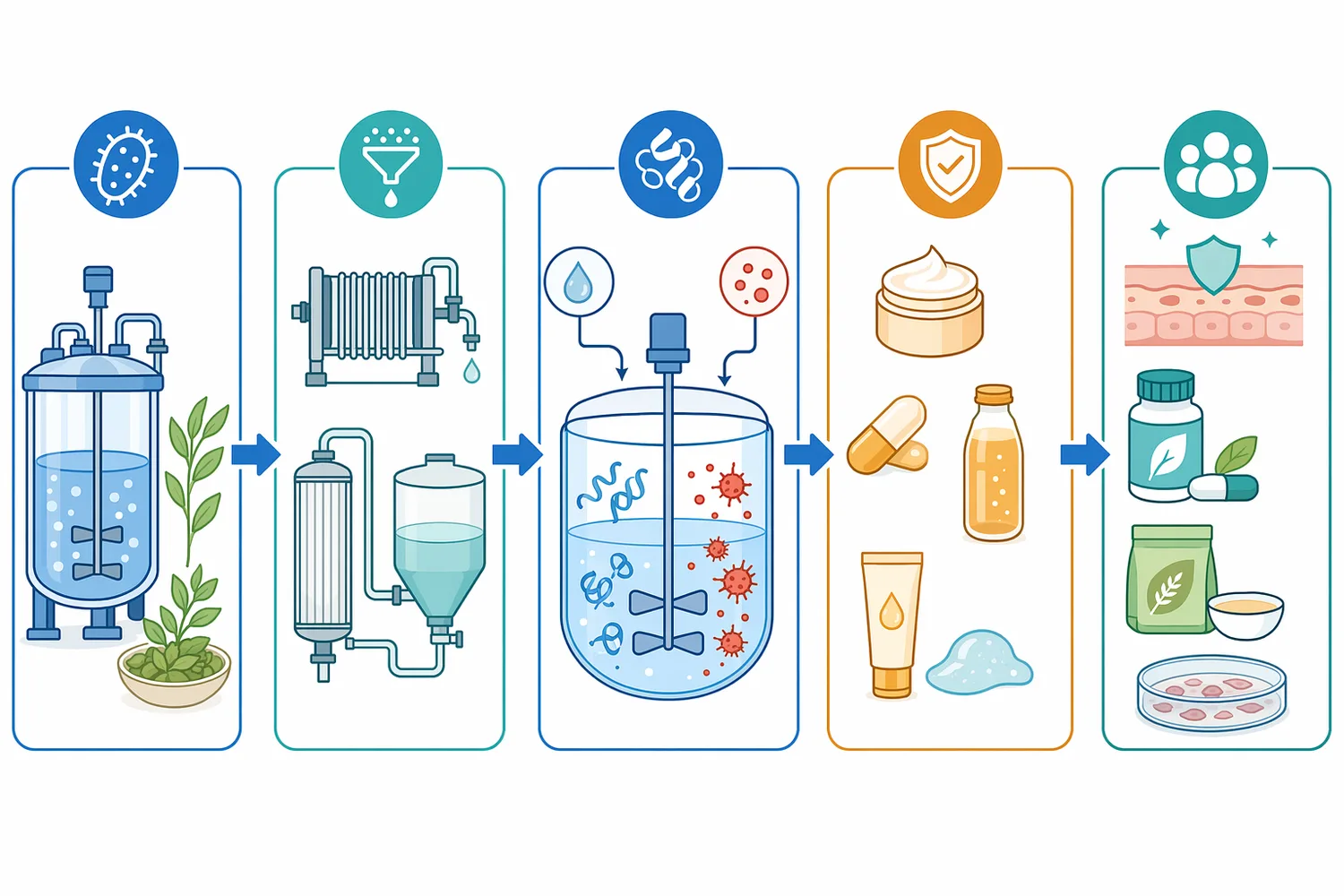
SOD is a protein, so its performance depends on preserving folded structure and active-site geometry. Heat, harsh chemical exposure, incompatible oxidants, strong denaturing environments, and prolonged unfavorable storage can reduce the ability of the enzyme to interact productively with superoxide [2].
Metal incorporation and activation are also part of SOD biology. Oxygen and the copper chaperone CCS have been shown to regulate posttranslational activation of Cu/Zn superoxide dismutase, illustrating that the active enzyme is not just a polypeptide chain but a matured metalloenzyme with correctly installed redox chemistry [17].
For manganese SOD, metal handling is equally important. In Saccharomyces cerevisiae, manganese activation of SOD2 was reported to require MTM1, a mitochondrial carrier family member, again showing that functional SOD depends on the correct relationship between protein scaffold, metal cofactor, and cellular or production environment [18].
Stability is a major area of enzyme innovation. Research into recombinant cold-adapted SOD production in E. coli and newer computational redesign work on activity-thermostability improvement show that the field continues to optimize SOD for robustness, expression, and performance in demanding contexts [19].
Protein-engineering studies also point in the same direction. Recent work has described engineering manganese superoxide dismutase for enhanced thermostability and activity toward antioxidant and anti-inflammatory applications in biomedicine and skincare, while dual-domain SOD work has investigated mutation strategies for improved robustness and catalytic efficiency [20].
For buyers, the practical interpretation is straightforward: SOD works when its active site remains intact and accessible. Product developers should build around that reality, using SOD in concepts where the enzyme can remain functional long enough to contribute its targeted superoxide-converting activity [2].
Natural SOD proteins are attractive because their catalytic mechanism is highly specific and biologically established. The classic enzyme architecture has evolved to recognize superoxide and convert it rapidly through metal-centered redox cycling [1].
SOD-like alternatives, including metal complexes and nanozymes, exist because researchers want catalytic superoxide control with improved durability, tunability, or compatibility in settings where proteins may be difficult to use. Rationally designed mimics of antioxidant manganoenzymes have been reviewed with attention to structural features that support catalase-like and superoxide dismutase-like activity [2].
Cerium oxide-based nanozymes are another example. Oxygen-vacancy-enhanced CeO₂-Gd nanozymes have been investigated for biomimetic superoxide dismutase activity, showing that engineered inorganic surfaces can be designed to imitate aspects of natural antioxidant enzymes [21].
These alternatives do not make natural SOD obsolete. Instead, they confirm the value of the underlying reaction. Whether the catalyst is a natural superoxide dismutase protein, an engineered enzyme, or a SOD-like material, the central objective remains controlled conversion of superoxide radicals into less immediately reactive downstream products [2].
The benefits of superoxide dismutase are strongest when described at the functional level. It provides a defined enzymatic route for superoxide conversion; it is part of natural antioxidant defense; it is relevant across nutrition, cosmetics, food, and research; and it offers a catalytic mechanism that differs from ordinary one-to-one radical scavenging [1].
For a superoxide dismutase supplement concept, the benefit is targeted antioxidant support built around superoxide metabolism. For a cosmetic concept, the benefit is support against superoxide-related oxidative stress at or near the formulation’s intended site of action. For research or technical use, the benefit is a precise tool for interrogating superoxide involvement in a system [13].
The benefits of superoxide dismutase should not be overstated as guaranteed health, anti-aging, or disease outcomes. Studies in diabetes complications, vascular biology, periodontitis, exercise, and other areas show that SOD activity is biologically meaningful, but they also show that redox status is multifactorial and context-dependent [22].
A responsible way to express sod superoxide dismutase benefits is: SOD supports antioxidant defense by catalyzing superoxide dismutation. That statement is mechanistic, accurate, and strong. It avoids implying that SOD alone controls all reactive oxygen species, inflammation, metabolism, or tissue outcomes [2].
Enzymes.bio supplies Superoxide Dismutase directly online by the 1 kg unit. Buyers who want to buy superoxide dismutase can place an order through the product page, pay online, and have the order processed and shipped without a quote-request process.
For searches such as “where to buy superoxide dismutase” or “superoxide dismutase price,” the relevant product page provides the live purchase option and current price. A Certificate of Analysis and Safety Data Sheet accompany the order, supporting straightforward receipt and internal documentation.
Superoxide Dismutase is best understood as a targeted antioxidant enzyme ingredient for applications where superoxide radical control is relevant. Its scientific foundation is unusually concrete: a defined substrate, a two-superoxide reaction, metal-centered catalysis, and decades of research across antioxidant defense, redox biology, nutrition, cosmetics, and enzyme innovation [1].
When used in suitable product concepts, SOD offers a differentiated mechanism that small-molecule antioxidants do not replicate exactly. It does not make every antioxidant claim valid, but it gives formulators and technical buyers a credible enzymatic basis for superoxide-focused antioxidant positioning [3].
Sold by the 1 kg unit, in stock and ready to ship. Order directly on our store — pay online and we process your order. A Certificate of Analysis and Safety Data Sheet are included with every order.
Buy Superoxide Dismutase →Numbered in order of first citation. Open-access sources, each verified reachable at publication; citation numbers in the text link here.