
Tannase is a targeted tannin-modifying enzyme that hydrolyzes ester and depside bonds in hydrolysable tannins, especially tannic acid, gallotannins, ellagitannins and gallate esters. In practical processing, tannase can reduce tea cream, haze, astringency and tannin-related anti-nutritional effects by converting large tannin structures into smaller phenolics such as gallic acid and sugar-linked intermediates.
Enzymes.bio supplies Tannase directly online in 1 kg units. Buyers can pay online, after which the order is processed and shipped; a Certificate of Analysis and Safety Data Sheet are included with the order.
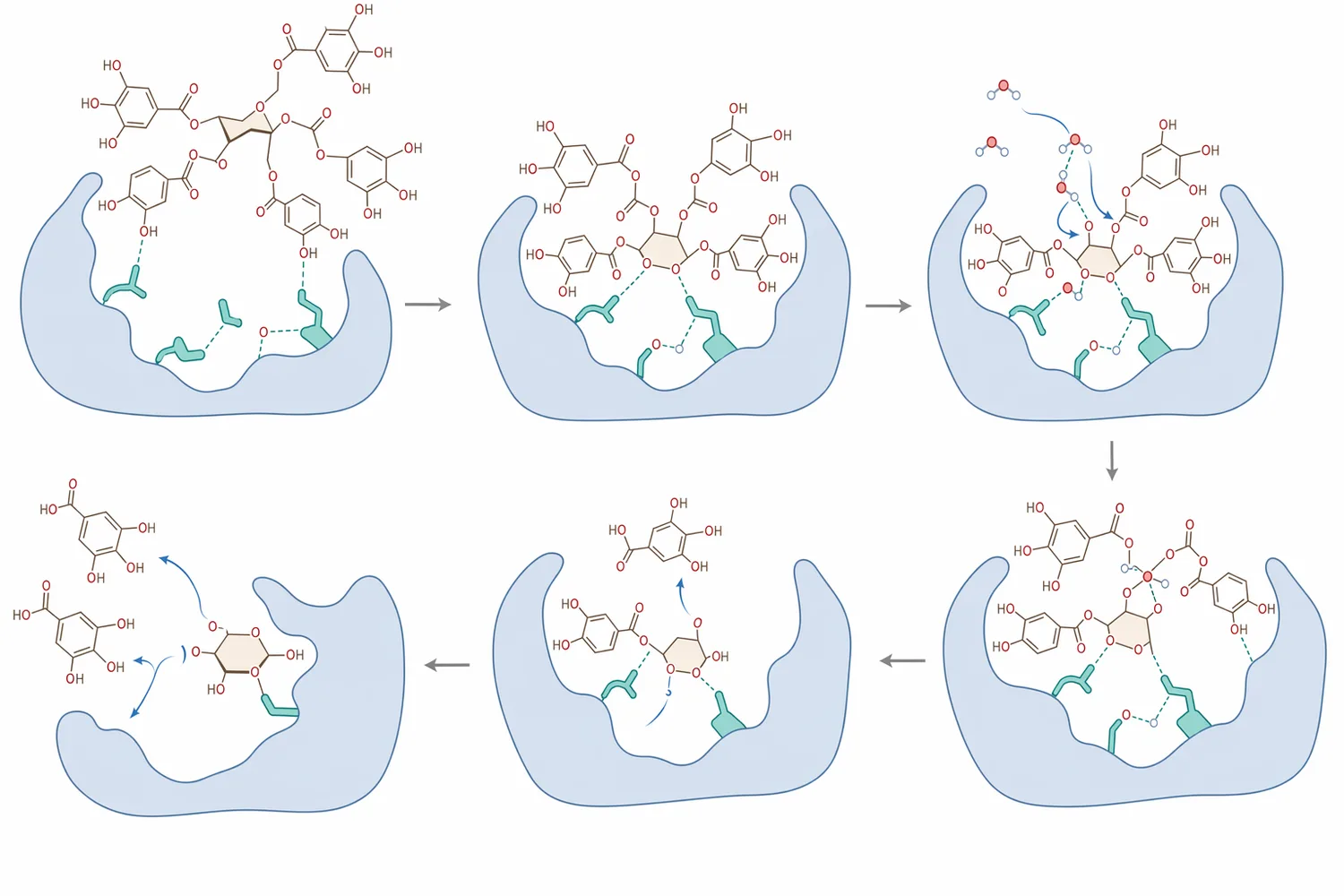
Tannase, also called tannin acyl hydrolase, is an esterase-type enzyme best known for acting on hydrolysable tannins. Its core function is not general “polyphenol removal”; it is the cleavage of particular chemical linkages in tannin molecules, especially the ester bonds connecting gallic acid units to glucose and the depside bonds linking galloyl groups to one another. This is why tannase enzyme application is most relevant where tannic acid, gallotannins, ellagitannins or gallate esters are responsible for processing problems such as precipitation, haze, excess astringency, poor extractability or reduced feed value [1].
In customer terms, tannase changes the behavior of tannin-rich materials by making some large, strongly binding phenolics smaller and more soluble. Large tannins can cross-link proteins, associate with caffeine, interact with polysaccharides and form insoluble complexes; after enzymatic hydrolysis, the same material contains more gallic acid and smaller galloyl fragments, which interact differently with proteins and beverage matrices. This mechanism explains many tannase uses in tea, plant extracts, beverages, gallic acid production, feed treatment and tannin-rich effluent processing [2].
Tannins themselves are plant defense compounds found in leaves, bark, fruits, seeds and agricultural residues. They help plants resist pests and microbes, but in processing they can create practical difficulties: bitterness and astringency in beverages, turbidity in extracts, binding of dietary protein in feed, and higher phenolic load in wastewater. Reviews of microbial tannase describe the enzyme as a useful biocatalyst precisely because it converts these problematic tannin structures into smaller compounds that are easier to manage in downstream processes [3].
The most important substrate-level mechanism is hydrolysis. In tannic acid and related gallotannins, several gallic acid units are attached to a glucose core. Tannase attacks the ester linkages between galloyl groups and the sugar core, and it can also hydrolyze depside linkages between galloyl units. As these bonds are cut, highly substituted tannins are progressively converted into lower galloylated intermediates, free gallic acid and glucose or glucose-linked residues [1].
This stepwise conversion matters in real processing. A tannin-rich extract does not simply “lose tannin” in a single event; its molecular population shifts from larger, protein-binding molecules toward smaller phenolics. That shift can reduce aggregation with proteins or caffeine, change solubility during cooling, reduce some astringent mouthfeel drivers and increase gallic acid availability. The outcome depends on the raw material because tea galloylated catechins, tannic acid, fruit tannins, sorghum tannins and agricultural-residue tannins do not all present the same bond accessibility to the enzyme [1].
Tannase is also substrate-selective compared with many other industrial enzymes. Proteases hydrolyze proteins, pectinases break pectin, cellulases act on cellulose, and amylases hydrolyze starch; tannase is used when the processing challenge is specifically driven by hydrolysable tannins or gallate ester chemistry. This distinction is important because a beverage haze, feed digestibility issue or plant extract problem may involve several interacting components, and tannase addresses the tannin side of that chemistry rather than every possible cause [4].
| Enzyme type | Main substrate target | What changes in the material | Typical relevance to tannin-rich processing |
|---|---|---|---|
| Tannase | Hydrolysable tannins, tannic acid, gallotannins, gallate esters | Cleaves ester/depside bonds; increases smaller phenolics such as gallic acid | Reduces tannin-driven haze, astringency, protein binding and supports gallic acid production |
| Pectinase | Pectin in fruit and plant cell walls | Reduces pectin viscosity and gel-forming behavior | Useful when turbidity or viscosity is pectin-driven, not tannin-driven |
| Protease | Proteins and peptides | Hydrolyzes proteins into smaller peptides/amino acids | May affect protein haze, but does not directly hydrolyze tannin ester bonds |
| Cellulase/hemicellulase | Cellulose and hemicellulose | Opens plant cell wall polysaccharides and can improve extraction | Can support release of plant compounds but does not specifically detoxify tannins |
| Amylase | Starch | Converts starch into dextrins and sugars | Relevant to starch haze or saccharification, not tannin hydrolysis |
Tea processing is one of the most established tannase applications because the chemistry of tea cream is directly connected to galloylated polyphenols. When brewed tea cools, polyphenols, caffeine, proteins and other components can associate into visible turbidity or sediment. Tannase modifies galloylated tea polyphenols by removing galloyl groups, reducing their tendency to form insoluble complexes during cooling and improving clarity in extracts, instant tea and ready-to-drink tea systems [5].
The mechanism is concrete: galloyl groups contribute to strong hydrogen bonding and hydrophobic interactions with caffeine and proteins. When tannase hydrolyzes these galloyl ester linkages, the resulting molecules have fewer sites for cross-linking and aggregate formation. In tea, that can mean less tea cream after cooling, better cold-water solubility and a clearer beverage appearance, especially when the process is designed around tea extract composition and normal downstream separation steps [5].
Green tea is a useful example because gallated catechins are central to both sensory character and instability. Recent work on engineered tannase for green tea infusion focused on improving thermostability so the enzyme could better support quality improvement under tea-processing conditions. The study reflects a broader point: tannase is valued in tea not because it removes all polyphenols, but because selective degalloylation can change extract solubility, turbidity behavior and sensory balance while preserving a tea matrix that still contains phenolic compounds [5].
Tannase enzyme uses in tea therefore include clarification, reduction of tea cream, improvement of cold solubility and modification of excessive bitterness or astringency associated with galloylated compounds. These effects are process-dependent; black tea, green tea, instant tea powder and ready-to-drink tea concentrate each have different phenolic profiles and processing constraints. The strongest claim is that tannase targets galloylated tannin structures that contribute to tea instability, not that it is a universal fix for every tea haze mechanism [2].
Outside tea, tannase applications extend to tannin-rich beverages and plant extracts where astringency, precipitation or haze is linked to hydrolysable tannins. In wine, beer, fruit extracts and botanical beverages, tannins can bind salivary proteins, beverage proteins and polysaccharides, contributing to a dry mouthfeel or instability. By hydrolyzing tannin ester bonds, tannase can reduce the size and binding strength of selected tannins, helping moderate some of these effects when hydrolysable tannins are a major contributor [1].
It is useful to separate tannase from broader clarification chemistry. Some turbidity is caused by pectin, starch, proteins, microbial cells, minerals or oxidation products; tannase is most relevant when tannin structures are central to the problem. For example, a fruit extract with high pectin viscosity may need pectin-focused treatment, while a tannin-rich botanical extract with protein precipitation or gallate-related haze may be a better conceptual fit for tannase. This is why “tannase enzyme uses” should be understood in terms of the substrate chemistry rather than the product category alone [4].
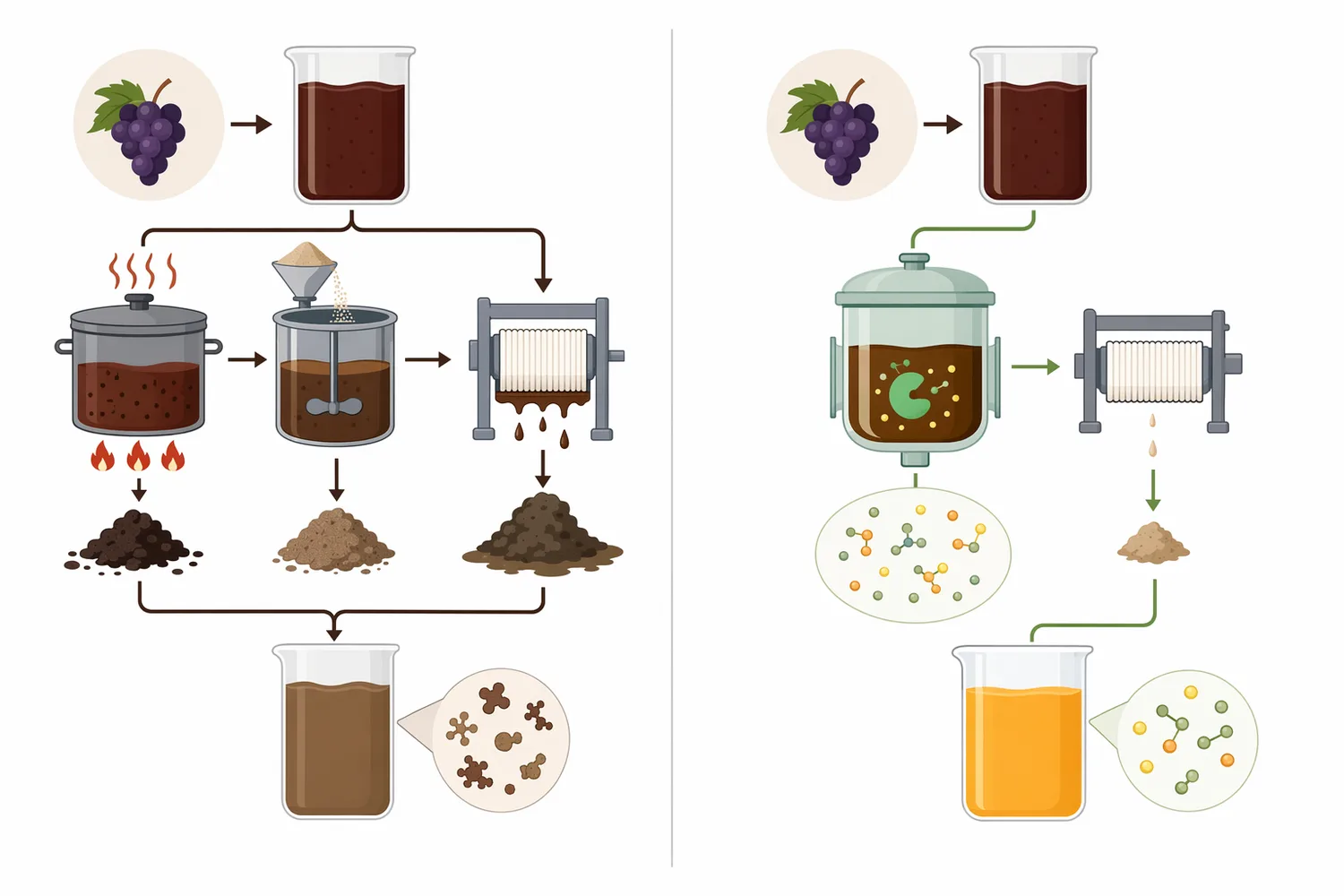
Plant extract processing also benefits from the way tannase changes extractability and phenolic composition. Tannins can trap proteins and other macromolecules in insoluble complexes or reduce the solubility of an extract after concentration and cooling. Hydrolysis can release gallic acid and smaller phenolics, reducing some complex-forming behavior and changing the measurable phenolic profile. Reviews of tannase production and application consistently highlight food and beverage processing as a central use area for this reason [3].
Gallic acid production is one of the clearest industrial roles for tannase because the reaction product is directly valuable. When tannase hydrolyzes tannic acid or gallotannins, gallic acid is released from the tannin structure. This makes tannase a biocatalytic route for converting tannin-rich substrates into a phenolic compound used in food, pharmaceutical, chemical and antioxidant-related applications [6].
The conversion is attractive because the enzyme performs a targeted hydrolysis instead of relying only on harsher chemical treatment. In biochemical terms, the enzyme recognizes the ester-linked galloyl groups in tannic acid and progressively liberates gallic acid. This fits well with circular-processing concepts where low-cost tannin-rich plant materials or residues become feedstocks for higher-value phenolic products [7].
Research on Bacillus licheniformis KBR6, for example, examined the concomitant optimization of tannase and gallic acid production through submerged fermentation, framing the process as an industrially relevant approach. That work reinforces the link between tannase production and gallic acid yield: the enzyme is not only a processing aid but also the active catalyst that converts a tannin substrate into the desired phenolic product [7].
Gallic acid has its own functional relevance because it is widely discussed as an antioxidant phenolic in food and health-related literature. For tannase users, the practical point is narrower and more process-focused: if the starting material contains hydrolysable galloyl structures, tannase can increase free gallic acid by cleaving those structures. The final composition still depends on the raw material and overall process design [6].
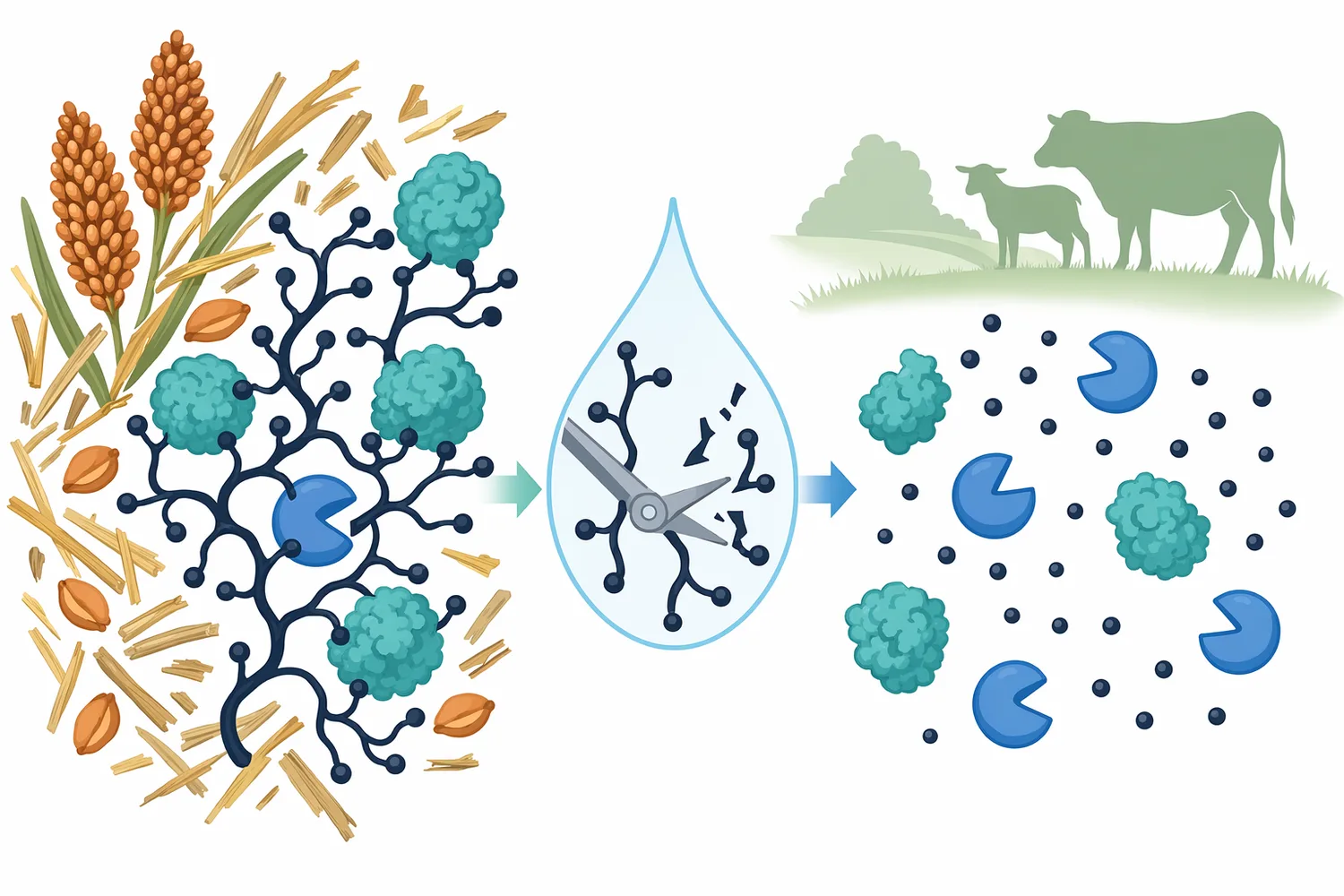
Tannins can reduce the nutritional value of feed materials by binding dietary proteins, complexing with digestive enzymes and interfering with nutrient availability. This is a particular issue in tannin-rich agricultural residues, sorghum-based diets and some roughage materials. Tannase can help by hydrolyzing hydrolysable tannins into smaller compounds that have reduced capacity to cross-link feed proteins and digestive enzymes [8].
In ruminant-feed research, wheat straw treatment using tannase together with white-rot fungus was studied as a way to improve feed utilization. The rationale was that lignocellulosic residues contain anti-nutritional and poorly digestible components, and tannase can contribute by reducing tannin-related constraints while fungal treatment modifies the plant biomass matrix. This type of work shows tannase as part of broader biomass-upgrading strategies rather than a standalone solution for all digestibility limitations [9].
Recent broiler research has also examined tannase-treated, sorghum-based diets. Sorghum is known for tannin-related nutritional challenges in some varieties, and tannase treatment is used to reduce tannin effects that can impair growth performance or nutrient use. The practical mechanism remains the same: enzymatic hydrolysis reduces the ability of tannins to bind proteins and enzymes in the digestive context [10].
This is also where the search phrase “tannase takes part in digestion of MCQ” can be clarified in plain language: tannase participates in the breakdown of tannins, not starch, cellulose or protein as its primary substrate. In feed systems, that tannin breakdown may indirectly support digestion because proteins and digestive enzymes are less tied up by tannin complexes. The enzyme’s direct biochemical target is still tannin ester chemistry [8].
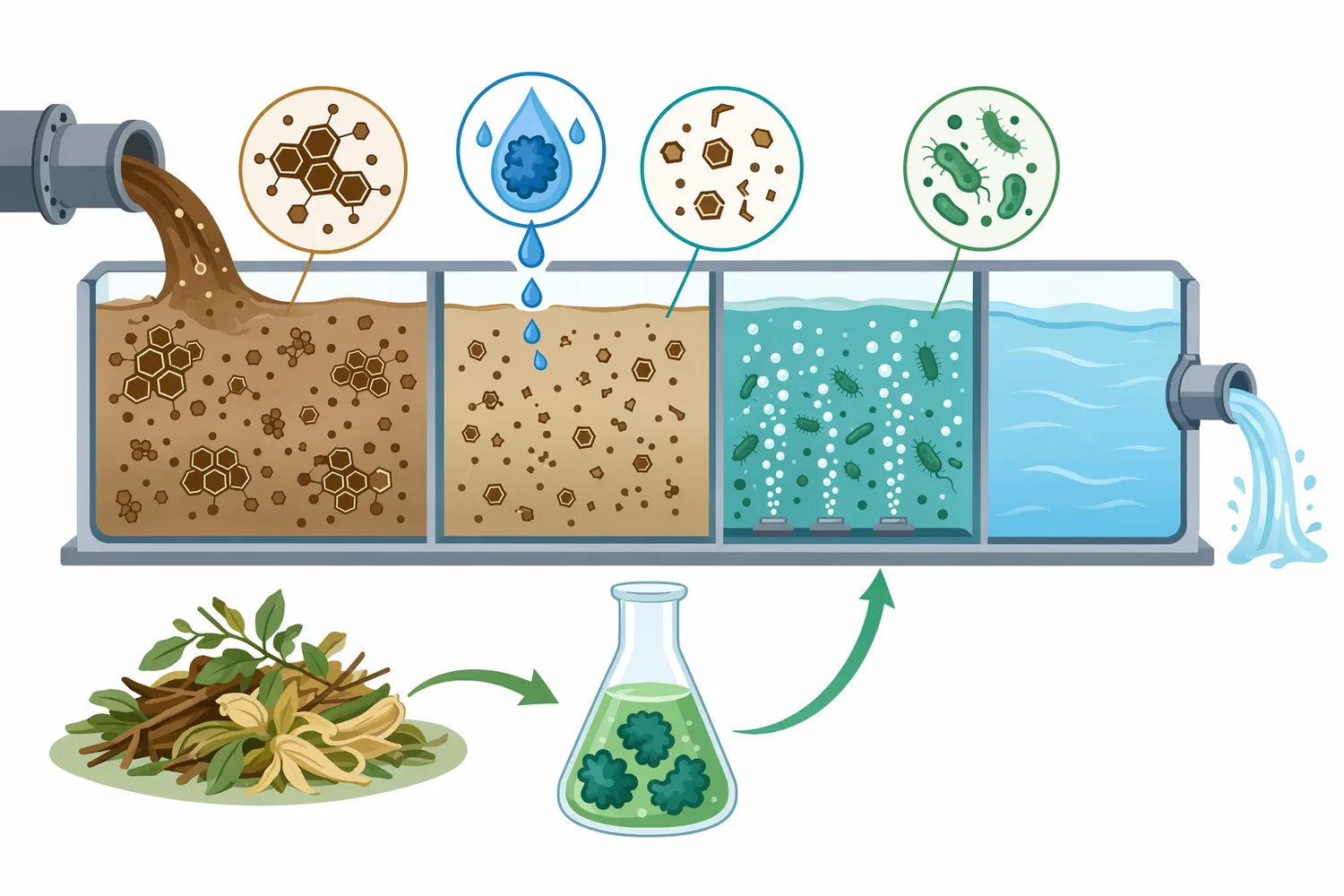
Tannase is also discussed in the treatment of tannin-rich industrial effluents, including streams from tannery operations and plant-processing industries. These wastewaters can contain tannic acid and related phenolic compounds that contribute to color, chemical load and environmental persistence. Tannase-based biodegradation aims to reduce the tannin burden by hydrolyzing complex tannins into smaller molecules that are more amenable to further biological treatment [11].
The same mechanism that helps in tea or feed—cleavage of tannin ester/depside bonds—applies in effluent contexts, but the matrix is more complicated. Industrial effluents may include salts, metals, mixed phenolics, surfactants, pH variation and suspended solids. Tannase therefore functions as one possible biological tool within a treatment system rather than a complete wastewater-treatment process by itself [11].
Research and reviews also connect tannase production with environmental valorization because agro-industrial residues can act as substrates for microbial tannase production. That creates a circular-economy logic: tannin-rich waste or low-value biomass can support enzyme production, and the resulting enzyme can be used to modify tannin-rich materials in food, feed or environmental applications. Studies evaluating agri-industrial residues for tannase production via solid-state fermentation reflect this interest [12].
Industrial interest in tannase is closely linked to microbial production. Tannase has been reported from fungi, bacteria and yeasts, with microbial sources favored in bioprocessing because they can be cultivated on defined or residue-based substrates and can produce extracellular enzymes that are easier to recover than intracellular systems. Reviews of microbial tannase describe fungi such as Aspergillus and Penicillium and bacteria such as Bacillus and lactic acid bacteria among important tannase-producing organisms [1].
The phrase “tannase producing bacteria” is therefore meaningful, but it should not obscure the importance of fungi. Fungal tannase has a long history in food-processing research, while bacterial tannases are increasingly studied for different substrate preferences, structural properties and potential robustness. A comparative in-silico study of pathogenic and non-pathogenic bacterial tannases emphasized that the protein microenvironment around catalytic regions can influence industrial applicability, including stability and substrate interaction [13].
Tannase enzyme production can be carried out using submerged fermentation or solid-state fermentation, depending on the organism and substrate strategy. Solid-state fermentation is often studied with agro-industrial by-products because many tannin-containing residues provide both physical support and induction compounds for enzyme production. Screening work on tannase-producing fungi from local agri-industrial by-products illustrates how residues can be explored as both microbial habitats and fermentation substrates [14].
Other research has examined tannase production from industrial waste as a way to reduce environmental pollution. The logic is not just enzyme supply; it is bioprocess design that converts problematic tannin-rich waste into a source of useful biocatalyst. For buyers, the main takeaway is that tannase has a substantial production literature behind it, including work on microbial strain selection, fermentation modes and residue-based production concepts [15].
Tannase is best understood as a family of related enzymes rather than one identical performance profile. Enzymes from different microbial sources can vary in substrate preference, stability, glycosylation, catalytic efficiency and behavior in food or feed matrices. Reviews on tannase source, biocatalytic characteristics and bioprocesses for production consistently emphasize this diversity, which is why application outcomes are tied to the specific enzyme and the tannin chemistry present [1].
At the catalytic level, tannases are commonly discussed as serine hydrolases. That means a serine residue in the active site participates directly in bond cleavage, working with neighboring catalytic residues to attack the ester bond and release the galloyl group from the tannin substrate. This mechanistic classification explains why tannase behaves like an esterase, but with a strong functional association to tannin and gallate ester substrates [13].
Structural studies and comparative modeling add another layer: residues around the catalytic site shape how the enzyme accommodates bulky tannin molecules. Tannins are not small, uniform substrates; they can be branched, heavily phenolic and sterically crowded. The enzyme’s binding pocket and surrounding microenvironment determine whether a given galloyl linkage is easily accessible or relatively resistant to hydrolysis [13].
Thermostability is an active research topic because beverage and extract processes often involve elevated temperatures. Work on rational design and site-directed mutagenesis of a tannase for green tea infusion focused on improving stability to better fit tea-processing demands. This does not mean every tannase is designed for the same conditions; it shows that enzyme stability is central to practical application where heat, acidity and complex plant matrices are present [5].
Some buyers encounter terms such as “tannase enzyme for teeth,” “tannase enzyme teeth whitening” or “tannase teeth whitening” when researching stain chemistry. The connection is understandable at a theoretical level because many dietary stains involve plant polyphenols, and tannase can hydrolyze certain tannin structures. However, the open literature cited here supports tannase as a tannin-hydrolyzing enzyme and includes identification of a highly active tannase from the oral pathogen Fusobacterium nucleatum; it does not establish tannase as a proven teeth-whitening ingredient or dental treatment [16].
That distinction matters. An enzyme found in the oral environment is not automatically suitable for oral-care use, and hydrolysis of tannins in a controlled industrial process is not the same as a validated tooth-whitening outcome on enamel or dental pellicle. For Enzymes.bio Tannase, the supported discussion should remain focused on professional tannin-modification applications such as tea, beverage, feed, gallic acid and tannin-rich process streams [16].
Cosmetic and personal-care applications sometimes appear in broad reviews of tannase uses, usually because tannin and phenolic chemistry intersects with skin, plant extracts and antioxidant ingredients. These are specialized formulation and regulatory contexts, and they should not be generalized into consumer health claims. The strongest, most evidence-aligned value of tannase remains its ability to hydrolyze hydrolysable tannins and gallate esters [1].
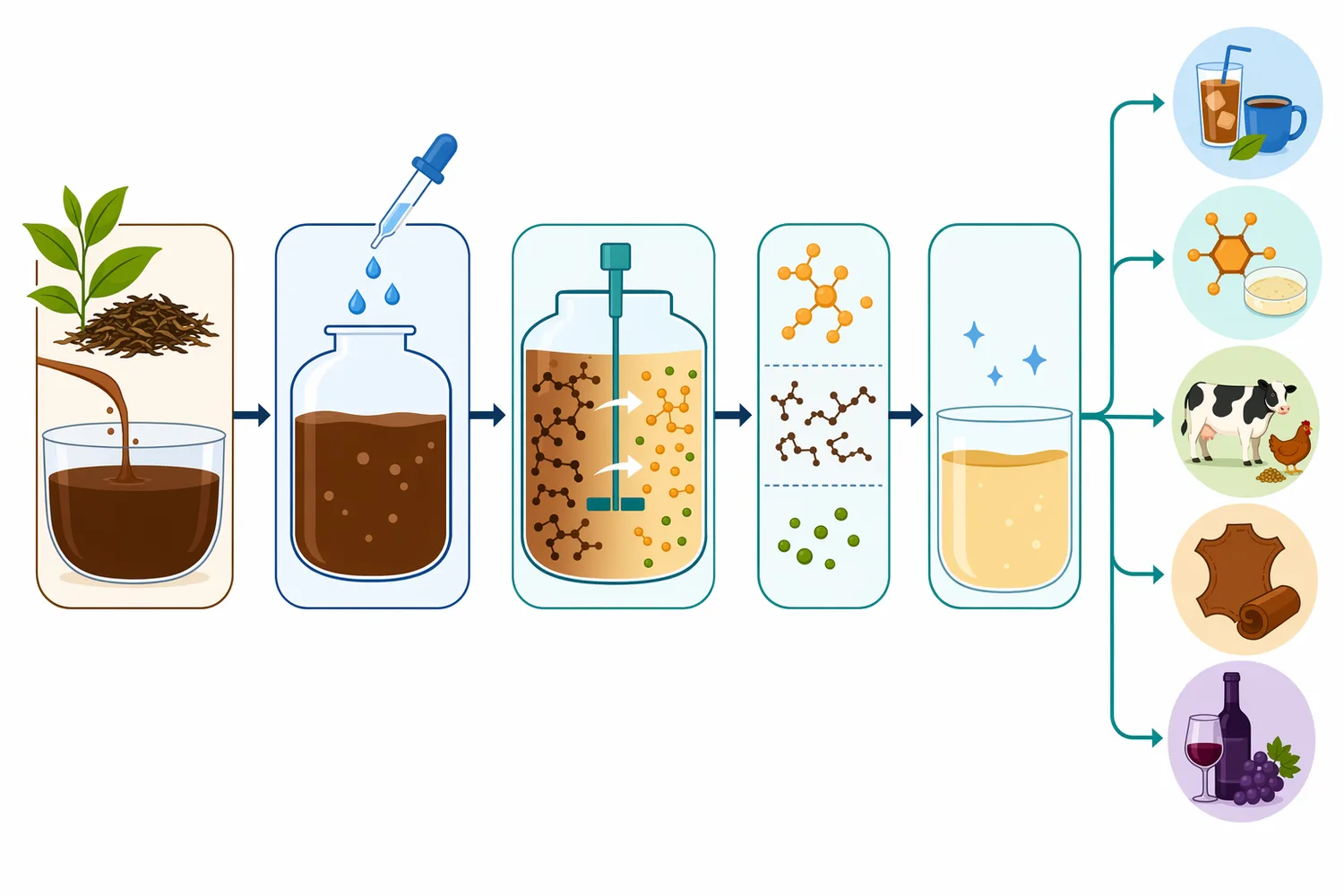
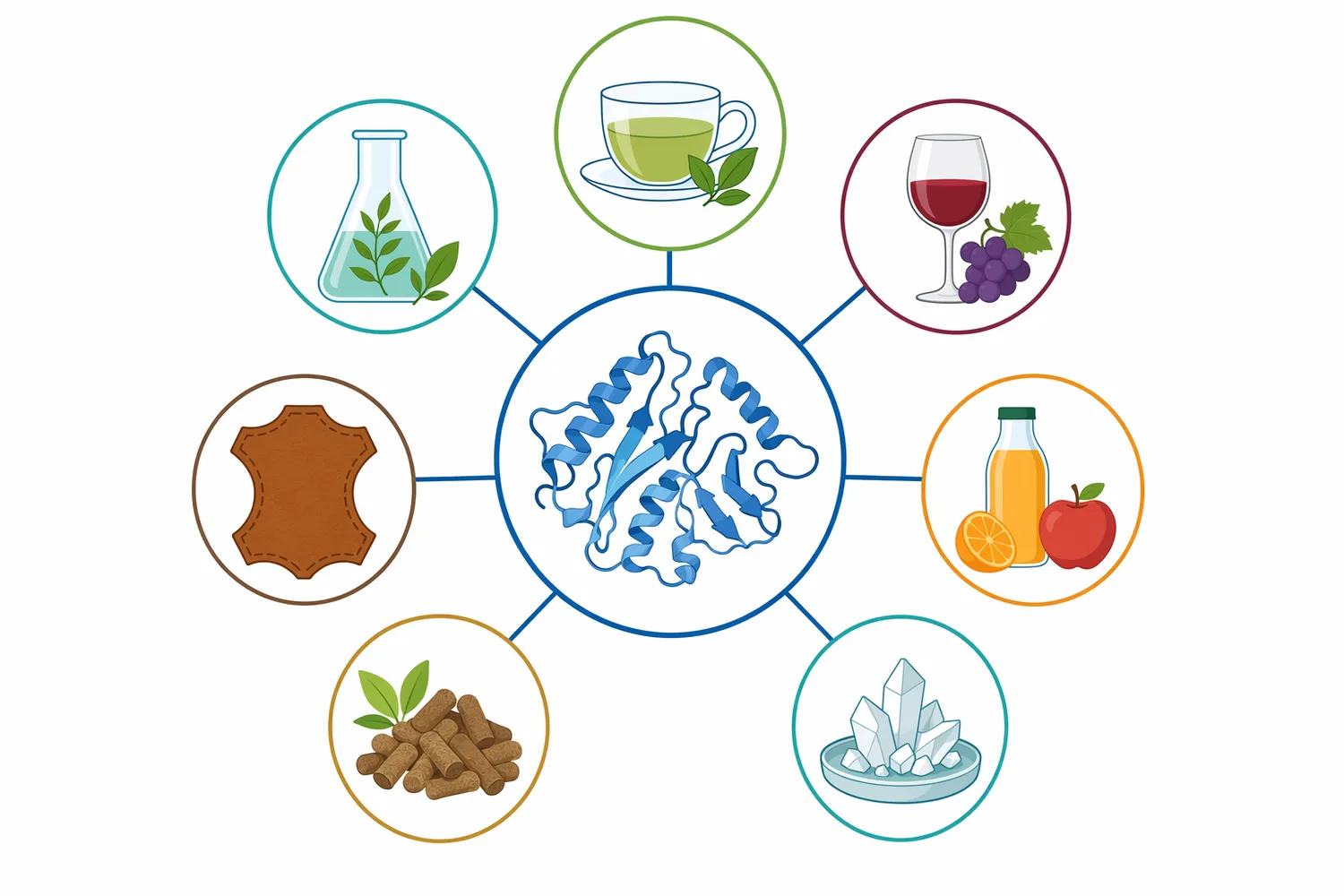
The most defensible tannase applications are those where the processing issue can be traced to hydrolysable tannins or galloylated compounds. In tea, the target is galloylated polyphenols that contribute to tea cream, turbidity and cold insolubility. In gallic acid production, the target is tannic acid or gallotannins that can release gallic acid. In feed, the target is tannin structures that bind proteins and digestive enzymes. In effluent treatment, the target is tannin load in wastewater or plant-processing streams [2].
Tannase is less appropriate as a catch-all clarification tool where the main issue is pectin, starch, protein denaturation, microbial contamination or mineral precipitation. It may still be part of a broader process, but its own contribution is specific: cleaving tannin ester and depside bonds. That specificity is a strength because it allows a targeted change in tannin chemistry rather than broad, uncontrolled breakdown of the entire product matrix [4].
In food and beverage processing, that targeted action can support cleaner appearance, improved extract stability and reduced harshness when hydrolysable tannins are the cause. In feed treatment, it can reduce anti-nutritional tannin effects that interfere with protein and enzyme availability. In bioconversion, it can raise free gallic acid from tannin-rich substrates. These tannase enzyme uses are linked by the same core reaction chemistry [3].
Tannase performance is process-dependent because tannin composition, water activity, extraction stage, solids content, acidity, temperature exposure and contact time all influence how accessible the target bonds are. A tea extract, sorghum meal, tannic-acid solution and tannery effluent present very different matrices even if all contain tannin-related compounds. The enzyme works on accessible hydrolysable tannin bonds; the surrounding process determines how much of that chemistry is available to the enzyme [1].
A well-designed tannase application therefore starts with the correct expectation: tannase modifies tannin chemistry; it does not erase all phenolics, replace filtration, solve every haze mechanism or guarantee a sensory result independent of raw material variation. This responsible framing is consistent with the scientific literature, where tannase is repeatedly described as valuable but substrate-dependent [2].
The evidence base is strongest for hydrolysis of tannic acid and galloylated compounds, tea and beverage stabilization, gallic acid production, and reduction of tannin-related anti-nutritional effects. Evidence is more application-specific for specialized oral, cosmetic, diagnostic or therapeutic claims, where additional formulation and regulatory evidence would be required before making end-use claims [1].
Enzymes.bio supplies Tannase for professional use through a straightforward online purchase model. The product is sold by the 1 kg unit: buyers place the order online, complete payment online, and the order is then processed and shipped.
A Certificate of Analysis and Safety Data Sheet are included with the order. These documents support professional handling and product traceability while keeping the buying process simple for customers who need a direct online source of tannase enzyme.
For customers comparing tannase enzyme uses, the central point is clear: tannase is a specialized biocatalyst for hydrolysable tannins and gallate esters. Its value comes from converting large, binding-prone tannin structures into smaller phenolics such as gallic acid, helping improve selected tea, beverage, feed, extract and tannin-rich processing streams where tannins are the underlying challenge.
Sold by the 1 kg unit, in stock and ready to ship. Order directly on our store — pay online and we process your order. A Certificate of Analysis and Safety Data Sheet are included with every order.
Buy Tannase →Numbered in order of first citation. Open-access sources, each verified reachable at publication; citation numbers in the text link here.