
Thermostable alpha amylase is a heat-tolerant starch-liquefying enzyme used in ethanol production to convert thick, cooked starch slurry into shorter dextrins and maltooligosaccharides. By randomly cleaving internal α-1,4 glycosidic bonds in amylose and amylopectin, it lowers mash viscosity and prepares starch-rich feedstocks for saccharification into fermentable sugars.
Enzymes.bio supplies Thermostable Alpha Amylase Enzyme for Industrial Ethanol Production as a 1 kg product available for direct online purchase. After online payment, the order is processed and shipped, and a Certificate of Analysis and Safety Data Sheet are provided with the order.
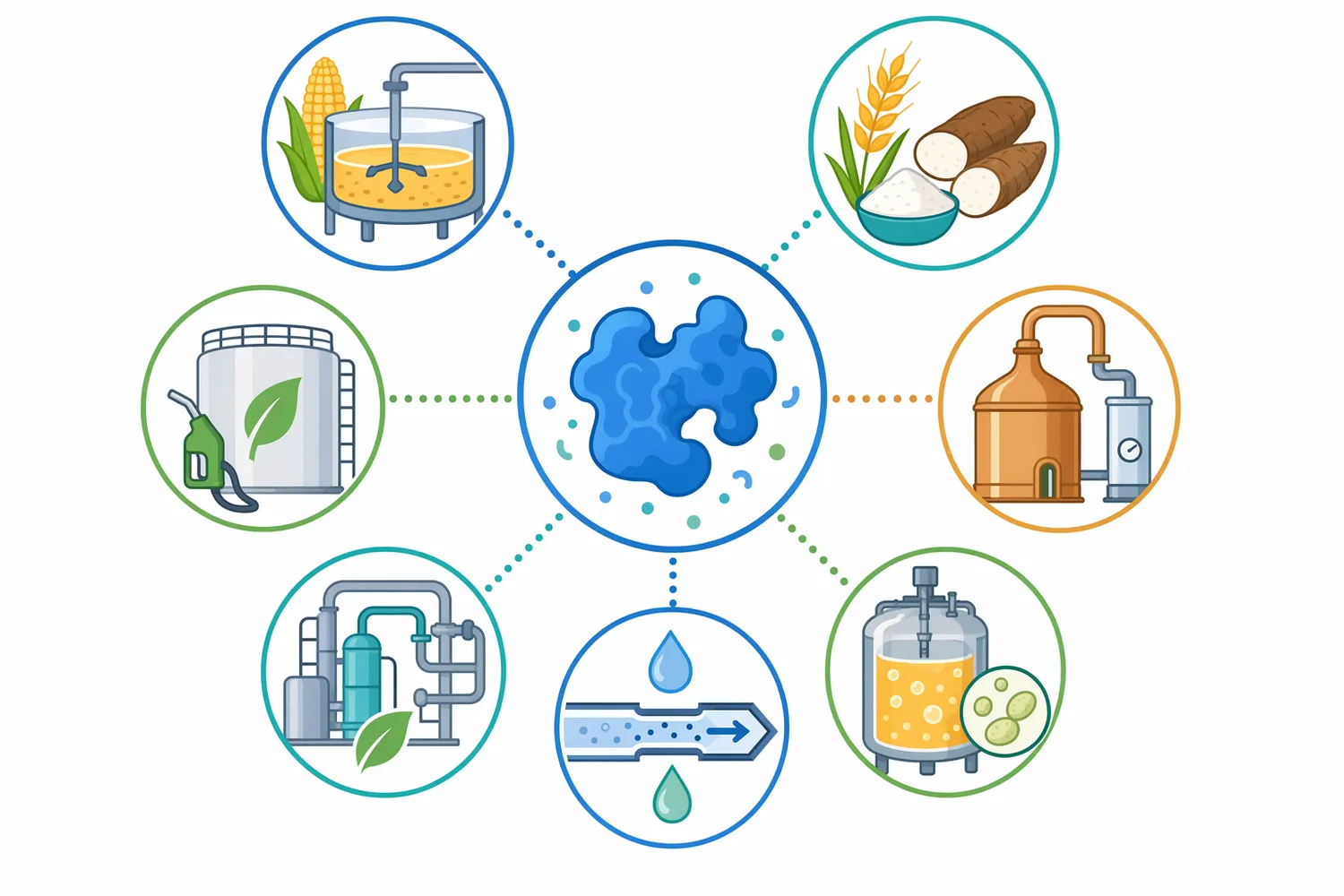
In starch-based ethanol production, the first major conversion problem is physical as much as biochemical: starch-rich mash becomes viscous when heated with water. Corn, cassava, wheat, sorghum, rice, sago, tapioca residues, and many food-waste streams contain starch that must be opened, liquefied, and converted into fermentable sugars before microorganisms can efficiently produce ethanol. Thermostable alpha amylase is used at the front end of this pathway because it can act during hot starch processing, when swollen or gelatinized starch is accessible but the mash is still demanding for less heat-stable enzymes [1].
Alpha-amylase is an endo-acting starch hydrolase. “Endo-acting” means it attacks bonds inside the starch chain rather than trimming only from the chain ends. The enzyme hydrolyzes internal α-1,4 linkages in amylose and amylopectin, shortening long glucose polymers into soluble dextrins and maltooligosaccharides. This is why alpha amylase is described as a liquefaction enzyme: it rapidly reduces polymer size and viscosity, but it is not normally the enzyme that completes conversion all the way to glucose [1].
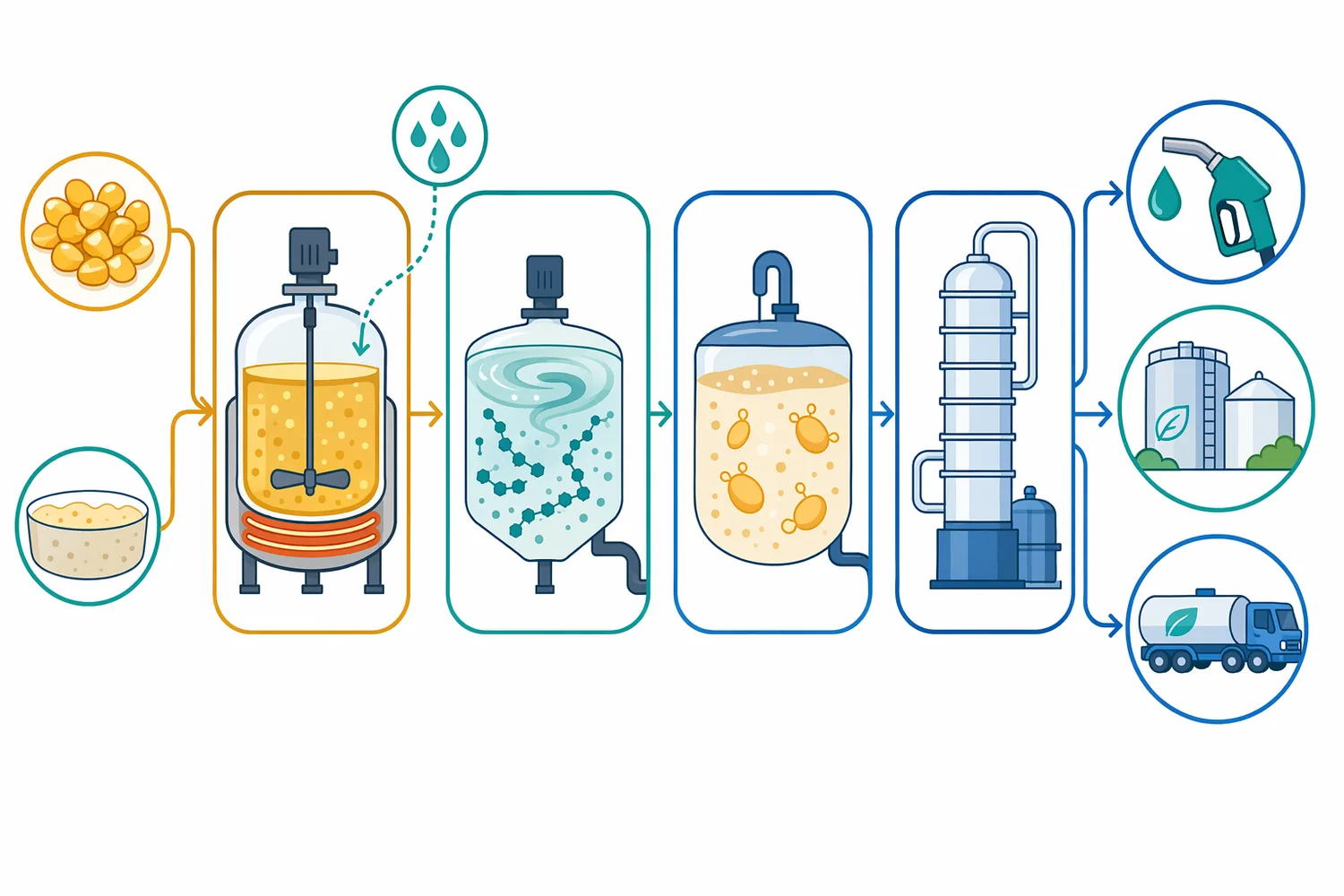
In an ethanol plant or pilot ethanol process, this liquefaction step supports the later saccharification and fermentation stages. After alpha amylase has shortened the starch chains, glucoamylase or related saccharifying enzymes can release glucose more effectively from the dextrin mixture. Yeast or another ethanol-producing organism then ferments those sugars into ethanol and carbon dioxide. Studies on cassava starch, red sorghum starch, sago starch, rice, and tapioca solid waste all reflect this same general logic: starch-rich material is hydrolyzed enzymatically so that fermentable sugars become available for ethanol production [2].
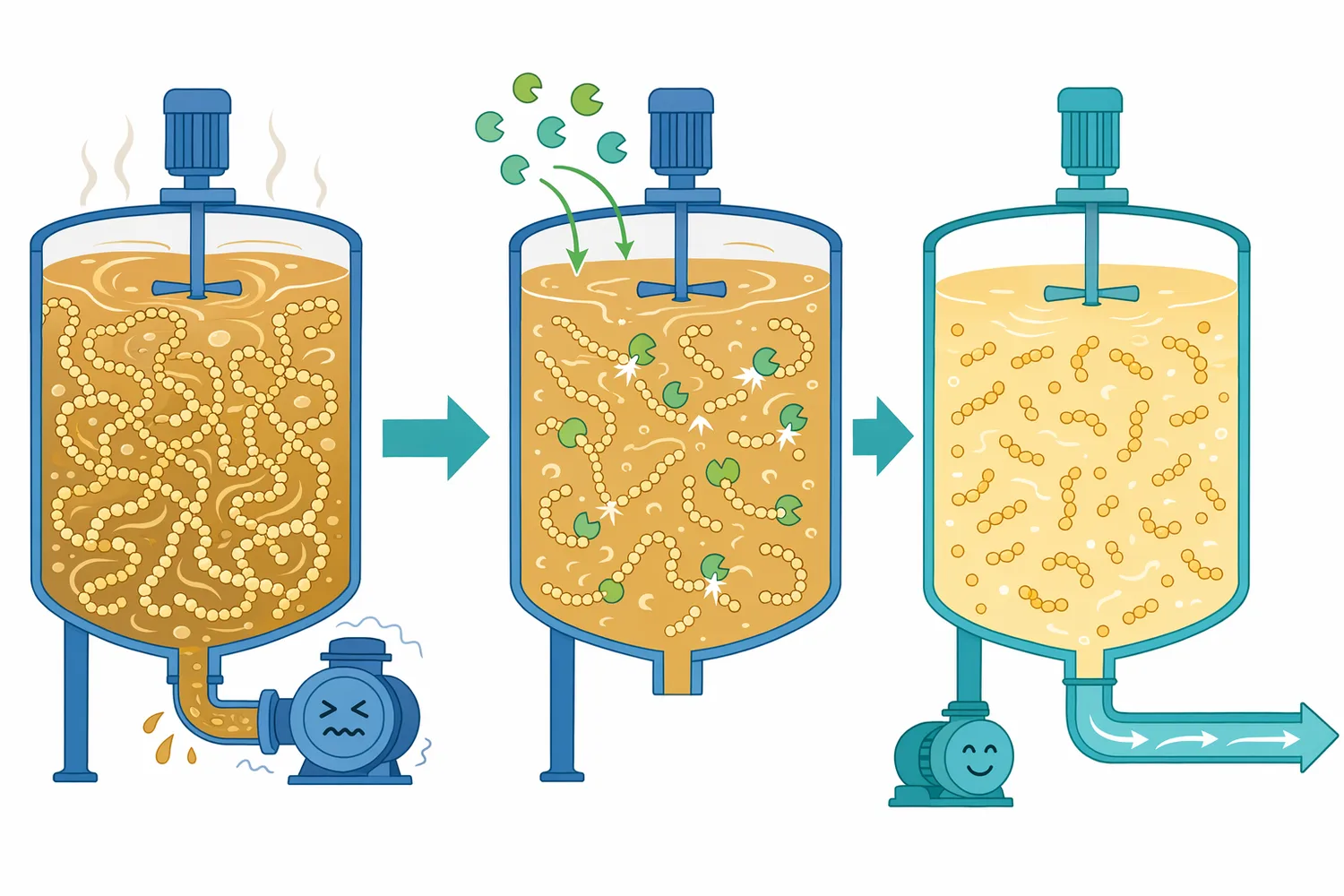
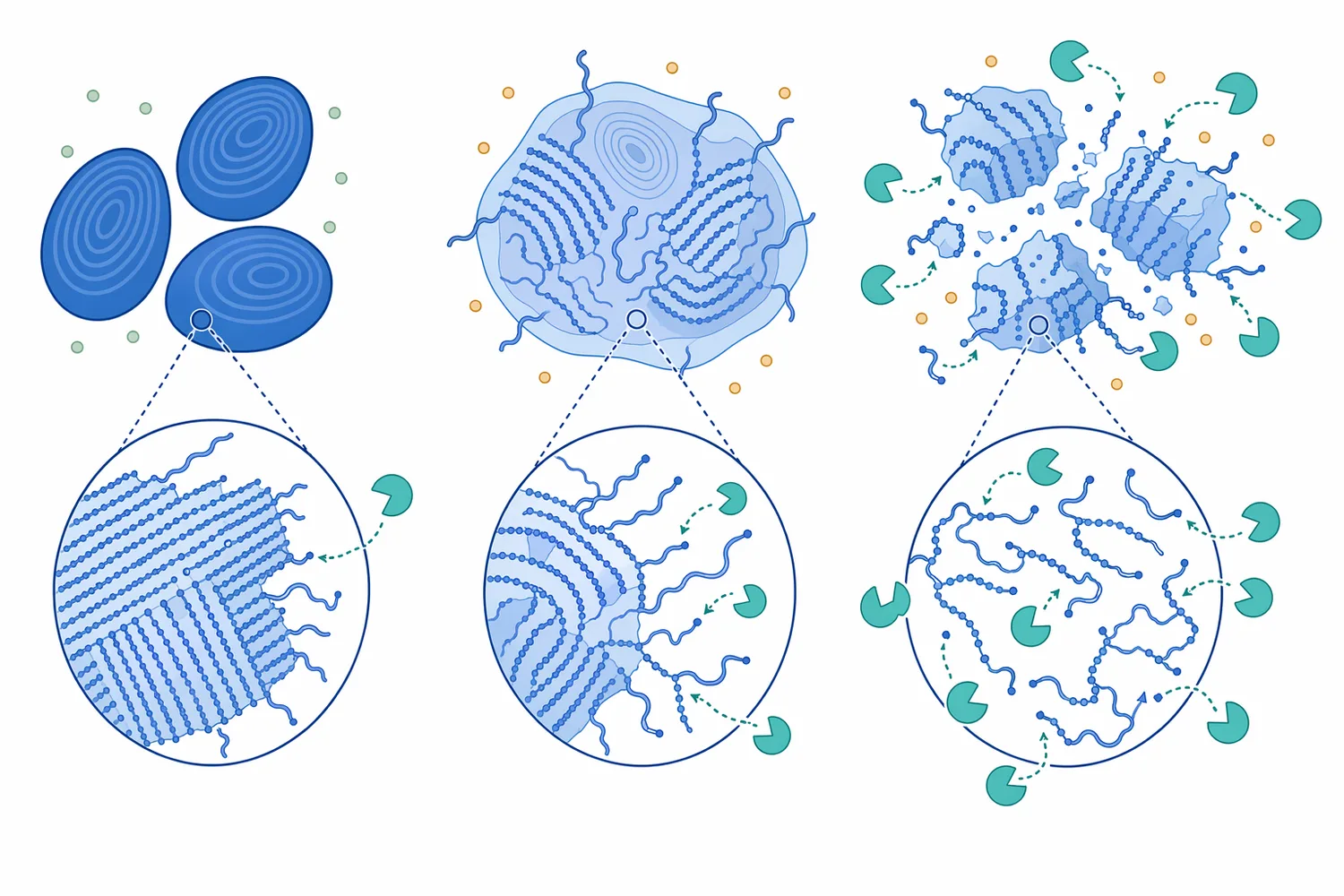
Starch granules are semi-crystalline particles made mainly of two glucose polymers. Amylose is mostly linear, while amylopectin is highly branched, with α-1,4 chains connected by α-1,6 branch points. During heating in water, granules swell, crystalline regions loosen, and amylose can leach into the liquid phase. The result is a thick paste in which long hydrated chains trap water and resist flow. This is the practical reason starch liquefaction matters: without chain scission, the slurry can be difficult to pump, mix, heat uniformly, or expose evenly to downstream enzymes.
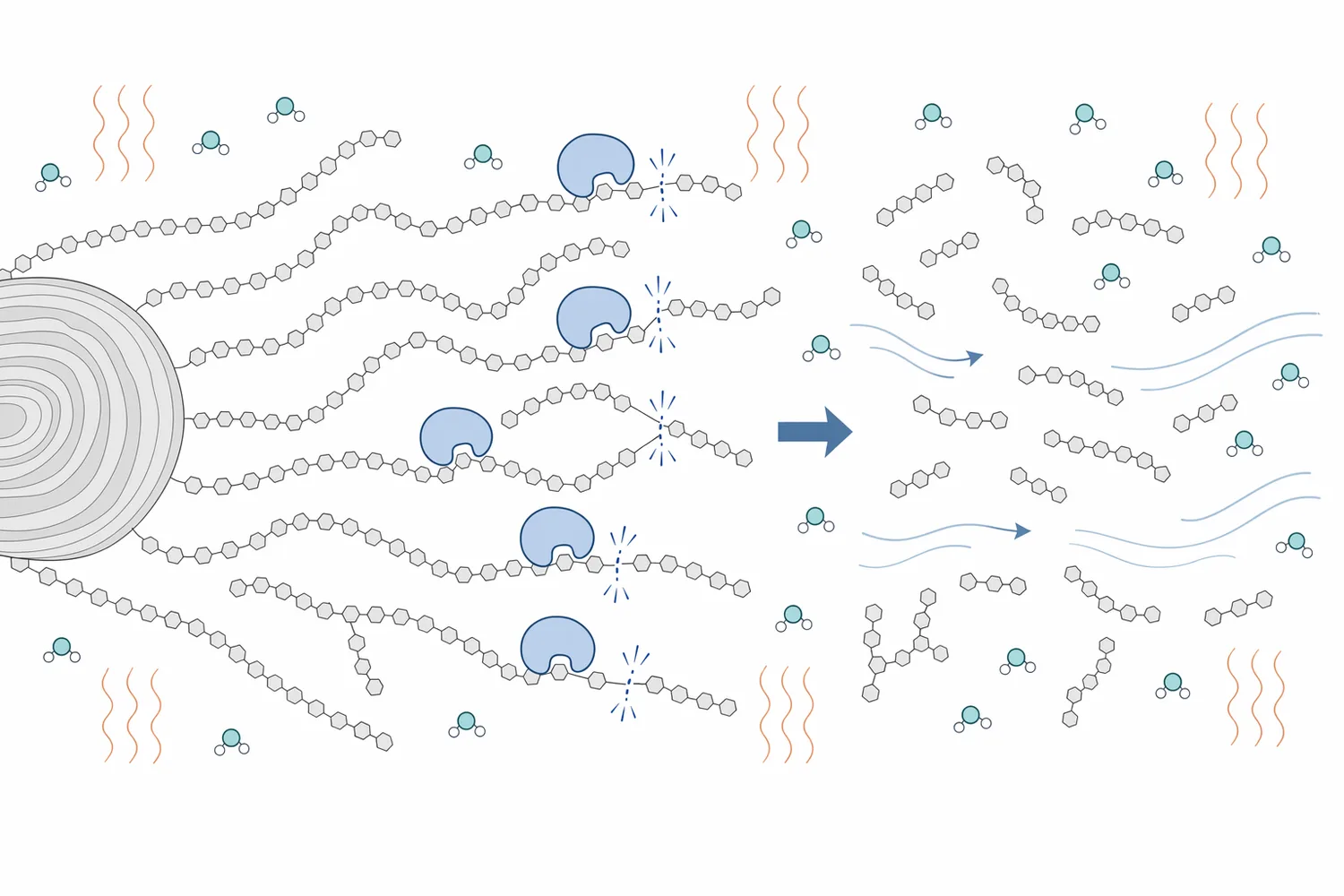
Thermostable alpha amylase changes that physical state by cutting long α-1,4 chains into shorter segments. A long amylose molecule that contributes strongly to viscosity becomes many smaller dextrins; amylopectin branches remain, but the outer and internal α-1,4 segments are shortened. The mash becomes less elastic and less stringy because shorter chains entangle less and hold water differently. At the same time, the enzyme creates many new chain ends and smaller soluble fragments, giving saccharifying enzymes more access points in the next stage.
The enzyme does not generally remove α-1,6 branch points by itself. That means alpha amylase liquefaction produces a mixture: maltodextrins, maltose, maltotriose, other maltooligosaccharides, and branched limit dextrins. For ethanol production, this is useful but incomplete. Liquefaction turns an unmanageable starch paste into a more processable carbohydrate stream; saccharification then pushes the dextrin mixture toward glucose and other fermentable sugars.
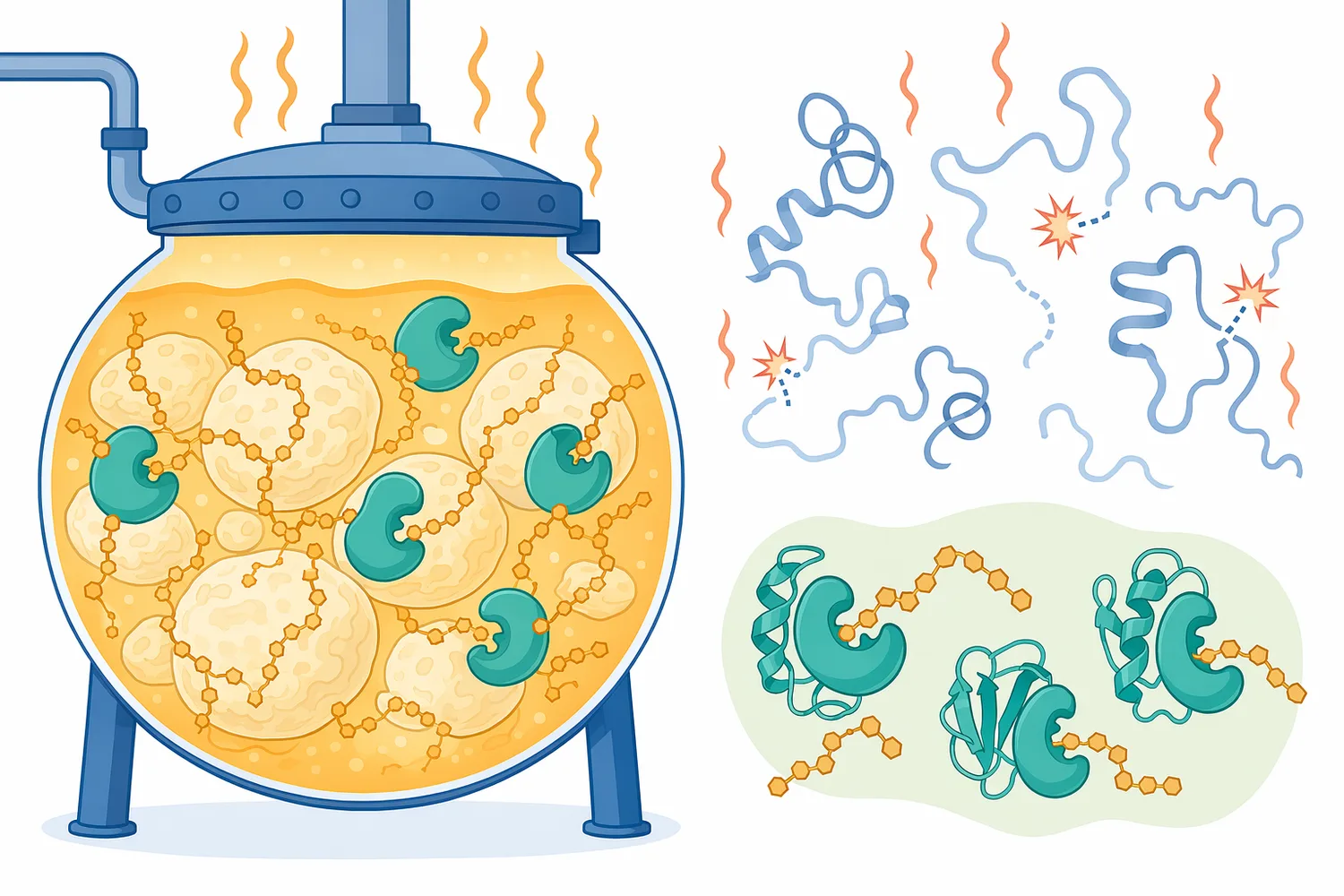
The “thermostable” part of thermostable alpha amylase is central to its industrial value. Starch becomes much more enzyme-accessible after heat treatment, because granule swelling and gelatinization expose glucan chains that are partly protected in native granules. If the enzyme loses structure under those hot processing conditions, its active site can no longer bind and cleave starch effectively. A thermostable enzyme retains functional shape longer under heat, allowing liquefaction to occur when the substrate is most accessible [3].
Thermostability also supports process practicality. Hot liquefaction helps reduce mash viscosity early, before the material has moved into downstream saccharification and fermentation. It can also fit process environments where heat treatment is already used for starch cooking and for reducing the microbial load of the slurry. The enzyme is not a sanitation system, but a heat-tolerant liquefaction enzyme is compatible with hot processing conditions that are less favorable to many unwanted organisms [1].
Many industrially relevant alpha-amylases are microbial, especially bacterial enzymes from thermotolerant or thermophilic organisms. Research continues to describe thermostable amylases from diverse microbial sources, including thermophilic Bacillus strains and other organisms, because heat-stable starch hydrolysis remains important in food, starch, brewing, textile, detergent, and biofuel applications [4]. This broad enzyme class is well established even though individual enzyme preparations can differ in substrate behavior and operating tolerance.
Calcium interaction is one reason alpha-amylase stability varies across enzyme sources. Many alpha-amylases use bound metal ions to help maintain protein structure, but calcium-independent alpha-amylases have also been reported. For example, a characterized alpha-amylase from Talaromyces pinophilus was described as calcium-independent, illustrating that the enzyme family contains more than one structural strategy for maintaining catalytic function [5]. For users, the important point is not the structural detail itself, but what it explains: heat tolerance and stability arise from the enzyme’s folded protein architecture, not from a generic “chemical” effect.
Thermostable alpha amylase performs one essential job in ethanol production, but it does not perform every job. A practical way to understand the ethanol pathway is to separate the stages by what physically and chemically changes in the feedstock.
| Process stage | Main transformation | Typical enzyme or biological role | Why it matters for ethanol |
|---|---|---|---|
| Starch cooking / gelatinization | Starch granules swell and become more accessible; viscosity rises sharply | Heat and water open the starch structure | Makes starch chains available but creates a thick mash |
| Liquefaction | Long α-1,4 starch chains are cut into shorter dextrins | Thermostable alpha amylase | Reduces viscosity and creates soluble dextrin fragments |
| Saccharification | Dextrins are further converted toward glucose and other fermentable sugars | Glucoamylase and related enzymes | Produces sugars that yeast or other microbes can ferment |
| Fermentation | Sugars are converted to ethanol and carbon dioxide | Yeast or another ethanol-producing organism | Generates the target ethanol product |
| Integrated or simultaneous approaches | Hydrolysis and fermentation are partly combined | Enzymes and microbes operate in one coordinated process | Can reduce process steps when feedstock and organisms are suitable |
This division of labor is visible in studies of starch-based ethanol processes. Cassava starch has been converted by enzymatic hydrolysis followed by fermentation, with additional process integration such as ex-situ nanofiltration studied for ethanol recovery and process performance [6]. Rice has also been investigated in an enzymatic process designed for simultaneous production of trehalose, bioethanol, and a high-protein product, showing how starch conversion can be integrated with broader bioprocess objectives [7].
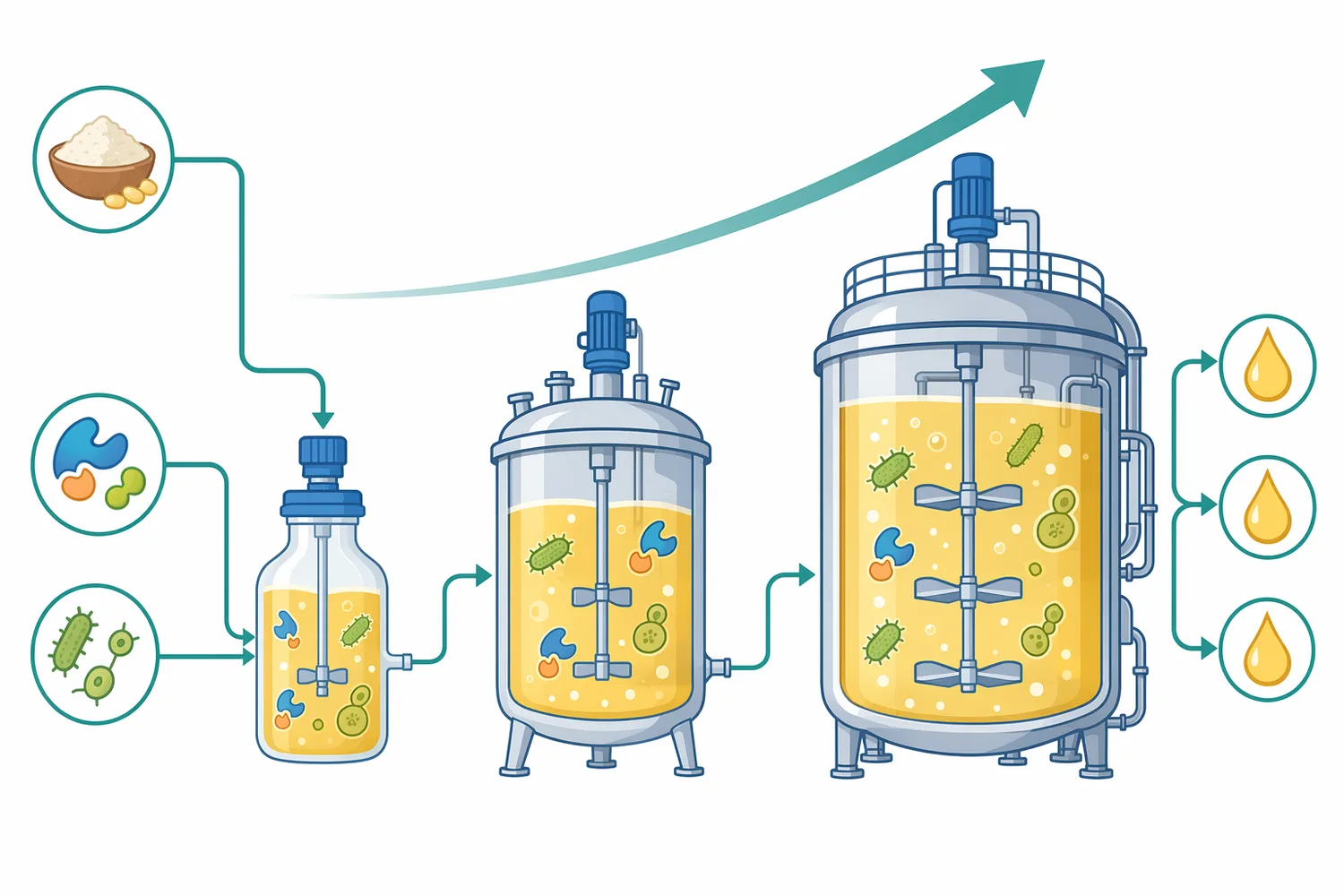
Single-step and simultaneous routes are also actively studied. One cassava study examined ethanol production from raw cassava starch using a combination of raw starch hydrolysis and fermentation, and importantly reported scale-up from 5 L laboratory work to a 200 L pilot plant and then to 3000 L industrial fermenters [8]. That study is relevant because it shows that starch hydrolysis and fermentation can be integrated at meaningful scale, although raw-starch processes and hot liquefaction processes are not identical.
Thermostable alpha amylase is most directly relevant when the ethanol feedstock contains starch. Common examples include cereal grains, tubers, root crops, and starch-containing residues. Cassava is a frequent research feedstock because it contains abundant starch and is widely used in ethanol and industrial carbohydrate processing. Studies have examined cassava starch hydrolysis and fermentation, including process combinations that improve conversion and recovery [6].
Sorghum is another starch crop where enzymatic hydrolysis is important. Work on red sorghum starch has studied how substrate and enzyme concentration affect glucose syrup production by enzymatic hydrolysis, reflecting a central point for ethanol processes: the usable sugar pool depends on how effectively starch is hydrolyzed before fermentation [2]. While glucose syrup production is not identical to fuel ethanol production, the carbohydrate conversion step is closely related.
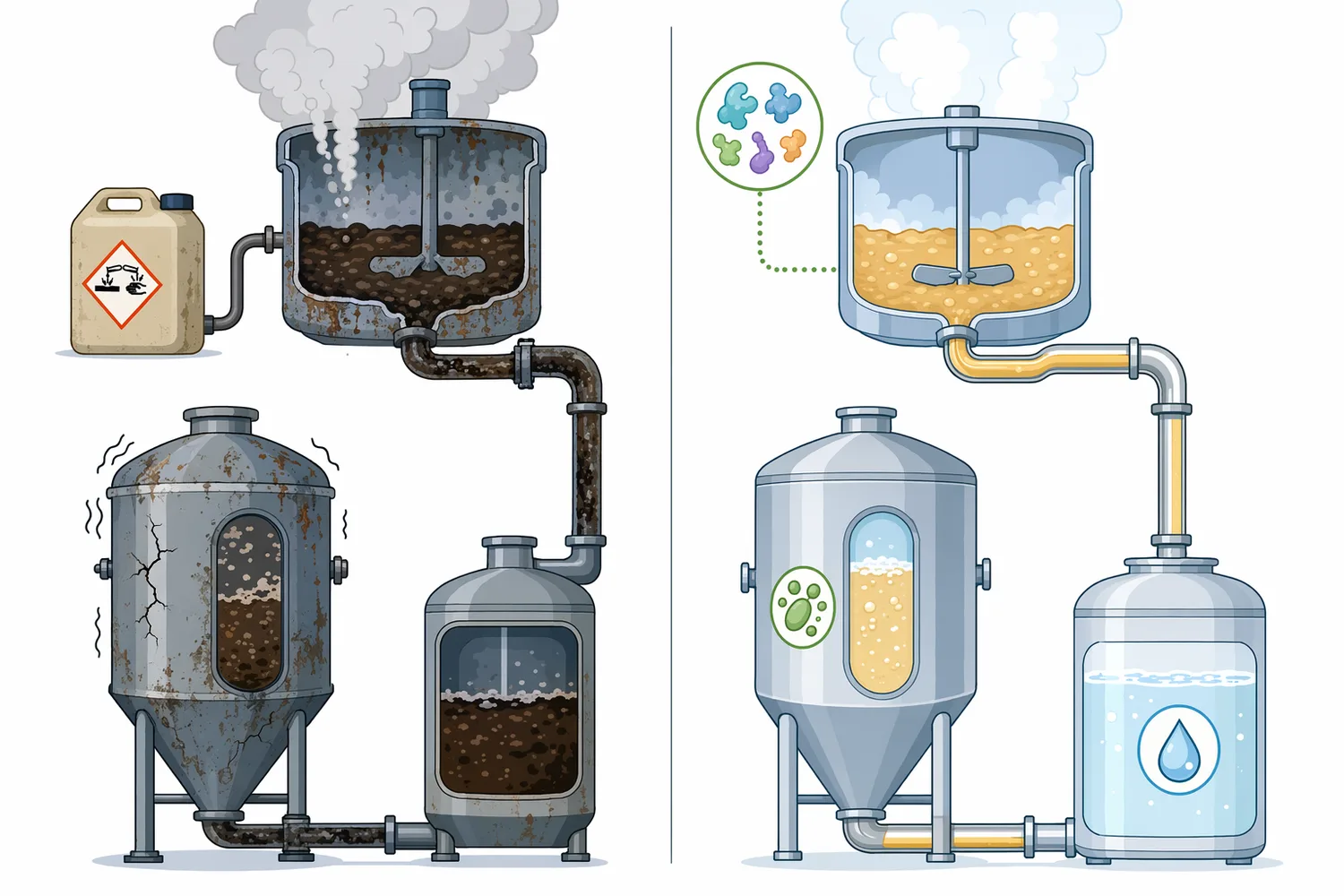
Sago starch has been investigated using both enzymatic and acid hydrolysis for ethanol preparation. That comparison matters because it highlights the practical difference between controlled enzymatic hydrolysis and harsher chemical hydrolysis. Enzymes act selectively on glycosidic bonds under milder process conditions, while acid hydrolysis can be less selective and may create degradation products depending on conditions [9].
Tapioca solid waste, also known as onggok, is another starch-rich residue studied for bioethanol production in batch reactors. This type of work is important because ethanol feedstocks are not limited to refined grain starch; residues from starch processing can still contain carbohydrates that require hydrolysis before fermentation [10].
Food waste can also contain a significant starch fraction, especially when bakery, rice, noodle, potato, or mixed prepared-food residues are present. Waste pizza, for example, has been studied for ethanol production by enzymatic hydrolysis and fermentation, showing that starch-rich prepared-food waste can be treated as a carbohydrate source rather than only as disposal material [11]. A separate process-design and techno-economic study on fuel ethanol from food waste also used enzymatic hydrolysis and fermentation as the core conversion route [12].
Not all starch behaves the same during hydrolysis. Granule size, botanical origin, crystallinity, amylose-to-amylopectin ratio, and prior milling or heat treatment all influence how rapidly enzymes can reach α-1,4 bonds. Barley research has shown that small and large starch granules have different gelatinization characteristics and that these differences affect enzymatic hydrolysis and sugar production during mashing [13].
This matters because alpha amylase does not hydrolyze starch by magic contact with a powder surface. The enzyme must physically bind to accessible glucan regions and position the α-1,4 bond in its active site. Dense, intact, or less-gelatinized granules expose fewer attack points, while cooked or disrupted starch exposes more chain segments. Milling can also increase surface area and improve enzyme access; work on starch-rich Chlorella sorokiniana biomass examined how milling and enzymatic hydrolysis affected glucose production, illustrating the importance of physical accessibility even when starch is present [14].
Raw-starch-digesting alpha-amylases are a specialized area because they can attack granular starch more directly. A moderately thermostable raw-starch-digesting alpha-amylase from endophytic Streptomyces mobaraensis has been described, showing that some enzymes combine heat tolerance with the ability to digest less-processed starch [15]. However, raw-starch capability is enzyme-specific; the general industrial role of thermostable alpha amylase remains liquefaction of heated, accessible starch.
Thermostable alpha amylase is a starch-processing enzyme. It is not the main enzyme for cellulose, hemicellulose, or lignin-rich biomass. This distinction is important because many ethanol feedstocks are mixtures. Corn grain, cassava, rice, sorghum, and food waste may contain starch that alpha amylase can liquefy, while corn stover, sugarcane bagasse, oil palm trunk, and other lignocellulosic materials require pretreatment and cellulolytic or hemicellulolytic enzymes to release fermentable sugars.
Research on corn stover emphasizes pretreatment strategies to improve enzymatic hydrolysis and cellulosic ethanol production, reflecting the fact that lignocellulose must first be opened structurally before enzymes can access cellulose and hemicellulose [16]. Similarly, sugarcane bagasse studies have used low-temperature aqueous ammonia pretreatment, two-stage high-solids enzymatic hydrolysis, and fermentation organisms such as Candida tropicalis for co-production of ethanol and xylitol [17].
Other non-starch or mixed biomasses follow the same principle. Dried oil palm trunk has been treated by hydrothermolysis followed by enzymatic hydrolysis for ethanol production, while Chlorella biomass has been studied using hydrothermal pretreatment and enzymatic hydrolysis to improve bioethanol production [18]. These studies are valuable for ethanol technology broadly, but alpha amylase is most relevant when the carbohydrate needing conversion is starch or starch-derived dextrin.
Both enzymatic hydrolysis and acid hydrolysis can break carbohydrate polymers, but they do so in different ways. For starch ethanol production, thermostable alpha amylase offers bond-specific liquefaction: it targets α-1,4 linkages in starch and produces dextrins under process conditions compatible with downstream biological conversion. Acid hydrolysis is chemical and less enzyme-specific; it can hydrolyze starch but may require harsher conditions and careful control to avoid sugar degradation.
| Approach | How starch is broken | Main practical effect | Relevance to ethanol |
|---|---|---|---|
| Thermostable alpha amylase liquefaction | Enzyme selectively cleaves internal α-1,4 bonds in amylose and amylopectin | Rapid viscosity reduction and dextrin formation | Prepares starch mash for saccharification and fermentation |
| Saccharifying enzyme treatment | Enzymes release glucose and smaller fermentable sugars from dextrins | Increases fermentable sugar concentration | Feeds yeast or other ethanol-producing microbes |
| Acid hydrolysis | Acid chemically hydrolyzes glycosidic bonds | Can release sugars but is less biologically selective | Used in some studies, but process severity and byproducts must be managed |
| Combined process design | Hydrolysis and fermentation are arranged sequentially or simultaneously | Balances sugar release with ethanol formation | Common in starch and waste-to-ethanol research |
The sago starch study that compared enzymatic and acid hydrolysis for ethanol preparation is a useful example because it frames both routes as possible starch-conversion methods while making the enzymatic route directly relevant to fermentation-based ethanol [9]. For industrial users, the value of alpha amylase lies in controlled liquefaction that fits biological downstream processing.
The strongest evidence for thermostable alpha amylase in ethanol production comes from the established industrial role of alpha-amylase in starch liquefaction and from the large body of research using enzymatic hydrolysis as a gateway to ethanol fermentation. Microbial alpha-amylase reviews describe continuing progress, challenges, and industrial perspectives for this enzyme class, including its importance across starch-processing and biotechnological sectors [1].
Cassava provides a clear starch-to-ethanol example. In one study, ethanol production from raw cassava starch was developed as a single-step process combining raw starch hydrolysis and fermentation, then scaled from 5 L laboratory scale to 200 L pilot scale and 3000 L industrial fermenters [8]. The scale-up numbers are especially useful because they show that starch hydrolysis plus fermentation is not only a bench concept; it can be evaluated across progressively larger production volumes.
Other starch feedstocks support the same process logic. Red sorghum starch hydrolysis has been studied for glucose syrup production, sago starch has been hydrolyzed for ethanol preparation, cassava starch has been converted by enzymatic hydrolysis and fermentation, and tapioca solid waste has been processed for bioethanol in a batch reactor [10]. These are different materials and process designs, but they all depend on making starch-derived sugars available.
Prepared food waste extends the relevance beyond agricultural crops. Waste pizza has been converted to ethanol through enzymatic hydrolysis and fermentation, while a broader fuel-ethanol process design from food waste also used enzymatic hydrolysis and fermentation as the conversion foundation [12]. In these streams, thermostable alpha amylase is relevant when starch-rich fractions contribute significantly to the carbohydrate load.
The most immediate benefit of thermostable alpha amylase is viscosity reduction. When long starch chains are cut into shorter dextrins, the mash becomes less resistant to flow. This can improve mixing, heat distribution, and enzyme contact. The benefit is especially important in high-solids starch processing, where viscosity can otherwise become a limiting physical constraint.
A second benefit is improved downstream sugar release. Alpha-amylase hydrolysis opens the starch structure and creates a dextrin pool that saccharifying enzymes can attack more effectively. Because glucoamylase and related enzymes work from chain ends, the creation of more shorter chains can improve access to hydrolysable sites. The result is not instant ethanol, but a more suitable feed for sugar production and fermentation.
A third benefit is compatibility with hot processing. Thermostable alpha-amylases are designed for conditions where ordinary proteins would unfold too quickly to remain useful. This allows liquefaction to occur close to the point where starch is gelatinized and accessible, instead of requiring the process to cool before any enzymatic action can begin [3].
A fourth benefit is feedstock flexibility within starch-rich materials. Corn, cassava, sorghum, rice, sago, tapioca residues, and starch-containing food waste differ in granule structure and composition, but all contain α-glucan polymers that can be liquefied enzymatically when accessible. Research across these substrates shows why starch hydrolysis remains central to ethanol and fermentation processes [11].
These benefits should be understood within the full ethanol process. Final ethanol yield depends on feedstock composition, cooking and liquefaction effectiveness, saccharification, fermentation organism performance, solids handling, and ethanol recovery. Thermostable alpha amylase is a core liquefaction tool, not a standalone replacement for the rest of the process.
Enzymes.bio supplies Thermostable Alpha Amylase Enzyme for Industrial Ethanol Production for buyers who need a starch-liquefying enzyme for industrial ethanol and related starch-conversion applications. The product is available for direct online purchase by the 1 kg unit; after payment, the order is processed and shipped. A Certificate of Analysis and Safety Data Sheet are provided with the order.
The enzyme’s role is clear: it helps convert hot, viscous starch mash into shorter dextrins and maltooligosaccharides so the material can move into saccharification and fermentation. That role is supported by the broader alpha-amylase literature and by ethanol studies using enzymatic hydrolysis for starch-rich crops, residues, and prepared food wastes [1].
Thermostable alpha amylase should not be described as directly producing ethanol from starch. It does not ferment sugars, and it does not usually complete starch conversion to glucose on its own. Its main function is liquefaction: internal cleavage of α-1,4 starch bonds, viscosity reduction, and dextrin formation. Ethanol production still requires saccharification and microbial fermentation.
It should also not be treated as a universal biomass enzyme. For lignocellulosic materials such as corn stover or sugarcane bagasse, pretreatment and cellulolytic enzyme systems are central because the main polymers are cellulose and hemicellulose rather than starch [16]. Alpha amylase is most relevant where starch is a significant carbohydrate fraction.
Finally, results from individual studies should be interpreted in context. A raw cassava starch process scaled from 5 L to 200 L and 3000 L demonstrates the promise of combined hydrolysis and fermentation, but it does not mean every starch feedstock behaves identically [8]. Barley granule-size research shows that even within one crop, starch structure can change hydrolysis behavior [13]. The reliable conclusion is that thermostable alpha amylase is a well-supported liquefaction enzyme class for starch-based ethanol processing, with performance shaped by the substrate and the overall process design.
Thermostable Alpha Amylase Enzyme for Industrial Ethanol Production is used to liquefy starch under hot processing conditions. It cleaves internal α-1,4 bonds in amylose and amylopectin, converting thick gelatinized starch into shorter dextrins and maltooligosaccharides. This reduces mash viscosity and prepares starch-rich material for downstream saccharification and fermentation.
The evidence base is strong at the process level: microbial alpha-amylases are established industrial starch-conversion enzymes; starch ethanol studies repeatedly rely on enzymatic hydrolysis before fermentation; and feedstocks such as cassava, sorghum, sago, rice, tapioca residues, and food waste have all been investigated through hydrolysis-and-fermentation routes. For buyers purchasing from Enzymes.bio, the product’s purpose is therefore practical and specific: a 1 kg online-supplied thermostable alpha amylase for liquefying starch in industrial ethanol and related starch-conversion workflows.
Sold by the 1 kg unit, in stock and ready to ship. Order directly on our store — pay online and we process your order. A Certificate of Analysis and Safety Data Sheet are included with every order.
Buy Thermostable Alpha Amylase Enzyme For Industrial Ethanol Production →Numbered in order of first citation. Open-access sources, each verified reachable at publication; citation numbers in the text link here.